Skip to content

Data Security in the Age of Remote Work: How to Keep Your Business Safe

How should you set up your security policies for your employees working from home? What are the potential culprits of a remote workforce? And is BYOD putting your organization at unnecessary risk of a data breach? Some love it, and some hate it, but there’s no use turning a blind eye to the massive surge in the number of employees working from home.

Ever since covid turned the world upside down in 2020, working remotely became the norm… and a new threat to data security. Covid-19 sent employees packing (to their home offices). Across the globe, workers have been working from home, but not every company has managed to keep up with the security policy department.

Based on the 2022 Verizon Data Breach Investigations Report, 82% of all data breaches involve the human element. You probably know all too well by now how hard it is to keep those humans in check (security-wise), even if they’re all in the same building. But making sure everyone is being safe when they’re out of sight? Are you sure your work-from-home guidelines for employees are up to date?

With 8 in 10 people working either in a fully remote or hybrid environment (and the numbers are expected to rise, based on a 2022 AT&T study), figuring out and maintaining a work-from-home policy is not just important; it’s critical to any organization’s security.

 These are the top things to keep in mind if your organization employs remote workers: 

What are the security risks of working from home?

First of all, let’s be clear about one thing: It’s called “work from home”, but unless you are specifically restricting your employees from working outside of their residence, they could be all over the place: from a cafe downtown to a beach on the other side of the world.

That requires smarter planning, stronger policies, and better communication with employees on your part.

Remote work poses a wide variety of cybersecurity risks due to all the potential scenarios and versions of remote work. Some potential considerations:

  • Without an IT department in the office next door, your remote worker may struggle with their limited IT skills.
  • What type of networks are your employees connecting to? Are they using public wifi?
  • Are you providing hardware for remote workers, or are they using their own devices?
  • Is your infrastructure cloud-based to allow for a more functional work-from-home solution?
  • What are your employees’ work habits? Could they be endangering your data with their behavior? 

The question is: How can you protect my organization from external cyber-attacks and the negligence of employees without making it difficult for your employees?

Because if it’s difficult, hard to understand, and tedious, your employees won’t adhere to your security policies.

The most important work-from-home security policies

Which security you set up for your organization will depend on your specific circumstances. But you don’t need to reinvent the wheel.

There are numerous regulations already in existence that your organization may or may not need to comply with that already specify the most important remote work policies.

You can also use ISO 27001, a major guideline for the establishment of an effective information security management system, to set up the best possible data security policy for your organization. Learn more about ISO 27001

Some areas that will always need to be addressed are:

Securing networks

It can be as simple as making sure that your employees’ home wifi router isn’t still on the default password and insisting they never use public wifi when connecting to your organization’s systems unless they use your organization’s VPN (a virtual private network).

A VPN will encrypt data being sent and received, preventing data leaks. It’s like a disguise for your employees’ online identity and your sensitive data.


Multi-factor authentication

Enforce a strong password policy and require changing passwords periodically, but don’t stop there. Have your employees use two-factor authentication to log onto your organization’s systems as an extra layer of protection.

This can be anything from utilizing single-use passwords to using biometrics.

Two-factor authentication can dramatically reduce the success of phishing and malware attacks since they often rely on stealing information such as passwords to infiltrate a system.

Have you heard of Zero Trust? The Zero Trust Approach is an evolving data loss protection model based on the need to authenticate and authorize any access to the network because trust is not assumed even if it has already been granted. It’s a great tool that can help you set up your authentication requirements.


Encryption

Encryption means that data from emails and documents is encoded, and only authorized parties can access and decipher it.

Sure, every device has an encryption option (but is it turned on?), but you can also implement data encryption software to protect your organization. Encryption is also used to protect sensitive data that is transferred between employee devices and company servers.

Using a VPN will encrypt data going to and from your remote worker through the internet.


Up-to-date software and security systems

Make sure all of your employees working from home have up-to-date firewalls, software, and security systems on all of their devices. You want all security patches to be activated as soon as they come out so that any vulnerabilities in the system are managed.

This can be harder to achieve in the BYOD (bring your own device) model. More on that is below.


Communication and support

Provide clear channels of communication. Educate your employees on how to report any suspicious online activity. Instruct them on how to spot a phishing attempt or security breach. Do your work-from-home employees know who to talk to in case a security issue comes up? Have someone within each team act as the go-to contact and provide guidelines for what types of issues should be reported.


Safe behavior

Talk to your employees about safe behavior – Are they working in an environment where people can easily see their screens? Do they know not to share sensitive information over messaging systems or on social media? Are they doing enough to prevent hardware theft?


Dedicated DLP Systems

Dedicated DLP (data loss prevention) systems such as Safetica’s solutions use a centralized and automated system to monitor and report on everything happening in an organization’s cybersecurity landscape – on-site or off. You will feel more secure knowing that no matter where your employees are, your organization’s sensitive data will remain safe.

Dedicated DLP vs Integrated DLP: Which one makes sense for your organization?

How to explain and enforce security guidelines

For in-house employees, you can use things like posters and LED visuals to spread security messages around the office. You’re also more likely to see questionable behavior or notice the need to distribute that new security brochure you spent too long putting together.

For work-from-home employees, out of sight and literally off-site equals fewer possibilities to have any physical effect on the people you work with. You’ll need to think out of the box and remember that it’s much easier to forget about policies (even if it’s by accident) when you aren’t in the office.

Learn more about educating your employees about data security.

school 

Simply put, in order to maintain awareness, you need to keep your policies easy to understand, easy to implement, and easy to remember. And for remote workers also easy to find in the first place.

Since practice makes perfect, everyone in the organization can benefit from a friendly reminder from time to time. Can you plan an email campaign to explain one security rule every two weeks simply? Have team leaders lead by example (that means higher management, too!), and make data security a topic in regular meetings.

To get the word out, get personal and KISS! Emails and passive messages are great as refreshers, but your employees to really hear you and not just scan the security checklist you send them; they need to hear it from the horse’s mouth.

All policies look great on paper (even the digital kind), but they make a much bigger impact during a live video presentation by the IT Director or even CEO – you are letting your work-from-home employees attend important meetings online, right? If it’s just George, the IT guy hounding them in yet another Slack message, he’ll barely be heard.

So keep it short and simple (KISS!), but make it count.  

Specifics of BYOD when working from home

If your remote employees use computers and other devices that your organization provides to them, you are able to make sure that all equipment and software comply with company standards and policies.
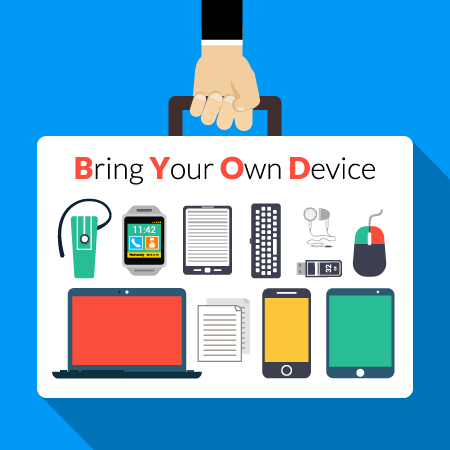
But what about BYOD? If employees use their own devices, your work-from-home guidelines for employees will need to:

  • Specify approved devices
  • Separate personal and company data
  • Plan for ongoing maintenance and updates of all devices
  • Set restrictions on what can and cannot be installed on the device
  • Consider potential legal issues/difficult data retrieval
  • Explain ownership expectations and procedures upon an employee’s termination

While BYOD has obvious advantages, such as reduced costs and potentially greater mobility, it also poses a greater security risk for your organization. 

  Let’s talk about data security

About Version 2 Digital

Version 2 Digital is one of the most dynamic IT companies in Asia. The company distributes a wide range of IT products across various areas including cyber security, cloud, data protection, end points, infrastructures, system monitoring, storage, networking, business productivity and communication products.

Through an extensive network of channels, point of sales, resellers, and partnership companies, Version 2 offers quality products and services which are highly acclaimed in the market. Its customers cover a wide spectrum which include Global 1000 enterprises, regional listed companies, different vertical industries, public utilities, Government, a vast number of successful SMEs, and consumers in various Asian cities.

About Safetica
Safetica is to provide small and mid-sized companies with the same quality data protection that corporations have – affordably, and without any additional IT administration or disruptions in operation.

March 2023: What’s New?

“What’s New?” is a series of blog posts covering recent changes to Comet in more detail. This article covers the latest changes in Comet Voyager over March 2023.

There were just three Comet software releases during March – two in the 23.3.x Voyager release series, plus one minor patch update 23.2.1 for our quarterly “Leda” release track.

We’ve landed a few large and exciting features this March:

S3 Object Lock

Comet 23.3.1 adds support for Object Lock on S3. This feature allows Comet to “lock” an object inside a S3-compatible bucket, preventing it from being deleted or modified for a fixed period of time.

This is a fantastic new capability for Comet and it is a key defense against ransomware. Comet generally requires the capability to add and delete files within your Storage location; deleting files is necessary for applying retention passes, updating index files, and coordinating locking across multiple devices. However, if malware is running on your PC and manages to intercept Comet’s storage credentials, the malware would also be able to delete files, causing much wider havoc.

Comet uses S3 “Compliance Mode” to lock individual objects within the storage location. This ensures that there is no way for the object to be deleted for the specified time, not using Comet’s storage credentials, nor even if your administrator S3 keys are leaked or exposed.

For a visual overview of the process, please see our usage guide and also the simplified explanation.

This feature is available for Amazon S3, Wasabi, IDrive (excluding Storage Template provisioning), and other S3-compatible providers including Minio-based providers. Please check with your S3-compatible provider’s documentation to see if Object Lock is available.

Object Lock is an opt-in feature, both in Comet and with cloud storage providers. It also relies on S3 bucket versioning. These properties generally must be set when the S3 bucket is created for the first time. It is not generally possible to enable Object Lock on an existing S3 bucket. To use Object Lock with an existing S3-based Storage Vault, you would have to create a new S3 bucket with Object Lock enabled; migrate the data; and update Comet’s Storage Vault settings to point to the updated bucket.

Comparison to Backblaze B2

Regular users of Comet may be aware of the existing “Hide files rather than deleting them” option for Backblaze B2. Backblaze B2 supports both a native API and also an S3-compatible layer over the native API. Comet Backup integrates with the native API, so the new S3 Object Lock feature is not available for use with Backblaze B2. However, the existing “Hide files instead of deleting them” option can be used to provide the same protection against ransomware.

Codesigning with Azure Key Vault

If you are customizing the branding of the Comet Backup desktop app, then we would recommend setting up codesigning certificates. Having a codesigning certificate means that installing Comet Backup proceeds more smoothly through Smartscreen and Antivirus popup warnings on Windows, and through Gatekeeper on macOS.

The Windows codesigning programme, “Authenticode”, is currently in a period of disruption as new rules are being put in place. Owing to the high number of events where developer codesigning certificate files were leaked or lost, new requirements are being enforced from June 1st 2023 that newly issued codesigning certificates must no longer be stored as plain files on disk, but instead must be stored in a Hardware Security Module (“HSM”) or equivalent isolated device. Comet has long supported Authenticode certificates using either certificate files (“PKCS #12”), or via plug-in HSM devices that are compatible with the “PKCS #11” standard.

There are two tiers of Authenticode available. The Extended Validation (“EV”) service performs a deeper level of business-level and legal checks of the target organization before issuing the certificate. The extra vetting comes with a higher purchase cost, but it also results in a higher level of initial reputation for the resulting codesigned .exe file. An EV certificate was always required to be stored on an HSM.

However, it’s common to install Comet Server on a cloud VM or VPS, where plugging in a USB dongle or smartcard hardware device is not physically possible. This difficulty also discouraged many MSPs from using the higher-quality Extended Validation service. With the impending phaseout of the file-based method for newly issued certificates, neither existing option is suitable, so another option had to be found.

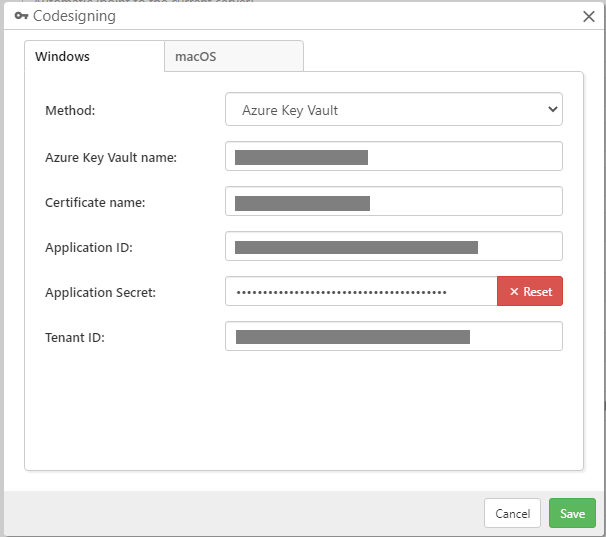
Comet 23.3.0 adds support for codesigning using Azure Key Vault. This is a cloud service from Microsoft to manage the secure provisioning of security keys and certificates, including for Authenticode codesigning. There are various services and pricing tiers available; in particular, it’s possible to purchase a managed cloud HSM, which meets the new June 1st 2023 Authenticode requirements.

At the time of writing, we would recommend GlobalSign or TrustZone for issuing new Authenticode certificates. There is no carry-over reputation with Authenticode, so replacement certificates can be issued from any provider. These particular providers were prepared early for the new requirements and have a secure vetting process to prove your use of an HSM, such as an Azure Key Vault managed HSM, before issuing your certificate. The private key never leaves the managed cloud HSM device, and Comet Server only uses an Azure application ID to remotely perform the signing steps.

Comet Server can perform Authenticode codesigning for Windows, regardless of whether Comet Server is installed on a Windows or Linux host OS. This is achieved by using a cross-platform signing toolchain. To support the new Azure Key Vault feature, we replaced our existing bundled codesigning toolchain from osslsigncode with a new jsign version. Comet ships these third-party utilities as a courtesy in compliance with their redistribution license.

For most existing users of codesigning with a PKCS#12 file-based certificate on disk, there will be no noticeable difference and Comet will continue to work without any configuration changes. However, some users may experience breaking changes:

  • The new jsign program takes different parameters for hardware devices using the PKCS#11 standard, which could not be automatically converted. Users of hardware devices may need to revisit their settings.
  • If Comet Server is installed on ARM64 Linux, the version of jsign distributed by Comet is not compatible with the musl C runtime generally used for static binary distribution. A glibc-based Linux distribution is now required to run the codesigning toolchain on ARM64 Linux. The issue does not apply to x86_64 Linux. We may be able to resolve this issue in a future version of Comet.

For more information, see the full Authenticode codesigning documentation.

New web interface features

Looking beyond these headline features, there have been many more improvements to Comet this month, particularly in the Comet Server web interface.

It’s now possible to select custom snapshots for deletion from the web restore dialog. This builds upon last month’s feature to add this in the Comet Backup desktop app. To use this feature, enable “Advanced Options” from the top-right user menu, and then click the new Actions button in the Restore wizard dialog.

You can now see an online device’s software version, OS platform, and IP address directly on the User Detail page in the Comet Server web interface. This was a minor feature request on our Feature Voting page. To view these new columns, click the “View” button to configure which columns are displayed. Your custom column selection is preserved for this browser throughout multiple page views, but your custom column selection will be reset when a new version of Comet Server is released.

If your Comet Server is configured to show software downloads to logged-out users, the login screen has expanded the number of download options from three (Windows, macOS, and Linux) to four with the new Synology download button. This fixes a minor inconsistency with the web interface as this fourth platform should be shown in the same context as the other three platforms.

There have been many cosmetic improvements to the Comet Server web interface too, including better spacing and padding when configuring an Office 365 Protected Item or a Windows System Backup Protected Item. We regularly make small improvements like this, but this month, we’ve also been working on a much more major cosmetic change for the Comet Server web interface. We will be able to share more information about that soon.

About Version 2 Digital

Version 2 Digital is one of the most dynamic IT companies in Asia. The company distributes a wide range of IT products across various areas including cyber security, cloud, data protection, end points, infrastructures, system monitoring, storage, networking, business productivity and communication products.

Through an extensive network of channels, point of sales, resellers, and partnership companies, Version 2 offers quality products and services which are highly acclaimed in the market. Its customers cover a wide spectrum which include Global 1000 enterprises, regional listed companies, different vertical industries, public utilities, Government, a vast number of successful SMEs, and consumers in various Asian cities.

About Comet
We are a team of dedicated professionals committed to developing reliable and secure backup solutions for MSP’s, Businesses and IT professionals. With over 10 years of experience in the industry, we understand the importance of having a reliable backup solution in place to protect your valuable data. That’s why we’ve developed a comprehensive suite of backup solutions that are easy to use, scalable and highly secure.

Critical Infrastructure’s Silent Threat: Part 3 – Protecting PLCs and Their Environment

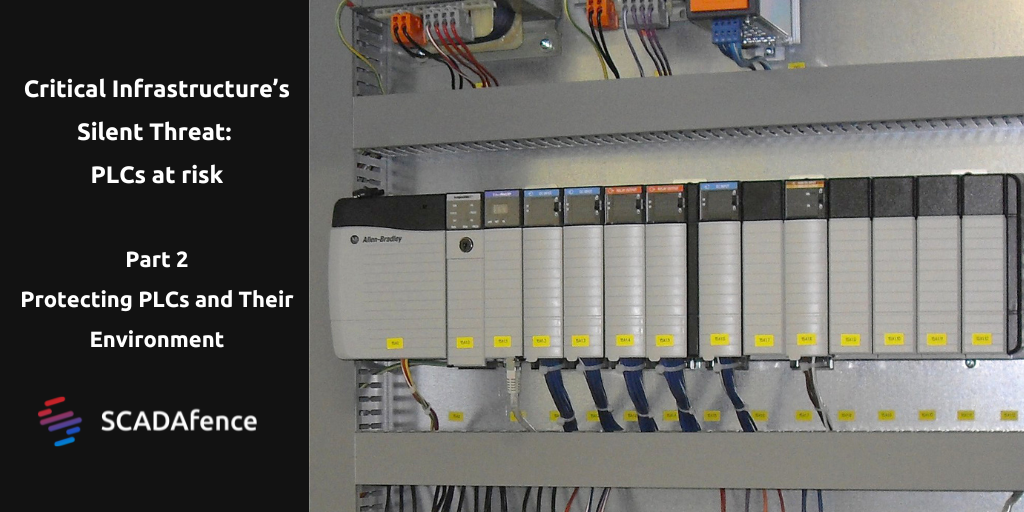
Part 3: Protecting PLCs and Their Environment

For many years, PLCs have been insecure by design. Several years into customizing and applying best practices from IT gave rise to secure protocols, encrypted communications, network segmentation, and so on. However, PLCs programming is still done without security in mind.

PLC secure coding practices leverage natively available functionality in the PLC. Implementing these practices requires little to no extra hardware or software. They can be incorporated into the typical PLC operating and programming workflow. The implementation requires security expertise and solid knowledge of the PLCs that need to be safeguarded, their logic, and the underlying process.

Continue reading

Introducing runZero’s new ServiceNow Service Graph integration: Get greater data accuracy for your CMDB

Big news: runZero now integrates with ServiceNow Service Graph. The runZero Service Graph integration offers a robust solution for organizations who need to get a comprehensive and up-to-date view of asset data across IT (information technology), OT (operational technology), cloud, and remote environments. This new integration will quickly and easily enrich CMDBs with high-fidelity, contextualized asset details, superseding the existing ETL integration.

The importance of data quality in CMDBs

According to Gartner, nearly one third of CMDB challenges stem from data completeness or quality concerns, which highlights the importance of prioritizing data quality in an organization’s configuration management database (CMDB). This is not just a theoretical concern: Gartner also notes that 99% of organizations using CMDB tooling who do not address configuration item data quality gaps will experience visible business disruption. This makes sense when you consider that IT infrastructure and services are critical components of most modern businesses. Without accurate information about these assets, it becomes difficult to make informed decisions related to security, compliance, risk management, and more.

To deliver better and complete visibility across your environment, the Service Graph Connector brings your runZero asset inventory into your ServiceNow CMDB. With better data quality in your CMDB, you can ensure they get managed in accordance with your organization’s policies. By leveraging runZero’s ServiceNow Service Graph integration, you can improve your CMDB accuracy and reduce the likelihood of costly disruptions caused by inaccurate data. You can be confident that you’re operating on every asset–even the ones your CMDB didn’t know about.

Eliminate data quality gaps and improve IT/IoT/OT asset visibility with runZero’s ServiceNow Service Graph integration

Many organizations are turning to Cyber Asset Management (CAM) solutions to gain better visibility into IT, IoT, and OT assets. These solutions can help proactively identify unmanaged devices and uncover security risks within networks. By using both API data sources and unauthenticated active scanning, runZero is one of the few solutions capable of discovering unmanaged IT, IoT, and OT devices. This approach is especially valuable in OT environments, where visibility may be limited.

runZero’s ServiceNow integration provides you with a powerful tool to improve your asset inventory and cyber asset management. With this integration, you can gain better visibility into IT, IoT, and OT assets, as well as identify and address data quality gaps. This can help you reduce the cost of downtime, improve labor productivity, and get more value from your CMDB investments. In addition, runZero’s active scanner is safe to use in OT environments, ensuring that you can get the most out of your cyber asset management solutions without compromising the safety of your systems. Dozens of organizations are using runZero’s combination of integrations and active discovery, including those in manufacturing, healthcare and utilities, to achieve full asset inventory.

How Capgemini helped their client get better quality data for their CMDB

Let’s take a look at the real world implications of not having a dedicated cyber asset management solution in place.

Capgemini, a global IT consulting firm, was contracted by a French manufacturer and retailer of luxury products to deploy an asset discovery solution and set up the integration with the new CMDB to store the company’s IT asset inventory. However, they were struggling to get the data they needed using MID Servers–especially for managed assets such as routers and switches. They knew they had to explore other asset discovery options.

One of the primary requirements established for the project was unauthenticated asset discovery. The IT department, part of the holding company, was having a hard time collecting credentials for service accounts for many parts of the business. Without credentials, ServiceNow was struggling to inventory most assets. As Capgemini looked into other solutions, they discovered runZero, which delivered everything their client needed: speed, accuracy, a rich API, and unauthenticated scans. runZero’s asset discovery was fast, efficient, and worked without credentials. With runZero, they found 2.5x as many devices as ServiceNow.

After seeing the results with runZero, Capgemini has other ideas for capitalizing on its capabilities. As they work with clients in future projects, runZero will give them an accurate picture of their client’s asset inventory enabling them to provide precise project plans with known scope, schedule, and cost estimates.

Ready to get better results from your CMDB investments? To get started, sign up for runZero and then get the ServiceNow Service Graph integration on the SNOW marketplace.

Be confident in your CMDB’s data quality

runZero is a cyber asset management solution that delivers full asset inventory–quickly, easily, and safely. The solution enriches CMDBs with detailed asset and network data from a purpose-built unauthenticated active scanner. Discover every asset–even the ones your CMDB didn’t know about. 

About Version 2 Digital

Version 2 Digital is one of the most dynamic IT companies in Asia. The company distributes a wide range of IT products across various areas including cyber security, cloud, data protection, end points, infrastructures, system monitoring, storage, networking, business productivity and communication products.

Through an extensive network of channels, point of sales, resellers, and partnership companies, Version 2 offers quality products and services which are highly acclaimed in the market. Its customers cover a wide spectrum which include Global 1000 enterprises, regional listed companies, different vertical industries, public utilities, Government, a vast number of successful SMEs, and consumers in various Asian cities.

About runZero
runZero, a network discovery and asset inventory solution, was founded in 2018 by HD Moore, the creator of Metasploit. HD envisioned a modern active discovery solution that could find and identify everything on a network–without credentials. As a security researcher and penetration tester, he often employed benign ways to get information leaks and piece them together to build device profiles. Eventually, this work led him to leverage applied research and the discovery techniques developed for security and penetration testing to create runZero.

runZero partners with Abira Security

runZero partners with Abira Security, a full service cybersecurity advisor 
and managed services provider.

runZero is excited to announce our partnership with Abira Security, a market-leading provider of comprehensive cybersecurity solutions. As part of this partnership, Abira will be offering runZero as a solution to solve the challenges of cyber asset management. runZero’s asset inventory and discovery capabilities are the key to delivering a complete security package.

At runZero, we believe network visibility and asset inventory is a foundational part of maintaining a strong security posture. Abira offers a complete portfolio of cybersecurity solutions, paired with exceptional strategy expertise and real-world experience. Partnering with Abira Security allows runZero to expand and reach more organizations that are searching for a complete security strategy that includes deep network visibility and comprehensive asset inventory.

Eric Goldstein, Director of Channel at runZero, says, “We’re thrilled to be partnering with Abira Security to deliver cyber asset management to our joint customers. A comprehensive asset inventory is essential for any security program and is often the very first step in a security assessment. Together with runZero, Abira will help customers achieve their security goals and maximize their security tech stack value.”

“Abira is a pure play cybersecurity services firm and a true VAR. Our quality, flexibility, and cost structure is hard to beat,” says Ray Harrison, Sales Director at Abira Security.

Organizations today face ever-increasing cyber threats that can compromise their sensitive data and operations. The first step in securing any network is developing a complete asset inventory that accounts for all devices: managed or unmanaged; IT, OT, or IoT; cloud, on-prem, or remote. Combining runZero’s asset inventory capabilities and Abira’s cybersecurity expertise, customers have the benefit of an end-to-end solution that helps them identify, secure, and manage all of their assets, no matter where they exist, safely and effectively.

For more information, visit https://abirasecurity.com/.

Strengthen your security posture with cyber asset management

runZero is a cyber asset management solution that delivers full cyber asset inventory–quickly, easily, and safely. The solution enriches existing IT & security infrastructure data–from vuln scanners, EDRs, and cloud service providers–with detailed asset and network data from a purpose-built unauthenticated active scanner. No credentials required. Just deploy an Explorer and start scanning.

Get runZero for free 

Partnership Will Drive Increased Adoption of Portnox’s Cutting-Edge NAC Solution Purpose-Built for Large Distributed Organizations in the Region

LONDON — Portnox, which supplies network access control (NAC), visibility and device risk management to organizations of all sizes, today announced that it has partnered with Distology for the sole distribution and resell of its cloud-delivered NAC-as-a-Service solution in the United Kingdom and Ireland.

We chose to partner with Distology because of their successful history of IT security solution distribution in the UK and Irish markets, said Portnox CEO, Ofer Amitai. Were confident this collaboration will yield tremendous growth for both parties, as Portnox has a unique value proposition and Distology has the market enablement expertise to effectively evangelize our network security offering.

We have a long-established relationship with Portnox and it speaks volumes that the team have decided to choose Distology as their sole UK&I distributor. The technology Portnox brings to the market is incredibly exciting and complements our existing vendor stack effortlessly, said Stephen Rowlands, Head of Sales for Distology. Were especially looking forward to representing and promoting Portnox Clear to our growing partner base, as this brand-new cloud-based technology has potential to completely disrupt the market and we foresee masses of growth potential in this innovative product.

Portnox introduced its cloud-delivered NAC-as-a-Service solution to the UK & Irish markets less than two years go. As the first to bring NAC to the cloud, Portnox has quickly gained a foothold in the region, particularly among large distributed enterprises in the retail, construction and utilities industries.

The adoption of our NAC-as-a-Service product in the UK has been very strong to date, said VP of Products, Tomer Shemer. This is a testament to the fact that the UK is one of the markets leading the trend of cloud security adoption. We expect to see continued growth in the coming years in this area of Europe.

Portnox is set to exhibit at this week’s RSA 2020 Conference (booth #4234) in San Francisco, February 24-28. Additionally, Portnox (booth #G108) and Distology (booth #C40) will both be exhibiting at InfoSec Europe 2020, Europes largest event for information and cyber security, in London, June 2-4.

About Version 2 Digital

Version 2 Digital is one of the most dynamic IT companies in Asia. The company distributes a wide range of IT products across various areas including cyber security, cloud, data protection, end points, infrastructures, system monitoring, storage, networking, business productivity and communication products.

Through an extensive network of channels, point of sales, resellers, and partnership companies, Version 2 offers quality products and services which are highly acclaimed in the market. Its customers cover a wide spectrum which include Global 1000 enterprises, regional listed companies, different vertical industries, public utilities, Government, a vast number of successful SMEs, and consumers in various Asian cities.

About Portnox
Portnox provides simple-to-deploy, operate and maintain network access control, security and visibility solutions. Portnox software can be deployed on-premises, as a cloud-delivered service, or in hybrid mode. It is agentless and vendor-agnostic, allowing organizations to maximize their existing network and cybersecurity investments. Hundreds of enterprises around the world rely on Portnox for network visibility, cybersecurity policy enforcement and regulatory compliance. The company has been recognized for its innovations by Info Security Products Guide, Cyber Security Excellence Awards, IoT Innovator Awards, Computing Security Awards, Best of Interop ITX and Cyber Defense Magazine. Portnox has offices in the U.S., Europe and Asia. For information visit http://www.portnox.com, and follow us on Twitter and LinkedIn.。

About Distology
Distology is a Market Enabler and offers true value for the distribution of disruptive IT Security solutions. The vendors we work with represent innovative and exciting technology that continues to excite and inspire their reseller network. Our ethos is based on trust, relationships, energy and drive and offers end to end support in the full sales cycle providing vendor quality technical and commercial resource.

×

Hello!

Click one of our contacts below to chat on WhatsApp

×