

Skip to content

End-of-life assets: managing risks in outdated technology

Make new friends, but keep the old: one is silver, the other gold.

Despite enormous advances within information technology, security practitioners are still plagued by common problems. Advances in cybersecurity defenses and overall security awareness are helpful, but organizations still struggle with end-of-life (EOL) assets scattered across the attack surface. This can be a surprisingly difficult problem to solve and, most importantly, from the attacker’s perspective, EOL assets still provide easy footholds into an environment.

End-of-life is not the end

All of the system hardening and security patches in the world cannot protect a system that is not updated to use those features. System vendors generally provide patches and updates for a limited timespan. After that point, end users must invest in an upgrade to a newer version of the system or fend for themselves and hope for the best with an EOL, outdated asset lurking on the attack surface.

EOLed systems often stick around for years, mostly forgotten but still part of an organization’s infrastructure and, therefore, its attack surface. New vulnerabilities are still discovered and exploited in these outdated systems as the April 2024 D-Link NAS issue illustrated. Despite the known exposure, being EOL means that fixes will not be forthcoming.

While this may seem like an academic exercise, EOLed systems are surprisingly common. Our findings show many still-active EOLed operating systems in various environments.

Operating system end-of-life

Operating systems typically have multiple phases of vendor support, referred to as a support lifecycle. The duration of the lifecycle and services provided in various stages vary from vendor to vendor, usually tapering off with fewer updates and patches in later stages.

The two phases we are most concerned with are:

  • Mainstream support during which vendors release patches that may add new features, fix bugs, or mitigate security vulnerabilities.

  • Extended support during which only critical bugs and vulnerabilities are addressed.

While some vendors’ terminology and phases may slightly differ, generally speaking, most support lifecycles can be broadly mapped to these two phases.

When a vendor stops providing upgrades for non-critical issues, the product is considered in an “End-of- Life” (EOL) status. There may be an additional period known as “Extended-End-of-Life” (EEOL) during which the vendor continues to provide updates for critical issues. EOL and EEOL can happen concurrently or separately depending on the system and the vendor. Most importantly, after EOL, systems no longer receive critical updates or security patches, and thus become much greater risks to keep around.

But around they are! Systems have a long tail: if they still work, replacing them with a supported alternative may be more trouble than it’s worth. In some cases, the responsible staff can’t or won’t; in others, the system may host critical functions that are not supported on newer systems. Uptime guarantees and financial considerations may also play a role.

When we look at our sample data for operating systems that are past their extended EOL dates, we see that chart toppers are a pretty even split between Windows and various Linux distributions:
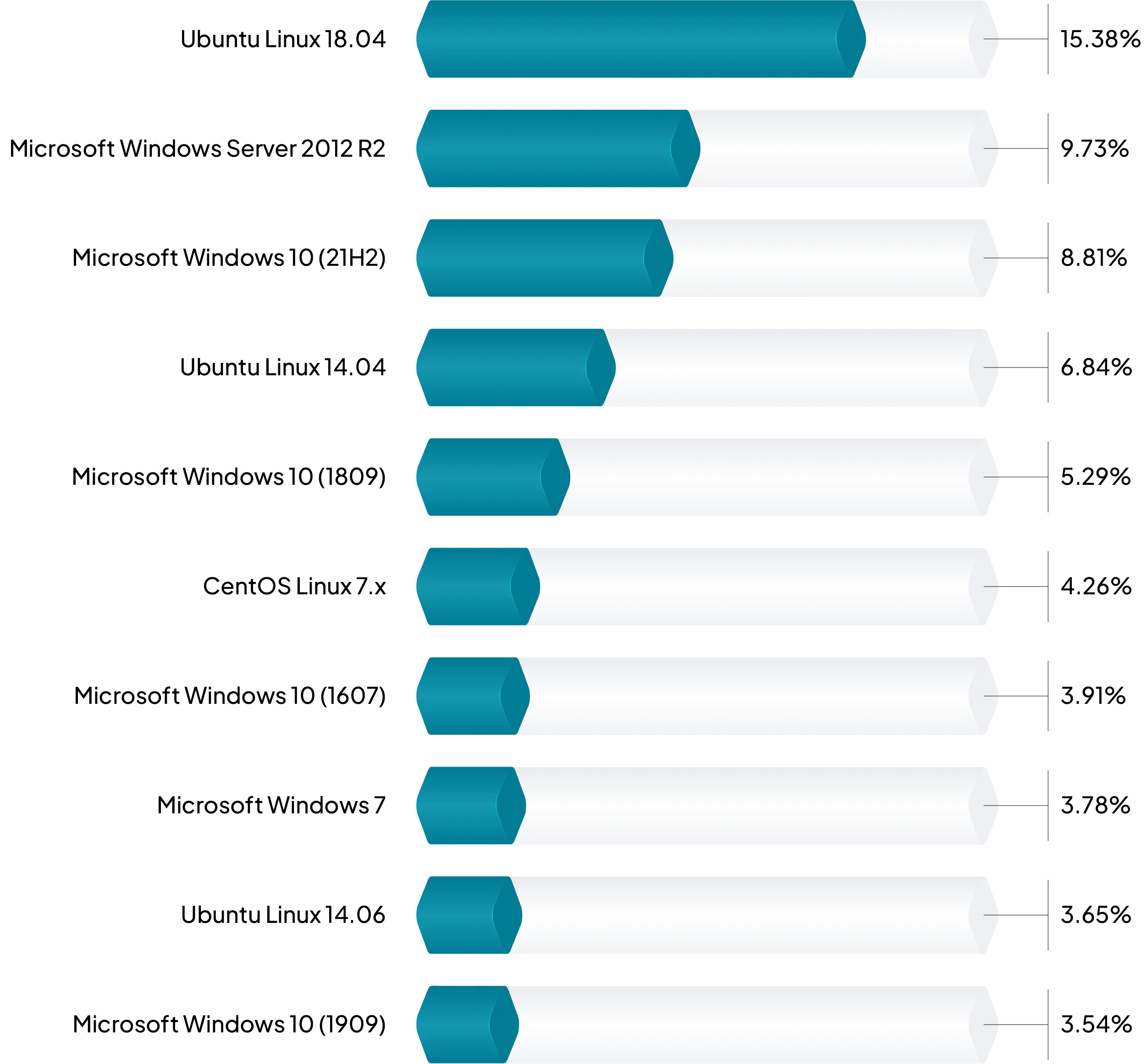
FIGURE 1 – Top OS past extended EOL.

The presence of Ubuntu 18.04 isn’t surprising as it only reached Extended EOL just over a year ago in June of 2023. Ubuntu is often a go-to Linux distribution for businesses and home users alike as well as very popular in cloud environments. Windows Server 2012 R2 is also unsurprising; it reached extended EOL only very recently, in October of 2023. While running an OS a year past extended EOL is unfortunate, it’s not unusual for server migrations to drag on past EOL dates due to logistical and compatibility concerns.

The next major group is composed of various Windows 10 releases that, were they combined, would dominate the chart at 21.55%. Most of these are running the Windows 10 21H2 which reached extended EOL very recently in June 2024. Windows 10 was originally released in July of 2015. Microsoft has generally released two major updates for it every year since. Typically, updates released in the first half of the year are supported for 18 months and those released in the second half are supported for 30 months. There are some variations on this theme, with Long-Term Servicing Channel (LTSC) editions, for example, having longer lifespans. Windows 10 22H2 is the final version of Windows 10 and will reach extended EOL in October 2025.
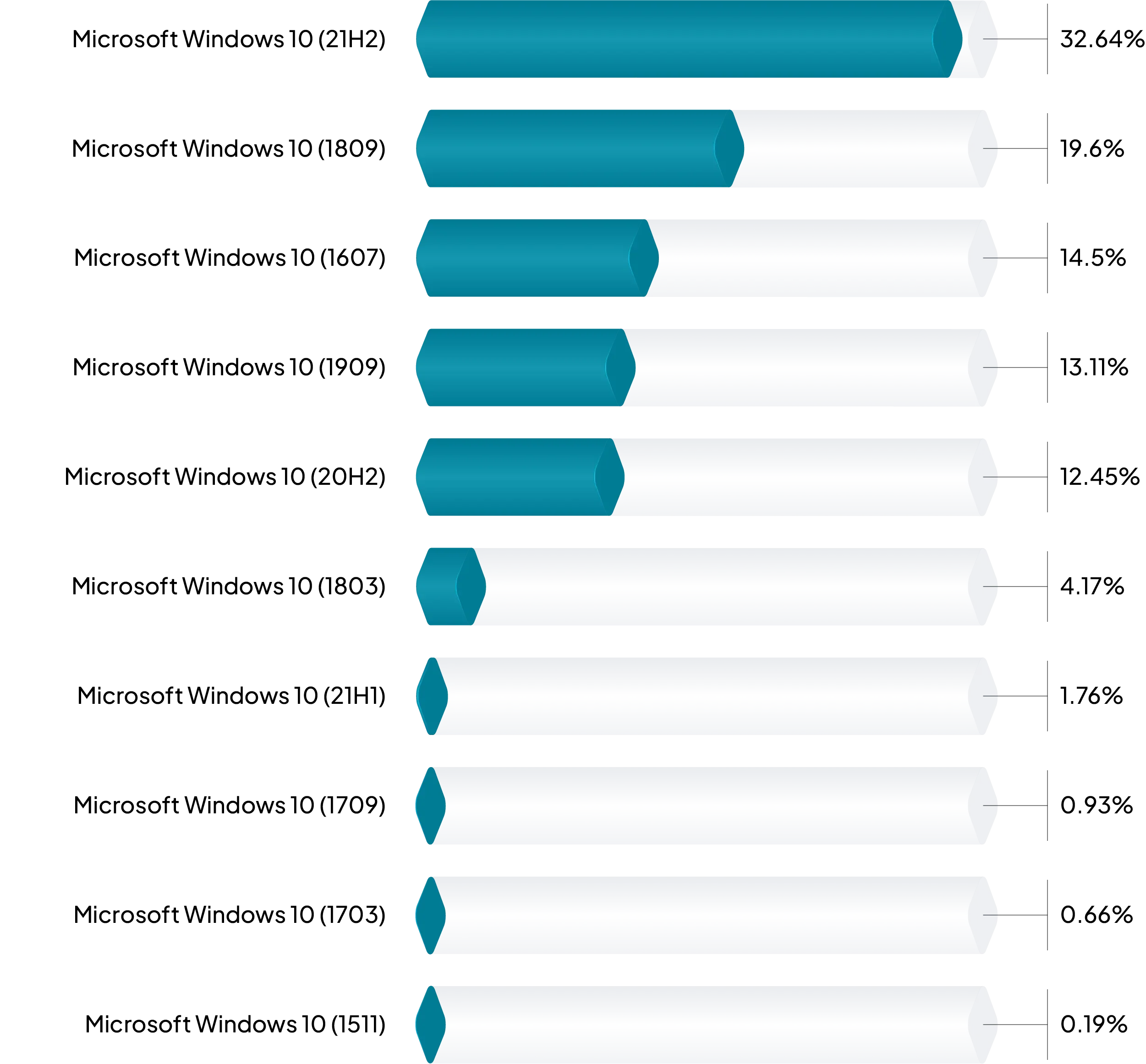
FIGURE 2 – Windows 10 past extended EOL.

Exposed systems past extended EOL

While operating systems outside of their extended lifespans are always worth looking into, those with exposure to an external attack surface are particularly worrisome. Of all systems exposed to an external attack surface and for which EOL data was available, 15.99% were past their extended EOL dates. That means that roughly 16% of all devices exposed to external attackers are probably not receiving security updates.

For server operating systems specifically, when we group them by family, we see that the largest block are Windows hosts. The percentage may be higher than expected based on Figure 1 above. This is due the long tail of various Windows Server versions going back to Server 2008 R2.
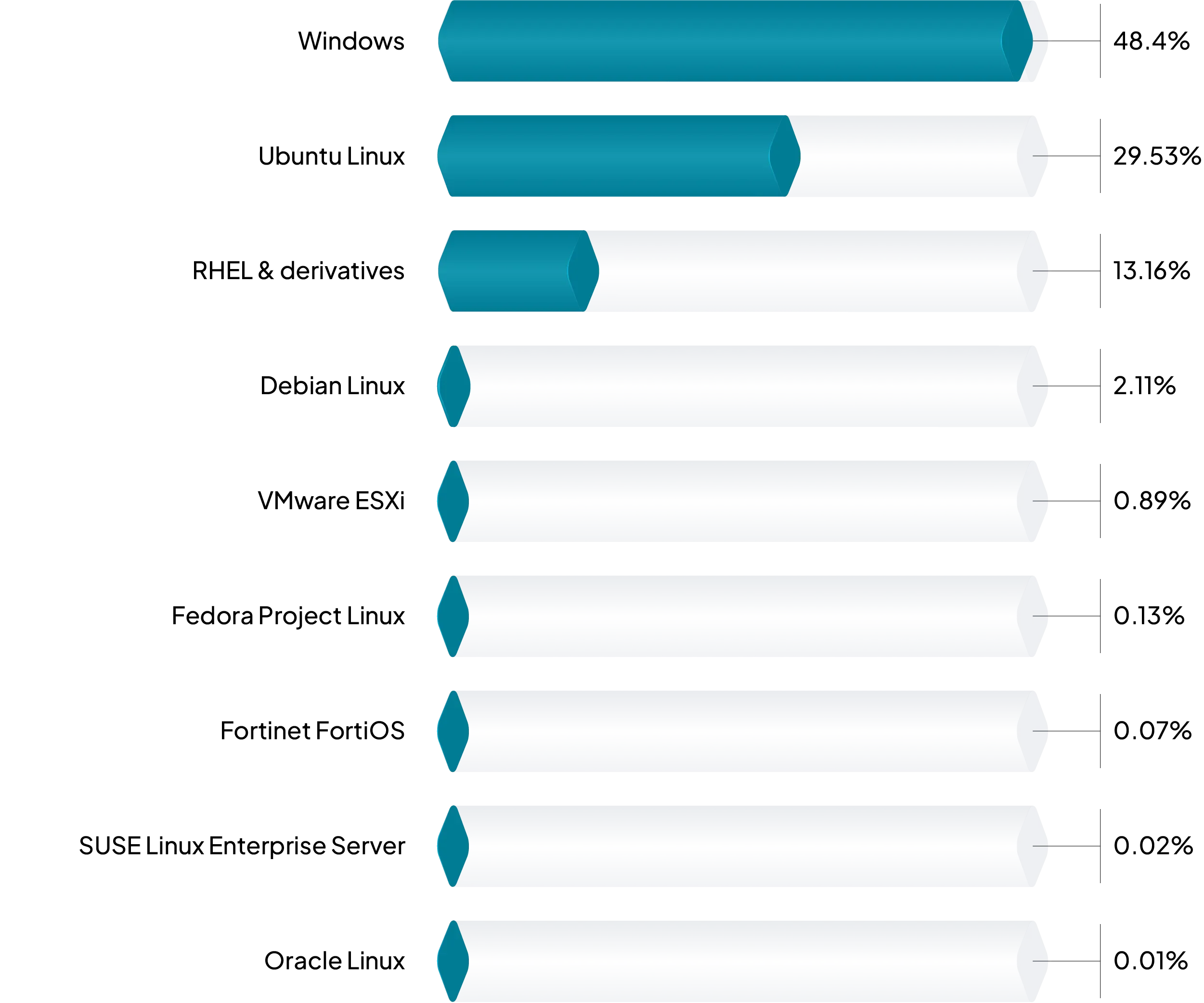
FIGURE 3Server operating systems with external attack surface exposure, past extended EOL.

Case study: the Boa web server

The Boa webserver is an open source web server designed to have low resource requirements for users and to be compatible with embedded applications. The last official release of the Boa webserver, version 0.94.14rc21, was in February of 2005. For comparison, the Colts have won a Super Bowl more recently than the latest release of the Boa web server, and the Colts haven’t won a Super Bowl since 2007!

There are known vulnerabilities in Boa that have been exploited in critical infrastructure in the past. For example, in November 2022, Microsoft disclosed that Boa web servers in Internet-of-Things (IoT) devices were a common attack vector against power grids in India.

While it is relatively easy for an administrator to determine if a server is running Boa, it is much harder to detect in an embedded device. Boa is common in embedded devices like security cameras and IP phones that are widely deployed in enterprise networks. Therefore, curating an accurate inventory of an organization’s embedded devices, not just servers, that are running Boa is critical for protecting these networks.
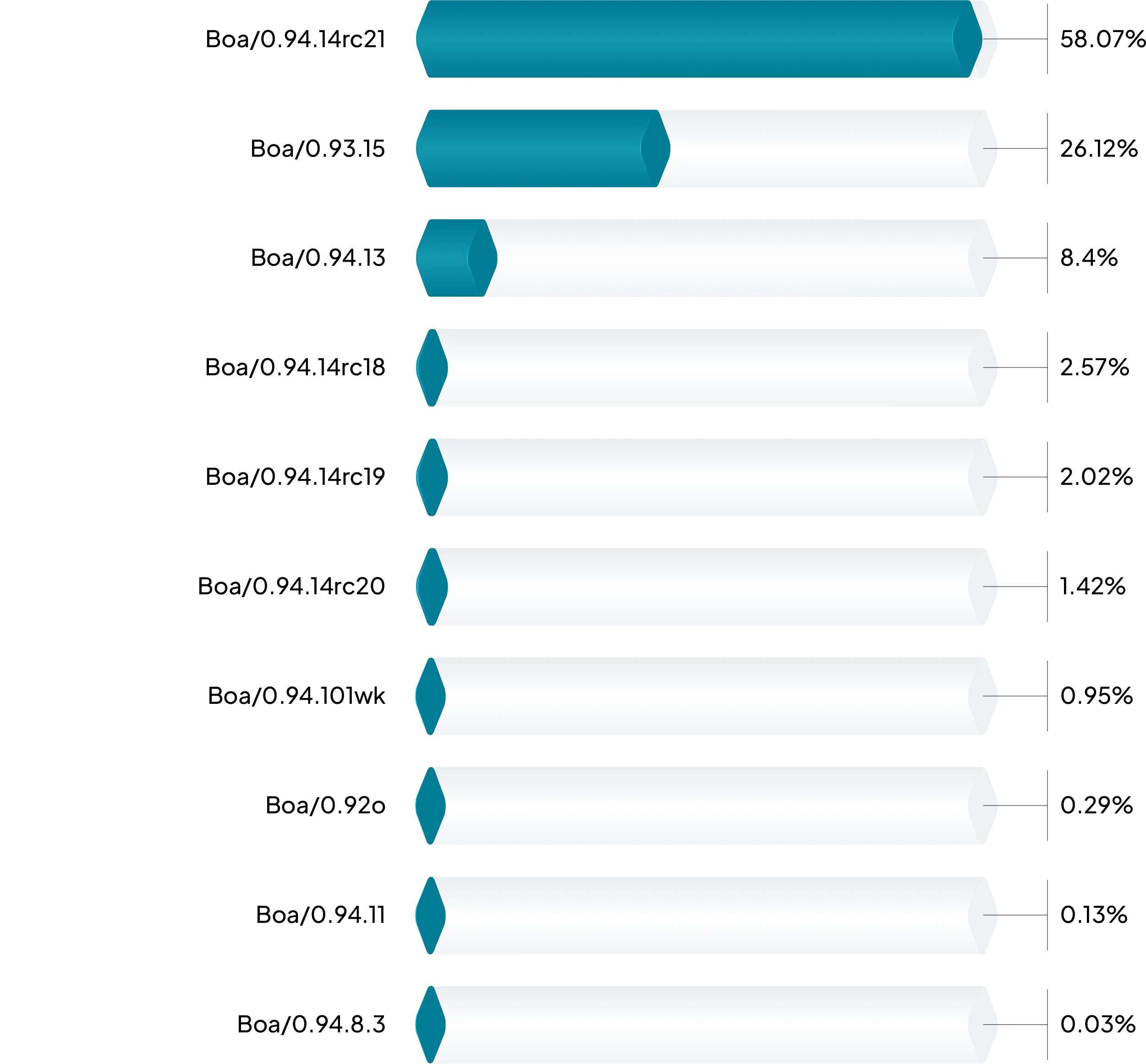
FIGURE 4Boa web server version distribution in runZero data. 

Embedded devices running Boa 
Network-attached camera92.3%
Media & telephony devices5.5%
Environmental control devices0.9%
Network devices0.9%
Industrial control devices0.3%

FIGURE 5 – Device types still running Boa in sample runZero data.

New-Old Friends

We’d be remiss if we didn’t mention common operating systems that will reach extended EOL soon. If any of these operating systems are running in your environment, we strongly recommend that you start planning for replacement or mitigation sooner rather than later.
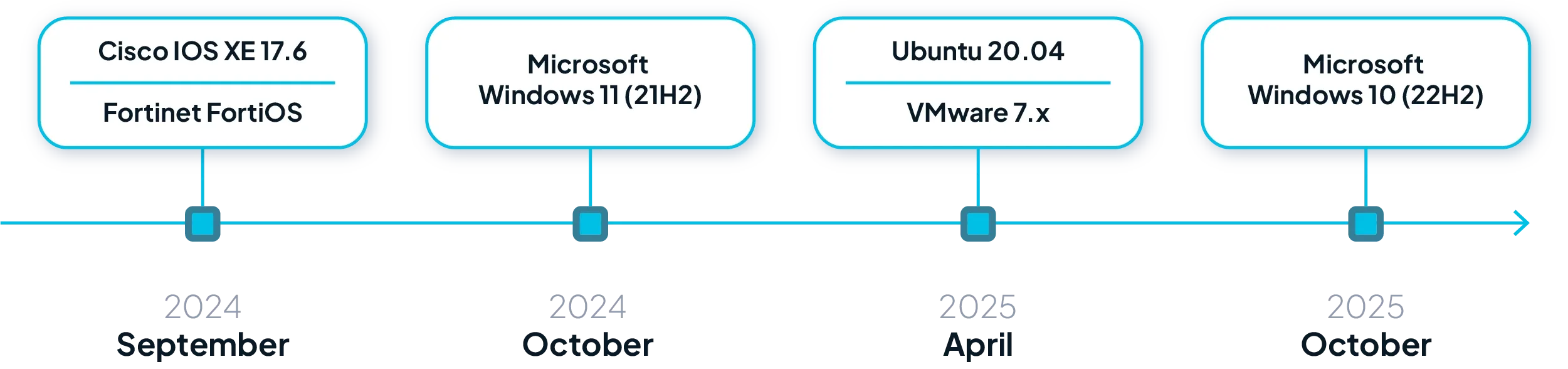
FIGURE 6 – Common OS approaching extended EOL.

Final Thought

The prevalence of EOL systems within organizational networks remains a significant security concern. Despite advancements in security technology and practices, these outdated assets continue to provide attackers with easy entry points. Addressing this issue requires a proactive approach to asset discovery, exposure mitigation, and vigilant attack surface management to ensure that all components of your network, regardless of age, are secure and up-to-date.

runZero customers can find assets that are past their extended EOL by using the Policy: Extended End-of-Life operating systems canned query. You may need to add the OS EOL Ext. column in the Asset inventory in order to view the value.

Don’t forget to download the runZero Research Report to learn more about the state of asset security.
About Version 2 Digital

Version 2 Digital is one of the most dynamic IT companies in Asia. The company distributes a wide range of IT products across various areas including cyber security, cloud, data protection, end points, infrastructures, system monitoring, storage, networking, business productivity and communication products.

Through an extensive network of channels, point of sales, resellers, and partnership companies, Version 2 offers quality products and services which are highly acclaimed in the market. Its customers cover a wide spectrum which include Global 1000 enterprises, regional listed companies, different vertical industries, public utilities, Government, a vast number of successful SMEs, and consumers in various Asian cities.

About runZero
runZero, a network discovery and asset inventory solution, was founded in 2018 by HD Moore, the creator of Metasploit. HD envisioned a modern active discovery solution that could find and identify everything on a network–without credentials. As a security researcher and penetration tester, he often employed benign ways to get information leaks and piece them together to build device profiles. Eventually, this work led him to leverage applied research and the discovery techniques developed for security and penetration testing to create runZero.

How to find Siemens devices on your network

Latest Siemens vulnerabilities: SCALANCE and RUGGEDCOM products

Siemens has disclosed multiple vulnerabilities for a variety of products and devices, including the SCALANCE and RUGGEDCOM product lines.

  • CVE-2024-41976 is rated high, with a CVSS score of 7.2, and allows an attacker to issue invalid VPN configuration data causing an authenticated attacker to execute arbitrary code.
  • CVE-2024-41977 is rated high, with a CVSS score of 7.1, and allows an attacker to escalate their privileges due to devices not properly enforcing user session isolation.
  • CVE-2024-41978 is rated high, with a CVSS score of 6.5, and allows an authenticated attacker to forge 2FA tokens of other users due to devices storing sensitive 2FA information in log files on disk.
  • CVE-2024-44321 is rated medium, with a CVSS score of 2.7, and allows an attacker to issue large input data causing an unauthenticated denial-of-service.

What is the impact?

Successful exploitation of this vulnerability would allow an authenticated attacker to remotely execute code, escalate their privileges, or forge other users credentials. The first three do require attacks be authenticated initially to exploit these vulnerabilities.

The last vulnerability is on the lower score, but would still require the device be restarted if the denial-of-service condition was triggered.

Are updates or workarounds available?

Siemens recommends upgrading all affected devices to firmware V8.1 or later. Additionally, users should ensure these devices are isolated in their own networks to prevent unwanted network traffic to the device.

How to find potentially vulnerable systems with runZero

From the Asset Inventory, use the following query to locate systems running potentially vulnerable software:

hw:"RUGGEDCOM" OR hw:"SCALANCE" OR hw:"LOGO"

CVE-2024-35292 – SIMATIC S7-200 SMART Devices (July 2024)

In July 2024, Siemens disclosed a vulnerability in their SIMATIC S7-200 SMART Devices.

CVE-2024-35292 is rated high, with a CVSS score of 8.2, and allowed attackers to predict IP ID sequence numbers as their base method of attack and eventually could allow an attacker to create a denial-of-service condition.

What was the impact?

Successful exploitation of this vulnerability would allow an attacker to issue a denial-of-service condition.

Are updates or workarounds available?

The only workaround was to restrict access to the network where the affected products were located by introducing strict access control mechanisms.

How runZero users found potentially vulnerable systems

From the Asset Inventory, runZero users applied the following query to locate systems running potentially vulnerable software:

hw:SIMATIC

SENTRON, SCALANCE, and RUGGEDCOM vulnerabilities (March 2024)

In March, 2024, Siemens released security advisories for a variety of products and devices, including the SENTRON, SCALANCE, and RUGGEDCOM product lines.

Several of the vulnerabilities had CVSS scores in the 7.0 to 8.9 range (high) and several more in the 9.0 to 10.0 range (critical).

For the full list of vulnerabilities, you can consult Siemens ProductCERT.

What was the impact?

Several of these vulnerabilities allowed for unauthenticated remote code execution, allowing for compromise of the vulnerable systems. Other vulnerabilities could lead to privilege escalation, information disclosure, or denial of service. Users were urged to upgrade as quickly as possible. Siemens released updates via a variety of channels. See Siemens ProductCERT for details.

How runZero users found potentially vulnerable systems

From the Asset Inventory, runZero users applied the following query to locate Siemens assets that were potentially vulnerable:

hardware:Siemens OR hardware:RuggedCom

About Version 2 Digital

Version 2 Digital is one of the most dynamic IT companies in Asia. The company distributes a wide range of IT products across various areas including cyber security, cloud, data protection, end points, infrastructures, system monitoring, storage, networking, business productivity and communication products.

Through an extensive network of channels, point of sales, resellers, and partnership companies, Version 2 offers quality products and services which are highly acclaimed in the market. Its customers cover a wide spectrum which include Global 1000 enterprises, regional listed companies, different vertical industries, public utilities, Government, a vast number of successful SMEs, and consumers in various Asian cities.

About runZero
runZero, a network discovery and asset inventory solution, was founded in 2018 by HD Moore, the creator of Metasploit. HD envisioned a modern active discovery solution that could find and identify everything on a network–without credentials. As a security researcher and penetration tester, he often employed benign ways to get information leaks and piece them together to build device profiles. Eventually, this work led him to leverage applied research and the discovery techniques developed for security and penetration testing to create runZero.

How to find Windows Remote Desktop Licensing Services on your network

Latest vulnerability: CVE-2024-38077 

Microsoft has disclosed multiple vulnerabilities in their Windows Remote Desktop Licensing Service product.

CVE-2024-38077 is rated critical with CVSS score of 9.8 and allows an attacker to remotely execute code which could lead to complete system compromise.

What is the impact?

A heap overflow flaw could allow an attacker to send a message that would trigger this vulnerability and allow remote code execution. With the right code execution this could lead to a complete system compromise giving the attacker complete control.

Are updates or workarounds available?

Microsoft has released patches to address this vulnerability. Instances should be updated immediately to the latest patched version. Additionally, if this service is not needed, it is advisable to disable it or, at the very least, ensure it is securely firewalled within business networks.

How to find potentially vulnerable systems with runZero

From the Service Inventory, use the following query to locate systems running potentially vulnerable software:

port:135 AND protocol:epm AND _service.epm.uuids:"3d267954-eeb7-11d1-b94e-00c04fa3080d"

You may also search for associated named pipes:

port:135 AND protocol:epm AND _service.epm.pipes:"HydraLsPipe"

About Version 2 Digital

Version 2 Digital is one of the most dynamic IT companies in Asia. The company distributes a wide range of IT products across various areas including cyber security, cloud, data protection, end points, infrastructures, system monitoring, storage, networking, business productivity and communication products.

Through an extensive network of channels, point of sales, resellers, and partnership companies, Version 2 offers quality products and services which are highly acclaimed in the market. Its customers cover a wide spectrum which include Global 1000 enterprises, regional listed companies, different vertical industries, public utilities, Government, a vast number of successful SMEs, and consumers in various Asian cities.

About runZero
runZero, a network discovery and asset inventory solution, was founded in 2018 by HD Moore, the creator of Metasploit. HD envisioned a modern active discovery solution that could find and identify everything on a network–without credentials. As a security researcher and penetration tester, he often employed benign ways to get information leaks and piece them together to build device profiles. Eventually, this work led him to leverage applied research and the discovery techniques developed for security and penetration testing to create runZero.

How runZero speaks to the TwinCAT 3 Automation Device Specification (ADS) Protocol

In the realm of industrial automation, communication protocols play a crucial role in ensuring seamless interaction between various components and systems. One such protocol in the TwinCAT 3 ecosystem is the Automation Device Specification (ADS) protocol. Developed by Beckhoff Automation, ADS is integral to the TwinCAT 3 software suite, facilitating robust and efficient communication between different automation devices.

What is ADS?

The Automation Device Specification (ADS) protocol is a communication protocol designed to enable interaction between TwinCAT 3 automation devices. ADS functions as a gateway for data exchange and command execution between software applications and hardware components. It operates over TCP/IP networks, ensuring reliable and real-time communication. Both TCP and UDP are supported by the protocol as well as a secure version called Secure ADS which uses TLSv1.2 to secure the TCP connection.

The Role of ADS in TwinCAT 3

TwinCAT 3 leverages ADS to connect its various components. Within this environment, ADS facilitates communication between the TwinCAT runtime, PLCs, and HMI systems. By providing a standardized interface for data exchange, ADS simplifies the integration of different elements within the TwinCAT ecosystem. This integration capability is instrumental in developing sophisticated automation solutions that require interaction between multiple devices and software modules.

runZero Speaks ADS

The runZero research team has been working hard to increase the OT protocols available in runZero. We recently added the ADS protocol for passive scanning to identify devices that speak ADS. We have a very good understanding of the OSI model so we have started layering in support for any of these Ethernet-based protocols.

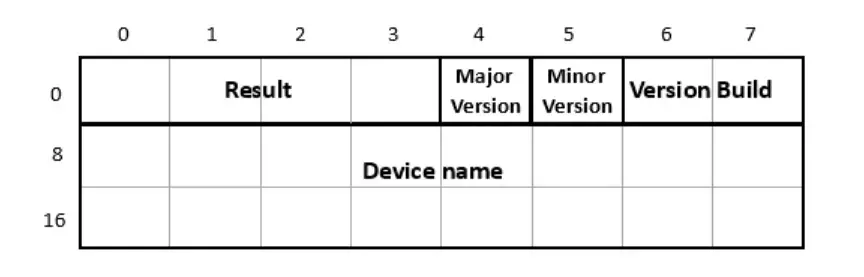
After reviewing the ADS specification we discovered that it operates on TCP port 48898 and UDP port 48899. By adding these ports to our broader global ports list we can start to decode the new traffic and identify the communicating devices. Although we see all of the traffic on those ports, we are only interested in a very specific packet to identify devices. The ADS specification outlines a ReadDeviceInfo command (Figure 1) which would tell us the version, build, and name of the device.

FIGURE 1 – ReadDeviceInfo packet layout courtesy of Beckhoff Automation LLC

If the packet is successfully decoded into this command we can assert that it is a legitimate device since the packet originated on the documented ports above. This gives us a high degree of confidence to continue fingerprinting this device and place it into your asset inventory.

As industrial automation continues to evolve, so too will the ADS protocol. Future developments may include enhancements to support emerging technologies such as IoT and Industry 4.0. There is potential for increased integration with cloud-based systems and advanced analytics, further expanding the capabilities of ADS. Staying abreast of these trends will be essential for us to further improve our fingerprinting capabilities as this protocol makes its way into other domains outside of industrial automation.

Subscribe now to stay up to date on runZero support for discovery of OT protocols.

About Version 2 Digital

Version 2 Digital is one of the most dynamic IT companies in Asia. The company distributes a wide range of IT products across various areas including cyber security, cloud, data protection, end points, infrastructures, system monitoring, storage, networking, business productivity and communication products.

Through an extensive network of channels, point of sales, resellers, and partnership companies, Version 2 offers quality products and services which are highly acclaimed in the market. Its customers cover a wide spectrum which include Global 1000 enterprises, regional listed companies, different vertical industries, public utilities, Government, a vast number of successful SMEs, and consumers in various Asian cities.

About runZero
runZero, a network discovery and asset inventory solution, was founded in 2018 by HD Moore, the creator of Metasploit. HD envisioned a modern active discovery solution that could find and identify everything on a network–without credentials. As a security researcher and penetration tester, he often employed benign ways to get information leaks and piece them together to build device profiles. Eventually, this work led him to leverage applied research and the discovery techniques developed for security and penetration testing to create runZero.

runZero Recognized as a Customers’ Choice in 2024 Gartner® Peer Insights™ Report for Cyber Asset Attack Surface Management (CAASM)

runZero Receives the Highest Willingness to Recommend Rating 96%

AUSTIN, TEXAS — July 22, 2024 — runZero has been peer recognized as a 2024 Customers’ Choice in the Gartner® Peer Insights™ Voice of the Customer for Cyber Asset Attack Surface Management (CAASM) market category. Additionally, runZero received the highest willingness to recommend rating of any vendor at 96% based on 29 reviews as of 31st March 2024. The “Voice of the Customer” is a document that synthesizes Gartner Peer Insights’ reviews into insights for IT decision makers. This aggregated peer perspective, along with the individual detailed reviews, is complementary to Gartner expert research and can play a key role in your buying process, as it focuses on direct peer experiences of implementing and operating a solution.

With 29 Gartner Peer Insights reviews, the most of any vendor included in the report, runZero received ratings from customers at organizations with annual revenues ranging from 50M to 10B+. Their feedback reflects real-world experiences with the runZero Platform across multiple sectors, including some of the world’s largest enterprises. Reviewers consistently rated runZero highly across various aspects: Product Capabilities (4.7/5) based on 29 reviews, Support Experience (4.6/5) based on 26 reviews, Sales Experience (4.7/5) based on 25 reviews, and Deployment Experience (4.6/5) based on 28 reviews. Here is a sampling of the individual reviews:

  • An Excellent Inventory Tool. As we say, you can’t secure what you can’t see, and I needed to know what was out there in a highly distributed environment that has 22 business lines, each with a high degree of disparity in their technology needs. From cameras, drones, ICS, SCADA, radios, non-traditional IoT devices, and traditional IT infrastructure. We’ve matured significantly in our asset inventory and event response because of this partnership and I think I’d have a mutiny on my hands if I ever took it away!” – IT Security and Risk Management in Government

  • runZero is a great product for asset management. One of the most standout features of runZero is its asset discovery capabilities. It’s really easy to deploy and it has a great accuracy during the scans. Also the speed of the scans are great, giving us the possibility to get results really fast and also accurate. Also its ability to map entire networks without any credentials is a great features. The product is really user friendly and has great ability to be used with APIs.” – Data Scientist in Software

Many CAASM solutions in the market rely heavily on integrations to inventory assets, leading to incomplete visibility into unknown and unmanaged assets, while others focus solely on IT devices, lacking coverage for OT and IoT assets. The runZero Platform combines powerful proprietary active scanning and native passive discovery with integrations to overcome these limitations, providing a comprehensive, unified solution that delivers complete visibility and accurate, in-depth fingerprinting for all IT, OT, and IoT devices across on-prem, cloud, and remote environments. runZero does not require credentials, agents, or appliances, enabling the platform to start delivering insights into complex environments in just minutes.

“Our approach at runZero sets us apart from traditional CAASM companies. We’re honored to have the market validate the unique path we’ve taken and to be recognized as a Customers’ Choice in our category,” said HD Moore, founder and CEO at runZero. “We are passionate about improving visibility and exposure management for security teams, as well as streamlining their operations and accelerating response times. It’s rewarding to see the success they are having and we appreciate their willingness to share their experience and recommend runZero to their peers.”

Disclaimer: Gartner® and Peer Insights are trademarks of Gartner, Inc. and/or its affiliates. All rights reserved. Gartner® Peer Insights content consists of the opinions of individual end users based on their own experiences, and should not be construed as statements of fact, nor do they represent the views of Gartner or its affiliates. Gartner does not endorse any vendor, product or service depicted in this content nor makes any warranties, expressed or implied, with respect to this content, about its accuracy or completeness, including any warranties of merchantability or fitness for a particular purpose.

Additional resources

About Version 2 Digital

Version 2 Digital is one of the most dynamic IT companies in Asia. The company distributes a wide range of IT products across various areas including cyber security, cloud, data protection, end points, infrastructures, system monitoring, storage, networking, business productivity and communication products.

Through an extensive network of channels, point of sales, resellers, and partnership companies, Version 2 offers quality products and services which are highly acclaimed in the market. Its customers cover a wide spectrum which include Global 1000 enterprises, regional listed companies, different vertical industries, public utilities, Government, a vast number of successful SMEs, and consumers in various Asian cities.

About runZero
runZero, a network discovery and asset inventory solution, was founded in 2018 by HD Moore, the creator of Metasploit. HD envisioned a modern active discovery solution that could find and identify everything on a network–without credentials. As a security researcher and penetration tester, he often employed benign ways to get information leaks and piece them together to build device profiles. Eventually, this work led him to leverage applied research and the discovery techniques developed for security and penetration testing to create runZero.

×

Hello!

Click one of our contacts below to chat on WhatsApp

×