Skip to content

Insider threat prevention: key strategies

As technology continues to advance, the methods of malicious actors also evolve. As a result, cybersecurity has become a critical concern for organizations of all sizes. The 2023 Verizon report highlights that 74% of all breaches involve a human element, with internal actors accounting for 19% of cybersecurity breaches. In light of these statistics, protecting your business from insider threats becomes crucial.

Insider threats can pose significant risks to your organization’s sensitive data and operations, yet they are often overlooked. In this blog post, we will explore the world of insider threats, their unique risks, and key strategies for prevention.

Organizations can take proactive steps to protect themselves from this critical cybersecurity challenge by gaining a better understanding of insider threats. We will also provide real-life examples, best practices for mitigation, and how NordLayer can assist in fortifying your defenses.

Key takeaways

  • Insider threats can cause harm through data theft, fraud, sabotage, or unintentional actions.

  • The three main types of insider threats are malicious insiders, negligent insiders, and compromised insiders. It is essential to understand the motivations and behaviors of each type to mitigate and prevent insider threats effectively.

  • Best practices for insider threat prevention include access controls, employee training, user monitoring, multi-factor authentication, and clear policies.

  • Using advanced network security tools like NordLayer’s Network Access Control (NAC solution), which offers features such as Cloud Firewall and Device Posture Security, can help contain internal threats and control access.

What is an insider threat?

An insider threat is any current or former employee, contractor, or business partner who intentionally or accidentally misuses their access or insider knowledge to harm an organization’s IT systems, networks, or data. Insider threats can take many forms, including data theft, fraud, sabotage, and unintentional harm caused by careless actions or human error. Insider attacks can be divided into different types depending on the intention behind the actions.

Types of insider threats

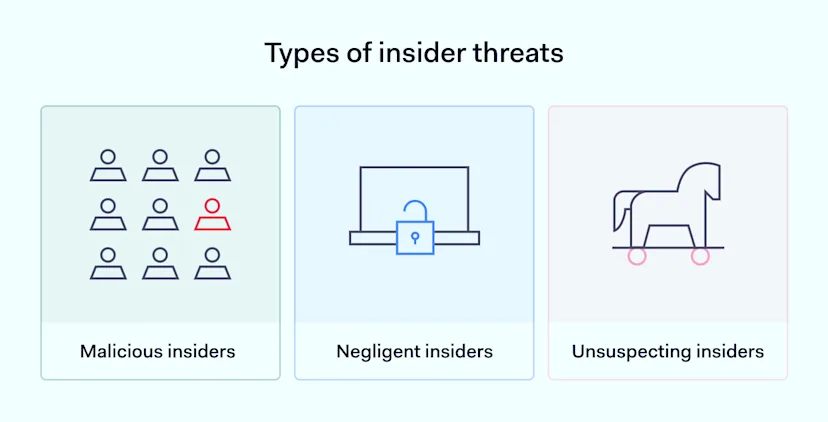
Typically, there are three types of insider threats:
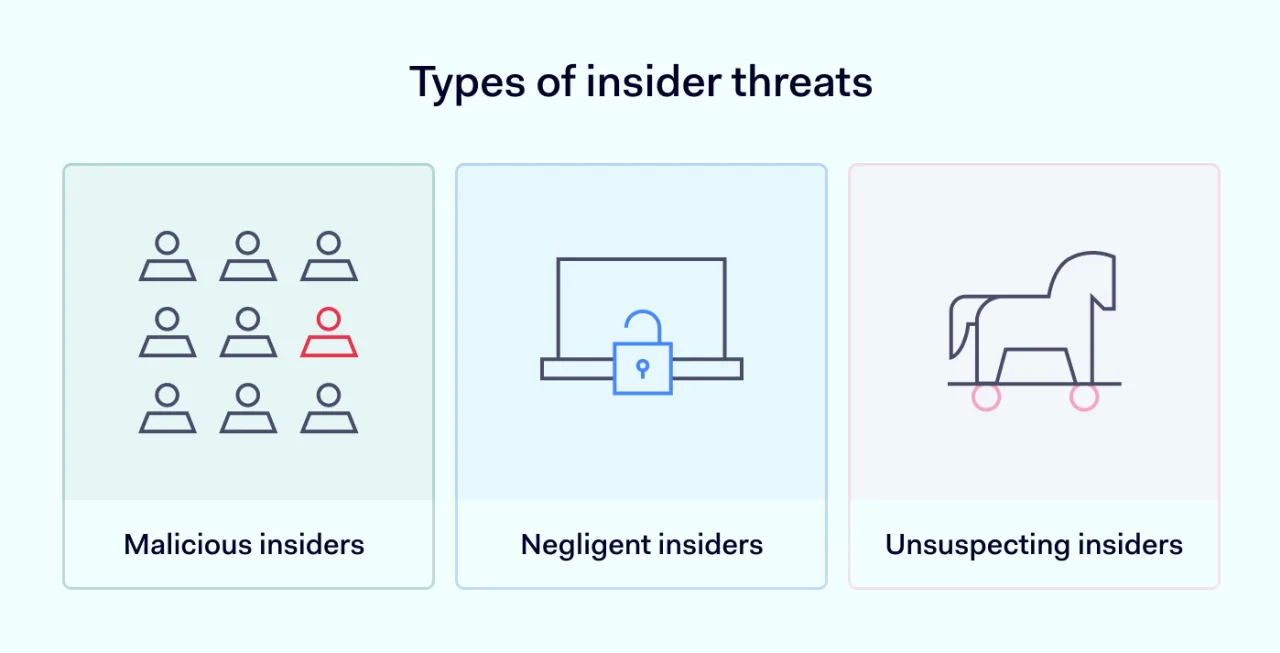
Types-of-insider-threats

  • Malicious insiders who aim to cause harm deliberately through actions like data theft, sabotage, or espionage

  • Negligent insiders whose careless actions like falling for phishing scams can unintentionally compromise security

  • Unsuspecting insiders whose credentials were stolen or devices were compromised by outsiders

Note that these types of insider threats can overlap or blend into each other.

Real-life examples of insider threats

Insider threats, including financial losses, reputational damage, legal liabilities, and operational disruptions, can severely affect organizations. When sensitive security information is exposed, it can be used by malicious actors to commit fraud, steal intellectual property, or launch further attacks against the company or its partners.

In some cases, the exposure of sensitive data can also lead to regulatory fines and legal penalties, particularly if it includes personally identifiable information or other confidential data.

Moreover, the loss of classified data can erode customer trust and damage the organization’s reputation, making it difficult to attract and retain customers, partners, and employees. In some cases, the impact of an insider threat can be felt for years, causing long-term damage to the organization’s bottom line and its ability to compete in the market. To illustrate the potential impact of internal threats, let’s have a look at some of the most infamous cases in recent history.

WikiLeaks in 2010

Chelsea Manning, a former US Army soldier, leaked classified military documents that included diplomatic cables, military reports, and videos of military operations in Iraq and Afghanistan. The release of the documents caused diplomatic tensions between the US and other countries, and Manning was sentenced to 35 years in prison.

The incident also led to calls for greater transparency and accountability in government operations and sparked a debate about the role of whistleblowers in exposing government misconduct.

National Security Agency (NSA) leak in 2013

Perhaps one of the most infamous cases of an insider threat, Edward Snowden leaked classified information from the NSA, exposing sensitive surveillance programs to the media. The leaked documents revealed that the NSA was collecting vast amounts of data on American citizens, including phone records and internet activity, without their knowledge or consent.

The leak sparked a global debate about privacy, surveillance, and the role of intelligence agencies in democratic societies. It also damaged the NSA’s reputation and strained its relationships with other countries, particularly those whose citizens were targeted by the agency’s surveillance programs.

Twitter compromise in 2019

An insider helped social engineer their way into compromised accounts on high-profile users like Barack Obama, Bill Gates, and Elon Musk. The cybercriminals then used these accounts to send out tweets promoting a Bitcoin scam. The fallout from the hack was significant.

The incident caused widespread confusion and concern among Twitter users, and the company’s stock price temporarily dropped as a result. The breach also raised questions about the security of social media platforms and the potential consequences of insider risks in this context.

How to prevent insider threats: best practices

As we have seen from the examples, internal threats can have serious consequences for organizations, including financial losses, reputational damage, and legal liabilities. To protect against these risks, companies need to take a proactive approach to cybersecurity.

By following best practices for insider risk management, organizations can reduce the risk of data breaches, fraud, and other forms of malicious activity. Here are some of the most effective strategies that help prevent insider threats.
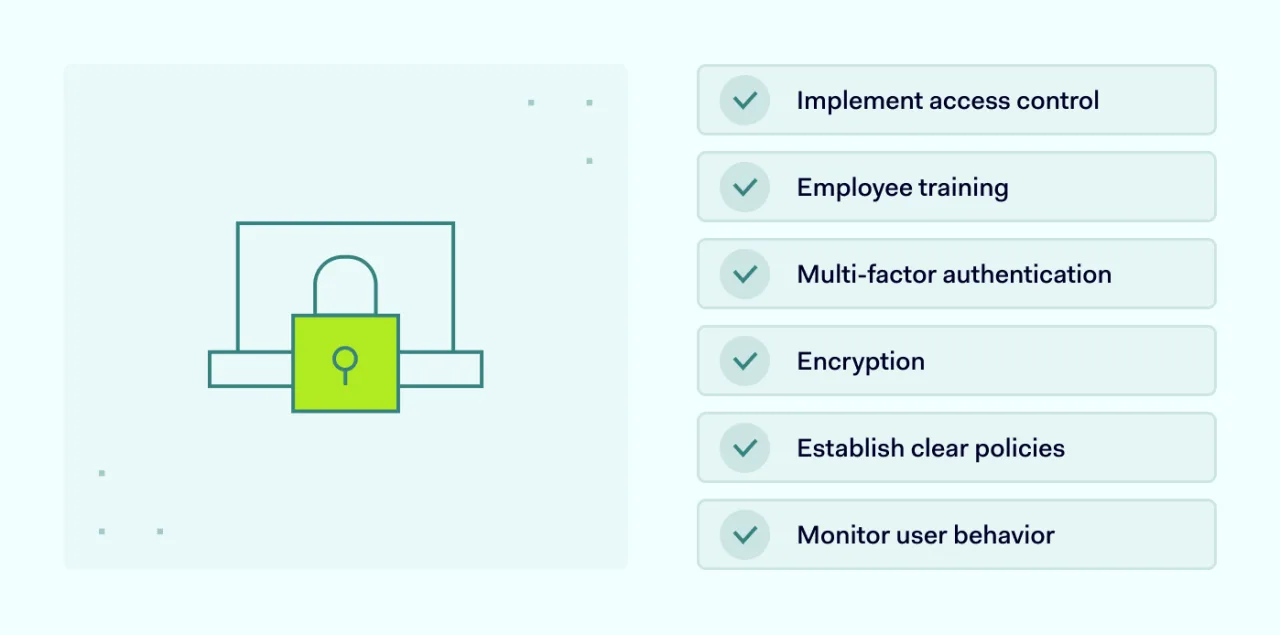
The-best-practices-for-preventing-insider-threats

Implement access controls

Access controls are a critical component of insider threat detection and prevention. By limiting access to security information based on job roles and responsibilities, you can ensure that only authorized personnel can access classified data.

This approach is known as the principle of least privilege, which means that users are given only the access they need to perform their job functions. Regularly reviewing and updating permissions is also essential to ensure that access is appropriate and necessary. This process can help prevent unauthorized access, accidental or intentional data leaks, and other forms of malicious activity.

Employee training

It is essential to educate employees on cybersecurity best practices, including how to identify phishing attempts, use strong passwords, and report suspicious activities to the security teams. Providing regular training and awareness programs can help your staff stay up-to-date. Additionally, fostering a culture of security within the organization is equally important, where employees grasp the significance of safeguarding and are more likely to follow security policies and procedures.

Multi-factor authentication (MFA)

Multi-factor authentication is an additional layer of security that requires users to provide two or more forms of authentication before accessing sensitive data. Implementing MFA wherever possible can secure against illegal access and prevent breaches, even if a malicious actor has stolen a user’s password. Requiring a temporary code sent to a user’s phone in addition to a password can prevent insider attacks and make it much more difficult to gain access to private data. Based on statistics, having MFA increases protection in 50% of the cases.

Encryption

Encrypting confidential information both in transit and at rest is essential to protect against unauthorized access. Encryption scrambles data so that it is unreadable without the decryption key. This means that even if an attacker gains access to encrypted data, they will not be able to read it. Encryption can help protect data from being stolen or intercepted, and it is a key element of a comprehensive insider threat prevention strategy.

Establish clear policies

Developing and enforcing clear security policies is critical to preventing insider threats. These policies should cover data handling, acceptable technology use, and reporting procedures for security incidents. By having clear policies in place, employees understand expectations and boundaries. Regular reviews and updates are necessary to keep policies relevant and effective. Additionally, consistent enforcement ensures that the employees follow them.

Monitor user behavior

Conducting thorough background checks for new hires can help identify potential risks before they become a problem. Utilizing security tools to detect unusual or suspicious user behavior, such as accessing company resources, can also help identify potential threats.

Unusual access patterns can be a red flag, such as an employee accessing classified data outside of normal business hours or from an unusual location. Changes in user behavior, such as an employee becoming disgruntled or expressing dissatisfaction with their job or a sudden increase in downloads or transfers of private data, can also indicate an internal threat.

Once insider attacks have been detected, it is important to take immediate action to mitigate the potential damage. This may include revoking access to classified data, conducting an investigation to determine the extent of the breach, and taking steps to prevent further unauthorized access. Security teams should have a clear plan in place for responding to internal threats, including who to contact, how to contain the threat, and how to communicate with affected parties.

How NordLayer can help

NordLayer provides a multi-layered cybersecurity approach to protect your organization from insider threats. By integrating advanced encryption protocols, secure remote access capabilities, and robust network access control tools, NordLayer ensures comprehensive protection for your data and networks.

With NordLayer’s Cloud Firewall service, organizations can exercise granular control over access to internal resources and cloud tools, enhancing security with an extra layer of control. This feature allows organizations to implement advanced network segmentation strategies, dividing the network into smaller segments.

Different user groups, teams, and roles can only access the specific segments relevant to their job, preventing unnecessary lateral movement across the wider network. Through tailored access controls, it minimizes the risk of data leaks from unauthorized access within the system.

Moreover, NordLayer’s Network Access Control (NAC) solution offers adaptive security features—such as Single sign-on (SSO), Devise Posture Security, Virtual Private Gateway with fixed IP address, and MFA—that authenticate users and devices, enabling secure access across various platforms.

The key to insider threat protection is a combination of technology, policies, and people. While technology provides the tools to establish safeguards and enforce access controls, policies provide guidelines for secure usage. Moreover, engaged employees trained to recognize and report potential risks can help prevent threats from occurring in the first place.

Thus, with product managers and engineers constantly monitoring the threat landscape and responding by strengthening NordLayer’s solutions, we can help security teams create a more secure environment for their organizations.

Don’t let insider threats compromise your business. Start your journey towards a more secure future with NordLayer today.
About Version 2 Digital

Version 2 Digital is one of the most dynamic IT companies in Asia. The company distributes a wide range of IT products across various areas including cyber security, cloud, data protection, end points, infrastructures, system monitoring, storage, networking, business productivity and communication products.

Through an extensive network of channels, point of sales, resellers, and partnership companies, Version 2 offers quality products and services which are highly acclaimed in the market. Its customers cover a wide spectrum which include Global 1000 enterprises, regional listed companies, different vertical industries, public utilities, Government, a vast number of successful SMEs, and consumers in various Asian cities.

About NordLayer
NordLayer is an adaptive network access security solution for modern businesses – from the world’s most trusted cybersecurity brand, Nord Security.

The web has become a chaotic space where safety and trust have been compromised by cybercrime and data protection issues. Therefore, our team has a global mission to shape a more trusted and peaceful online future for people everywhere.

Protect sensitive data: a guide for your business

In a world where a DNA test can unlock the stories of our past, it was hard to imagine these discoveries leading to danger. DNA testing kits, often given as gifts, opened up new worlds of understanding about where we come from. 

But in October 2023, a significant data breach turned these journeys of discovery into something much more troubling. A bad actor not only accessed but categorized this data, targeting people based on their heritage, like those with Ashkenazi Jewish and Chinese backgrounds. This incident sparked fears, especially when it coincided with violence in Israel and Gaza.

This breach served as a reminder of the risks associated with handling sensitive information and the devastating impact of a security breach. The response from 23andMe, the company involved, drew criticism for not doing enough to protect its users’ data and for blaming the victims.

This event highlights how crucial it is to protect sensitive data. It shows us why understanding sensitive data and ensuring its safety is so important. Keeping sensitive information secure is not just about technical steps; it’s about protecting our identity and privacy. In this article, we’ll explore the nature of sensitive data and discuss ways to safeguard it.

Understanding sensitive data

Sensitive data is information that needs careful handling to prevent harm to a person or an organization if it gets leaked. It covers various personal and business details that laws protect or are private by nature. This includes things like social security numbers, bank details, health records, and secret business information such as security plans or unique technologies.

Click to tweet

Keeping sensitive data safe is key to avoiding identity theft, financial loss, and preserving privacy. To protect sensitive data, it’s important to follow strong security practices, comply with data protection laws, and always prioritize the safety of personal information. These efforts help in securing sensitive data against unauthorized access and data breaches.

Examples of sensitive data

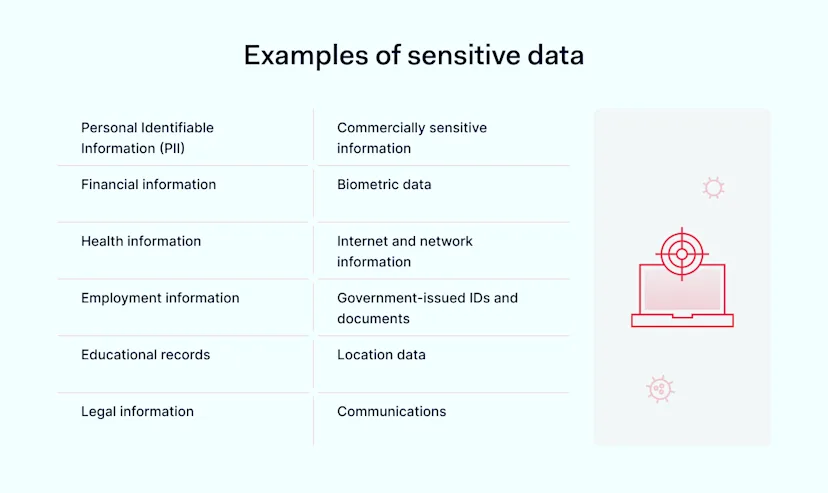
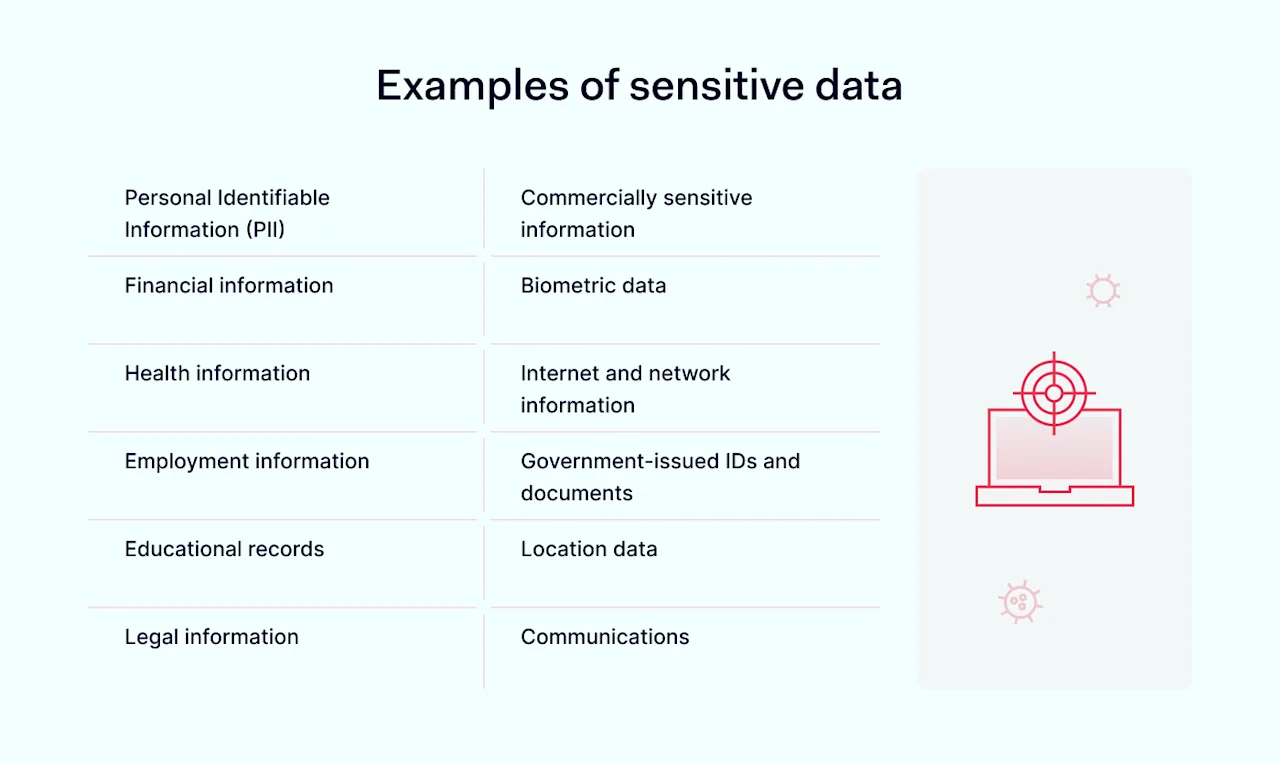
No one ever wants to face a security breach or lose any data. Yet, losing sensitive information can have far worse consequences than losing ordinary data. While it may seem that sensitive data only refers to personal identifiable information, its scope is actually much broader. Here’s a list to help you understand whether your business deals with sensitive information:

Examples of sensitive data

  1. Personal Identifiable Information (PII): data that can identify an individual, such as names, social security numbers, and home addresses.

  2. Financial information: bank account numbers, credit card details, and investment information.

  3. Health information: medical records, treatment history, and insurance details, which are essential for protecting patient privacy.

  4. Employment information: details like employee ID numbers, payroll information, and performance evaluations.

  5. Educational records: student IDs, academic history, and admission applications.

  6. Legal information: criminal records, legal disputes, and court documents. Securing sensitive data in this category is vital for respecting individuals’ privacy and upholding justice.

  7. Commercially sensitive information: trade secrets, business strategies, and customer information, which are critical for a company’s competitive edge.

  8. Biometric data: fingerprints, DNA profiles, and facial recognition data.

  9. Internet and network information: IP addresses, login IDs, and browsing histories.

  10. Government-issued IDs and documents: passports, driver’s licenses, and social security cards. Protecting these documents is essential for preventing identity theft.

  11. Location data: GPS data and travel itineraries that can reveal an individual’s movements.

  12. Communications: private emails, text messages, and chat histories. Ensuring this data’s security helps protect personal information and prevent unauthorized access.

As you can see, the range of sensitive data is quite extensive. If your business handles any of these types of information, it’s crucial to consider how to protect it. It’s about safeguarding your stakeholders’ trust and preventing a security breach that could have devastating consequences. Securing sensitive data should be a top priority for your business.

Compliance regulations for protecting sensitive data

Compliance regulations guide organizations on how to keep sensitive data safe from security violations.

The General Data Protection Regulation (GDPR) in the European Union is a key example. It provides strict rules for handling data and ensures people have control over their personal information.

In the United States, the California Consumer Privacy Act (CCPA) lets people manage their own data, affecting how companies deal with sensitive information.

Healthcare and finance are areas with their own rules. In the U.S., the Health Insurance Portability and Accountability Act (HIPAA) keeps patients’ health information private. The Payment Card Industry Data Security Standard (PCI DSS) sets rules for businesses that process credit card payments.

Following these rules is about more than avoiding penalties. It’s about building trust by protecting sensitive data.

How to protect sensitive data

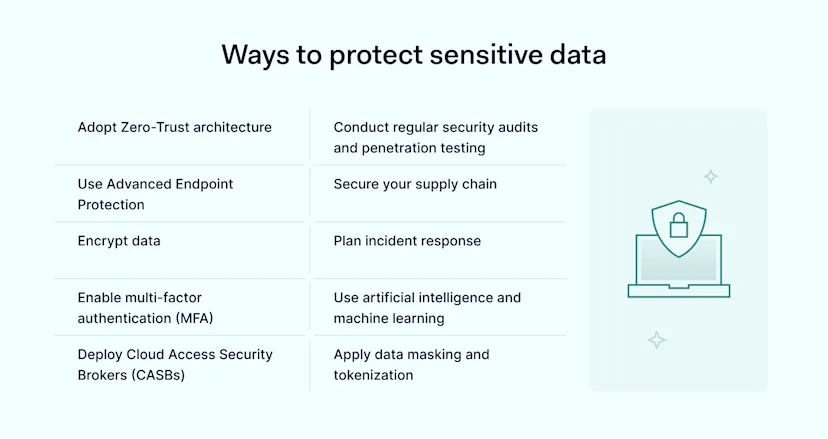
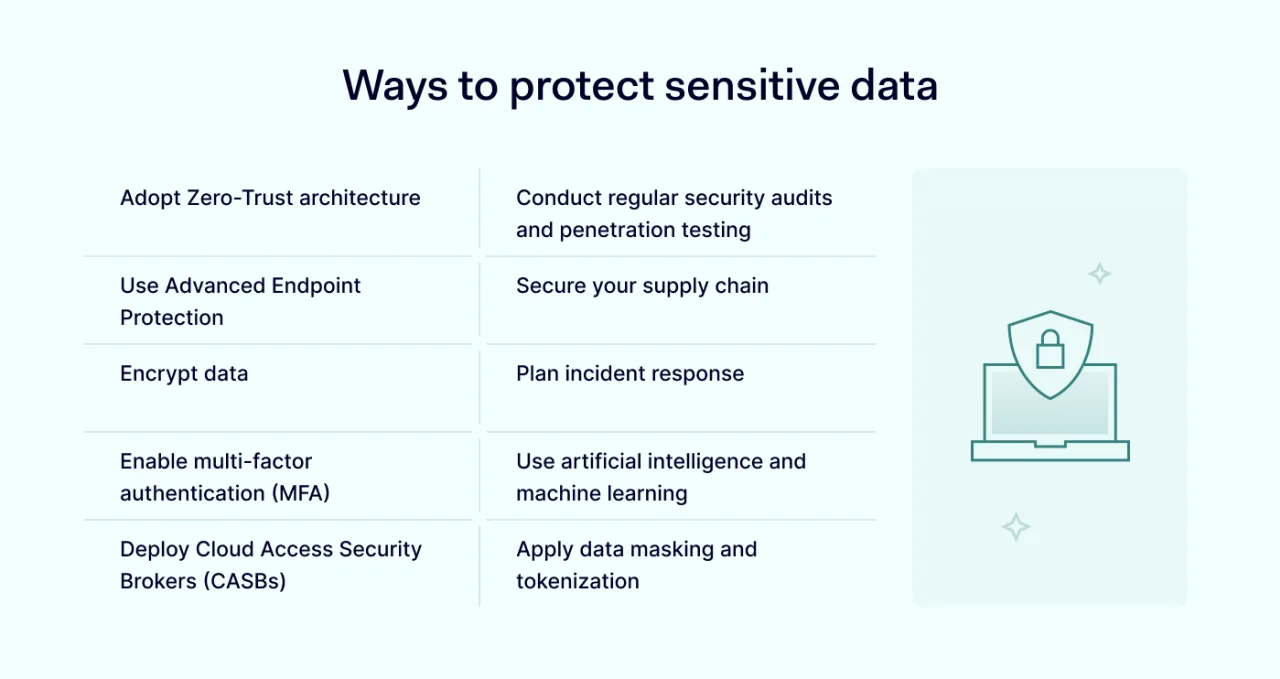
Securing sensitive data involves a blend of strategies to keep information safe from data compromises.

Ways to protect sensitive data

Adopt Zero Trust architecture

Zero Trust architecture is becoming essential as cyber threats grow more sophisticated.

It operates on the principle that no one inside or outside the network is trusted by default. Every access request is verified.

This method is especially effective in environments where remote work is common, as it can significantly reduce the risk of breaches. However, due to its complexity and cost, small businesses might find it challenging to implement. For instance, large corporations like Google have successfully adopted Zero Trust to secure their networks.

Use Advanced Endpoint Protection

Advanced Endpoint Protection, through EDR (Endpoint Detection and Response) or XDR (Extended Detection and Response) solutions, provides comprehensive monitoring and response to threats targeting devices connected to a network.

It’s valuable for companies with many endpoints to protect, including remote devices. Industries like finance and healthcare, which deal with a lot of sensitive data, can benefit greatly from this method.

However, it might be less effective in environments that do not regularly update or patch their systems. But it’s generally challenging to protect systems that aren’t kept up-to-date. Think back to the Wannacry attack, which affected over 300,000 computers globally. This happened largely because of neglected Windows system updates. Even if your operations need to run 24/7, scheduling those patches and updates is crucial.

Encrypt data

Data encryption secures information at rest and in transit, making it unreadable without a decryption key. It’s a fundamental practice for all types of companies, from small businesses to large enterprises.

Encryption is critical for industries such as healthcare and banking, where data privacy is a legal requirement. However, encryption can be less effective if the encryption keys are not managed securely or outdated encryption methods are used.

Enable multi-factor authentication (MFA)

MFA improves security by requiring users to provide two or more verification factors to access sensitive data. It’s particularly effective in preventing unauthorized access due to stolen or weak passwords. MFA suits all types of companies. However, it may be less effective if users choose insecure backup authentication methods, like easily answered security questions.

Deploy Cloud Access Security Brokers (CASBs)

CASBs protect data as they move to and from the cloud, making them essential for businesses using cloud services. They help enforce security policies and provide visibility into cloud application usage.

CASBs are particularly useful for organizations with a significant cloud presence but may offer limited benefits for companies not utilizing cloud services extensively. Large companies like Netflix use CASBs to secure their cloud environments.

Conduct regular security audits and penetration testing

Security audits and penetration testing identify and address vulnerabilities. They are crucial for maintaining a strong security posture.

They benefit organizations of all sizes but are particularly critical for those in sectors with high regulatory requirements, such as finance and healthcare.

However, these practices require skilled professionals to conduct, which might be a barrier for smaller organizations.

Secure your supply chain

It’s important to make your supply chain secure because attackers often search for weak spots to attack. Make sure every supplier and partner follows your security rules. This builds a strong defense together.

If you run a small business, you can start by discussing security steps with your suppliers. Bigger companies might check their suppliers’ security more formally and help them get better at protecting data.

Plan incident response

A predefined incident response plan will help organizations respond quickly and effectively to a security breach. This approach is suitable for all companies, as it minimizes the damage and costs associated with data breaches. But don’t forget to regularly update the plan and train employees on their roles during an incident.

Use artificial intelligence (AI) and machine learning (ML)

AI and ML are used for predictive threat detection and behavioral analytics. They help identify potential threats before they occur.

Using AI for cybersecurity is particularly useful for large organizations with vast amounts of data to analyze for cyber threat patterns.

Apply data masking and tokenization

Data masking and tokenization protect sensitive information in non-secure environments by replacing it with non-sensitive equivalents. This method is great for development and testing environments where real data is risky to use. But it’s unnecessary for companies that do not use sensitive data outside secure environments.

How NordLayer can help

NordLayer’s Secure Access Service Edge (SASE) solution is changing how businesses protect sensitive data by merging network and security features into a unified, cloud-based service. This method makes it easier to secure sensitive data, lowers the chance of data breaches, and aids in preventing identity theft by using cutting-edge technologies like SD-WAN and security services.

By choosing SASE, companies can safeguard data security for all users and devices. It is a reliable method for protecting personal information and sensitive data from the constantly changing threats.

NordLayer provides businesses with various tools to protect sensitive data, including SaaS security, secure remote access, and threat prevention. These tools join forces to offer thorough protection for sensitive data, improve data security, and ensure secure data processing. This simplifies the management of security policies and reduces the complexity found in traditional security setups.

NordLayer addresses business needs for sensitive data protection in any setting. Contact our sales team for a simplified solution for securing data processing and reducing the risk of security breaches.

About Version 2 Digital

Version 2 Digital is one of the most dynamic IT companies in Asia. The company distributes a wide range of IT products across various areas including cyber security, cloud, data protection, end points, infrastructures, system monitoring, storage, networking, business productivity and communication products.

Through an extensive network of channels, point of sales, resellers, and partnership companies, Version 2 offers quality products and services which are highly acclaimed in the market. Its customers cover a wide spectrum which include Global 1000 enterprises, regional listed companies, different vertical industries, public utilities, Government, a vast number of successful SMEs, and consumers in various Asian cities.

About NordLayer
NordLayer is an adaptive network access security solution for modern businesses – from the world’s most trusted cybersecurity brand, Nord Security.

The web has become a chaotic space where safety and trust have been compromised by cybercrime and data protection issues. Therefore, our team has a global mission to shape a more trusted and peaceful online future for people everywhere.

Scaling affiliate marketing: Top tips from Nord Security’s Jonas Kupreščenkovas

Nord Security’s affiliate partnership manager, Jonas Kupreščenkovas, shares a few tips on how to scale affiliate marketing and what to keep in mind when venturing deeper into the affiliate marketing model.Strategic planning is of the essence here, not to mention a deep understanding of the product, the niche, and audience. 

Affiliate marketing has been gaining traction in recent years as a digital marketing strategy and has become one of the more popular ways to generate passive income for affiliates. Affiliate marketing is growing at a 10% rate year over year. It’s important both for potential affiliates and businesses to understand affiliate marketing and the many ways to scale to fully utilize this advertising model. Quick definition: Affiliate marketing is when third-party publishers (affiliates) are compensated for promoting products and services from an advertiser (brand). For each sale or lead made via their channel, the affiliate receives a commission.

1. Narrow your focus on specific niche

A niche is a specialized market segment when it comes to a particular service or product. Keep in mind: Niches are not made equal. What is more general may be easier to market but also has bigger competition. What is more difficult to market has the challenge of being able to reach the target audience. However, choosing a less popular niche doesn’t mean you won’t be able to sell; it just means that you’ll have your work cut out for you.

It may sound redundant, but if you’re starting from scratch, pick something you’re interested in. Not only will you be able to add to your content from personal experience, it will also be easier to build the niche further on. Having specific knowledge on a topic is an advantage.

Moreover, if you choose products to promote based on your niche and interest, it will be more genuine and to the point rather than choosing everything that comes your way.

2. Understanding what your audience wants

One of the main key points when it comes to affiliate marketing is understanding your audience. While some may encourage covering many different topics, products, and services, it is highly important to understand what kind of audience you have. What are their needs and pain points? Also, what kind of platform you run and what your primary topic or field of expertise is.

If you’re selling cybersecurity products and talk only about that, would it make sense to your audience if you started selling socks? The ability to personalize and deepen your audience’s preferences is the ability to effectively maintain their attention. Building an audience that wants to come back and considers you an authoritative source is the most important thing here.

3. Quality content is still king

A flashy thumbnail or ad might draw people to you but quality content is what makes them stay. Therefore, the previously mentioned niche selection and the knowledge of your audience are extremely important. Your audience knows when you understand the topic and provide valuable information rather than just trying to fill a gap. Expertise and genuine interest goes a long way here, and proving it in your content is the first step to gaining substantial visitorship and an audience that keeps coming back for more.

Don’t forget to mix and match when it comes to different content types – informational vs. sales-focused content . Informational content may not earn you millions, but it will strengthen your authority and give you a better chance to rank on SERPs, while various guides, “best” articles, keywords including “review”, “alternatives”, “X vs X” are also great to target those who already have buyer’s intent. SEO knowledge is a big advantage when it comes to driving an audience to your content as it improves the visibility of your website. Close to 80% of affiliate marketers use SEO to bring traffic to their website.

Anything content-related should be of high quality, engaging, and relevant to your niche and audience. Avoiding overly promotional content is recommended; Balance is key, as long as you’re not being spammy or providing empty and useless content, you should be fine.

4. Diversifying your traffic

Want to bring more people to your site and have more stability in your website traffic? Diversification of content is crucial here, not to mention that it will help with scaling your efforts. Paid advertising, social media, and newsletters can help you reach a wider audience. Over 65% of publishers use social media to reach their target audience. From personal experience, we at NordVPN saw recent success with sports teams like Atlético de Madrid, Hibernian FC, and Ipswich Town. Pushing a dedicated newsletter to fans saw significant growth in performance and partnership visibility. A similar situation played out on X, where a single post announcing a partnership drew in almost 200,000 views.

Tailoring your content across a variety of traffic sources works best; don’t forget to A/B test and experiment with content to find what works on certain channels and sources. Depending on your niche, you can find many opportunities, but do some research beforehand to find where your target audience spends time.

If you’re feeling brave, you can expand to new markets and adapt your content as well as affiliate marketing tactics based on the preferences of foreign audiences. However, it’s important to understand that you not only will need to localize your content but also research the buying habits of your target markets. Selling to different countries is not easy and requires an understanding of local market conditions and dynamics. For example, Facebook, X and other well known social networks may not be as popular in Asia, where WeChat and QQ are better known.

5. Tracking your performance

Don’t just slap everything together in the hope that it will work the first time around. Test and track, test and track. Try different promotional strategies, content layouts, and such to see what (or who) works best. Track main metrics like clicks, conversion rate, and impressions to have a better grasp on what works and what doesn’t. Maybe your new theme is confusing? Maybe the radical changes made in content tone put off the audience? Check data and make data-driven decisions to ensure long-term success.

It’s a continuous effort to find what works best, and it’s never set in stone. Constant campaign tracking, conversion rate and content optimization are a must. Why put so much effort into this? To about 30% of web publishers affiliate marketing is one of the top revenue sources. Affiliate marketing keeps you on your toes, and that is one of the most exciting things about it.

6. Working together with your affiliate partnership manager

A dedicated affiliate partnership manager can provide you with valuable information and insights when it comes to scaling. They can provide you with the unique selling points of products and services, come up with various strategies to elevate your marketing efforts, and more. Also, at NordVPN, being up to speed on key global events and time sensitive topics are key for any affiliate strategy. If you’re the first to work with partners on a topic that’s starting to trend, you’re bound to see the best results and the largest chunk of the traffic compared to those that jump on the opportunity second or not at all. Therefore, it’s important both for the affiliate partnership manager and the publisher to always track and be on top of various news and trends.

Affiliate marketing managers are always ready to help you as they want you to succeed in your endeavors and can provide feedback, content opportunities, visuals, and more. Most will provide you with tips and guides that will help you build your content accordingly.

To conclude, scaling affiliate marketing demands a constant thirst for information on part of the content creator, as well as consistent improvement, optimization, and a deep understanding of your niche and audience. These tips can help you out to create a good income source though it all comes down to you and your ability to adapt to constantly shifting trends, new social media appearances, and changes in the marketing and consumer landscape.


About Version 2 Digital

Version 2 Digital is one of the most dynamic IT companies in Asia. The company distributes a wide range of IT products across various areas including cyber security, cloud, data protection, end points, infrastructures, system monitoring, storage, networking, business productivity and communication products.

Through an extensive network of channels, point of sales, resellers, and partnership companies, Version 2 offers quality products and services which are highly acclaimed in the market. Its customers cover a wide spectrum which include Global 1000 enterprises, regional listed companies, different vertical industries, public utilities, Government, a vast number of successful SMEs, and consumers in various Asian cities.

About NordLayer
NordLayer is an adaptive network access security solution for modern businesses – from the world’s most trusted cybersecurity brand, Nord Security.

The web has become a chaotic space where safety and trust have been compromised by cybercrime and data protection issues. Therefore, our team has a global mission to shape a more trusted and peaceful online future for people everywhere.

How to prevent phishing attacks: best strategies

The term ‘sandworm’ might make many people think of the ‘Dune’ movie. Yet, it is also the name of a group actively involved in manipulating elections. 

Over the years, Sandworm has meddled with elections to sway outcomes and interrupt political processes. This includes the 2016 US Presidential Election, the 2017 French Presidential Election, and various electoral processes in Ukraine.

Sandworm often begins its attacks with phishing. This technique isn’t just for tricking people into giving away their credit card information on fake websites. It’s a significant threat to businesses and, by extension, to national security, as companies can sometimes be the weaker link.

Learning about phishing is crucial. Let’s discuss it in a way that’s clear, easy to remember, and practical to use.

Key takeaways

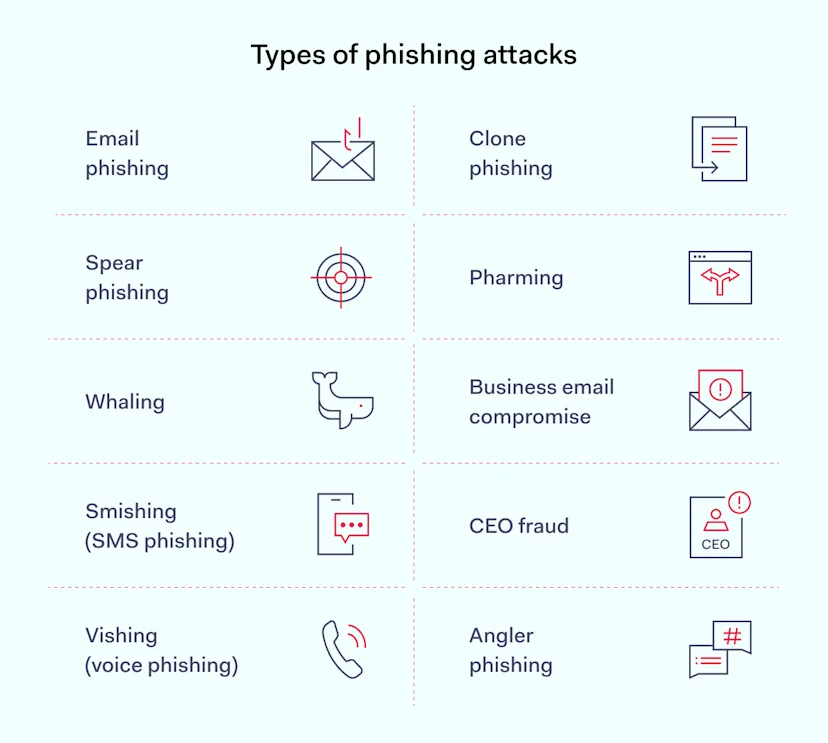
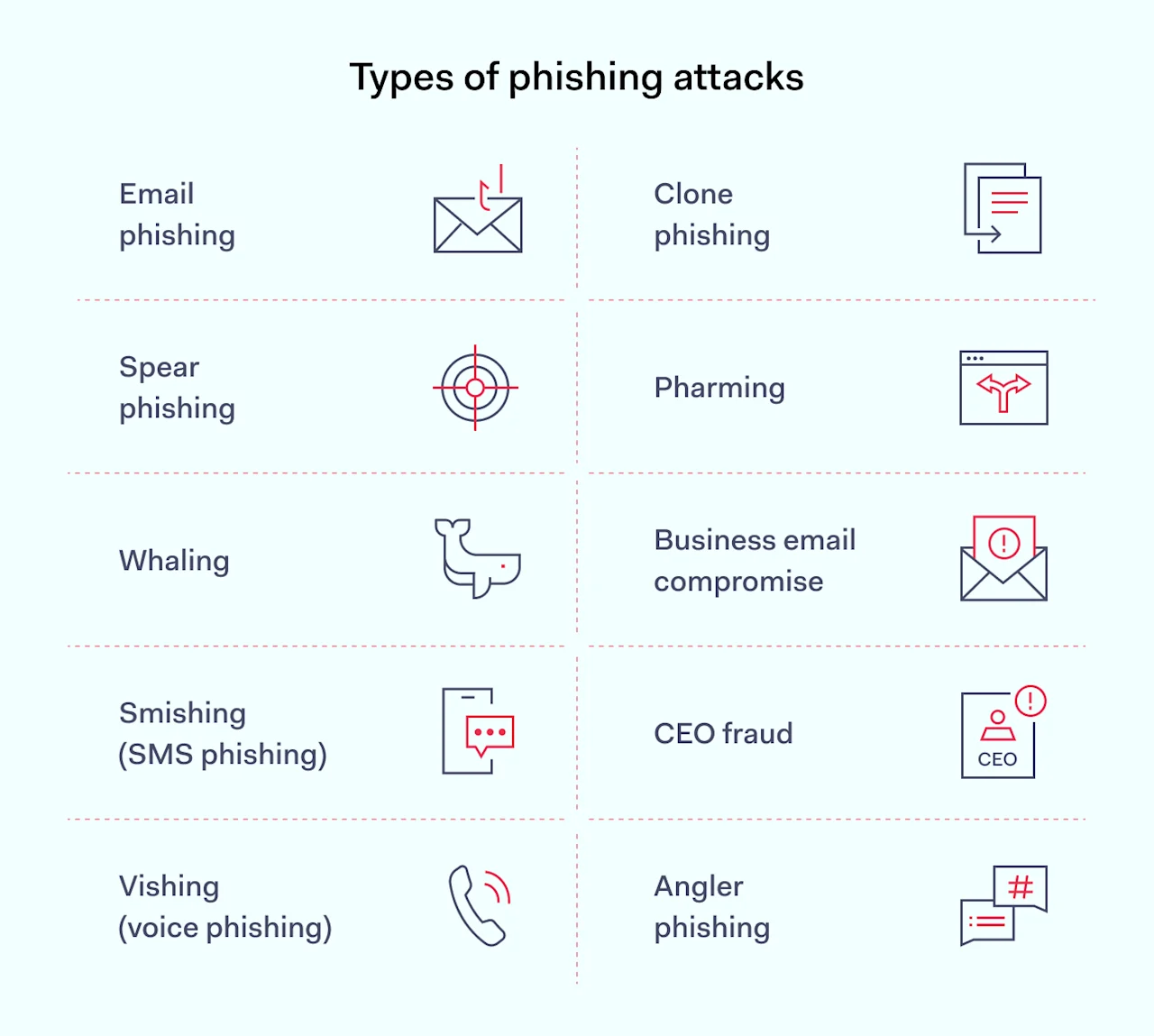
  • Phishing comes in various forms, such as email phishing, spear phishing, whaling, smishing, and vishing.

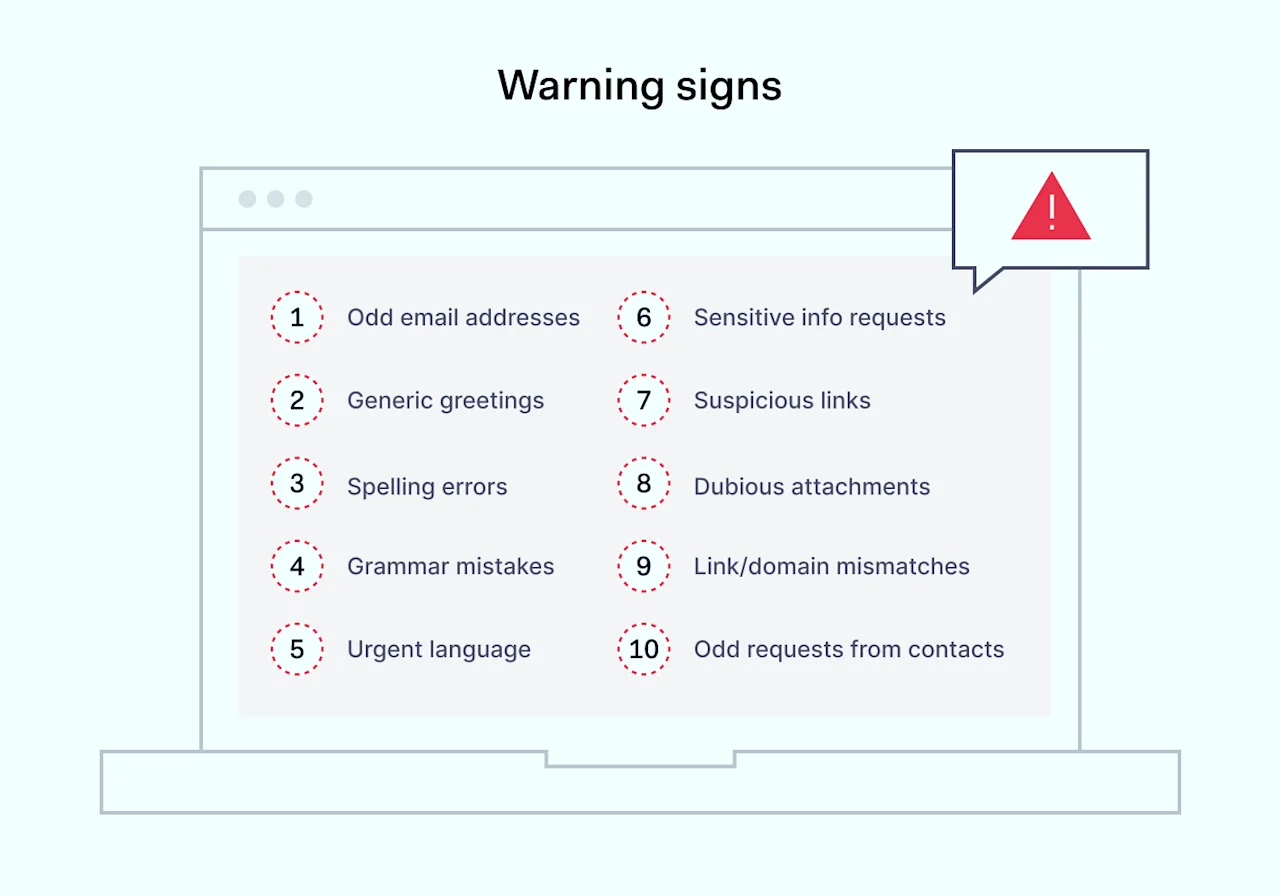
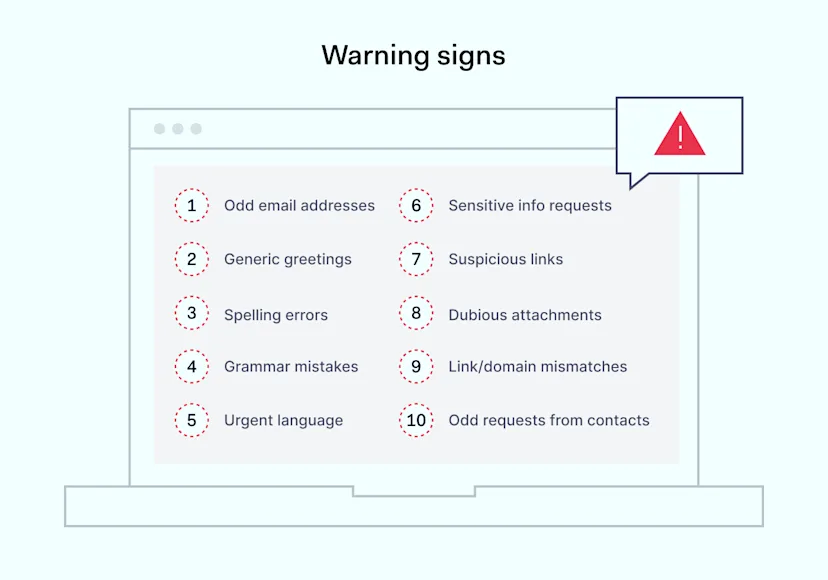
  • To identify a phishing attempt, look for signs such as suspicious email addresses, generic greetings, spelling and grammar errors, urgent language, requests for sensitive information, and dubious links or attachments.

  • Educating your employees about anti-phishing techniques and promoting a culture of security awareness are crucial steps.

  • Enforce multi-factor authentication (MFA) to add a layer of security, making stolen credentials insufficient for accessing sensitive data.

  • Phishing simulation exercises can test your team’s detection skills and significantly improve your anti-phishing defenses.

  • Develop a response plan that outlines clear steps for reporting phishing attempts.

  • NordLayer helps mitigate phishing attacks by assisting in implementing the Zero Trust Network Access (ZTNA) framework and offering Threat Prevention features, which strengthen your organization’s defenses against phishing.

Types of phishing attacks

Phishing attacks come in various forms, each with its own tactics to trick victims into sharing sensitive information.

Common types of phishing attacks

  • Email phishing is the most common, where attackers send fraudulent emails, mimicking legitimate organizations to steal personal data.

  • Spear phishing targets specific individuals or companies, using tailored information to seem more convincing.

  • Whaling focuses on high-profile targets like company executives, using sophisticated social engineering techniques.

  • Smishing and vishing involve sending text messages and making phone calls, respectively, to lure victims into revealing information or downloading malware.

Real-life examples of phishing

Phishing continues to be a significant problem. Recent studies show that phishing attacks have hit 94% of organizations, and 96% of them experienced negative impacts from the attacks. Adopting strong anti-phishing strategies is still very important.

  1. In June 2023, a North Korean threat actor launched a sophisticated phishing attack on JumpCloud, a platform for identity management. They tricked a software engineer, which led to a security breach. This gave the attacker access to JumpCloud’s systems, which allowed them to interfere with operations. The team quickly noticed the unusual activities and immediately took steps to limit the damage, including changing credentials and rebuilding systems. However, JumpCloud has not shared details about whether any information was leaked from the affected devices.

  2. In February 2023, Reddit showed how to handle a phishing attack effectively. The company was the target of a phishing attempt that fooled employees with fake alerts, leading them to a website designed to look like Reddit’s own intranet. This phishing attempt obtained some employees’ credentials, which gave unauthorized access to Reddit’s internal documents and source code. Quickly reporting the incident by an employee who got phished was key to Reddit’s swift action and investigation. This situation highlights the importance of quickly reporting phishing emails to mitigate phishing attacks. It also shows how spam filters and multi-factor authentication prevent phishing attacks and protect sensitive information.

  3. In 2019, Magellan Health, a company that provides managed care services in the U.S., experienced a phishing attack. This incident exposed the personal and health-related information of about 270,000 people. It seems an employee, without realizing it, gave away their login details to the attackers. This mistake led to unauthorized access and the spread of spam emails. Magellan Health has decided to settle the claims for $1.43 million, although they don’t admit any fault and state there’s no proof that the information was actually misused.Biggest-data-breaches-of-2023

How to identify phishing attacks

The arrival of generative AI has made spotting phishing attempts tougher. These advanced tools create very convincing messages, so staying alert is more important than ever. However, looking out for specific warning signs is still an essential way to guard against phishing attempts.

Phishing signs

  1. Email addresses that look slightly off are often the first sign of a phishing attack. Attackers mimic legitimate company addresses with small changes that are easy to miss. For example, getting an email from “support@amaz0n.com” instead of “support@amazon.com” is a clear warning sign.

  2. When an email uses a generic greeting like ‘Dear Customer’ instead of your name, it might be a phishing attempt. Real companies know your name and use it to talk to you directly, making communication more personal.

  3. Mistakes in spelling and grammar are telltale signs of phishing emails. Authentic companies make sure their messages are error-free. An email full of errors should make you pause and think. Also, spotting things like ‘[enter the name]’ or typical ChatGPT commands in an email should alert you. These signs can indicate the email may not be trustworthy.

  4. Phishing emails often use urgent language to make you feel panicked. If an email pressures you to act fast to avoid negative consequences, like losing access to your account, be skeptical.

  5. Requests for sensitive information through email should always be a red flag. Genuine organizations won’t ask for your passwords, Social Security numbers, or credit card details in this way.

  6. Be cautious with links and attachments in emails. Checking where a link goes before clicking on it and being careful with unexpected attachments are smart ways to avoid phishing traps.

  7. Differences in links and domain names can expose a phishing email. If these elements don’t match up with the actual company, it’s likely a scam.

  8. If you get an email from someone you know that doesn’t seem right, like asking for odd things, it could mean their email is part of a phishing scam. This is a tactic to catch you off guard.

How to prevent phishing attacks in your organization

Phishing attacks are common yet serious threats to steal organizations’ sensitive information. To protect against these attacks, combining education, technology, and vigilance into a comprehensive strategy is essential.

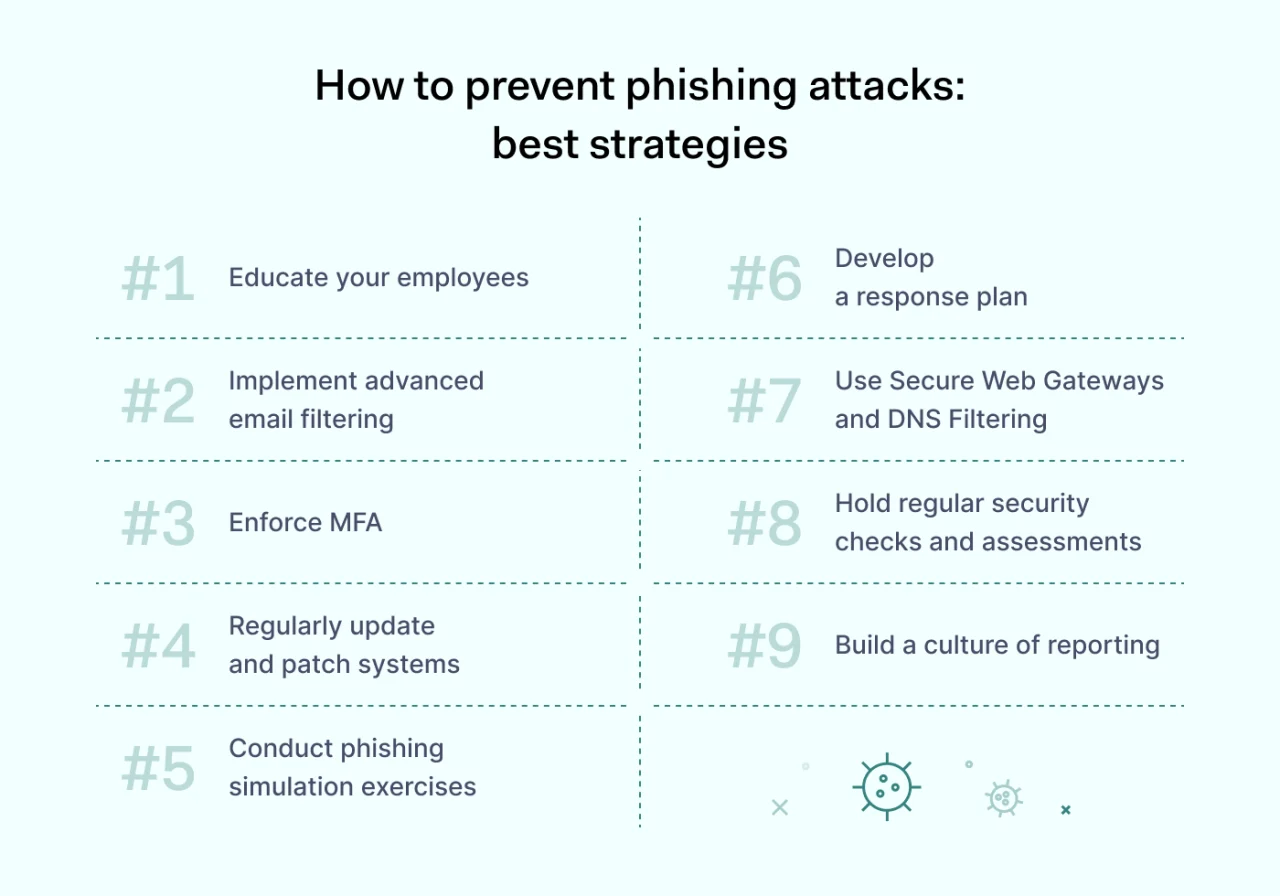
Phishing prevention best practices

Educate your employees

Teaching your team about phishing techniques is crucial. Stress the importance of checking for email misspellings, the dangers of clicking on unknown links or attachments, and how to report anything suspicious. Building a security-aware culture helps everyone play a part in preventing phishing attacks.

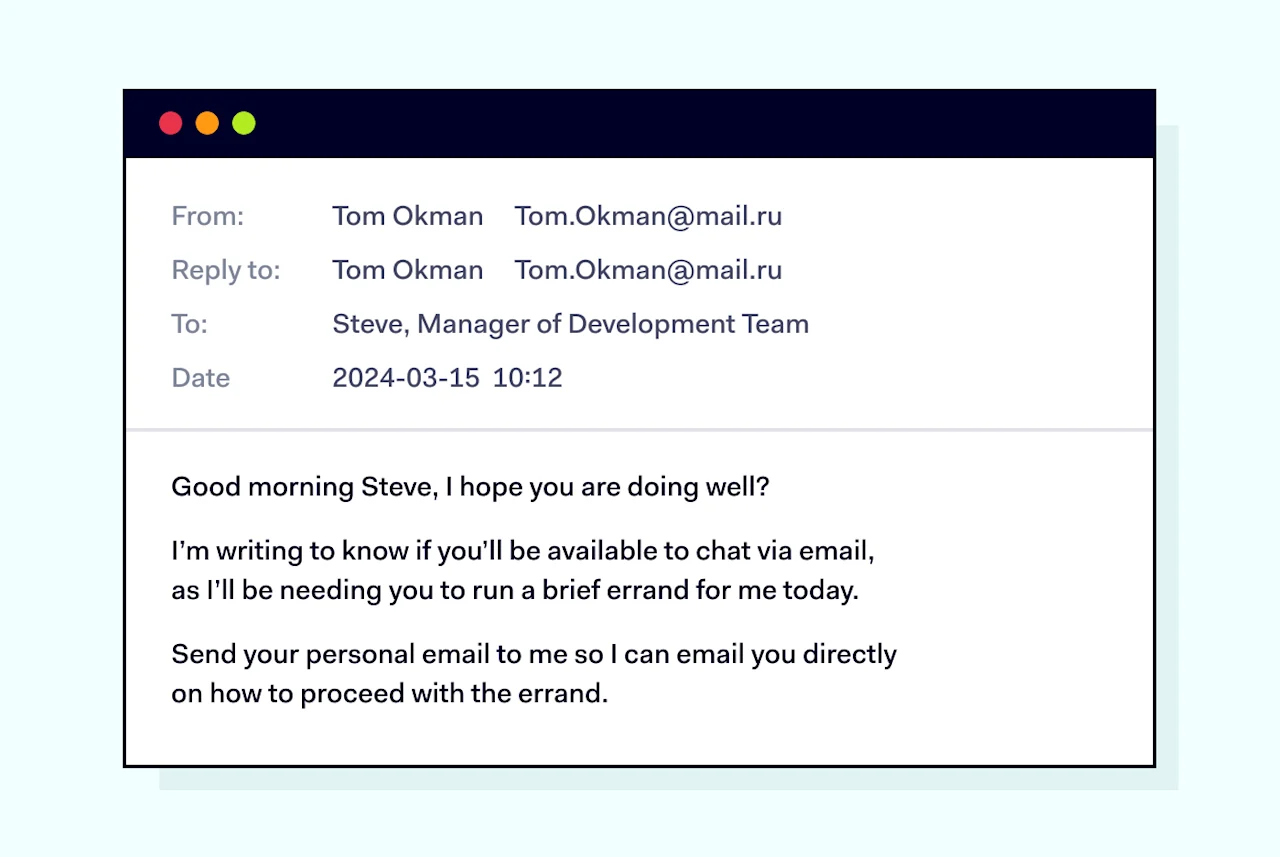
For example, lately, Business Email Compromise (BEC) has become a major cybersecurity concern. This scam involves sending targeted phishing emails to steal money or data from companies. A typical example is CEO fraud, where scammers, pretending to be the company’s CEO, ask employees for urgent money transfers. These requests could be for settling invoices, closing deals, or even buying gift cards, often urging quick action or demanding secrecy.

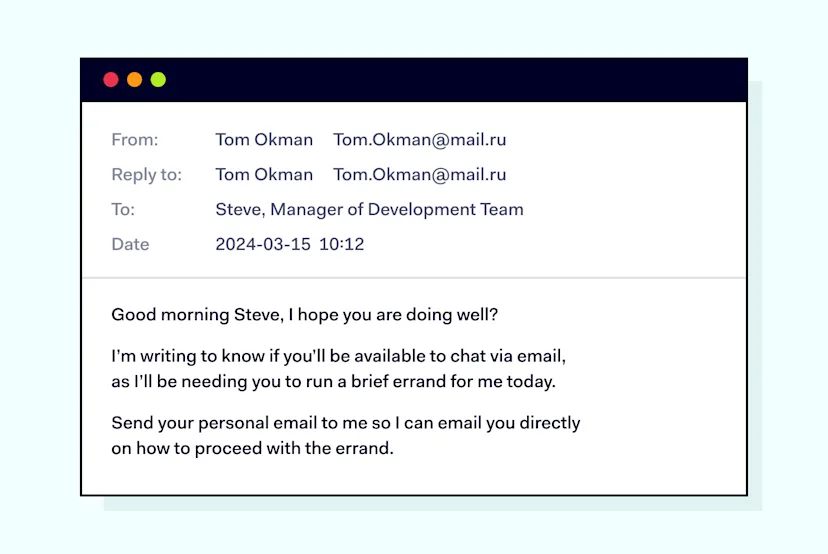
Some BEC attempts are easily recognized, like the one our colleague got:

Phishing email example

Other attacks can be quite sophisticated. For instance, in 2016, a scam involving a fake CEO of FACC led to a $47 million loss.

Now, the risk is even greater with generative AI, allowing scammers to create realistic deepfake videos or audio of executives. So, remind your employees to be cautious when fending off BEC threats. Encourage people to confirm any urgent requests for money or important information claimed to be from the CEO by directly calling the CEO or messaging them on a different platform.

Implement advanced email filtering

Email filters are crucial in stopping phishing emails before they get to your team. These systems look for clues that an email might be a phishing attempt, and they learn from new threats, greatly reducing the likelihood of a successful attack.

Google has shared that its AI-driven security in Gmail blocks over 99.9% of spam, phishing, and malware, keeping almost 15 billion unwanted emails away from users every day. Keeping these filters up-to-date and properly set up is essential in staying one step ahead of phishers.

Enforce MFA

Multi-factor authentication offers a solid layer of protection, even when other defenses might not work as well. MFA could require something like a code from your phone or your fingerprint. This way, it makes sure that just having stolen credentials isn’t enough to get into your data.

Once, Google aimed to cut down on phishing risks, so they required all their employees to use physical Security Keys, leading to no account takeovers being reported. The company found physical security keys so effective that it introduced its own in 2018. To help with the security of the US election, they also gave out thousands of these keys for free.

Regularly update and patch systems

Updating software is key to phishing prevention. These updates patch security holes that threat actors might use to sneak malware into innocent-looking requests.

They also add new anti-phishing features, like better detection of fake websites, making it harder for phishing attempts to succeed. Plus, keeping software current ensures businesses meet data protection standards and supports the latest defenses against phishing, such as improved email filters and browser warnings.

Conduct phishing simulation exercises

Phishing simulations test how well your team can spot a phishing attempt. For example, Uber tackles cybersecurity risks, including phishing simulations, with a trio of strategies.

Tabletop exercises are like role-playing games for security scenarios, helping leaders practice decision-making and boost their understanding of cybersecurity. Red team operations are more like realistic mock battles, where a team plays the role of attackers to test how well Uber can defend against real threats. Lastly, atomic simulations are bite-sized tests focusing on specific security measures and how quickly the team can respond. Together, these strategies keep the team better prepared for different sorts of cyber challenges.

Develop a response plan

Developing a response plan is essential in the fight against phishing attacks. Start by outlining clear steps that your team should follow when they detect a phishing attempt, including who to notify and how to report the incident. Make sure everyone understands the common phishing techniques and the importance of quick action to minimize damage. Regularly review and update your anti-phishing policies to adapt to new phishing scams. Practice your response plan through drills to ensure that when a real phishing attack occurs, your organization is prepared to act swiftly and effectively.

Use Secure Web Gateways and DNS Filtering

Using Secure Web Gateways (SWG) and DNS filtering is a powerful step in your anti-phishing strategy. These tools act as a first line of defense by blocking access to malicious websites known for phishing attacks before they can do harm. They scan and filter internet traffic to prevent phishing techniques and scams from reaching your network or your team’s devices. Setting up SWG and DNS filtering helps ensure only safe, approved web content gets through, significantly reducing the risk of phishing attempts.

Hold regular security checks and assessments

Regular security checks and assessments help identify vulnerabilities that could be exploited by phishing techniques. By consistently reviewing your security measures, you can stay one step ahead of attackers and adapt to new phishing scams. Incorporating anti-phishing drills and tests into these assessments can strengthen your team’s ability to recognize and respond to threats. Make it a priority to schedule these checks periodically.

Build a culture of reporting

It’s important to make employees feel comfortable reporting any suspected phishing. If people worry they’ll get in trouble or feel embarrassed, they might not report things that could warn you about a phishing threat. Showing that reporting can stop attacks before they happen helps everyone understand why it’s so crucial. Making it easy to report, like having a special email address or a simple button in email programs, encourages reporting. Saying thank you to those who report phishing helps build a culture where everyone wants to keep the organization safe.

How to mitigate phishing attacks with NordLayer

NordLayer offers a straightforward solution to mitigate phishing attacks effectively. It guides businesses in implementing the Zero Trust Network Access (ZTNA) framework smoothly, often without the need for external tech specialists.

ZTNA works on the principle of trusting no one by default, whether they are inside or outside your network. Access is given only after detailed verification, greatly lowering the risk of phishing attacks by making sure only verified users can get into your network resources.

Besides helping with the ZTNA framework, NordLayer has direct features aimed at phishing prevention. The Threat Prevention tool actively spots and stops potential threats, protecting your devices and important data from complex phishing methods and scams.

Using NordLayer’s complete security tools gives your organization strong anti-phishing protection. To find out how NordLayer can help prevent phishing attacks in your organization, feel free to contact sales.

About Version 2 Digital

Version 2 Digital is one of the most dynamic IT companies in Asia. The company distributes a wide range of IT products across various areas including cyber security, cloud, data protection, end points, infrastructures, system monitoring, storage, networking, business productivity and communication products.

Through an extensive network of channels, point of sales, resellers, and partnership companies, Version 2 offers quality products and services which are highly acclaimed in the market. Its customers cover a wide spectrum which include Global 1000 enterprises, regional listed companies, different vertical industries, public utilities, Government, a vast number of successful SMEs, and consumers in various Asian cities.

About NordLayer
NordLayer is an adaptive network access security solution for modern businesses – from the world’s most trusted cybersecurity brand, Nord Security.

The web has become a chaotic space where safety and trust have been compromised by cybercrime and data protection issues. Therefore, our team has a global mission to shape a more trusted and peaceful online future for people everywhere.

Announcement on Atlas VPN

Atlas VPN, a valued member of the Nord Security family, has made the decision to conclude its services on April 24. 

Atlas VPN was established with the goal of offering secure, accessible, and user-friendly VPN services. Despite its unwavering dedication and the remarkable support from AtlasVPN’s community, the challenges posed by advancing technologies, a competitive market, and the rising costs of maintaining high-quality services have led to this difficult but necessary decision.

The conclusion of Atlas VPN’s journey marks a significant moment for both Atlas VPN and Nord Security. We extend our gratitude to the Atlas VPN team for their dedication to online privacy and security. Their efforts have made a lasting impact on their users and the cybersecurity community.

Recognizing the importance of continuous and secure online protection for Atlas VPN users, we are facilitating their smooth transition to NordVPN. NordVPN’s mission aligns closely with that of Atlas VPN, and we are excited to welcome Atlas users into the NordVPN family. We believe that through NordVPN, Atlas VPN users will experience enhanced online security, privacy, and freedom.

To the Atlas VPN community, we thank you for your trust, support, and for being part of an important mission to make the internet a safer place. As we transition to this next chapter with NordVPN, we are committed to providing you with exceptional service, ensuring the utmost security and privacy online.

Warmest regards,

The Nord Security Team

About Version 2 Digital

Version 2 Digital is one of the most dynamic IT companies in Asia. The company distributes a wide range of IT products across various areas including cyber security, cloud, data protection, end points, infrastructures, system monitoring, storage, networking, business productivity and communication products.

Through an extensive network of channels, point of sales, resellers, and partnership companies, Version 2 offers quality products and services which are highly acclaimed in the market. Its customers cover a wide spectrum which include Global 1000 enterprises, regional listed companies, different vertical industries, public utilities, Government, a vast number of successful SMEs, and consumers in various Asian cities.

About NordLayer
NordLayer is an adaptive network access security solution for modern businesses – from the world’s most trusted cybersecurity brand, Nord Security.

The web has become a chaotic space where safety and trust have been compromised by cybercrime and data protection issues. Therefore, our team has a global mission to shape a more trusted and peaceful online future for people everywhere.

×

Hello!

Click one of our contacts below to chat on WhatsApp

×