Skip to content

Valuable targets attract advanced threat actors. How to defend against quiet and persistent attacks

C-level executives, diplomats, and high-ranking IT managers usually have access to sensitive information, huge amounts of data, finances, or a combination of all these things. And adversaries know it.

Anticipating all the precious data and access rights, cybercriminals and state-sponsored advanced persistent threat groups (APTs) are willing to invest a lot of time and money to orchestrate attacks that could compromise VIP devices and accounts. In this case, backdoors are particularly dangerous, because typically they have the capability to send files to the host computer, execute files and commands there, and exfiltrate (send) files and documents back to the attacker.

One of the latest examples of such an attack features several sophisticated and previously unknown backdoors called LunarWeb and LunarMail, which were recently described by ESET researchers and presented at the ESET World 2024 conference. Using advanced obfuscation techniques, they were deployed to spy on an undisclosed European ministry of foreign affairs. The attack is attributed with medium confidence to the Russia-aligned APT group Turla.

To protect against such attacks, organizations need to be proactive. This means not only training staff and deploying a reliable cybersecurity solution, but also having comprehensive cyberthreat intelligence helping them stay ahead of adversaries.  


VIPs are also threatened at home

According to a 2023 study conducted by BlackCloak and Ponemon Institute, senior-level corporate executives are increasingly being targeted by sophisticated cyberattacks. These include email compromise, ransomware, malware infection, doxing, extortion, online impersonation and even physical attacks, such as swatting.

Around 42% of surveyed organizations stated that their senior executive or an executive’s family member was attacked over the past two years. Attackers often went for sensitive company data, including financial information and intellectual property.

Cybercriminals did not hesitate to strike when their targets were the most vulnerable – at home with their loved ones. In one-third of reported cases, hackers reached executives through insecure home-office networks used during remote work.

Business email compromise (BEC) is one of the most used tactics against VIPs. It usually comprises a sophisticated scam targeting individuals performing transfers of funds and seeks to compromise legitimate business email accounts through social engineering and/or computer intrusion techniques.

According to the FBI’s Internet Crime Complaint Center (IC3) annual reports, BEC is among the costliest types of crime. In 2023, IC3 received 21,489 BEC complaints with adjusted losses of over $2.9 billion. Only investment crimes (such as pyramid schemes, real estate investment scams, or cryptocurrency investment scams) accumulated more losses than BEC in that year, with $4.7 billion reported stolen.

The Lunar toolset

ESET research on the Lunar toolset demonstrates how such carefully crafted spying can look.

The initial attack vector is not known, but recovered installation-related components and attacker activity suggest possible spearphishing with a malicious Word document and abuse of both a misconfigured network and the application monitoring software Zabbix.

Once access is gained, the backdoor installation process follows. It consists of dropping both a loader and a blob containing either LunarWeb or LunarMail, as well as setting up persistence.

From that point forward, data exfiltration can start. For example, the LunarWeb backdoor gathers data such as the OS serial name, environment variables, network adapters, a list of running processes, a list of services, or a list of installed security products, and sends them to a C&C server.

LunarWeb communicates with a C&C server using HTTP(S) underneath which is a custom binary protocol with encrypted content. ESET researchers only found LunarWeb deployed on servers, not user workstations.

LunarMail is similar, but instead of HTTP(S) it uses email messages for communication with its C&C server. This backdoor is designed to be deployed on user workstations, not servers – because it is persistent and intended to run as an Outlook add-in.

Staying under the radar

The APT group also has several tricks up its sleeve to conceal the malicious activities of deployed backdoors.  

  • The loader uses RC4, a symmetric key cipher, to decrypt path to the blob and reads encrypted payloads from it.
  • It also creates a decryption key derived from the DNS domain name, which it verifies. Using DNS domain name decryption means that the loader correctly executes only in the targeted organization, which may hinder analysis if the domain name is not known.
  • LunarWeb limits initial contact attempts with the C&C server, assessing the backdoor’s lifespan, and checking C&C server accessibility. If any of the safety conditions fail, LunarWeb self-removes, deleting its files, including the loader and the blob.
  • To hide its C&C communications, LunarWeb impersonates legitimate-looking traffic, spoofing HTTP headers with genuine domains and commonly used attributes. Notable examples of impersonation include Windows services (Teredo, Windows Update) and updates of ESET products.
  • Both LunarWeb and LunarMail can receive commands hidden in images.
  • To exfiltrate stolen data, LunarMail embeds them in a PNG image or PDF document. For PNG files, a template matching the compromised institution’s logo is used.
  • LunarMail deletes email messages used for C&C communications.
  • Both LunarWeb and LunarMail can uninstall themselves.

How to protect VIPs

Being high-priority targets, VIPs should have an adequate high-priority protection in both office and home environments.

  • Educate them and the rest of the staff – Technology alone cannot fully safeguard an organization, and the human element will always play a role. Only 9% of cybersecurity professionals participating on the Ponemon survey were highly confident that their CEO or executives would know how to protect their personal computer from viruses, and only 22% trusted them when it comes to securing personal emails.
  • Secure their remote working – Because many VIPs are targeted in their home environment, it is necessary to secure their corporate devices, personal devices used for work, and home networks. This includes a use of strong passwords or passphrases, 2FA, regular updating, patching, and backing up data.
  • Adopt a zero-trust approach – Take measures to efficiently screen every single point of access, both employee and device – internal and external. Naturally, CEOs and high-ranking managers need a lot of access to perform their duties, but it does not have to be unlimited. Evaluate how much privilege they really need to protect your institution’s data in cases when VIPs’ accounts are compromised.
  • Deploy reliable cybersecurity – As the Lunar toolset shows, current cyberthreats operate above the security threshold of traditional firewalls, and more sophisticated security measures need to be adopted. Protection of C-level officials should include multilayered security and proactive defense benefiting from cyber threat intelligence.

ESET Threat intelligence monitors APT groups such as Turla, observing their tactics, techniques, and procedures (TTPs) in order to help organizations prepare for APTs’ new tricks and to also understand their motives. Thanks to comprehensive ESET reports and curated feeds, organizations can anticipate threats and make faster, better decisions.

Facing the big guns

VIPs are prized trophies for cybercriminals and APTs, be they for financial gain or political reasons. Therefore, they often bring their biggest guns to compromise targets’ accounts and devices.

This means that organizations need to build an awareness culture among their employees and protect their devices with the latest technology. ESET solutions and services can help with that.

About Version 2 Digital

Version 2 Digital is one of the most dynamic IT companies in Asia. The company distributes a wide range of IT products across various areas including cyber security, cloud, data protection, end points, infrastructures, system monitoring, storage, networking, business productivity and communication products.

Through an extensive network of channels, point of sales, resellers, and partnership companies, Version 2 offers quality products and services which are highly acclaimed in the market. Its customers cover a wide spectrum which include Global 1000 enterprises, regional listed companies, different vertical industries, public utilities, Government, a vast number of successful SMEs, and consumers in various Asian cities.

About ESET
For 30 years, ESET® has been developing industry-leading IT security software and services for businesses and consumers worldwide. With solutions ranging from endpoint security to encryption and two-factor authentication, ESET’s high-performing, easy-to-use products give individuals and businesses the peace of mind to enjoy the full potential of their technology. ESET unobtrusively protects and monitors 24/7, updating defenses in real time to keep users safe and businesses running without interruption. Evolving threats require an evolving IT security company. Backed by R&D facilities worldwide, ESET became the first IT security company to earn 100 Virus Bulletin VB100 awards, identifying every single “in-the-wild” malware without interruption since 2003.

Debunking The Top 10 Discrete Manufacturing OT Cybersecurity Myths

When you think of cybersecurity, what comes to mind?

Continue reading

What’s keeping CISOs up at night?

Introduction 

Cybersecurity is no longer a siloed concern relegated to IT departments; it’s a fundamental component of business strategy. Chief information security officers (CISOs) face mounting pressures to not only protect their organizations but also to integrate cybersecurity into the broader business framework.

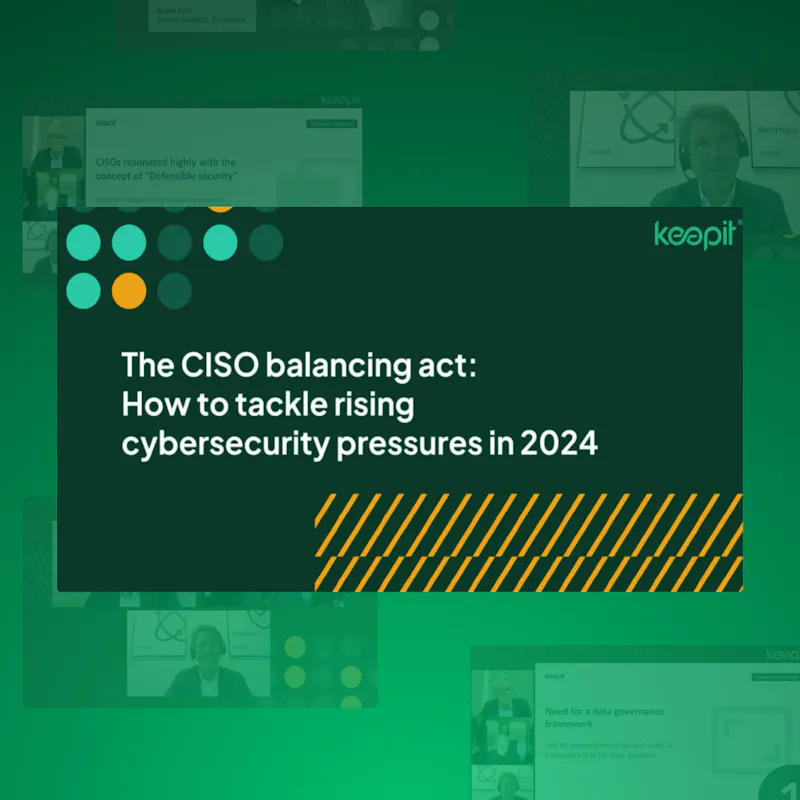
This is the focus of our recent webinar, “The CISO balancing act: How to tackle rising cybersecurity pressures in 2024,” where industry experts share insights and strategies. Read further for a summary highlighting the key takeaways.

Watch the on-demand webinar

Strategies for CISOs navigating cybersecurity challenges

As the digital landscape expands, so do the complexities of managing cybersecurity. We’re seeing a mix of longstanding challenges and new, emerging threats that are putting unprecedented pressure on security professionals worldwide.

Our on-demand webinar provides strategic and operational insights based on extensive research and interviews with over 30 top security professionals from organizations around the globe. Whether you’re a CISO, a security analyst, or a business leader, these compiled insights will help you navigate the obstacles ahead.

Join Mark Renouf, former BBC journalist and contributor, as he engages with industry experts Tim Rhodes, managing director at Apprize360, and Kim Larsen, CISO at Keepit, to discuss key takeaways from the study, such as:

  • Decisions to consider as you prepare for both known and unknown threats. 
  • Key components of a resilient security framework that adapts to both current needs and future technologies. 
  • How to identify solid best practices to embrace. 


The importance of a data governance framework

One of the most pressing challenges identified in the webinar is the need for a robust data governance framework. This is highlighted as a top priority by nearly all the CISOs and IT leaders interviewed.

Key points:

  • Customization and scalability: Organizations need data governance frameworks tailored to their specific needs, which can grow and evolve with them.
  • Deployment challenges: Many leaders struggle with effectively deploying and maintaining these frameworks. 
  • Foundational role: Data governance is foundational to overall cybersecurity strategy, impacting compliance, risk management, and operational efficiency. 


Data classification: The bedrock of data governance

Hand in hand with data governance is the need for an effective data classification strategy. This is emphasized as a critical step before any governance framework can be successfully implemented.

Key points:

  • Foundation first: Proper data classification is seen as the cornerstone of an effective data governance framework. 
  • AI and automation: While AI and machine learning hold promise for automated data classification, there’s caution about relying too heavily on these technologies without thorough vetting. 
  • Simplification: Effective data classification frameworks should avoid complexity, making them easy to understand and use across the organization. 


Board involvement in cybersecurity

Another major theme is the crucial role of board involvement in cybersecurity strategy. Despite its importance, many organizations still lack adequate board engagement in this area.

Key points:

  • Risk integration: Boards need to integrate cybersecurity risks into their overall risk management strategies. 
  • Education and engagement: CISOs often need to educate board members about cybersecurity threats and the importance of proactive strategies. 
  • Strategic role: Cybersecurity should be a regular item on board agendas, influencing broader business decisions. 


Defensible security strategies

CISOs are increasingly focusing on creating defensible security strategies rooted in zero trust principles. This involves continuous threat modeling and analysis, ensuring that security measures can withstand scrutiny and adapt to evolving threats.

Key points:

  • Lifecycle approach: Viewing cybersecurity through a lifecycle lens rather than isolated solutions. 
  • Zero trust: Implementing zero trust principles to create a more resilient security posture. 
  • Continuous improvement: Regularly updating and refining security strategies to address new threats. 


Vendor partnerships: beyond products to solutions

Effective cybersecurity often depends on strong vendor partnerships. CISOs are looking for vendors who can provide not just products but comprehensive solutions and strategic advice.

Key points:

  • Consultative partnerships: CISOs value vendors who act as partners, offering strategic guidance and support. 
  • Integration and collaboration: Vendors should work seamlessly with internal teams and other third-party solutions to provide cohesive security coverage. 
  • Service and support: High levels of service and support from vendors are crucial for maintaining effective security postures. 


Addressing CISO experience and maturity 

The webinar highlights the varying levels of experience and maturity among CISOs, which can significantly impact an organization’s cybersecurity effectiveness.

Key points:

  • Diverse backgrounds: CISOs come from various professional backgrounds, affecting their approach to cybersecurity. 
  • Rapid impact: With an average tenure of 24-36 months, especially in the U.S., CISOs need to make quick, impactful changes. 
  • Training and development: Continuous education and professional development are essential for CISOs to stay ahead of emerging threats. 


Conclusion 

As we navigate the complexities of cybersecurity in 2024, the role of the CISO is more critical than ever. Effective data governance, board involvement, strategic vendor partnerships, and continuous improvement in security strategies are vital. Organizations that prioritize these areas will be better equipped to handle the rising pressures and evolving threats in the cybersecurity landscape.

By integrating these insights into their operations, businesses can enhance their cybersecurity posture, ensuring not only protection but also resilience and strategic advantage in the digital age. 

Watch the on-demand webinar

About Version 2 Digital

Version 2 Digital is one of the most dynamic IT companies in Asia. The company distributes a wide range of IT products across various areas including cyber security, cloud, data protection, end points, infrastructures, system monitoring, storage, networking, business productivity and communication products.

Through an extensive network of channels, point of sales, resellers, and partnership companies, Version 2 offers quality products and services which are highly acclaimed in the market. Its customers cover a wide spectrum which include Global 1000 enterprises, regional listed companies, different vertical industries, public utilities, Government, a vast number of successful SMEs, and consumers in various Asian cities.

About Keepit
At Keepit, we believe in a digital future where all software is delivered as a service. Keepit’s mission is to protect data in the cloud Keepit is a software company specializing in Cloud-to-Cloud data backup and recovery. Deriving from +20 year experience in building best-in-class data protection and hosting services, Keepit is pioneering the way to secure and protect cloud data at scale.

SafeDNS: Ensuring Robust Security and Stability for DNS Resolvers

SafeDNS uses an efficient Anycast network for its DNS resolvers to deliver responsive and reliable user responses across the globe. With the ever-growing size of the Internet and increasing need for rapid and secure data exchange, DNS resolvers such as SafeDNS are key elements in preserving integrity and speed of connections to access the global network. SafeDNS also addresses challenges related to DNS attacks and DNS cache manipulation, ensuring robust protection and efficient operation.

Here’s how SafeDNS safeguards its DNS servers and ensures a high level of performance and security:

Anycast Network

Anycast

Highest Efficiency Possible. The efficiency of SafeDNS fundamentally depends on its Anycast network. An anycast network is a routing technique which uses a type of network address where the requests for the network are distributed among a number of nodes. Under this architecture, incoming requests are automatically routed to the nearest or best-connected node.

Client Distribution Among Nodes

Anycast clients’ requests are distributed among different location nodes in various ways. The distribution depends on multiple conditions such as client location, client provider, upstream provider of a given node, and more. This significantly lowers the possibility of a DDoS attack on a single node, enabling the system to redistribute the load and minimize the risk of being overloaded.

Guardian Service

Spam Detection and Protection

Every node has its own proprietary Guardian service which protects against spam of DNS queries. Guardian communicates with DNS proxy on nodes and parses IP addresses to check whether they belong to SafeDNS clients.

Request Scoring

The number of requests coming from each IP address is tracked and checked against botnets and other types of spammy categories. Depending on that, IP addresses get corresponding scores.

Suspicious IP Blocking

When the score surpasses a certain level, the IP address is blocked on all nodes in the network. In the situation of a DNS DDoS attack, if an IP address is detected and blocked on a certain node, then the further use of the device with the same IP address is impossible.

Response Time

The average time of Guardian to illegitimate DNS traffic is one minute, which allows for illegitimate threats neutralization and stability and security of the whole DNS infrastructure.

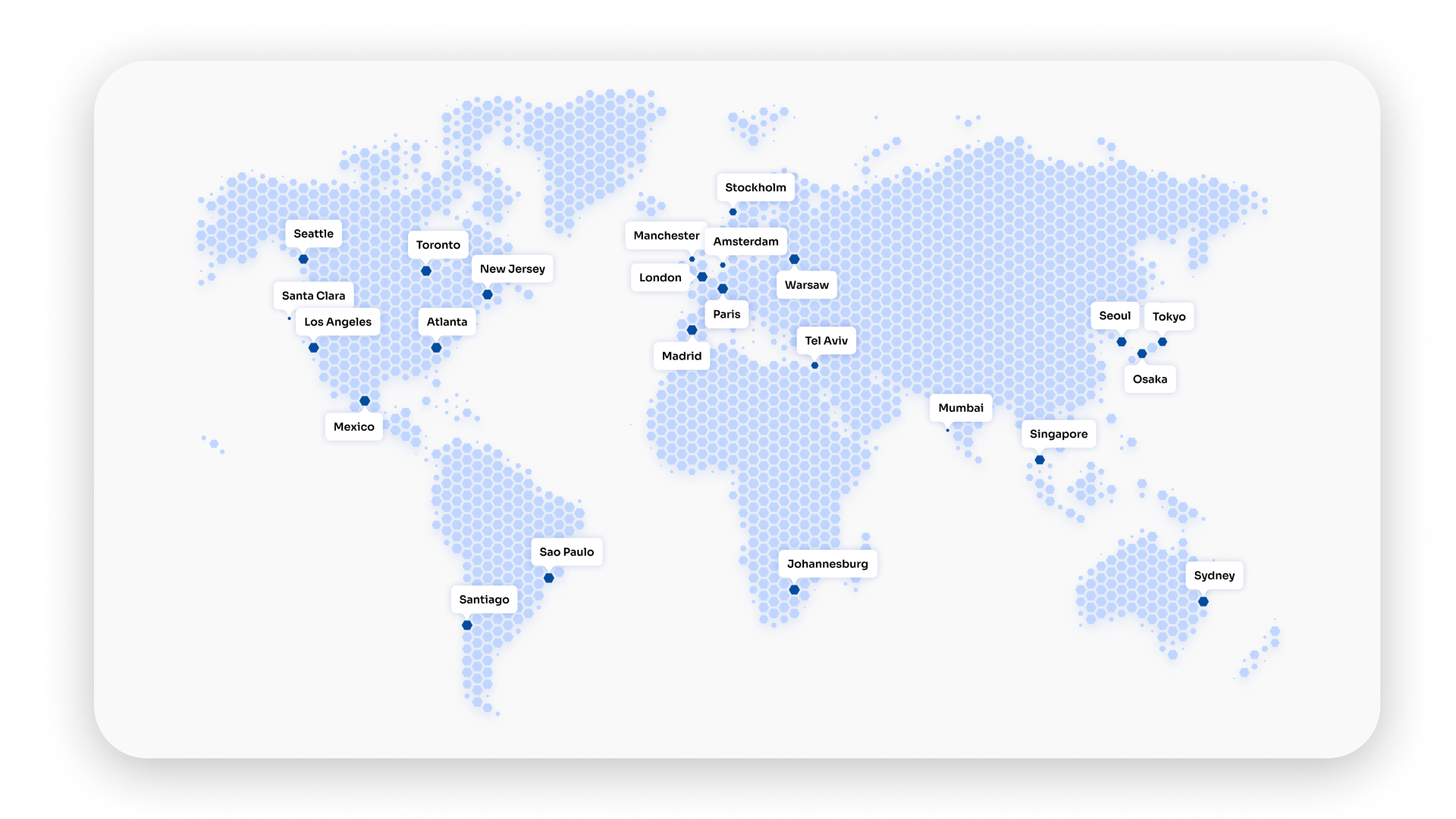
As one of the top 10 DNS resolvers globally, SafeDNS utilizes TIER IV nodes distributed worldwide. These nodes are strategically placed to provide optimal coverage and performance. The use of TIER IV nodes, which represent the highest standard in data center and server infrastructure, ensures that SafeDNS can offer unparalleled reliability and uptime. These nodes are part of a carefully designed network configuration that enhances the security and efficiency of DNS operations.


According to a recent study, SafeDNS not only ensures fast and reliable DNS resolution but also maintains a sustainable web filtering infrastructure. This commitment to stability and security makes SafeDNS a preferred choice for users worldwide seeking dependable DNS resolution services.

Provider Measures for Server Protection

Traffic Analysis and Filtering

  • Behavioral Traffic Analysis: SafeDNS uses machine learning and behavior analysis technologies to identify and block abnormal DNS traffic. By continuously monitoring traffic patterns and behaviors, the system can quickly detect and mitigate potential threats.
  • IP Address Filtering: Suspicious IP addresses or subnets from which dubious DNS traffic originates are blocked. This proactive approach prevents malicious actors from gaining a foothold within the DNS infrastructure.

Early Warning Systems

SafeDNS utilizes global monitoring networks and sensors to detect early signs of DDoS attacks. These early warning systems enable swift response and mitigation, ensuring that threats are addressed before they can cause significant damage.

Automatic Scaling

Cloud technologies enable SafeDNS to automatically scale resources, such as computing power and bandwidth, to handle sudden DNS traffic spikes. This scalability ensures that the DNS infrastructure remains resilient and responsive, even during periods of high demand.

Bandwidth Control

By limiting bandwidth for specific types of DNS traffic or users, SafeDNS can prevent network overload. This targeted approach ensures that legitimate DNS traffic flows smoothly while malicious or excessive traffic is curtailed.

Redundancy and Failover Systems

SafeDNS constructs its DNS infrastructure with redundancy and failover capabilities, which means that in case of an attack or hardware failure, the DNS traffic can be swiftly redirected to other nodes or data centers. This redundancy ensures that the network continues to operate smoothly, minimizing any disruptions for users.

Partnership with DDoS Protection Providers

To strengthen its defenses, SafeDNS teams up with top DDoS protection providers like Akamai, Cloudflare, and Arbor Networks. These partnerships add extra layers of security and expertise, making SafeDNS even more capable of defending against sophisticated and large-scale attacks.

Overall, SafeDNS is a solid choice for DNS resolution services, thanks to the robust security measures and efficient Anycast network. With advanced threat detection and mitigation strategies in place, you can trust SafeDNS to deliver high performance and strong protection against potential cyber threats.

About Version 2 Digital

Version 2 Digital is one of the most dynamic IT companies in Asia. The company distributes a wide range of IT products across various areas including cyber security, cloud, data protection, end points, infrastructures, system monitoring, storage, networking, business productivity and communication products.

Through an extensive network of channels, point of sales, resellers, and partnership companies, Version 2 offers quality products and services which are highly acclaimed in the market. Its customers cover a wide spectrum which include Global 1000 enterprises, regional listed companies, different vertical industries, public utilities, Government, a vast number of successful SMEs, and consumers in various Asian cities.

About SafeDNS
SafeDNS breathes to make the internet safer for people all over the world with solutions ranging from AI & ML-powered web filtering, cybersecurity to threat intelligence. Moreover, we strive to create the next generation of safer and more affordable web filtering products. Endlessly working to improve our users’ online protection, SafeDNS has also launched an innovative system powered by continuous machine learning and user behavior analytics to detect botnets and malicious websites.

How to find Uniview NVR301-04S2-P4 devices

Latest Uniview NVR301-04S2-P4 vulnerability

Uniview has disclosed a vulnerability in their NVR301-04S2-P4 product.

CVE-2024-3850 is rated medium with CVSS score of 5.4 and allows an attacker to send a user a URL that if clicked on could execute malicious JavaScript in their browser.

What is the impact?

The affected product is vulnerable to reflected cross-site scripting attack (XSS). An attacker could send a user a URL that if clicked on could execute malicious JavaScript in their browser. This vulnerability also requires authentication before it can be exploited, so the scope and severity is limited. Also, even if JavaScript is executed, no additional benefits are obtained.

Are updates or workarounds available?

Uniview encourages users to obtain the fixed version, Uniview NVR-B3801.20.17.240507, and update. You may contact your local dealer, Uniview Service Hotline, or regional technical support for assistance.

How do I find potentially vulnerable systems with runZero?

From the Asset Inventory, use the following query to locate systems running potentially vulnerable software:

product:”NVR3%”

About Version 2 Digital

Version 2 Digital is one of the most dynamic IT companies in Asia. The company distributes a wide range of IT products across various areas including cyber security, cloud, data protection, end points, infrastructures, system monitoring, storage, networking, business productivity and communication products.

Through an extensive network of channels, point of sales, resellers, and partnership companies, Version 2 offers quality products and services which are highly acclaimed in the market. Its customers cover a wide spectrum which include Global 1000 enterprises, regional listed companies, different vertical industries, public utilities, Government, a vast number of successful SMEs, and consumers in various Asian cities.

About runZero
runZero, a network discovery and asset inventory solution, was founded in 2018 by HD Moore, the creator of Metasploit. HD envisioned a modern active discovery solution that could find and identify everything on a network–without credentials. As a security researcher and penetration tester, he often employed benign ways to get information leaks and piece them together to build device profiles. Eventually, this work led him to leverage applied research and the discovery techniques developed for security and penetration testing to create runZero.

×

Hello!

Click one of our contacts below to chat on WhatsApp

×