Skip to content

Unlocking Our Passwordless Future: A Cybersecurity Revolution

As we’ve covered before, the conventional password-based security model is buckling under the weight of its vulnerabilities. But fear not, because the dawn of our passwordless future is upon us, promising a revolutionary shift in how we safeguard our digital lives. As we bid farewell to cumbersome passwords, innovative security methods are paving the way for a new era in network security, application security, and personal data protection.

Fortifying Our Virtual Kingdoms

For years, passwords have been the trusty gatekeepers of our networks. Yet, the reality is that traditional password-based authentication is riddled with loopholes, often leaving the door ajar for cybercriminals to infiltrate our digital fortresses.

Thankfully, we have certificates! These digital credentials are ushering in a new era of passwordless authentication for corporate networks, redefining the way businesses protect their digital fortresses. Certificates, a form of asymmetric cryptography, represent an innovative and secure way to verify identity without relying on traditional passwords. In this cutting-edge approach, each user is assigned a unique pair of keys – a public key and a private key. The public key is openly available for encryption, while the private key remains securely tucked away on the user’s device.

When a user attempts to access a corporate network, their device presents the public key to the network server. Here’s where the magic happens – instead of asking for a password, the server sends a challenge encrypted with the public key. If the user’s device can decrypt the challenge using the corresponding private key, voilà! Access granted, all without a single password in sight.

The passwordless approach offers a robust defense against brute-force attacks and phishing attempts. As we embrace these novel security methods, networks will be fortified like never before, providing a safer digital space for businesses and individuals alike.

Looking Beyond the Network Walls

When it comes to applications, the password conundrum is amplified. Reusing passwords across multiple apps, falling for phishing scams, or jotting down passwords on sticky notes create chinks in the armor, making applications susceptible to unauthorized access.

Fear not, weary app users, for the passwordless revolution promises to deliver a new era of secure access! Single Sign-On (SSO) systems, coupled with other means of authentication, offer seamless login experiences across multiple applications. By eliminating the need to manage a myriad of passwords, users can focus on their digital tasks without compromising security.

Moreover, Zero Trust architecture is emerging as a formidable approach to securing applications. Gone are the days when users and devices were trusted implicitly. In a passwordless future, every access attempt is continuously verified and authenticated throughout the session. It’s like a digital bouncer who never lets their guard down!

As applications become fortified with passwordless security, we bid farewell to the age of password-related breaches, ushering in an era of enhanced app security and user experience.

Securing the Devices Themselves

Endpoint security – the safeguarding of devices like laptops, smartphones, and tablets – is also a major area of use for passwordless methods. By bidding farewell to cumbersome passwords and embracing passwordless authentication, we unlock a plethora of benefits that redefine how we secure our endpoints.

Human fallibility, from weak password choices to the notorious habit of password reuse, has rendered this archaic method increasingly susceptible to cyber threats. With passwordless security, users no longer need to bear the burden of memorizing complex combinations or worry about exposing passwords accidentally.

As remote work and Bring Your Own Device (BYOD) policies become more prevalent, endpoint security faces new challenges. Passwordless methods cater perfectly to these trends, providing a secure and versatile solution that enables employees to access corporate resources confidently, regardless of location.

When it comes to user’s devices, passwordless security often incorporates multi-factor authentication (MFA) as an additional safeguard. By requiring multiple forms of verification, such as biometrics coupled with hardware tokens or one-time passcodes, MFA enhances the robustness of endpoint security. The combination of these advanced authentication methods forms an impregnable fortress around our devices, keeping cyber intruders at bay.

The Passwordless Future Ahead

The road to the passwordless future is not without challenges. Some might be hesitant to adopt these novel security methods, fearing privacy concerns or the complexities of implementation. But the time has come to embrace change and bid farewell to passwords.

The cybersecurity industry, policymakers, and technology providers must work hand in hand to pave the way for a seamless transition. Education and awareness campaigns will play a crucial role in dispelling myths and misconceptions surrounding passwordless security, while regulatory frameworks must adapt to this paradigm shift.

The passwordless future is no longer a distant dream – it’s a tangible reality shaping the landscape of network security, application security, and endpoint security. By leaving behind the antiquated password-based systems, we embrace a brighter, safer digital world, fortified with cutting-edge technologies that keep cyber threats at bay.

About Version 2 Digital

Version 2 Digital is one of the most dynamic IT companies in Asia. The company distributes a wide range of IT products across various areas including cyber security, cloud, data protection, end points, infrastructures, system monitoring, storage, networking, business productivity and communication products.

Through an extensive network of channels, point of sales, resellers, and partnership companies, Version 2 offers quality products and services which are highly acclaimed in the market. Its customers cover a wide spectrum which include Global 1000 enterprises, regional listed companies, different vertical industries, public utilities, Government, a vast number of successful SMEs, and consumers in various Asian cities.

About Portnox
Portnox provides simple-to-deploy, operate and maintain network access control, security and visibility solutions. Portnox software can be deployed on-premises, as a cloud-delivered service, or in hybrid mode. It is agentless and vendor-agnostic, allowing organizations to maximize their existing network and cybersecurity investments. Hundreds of enterprises around the world rely on Portnox for network visibility, cybersecurity policy enforcement and regulatory compliance. The company has been recognized for its innovations by Info Security Products Guide, Cyber Security Excellence Awards, IoT Innovator Awards, Computing Security Awards, Best of Interop ITX and Cyber Defense Magazine. Portnox has offices in the U.S., Europe and Asia. For information visit http://www.portnox.com, and follow us on Twitter and LinkedIn.。

BullWall x Version 2 Digital 網上研討會 主題:對抗勒索軟件的最後一道防線

儘管來到了 2023 年,勒索軟件仍然是全球公司企業每日面對的一個主要威脅,因為網絡罪犯成功地智取了預防型安全工具。今次研討會,我們將探討如何通過 BullWall 的「遏制式勒索軟件方案」,更好地保護您的關鍵數據和 IT 基礎設施。

誠摯地邀請您參加我們的網上研討會:

主題:對抗勒索軟件的最後一道防線
時間:2023 年 8 月 10 日(星期四)
時間:香港時間下午 4-5
語言:英文

演講嘉賓:
Morten Gammelgard(BullWal 全球銷售和營運副總裁)及
Andy Walsh(BullWal 銷售工程總監)

BullWall 網絡安全專家將探討以下內容:
端點偵測與回應(EDR)和其他預防式措施的限制
如何正確執行偵測、預防、應對和恢復措施
即場演示 3 個遏制式工具如何對付真實勒索軟件的攻擊


按此登記
https://attendee.gotowebinar.com/register/6775458264076922198


演講嘉賓簡介

Morten Gammelgard(BullWal 全球銷售和營運副總裁)

Morten Gammelgard 在軟件和硬件行業擁有超過 20 年的豐富經驗,目前擔任 BullWall 的全球銷售和營運副總裁,並引領公司連續四年實現了收入增長和盈利倍升。他曾與來自各個行業的客戶合作,包括從小眾市場到前 500 大企業的客戶,其中包括 Verizon、Sun Life、IBM、VMware、Dell 和 Shell 等知名企業。Morten 是 BullWall 的共同創始人,該公司專注於為企業提供可靠且創新的解決方案,以在非法加密開始損壞數據時控制勒索軟件爆發,從而減輕因成為勒索軟件受害者而可能帶來的中斷、損害和高昂成本,尤其是在所有其他防禦措施失效時。

Andy Walsh(BullWal 銷售工程總監)

Andy Walsh 是 BullWall 的銷售工程總監,目前居住在英國,擁有超過 25 年的資訊技術專業經驗。他曾在 DETECTsystems 和 Sony 等技術公司擔任技術經理,也有在 Ultima Business Solutions 和 Centerprise International 等公司的工作經歷。作為一名優秀的技術專家,Andy 在多層安全基礎設施的開發方面擁有豐富經驗,並在 BullWall 迅速全球擴張的過程中負責管理和領導歐洲、中東和非洲地區的技術團隊。


關於 BullWall
BullWall 是一家專注於保護數據和關鍵 IT 基礎設施免受勒索軟件攻擊的網絡安全解決方案供應商,能夠在幾秒鐘內遏制已知和零日勒索軟件的變種,防止數據加密和外洩,是公司企業對抗勒索軟件的最後一道防線。

關於 Version 2 Digital
Version 2 Digital 是立足亞洲的增值代理商及IT開發者。公司在網絡安全、雲端、數據保護、終端設備、基礎設施、系統監控、存儲、網絡管理、商業生產力和通信產品等各個領域代理發展各種 IT 產品。透過公司龐大的網絡、通路、銷售點、分銷商及合作夥伴,Version 2 提供廣被市場讚賞的產品及服務。Version 2 的銷售網絡包括台灣、香港、澳門、中國大陸、新加坡、馬來西亞等各亞太地區,客戶來自各行各業,包括全球 1000 大跨國企業、上市公司、公用事業、醫療、金融、教育機構、政府部門、無數成功的中小企及來自亞洲各城市的消費市場客戶。

Safeguarding digital assets across cloud environments with multi-cloud security

In today’s digital landscape, organizations are increasingly adopting multi-cloud strategies to harness the benefits of multiple cloud service providers. However, with this approach comes the crucial need for robust security measures to protect valuable digital assets across diverse cloud environments.

This article provides readers with a deep understanding of multi-cloud security, shedding light on its importance and exploring the essential measures to ensure comprehensive protection.

What is multi-cloud security?

Multi-cloud security refers to the practices, technologies, and policies employed to secure data, applications, and infrastructure deployed across multiple cloud environments. It involves safeguarding digital assets against various threats and ensuring data confidentiality, integrity, and availability while complying with industry regulations.

Organizations adopt a multiple-cloud approach, utilizing various service providers simultaneously, including public, private, or hybrid clouds in a multi-cloud setup. The flexibility, scalability, and resilience offered by multi-cloud architectures are attractive, but they also introduce unique security challenges that demand specialized security strategies and controls.

A quick check on definitions

☁️ Multi-cloud security refers to the protection and safeguarding of data, applications, and infrastructure across multiple cloud service providers. It involves implementing security measures and practices to ensure the confidentiality, integrity, and availability of digital assets in a multi-cloud environment.

☁️ The aim of multi-cloud security is to safeguard data confidentiality, integrity, and availability while maintaining compliance with regulatory requirements.

Click to tweet

Multi-cloud security challenges

Operating in a multi-cloud environment introduces safety challenges that organizations must address effectively. Some common security risks in multi-cloud environments include:

Data breaches and unauthorized access

Multiple entry points across various cloud platforms increase the risk of data breaches and unauthorized access attempts, which can lead to significant financial losses, reputational damage, and legal consequences.

What is Multi-Cloud Security 1 1400x488

Account hijacking and identity theft

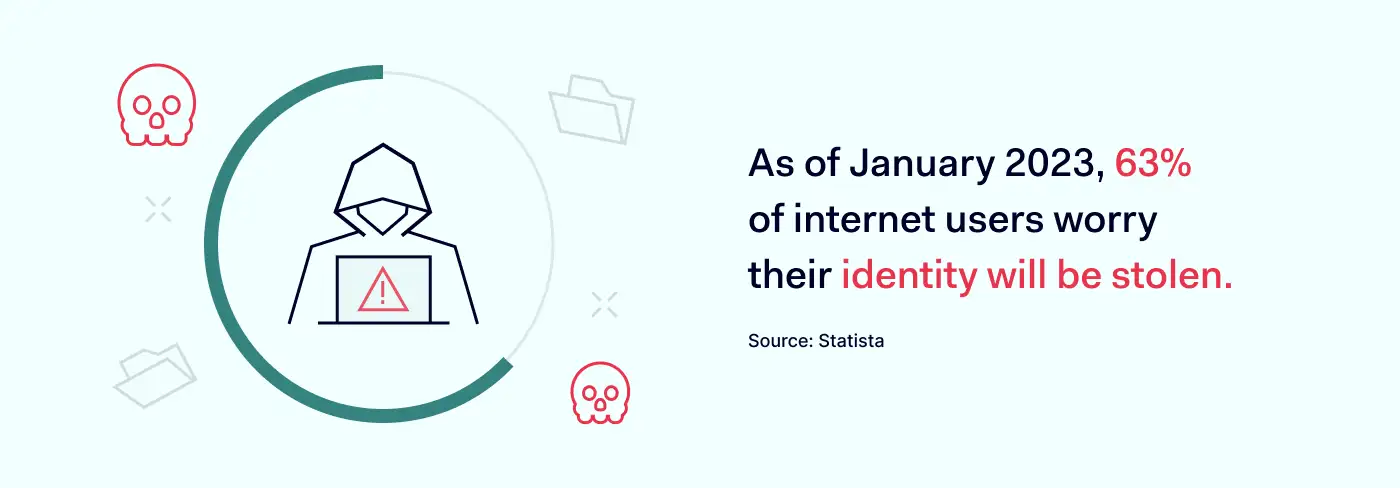
Attackers may target user credentials, exploiting vulnerabilities in authentication mechanisms to gain unauthorized access to sensitive information. Account hijacking and identity theft pose serious threats to the confidentiality and privacy of organizational data.

DDoS attacks and network vulnerabilities

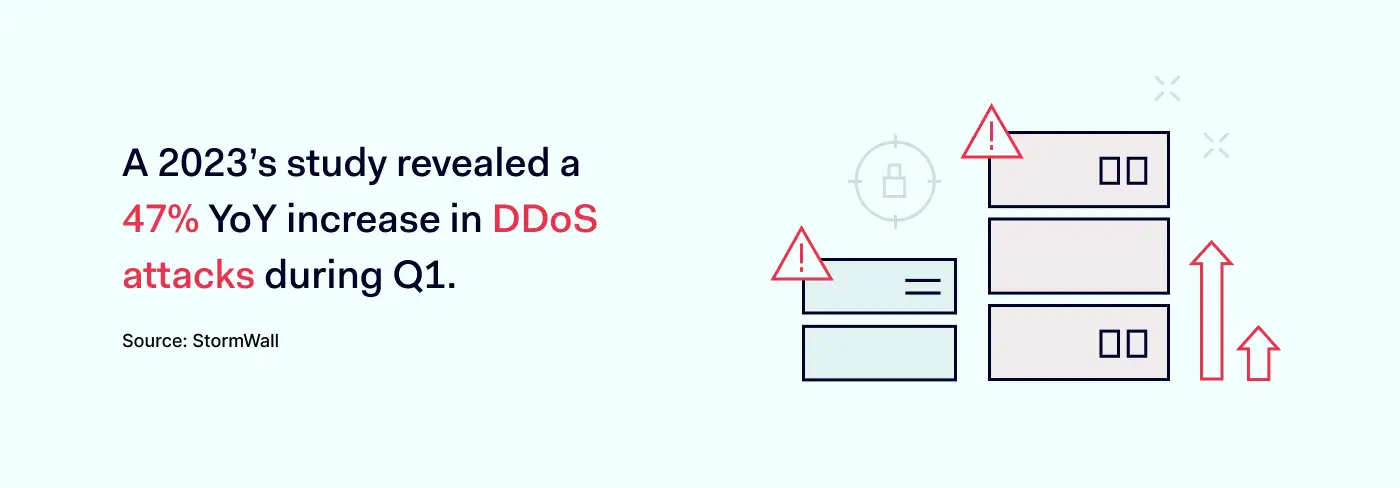
Distributed Denial of Service (DDoS) attacks can disrupt cloud services and cause downtime, impacting business operations. Network vulnerabilities within cloud environments can also be exploited to compromise critical systems and infrastructure.

Data loss and corruption

Multi-cloud setups involve data replication and synchronization across multiple platforms, increasing the risk of data loss or corruption. Technical issues, human errors, or malicious activities can result in permanent data loss or compromise integrity of data security.

What is Multi-Cloud Security 4 1400x488

Compliance and regulatory concerns

Organizations operating in regulated industries must ensure compliance with industry-specific regulations and standards across multiple cloud environments. This becomes complex when dealing with different cloud providers and their specific security requirements.


What is Multi-Cloud Security 5 1400x488

Multi-cloud security best practices

To mitigate the risks associated with a multi-cloud environment, organizations should adopt the following best practices:

1. Implement a comprehensive security multi-cloud architecture. Develop a robust security architecture that spans across all cloud environments, including network security, access controls, encryption, and threat detection mechanisms.

2. Adopt a defense-in-depth approach. Implement multiple layers of security controls, such as firewalls, intrusion detection and prevention systems (IDPS), and security information and event management (SIEM) solutions.  Security monitoring strategy is helpful for securing public cloud and private cloud data.

3. Leverage automation and orchestration. Automate security processes and leverage orchestration tools to ensure consistent, scalable, and efficient management of security controls across diverse cloud platforms. Using compatible Identity and Access Management (IAM) providers for access management and controls facilitates automation processes.

4. Monitor and detect anomalies. Implement real-time monitoring and threat detection mechanisms to promptly identify and respond to security incidents. Continuous monitoring helps detect unauthorized activities, data breaches, and potential vulnerabilities to lower the likelihood of multi-cloud security challenges.

5. Encrypt data and implement key management. Encrypt sensitive data at rest and in transit to ensure its confidentiality. Establish secure key management practices to safeguard encryption keys and control access to the encrypted data.

6. Regularly update and patch systems. Deploy a security monitoring strategy to ensure timely updates and patches for cloud infrastructure components, applications, and security tools and address known vulnerabilities.

7. Educate and train employees. To onboard a multi-cloud security solution is half-job done. Conduct regular security awareness training to emphasize the importance of secure cloud usage and best practices. Promote a culture of security consciousness to empower employees to identify and report security threats.

By implementing these best practices, organizations can enhance their multi-cloud security posture, minimize vulnerabilities, and protect their digital assets from evolving cyber threats in the complex multi-cloud landscape.

Benefits of a multi-cloud strategy

While multi-cloud security presents its own set of challenges, adopting a multi-cloud strategy offers several benefits to organizations. Some of the key advantages include:

Flexibility and vendor independence

By leveraging multiple cloud service providers, organizations have the flexibility to choose the best services and features from each provider. This reduces vendor lock-in and enables companies to customize their cloud infrastructure based on specific requirements.

Improved performance and reliability

Distributing workloads across multiple cloud platforms helps enhance performance and reliability. Organizations can optimize their infrastructure by selecting cloud providers that offer the best geographical coverage, network capabilities, and service-level agreements (SLAs) for their specific needs.

Scalability and elasticity

Multi-cloud environments provide scalability and elasticity, allowing organizations to scale resources up or down based on demand easily. By leveraging the resources of multiple cloud providers, organizations can ensure they have the necessary capacity to meet fluctuating workloads without service disruptions.

Disaster recovery and business continuity

Adopting a multi-cloud strategy strengthen disaster recovery and business continuity capabilities. Organizations can replicate data and applications across different cloud platforms, ensuring redundancy and resilience in the event of a cloud service outage or disaster.

Cost optimization

Multi-cloud strategies help organizations optimize costs by selecting the most cost-effective cloud services for different workloads. Organizations can efficiently manage their cloud expenditures by leveraging competitive pricing models, discounts or promotions from various cloud providers.

How to choose the right multi-cloud vendor?

Selecting an appropriate multi-cloud vendor is a critical decision that impacts an organization’s security and overall cloud strategy. Consider the following factors when evaluating potential multi-cloud vendors:

  • Security capabilities: Assess the vendor’s security measures, including data encryption, access controls, threat detection, and incident response capabilities. Ensure alignment with your organization’s security requirements and compliance standards.

  • Integration and interoperability: Evaluate how well the vendor’s services integrate with your existing systems and applications. Consider the vendor’s compatibility with industry-standard APIs, tools, and technologies for smooth interoperability.

  • Scalability and performance: Examine the vendor’s ability to scale resources and handle increasing workloads. Evaluate their network capabilities, geographical coverage, and SLAs to ensure they can meet your organization’s performance and scalability requirements.

  • Cost structure: Compare pricing models, including pay-as-you-go, subscription-based, and reserved instances, to find the most cost-effective option. Evaluate the vendor’s pricing transparency, potential hidden costs, and the availability of cost optimization features.

  • Vendor reputation and support: Research the vendor’s reputation, reliability, and customer support services. Read reviews, seek recommendations, and evaluate the vendor’s responsiveness to customer inquiries and support requests.

How can NordLayer help?

NordLayer, a leading provider of cloud network security solutions, offers comprehensive features to address the security challenges of multi-cloud environments. NordLayer’s solutions include

Secure network connectivity: NordLayer provides secure and encrypted network connections between cloud environments, ensuring data integrity and confidentiality.

Centralized security management: with NordLayer’s centralized management console, organizations can efficiently monitor and manage security policies across multiple cloud platforms, simplifying the security administration process.

Zero Trust Network Access (ZTNA): NordLayer’s ZTNA, based on the Zero Trust approach, enables organizations to implement precise access controls and authenticate users and devices before granting network access, reducing the risk of unauthorized entry.

Threat detection and response: NordLayer employs advanced threat detection and response mechanisms, using machine learning to identify and mitigate potential security incidents in real-time.

Compliance and regulatory support: NordLayer assists organizations in meeting compliance requirements by offering features like data encryption, secure access controls, and audit logging to ensure regulatory adherence.

By leveraging NordLayer’s robust multi-cloud security solutions, organizations can enhance their security posture and protect their digital assets across diverse cloud environments effectively.

About Version 2 Digital

Version 2 Digital is one of the most dynamic IT companies in Asia. The company distributes a wide range of IT products across various areas including cyber security, cloud, data protection, end points, infrastructures, system monitoring, storage, networking, business productivity and communication products.

Through an extensive network of channels, point of sales, resellers, and partnership companies, Version 2 offers quality products and services which are highly acclaimed in the market. Its customers cover a wide spectrum which include Global 1000 enterprises, regional listed companies, different vertical industries, public utilities, Government, a vast number of successful SMEs, and consumers in various Asian cities.

About NordLayer
NordLayer is an adaptive network access security solution for modern businesses – from the world’s most trusted cybersecurity brand, Nord Security.

The web has become a chaotic space where safety and trust have been compromised by cybercrime and data protection issues. Therefore, our team has a global mission to shape a more trusted and peaceful online future for people everywhere.

Intruder from within, or is it?

Red Team members found a way to misuse MS Teams to deliver malware to an organization.

If you had to pinpoint one thing that has in recent years changed the way we interact with our work colleagues, it would be Microsoft Teams, a cloud-based business communication platform developed by Microsoft as part of the Microsoft 365 family of products. It gives space for video calls, file storage, workspace and, most commonly, chatting.

The platform’s popularity skyrocketed during the pandemic, when not only companies, but also universities, schools and other organizations used MS Teams for their day-to-day work interactions. In 2023, Microsoft teams monthly users have climbed up to 280 million active users, with most of the users being of working age. MS Teams and the many apps embedded on the platform, however convenient, have recently faced their own cybersecurity reckoning, proving that cloud security solutions are more relevant than ever.

Trouble in paradise

Due to the platform´s growing number of users, MS Teams has attracted the attention of not only cybersecurity experts but also criminals. Members of the Red Team at UK-based security services provider Jumpsecdiscovered a way to deliver malware using Microsoft Teams with an account outside the target organization.

What they discovered is that it is quite easy to misuse the platform’s “external tenants” communications functionality. On its own, enabling external MS Teams profiles to directly contact people within an organization could be misused for social engineering and phishing attacks, but Jumpsec found an even more powerful method, one that allows sending a malicious payload directly to the target’s inbox.

Even though Microsoft Teams has client-side protection, the Red Team members found a way to go around the restriction by changing the internal and external recipient ID in the POST request of a message. That way, they were able to fool the system into thinking an external user was in fact in internal account. The message would then appear on the recipient’s device as coming from an internal account; therefore, any subsequent social engineering attempts wouldn’t face intense scrutiny. This method, bypassing the existing security measures, gives attackers an easy way to introduce threats to organizations using MS Teams.

ECOS caters to a wide range of users from SoHo, SMB, and both MSPs and Enterprise.

The story continues

Unfortunately, according to Microsoft´s guidelines, this bug does not classify as urgent, and had been left unresolved. In response, a Red Team member of the US Navy published a tool called TeamsPhisher that leverages the issue.

The tool is Python-based and enables an automated attack where the attacker sends the malware via an attachment, complete with a message and a list of targets (Teams users). It will automatically upload the attachment to the sender´s SharePoint and then iterates through the list of targets. It will first verify the existence of the targets and their ability to receive external messages. This is a requirement for the attack vector to be successful. It then creates a new thread with the target and sends a message with a SharePoint link.

After the deployment of the attack, the tool gives the attacker an option to verify the target list and check the appearance of the message.

The issue allowing TeamsPhisher to exploit the platform remains unresolved on Microsoft’s side. According to the Jumpsec researchers, Microsoft’s position is that it does not meet the bar for immediate mitigation. However, while the attack tool was created for authorized Red Team operations, threat actors can leverage it to deliver malware to targeted organizations without being easily noticed.

Our recommendations for safer cloud-based services use:

  • Use the latest version of your PC’s Windows operating system
  • Never blindly trust external and internal message requests
  • In case of suspicion, contact your company’s IT admin immediately
  • If possible, within your company, disable the option to communicate with externals
  • Use a reliable security solution
  • Always back up files

How ESET protects your company against such threats

ESET Cloud Office Security is an effective multitenant and scalable service that protects the entire Office 365 suite, including MS Teams, OneDrive and SharePoint Online. Good news is, apart from its other functions, the product has built-in malware protection for Exchange Online, OneDrive, SharePoint and Teams, which is able to detect and delete/quarantine a malicious file sent to the victim from outside the organization, thus rendering the attacker’s effort to appear as within the company irrelevant. ECOS scans all files transmitted through MS Teams and uploaded/downloaded by ECOS-protected users to SharePoint Online.

ECOS caters to a wide range of customers, from SoHo to Enterprise and MSPs. ESET Cloud Office Security can be managed through a web-based console with user-centric, issue-centric and group-centric views.

MS Teams and other cloud-based services are not going anywhere. Therefore, it is always good to know how to protect oneself and use a trusted security solution. The threats are on the rise and will continue to get more sophisticated.

To read more about cybersecurity trends in 2023, download our report.

About Version 2 Digital

Version 2 Digital is one of the most dynamic IT companies in Asia. The company distributes a wide range of IT products across various areas including cyber security, cloud, data protection, end points, infrastructures, system monitoring, storage, networking, business productivity and communication products.

Through an extensive network of channels, point of sales, resellers, and partnership companies, Version 2 offers quality products and services which are highly acclaimed in the market. Its customers cover a wide spectrum which include Global 1000 enterprises, regional listed companies, different vertical industries, public utilities, Government, a vast number of successful SMEs, and consumers in various Asian cities.

About ESET
For 30 years, ESET® has been developing industry-leading IT security software and services for businesses and consumers worldwide. With solutions ranging from endpoint security to encryption and two-factor authentication, ESET’s high-performing, easy-to-use products give individuals and businesses the peace of mind to enjoy the full potential of their technology. ESET unobtrusively protects and monitors 24/7, updating defenses in real time to keep users safe and businesses running without interruption. Evolving threats require an evolving IT security company. Backed by R&D facilities worldwide, ESET became the first IT security company to earn 100 Virus Bulletin VB100 awards, identifying every single “in-the-wild” malware without interruption since 2003.

×

Hello!

Click one of our contacts below to chat on WhatsApp

×