Azure Active Directory renamed Microsoft Entra ID

What this Azure AD name change means and 6 reasons for backup

In the ever-evolving landscape of technology, we often witness transformations that impact the apps and services we rely on daily. One such transformation is happening today: Microsoft has just announced that Azure Active Directory (Azure AD) is now named Microsoft Entra ID.

While the name may be different, there are no changes to the actual product; Entra ID continues to be Microsoft’s identity and access management service that enables your employees access to external resources, such as Microsoft 365, the Azure portal, and thousands of other SaaS applications. The essence and value that Entra ID provides remains unchanged. Regardless of the name, it still needs to be backed up. 

With the introduction of cloud computing, the edge of a network no longer exists, and the latest hacking techniques rely on compromising identity first. As a prime target for hackers, Azure AD — now Entra ID — sees 50 million password attacks per day, which amounted to attacks on almost 10% of the 550 million Entra ID users in 2022. According to Microsoft’s VP of Identity Security, Alex Weinert, Entra ID accounts are also 50 times more likely to be compromised than consumer Microsoft accounts.

What is Entra ID? And what’s the relationship between Entra ID and Microsoft 365?

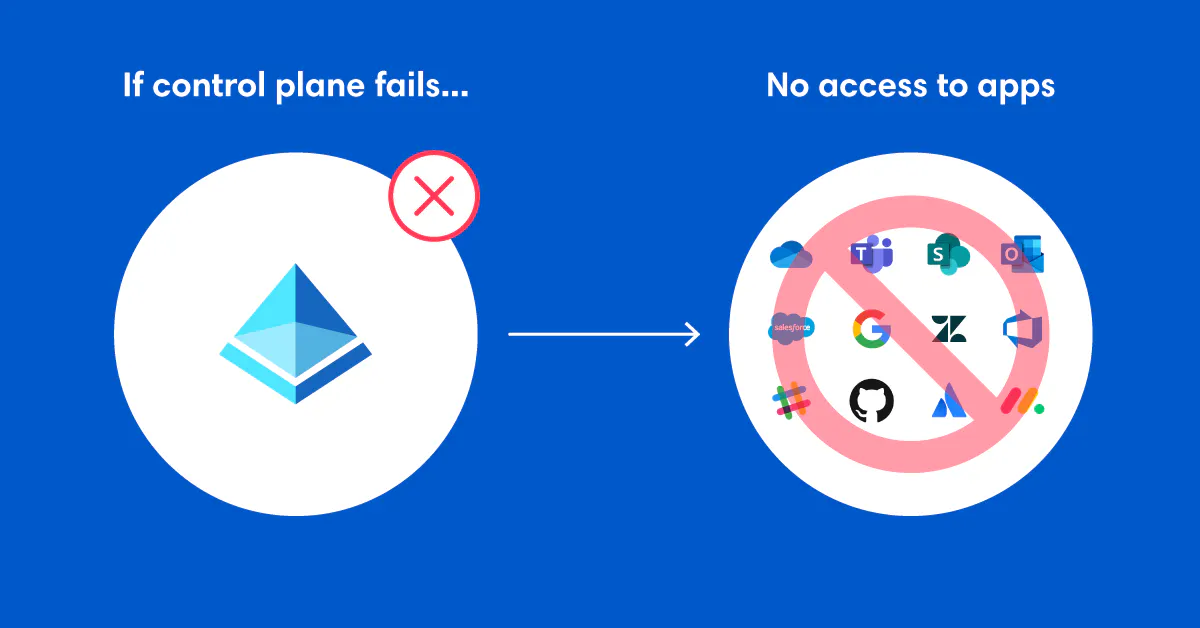
Microsoft 365 uses Entra ID to manage user identities behind the scenes. Simply put, Entra ID is the brain to the Microsoft 365 body. It’s the control plane that allows access, gives orders, and makes sure Microsoft 365 runs well via policies and configurations.

Loss of access to Entra ID can result from a variety of mishaps, such as bad actors hacking your Entra ID and locking you out or an authorized user deleting a policy or admin accounts. If users can’t access their identities because their identities can’t get authorized in Entra ID, they’re not able to use their Microsoft 365 applications. If users can’t access anything, they can’t work, which grinds operations to a halt while the issue is addressed.
Do I need to back up Entra ID?

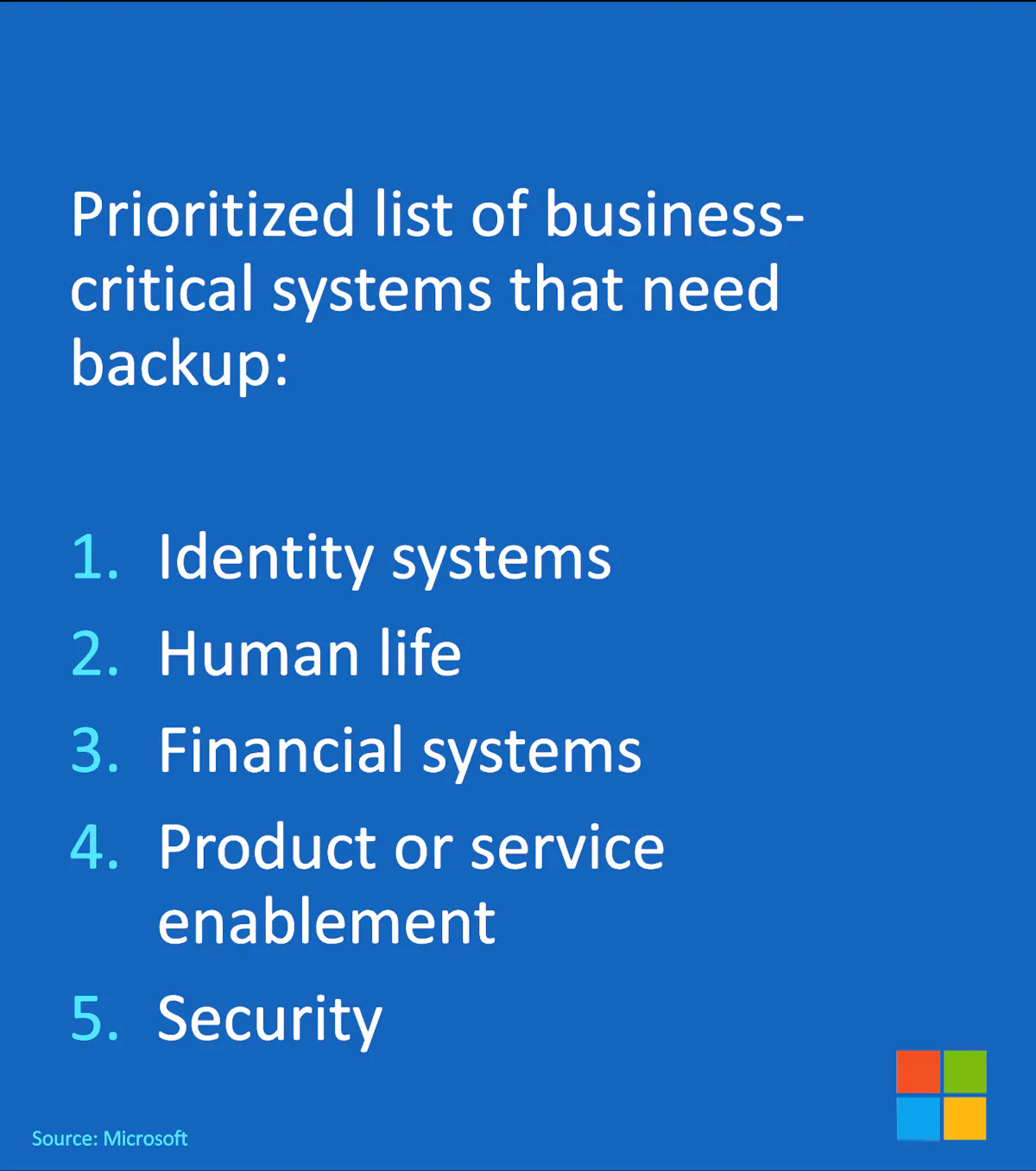
According to Microsoft, protecting identity systems such as Entra ID is the number one priority for any business — more important than protecting human life — as it ensures you and your users can maintain access to critical applications and systems.
Whether you’re an admin at a major company or launching a startup, protecting user identities is crucial to ensure business continuity. If anything messes up your Entra ID tenant configurations, you could lose access to important data and apps instantly.

What are the potential impacts of losing access to Entra ID

Recently, a company got locked out of all their Microsoft services due to faulty conditional access policies in Entra ID (formerly Azure AD). As a result, the admins were unable to log in to Microsoft and the unavailability of Microsoft portals prevented the company from registering a support ticket to report and resolve the issue. One can only imagine how long it took to resolve and get back to normal operation.

Here’s another example of the importance of Entra ID: A Carlsbad company suffered losses of more than $500,000, endured three full days of downtime, and invested six months in rebuilding after a disgruntled former employee deleted more than 1200 of the company’s Microsoft 365 user accounts.

In April 2023, Microsoft detected attacks on hybrid AD environments too. In this example, a “nation-state attacker” entered a network, compromised on-prem AD, used that access to pivot to and compromise Azure AD (now Entra ID), and then deleted all of the target’s Azure resources. Currently, the threat primarily originates from nation states, but in the future, it could shift to criminal organizations and eventually to low-end script kiddies.

That’s why it’s important to have a backup plan ready just in case things go haywire.

What can and can’t be recovered in the Entra ID recycle bin?

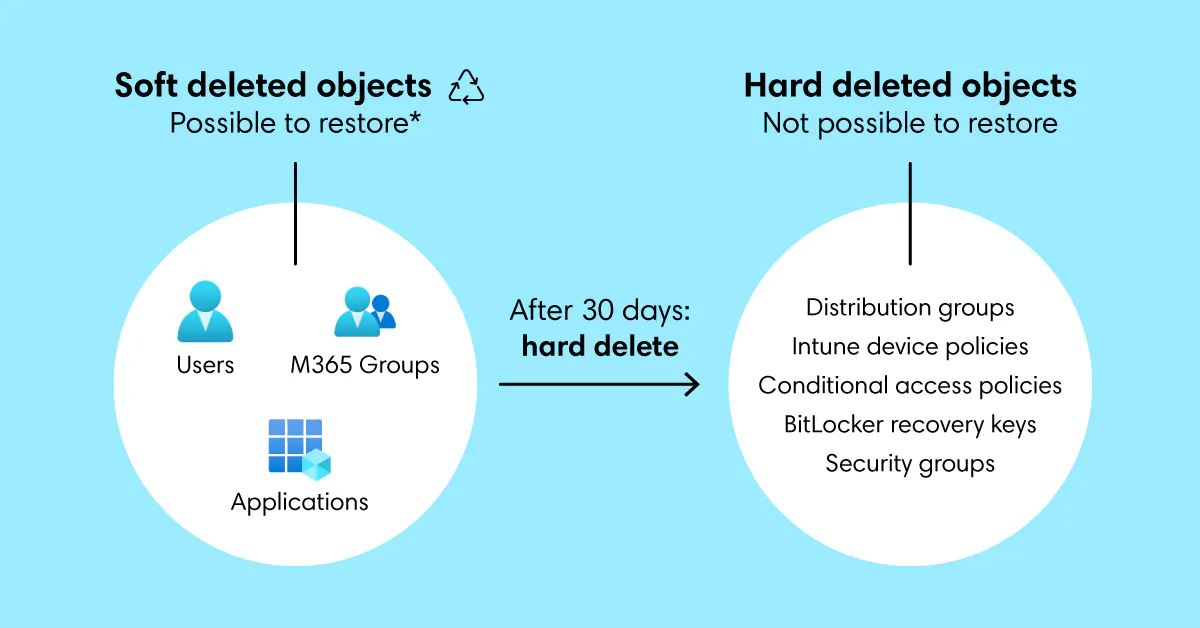
When we talk about the native recovery in Entra ID, it’s important to note that not all objects go through the Entra ID recycle bin when they are deleted.

Some objects are “soft deleted” and get put into the recycle bin. They include:

  • Microsoft 365 groups
  • App registrations
  • User and guest accounts

Here’s something important to know: When these cloud objects are soft deleted, they stay in the recycle bin for 30 days, but after that, they are ‘hard deleted” and vanish forever as they are permanently and irreversibly deleted. No chance of getting them back.

For all the other objects, they undergo immediate ‘hard deletion,’ indicating that they bypass the recycle bin and can’t be recovered natively. Microsoft shares that “hard-deleted items must be re-created and reconfigured. It is best to avoid unwanted hard deletions.” In other words, to maintain efficiency and business continuity, it’s advisable to steer clear of any unintended hard deletions if you don’t have a backup. Immediately hard-deleted objects include:

  • Distribution groups
  • Enterprise applications / Service principals
  • Intune device policies
  • Conditional access policies
  • BitLocker recovery keys
  • Security groups

Keep in mind that many Entra ID objects have intricate setups or unique connections with other systems, and unfortunately, the recycle bin doesn’t capture all those details. This means if you accidentally delete or alter those objects, there’s no way to recover them.

Oh, and don’t forget, the recycle bin is only for deleted objects — it can’t bring back an object to its previous state if you’ve made changes to it. Yikes. That means any change overwrites the object.

What are the risks of not backing up Entra ID?

While it’s open to debate whether backing up Entra ID is universally applicable to every organization and situation, it’s a wise approach for most enterprises. We’ve collected a couple of compelling reasons why backing up Entra ID can benefit your organization:

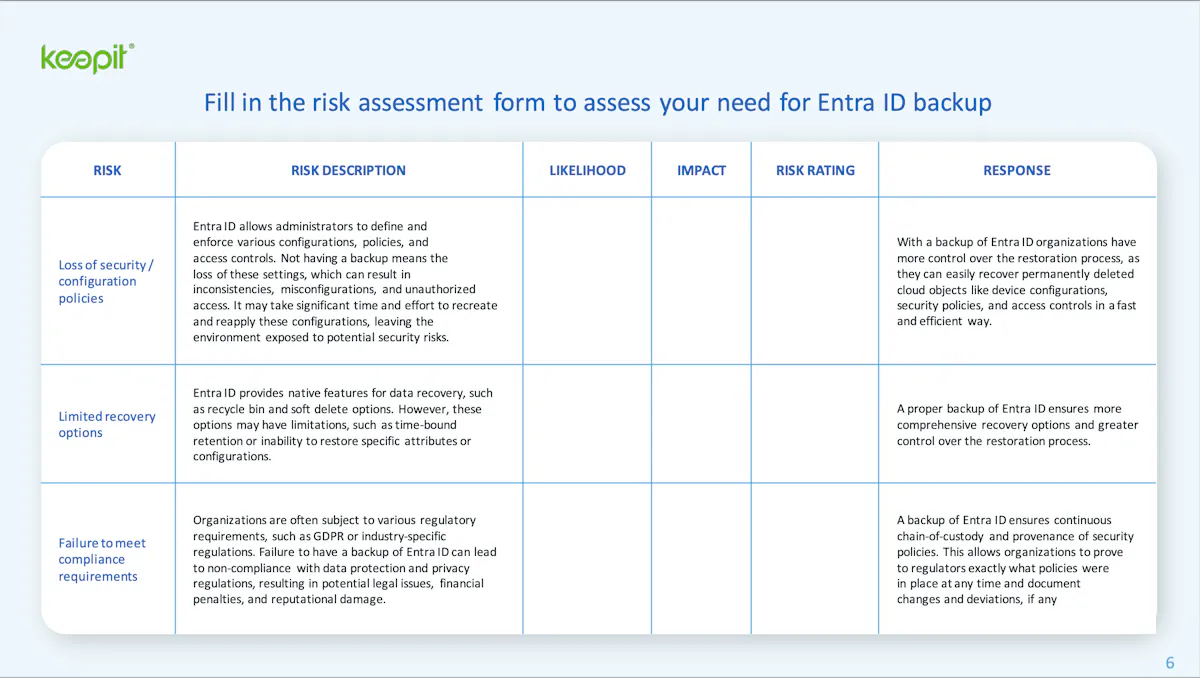
1. Loss of security / configuration policies
Entra ID allows administrators to define and enforce various configurations, policies, and access controls. Not having a backup means the loss of these settings, which can result in inconsistencies, misconfigurations, and unauthorized access. It takes significant time and effort to recreate and reapply these configurations manually, leaving the environment exposed to potential security risks.

With a backup of Entra ID, organizations have more control over the restoration process as they can easily recover permanently deleted cloud objects like device configurations, security policies, and access controls in a fast and efficient way.

2. Limited recovery options
Entra ID provides native features for data recovery, such as recycle bin and soft delete options. However, these options have limitations, such as time-bound retention and the inability to restore specific attributes or configurations.

A proper backup of Entra ID ensures more comprehensive recovery options and greater control over the restoration process.

3. Failure to meet compliance requirements
Organizations are often subject to various regulatory requirements, such as GDPR or industry-specific regulations. Failure to have a backup of Entra ID can lead to non-compliance with data protection and privacy regulations, resulting in potential legal issues, financial penalties, and reputational damage.

A backup of Entra ID ensures continuous chain of custody and provenance of security policies. This allows organizations to prove to regulators exactly which policies were in place at any time and document changes and deviations, if any.

4. Data loss
Entra ID stores security policies, application settings, and other cloud-only configurations. If this data is lost due to accidental deletion, malicious activity, or system failure, it can lead to severe consequences, including user access issues, operational disruptions, and compliance violations.

If you have a backup before the incident, you can use it to easily recover your lost data and bring it back into your Entra ID environment right away.

5. User productivity impact
Without a backup, recovering security and device policies can be a difficult and time-consuming task. This process may restrict activity or even prevent users from logging in to apps.

Restoring security policies and configurations manually can result in significant downtime and decreased productivity for users who are unable to access the resources they need.

6. Microsoft system outages
If Entra ID experiences a prolonged outage or catastrophic failure, organizations without a backup will have limited options for recovery, leading to extended periods of system unavailability and business disruption.

No backup can prevent Microsoft from having a system outage: That’s simply a risk all organizations face. However, if you have a backup, you can use it to recover your data once the service outage is resolved.

Evaluate your need for Entra ID backup

If you’re uncertain about the need to back up Entra ID for your organization, a helpful approach is to consider the potential risks associated with Entra ID data loss. Evaluate your comfort level with the level of risk involved to determine the best course of action.

We’ve created an Entra ID risk assessment sheet to help you gauge your exposure and risk tolerance. Use the assessment to determine your Entra ID backup requirements and the need for backup.

Download and create your own Entra ID security risk assessment here.
Ready to learn more about the Keepit solution? Request a callback from a member of the Keepit team. 

About Version 2 Digital

Version 2 Digital is one of the most dynamic IT companies in Asia. The company distributes a wide range of IT products across various areas including cyber security, cloud, data protection, end points, infrastructures, system monitoring, storage, networking, business productivity and communication products.

Through an extensive network of channels, point of sales, resellers, and partnership companies, Version 2 offers quality products and services which are highly acclaimed in the market. Its customers cover a wide spectrum which include Global 1000 enterprises, regional listed companies, different vertical industries, public utilities, Government, a vast number of successful SMEs, and consumers in various Asian cities.

About Keepit
At Keepit, we believe in a digital future where all software is delivered as a service. Keepit’s mission is to protect data in the cloud Keepit is a software company specializing in Cloud-to-Cloud data backup and recovery. Deriving from +20 year experience in building best-in-class data protection and hosting services, Keepit is pioneering the way to secure and protect cloud data at scale.

Is a scarcity of security experts a growing global data risk?

And what you can do to protect your critical SaaS data  

Cybersecurity is a critical concern for all organizations. The rapid growth of technology and the increasing sophistication of cyberthreats have made it essential to have experts in the field of cybersecurity to protect against the potential risks. Add on to this the ever-expanding compliance demands from legislation such as the NIS2 Directive and CCPA, it becomes even more challenging to navigate.

The demand for cybersecurity and IT job roles is increasing at a pace that outstrips companies’ ability to recruit. Given that cybersecurity is a vital aspect of any enterprise that handles sensitive and confidential data, it is crucial to locate and retain specialized talent in this field, but how big is the problem?

A recent report by the World Economic Forum (WEF) has highlighted a significant shortage of security experts worldwide. They believe this shortage contributes to a growing list of global risks, including cyberattacks, data breaches, and other forms of cybercrime.

The Importance of Data Protection and Management


With the rise in cybersecurity threats, it is essential for businesses to prioritize data protection and management. This includes securing data, preventing data loss, and complying with regulations and standards. Data protection and management solutions also help businesses maintain their reputation and customer trust, as well as improve their operational efficiency.

According to WEF, the rapid pace of technological change has made it challenging for security experts to keep up with the latest developments, leading to this shortage of experienced professionals. WEF shares that this shortage of security experts is a major concern for organizations as it makes them vulnerable to a range of cyber threats. Cyber criminals are becoming increasingly sophisticated, and organizations need to be equipped with the necessary tools and expertise to protect themselves.

What is the cybercrime situation now?

The number of incidences and the costs associated with cybercrime are on a steep rise – WEF projects $10.5 trillion by 2025. Cybercrime is big business: The Conti ransomware group, according to Reuters, has targeted over 1,000 victims, garnering more than $150 million in the process. Their prolific success led to the U.S. offering a $15 million reward for information.

Cybergangs are organized and functioning like legitimate companies – the Wired’s article “The Workaday life of the World’s Most Dangerous Ransomware Gang” tells how the Conti ransomware gang has a CEO and even an HR department. These groups sure aren’t matching the image of the hacker in a mask, in a dark room, working on a laptop computer: They’re sophisticated, skilled, and clearly very successful by these dollar figures above.

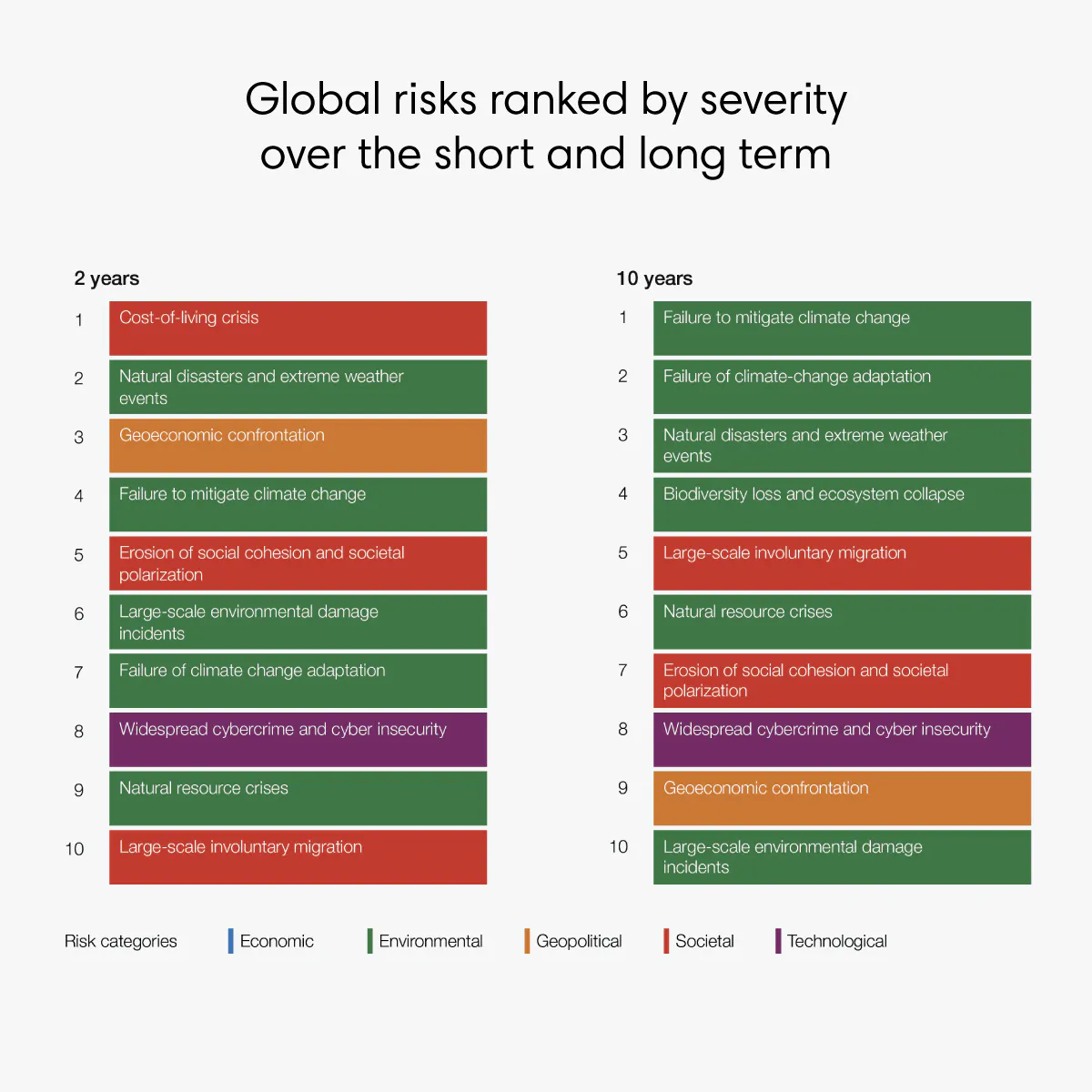
In the face of this, companies are scrambling to protect themselves and their data, with more and more businesses understanding the risks and therefore are placing data security high on their agenda (and bolstering their security with bigger budgets). And they had better hurry: The threat environment is likely to only get worse. The World Economic Forum (WEF) Global Risks Report 2023 explores some of the most serious risks coming over the next two and 10 years.


What’s the expected global risk from cybercrime and cyber insecurity?

Of the global risks expected to have the greatest impact over the next two and the next 10 years, “widespread cybercrime and cyber insecurity” comes in at number eight for both timespans.

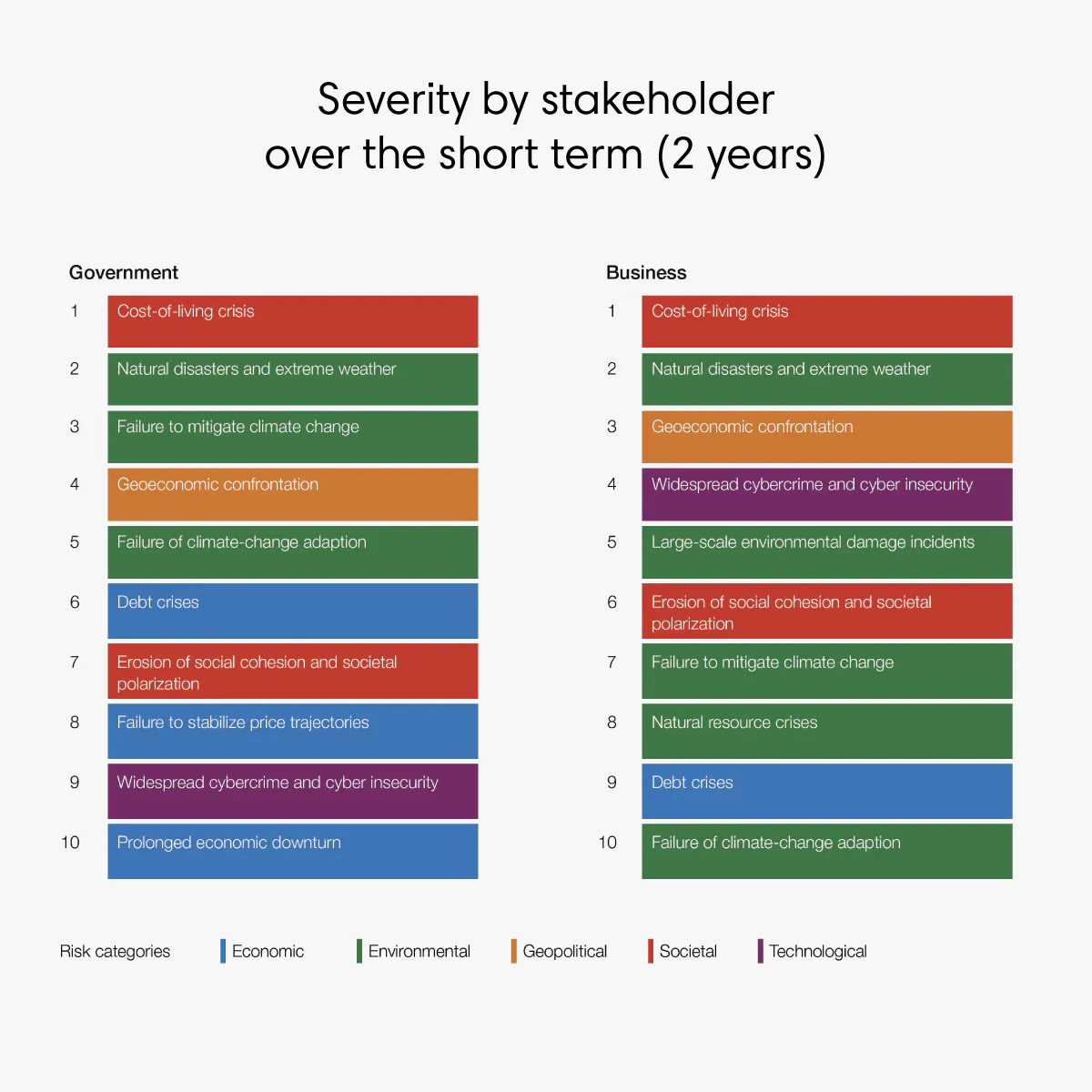
In the second visual, “cybercrime and cyber insecurity” moves all the way up to the fourth position for businesses, highlighting the heightened importance of data protection and security to companies. It’s worth mentioning that in all of these, it’s the only result within the Technological category, and perhaps the one with the most agency: Companies taking action and intervening with a data protection plan can mitigate their exposure. (More on this below.)

Increased State Intervention: Is data backup now akin to compulsory auto insurance? 

Compliance becomes an ever increasingly important part of data protection. The trend already appears to be solidified with the European Parliament recently putting forth legislation via the NIS2 Directive which adds on increased responsibility, heightened fines toward the company and C-suite of which the latter may be subject to suspensions for failures to comply. Read blog post about the NIS2 Directive here.

“Risks from Cybersecurity Will Remain a Constant Concern”

And here we get to the crux of the issue: According to the WEF, “These problems are compounded by a scarcity of security experts.”: A challenging situation made more difficult. According to Cybersecurity Ventures, there’s a total of 3.5 million unfilled cybersecurity jobs.

How are companies expected to combat the increasing risk from cybercrimes and the increased demands from state and government while at the same time there are reports of an all-too-small pool of security candidates to hire from? One SaaS data protection provider effectively addresses these concerns by providing a service that follows data protection best practices.

How Keepit can help businesses compensate for the shortage of security experts

Keepit is a software-as-a-service company that provides dedicated data protection for companies relying on cloud SaaS data. By increasing cybersecurity and resiliency and increasing the impact of a company’s existing workforce (all with an impressive ROI: Read the blog post here), Keepit supports business growth into the future by ensuring compliance and data protection. TechTarget suggests enterprises should “support [their] existing talent” as a means of addressing the cybersecurity skills gap, specifically to “automate routine tasks.”

Keepit provides an intuitive interface and simplified processes, an easy-to-use data protection solution that can enable personnel with less cybersecurity expertise to manage and maintain the system effectively. This can save companies the cost and time of hiring and training specialized cybersecurity experts while increasing cybersecurity posture.

We have been able to split the responsibilities for data protection among different teams. This setup allows teams to work efficiently and independently.

Michael Bojko, System Engineer at Porsche Informatik

By providing an easy-to-use cloud SaaS data backup and data management solution across a suite of SaaS applications including Microsoft 365, Salesforce, Google Workspace (to name but a few), Keepit enables companies to continue into the future with confidence. Businesses can even get Azure AD data protection for free with the Identity Basic offering from Keepit. Read about backup and recovery for Azure Active Directory here.

Compensate for the shortage of security experts by having an automated data protection and management system in place. This reduces the need for manual intervention, which can be time-consuming and requires specialized skills.

Our everyday is busy enough with keeping everything up and running. Keepit’s solution does its job in the background so that we can focus on other tasks.

Ken Schirrmacher, Sr. Director of IT/Interim CIO at Park ‘N Fly

Where should you start? Learn more about data management and protection

Keepit enables companies to have peace of mind, regardless of any new legislation or cybercrime events.

About Version 2 Digital

Version 2 Digital is one of the most dynamic IT companies in Asia. The company distributes a wide range of IT products across various areas including cyber security, cloud, data protection, end points, infrastructures, system monitoring, storage, networking, business productivity and communication products.

Through an extensive network of channels, point of sales, resellers, and partnership companies, Version 2 offers quality products and services which are highly acclaimed in the market. Its customers cover a wide spectrum which include Global 1000 enterprises, regional listed companies, different vertical industries, public utilities, Government, a vast number of successful SMEs, and consumers in various Asian cities.

About Keepit
At Keepit, we believe in a digital future where all software is delivered as a service. Keepit’s mission is to protect data in the cloud Keepit is a software company specializing in Cloud-to-Cloud data backup and recovery. Deriving from +20 year experience in building best-in-class data protection and hosting services, Keepit is pioneering the way to secure and protect cloud data at scale.

Why on-prem backup for Azure Active Directory isn’t enough

And 5 reasons why you should back up Azure AD in the cloud 


Imagine a busy city with multiple roads leading to various destinations, such as a hospital, a shopping mall, and a stadium. Just like a traffic light controlling the flow of vehicles to and from these destinations, Active Directory (AD) and Azure Active Directory (AAD) control the flow of and access to information from apps and services such as Microsoft 365, Salesforce, Google Workspace, and others. Organizations rely heavily on AD and AAD to ensure a smooth flow of and access to their data. 


However, just like how a city can experience traffic jams, frustrations, accidents, and general chaos when the traffic light is out, when AD or AAD are not accessible, the flow of and access to control-plane information can cause severe business disruption. This post will explore the importance of data protection for Azure AD.


The evolution of identity management: From Active Directory to Azure AD and the need for different backup solutions


But first, how did we come to rely so heavily on AD and AAD? Active Directory was introduced in 1999 as a solution for on-premises identity management, providing a centralized repository for user and device information and allowing administrators to manage these resources effectively and efficiently.


As the use of cloud-based services grew, the need for an identity management solution that could integrate with cloud-based resources became more important. 


This led to the creation of Azure Active Directory, which was designed to serve as the bridge between on-premises and cloud resources, not only creating a seamless and secure identity management solution for cloud computing, but also offering a range of features and capabilities (including single sign on, multi-factor authentication, and conditional access) to help organizations meet their security and compliance requirements. 


Microsoft Azure Active Directory and Active Directory seem to be a bit shrouded in mystery. For many, the distinction between them is not always clear, and this distinction becomes even more blurred when it comes to the topic of backing up and protecting the data within each. 


Instead of covering all the differences between AD and Azure AD, this post will mainly focus on backup for Azure AD, and it will explore five ways in which AAD requires a different backup solution from the traditional backups used for on-premises AD. Before we can do that though, we need to quickly establish — roughly — what the difference is. 

What’s the difference between AD and AAD?


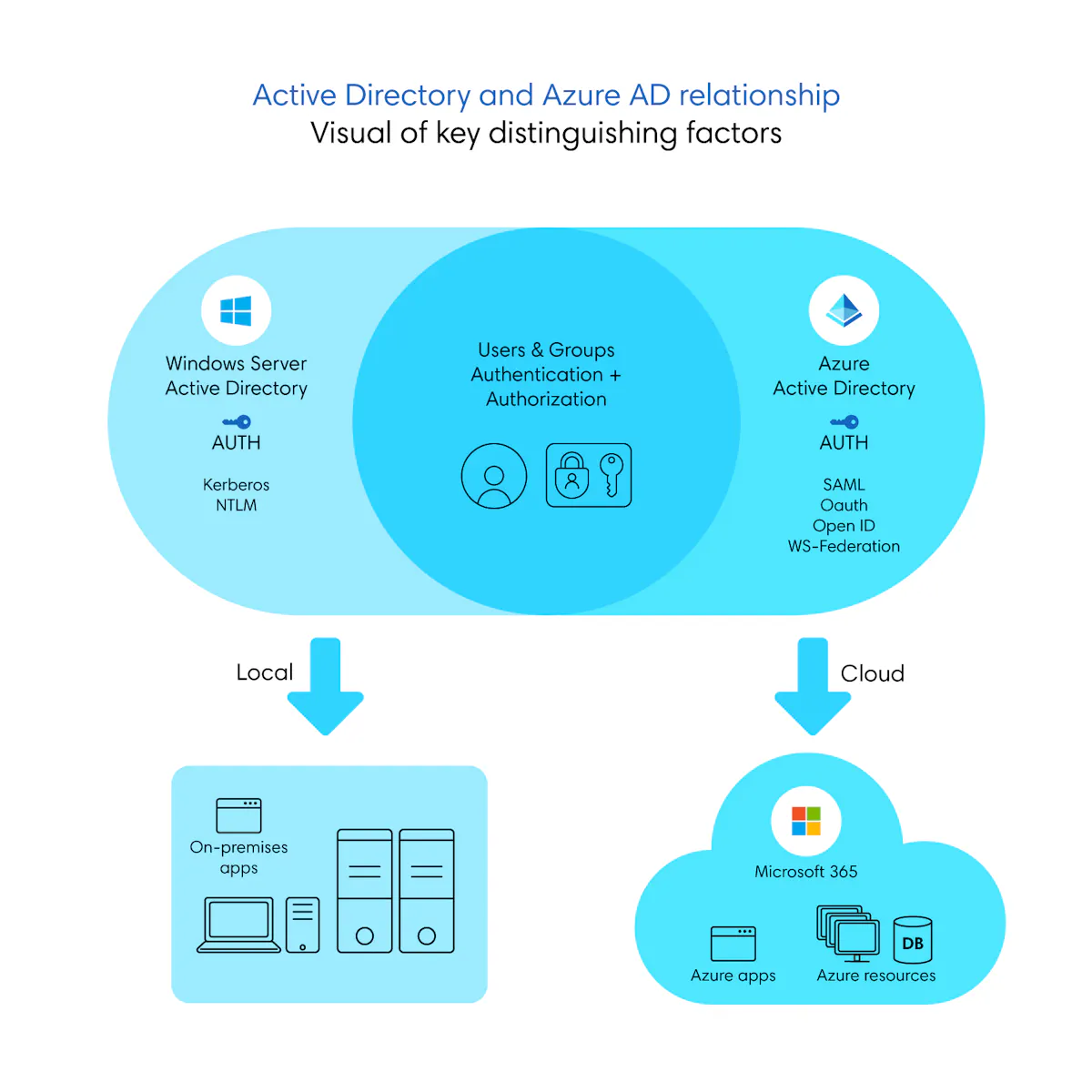
As Stephen Covey put it, “the main thing is to keep the main thing the main thing.” That quote might make more sense if you consider the key difference between cloud and on-prem AD to be the main thing… and in this case, the main difference between the two is that Active Directory is designed for managing user access and application infrastructure for an on-premises world; Azure Active Directory is for managing user access to cloud applications in a cloud-based environment.


Even more simply? Sure: AD is on prem, AAD is cloud based. 


If you’re interested in exploring the differences further, here’s what Microsoft has to say: Compare Active Directory to Azure Active Directory.


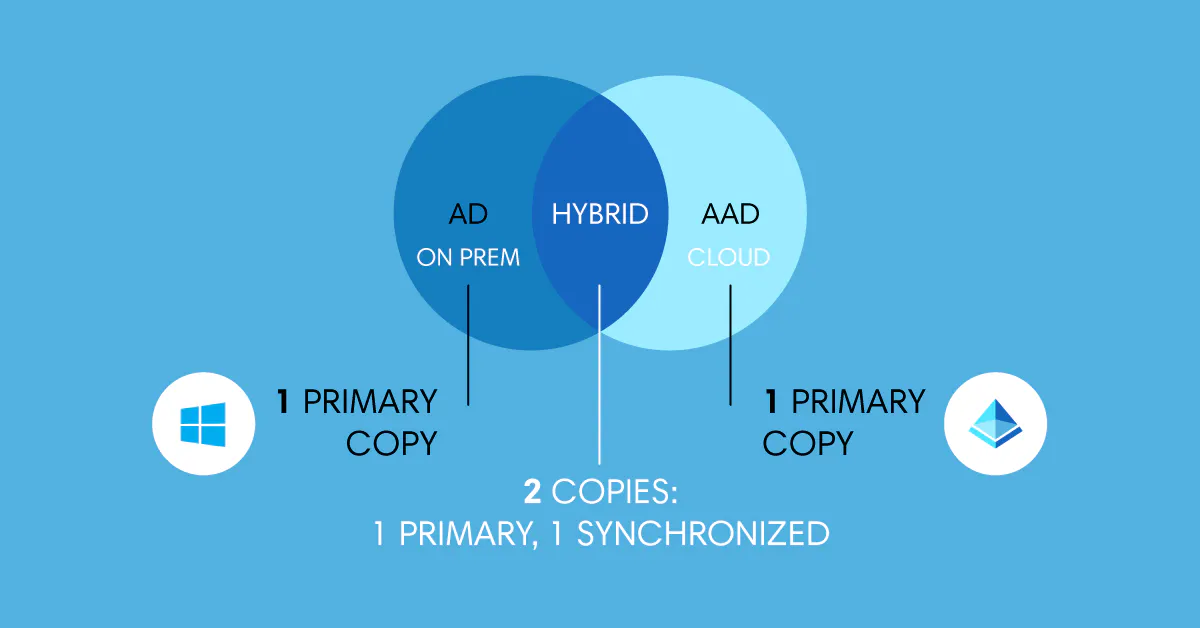
Every object in either AD or Azure AD has one permanent home. That’s the primary copy of the object, and the copy to which changes are applied. If you are on-prem-only, or cloud-only, then there’s only one copy of each object.


In hybrid mode, though, no matter where the object is homed, there will be two copies of it: the primary copy and a synchronized copy on the “other side.”

For organizations using both Active Directory and Azure AD in a hybrid environment, you can think of the cloud copy of an on-prem object as being like a shadow. When you look at a shadow on the pavement, you’re only getting a partial set of information about the real object.


In the same vein, Azure AD only has a partial set of attributes from on-premises AD objects because not every object attribute is replicated to the cloud. However, all the attributes of cloud-based Azure AD objects are stored in full in the cloud. This allows organizations to use Azure AD as an identity provider for on-premises resources and allows for SSO for cloud-based resources.


How does this distinction change backup strategy? 


The distinction of where (which environment) your identity objects are homed is paramount. Active Directory backup via on-premises solutions is exactly that: making a backup of on-prem data by copying it to/from an on-premises solution. Azure Active Directory, as a cloud-based application utilizing cloud-based data (and metadata), creates and manages cloud data in the cloud. 


Why it matters: Comprehensive data coverage requires the ‘right’ backup


“Some” Azure AD data and metadata only exist in the cloud environment. You could copy these objects to an on-prem storage location (which is roughly as useful as putting backup tapes on top of the server they’re made from), but these objects must be restored to the cloud.


Therefore, with clear gaps in coverage, the data and metadata are not covered holistically. This means your data may not be fully protected when you back up your cloud data with an on-premises Active Directory-oriented tool as your Azure AD backup solution. 


In other words: what’s homed on premises and what’s homed in the cloud are physically separate. You introduce new problems for yourself when you cross the streams, including speed of access, data fidelity and quality, and security. 


Let’s dive into five reasons why on-prem AD backup is not a viable option for comprehensive backup of Azure AD. 


5 things you should consider if you’re backing up AAD on premises


1. Some attributes in Azure Active Directory are not available on premises


If you take an on-prem AD account and sync it to the cloud, the sync process (and Azure AD) adds some attributes to it. Some of these may be synced back to on prem (a process called writeback) but some will not. Backing up Azure AD captures these; backing up the on-prem AD won’t. 


2. Azure AD may have user objects or attributes that do not exist on premises  


You can define your own users, groups, roles, et cetera, that exist only in the cloud. If you do not back these up independently, they will not be preserved nor well protected, and your only recourse is to recreate and define these custom entries every time. 


And yet not everyone sees the value in protecting these objects when their identity management (IdM) anchor is on prem. Even if an organization’s IdM anchor is on premises, objects and attributes like Intune and conditional access policies are important for several reasons, often forming a key part of organizations’ zero trust security, and, as such, need to be protected against loss or damage. (Read our article on the zero trust principle here.)


Still not convinced of the value of protecting control-plane objects? Here are five reasons highlighting the case for securing data protection: 


  • Cloud-based management: Intune and Azure AD conditional access are both cloud-based services that can be accessed and managed from anywhere. They cannot be accessed from on-prem systems, so if you lose the copy in the cloud, it’s gone. 
  • Security: Azure AD provides additional layers of security, such as multi-factor authentication and identity protection, that can help to protect against potential security threats such as compromised credentials or unauthorized access. 
  • Compliance: Intune and conditional access can help organizations meet compliance requirements, such as HIPAA by providing features such as device compliance and role-based access control. 
  • Scalability: Azure AD allows organizations to scale their IdM infrastructure as needed, without the need for additional hardware or software. 
  • Remote work: Intune and conditional access can help organizations to secure and manage remote workers’ devices, even if they are not connected to the on-premises network. 


Now are these objects and attributes vital to operations? You can decide for yourself. But, considering the impact that could result from losing these in one data loss scenario or another (and the resource investment required to manually recreate and administer them, not to mention the security concerns of not ensuring the right users have the permissions to access company data), adequate data protection of these should be a business imperative. 


3. Azure AD will have configuration/state objects that don’t exist on prem


Enterprise apps, app registrations, Conditional Access (CA) policies, and many other policy- and security-related objects exist only in the cloud. Microsoft’s native protection for these objects is mostly non-existent — delete a conditional access policy, for example, and it’s just gone. Let’s drill down into two important-to-protect Azure AD features: 


  • Conditional Access: Azure AD Conditional Access is a feature that allows you to set policies that determine how users are granted access to resources based on conditions such as device compliance, location, and user identity. It allows you to control who can access your resources and under which conditions. This feature can be used to protect against security threats, such as compromised credentials, by requiring multi-factor authentication or other forms of authentication. 
  • Intune: Intune is a mobile device management (MDM) and mobile application management (MAM) service that is integrated with Azure AD. This feature allows you to manage and secure mobile devices, desktops, and apps, including those used by remote workers. It allows you to set policies for devices and apps, such as requiring a passcode or encrypting data, and to remotely wipe a device if it is lost or stolen.

What about the Active Directory Recycle Bin? As these AAD-only configurations/state objects only exist in the cloud, there’s no available recycle bin for these policy objects, so there’s no undo. It’s akin to an immediate hard delete, meaning there is no 30-day or 90-day grace period as there is with soft deletions. 


How to recover from hard deletion? Microsoft shares that “hard-deleted items must be re-created and reconfigured. It’s best to avoid unwanted hard deletions.” 


Let that sink in for a moment: “It’s best to avoid unwanted hard deletions.” This advice is nigh impossible to follow as common data loss scenarios, like accidental deletions), are a question of when, not if. It highlights how the Recycle Bin was never intended to be a replacement for dedicated backup. Read our post on why backup is a risk-management imperative here. 


4. Record preservation  


How long does Azure AD store reporting data? That’s a very good question: According to Microsoft, activity reports are stored as follows:

As you can see, there is no point-in-time record preservation. With a backup, you can preserve and review cloud-only Azure AD data at a specific point in time and examine which permissions, users, groups, and role assignments existed in your directory, as well as whether an object has changed within a specified time period and preserve these records for as long as required or needed to comply with company or governmental policies.


Clearly, these benefits are useful for forensic purposes but also for governance and compliance reasons. Learn more in our eDiscovery post (with a customer Office 365 use case). 


5. Microsoft doesn’t provide native protection for many cloud-only objects  


Microsoft doesn’t provide the same recovery tools in Azure AD as they do for Active Directory itself. According to Microsoft recoverability best practices, it’s clearly important to understand the object types that are protected by Microsoft under soft-deletion and hard-deletion scenarios, visualized here: 

The recovery features for soft deletions are typically limited to 30 days retention, so if you want to recover on day 31, it’s too late! The data is gone, as Microsoft shares here in its Azure Active Directory fundamentals:

Soft-deleted objects are hard deleted after a deletion time of 30 days. The only object types that support a soft delete are Users, Microsoft 365 Groups, Application registration, Service principal, administrative unit.


So, the question is this: Are these objects that are automatically hard deleted important to your business operations? And a natural follow-up question is this: Is the 30-day restore period for soft-deleted objects enough protection for your data? (Often, mandatory minimum data retention periods are determined by governments.)


Note: It’s important to mention that changes are not covered by the recycling bin, such as editing or overwriting, even to objects that would normally be soft deleted . Any change, intentional or otherwise, replaces the previous version with no option of reverting or recovering. When these changes are done accidentally, we euphemistically refer to them as an “oops,” but they are quite serious and actually one of the leading causes of data loss, so this gap in coverage should concern those tasked with ensuring data protection.


The writing on the wall is that native coverage is insufficient for recoverable, comprehensive coverage and that the solution to this coverage gap is having your own third-party backup. This extends your ability to recover these objects for as long as your backup exists. 


Explore this in more depth here: Azure Active Directory recoverability best practices from Microsoft.


What’s next? Choosing a backup solution for Azure Active Directory


Now that we’ve highlighted the need for dedicated cloud data backup for Azure AD, let’s explore what Keepit provides with its Azure AD service offerings (one of which — Azure AD Standard — is offered completely free of charge). 


Leading AAD data protection for your cloud security strategy


Keepit helps you recover business-critical identity and application objects that Microsoft doesn’t protect. Extend your retention period and strengthen security with protection of policies as well as full auditing and traceability of changes. Protect against day-to-day data loss and improve IT efficiencies with the ability to roll back changes and speed up troubleshooting.


Azure Active Directory backup coverage 


The Azure AD connector protects the following Microsoft 365 Azure Active Directory objects: Users, Groups, Administrative Units, and Roles. It also protects Audit logs (and Sign-in logs with audit logs enabled). 


For an exhaustive coverage list, visit our AAD support site here


Interested in backing up (and restoring) AAD with Keepit for Azure AD? 


To learn more about how you can protect your business-critical data and ensure disaster recovery resolve with Keepit for Azure AD – the leading protection for your cloud security strategy – click here

About Version 2 Digital

Version 2 Digital is one of the most dynamic IT companies in Asia. The company distributes a wide range of IT products across various areas including cyber security, cloud, data protection, end points, infrastructures, system monitoring, storage, networking, business productivity and communication products.

Through an extensive network of channels, point of sales, resellers, and partnership companies, Version 2 offers quality products and services which are highly acclaimed in the market. Its customers cover a wide spectrum which include Global 1000 enterprises, regional listed companies, different vertical industries, public utilities, Government, a vast number of successful SMEs, and consumers in various Asian cities.

About Keepit
At Keepit, we believe in a digital future where all software is delivered as a service. Keepit’s mission is to protect data in the cloud Keepit is a software company specializing in Cloud-to-Cloud data backup and recovery. Deriving from +20 year experience in building best-in-class data protection and hosting services, Keepit is pioneering the way to secure and protect cloud data at scale.

Protecting your Data: Best practices for Data Protection Day

Data Protection Day – also known as Data Privacy Day – is an annual event observed on January 28 to raise awareness about the importance of protecting data and data privacy (think NIS Directive, NIS2 Directive, and GDPR).


It’s here to make data protection, such as SaaS data backup and recovery, top of mind—and for good reason.


Businesses must take the necessary measures to not only ensure the continuity of their operations and to protect themselves from the potentially catastrophic outcomes of a data loss event like ransomware, but to also comply with the increasingly strict demands from legislation such as the NIS2 Directive and the GDPR.


Why Is Data Protection Relevant?


As businesses increasingly move operations to software-as-a-service (SaaS) applications to streamline their operations, add flexibility (such as enabling remote work), and reduce operational costs, huge amounts of business-critical cloud data are produced every day, and it becomes ever more important to assess and ensure a robust backup and recovery plan is in place.


There is a widely shared assumption that data stored in a SaaS cloud is automatically backed up and secure since it’s in the cloud. However, that is not always the case as what is offered may not provide the protection necessary for business continuity, data restoration, or compliance: Read more about the M365 shared responsibility model.


Cloud Data Concerns


It should come as no surprise that working with cloud services can come with risks. Ransomware and disaster recovery are more and more frequently in the headlines and serve as cautionary tales. (Read our post about the disruptive power of ransomware attacks here.)


The rapid adoption of SaaS applications has also come with new and increased instances of data loss and breaches—especially in cases where there is a lag between adoption of SaaS apps and adoption of the necessary data protection. Companies may be left vulnerable to costly disruptions, downtime, and devastating fines without an adequate data security plan in place to safeguard mission-critical cloud data.


What Needs to Be Backed Up?


Data protection not only involves “just” backing up cloud SaaS data, but it should also focus on ensuring control of and continuous access to it (and the right access for the correct users at that). As with Microsoft 365 and Azure AD (Active Directory), there is a data plane and a control plane – and both need to be protected.


One way to achieve this is to adopt a solution that can not only protect the data plane but can also preserve and protect the control plane, e.g., the admin center. Coverage of identity and application objects businesses rely on to remain operational is vital. For those using Microsoft 365, it’s important to learn about why you also need Azure AD data protection: Find out why in our AAD blog here.


How Do Businesses Protect Their Data?


The best way to mitigate the risks of SaaS is to implement a data protection and management plan. This can involve using cloud-based data backup and recovery solutions which allow businesses to store their data in an independent cloud and access it from anywhere, at any time.


Data protection is especially important for businesses that rely on SaaS data for their operations, which is many, many businesses (Microsoft 365 alone has over 345 million users), as it can help ensure that data is always available, even if there is a disruption with the SaaS provider.


While cloud services can (and do) provide many benefits for businesses, they also present their own set of risks. For example, there is a very real risk that data stored in the cloud could be accessed by unauthorized parties (read our blog about the Zero Trust Principle here), or that data could be lost due to any number of issues, from technical glitches and issues to human error. Therefore, it’s important for companies to follow cloud data protection best practices. Read about backup strategy here.


Data Risks and Responsibility


But why is backing up SaaS data so important? Because it allows companies to mitigate the effects of ransomware and other data loss events. Many SaaS providers (e.g., GoogleMicrosoftSalesforce) have shared responsibility models that state you, the customer, are responsible for the data created and processed.


Here are a few reasons why backup is vital:


  1. Data breaches can happen to anyone.

    While no company is immune to data breaches, having a backup solution in place can help minimize (or even nullify) the impact of a breach, helping businesses get up and running again quickly.
  2. Data loss can be costly.

    Losing data can lead to lost productivity and lost revenue within the company, and it can even result in substantial legal penalties. (Read our NIS2 post here.) According to the World Economic Forum, “historically severe fines for data loss are also helping change the cost-benefit assessment around investment in cybersecurity measures.” By implementing a backup solution, businesses can minimize the impact of data loss, avoid fines, and get back to business as usual faster, and more comprehensively, than without.
  3. The future is uncertain.

    A bit cliché, but it’s impossible to predict the future and that includes the risks to your data. According to the ESG (Enterprise Strategy Group) ransomware e-Book, “79% of respondent organizations report having experienced a ransomware attack within the last year.” By implementing a backup solution now, businesses can protect themselves against potential risks down the road – which stand to only increase.


Where to Go from Here?


Data Protection Day reminds us that SaaS data (and the protection of it) is essential to many daily operations. Not only that, with the scope and penalties of NIS2 and GDPR, enterprises are obligated to ensure a dedicated data protection solution is in place.


Researching a third-party backup solution like Keepit can simplify the complexity of the current SaaS data protection environment. Businesses can maintain control of their data always and protect themselves against data loss events and mitigate the impacts of breaches and ransomware – all while remaining compliant.


Don’t wait until it’s too late — what better way to celebrate Data Protection Day than to start backing up your SaaS data. Continue your journey by exploring our

About Version 2 Digital

Version 2 Digital is one of the most dynamic IT companies in Asia. The company distributes a wide range of IT products across various areas including cyber security, cloud, data protection, end points, infrastructures, system monitoring, storage, networking, business productivity and communication products.

Through an extensive network of channels, point of sales, resellers, and partnership companies, Version 2 offers quality products and services which are highly acclaimed in the market. Its customers cover a wide spectrum which include Global 1000 enterprises, regional listed companies, different vertical industries, public utilities, Government, a vast number of successful SMEs, and consumers in various Asian cities.

About Keepit
At Keepit, we believe in a digital future where all software is delivered as a service. Keepit’s mission is to protect data in the cloud Keepit is a software company specializing in Cloud-to-Cloud data backup and recovery. Deriving from +20 year experience in building best-in-class data protection and hosting services, Keepit is pioneering the way to secure and protect cloud data at scale.

Cloud data: shared responsibility and the importance of backup

So, who is ultimately responsible for safeguarding cloud-based data? Surprisingly, this simple-sounding question is often overlooked until it’s too late, which is why SaaS customers need to be proactive when it comes to protecting their own data.

Niels van Ingen

Contributed article by Keepit’s own Niels van Ingen

Niels van Ingen, industry veteran and COO at Keepit, shares his perfective on why shared responsibility for cloud data backup and recovery is the only way forward. He says to look at Microsoft’s own documentation, which states, “it’s critical to understand the Shared Responsibility model and which security tasks are handled by the cloud provider and which tasks are handled by you.

For all cloud deployment types, you own your data and identities. You are responsible for protecting the security of your data and identities, on-premises resources, and the cloud components you control (which varies by service type).” 


To dive into the full article on vmblog.com, click here to learn “Why Shared Responsibility for Data Backup and Recovery Is the Only Way.” 

About Version 2 Digital

Version 2 Digital is one of the most dynamic IT companies in Asia. The company distributes a wide range of IT products across various areas including cyber security, cloud, data protection, end points, infrastructures, system monitoring, storage, networking, business productivity and communication products.

Through an extensive network of channels, point of sales, resellers, and partnership companies, Version 2 offers quality products and services which are highly acclaimed in the market. Its customers cover a wide spectrum which include Global 1000 enterprises, regional listed companies, different vertical industries, public utilities, Government, a vast number of successful SMEs, and consumers in various Asian cities.

About Keepit
At Keepit, we believe in a digital future where all software is delivered as a service. Keepit’s mission is to protect data in the cloud Keepit is a software company specializing in Cloud-to-Cloud data backup and recovery. Deriving from +20 year experience in building best-in-class data protection and hosting services, Keepit is pioneering the way to secure and protect cloud data at scale.