Skip to content

DORA: Safeguarding Financial Data

The new EU regulation, DORA, is set to significantly enhance the protection of customer funds and data within financial institutions.

DORA officially entered into force on January 16, 2023. Since then, financial institutions have begun preparing to meet the new requirements, although compliance was not initially mandatory. However, the regulation will become fully enforceable on January 17, 2025.

DORA consolidates various initiatives from different European regulatory authorities, including the European Central Bank (ECB), into a single document. Essentially, DORA impacts every participant in the financial market, including banks, investment firms, asset management companies, digital asset providers, insurance companies, and others.

In Poland alone, the regulation will apply to 29 commercial banks, nearly 500 cooperative banks, over 40 payment institutions, and notably, dozens of IT solution providers.

Under DORA, financial institutions are obligated to manage information and communication technology (ICT) risks, report incidents, test operational resilience, manage third-party (ICT service providers) risks, and share information with other entities in the financial sector.

Steeper Penalties and Greater Order

While banks are accustomed to regulations, DORA introduces several new elements. It all began in 2002 with the Sarbanes-Oxley Act, which increased the responsibility of boards in financial reporting and internal controls. Then came Basel I, II, and III, PCI DSS, and numerous other regulations. So, what new aspects does DORA bring to regulations for financial institutions?

Three factors are worth highlighting:

  • DORA unifies digital security regulations in the financial sector. Regulations for the industry are scattered across various legal acts, and sometimes they simply do not align well with one another.
  • The introduction of individual penalties for board members ensures that compliance cannot be ignored. The penalties are quite severe, with maximum fines reaching up to €10 million. In the case of serious or repeated violations, the fine can be doubled, and in extreme situations, imprisonment is not excluded. This personal risk emphasizes the need for top-level managers to be actively involved in ensuring compliance with DORA.
  • For the first time, regulations include IT system providers. DORA changes the game, as financial institutions are now obligated to impose requirements on IT infrastructure providers. In practice, this means financial entities can only contract external ICT service providers that meet high and up-to-date information security standards. Moreover, certain oversights may result in penalties for infrastructure providers.

The regulation sets the bar quite high—not only for IT hardware and software manufacturers but also for cloud service providers and MSSPs (Managed Security Service Providers).

DORA and Data Protection

According to data from Check Point, banks operating in Poland must fend off more than 1,600 attacks daily. Hackers target only the military and public institutions more frequently in the country. A similar situation exists in the United States, where the financial sector ranks second in the frequency of cyberattacks.

Attackers have straightforward goals—they want money or data, and financial institutions have both. Banks and insurers handle vast amounts of personal and financial data, including bank accounts, transaction details, investment information, and credit histories. These organizations manage highly sensitive data, and breaches can result in severe consequences for both customers and the institutions themselves. For this reason, the financial sector pays close attention to the ever-growing body of privacy and data protection regulations.

The latest of these is the aforementioned DORA, which clearly defines requirements for financial institutions regarding data backup and recovery. Their obligations include configuring backup systems capable of withstanding cyber incidents, system failures, and disruptions. Notably, DORA emphasizes that creating backups is not just an IT issue but a management responsibility requiring oversight and approval from executive leadership.

Article 12 – Data Protection Guidelines

Article 12 of the DORA regulation provides detailed guidelines on the principles, procedures, and methods for data backup, restoration, and recovery. According to these provisions, financial entities are required to develop and document rules and procedures for backing up and recovering data.

The document must specify the scope of data to be backed up and the frequency of backups. When determining RTO (Recovery Time Objective) and RPO (Recovery Point Objective) for each function, it is essential to consider its criticality and the extent to which disruptions would harm the entity’s financial performance and service continuity.

In addition to regular backups of critical systems and data, DORA mandates periodic testing of backup procedures and recovery methods. Financial institutions are also required to establish clear procedures for both internal and external communication during incidents. This ensures timely and effective responses, including notifying relevant authorities and customers.

Financial institutions must conduct post-incident reviews to maintain the highest levels of data integrity. These reviews should also be carried out during the reconstruction of data from clients and partners to ensure the consistency of all data transferred between systems.

DORA also specifies requirements for central securities depositories, which must maintain at least one secondary data processing site:

a) A safe distance from the primary processing site to prevent the same event from affecting both locations.
b) Capability to ensure continuity of critical functions at the same level as the primary site or at a service level sufficient to carry out recovery processes.
c) Immediate access for financial entity personnel to ensure the continuity of critical functions if the primary site becomes unavailable.

Data Protection for SaaS

Cloud applications are the largest source of data breaches, according to 60% of respondents in The 2024 State of SaaS Resilience survey.

However, half of the respondents mistakenly believe that cloud service providers (CSPs) are solely responsible for data protection. In reality, CSPs operate under a shared responsibility model, meaning they are responsible for the security of the cloud infrastructure and the solutions they offer, while users are responsible for securing their own data and applications within the cloud.

Unfortunately, misunderstanding this principle often results in data loss caused by employee errors or cyberattacks. This issue affects banks, insurance companies, and fintech organizations alike. However, with the implementation of DORA, the situation is set to change. Financial institutions, when signing contracts with SaaS providers, will now inquire about the ability to obtain a complete copy of their data—questions that will be raised as early as the procurement stage.

If the service provider does not offer backup services, the responsibility will fall on the user. In such cases, backups must be stored in a separate local system or in the cloud of another provider.

How does Storware Backup and Recovery support Digital Operational Resilience Act (DORA)?

Storware Backup and Recovery software aligns with the principles of the Digital Operational Resilience Act (DORA) by providing robust data protection, ensuring operational continuity, and supporting compliance with regulatory requirements. Here’s how Storware helps companies meet DORA’s key principles:

1. ICT Risk Management Framework

  • Centralized management console to monitor backup and recovery activities.
  • Reporting and alerts for backup failures
  • Supports enterprise-wide implementation of ICT risk strategies.

2. Incident Reporting

  • Logs and audit trails for all backup and restore operations, facilitating incident detection and reporting.
  • Detailed insights into data integrity issues or failures.
  • Automated reporting features to notify of anomalies or recovery scenarios.

3. Digital Operational Resilience Testing

  • Built-in recovery testing features ensure backup data is recoverable and operational.
  • Non-disruptive testing capabilities to verify disaster recovery plans without impacting live environments.
  • Tools to simulate different failure scenarios and measure recovery time objectives (RTOs) and recovery point objectives (RPOs).

4. Third-Party Risk Management

  • Supports backup of data across diverse environments, including on-premises, cloud, and hybrid setups, ensuring resilience against third-party failures.
  • Vendor-neutral architecture minimizes dependency on any single third-party provider.
  • Data encryption and access controls to secure data managed by external service providers.

5. Information Sharing

  • Facilitates collaboration with IT and security teams by providing clear reports and analytics on backup-related events.
  • Promotes a unified approach to managing cybersecurity threats through visibility into data protection workflows.

6. Governance and Oversight

  • Role-based access controls (RBAC) and user activity tracking ensure accountability within the organization.
  • Simplifies audits with detailed documentation of backup configurations and recovery processes.

7. Critical ICT Providers Oversight

  • Works seamlessly with major cloud providers (AWS, Azure, Google Cloud) and ensures their data protection meets compliance requirements.
  • Encrypts backups and ensures secure data transfer, reducing risks from third-party vulnerabilities.

8. Adaptation and Compliance

  • Regular updates to the software ensure compatibility with evolving cybersecurity threats and regulations.
  • Flexible deployment options enable organizations to adapt their data protection strategy as needed.
  • Compliance-friendly features such as encryption, immutability, and detailed reporting support adherence to regulatory standards like DORA.

By delivering resilient, secure, and adaptive backup and recovery solutions, Storware enables financial entities to meet the stringent requirements of DORA, ensuring business continuity and safeguarding critical data in an increasingly digital and regulated environment.
A data recovery plan (DRP) is a structured approach that describes how an organization will respond quickly to resume activities after a disaster that disrupts the usual flow of activities. A vital part of your DRP is recovering lost data.

Virtualization helps you protect your data online through virtual data recovery (VDR). VDR is the creation of a virtual copy of an organization’s data in a virtual environment to ensure a quick bounce back to normalcy following an IT disaster.

While having a virtual data recovery plan is good, you must also provide an off-site backup for a wholesome data recovery plan that can adequately prevent permanent data loss. An off-premises backup location provides an extra security layer in the event of data loss. Thus, you shouldn’t leave this out when planning your data recovery process.

Let’s try to look at this issue in a general way, knowing how diverse and capacious the issue of virtualization and disaster recovery is. Certainly, implementing a dedicated data protection solution will help streamline data protection and disaster recovery processes.

Benefits of Virtualization for Disaster Recovery

Virtualization plays a crucial role in disaster recovery. Its ability to create a digital version of your hardware offers a backup in the event of a disaster. Here are some benefits of virtualization for disaster recovery.

  • Recover Data From Any Hardware

If your hardware fails, you can recover data from it through virtualization. You can access your virtual desktop from any hardware, allowing you to recover your information quickly. Thus, you can save time and prevent data loss during disasters.

  • Backup and Restore Full Images

With virtualization, your server’s files will be stored in a single image file. Restoring the image file during data recovery requires you to duplicate and restore it. Thus, you can effectively store your files and recover them when needed.

  • Copy Data to a Backup Site

Your organization’s backups must have at least one extra copy stored off-site. This off-premise backup protects your data against loss during natural disasters, hardware failure, and power outages. Data recovery will help automatically copy and transfer files virtually to the off-site storage occasions.

  • Reduce Downtime

There’s little to no downtime when a disaster event occurs. You can quickly restore the data from the virtual machines. So recovery can happen within seconds to minutes instead of an hour, saving vital time for your organization.

  • Test Disaster Recovery Plans

Virtualization can help you test your disaster recovery plans to see if they are fail-proof. Hence, you can test and analyze what format works for your business, ensuring you can predict a disaster’s aftermath.

  • Reduce Hardware Needs

Since virtualization works online, it reduces the hardware resources you need to upscale. With only a few hardware, you can access multiple virtual machines simultaneously. This leads to a smaller workload and lower operation costs.

  • Cost Effective

Generally, virtualization helps to reduce the cost of funding virtual disaster recovery time. With reduced use of hardware and quicker recovery time, the data recovery cost is reduced, decreasing the potential loss caused by disasters.

Data Recovery Strategies for Virtualization

Below are some practical strategies to help build a robust data recovery plan for your organization’s virtual environment:

  • Backup and Replication

Create regular backups of your virtual machines that will be stored in a different location—for instance, an external drive or a cloud service. You can also create replicas and copies of your virtual machines that are synchronized with the original. You can switch from the original to a replica in case of failure.

  • Snapshot and Restore

Snapshots capture your data at specific preset moments, creating memories of them. Restore points also capture data but include all information changes after the last snapshot. You can use snapshot and restore to recover the previous state of your data before the data loss or corruption.

  • Encryption and Authentication

Encryption and authentication are essential security measures that work in tandem to safeguard data from unauthorized access. By employing both methods, you establish robust layers of defense. This, thereby, fortifies your data against potential cyber threats, ultimately mitigating the risks associated with corruption and theft.

Conclusion

Creating a disaster recovery plan is crucial for every organization as it helps prevent permanent data loss in the event of a disaster, leading to data loss or corruption. Virtualization helps in data recovery by creating a virtual copy of your hardware that can be accessed after a disaster.

Virtualization reduces downtime, helps to recover data from the hardware, reduces hardware needs, and facilitates testing your data recovery plans. However, you must note that virtual data recovery is only a part of a failproof disaster recovery plan. You must make provisions for an off-premises backup site for more robust protection.


About Version 2 Digital

Version 2 Digital is one of the most dynamic IT companies in Asia. The company distributes a wide range of IT products across various areas including cyber security, cloud, data protection, end points, infrastructures, system monitoring, storage, networking, business productivity and communication products.

Through an extensive network of channels, point of sales, resellers, and partnership companies, Version 2 offers quality products and services which are highly acclaimed in the market. Its customers cover a wide spectrum which include Global 1000 enterprises, regional listed companies, different vertical industries, public utilities, Government, a vast number of successful SMEs, and consumers in various Asian cities.

About Storware
Storware is a backup software producer with over 10 years of experience in the backup world. Storware Backup and Recovery is an enterprise-grade, agent-less solution that caters to various data environments. It supports virtual machines, containers, storage providers, Microsoft 365, and applications running on-premises or in the cloud. Thanks to its small footprint, seamless integration into your existing IT infrastructure, storage, or enterprise backup providers is effortless.

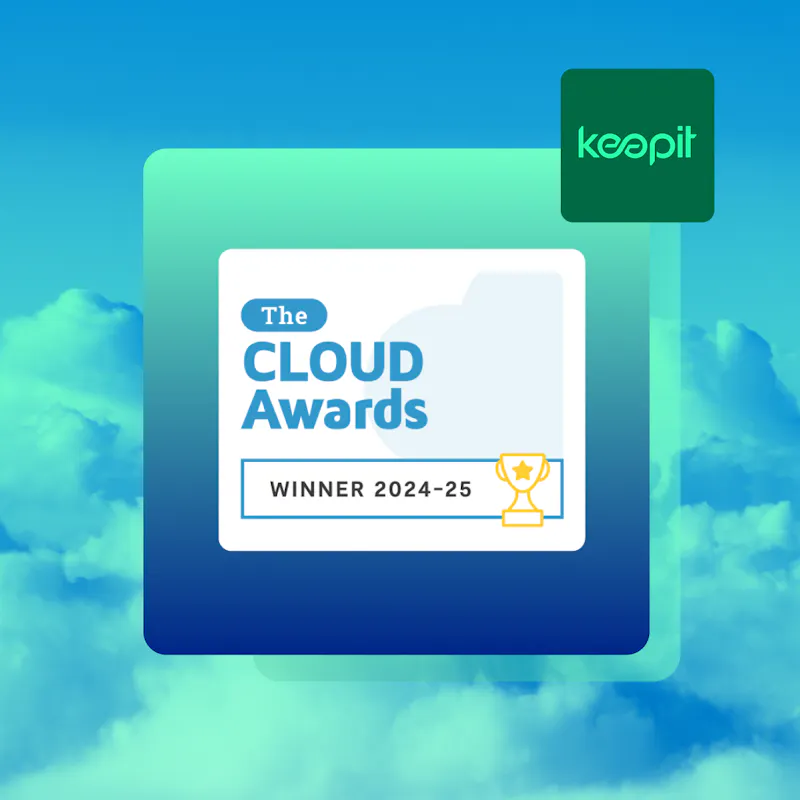
Keepit celebrates dual wins at the 2024/25 Cloud Awards for intelligent backup and recovery solutions

Keepit was named winner in the “Best Cloud-Native Project/Solution” and “Best Cloud DR/Business Continuity Solution” categories.

Copenhagen, Denmark – January 15 – Keepit, a global provider of a comprehensive cloud backup and recovery platform, announced today its success in the 2024/25 Cloud Awards program by being named winner in the “Best Cloud-Native Project / Solution” and “Best Cloud DR / Business Continuity Solution” categories.

The Cloud Awards is one of the longest-running awards platforms of its kind, recognizing the latest achievements and innovations in cloud computing. Organizations that reached the finalist stage have had their nominations reviewed by the judging panel, resulting in the winners named today. The program received entries from organizations of all sizes from across the globe, including the USA and Canada, the UK and Europe, the Middle East, and APAC.

The program itself covers multiple aspects of cloud computing across 36 categories, including overall excellence (e.g.: innovation and disruption), systems and processes (e.g.: Payroll and Automation), certain technologies (e.g. SaaS and IoT), pieces of work (e.g.: projects, migrations or integrations), and workplace excellence (e.g.: consultancy, most promising startup, and ‘green’ credentials).

“More than 15,000 companies worldwide already include the Keepit platform as a part of their disaster recovery plans. By providing companies with instant and continuous access to their data, we’re helping to ensure business continuity and peace of mind. We’re honored to have received these accolades from the Cloud Awards,” says Michele Hayes, CMO at Keepit.

“Keepit has proven itself a leader in disaster recovery and business continuity with its purpose-built SaaS data protection platform, earning the title of ‘Best Cloud DR / Business Continuity Solution.’ By leveraging immutable, tamper-proof storage in an independent cloud, Keepit provides organizations with peace of mind, even in the face of cyberattacks or unexpected data loss. Its adherence to the highest security standards and cost-effective, predictable pricing model ensures companies remain operational, compliant, and secure. The Cloud Awards is proud to honor Keepit for its pivotal role in protecting business-critical data and ensuring uninterrupted continuity in an increasingly unpredictable digital landscape,” says Cloud Awards Technical Director, Annabelle Whittall.

Secure by design, the Keepit cloud is owned and run by Keepit. Customer data is kept in a separate, dedicated infrastructure, with the backed-up data stored fully isolated from the SaaS vendor’s cloud. With a user-friendly interface, robust data security, and the ability to adapt to your cloud environment, Keepit ensures your data is always accessible and protected.

About the Cloud Awards

The Cloud Awards is an international program which has been recognizing and honoring industry leaders, innovators and organizational transformation in cloud computing since 2011. The Cloud Awards comprises five awards programs, each uniquely celebrating success across cloud computing, software-as-a-service (SaaS), cloud security, artificial intelligence (AI), and financial technologies (FinTech).

Winners are selected by a judging panel of international industry experts. For more information about the Cloud Awards, please visit https://www.cloud-awards.com/.

About The Cloud Awards Program
The Cloud Awards identifies and celebrates the most innovative organizations, technologies, individuals and teams in the world of cloud computing. The program spans 36 categories, including ‘Best Cloud Infrastructure’ and ‘Best Cloud Automation Solution’.

About The Cloud Security Awards
The Cloud Security Awards celebrates innovation in the cybersecurity industry. The program includes a wide range of categories, including ‘Best Web Security Solution,’ ‘Cloud Security Innovator of the Year,’ and ‘Best Security Solution for Finance or Banking.’

About The FinTech Awards
The FinTech Awards focuses on the major innovations in the world of financial technology, including personal and corporate banking, insurance, and wealth management, business finance processes, and FinTech use within a selection of sectors, across 23 categories.

About Keepit
At Keepit, we believe in a digital future where all software is delivered as a service. Keepit’s mission is to protect data in the cloud Keepit is a software company specializing in Cloud-to-Cloud data backup and recovery. Deriving from +20 year experience in building best-in-class data protection and hosting services, Keepit is pioneering the way to secure and protect cloud data at scale.

About Version 2 Digital

Version 2 Digital is one of the most dynamic IT companies in Asia. The company distributes a wide range of IT products across various areas including cyber security, cloud, data protection, end points, infrastructures, system monitoring, storage, networking, business productivity and communication products.

Through an extensive network of channels, point of sales, resellers, and partnership companies, Version 2 offers quality products and services which are highly acclaimed in the market. Its customers cover a wide spectrum which include Global 1000 enterprises, regional listed companies, different vertical industries, public utilities, Government, a vast number of successful SMEs, and consumers in various Asian cities.

5 predictions for 2025: Data, APIs, and AI, oh my!

As we welcome a new year, let’s take a look ahead and anticipate the trends that will shape SaaS ecosystems in 2025. What challenges will businesses need to overcome? What opportunities will they seize to secure and manage their data?

To help shed some light on questions like these, Keepit’s Jakob Østergaard (CTO), Michael Amsinck (CPTO), and Kim Larsen (CISO) have shared five predictions for 2025 ranging from data protection and compliance to cloud infrastructure, AI innovation, and scalability challenges. 


Prediction 1: Data protection — finally a non-negotiable priority 

By Michael Amsinck, CPTO at Keepit

Data protection goes mainstream

In 2025, businesses will move beyond seeing SaaS data protection as optional and embrace it as a non-negotiable priority. The increasing frequency of cyberattacks and the devastating consequences of data breaches will make organizations take proactive steps to safeguard their digital assets, such as SaaS data, filling a critical need in shared responsibility models.

This means not just adopting backup solutions but ensuring they’re vendor-independent and truly resilient. Companies will demand solutions that not only secure their data but also guarantee accessibility under any circumstances. The market is ready for exponential growth, fueled by this heightened awareness and demand. 


Prediction 2: Data sovereignty — know where your data lives 

By Kim Larsen, CISO at Keepit 

Data sovereignty takes center stage
As global regulatory landscapes evolve, businesses will prioritize knowing precisely where their data resides and under whose jurisdiction it falls. Customers, too, are becoming savvier, demanding transparency about how and where their data is managed.

By 2025, data sovereignty won’t just be a legal obligation — it will be a strategic advantage. Smart businesses will give their data a clear “address,” ensuring compliance while boosting customer trust. This isn’t about borders — it’s about accountability and control. 


Prediction 3: Cloud services — supply chain under the microscope 

By Jakob Østergaard, CTO at Keepit 

Trust, but verify.
The geopolitical turbulence of recent years has exposed vulnerabilities in supply chains, including digital services. By 2025, organizations will scrutinize their cloud service providers with the same rigor they apply to physical supply chains.

Compliance, vendor relationships, and security protocols will come under the microscope. While integration and collaboration are essential, the days of blind trust are over. Businesses will learn to balance innovation with caution — understanding that while partnerships are key, not all vendors are allies.  


Prediction 4: AI — the year of truth 

By Jakob Østergaard, CTO at Keepit  

AI hits reality check
2025 will mark the end of AI hype cycles. Unsustainable projects will collapse, and only truly functional, value-adding solutions will remain. Businesses will embrace AI for practical purposes: analyzing large datasets, identifying patterns, and enhancing decision-making.

The market will mature, with clear winners emerging as the dust settles. Much like past technological fads, the glamour will fade, leaving behind only what works. Companies that harness AI wisely — focusing on utility rather than novelty — will reap the rewards. 


Prediction 5: Scalability — APIs as the breaking point 

By Jakob Østergaard, CTO at Keepit 

APIs must grow up.
APIs are the backbone of modern SaaS ecosystems, but by 2025, their limitations will become a critical bottleneck. Throttling, slow responses, and intermittent failures are stalling progress, undermining the promise of seamless integrations. For the digital economy to thrive, APIs must evolve to handle higher volumes and deliver consistently.

Engineering robust, scalable solutions isn’t glamorous, but it’s essential. The message is clear: slow down to build better. In the long run, well-designed APIs will separate market leaders from the also-rans. 

Conclusion 

The predictions for 2025 reflect a shared focus on SaaS resilience, accountability, recovery, and adaptability. Businesses must prioritize intelligent and robust systems that address data protection, transparency, and technological evolution to navigate the challenges ahead.

By embracing these shifts proactively, organizations can transform uncertainty into opportunity, ensuring they remain competitive and secure. After all, recovery can only happen if you have a backup proactively in place. 

About Keepit
At Keepit, we believe in a digital future where all software is delivered as a service. Keepit’s mission is to protect data in the cloud Keepit is a software company specializing in Cloud-to-Cloud data backup and recovery. Deriving from +20 year experience in building best-in-class data protection and hosting services, Keepit is pioneering the way to secure and protect cloud data at scale.

About Version 2 Digital

Version 2 Digital is one of the most dynamic IT companies in Asia. The company distributes a wide range of IT products across various areas including cyber security, cloud, data protection, end points, infrastructures, system monitoring, storage, networking, business productivity and communication products.

Through an extensive network of channels, point of sales, resellers, and partnership companies, Version 2 offers quality products and services which are highly acclaimed in the market. Its customers cover a wide spectrum which include Global 1000 enterprises, regional listed companies, different vertical industries, public utilities, Government, a vast number of successful SMEs, and consumers in various Asian cities.

NordStellar’s attack surface management: Spot vulnerabilities before attackers do

Attack surface management reduces cyber risks

Summary: NordStellar’s attack surface management (ASM) feature provides continuous visibility and assessment of your organization’s external attack surface.

We’re excited to introduce NordStellar’s latest feature – attack surface management (ASM) – designed to provide continuous visibility and assessment of your organization’s external attack surface.

“By introducing ASM, we aim to help improve our clients’ overall security posture, ensuring that their security teams are equipped with insights needed to effectively manage their attack surface, minimize exposure to external threats, and meet regulatory requirements for vulnerability assessments,” says Vakaris Noreika, head of product at NordStellar.

ASM helps security teams monitor internet-facing assets, such as websites, servers, applications, and cloud resources, while identifying and mitigating vulnerabilities before they can be exploited. By automating the discovery of security gaps, NordStellar’s ASM empowers organizations to proactively reduce cyber risks and strengthen their security posture.

Attack surface management feature

Why companies have trouble managing their attack surface

Many companies lack full visibility into their external-facing assets, making it difficult to detect potential vulnerabilities that could be easily found by attackers on the dark web and exploited.

“Any security gaps in a company’s websites, servers, applications, cloud resources, or internet of things devices are a ticking time bomb, and it’s vital to identify and mitigate these vulnerabilities before attackers have a chance to act,” says Noreika.

However, many organizations still struggle with understanding and managing their attack surface due to several key challenges:

  • Unidentified and unmanaged assets. Many organizations struggle to maintain a complete and accurate inventory of their internet-facing assets. Without visibility, securing unknown or forgotten systems becomes impossible, leaving critical blind spots for attackers to exploit.
  • Inefficient manual processes. Traditional methods of asset discovery and vulnerability assessment often involve manual processes, spreadsheets, and disparate tools. This is time-consuming and labor-intensive.
  • Difficulty prioritizing remediation efforts. With limited resources, knowing which vulnerabilities pose the greatest risk and require immediate attention can be a challenge.
  • Lack of real-time threat detection. The attack surface is constantly changing, with new vulnerabilities being discovered and exploited daily.
  • Shadow IT and unknown risks. Unauthorized devices, applications, or services connected to the network without IT’s knowledge (shadow IT) significantly expand the attack surface and introduce uncontrolled risks.


How NordStellar’s ASM works

NordStellar’s ASM consists of two main modules – automatic asset discovery and external vulnerability management. Automatic asset discovery maps your infrastructure by running various domain enumeration processes. This way, ASM automatically identifies and catalogs all internet-exposed assets related to your organization, such as web servers, applications, and other network-connected devices. NordStellar can also discover domains, SSL certificates, and IPs.

In the meantime, external vulnerability management continuously monitors and scans the discovered assets for known weaknesses, delivering actionable intelligence to streamline recovery efforts.

How NordStellar’s ASM works

How security teams can put ASM into practice

Continuously monitoring and assessing the attack surfaces is by no means an easy task, requiring a great deal of time and human resources. NordStellar’s ASM provides value for different members of your security team:

  • Security analysts. Imagine starting your day by opening the ASM dashboard, where critical internet-facing vulnerabilities – whether it’s a misconfigured server or an exposed cloud resource – are already detected. You can dive straight into investigating the highest risks, collaborating with IT teams, and implementing fixes before attackers can exploit them.
  • Security engineers. Picture integrating ASM into your workflow. The platform continuously scans your external assets, uncovering weak points that could be exploited. With ASM’s automated discovery, you streamline your vulnerability patching process and address gaps while freeing up time to focus on strategic infrastructure security questions.
  • Security managers. See yourself walking into a stakeholder meeting with NordStellar’s ASM reports. You can clearly demonstrate how the team has reduced the organization’s attack surface, track remediation progress in real time, and provide data-backed proof of compliance. You’re ready to show the tangible value of proactive risk reduction to the entire business.

With ASM, every member of your security team gains the tools they need to strengthen your organization’s security. From real-time monitoring to automated insights and clear reporting, ASM helps you stay ahead of threats and focus on what matters most – keeping your business protected.

Key benefits of NordStellar’s ASM

Security teams are under constant pressure to manage the attack surface: unknown assets, evolving vulnerabilities, and manual processes hamper them down and create unnecessary risk. That’s where NordStellar’s ASM comes in, providing:

  • Minimized attack surface. By identifying and mitigating vulnerabilities, NordStellar’s ASM helps you reduce the chance of a successful attack.
  • Enhanced shadow IT visibility. With ASM, you’ll be able to maintain an accurate list of internet-exposed assets, protecting them from unknown threats.
  • Automation-driven operational efficiency. This lets you avoid manual vulnerability scanning, which is time-consuming and prone to errors.
  • Real-time threat detection. Unlike traditional periodic scans that leave gaps between assessments, ASM ensures continuous monitoring and alerting.
  • Mitigating vulnerabilities before attackers do. NordStellar’s ASM lets you protect your assets before threat actors can do damage.
  • Meeting compliance requirements. You can use ASM to demonstrate compliance with industry regulations that require regular vulnerability assessments.
  • Cost saving. With this feature, you can minimize the financial impact of security incidents.

About NordStellar

NordStellar is a threat exposure management platform that enables enterprises to detect and respond to network threats before they escalate. As a platform and API provider, NordStellar can provide insight into threat actors’ activities and their handling of compromised data. Designed by Nord Security, the company renowned for its globally acclaimed digital privacy tool NordVPN.

About Version 2 Digital

Version 2 Digital is one of the most dynamic IT companies in Asia. The company distributes a wide range of IT products across various areas including cyber security, cloud, data protection, end points, infrastructures, system monitoring, storage, networking, business productivity and communication products.

Through an extensive network of channels, point of sales, resellers, and partnership companies, Version 2 offers quality products and services which are highly acclaimed in the market. Its customers cover a wide spectrum which include Global 1000 enterprises, regional listed companies, different vertical industries, public utilities, Government, a vast number of successful SMEs, and consumers in various Asian cities.

DNS Security Best Practices for Logging

Your Domain Name System (DNS) infrastructure enables users to connect to web-based resources by translating everyday language into IP addresses. Imagine going into a restaurant, in the age before the internet, only to find that the staff speaks and the menu is written in a different language from yours. Without some shared communication form, you can’t order dinner, and they can’t give you what you want. Finally, someone comes into the restaurant who speaks both languages, acting as the translator so you can get the service you need.


A DNS infrastructure is the translator for cloud-based operations for continued services. However, when malicious actors target your DNS, a successful attack can lead to downtime or a data breach.


To mitigate risk, you should implement some DNS security best practices, including knowing what logs help you monitor for and detect a potential incident.


What is DNS security?

DNS security refers to the measures taken to protect the Domain Name System (DNS) infrastructure from cyber attacks. DNS translates a human-readable URL (Uniform Resource Locator) into a machine-readable IP address, routing user requests to the appropriate digital resources.


Cyber attacks against the DNS infrastructure can lead to:

  • Website defacement
  • Traffic hijacking sending users to malicious websites or intercepting communications
  • Unauthorized access to sensitive information
  • Distributed Denial of Service (DDoS) attacks causing service outages and business interruption


DNS security controls typically include:

  • Redundancy: Using multiple DNS servers spread across different locations to prevent a single point of failure
  • DNS Security Extensions (DNSSEC): Protocols providing authentication and data integrity
  • DNS logging: Monitoring for and detecting malicious activities


Why is DNS security important?

The history of DNS gives insight into why it is not a secure technology. Originally created in 1983 so people could more easily navigate the nascent internet, no one predicted this new connectivity would change and become critical to daily operations.

Your DNS infrastructure acts as the foundation for your digital business operations meaning the service disruptions lead to downtime and lost revenue.


A successful attack against your DNS infrastructure can lead to:

  • Business disruption: Without the ability to translate URLs into IP addresses, users and customers cannot connect to digital services.
  • Lost revenue: Without the ability to connect to services, customers cannot engage in transactions, like being able to purchase items in an e-commerce store.
  • Data breach: Compromising DNS services can lead to unauthorized data transfers, modification, or access that impact sensitive data’s integrity and privacy.
  • Compliance risk: DNS is included in various compliance frameworks and mandates, including the Payment Card Industry Data Security Standard (PCI DSS) and International Organization for Standardization (ISO) 27002-2022


6 DNS Attack Types and How to Prevent Them

As attackers increasingly target the DNS infrastructure, knowing these four common attack types can help you implement security controls and the appropriate monitoring to mitigate risk.


DoS and DDoS

Many attacks against the DNS infrastructure fall into these categories, even if they use different methodologies for achieving the objective. Although similar, you should understand the following differences:

  • Denial of Service (DoS): one computer using one internet connection sends high volumes of traffic to a remote server
  • Distributed Denial of Service (DDoS): multiple devices across multiple internet connections target a resource, often using a botnet consisting of devices infected with malware


These attacks flood a DNS server with requests and traffic. As the server attempts to manage the responses, it becomes overloaded and shuts down.


DNS amplification attacks

One DDoS attack type is DNS amplification, in which malicious actors send high volumes of DNS name lookup requests to publicly accessible, open DNS servers. Instead of using their own IP in the source address, the attackers spoof the target’s address so that the DNS server responds to the target.


DNS hijacking

In a DNS hijacking attack, malicious actors make unauthorized changes to the DNS settings which redirect users to deceptive or malicious websites. Some varieties of DNS hijacking attack include:

  • Cache poisoning: inserting false data into the DNS server’s cache to redirect users when they try to access the website
  • Server hijacking: gaining unauthorized access to a domain’s DNS records and changing A or AAAA records that redirect users to a malicious IP address or attacker-controlled server


DNS Spoofing

DNS spoofing, also called DNS poisoning, exploits security gaps in the DNS protocol. The attacker gets in between the browser and the DNS server to supply the wrong response, diverting traffic to the malicious website.


DNS tunneling

DNS tunneling is a sophisticated attack where malicious actors insert data into the communication path between the browser and server. This enables them to bypass several defensive technologies, including:

  • Filters
  • Firewalls
  • Packet capture


This process routes queries to a command and control (C2) server, enabling them to steal information.


DNS Logging Best Practices for Improved Security

Whether you build your own DNS infrastructure or use a managed service, you should be integrating your DNS logs into your overarching security monitoring. While the logs should provide similar information, the field used changes based on your DNS server’s manufacturer. However, you should look for log fields supporting the following categories and event types.

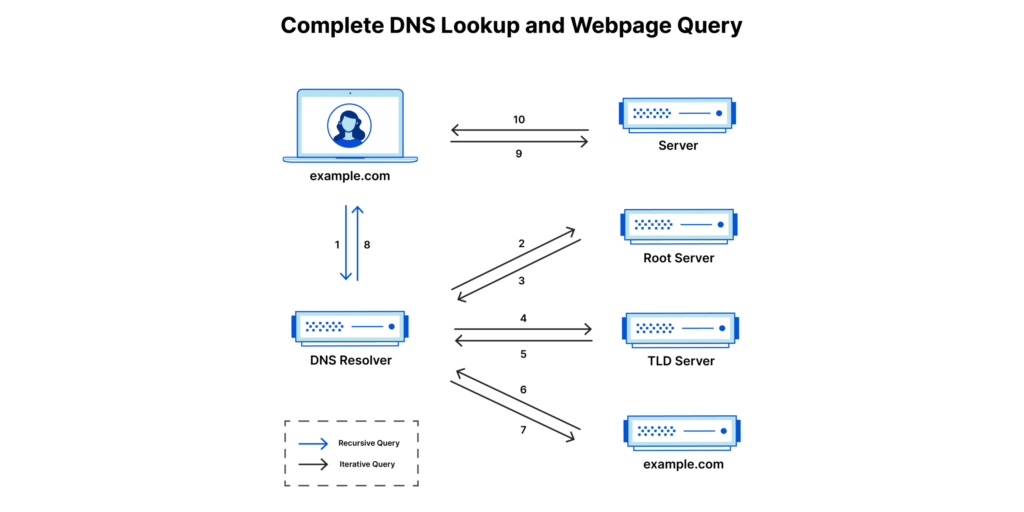
Cloudflare Graphic Reference

Zone operations

In DNS-speak, the zone refers to the domain. Some data you should consider collecting include log fields related to the creation, deletion, or modification to:

  • Zones
  • Records
  • Nodes


DNS Security Extensions (DNSSEC)

DNSSEC are configurations that use digital signatures to authenticate DNS queries and responses. Some data you should consider collecting include log fields related to:

  • Addition of new keys or trust points
  • Removal of keys or trust points
  • Exports of metadata


Policies

DNS policies allow you to

  • Balance traffic loads
  • Assign DNS clients based on geographic location
  • Create zones
  • Manage query filters
  • Redirect malicious DNS requests to a non-existent IP address


Some data you should consider collecting include log fields related to the creation, deletion, or modification of:

  • Client subnet records
  • Server level policies
  • Forwarding policies
  • Zone policies


Graylog Security: Correlating DNS Log Events

DNS logs are often difficult to parse, sometimes creating a blind spot when monitoring DNS security. Graylog Security offers out-of-the-box content that streamlines this process with pre-built content to rapidly set up and start monitoring your DNS security.

Our prebuilt content to map security events to MITRE ATT&CK. By combining Sigma rules and MITRE ATT&CK, you can create high-fidelity alerting rules that enable robust threat detection, lightning-fast investigations, and streamlined threat hunting. For example, with Graylog’s security analytics, you can monitor user activity for anomalous behavior indicating a potential security incident. By mapping this activity to the MITRE ATT&CK Framework, you can detect and investigate adversary attempts at using Valid Accounts to gain Initial Access, mitigating risk by isolating compromised accounts earlier in the attack path and reducing impact.

Graylog’s risk scoring capabilities enable you to streamline your threat detection and incident response (TDIR) by aggregating and correlating the severity of the log message and event definitions with the associated asset, reducing alert fatigue and allowing security teams to focus on high-value, high-risk issues.

About Graylog  
At Graylog, our vision is a secure digital world where organizations of all sizes can effectively guard against cyber threats. We’re committed to turning this vision into reality by providing Threat Detection & Response that sets the standard for excellence. Our cloud-native architecture delivers SIEM, API Security, and Enterprise Log Management solutions that are not just efficient and effective—whether hosted by us, on-premises, or in your cloud—but also deliver a fantastic Analyst Experience at the lowest total cost of ownership. We aim to equip security analysts with the best tools for the job, empowering every organization to stand resilient in the ever-evolving cybersecurity landscape.

About Version 2 Digital

Version 2 Digital is one of the most dynamic IT companies in Asia. The company distributes a wide range of IT products across various areas including cyber security, cloud, data protection, end points, infrastructures, system monitoring, storage, networking, business productivity and communication products.

Through an extensive network of channels, point of sales, resellers, and partnership companies, Version 2 offers quality products and services which are highly acclaimed in the market. Its customers cover a wide spectrum which include Global 1000 enterprises, regional listed companies, different vertical industries, public utilities, Government, a vast number of successful SMEs, and consumers in various Asian cities.

×

Hello!

Click one of our contacts below to chat on WhatsApp

×