Skip to content

A quick dive into identity- and attribute-based encryption

Securing data and communications with genuine encryption is not a simple process, as anyone who has ever dealt with S/MIME or PGP can attest. The biggest problem is the trusted public key exchange. You can download a random public key from a server, but how can you trust that this key is also the right one for your intended recipient? That’s where identity-based and attribute-based encryption comes into play.


Identity-based encryption

Wouldn’t it be great if we could just encrypt emails directly with a key derived from the email of the recipient? This question was first formalized by Adi Shamir, the co-inventor of the Rivest-Shamir-Adleman algorithm, or RSA, in 1984. The resulting cryptographic concept was called “identity-based encryption.” It took another 17 years until this concept was proven to be secure by Dan Boneh and Matt Franklin using the Weil Pairing.

Identity-based encryption (IBE) solves the problem of trusted public key distribution by letting users calculate the public key of recipients based on their identifier. An identifier can be any kind of string — the email address of the recipient, for example. The concept introduces a central authority whose job it is to generate respective private keys for identifiers.

Simplified overview of Identity-Based Encryption

Simplified overview of Identity-Based Encryption

Since the sender (let’s call her Alice) can calculate the recipient’s (Bob’s) public key offline based on his email address, Bob doesn’t even have to exist in the system yet. When Bob registers in the system, he just requests his private key from the central identity authority and then decrypts the data.

This design also solves the problem of key expiration — a complicated procedure in classic trusted web applications usually requiring expiring certificates. By making the identifier user+currentYear()@example.com, Alice forces Bob to request a new private key from the central authority every year.

Bob could also act as his own central authority, allowing Alice to send emails that could only be decrypted by certain departments. Imagine a scenario in which Bob is a company administrator and he needs to be able to view all company emails. However, he also wants to make sure that no department can decrypt emails from any other departments. The solution? Bob can set up a central authority and Alice can send emails to security@company.com, press@company.com, and info@company.com (all hypothetical email addresses invented for this example), each encrypted under their own identity public key. Best of all, these emails could all go to the same inbox without compromising confidentiality.

So why is identity-based encryption not used widely for email encryption? The biggest hurdle to this system is setting up the central identity authority to manage the generation of private keys. That might be practical in a company where it’s not unusual for administrators to have a master key to access employee data, but what about other non-corporate contexts?

Imagine that you have an image that you would like to show to your doctor — an X-ray from a previous appointment, for example. Maybe the doctor needs to consult another specialist, like a radiographer. You would like to encrypt your X-ray image in such a way that it could be shared among doctors and specialists.

Identity-based encryption wouldn’t allow the first recipient (your doctor) to safely share the data with someone else. For that, we would need something more flexible that would allow us to embed access policies within a message’s ciphertext. We need attribute-based encryption.

Attribute-based encryption

Attribute-based encryption (ABE) is the next generation of identity-based encryption. Instead of binding public keys to identity strings, they are instead bound to attributes.

Relying on attributes allows the sender to craft a ciphertext over a chosen access policy, combining different attributes with “and”/“or” gates to formalize access conditions. This approach is called ciphertext-policy attribute-based encryption (CP-ABE).

You can also do it the other way around — associate the user’s key with an access policy. Doing so is known as key-policy attribute-based encryption (KP-ABE). Similar to identity-based encryption, an attribute authority is responsible for managing attributes and their private and public key pairs. The owner of the attribute authority has global decryption power over all its attributes.

It is simple to make and own an attribute-based encryption scheme. Let’s introduce a central attribute authority, which stores a map of attribute identifiers to (normal, RSA) public keys. For example, imagine the following mappings:

Map of attribute identifiers to RSA public keys

If Alice would like to craft a ciphertext that can only be decrypted by general doctors who have her as a client, she would encrypt her secret text like this:

Cipher_client-alice = enc(text, PB_client-alice)
Cipher_client-alice&general-doctor = enc(Cipher_client-alice, PB_general-doctor)

Note that Alice herself doesn’t need to have access to the attributes. Only people who have access to both private keys of the attribute “has Alice as a client” and “general doctor” can decrypt the ciphertext. First Bob removes the outer layer of encryption by providing the “has Alice as a client” private key and then additionally applying the “general doctor” private key to retrieve the plain text.

Additionally, Alice would like to give all radiographers (Charlie) access to her photo scan. She creates the following ciphertext:

Cipher_x-ray-specialist = enc(text, PB_x-ray-specialist)

She can now combine both ciphertexts into one message and send it to her doctor:

Cipher_x-ray-specialist || (client-alice&general-doctor) =
Cipher_x-ray-specialist || Cipher_client-alice&general-doctor

As we can see, the ciphertext can be decrypted by radiographers (who will decrypt the first part of the ciphertext) or by any general doctor who has Alice as a client (decrypting the second part of the ciphertext).

Overview of an insecure Attribute-Based Encryption system which is vulnerable to collusion

As with most simple cryptography schemes, this system has some issues. In this case, our simple ABE schema is not collusion resistant. That means that if Eve is a general doctor and Dave is a psychologist who has Alice as a client, nothing stops Dave from just providing Eve with the private key for the attribute “has Alice as a client,” allowing Eve to escalate access.

Attribute-based encryption schemas must be collusion resistant. In practice, collusion resistant means that even if users exchange private attribute keys, they cannot gain additional knowledge about plaintexts beyond their access level.

This could be done, for example, by creating an individual user-bound attribute private key for each attribute, essentially combining the identity element from identity-based encryption with attributes. Additionally, ciphertext should not grow in size the more policies are added to them. Contradictorily, in our self-made schema, a ciphertext would grow larger and larger if we had multiple “or” conditions in our access policy.

Nevertheless, one problem remains. The central attribute authority can globally decrypt ciphertexts, allowing it to impersonate any user and issue any attribute to itself. Having this trusted central authority in the medical context is a bad idea, since medical information is highly sensitive and should only be decryptable and accessible by authorized parties. For the corporate context, attribute-based encryption makes more sense because an administrator could issue attributes to users and is allowed to decrypt and access any file in the company. But what if we have multiple companies, each with its own attribute authority?

Multi-authority attribute-based encryption

Multi-authority attribute-based encryption (MA-ABE) is an attribute-based encryption variation where multiple attribute authorities are responsible for managing distinct attributes. Why don’t we set up multiple individual attribute authorities? Well, we still want to be able to combine attributes from other companies with attributes from our own company to enable cross-company sharing.

Overview of an Multi-Authority Attribute-Based Encryption system for different companies

Overview of an Multi-Authority Attribute-Based Encryption system for different companies

In such a system, it becomes a problem to establish globally known parameters for each attribute authority. MA-ABE introduces a new central server that is responsible for setting up new attribute authorities and bootstrapping the system overall.

Early MA-ABE schemes required this central server to have global decryption power over all attribute authorities. On the other hand, modern MA-ABE schemes such as DAC-MACS (effective data access control for multi-authority cloud storage systems) are close to what we need to implement for MA-ABE in real-world scenarios because they don’t require the central server to have global decryption power.

MA-ABE offers some useful new approaches to data encryption:

  1. ABE schemes are group centric, meaning that a single group can be described with a single attribute. This makes encrypting and decrypting for groups easier. On the other hand, encrypting information for single individuals becomes more computationally intensive compared to traditional encryption schemes because these individuals usually don’t share common attributes.

  2. When an attribute gets revoked from a user, the attribute key and all ciphertexts using this attribute need to be rotated and re-keyed. This can be done by the attribute authority or a proxy-reencryption service.

  3. Proxy-decryption is a technique where a server helps the user during decryption. It does so by using the user’s private attribute keys. As the ciphertext is additionally protected with the user’s identifier (IBE), confidentiality is not compromised. Proxy-decryption can be used to help mobile clients with the computationally intensive decryption process.

Is MA-ABE ready to be deployed in modern secure cloud storage solutions such as NordLocker Business or NordPass Business? Personally, I would say no.

Even though the modern MA-ABE schemes fulfill most of the security requirements for end-to-end encrypted cloud storage systems, their system implementation is complex, and the underlying cryptographic principles like pairings are not yet widely adopted in cryptographic libraries. In addition, pairing operations are computationally intensive and not suitable for mobile devices, which require low power consumption for a good user experience.

With the world shifting increasingly further to the mobile side, proxy-decryption might help to decrease the computational overhead on the mobile device, but it requires the user to be always online to access their encrypted files. Finally, MA-ABE can only be cryptographically beneficial if users change their attitudes around encrypting files — away from sharing data with individuals, and towards attributing access policies over their data. It is yet to be seen if users and companies are willing to adopt this mindset change.

The existence and proven security of attribute-based and identity-based encryption schemes show that we are just scratching the surface of what is cryptographically possible with elliptic curves. However, the practical applicability of schemes in real-world scenarios is yet to be seen.

About Version 2 Digital

Version 2 Digital is one of the most dynamic IT companies in Asia. The company distributes a wide range of IT products across various areas including cyber security, cloud, data protection, end points, infrastructures, system monitoring, storage, networking, business productivity and communication products.

Through an extensive network of channels, point of sales, resellers, and partnership companies, Version 2 offers quality products and services which are highly acclaimed in the market. Its customers cover a wide spectrum which include Global 1000 enterprises, regional listed companies, different vertical industries, public utilities, Government, a vast number of successful SMEs, and consumers in various Asian cities.

About NordLayer
NordLayer is an adaptive network access security solution for modern businesses – from the world’s most trusted cybersecurity brand, Nord Security.

The web has become a chaotic space where safety and trust have been compromised by cybercrime and data protection issues. Therefore, our team has a global mission to shape a more trusted and peaceful online future for people everywhere.

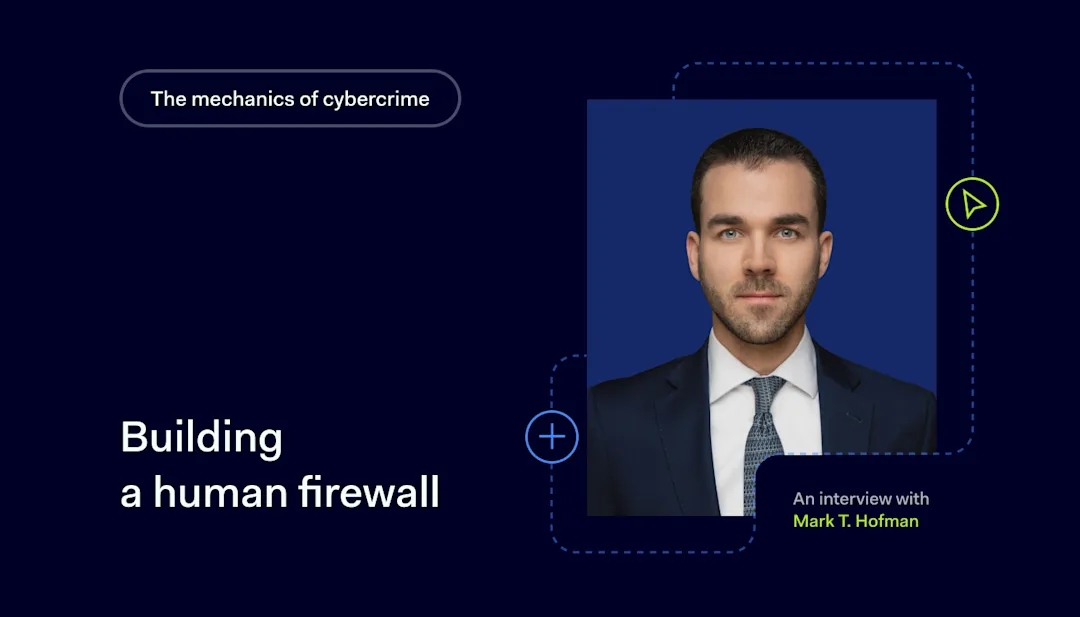
How to create a resilient human firewall: a talk with Mark T. Hofman

Is the modern cybercriminal a solitary figure acting as a lone wolf? Or are they more often part of a sophisticated, white-collar pack? We discuss this with Mark T. Hofman, a well-known crime and intelligence analyst. Together, we explore the mechanics and motivations behind cybercrime. Spoiler alert: it’s not just about money. 

In our talk, we examine the tactics of cybercriminals. How they exploit human behavior, not just system vulnerabilities, to target victims. We shed light on why people click on suspicious links.  We also reveal organizations’ weakest links. Finally, we discuss what it means that cyber-attacks fail at the coffee machine.

Dive into the interview and learn how to build a strong human firewall in your business.

The interview’s highlights

  • Cybercriminals don’t fit the stereotypes shown in movies. They operate within structured, business-like entities that use advanced tactics like ransomware-as-a-service.

  • Cyber attackers often seek thrills, not just money. The excitement of outsmarting the system often motivates them more than financial gains.

  • Cybercrime targets human error more than system flaws. It often exploits moments of inattention or bad luck. And has nothing to do with a victim’s intelligence.

  • Cyber awareness across all levels of staff is key for organizational security. Anyone, even IT admins, can become the weakest link in a cyber-attack.

  • Fostering a company culture of cybersecurity is key for digital safety. Just like looking both ways before crossing the street, taking precautions is a must.

Key insight #1: cybercriminals are smart individuals operating in company-like structures.

NordLayer: You often say in your keynote speeches that the idea of a lone cybercriminal is inaccurate. What is the reality?

Mark T. Hofman: Cybercriminals are often presented as 15-year-old teenagers with black hoodies sitting in a dark room. That’s a Hollywood myth.

The number one threat for many companies is ransomware and crime-as-a-service operations. The individuals behind these are not just kids. They’re sophisticated and work within organized, business-like setups on the economy’s dark side. These criminal organizations function like companies. They have customer support, quality management, recruitment, and specialists who negotiate ransoms.

For example, look at DarkSide, a group that attacked the Colonial Pipeline networks. Like many other cyber gangs, it is set up like a business with affiliates. They even issued a press release discussing their “ethics” and preferred targets.

NordLayer: Can you tell us more about how these ransomware-as-a-service structures work?

Mark T. Hofman: Everything starts with a ransomware creator, like DarkSide. They make ransomware that locks and encrypts data once it gets into a victim’s computer.

What’s interesting is that DarkSide doesn’t interact with the victims. Instead, they operate through a network of affiliates responsible for infiltrating computer systems. These affiliates use DarkSide’s ransomware and subscribe to their malicious software.

The fees for using this service vary based on how much ransom is taken from the victim. This shows the sophistication and organization level within modern cybercrime enterprises.

Key insight #2: cybercriminals love the challenge of beating the system more than money

NordLayer: You’ve talked to quite a few cybercriminals. What really drives them?

Mark T. Hofman: When I talk with threat actors on the darknet, X, 4chan, various forums, and Telegram groups, I try to figure out as much as possible about their psychology and methods. In my keynote talks, I share this knowledge to help companies and government agencies understand how to protect themselves.

Here’s the scoop: many people believe they are only after money. Sure, that’s part of it. But for many, it’s not just about money. It’s more about the psychological trait of thrill-seeking or the challenge to beat the system. Many cybersecurity experts might disagree with this argument. But, if you already have millions of dollars in Bitcoin in your wallet and you still commit crimes, then your motive is not money but greed.

For example, cybercriminals often target government institutions, not because of financial gains but simply because they can. It’s a game of cat and mouse. Or a game of chess that always gives you a challenge.

Another thing is that most cybercriminals start young, around 10 to 15 years old. They play with technology, take things apart, and try to find bugs or hacks in computer games. Here, it’s a mix of boredom and thrill-seeking behavior. For many, school is boring, and there are more interesting hacks to learn on platforms like Reddit. YouTube is usually their entry point before going into the dark net. For many 11-year-olds, cybercrime is a way to gain recognition and respect.

In contrast, young soccer talents get support at school and the opportunity to join a soccer team. What support is there for coding talents? Mostly nothing. If we want to prevent cybercrime in the long term, we should give 11-year-olds a chance to use their skills for good purposes. Otherwise, they may learn the wrong things on the darknet and end up on the wrong side of the law.

Key insight #3: cybercrime exploits human psychology rather than system vulnerabilities.

NordLayer: In one of your YouTube videos, you said that cybercrime is not about technology but psychology. Why is that?

Mark T. Hofman: Over 90% of cyberattacks happen because of simple mistakes people make. And it’s clearly a psychological problem, not a technical one.

Quote 2 1400x500

It’s people clicking on suspicious links, opening email attachments, plugging in USB flash drives they found in the parking lot, connecting to public Wi-Fi networks, having loud phone calls about sensitive topics at airport lounges, revealing their OTP (one-time password) on the phone, and falling for deception like honeytraps or well-made deep fakes. In short, cybercrime often uses human error—this is where psychology comes into play. And yet, this psychological aspect of cybercrime is often underestimated.

NordLayer: “I’m smart, I will never click on a suspicious link,” many people say. Yet, they do click and get attacked. How does that happen?

Mark T. Hofman: It has nothing to do with their IQ. It’s more about whether you’re paying attention at that moment or just having a run of bad luck.

For instance, if you get a phishing email about a recent Amazon purchase you didn’t make, you might say, “Who would be so stupid to click on this?” But, if you did make an Amazon purchase 20 minutes ago and now you get an email claiming there’s a problem with your order, you’re much more likely to click, and it has nothing to do with your intelligence. Everyone can fall victim to a cyber-attack. 

NordLayer: How do cybercriminals analyze our weakest points?

Mark T. Hofman: Most of the time, they don’t. For example, in many cases, phishing emails are not specifically targeted. They are sent out to thousands of users, hoping that someone will click on a suspicious link and take the bait.

I get phishing attempts from banks where I don’t even have an account. It just shows cybercriminals shoot in the dark. But when they target someone, like in spear phishing, open-source intelligence (OSINT), and on social media, they smartly use the information about you that’s available online.

Say an IT admin lists an XY software skill on their LinkedIn profile. They get an email saying, “Critical security update for software XY,” and even a tech-savvy IT guy might click. It shows everyone can fall victim to this type of attack.

NordLayer: How do you conduct cyber profiling? Is it similar to offline crimes?

Mark T. Hofman: Yes and no. In everything we do, we show something about who we are. Our behavior leaves personality traces. The same principle applies to cyberspace, where there are no physical traces but digital ones.

Cybercriminals decide when and how to attack, who to target, and what language to use in their threatening emails, ransom chats, or phone calls. They also leave a trail of their personality. And disclose their intentions or identity, which can be analyzed to learn more about them.

For example, the FBI uses a checklist to judge how serious a threatening letter is. Today, these letters aren’t letters anymore. They are social media posts, tweets, or emails, but their content can be analyzed in a similar way. So, some profiling methods used in the real world can also be applied in cyberspace.

Key insight #4: to create a robust human firewall, everybody in an organization must be aware of security.

NordLayer: Who is more at risk for online scams and cyber-attacks? IT professionals, who know the ropes or remote workers?

Mark T. Hofman: It’s a common misconception that IT professionals are immune to cyber threats because of their expertise. In fact, the risk isn’t about knowledge alone—it’s about context.

Many cyberattacks fail at the coffee machine. What do I mean by that? For example, identity theft scams like CEO fraud exploit a lack of face-to-face talk. If I meet my boss at the coffee machine and ask them about a bank transfer, and they respond with, “What bank transfer? I didn’t send you any email,” the attack fails.

Working from home increases the risk of cyber threats, as people might fall for online scams that prey on individual mistakes and the absence of a ‘coffee machine’ moment of verification.

NordLayer: What are the most successful social engineering techniques that attackers use?

Mark T. Hofman: Attackers often combine three elements, which I call the dark triad of cybercrime: time pressure, emotion, and an exception. Be cautious if someone calls you, triggers emotions, creates time pressure, and asks you to do something unusual.

Deepfake technology has advanced to the point where someone can replicate your voice with just a half-minute of audio. I could clone your voice and make you say anything in any language. Imagine your partner calls you and says, “Honey, I’m in trouble, you need to send me money.” It’s a combination of time pressure, emotion, and an unusual request, all classic signs of a scam. So, be careful when you get an urgent request for money, even if it appears to come from someone you trust.

NordLayer: Now, let’s discuss a cyber attack’s “butterfly effect.” How do small steps in an attack, such as a minor vulnerability, cause major problems across a system?

Mark T. Hofman: We need both technical security and a human firewall. Do you have a well-trained CISO or IT department? What do your interns or executive assistants know about cybersecurity? How security-aware are your C-level executives or your receptionist? Every chain is as strong as its weakest link, so we must reach out to everyone. My motto is “Make cybersecurity great again.” It’s because the main target group is people who are not interested in cybersecurity. They represent the weakest link. We must also make them security-aware.

Quote 5 400x560

Key insight #5: staying safe online is like looking both ways before you cross the street.

NordLayer: What can we do to become the human firewall?

Mark T. Hofman: I would be happy if people paid attention to the basics of cybersecurity. This includes using long and different passwords and enabling multi-factor authentication. Equally important are protective measures like firewalls, antivirus software, and VPNs at work and home.

We need physical and psychological awareness. This means being wary of third-party USB sticks, suspicious links, or email attachments and always keeping your software updated. Also, never leave your laptop or cell phone unlocked. Avoid buying USB sticks from online shops. And stay alert when emotions are triggered or something seems out of place.

When every employee understands that cybersecurity is a personal responsibility, not just the job of the IT, that’s what I call the human firewall.

NordLayer: Can education reduce human errors in the future? And how can AI help us make fewer mistakes?

Mark T. Hofman: Discussions on cybercriminals’ forums focus on AI’s risks and benefits. They see its opportunities but also worry that their crimes might get harder if businesses and law enforcement agencies understand the full potential of AI. I think the threat actors’ concern is good news for us.

Of course, cybercriminals also exploit AI technologies, such as deep fakes, and specialized versions of Chat GPT tailored for attacks, such as  WormGPT. I discuss the dark side of AI a lot in my talks. And AI also offers opportunities for defense and cyber profiling.

Basically, AI is like a knife. You can use it to make a salad or kill your wife. It’s a tool that can be used to create good and bad outcomes and will be used on both sides.

NordLayer: How can we engage and educate those not very knowledgeable about cybersecurity, including C-level executives?

Mark T. Hofman: At many cybersecurity conferences worldwide, I meet cybersecurity experts discussing cybersecurity topics with other cybersecurity experts. That’s great. But in the end, it’s interns, regular employees, or C-level executives who often open email attachments or click on suspicious links.

Cybersecurity must be entertaining and relatable to make people aware of threats. I always say, „Make it about people, not just about business.“. If you include “Three ways child predators can exploit your child in World of Warcraft” in your cyber-awareness training, guess what? Suddenly, mothers will care more about cybersecurity.

I also address private life and the so-called “grandchild trick.” Brief seniors in your family to be cautious when they get a WhatsApp message telling them, „Hi mom, I have a new number. “ Make cybersecurity matter to everyone.

Thank you.

Mark T. Hofmann, a crime and intelligence analyst and business psychologist, specializes in behavioral and cyber profiling. Featured on CNN, CBS, and 60 Minutes Australia and publications such as Forbes, Mark T. Hofman is also a popular keynote speaker, discussing the psychology of cybercrime and the dark side of AI.

How NordLayer can help

No matter if your team is in-office, hybrid, or fully remote, it’s vital to enhance your security and make your employees aware of it. Contact the NordLayer team for a customized solution for secure network access for your organization.

About Version 2 Digital

Version 2 Digital is one of the most dynamic IT companies in Asia. The company distributes a wide range of IT products across various areas including cyber security, cloud, data protection, end points, infrastructures, system monitoring, storage, networking, business productivity and communication products.

Through an extensive network of channels, point of sales, resellers, and partnership companies, Version 2 offers quality products and services which are highly acclaimed in the market. Its customers cover a wide spectrum which include Global 1000 enterprises, regional listed companies, different vertical industries, public utilities, Government, a vast number of successful SMEs, and consumers in various Asian cities.

About NordLayer
NordLayer is an adaptive network access security solution for modern businesses – from the world’s most trusted cybersecurity brand, Nord Security.

The web has become a chaotic space where safety and trust have been compromised by cybercrime and data protection issues. Therefore, our team has a global mission to shape a more trusted and peaceful online future for people everywhere.

NordLayer insights: the making of a Black Friday cyber scam

Key takeaways 

  • Black Friday sees a major spike in both shopping, with billions spent online, and in scam activities, with a 22% increase in fraud losses reported.

  • Cybercriminals start gearing up for Black Friday scams in January, indicated by increased dark web searches for related keywords.

  • Dark web data shows Black Friday is a topic of interest throughout the year, not just in November, with notable search activity in April.

  • Months before Black Friday, the dark web buzzes with searches for big retailers, hinting at planned attacks on these platforms.

  • Key protective measures include skepticism towards unexpected deals, consistent software updates, using different devices for work and personal use, secure passwords, and informed cyber practices.

Black Friday is famous for big sales and shopping frenzy. It’s also a busy time online, with a record $9.12 billion spent last year, as reported by Adobe Analytics. This global trend saw Salesforce reporting worldwide online sales hitting $40 billion.

Yet, alongside this rise in legitimate transactions, there was a notable increase in fraudulent activity, with reported losses from scams associated with Black Friday and Cyber Monday climbing by 22% from the previous year. These statistics don’t just reflect consumer zeal for deals; they also underscore the period’s vulnerability to cyber threats.

Based on this reality, NordLayer’s recent exploration reveals a complex strategy behind the festive frauds that often begin brewing while most still stick to their New Year’s resolutions.

January: the planning period for cybercriminals

The words “Black Friday” might bring images of late-year sales to mind, but for a cybercriminal, January is a prime month for laying the groundwork. During this period, researchers noted a surge in search activity on the dark web, encompassing all Black Friday-related keywords, from hot shopping trends to potential cybersecurity threats.

Yearly changes in Black Friday keywords

Carlos Salas, Head of Platform Engineering at NordLayer, illustrates the situation: “The reason behind this early start is the need to establish a network of resources, from stolen personal data to compromised accounts, to facilitate their scams when Black Friday arrives. Criminals also seek to exploit the heightened sense of urgency and excitement surrounding the holiday season to deceive unsuspecting shoppers.”

Surprisingly, the ‘Black Friday’ keyword spiked in April searches—an unexpected deviation from the usual November interest. The reasons for this springtime surge are unclear, but it’s a reminder to stay alert for online dangers all year round, not just during the holiday shopping rush.

‘Black Friday’ queries are at their lowest in August, but remarkably, they shoot up in September, doubling the volume seen in the previous month.

Why Black Friday deals are a dark web trend all year

Black Friday isn’t just for November anymore; it’s a year-round event where you can always find deals. On the dark web, ‘Black Friday’ means discounts on things like stolen data and illegal items every day. These places sell lots of subscription services at lower prices, too. Cybercriminals are ready to use this buzz to target both shoppers and companies.

Black Friday became synonymous with getting great deals, so this keyword is popular year-round. Vendors on the dark web marketplaces know that when a potential customer sees the term ‘Black Friday,’ they will likely be attracted to the idea of saving a coin, regardless of what season it is,” says Salas.

High traffic, high risk

Popular online marketplaces are beacons for threat actors. It’s clear that retailers like Amazon, eBay, and Target, with their high online traffic, are primary targets for these attackers.

The data points to a sharp rise in targeted keyword searches for these e-commerce platforms starting early in January. The increase shows that the more well-known a retailer is, the more likely it is to attract attention from potential attackers on the dark web.

For instance, interest in Amazon spiked, with keyword searches climbing over 45% in January, followed by notable upsurges of 15% in May and 13% in March.

The Federal Trade Commission (FTC) in 2022 reported that scams where people pretend to be from a business took a massive leap, causing a loss of $2.6 billion. Looking back, from mid-2020 to mid-2021, out of every three complaints about these kinds of scams, one was about someone faking to be from Amazon. Last year, the amount of money swindled by fake businesses was $660 million, which is more than the $453 million lost the year before. The FTC hasn’t given a breakdown for Amazon scams for 2022 specifically, but it’s a fair guess that, given the trend, Amazon impersonators have also become more common.

eBay saw a similar pattern, with dark web keyword searches soaring by 68% in January, while March and April recorded increases of 46% and 19%, respectively.

Target-related searches peaked with a 41% rise in March, a 31% jump in January, and a moderate 15% hike in April.

Each spike in search volume represents more than consumer trends; they’re opportunities eyed by cybercriminals.

Top 5 threats this Black Friday

Carlos Salas points out the top five scams to be wary of.

Phishing scams

Phishing remains a favored tactic. Fraudulent attempts to gather sensitive information don’t take a holiday, especially not on Black Friday.

Phishing scams come to life when cybercriminals buy phishing kits from dark web stores. These all-in-one packages enable setting up websites that look trustworthy but are traps for stealing sensitive data.

Before the generative AI era, phishing emails were somewhat easy to spot due to poor grammar, illogical vocabulary, and bad spelling. Such glaring errors were easy to pick up by automated defenses and reasonably careful people. But with AI tools, it is now far more likely that a phishing email will appear genuine, leading to more potential victims actually clicking on malicious links.

Fake websites

Imitation may be flattery, but in the cyber world, it’s a weapon. Cybercriminals craft convincing copycat websites offering too-good-to-be-true deals to lure in unsuspecting shoppers.

The development of fake websites follows a similar path to phishing scams. Scammers use sophisticated software to clone legitimate websites, which are then hosted on compromised or malicious servers. These counterfeit sites are often used together with phishing emails or advertisements to steal user data or payment information.

Gift card frauds

Gift cards from third-party vendors may not be as beneficial as they appear. There’s a real danger they could be fake or previously drained, rendering your gift worthless.

On the dark web, there are marketplaces and forums where stolen gift card numbers are bought and sold. Scammers also trade tips and tools for cracking the algorithms of gift card numbers, allowing them to generate and sell counterfeit cards.

Fake order confirmations

Be wary of unexpected emails, calls, or messages about orders or deliveries you don’t recognize.

This scam involves creating fake order confirmation emails that appear to come from well-known retailers. These emails are crafted using templates available on dark web markets, complete with logos and branding, and contain links to phishing websites or malware.

Social media scams

According to FTC data, social media ranks as the fifth most common way scammers contact their victims. In cases reported on social media scams, 61% resulted in financial loss. The median amount that people were scammed out of was $528. Think twice before you click on offers that look too good to be true.

These scams are often centered around fake profiles or compromised accounts. The dark web provides a venue for buying and selling the access credentials to these accounts, as well as software that automates the creation of posts and messages designed to defraud social media users.

The methodology behind Black Friday cyber threat analysis

The compilation of data was a joint effort with independent experts focused on researching cybersecurity incidents. The team conducted an analysis of the most searched terms related to Black Friday, including popular discussion topics, retail chains, and methods of attack. They conducted their search analysis over a period stretching from September 2022 to August 2023.

The benchmark is based on the average monthly search volume for Black Friday-related scam terms, and variations from this norm were calculated accordingly.

Fortifying your digital defenses: five tactical measures

Be skeptical of unexpected communications

Phishing doesn’t come with a neon sign. Treat unexpected emails and messages cautiously, verifying the sender through other channels if necessary.

Update and patch regularly

Ensure that all systems and software are up-to-date with the latest security patches. Think of updates as your digital immune system’s vitamins—essential for fending off infection by cybercriminals.

Separate work and personal devices

Using personal devices for work can cause trouble. If possible, keep them separate to minimize the risk of cross-contamination.

Embrace strong, unique passwords

A common foothold for cybercriminals is a weak password. Opt for complex, unique passwords for each account, and consider a password manager to keep track of them all.

Educate on cyber hygiene

Empower employees and users with knowledge. Regular training sessions can turn the most innocuous user into a vigilant watchkeeper against phishing scams and suspicious links.

Strengthen your business with NordLayer security

The shift to hybrid work models has made the understanding of security threats more important than ever. NordLayer helps businesses adapt by providing advanced solutions for network access and management. Our services are built around the Zero Trust security model, which rigorously verifies every access request, thus enhancing your data protection. Virtual Private Gateways further secure your operations with dedicated servers that encrypt data and offer detailed access management, seamlessly integrating with leading login systems.

NordLayer offers a suite of security features, including a top-quality VPN, multi-factor authentication, and ongoing network monitoring, designed to fit your business needs without additional hardware complexity.

Contact NordLayer today to strengthen your organization’s defenses against cyber threats.

Genetic data leak, 23andMe point to credential stuffing

Hackers are selling genetic data stolen from users of the company 23andMe. The company itself says they weren’t breached, although their users’ data was used by what seems to be a single threat actor stealing personal details and genetic data. This data was then published or advertised online. 23andMe suggested that the threat actor(s) gained unauthorized access with “recycled login credentials”, a technique known as credential stuffing.

The logic is simple: Keep trying stolen username/password combinations, and eventually, they’ll work on another site. An easy solution to credential stuffing attacks? You guessed it: Multi-factor authentication (MFA). While 23andMe has offered an MFA feature since 2019, it was not made mandatory for users. With genetic and personal data at stake and up to 7 million users affected by these recent breaches, it might be time for a change in policy.

The Bleach Breach: Clorox revenue and supply chain hit

Clorox, the household cleaning giant, predicts a more than 20% drop in quarterly sales due to a cyberattack (thought to be ransomware) that caused product shortages and operational disruptions. Manufacturing, often kept running by legacy systems and sprawling workforces, suffers more cyberattacks than any other industry.

The Clorox incident is being linked to the same group responsible for the MGM and Caesars Palace hacks, discussed in our previous episode, which occurred around the same time in August 2023. “Scattered Spider” is notorious for using social engineering methods to gain access to internal systems. The Clorox Company’s share price has dropped by over 7 percent in the last month.

Wearable AI: Trendy or just trending?

Tech companies are rushing to secure the lead in wearable AI products. Meta has collaborated with Ray-Ban on a pair of high-tech glasses, enabling wearers to live stream directly from the glasses to Facebook or Instagram and voice activate Meta AI, “an advanced conversational assistant”. Jony Ive, Apple’s legendary former design lead, and OpenAI are reportedly teaming up to design the “iPhone of AI”.

Rewind.ai unveiled a neck-worn pendant that records conversations to your smartphone and creates a searchable database of life moments. Humane, imagining “a world where you can take AI everywhere”, have developed a smart device that resembles a badge or lapel pin.

The common goal here seems to be for technology to rely less on screens, to fade from view, and become all but invisible.

Stay tuned for the next episode of Cyberview.

About Version 2 Digital

Version 2 Digital is one of the most dynamic IT companies in Asia. The company distributes a wide range of IT products across various areas including cyber security, cloud, data protection, end points, infrastructures, system monitoring, storage, networking, business productivity and communication products.

Through an extensive network of channels, point of sales, resellers, and partnership companies, Version 2 offers quality products and services which are highly acclaimed in the market. Its customers cover a wide spectrum which include Global 1000 enterprises, regional listed companies, different vertical industries, public utilities, Government, a vast number of successful SMEs, and consumers in various Asian cities.

About NordLayer
NordLayer is an adaptive network access security solution for modern businesses – from the world’s most trusted cybersecurity brand, Nord Security.

The web has become a chaotic space where safety and trust have been compromised by cybercrime and data protection issues. Therefore, our team has a global mission to shape a more trusted and peaceful online future for people everywhere.

NordLayer Partner Program: TEKRiSQ on how practical solutions help eliminate weak security links

A discussion with Dean Mechlowitz, Co-founder of TEKRiSQ responsible for Technology Operations, about the main challenges organizations face with cybersecurity threats, the benefits of the NordLayer Partner Program, and what perspectives are anticipated for different industries. 

Highlights

  • About the company: TEKRiSQ is a cybersecurity team of up to 10 people aiding small- and medium-sized businesses (SMBs) in the US and Canada and focusing on enhancing cyber resilience against digital threats since 2021.

  • Business case: the MSP tackles the challenges SMBs face in cybersecurity, addressing the lack of internal IT expertise and the misconception of being too insignificant to be targeted.

  • NordLayer adoption: a partner utilizes NordLayer’s simple and efficient remote network access solutions to enhance cybersecurity for clients without overwhelming them.

  • Benefits of NordLayer Partner Program: the program offers MSPs like TEKRiSQ user-friendly solutions, a centralized management portal, and reporting capabilities, emphasizing ease of use for end-users.

  • Future projections. Future cybersecurity challenges will center around remote work risks, the protection of personal data, and the need for basic security measures like multi-factor authentication.

About the company

TEKRiSQ is a team of cybersecurity professionals helping SMBs build cyber resilience against digital threats. Operating as a managed service provider (MSP) in the US and Canada, a team of up to 10 people ensures that their clients transform into fully cyber-insurable companies.

Established in 2021, TEKRiSQ was founded on strong fundamentals of experience and expertise in modern cybersecurity and technology. The company has been advising everyone from small teams to big global players, gaining unique insights into the industry and how SMBs navigate the changing security landscape.

Dean Mechlowitz, Co-founder of TEKRiSQ responsible for Technology Operations, discusses the company’s approach to building cybersecurity culture and technology stack for SMBs, and how NordLayer’s secure remote access solution contributes to their mission.

Business case: bringing in the cyber expertise so clients don’t have to move a finger

According to TEKRiSQ, companies often struggle not due to industry-specific challenges but because of their mindset when it comes to adopting security measures. Small and medium enterprises are convinced that their insignificance will protect them from potential risks.

“Usually, companies with fewer than 200 employees are basically sitting ducks. They believe “I’m too small, and all my data is in the cloud, so I am not at risk,” but truly, they just have no idea how to understand it.”

SMBs who don’t typically have internal IT departments or Chief Information Officers end up outsourcing specialists and services. Without the right knowledge, it’s challenging to determine cyber risks applicable to their businesses and keep up with technological changes. Partner-Case-study-Sequentur web-cover 1400x8002

The lack of expertise makes organization decision-makers immobile and hesitant in taking action because the only thought they have in their minds is, “What do I do?” However, some service providers jump into the multibillion-dollar MSP market with no actual experience in cybersecurity.

“Many MSPs are not cyber experts and fail to introduce basic security measures like multi-factor authentication to their clients, or they aren’t familiar with the latest security issues.”

Qualified MSPs often play a crucial role in guiding organizations lost in the subject. They are responsible not only for bringing knowledge and expertise but also for making sure the clients are aware of the risks. Our speaker Dean highlights that clients tend not to know or simply don’t care about the importance of business cybersecurity.

Guiding the unaware and the naive with a pragmatic approach

TEKRiSQ’s strategy is to use cyber insurance channels to get clients’ attention to security needs.

1 1400x800

Business owners and managers, just like any other person, are looking for a quick and painless solution to their problem—and insurance, at first glance, seems like an easy way out. However, businesses must comply with insurance requirements that usually include the incorporation of network and data security policies.

“People think “I’ve never been attacked before. Therefore, I’m never going to be attacked,” which is incorrect.”

Then, the ignorant, unaware, or careless mindset faces a reality check after hearing three control questions from a TEKRiSQ representative:

  1. If all your data was exposed and published on the dark web, would that be a problem for your business?

  2. If all your data was inaccessible for three or four weeks, would that be a problem for your business?

  3. If your computers were shut down for a month or two, would that be a problem for your business?

According to Dean, everybody uses computers, and everybody has data that’s really sensitive, so the answer is, “Of course, it’d be a problem,” and it doesn’t matter what business you’re in.

“Companies have remote workforces, which is almost everybody today. A lot of companies have consultants sitting all over the country using their own computers. That’s problematic, right? Many people travel to airports and hotels—that’s problematic, too.”

So there are certain businesses that have bigger risks, and some have smaller ones, but it’s the MSPs’ task to identify and mitigate them for the client if they lack internal resources to do it independently.

Close collaboration with insurance providers allows TEKRiSQ to be at full speed with what’s required by the insurer. Many MSPs are unaware of such nuances and cannot offer clients the right solutions.

Close-up on the solution

TEKRiSQ is a unique managed service provider that performs risk assessments in 30 minutes. They also focus on delivering solutions in minutes, not weeks or months. Thus, working with tools that correspond with such objectives is super important.

NordLayer’s onboarding for secure remote network access is about as simple as possible. You put the email into the system, and it sends an activation email. The setup must be super simple so non-tech users can understand it and follow instructions.

“The setup only takes tens of seconds or a minute—it’s pretty simple. It’s for us to find a way to encourage them to consistently use the tool.”

As an MSP, TEKRiSQ must have access to activity reporting to see whether the clients are using the systems. If the activity is low, they must be able to enforce the service, as companies tend to forget to use it after installing the application.

“None of our clients wishes to learn or do anything in terms of managing a solution, so it has to be fully governed by us. They only want not to care about it besides turning the tool off and on.”

Finally, adding extra layers of security, like incorporating dedicated IP into the company’s network protection, is crucial. Whether it’s encrypting connections while working on a public network or adding IP or access control lists for the firewall—the client most likely doesn’t realize the need for such a measure because they don’t know there’s more behind a firewall or generic VPN.

Why join the NordLayer Partner Program?

Our Partner Program provides MSPs with an ecosystem of user-friendly solutions, educational materials, and hands-on support from our experts. The main benefit of NordLayer is in our approach to thinking two steps ahead for our clients and partners.

NordLayer is all about stress-free cybersecurity. Thus, it has to be approachable for the end-user and effective for our partners.

“Unless clients start to care enough to start doing something themselves to protect their business, my only concern is to make it really easy for them—like turning on the app and forgetting about the rest.”

By providing a Service Management Portal, NordLayer gives its partners keys to their organizations’ administration in one place. There they have centralized controls of comprehensive security features and user management.

Interested in collaborating to build a more resilient and aware cybersecurity landscape for businesses and organizations? NordLayer invites Managed Service Providers to seize the opportunity to join our Partner Program.

Thank you, Dean, for sharing your experience with NordLayer in helping your clients overcome network security challenges.

Future projections: threats and challenges to keep an eye on

Experience and daily work in the cybersecurity field help draw some presumptions about what to expect from the industry in the upcoming years. Our story hero, Dean agreed to share his insights on what companies should be cautious about in order to protect their businesses.

Genetic data leak, 23andMe point to credential stuffing

Hackers are selling genetic data stolen from users of the company 23andMe. The company itself says they weren’t breached, although their users’ data was used by what seems to be a single threat actor stealing personal details and genetic data. This data was then published or advertised online. 23andMe suggested that the threat actor(s) gained unauthorized access with “recycled login credentials”, a technique known as credential stuffing.

The logic is simple: Keep trying stolen username/password combinations, and eventually, they’ll work on another site. An easy solution to credential stuffing attacks? You guessed it: Multi-factor authentication (MFA). While 23andMe has offered an MFA feature since 2019, it was not made mandatory for users. With genetic and personal data at stake and up to 7 million users affected by these recent breaches, it might be time for a change in policy.

The Bleach Breach: Clorox revenue and supply chain hit

Clorox, the household cleaning giant, predicts a more than 20% drop in quarterly sales due to a cyberattack (thought to be ransomware) that caused product shortages and operational disruptions. Manufacturing, often kept running by legacy systems and sprawling workforces, suffers more cyberattacks than any other industry.

The Clorox incident is being linked to the same group responsible for the MGM and Caesars Palace hacks, discussed in our previous episode, which occurred around the same time in August 2023. “Scattered Spider” is notorious for using social engineering methods to gain access to internal systems. The Clorox Company’s share price has dropped by over 7 percent in the last month.

Wearable AI: Trendy or just trending?

Tech companies are rushing to secure the lead in wearable AI products. Meta has collaborated with Ray-Ban on a pair of high-tech glasses, enabling wearers to live stream directly from the glasses to Facebook or Instagram and voice activate Meta AI, “an advanced conversational assistant”. Jony Ive, Apple’s legendary former design lead, and OpenAI are reportedly teaming up to design the “iPhone of AI”.

Rewind.ai unveiled a neck-worn pendant that records conversations to your smartphone and creates a searchable database of life moments. Humane, imagining “a world where you can take AI everywhere”, have developed a smart device that resembles a badge or lapel pin.

The common goal here seems to be for technology to rely less on screens, to fade from view, and become all but invisible.

Stay tuned for the next episode of Cyberview.

About Version 2 Digital

Version 2 Digital is one of the most dynamic IT companies in Asia. The company distributes a wide range of IT products across various areas including cyber security, cloud, data protection, end points, infrastructures, system monitoring, storage, networking, business productivity and communication products.

Through an extensive network of channels, point of sales, resellers, and partnership companies, Version 2 offers quality products and services which are highly acclaimed in the market. Its customers cover a wide spectrum which include Global 1000 enterprises, regional listed companies, different vertical industries, public utilities, Government, a vast number of successful SMEs, and consumers in various Asian cities.

About NordLayer
NordLayer is an adaptive network access security solution for modern businesses – from the world’s most trusted cybersecurity brand, Nord Security.

The web has become a chaotic space where safety and trust have been compromised by cybercrime and data protection issues. Therefore, our team has a global mission to shape a more trusted and peaceful online future for people everywhere.

Top 5 innovative countries for remote work in 2023

Suppose you want to work remotely from the most innovative and technologically advanced countries. In that case, we present to you the Top 5 you should consider as your next stop in the digital nomad’s journey. As you will see, each has its own pros and cons that might be a deciding factor for you. However, neither of these countries will let you down with tourism attractiveness.

Why choose the most innovative country for remote work?

When it comes to finding the best locations for working remotely, you’ll see Lisbon, the capital of Portugal, or Tenerife Island, which belongs to Spain. Had enough of Europe? Then try the Puerto Vallarta beaches in Mexico or the tiny Mauritius, right next to Madagascar. And, of course, how can we forget the Asian gems, such as Bali, Indonesia, or Thailand?

But what if you don’t want to go where all fresh remote workers go? What if you’ve already been to all these destinations, most of which are packed with tourists? After all, Spain, Mexico, and Thailand are among the most visited countries.

When you’re done with the globetrotting and thinking about your next destination as a more permanent place, other factors suddenly come into play. Expats may want to trade ancient temples for well-developed digital and physical infrastructure and choose pioneering technologies over gorgeous mountain views.

If you’re tech-oriented and want to find an innovative destination for remote work, explore the best options in 2023 below. Most importantly, as you will see, choosing the most ingenious country for working remotely doesn’t mean giving up golden beaches or snow-peaked mountains.

How we found the top innovative countries for remote work

To find the best innovative countries for working remotely, we split the task in two. First, we used the Global Innovation Index 2023 (GII 2023) by the World Intellectual Property Organization (WIPO) to determine the most advanced ones. This evaluation uses seven dimensions – institutions, human capital and research, infrastructure, market sophistication, business sophistication, knowledge and technology outputs, and creative outputs.

These dimensions are further split into 21 sub-dimensions that consist of 80 factors in total. Some of those are R&D investments, ICT use, venture capital investments, and unicorn valuation. All this data gives a comprehensive view of the most advanced countries in 2023.

Then, we used our latest Global Remote Work Index (GRWI) to see where these countries stand when it comes to working remotely. The four main elements of the GRWI are cyber safety, economic safety, digital & physical infrastructure, and social safety. Each of these had the same impact on the final scores.

These four elements covered a number of factors, such as infrastructure integrity, healthcare access, internet speed and stability, and the availability of human rights. In total, GRWI measured 27 sub-factors.

We’re eager to keep the suspense to the very end, but if you want to find out which innovative country is the best for remote work, here’s the list.

Top 5 most innovative countries in the world 2023

According to GII 2023, these are the most innovative countries:

  1. Switzerland

  2. Sweden

  3. The United States

  4. The United Kingdom

  5. Singapore

Now, let’s dive into some takeaways:

  1. Switzerland has been the most innovative country since 2011. It’s also leading in knowledge and technology and creative outputs categories, especially in intellectual property receipts and GitHub commits per million people.

  2. Sweden was always bouncing between the 2nd and the 3rd place. This country stands out as the leader in the business sophistication category. If we dig deeper, we’ll find Sweden ranks first in both the number of researchers per million people and the number of Patent Cooperation Treaty (PCT) patents per unit of GDP.

  3. The United States finished 2nd last year but got manhandled by Sweden in 2023. Despite that, it’s 1st by market and 2nd by business sophistication plus knowledge and technology output. Also, the US has top universities, along with the biggest entertainment and media market.

  4. The United Kingdom has always been in the 4th position, with the exception of 2019 GRWI results. Its strongest suits are creative outputs and market sophistication. But if we delve into factors from other dimensions, we’ll find the UK is 2nd in university rankings and environmental performance and 1st by citable documents (H-index).

  5. Singapore was 8th most of the time when last year it moved to 7th, throwing away the Netherlands this year. It has no competition in the institutions dimension, scoring the highest in most factors. Another strong side of Singapore is human capital and research, especially tertiary education. We also found it leading logistics performance, received venture capital value, and cultural and creative services exports.

It is clear that all five most innovative countries are also popular tourist destinations, meaning there’s plenty to see and experience when you close the laptop for the day.

Top 5 countries for remote workers in 2023

Now, it’s time to evaluate the remote work friendliness of the most innovative countries with the help of the GRWI 2023 index.

1. Switzerland

When considering remote work destinations, Switzerland’s ranking at 29th for digital nomads may come as a surprise, given the fact that it’s the most advanced country in the world.

For starters, let’s acknowledge that Switzerland has the best social safety. Whether it’s personal rights, inclusiveness, or physical safety index, this country delivers.

Moreover, this most innovative country in 2023 is doing well in digital and physical infrastructure (5th). That’s most evident from the internet connection quality (5th), despite its lower e-government ranking within the Top 30.

Cyber safety is an area for improvement in Switzerland. It does not crack the Top 10 when factors like infrastructure, response capacity, and legal frameworks are weighed, landing it at 43rd place globally.

Economic safety is the most significant hurdle for remote workers considering Switzerland, primarily due to the high cost of living (98th) that overshadows its attractions, language proficiency, and healthcare quality.

Overall, Switzerland can be a good place for remote work if you’re not on a budget and haven’t seen Rhine Falls or Chapel Bridge yet. For those seeking more economical alternatives within Europe, there are plenty of options that combine the allure of affordability with the convenience of remote working.

2. Sweden

We move north to see if forward-thinking Sweden has thought about the WFA generation. It turns out it did, boasting the fifth spot in our GRWI 2023 rankings.

To start off, Sweden has a Top 10 economic safety and digital & physical infrastructure. For instance, it’s the best place to get well as the No #1 healthcare just won’t disappoint. Also, the e-infrastructure is great (5th), along with the internet quality (11th).

Even social safety, ranked 15th, comes with outstanding personal rights (2nd) and inclusiveness (3rd). However, we must point out that safety (64th) can be a concern in the second most innovative country.

Sweden struggles the most with cyber safety (21st). While response capacity (4th) is top-notch, the same cannot be said about infrastructure (19th).

Even though Sweden is cheaper than Switzerland, it is still expensive (79th), which is a primary concern for most remote workers. At least there’s a lot to see, and asking for directions in English will bring positive results most of the time.

3. The United States

It’s always tough to generalize countries of such magnitude, but we did our best and found the US to be the 16th option for remote nomads and digital workers. While that might not sound impressive after Sweden, we want to point out that this highly innovative country is still more remote-friendly than 85% of the world.

So, where are its biggest strengths? The most eye-catching factor is economic safety – the US is second only to the UK. Plus, it has the best tourism attractiveness and English proficiency. Even the much-discussed healthcare is great (4th).

USA a remote haven in the spotlight 1400x719

Furthermore, the US has advanced digital and physical infrastructure (6th). In this dimension, internet affordability and e-government shine the brightest (both 2nd).

Cyber safety (33rd) and social safety (37th) are the two dimensions that drag the US down. While the former at least has the best infrastructure, the latter’s top result is 20th place.

Ultimately, the US is too big and multicultural to offer the same experience for every remote worker. But as with the countries above, the cost of living is its Achilles heel.

4. The United Kingdom

As the 19th country for remote work, the UK remains in the Top 10 according to many factors. Once again, that’s not a bad result by any means, given that GRWI 2023 analyzed 108 countries in total.

The United Kingdom is the strongest in economic safety. That mainly comes from tourism attractiveness (3rd) and English proficiency (1st).

Then we have the digital and physical infrastructure (12th), with the physical part being especially strong (2nd). The UK has some work to do with its social safety (28th), though, as only personal rights (10th) make it to the Top 20.

An essential dimension for digital nomads, cyber safety needs the most attention (36th). However, if we dig deeper into separate factors, we’ll find a superior infrastructure (2nd).

Just like the other most innovative countries above, the UK offers a myriad of options for tourists. And just like the same locations, its high cost of living (including quite expensive and not-so-great internet) will make remote workers seek out locations that offer a better cost-efficiency balance.

5. Singapore

And now, the time has come for the only Asian country on our list. The innovative and modern Singapore is 28th on our GRWI 2023 rankings. It feels like Switzerland (29th) is in the rear, but as you’ll find out, the pros and cons for digital nomads differ quite a bit.

If digital and physical infrastructure matters to you most, there’s no better place to be than Singapore. It has the best e-government and physical infrastructure, with internet quality (4th) not far behind. However, its price is below average (58th).

The rest of the dimensions are below the Top 20. Under cyber security, Singapore can be proud of its infrastructure (4th). Tourism attractiveness and English proficiency, both 3rd, are a big plus for remote workers. Sadly, the same cannot be said about the cost of living (96th) and personal rights (80th).

In fact, Singapore’s personal rights index may give some individuals pause when considering it as a destination. While the country offers top-notch digital and physical infrastructure along with tourism options, the high prices and average healthcare make it less attractive for a longer stay as an expat.

The best tech country for remote work in 2023

After evaluating the GII and GRWI data, we proclaim Sweden the best innovative country to work remotely in 2023. It’s followed by the US, the UK, Switzerland, and Singapore.

Sweden won first place thanks to its attractiveness to remote workers. Its tourism appeal, quality healthcare, and well-developed e-infrastructure, along with remarkable inclusiveness and personal rights, sealed the deal. The biggest concern for digital nomads will be the high cost of living, but that can be said about all other most advanced countries for remote work.

In the end, each of us has different priorities and expectations before starting to work remotely. Therefore, some other country might look like the top destination for you. We encourage you to dive deeper into the GRWI ranking and find your personal favorite.

About Version 2 Digital

Version 2 Digital is one of the most dynamic IT companies in Asia. The company distributes a wide range of IT products across various areas including cyber security, cloud, data protection, end points, infrastructures, system monitoring, storage, networking, business productivity and communication products.

Through an extensive network of channels, point of sales, resellers, and partnership companies, Version 2 offers quality products and services which are highly acclaimed in the market. Its customers cover a wide spectrum which include Global 1000 enterprises, regional listed companies, different vertical industries, public utilities, Government, a vast number of successful SMEs, and consumers in various Asian cities.

About NordLayer
NordLayer is an adaptive network access security solution for modern businesses – from the world’s most trusted cybersecurity brand, Nord Security.

The web has become a chaotic space where safety and trust have been compromised by cybercrime and data protection issues. Therefore, our team has a global mission to shape a more trusted and peaceful online future for people everywhere.

×

Hello!

Click one of our contacts below to chat on WhatsApp

×