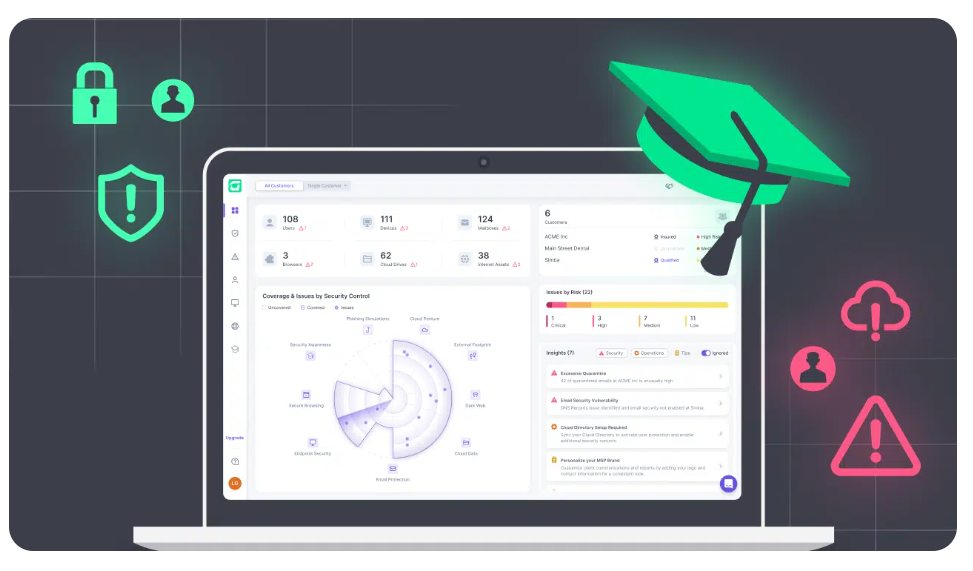
Guardz 為管理服務提供商 (MSP) 和 IT 專業人士提供一個人工智能驅動的網絡安全平台,專門設計來保護小型企業免受網絡攻擊。我們的統一檢測與響應平台能夠全面保護用戶、電子郵件、設備、雲端目錄和數據。透過簡化網絡安全管理,我們讓企業能夠專注於發展業務,同時減少安全管理的複雜性。Guardz 結合強大的網絡安全技術和豐富的專業知識,確保安全措施持續受到監控、管理和改進,預防未來的攻擊並降低風險。
關於Version 2
Version 2 Digital 是立足亞洲的增值代理商及IT開發者。公司在網絡安全、雲端、數據保護、終端設備、基礎設施、系統監控、存儲、網絡管理、商業生產力和通信產品等各個領域代理發展各種 IT 產品。透過公司龐大的網絡、通路、銷售點、分銷商及合作夥伴,Version 2 提供廣被市場讚賞的產品及服務。Version 2 的銷售網絡包括台灣、香港、澳門、中國大陸、新加坡、馬來西亞等各亞太地區,客戶來自各行各業,包括全球 1000 大跨國企業、上市公司、公用事業、醫療、金融、教育機構、政府部門、無數成功的中小企及來自亞洲各城市的消費市場客戶。
Guardz 深知 MSP 面對的獨特網絡安全挑戰。我們提供一個由 AI 驅動的平台,幫助 MSP 簡化其網絡安全工具組,從單一界面保護身份、端點、電子郵件、雲端和數據。在這個網絡安全意識月,與 Guardz 合作,讓您全面掌控網絡防護,確保萬無一失。
關於 Guardz
Guardz 為管理服務提供商 (MSP) 和 IT 專業人士提供一個人工智能驅動的網絡安全平台,專門設計來保護小型企業免受網絡攻擊。我們的統一檢測與響應平台能夠全面保護用戶、電子郵件、設備、雲端目錄和數據。透過簡化網絡安全管理,我們讓企業能夠專注於發展業務,同時減少安全管理的複雜性。Guardz 結合強大的網絡安全技術和豐富的專業知識,確保安全措施持續受到監控、管理和改進,預防未來的攻擊並降低風險。
關於Version 2
Version 2 Digital 是立足亞洲的增值代理商及IT開發者。公司在網絡安全、雲端、數據保護、終端設備、基礎設施、系統監控、存儲、網絡管理、商業生產力和通信產品等各個領域代理發展各種 IT 產品。透過公司龐大的網絡、通路、銷售點、分銷商及合作夥伴,Version 2 提供廣被市場讚賞的產品及服務。Version 2 的銷售網絡包括台灣、香港、澳門、中國大陸、新加坡、馬來西亞等各亞太地區,客戶來自各行各業,包括全球 1000 大跨國企業、上市公司、公用事業、醫療、金融、教育機構、政府部門、無數成功的中小企及來自亞洲各城市的消費市場客戶。
Imagine you’re an IT administrator at a rapidly growing tech firm. Each day, you juggle the demands of securely managing and distributing a vast array of digital content across hundreds of devices; the pressure is uncanny.
According to a recent study, the global mobile content management market, valued at USD 2.48 billion in 2022, is projected to grow at a compound annual growth rate (CAGR) of 22.2% from 2023 to 2030[1]. In such a dynamic scenario, efficient content management is not just a luxury—it’s a necessity.
Enter Scalefusion FileDock, an innovative application designed to streamline content management on Windows devices. This powerful tool extends Scalefusion’s kiosk feature set, providing a secure gateway for IT admins to upload, manage, and distribute content seamlessly from a central dashboard.
This blog will explore how FileDock revolutionizes enterprise content management, its key features, and real-world applications. Discover how this essential tool can enhance your organization’s efficiency and security in the ever-evolving modern workspace.
What is Scalefusion FileDock?
Let’s understand the core concept of Scalefusion FileDock for Windows.
FileDock’s Primary Function
Scalefusion FileDock is an enterprise application designed to enhance content management on managed Windows devices. It serves as a secure gateway, allowing IT administrators to upload, manage, and distribute content directly from the Scalefusion dashboard to managed Windows devices. By integrating seamlessly with the Scalefusion ecosystem, FileDock ensures that any content uploaded via the Windows content management module is accessible only through the FileDock app on the device, maintaining high security and control over distributed content.
Core Features
a. Secure Content Upload and Distribution
FileDock provides a secure platform for uploading various types of content, including files, folders, presentations, and multimedia. Once uploaded, content is distributed over the air directly to the devices, ensuring that all data remains secure during transmission.
b. Content Categorization
FileDock categorizes content into different types such as documents, pictures, videos, music, and others. This categorization simplifies content organization and retrieval for end-users, allowing them to quickly find and access the necessary files.
c. User-friendly Interface
The FileDock application features an intuitive interface similar to traditional file explorers. It includes:
Menu Bar: Options to sync files, view logs, and access help.
Left Panel: Lists file categories.
Main Section: Displays the list of files based on selected categories.
Toolbar: Includes search, filter, and sync options.
Status Bar: Shows the total number of items and other relevant information.
d. Advanced Security Features
FileDock enhances security by restricting content sharing, applying file expiry settings, and supporting secure content distribution protocols. Administrators can define additional locations for file storage and set specific expiry periods to ensure content is automatically removed after a certain time.
e. Remote Management Capabilities
FileDock allows IT admins to manage content remotely, making it ideal for distributed work environments. Admins can push updates, publish new content, and manage existing files without needing physical access to the devices.
f. Presentation Mode for Digital Signage
In addition to content management, FileDock can run presentations and turn Windows devices into digital signage kiosks. This feature is useful for marketing and information dissemination in public spaces.
Content Management with FileDock
Let’s discover how you can efficiently manage content with FileDock.
1. Empowering IT Administrators
FileDock revolutionizes how IT administrators manage and distribute content across multiple devices from a centralized location. Using the Scalefusion dashboard, admins can effortlessly push new content, manage existing files, and update applications on all enrolled devices. This centralized control eliminates the need for physical access, making content management efficient and seamless.
2. Streamlined Content Delivery
FileDock allows IT admins to remotely transfer files to Windows desktops. This means that whether it’s a critical information update, a company-wide policy document, or training materials, admins can ensure that all devices receive the necessary content without delay. This capability is crucial for maintaining operational consistency and ensuring all users have the latest resources.
3. Real-Time Updates
One of the standout features of FileDock is the ability to perform real-time updates. This ensures that all managed devices are always up-to-date with the latest content. The endpoint users can access required content instantly with FileDock, avoiding unwanted delays.
4. Enhanced Security Protocols
FileDock places a strong emphasis on security, incorporating advanced protocols to safeguard sensitive information. Admins can control who has access to what content, setting permissions and restrictions to prevent unauthorized sharing or viewing. This is particularly important for protecting proprietary information and ensuring that sensitive data does not fall into the wrong hands.
5. Granular Control with File Expiry
To further enhance security, FileDock allows admins to set expiry dates for files. This means that content will automatically become inaccessible after a specified period, reducing the risk of outdated or sensitive information lingering on devices. This feature is particularly useful for managing temporary projects or time-sensitive information that should not remain accessible indefinitely.
6. Customized Download Locations
IT admins can define custom locations for downloading files, providing an additional layer of control over where data is stored. This flexibility allows organizations to enforce data storage and access policies, ensuring that files are stored in secure, approved locations and reducing the risk of data breaches.
7. Comprehensive Audit Trails
FileDock also supports comprehensive logging and audit trails, enabling IT admins to track all content-related activities. This includes who accessed which files, when updates were made, and any changes to permissions or settings. These logs are invaluable for maintaining accountability and ensuring compliance with regulatory requirements.
Real-world Applications of FileDock App
Scalefusion’s FileDock app provides numerous advantages to different industries. Let’s explore them one by one.
1. Healthcare
Managing sensitive patient information and ensuring regulatory compliance is crucial in healthcare. FileDock enables healthcare providers to securely distribute and manage patient records, treatment plans, and medical imaging files. Hospitals can push updated protocols to Windows devices, ensuring staff have immediate access to the latest information, improving patient care and streamlining operations.
2. Education
Educational institutions benefit by efficiently managing and distributing content to students and faculty. Universities can push curriculum updates, lecture notes, and multimedia content directly to students’ Windows laptops and desktops, ensuring consistent access to necessary resources and enhancing the learning experience.
3. Retail
Timely and accurate information is vital in retail. FileDock enables retail chains to manage and distribute product information, training materials, and promotional content to store computers. Retailers can push new product information and training videos to store devices simultaneously, ensuring employees are well-informed and providing a consistent customer experience.
4. Vehicle Fleet Management
Real-time data and updates are essential in vehicle fleet management. FileDock helps fleet managers distribute important information such as route changes, maintenance schedules, and compliance documents to vehicles equipped with Windows tablets or laptops. This improves operational efficiency and ensures the fleet operates within regulatory guidelines.
5. Corporate Offices
Large corporations can standardize communication and content distribution. FileDock allows businesses to push corporate policies, training materials, and announcements to all Windows desktops and laptops, ensuring every employee has access to the same information. This is particularly beneficial for compliance with company policies and onboarding new employees.
The Future is Now with Scalefusion FileDock
As the business perspective evolves, staying ahead requires tools that are not just functional but transformative. Scalefusion FileDock is not just another content management solution—it’s a gateway to a more efficient, secure, and streamlined way of handling your digital content assets. Imagine a world where every file, every update, and every piece of critical information is just a click away, securely delivered to all your devices, no matter where they are.
With Scalefusion FileDock, the future of content management is not just a possibility; it’s here. Embrace the power of seamless integration, strong security, and unparalleled efficiency. Ready to revolutionize how you manage content? The next step is yours to take.
About Version 2 Digital
Version 2 Digital is one of the most dynamic IT companies in Asia. The company distributes a wide range of IT products across various areas including cyber security, cloud, data protection, end points, infrastructures, system monitoring, storage, networking, business productivity and communication products.
Through an extensive network of channels, point of sales, resellers, and partnership companies, Version 2 offers quality products and services which are highly acclaimed in the market. Its customers cover a wide spectrum which include Global 1000 enterprises, regional listed companies, different vertical industries, public utilities, Government, a vast number of successful SMEs, and consumers in various Asian cities.
About Scalefusion Scalefusion’s company DNA is built on the foundation of providing world-class customer service and making endpoint management simple and effortless for businesses globally. We prioritize the needs and feedback of our customers, making sure that they are at the forefront of all decision-making processes. We are dedicated to providing comprehensive customer support services, and place emphasis on customer-centric thinking throughout the organization.
As the digital landscape continues to evolve, organizations are increasingly adopting “Bring Your Own Device” (BYOD) policies. Allowing employees to use their personal devices for work fosters flexibility and boosts productivity. However, without a well-structured approach, BYOD can expose organizations to numerous cybersecurity risks. A strong BYOD policy is not just a set of guidelines; it’s a critical framework designed to protect sensitive data, mitigate threats, and ensure compliance. By recognizing the importance of a comprehensive BYOD policy, organizations can turn potential vulnerabilities into fortified defenses.
Understanding the Imperative for a BYOD Policy
In today’s increasingly mobile and remote working environments, the surge in BYOD adoption is both a boon and a bane for organizations. While employees relish the convenience and flexibility, these advantages are counterbalanced by heightened cybersecurity risks. Without a rigorous BYOD policy, personal devices can become conduits for cyber threats, jeopardizing organizational integrity. A well-structured BYOD policy delineates clear guidelines for device usage, data access, and security protocols, establishing a mutual understanding of responsibilities. This clarity is pivotal in fostering a culture of accountability, wherein employees recognize the gravity of protecting sensitive information. Knowing the dos and don’ts, employees are less likely to inadvertently introduce vulnerabilities, though often times employees use personal devices for work regardless of their organization’s rules or policies regarding BYOD. Furthermore, a BYOD policy acts as a strategic framework for identifying and mitigating risks specific to personal devices. Different devices, operating systems, and applications present unique threats that must be meticulously assessed. With this granular understanding, organizations can implement tailored security measures that substantially reduce the risk of breaches. Equally important is the policy’s role in harmonizing technological defenses with human behavior. An effective BYOD policy ensures that security measures are seamlessly integrated into daily operations, reinforcing the organization’s overall cybersecurity architecture. By embedding the BYOD policy into the core cybersecurity strategy, organizations can better prepare for and respond to increasingly sophisticated cyber threats, safeguarding their digital assets and operational continuity.
Mitigating Cyber Threats Through Stringent BYOD Measures
To bolster an organization’s defenses, a BYOD policy must encompass rigorous measures designed to mitigate cyber threats. Central to this strategy is the enforcement of strong authentication protocols. Mobile Device Management (MDM) solutions empower IT teams to remotely monitor, manage, and secure employee devices. 87% of companies rely on employee access to mobile business apps via personal smartphones. MDM facilitates the enforcement of encryption standards, the installation of critical security updates, and the remote wiping of data from lost or compromised devices. These capabilities are essential for ensuring that all personal devices adhere to the organization’s stringent security criteria. Equally critical is the provision of comprehensive cybersecurity training for employees. Awareness training educates staff on recognizing potential threats such as phishing attempts and malware infections, fostering a culture of vigilance and proactive defense. By equipping employees with this knowledge, organizations fortify their cybersecurity posture, leveraging human awareness as a key component of their defense strategy. Additionally, implementing endpoint protection measures, such as antivirus software and firewalls, is crucial in shielding personal devices from malware and other malicious attacks. Regular security audits and vulnerability assessments should be conducted to identify and rectify potential weak points within the BYOD framework. These stringent measures, when seamlessly integrated into a cohesive BYOD policy, create a fortified digital environment where both technological defenses and human awareness coalesce to safeguard organizational integrity against the ever-evolving landscape of cyber threats.
Aligning BYOD Policy with Cybersecurity Compliance Standards
In a regulatory environment where adherence to stringent standards is crucial, aligning a BYOD policy with prevailing cybersecurity compliance mandates is indispensable. Organizations are obligated to ensure their BYOD policies conform to rigorous frameworks such as the GDPR, HIPAA, and PCI DSS, among others. By embedding these regulatory requirements into the fabric of the BYOD policy, organizations can preemptively mitigate legal and financial risks. Key elements such as data encryption, secure access controls, and stringent authentication measures are not just best practices but often legally mandated. These components, when integrated into the BYOD policy, not only bolster security but also ensure compliance with industry-specific regulations. The dynamic nature of compliance requires that organizations adopt a continuous improvement mindset. Regular audits and evaluations of the BYOD policy are essential to maintain alignment with evolving regulatory landscapes and emerging cyber threats. This proactive stance allows organizations to stay ahead of compliance requirements while reinforcing their cybersecurity frameworks. Additionally, organizations should consider the synergies between their BYOD policies and broader cybersecurity strategies. By creating a cohesive, compliance-driven approach, organizations can achieve a unified defense mechanism that simultaneously satisfies regulatory demands and fortifies their security posture. Integrating automation into compliance processes further enhances the ability to swiftly adapt to new regulations, thereby ensuring continuous adherence without compromising operational efficiency.
Leveraging Automation in Enforcing BYOD Policies
To keep pace with the escalating sophistication of cyber threats, automation must be integral to enforcing BYOD policies. Automated solutions elevate the efficiency and efficacy of managing personal devices by providing real-time visibility into device compliance. These systems can instantly identify non-compliant devices, prompting swift corrective actions that preclude potential security breaches. Automation also enhances incident response capabilities. When a threat is detected, automated protocols can isolate affected devices, curtailing the spread of malicious activity and minimizing damage. This rapid response is crucial in maintaining organizational integrity against an ever-evolving threat landscape. Further, automating updates and security patches ensures that all devices are continuously protected against the latest vulnerabilities. This eliminates the latency inherent in manual updates, which can expose the organization to unnecessary risks. By maintaining a state of perpetual readiness, organizations not only enhance their security posture but also make optimal use of their cybersecurity budgets. The synergy between automation and BYOD policies extends to regulatory compliance as well. Automated systems can streamline adherence to various cybersecurity standards, ensuring that devices consistently meet compliance requirements. This not only reduces the administrative burden but also fortifies the organization’s defense mechanisms. Embracing automation in BYOD policy enforcement positions organizations to proactively counteract emerging threats, safeguarding their digital ecosystem while optimizing resource allocation. Factors such as the spread of 5G internet access and employee privacy concerns will affect how BYOD might change in the future.
Conclusion
A well-structured BYOD policy is essential for balancing flexibility and security in today’s digital landscape. By establishing clear guidelines, enforcing stringent security measures, and aligning with compliance standards, organizations can protect their sensitive data while fostering productivity. Automation further enhances these efforts by streamlining enforcement and response processes, ensuring that organizations remain agile in the face of evolving cyber threats. With the right BYOD strategy, businesses can turn potential vulnerabilities into opportunities for stronger, more resilient cybersecurity frameworks.
About Version 2 Digital
Version 2 Digital is one of the most dynamic IT companies in Asia. The company distributes a wide range of IT products across various areas including cyber security, cloud, data protection, end points, infrastructures, system monitoring, storage, networking, business productivity and communication products.
Through an extensive network of channels, point of sales, resellers, and partnership companies, Version 2 offers quality products and services which are highly acclaimed in the market. Its customers cover a wide spectrum which include Global 1000 enterprises, regional listed companies, different vertical industries, public utilities, Government, a vast number of successful SMEs, and consumers in various Asian cities.
About Portnox Portnox provides simple-to-deploy, operate and maintain network access control, security and visibility solutions. Portnox software can be deployed on-premises, as a cloud-delivered service, or in hybrid mode. It is agentless and vendor-agnostic, allowing organizations to maximize their existing network and cybersecurity investments. Hundreds of enterprises around the world rely on Portnox for network visibility, cybersecurity policy enforcement and regulatory compliance. The company has been recognized for its innovations by Info Security Products Guide, Cyber Security Excellence Awards, IoT Innovator Awards, Computing Security Awards, Best of Interop ITX and Cyber Defense Magazine. Portnox has offices in the U.S., Europe and Asia. For information visit http://www.portnox.com, and follow us on Twitter and LinkedIn.。
INDIANAPOLIS – September 18, 2024 — Scale Computing, a market leader in edge computing, virtualization, and hyperconverged solutions, today announced it has been recognized as a Sample Vendor in the 2024 Gartner® Hype Cycle™ for Data Center Infrastructure Technologies. We feel this acknowledgment underscores Scale Computing’s commitment to delivering innovative solutions that address the evolving needs of modern data centers.
As organizations increasingly embrace digital transformation, the demand for efficient, resilient, and sustainable data center infrastructure has never been greater. Gartner says, “By 2028, 40% of data center infrastructure will be managed through a cloud-based control plane, an increase from less than 15% in 2023. By 2028, more than 70% of enterprises will alter their data center strategies, due to limited energy supplies, a major increase from less than 5% in 2023.” The Gartner Hype Cycle report highlights the latest innovations designed to help IT leaders enhance business technology platforms and achieve these goals by devising sustainable, secure, scalable, agile, and resilient data center infrastructure at an acceptable cost.
“Scale Computing has long been dedicated to developing innovative solutions that empower businesses to meet their goals in an increasingly complex IT environment,” stated Jeff Ready, CEO and co-founder of Scale Computing. “We are honored to be recognized as a Sample Vendor in the 2024 Gartner Hype Cycle for Data Center Infrastructure Technologies, which provides a valuable framework for IT leaders to understand new technologies and their potential impact on their businesses. To us, this recognition validates our dedication to providing cutting-edge solutions that empower businesses to optimize their data center operations and drive digital innovation.”
Scale Computing Platform brings together simplicity and scalability, replacing existing infrastructure to empower enterprises to run applications and process data outside centralized data centers, at the edge of their networks, closest to where data is created and utilized. With Scale Computing Fleet Manager, the industry’s first cloud-hosted monitoring and management tool built for hyperconverged edge computing infrastructure at scale, customers can quickly identify areas of concern using a single pane of glass, scaling from 1 to over 50,000 clusters. Zero-touch provisioning enables administrators to centrally monitor and manage hundreds or thousands of distributed edge infrastructure deployments with minimal or no on-site IT personnel.
Gartner Hype Cycle reports provide a visual depiction of the maturity and adoption of applications and technologies, providing business leaders with a roadmap for understanding how these technologies are expected to evolve over time. The reports offer insights into the potential of emerging technologies within industries, allowing enterprises to assess their risk tolerance on an individual basis. IT leaders can leverage Hype Cycle reports to uncover the real drivers of a technology’s commercial promise, reduce the risk of technology investment decisions, and assess a technology’s business value objectively based on data from experienced IT analysts. The latest report covers the five phases in the Hype Cycle: Technology Trigger, Peak of Inflated Expectations, Trough of Disillusionment, Slope of Enlightenment, and Plateau of Productivity.
For complimentary access to the 2024 Gartner Hype Cycle for Data Center Infrastructure Technologies and to read the thoughts and expertise of the Gartner analysts who authored the report, visit the Scale Computing website.
Gartner, Hype Cycle for Data Center Infrastructure, by Henrique Cecci, Philip Dawson, 27 June 2024.
GARTNER is a registered trademark and service mark, and HYPE CYCLE is a registered trademark of Gartner, Inc. and/or its affiliates in the U.S. and internationally and are used herein with permission. All rights reserved. Gartner does not endorse any vendor, product or service depicted in its research publications and does not advise technology users to select only those vendors with the highest ratings or other designation. Gartner research publications consist of the opinions of Gartner’s research organization and should not be construed as statements of fact. Gartner disclaims all warranties, expressed or implied, with respect to this research, including any warranties of merchantability or fitness for a particular purpose.
About Version 2 Digital
Version 2 Digital is one of the most dynamic IT companies in Asia. The company distributes a wide range of IT products across various areas including cyber security, cloud, data protection, end points, infrastructures, system monitoring, storage, networking, business productivity and communication products.
Through an extensive network of channels, point of sales, resellers, and partnership companies, Version 2 offers quality products and services which are highly acclaimed in the market. Its customers cover a wide spectrum which include Global 1000 enterprises, regional listed companies, different vertical industries, public utilities, Government, a vast number of successful SMEs, and consumers in various Asian cities.
About Scale Computing Scale Computing is a leader in edge computing, virtualization, and hyperconverged solutions. Scale Computing HC3 software eliminates the need for traditional virtualization software, disaster recovery software, servers, and shared storage, replacing these with a fully integrated, highly available system for running applications. Using patented HyperCore™ technology, the HC3 self-healing platform automatically identifies, mitigates, and corrects infrastructure problems in real-time, enabling applications to achieve maximum uptime. When ease-of-use, high availability, and TCO matter, Scale Computing HC3 is the ideal infrastructure platform. Read what our customers have to say on Gartner Peer Insights, Spiceworks, TechValidate and TrustRadius.