The year was 2023 — three years after the pandemic started (and came close to an end), yet 75% of global workers were fully convinced remote work was the new normal. But what’s the actual status of remote work, and what perspectives does it have?
The pandemic became a massive sandbox that proved people don’t necessarily need to be nurtured by the office culture to be productive.
Workers argue that flexibility is their right whether they prefer to work in the best countries for remote work, like Germany, Denmark, the US, or any other location of their choice if the job is completed as requested. Management counters with the importance of organizational environment and team bond effectiveness created only by the presence in the office.
Both sides have their points, so what’s next — will we return to an on-site-only setup or transition to fully remote? Will more companies compromise on hybrid work after all? Let’s see where the remote work projections are guiding us.
How new is the ‘new normal’ of remote work?
It would be incorrect to say that remote work didn’t exist before 2020. Freelancers were the pioneers of working online — an adventurous and free-spirited career path. Before the pandemic, 2,9% of ‘teleworkers’ globally were exclusively working remotely. For instance, in the US market, only 6% had never worked in any kind of remote work setup.
The scope of work from home mainly spiked because of a safety measure to prevent virus spread. Even though the alertness settled and life started returning to normal, in 2022, at least occasional remote workers reached 62% globally.
According to Gallup research results, only 2 out of 10 people returned to the old routine — entirely on-site jobs. Meanwhile, the rest of 8 out of 10 employees are split between remote and hybrid work arrangements in the US.


The discussion mainly circles whether employees want to work exclusively remotely (49%) or want to share their time between home and the office (46%). Yet the same research reveals that only 6% of employees see the ideal work environment exclusively on-site.
Remote work tendency: to increase or decrease?
The swing in the longevity of time spent at home before and after the pandemic compares drastically. Let’s fact-check.
According to Statista, remote work in the US before the 2020s was a relatively rare yet existing event, occurring 1-2 times per week. However, 3-4 and 5+ days of work from home per week in the post-pandemic period replaced the then-popular 1-2 days/week work from home.
Talking numbers, the remote workforce reached 53%, and the pool of employees that never worked from home decreased by 13% after COVID-19.


The data of the US-based respondents reflects the increasing trend of staying at home rather than working from the office.
2020 was the rush-hour year, so comparing the difference jump from 2019 to 2021, the number remains increasing as the amount of remote workers has tripled. If we take data from 2018-2021, the fully remote workforce grew four times bigger.
How has remote work escalated in Europe? The growing tendency of remote work in European countries is also significant.
Eurostat data from 2019-2021 illustrates the increasing number of employed people spending more and more time working from home. The average of EU Member States climbed from
14,6% WFH sometimes or usually* in 2019,
20,9% WFH sometimes or usually in 2020 to
24,4% WFH sometimes or usually in 2021.
In 2021, the usually only working individuals made just a little less than sometimes or usually in 2019 — 13% in contrast to 14,6%. Note that ’usually’ refers to at least half of the work days spent working from home in a reference period of 4 weeks.


The shift is evident in both the US and Europe — remotes were quick to adapt to the circumstances and increasingly function between the office and home, identifying as remote workers.
Let’s not forget that the covid-era introduced a new work-life cultural concept, ‘workation,’ that combines working and vacationing simultaneously. Therefore, it’s challenging to believe that trend swing will take the working world back to the close-to-none remote setup.
Remote work perspective
It’s worth defining the happy medium for understanding remote work. There are different opinions — for some, it’s home-only; for others — home-never. A hybrid work setup seems acceptable for most organizations and employees that can apply non-site work arrangements.
The perspective of hybrid model growth should double from 42% in 2021 to 81% in 2024, according to AT&T findings. The forecast predicts almost one in four Americans will work remotely by 2025.


The prediction is supported by the forecast of conferencing software (like Teams, Zoom, or Google Meet) market growth — in 2021, it reached $14.6 billion worth, and in 2026 is expected to reach as high as $27.3 billion worth. The growing demand shows the need to communicate remotely in the future.
Hybrid work influencing factors
What are the influencing factors for hybrid work escalations — is it just the peer pressure of employees? 83% of professionals say they would decline a job offer without offering flexible work options, according to International Working Group.
Expectations are high as almost everyone (97%) expects organizations to be flexible regarding the work environment. FlexJob indicates that more than half (57%) of organization members would change jobs if they weren’t allowed to work hybrid. After all, 77% of employees see flexibility as the second most important factor after salary in their employment.


The reasoning behind it can be based on preference to save time on commuting, make Mondays less anxious without knowing you must show up in the office at 8 AM, or work from a different city or country.
Productivity and engagement in remote work
Hybrid or remote work help achieve a better work-life balance that resolves into a positive chain reaction. Employees and organizations notice that staff is exposed to less stress, leading to workers being more present and engaged despite online environments.


It proves that hybrid work isn’t entirely a one-way road. At first, being unavailable to observe employees’ activity on-site might have needed convincing the management of the hybrid work benefits.
According to Zippia’s Remote Work Statistics report, 32.2% of managers agree that productivity has increased after the 2020 remote work shift. Generally, 68% of organizations say there’s been an improvement in employee productivity since the remote work arrangements.
Return or not to return?
The determination to work remotely is clear for most of the employees. Besides the long list of benefits the workers learned by heart, 20% of the workforce who vouch for flexibility would agree to give up vacation time over office-defined work.
The worth of remote work can be calculated more precisely — a typical organization saves an average of $11,000 per employee yearly if the employee spends half of the working time outside the office.


Saving funds and time open more personal, team, and company opportunities. Organizations have a better chance to scale globally. It brings us to a solution to a raging issue of limited talent pool companies struggle with significantly.
Talent and remote work
Knowledge workers are in high demand to cover the growing need for professionals in all industries. According to Uplers’ research, 69% of companies face a shortage of skilled talent, and geographic limitations are one of the leading factors reserving the reach of the potential talent pool.


According to the Upwork study, companies with remote or hybrid work policies appear to be less negatively impacted by talent shortage — only every third of such organizations see a limited talent pool as a challenge. Half of the knowledge workers who provide computer programing, IT, marketing, and business consulting services to companies are freelancers.
Regarding company size, large companies tend to have a higher demand for talent that turns over with more noticeable talent shortages compared to small or medium-sized companies.
According to Manpower data, 64% of small companies (10-49 employees) struggle to find the right profile workers, while 72% of medium-sized companies (50-249 employees) and 74% of large enterprises (250+ employees) are impacted by a deficiency of skilled professionals.
Remote work by industry
Technological advancements and flexibility allow companies of various industries to adopt hybrid work for its benefit. It’s noticeable that consulting-type services are quicker to move to telecommute. The trend can be justified by the opportunities to unlock markets worldwide, streamline the workload, and better prepare for modern technological setups.


Taking hybrid work through the industry axis, IT is the leading industry to adopt remote work. Finance, customer service, healthcare, marketing, education, and sales industries are primary areas to explore and utilize the benefits of the remote workforce.
Remote work and security
The massive migration to remote work during the pandemic was kick-started for safety reasons. However, home offices opened gaps for cybersecurity vulnerabilities that many companies weren’t exposed to before.
According to Statista, cyberattacks are one of the major risks concerning organizations. Cyber threats increased exponentially with the growing number of unprotected home networks and distributed teams.


The other top risks on the list include human error, cloud computing vulnerabilities, mobile device security, and loss of corporate data and information, as the concerns of organizations in Europe and the US.
Securing hybrid environments
Many organizations proved flexible in times of change — growing cyberattacks and risks were repulsed with security and hybrid work-adapted business solutions. Transitioning to cloud environments allow companies not only to enable remote workers but implement hybrid infrastructure models to support new ways of working.
Circumstances determined businesses’ push to improve network security even though upgrading existing legacy architectures wasn’t in the strategy.
During the later years, evolved Zero Trust security models now define modern remote access and cybersecurity standard. A combination of cloud application security, endpoint protection, and identity management solutions helps protect company assets and users effectively from potential vulnerabilities imposed by remote and hybrid work.
These days, cybercrime is rampant. It’s no longer a matter of “if” you’re going to suffer an attack but “when” it will happen. All companies want to be ready for any crisis. And this is where a business continuity plan comes into play.
But what is a business continuity plan exactly? Why is it important? What should one include? Today, we’re exploring all these questions in-depth.
What is a business continuity plan?
A business continuity plan (BCP) is a document that sets guidelines for how an organization will continue its operations in the event of a disruption, whether it’s a fire, flood, other natural disaster or a cybersecurity incident. A BCP aims to help organizations resume operations without significant downtime.
Unfortunately, according to a 2020 Mercer survey, 51% of businesses across the globe don’t have a business continuity plan in place.
What’s the difference between business continuity and disaster recovery plans?
We often confuse the terms business continuity plan and disaster recovery plan. The two overlap and often work together, but the disaster recovery plan focuses on containing, examining, and restoring operations after a cyber incident. On the other hand, BCP is a broader concept that considers the whole organization. A business continuity plan helps organizations stay prepared for dealing with a potential crisis and usually encompasses a disaster recovery plan.
Importance of business continuity planning
The number of news headlines announcing data breaches has numbed us to the fact that cybercrime is very real and frequent and poses an existential risk to companies of all sizes and industries.
Consider that in 2021, approximately 37% of global organizations fell victim to a ransomware attack. Then consider that business interruption and restoration costs account for 50% of cyberattack-related losses. Finally, take into account that most cyberattacks are financially motivated and the global cost of cybercrime topped $6 trillion last year. The picture is quite clear — cybercrime is a lucrative venture for bad actors and potentially disastrous for those on the receiving end.
To thrive in these unpredictable times, organizations go beyond conventional security measures. Many companies develop a business continuity plan parallel to secure infrastructure and consider the plan a critical part of the security ecosystem. The Purpose of a business continuity plan is to significantly reduce the downtime in an emergency and, in turn, reduce the potential reputational damage and — of course — revenue losses.
Business continuity plan template
Password security for your business
Store, manage and share passwords.
30-day money-back guarantee
Business Continuity Plan Example
[Company Name]
[Date]
I. Introduction
Purpose of the Plan
Scope of the Plan
Budget
Timeline
The initial stage of developing a business continuity plan starts with a statement of the plan’s purpose, which explains the main objective of the plan, such as ensuring the organization’s ability to continue its operations during and after a disruptive event.
The Scope of the Plan outlines the areas or functions that the plan will cover, including business processes, personnel, equipment, and technology.
The Budget specifies the estimated financial resources required to implement and maintain the BCP. It includes costs related to technology, personnel, equipment, training, and other necessary expenses.
The Timeline provides a detailed schedule for developing, implementing, testing, and updating the BCP.
II. Risk Assessment
Identification of Risks
Prioritization of Risks
Mitigation Strategies
The Risk Assessment section of a Business Continuity Plan (BCP) is an essential part of the plan that identifies potential risks that could disrupt an organization’s critical functions.
The Identification of Risks involves identifying potential threats to the organization, such cybersecurity breaches, supply chain disruptions, power outages, and other potential risks. This step is critical to understand the risks and their potential impact on the organization.
Once the risks have been identified, the Prioritization of Risks follows, which helps determine which risks require the most attention and resources.
The final step in the Risk Assessment section is developing Mitigation Strategies to minimize the impact of identified risks. Mitigation strategies may include preventative measures, such as system redundancies, data backups, cybersecurity measures, as well as response and recovery measures, such as emergency protocols and employee training.
III. Emergency Response
Emergency Response Team
Communication Plan
Emergency Procedures
This section of the plan focuses on immediate actions that should be taken to ensure the safety and well-being of employees and minimize the impact of the event on the organization’s operations.
The Emergency Response Team is responsible for managing the response to an emergency or disaster situation. This team should be composed of individuals who are trained in emergency response procedures and can act quickly and decisively during an emergency. The team should also include a designated leader who is responsible for coordinating the emergency response efforts.
The Communication Plan outlines how information will be disseminated during an emergency situation. It includes contact information for employees, stakeholders, and emergency response personnel, as well as protocols for communicating with these individuals.
The Emergency Procedures detail the steps that should be taken during an emergency or disaster situation. The emergency procedures should be developed based on the potential risks identified in the Risk Assessment section and should be tested regularly to ensure that they are effective.
IV. Business Impact Analysis
The Business Impact Analysis (BIA) section of a Business Continuity Plan (BCP) is a critical step in identifying the potential impact of a disruption to an organization’s critical operations.
The Business Impact Analysis is typically conducted by a team of individuals who understand the organization’s critical functions and can assess the potential impact of a disruption to those functions. The team may include representatives from various departments, including finance, operations, IT, and human resources.
V. Recovery and Restoration
Procedures for recovery and restoration of critical processes
Prioritization of recovery efforts
Establishment of recovery time objectives
The Recovery and Restoration section of a Business Continuity Plan (BCP) outlines the procedures for recovering and restoring critical processes and functions following a disruption.
The Procedures for recovery and restoration of critical processes describe the steps required to restore critical processes and functions following a disruption. This may include steps such as relocating to alternate facilities, restoring data and systems, and re-establishing key business relationships.
The Prioritization section of the plan identifies the order in which critical processes will be restored, based on their importance to the organization’s operations and overall mission.
Recovery time objectives (RTOs) define the maximum amount of time that critical processes and functions can be unavailable following a disruption. Establishing RTOs ensures that recovery efforts are focused on restoring critical functions within a specific timeframe.
VI. Plan Activation
Plan Activation Procedures
The Plan Activation section is critical in ensuring that an organization can quickly and effectively activate the plan and respond to a potential emergency.
The Plan Activation Procedures describe the steps required to activate the BCP in response to a disruption. The procedures should be clear and concise, with specific instructions for each step to ensure a prompt and effective response.
VII. Testing and Maintenance
Testing Procedures
Maintenance Procedures
Review and Update Procedures
This section of the plan is critical to ensure that an organization can effectively respond to disruptions and quickly resume its essential functions.
Testing procedures may include scenarios such as natural disasters, cyber-attacks, and other potential risks. The testing procedures should include clear objectives, testing scenarios, roles and responsibilities, and evaluation criteria to assess the effectiveness of the plan.
The Maintenance Procedures detail the steps necessary to keep the BCP up-to-date and relevant.
The Review and Update Procedures describe how the BCP will be reviewed and updated regularly to ensure its continued effectiveness. This may involve conducting a review of the plan on a regular basis or after significant changes to the organization’s operations or threats.
What should a business continuity plan checklist include?
Organizations looking to develop a BCP have more than a few things to think through and consider. Variables such as the size of the organization, its IT infrastructure, personnel, and resources all play a significant role in developing a continuity plan. Remember, each crisis is different, and each organization will have a view on handling it according to all the variables in play. However, all business continuity plans will include a few elements in one way or another.
Clearly defined areas of responsibility
A BCP should define specific roles and responsibilities for cases of emergency. Detail who is responsible for what tasks and clarify what course of action a person in a specific position should take. Clearly defined roles and responsibilities in an emergency event allow you to act quickly and decisively and minimize potential damage.
Crisis communication plan
In an emergency, communication is vital. It is the determining factor when it comes to crisis handling. For communication to be effective, it is critical to establish clear communication pipelines. Furthermore, it is crucial to understand that alternative communication channels should not be overlooked and outlined in a business continuity plan.
Recovery teams
A recovery team is a collective of different professionals who ensure that business operations are restored as soon as possible after the organization confronts a crisis.
Alternative site of operations
Today, when we think of an incident in a business environment, we usually think of something related to cybersecurity. However, as discussed earlier, a BCP covers many possible disasters. In a natural disaster, determine potential alternate sites where the company could continue to operate.
Backup power and data backups
Whether a cyber event or a real-life physical event, ensuring that you have access to power is crucial if you wish to continue operations. In a BCP, you can often come across lists of alternative power sources such as generators, where such tools are located, and who should oversee them. The same applies to data. Regularly scheduled data backups can significantly reduce potential losses incurred by a crisis event.
Recovery guidelines
If a crisis is significant, a comprehensive business continuity plan usually includes detailed guidelines on how the recovery process will be carried out.
Business continuity planning steps
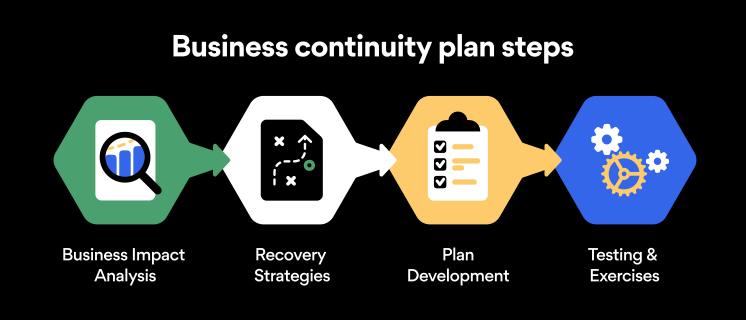
Here are some general guidelines that an organization looking to develop a BCP should consider:
Analysis
A business continuity plan should include an in-depth analysis of everything that could negatively affect the overall organizational infrastructure and operations. Assessing different levels of risk should also be a part of the analysis phase.
Design and development
Once you have a clear overview of potential risks your company could face, start developing a plan. Create a draft and reassess it to see if it takes into account even the smallest of details.
Implementation
Implement BCP within the organization by providing training sessions for the staff to get familiar with the plan. Getting everyone on the same page regarding crisis management is critical.
Testing
Rigorously test the plan. Play out a variety of scenarios in training sessions to learn the overall effectiveness of the continuity plan. By doing so, everyone on the team will be closely familiar with the business continuity plan’s guidelines.
Maintenance and updating
Because the threat landscape constantly changes and evolves, you should regularly reassess your BCP and take steps to update it. By making your continuity plan in tune with the times, you will be able to stay a step ahead of a crisis.
Level up your company’s security with NordPass Business
A comprehensive business continuity plan is vital for the entire organization’s security posture. However, in a perfect world, you wouldn’t have to use it. This is where NordPass Business can help.
Remember, weak, reused, or compromised passwords are often cited as one of the top contributing factors in data breaches. It’s not surprising, considering that an average user has around 100 passwords. Password fatigue is real and significantly affects how people treat their credentials. NordPass Business counters these issues.
With NordPass Business, your team will have a single secure place to store all work-related passwords, credit cards, and other sensitive information. Accessing all the data stored in NordPass is quick and easy, which allows your employees not to be distracted by the task of finding the correct passwords for the correct account.
In cyber incidents, NordPass Business ensures that company credentials remain secure at all times. Everything stored in the NordPass vault is secured with advanced encryption algorithms, which would take hundreds of years to brute force.
If you are interested in learning more about NordPass Business and how it can fortify corporate security, do not hesitate to book a demo with our representative.