
Skip to content

How to Find the Best Linux Distro for Your Organization

“What’s the best Linux distro?”

A better question to ask: “Which Linux distro can meet my business’s needs now and as we scale?”

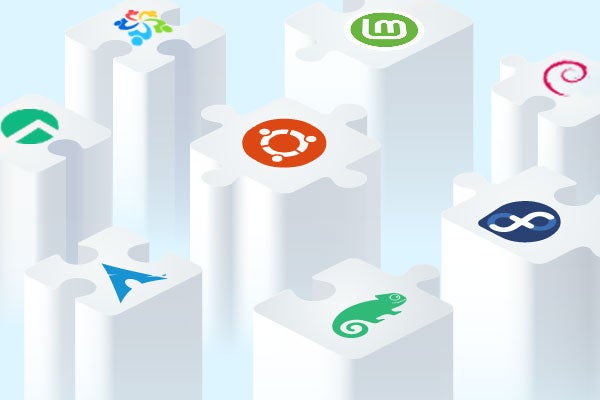
Now that CentOS Linux has reached end of life, the playing field has widened, with several viable alternatives. This blog gives an overview of the post-CentOS EOL Linux landscape, comparing the most popular Enterprise Linux distributions and highlighting key differentiators. As you read, keep in mind your own team’s bandwidth and expertise with managing Linux infrastructure as you’re evaluating factors like cost, stability, and security.

As those in the process of migrating off CentOS know all too well, longevity is important, too. Confidence in the project’s direction, the strength of the community, governance model (i.e. how much control a for-profit corporation has) — these are all considerations that could (and should) influence which open source Linux distro is the right fit for your organization.


Types of Open Source Linux Distributions

Linux distros are a combination of the open source Linux kernel and a suite of supporting software that facilitates the development and operation of applications. Open source communities make decisions about which packages to include based on the use cases they want to prioritize. A Linux distribution designed for desktop, for example, might include tools like media players and UI customizability features. Enterprise Linux distros, on the other hand, focus more on security, stability, and speed to optimize performance for mission-critical applications.

There are a few different ways to categorize open source Linux distros. You can bucket them according to who manages the project (a community or a commercial entity), the release model (rolling or fixed), or the upstream source (e.g. Fedora, Debian).


Community vs. Commercial

The difference between community vs. commercial open source Linux distributions is that community-backed Linux distributions are free to use and supported by a community made up of individual contributors. These volunteers dedicate time and expertise to maintain the project and commit to releasing security updates, bug fixes, and new versions.

Commercial Enterprise Linux distributions are sold by software vendors who build their product from open source components and packages and require a paid subscription. The distro itself is functionally identical to the community version, but users have access to technical support, and often some proprietary enterprise features/tooling.


Rolling Release vs. Fixed Release

Rolling release means that updates and new features are continuously and incrementally released instead of bundled into versions that are released on a fixed schedule. Frequent updates to the Linux kernel, libraries, utilities, or any package are released as soon as they are ready without waiting for a defined release date. Typically, rolling release Linux distros do not require users to perform large-scale version upgrades because of this “steady drip” of updates. Issues, bugs, and vulnerabilities can be identified and resolved more rapidly compared to fixed, or regular, release distros.

Rolling release distros appeal to those who prioritize having the latest software and features over stability. However, they require users to stay proactive in system maintenance and be prepared to address issues that arise due to the constant stream of updates. Rolling release models can often lead to conflicts between different software versions as no testing is done to validate that different software interoperates correctly; sometimes new features in a new package release can also lead to subtle behavior differences that cause application breakage. As such, many organizations prefer fixed release models for their business critical applications.


Upstream Source

There are distros derived from Fedora, RHEL (which itself comes from Fedora), Debian, SUSE, and more. Each ecosystem has strengths, and preference here might come down to what your team is accustomed to and other considerations (for instance, if you are already an Oracle customer, Oracle Linux might make more sense than if you are not).

Now let’s take a closer look at some of the distributions themselves, grouping them by their upstream source and starting with Fedora.

Note: Asterisks denote that the distribution is currently supported by OpenLogic. 

Fedora and RHEL-Based Linux Distros

Fedora*

Fedora is a popular, community-backed Linux distro known for its emphasis on new features and technologies, and open source collaboration. It aims to provide a platform for both desktop and server users, offering the latest software while maintaining a balance between innovation and stability. Fedora users appreciate staying on the forefront of technology, contributing to open source projects, and experimenting with the latest software innovations. Fedora typically releases two new versions a year, one in the spring and one in the fall.


CentOS Stream*

CentOS Stream is referred to as the “rolling preview” on which RHEL releases are based. It is the bridge between Fedora and RHEL, using the same source code Red Hat uses to produce the next version of RHEL. The current version is CentOS Stream 10 and precedes RHEL 10 (and downstream RHEL distros like Rocky Linux and AlmaLinux).

Picking CentOS Stream comes down to your preferences for your overall Linux ecosystem. Everything that you expect inside a RHEL/CentOS ecosystem, such as package manager and virtualization options, will still be available to you in Stream, and you’ll receive bug fixes and security patches on a faster schedule than on CentOS Linux. If you’re on the fence about the rolling release route and not sure your organization is ready, this CentOS Stream migration checklist is a good resource.


Red Hat Enterprise Linux (RHEL)

RHEL is a well-established commercial Enterprise Linux distro known for its stability, long-term support, and comprehensive ecosystem. It offers various editions tailored for different workloads and environments, such as servers, cloud, and container deployments. RHEL is built off of snapshots of CentOS Stream, freezing all software versions to those in the snapshot, and only applying security fixes going forward from that release version. This is what gives it stability and security.

Red Hat, now owned by IBM, provides support for RHEL customers, but the license cost and annual fees may be prohibitively expensive for some organizations. As with any commercial software, there is a greater risk of vendor lock-in as well.


CentOS Linux (Discontinued)*

Much to the community’s surprise (and dismay), CentOS 8 was prematurely sunsetted in 2021 just two years after its release and CentOS 7 reached end of life in 2024. Red Hat, who then controlled the project, announced the end of CentOS Linux as part of their decision to focus more on CentOS Stream. This led to the creation of new distros derived from the RHEL source code, most notably Rocky Linux and AlmaLinux, to replace CentOS Linux.

Migrating and decommissioning environments can take months (or even years), so CentOS long-term support is one option for businesses that need more time to evaluate other distros and transition their EOL CentOS deployments.


Rocky Linux*

Rocky Linux is a community-supported Linux distro created by one of the founders of CentOS and one of the most popular CentOS alternatives. Promising bug-for-bug compatibility with RHEL, Rocky Linux aims to provide a stable, reliable, and compatible platform for organizations and users who were previously relying on CentOS for their server infrastructure.

Related Blog >>Comparing Rocky Linux vs. RHEL


AlmaLinux*

Like Rocky Linux, AlmaLinux is a community-backed, open source Linux distro launched in response to the CentOS Linux project being discontinued. AlmaLinux is binary-compatible with RHEL, meaning that applications will run on AlmaLinux as seamlessly as in RHEL.


Oracle Linux*

Oracle Linux is packaged and distributed by Oracle, and is another binary-compatible rebuild of RHEL’s RPMs. Oracle Linux is tested and optimized to work well with Oracle’s other software offerings, making it a suitable choice for running Oracle databases and other application workloads. Some worry that eventually Oracle might start charging for Oracle Linux (like they did with OracleJDK in 2019), but as of now, it is free and at a price point similar to RHEL, you can purchase SLA-backed commercial support.

Get the Decision Maker’s Guide to Enterprise Linux

In this complete guide to the Enterprise Linux landscape, our experts present insights and analysis on 20 of the top Enterprise Linux distributions — with a full comparison matrix and battlecards.

Download for Free

Debian-Based Linux Distributions


Debian Linux*

Debian is known for its commitment to open source principles, stability, and extensive package management system. It serves as the foundation for various other Linux distros such as Ubuntu and Linux Mint. Debian is widely used in both desktop and server environments. It is a popular choice for users seeking a reliable and customizable Linux distro for a wide range of applications and use cases, including embedded systems.


Debian Testing

Debian also has a testing branch, similar to a beta version, which is an intermediary stage between Debian’s unstable and stable branches. The testing branch is intended for users who want a balance between access to newer software and a relatively stable system. Debian Testing gets new features and fixes before the stable Debian release so there might be issues to troubleshoot in exchange for access to the latest and greatest features, some of which make their way into the stable Debian release.


Ubuntu Community Edition*

Often referred to as simply “Ubuntu,” this distro is widely used due to its user-friendly experience, robust software ecosystem, and active community support. It is a solid choice for both desktop and server Linux, and enterprise use. Like Debian, Ubuntu also uses the apt ecosystem for package management and many AI-related packages are included in the distro.


Ubuntu Pro

Ubuntu Pro is the commercialized version of Ubuntu known for its ease of use, regular updates, and compatibility with cloud environments. There are versions optimized for different environments, such as Ubuntu Desktop, Ubuntu Server, Ubuntu for IoT, and Ubuntu Cloud. Ubuntu attracts front-end developers with easy-to-use features and a slew of programming resources, including AI libraries.


Linux Mint

Linux Mint strives to provide a stable, user-friendly experience for both Linux newcomers and experienced users. It is based on Ubuntu and Debian, building upon their foundations while adding additional features and design elements. Linux Mint emphasizes convenience and provides a traditional desktop experience with a lot of customization options. It also was designed to help Windows users seamlessly transition to a Linux OS.

SUSE Distributions

OpenSUSE Leap*

OpenSUSE Leap is a community-driven distro that combines the stability of a fixed release model with the availability of up-to-date software packages. It provides a reliable and user-friendly operating system for both desktop and server environments. OpenSUSE is generally considered to be stable for production use, and those familiar with the SLES, SUSE, and Slackware ecosystem will feel comfortable in this environment. OpenSUSE focuses on deployment simplicity, user-friendly toolchain, and cloud-readiness.


OpenSUSE Tumbleweed*

Tumbleweed is the OpenSUSE community’s rolling release distro. Just as in CentOS Stream, bug fixes and security patches come earlier than in OpenSUSE Leap, the regular release distro, but there also could be some features that are not quite ready for primetime. Tumbleweed supports a wide range of desktop environments, software libraries, and tools.


SUSE Linux Enterprise Server (SLES)

SLES is the commercial counterpart to the OpenSUSE Linux distros and is backed by SUSE, a German-based multinational enterprise. It is an enterprise-focused distribution with a strong emphasis on reliability, scalability, and high-performance computing. It offers features like Systemd, Btrfs, and containers support, making it suitable for various server and virtual environments.

Other Open Source Linux Distributions


Arch Linux

Arch Linux is a rolling, lightweight Linux distro that is highly customizable and emphasizes simplicity, minimalism, and a DIY approach. It is a better fit for experienced Linux users who want to build a tailored and efficient OS environment according to their specific needs. Its rolling release model provides continuous updates to the latest software packages and features without the need for major version upgrades. Arch Linux is popular among developers and Linux enthusiasts (aka “power users”) who enjoy experimenting with and fine-tuning their Linux system.


Alpine Linux

Alpine Linux is a security-oriented lightweight Linux distro designed for resource efficiency and containerization. It is known for its small footprint, speed, and focus on security measures. Alpine Linux is often used in scenarios where size and security are critical, such as in containers, IoT devices, and embedded systems. Alpine Linux is particularly suitable for scenarios where fast boot times, small memory usage, and strong security are required.


Amazon Linux

Amazon Linux is AWS’s Linux distro intended for use in Amazon Elastic Compute Cloud environments (EC2). It is offered as pre-configured Amazon Machines Images (AMI) ready to use in AWS. Originally built from RHEL, the distro is now derived from CentOS Stream, and the source code is publicly available and distributed under open source licenses.

Final Thoughts

Hopefully it is clear by now that choosing the best Linux distro for your organization will likely take some time and research. Considering what each offering can help your business achieve, and where you might find friction in implementation is key to succeeding with your next open source Linux distro. Make sure you think about intended use cases, the skills required, and learning curve. Tooling (such as package management) is important to evaluate, along with ecosystem, compatibility, and vendor lock-in risk.

One way to avoid vendor lock-in but still get the security and support you need is to partner with a third party like OpenLogic. Our Enterprise Linux support is guaranteed by SLAs and every ticket is handled by an Enterprise Architect with at least 15 years of Linux experience. We also offer migration services – from consulting to executing the migration itself.

Editor’s Note: This blog was originally published in January 2021. It was updated in February 2025 to reflect changes in the open source Enterprise Linux landscape.

Looking For Migration Services or Support?

OpenLogic offers CentOS migration services and technical support, backed by SLAs, for AlmaLinux, Rocky Linux, CentOS Stream, Ubuntu, Debian, Oracle Linux, and more. Talk to an expert today to get started.

Talk to an Expert  See Datasheet

 

About Perforce
The best run DevOps teams in the world choose Perforce. Perforce products are purpose-built to develop, build and maintain high-stakes applications. Companies can finally manage complexity, achieve speed without compromise, improve security and compliance, and run their DevOps toolchains with full integrity. With a global footprint spanning more than 80 countries and including over 75% of the Fortune 100, Perforce is trusted by the world’s leading brands to deliver solutions to even the toughest challenges. Accelerate technology delivery, with no shortcuts.

About Version 2 Digital

Version 2 Digital is one of the most dynamic IT companies in Asia. The company distributes a wide range of IT products across various areas including cyber security, cloud, data protection, end points, infrastructures, system monitoring, storage, networking, business productivity and communication products.

Through an extensive network of channels, point of sales, resellers, and partnership companies, Version 2 offers quality products and services which are highly acclaimed in the market. Its customers cover a wide spectrum which include Global 1000 enterprises, regional listed companies, different vertical industries, public utilities, Government, a vast number of successful SMEs, and consumers in various Asian cities.

Open Source Big Data Infrastructure: Key Technologies for Data Storage, Mining, and Visualization

Big Data infrastructure refers to the systems (hardware, software, network components) and processes that enable the collection, management, and analysis of massive datasets. Companies that handle large volumes of data constantly coming in from multiple sources often rely on open source Big Data frameworks (i.e. Hadoop, Spark), databases (i.e. Cassandra), and stream processing platforms (i.e. Kafka) as the foundation of their Big Data infrastructure.

In this blog, we’ll explore some of the most commonly used technologies and methods for data storage, processing, mining, and visualization in an open source Big Data stack. 

Data Storage and Processing

The primary purpose of Big Data storage is to successfully store vast amounts of data for future analysis and use. A scalable architecture that allows businesses to collect, manage, and analyze immense sets of data in real-time is essential. 


Big Data storage solutions are designed to address the speed, volume, and complexity of large datasets. Examples include data lakes, warehouses, and pipelines, all of which which can exist in the cloud, on-premises, or in an off-site physical location (which is referred to as colocation storage).

Data Lakes

Data lakes are centralized storage solutions that process and secure data in its native format without size limitations. They can enable different forms of smart analytics, such as machine learning and visualizations.

Data Warehouses

Data warehouses aggregate datasets from different sources into a single storage unit for robust analysis, data mining, AI, and more. Unlike a data lake, data warehouses have a three-tier structure for storing data.

Data Pipelines

Data pipelines gather raw data from one or more sources, potentially merge and transform it in some way, and then transport it to another location, such as lakes or warehouses.

Related Technologies

No matter where data is stored, at the heart of any Big Data stack is the processing framework. One prominent open source example is Apache Hadoop, which allows for the distributed processing of large datasets across clusters of computers. Hadoop has been around for a long time, but is still popular especially for non-cloud-based solutions. It can be seamlessly coupled with other open source data technologies like Hive or HBase for a more comprehensive implementation to meet business requirements. 

Data Mining

Data mining is defined as the process of filtering, sorting, and classifying data from large datasets to reveal patterns and relationships, which helps enterprises identify and solve complex business problems through data analysis. 

Machine learning (ML), artificial intelligence (AI), and statistical analysis are the crucial data mining elements that are necessary to scrutinize, sort, and prepare data for deeper analysis. Top ML algorithms and AI tools have enabled the easy mining of massive datasets, including customer data, transactional records, and even log files picked up from sensors, actuators, IoT devices, mobile apps, and servers.


Every data science application demands a different data mining approach. Pattern recognition and anomaly detection are two of the most well-known and both employ a combination of techniques to mine data.Let’s look at some of the fundamental data mining techniques commonly used across industry verticals.


Association Rule

The association rule refers to the if-then statements that establish correlations and relationships between two or more data items. The correlations are evaluated using support and confidence metrics, where support determines the frequency of occurrence of data items within the dataset, and confidence relates to the accuracy of if-then statements.

For example, while tracking a customer’s behavior when purchasing online items, an observation is made that the customer generally buys cookies when purchasing a coffee pack. In such a case, the association rule establishes the relation between two items (cookies and coffee packs), and forecasts future buys whenever the customer adds the coffee pack to the shopping cart.


Classification

The classification data mining technique classifies data items within a dataset into different categories. For example, vehiclescan be grouped into different categories, such as sedan, hatchback, petrol, diesel, electric, etc., based on attributes such as the vehicle’s shape, wheel type, or even number of seats. When a new vehicle arrives, it can be categorized into various classes depending on the identified vehicle attributes. The same classification strategy can be applied to categorize customers based on factors like age, address, purchase history, and social group.


Clustering

Clustering data mining techniques group data elements into clusters that share common characteristics. Data pieces get clustered into categories by simply identifying one or more attributes. Some of the well-known clustering techniques are k-means clustering, hierarchical clustering, and Gaussian mixture models.


Regression

Regression is a statistical modeling technique using previous observations to predict new data values. In other words, it is a method of determining relationships between data elements based on the predicted data values for a set of defined variables. This category’s classifier is called the “Continuous Value Classifier.”


Sequence & Path Analysis

One can also mine sequential data to determine patterns, wherein specific events or data values lead to other events in the future. This technique is applied for long-term data as sequential analysis is key to identifying trends or regular occurrences of certain events. For example, when a customer buys a grocery item, you can use a sequential pattern to suggest or add another item to the basket based on the customer’s purchase pattern.


Neural Networks

Neural networks technically refer to algorithms that mimic the human brain and try to replicate its activity to accomplish a desired goal or task. These are used for several pattern recognition applications that typically involve deep learning techniques. Neural networks are a product of advanced machine learning research.


Prediction

The prediction data mining technique is typically used for predicting the occurrence of an event, such as machinery failure or a fault in an industrial component, a fraudulent event, or company profits crossing a certain threshold. Prediction techniques can help analyze trends, establish correlations, and do pattern matching when combined with other mining methods. Using such a mining technique, data miners can analyze past instances to forecast future events.


Related Technologies

When it comes to data mining tasks, open source technologies like Spark, YARN or Oozie are great engines that use flexible and powerful Map Reduction and batching techniques.

Data Visualization

Data visualization is the graphical representation of information and data. With visual elements like charts, graphs, and maps, data visualization tools provide an accessible way to see and understand trends, outliers, and patterns in data.

As more companies increasingly depend on their Big Data to make operational and business-critical decisions, visualization has become a key tool to make sense of the trillions of rows of data generated every day.


Data visualization helps tell stories by curating data into a medium that is easier to understand. A good visualization removes the noise from data and highlights the useful information, like trends and outliers.


However, it’s not as simple as just dressing up a graph to make it look better or slapping on the “info” part of an infographic. Effective data visualization is a delicate balancing act between form and function. The plainest graph could be too boring to catch any notice, or it could make a powerful point; likewise, the most stunning visualization could utterly fail at conveying the right message or it could speak volumes. The data and the visuals need to work together, and there’s an art to combining great analysis with great storytelling.


Related Technologies

The open source software that best responds to these needs is Grafana, which encompasses all basic visualization elements. With a tool like Grafana, a business will be able to effectively monitor their Big Data implementation, and let data visualizations drive informed decisions, enhance system performance, and streamline troubleshooting.


Final Thoughts

While we’ve covered some of the fundamentals of Big Data infrastructure here, it should go without saying that there is much more to this topic than can be covered in a single blog post. It’s also worth noting that implementing and maintaining Big Data infrastructure requires a high level of technical expertise. These technologies are among the most complex, which is why companies that lack the in-house capabilities often turn to third parties for commercial support and/or Big Data platform administration. Investing in a Big Data platform can deliver big rewards, but only if it’s backed by a solid Big Data strategy and managed by individuals who have the necessary skills and experience.

Unlock the Power of Your Big Data

If you need to modernize your Big Data infrastructure or have questions about administering or supporting technologies like Hadoop, our Enterprise Architects can help.

Talk to a Big Data expert

About Perforce
The best run DevOps teams in the world choose Perforce. Perforce products are purpose-built to develop, build and maintain high-stakes applications. Companies can finally manage complexity, achieve speed without compromise, improve security and compliance, and run their DevOps toolchains with full integrity. With a global footprint spanning more than 80 countries and including over 75% of the Fortune 100, Perforce is trusted by the world’s leading brands to deliver solutions to even the toughest challenges. Accelerate technology delivery, with no shortcuts.

About Version 2 Digital

Version 2 Digital is one of the most dynamic IT companies in Asia. The company distributes a wide range of IT products across various areas including cyber security, cloud, data protection, end points, infrastructures, system monitoring, storage, networking, business productivity and communication products.

Through an extensive network of channels, point of sales, resellers, and partnership companies, Version 2 offers quality products and services which are highly acclaimed in the market. Its customers cover a wide spectrum which include Global 1000 enterprises, regional listed companies, different vertical industries, public utilities, Government, a vast number of successful SMEs, and consumers in various Asian cities.

5 Reasons Why Companies Choose OpenLogic to Support Their Open Source

As shown in the State of Open Source Report, organizations around the world today are consuming and contributing to open source software (OSS) more than ever before. But successfully deploying open source in mission-critical applications requires a dependable partner for expert technical support and professional services. 

In this blog, see the top 5 reasons why companies choose OpenLogic by Perforce and how we help them harness the innovative potential of open source while mitigating risk. 


Why Companies Need OSS Support

According to the most recent State of Open Source Report, the #1 reason organizations regardless of size, geographic region, or industry are using OSS is because there is no license cost and it saves them money.  

However, while community open source software is free to use, you still have to know how to use it. Year after year, the State of Open Source Report shows that finding personnel with the skills and experience needed to integrate, operate, and maintain open source  technologies is a constant challenge. Self-support quickly becomes cumbersome and unsustainable, and community forums and documentation can only take you so far.  

This is why many organizations taking advantage of the cost-effectiveness of OSS also invest in third-party support from a commercial vendor like OpenLogic 

The Top 5 Reasons Companies Choose OpenLogic for OSS Support

For more than 20 years, OpenLogic has offered expert OSS technical support and professional services (i.e. consulting, migrations, training) to organizations around the world. Below are insights from customers sharing what made them pick OpenLogic as their OSS partner. 

1. One Vendor Who Can Support All the OSS in Your Stack

OpenLogic supports  400+ open source technologies including top Enterprise Linux distributions, databases and Big Data technologies, frameworks, middleware, DevOps tooling, and more. For our customers, we are a one-stop shop for most (if not all) of the OSS used in their development and production environments.    

One of the drawbacks of the commercialization of OSS is that organizations can end up working with multiple support vendors, sometimes a dozen or more — which leads to finger-pointing and delayed resolution when something goes awry. Another concern is vendor lock-in when organizations are subject to price increases or required to work only with the services and integrations in their vendors’ ecosystems.  

OpenLogic solves both of these problems. Organizations can consolidate their support by partnering with one vendor capable of supporting all the OSS in their stack while maintaining the freedom to switch technologies whenever they want.  

2. Consistent, Direct Support From Experienced Enterprise Architects

Lack of internal skills and staff churn can prevent organizations from being able to unlock the full power of OSS. For large organizations, the personnel may be available, but they do not always have the proficiency required to manage the latest technologies. OpenLogic bridges these gaps by giving customers a direct pipeline to a best-in-class team of experts with full-stack expertise.  

Unlike many tech support call centers, OpenLogic customers interact directly with Enterprise Architects with at least 15 years of experience on every support ticket. Our experts have worked hands-on with complex deployments, so whether customers need assistance with upgrades between releases, adjusting configurations for critical scalability, or troubleshooting performance issues, they benefit immediately from the breadth and depth of our team’s technical knowledge.  

Explore OpenLogic Pricing and Plans

For two decades, OpenLogic has partnered with Fortune 100 companies to drive growth and innovation with open source software. Click the button below to receive a custom quote for technical support, LTS, or professional services.

Request Pricing


3. Meet Compliance Requirements With SLA-Backed Support

Compliance refers to both internal controls and external requirements that protect an organization’s IT infrastructure. PCI-DSS, CIS Controls, ISO 27001, GDPR, FedRAMP, HIPAA, and other regulations require fully supported software and updates to the latest releases and security patches, and there are no exceptions for open source software. 

Keeping up with updates and patches is an ongoing struggle for organizations using OSS. OpenLogic’s deep expertise with OSS release lifecycles — and history of providing long-term support for end-of-life software like CentOS, AngularJS, and Bootstrap — is one of the biggest reasons why organizations choose to work with us. Partnering with OpenLogic makes it easier to stay compliant and pass IT audits because they have technical support and LTS guaranteed by enterprise-grade SLAs for response and resolution times.   


4. Expertise Integrating Open Source Packages Into Full Stack Deployments

Integration and interoperability among all the OSS in most tech stacks is seldom straightforward. Even with mature and stable open source infrastructure software, the interrelation between components is often complex enough to necessitate assistance from OpenLogic’s experts. 

Most support tickets are not opened because of a bug in the software. It’s more common for issues that touch two or more technologies to arise — and that’s when having a single vendor with full stack operational expertise is advantageous. We can troubleshoot and get you back to full functionality faster because we can holistically assess what’s happening across your entire stack.  


5. Unbiased Guidance Regardless of Infrastructure or Environment

Because OpenLogic is software-agnostic, customers can count on our Enterprise Architects to provide unbiased recommendations based on their specific needs rather than on sponsorships or commercial interests. We will always suggest the technologies that make sense for your business, not ours.     

We also understand that today’s organizations host their applications in diverse environments, including on-premises, public clouds, and in hybrid environments, as well as using bare metal, virtual machines, or containers. OpenLogic supports customers regardless of their infrastructure or environment; there are no platform restrictions or limitations in the amount of support provided, and we’ll never pressure you to migrate to a public cloud in order to receive our services.  

Final Thoughts

Supporting all your open source packages internally can put a drain on resources and take developers’ focus away from where it should be: innovating for your business. Partnering with OpenLogic allows you to take advantage of free community open source but with the added security of guaranteed SLAs and 24/7 support delivered by experts with deep OSS expertise.  

About Perforce
The best run DevOps teams in the world choose Perforce. Perforce products are purpose-built to develop, build and maintain high-stakes applications. Companies can finally manage complexity, achieve speed without compromise, improve security and compliance, and run their DevOps toolchains with full integrity. With a global footprint spanning more than 80 countries and including over 75% of the Fortune 100, Perforce is trusted by the world’s leading brands to deliver solutions to even the toughest challenges. Accelerate technology delivery, with no shortcuts.

About Version 2 Digital

Version 2 Digital is one of the most dynamic IT companies in Asia. The company distributes a wide range of IT products across various areas including cyber security, cloud, data protection, end points, infrastructures, system monitoring, storage, networking, business productivity and communication products.

Through an extensive network of channels, point of sales, resellers, and partnership companies, Version 2 offers quality products and services which are highly acclaimed in the market. Its customers cover a wide spectrum which include Global 1000 enterprises, regional listed companies, different vertical industries, public utilities, Government, a vast number of successful SMEs, and consumers in various Asian cities.

Navigating Software Dependencies and Open Source Inventory Management

Keeping track of software dependencies is not an easy task and only becomes more difficult as companies scale. In this blog, we explore the types of dependencies and complications they can cause, as well as available tools and best practices organizations can adopt to improve their open source inventory management.


Understanding Software Dependencies

Software dependency management is a hot topic and an ongoing area for learning and process improvements. They are the byproduct of code collaboration and sharing, and all of us who consume and/or contribute to OSS are potential victims of the consequences if dependencies aren’t properly managed. And while not unique to open source software, the rapid proliferation of open source technologies has made tracking software dependencies more complex.

There are two main categories of software dependencies:

  • Direct dependencies: This refers to frameworks, libraries, modules, and other software components that an application deliberately and “directly” references to address a solved problem.
  • Transitive dependencies: This refers to the cascading list of those independent pieces of software that the direct dependencies in turn include to function properly.

Beyond that, there are some distinctions within those two main categories that are good to be aware of before defining a dependency management strategy:

  • Internal vs. External: Some dependencies may be owned and controlled internally by a development team, though typically the vast majority are created and maintained externally.
  • Open vs. Closed: Referenced dependencies may be open source allowing development team investigation and ownership by proxy, or they might be binary-only licensed from a vendor where changes are managed through contractual terms.
  • Idle vs. Engaged: As the application source evolves, needs change, rendering some dependencies irrelevant. However, they are not always removed from the dependency chain. As a result, some dependencies are actively engaged and used, whereas others are no longer used and remain bundled but idle.

A software inspection methodology that includes inventorying dependencies and managing lifecycles is essential to system security and sustainability. An up-to-date software inventory is necessary for identifying vulnerable or end-of-life components, and identification is the first step in remediating issues and mitigating risks.

The Challenges of Dependency Management

Today there is an ever-increasing demand for both speed and innovation with regards to software development, and that is both the catalyst for, and the result of, open source software. This demand has also produced software delivery concepts like microservices and container orchestration that require vast amounts of integration points – all of which contribute to the chain of software dependencies. This has ushered in a host of software maintenance problems that require dependency management solutions.

The main challenges that arise are due to the pace of change. It is increasingly more difficult for organizations to keep up with evolving software, as well as the companies, communities, and licensing bodies that maintain and govern them. Some examples:

  • Version conflicts: When multiple dependencies within the same application require different versions of a shared library.
  • Compatibility issues: When updating a package can introduce breaking changes that require modifications to your application to maintain existing functionality.
  • Security vulnerabilities: When a downstream dependency has a known security defect that either needs to be addressed by your application or requires an update to the dependency to remediate it.
  • End-of-Life problems: When the referenced software package is no longer maintained by the vendor or community, which can result in security defects that are not remediated and leave your application vulnerable to attacks.
  • License compliance: When the application uses another software component in a way that is not allowed by the software license. This can sometimes happen as the result of a license change as versions of the dependency are upgraded.
  • Idle bloat: When an application has a growing number of unreferenced dependencies that increase the size, complexity, and liability without adding value.

Few developers are privy to all dependency management best practices, and most teams are not equipped with the tooling necessary to mount a proactive approach to avoid dependency problems. Gone are the days when a development team would settle on a single programming language that allowed them to use a particular package manager (e.g. python:pip, java:maven, javascript:npm, rpm:yum) to list the dependency tree, checklists to track the inventory, and unit tests to validate upgrades. Professionalizing a software development practice now requires modern systems for tackling software dependency management at scale.

Unbiased Guidance. SLA-Backed Support.

For more than two decades, OpenLogic has partnered with enterprises to help them get the most from their OSS. From migrations to technical support, we can tackle the toughest open source challenges — freeing up your team to focus on innovating for your business.

Let’s Talk

How to Track Software Dependencies and Manage Your Open Source Inventory

Unfortunately as of this writing, there is no silver bullet in this space. In fact, there is not even a best-in- class solution that has emerged. The good news is, there are software organizations and communities that recognize the problem, and are developing strong solutions to address pieces of this puzzle. Gluing them together can produce an effective system, which is the best path forward for now.

Software Dependency Management Tools

There are a few cornerstone tools that lay the foundation for a modern software dependency management system:

  • A central code repository that supports revision control and release versioning (e.g. Git, Github, Gitlab, Helix Core). This is the foundation for dependency discovery, and it can also save and manage lock files that tie an application to a specific version of a dependency.
  • A package manager for each programming language or platform (e.g. python:pip, java:maven, javascript:npm, rpm:yum). These tools will handle the interactions (push, pull, install, update, list, etc.) with a dependency repository.
  • A Software Bill of Materials (SBOM) generator (Syft, SBOM Tool, Tern, CycloneDX). This will produce an attributed inventory of all the software components in your applications (including supplier name, component name, component author, component version, dependency relationship, governing license(s), etc.).
  • A vulnerability scanner that supports scheduled detection scans and notification schemes (e.g. Trivy, Grype). This tool will schedule automatic scans that identify security issues and provide detailed reports (i.e. risk prioritization, remediation guidance) that help assess the impact to all direct and transient dependencies referenced by your application.

6 Dependency Management Best Practices

The tools above should be augmented by some best practices that can be implemented and enforced through internal policies, processes, and procedures. These six best practices are a good place to start:

  1. Create a central artifact repository to capture the software inventory with key attributes, notes, and links to additional details in related systems (i.e roadmapping, issue tracking systems, risk management, contracts).
  2. Define a clear dependency policy that lists acceptable and unacceptable sources and specific approved lists of software components, along with guidelines for gaining approval for components that fill new needs.
  3. Establish update and upgrade policies that describe the tooling used to scan for dependency vulnerabilities and lifecycle attributes with guidance on how to prioritize, schedule, and apply/defer the scanner’s findings.
  4. Develop a training curriculum to educate developers and others in the organization on the need for ongoing diligence around dependency management and the topics, tools, and techniques required to deliver and maintain a healthy application.
  5. Adopt a versioning scheme (i.e. semantic versioning) that allows the organization to track the alignment of dependencies to a particular version of an internal application.
  6. Require formal code reviews and testing that includes a dependency review geared toward heading off the common challenges identified above (e.g. version conflicts – idle bloat).

Final Thoughts

Software has become progressively more complex and the need for speed has driven more code-sharing and reuse. Developers have to rely on available packages to handle solved problems, so they can focus on new challenges that advance their particular mission. And unfortunately, sometimes tracking all the dependencies in those packages gets lost in the DevOps shuffle. Hopefully, this blog offers some actionable steps to make your approach to dependency and open source inventory management a little more sophisticated.


About Perforce
The best run DevOps teams in the world choose Perforce. Perforce products are purpose-built to develop, build and maintain high-stakes applications. Companies can finally manage complexity, achieve speed without compromise, improve security and compliance, and run their DevOps toolchains with full integrity. With a global footprint spanning more than 80 countries and including over 75% of the Fortune 100, Perforce is trusted by the world’s leading brands to deliver solutions to even the toughest challenges. Accelerate technology delivery, with no shortcuts.

About Version 2 Digital

Version 2 Digital is one of the most dynamic IT companies in Asia. The company distributes a wide range of IT products across various areas including cyber security, cloud, data protection, end points, infrastructures, system monitoring, storage, networking, business productivity and communication products.

Through an extensive network of channels, point of sales, resellers, and partnership companies, Version 2 offers quality products and services which are highly acclaimed in the market. Its customers cover a wide spectrum which include Global 1000 enterprises, regional listed companies, different vertical industries, public utilities, Government, a vast number of successful SMEs, and consumers in various Asian cities.

Apache Spark vs. Hadoop: Key Differences and Use Cases

Apache Spark vs. Hadoop isn’t the 1:1 comparison that many seem to think it is. While they are both involved in processing and analyzing Big Data, Spark and Hadoop are actually used for different purposes. Depending on your Big Data strategy, it might make sense to use one over the other, or use them together.

In this blog, our expert breaks down the primary differences between Spark vs. Hadoop, considering factors like speed and scalability, and the ideal use cases for each.


What Is Apache Spark?

Apache Spark was developed in 2009 and then open sourced in 2010. It is now covered under the Apache License 2.0. Its foundational concept is a read-only set of data distributed over a cluster of machines, which is called a resilient distributed dataset (RDD).

RDDs were developed due to limitations in MapReduce computing, which read data from disk by reducing the results into a map. RDDs work faster on a working set of data which is stored in memory which is ideal for real-time processing and analytics. When Spark processes data, the least-recent data is evicted from RAM to keep the memory footprint manageable since disk access can be expensive.

What Is Apache Hadoop?

Hadoop is a data-processing technology that uses a network of computers to solve large data computation via the MapReduce programming model.

Compared to Spark, Hadoop is a slightly older technology. Hadoop is also fault tolerant. It knows hardware failures can and will happen and adjusts accordingly. Hadoop splits the data across the cluster and each node in the cluster processes the data in parallel very similar to divide-and-conquer problem solving.

For managing and provisioning Hadoop clusters, the top two orchestration tools are Apache Ambari and Cloudera Manager. Most comparisons of Ambari vs. Cloudera Manager come down to the pros and cons of using open source or proprietary software.

Apache Spark vs. Hadoop at a Glance

The main difference between Apache Spark vs. Hadoop is that Spark is a real-time data analyzer, whereas Hadoop is a processing engine for very large data sets that do not fit in memory.

Hadoop can handle batching of sizable data proficiently, whereas Spark processes data in real-time such as streaming feeds from Facebook and Twitter/X. Spark has an interactive mode allowing the user more control during job runs. Spark is the faster option for ingesting real-time data, including unstructured data streams.

Hadoop is optimal for running analytics using SQL because of Hive, a data warehouse system that is built on top of Hadoop. Hive integrates with Hadoop by providing an SQL-like interface to query structured and unstructured data across a Hadoop cluster by abstracting away the complexity that would otherwise be required to write a Hadoop job to query the same dataset. Spark also has a similar interface, Spark SQL, which is part of the distribution and does not have to be added later.

Get SLA-Backed Support for Hadoop or Spark

Managing a Big Data implementation can be challenging if you don’t have the right internal resources. Our Big Data experts can provide 24/7 technical support and professional services (upgrades, migrations, and more) so you can focus on leveraging the insights from your data.

Talk to a big data Expert

Spark vs. Hadoop: Key Differences

In this section, let’s compare the two technologies in a little more depth.

Ecosystem

The core computation engines of Hadoop and Spark differ in the way they process data. Hadoop uses a MapReduce paradigm that has a map phase to filter and sort data and a reduce phase for aggregating and summarizing data. MapReduce is disk-based, whereas Spark uses in-memory processing of Resilient Distributed Datasets (RDDs), which is great for iterative algorithms such as machine learning and graph processing.

Hadoop comes with its own distributed storage system, the Hadoop Distributed File System (HDFS), which is designed for storing large files across a cluster of machines. Spark can use Hadoop’s HDFS as its primary storage system, but it also supports other storage systems like S3, Azure Blob Storage, Google Cloud Storage, Cassandra, and HBase.

Hadoop and Spark include various data processing APIs for different use cases. Spark Core provides functionality for Spark jobs like task scheduling, fault tolerance, and memory management. Spark SQL allows SQL-like queries on large datasets and integrates well with structured data. It supports querying both structured and semi-structured data. The Spark Streaming component provides real-time stream processing by dividing data streams into small batches. MLlib and GraphX are libraries for machine learning algorithms and graph processing, respectively, that run on Spark.

Hadoop includes MapReduce, which is the core API for data processing in Hadoop.  The following tools can be added to Hadoop for data processing:

  • Apache Hive is a data warehouse system built on top of Hadoop for querying and managing large datasets using a SQL-like language.

  • Apache HBase is a distributed NoSQL database that runs on top of HDFS and is used for real-time access to large datasets.

  • Apache Pig is a platform for analyzing large datasets that uses a scripting language (Pig Latin) to express data transformations.

For cluster management, YARN (Yet Another Resource Manager) is the most common approach to run Spark applications to run transparently in tandem with Hadoop jobs in the same cluster which provides resource isolation, scalability, and centralized management.

Spark does have a few more cluster management configurations than Hadoop.  Apache Mesos is a distributed systems kernel that can run Spark, and Spark also has native support for Kubernetes, which can be used for containerized deployment and scaling capabilities in Spark clusters.

For fault tolerance, Hadoop has data block replication that ensures data accessibility if a node fails, and Spark uses RDDs to reconstruct data in the event of failure.

Real-time processing and machine learning are both included with Spark. Spark Streaming natively supports real-time data processing with low latency, but Hadoop requires tools like Apache Storm or Apache Flink to accomplish this task. MLLib is Spark’s machine learning library, and Apache Mahout can be used with Hadoop for machine learning.

Features

Hadoop has its own distributed file system, cluster manager, and data processing. In addition, it provides resource allocation and job scheduling as well as fault tolerance, flexibility, and ease of use.

Spark includes libraries for performing sophisticated analytics related to machine learning, AI, and a graphing engine. The scheduling implementation between Hadoop and Spark also differs. Spark provides a graphical view of where a job is currently running, has a more intuitive job scheduler, and includes a history server, which is a web interface to view job runs.

Performance and Cost Comparison

Hadoop accesses the disk frequently when processing data with MapReduce, which can yield a slower job run. In fact, Spark has been benchmarked to be up to 100 times faster than Hadoop for certain workloads.

However, because Spark does not access to disk as much, it relies on data being stored in memory. Consequently, this makes Spark more expensive due to memory requirements. Another factor that makes Hadoop more cost-effective is its scalability; Hadoop mixes nodes of varying specifications (e.g. CPU, RAM, and disk) to process a data set. Cheaper commodity hardware can be used with Hadoop.

Other Considerations

Hadoop requires additional tools for Machine Learning and streaming which come included in Spark. Hadoop can also be very complex to use with its low-level APIs, while Spark abstracts away these details using high-level operators. Spark is generally considered to be more developer-friendly and easy to use.

Spark Use Cases

Spark is great for processing real-time, unstructured data from various sources such as IoT, sensors, or financial systems and using that for analytics. The analytics can be used to target groups for campaigns or machine learning. Spark has support for multiple languages like Java, Python, Scala, and R, which is helpful if a team already has experience in these languages.

Hadoop Use Cases

Hadoop is great for parallel processing of diverse sets of large amounts of data. There is no limit to the type and amount of data that can be stored in a Hadoop cluster. Additional data nodes can be added to address this requirement. It also integrates well with analytic tools like Apache Mahout, R, Python, MongoDB, HBase, and Pentaho.

It’s also worth noting that Hadoop is the foundation of Cloudera’s data platform, but organizations that want to go 100% open source with their Big Data management and have a little more control over where they host their data should consider the Hadoop Service Bundle as an alternative.

Using Hadoop and Spark Together

Using Hadoop and Spark together is a great way to build a powerful, flexible big data architecture. Typical use cases are large-scale ETL pipelines, data lakes and analytics, and machine learning. Hadoop’s scalable storage via HDFS can be used for storing large datasets and Spark can perform distributed data processing and analytics. Hadoop jobs can be used for large and long-running batch processes, and Spark can read data from HDFS and perform complex transformations, machine learning, or interactive SQL queries. Spark jobs can run on top of a Hadoop cluster using Hadoop YARN as the resource manager. This leverages both Hadoop’s storage and Spark’s faster processing, combining the strengths of both technologies.

Final Thoughts

Organizations today have more data at their disposal than ever before, and both Hadoop and Spark have a solid future in the realm of open source Big Data infrastructure. Spark has a vibrant and active community including 2,000 developers from thousands of companies which include 80% of the Fortune 500.

For those thinking that Spark will replace Hadoop, it won’t. In fact, Hadoop adoption is increasing, especially in banking, entertainment, communication, healthcare, education, and government. It’s clear that there’s enough room for both to thrive, and plenty of use cases to go around for both of these open source technologies.

Editor’s Note: This blog was originally published in 2021 and was updated and expanded in 2025. 


About Perforce
The best run DevOps teams in the world choose Perforce. Perforce products are purpose-built to develop, build and maintain high-stakes applications. Companies can finally manage complexity, achieve speed without compromise, improve security and compliance, and run their DevOps toolchains with full integrity. With a global footprint spanning more than 80 countries and including over 75% of the Fortune 100, Perforce is trusted by the world’s leading brands to deliver solutions to even the toughest challenges. Accelerate technology delivery, with no shortcuts.

About Version 2 Digital

Version 2 Digital is one of the most dynamic IT companies in Asia. The company distributes a wide range of IT products across various areas including cyber security, cloud, data protection, end points, infrastructures, system monitoring, storage, networking, business productivity and communication products.

Through an extensive network of channels, point of sales, resellers, and partnership companies, Version 2 offers quality products and services which are highly acclaimed in the market. Its customers cover a wide spectrum which include Global 1000 enterprises, regional listed companies, different vertical industries, public utilities, Government, a vast number of successful SMEs, and consumers in various Asian cities.

×

Hello!

Click one of our contacts below to chat on WhatsApp

×