Skip to content

Best web content filtering software for business

Imagine a school facing problems with students accessing inappropriate websites during class. Teachers feel frustrated, and IT admins try to find a solution. This situation is common in many places that need secure and controlled internet access through URL filtering.

Finding the best internet filtering software can seem hard, but the right choice protects against malicious content and data loss. Web content filtering software creates a safe online environment by reducing cyber threats. This guide highlights the top 10 web content filtering solutions that, in our opinion, based on the public sources we analyzed, offer strong features and ease of use. Each solution is evaluated based on user feedback and cost. Explore these options to improve your business’s online security and productivity with URL filtering and a secure web gateway.

How we chose the best content filtering solutions (in our opinion)

We reviewed the websites of various content filtering solutions and read user reviews on platforms like Gartner, G2, and Capterra. We focused on what users mentioned most about value, speed, performance, and cost.

Here are the seven most important characteristics we used to pick the best content filtering solutions.

  1. Key features. Does the DNS layer security providers offer enough capabilities, like specific URL filtering to implement Secure Web Gateway strategies?

  2. User feedback. We paid attention to what users generally liked and disliked. We focused on ease of use, customer support, effectiveness, and reliability.

  3. Cost and business type. We analyzed cost and overall value for different organization types by considering user comments on pricing models and expenses.

  4. Deployment and management. We examined user comments on how easy it was to deploy and manage each solution. We prioritized solutions that users found simple to set up and manage.

  5. Security and compliance features. We reviewed the security features based on user experiences. We looked at threat detection, DNS filtering, deep packet inspection, and compliance with industry standards.

  6. Scalability and flexibility. We evaluated how well each solution scaled to meet the needs of different-sized businesses. We considered user reviews about flexible deployment options and support for various devices.

  7. Performance and reliability. Based on user feedback, we considered performance and reliability and prioritized solutions with robust infrastructure, high uptime, and fast response times.

Top 10 web content filtering solutions

Different solutions suit different business types. Here’s a detailed look at our top web content filtering solutions available today, listed in no particular order.

  • NordLayer

  • DNSFilter

  • ScoutDNS

  • SafeDNS

  • Twingate

  • GoodAccess

  • Cloudflare

  • Zscaler

  • Cato Networks

  • Netskope

NordLayer


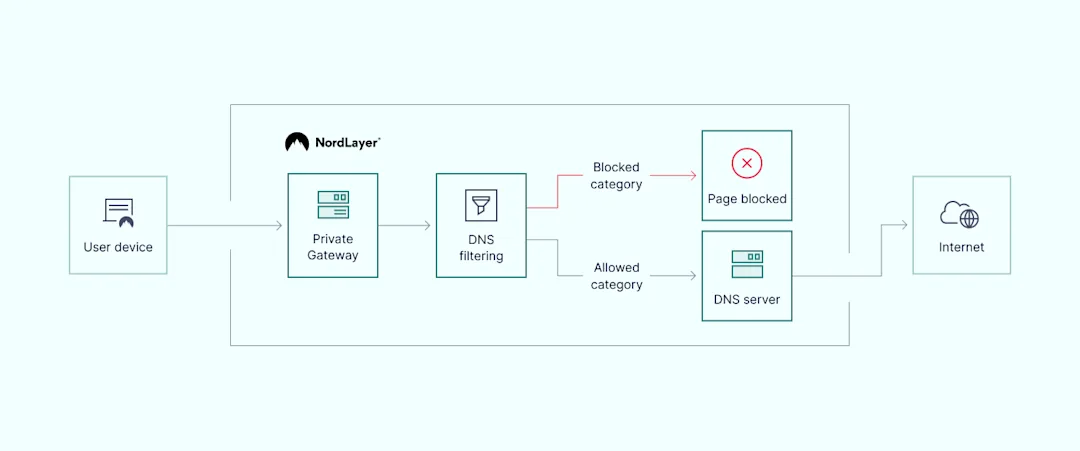
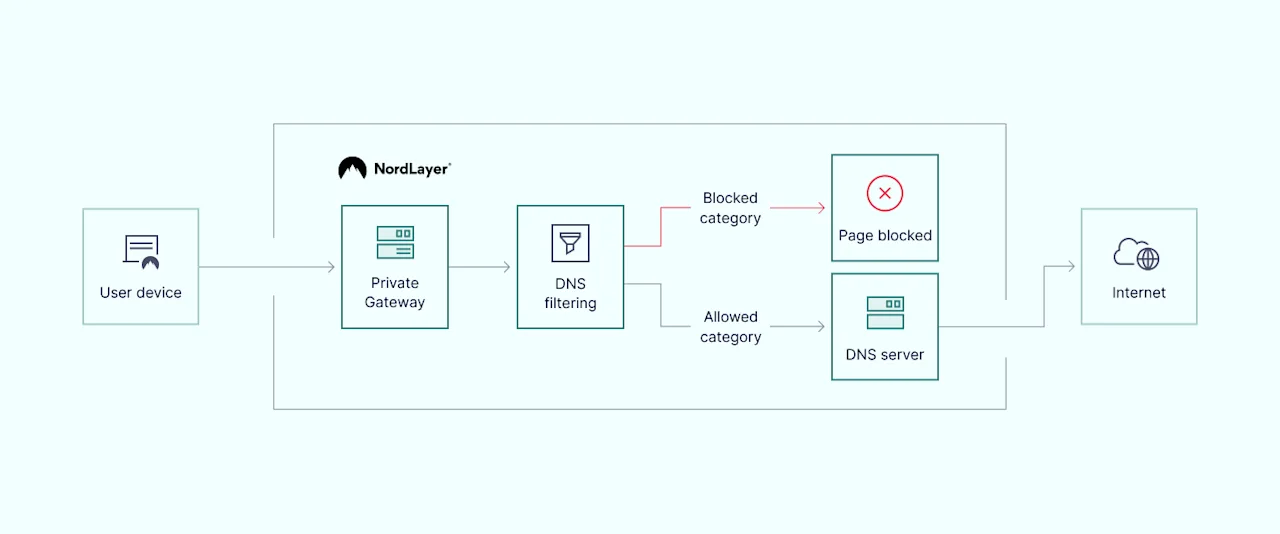
NordLayer DNS filtering scheme

NordLayer provides advanced DNS filtering, which helps businesses control employee web traffic and protect against unwanted content through URL filtering. This is crucial because unrestricted internet access can endanger the entire network.

DNS filtering by category acts as a gatekeeper, preventing access to inappropriate websites. A specially configured DNS resolver checks requests against a blocklist of unsafe domains. When a domain is flagged, the resolver blocks the request and stops potential cyber threats before they reach the network.  This customized filtering allows businesses to block specific categories, such as violence or adult content. It also helps increase employee productivity, maintain business reputation, and boost network performance.
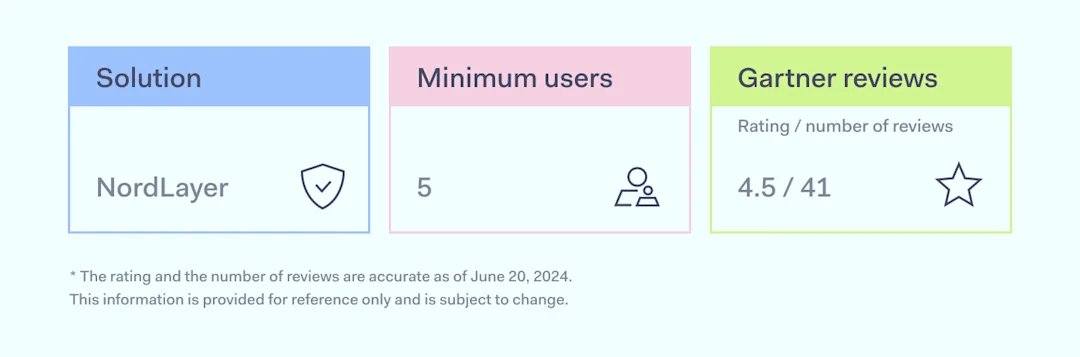
NordLayer

With NordLayer, businesses can easily manage and customize security policies from a single central point, regardless of location. NordLayer’s unique, patented DNS filtering technology ensures reliable and effective categorization and blocking of unwanted content, enhancing compliance capabilities. Multiple DNS filtering options allow the blocking of over 50 inappropriate, distracting, or malicious content categories, helping to maintain a clean, more compliant digital environment.

The ThreatBlock solution extends DNS filtering by blocking malicious domains. Using various malware libraries and deny lists, ThreatBlock continuously updates to recognize and block new threats. Even if an employee clicks on a malicious link, ThreatBlock intercepts the request and displays an error message.

Most mentioned product strengths:

  • Granular control over categories

  • Over 50 content categories available

  • Broad range of topics for restriction

Most mentioned overall product benefits:

  • Multiple platform support

  • User-friendly interface

  • 24/7 support team response

  • Reasonable pricing

  • Regular updates

  • Compatible with various infrastructures

  • Integrates with popular IAM platforms

  • Scalability

  • Low latency

  • Free trial or money-back guarantee

Some complaints:

  • Need to request DNS filtering by category manually

NordLayer stands out as a solid choice due to its strong filtering software, including DNS security and secure web gateway features.

DNSFilter

DNSFilter helps organizations filter internet content and protect against online threats like malware and phishing through URL filtering. Founded in 2015, the company now supports thousands of brands worldwide.

DNSFilter performs content filtering at the DNS level with its machine-learning engine, Webshrinker. This technology categorizes new and unknown sites, ensuring accurate content filtering. Users can choose from over 35 content categories and 7 threat categories to customize what they block or allow.
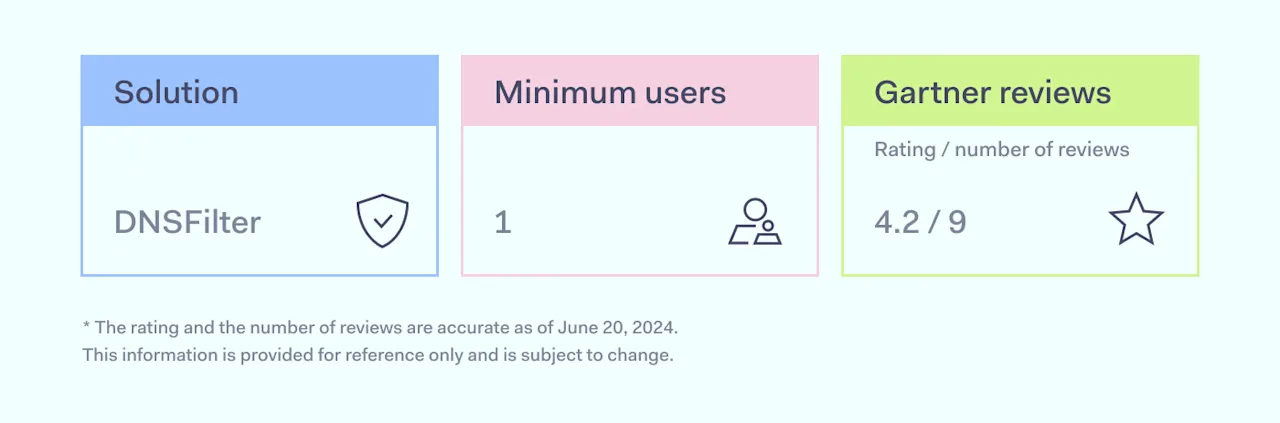
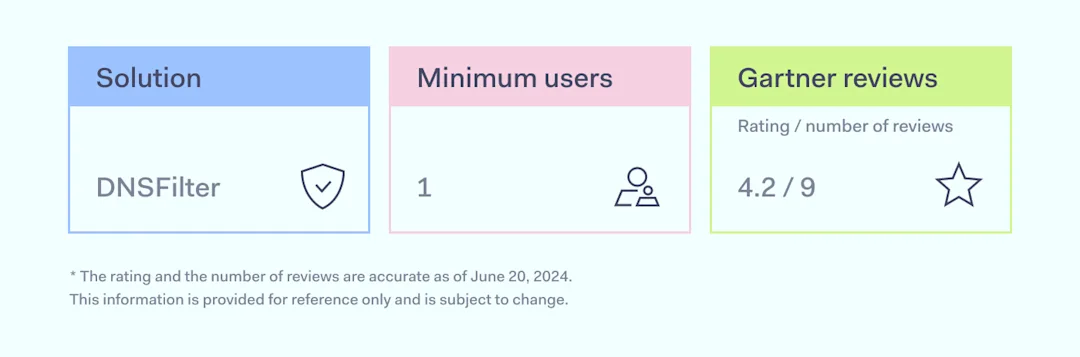
DNSFilter

Most mentioned product strengths:

  • Flexible filtering options

  • Fast logging and reporting

  • Possibility to import domain names in CSV format

  • Domain whitelisting

  • Detailed reports, intuitive layout

Most mentioned overall product benefits:

  • Multiple platform support

  • User-friendly interface

  • Reasonable pricing

  • Regular product updates

  • Integration with Active Directory

  • Simple client setup

  • Free trial

Some complaints:

  • Failing auto-updates

  • Deployment challenges

  • Blocking legitimate sites

  • VPN compatibility

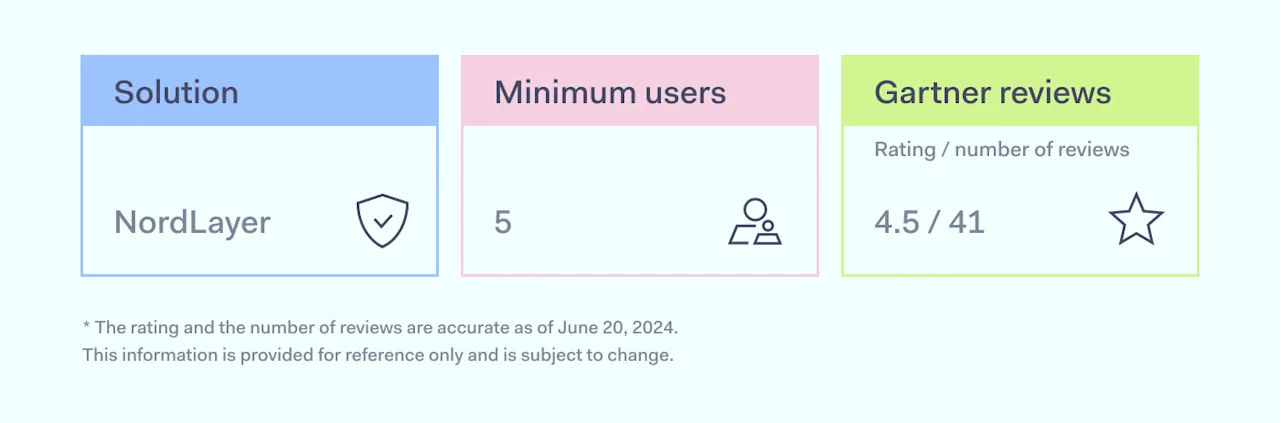
Disclaimer: This review is based on information from the DNSFilter website, VPN review sites such as Gartner and G2, and user feedback from Reddit, accessed on June 20, 2024.

ScoutDNS

ScoutDNS is a tool that provides DNS security and URL filtering for organizations. It offers a simple way to manage and protect internet access by controlling which sites can be visited.

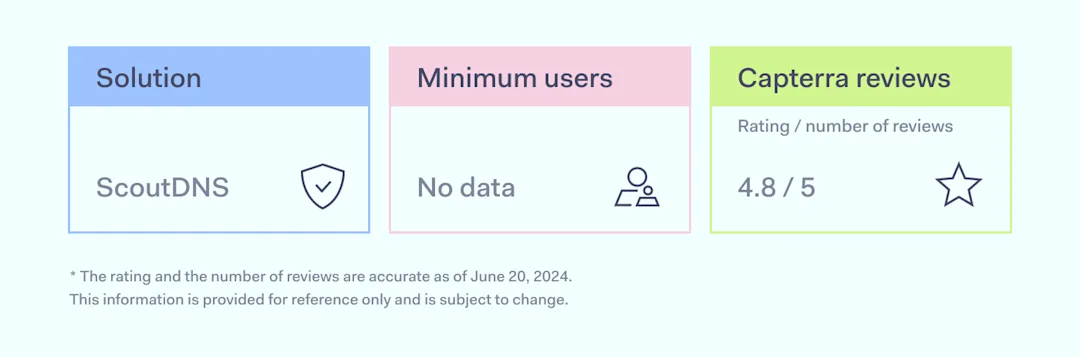
ScoutDNS helps organizations with content filtering, DNS layer security, and network visibility. It manages over 67 content categories and allows custom allow/block lists for different needs. Users can add items from logs, block harmful sites like those with phishing and malware, and manage suspicious domains. It provides real-time logs for 30 days, shows detailed activity, and inspects DNS messages for more control.
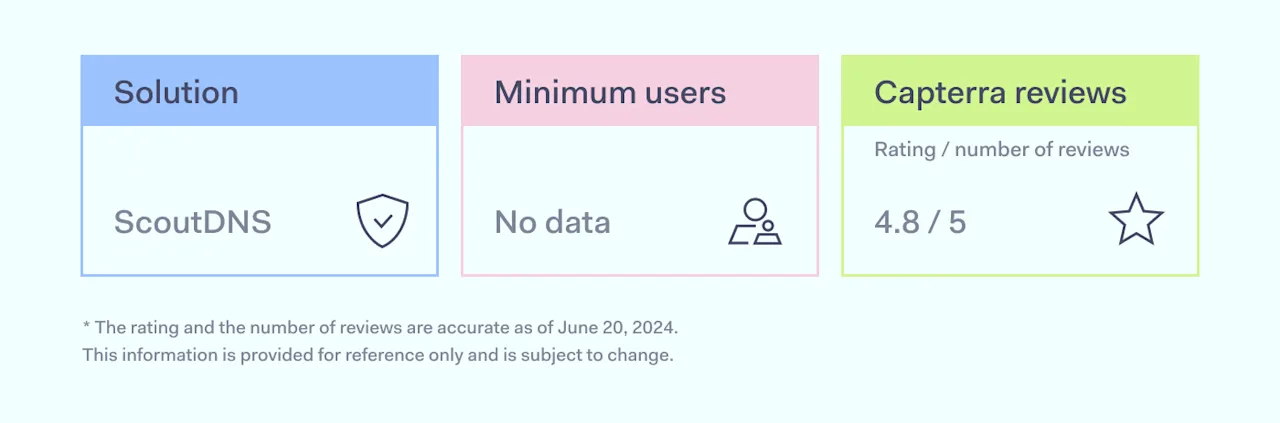
ScoutDNS

Most mentioned product strengths:

  • Whitelist/Blacklist management

  • Reporting and analytics

  • Roaming client available

  • SSL certificate integration

Most mentioned overall product benefits:

  • Responsive support team

  • User-friendly interface

  • Reasonable pricing

  • Quick issue resolution

  • Free trial

Some complaints:

  • Lack of real-time alerts for blocked pages

  • DNS rerouting can slow down browsing

Disclaimer: This review is based on information from VPN review sites such as Capterra and G2, accessed on June 20, 2024.

SafeDNS

Since 2010, SafeDNS has provided content filtering for thousands of businesses. It helps organizations keep their data safe with reliable web filtering and DNS security services.

SafeDNS offers features that enhance online security and control, such as DNS layer security, content filtering, and app blocking. The AI-powered categorization filters inappropriate content across a vast database and provides detailed reports and analytics for monitoring internet usage. The Anycast network ensures fast and stable performance worldwide, and the solution supports roaming clients and scheduling for flexible management. SafeDNS focuses on content filtering, which makes it ideal for businesses that need to manage web access and online safety, but it is not a comprehensive cybersecurity solution.
Most mentioned product strengths:

  • Comprehensive category options

  • Whitelist/Blacklist management

  • Monthly stats

  • Wi-Fi network integration

Most mentioned overall product benefits:

  • Scalability

  • User-friendly interface

  • Reasonable pricing

  • Integration with other tools

  • Ease of maintenance

Some complaints:

  • Blocks good websites

  • Issues with detailed reporting

  • Inconsistent performance

  • Support issues

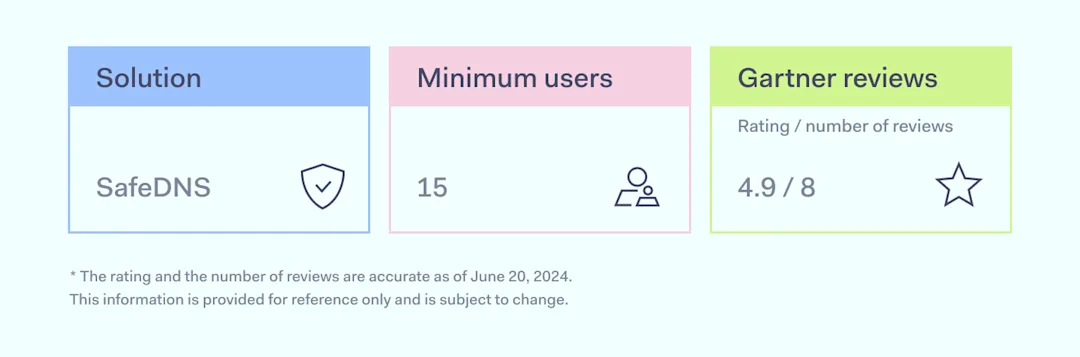
  • License starting from 15 seats

Disclaimer: This review is based on information from the SafeDNS website and VPN review sites such as Gartner and Capterra, accessed on June 20, 2024.

Twingate

Twingate provides a secure remote access solution designed to meet modern security challenges. Developed in 2019, Twingate aims to address the limitations of traditional VPNs by offering a Zero Trust Network Access model that is both user-friendly and easy to deploy.

Twingate automatically flags, detects, and blocks malicious web threats, protecting users from malware, phishing, and other online dangers. It blocks malicious websites and thwarts phishing attempts while keeping users’ internet traffic safe with customizable filters for both managed and BYOD items. The platform consolidates tools into a single agent, centralizing management for internet security and remote access without the need for multiple solution-specific agents.
Twingate

Most mentioned product strengths:

  • Granular control over categories

  • Reporting and analytics

Most mentioned overall product benefits:

  • User-friendly interface

  • Scalability

  • Integration with other tools

  • Great documentation

  • Lightweight and efficient

Some complaints:

  • Frequent disruptions

  • Not cost-effective

  • Lack of Linux VPN client

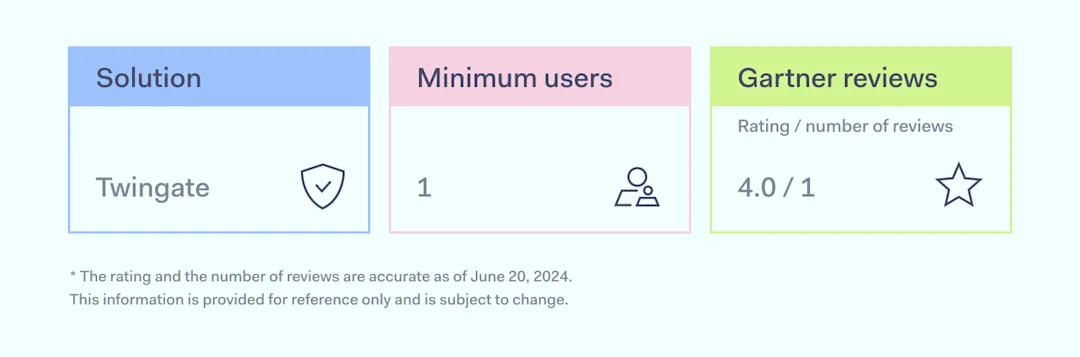
Disclaimer: This review is based on information from VPN review sites such as Gartner and G2 and user feedback from Reddit, accessed on June 20, 2024.

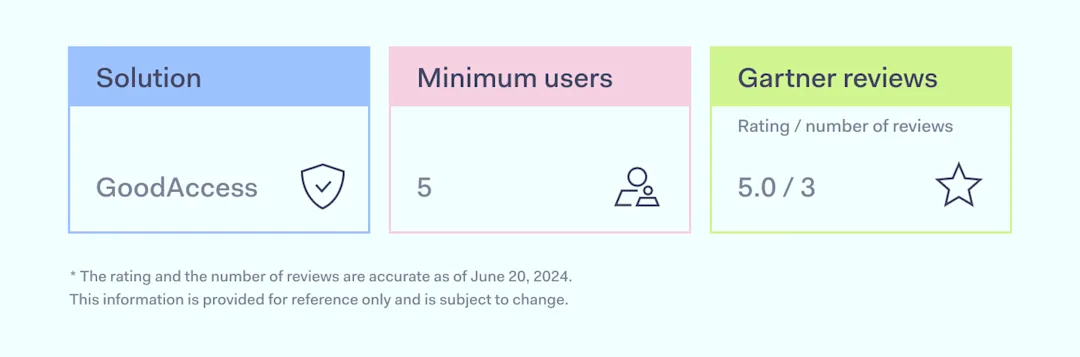
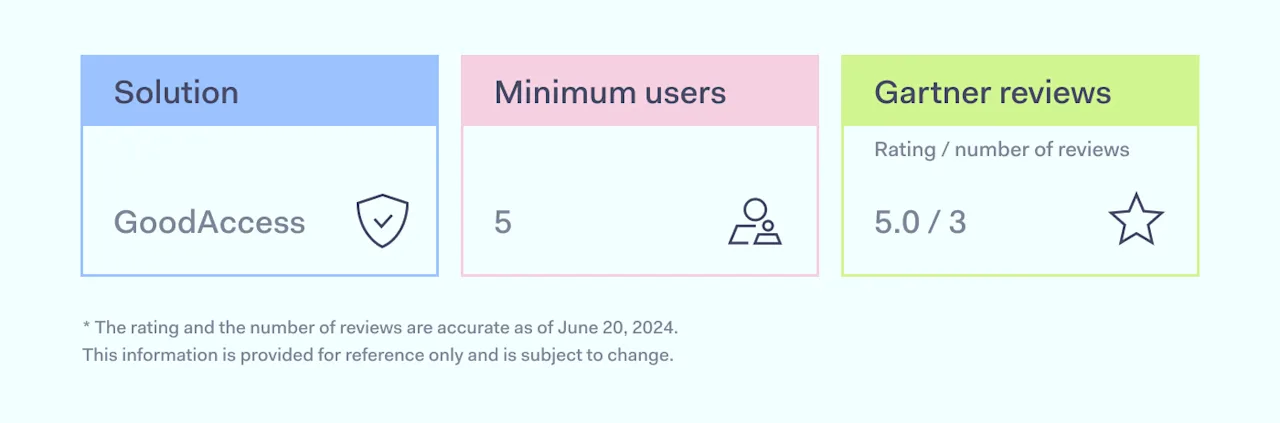
GoodAccess

GoodAccess is a startup founded in 2020 and has since developed an affordable Zero Trust Network Access solution.

GoodAccess’ DNS filter, Threat Blocker, prevents ransomware attacks. GoodAccess uses its own DNS system to handle all DNS resolutions for every connected client. Threat Blocker, part of the larger Secure Shield package, combines open-source and commercial lists of malicious domains. It checks every DNS request against these lists. When it finds a match, Threat Blocker redirects the user to a safe website that informs them that an attempt to access a malicious domain was blocked.
GoodAccess

Most mentioned product strengths:

  • Real-time data monitoring

Most mentioned overall product benefits:

  • Stable and reliable

  • Multiple platform support

  • Responsive support team

  • Reasonable pricing

Some complaints:

  • Newer versions cause service issues, and updates need manual intervention

  • High costs when adding more gateways

  • Limited connections per user

  • Hard to use for less tech-savvy people

Disclaimer: This review is based on information from VPN review sites such as Capterra, Gartner, and G2, accessed on June 20, 2024.

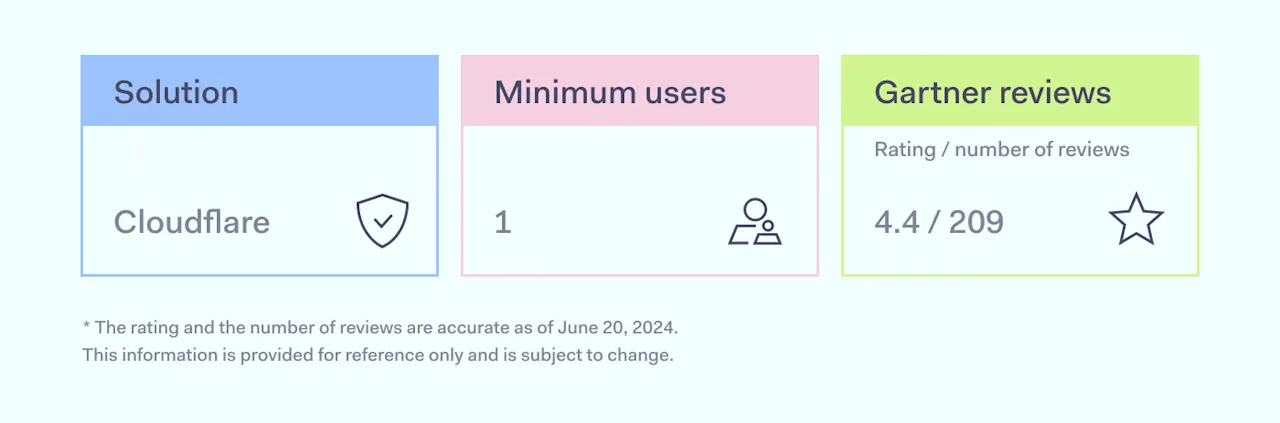
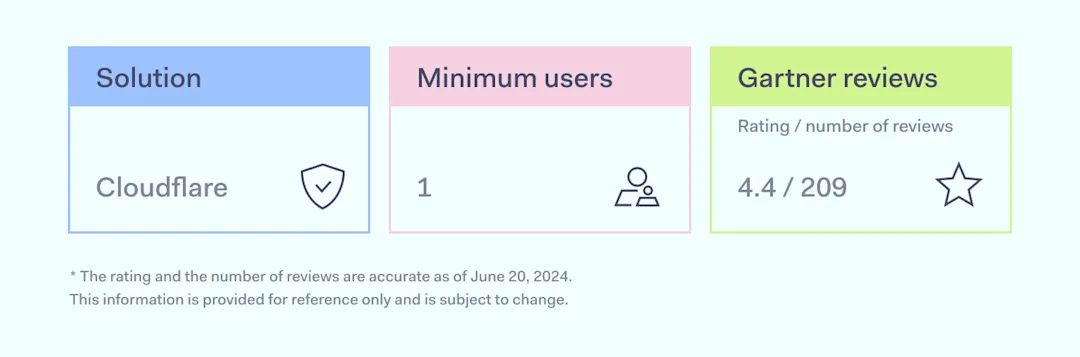
Cloudflare

Cloudflare One is a web filter and security solution with a secure web gateway. It is from Cloudflare, a well-known and long-standing provider, which has a global presence and higher cost.

Cloudflare One provides an authoritative DNS service, a public DNS resolver, and DNS filtering. It includes Cloudflare Gateway, a secure web gateway that offers DNS filtering, browser isolation, and other technologies. This web filter helps protect internal users and keep data secure. Cloudflare Gateway improves network security and restricts what employees access on the internet.
Cloudflare

Most mentioned product strengths:

  • Customizable filtering options

  • Whitelist/Blacklist management

  • Bypass methods control

Most mentioned overall product benefits:

  • User-friendly interface

  • Responsive support team

  • Free trial

Some complaints:

  • Blocks the right websites and users

  • Complex setup

  • Interrupts communication

  • Customer support issues

Disclaimer: This review is based on information from the Cloudflare website and VPN review sites such G2 as Gartner, accessed on July 3, 2024.

Zscaler

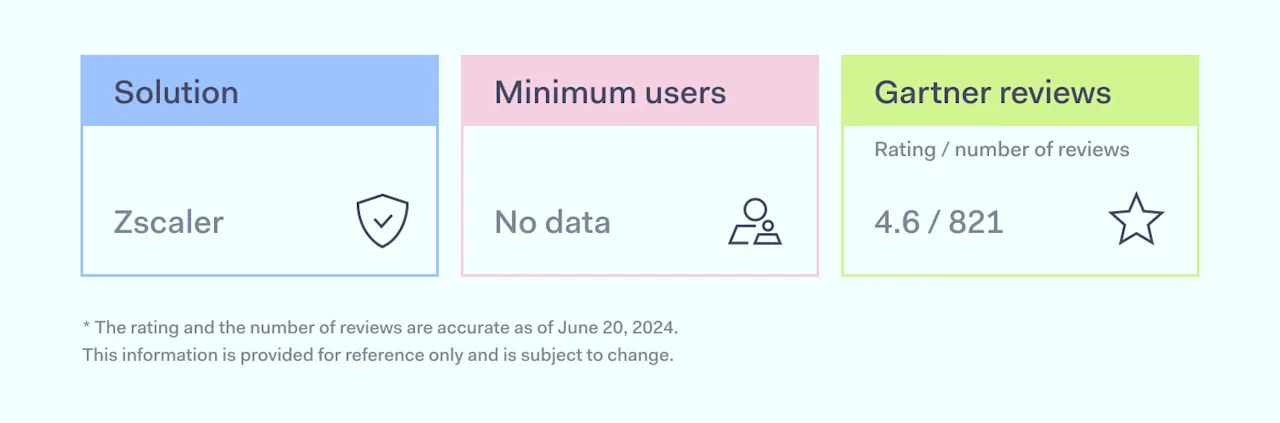
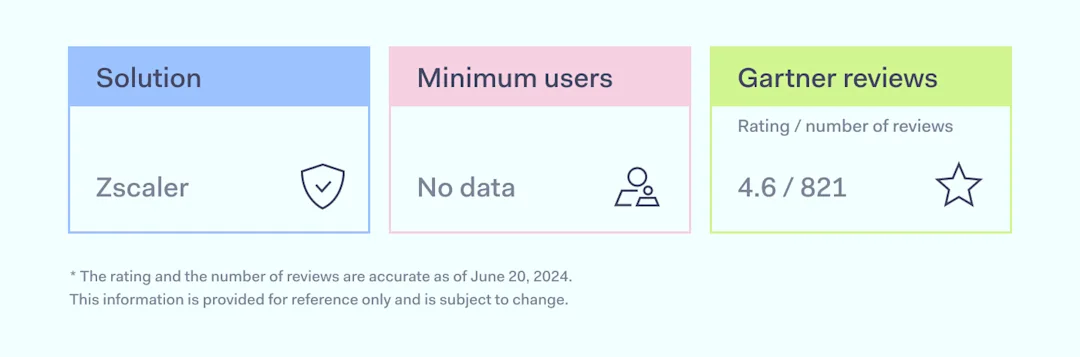
Zscaler Internet Access (ZIA) has a web filter designed to improve organizations’ internet security. The tool includes many advanced features to protect users from online threats.

Zscaler offers powerful URL filtering as part of Zscaler Internet Access. It also includes a secure web gateway, data loss prevention, cloud-gen firewall, and more. Zscaler Internet Access is part of the Zscaler Zero Trust Exchange platform, which allows fast, secure connections for employees working from anywhere. This filtering software uses dynamic content categorization, integrated browser isolation, and safe search enforcement to control web traffic effectively.
Zscaler

Most mentioned product strengths:

  • Granular control features

  • Real-time threat protection

  • Whitelist/Blacklist management

  • Reporting and analytics

Most mentioned overall product benefits:

  • Multiple platform support

  • Responsive support team

Some complaints:

  • Complex and time-consuming setup

  • Managing security policies is complex

  • Logging for different modules isn’t separate, making troubleshooting hard

  • Sometimes blocks essential sites

Disclaimer: This review is based on information from the Zscaler website and VPN review sites such as Gartner, G2, and Trustradius, accessed on July 4, 2024.

Cato Networks

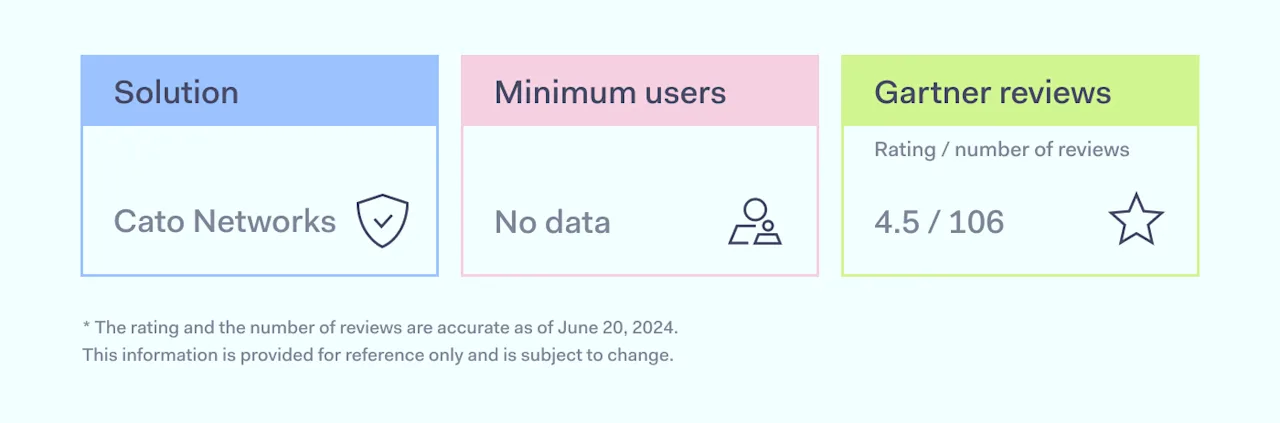
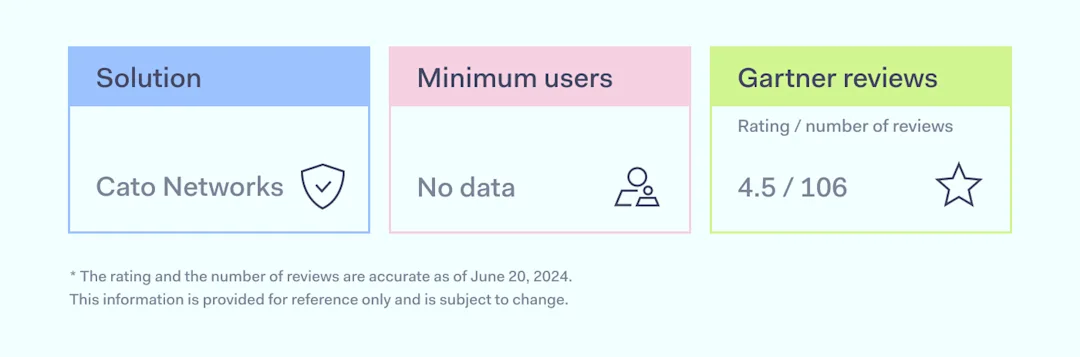
Cato SASE Cloud is a comprehensive solution that also provides businesses with web content filtering. It offers a cloud-based service that integrates various features to ensure safe and efficient network management.

Cato’s DNS Security inspects all DNS traffic and blocks requests to malicious destinations before a connection occurs. AI-based DNS inspection delivers in-line phishing protection by analyzing webpage components, domain age, and other factors. This solution blocks malicious domains and command-and-control sites using updated threat intelligence.
Cato Networks

Most mentioned product strengths:

  • Reporting and analytics

Most mentioned overall product benefits:

  • Multiple platform support

  • Responsive support team

  • Integrations with other products

Some complaints:

  • Few technical documents available for troubleshooting

  • Need for careful implementation planning

  • Complex cloud management console navigation

  • Login issues with the app

Disclaimer: This review is based on information from the Cato Networks website, and VPN review sites such as Gartner and G2, accessed on June 20, 2024.

Netskope

Netskope One SASE provides a web filtering solution for enforcing acceptable use policies (AUPs) in various locations, including headquarters, remote offices, and mobile workers using company-managed devices. Netskope’s NewEdge private cloud network spans over 70 regions.

Netskope’s web filtering software helps organizations enforce AUPs using predefined and custom categories for apps, security risks, YouTube, and silent ad blocking. It covers over 120 categories and supports 200+ countries. The solution includes dynamic web page categorization, custom categories, and API-enabled updates. Netskope uses machine learning to rate new and unknown web content. Netskope Intelligent SSE, built on the Netskope Security Cloud, offers real-time data and threat protection for cloud services, websites, and private apps.
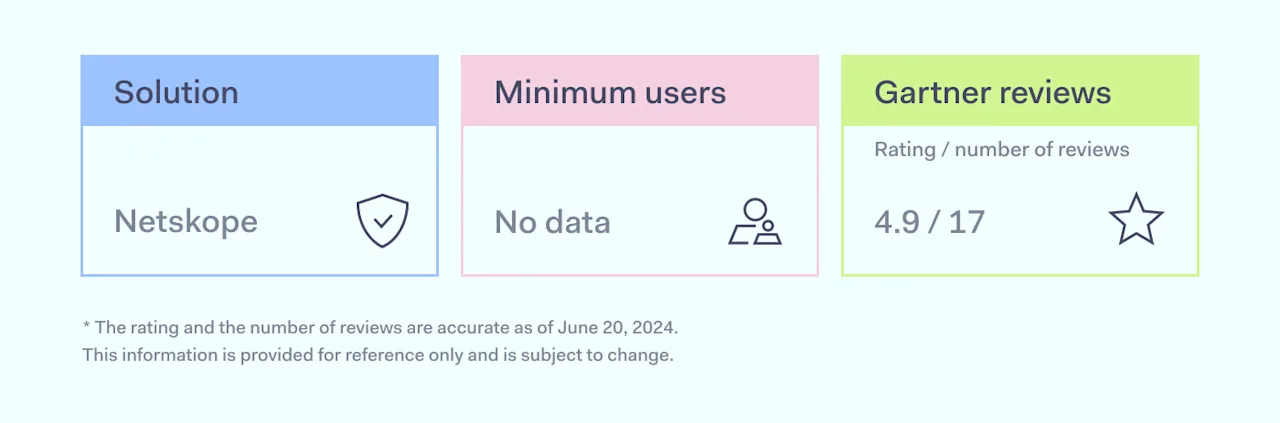
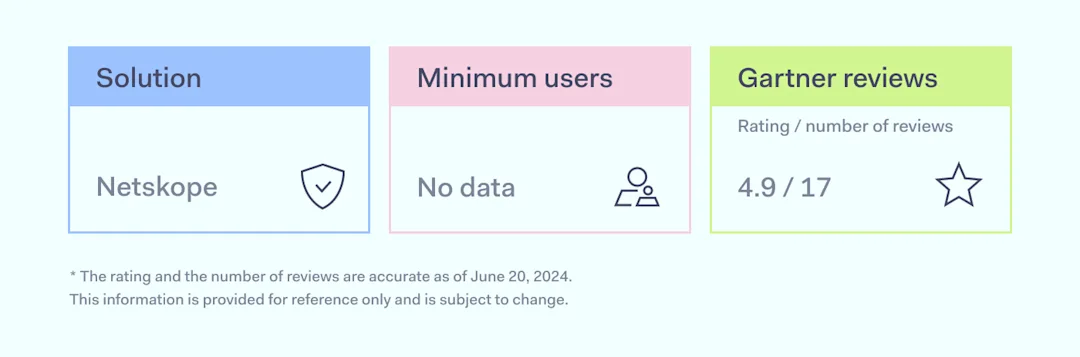
Netskope

Most mentioned product strengths:

  • Granular policy controls

  • Reporting and analytics

Most mentioned overall product benefits:

  • Responsive support team

  • Integrations with other products

  • Low system impact

Some complaints:

  • Lack of granular threat protection and packet analysis

  • Syncing issues

  • Pricing structure

  • Lack of integration with certain tools

  • Limited help articles

  • Regular outages

Disclaimer: This review is based on information from the Netskope website and VPN review sites such as Gartner and G2, accessed on June 20, 2024.

How to choose the best content filtering solution for your business

Choosing the best web content filtering solution involves looking at your specific needs, budget, and the size of your organization. Here are seven steps to help IT admins make the best choice.

  1. Identify your business needs. Assess what your organization requires. A small business with 20 employees might need basic web filtering software to block malicious content, while a large enterprise with over 1,000 employees may need a secure web gateway to manage complex threats and ensure compliance.

  2. Evaluate security features. Look for solutions that provide strong security features. DNS filtering helps protect against malware and ransomware, as well as improves productivity and network performance. Real-time protection against new online threats is also helpful for high security.

  3. Consider ease of use and management. The content filtering software should be easy to set up and manage. Simple deployment and a user-friendly interface are important, especially for businesses with limited IT resources.

  4. Check scalability and future-proofing. Ensure the solution can grow with your business. Choose a tool that is good for scaling: the one that supports flexible deployment and integration with more Security Service Edge (SSE) frameworks like Zero Trust Network Access (ZTNA) and Firewall-as-a-Service (FWaaS).

  5. Evaluate customization options. Your content filtering solution should allow customization to meet specific business needs. Flexibility is essential for organizations that need tailored filtering policies based on their industry, such as schools needing to block adult content while allowing educational resources.

  6. Consider cost-effectiveness. Budget is a key factor. Look for solutions that provide comprehensive security features at a competitive price. Small businesses with tight budgets can start with minimal filtering capabilities and upgrade to more advanced solutions as they grow.

  7. Assess support and reliability. Reliable customer support and high uptime are crucial, especially during setup and troubleshooting. Responsive support teams and detailed dashboards and analytics help IT admins manage their networks effectively.

  8. Check provider credibility. Choose a trustworthy solution with a good track record. Look at customer reviews and brand awareness to ensure reliability and effectiveness.

Conclusion

Filtering is crucial for many reasons. Security is a major one, but it’s not the only benefit. Even if internet threats aren’t a concern, these tools boost employee productivity, protect business reputation, and improve network performance.

Whether you need comprehensive security, ease of implementation, or scalable solutions, the options listed here offer reliable and effective ways to filter content and ensure secure internet access. Evaluating your specific needs and the features of each solution helps you make an informed decision that enhances your organization’s web security and productivity.

Disclaimer: The information in this article is provided for informational purposes only and is based on publicly available third-party reviews, user feedback, and online sources as of July 5, 2024. While we strive for accuracy and completeness, Nord Security Inc. and its affiliates make no guarantees regarding the information’s accuracy, completeness, or suitability. The product rankings and comparisons are our opinions, based on our analysis of public sources and publicly described product features, and should not be considered definitive or permanent. We do not warrant or represent that any product is or will remain the best, top, or highest-ranked in any list or rating for any period of time. Product features, pricing, and other details may change, and we advise readers to verify these directly with vendors. We disclaim liability for any errors, omissions, or actions taken based on this information. The inclusion of competitor products does not imply endorsement, and all trademarks mentioned are the property of their respective owners. Readers should conduct their own research and seek independent advice before making purchasing decisions.

About Version 2 Digital

Version 2 Digital is one of the most dynamic IT companies in Asia. The company distributes a wide range of IT products across various areas including cyber security, cloud, data protection, end points, infrastructures, system monitoring, storage, networking, business productivity and communication products.

Through an extensive network of channels, point of sales, resellers, and partnership companies, Version 2 offers quality products and services which are highly acclaimed in the market. Its customers cover a wide spectrum which include Global 1000 enterprises, regional listed companies, different vertical industries, public utilities, Government, a vast number of successful SMEs, and consumers in various Asian cities.

About NordLayer
NordLayer is an adaptive network access security solution for modern businesses – from the world’s most trusted cybersecurity brand, Nord Security.

The web has become a chaotic space where safety and trust have been compromised by cybercrime and data protection issues. Therefore, our team has a global mission to shape a more trusted and peaceful online future for people everywhere.

About NordLayer
NordLayer is an adaptive network access security solution for modern businesses – from the world’s most trusted cybersecurity brand, Nord Security.

The web has become a chaotic space where safety and trust have been compromised by cybercrime and data protection issues. Therefore, our team has a global mission to shape a more trusted and peaceful online future for people everywhere.

Amazon passkey: What it is and how to set it up on your account

Welcome to the passwordless era

Passwords are on the brink of retirement. They have served us well as an authentication method for a long time, no doubt about that. But like all technologies, they are being replaced by the next best thing. Right now, that thing is password-free authentication, already adopted by companies like Amazon, Google, and Apple to allow their customers to log in to their services quickly and securely without passwords.

Other organizations are expected to follow in the footsteps of the big players, especially since they can use free tools like Authopia by NordPass to effortlessly add a passkey-based login option to their website or service. The term “passkey-based” is pivotal here. What exactly are passkeys, and why are they considered the successor to passwords? Let’s dive in and find out.

What are passkeys?

Simply put, passkeys are a new authentication method that allows users to log in to their accounts on websites or services without using passwords. It relies on cryptography to provide secure authentication—sets of cryptographic keys, to be exact. One key, known as the “public” key, is stored on a server, while the other, the “private” key, remains on the user’s device. During the login process, the key from the user’s device is verified against the key stored on the server. If the two keys match, the user is granted access to the account.

Since the keys are generated by the system, there’s no need to remember them, which makes the technology much more user-friendly compared to passwords. Moreover, because encryption is used, passkeys offer greater security than even the longest and most complex passwords can provide.

How to enable Amazon passkeys

Setting up passkeys on your Amazon account is a straightforward process that can be completed in just a few minutes. However, the steps vary slightly depending on whether you are using a desktop or a mobile device. Let’s now review the setup process for both options.

Setting up passkeys via the Amazon website (desktop)

  1. Open your web browser and go to amazon.com.

  2. Access your account settings and scroll down to the “Login & Security” section.

  3. Find the option for “Amazon Passkeys” or “Two-Step Verification.”

  4. Follow the on-screen instructions to set up your passkey settings.

  5. Confirm the setup by scanning a QR code displayed on your computer screen with your mobile device, and authenticate using your mobile device’s biometric features.

  6. To verify that everything is set up correctly, log out and log back in using your newly set passkeys.

Setting up passkeys via the Amazon app (mobile)

  1. Launch the Amazon app on your iPhone, iPad, or Android device.

  2. Tap the menu icon and navigate to “Account.”

  3. Select “Login & Security.”

  4. Click on “Set Up” next to the “Passkey” option.

  5. Follow the prompts on your device to authenticate using your fingerprint or facial recognition.

How to sign in with an Amazon passkey

Once enabled, using passkeys to log into your Amazon account is super easy. All you have to do is:

  1. Visit the Amazon website and open the account login form.

  2. Enter your email or mobile number.

  3. Instead of entering your password, click on “Sign in with Amazon passkey.”

  4. Enter your passkey, for example, by using a biometrics scanner on your device.

  5. You’re securely logged in!

How to delete your Amazon passkey

If for some reason you would like to delete your Amazon passkey, you need to go back to your account settings and navigate to the “Login & Security” section. Once there, select the active passkey and click on “Delete.” When you confirm your choice, your passkey will be removed and your account will revert to the traditional password login option.

Can you use Amazon passkeys on multiple devices?

As a matter of fact, yes, Amazon passkeys can be used on multiple devices. Once you enable a passkey, it’s stored in your cloud service account, so you can use it across all linked devices. Therefore, when you access Amazon from another device using the same cloud service account, the passkey should automatically appear as a login option.

Effectively store and manage your passkeys with NordPass

If you want to be passwordless and start using passkeys to log in to your Amazon and other accounts, you need a solution that will allow you to store and manage your passkeys effectively. One such solution is NordPass.

Although primarily known as a password manager, NordPass fully supports passkeys and was one of the first tools of its kind to do so. This means you can now use it to create, store, and manage your passkeys with ease, significantly improving your login experience in terms of both security and convenience.

In other words, NordPass allows you to keep all your passkeys in an encrypted vault accessible only to you. And since NordPass is available on Android and Apple devices, you can quickly access your passkeys anytime, from any device.

So, if you’re ready to move away from traditional passwords and embrace the latest passwordless technology, NordPass can help you get started. Give it a try and see the difference for yourself.

About Version 2 Digital

Version 2 Digital is one of the most dynamic IT companies in Asia. The company distributes a wide range of IT products across various areas including cyber security, cloud, data protection, end points, infrastructures, system monitoring, storage, networking, business productivity and communication products.

Through an extensive network of channels, point of sales, resellers, and partnership companies, Version 2 offers quality products and services which are highly acclaimed in the market. Its customers cover a wide spectrum which include Global 1000 enterprises, regional listed companies, different vertical industries, public utilities, Government, a vast number of successful SMEs, and consumers in various Asian cities.

About NordPass
NordPass is developed by Nord Security, a company leading the global market of cybersecurity products.

The web has become a chaotic space where safety and trust have been compromised by cybercrime and data protection issues. Therefore, our team has a global mission to shape a more trusted and peaceful online future for people everywhere.

10 steps to train employees on cybersecurity

Data breaches usually start with an employee mistake. Someone may click a dangerous link or send data via an unprotected connection. Soon, that error becomes a crisis. Websites fail, customer data spreads across the Dark Web, and regulators become involved.

Most of the time, all of this can be avoided. Proper cybersecurity training and cybersecurity tabletop exercise tools prepare staff to deal with threats.

The shocking thing is that almost one-third of US companies don’t provide cybersecurity training for employees. Worse still, over half of SMBs have no cybersecurity plan at all.

Don’t follow their example. Create a cybersecurity awareness training program that educates employees and puts security policies into action.

This article will explain how to raise cybersecurity awareness across your organization. So pull a chair up to the whiteboard as we deliver our 10-step cybersecurity training roadmap.

Key takeaways

  • Raising cybersecurity awareness is a vital business goal. Start by building a foundation. Create comprehensive cybersecurity policies and aim to ensure every employee is aware of their security role.

  • Cybersecurity training should focus on urgent data security threats. List relevant risks and train employees to identify and minimize them.

  • Device security awareness training is critical–especially in companies that rely on remote workers. Train employees to secure devices from digital and physical threats.

  • Educating employees on password security is a priority. Most cybersecurity breaches target weak credentials. Ensure staff know how to use strong passwords and access network assets safely.

  • Focus training on confidentiality and data protection. Define company data and instruct employees how to handle data securely. This includes regular backups, secure storage, and tools like Virtual Private Networks (VPNs).

  • Update training programs annually. Cybersecurity threats evolve, and training should keep pace. Refresh employee knowledge, taking advantage of free cybersecurity training when possible.

Cybercrime targets human error key stats

Step 1: Ensure employees understand their cybersecurity role

Cybersecurity training must include every employee, no matter how junior (or senior). Every network user must be aware of their security responsibilities. Communicate that one slip-up or policy breach can lead to data theft and regulatory action.

Guide employees on how to meet security requirements. For instance, you may require a VPN and Secure Remote Access for remote workers. Inform staff how to report security issues and reassure them. Reporting accidental policy breaches is a good thing–not something to fear.

Step 2: Create watertight data security policies

Cybersecurity training rests on comprehensive and easy-to-follow security policies. Create formal policies on handling confidential data, incident response, password management, remote work, and other relevant areas.

Security awareness training should cover employee knowledge of security policies. But one-time testing is not enough. Schedule regular meetings to discuss policies. Test knowledge annually to ensure staff remain aware of policy requirements.

Remember: policies are worthless if they are just documents. They need to be part of everyday professional practice. Make policies available in a central library for staff to access, and double-check the language to avoid technical jargon.

Step 3: Train employees to identify data security threats

Cybersecurity training can’t necessarily create an army of technical experts, but raising overall awareness is vital. Well-trained employees understand cyber threats and know how to prevent or mitigate them.

Train staff to identify email phishing, fake websites, insecure document transmission, and the risks of using unsecured public Wi-Fi. Make it clear that adding unauthorized software to the network is out of bounds.

Real-life examples help employees understand the nature of cyber threats. For example, sessions could include visual material on pop-ups, sudden device slow-downs, or unrequested browser extensions.

Above all, employee training must communicate the consequences of cyber-attacks and emphasize the need to follow security policies. By educating staff, you build a human firewall that adds an extra layer of defense against attackers.

This is a critical point and a key recommendation in Gartner’s 2024 Cybersecurity Trends Report. Human firewalls complement technology by changing employee behavior to mitigate potential threats. Properly-educated employees understand the threat reporting process. Training involves everyone in network protection efforts. A human firewall of engaged employees is much more likely to identify cybersecurity problems before a data breach occurs.

Gartner review

Step 4: Tighten up your password hygiene

Weak, rarely-changed passwords often expose businesses to information security threats. Robust password policies are the only reliable protection.

Don’t assume employees understand password risks. Two-thirds of Americans re-use passwords across accounts. Up to 80% of data breaches result from easily guessed or stolen passwords. People tend to be lazy about password hygiene. Don’t give them that option.

Instead, consider assigning passwords to employees and rotating these passwords regularly. Train staff and password managers to use strong passwords. Add multi-factor authentication to network logins and ensure employees know how to use it.

Step 5: Fine-tune device security

Training employees on cybersecurity must cover device security. Remote and off-site staff often rely on mobile devices. If a device contains sensitive data or allows network access, security policies apply.

Take action to minimize the risk of device loss. Mandate separate work and personal devices when cybersecurity risks are high. Include training modules explaining the difference between personal and business use.

Cybersecurity training should cover physically securing devices and protecting remote connections. It’s also wise to use remote monitoring tools and inform employees that their business accounts are transparent.

Step 6: Make sure employees backup critical data

Employees must back up company data, preferably every day. During employee training, make it clear that local backups are insufficient. Employee devices are vulnerable to theft or external attacks. Instead, use secure cloud storage systems to hold critical documents or customer data.

Step 7: Put in place authorization and access management systems

Authorization and authentication technology should always shield central data centers and cloud-hosted apps. However, it’s important to instruct employees in proper access security practices.

For instance, employees should never share work devices with colleagues or external individuals without authorization. Writing down passwords or authentication codes is out of the question. Adding new devices without agreement from network admins should also be prohibited.

Sometimes, employees complain about time-consuming authorization systems. Outflank those issues by explaining why MFA and VPNs are so important. When they know what is at stake, employees will quickly adopt secure access routines.

Step 8: Ensure secure web development and website updating

SQL and web application exploits are common security breach vectors, making secure coding a vital element of cybersecurity awareness training.

Deliver a secure training program to every staffer with access to web backends and coding tools. Even those without direct coding responsibilities can allow access to attackers. If employees update web assets in any way, they must do so safely.

Authorization is also important. Employees should know who is authorized to change web code or update websites and how to request permission to make changes.

Step 9: Make sure employees use email securely

Email is another critical weak point in business cybersecurity. Cybersecurity awareness training should help employees spot potential threats like phishing attempts and links to suspicious websites.

If necessary, test employee competence with phishing simulations that generate false social engineering emails. Simulations are great because they prove users can spot dangerous messages from authentic business communications.

Separate training applies if employees use email to transmit sensitive information. In these cases, ensure workers use VPNs and email encryption to safeguard data.

It should go without saying, but you should also test employees on what constitutes “sensitive data.” Many email users send confidential information via unsafe personal accounts, and that should end when they understand how you classify information.

Step 10: Update your training program regularly

Cybersecurity awareness tends to wane after a few months. Around 10% of employees say they remember all of their cybersecurity training. The other 90% have likely drifted back to unsafe passwords or unsecured remote connections.

Refreshing cyber security training is the only viable solution, but it can be challenging for businesses with a limited security awareness budget.

However, refreshing knowledge does not need to be expensive. Cybersecurity awareness training often costs virtually nothing if you know where to look.

Keep costs low by checking out free cybersecurity training listed at the National Institute for Science and Technology (NIST). For example:

  • The Cisco Networking Academy offers 6 hours of free cybersecurity training covering all core themes.

  • Evolve Academy provides free cybersecurity awareness training focused on practical technical skills.

  • Microsoft Technologies Training offers refresher courses to boost information security awareness when using Microsoft products.

These are just a few of many free or low-cost cybersecurity education options. You can also listen to podcasts about security awareness. Combine external courses with internal training to manage cybersecurity costs.

How can NordLayer help?

Companies are never alone when delivering cyber security awareness training, so don’t feel isolated. Instead, work with trusted partners like NordLayer to build internal knowledge and upskill your workforce.

NordLayer’s Learning Center is the perfect bookmark for trainers and employees. Use our accessible security checklists and in-depth explainers to understand concepts and tick off cybersecurity tasks. And stay on top of emerging threats thanks to cutting-edge intelligence.

It also helps to add video elements to training sessions. In that case, explore NordLayer’s YouTube channel. Our channel covers cybersecurity essentials like device posture security and secure remote access—supplementing tests and in-person training.

Whatever you do, don’t struggle alone. Share the cybersecurity challenge by enlisting expert assistance. If you’d like to find out more, get in touch with NordLayer today. We’ll help you find the right training and security solutions.

About Version 2 Digital

Version 2 Digital is one of the most dynamic IT companies in Asia. The company distributes a wide range of IT products across various areas including cyber security, cloud, data protection, end points, infrastructures, system monitoring, storage, networking, business productivity and communication products.

Through an extensive network of channels, point of sales, resellers, and partnership companies, Version 2 offers quality products and services which are highly acclaimed in the market. Its customers cover a wide spectrum which include Global 1000 enterprises, regional listed companies, different vertical industries, public utilities, Government, a vast number of successful SMEs, and consumers in various Asian cities.

About NordLayer
NordLayer is an adaptive network access security solution for modern businesses – from the world’s most trusted cybersecurity brand, Nord Security.

The web has become a chaotic space where safety and trust have been compromised by cybercrime and data protection issues. Therefore, our team has a global mission to shape a more trusted and peaceful online future for people everywhere.

About NordLayer
NordLayer is an adaptive network access security solution for modern businesses – from the world’s most trusted cybersecurity brand, Nord Security.

The web has become a chaotic space where safety and trust have been compromised by cybercrime and data protection issues. Therefore, our team has a global mission to shape a more trusted and peaceful online future for people everywhere.

What is data privacy compliance, and how does it impact cybersecurity?

Data privacy compliance is about following rules that ensure sensitive information stays safe and sound, accessible only to the right people. Let’s jump into this world of digital guardianship and see why every organization needs to master the art of privacy compliance to keep its data safe.

What is data privacy compliance?

No matter where your organization operates, there are probably rules and standards out there that dictate how to securely manage data. That’s what data privacy compliance is all about. It refers to adherence to laws and regulations designed to protect personal information, and involves ensuring that data collection, processing, and storage practices meet legal standards and respect the privacy rights of individuals.

Effective data privacy compliance requires robust data privacy management practices. This includes sticking to data compliance regulations, such as GDPR or CCPA, which set standards for data protection and privacy. Additionally, it involves implementing security measures, obtaining proper consent, and regularly reviewing data handling processes to mitigate risks and ensure ongoing compliance. By following these guidelines, organizations can safeguard user data, avoid legal penalties, and build trust with their customers.

Why is data privacy compliance crucial for organizations?

Implementing data privacy compliance isn’t just a box-ticking exercise; it’s a smart strategy with many benefits for your business. Embracing data privacy management can transform the way an organization operates and interacts with its stakeholders. Here’s how getting serious about data protection can improve your organization’s performance and reputation:

  • Enhanced security: By keeping your sensitive info locked up tight and adding a web application firewall (WAF) network security to guard against cyber-attacks, you’re making it way harder for hackers to gain access. It’s like having an extra layer of protection for your digital assets.

  • Legal compliance: Staying on top of regulations like GDPR and CCPA keeps you out of hot water. Compliance is not merely about avoiding legal repercussions; it signifies that your organization prioritizes the safeguarding of personal data and respects the privacy of individuals.

  • Customer trust: When you show that you’re serious about protecting their personal data, customers feel safer doing business with you. Building trust can turn one-time buyers into loyal fans.

  • Risk mitigation: By spotting and fixing potential weak spots in how you handle data, you reduce the chances of a data breach. This means fewer headaches and less damage control when things go south. Not to mention long-term financial savings – by preventing data breaches and ensuring compliance, organizations can avoid costly fines, legal fees, and remediation costs associated with data incidents.

  • Operational efficiency: Implementing good data privacy practices and using tools like WAF can streamline how you manage data. This can lead to smoother operations and less time spent on data-related issues.

  • Brand reputation: A solid track record in data protection boosts your public image. Being known as a company that handles data responsibly can be a key factor in attracting and retaining customers.

  • Global reach: Complying with data protection standards from around the world opens up more opportunities for international business. It means you can confidently operate across borders without worrying about running afoul of different regulations.

Regulations and standards

As briefly mentioned above, when talking about data privacy compliance, it’s essential to mention key regulations like GDPR, HIPAA, PCI DSS, and CCPA. These rules help ensure personal data is kept safe and sound.

  • GDPR (General Data Protection Regulation): This European Union set of rules is all about giving people control over their data. It means businesses need to get clear consent to use customers’ data, let people see what information is held about them, and even delete it if asked.

  • HIPAA (Health Insurance Portability and Accountability Act): In the US, HIPAA makes sure that everyone’s health information stays private. Hospitals and doctors have to follow strict rules to keep medical data safe and sound.

  • PCI DSS (Payment Card Industry Data Security Standard): PCI DSS sets the standards to keep card details secure, preventing any sneaky cyber thieves from getting your payment info.

  • CCPA (California Consumer Privacy Act): California’s answer to GDPR, CCPA, gives Californians more say over how their personal data is handled. It lets them know what’s being collected, say no to data selling, and even ask for their data to be deleted.

These regulations are the backbone of data privacy compliance. They ensure businesses handle personal info responsibly, keeping it secure and respecting people’s privacy. Following these rules not only keeps companies out of trouble but also builds trust with customers by showing they care about protecting personal data.


Benefits of a data privacy compliance program

A data privacy compliance program is essential for any company handling sensitive data. It’s a structured approach to ensure that your business sticks to various data privacy laws and compliance requirements. Many companies that have never considered such a program might wonder why it’s necessary. Here are a few more compelling reasons:

  • Streamlined audits: Regular audits are a part of doing business, and a robust privacy compliance program can make these audits less disruptive and more straightforward. Clear documentation and established procedures mean that you can provide necessary information quickly and efficiently.

  • Improved data quality: A focus on data privacy often leads to better data management practices overall. This can improve the quality of your data, making it more accurate, reliable, and valuable for decision-making.

  • Employee empowerment: When employees understand data privacy protocols and their importance, they feel more empowered and responsible. This can lead to a more proactive workforce that actively contributes to maintaining data integrity.

  • Vendor relationships: Many businesses rely on third-party vendors. A privacy compliance program ensures that your company can confidently work with these vendors, knowing that data privacy standards are maintained across the supply chain.

  • Regulatory foresight: A well-implemented privacy compliance program keeps you ahead of the curve with upcoming regulations. Staying informed and prepared for future changes in data privacy laws can give your organization a strategic advantage.

  • Stakeholder confidence: Beyond customers, other stakeholders like investors, partners, and regulators gain confidence in an organization’s stability and foresight when they see a commitment to data privacy. This can lead to stronger business relationships and opportunities.

Compliance vs. security: What is the difference between data privacy compliance and general data compliance?

Data privacy compliance is all about protecting personal information. Imagine it as the bodyguard for people’s private details, ensuring that their data is collected, processed, and stored in a way that respects their privacy. The data privacy definition involves sticking to laws and regulations like GDPR and CCPA, which set strict guidelines on how personal data should be handled.

Data compliance is the broader term encompassing all regulations and standards that a company must follow regarding data. Picture it as the rulebook for data management, ensuring that your organization sticks to industry-specific standards and legal requirements. This can include financial data, health records, and more.

In essence, while these concepts overlap, they both focus on different aspects of data management. Data privacy compliance is about respecting individual privacy, and data compliance is about adhering to legal and industry standards. Together, they create a comprehensive approach to managing and safeguarding data in your organization.

Bottom line

Ensuring data privacy and compliance is a critical concern for organizations today, especially with regulations like GDPR and CCPA imposing strict requirements. Businesses need to implement tools to monitor and strengthen password health, as well as seamless integration across systems – all essential components of a comprehensive data privacy compliance program.

Enter NordPass, an advanced yet easy-to-use password manager that offers all the essential features mentioned above. Imagine having a high-speed, digital guardian that not only locks away your passwords with top-notch encryption but also ensures only the right people have access to the right information. NordPass’ zero-knowledge architecture means that no one—not even the creators of NordPass—can take a peek at your data. Plus, with handy features like Password Health monitoring, it’s like having a personal trainer for your team’s cybersecurity fitness. Seamless integration across platforms and scalable, centralized management make NordPass a versatile ally, ready to grow with your business. With NordPass’ robust data privacy compliance features, you can ensure your business meets the highest standards of security and regulatory requirements.

About Version 2 Digital

Version 2 Digital is one of the most dynamic IT companies in Asia. The company distributes a wide range of IT products across various areas including cyber security, cloud, data protection, end points, infrastructures, system monitoring, storage, networking, business productivity and communication products.

Through an extensive network of channels, point of sales, resellers, and partnership companies, Version 2 offers quality products and services which are highly acclaimed in the market. Its customers cover a wide spectrum which include Global 1000 enterprises, regional listed companies, different vertical industries, public utilities, Government, a vast number of successful SMEs, and consumers in various Asian cities.

About NordPass
NordPass is developed by Nord Security, a company leading the global market of cybersecurity products.

The web has become a chaotic space where safety and trust have been compromised by cybercrime and data protection issues. Therefore, our team has a global mission to shape a more trusted and peaceful online future for people everywhere.

What is a passkey and how does it work?

As the digital world continues to expand and evolve, the need for secure authentication is more critical than ever. Enter passkeys – a modern solution for secure authentication that provides a safer and more convenient way to access apps and websites without ever having to remember or type out a password. Today, we’re looking into the world of passkeys, explaining what they are, how they work, and why they’re considered the future of authentication.

What are passkeys?

Essentially, passkeys are a new, phishing-resistant, and convenient way to sign up for and access apps and websites. At its core, a passkey is a digital login credential that uses your device—be it a phone, laptop, tablet, or desktop—to authenticate you instead of a traditional username and password combination. Cybersecurity experts tout passkeys as the authentication technology set to replace passwords.

Tech giants such as Apple, Microsoft, and Google are working on passkeys and aiming to make their platforms and accounts password-free. The decision is also expected to be taken up by other members of the FIDO Alliance, which is the driver behind passkey technology, and other companies around the globe.

When passkeys become the dominant authentication method, you will be able to sign up and access online services the same way you unlock your phone — via biometrics. No longer will you need to create, remember, and type out passwords.

Sounds awesome? Well, because passkeys are seriously awesome. Let’s have a peek at how to use passkeys in the real world.

Sign-up experience

Say you need to sign-up for a new online service that supports passkeys. All you need to do is add your email or username and confirm the prompt to create a passkey. Here’s how the sign-up process works with passkeys:

Login experience

Now that you’re signed-up for an online service with a passkey, logging in is quick, easy and secure. All you need to do is tap the suggested passkey for that account and you are logged in.

How do passkeys work?

Understanding passkeys and how this technology works can be somewhat tricky, mostly because passwords have been an integral part of our digital lives for so long. So first let’s recap the old and familiar before getting into passkeys. By the end we should understand the whole passkeys vs. passwords deal and why passkeys are the way of the future.

Password technology explained

Passwords — we know them all too well, and most of us have some idea of how they work. But let’s quickly recap.

Password-based authentication is relatively simple and straightforward. Say you create a password for a new online account. That password is then stored in an encrypted format on a server. When you use the password to access that account, the system compares the password you enter with the one in its database. If the two match — you’re good to go.

Simple, right? Well the catch is that this kind of user authentication presents quite a few serious security concerns. People tend to reuse simple and easy-to-crack passwords for multiple accounts, which is a hacker’s dream — crack a single account and you have access to a person’s entire digital life. Databases that store passwords can be breached. In fact, Verizon’s Data Breach Report notes that up to 80% of successful breaches are attributed to weak or stolen passwords.

Passkey technology explained

You can think of passkeys as a new and improved type of password. Both are used to verify a user’s identity upon sign up and login. However, the technology behind passkeys operates in a different way.

Whenever you sign up for an online service which supports passkey authentication, two keys are generated — public and private, both of which are used to authenticate the user when logging in.

Passkeys are widely considered to be a more secure and convenient form of authentication compared to passwords, as they reduce the risk of forgetting or reusing passwords. Passkeys are also resistant to phishing attacks as they can’t be stolen from your device by a third-party.

What sites and apps support passkeys?

Unsurprisingly, passkeys are gaining a lot of traction. Major websites, services, and apps that already support passkey-based authentication include Apple, Amazon, Adobe, Coinbase, eBay, GitHub, Google, LinkedIn, Microsoft, Nintendo, PayPal, Shopify, Sony, TikTok, WhatsApp, X, Yahoo, and quite a few others.

In the next couple of years, we can expect to see most companies pivot to passkey-based authentication, not only to make things easier for their users but also to improve the overall security for all involved parties.

Will passkeys replace passwords?

Well, all signs point to that! Due to the convenience and security provided by passkeys, the era of passwords may soon be over. However, before it happens, major platforms, services, and apps must introduce passkeys as the authentication method.

In NordPass, the passwordless future has already begun. We’re ready and determined to make your transition from passwords to passkeys as smooth and easy as possible.

Store passkeys with NordPass

All NordPass users now have the ability to store and manage passkeys in NordPass and use them to access apps and websites. NordPass syncs your passkeys across all of your devices as well as operating systems and enables you to safely share passkeys whenever needed. It is important to note that sharing passkeys is not as easy with alternative systems as it is with NordPass.

We’re excited to let you know that with the release of iOS 17 and Android 14, passkey storage is now available on NordPass apps for both iOS and Android devices. This is a monumental step for us, ensuring that you, our users, enjoy a seamless experience across all platforms and devices.

In addition to mobile access, you can also reach your passkeys on NordPass via the desktop app, web vault, Firefox, and Chrome-based browser extensions. We’re also thrilled to share that support for the Safari extension is on the priority list and will be launched later this year.

Besides allowing you to store passkeys, NordPass also helps businesses enable this new and more secure passwordless authentication on their websites and apps via Authtopia by NordPass – a solution designed to allow developers of any skill level to easily implement a pre-existing code and enable the passkeys widget in their service.


Password managers are highly reliant on platform vendors when it comes to passkey technology. Therefore, the move from Apple and Google serves as a huge milestone in replacing passwords with more advanced online authentication solutions. With tech giants allowing third-party integrations, internet users will get more user-friendly services and, as a result, will be more keen to stick to using passkeys.

Sorin Manole

Product Strategist @ NordPass

About Version 2 Digital

Version 2 Digital is one of the most dynamic IT companies in Asia. The company distributes a wide range of IT products across various areas including cyber security, cloud, data protection, end points, infrastructures, system monitoring, storage, networking, business productivity and communication products.

Through an extensive network of channels, point of sales, resellers, and partnership companies, Version 2 offers quality products and services which are highly acclaimed in the market. Its customers cover a wide spectrum which include Global 1000 enterprises, regional listed companies, different vertical industries, public utilities, Government, a vast number of successful SMEs, and consumers in various Asian cities.

About NordPass
NordPass is developed by Nord Security, a company leading the global market of cybersecurity products.

The web has become a chaotic space where safety and trust have been compromised by cybercrime and data protection issues. Therefore, our team has a global mission to shape a more trusted and peaceful online future for people everywhere.

×

Hello!

Click one of our contacts below to chat on WhatsApp

×