Skip to content

Unraveling the Dangers of Phishing: From Basics to Effective Prevention

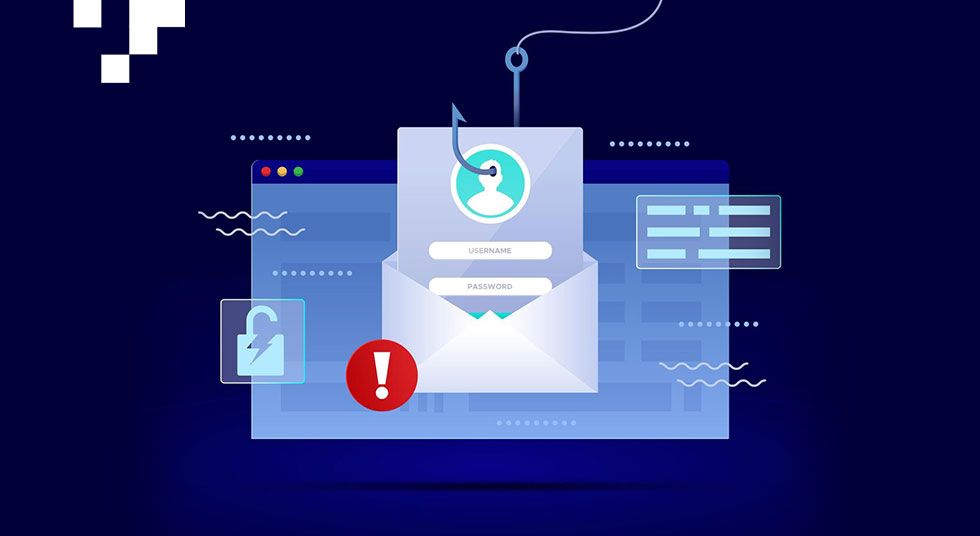
Surely you may have at one time or another received an email warning of an outstanding invoice, a parcel shipment that you did not expect or a warning from the bank about suspicious activity in your account. These messages usually adopt an alarming tone and provide you with a link to a website that you must visit right away to verify your personal information or to complete payment information. Caution! This is a “phishing” attempt, one of the most popular scam methods on the Internet!

Content:

What is phishing?

Phishing is a form of cyberattack that uses technology and social engineering to breach user security.

The term comes from the word “fishing”, since cybercriminals employ bait tactics waiting for users to “bite” or fall into the trap. They usually aim to get hold of financial information, payment service passwords (such as PayPal), or login credentials.

Actually, phishing is nothing new. The first cases of this type of fraud date back to the mid-1990s, when a group of fraudsters posed as employees of the AOL company to steal confidential customer data. Already in the 2000s, attacks began to specialize, focusing mainly on the banking sector.

Over the years, scams have become more sophisticated and, despite advances in cybersecurity, phenomena such as the rise of teleworking or the fraudulent use of AI have contributed to the rise of new ways of phishing.

Phishing as a source of concern

Anyone can become a victim of phishing. Even though cybersecurity systems are getting more powerful by the day, scammers have also honed their skills and organized themselves into small teams, specializing in social engineering tactics.

Companies often become the preferred target of these cybercriminals who try to steal your sensitive data or trick intermediary charges into making unauthorized transfers. A fairly common example of phishing is vendor invoice fraud, in which fraudsters impersonate trusted business partners to request payment for an outstanding invoice.

Even more disturbing are cases like the one we saw at the beginning of 2020 in the magazine Forbes in which a Japanese company was the victim of an elaborate scam in which the generative AI was used to clone the voice of a manager and authorize a transfer of 35 million dollars.

Audio cloning, audiovisual deep fakes and, in general, the use of the latest technology for criminal purposes pose a great threat and, at the same time, a challenge for cybersecurity companies.

Risks associated to phishing attacks

Financial losses have an immediate impact, but there are other long-term consequences that phishing victims can experience:

  • Reputational damage: Data breaches can erode customer trust, causing permanent damage to the company’s reputation.
  • Service outage: A cyberattack can cripple the company’s computer systems, especially if it involves ransomware. It all starts by downloading a malicious file included in the phishing messages. Once in the system, it encrypts critical files and blocks access to business-critical information.
  • Fines and penalties: Violation of data protection regulations (such as GDPR) may result in sanctions by authorities.

It is important to be prepared to deal with these threats using robust cybersecurity solutions and internal employee awareness programs as the main weapons to prevent phishing attacks.

Relevant statistics and data

Email fraud already accounts for 27% of economic losses for cybersecurity breaches and is responsible for 90% of data breaches, according to the report Cybersecurity Threat Trends 2021 (CISCO). This is mainly because phishing campaigns have become massive and scammers use hundreds of emails to reach more people.

Key elements in a phishing attack

Luckily, phishing messages are usually quite clumsy and recipients quickly realize that they are facing a scam, but sometimes they are so customized that they cast doubt on whether they are legitimate or not.

To gain the trust of their victims, fraudsters impersonate institutions, banks or companies that offer their services over the Internet.

Most of these fraudulent emails consist of:

  1. An unknown sender, with generic email extensions (Gmail, Hotmail, etc.) or names that resemble those of official companies, but with strange words that we cannot identify.
  2. A generic greeting (“Dear customer”, “Dear friend”) since cybercriminals generally do not know the identity of the recipient.
  3. An urgent request for our personal information (ID, credit card number) under the pretext of solving an issue.
  4. An external link that leads to a fraudulent website with the same logo, design and colors of the brand they intend to impersonate. On this landing page you will be prompted to update your details to continue. Here is where information is stolen.
  5. There is also the possibility that the email contains an attachment infected with malicious software (malware, ransomware). If you download it, it will compromise the security of the system.

It is important to be cautious and learn to recognize these phishing signals to minimize risks.

Types of phishing

There are currently over 10,000 forms of phishing (as reported by Wikipedia). These are some of the best known embodiments.

Traditional phishing

It is the most common form of email fraud. It is based on the random issuance of emails impersonating the identity of a trusted company or institution. Messages include links to fraudulent websites or infected files.

Spear phishing

While traditional phishing is a random scam, spear phishing targets a specific person, usually an influential position within the company. To earn their trust, cybercriminals conduct extensive research on the Internet, collecting personal data from social networks such as LinkedIn, where they check information such as age, location or position within the company.

Whaling

In whaling, the target is important people within the company or executive positions (CEO, CFO, etc.). Scammers investigate their prey for weeks and send highly personalized emails, related to critical business issues.

Smishing

Fraudulent messages are sent via text messages (SMS) or WhatsApp. For example, we received a notice from our bank reporting an unauthorized purchase with our card with a link to change the PIN and login details. If YOU do, we will have fallen into the trap.

Vishing

It comes from the union of “voice” and “phishing”. In this case, the scam is done by phone call. A typical example is technical service fraud where scammers call to report a computer failure that doesn’t actually exist and convince us to install a Trojan that will steal your data.

Angler Phishing

It is a new tactic that consists of creating fake profiles on social networks with the name of prestigious institutions and companies. The goal is to steal sensitive data from other users.

How to detect Phishing attacks?

Recognizing a phishing message is not always easy, but there are some indications that may make us suspect that the request is unusual.

  • Alarmist tone: They often convey urgency and urge the user to act immediately. Cybercriminals use emotions such as fear or curiosity and use intimidation tactics to make us act irrationally.
  • Grammatical errors: Many phishing messages contain spelling and grammatical errors as they were written by non-native speakers. Anyway, nowadays many scammers use tools like Chat GPT to correct their texts, so we must be wary even of messages without spelling mistakes.
  • Suspicious links or unsolicited attachments: Does the sender ask you to click on a link? Does it include alleged unpaid bills or fines that you can’t identify? This is most likely a cyberattack.

How to prevent a Phishing attack?

  • Do not open messages from unknown senders.
  • Do not provide your personal information through a link in an email.
  • Don’t download suspicious attachments.
  • Hover over the link and check if the url starts with https. This indicates that the site has a safe certificate.

If despite these precautions you fell into the trap and provided your data, change the passwords of the affected accounts as soon as possible and report the scam to the local police. You may also contact the Internet User Security Office of INCIBE (National Institute of Security) to investigate the fraud.

Protecting your organization from phishing

IBM assures in its report Cost of a Data Breach Report 2021 that it can take an average of 213 days for a company to warn that it was the victim of a phishing attack. During this time, cybercriminals will access all kinds of confidential information: database passwords, trade secrets, access credentials to the corporate network… That is why it is important to be prepared and work proactively to stop the threat of phishing.

Some preventive measures:

Employee Awareness

Make cybersecurity part of your company’s organizational culture and create campaigns to warn your employees of the risks of Internet scams. A good measure is to implement a phishing simulation software to train them and teach them to differentiate an authentic email from a fraudulent one.

Implementing email security solutions

The first line of defense against a phishing attack is the anti-spam filter built into email. Make sure it’s up to date with the latest versions and security patches. You may also configure email authentication policies as Domain-based Message Authentication, Reporting, and Conformance (DMARC) to reduce the risk of phishing.

Endpoint monitoring and protection

Endpoints are the end devices (computers, tablets, smartphones) connected to the network. EDR solutions have been designed to monitor and detect the presence of malware on these endpoints.

Unlike antiviruses that work with previously identified patterns, EDR solutions are more advanced since they give automated and real-time responses to contain the attack. They use technologies such as AI and machine learning capable of detecting anomalous behaviors, such as the execution of malicious scripts.

Endpoint protection is a basic cybersecurity measure, but should be combined with other solutions such as network traffic monitoring or safe remote access solutions such as Pandora RC.

How does Pandora RC help improve remote access security?

More and more companies are adopting policies of teleworking or hybrid work. It is a reality that poses new challenges in terms of cybersecurity. Remote workers operate in less secure environments than those under the supervision of IT teams.

Tools like Pandora RC help monitor your systems by offering remote support and quick assistance if a phishing attack is suspected.

Other ways Pandora RC can help prevent cyberattacks:

  • It generates 100% local passwords avoiding vulnerabilities in centralized systems.
  • Remote connections must be pre-approved.
  • It uses dual authentication access policies. This reduces the risk of unauthorized access, as users have to validate their identity in two steps.
  • It is a flexible and scalable solution. In addition, it is available as a SaaS or On-Premise solution for companies that want to have more control over their infrastructures.

Other tips to prevent phishing attacks in the business environment

As phishing techniques become more sophisticated, the need for protection is increasing. Therefore, it is not a bad idea to keep in mind some basic tips:

  • Try to stay up to date on new scams, follow the news in the media, and read tech blogs like Pandora FMS blog.
  • Use strong passwords on your accounts that include a combination of numbers, letters, and special characters. Never choose personal data such as date of birth, cities or pet names for your passwords; phishers could guess this information by checking your social media.
  • Use a multi-factor authentication (MFA) system to add an extra layer of security to your connections. That way, if a hacker gets your login credentials, they would still need to know the code sent to your mobile to access your accounts.
  • Installing a firewall is critical to blocking unauthorized access to sensitive information. Make sure it’s properly configured and only allows safe transactions.
  • Keep your browser and operating system up to date as cybercriminals often take advantage of vulnerabilities in outdated systems.
  • Prevents access to sensitive information over public Wi-Fi networks. Many of these networks lack encryption protocols and transmitted data could be intercepted. Turn off the option to automatically connect to open Wi-Fi networks on your mobile.
  • Make automatic backups of company data to be able to recover information in the event of an attack. We recommend them to be immutable backups (they cannot be deleted or modified). This ensures that copies are protected and can be restored even if a ransomware attack takes place.

Conclusion

As we mentioned at the beginning, phishing has existed since the beginning of the Internet and will probably evolve and we will learn about new forms of this form of cyberattack. Although we must be vigilant in the face of these threats, slowing technological development is not the solution. The key is to adopt cybersecurity measures and educate users to minimize risks and create a safe working environment.

Estudié Filología, pero las circunstancias de la vida me llevaron a trabajar en el sector del Marketing como redactora de contenidos. Me apasiona el mundo del blogging y la oportunidad de aprender que se presenta con cada proyecto nuevo. Te invito a seguir mis publicaciones en el blog de Pandora FMS para descubrir las tendencias tecnológicas que están transformando el mundo de los negocios.


About Version 2 Digital

Version 2 Digital is one of the most dynamic IT companies in Asia. The company distributes a wide range of IT products across various areas including cyber security, cloud, data protection, end points, infrastructures, system monitoring, storage, networking, business productivity and communication products.

Through an extensive network of channels, point of sales, resellers, and partnership companies, Version 2 offers quality products and services which are highly acclaimed in the market. Its customers cover a wide spectrum which include Global 1000 enterprises, regional listed companies, different vertical industries, public utilities, Government, a vast number of successful SMEs, and consumers in various Asian cities.

About PandoraFMS
Pandora FMS is a flexible monitoring system, capable of monitoring devices, infrastructures, applications, services and business processes.
Of course, one of the things that Pandora FMS can control is the hard disks of your computers.

23.11.1 Saturn released

Changes compared to 23.11.0

Bug Fixes

  • Fixed an issue with email settings for Comet Hosted.

About Version 2 Digital

Version 2 Digital is one of the most dynamic IT companies in Asia. The company distributes a wide range of IT products across various areas including cyber security, cloud, data protection, end points, infrastructures, system monitoring, storage, networking, business productivity and communication products.

Through an extensive network of channels, point of sales, resellers, and partnership companies, Version 2 offers quality products and services which are highly acclaimed in the market. Its customers cover a wide spectrum which include Global 1000 enterprises, regional listed companies, different vertical industries, public utilities, Government, a vast number of successful SMEs, and consumers in various Asian cities.

About Comet
We are a team of dedicated professionals committed to developing reliable and secure backup solutions for MSP’s, Businesses and IT professionals. With over 10 years of experience in the industry, we understand the importance of having a reliable backup solution in place to protect your valuable data. That’s why we’ve developed a comprehensive suite of backup solutions that are easy to use, scalable and highly secure.

Scale Computing Announces Second Annual Scale Computing Platform Summit April 16-18 2024

INDIANAPOLIS – November 14, 2023 — Scale Computing, a market leader in edge computing, virtualization, and hyperconverged solutions, today announced its Scale Computing Platform Summit (Platform//2024) will be held April 16-18, 2024 at Resorts World in Las Vegas, NV. The second annual event is open to all Scale Computing customers, partners, and technology alliances.

The three-day event will feature a series of live and virtual sessions and offer exciting networking opportunities, educational and best practices sessions, an awards reception, and more. Attendees will also have the chance to get to know the Scale Computing product and engineering teams, as well as have time to meet and learn from peers. The 2024 conference will include discussion topics ranging from the power of automation, security, and data protection to hybrid cloud, edge computing, and more.

“We’re thrilled to welcome our customers, partners, and technology alliances back to Las Vegas in April. Last year’s Scale Computing Platform Summit was incredibly successful, as we hosted over 250 partners and customers from around the world,” said Jeff Ready, CEO and co-founder, Scale Computing. “We continue to see the high demand for thoughtful and innovative edge computing, virtualization, and hyperconverged solutions as more global IT leaders require the ability to deploy applications wherever they are needed. We look forward to seeing everyone at Platform//2024 and providing company news, offering updates, and networking opportunities for our industry partners, customers, and colleagues.”

Scale Computing Advanced Training will also be offered onsite at Platform//2024. The training course consists of two sessions, followed by the certification test at the end, and is designed to provide customers and partners with a deep dive into the advanced technical and theoretical features of SC//HyperCore. This two-part training session offers valuable information related to network configuration, installation, and post-installation features, as well as a comprehensive overview of ongoing compliance and security, additional software options, troubleshooting, and management of the SC//Platform.

Visit the Platform//2024 event page for more information or to register for this year’s summit. Use the code “EARLYBIRD” to take $200 off your registration fee until December 31, 2023.

About Version 2 Digital

Version 2 Digital is one of the most dynamic IT companies in Asia. The company distributes a wide range of IT products across various areas including cyber security, cloud, data protection, end points, infrastructures, system monitoring, storage, networking, business productivity and communication products.

Through an extensive network of channels, point of sales, resellers, and partnership companies, Version 2 offers quality products and services which are highly acclaimed in the market. Its customers cover a wide spectrum which include Global 1000 enterprises, regional listed companies, different vertical industries, public utilities, Government, a vast number of successful SMEs, and consumers in various Asian cities.

About Scale Computing 
Scale Computing is a leader in edge computing, virtualization, and hyperconverged solutions. Scale Computing HC3 software eliminates the need for traditional virtualization software, disaster recovery software, servers, and shared storage, replacing these with a fully integrated, highly available system for running applications. Using patented HyperCore™ technology, the HC3 self-healing platform automatically identifies, mitigates, and corrects infrastructure problems in real-time, enabling applications to achieve maximum uptime. When ease-of-use, high availability, and TCO matter, Scale Computing HC3 is the ideal infrastructure platform. Read what our customers have to say on Gartner Peer Insights, Spiceworks, TechValidate and TrustRadius.

23.11.0 ‘Saturn’ released

Saturn is the latest entry in our quarterly rollup series. It branches off from our main rolling Voyager development into a fixed target for our partners to qualify and build upon.

Saturn is the sixth planet from the Sun and is the second-largest planet in our solar system, after Jupiter. It is large enough that it can fit more than 760 Earths inside it.

Despite its enormous size, Saturn has a relatively fast rotation. A day on Saturn lasts only about 10.7 hours. This rapid rotation causes the planet to flatten slightly at the poles and bulge at the equator.

Saturn has been known since ancient times, and its rings were first observed by Galileo Galilei in 1610. The true nature of the rings was identified by Christiaan Huygens in 1655.

As for the software, Comet 23.11.0 Saturn brings 8 new features and 23 enhancements, including our new VMware Protected Item type.

As always for a new quarterly release, there are two changelogs for 23.11.0 Saturn depending on whether you are coming from the previous quarterly release or the previous Voyager release:

Changes compared to 23.8.3

New Features

  • Added new VMware Protected Item type. Comet supports both the free and paid versions of VMware ESXi for backups and restores
  • Added a lobby option to the Comet Backup desktop app installers, allowing for silent installation with fully-remote device authentication via the Devices page in the Comet Server web interface
  • Updated the name of the Connected Devices page to Devices in the Comet Server web interface and redesigned the page to show all devices
  • Added bulk actions to the Devices page in the Comet Server web interface
  • Added support for restoring Disk image backups as VMware-compatible virtual disks
  • Added new “Comet Storage” and “Comet Storage (Object Lock)” storage destinations, allowing users to select Comet’s new bundled Wasabi storage option for Storage Vaults (including Storage Templates)
  • Added the ability to enforce policies created by a top-level administrator onto tenant administrators and tenant users. This allows top-level administrators to enforce settings and preferences across an entire Comet Server

Enhancements

  • Protected Item types that are not compatible with the device operating system will now be greyed out and disabled in the Comet Server web interface
  • Added the ability to mark jobs that are stuck in the running state as abandoned if they are unable to be cancelled in the Comet Server web interface
  • Changed clients on Linux platforms to log to stdin/stderr for background services
  • Improved the performance of restoring data from backups which contain large amounts of blank data, such as Disk Images
  • Improved Comet Server behavior when it fails to start due to license issues. It now starts successfully with limited functionality and displays an error message indicating how to identify the issue
  • Added logging of the reason the job started at the beginning of backup job logs
  • Added option to aggregate usage by Account Name for Gradient PSA integration
  • Added automatic cancellation of running jobs using a Storage Vault when that Storage Vault is deleted
  • Improved the appearance of the “About” window in the Comet Server Service Manager
  • Reduced memory usage when loading large index files from Comet Server Storage Role-type Storage Vaults
  • Renamed “Restore files and folders” to “Granular restore” when restoring files and folders from a Disk Image or Hyper-V backup
  • Added a new template for Amazon S3 and Wasabi Storage Templates to make it easier to set Object Lock on a template.
  • Added ability to configure server audit file logging from the Comet Server web interface
  • Significantly improved the speed of granular restores from Disk Image backups
  • Improved the performance of restoring files and/or folders from Disk Image backups
  • Significantly improved performance when restoring directories containing only a few files from a File and Folder Protected Item
  • Updated the Activity browser filter names in the Comet Backup desktop app to better clarify their functionality
  • Slightly changed the appearance of the Comet Backup desktop app About dialog
  • Improve security posture of the Comet Server web interface by adding additional XSS protections
  • Updated the preconfigured exclusion list for File and Folder Protected Items on the Comet Server web interface with valid exclusions
  • Lowered memory usage when uploading to S3-backed Storage Vaults in some use cases
  • Removed the device dropdown in the Comet Server web interface when adding a Protected Item when there’s only one device
  • Improved the admin accounts dialogue to have a separate Policies tab in the Comet Server web interface

Changes compared to 23.9.11

Bug Fixes

  • Fixed an issue with the Comet Server web interface showing an internal error popup when the server is first started
  • Fixed an issue with the Comet Server web interface throwing an error before valid VMware credentials have been added

About Version 2 Digital

Version 2 Digital is one of the most dynamic IT companies in Asia. The company distributes a wide range of IT products across various areas including cyber security, cloud, data protection, end points, infrastructures, system monitoring, storage, networking, business productivity and communication products.

Through an extensive network of channels, point of sales, resellers, and partnership companies, Version 2 offers quality products and services which are highly acclaimed in the market. Its customers cover a wide spectrum which include Global 1000 enterprises, regional listed companies, different vertical industries, public utilities, Government, a vast number of successful SMEs, and consumers in various Asian cities.

About Comet
We are a team of dedicated professionals committed to developing reliable and secure backup solutions for MSP’s, Businesses and IT professionals. With over 10 years of experience in the industry, we understand the importance of having a reliable backup solution in place to protect your valuable data. That’s why we’ve developed a comprehensive suite of backup solutions that are easy to use, scalable and highly secure.

Portnox Unveils First Cloud-Native TACACS+ Solution

Cybersecurity Leader Continues Commitment to Simplifying Network Security and Making Enterprise-Grade Functionality Available to the Mid-Market

Austin, TX and Tel Aviv, Israel – June 15, 2022 — Portnox, a proven leader in cloud-native network and endpoint security solutions, today announced the general availability of the first cloud-native Terminal Access Controller Access Control Server (TACACS+) solution to help midmarket businesses more easily manage network device administration and access management across increasingly distributed networks.

“We are dedicated to simplifying network security so midmarket IT teams have the same level of visibility and control as their enterprise IT counterparts with unlimited budgets and resources,” noted Denny LeCompte, CEO at Portnox. “Building out a cloud-native TACACS+ solution was a natural next step for our team after the overwhelming response to our NAC-as-a-Service platform. The enthusiastic adoption of our NAC-as-a-Service offering influenced us to offer a free version of TACACS+-as-a-Service as an initial entry point for all organizations. We firmly believe that once IT professionals get their hands on our suite of cloud-native solutions, they will be blown away by their ease of use, simplicity and power.”

Continuing its commitment to delivering network security products that are easy for the mid-market to use, scale and maintain, the new cloud-native Portnox TACACS+-as-a-Service offering empowers users to easily enforce network authentication, authorization, and accounting (AAA) services and policies for network devices – functionality once only available to large enterprises. Offering a free entry-level tier, Portnox now allows any organization to deploy this must-have network security technology for up to 100 network devices – such as wireless access points and wired switches – under the authority of a single administrator.

Already helping more than 1,000 organizations around the globe navigate the ever-changing cybersecurity landscape, the new cloud-native Portnox TACACS+-as-a-Service solution provides network device authentication, authorization and accounting services, including:

  • User authentication for network devices via Open LDAP and integrations with Azure Active Directory, Google Workspace, Microsoft Active Directory and OKTA
  • Policy enforcement for network device access and configuration changes to privilege levels, allowed services, autocommands, custom attributes, and more
  • Automated audit trails for user activity and attributes across network devices such as user identities, start and stop times, executed commands, packet transfers, etc.

Since closing its Series A earlier this year, Portnox has invested heavily in its product and people. Notable new leadership hires across the C-Suite include COO Said Aziz, CMO Marie-Laure Carvalho, and CRO Shon Turner. The company has also drastically increased its employee count in Sales, Marketing, Product, Engineering, and other departments across the United States, Europe and Israel to fuel its growth, growing its workforce by more than 50 percent since the start of 2022.

Pricing for Portnox TACACS+-as-a-Service starts at $2 per device. Download the factsheet or sign up for a demo here.

About Version 2 Digital

Version 2 Digital is one of the most dynamic IT companies in Asia. The company distributes a wide range of IT products across various areas including cyber security, cloud, data protection, end points, infrastructures, system monitoring, storage, networking, business productivity and communication products.

Through an extensive network of channels, point of sales, resellers, and partnership companies, Version 2 offers quality products and services which are highly acclaimed in the market. Its customers cover a wide spectrum which include Global 1000 enterprises, regional listed companies, different vertical industries, public utilities, Government, a vast number of successful SMEs, and consumers in various Asian cities.

About Portnox
Portnox provides simple-to-deploy, operate and maintain network access control, security and visibility solutions. Portnox software can be deployed on-premises, as a cloud-delivered service, or in hybrid mode. It is agentless and vendor-agnostic, allowing organizations to maximize their existing network and cybersecurity investments. Hundreds of enterprises around the world rely on Portnox for network visibility, cybersecurity policy enforcement and regulatory compliance. The company has been recognized for its innovations by Info Security Products Guide, Cyber Security Excellence Awards, IoT Innovator Awards, Computing Security Awards, Best of Interop ITX and Cyber Defense Magazine. Portnox has offices in the U.S., Europe and Asia. For information visit http://www.portnox.com, and follow us on Twitter and LinkedIn.。

×

Hello!

Click one of our contacts below to chat on WhatsApp

×