We are delighted to announce our acquisition of Delphix, a best-in-class leader in Enterprise Data Management solutions. I want to share with you why I am personally excited about this major milestone in our company’s continued DevOps evolution and the benefits this acquisition provides to our customers.
Data is at the heart of how enterprises operate today and essential for successful software development, but accessing and managing that data is extremely challenging. Many teams do not have rapid access to solid, high-quality test data. Imagine something the size of a relational database, with all the data to collect and piece together to make it testable — this is both labor-intensive and very difficult to achieve.
All that changes with Delphix. This truly outstanding platform provides on-demand, easy access to data very quickly and in a safe way. Delphix protects and masks customer data giving teams the right data, securely and quickly, so they can focus on creating great software.
More Stand-Out Advantages
Another unique ability of the Delphix platform is how it virtualizes data and ultimately reduces storage footprints, which is good news for sustainability and operational costs. Furthermore, it works across a wide variety of our customers’ environments, from mainframes to Oracle databases, ERP applications, multi-cloud, and containerized environments.
The acquisition of Delphix is a reflection of what our customers tell us they need and how we respond. I cannot think of another solution better aligned with what we are trying to achieve: helping our customers innovate at speed and automate their developer environments. We aim to solve DevOps’ biggest challenges without stifling innovation, and Delphix is an excellent example of how we can do that.
Moreover, our two organizations are extremely complementary — from our technology, teams, and shared dedication to delivering exceptional customer support. Like us, Delphix has a global presence, and we serve many of the same esteemed customers, including some of the world’s largest and most successful organizations.
Immediate Customer Benefits
Our customers can immediately reap the benefits of this acquisition. They gain access to enhanced capabilities within our already robust testing portfolio, complemented by Delphix’s expertise and the addition of skilled teams worldwide. This is just the beginning. We are committed to exploring how Delphix can further augment our comprehensive portfolio, aiming to become the preferred partner for all enterprise DevOps needs. Delphix represents a critical step forward, among many more to come. Stay tuned for what comes next.
If you want to learn more about Delphix, please head over to their website https://www.delphix.com/
About Perforce The best run DevOps teams in the world choose Perforce. Perforce products are purpose-built to develop, build and maintain high-stakes applications. Companies can finally manage complexity, achieve speed without compromise, improve security and compliance, and run their DevOps toolchains with full integrity. With a global footprint spanning more than 80 countries and including over 75% of the Fortune 100, Perforce is trusted by the world’s leading brands to deliver solutions to even the toughest challenges. Accelerate technology delivery, with no shortcuts.
About Version 2 Digital
Version 2 Digital is one of the most dynamic IT companies in Asia. The company distributes a wide range of IT products across various areas including cyber security, cloud, data protection, end points, infrastructures, system monitoring, storage, networking, business productivity and communication products.
Through an extensive network of channels, point of sales, resellers, and partnership companies, Version 2 offers quality products and services which are highly acclaimed in the market. Its customers cover a wide spectrum which include Global 1000 enterprises, regional listed companies, different vertical industries, public utilities, Government, a vast number of successful SMEs, and consumers in various Asian cities.
After a long day, you sit down on the couch to watch your favorite episode of I Love Lucy on your chosen streaming platform. You decide on the episode where Lucy can’t keep up with the chocolates on the conveyor belt at the factory where she works. Without realizing it, you’re actually watching an explanation of how the streaming platform – and your security analytics tool – work.
Data streaming is the real-time processing and delivery of data. Just like those chocolates coming through on the conveyor belt, your security analytics and monitoring solution collects, parses, and normalizes data so that you can use it to understand your IT environment and potential threats to your security.
Using streaming data for cybersecurity may present some challenges, but it also drives the analytics models that allow you to improve your threat detection and incident response program.
What is streaming data?
Streaming data is a continuous flow of information processed in real-time that businesses can use to gain insights immediately. Since the data typically appears chronological order, organizations can apply analytics models to identify or predict changes.
The key characteristics of streaming data include:
Continuous flow: non-stop real-time data processed as it arrives
Sequential order: data elements in chronological order for consistency
Timeliness: rapid access for time-sensitive decision-making and activity
Continuous streaming data enables security professionals to detect patterns and identify anomalies that may indicate a potential threat or incident. Most security telemetry is streaming data, like:
Access logs
Web application logs
Network traffic logs
Streaming Data vs. Static Data
Streaming data and static data differ significantly in their characteristics and applications. While static data is fixed and collected at a single point in time, streaming data is continuous and time-sensitive, containing timestamps.
Timeliness
When using data for security use cases, timeliness is a key differentiator:
Static data: fixed, point-in-time snapshot
Streaming data: continuous, real-time, no defined end
Sources
For security professionals, this difference is often the one that makes managing and using security data challenging:
Static data: typically fewer, defined sources
Streaming data: large numbers of diverse geographic locations and technologies
Format
When managing security telemetry, format is often the most challenging difference that you need to manage:
Static data: uniform and structured
Streaming data: various formats, including structured, unstructured, and semi-structured
Analytics Use
The key difference that matters for security teams is how to use the data with analytics models:
Static data: mostly historical insights
Streaming data: predictive analytics and anomaly detection
What are the major components of a stream processor?
With a data stream processor, you can get timeline insights by analyzing and visualizing your security data.
Data stream management
Data stream management involves data storage, process, analysis, and integration so that you generate visualizations and reports. Typically, these technologies have:
Data source layer: captures and parses data
Data ingestion layer: handles the flow of data between source and processing layers
Processing layer: filters, transforms, aggregates, and enriches data by detecting patterns
Storage layer: ensures data durability and availability
Querying layer: tools for asking questions and analyzing stored data
Visualization and reporting layer: performs visualizations like charts and graphs to help generate reports
Integration layer: connects with other technologies
Complex event processing
Complex event processing identifies meaningful patterns or anomalies within the data streams. The components of complex event processing include:
Event Detection: Identifies significant occurrences within IoT data streams.
Insight Extraction: Derives actionable information from detected events.
Rapid Transmission: Ensures swift communication to higher layers for real-time action.
These functionalities are critical for real-time analysis, threat detection, and response.
Data collection and aggregation
Data collection and aggregation organizes the incoming data, normalizing it so that you can correlate various sources to extract insights. Real-time data analysis through streaming enhances an organization’s ability to detect and respond to cyber threats promptly, improving overall security postures. Continuous monitoring and strong security measures are pivotal to protect data integrity during transit.
Continuous logic processing
Continual logic processing underpins the core of stream processing architecture by executing queries on incoming data streams to generate useful insights. This subsystem is crucial for real-time data analysis, ensuring prompt insights essential for maintaining vigilance against potential cybersecurity threats.
What are the data streaming and processing challenges with cybersecurity telemetry?
Data streaming and processing come with several challenges for cybersecurity teams who deal with data heterogeneity that impacts their ability to detect and investigate incidents.
Data Volume and Diversity
Modern IT environments generate high volumes of data in disparate formats. For example, security analysts often struggle with the different formats across their logs, like:
Data streams enable you to use real-time data to promptly identify anomalies or detect security incidents. However, as the data streams in, you need to ensure that you can organize it chronologically, especially when you need to write your security incident report.
Scalability
The increasing volume of stream data necessitates that processing systems adapt dynamically to varying loads to maintain quality. For example, you may need to scale up your analytics – and therefore data processing requirements – when engaging in an investigation.
Benefits of data streaming and processing for cybersecurity teams
When you use real-time data streaming, you can move toward a proactive approach to cybersecurity, enabling real-time detections and faster incident response. Utilizing Data Pipeline Management can help you also save costs when routing data where you want it.
Infrastructure Cost Reduction
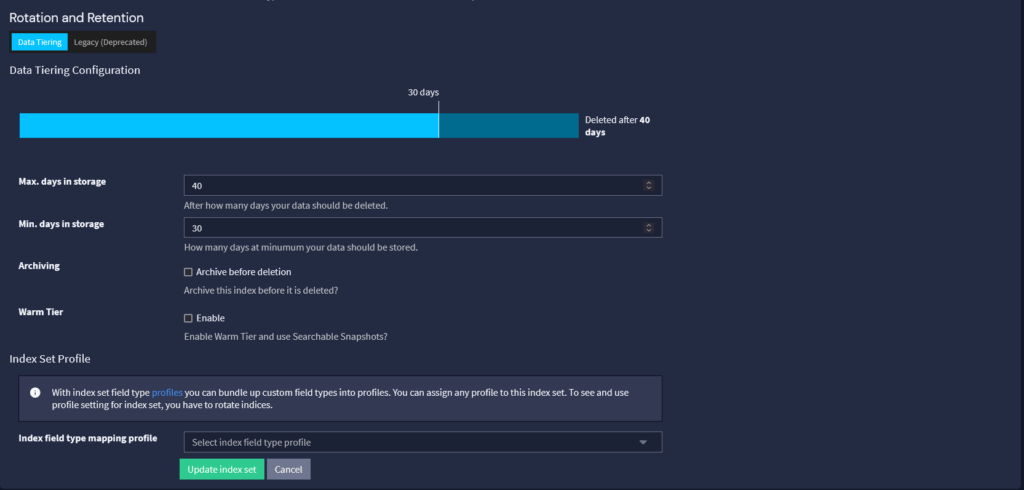
When you use streaming data, you can build a security data lake strategy that involves data tiering. You can reduce the total cost of ownership by optimizing the balance of storage costs and system performance. For example, you could have the following three tiers of data:
Hot: data needed immediately for real-time detections
Warm: data stored temporarily in case you need it to investigate an alert
Cold: long term data storage for historical data or to meet a retention compliance requirement
When you can store cold data in a cheaper location, like an S3 bucket, you reduce overall costs.
Improve Detections
Streaming data enables you to parse, normalize, aggregate, and correlate log information from across your IT environment. When you use real-time data, you can detect threats faster, enabling you to mitigate the damage an attacker can do. The aggregation and correlation capabilities enable you to create high-fidelity alerts so you can focus on the potential threats that matter to your systems, networks, and data. Additionally, since streaming data is already processed, you can enrich and integrate it with:
Security analytics are analytics models focused on cybersecurity use cases, like:
Security hygiene: how well your current controls work
Security operations: anomaly detection, like identifying abnormal user behavior
Compliance: identifying security trends like high severity alerts by source, type, user, or product
For example, anomaly detection analytics identify behaviors within data that do not conform to expected norms, enabling you to prevent or detect unauthorized access or potential data exfiltration attempts.
Graylog Security: Real-time data for improved threat detection and incident response
Graylog Enterprise and Security ensures scalability as your data grows to reduce total cost of ownership (TCO). Our platform’s innovative data tiering using data pipeline management capability facilitates efficient data storage management by automatically organizing data to optimize access and minimize costs without compromising performance.
With frequently accessed data kept on high-performance systems and less active data in more cost-effective storage solutions, you can leverage Graylog Security’s built-in content to uplevel your threat detection and response (TDIR) processes. Our solution combines MITRE ATT&CK’s knowledge base of adversary behavior and vendor-agnostic sigma rules so you can rapidly respond to incidents, improving key cybersecurity metrics. By combining the power of MITRE ATT&CK and sigma rules, you can spend less time developing custom cyber content and more time focusing on more critical tasks.
About Graylog At Graylog, our vision is a secure digital world where organizations of all sizes can effectively guard against cyber threats. We’re committed to turning this vision into reality by providing Threat Detection & Response that sets the standard for excellence. Our cloud-native architecture delivers SIEM, API Security, and Enterprise Log Management solutions that are not just efficient and effective—whether hosted by us, on-premises, or in your cloud—but also deliver a fantastic Analyst Experience at the lowest total cost of ownership. We aim to equip security analysts with the best tools for the job, empowering every organization to stand resilient in the ever-evolving cybersecurity landscape.
About Version 2 Digital
Version 2 Digital is one of the most dynamic IT companies in Asia. The company distributes a wide range of IT products across various areas including cyber security, cloud, data protection, end points, infrastructures, system monitoring, storage, networking, business productivity and communication products.
Through an extensive network of channels, point of sales, resellers, and partnership companies, Version 2 offers quality products and services which are highly acclaimed in the market. Its customers cover a wide spectrum which include Global 1000 enterprises, regional listed companies, different vertical industries, public utilities, Government, a vast number of successful SMEs, and consumers in various Asian cities.
If your organization takes security monitoring seriously, you’re likely drowning in dashboards, logs, and alerts from SIEMs, EDRs, SOAR platforms, and enough threat intelligence feeds to make your head spin. But amidst all the buzz about real-time monitoring, anomaly detection, and automated response, there’s often a glaring blind spot: Network Access Control (NAC).
Yes, NAC—arguably one of the least flashy but most foundational security tools—is often overlooked in security monitoring discussions. But if you’re not integrating NAC into your security monitoring strategy, you’re leaving gaps in your visibility, increasing your attack surface, and making it harder to respond to threats in real time.
So, let’s talk about where NAC fits into a well-rounded security monitoring strategy and why ignoring it is a mistake your SOC (Security Operations Center) can’t afford.
The Role of NAC in Security Monitoring
At its core, NAC enforces security policies by controlling which devices and users can connect to your network. But in doing so, it generates a wealth of valuable data that should feed into your broader security monitoring ecosystem.
Here’s what NAC brings to the table:
Real-time visibility into device connections: Every device that attempts to access your network—whether a corporate laptop, a rogue IoT device, or an attacker’s foothold—gets logged by NAC. This visibility is essential for identifying unauthorized or suspicious devices before they become a problem.
Policy enforcement and automated responses: NAC doesn’t just alert you to security issues; it acts on them. When a device fails compliance checks (e.g., missing security patches, outdated AV, unrecognized MAC address), NAC can quarantine or block it automatically, reducing the time attackers have to move laterally.
Contextual data for security investigations: When correlating data from a SIEM or SOAR platform, NAC logs can provide context on whether a user’s device was compliant, where it connected from, and whether access was granted or denied. This is crucial for incident response.
Now, let’s look at how NAC should integrate into your broader security monitoring strategy.
1. Feeding NAC Data into SIEMs for Comprehensive Monitoring
SIEMs thrive on correlation—NAC provides essential data on who’s connecting, from where, and whether they passed security checks.
If a user’s account triggers a login from an unusual location in the IAM logs, NAC can confirm whether their device was present on the corporate network or using a VPN.
NAC logs can identify when devices that were previously blocked attempt to reconnect, potentially signaling an insider threat or an attacker persistently probing for access.
How to integrate NAC with your SIEM:
Send NAC logs and alerts to your SIEM in real time.
Correlate NAC data with firewall logs, endpoint detection and response (EDR) tools, and authentication data.
Use NAC policies as an early indicator of device compliance issues before they escalate into security incidents.
2. Using NAC as a First Line of Defense in Zero Trust Architectures
Zero Trust isn’t just a buzzword—it’s a necessary shift in security strategy. NAC plays a crucial role by ensuring that only authorized, compliant devices gain access to the network in the first place.
How NAC fits into a Zero Trust strategy:
Continuous verification: NAC doesn’t just check compliance at login; it continuously enforces security policies. If a device falls out of compliance (e.g., a user disables their endpoint protection), NAC can revoke access immediately.
Least-privilege access: Combining NAC with microsegmentation ensures that even if an attacker compromises a device, lateral movement is restricted.
Dynamic risk-based access: Integrating NAC with identity providers (e.g., Entra ID, Okta) and security monitoring tools enables adaptive access controls based on risk signals.
By ensuring that every device accessing your network is continuously assessed, NAC strengthens the foundation of Zero Trust security monitoring.
If an EDR detects malware on a device, SOAR can trigger a NAC policy to isolate that endpoint from the network.
If an unusual login attempt is flagged by an IAM system, SOAR can use NAC to block the user’s device until security reviews the case.
If a SIEM detects multiple failed login attempts from an unknown device, NAC can automatically deny access and flag the security team for investigation.
With SOAR integration, NAC isn’t just enforcing access controls—it’s actively participating in threat containment.
4. Strengthening Security for IoT and Unmanaged Devices
IoT security remains a nightmare for enterprises. These devices often lack traditional endpoint security controls, making NAC one of the few tools capable of providing visibility and enforcement for them.
What NAC can do for IoT security:
Fingerprint and classify devices to detect unauthorized or rogue IoT devices.
Segment IoT devices to prevent them from accessing sensitive corporate resources.
Trigger alerts and block anomalous behavior—for instance, if a smart thermostat suddenly starts trying to communicate with external servers in Russia.
By integrating NAC data into security monitoring platforms, you can detect and mitigate IoT threats in real time.
Final Thoughts: NAC as a Security Monitoring Force Multiplier
If you’re only using NAC as a compliance checkbox, you’re missing out. In the right hands—and integrated with SIEM, SOAR, Zero Trust, and IoT security frameworks—NAC becomes a force multiplier for security monitoring.
Instead of viewing NAC as a standalone gatekeeper, think of it as a real-time security enforcer that feeds critical data into your broader threat detection and response strategy.
A well-integrated NAC strategy doesn’t just keep attackers out—it actively helps your security team detect, investigate, and respond to threats faster and more effectively. And in today’s landscape, where speed is everything, that’s not something you can afford to ignore.
About Portnox Portnox provides simple-to-deploy, operate and maintain network access control, security and visibility solutions. Portnox software can be deployed on-premises, as a cloud-delivered service, or in hybrid mode. It is agentless and vendor-agnostic, allowing organizations to maximize their existing network and cybersecurity investments. Hundreds of enterprises around the world rely on Portnox for network visibility, cybersecurity policy enforcement and regulatory compliance. The company has been recognized for its innovations by Info Security Products Guide, Cyber Security Excellence Awards, IoT Innovator Awards, Computing Security Awards, Best of Interop ITX and Cyber Defense Magazine. Portnox has offices in the U.S., Europe and Asia. For information visit http://www.portnox.com, and follow us on Twitter and LinkedIn.。
About Version 2 Digital
Version 2 Digital is one of the most dynamic IT companies in Asia. The company distributes a wide range of IT products across various areas including cyber security, cloud, data protection, end points, infrastructures, system monitoring, storage, networking, business productivity and communication products.
Through an extensive network of channels, point of sales, resellers, and partnership companies, Version 2 offers quality products and services which are highly acclaimed in the market. Its customers cover a wide spectrum which include Global 1000 enterprises, regional listed companies, different vertical industries, public utilities, Government, a vast number of successful SMEs, and consumers in various Asian cities.
Summary: This guide covers essential web application security practices. It highlights risks and strategies for protecting sensitive data and maintaining user trust in digital applications.
Imagine you’re running a small online store. Customers visit your website, browse your products, and enter their payment details to make a purchase. One day, you find out that cybercriminals exploited a weakness in your website to steal your customers’ credit card information. This damages your reputation, could lead to financial penalties, and causes a loss of trust.
This is why web application security is so important. It’s like a cornerstone of modern digital resilience. As businesses rely more on web applications to interact with customers, store sensitive data, and manage operations, ensuring their security is more critical than ever.
This guide will help you identify risks, adopt best practices, and effectively safeguard your web applications.
Key takeaways
Web application security means protecting your web apps from vulnerabilities and threats.
Cyber-attacks on web applications are rising, making robust security measures necessary.
Implementing security testing, web application firewalls, and best practices can mitigate vulnerabilities.
Proactive web application security helps businesses maintain trust, comply with regulations, and protect sensitive data.
What is web application security?
Web application security focuses on protecting web apps from vulnerabilities and threats that could compromise their functionality, data integrity, or user information.
This includes a wide range of measures aimed at identifying and mitigating risks such as cross-site scripting (XSS), SQL injection, and Denial-of-Service (DoS) attacks. By ensuring web applications are secure, businesses can safeguard sensitive data and maintain the trust of their users.
In simple terms, web application security ensures an application can resist attempts to exploit its weaknesses. It combines proactive measures like security testing and reactive tools, such as web application firewalls, to create a comprehensive defense against cyber threats.
The importance of web application security
Therefore, with the increasing reliance on web applications, their security has become a top priority for organizations of all sizes. Here’s why web application security is crucial:
Protecting sensitive data. Web applications often handle personal information, financial data, and intellectual property. A security breach can expose this sensitive information, leading to financial and reputational damage.
Maintaining customer trust. Users expect their data to be safe. A compromised application can erode customer trust and harm brand reputation.
Regulatory compliance. Many industries are subject to strict data protection regulations. Ensuring web application security helps businesses comply with these standards and avoid penalties.
Preventing downtime. Security incidents like DoS attacks can disrupt application availability, leading to business losses.
Staying ahead of cybercriminals. Attackers continuously develop new techniques, and robust web application security helps you stay one step ahead.
Prioritizing web application security safeguards your organization against threats, builds trust, ensures compliance, and reinforces resilience.
Potential risks to web application security
However, web applications face numerous security risks that can lead to data breaches, downtime, and loss of user confidence. Here are some of the most common risks:
Injection attacks: SQL injection and command injection attacks manipulate input fields to execute malicious commands or access sensitive data
Cross-Site Scripting (XSS): This allows attackers to inject malicious scripts into web pages viewed by other users, compromising their data
Broken authentication: Weak or improperly implemented authentication can allow attackers to impersonate legitimate users
Sensitive data exposure: Applications that fail to secure sensitive data through encryption are vulnerable to data theft
Security misconfigurations: Misconfigured servers, frameworks, or APIs create vulnerabilities that attackers can exploit
Denial-of-Service (DoS) attacks: Attackers overload the application with traffic, making it unavailable to legitimate users
Insecure APIs: Poorly secured APIs can provide attackers with an entry point to access backend systems
Insufficient logging and monitoring: Without proper logging, it becomes difficult to detect and respond to security incidents
Understanding these risks is the first step in strengthening your web application’s defenses. Proactively addressing vulnerabilities can protect your users, data, and reputation from potentially devastating consequences.
Recent data on web application security
According to an IBM report, the average cost of a data breach has increased to $4.88 million in 2024, up from $4.35 million in 2023, highlighting the financial impact of security breaches on businesses.
The average enterprise manages 613 API endpoints, with API traffic constituting over 71% of web traffic. Because of that, insecure APIs are the most prevalent vulnerability, impacting 33% of applications. Based on the Imperva report 2024, API-related security issues cost organizations up to $87 billion annually.
Therefore, SQL injection affects 25% of web applications, cross-site scripting (XSS) affects 18%, and broken authentication affects 27%.
Web application attacks account for 26% of all breaches, making them the second most common attack pattern. This underscores the need for robust web application security measures.
Web application security best practices
The best way to protect web applications from security threats is to apply best practices proactively. Here are key strategies to consider:
1. Conduct regular security testing
Security testing should be a routine process for identifying and addressing vulnerabilities. This includes:
Penetration testing: Simulates real-world cyber-attacks to identify weak points. For example, a penetration test might reveal that your login page is vulnerable to brute-force attacks, allowing you to strengthen password requirements or implement account lockouts.
Vulnerability scanning: Automated tools can scan your application for known vulnerabilities, such as outdated libraries or misconfigured settings. For example, a scan might detect an unpatched vulnerability in your database system.
Code reviews: Reviewing application code helps spot insecure practices like hard-coded credentials or SQL queries without proper sanitization. If a code review finds that user inputs are not validated, it may prevent potential SQL injection attacks.
How it works? Imagine your e-commerce platform is targeted with a bot attack attempting to scrape product pricing. A WAF monitors incoming traffic and filters out malicious requests, such as SQL injections or cross-site scripting (XSS) attempts. Then, it can block these automated requests while allowing legitimate users to access your site seamlessly.
3. Implement strong authentication and authorization
Multi-factor authentication (MFA) adds an extra security layer by requiring a second verification method, such as a text message code or a fingerprint scan. If a malicious actor compromises an employee’s password, MFA will prevent access by asking for the second factor, such as a smartphone-generated code.
In addition to MFA, Role-Based Access Control (RBAC) ensures users only access the resources necessary for their roles. For example, in a healthcare application, RBAC would allow doctors to view patient records but restrict administrative staff from accessing sensitive medical data.
4. Encrypt sensitive data
Use HTTPS to encrypt data as it travels between users and your application, protecting it from interception. Encrypt stored data using strong algorithms like AES-256 or ChaCha20, which make any stolen database useless for attackers without the decryption keys.
5. Keep software updated
Regularly update your application, frameworks, and libraries to patch weak security spots, and use automated tools to track updates for dependencies. Outdated software often contains unpatched vulnerabilities that attackers can exploit. Even an outdated Windows system can become a vulnerability for a ransomware attack (true story!).
6. Adopt a Zero Trust approach
A Zero Trust approach operates on the principle that no user or device is inherently trustworthy, regardless of its location within or outside the network. To implement Zero Trust effectively, every access request must be validated to confirm the user’s identity and the request’s legitimacy.
Continuous monitoring helps detect suspicious activity and maintain security. Additionally, enforcing the principle of least privilege ensures that users only have access to the resources necessary for their roles, minimizing potential vulnerabilities.
7. Secure APIs
APIs are a frequent target for attackers, making it essential to implement robust security measures. To secure APIs effectively, use authentication and authorization protocols to ensure that only authorized users can access sensitive data.
Validating input is crucial to prevent injection attacks, which can compromise the integrity of the application. Limiting API calls is another important strategy to prevent abuse and mitigate the risk of DOS attacks.
8. Monitor and log activity
Comprehensive logging enables you to detect and respond to security incidents, such as attempts to access restricted files. Use monitoring tools to gain real-time visibility into your application’s activity.
For example, if your monitoring system detects multiple failed login attempts from an unfamiliar IP address, it can trigger an alert or block the IP.
How NordLayer can help
The toggle-ready network security platform NordLayer provides robust solutions to address web application security risks effectively. Whether you’re concerned about security testing, application vulnerabilities or need a web application firewall, NordLayer can help safeguard your business.
Threat prevention: NordLayer’s solutions block malicious traffic, prevent access to harmful websites, and prevent malware downloads.
Secure access: With frameworks like Zero Trust Network Access (ZTNA), NordLayer ensures secure and limited access to web applications. Its features, including Cloud Firewall, filter traffic at the application layer, offering strengthened protection against sophisticated threats.
Comprehensive monitoring: Advanced monitoring of activity logs, usage dashboards, and Device Posture Monitoring helps identify security vulnerabilities and respond proactively.
By integrating NordLayer into your cybersecurity strategy, you can achieve a multi-layered defense that mitigates web application security threats and improves business protection.
About NordLayer NordLayer is an adaptive network access security solution for modern businesses – from the world’s most trusted cybersecurity brand, Nord Security.
The web has become a chaotic space where safety and trust have been compromised by cybercrime and data protection issues. Therefore, our team has a global mission to shape a more trusted and peaceful online future for people everywhere.
About Version 2 Digital
Version 2 Digital is one of the most dynamic IT companies in Asia. The company distributes a wide range of IT products across various areas including cyber security, cloud, data protection, end points, infrastructures, system monitoring, storage, networking, business productivity and communication products.
Through an extensive network of channels, point of sales, resellers, and partnership companies, Version 2 offers quality products and services which are highly acclaimed in the market. Its customers cover a wide spectrum which include Global 1000 enterprises, regional listed companies, different vertical industries, public utilities, Government, a vast number of successful SMEs, and consumers in various Asian cities.
When it comes to server virtualization, two prominent hypervisors are often considered: VMware ESXi and XCP-ng. Both platforms offer robust solutions for creating and managing virtual machines (VMs) but differ in several key areas, including cost, performance, features, usability, and support. Understanding these differences is crucial for organizations looking to optimize their virtual infrastructure.
What is VMware ESXi?
VMware created VMware ESXi as part of its virtualization solution. ESXI is known for its excellent performance, scalability, and efficiency, making it a favorite among enterprises. This bare-metal hypervisor installs directly onto the physical server, dividing its resources into several virtual machines. This direct installation makes it easy to manage hardware resources effectively.
Key Features and Functionality
VMware offers several industry-standard features, including;
High Performance ESXi is designed to interact directly with the host hardware, delivering exceptional performance. Its lightweight architecture makes it ideal for running virtual machines efficiently. ESXi also minimizes resource overhead while maximizing physical resource utilization.
Resource Management With ESXi, users can allocate CPU, memory, and storage resources to individual virtual machines as needed. It also uses advanced tools like Distributed Power Management and Dynamic Resource Scheduler to enhance system efficiency.
Security ESXi protects virtual environments with features like secure boot, VM encryption, and role-based access control (RBAC). These measures help safeguard against unauthorized access and data breaches.
Fault Tolerance and High Availability: ESXi ensures uninterrupted access to virtual machines, even during hardware failures. Fault Tolerance (FT) stores a live replica of the virtual machine for continuous availability. If the current one fails, the High Availability (HA) automatically restarts affected virtual machines on another host.
Scalability ESXi can be seamlessly integrated with VMware solutions like vSphere and vCenter, enabling the management of thousands of virtual machines across multiple physical hosts. This scalability makes it well-suited for large, complex environments.
What is XCP-ng?
XCP-ng stands for Xen Cloud Platform—Next Generation. It is an open-source virtualization platform built on an Xen hypervisor. XCP-ng was created as an alternative to Citrix XenServer, solving the problems it faced. It offers a comprehensive range of tools for virtual environment management. As an open-source project, there are no licensing fees, making it a great choice for enterprises and small businesses.
Key Features and Functionality
XCP-ng comes with several modern features designed to enhance virtualization capabilities, including;
Xen Orchestra Integration
XCP-ng works seamlessly with Xen Orchestra, a web-based, user-friendly platform for managing VMs, storage, and networking. It offers free and premium versions, both of which offer advanced features and professional support.
High Availability (HA)
XCP-ng offers high-availability clustering. This feature ensures that if a host dies, the virtual machines on that server will be moved to another host.
Storage Support
XCP-ng works with various storage options, such as Fibre Channel, NFS, and iSCSI. It also integrates with distributed storage systems like Ceph, allowing users to create strong and scalable storage solutions to handle their virtualized workloads.
Live Migration
XCP-ng uses live migration to transfer VMs across hosts when transferring virtual machines. This method ensures that there’s load balancing and reduced downtime during maintenance
Networking Features
XCP-ng offers advanced networking tools like virtual LAN (VLAN), network bonding, and Open vSwitch (OVS) integration. These features make it easy to build complex network setups that prioritize security, performance, and reliability.
What to Consider Before Choosing Between VMware ESXi and XCP-ng
An IT expert looking to choose between VMware ESXi and XCP-ng has a lot to consider, including;
Cost and Licensing
One of the most significant differences between VMware ESXi and XCP-ng is their cost structures. VMware ESXi operates on a proprietary licensing model, which is more expensive than XCP-ng. It, however, has a free version with limitations. The version provides fewer features, no centralized management, and a total of eight vCPUs per VM. Thus, advanced features like vMotion, High Availability, and Distributed Resource Scheduler (DRS) are only available through paid licenses.
On the other hand, XCP-ng is an open-source hypervisor based on XenServer. It is a cost-effective alternative as there are no licensing fees. This open-source nature allows organizations to utilize a full-featured hypervisor without the financial burden of proprietary solutions.
Performance
Performance is another key factor for hypervisors. Fortunately, both VMware ESXi and XCP-ng are type-1 hypervisors. This means they work directly on the host’s hardware. Type-1 hypervisors generally provide superior performance compared to type-2 hypervisors. When both hypervisor performances were compared, they were nearly the same. However, some users have reported that, in certain scenarios, ESXi outperforms XCP-ng, while in others, XCP-ng holds the advantage. For instance, ESXi was faster in a series of tests in about 60% of the cases. Meanwhile, XCP-ng led in the remaining 40%. Thus, the better choice could depend on the circumstances, so always consider the specific workloads and configurations when checking performance. They could have varying performances based on the particular applications and environments in use.
Features and Functionality
Both hypervisors offer a range of features designed to enhance virtualization capabilities, but there are notable differences:
High Availability (HA): VMware’s HA feature allows you to automatically restart VMs on another host when a host fails, minimizing downtime. XCP-ng also offers HA capabilities. Similarly, if a host fails in XCP-ng, the affected VMs are rebooted on another host, resulting in short downtime during the reboot process.
Management Tools: VMware ESXi is managed through the vCenter Server, a comprehensive tool that provides centralized management of virtual environments and a paid product requiring a separate license. XCP-ng utilizes Xen Orchestra, a web-based open-source interface. It enables straightforward management of VMs, storage, and networking. Xen Orchestra offers both free and premium versions, with the latter providing enhanced features and professional support options.
Backup Solutions: Both platforms support various backup solutions. VMware ESXi integrates with different third-party backup tools and offers snapshot-based backups and replication features. XCP-ng, with Xen Orchestra, provides built-in backup solutions, including full and delta backups. These solutions help to cater to different backup and recovery needs.In this field
Storware Backup and Recovery can support data protection (disaster recovery, cyber resiliency, business continuity) for both hypervisors, within one license. Here are the example videos showing how Storware works with each platform:
Backup and Recovery for VMware
Backup and Recovery for XCP-ng
Usability
Usability is an important factor, especially for organizations without dedicated IT teams. VMware ESXi has an in-built web-based HTML5 GUI that allows straightforward single-host management without additional installations. This intuitive interface simplifies tasks such as building and managing VMs, configuring virtual switches, and handling data stores.
In contrast, XCP-ng doesn’t have a local web GUI for host management. Instead, users must deploy Xen Orchestra (XOA), which offers a rich feature set but makes the initial setup complex. However, once configured, Xen Orchestra provides a comprehensive management interface that is as good as VMware’s.
Support and Community
Support options differ significantly between the two platforms:
VMware ESXi: VMware offers a high degree of professional support and a well-established knowledge base as a commercial product. It also caters to clients that require reliable and timely assistance.
XCP-ng: As an open-source project, XCP-ng relies on a growing community for support. Vendors like Vates render professional services, but the ecosystem is still maturing compared to VMware’s long-standing presence in the market.
Conclusion
Choosing between VMware ESXi and XCP-ng depends on various factors, including budget constraints, specific workload requirements, desired features, and the level of support preferred. Organizations seeking a cost-effective, open-source solution with support may choose XCP-ng. However, those seeking comprehensive enterprise support and advanced features might opt for VMdetermine ESXi. You must evaluate your unique needs and resources to determine which is best.
A data recovery plan (DRP) is a structured approach that describes how an organization will respond quickly to resume activities after a disaster that disrupts the usual flow of activities. A vital part of your DRP is recovering lost data.
Virtualization helps you protect your data online through virtual data recovery (VDR). VDR is the creation of a virtual copy of an organization’s data in a virtual environment to ensure a quick bounce back to normalcy following an IT disaster.
While having a virtual data recovery plan is good, you must also provide an off-site backup for a wholesome data recovery plan that can adequately prevent permanent data loss. An off-premises backup location provides an extra security layer in the event of data loss. Thus, you shouldn’t leave this out when planning your data recovery process.
Let’s try to look at this issue in a general way, knowing how diverse and capacious the issue of virtualization and disaster recovery is. Certainly, implementing a dedicated data protection solution will help streamline data protection and disaster recovery processes.
Benefits of Virtualization for Disaster Recovery
Virtualization plays a crucial role in disaster recovery. Its ability to create a digital version of your hardware offers a backup in the event of a disaster. Here are some benefits of virtualization for disaster recovery.
Recover Data From Any Hardware
If your hardware fails, you can recover data from it through virtualization. You can access your virtual desktop from any hardware, allowing you to recover your information quickly. Thus, you can save time and prevent data loss during disasters.
Backup and Restore Full Images
With virtualization, your server’s files will be stored in a single image file. Restoring the image file during data recovery requires you to duplicate and restore it. Thus, you can effectively store your files and recover them when needed.
Copy Data to a Backup Site
Your organization’s backups must have at least one extra copy stored off-site. This off-premise backup protects your data against loss during natural disasters, hardware failure, and power outages. Data recovery will help automatically copy and transfer files virtually to the off-site storage occasions.
Reduce Downtime
There’s little to no downtime when a disaster event occurs. You can quickly restore the data from the virtual machines. So recovery can happen within seconds to minutes instead of an hour, saving vital time for your organization.
Test Disaster Recovery Plans
Virtualization can help you test your disaster recovery plans to see if they are fail-proof. Hence, you can test and analyze what format works for your business, ensuring you can predict a disaster’s aftermath.
Reduce Hardware Needs
Since virtualization works online, it reduces the hardware resources you need to upscale. With only a few hardware, you can access multiple virtual machines simultaneously. This leads to a smaller workload and lower operation costs.
Cost Effective
Generally, virtualization helps to reduce the cost of funding virtual disaster recovery time. With reduced use of hardware and quicker recovery time, the data recovery cost is reduced, decreasing the potential loss caused by disasters.
Data Recovery Strategies for Virtualization
Below are some practical strategies to help build a robust data recovery plan for your organization’s virtual environment:
Backup and Replication
Create regular backups of your virtual machines that will be stored in a different location—for instance, an external drive or a cloud service. You can also create replicas and copies of your virtual machines that are synchronized with the original. You can switch from the original to a replica in case of failure.
Snapshot and Restore
Snapshots capture your data at specific preset moments, creating memories of them. Restore points also capture data but include all information changes after the last snapshot. You can use snapshot and restore to recover the previous state of your data before the data loss or corruption.
Encryption and Authentication
Encryption and authentication are essential security measures that work in tandem to safeguard data from unauthorized access. By employing both methods, you establish robust layers of defense. This, thereby, fortifies your data against potential cyber threats, ultimately mitigating the risks associated with corruption and theft.
Conclusion
Creating a disaster recovery plan is crucial for every organization as it helps prevent permanent data loss in the event of a disaster, leading to data loss or corruption. Virtualization helps in data recovery by creating a virtual copy of your hardware that can be accessed after a disaster.
Virtualization reduces downtime, helps to recover data from the hardware, reduces hardware needs, and facilitates testing your data recovery plans. However, you must note that virtual data recovery is only a part of a failproof disaster recovery plan. You must make provisions for an off-premises backup site for more robust protection.
About Version 2 Digital
Version 2 Digital is one of the most dynamic IT companies in Asia. The company distributes a wide range of IT products across various areas including cyber security, cloud, data protection, end points, infrastructures, system monitoring, storage, networking, business productivity and communication products.
Through an extensive network of channels, point of sales, resellers, and partnership companies, Version 2 offers quality products and services which are highly acclaimed in the market. Its customers cover a wide spectrum which include Global 1000 enterprises, regional listed companies, different vertical industries, public utilities, Government, a vast number of successful SMEs, and consumers in various Asian cities.
About Storware Storware is a backup software producer with over 10 years of experience in the backup world. Storware Backup and Recovery is an enterprise-grade, agent-less solution that caters to various data environments. It supports virtual machines, containers, storage providers, Microsoft 365, and applications running on-premises or in the cloud. Thanks to its small footprint, seamless integration into your existing IT infrastructure, storage, or enterprise backup providers is effortless.



 We are delighted to announce our acquisition of Delphix, a best-in-class leader in Enterprise Data Management solutions. I want to share with you why I am personally excited about this major milestone in our company’s continued DevOps evolution and the benefits this acquisition provides to our customers.
Data is at the heart of how enterprises operate today and essential for successful software development, but accessing and managing that data is extremely challenging. Many teams do not have rapid access to solid, high-quality test data. Imagine something the size of a relational database, with all the data to collect and piece together to make it testable — this is both labor-intensive and very difficult to achieve.
All that changes with Delphix. This truly outstanding platform provides on-demand, easy access to data very quickly and in a safe way. Delphix protects and masks customer data giving teams the right data, securely and quickly, so they can focus on creating great software.
We are delighted to announce our acquisition of Delphix, a best-in-class leader in Enterprise Data Management solutions. I want to share with you why I am personally excited about this major milestone in our company’s continued DevOps evolution and the benefits this acquisition provides to our customers.
Data is at the heart of how enterprises operate today and essential for successful software development, but accessing and managing that data is extremely challenging. Many teams do not have rapid access to solid, high-quality test data. Imagine something the size of a relational database, with all the data to collect and piece together to make it testable — this is both labor-intensive and very difficult to achieve.
All that changes with Delphix. This truly outstanding platform provides on-demand, easy access to data very quickly and in a safe way. Delphix protects and masks customer data giving teams the right data, securely and quickly, so they can focus on creating great software.