Skip to content

Why IT Security Authentication Fails

Authentication is a crucial part of IT security, but it can often fail due to several common issues. This article from Portnox explains why strong authentication is so important and details the main causes and consequences of authentication failures.

Common Causes of Authentication Failures

The article discusses a variety of authentication methods, including passwords, biometrics, and multi-factor authentication (MFA). It identifies the following as the main reasons for authentication failures:

  • Weak Passwords: Users often create simple passwords that are easy to guess or crack.
  • Phishing Attacks: Hackers trick users into revealing their login credentials.
  • Lack of User Training: Employees may not understand the importance of security best practices.
  • System Misconfigurations: Improperly set up security systems can create vulnerabilities.

Consequences and Prevention

The consequences of these failures can be severe, including data breaches, loss of customer trust, and major operational disruptions. To prevent these problems, the article recommends strengthening password policies, providing better user training, and implementing robust security measures like MFA.

About Portnox
Portnox provides simple-to-deploy, operate and maintain network access control, security and visibility solutions. Portnox software can be deployed on-premises, as a cloud-delivered service, or in hybrid mode. It is agentless and vendor-agnostic, allowing organizations to maximize their existing network and cybersecurity investments. Hundreds of enterprises around the world rely on Portnox for network visibility, cybersecurity policy enforcement and regulatory compliance. The company has been recognized for its innovations by Info Security Products Guide, Cyber Security Excellence Awards, IoT Innovator Awards, Computing Security Awards, Best of Interop ITX and Cyber Defense Magazine. Portnox has offices in the U.S., Europe and Asia. For information visit http://www.portnox.com, and follow us on Twitter and LinkedIn.。

About Version 2 Digital

Version 2 Digital is one of the most dynamic IT companies in Asia. The company distributes a wide range of IT products across various areas including cyber security, cloud, data protection, end points, infrastructures, system monitoring, storage, networking, business productivity and communication products.

Through an extensive network of channels, point of sales, resellers, and partnership companies, Version 2 offers quality products and services which are highly acclaimed in the market. Its customers cover a wide spectrum which include Global 1000 enterprises, regional listed companies, different vertical industries, public utilities, Government, a vast number of successful SMEs, and consumers in various Asian cities.

How to recover your hacked Facebook account

This article provides a guide on how to recover a compromised Facebook account, outlining steps for two main scenarios: when you still have access, and when you are completely locked out. It also includes advice for securing your account afterward to prevent future attacks.

If You Still Have Access to Your Account

If you can still log in, you must act quickly to secure your account.

  • Change Your Password: Create a new, strong password immediately.
  • Log Out of All Devices: In your security settings, you can force a log-out on all devices that have ever been logged into your account.
  • Review Connected Apps: Check for any apps you don’t recognize and remove them.

If You Are Completely Locked Out

If a hacker has changed your login information, use Facebook’s official recovery tool to regain access.

  1. Navigate to the Facebook recovery page: https://www.facebook.com/hacked.
  2. Follow the on-screen instructions, which will guide you through a process to identify your account and verify your identity.
  3. Important: Avoid using any third-party services that claim to recover your account, as these are often scams.

How to Prevent Future Hacks

Once you’ve regained control of your account, take these steps to make it more secure.

  • Enable Multi-Factor Authentication (MFA): This adds an extra layer of security, requiring a code from your phone or another device in addition to your password.
  • Secure Your Email: Ensure the email account linked to your Facebook profile is also secure, as hackers can use it to reset your password.
  • Notify Your Contacts: Inform friends and family that your account was compromised so they can be aware of any malicious messages sent from it.
  • Use a Password Manager: Consider using a password manager to generate and store strong, unique passwords for all your online accounts.

About NordPass
NordPass is developed by Nord Security, a company leading the global market of cybersecurity products.

The web has become a chaotic space where safety and trust have been compromised by cybercrime and data protection issues. Therefore, our team has a global mission to shape a more trusted and peaceful online future for people everywhere.

About Version 2 Digital

Version 2 Digital is one of the most dynamic IT companies in Asia. The company distributes a wide range of IT products across various areas including cyber security, cloud, data protection, end points, infrastructures, system monitoring, storage, networking, business productivity and communication products.

Through an extensive network of channels, point of sales, resellers, and partnership companies, Version 2 offers quality products and services which are highly acclaimed in the market. Its customers cover a wide spectrum which include Global 1000 enterprises, regional listed companies, different vertical industries, public utilities, Government, a vast number of successful SMEs, and consumers in various Asian cities.

The Importance of SaaS Data Loss Prevention (DLP)

The increasing use of Software as a Service (SaaS) applications in modern businesses has created a major challenge for data security. While SaaS tools are excellent for collaboration, they also spread sensitive data across multiple platforms, significantly increasing the risk of data breaches.

Challenges to Modern Data Security

Traditional, on-premise DLP solutions are no longer effective in this cloud-centric world. The key challenges to modern data security include:

  • Shadow IT: The widespread use of unapproved or unmonitored applications.
  • Poor Visibility: Difficulty in tracking where sensitive data is going.
  • Identity-based Attacks: Hackers targeting user accounts to gain access to data.

Best Practices for SaaS DLP

To combat these threats, a new approach is needed. Best practices for SaaS DLP include:

  • Data Classification: Identifying and categorizing all sensitive information.
  • Access Control: Implementing the principle of “least privilege,” where users only have access to the data they absolutely need.
  • Real-time Monitoring: Continuously watching for suspicious activity within SaaS applications.

The article introduces a “browser-first” DLP strategy, which aims to enforce security where most work happens—in the browser. This method provides real-time protection without negatively impacting employee productivity. NordLayer’s upcoming Enterprise Browser is presented as a purpose-built solution to address these challenges.

About NordLayer
NordLayer is an adaptive network access security solution for modern businesses – from the world’s most trusted cybersecurity brand, Nord Security.

The web has become a chaotic space where safety and trust have been compromised by cybercrime and data protection issues. Therefore, our team has a global mission to shape a more trusted and peaceful online future for people everywhere.

About Version 2 Digital

Version 2 Digital is one of the most dynamic IT companies in Asia. The company distributes a wide range of IT products across various areas including cyber security, cloud, data protection, end points, infrastructures, system monitoring, storage, networking, business productivity and communication products.

Through an extensive network of channels, point of sales, resellers, and partnership companies, Version 2 offers quality products and services which are highly acclaimed in the market. Its customers cover a wide spectrum which include Global 1000 enterprises, regional listed companies, different vertical industries, public utilities, Government, a vast number of successful SMEs, and consumers in various Asian cities.

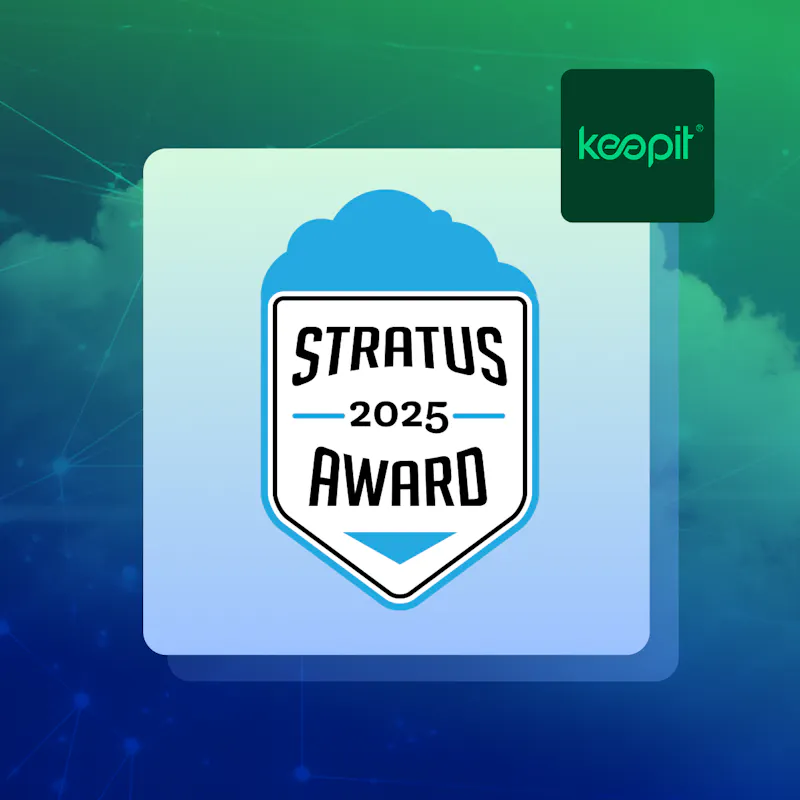
Keepit Wins Stratus Award for Cloud Computing

Keepit, a leading provider of SaaS data protection, has been recognized as a winner in the Security category of the 2025 Stratus Awards for Cloud Computing. The awards, presented by the Business Intelligence Group, honor companies that are at the forefront of cloud innovation.

This award acknowledges Keepit’s excellence in using cloud technologies to deliver secure and transformative outcomes for its customers. The company’s platform provides vendor-independent data backup and utilizes seven global data center regions to help businesses with data sovereignty requirements.

According to Michele Hayes, Keepit’s Chief Marketing Officer, this recognition validates the team’s commitment to building meaningful, cloud-first solutions. The award is one of several accolades the platform has received this year, including wins at the Global Infosec Awards and a Data Breakthrough Award.

Download the report


Defining data governance and data classification

So, what is data governance and how does it relate to cyber resilience?

Existing under the broad umbrella of data management, data governance is a program — implemented via policies and standards — intended to ensure the availability, quality, and security of an organization’s data in accordance with applicable regulations and obligations (e.g., adhering to industry standards, fulfilling requirements for certifications, etc.).

Within data governance, data classification is the process of separating and organizing data into relevant groups (“classes”) based on their shared characteristics, such as the level of sensitivity, risks they present, and the compliance regulations that protect them.

Data governance underpins cyber resilience plans

An intelligent data governance program delivers several beneficial outcomes for organizations:

  • It helps to ensure the availability, quality, and security of an organization’s data, making it a foundational pillar of business continuity.
  • Data governance helps improve overall data accuracy and impacts outcomes based on that data — which can range from comparatively simple day-to-day business decisions and operations to more complex, forward-looking initiatives including AI-focused programs.
  • It helps to support organizational efforts to comply with regulations and other obligations, making it a cornerstone of compliance.
  • An effective data governance program also permeates the entire organization, increasing data literacy, data accessibility, and data scalability.

Do you know where your data is?

Of course, disaster recovery planning cannot start without a clear understanding and mapping of your data and its significance to your business. What data is crucial for us to continue running our operations? Who needs access to which data to do their job? Where do we store all of this critical data?

Knowing the answers to these questions will start your journey towards ensuring continuity in cases of data loss or cyberattacks. This is achieved through an efficient and effective data governance framework.

I hope that, with our new report in hand, CISOs and CIOs will be able to future-proof their modern, data-driven enterprises through effective data governance.

About Keepit’s new report, “Intelligent data governance: Why taking control of your data is key for operational continuity and innovation.”

Our report takes a practical approach to data governance by offering a resource to organizations for creating or adopting a framework that works best for them.

Key takeaways from the report:

-Major trends shaping enterprise IT

-The importance of “always-on” data

-Resilience against data loss and corruption

-Data governance as an investment

-A practical approach to data governance

-10 questions for board discussions

Get the full report

About Keepit
At Keepit, we believe in a digital future where all software is delivered as a service. Keepit’s mission is to protect data in the cloud Keepit is a software company specializing in Cloud-to-Cloud data backup and recovery. Deriving from +20 year experience in building best-in-class data protection and hosting services, Keepit is pioneering the way to secure and protect cloud data at scale.

About Version 2 Digital

Version 2 Digital is one of the most dynamic IT companies in Asia. The company distributes a wide range of IT products across various areas including cyber security, cloud, data protection, end points, infrastructures, system monitoring, storage, networking, business productivity and communication products.

Through an extensive network of channels, point of sales, resellers, and partnership companies, Version 2 offers quality products and services which are highly acclaimed in the market. Its customers cover a wide spectrum which include Global 1000 enterprises, regional listed companies, different vertical industries, public utilities, Government, a vast number of successful SMEs, and consumers in various Asian cities.

AI in Cybersecurity: A CISO’s Practical Guide to Cutting Through the Hype

This guide will show you how CISOs can move past the hype around artificial intelligence, find real security value, choose the right vendors, and show a clear return on investment.


Key Takeaways for CISOs on AI in Cybersecurity

  • AI: Reality vs. Marketing. Many tools marketed as “AI-powered” are actually just basic automation. Learning to spot “AI-washing” is key to avoiding wasted money and keeping your defenses strong.
  • Attackers Are Fast. Since ChatGPT’s release, phishing attacks have surged by an incredible 4,151%. This shows how quickly criminals are using AI to their advantage.
  • Proven Results Are What Count. Genuine AI models have a proven track record of 95.7% detection accuracy and can cut average response times from 45 minutes down to just 12.
  • Integration is Everything. Tools that are confusing, cause too many false alarms, or don’t connect well with your existing security systems can actually hurt your security operations.
  • Leadership Drives Success. The most successful CISOs focus on adopting AI based on clear ROI, measurable risk reduction, and better compliance.

Every CISO is under pressure to embrace AI. Vendors make big promises, investors are fueling the hype, and boards expect quick results. But while the marketing looks great, attackers are already using AI to launch faster, more sophisticated campaigns. If you can’t tell the difference between true innovation and “AI-washing,” your defenses—and your professional reputation—are at risk.

AI has helped companies strengthen their systems like never before, but it has also made it easier for attackers. For example, since ChatGPT launched, phishing attacks have increased by a staggering 4,151%.

This guide is designed to help CISOs like you confidently navigate the AI cybersecurity landscape. It will empower you to evaluate and select vendors that offer a high ROI and truly protect your company from cybercrime.

AI in Cybersecurity: The Reality Behind the Slogans

Adopting AI is as much a leadership decision as a technical one. You need to look beyond flashy demonstrations, ask the tough questions, and choose a vendor that delivers real AI detection and prevention. To do this, you need to understand the technology and the warning signs of “AI-washing.”

Core Concepts: What AI and Machine Learning Really Mean

The world of AI is complex, but here are a few basic terms you need to know:

  • Artificial Intelligence (AI): This is the ability of machines to mimic human-like thinking, learning, and problem-solving. In cybersecurity, AI defends a company’s digital systems through early detection and prevention.
  • Machine Learning (ML): A part of AI where machines learn patterns from data and get better over time. Instead of just looking for known threats, ML looks for unusual and new patterns to spot anomalies early.
  • Deep Learning (DL): A more advanced form of ML that uses neural networks to learn from huge amounts of data. DL is especially good at spotting metamorphic malware that constantly changes to avoid detection.
  • Natural Language Processing (NLP): A part of AI that lets machines understand human language. In cybersecurity, NLP is used to analyze emails and messages to detect social engineering attacks.

Remember, AI and its subsets are not the same as rule-based automation. Traditional tools use a fixed set of rules and can’t adapt to new threats. True AI tools learn and improve over time as they are exposed to new data.

How to Spot “AI-Washing” Before It Costs You

As companies rush to integrate AI, many vendors are exaggerating how advanced their solutions are. Vendors that over-hype their AI often get more attention and funding.

Fortunately, it’s not hard to avoid “AI-washing.” You just need to ask vendors the right questions and watch out for these red flags:

  • Vague Descriptions: If a vendor can’t clearly explain which models they use, what data they train on, or how they handle false alarms, their product is likely just a fancy automation tool.
  • Lack of Transparency: Avoid vendors that can’t explain why their AI made a certain decision. This is known as the “Black Box Issue.” Using these tools is a risk because they might miss a real threat or flag normal behavior as suspicious.
  • Too Many Buzzwords: Be cautious of vendors who use a lot of over-the-top words like “revolutionary” and “groundbreaking” but can’t provide real results or technical details.
  • No Progress Updates: Real AI vendors constantly learn and improve. If a solution can’t show how its detection rate has gotten better and its false positives have decreased, it’s a sign to look for other options.
  • No Social Proof: If a vendor makes big claims but has no case studies or has bad reviews on sites like G2 and Capterra, you should consider alternatives.

Where AI Truly Adds Value to Security

With more than 2,200 cyberattacks happening every day, the right AI tools can significantly reduce this risk by detecting threats, optimizing your security team’s operations, and fighting back against sophisticated attacks.

Advanced Threat Detection and Prediction

AI is exceptionally good at spotting anomalies compared to traditional rule-based tools. In one study, AI-powered threat detection increased accuracy to 95.7% compared to just 78.4% for rule-based systems. It also cut response times from 45 minutes to just 12.

Machine learning creates a baseline for normal user behavior and network activity. Any deviation from this baseline is flagged as suspicious. Since ML learns from more data over time, it can spot patterns that a human might miss. AI also analyzes historical data to forecast future attacks. One study found that predictive ML models successfully identified 92% of potential zero-day vulnerabilities.

Supercharging Security Operations (SecOps)

Security operations teams are often overwhelmed with alerts. On average, it takes 194 days to identify a single breach. AI tools ease this burden by reviewing hundreds of daily alerts and only highlighting the most suspicious ones for human review.

AI can also integrate with Security Orchestration, Automation, and Response (SOAR) platforms to automate responses based on pre-defined rules. This could include blocking malicious websites or updating firewall rules. AI can also optimize vulnerability management by scoring alerts based on risk, not just on a standard score, but also on contextual factors like how critical the asset is.

Fighting Back Against AI-Powered Cybercrime

Criminals are using AI to create highly convincing phishing and business email compromise (BEC) attacks. AI can help stop these by analyzing email details like sender history, writing style, and the meaning of attachments to spot fake emails.

Beyond phishing, AI helps prevent malware. Instead of just analyzing known signatures, AI can analyze code behavior to identify metamorphic viruses, which are very difficult for traditional tools to spot. AI-powered User and Entity Behavior Analytics (UEBA) also plays a vital role by monitoring user behavior over time. If a marketing employee suddenly tries to access financial records, the AI can flag it as a potential threat.

The CISO’s Framework for Evaluating AI

To ensure your AI investment delivers a positive ROI, you must set clear goals, ask the right questions, and run effective proof-of-concepts (PoCs).

Step 1: Define Your Goals and Success Metrics

Start with clear goals, but avoid vague statements like “improve company security.” Instead, ask what specific problem you want to solve and tie it to a measurable metric, like “detect user behavior anomalies within 5 seconds.”

Step 2: Ask Vendors These Essential Questions

  • What data does the AI use, and how is it protected? This uncovers potential risks and implementation complexities.
  • How was the model trained, and how often is it updated? How do you prevent bias? This shows if the AI will work in your environment and adapt to new threats.
  • Can the AI explain its decisions? If it’s a “black box,” it creates operational blind spots. Explainability is also a key part of regulations like the EU AI Act.
  • How does it integrate with our existing security stack? A lack of proper integration can lead to data silos and poor results.
  • What are the false positive/negative rates, and is it scalable? These metrics show real-world performance and whether the solution can grow with you.
  • How much AI expertise does our team need? This helps you decide if your current team can handle the solution or if you need to hire new talent.

Step 3: Run Effective Proof-of-Concepts (PoCs)

PoCs are non-negotiable. They prove the solution’s value in your specific environment. Test the AI using your actual company data, not a vendor’s pre-selected test environment. Set performance benchmarks for metrics like detection accuracy and false positive rates. Involve the security analysts who will use the system daily and consider a 60-90 day evaluation period to give the AI a chance to learn your company’s patterns.

Making AI Work Within Your Security Stack

For AI to succeed, it must be properly integrated into your existing systems and workflows. Before deployment, address data quality, integration issues, and team readiness to avoid common problems that reduce effectiveness.

Data Readiness and Quality

AI’s performance depends on the quality and quantity of its training data. “Garbage in, garbage out” applies here. Before you implement a solution, make sure your data is clean, complete, accurate, and properly labeled.

Integration Challenges

An AI solution might have great features, but if it’s difficult to integrate with your existing tech, it will cause problems. Without proper integration, you’ll miss valuable insights. You should map out how the AI tool will connect with your SIEM and other security tools, and plan for data to flow both ways. Make sure you document all API connections and dependencies beforehand.

The Human Element: Upskilling Your Team

You can’t rely on AI alone. You still need human analysts to manage the systems and provide feedback. The goal is a “centaur” approach, where humans and AI work together, each using their strengths. You’ll need to define new roles and responsibilities and create clear procedures so information isn’t siloed.

Measuring AI’s ROI: Justifying the Investment

The cost of AI solutions, plus the cost of training staff, can add up quickly. You can win over your leadership by accurately measuring and communicating the ROI of your AI vendors.

Metrics That Show AI is Working

  • Mean Time to Detect (MTTD): How fast security incidents are identified. A lower number is a good sign.
  • Mean Time to Respond (MTTR): How long it takes to contain and resolve an incident. A decrease here shows a positive impact.
  • False Positive Alerts: The number of legitimate activities that are mistakenly flagged as threats. Your new solution should reduce this number.
  • Analyst Fatigue: AI should reduce the number of low-priority alerts, allowing your team to focus on more critical issues.
  • Threat Hunting Efficiency: How well the AI helps your team proactively find threats. A higher score means it’s working.
  • Number of Successful Attacks: The right AI tool should lead to a reduction in data breaches or system compromises.

Intangible Benefits

Beyond the numbers, look for these benefits: your company becomes more resilient, your security analysts can prioritize critical incidents, and your team has more time for high-level strategy and planning.

Communicating AI’s Value to the Board

Board members care about risk and regulatory impact. When you present AI’s value, focus on how it reduces risk, improves efficiency, provides a competitive advantage, and helps with compliance. This is how you’ll get their support.

Ethical Considerations and Future AI Trends

Implementing AI raises important questions about privacy, bias, and accountability. Understanding these issues will help you set clear policies and ensure your use of AI aligns with both ethics and business goals.

Key Ethical Challenges

  • Data Privacy: AI systems collect large amounts of sensitive data. You must set clear rules about what data is collected, how it’s used, and who can access it.
  • Algorithmic Bias: If AI is trained on biased data, it can make unfair security decisions. This could lead to certain groups being monitored more closely.
  • Accountability: If an AI-driven response fails, who is responsible? You should keep humans in the loop and maintain logs of AI decisions for auditing.

What’s Next? Emerging AI Capabilities

  • Generative AI is moving beyond detection. It can now simulate sophisticated attacks to find weaknesses in your systems or create detailed security reports.
  • Autonomous AI will soon monitor, detect, and respond to threats in real time with little or no human help.
  • The AI Arms Race between defenders and attackers is just beginning. As security teams use AI to anticipate threats, criminals will use it to create smarter scams, leading to an ongoing cycle of new techniques and countermeasures.

Conclusion: Beyond the Hype to AI’s Real Potential

While AI can significantly improve threat detection and speed up response, it must be implemented carefully. Many AI tools make big claims, but it’s up to security leaders to figure out their company’s real needs and whether a solution can truly meet them.

It’s also crucial to remember AI is not meant to replace humans but to modernize outdated workflows. The goal is to free up security teams to focus on high-value tasks while AI handles the repetitive, time-consuming work.

By following the framework in this guide, security leaders can confidently evaluate AI solutions, deploy them successfully, and drive meaningful improvements for their company.

About Segura®
Segura® strive to ensure the sovereignty of companies over actions and privileged information. To this end, we work against data theft through traceability of administrator actions on networks, servers, databases and a multitude of devices. In addition, we pursue compliance with auditing requirements and the most demanding standards, including PCI DSS, Sarbanes-Oxley, ISO 27001 and HIPAA.

About Version 2 Digital

Version 2 Digital is one of the most dynamic IT companies in Asia. The company distributes a wide range of IT products across various areas including cyber security, cloud, data protection, end points, infrastructures, system monitoring, storage, networking, business productivity and communication products.

Through an extensive network of channels, point of sales, resellers, and partnership companies, Version 2 offers quality products and services which are highly acclaimed in the market. Its customers cover a wide spectrum which include Global 1000 enterprises, regional listed companies, different vertical industries, public utilities, Government, a vast number of successful SMEs, and consumers in various Asian cities.

×

Hello!

Click one of our contacts below to chat on WhatsApp

×