Skip to content

Machine Identity Crisis: A Security Risk Hiding in Plain Sight

Key Takeaways for CISOs and IT Teams:

  • Machine identities now outnumber humans 45 to 1—but most go unmanaged.

  • SSL/TLS certificate lifespans will shrink to 47 days by 2029, making manual management unsustainable.

  • 71% of breaches now start with stolen or misused credentials—including certificates and service accounts.

  • Most teams fail audits due to poor machine identity visibility, ownership, and lifecycle control.

  • This guide shows how to prevent outages, avoid audit risk, and automate before it’s too late.

When Microsoft Teams went dark for millions of users worldwide, the culprit wasn’t a sophisticated cyberattack or server failure. It was an expired SSL certificate. A simple piece of digital paperwork that nobody remembered to renew brought down one of the world’s most critical communication platforms. 

This isn’t an isolated incident. It’s a glimpse into a massive security blind spot that’s hiding in plain sight across every enterprise network: machine identity management.

Why machine identities are the new security frontier 

While your security team has spent years perfecting human identity management (multi-factor authentication, single sign-on, privileged access controls), an invisible workforce has been quietly multiplying in the background. 

These are your machine identities: the digital certificates, API keys, and cryptographic tokens that authenticate servers, applications, and IoT devices. 

Today, these non-human identities outnumber human employees by ratios as high as 45 to 1, and security leaders expect that number to grow by another 150% in the coming year. 

When machine identities are compromised or mismanaged, the consequences range from data breaches that make headlines to outages that cost millions in lost revenue. Yet most organizations are still managing these critical credentials with the same manual processes they used a decade ago. That is, if they’re managing them at all.

What Is a Machine Identity?

Think of machine identity as the digital equivalent of a passport or driver’s license, but for software, devices, and automated systems. Just as humans prove their identity with credentials, machines authenticate themselves using digital certificates, cryptographic keys, API tokens, and other secrets.

A “machine” in this context isn’t limited to physical hardware. It encompasses any non-human entity in your digital ecosystem: servers, virtual machines, containers, microservices, APIs, databases, applications, IoT sensors, and even AI models. 

Each requires some form of identifier and credential to establish trust with other systems. Common forms of machine identity include:

  • X.509 certificates for establishing encrypted HTTPS connections
  • API keys that authenticate applications to cloud services
  • SSH keys for secure server access and file transfers
  • Service account credentials that enable applications to access databases
  • OAuth tokens for secure API communications
  • Session-based credentials for Agentic AI acting on behalf of users across SaaS platforms or browser environments
  • Access tokens used in autonomous workflows and machine-to-machine actions

When you visit a website and see the HTTPS padlock, you’re witnessing machine identity in action. The server presents a digital certificate proving its legitimacy before your browser trusts it with sensitive data. This same principle scales across your entire infrastructure. Every service-to-service connection should verify identity before exchanging information.

The challenge lies in the explosive growth of these digital credentials. The growing trend of decentralization is disrupting cybersecurity oversight, with 75% of employees expected to acquire or modify tech outside IT’s control by 2027

Each new application, microservice, or automated process adds more machine identities to manage, creating complexity that manual processes simply cannot handle.

The Hidden Risks of Unmanaged Machine Identities

Overlooking machine identities creates serious business risks that extend far beyond IT operations. When these credentials are compromised or mismanaged, the consequences ripple through your entire organization.

Breach Enablement Through Credential Compromise

Attackers are increasingly using machine credentials as entry points, and breaches that start with stolen or compromised credentials have seen a 71% year-over-year rise. 

When attackers compromise a machine identity, they effectively “become” a trusted system within your network. This grants them the ability to move laterally, access sensitive data, and establish persistent footholds without triggering traditional security alerts. 

Unlike human accounts that often show suspicious behavior, compromised machine credentials can act normally while exfiltrating data or preparing attacks unnoticed.

The SolarWinds supply chain attack is perhaps the most stark example of this threat. Hackers misused digital certificates to impersonate trusted software updates, making malware appear legitimate and bypassing security controls. As a result, they got access to over 18,000 organizations around the world. 

The Washington Post described the attack as “the computer network equivalent of sneaking into the State Department and printing perfectly forged U.S. passports.”

Operational Disruptions and Revenue Loss

Certificate-related outages represent one of the most common yet preventable causes of business disruption. In addition to creating headaches for IT, they lead to lost revenue, customer frustration, and reputational damage.

Studies indicate that a single expired certificate outage can cost large organizations millions in recovery efforts and business impact.

The root cause often stems from a lack of visibility: teams simply don’t know where certificates are deployed or when they’re set to expire.

Now, the challenge is about to get harder. Starting in March 2026, the maximum validity period for public SSL/TLS certificates will drop from 398 days to 200 days, and by 2029, that window will shrink to just 47 days. This change—driven by industry mandates—will require certificates to be renewed up to 8 times a year. Manual management won’t scale. Without automation, organizations risk facing a flood of avoidable outages, compliance failures, and exposure from stale or expired credentials.

As your infrastructure grows more dynamic—with containers, microservices, and agentic AI adding complexity—automated certificate lifecycle management is no longer optional. It’s foundational.

Compliance and Governance Gaps

When organizations can’t inventory or secure their machine credentials, they risk failing audits and violating data protection requirements.

It’s particularly challenging because 88% of companies still treat “privileged user” as meaning humans only, even though about 42% of machine identities have sensitive or admin-level access. This creates a dangerous gap where powerful machine credentials operate without the oversight typically applied to privileged human accounts.

Cyber insurers and regulators are beginning to scrutinize machine identity practices more closely. Organizations that can’t demonstrate proper credential management may face higher insurance premiums, regulatory penalties, or exclusion from certain contracts requiring security certifications.

How Machine Identities Enable Modern Security Initiatives

Securing machine identities is a powerful enabler of transformative security and business initiatives. When properly managed, machine identities become the backbone of Zero Trust architectures, cloud-native development, and DevOps automation.

Zero Trust Security: “Never Trust, Always Verify” for Machines

Zero Trust security models require verification for every access request, whether from humans or machines. The principle “validate every machine’s identity irrespective of its location” ensures that malicious devices or rogue microservices can’t exploit implicit trust relationships.

Machine identity management makes Zero Trust architectures possible by ensuring every API call and service-to-service connection presents valid credentials. No machine or workload receives implicit trust based on network location. Each must prove its identity at every interaction, similar to multi-factor authentication for users.

Implementing mutual TLS, where each service possesses its own certificate, is a good example of this approach. Services only communicate after both parties prove their identities, preventing attackers from exploiting unverified connections. Even if one service is compromised, attackers can’t impersonate other trusted machines across the network.

Cloud-Native Scaling and Microservices

Modern cloud architectures depend heavily on microservices, containers, and APIs, which are essentially fleets of machines that scale dynamically based on demand. Managing identities manually in this environment becomes impossible so you need automated machine identity solutions to secure growth at scale.

Companies like Netflix show the power of this approach. Netflix uses an internal machine identity framework based on SPIFFE/SPIRE (a set of open-source standards for service identity) to authenticate thousands of microservices in real time, ensuring secure service-to-service communication across its global infrastructure. This implementation resulted in a 60% reduction in security incidents within their microservices environment.

Similar to Netflix, companies with proper machine identity management can auto-scale services without sacrificing security. Every new instance automatically receives valid credentials, and every connection maintains encryption and verification. 

This eliminates the traditional trade-off between agility and security, enabling developers to deploy rapid updates and connect to third-party APIs while maintaining least privilege access controls.

DevOps and Automation: Agility with Security

DevOps environments require automation to maintain both speed and safety. Machine identity management integrated into CI/CD pipelines automates the critical tasks of issuing, configuring, and rotating credentials for applications and infrastructure.

This automation prevents human errors that cause outages while accelerating deployment cycles. When a new microservice comes online during deployment, automated machine identity services immediately issue certificates and update trust stores, enabling secure communication from the start. No helpdesk tickets, no delays, no forgotten expiring certificates.

Strong machine identities also enable advanced practices like microsegmentation and fine-grained access control in orchestration platforms. Each service maintains its own credentials and operates within defined interaction boundaries, supporting both rapid development and robust security controls.

Best Practices for Securing Machine Identities

Implementing effective machine identity security requires a systematic approach that addresses discovery, automation, access control, and monitoring. These practices provide the foundation for managing machine identities at enterprise scale.

Maintain Comprehensive Inventory and Discovery

You cannot protect what you don’t know exists. Start by creating and maintaining an up-to-date inventory of all machine identities across your environment, whether it’s certificates, keys, API tokens, service accounts, and other credentials. Understand where each credential resides, which systems depend on it, and when it expires or requires renewal.

Many organizations discover hundreds or thousands of forgotten certificates and secrets scattered across cloud and on-premises systems during their first comprehensive audit. Continuous discovery tools can automatically scan networks and integrate with cloud platforms to enumerate these credentials, providing ongoing visibility as new identities are created.

Your inventory should classify privileged versus non-privileged machine accounts, helping you prioritize which credentials require enhanced security controls and monitoring.

Automate Credential Lifecycle Management

Given the volume and short lifespan of modern machine identities, manual management simply doesn’t scale. Automation becomes critical for handling issuance, renewal, and revocation of certificates and keys programmatically.

When new containers or virtual machines launch, automation tools should immediately provision appropriate credentials without human intervention. Implement regular rotation schedules for secrets and keys. Or even better, rotate after each use for highly sensitive credentials.

Automated workflows prevent outages by renewing certificates before expiration and ensure proper retirement of old credentials. These processes should integrate directly into your DevOps pipelines, creating a self-driving identity lifecycle where credentials are issued when needed, rotated frequently, and revoked instantly when suspicious activity occurs.

Enforce Least Privilege Access Controls

Apply the principle of least privilege to all machine identities with the same rigor used for human accounts. Audit the privileges of service accounts, API keys, and certificates to ensure they grant only the access each service actually needs.

If a microservice only needs to read from one database, its credentials shouldn’t allow write access to multiple systems. Too often, machine identities receive over-provisioned permissions or retain default high privileges that create attractive targets for attackers.

Bring machine identities into your Privileged Access Management (PAM) strategy. Vault their credentials, monitor their usage, and require additional verification for sensitive actions. Implement network segmentation based on machine roles, using firewall rules, service mesh policies, or cloud IAM to constrain what each identity can access.

Implement Continuous Monitoring and Response

Establish monitoring across multiple levels to detect misuse or anomalies in machine identity usage. Track certificate and key usage patterns and investigate when dormant certificates suddenly become active or API keys make calls from unusual locations.

Leverage analytics to baseline normal machine-to-machine communication patterns and generate alerts for deviations. Examples include surges in failed certificate authentications or service accounts accessing unusual resources.

Implement centralized logging for all authentication events, including mutual TLS handshakes and key usage, feeding this data into your SIEM platform. When suspicious activity occurs, have incident response playbooks ready to automatically revoke credentials or quarantine services until verification completes.

Regular testing of incident response procedures for machine identity compromise ensures your team can quickly remove or replace stolen credentials across systems, building cyber resilience through preparation and practice.

The Future: AI and Machine Identity Convergence

The relationship between AI and machine identity will evolve in two critical directions: protecting AI systems through robust machine identity controls and leveraging AI to enhance machine identity management capabilities.

Securing AI Through Machine Identity

81% of organizations now consider machine identity protection vital for safeguarding emerging AI and cloud initiatives. As AI-driven platforms become more common, they generate new types of machine identities that require protection. Sophisticated adversaries already target AI models and data, viewing machine credentials as keys to these valuable assets.

Malicious actors who can impersonate AI services or manipulate ML model API credentials could inject bad data, steal sensitive insights, or deploy rogue AI agents with elevated privileges. Protecting AI requires ensuring every automated agent, ML pipeline, and bot maintains a verifiable identity within defined access boundaries.

Future AI development frameworks will likely incorporate machine identity controls as standard practice. Things like digital signatures on AI model files, hardware-backed keys for computing environment verification, and Zero Trust principles applied to every algorithm and data feed.

AI-Enhanced Identity Management

The volume and velocity of machine identity data create perfect opportunities for AI and machine learning analytics. Next-generation identity platforms are beginning to incorporate “self-healing identity systems” that automatically adjust and repair themselves based on learned patterns.

AI engines monitoring certificates and keys could predict optimal renewal timing, automatically suspend credentials showing anomalous usage patterns, and generate replacement credentials to prevent service interruptions. These systems will optimize lifecycle management, finding ideal rotation frequencies based on risk profiles and performing predictive threat detection.

Behavioral analytics powered by AI will help differentiate normal machine behavior from malicious activity, similar to how User and Entity Behavior Analytics (UEBA) detects account takeovers. 

This combination of robust machine identity practices with AI-assisted tools promises predictive, self-healing identity infrastructures that adapt at machine speed to protect against emerging threats.

Taking the First Step: Your Machine Identity Journey

The complexity of machine identity management shouldn’t prevent you from starting. Begin with an honest assessment of your current practices: How are certificates, keys, and service accounts currently handled? What visibility exists into machine credential lifecycles?

Conduct a thorough audit to uncover unknown certificates, hard-coded credentials in scripts, and legacy keys requiring rotation. This audit will make risks tangible to stakeholders while providing the foundation for improvement planning.

Create a roadmap that prioritizes quick wins like renewing near-expiry certificates, cleaning up orphaned credentials – all the while evaluating solutions for long-term automation and management. Engage cross-functional teams across security, IT, and DevOps, since success requires collaboration across these domains.

Frame this initiative as a strategic business move rather than a technical project. Emphasize positive outcomes: preventing costly breaches and downtime, enabling faster cloud deployments, and ensuring customer trust through robust security. 

With leadership support, implement your machine identity management program iteratively. Start with automating certificate management in one infrastructure area, then expand coverage systematically. 

Secure Your Machine Identities Today

Most teams don’t realize the risk until it’s too late. Machine identity security starts now with the right tools and a trusted partner. Segura® simplifies this transition, providing robust, ready-to-implement solutions like automated credential discovery, lifecycle management, and real-time monitoring that integrate seamlessly with your existing DevOps and cloud infrastructure.

Request a personalized demo of Segura® today.

Frequently Asked Questions About Machine Identity Management

What is a machine identity in cybersecurity?

A machine identity is any non-human credential—like a digital certificate, API key, or service account—that systems use to authenticate and communicate securely. These identities are critical for verifying trust between applications, servers, containers, and AI agents.

Why are machine identities a security risk?

Machine identities now outnumber human users by as much as 45 to 1. When they’re unmanaged or overprivileged, attackers can exploit them to move laterally, access sensitive data, and evade detection. Most breaches involving credentials start with a compromised machine identity.

What causes machine identity outages?

Most outages are caused by expired or misconfigured digital certificates. As certificate lifespans shrink to 90 days or less, manual tracking becomes nearly impossible. Without automation, teams risk system failures, compliance gaps, and reputational damage.

How do I prepare for audits involving machine credentials?

Auditors increasingly expect clear visibility, ownership, and lifecycle control of all credentials, including machine identities. You’ll need a current inventory, automated renewal policies, access controls, and logging. Solutions like Segura help teams surface risks and streamline reporting.

What’s the best way to manage machine identities at scale?

Use automated discovery and lifecycle management across certificates, keys, tokens, and service accounts. Integrate credential workflows into CI/CD pipelines. Enforce least privilege access. And continuously monitor for anomalies—especially across cloud, hybrid, and AI-enabled environments.

About Segura®
Segura® strive to ensure the sovereignty of companies over actions and privileged information. To this end, we work against data theft through traceability of administrator actions on networks, servers, databases and a multitude of devices. In addition, we pursue compliance with auditing requirements and the most demanding standards, including PCI DSS, Sarbanes-Oxley, ISO 27001 and HIPAA.

About Version 2 Digital

Version 2 Digital is one of the most dynamic IT companies in Asia. The company distributes a wide range of IT products across various areas including cyber security, cloud, data protection, end points, infrastructures, system monitoring, storage, networking, business productivity and communication products.

Through an extensive network of channels, point of sales, resellers, and partnership companies, Version 2 offers quality products and services which are highly acclaimed in the market. Its customers cover a wide spectrum which include Global 1000 enterprises, regional listed companies, different vertical industries, public utilities, Government, a vast number of successful SMEs, and consumers in various Asian cities.

Zero Trust Data Protection: a modern approach to securing sensitive data

Summary: Learn about Zero Trust Data Protection and its role in modern cybersecurity. See how it redefines data control, access, and risk in high-threat environments.

Today, traditional perimeter-based security models are no longer enough. With sensitive data flowing across hybrid environments, remote endpoints, and decentralized cloud systems, the challenge is no longer where data is—but who can access it and under what conditions. Zero Trust Data Protection offers a modern, policy-driven framework that rethinks how data security should function in a world where implicit trust is a liability.

This article explores what Zero Trust Data Protection really means, how it differs from broader Zero Trust security strategies, and why forward-thinking enterprises are adopting it as a foundational layer of their cybersecurity. If your organization handles sensitive data—and needs to ensure it’s always protected regardless of location, user, or device—this guide is for you.

What is Zero Trust Data Protection?

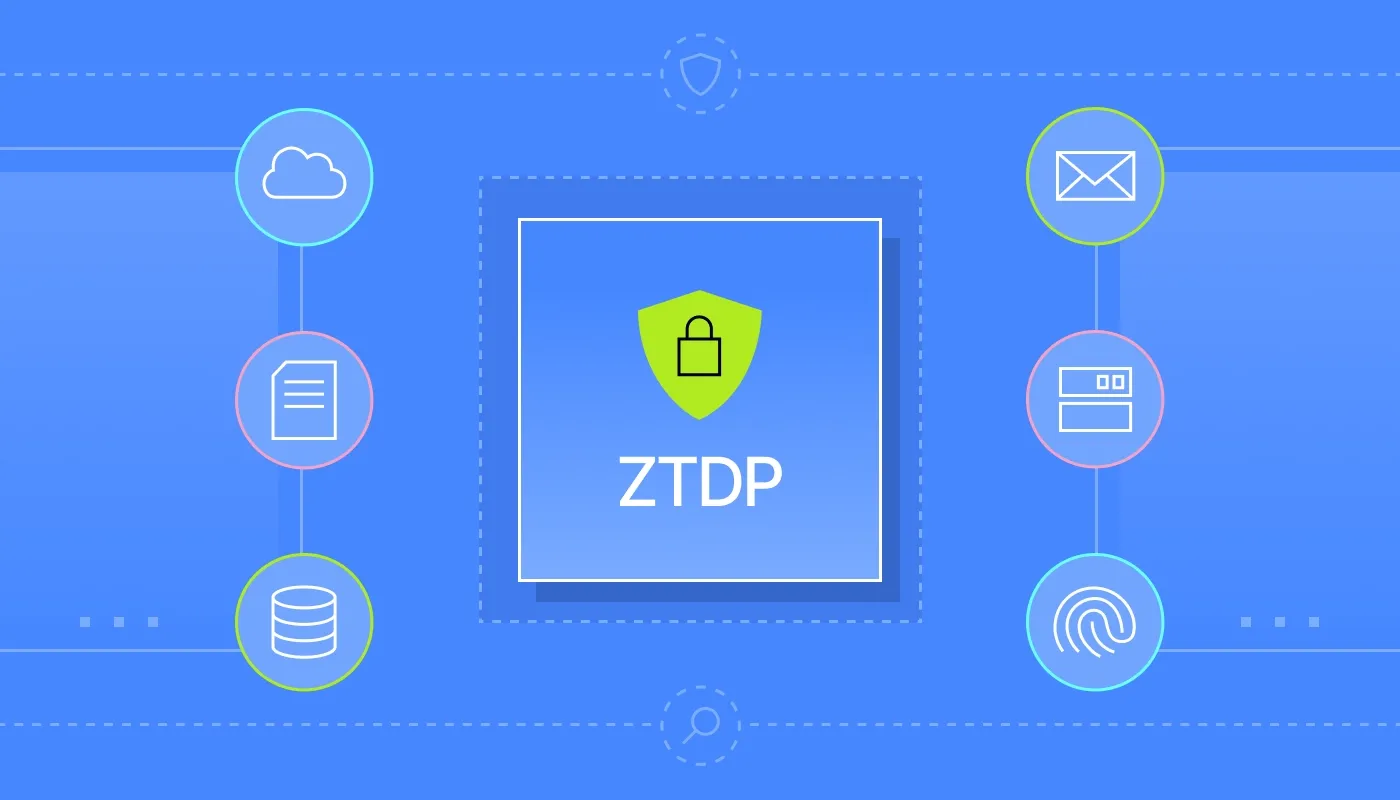
Zero Trust Data Protection (ZTDP) is an advanced security approach that applies Zero Trust principles specifically to how data is accessed, used, and protected. Unlike traditional models that assume trust based on network location or credentials, ZTDP follows the “never trust, always verify” philosophy—enforcing strict access controls and continuous validation across every layer of data interaction.

While it shares DNA with Zero Trust architecture, ZTDP goes a step further by shifting the focus from infrastructure to data access itself. This means that even if a user, device, or application gains entry into a trusted environment, data access is never assumed. Instead, policies built around least privilege access, real-time context, and behavioral signals govern who or what can interact with sensitive information—and under what conditions.

How does Zero Trust differ from traditional data security models?

Traditional data security models were built around the idea of a secure perimeter—think firewalls, VPNs, and on-premises access controls. In these models, once a user or device was authenticated and “inside the network,” they were typically granted broad access to internal systems and protected data. Trust was implicit, and security was largely dependent on defending the perimeter.

Zero Trust Data Protection completely upends this approach. Rooted in Zero Trust principles and enforced through Zero Trust architecture, ZTDP assumes that no user, device, or process should be trusted by default—even if inside the corporate network. Instead, every attempt to access data is treated as potentially hostile and evaluated in real time using contextual signals like identity, device health, geolocation, and behavior.

Another key distinction is how access is granted. While legacy systems often rely on static role-based access, ZTDP enforces least privilege access, ensuring that users can only access the data and resources they absolutely need, and only for the duration required. These strict access controls dramatically reduce the attack surface and limit lateral movement in the event of a breach.

In short, while traditional models focus on protecting the network, Zero Trust Data Protection is designed to protect the data itself—wherever it resides. This shift is critical in remote work, cloud adoption, and escalating insider threats. For organizations aiming to modernize their security posture and prevent unauthorized access or data loss, ZTDP isn’t just an upgrade—it’s a necessity.

What’s the difference between Zero Trust Data Protection and Zero Trust Data Security?

While often used interchangeably, Zero Trust Data Protection and Zero Trust Data Security serve distinct purposes—and understanding the difference is critical for businesses building advanced cybersecurity strategies.

In short, ZTDP differs from Zero Trust Data Security in that it centers more narrowly on data as the protected asset, rather than the broader ecosystem of users, networks, and endpoints. It strengthens an organization’s security posture, mitigates the risk of unauthorized access, and forms the backbone of effective data loss prevention strategies in modern, decentralized environments.

To put things into perspective, Zero Trust Data Security refers to the broader application of the Zero Trust security model. It includes securing networks, applications, endpoints, and identities, and is designed to eliminate implicit trust across the IT environment. Its goal is to reduce attack surfaces and prevent lateral movement through continuous verification and contextual authentication.

Zero Trust Data Protection, on the other hand, applies those principles directly to confidential data itself. Rather than focusing on infrastructure or identity per se, ZTDP enforces least privilege access to data at the object level—governing who or what can interact with specific data assets, under which conditions, and for how long. This data-centric approach is especially valuable in complex, distributed environments where access to data is fluid and dynamic.

The distinction matters. A company may implement Zero Trust security controls across its network and endpoints, but still leave data vulnerable if access policies aren’t enforced at the data layer. ZTDP closes that gap, enabling granular enforcement, contextual visibility, and stronger protection against unauthorized access—whether from external actors or insider threats.

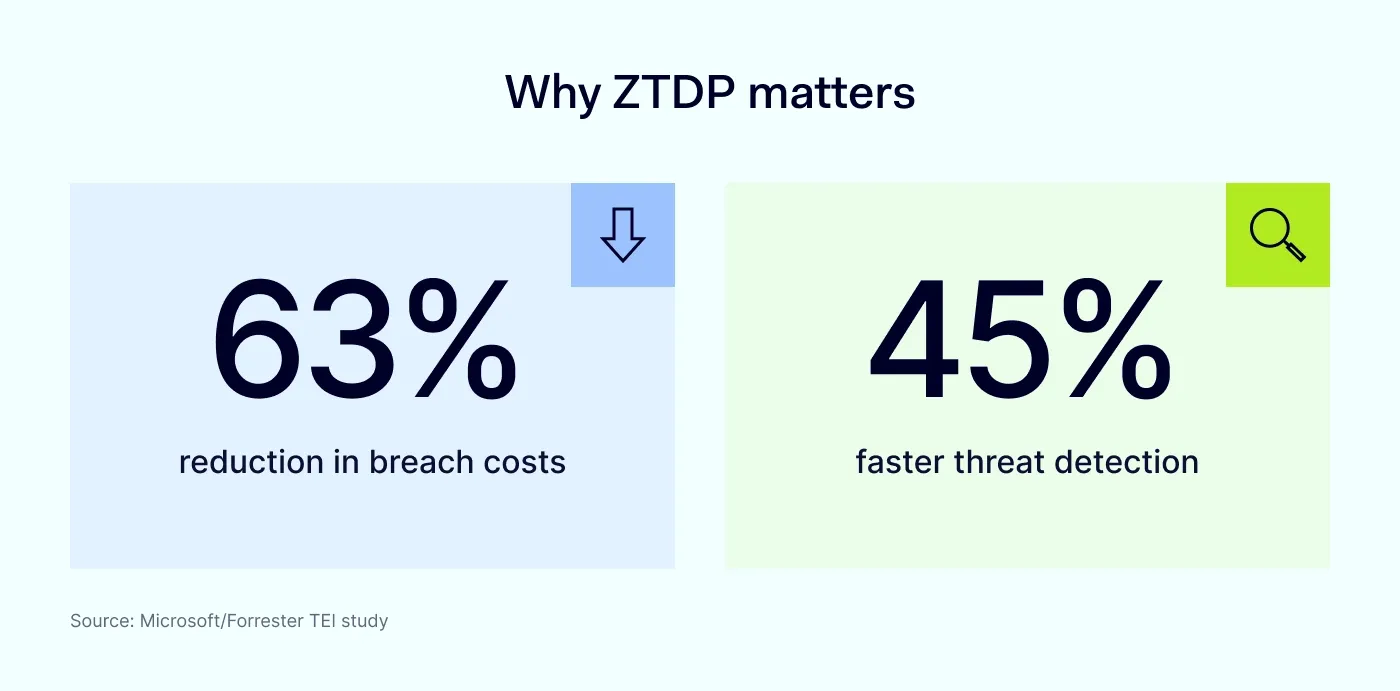
An infographic showcasing that ZTDP matters, because it has reduced breach costs by 63% and enabled 45% faster threat detection.

This difference isn’t just theoretical. A 2021 study found that organizations implementing mature Zero Trust strategies—including data-level enforcement—experienced 63% lower breach costs and detected incidents 45% faster than those relying on traditional models or partial Zero Trust rollouts. In another example, a mid-sized healthcare provider reduced insider threat incidents by 40% after adopting data-centric Zero Trust controls, which limited data access to authorized personnel only, in real-time conditions.

For B2B organizations handling regulated or high-value data, Zero Trust Data Protection represents the next level of strategic investment—one that directly supports compliance, operational resilience, and long-term risk reduction.

Benefits of Zero Trust Data Protection

Securing data today isn’t just about keeping intruders out—it’s about controlling exactly who can access what, and under what conditions. As businesses grow more distributed and data becomes increasingly portable, traditional security approaches that focus on the perimeter or user identity alone are no longer enough. Zero Trust Data Protection takes a different approach: it puts the data at the center of the security strategy.

Below are some of the most valuable outcomes organizations can expect when implementing a ZTDP model:

Minimizes the attack surface

ZTDP reduces risk by enforcing least privilege access—only verified users and systems get access to the data they’re explicitly authorized to use. This limits the impact of compromised credentials or insider threats and prevents lateral movement within the environment.

Improves data visibility and control

One of the core benefits of Zero Trust—and of ZTDP specifically—is enhanced operational visibility. This makes it easier to detect unusual activity, apply dynamic policies, and respond to incidents faster.

Supports regulatory compliance

ZTDP helps meet regulatory requirements by applying precise, auditable controls to protected data. Organizations can enforce consistent policies and demonstrate that access is both justified and logged, simplifying audits and reducing compliance risk.

Key principles of Zero Trust applied to data protection

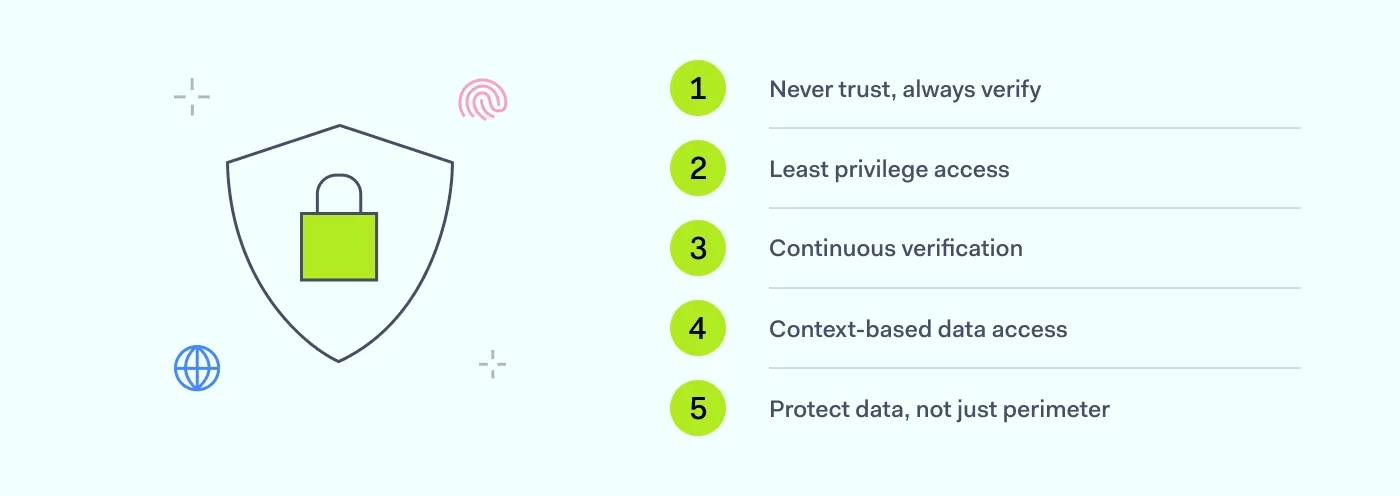
An image of a lock inside a shield and a list of the key principles of Zero Trust Data Protection: never trust, always verify; least privilege access; continuous verification; context-based data access; Protect data, not just perimeter

The principles of Zero Trust security form the foundation of an effective data protection strategy. When applied specifically to securing sensitive data, these principles help organizations reduce risk, enforce precise access controls, and respond dynamically to changing threats. Here are the core Zero Trust security principles as they relate to data protection:

  • Never trust, always verify. Trust is never assumed—even within the corporate network. Every request to access data must be authenticated, authorized, and continuously evaluated based on context such as user identity, device health, and location.
  • Least privilege access. Users, applications, and devices are granted only the minimum level of data access necessary to perform their function. This reduces the blast radius of potential breaches and enforces tight control over who can interact with which data.
  • Continuous verification. ZTDP relies on ongoing validation—not one-time authentication. Access is reassessed in real time using telemetry and behavior analysis, ensuring that session context and trust levels remain valid throughout.

How NordLayer helps implement Zero Trust Data Protection

Implementing Zero Trust Data Protection requires more than just high-level strategy—it demands technology that can enforce granular access controls, support dynamic work environments, and scale securely across your infrastructure. That’s where NordLayer’s platform stands out.

NordLayer enables organizations to apply Zero Trust security principles directly to data access, ensuring that every interaction with sensitive resources is authorized, authenticated, and context-aware. With identity-based Network Access Control (NAC), network segmentation, and Device Posture Security, NordLayer helps enforce least privilege access across your distributed workforce.

Its centralized Control Panel allows IT teams to manage user permissions, apply policy changes in real time, and monitor data activity across cloud and on-prem environments. By continuously verifying user and device trust levels, NordLayer ensures that access is both dynamic and compliant with modern security standards.

For organizations navigating complex compliance landscapes or hybrid infrastructure, NordLayer offers the tools to move from legacy perimeter-based models toward practical, enforceable Zero Trust solutions—ones that place data access at the core of the security strategy.

About NordLayer
NordLayer is an adaptive network access security solution for modern businesses – from the world’s most trusted cybersecurity brand, Nord Security.

The web has become a chaotic space where safety and trust have been compromised by cybercrime and data protection issues. Therefore, our team has a global mission to shape a more trusted and peaceful online future for people everywhere.

About Version 2 Digital

Version 2 Digital is one of the most dynamic IT companies in Asia. The company distributes a wide range of IT products across various areas including cyber security, cloud, data protection, end points, infrastructures, system monitoring, storage, networking, business productivity and communication products.

Through an extensive network of channels, point of sales, resellers, and partnership companies, Version 2 offers quality products and services which are highly acclaimed in the market. Its customers cover a wide spectrum which include Global 1000 enterprises, regional listed companies, different vertical industries, public utilities, Government, a vast number of successful SMEs, and consumers in various Asian cities.

Validating Internal Network Policies: Access Control and Encryption

With segmentation and core services covered, the focus now shifts to enforcing policies on usage, user behavior, and encryption to maintain visibility and ensure compliance across all layers of your network. These controls are critical for mitigating internal risks and upholding your secure communication standards.

GREYCORTEX Mendel supports this effort by providing you with clear insights, alerting you about violations, and helping your teams validate whether your policies are being followed in practice.

Missed the beginning? 
🔗 Read Part 1 to explore how Mendel helps you enforce segmentation and control your core network services.


User Access Policies and Behavioral Violations

Even trusted users and systems can introduce risk if policies are not clearly enforced. Monitoring what is allowed and what is not helps you uncover subtle violations that could otherwise go unnoticed.

Policy violation: Forbidden protocols or apps (RDP, TeamViewer, Dropbox, etc.)

Relevant for NIS2

Some organizations prohibit remote-access tools or file-sharing apps to reduce risk and maintain control over their IT environments. When unauthorized protocols are used, they may introduce new attack vectors or enable remote exploitation.

Validation with Mendel

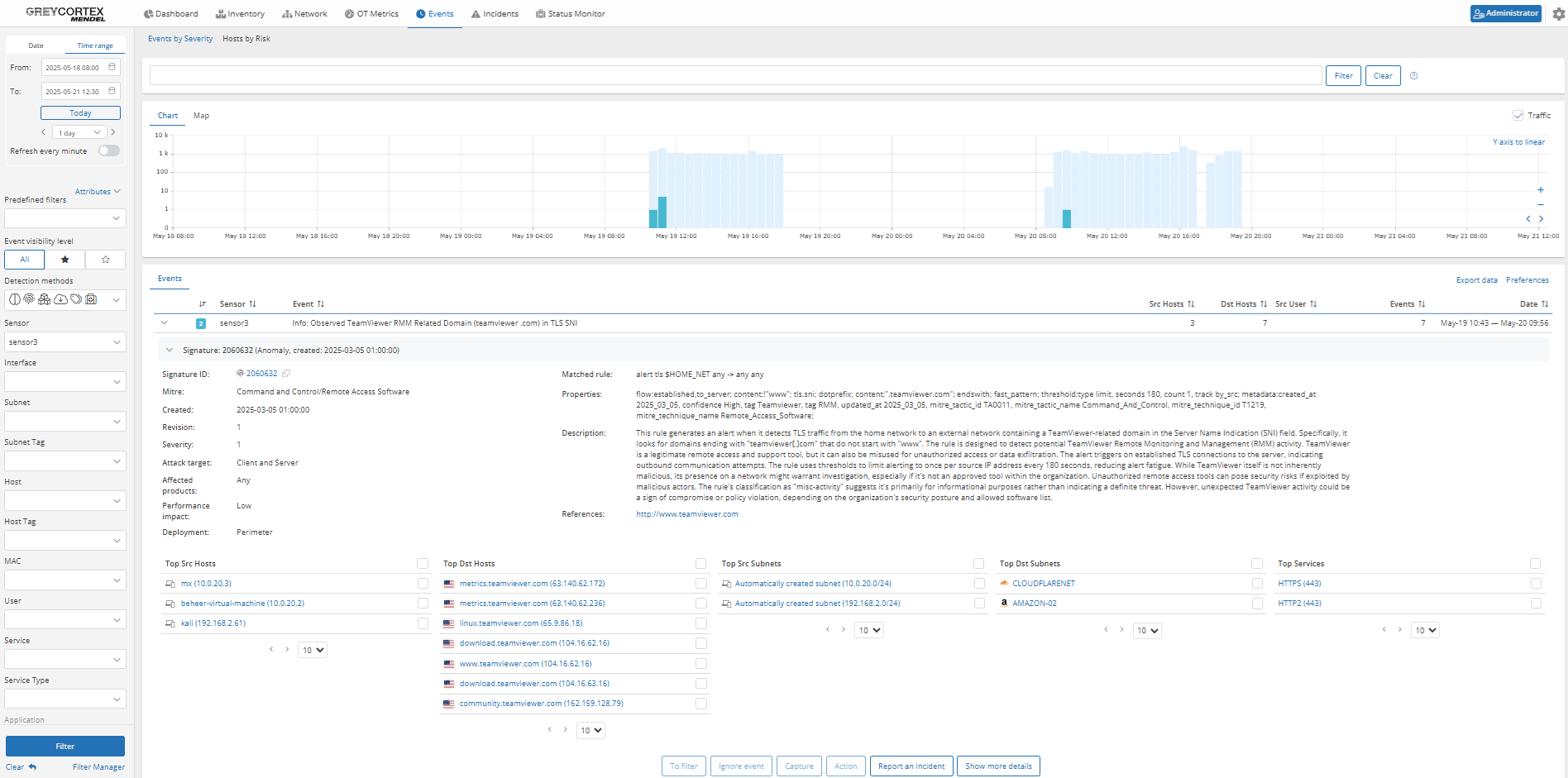
Mendel directly detects the use of unauthorized applications. Your analysts can filter for specific protocols to confirm whether a session occurred and if it was successful, including details about session duration, data transfer volumes, and communication content. This helps you verify whether users violated your internal policies, and allows you to add legitimate usage to an exception list to avoid future alerts.

In our case, Mendel has identified and flagged multiple devices that have downloaded and used TeamViewer. Analysts can then investigate whether these hosts were authorized and, if appropriate, whitelist the IPs to prevent future alerts.

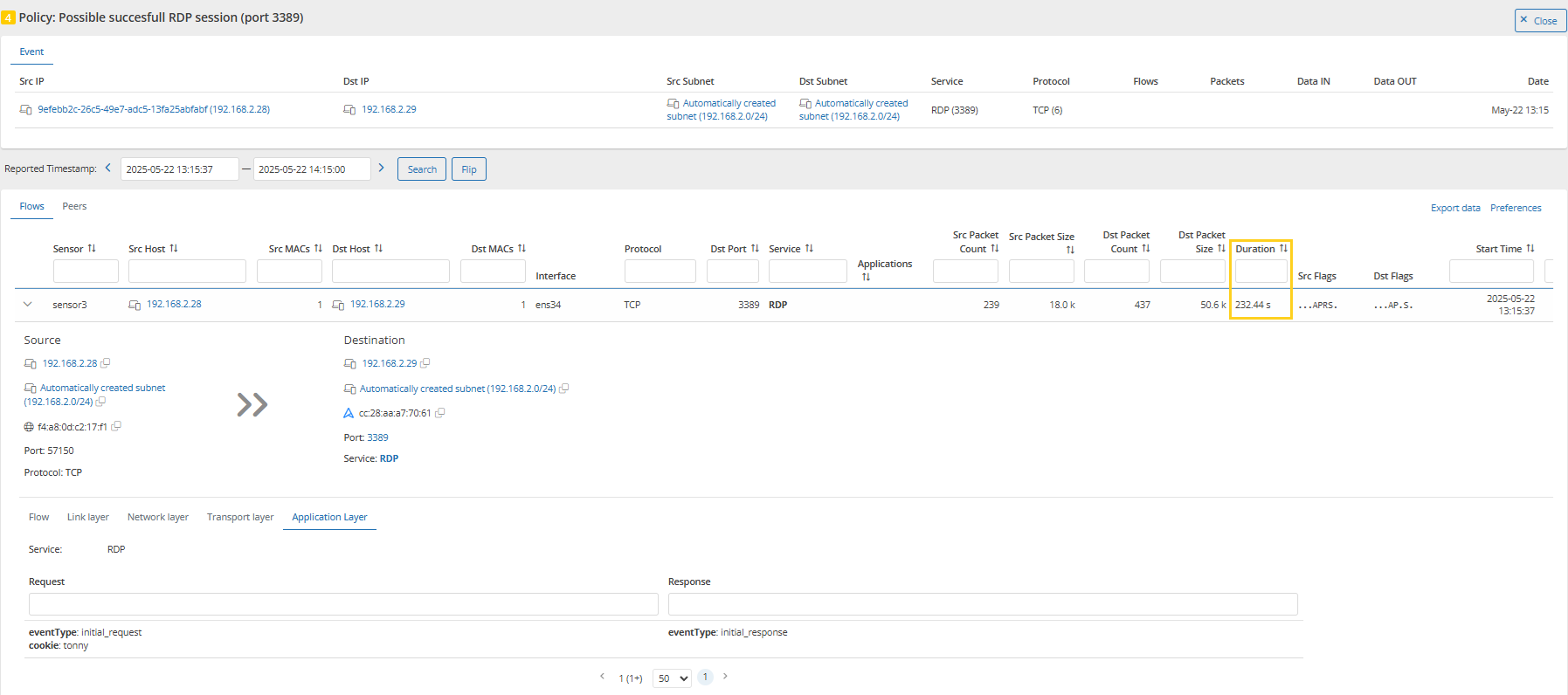
In another example, Mendel has captured a potential RDP (Remote Desktop Protocol) session. By drilling down into the event, analysts can identify the user involved and review the session duration.

Policy violation: Communication to forbidden destinations or services

Relevant for NIS2

Certain destinations, such as foreign countries, blacklisted IPs, or unauthorized services, are often restricted to reduce risks. Detecting such traffic reveals overlooked exceptions or malicious tools trying to evade controls.

Validation with Mendel

Mendel detects and alerts you about communication with blacklisted IPs. Your analysts can use predefined or custom filters to review connections by source and destination IPs, traffic volume, and packet counts. The Network Analysis tab provides you with extensive filtering and search options, enabling your teams to conduct deep investigations across the entire network.

As an example, Mendel detected a TeamViewer DNS request originating from host mx (192.168.2.42). By drilling down, analysts confirmed that a connection was successfully established, indicating a potential policy violation or unauthorized remote access.

Mendel allows your analysts to identify which user is behind suspicious traffic. This helps you verify whether access to forbidden destinations or tools was legitimate or a policy violation.

Policy violation: Excessive peer communication

Certain devices, like controllers in manufacturing or internal phone servers (PBXs), are expected to communicate with a limited set of peers. New or unusual connections may signal misconfiguration or unauthorized activity.

Validation with Mendel

Mendel enables your analysts to define peer count limits for individual hosts or entire subnets, helping you to enforce expected communication boundaries.

For example, if a PBX server communicates with more peers than its known SIP trunks and internal phones while inbound Internet traffic is restricted, Mendel will flag it for review.

Policy violation: Unauthorized communication with honeypots

Honeypots are intentionally exposed systems used to detect suspicious activity inside the network. Typically, only predefined systems such as admin tools or security scanners should communicate with them. Any other connection attempt may indicate lateral movement or internal scanning.

Validation with Mendel

Mendel allows your teams to define which systems are authorized to communicate with honeypots and alerts your analysts to any unauthorized attempts.

In the example below, only the management PC is allowed to communicate with the honeypot at 192.168.2.36. When another device (192.168.2.28) initiates a connection, Mendel triggers an alert.

The peer graph confirms and visualizes that the honeypot was accessed by both permitted and unauthorized devices.

Encryption Standards and TLS Usage

Cryptographic standards are a foundational layer of secure communication. Monitoring certificate validity and protocol versions helps you identify weak encryption before it becomes a vulnerability.

Policy violation: Expired TLS certificates in use

Relevant for NIS2

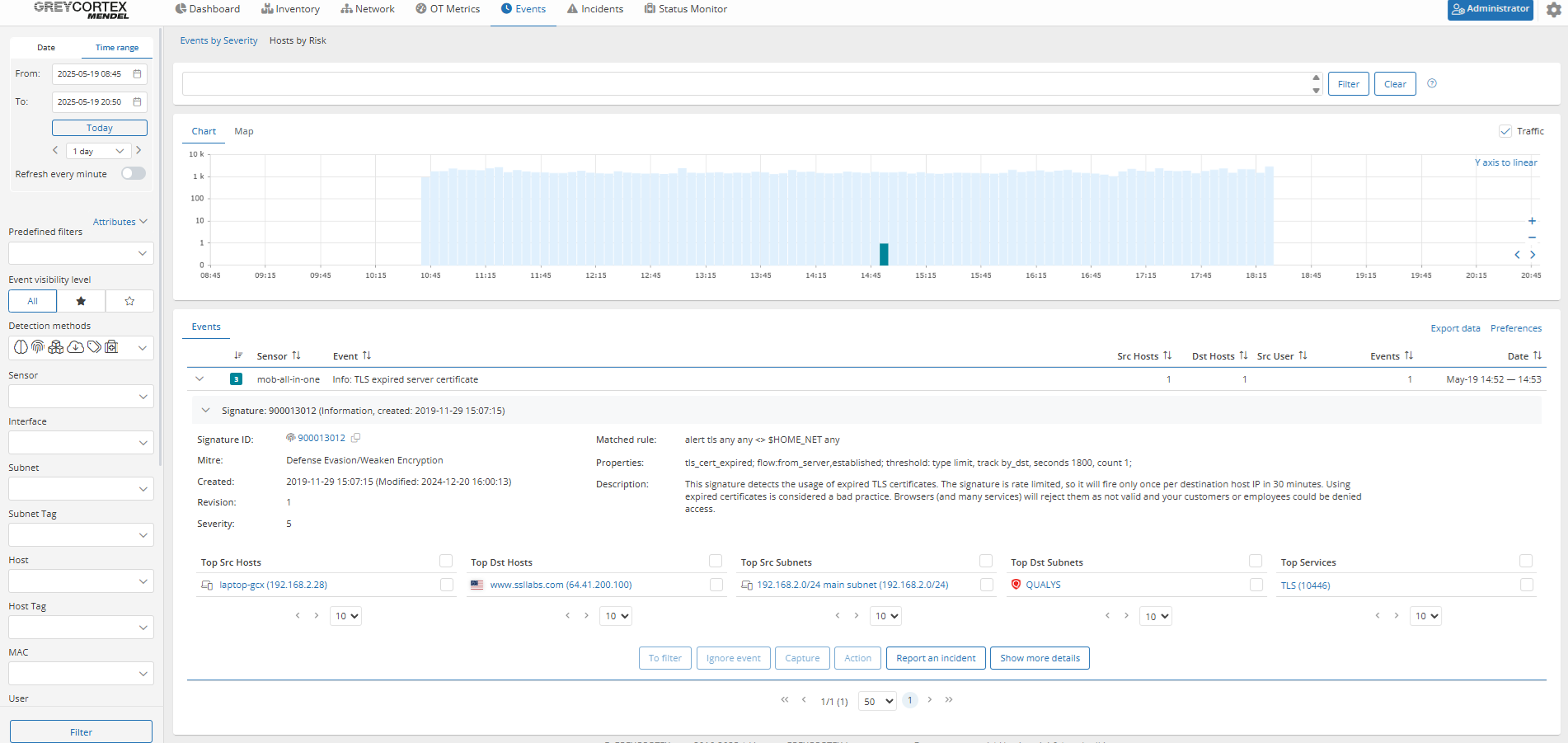
TLS certificates are a critical part of trusted communication. If a certificate has expired, systems may reject the connection, users may be exposed to spoofed services, or sensitive data may be transmitted without adequate encryption.

Validation with Mendel

Mendel alerts you when expired certificates are detected or when a certificate is approaching its expiration date.

For example, Mendel has found one internal system using a certificate that expired in May 2021.

In another case, Mendel has flagged an upcoming expiration several days in advance, giving administrators time to respond before any disruption occurs.

Policy violation: Outdated TLS versions and cipher suites

Relevant for NIS2

Obsolete TLS versions and weak cipher suites expose your encrypted traffic to known vulnerabilities. Regulatory frameworks like NIS2 urge organizations like yours to stop using TLS versions below 1.2 to reduce attack surfaces and ensure strong encryption standards.

Validation with Mendel

Mendel allows you to configure alerts when outdated TLS versions are used. To ensure secure communication, it is recommended to use TLS 1.2 or 1.3. Achieving this typically involves updating the operating system, browser, or other client software.

For example, an event has shown that one device was still communicating using TLSv1.0.

Strong Policies Require Strong Evidence

Security policies do more than reduce risk. They help you demonstrate accountability to regulators, customers, and internal stakeholders alike. As expectations rise under frameworks like NIS2, proving that internal rules are applied consistently becomes a core part of modern cybersecurity governance. It is no longer enough to assume policies are being followed. You need clarity and verifiable evidence.

Mendel helps organizations like yours move from assumption to evidence. It continuously validates how policies are enforced across the network, from encryption to identity controls, giving your team the visibility to act with clarity and confidence.

Need a second opinion on your enforcement? Request a security audit with Mendel.


About GREYCORTEX
GREYCORTEX uses advanced artificial intelligence, machine learning, and data mining methods to help organizations make their IT operations secure and reliable.

MENDEL, GREYCORTEX’s network traffic analysis solution, helps corporations, governments, and the critical infrastructure sector protect their futures by detecting cyber threats to sensitive data, networks, trade secrets, and reputations, which other network security products miss.

MENDEL is based on 10 years of extensive academic research and is designed using the same technology which was successful in four US-based NIST Challenges.

About Version 2 Digital

Version 2 Digital is one of the most dynamic IT companies in Asia. The company distributes a wide range of IT products across various areas including cyber security, cloud, data protection, end points, infrastructures, system monitoring, storage, networking, business productivity and communication products.

Through an extensive network of channels, point of sales, resellers, and partnership companies, Version 2 offers quality products and services which are highly acclaimed in the market. Its customers cover a wide spectrum which include Global 1000 enterprises, regional listed companies, different vertical industries, public utilities, Government, a vast number of successful SMEs, and consumers in various Asian cities.

Veeam Alternative

While Veeam is a dominant force in the backup and recovery market, there are several reasons why an administrator or business owner might choose Storware Backup and Recovery as an alternative. Storware often appeals to organizations with specific technical environments, budget considerations, or a preference for certain licensing models.

Here are some potential reasons to choose Storware over Veeam:

  • Agentless Approach: Storware’s agentless backup offers significant advantages over agent-based solutions primarily due to its simplified deployment, reduced overhead, and enhanced security. Without the need to install and manage agents on individual virtual machines or servers, agentless systems minimize resource consumption on production machines, eliminate the complexities of agent compatibility issues and upgrades, and reduce potential attack vectors. This streamlined approach leads to faster deployment, easier scalability, and a lower total cost of ownership, making it a more efficient and less intrusive method for protecting diverse IT environments. However it’s worth to mention that Storware also offers agent for file-level backup for Linux, Windows and MacOS.
  • Strong Support for Open-Source and Diverse Hypervisors: Storware has a strong focus on supporting a wide range of open-source and less common hypervisors, including Red Hat Virtualization (oVirt/RHV), Oracle Linux Virtualization Manager (OLVM), Proxmox VE, OpenStack, and Citrix XenServer, in addition to VMware and Hyper-V. If an organization heavily relies on these platforms, Storware might offer more comprehensive and integrated protection compared to Veeam, which traditionally has had a stronger focus on VMware and Hyper-V.
  • Flexible and Potentially More Cost-Effective Licensing: Storware offers various licensing models, including per VM, per Terabyte, and a universal license. This flexibility can be particularly attractive to businesses that need to tailor their licensing based on their specific infrastructure and growth patterns. While Veeam also offers different editions and licensing options, some organizations might find Storware’s models more cost-effective, especially in environments with a mix of platforms or specific scaling needs.
  • Focus on Specific Niches and Workloads: Storware has developed expertise in protecting specific workloads and environments, such as certain databases, containers (Kubernetes, OpenShift), and cloud platforms (AWS EC2, Google Cloud Platform, Azure Cloud, Microsoft 365). For businesses with a significant focus on these particular areas, Storware’s specialized features and integrations might provide a more optimized backup and recovery solution.
  • Potential for Simplicity in Certain Environments: While Veeam is known for its feature richness, its extensive capabilities can sometimes lead to complexity in deployment and management, particularly for smaller IT teams. Depending on the specific infrastructure and the required feature set, some administrators might find Storware’s interface and architecture more straightforward and easier to manage.
  • Vendor Lock-in Avoidance: For organizations committed to open-source technologies and avoiding vendor lock-in, Storware, with its strong support for open platforms, aligns better with this strategy.

It’s important to note that the best choice between Storware and Veeam depends heavily on an organization’s specific requirements, existing infrastructure, budget, technical expertise, and long-term data protection strategy. Veeam remains a leading solution with a broad feature set, strong market presence, and extensive support for common platforms. However, Storware presents a compelling alternative, particularly for businesses with diverse hypervisor environments, specific workload protection needs, or a preference for flexible licensing and open-source compatibility.


Feature / FunctionalityStorware Backup and RecoveryVeeam Data PlatformNotes for Admins and Business Owners
Supported Platforms (Hypervisors)Strong support for a wide range including VMware vSphere, Microsoft Hyper-V, Nutanix AHV, Red Hat Virtualization (RHV/oVirt), Oracle Linux Virtualization Manager (OLVM), Proxmox VE, OpenStack, XCP-ng, Virtuozzo, Zadara, VergeOS, and more.Broad support including VMware vSphere, Microsoft Hyper-V, Nutanix AHV, Red Hat Virtualization, Oracle Linux VM, and Proxmox.Storware often has a deeper or earlier support for a wider array of open-source and less common hypervisors, which is key for organizations using these platforms. Veeam has comprehensive support for the major players.
Supported Platforms (Cloud)Supports backup of instances in Amazon EC2, Google Cloud Platform, Azure Cloud, and Microsoft 365.Extensive support for AWS, Azure, and Google Cloud Platform VMs, databases (RDS, SQL Database, Cloud SQL), object storage, and Microsoft 365/Salesforce data protection.Both offer cloud backup capabilities, but Veeam generally has broader and deeper integration with major public cloud providers and SaaS applications like Salesforce.
Supported Platforms (Physical)Supports Windows, MacOS and Linux physical servers and endpoints (laptops/desktops).Supports Windows, Linux, macOS, Unix physical servers, and NAS devices.Both cover essential physical server backups. Veeam’s support for Unix, as well as comprehensive NAS backup, might be a differentiator for some environments.
Supported Platforms (Applications)Offers application-consistent backups with scripting options and potentially more direct support for certain open-source databases or applications depending on integrations (Microsoft Exchange, SharePoint, Active Directory, SQL Server, Oracle, PostgreSQL, MongoDB, and more).Provides application-aware processing for Microsoft Exchange, SharePoint, Active Directory, SQL Server, Oracle, SAP HANA, PostgreSQL, MongoDB, ensuring transactional consistency.Both vendors have an extensive list of supported business-critical applications with dedicated recovery options. Storware’s approach might be more flexible for less common applications via scripting.
Backup TypesSupports Full, Incremental, Synthetic Full, and Incremental Forever backups.Supports Full, Incremental, Reverse Incremental, and Synthetic Full backups, along with backup copy jobs.Both offer standard backup types. The choice often depends on the preferred backup strategy and storage targets.
Recovery OptionsOffers Full VM restore, File-Level Restore (via mounting backups), Instant Restore (for supported hypervisors), Individual Disk Recovery, and Recovery Plans for automated DR.Provides Instant VM Recovery, Granular file-level recovery, Application item recovery (Exchange, SharePoint, AD, SQL), Full system restore, Bare Metal Recovery, and Orchestrated Recovery Plans.Both provide essential recovery options. Veeam’s application-item recovery is a significant strength. Storware’s ability to mount backups for file-level restore is also a valuable feature.
Replication CapabilitiesSupports disaster recovery scenarios often leveraging replicated file systems or built-in backup provider mechanisms for offsite copies and recovery in a secondary datacenter. Does not typically offer native hypervisor-level replication like Veeam.Offers image-based VM replication to an offsite location or cloud, creating ready-to-use VM replicas for fast failover with configurable failover points.Veeam has a strong native replication capability for hypervisors, which is a key component of many DR strategies. Storware focuses more on using backup copies at a secondary site for recovery.
Deduplication and CompressionProvides built-in data deduplication (often using technologies like VDO) and compression to reduce storage consumption. Can also leverage deduplication features of backup destinations (e.g., Dell EMC Data Domain).Offers built-in data deduplication and compression. Has strong integration with leading deduplicating storage appliances for enhanced data reduction ratios.Both solutions offer data reduction techniques. The effectiveness can depend on the data type and the integration with specific storage hardware.
Immutability / Ransomware ProtectionOffers immutable backups to protect against ransomware by making backup data unchangeable, often leveraging WORM (Write Once, Read Many) storage and integrates with secure cloud storage options.Provides multiple options for immutable backups, including leveraging object storage immutability features and dedicated immutable backup repositories, as a key part of their cyber resilience strategy.Both vendors recognize the importance of immutability for ransomware protection and offer ways to achieve this, often using cloud or specific storage features.
Centralized ManagementProvides a web-based central management portal (HTML5) for managing backups across supported environments. Offers a CLI and Open API for automation and integration.Offers a web-based management console (Veeam Backup Enterprise Manager) for centralized management of multiple Veeam Backup & Replication installations, especially for distributed environments.Both offer centralized management interfaces. The best fit depends on the scale and complexity of the environment and the need for multi-site management.
Cloud Integration (Backup Target)Supports storing backups directly to various object storage providers compatible with S3, Google Cloud Storage, Microsoft Azure Blob Storage, and OpenStack Swift.Supports using cloud object storage (AWS S3, Azure Blob, Google Cloud Storage) as backup repositories, including features like the Capacity Tier and Archive Tier for cost-effective long-term retention.Both allow using cloud object storage as a backup target, which is a common and cost-effective approach for offsite copies and archiving.
Ease of UseOften described as having an intuitive interface, particularly for managing the platforms it specializes in.Generally considered easy to deploy and use, with a user-friendly interface, although its extensive features can introduce complexity in larger deployments.Perceived ease of use can be subjective and depend on the administrator’s familiarity with the specific platforms being protected. Storware might be simpler in its niche areas.


Before making a decision, administrators and business owners should carefully evaluate their needs, compare the features and capabilities of both solutions in the context of their environment, consider the total cost of ownership (including licensing, support, and management), and ideally, test both solutions to determine which one best fits their requirements.


Storware Backup and Recovery emerges as a leading solution that bridges both concepts, offering comprehensive backup capabilities that ensure reliable data recoverability while simultaneously helping businesses establish true data resilience. Through its advanced features such as immutable backups that prevent tampering from ransomware attacks, instant recovery capabilities that minimize downtime, deduplication and compression technologies that optimize storage efficiency, and multi-cloud support that eliminates single points of failure, Storware enables organizations to not only recover from data loss incidents but also maintain business continuity even in the face of cyber threats, hardware failures, or natural disasters.

Additionally, its automated backup scheduling, point-in-time recovery options, and enterprise-grade encryption ensure that businesses can operate with confidence knowing their critical information assets are both protected and readily accessible when needed, transforming data protection from a reactive recovery process into a proactive resilience strategy.

Final Thoughts: Recovery Saves Data. Resilience Saves Businesses.

Here’s the bottom line:

  • Data recovery still plays a vital role in everyday organizations, but it’s not enough.
  • When disaster strikes, data resilience is what keeps you functioning, trustworthy, and safe.
  • Together, they form the foundation of modern business continuity.

The worst time to test your data strategy is after disaster hits. So, don’t choose between recovery and resilience. Accept both and create a system that can not only endure but also thrive in the face of any disturbance.

About Version 2 Digital

Version 2 Digital is one of the most dynamic IT companies in Asia. The company distributes a wide range of IT products across various areas including cyber security, cloud, data protection, end points, infrastructures, system monitoring, storage, networking, business productivity and communication products.

Through an extensive network of channels, point of sales, resellers, and partnership companies, Version 2 offers quality products and services which are highly acclaimed in the market. Its customers cover a wide spectrum which include Global 1000 enterprises, regional listed companies, different vertical industries, public utilities, Government, a vast number of successful SMEs, and consumers in various Asian cities.

About Storware
Storware is a backup software producer with over 10 years of experience in the backup world. Storware Backup and Recovery is an enterprise-grade, agent-less solution that caters to various data environments. It supports virtual machines, containers, storage providers, Microsoft 365, and applications running on-premises or in the cloud. Thanks to its small footprint, seamless integration into your existing IT infrastructure, storage, or enterprise backup providers is effortless.

×

Hello!

Click one of our contacts below to chat on WhatsApp

×