
唯一由 Action AI™ 提供支援的 IT 管理平台 快速解決醫療行業的緊急需求

How ESM Transforms IT Departments into Service-Centric Organizations

How ESM Transforms IT Departments into Service-Centric Organizations

With enterprise service management (ESM), you can digitize your internal processes, streamline incoming request management, automate tasks, relieve pressure on your service desk, and perform lengthy, low-value-added processes efficiently while improving the user experience.
In essence, by adopting ESM tools, you apply IT service management (ITSM) best practices to your entire organization, not just the IT department.
On the other hand, any company that wants to remain competitive today can do nothing but commit itself to increasing the quality of its services, both internal (e.g., the activities of employees) and external (the end customer).
This commitment requires a transformation of IT departments, which must emerge from traditional isolation to become integrated and service-oriented organizations.
Enterprise service management is a crucial enabler of this transformation.
How IT Departments Are Changing: From Cost Centers to Strategic Partners
The need to integrate digital tools into every part of the business demonstrates that the isolation we have mentioned is an inefficient and uneconomical strategy.
Today, IT departments can achieve business results and generate value and can no longer be considered mere technical support functions.
Traditional IT departments focus on infrastructure management, system maintenance, and network security. They are reactive—responding to issues as they arise—and have limited interaction with other business units as they operate in silos. Their perception of being cost centers rather than strategic partners limits their ability to influence broader business goals.
Therefore, the traditional approach produces inefficiencies: isolated systems and processes cause delays and prevent the provision of consistent services.
The choice to equip oneself with ESM solutions helps to overcome the role typically assigned to IT departments, moving toward the adoption of a holistic approach that aligns with the broader organizational strategy.
What Does Service-Centric Mean?
By now, we should have realized that an organization’s true digital transformation is not just about expanding ITSM best practices.
For transformation to happen, processes must be standardized and unified, and services provided to users must be interconnected. Old ITSM tools are not suited to such flexible and customer-centric deployments; they are expensive and complex to extend to the rest of the company.
The development of more agile cloud-based tools is changing things for the better. Modern ESM software has become much faster to deploy, manage, and maintain. This means that non-IT functions are increasingly able to easily administer their own services.
The essence of a service-centric organization lies in the possibility of the different departments to exploit their specific objectives through collaboration with all other company functions, thanks to advanced ESM systems and ITSM best practices.
Key Components of Enterprise Service Management
ESM includes multiple key components: service catalogs, self-service portals, automated workflows, integrated reporting and analytics, and tools for incident, problem, and change management.
These components help standardize service delivery across the organization, break down silos, and foster a more collaborative environment. They enable consistent delivery, regardless of the department or service being offered. Through automation and self-service capabilities, they reduce manual workloads and accelerate response times.
Finally, specific features allow for improved collaboration and communication between departments.
A Short Guide to ESM Implementation
Implementing ESM is a complex process. The following are the basic steps:
- The first step consists of a complete assessment of current IT capabilities—maturity of existing ITSM practices, level of automation in place, and general alignment of IT services with business objectives. Part of this initial phase also involves identifying weaknesses (areas where current services are lacking) and strengths. A successful ESM strategy must start with clear and aligned objectives and goals in line with the organization’s overall strategy.
- In the second step, a roadmap is developed to establish the necessary steps for implementing ESM, from identifying the scope of distribution of the ESM software to selecting the most appropriate tools and technologies up to defining the timing.
- The deployment of ESM solutions must be carefully planned and executed. At this stage, the infrastructure is set up, systems are configured, and stakeholders are adequately trained.
Best Practices for Successful Deployment
ESM implementation can only be successful if done correctly, following a methodical and thorough approach. Here are some tips:
- Gain top management buy-in. Leadership support is an important signal to drive ESM adoption throughout the organization.
- Set specific goals. Having clear, realistic goals you expect to achieve with ESM helps you measure your progress objectively.
- Involve stakeholders. During the planning and implementation phases, representatives from different departments and teams should be involved to ensure a complete view of the entire adoption process.
- Communicate effectively. Explaining the benefits of the change produced by ESM and promptly responding to doubts or correcting inaccurate beliefs helps to defuse resistance.
- Opt for a phased approach. Implementing ESM so that each phase builds on the previous one helps manage complexity and minimize disruptions, leading to a smoother transition.
Benefits of ESM for IT Departments from a Customer-Centric Perspective
It is clear that ESM plays a fundamental role in enriching IT departments’ performance and contributes to their transformation into service-focused and fully customer-centric organizations.
Through process automation and standardization, ESM optimizes service delivery, enhances IT staff capabilities, and fosters a more efficient and customer-centric approach. The benefits are numerous; let’s explore them one by one.
- Improved service delivery. A structured approach to service management ensures consistent and efficient service delivery, meeting the needs of internal and external users.
- Improved user experience. By focusing on the user experience, ESM helps create more intuitive and user-friendly service interactions. Self-service portals and automated workflows enable users to access services quickly, easily, independently, and with greater satisfaction.
- Reduced response times and downtime. Automation and streamlined workflows significantly reduce response times and downtime. This improves service reliability and allows staff, not just IT, to focus on more strategic activities.
- Increased efficiency and productivity. Standardized processes and improved workflows enable IT departments to deliver service faster and reduce time spent on manual tasks. Eliminating redundant processes and optimizing resource allocation increases efficiency and productivity across the organization.
- Cost savings. ESM helps save costs by reducing the need for IT departments to intervene manually. By automating routine tasks, organizations can allocate resources more effectively, resulting in significant cost reductions.
- Empowered IT staff. ESM provides IT staff with ongoing training opportunities. By exposing them to a broader range of services and processes, ESM helps IT professionals develop a more comprehensive understanding of the business.
- A service-oriented mindset. IT staff is encouraged to think beyond technical support and consider the overall user experience. This shift in perspective is critical to providing high-quality, truly customer-centric services.
ESM and IT Departments: New Scenarios
ESM adoption can present several challenges, including resistance to change, poor buy-in, and problems integrating with existing systems. Overcoming these challenges requires strong leadership, clear communication, and a well-defined implementation plan.
Emerging technologies, particularly artificial intelligence (AI) and automation, are largely driving the transformation of IT departments into service-centric and customer-centric organizations.
Adopting AI in ESM scenarios streamlines and facilitates service delivery, allowing IT teams to focus on strategic initiatives.
In practice, by automating routine tasks, AI allows proactive problem-solving and timely delivery of personalized services, such as generating articles, analyzing financial data, and communicating formal documents.
Moving from manual processes to intelligent automation enables IT departments to provide faster, more accurate, and personalized support. As a result, IT can better align with business goals, providing tailored services that meet the specific needs of different departments, thereby improving the overall user experience.
This focus on service quality and customer solutions is the essence of a service-centric organization.
Conclusion
As ESM continues to evolve, IT departments are transforming from support functions to strategic partners and service-centric organizations.
Enterprise service management (ESM) is a powerful tool that can make this transformation successful. By extending service management principles across the enterprise, ESM improves process efficiency and user experience while empowering IT staff.
FAQs
What does enterprise service management (ESM) do?
ESM applies IT service management best practices across the organization, helping IT departments become service-centric organizations focused on efficiency and user satisfaction.
What are the benefits of adopting ESM?
ESM improves service delivery, reduces costs, and increases productivity, transforming IT departments into strategic, service-centric partners focused on improving the user experience.
How does ESM support the transformation of IT departments into service-centric organizations?
ESM unifies and standardizes processes, enabling IT departments to deliver faster, more consistent services, which is critical to a service-centric, user-centric organization.
What are the main challenges in implementing ESM?
Challenges include resistance to change and integration issues. Overcoming these challenges helps IT departments evolve into service-centric organizations, improving collaboration and efficiency.
How is artificial intelligence (AI) enhancing the ESM?
AI automates routine tasks, improving service accuracy and speed. This supports the transformation of IT departments into service-centric organizations focused on personalized solutions for users.
About EasyVista
EasyVista is a leading IT software provider delivering comprehensive IT solutions, including service management, remote support, IT monitoring, and self-healing technologies. We empower companies to embrace a customer-focused, proactive, and predictive approach to IT service, support, and operations. EasyVista is dedicated to understanding and exceeding customer expectations, ensuring seamless and superior IT experiences. Today, EasyVista supports over 3,000 companies worldwide in accelerating digital transformation, enhancing employee productivity, reducing operating costs, and boosting satisfaction for both employees and customers across various industries, including financial services, healthcare, education, and manufacturing.
About Version 2 Digital
Version 2 Digital is one of the most dynamic IT companies in Asia. The company distributes a wide range of IT products across various areas including cyber security, cloud, data protection, end points, infrastructures, system monitoring, storage, networking, business productivity and communication products.
Through an extensive network of channels, point of sales, resellers, and partnership companies, Version 2 offers quality products and services which are highly acclaimed in the market. Its customers cover a wide spectrum which include Global 1000 enterprises, regional listed companies, different vertical industries, public utilities, Government, a vast number of successful SMEs, and consumers in various Asian cities.


Our “Wrapped-Up” 2024: Pandora FMS advances and accomplishments that marked the year
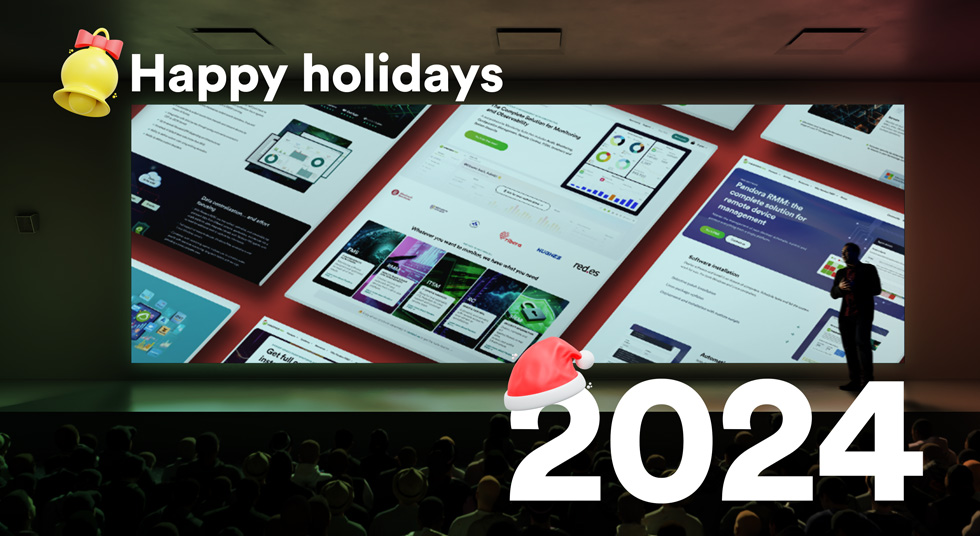
If Spotify can do its annual wrap-up, so can we! It is true that you will not discover your musical evolution this 2024, but you will be able to check all the advantages that one more year are added to the Pandora FMS portfolio and thereby improve your business operations.
2024 has been a transformational year for Pandora FMS, marked by significant advances and a clear focus on our customers’ global needs. We have strengthened our position as a leader in monitoring and observability, expanding our offering with key functionalities that integrate security into IT management.
One of the most important milestones this year was the launch of Pandora SIEM, a solution that enables organizations to integrate cybersecurity into their daily monitoring strategy, proactively detecting and mitigating threats. This development reinforces our commitment to providing tools that go beyond traditional monitoring, helping our customers manage complex environments with complete confidence.
Pandora SIEM allows you to centrally visualize threats, identify those that are most critical, and ensure they are addressed by the right people. This streamlined approach simplifies threat management and safeguards your infrastructure.
We have also continued to improve our remote management solution (RMM), which is key for distributed environments, optimizing the monitoring and control of critical infrastructures. This tool adopts a global infrastructure visibility approach and establishes a preventive instead of being merely a reactive maintenance model, for example by automating tasks, which ultimately contributes to greater security and SLA compliance. This effort is reflected in the four new versions of ITSM released this year, each designed to respond to the changing demands of our users and ensure maximum flexibility in managing their systems. In addition, the integration of Pandora ITSM with Pandora FMS allows our users to unify ticket management from the Pandora FMS console.
Our results speak for themselves: more than 2,000 tickets managed with a remarkably positive satisfaction rate, and a total of 1,700 tickets under development processed, reflecting the continuous work of our team to perfect our solutions. Each new release has been made possible by a fully optimized development process, which this year has been radically transformed to achieve even higher performance.
Throughout the year, we also strengthened our international presence, standing out as a leading solution in more than 30 key categories on platforms such as G2, where we obtained an average rating of 4.5/5. Our commitment to innovation and flexibility has been recognized by customers in markets around the world, from large corporations to medium-sized companies, who value our ability to adapt to multiple technology needs.
Looking ahead to 2025, we are poised to continue to innovate and expand our capabilities. Our goal is clear: to provide even more robust solutions and remain the trusted technology partner for organizations in any industry, anywhere in the world. To this end, we intend to continue adding functionalities to Pandora SIEM, such as filters or advanced reports; as well as internal auditing to Pandora RMM. We will also continue to explore the limits of monitoring, including user activity monitoring.
About Version 2 Digital
Version 2 Digital is one of the most dynamic IT companies in Asia. The company distributes a wide range of IT products across various areas including cyber security, cloud, data protection, end points, infrastructures, system monitoring, storage, networking, business productivity and communication products.
Through an extensive network of channels, point of sales, resellers, and partnership companies, Version 2 offers quality products and services which are highly acclaimed in the market. Its customers cover a wide spectrum which include Global 1000 enterprises, regional listed companies, different vertical industries, public utilities, Government, a vast number of successful SMEs, and consumers in various Asian cities.
About PandoraFMS
Pandora FMS is a flexible monitoring system, capable of monitoring devices, infrastructures, applications, services and business processes.
Of course, one of the things that Pandora FMS can control is the hard disks of your computers.


Dedicated Device Management: Everything You Need to Know

The use of mobile devices has increased dramatically in recent years and will continue to do so with the rapid growth of EMM (enterprise mobility management). Managing these devices is crucial to safeguarding data and the devices that handle critical business information and functions. UEM is the best solution for managing and securing dedicated devices.
What are Dedicated Devices?
Dedicated devices are company-owned devices that can be employee-facing or customer-facing. They include self-check-in systems, point-of-sale (POS) systems, digital signage, retail store billing, checkout systems, and airport ticket printing desks, to name a few. The devices fulfill a single-use case by running in kiosk mode which can be single-app or multi-app. Dedicated devices perform essential business functions and hence need to run without any interruptions.
Some common examples of customer-facing dedicated devices are ATMs for cash transactions, digital signage in hotels for advertisements, baggage check-in at airports, POS terminals, handheld devices used as barcode scanners as well as for navigation, and dedicated tablets used for educational purposes.
Some employee-facing dedicated devices are for inventory management in logistics, handheld devices used by healthcare professionals, and vehicle-mounted devices used by drivers in transportation.
However, these devices can’t run independently and are required to be managed remotely. Usually, the devices are unattended and run in dedicated kiosk mode. Communicating with these devices in the field and ensuring timely updates on these devices can be best done using a dedicated device management solution like a Unified Endpoint Management (UEM) solution.
Corporate-owned dedicated devices don’t store content and information, and it’s crucial to push updated content regularly to these devices as they perform mission-critical functions. UEM enables you to update, troubleshoot, interact, and pass commands to devices remotely. UEM also simplifies configuring devices and provisioning them, enforcing policies, and ensuring device and data security.
How Does Dedicated Device Management Work?
A dedicated computer or dedicated hardware is often locked to a single application or a set of applications to serve a specific purpose, ensuring efficiency and security. This is achieved using either single-app kiosk mode or multi-app kiosk mode, based on the use case:
- Multi-app kiosk mode: When a device needs to run multiple applications, it operates in a multi-app kiosk mode. With the help of a kiosk launcher, admins can easily switch between apps and manage various functions. This approach is perfect for devices used in environments that demand versatility while still maintaining the dedicated purpose of the hardware.
- Single-app kiosk mode: In this setup, the device is locked to a single application, providing IT admins extensive control over the device’s functionality. They can configure peripheral settings to ensure seamless operation. Once locked, the application launches automatically and remains on the screen, even after the device restarts or shuts down. This makes it ideal for scenarios requiring a focused, dedicated hardware solution.
Learn More: What is Kiosk Mode?Types of Dedicated Devices
When it comes to types of hardware devices, dedicated hardware plays a pivotal role in streamlining specific operations across various industries. These devices are categorized based on their purpose and functionality:
- Single-Use Hardware Devices
These devices are designed to perform one specific task, often operating in single-app kiosk mode. Examples include:- Point-of-Sale (POS) Systems: Optimized for transaction processing.
- Digital Signage Devices: Built to display content like advertisements or announcements.
- Self-Service Kiosks: Used for ticketing, check-ins, or orders.
- Multi-Function Hardware Devices
These devices run multiple applications while maintaining a dedicated purpose, utilizing multi-app kiosk mode for flexibility. Examples include:- Retail Tablets: Supporting inventory management, customer assistance, and payment apps.
- Educational Tablets: Configured with a suite of learning applications for students.
- Medical Devices: Designed for patient records, monitoring, and diagnostics.
- Industrial Hardware Devices
Built for durability and reliability, these devices are essential in demanding environments, such as:- Barcode Scanners: Used for inventory tracking and warehouse management.
- Fleet Management Devices: Installed in vehicles to monitor operations and logistics.
- IoT Sensors: Designed for data collection and automation in industrial setups.
Benefits of Using Dedicated Devices
Using dedicated devices, particularly those managed with a UEM solution, brings numerous advantages for businesses.
Here are the key benefits:
Manage Content and Applications
The purpose of a dedicated device can evolve, requiring changes in the content or applications it runs. UEM software ensures smooth updates by allowing admins to silently install or uninstall apps without relying on end users. This reduces device downtime significantly. Through the UEM dashboard, admins can push apps from the Play Store or deploy enterprise apps directly from the Enterprise Store, making management efficient.
Ensure Endpoint Security
UEM solutions play a critical role in securing Android-dedicated devices and other platforms. They encrypt sensitive corporate data, preventing unauthorized access. With kiosk mode, admins gain full control over device settings, including peripherals, ensuring minimal end-user interference. Furthermore, network configurations such as Wi-Fi are managed to connect devices exclusively to corporate-approved networks. Automated OS updates ensure devices remain protected from malware and viruses.
Protect Lost or Stolen Devices
When devices are lost or stolen, UEM solutions provide critical security features like factory reset protection for Android devices. Admins can remotely lock the device, wipe sensitive data, and prevent misuse of corporate information. Location tracking and location history monitoring via the UEM dashboard ensure admins can quickly locate devices or enforce location-specific policies.
Remote Troubleshooting of Devices
Remote cast and control capabilities allow IT admins to address technical issues immediately. By casting the device screen to the UEM dashboard, admins can resolve glitches or sync files remotely, significantly reducing downtime. This feature is particularly valuable for dedicated devices operating in unattended locations, where physical access is challenging during disruptions.
Some Popular Examples of Dedicated Devices
Dedicated devices are designed to serve specific purposes, offering reliability and efficiency across various industries. Here are some dedicated devices examples that showcase their diverse applications:
- Point-of-Sale (POS) Terminals: Used in retail and hospitality, these devices handle transactions and ensure smooth customer checkouts.
- Digital Signage Systems: Display advertisements, announcements, or schedules in retail stores, airports, and public spaces.
- Self-Service Kiosks: Found in ticketing counters, restaurants, and banks, these kiosks simplify customer interactions and reduce wait times.
- Rugged Industrial Devices: Built for warehouse or field operations, these include barcode scanners and handheld terminals.
- Healthcare Monitoring Devices: Used in hospitals for patient monitoring, diagnosis, and medical record access.
Key Considerations When Choosing Dedicated Devices
Selecting the right dedicated device is essential for meeting business needs while ensuring reliability and security. Here are some key factors to consider:
- Purpose and Use Case: Clearly define the device’s role in your operations. Whether it’s for digital signage, POS, or rugged fieldwork, understanding the requirements will guide your choice.
- Durability and Environment Suitability: If the device will be used in challenging environments, like warehouses or outdoor locations, ensure it has a rugged design and supports extreme conditions.
- Management and Configuration Support: Choose devices that integrate seamlessly with a UEM solution to allow for remote management, app updates, and network configuration.
- Security Features: Devices must offer strong security measures, such as encryption, kiosk mode, and remote locking or wiping capabilities, especially for corporate data protection.
- Compatibility: Ensure the dedicated devices work with your existing software and infrastructure, including enterprise apps or specific operating systems like Android or iOS.
Pick Your UEM Alongside Your Dedicated Hardware
When investing in dedicated hardware, it’s crucial to pair it with a robust Unified Endpoint Management (UEM) solution. Here’s why this combination matters:
- Streamlined Device Management
A UEM solution allows IT admins to manage, monitor, and secure devices remotely. It ensures that the dedicated hardware always functions optimally by pushing updates, configuring settings, and deploying apps. - Enhanced Security
Protect sensitive corporate data on your dedicated hardware through features like encryption, kiosk mode, and remote locking or wiping in case of theft or loss. - Flexible Adaptation to Business Needs
UEM lets you reconfigure devices for new tasks or applications without replacing the hardware, extending its lifespan and value. - Minimized Downtime
With remote troubleshooting and monitoring capabilities, admins can address technical issues immediately, ensuring uninterrupted device performance.
By choosing the right UEM solution alongside your dedicated hardware, you can maximize the functionality, security, and reliability of your devices, empowering your business operations.
The Final Words
Though dedicated devices help in executing different strategies for various businesses, the security of these devices is extremely important. Scalefusion UEM stands out as a versatile solution to efficiently manage a fleet of dedicated devices from a single console, offering robust data security and seamless management capabilities.
About Scalefusion
Scalefusion’s company DNA is built on the foundation of providing world-class customer service and making endpoint management simple and effortless for businesses globally. We prioritize the needs and feedback of our customers, making sure that they are at the forefront of all decision-making processes. We are dedicated to providing comprehensive customer support services, and place emphasis on customer-centric thinking throughout the organization.
About Version 2 Digital
Version 2 Digital is one of the most dynamic IT companies in Asia. The company distributes a wide range of IT products across various areas including cyber security, cloud, data protection, end points, infrastructures, system monitoring, storage, networking, business productivity and communication products.
Through an extensive network of channels, point of sales, resellers, and partnership companies, Version 2 offers quality products and services which are highly acclaimed in the market. Its customers cover a wide spectrum which include Global 1000 enterprises, regional listed companies, different vertical industries, public utilities, Government, a vast number of successful SMEs, and consumers in various Asian cities.