Skip to content

Insider threat prevention: key strategies

As technology continues to advance, the methods of malicious actors also evolve. As a result, cybersecurity has become a critical concern for organizations of all sizes. The 2023 Verizon report highlights that 74% of all breaches involve a human element, with internal actors accounting for 19% of cybersecurity breaches. In light of these statistics, protecting your business from insider threats becomes crucial.

Insider threats can pose significant risks to your organization’s sensitive data and operations, yet they are often overlooked. In this blog post, we will explore the world of insider threats, their unique risks, and key strategies for prevention.

Organizations can take proactive steps to protect themselves from this critical cybersecurity challenge by gaining a better understanding of insider threats. We will also provide real-life examples, best practices for mitigation, and how NordLayer can assist in fortifying your defenses.

Key takeaways

  • Insider threats can cause harm through data theft, fraud, sabotage, or unintentional actions.

  • The three main types of insider threats are malicious insiders, negligent insiders, and compromised insiders. It is essential to understand the motivations and behaviors of each type to mitigate and prevent insider threats effectively.

  • Best practices for insider threat prevention include access controls, employee training, user monitoring, multi-factor authentication, and clear policies.

  • Using advanced network security tools like NordLayer’s Network Access Control (NAC solution), which offers features such as Cloud Firewall and Device Posture Security, can help contain internal threats and control access.

What is an insider threat?

An insider threat is any current or former employee, contractor, or business partner who intentionally or accidentally misuses their access or insider knowledge to harm an organization’s IT systems, networks, or data. Insider threats can take many forms, including data theft, fraud, sabotage, and unintentional harm caused by careless actions or human error. Insider attacks can be divided into different types depending on the intention behind the actions.

Types of insider threats

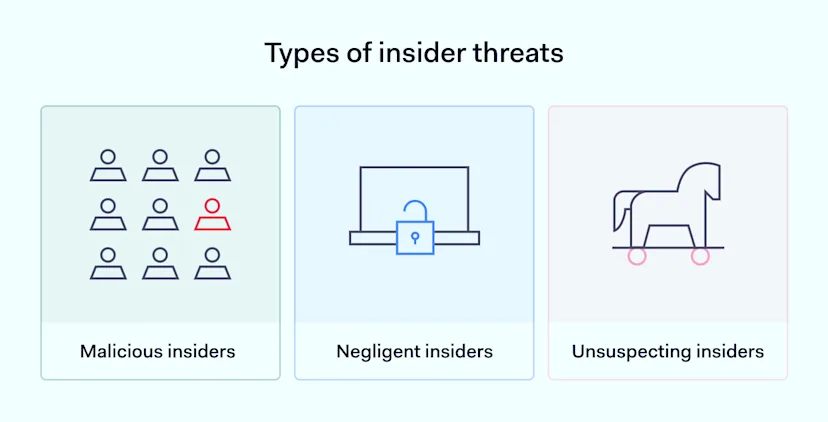
Typically, there are three types of insider threats:
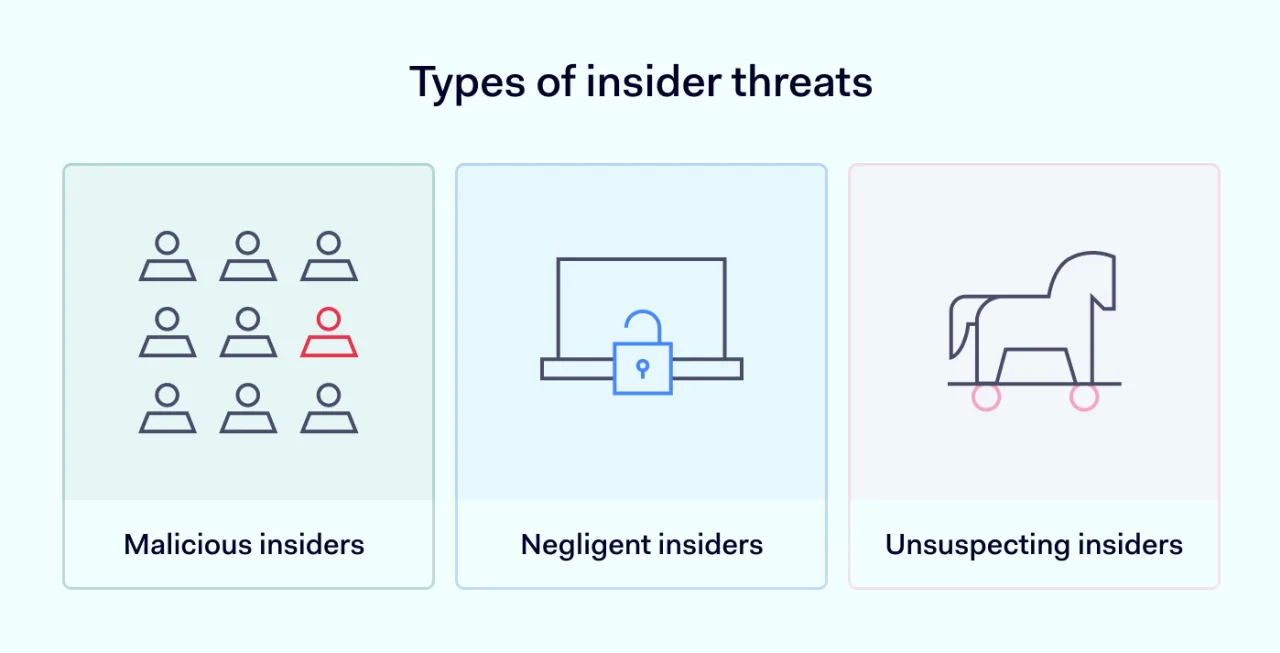
Types-of-insider-threats

  • Malicious insiders who aim to cause harm deliberately through actions like data theft, sabotage, or espionage

  • Negligent insiders whose careless actions like falling for phishing scams can unintentionally compromise security

  • Unsuspecting insiders whose credentials were stolen or devices were compromised by outsiders

Note that these types of insider threats can overlap or blend into each other.

Real-life examples of insider threats

Insider threats, including financial losses, reputational damage, legal liabilities, and operational disruptions, can severely affect organizations. When sensitive security information is exposed, it can be used by malicious actors to commit fraud, steal intellectual property, or launch further attacks against the company or its partners.

In some cases, the exposure of sensitive data can also lead to regulatory fines and legal penalties, particularly if it includes personally identifiable information or other confidential data.

Moreover, the loss of classified data can erode customer trust and damage the organization’s reputation, making it difficult to attract and retain customers, partners, and employees. In some cases, the impact of an insider threat can be felt for years, causing long-term damage to the organization’s bottom line and its ability to compete in the market. To illustrate the potential impact of internal threats, let’s have a look at some of the most infamous cases in recent history.

WikiLeaks in 2010

Chelsea Manning, a former US Army soldier, leaked classified military documents that included diplomatic cables, military reports, and videos of military operations in Iraq and Afghanistan. The release of the documents caused diplomatic tensions between the US and other countries, and Manning was sentenced to 35 years in prison.

The incident also led to calls for greater transparency and accountability in government operations and sparked a debate about the role of whistleblowers in exposing government misconduct.

National Security Agency (NSA) leak in 2013

Perhaps one of the most infamous cases of an insider threat, Edward Snowden leaked classified information from the NSA, exposing sensitive surveillance programs to the media. The leaked documents revealed that the NSA was collecting vast amounts of data on American citizens, including phone records and internet activity, without their knowledge or consent.

The leak sparked a global debate about privacy, surveillance, and the role of intelligence agencies in democratic societies. It also damaged the NSA’s reputation and strained its relationships with other countries, particularly those whose citizens were targeted by the agency’s surveillance programs.

Twitter compromise in 2019

An insider helped social engineer their way into compromised accounts on high-profile users like Barack Obama, Bill Gates, and Elon Musk. The cybercriminals then used these accounts to send out tweets promoting a Bitcoin scam. The fallout from the hack was significant.

The incident caused widespread confusion and concern among Twitter users, and the company’s stock price temporarily dropped as a result. The breach also raised questions about the security of social media platforms and the potential consequences of insider risks in this context.

How to prevent insider threats: best practices

As we have seen from the examples, internal threats can have serious consequences for organizations, including financial losses, reputational damage, and legal liabilities. To protect against these risks, companies need to take a proactive approach to cybersecurity.

By following best practices for insider risk management, organizations can reduce the risk of data breaches, fraud, and other forms of malicious activity. Here are some of the most effective strategies that help prevent insider threats.
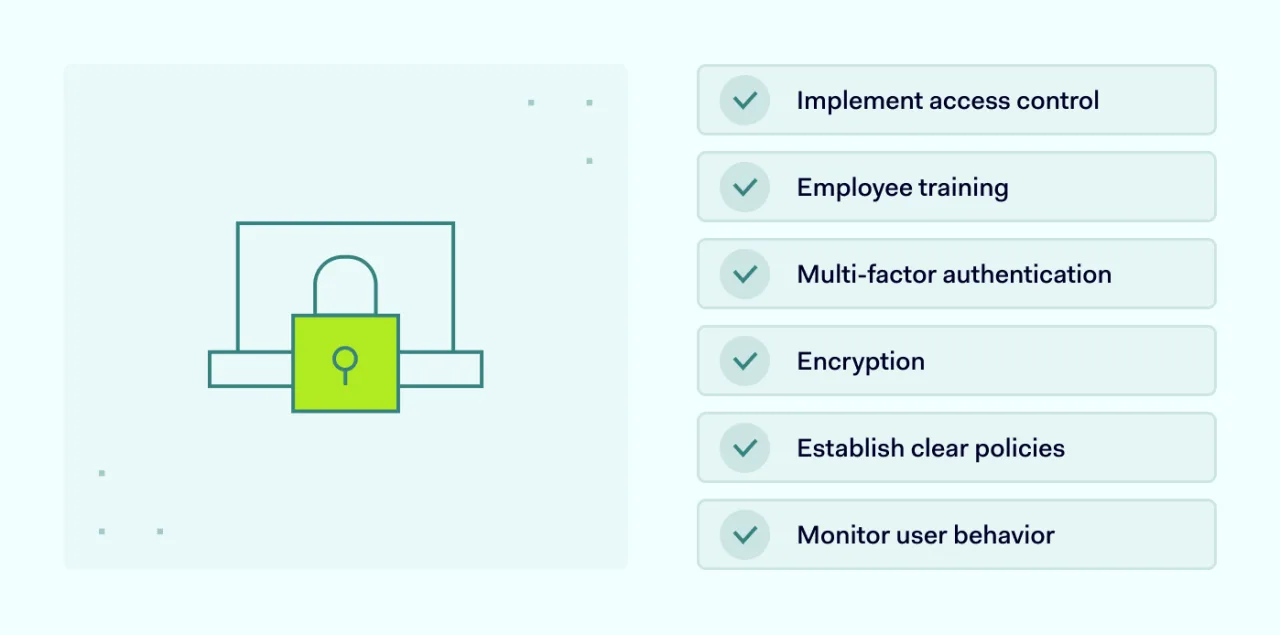
The-best-practices-for-preventing-insider-threats

Implement access controls

Access controls are a critical component of insider threat detection and prevention. By limiting access to security information based on job roles and responsibilities, you can ensure that only authorized personnel can access classified data.

This approach is known as the principle of least privilege, which means that users are given only the access they need to perform their job functions. Regularly reviewing and updating permissions is also essential to ensure that access is appropriate and necessary. This process can help prevent unauthorized access, accidental or intentional data leaks, and other forms of malicious activity.

Employee training

It is essential to educate employees on cybersecurity best practices, including how to identify phishing attempts, use strong passwords, and report suspicious activities to the security teams. Providing regular training and awareness programs can help your staff stay up-to-date. Additionally, fostering a culture of security within the organization is equally important, where employees grasp the significance of safeguarding and are more likely to follow security policies and procedures.

Multi-factor authentication (MFA)

Multi-factor authentication is an additional layer of security that requires users to provide two or more forms of authentication before accessing sensitive data. Implementing MFA wherever possible can secure against illegal access and prevent breaches, even if a malicious actor has stolen a user’s password. Requiring a temporary code sent to a user’s phone in addition to a password can prevent insider attacks and make it much more difficult to gain access to private data. Based on statistics, having MFA increases protection in 50% of the cases.

Encryption

Encrypting confidential information both in transit and at rest is essential to protect against unauthorized access. Encryption scrambles data so that it is unreadable without the decryption key. This means that even if an attacker gains access to encrypted data, they will not be able to read it. Encryption can help protect data from being stolen or intercepted, and it is a key element of a comprehensive insider threat prevention strategy.

Establish clear policies

Developing and enforcing clear security policies is critical to preventing insider threats. These policies should cover data handling, acceptable technology use, and reporting procedures for security incidents. By having clear policies in place, employees understand expectations and boundaries. Regular reviews and updates are necessary to keep policies relevant and effective. Additionally, consistent enforcement ensures that the employees follow them.

Monitor user behavior

Conducting thorough background checks for new hires can help identify potential risks before they become a problem. Utilizing security tools to detect unusual or suspicious user behavior, such as accessing company resources, can also help identify potential threats.

Unusual access patterns can be a red flag, such as an employee accessing classified data outside of normal business hours or from an unusual location. Changes in user behavior, such as an employee becoming disgruntled or expressing dissatisfaction with their job or a sudden increase in downloads or transfers of private data, can also indicate an internal threat.

Once insider attacks have been detected, it is important to take immediate action to mitigate the potential damage. This may include revoking access to classified data, conducting an investigation to determine the extent of the breach, and taking steps to prevent further unauthorized access. Security teams should have a clear plan in place for responding to internal threats, including who to contact, how to contain the threat, and how to communicate with affected parties.

How NordLayer can help

NordLayer provides a multi-layered cybersecurity approach to protect your organization from insider threats. By integrating advanced encryption protocols, secure remote access capabilities, and robust network access control tools, NordLayer ensures comprehensive protection for your data and networks.

With NordLayer’s Cloud Firewall service, organizations can exercise granular control over access to internal resources and cloud tools, enhancing security with an extra layer of control. This feature allows organizations to implement advanced network segmentation strategies, dividing the network into smaller segments.

Different user groups, teams, and roles can only access the specific segments relevant to their job, preventing unnecessary lateral movement across the wider network. Through tailored access controls, it minimizes the risk of data leaks from unauthorized access within the system.

Moreover, NordLayer’s Network Access Control (NAC) solution offers adaptive security features—such as Single sign-on (SSO), Devise Posture Security, Virtual Private Gateway with fixed IP address, and MFA—that authenticate users and devices, enabling secure access across various platforms.

The key to insider threat protection is a combination of technology, policies, and people. While technology provides the tools to establish safeguards and enforce access controls, policies provide guidelines for secure usage. Moreover, engaged employees trained to recognize and report potential risks can help prevent threats from occurring in the first place.

Thus, with product managers and engineers constantly monitoring the threat landscape and responding by strengthening NordLayer’s solutions, we can help security teams create a more secure environment for their organizations.

Don’t let insider threats compromise your business. Start your journey towards a more secure future with NordLayer today.
About Version 2 Digital

Version 2 Digital is one of the most dynamic IT companies in Asia. The company distributes a wide range of IT products across various areas including cyber security, cloud, data protection, end points, infrastructures, system monitoring, storage, networking, business productivity and communication products.

Through an extensive network of channels, point of sales, resellers, and partnership companies, Version 2 offers quality products and services which are highly acclaimed in the market. Its customers cover a wide spectrum which include Global 1000 enterprises, regional listed companies, different vertical industries, public utilities, Government, a vast number of successful SMEs, and consumers in various Asian cities.

About NordLayer
NordLayer is an adaptive network access security solution for modern businesses – from the world’s most trusted cybersecurity brand, Nord Security.

The web has become a chaotic space where safety and trust have been compromised by cybercrime and data protection issues. Therefore, our team has a global mission to shape a more trusted and peaceful online future for people everywhere.

Protect sensitive data: a guide for your business

In a world where a DNA test can unlock the stories of our past, it was hard to imagine these discoveries leading to danger. DNA testing kits, often given as gifts, opened up new worlds of understanding about where we come from. 

But in October 2023, a significant data breach turned these journeys of discovery into something much more troubling. A bad actor not only accessed but categorized this data, targeting people based on their heritage, like those with Ashkenazi Jewish and Chinese backgrounds. This incident sparked fears, especially when it coincided with violence in Israel and Gaza.

This breach served as a reminder of the risks associated with handling sensitive information and the devastating impact of a security breach. The response from 23andMe, the company involved, drew criticism for not doing enough to protect its users’ data and for blaming the victims.

This event highlights how crucial it is to protect sensitive data. It shows us why understanding sensitive data and ensuring its safety is so important. Keeping sensitive information secure is not just about technical steps; it’s about protecting our identity and privacy. In this article, we’ll explore the nature of sensitive data and discuss ways to safeguard it.

Understanding sensitive data

Sensitive data is information that needs careful handling to prevent harm to a person or an organization if it gets leaked. It covers various personal and business details that laws protect or are private by nature. This includes things like social security numbers, bank details, health records, and secret business information such as security plans or unique technologies.

Click to tweet

Keeping sensitive data safe is key to avoiding identity theft, financial loss, and preserving privacy. To protect sensitive data, it’s important to follow strong security practices, comply with data protection laws, and always prioritize the safety of personal information. These efforts help in securing sensitive data against unauthorized access and data breaches.

Examples of sensitive data

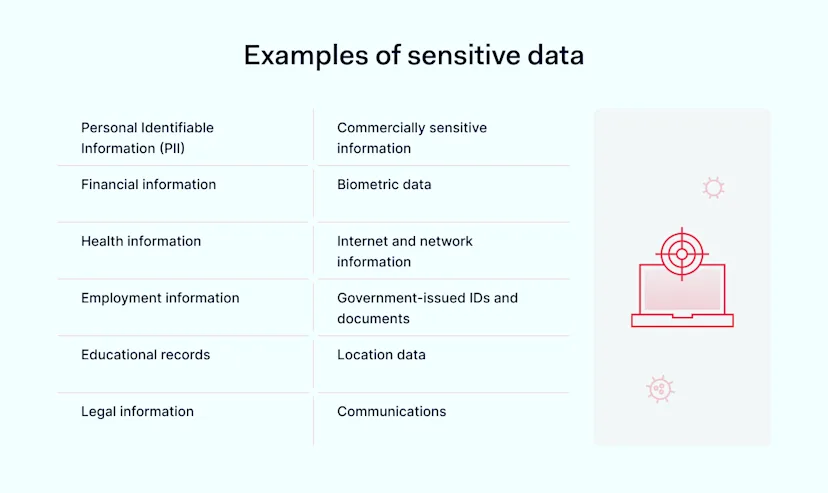
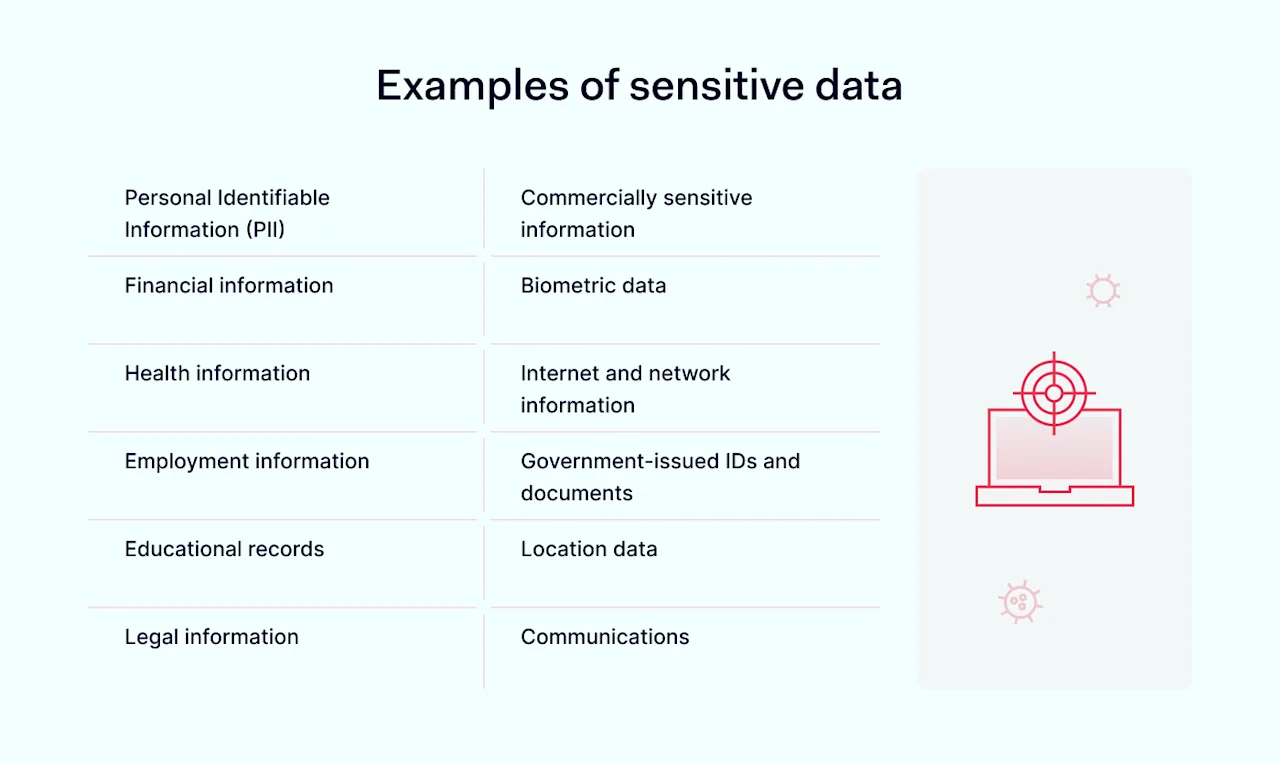
No one ever wants to face a security breach or lose any data. Yet, losing sensitive information can have far worse consequences than losing ordinary data. While it may seem that sensitive data only refers to personal identifiable information, its scope is actually much broader. Here’s a list to help you understand whether your business deals with sensitive information:

Examples of sensitive data

  1. Personal Identifiable Information (PII): data that can identify an individual, such as names, social security numbers, and home addresses.

  2. Financial information: bank account numbers, credit card details, and investment information.

  3. Health information: medical records, treatment history, and insurance details, which are essential for protecting patient privacy.

  4. Employment information: details like employee ID numbers, payroll information, and performance evaluations.

  5. Educational records: student IDs, academic history, and admission applications.

  6. Legal information: criminal records, legal disputes, and court documents. Securing sensitive data in this category is vital for respecting individuals’ privacy and upholding justice.

  7. Commercially sensitive information: trade secrets, business strategies, and customer information, which are critical for a company’s competitive edge.

  8. Biometric data: fingerprints, DNA profiles, and facial recognition data.

  9. Internet and network information: IP addresses, login IDs, and browsing histories.

  10. Government-issued IDs and documents: passports, driver’s licenses, and social security cards. Protecting these documents is essential for preventing identity theft.

  11. Location data: GPS data and travel itineraries that can reveal an individual’s movements.

  12. Communications: private emails, text messages, and chat histories. Ensuring this data’s security helps protect personal information and prevent unauthorized access.

As you can see, the range of sensitive data is quite extensive. If your business handles any of these types of information, it’s crucial to consider how to protect it. It’s about safeguarding your stakeholders’ trust and preventing a security breach that could have devastating consequences. Securing sensitive data should be a top priority for your business.

Compliance regulations for protecting sensitive data

Compliance regulations guide organizations on how to keep sensitive data safe from security violations.

The General Data Protection Regulation (GDPR) in the European Union is a key example. It provides strict rules for handling data and ensures people have control over their personal information.

In the United States, the California Consumer Privacy Act (CCPA) lets people manage their own data, affecting how companies deal with sensitive information.

Healthcare and finance are areas with their own rules. In the U.S., the Health Insurance Portability and Accountability Act (HIPAA) keeps patients’ health information private. The Payment Card Industry Data Security Standard (PCI DSS) sets rules for businesses that process credit card payments.

Following these rules is about more than avoiding penalties. It’s about building trust by protecting sensitive data.

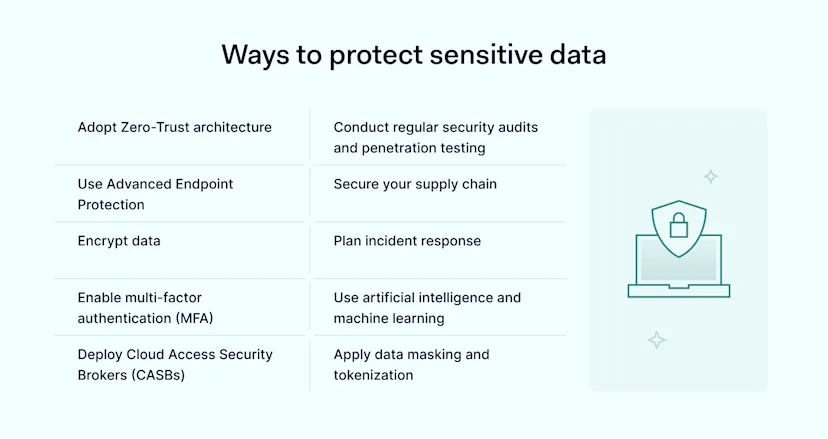
How to protect sensitive data

Securing sensitive data involves a blend of strategies to keep information safe from data compromises.

Ways to protect sensitive data

Adopt Zero Trust architecture

Zero Trust architecture is becoming essential as cyber threats grow more sophisticated.

It operates on the principle that no one inside or outside the network is trusted by default. Every access request is verified.

This method is especially effective in environments where remote work is common, as it can significantly reduce the risk of breaches. However, due to its complexity and cost, small businesses might find it challenging to implement. For instance, large corporations like Google have successfully adopted Zero Trust to secure their networks.

Use Advanced Endpoint Protection

Advanced Endpoint Protection, through EDR (Endpoint Detection and Response) or XDR (Extended Detection and Response) solutions, provides comprehensive monitoring and response to threats targeting devices connected to a network.

It’s valuable for companies with many endpoints to protect, including remote devices. Industries like finance and healthcare, which deal with a lot of sensitive data, can benefit greatly from this method.

However, it might be less effective in environments that do not regularly update or patch their systems. But it’s generally challenging to protect systems that aren’t kept up-to-date. Think back to the Wannacry attack, which affected over 300,000 computers globally. This happened largely because of neglected Windows system updates. Even if your operations need to run 24/7, scheduling those patches and updates is crucial.

Encrypt data

Data encryption secures information at rest and in transit, making it unreadable without a decryption key. It’s a fundamental practice for all types of companies, from small businesses to large enterprises.

Encryption is critical for industries such as healthcare and banking, where data privacy is a legal requirement. However, encryption can be less effective if the encryption keys are not managed securely or outdated encryption methods are used.

Enable multi-factor authentication (MFA)

MFA improves security by requiring users to provide two or more verification factors to access sensitive data. It’s particularly effective in preventing unauthorized access due to stolen or weak passwords. MFA suits all types of companies. However, it may be less effective if users choose insecure backup authentication methods, like easily answered security questions.

Deploy Cloud Access Security Brokers (CASBs)

CASBs protect data as they move to and from the cloud, making them essential for businesses using cloud services. They help enforce security policies and provide visibility into cloud application usage.

CASBs are particularly useful for organizations with a significant cloud presence but may offer limited benefits for companies not utilizing cloud services extensively. Large companies like Netflix use CASBs to secure their cloud environments.

Conduct regular security audits and penetration testing

Security audits and penetration testing identify and address vulnerabilities. They are crucial for maintaining a strong security posture.

They benefit organizations of all sizes but are particularly critical for those in sectors with high regulatory requirements, such as finance and healthcare.

However, these practices require skilled professionals to conduct, which might be a barrier for smaller organizations.

Secure your supply chain

It’s important to make your supply chain secure because attackers often search for weak spots to attack. Make sure every supplier and partner follows your security rules. This builds a strong defense together.

If you run a small business, you can start by discussing security steps with your suppliers. Bigger companies might check their suppliers’ security more formally and help them get better at protecting data.

Plan incident response

A predefined incident response plan will help organizations respond quickly and effectively to a security breach. This approach is suitable for all companies, as it minimizes the damage and costs associated with data breaches. But don’t forget to regularly update the plan and train employees on their roles during an incident.

Use artificial intelligence (AI) and machine learning (ML)

AI and ML are used for predictive threat detection and behavioral analytics. They help identify potential threats before they occur.

Using AI for cybersecurity is particularly useful for large organizations with vast amounts of data to analyze for cyber threat patterns.

Apply data masking and tokenization

Data masking and tokenization protect sensitive information in non-secure environments by replacing it with non-sensitive equivalents. This method is great for development and testing environments where real data is risky to use. But it’s unnecessary for companies that do not use sensitive data outside secure environments.

How NordLayer can help

NordLayer’s Secure Access Service Edge (SASE) solution is changing how businesses protect sensitive data by merging network and security features into a unified, cloud-based service. This method makes it easier to secure sensitive data, lowers the chance of data breaches, and aids in preventing identity theft by using cutting-edge technologies like SD-WAN and security services.

By choosing SASE, companies can safeguard data security for all users and devices. It is a reliable method for protecting personal information and sensitive data from the constantly changing threats.

NordLayer provides businesses with various tools to protect sensitive data, including SaaS security, secure remote access, and threat prevention. These tools join forces to offer thorough protection for sensitive data, improve data security, and ensure secure data processing. This simplifies the management of security policies and reduces the complexity found in traditional security setups.

NordLayer addresses business needs for sensitive data protection in any setting. Contact our sales team for a simplified solution for securing data processing and reducing the risk of security breaches.

About Version 2 Digital

Version 2 Digital is one of the most dynamic IT companies in Asia. The company distributes a wide range of IT products across various areas including cyber security, cloud, data protection, end points, infrastructures, system monitoring, storage, networking, business productivity and communication products.

Through an extensive network of channels, point of sales, resellers, and partnership companies, Version 2 offers quality products and services which are highly acclaimed in the market. Its customers cover a wide spectrum which include Global 1000 enterprises, regional listed companies, different vertical industries, public utilities, Government, a vast number of successful SMEs, and consumers in various Asian cities.

About NordLayer
NordLayer is an adaptive network access security solution for modern businesses – from the world’s most trusted cybersecurity brand, Nord Security.

The web has become a chaotic space where safety and trust have been compromised by cybercrime and data protection issues. Therefore, our team has a global mission to shape a more trusted and peaceful online future for people everywhere.

[重要通知] 伺服器將於 2024-04-12 (2:30 pm) 至 2024-04-12 (6:30 am) 進行定期維護

重要通知!

ESET 計劃進行維護工作,將於香港時間 2024 年 4 月 12 日(星期五)下午 2 時 30分 至 下午 6 時 30分之間進行,維護時間大約為 4 小時。

在此段期間,客戶可能無法進行續期購買、啟動及生產授權。

不便之處,敬請原諒。

技術支援熱線: (852) 2893 8186 或電郵至: support@version-2.com.hk


IMPORTANT !

ESET planned to maintain which will take place on
Friday, April 12th, 2024, from 2:30 PM to 6:30 PM, Hong Kong Time lasting 4 hours.

It means in certain time within the maintenance window, customers might not renewal purchase, activate license or generate license, etc.

Sorry for any inconveniences caused.

Support Hotline: (852) 2893 8186
Or email to support@version-2.com.hk

關於Version 2

Version 2 Digital 是立足亞洲的增值代理商及IT開發者。公司在網絡安全、雲端、數據保護、終端設備、基礎設施、系統監控、存儲、網絡管理、商業生產力和通信產品等各個領域代理發展各種 IT 產品。透過公司龐大的網絡、通路、銷售點、分銷商及合作夥伴,Version 2 提供廣被市場讚賞的產品及服務。Version 2 的銷售網絡包括台灣、香港、澳門、中國大陸、新加坡、馬來西亞等各亞太地區,客戶來自各行各業,包括全球 1000 大跨國企業、上市公司、公用事業、醫療、金融、教育機構、政府部門、無數成功的中小企及來自亞洲各城市的消費市場客戶。

Common Endpoint Vulnerabilities that Create Risk for Corporate Networks

Attack methods that exploit endpoint vulnerabilities are evolving, and network security teams are scrambling to keep pace. These endpoints, which include devices like laptops, smartphones, and IoT devices, can often serve as entry points for cybercriminals. Today, we explore common endpoint vulnerabilities that pose risks to corporate networks and how Network Access Control (NAC) can help mitigate these vulnerabilities to enhance overall security.

Understanding Endpoint Vulnerabilities 

Endpoints refer to devices that connect to the corporate network, including laptops, smartphones, tablets, and other IoT devices. These endpoints can become the weakest link in network security, offering cybercriminals a gateway to infiltrate corporate systems. Some of the most common endpoint vulnerabilities include:

  • Malware Infection: Endpoints can be compromised through phishing attacks, drive-by downloads, and malicious email attachments, leading to malware infections that can spread across the network.
  • Unpatched Software: Vulnerabilities in unpatched operating systems and applications can serve as entry points for attackers.
  • Weak Authentication: The use of default credentials, weak passwords, and the absence of Multi-Factor Authentication (MFA) can make endpoints easy targets.
  • Misconfigured Endpoints: Open ports, unnecessary services, and incorrect user permissions can expose networks to unauthorized access.
  • Physical Security Breaches: The theft of devices or unauthorized physical access can lead to direct network infiltration.
  • Insider Threats: Actions by malicious insiders or unintentional mistakes by employees can compromise network integrity.
  • Use of Unauthorized Devices: BYOD (Bring Your Own Device) policies and unsecured personal devices can introduce vulnerabilities.
  • Data Leakage: Unencrypted data transmission, cloud storage misconfigurations, and the use of removable media can lead to data exposure.

These vulnerabilities highlight the need for robust security measures that can protect endpoints and, by extension, the entire corporate network.

The Role of Network Access Control (NAC) in Mitigating Risks

Network Access Control (NAC) is a security solution that enforces policy-based access control for devices attempting to connect to the network. NAC can identify, evaluate, and remediate endpoint vulnerabilities in real-time, thereby enhancing network security. Here’s how NAC can help mitigate the risks associated with common endpoint vulnerabilities:

1. Comprehensive Visibility and Control

NAC solutions provide complete visibility into all devices connected to the network, including BYOD and IoT devices. This visibility allows IT administrators to monitor device status, ensure compliance with security policies, and enforce access controls based on device posture and user credentials.

2. Automated Device Assessment and Remediation

Upon attempting network access, devices are assessed for compliance with the organization’s security policies. NAC can automatically remediate non-compliant devices by updating software, applying patches, or directing them to a quarantine network until they meet the necessary security standards.

3. Enforcement of Access Policies

NAC enables the creation and enforcement of granular access policies based on user roles, device types, and other criteria. This ensures that devices and users only have access to network resources essential to their roles, minimizing the risk of insider threats and data leakage.

4. Strengthening Authentication Mechanisms

By integrating with Multi-Factor Authentication (MFA) systems or by leveraging digital certificates, NAC adds an additional layer of security for device and user authentication. This significantly reduces the risks associated with weak authentication practices.

5. Securing Wireless and Remote Access

NAC solutions extend their security capabilities to wireless networks and remote access scenarios, ensuring that devices connecting via Wi-Fi or VPN are subject to the same stringent security checks as wired connections.

6. Proactive Response to Threats

Advanced NAC systems can detect and respond to threats in real-time. If a device is found to be compromised or acting maliciously, NAC can immediately revoke network access, isolate the device, and alert administrators, thereby preventing the spread of malware or the escalation of an attack.


Implementing NAC: Best Practices

To maximize the effectiveness of NAC in mitigating endpoint vulnerabilities, organizations should consider the following best practices:

  • Comprehensive Policy Development: Develop clear, comprehensive policies that define acceptable use and security requirements for all types of devices and users.
  • Regular Audits and Compliance Checks: Conduct regular audits of device compliance and security posture to ensure ongoing adherence to security policies.
  • Integration with Other Security Solutions: Integrate NAC with existing security solutions, such as firewalls, intrusion detection systems (IDS), and security information and event management (SIEM) systems, for a layered defense strategy.
  • User Education and Awareness: Educate users about security policies, the importance of compliance, and the role they play in maintaining network security.

As the threat landscape evolves, so too must the strategies to combat these threats. Endpoint vulnerabilities represent a significant risk to corporate networks, but with the implementation of Network Access Control (NAC), organizations can significantly enhance their network security posture. By providing comprehensive visibility, enforcing strict access controls, and automating the remediation of non-compliant devices, NAC serves as a critical component in the defense against cyber threats. Through diligent implementation and adherence to best practices, organizations can leverage NAC to protect their networks and ensure the integrity of their digital assets.

About Version 2 Digital

Version 2 Digital is one of the most dynamic IT companies in Asia. The company distributes a wide range of IT products across various areas including cyber security, cloud, data protection, end points, infrastructures, system monitoring, storage, networking, business productivity and communication products.

Through an extensive network of channels, point of sales, resellers, and partnership companies, Version 2 offers quality products and services which are highly acclaimed in the market. Its customers cover a wide spectrum which include Global 1000 enterprises, regional listed companies, different vertical industries, public utilities, Government, a vast number of successful SMEs, and consumers in various Asian cities.

About Portnox
Portnox provides simple-to-deploy, operate and maintain network access control, security and visibility solutions. Portnox software can be deployed on-premises, as a cloud-delivered service, or in hybrid mode. It is agentless and vendor-agnostic, allowing organizations to maximize their existing network and cybersecurity investments. Hundreds of enterprises around the world rely on Portnox for network visibility, cybersecurity policy enforcement and regulatory compliance. The company has been recognized for its innovations by Info Security Products Guide, Cyber Security Excellence Awards, IoT Innovator Awards, Computing Security Awards, Best of Interop ITX and Cyber Defense Magazine. Portnox has offices in the U.S., Europe and Asia. For information visit http://www.portnox.com, and follow us on Twitter and LinkedIn.。

24.2.3 Mimas released

Changes compared to 24.2.2

Bug Fixes

  • Fixed an issue with being unable to load a user with an “@” in the username in the Comet Server web interface
  • Fixed an issue with “Test Connection” on VMware Protected Items not working when logged in as a normal user

About Version 2 Digital

Version 2 Digital is one of the most dynamic IT companies in Asia. The company distributes a wide range of IT products across various areas including cyber security, cloud, data protection, end points, infrastructures, system monitoring, storage, networking, business productivity and communication products.

Through an extensive network of channels, point of sales, resellers, and partnership companies, Version 2 offers quality products and services which are highly acclaimed in the market. Its customers cover a wide spectrum which include Global 1000 enterprises, regional listed companies, different vertical industries, public utilities, Government, a vast number of successful SMEs, and consumers in various Asian cities.

About Comet
We are a team of dedicated professionals committed to developing reliable and secure backup solutions for MSP’s, Businesses and IT professionals. With over 10 years of experience in the industry, we understand the importance of having a reliable backup solution in place to protect your valuable data. That’s why we’ve developed a comprehensive suite of backup solutions that are easy to use, scalable and highly secure.

×

Hello!

Click one of our contacts below to chat on WhatsApp

×