Skip to content

Saily Review: Evaluating the New eSIM App from Nord Security

Here at Nord Security, we take great pride in the fact that we offer a wide range of quality cybersecurity products and services, including NordPass and NordVPN. Each product we deliver has its own identity and is developed by a dedicated team, making it feel like each is a unique division within the company.

This actually allows us to try something a bit out of the ordinary — right now, the NordPass team will give an honest review of Nord Security’s latest product — Saily. Why? Because we’re not shy about critiquing our colleagues’ work. In fact, by sharing constructive criticism, we can all better understand where we stand, which helps us deliver an excellent experience for our users. So, let’s get started.

First things first — what is Saily?

Saily is an eSIM application that allows users to switch between mobile carriers and plans on their devices without dealing with any physical SIM cards. In other words, it enables you to activate a cellular data plan, just like with a traditional SIM card, but without having to buy or insert a new card.

Since no physical SIM cards are involved and everything happens in the app, Saily lets you quickly compare and select data plans from different vendors, so you don’t have to sort through a bunch of SIM card packages and plan details. Basically, it’s meant to be a quick and easy way to switch your mobile carrier whenever you like.

Why would you want to use this app?

While the description itself might already give you some ideas about how Saily could be helpful to you, we will now explore some of the key benefits in more detail.

Saily is designed for anyone traveling to a different country, but it’s especially useful for frequent travelers like business professionals and globetrotters. With Saily, you can keep your phone number and use the app to get as much cellular data as you need during your trip.

For those who need to stay connected while traveling, Saily eliminates the hassle of switching SIM cards or paying for costly international roaming plans. So, for global sales managers, for example, it’s an affordable way to stay in touch with clients and teams almost anywhere they are at the moment. For world travelers, it’s a way to get internet data for maps and guides, helping them make the most of their trips.

How does Saily work?

We were really impressed by how user-friendly the app is. Creating your account is incredibly simple and takes less than a minute. But the best part is how quickly you can switch mobile carriers and choose a plan — it’s just as fast!

The way it works is you browse the list of countries or use the search feature to find a specific one, compare the carriers and plans for that location, pick the one that suits you best, and you’re good to go.

Saily is compatible with both iOS and Android, so you can download the app from the AppStore or Google Play in no time. If you have any service-related questions, there’s a 24/7 customer support chat ready to help. However, the app is so intuitive and easy to use that you’ll probably never need customer support for app-related issues — perhaps only for specific carrier questions.

What about the price of Saily?

According to user feedback from multiple platforms, Saily is among the most cost-effective eSIM apps on the market, offering great value.

First, Saily is available in more than 150 countries and territories, including the United States, Brazil, Australia, Japan, Turkey, and China. Creating a Saily account is free, and the price of your plan depends on the country, carrier, and plan you choose. The most affordable plans start at just $2.49.

Speaking of data plans, Saily offers several options for the carriers in each country. You can choose anything from 1GB for 7 days to 20GB for 30 days, depending on your needs. For payment, you can choose from various options like credit or debit cards, Google Pay, Apple Pay, and PayPal.

Quick summary

  • Functionality

    Changing mobile carriers and selecting different data plans on a device

  • Plans

    Multiple data plans, ranging from 1GB/7 days to 20GB/30 days

  • Cost

    Starting at $1.99

  • Countries

    150+

  • Compatibility

    iOS, Android

  • Support

    24/7 live chat via the app

  • Payment method

    Credit or debit card, Google Pay, Apple Pay, and PayPal

  • Our score

    4.5/5

Saily is an app that does exactly what it is supposed to do. It lets you switch mobile carriers quickly and use data plans to avoid high roaming costs. This means you can access the internet without a hitch, wherever you are. The app is incredibly user-friendly and requires no expert knowledge to get started.

One drawback is that Saily doesn’t offer unlimited data plans for now, so if you’re traveling for more than 30 days or use a lot of data, you might need to buy additional cellular data plans. We hope this will be addressed in the future, but despite this limitation, Saily is an almost perfect app that delivers on its promise. We’re really proud of the team behind it and are excited to see Saily become the next big product in the Nord Security lineup.

Give it a try and form your own opinion

While our Saily review can give you quite a good understanding of what the app does and how it works, there’s nothing quite like experiencing it for yourself. That’s why we suggest you go to the App Store or Google Play, download and install the Saily app on your device, and try it on your next trip. We think you’ll be pleasantly surprised.

Also, while creating a password for your Saily account, remember to make it unique and strong. Consider using NordPass to generate the password and safely store it, along with all your other passwords and passkeys. For more information, visit www.nordpass.com.

About Version 2 Digital

Version 2 Digital is one of the most dynamic IT companies in Asia. The company distributes a wide range of IT products across various areas including cyber security, cloud, data protection, end points, infrastructures, system monitoring, storage, networking, business productivity and communication products.

Through an extensive network of channels, point of sales, resellers, and partnership companies, Version 2 offers quality products and services which are highly acclaimed in the market. Its customers cover a wide spectrum which include Global 1000 enterprises, regional listed companies, different vertical industries, public utilities, Government, a vast number of successful SMEs, and consumers in various Asian cities.

About NordPass
NordPass is developed by Nord Security, a company leading the global market of cybersecurity products.

The web has become a chaotic space where safety and trust have been compromised by cybercrime and data protection issues. Therefore, our team has a global mission to shape a more trusted and peaceful online future for people everywhere.

What is the Principle of Least Privilege (PoLP)?

In cybersecurity, the principle of least privilege (PoLP) is a concept that states that a user should have the least amount of access privileges possible to carry out. PoLP aims to squash risks associated with unauthorized access and improve the security perimeter generally.

Today, we’re taking a deeper look at the principle of least privilege. We’re showcasing why PoLP is important, how it relates to zero-knowledge principles and how it can help organizations to further improve their overall security posture.

How does the principle of least privilege work?

Technically speaking, the principle of least privilege, which is deeply embedded in the Zero Trust security philosophy, works by simply limiting a user’s (employees) access rights to certain data, applications, resources, and systems — leaving the user with the least amount of privileges that are needed to do their job. However, before the least access principle can be applied in a business setting, it is critical to first assess user roles and responsibilities, in other words, to pinpoint which access rights and privileges are essential for which users. Once the analysis is complete and users are assigned their appropriate access rights, the next step is the continuous management of these permissions. After all, employees come and go, roles change, and so access rights have to be adjusted accordingly.

Why is the principle of least privilege important?

Let’s look at a hypothetical situation. Say an HR employee has access to the human resources management system to update employee records. But if they also have access rights to access the IT infrastructure, which are not essential for their HR-related tasks, the risk of a full-blown data breach increases significantly in the event their account is compromised.

The hypothetical above showcases the principle of least privilege benefits, which include:

  • Reduce the potential attack surface: Limiting user access privileges means fewer opportunities for bad actors to exploit those privileges.

  • Minimize the impact of exploits: Even if a hacker can gain unauthorized access to the user’s account, the security principle of least privilege confines the possible damage.

  • Come closer to adhering to regulatory frameworks such as GDPR and HIPAA: Regulatory frameworks such as GDPR and HIPAA require strict access controls. By applying PoLP and ensuring users have access only to the information and system essential for their tasks, an organization can get closer to being compliant with various regulations.

  • Improve security within the hybrid work environment: In a hybrid work environment, where employees access systems remotely, maintaining strict access controls becomes even more important. Implementing the principle of least privilege ensures that the security risks associated with remote access are reduced significantly.

Zero Trust vs Least Privilege

Zero Trust is a cybersecurity concept built on another simple idea: never trust, always verify. Unlike the traditional security frameworks, Zero Trust Security assumes that threats can come from within as well as outside the network.

At its core, Zero Trust embodies the principle of least privilege by enforcing strict access controls and permissions. Every access or connection request, regardless of origin, is treated as untrusted until verified otherwise. This stringent verification process is an extension of PoLP’s main idea — to provide users with only the necessary access levels.

In practice, Zero Trust treats every access request as if it’s the first request coming from an untrusted network. Each request is always re-authenticated regardless of previous requests or connections. In this sense, you can think of Zero Trust as a dynamic framework while PoLP can be considered static because it provides users with specific access rights that remain the same unless adjusted.

To make the distinction between Zero Trust and PoLP clearer, let’s imagine a high-end office building. In this case, Zero Trust would be the foundation of the building’s security system, which requires employees, regardless of their position, to use an access card to enter the office building and other facilities. The principle of least privilege, in this scenario, could be likened to the specific programming of access cards based on the employee’s role: for instance, providing the IT staff with access to server rooms, while not granting the same privileges to, say, the marketing team.

What is Privilege Creep?

Privilege creep is a term that refers to a user that gradually accumulates more access rights than are required to execute their function. Privilege creeps most often come into being due to role changes that do not trigger an adjustment concerning access privileges. When thinking about organizational cybersecurity, privilege creeps pose a serious risk where unauthorized access to a single account could lead to an enterprise-wide data breach.

Here are best practices when it comes to the principle of least privilege, helping to prevent privilege creeps from materializing:

  • Implement role-based access controls: Clearly define roles and associated permissions to make sure access rights are granted based on the necessities of the job.

  • Conduct regular access reviews: Schedule periodic reviews of user privileges to identify and rectify any discrepancies or excessive access rights.

  • Enforce a Zero-Trust security approach: Adopt a zero-trust policy where no user is trusted by default. Verify every access request, regardless of the user’s position within the organization.

  • Make use of automated tools: Leverage automation for managing access rights. Tools like Privileged Access Management (PAM) systems can help in monitoring and controlling access rights efficiently.

  • Promote security awareness: Educate employees about the risks of privilege creep and the importance of adhering to cyber security protocols.

By proactively managing user permissions and educating employees, you can significantly mitigate the risk of privilege creep and enhance your organization’s overall security posture.

How to Implement the Least Privilege Principle in Your Organization

Adopting the principle of least privilege in your organization can be a lengthy process; however, the juice is well worth the squeeze. Once your organization operates under PoLP, the potential attack surface will shrink significantly. Here are a few best practices when it comes to the implementation of PoLP:

  • Define access requirements clearly: Before adopting the principle of least privileges in your organization, you need to have a clear understanding of the data access needs of various roles within the organization.

  • Implement Role-based access control (RBAC): Once you have a clear understanding of access requirements, setting up RBAC will be a lot easier. You’ll need to create roles based on job functions and assign permissions to these roles rather than for individual users.

  • Utilize Just-In-Time (JIT) privilege access: Enhance security by granting time-limited privileges on a need-to-use basis. Establishing JIT access privileges will restrict the window of opportunity for access to sensitive data, minimizing the risk of insider threats or external breaches that would exploit user access privileges.

  • Enforce Multi-factor authentication (MFA) and password policies: Strengthen the authentication processes by establishing MFA as an additional layer of security next to company-wide password policies. MFA ensures that even if the password of a critical account is compromised, the attackers will not have a chance to access it as they will not have another authentication factor required.

  • Implement system monitoring: Establish surveillance of system and user activities to quickly identify and respond to abnormal access patterns or potential security incidents.

How can NordPass help?

These days, when access points seem to multiply as fast as potential security threats, adopting the principle of least privilege within a business setting should be a no-brainer. PoLP implementation can reduce, quite significantly, the organization’s attack surface and generally improve overall cybersecurity. There’s also the added benefit of coming closer to compliance with various regulatory frameworks such as HIPAA or GDPR.

While the adoption of PoLP can be challenging, there are tools that can make this a lot easier and NordPass Enterprise is one of them. It’s an enterprise-grade password manager that’s built on the principle of the Zero-Knowledge architecture and is equipped with the XChaCha20 encryption algorithm.

But that’s just the tip of the iceberg. NordPass’s integration with Single Sign-On (SSO) is a key asset in adopting PoLP. By allowing users to use a single set of credentials to access multiple resources, SSO simplifies authentication and enhances security. NordPass Enterprise is compatible with major identity providers such as Microsoft Azure AD, MS ADFS, and Okta. This centralized management system is effective in preventing unauthorized access and minimizing potential security breaches by assigning user access based on specific roles.

NordPass also helps organizations in managing user access effectively. It allows administrators to assign, revoke, or modify user access to login credentials, personal information, payment card data, and other sensitive data according to specific needs. This flexibility, powered by the Activity log feature, is critical when adopting PoLP. Thanks to this functionality, you can easily adjust access rights in response to changes in roles or employment status.

Learn more about how NordPass Enterprise can benefit your organization’s overall security strategy by visiting the official NordPass Enterprise website.

About Version 2 Digital

Version 2 Digital is one of the most dynamic IT companies in Asia. The company distributes a wide range of IT products across various areas including cyber security, cloud, data protection, end points, infrastructures, system monitoring, storage, networking, business productivity and communication products.

Through an extensive network of channels, point of sales, resellers, and partnership companies, Version 2 offers quality products and services which are highly acclaimed in the market. Its customers cover a wide spectrum which include Global 1000 enterprises, regional listed companies, different vertical industries, public utilities, Government, a vast number of successful SMEs, and consumers in various Asian cities.

About NordPass
NordPass is developed by Nord Security, a company leading the global market of cybersecurity products.

The web has become a chaotic space where safety and trust have been compromised by cybercrime and data protection issues. Therefore, our team has a global mission to shape a more trusted and peaceful online future for people everywhere.

Is your company data on the dark web? Key webinar takeaways

Cybersecurity experts Vladimir Krupnov, Threat Intelligence Lead at Revolut, Andrew Rose, Chief Security Officer at SoSafe, and Matt Lee, Senior Director of Security and Compliance at Pax8, joined Gerald Kasulis, VP Sales at NordStellar, to share their experiences and insights on dark web monitoring, and how they leverage threat intelligence to secure their organizations’ data. Enjoy the recording above for its comprehensive discussion on the topic, or keep reading for key business takeaways.

Understanding the dark web

The dark web refers to parts of the internet that are not indexed by typical search engines and require specific browsers or tools to access. According to Matt, it is “where data has been traded… where a lot of criminal business has historically been transmitted.” To Vladimir,  “It’s a cyberspace where criminals – or potential criminals – communicate and carry out malicious activity, which could be related to your company, government, or anything else.”

But as Andrew points out, it’s not all doom and gloom. The dark web has proven time and again to be a beneficial technology, providing a vital platform for journalists and social movements across the world for free speech and anonymous communication.

For security leaders, it’s a vast, largely untapped wellspring of information and data that isn’t attainable on the clear web. Fearing or ignoring it as a large business equates to simply wasting a good source of intelligence and/or value.

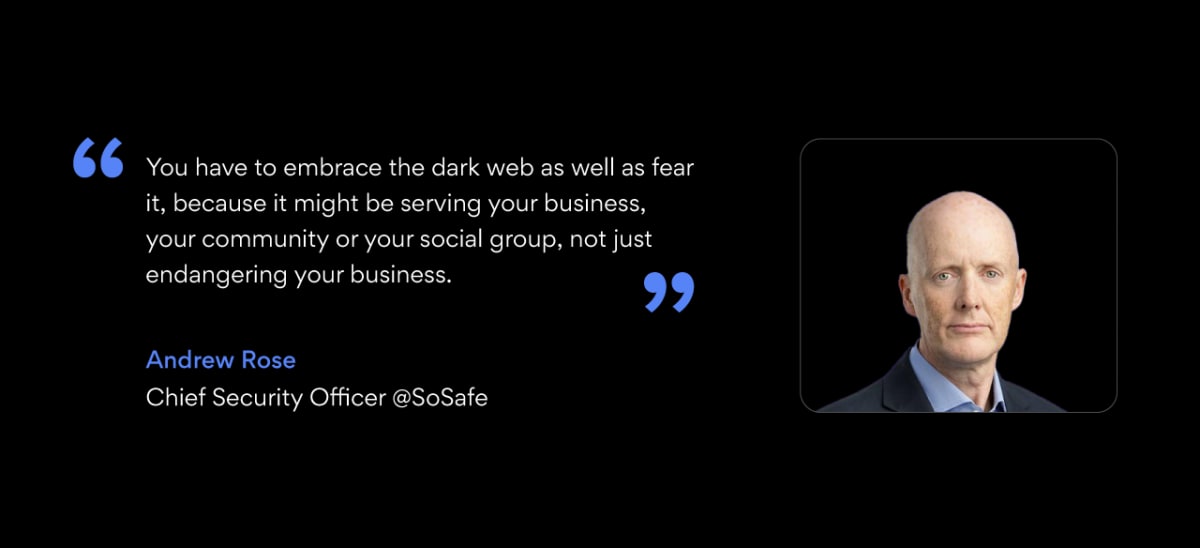
Quote bubble: “You have to embrace the dark web as well as fear it, because it might be serving your business, your community or your social group, not just endangering your business.”

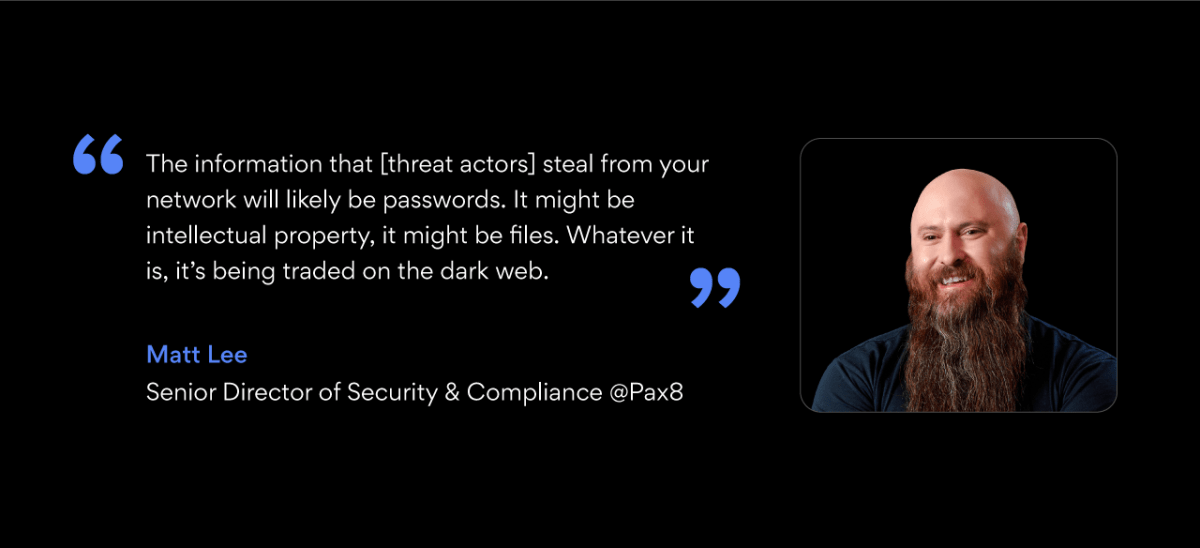
So why do cybercriminals flock to the dark web? According to Matt, it offers threat actors a way to “control the discoverability” of illegal activities, leveraging end-to-end encrypted technologies for anonymity. Vladimir points out the ease with which individuals can now become cybercriminals, thanks to platforms like Telegram that host thousands of illicit groups: “this is a massive problem because it lowers the barrier for the typical person to become a cybercriminal. It just takes 2 clicks nowadays.”

What are they after?

Vladimir states that the point is not to be fully invisible, but to have an easy escape and lower traceability (compared to the “clear” web): “You can always find anyone… It all comes down to time and effort. If someone sells credentials belonging to your company and the existing damage is less than a few million, it’s unlikely to be picked up by law enforcement unless it’s a part of a broader campaign.”

Disposable fake profiles are a key tool in a threat actor’s arsenal. “They just burn the profile,” says Matt. “He would just say, they’re getting too close to me, time to burn my PGP key. Next I’ll just build a new profile. They’re living in plain sight. That said, they hate burning a persona. It sucks. But yes, they do it when they need to.”

Hacker gangs operate better than most think, he continues. “Their tradecraft and OPSEC (operations security) is better than most people give credit for, and I would also say is probably better than most companies’… it is the risk/reward of what they’re doing – since the risk is extremely high, they respond with better offset and better methodologies.”

Assessing and addressing business exposure

Matt Lee advises businesses to adopt a mindset of “live compromised,” focusing on limiting damage and improving incident response: “How do I limit the blast radius? How do I find it faster?”

This proactive stance can be supported by using threat intelligence services, as Andrew’s experience shows: “A threat intel firm brought me information about one of our staff members’ identities being sold online… We reached out immediately to that staff member and helped them close down all of those loops. We knew that although it was a personal issue for them, that could very easily turn into an insider threat, blackmail, or risk for us.”

Andrew explains that his team effectively scans for anything to do with their brand or company. In this case, it was a lucky find: “It just so happened that part of the details that were being sold said that this person is working for this organization in this role. So that was our trigger, that was our hook.”

He points out ethical concerns for business leaders when dealing with dark web resources. “You look at things like the Ashley Madison data dump… and we’re wondering what we do with this? Do we download this data and look at it to see whether any of our staff have been compromised and therefore potentially being blackmailed? Because that’s us downloading illegally stolen data. Or do we step away from it?”

Proactive measures and best practices for security leaders

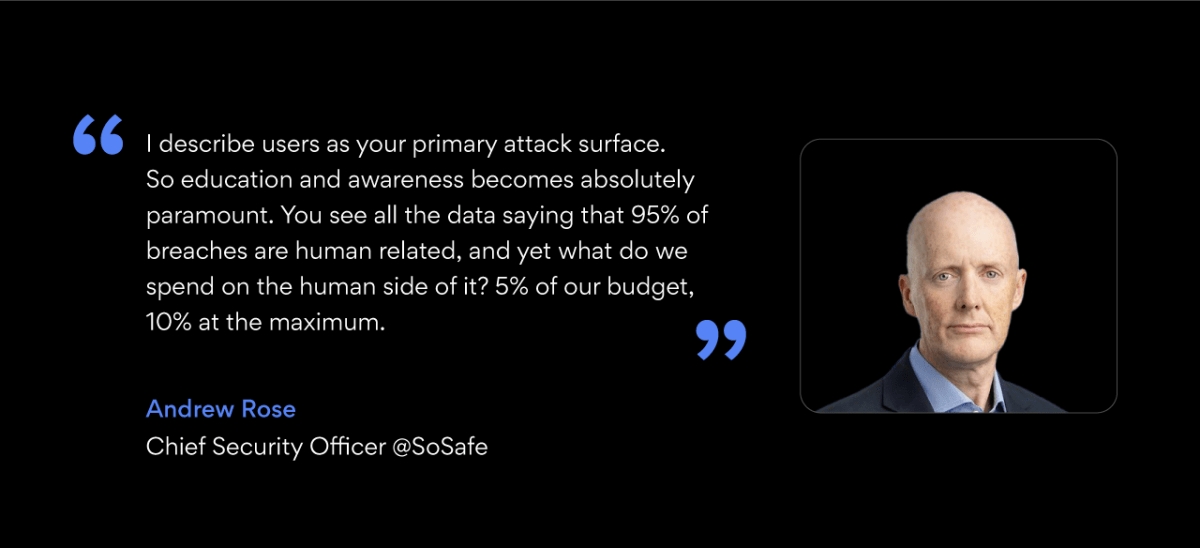
Each expert supports ramping up education efforts and budget quotas for cybersecurity.


Business leaders, particularly newly hired executives, are singled out by threat actors with targeted phishing and vishing attempts, according to Vladimir, underscoring the need for comprehensive security protocols from day one.

What about “selling” to stakeholders and business leadership? As always, it comes down to communication. Andrew stated: “You have to take stories to your exec. Take my previous examples of finding at-risk employees online and being able to protect them, thus protecting the company. Or receiving a phone call from a threat intel provider, letting me know that there were discussions about attacking my sector. 

Should smaller companies be concerned about the dark web threats? There’s a common misconception that small companies are not a target for cybercriminals, with media exposure focusing on large scale data breaches of well-known brands. Matt Lee thinks so: “If I land on your credentials, your data, it doesn’t have to be valuable to me, it doesn’t have to be valuable to the world. It only has to matter to you to get you to pay.” Vladimir reminds us to watch out for fourth party risk – any risk posed to your organization from a business relationship a third party has with its vendor.

Insights and recommendations for threat exposure management

Matt recommends using canaries (attractive decoy targets for threat actors) as warning beacons on your security perimeter. “It enables you to take action, and makes that credential no longer valuable. Remove the credential, remove the persistence, whatever it may be.” A common question crops up: How can security leaders measure the effectiveness of dark web monitoring solutions? The panelists agree on measuring intelligence quality by how much of it their security teams can act upon.

Andrew looks at how current the data his solution is providing is, acknowledging that there are barren periods, but “it was never a service you could do without. Because you always knew that next month might be when suddenly they’d find something which could make the whole contract worthwhile.”

Matt agreed, saying it’s simply good strategy, relevant to sports, life, and cybersecurity: “You go scout the other team!”

Any final words? Incident response plan. If you don’t have one, Matt says, sort it out. “Too many companies lack this.” This plan should be reviewed annually and adapted to evolving threat and business environments. Ultimately, this is all about setting a strategic baseline for cybersecurity best practices. “Everything we’re talking about here is part of basic data hygiene and governance. Live as close to the CIS framework as you can.”

With actionable data, timely insights, and increased visibility into the online underworld, staying one step ahead of threat actors becomes possible. For CISOs protecting their organization’s data and security, this means having the ability to not just react to threats, but to anticipate them.

About Version 2 Digital

Version 2 Digital is one of the most dynamic IT companies in Asia. The company distributes a wide range of IT products across various areas including cyber security, cloud, data protection, end points, infrastructures, system monitoring, storage, networking, business productivity and communication products.

Through an extensive network of channels, point of sales, resellers, and partnership companies, Version 2 offers quality products and services which are highly acclaimed in the market. Its customers cover a wide spectrum which include Global 1000 enterprises, regional listed companies, different vertical industries, public utilities, Government, a vast number of successful SMEs, and consumers in various Asian cities.

About NordLayer
NordLayer is an adaptive network access security solution for modern businesses – from the world’s most trusted cybersecurity brand, Nord Security.

The web has become a chaotic space where safety and trust have been compromised by cybercrime and data protection issues. Therefore, our team has a global mission to shape a more trusted and peaceful online future for people everywhere.

How ROCKEN fortified its growing network against cyber-attacks for better data protection

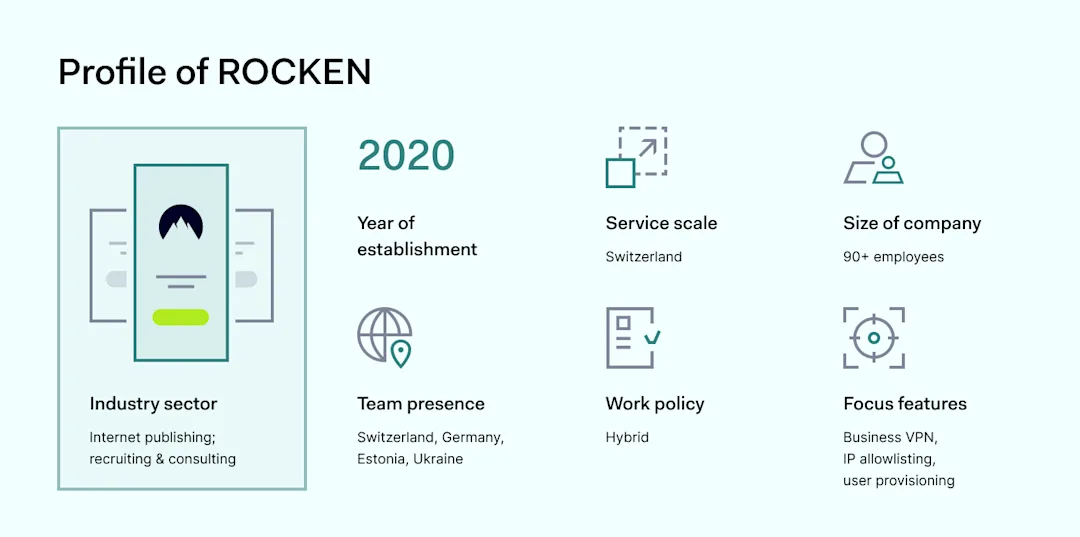
ROCKEN, based in Zurich, Switzerland, operates in the recruiting sector, offering a unique blend of consulting and recruiting services. Their office boasts a dynamic team of recruiters, consultants, and business account managers dedicated to bridging the gap between companies and candidates. 

The company’s edge is its extensive database, housing detailed candidate profiles enriched with personal interviews, experiences, and expectations. This database, coupled with their custom CRM crafted by their dedicated outstaff development team, stands as their cornerstone, offering a nuanced understanding of each candidate’s profile.

The extensive database, containing candidates and employer information, is the apple of the eye that needs to be protected sufficiently. Julia Zaliznytska, Product Manager and a bridge between business and development, shares why using security services like NordLayer in ROCKEN’s line of work was critical.

The challenge

On a lookout for stronger protection measures

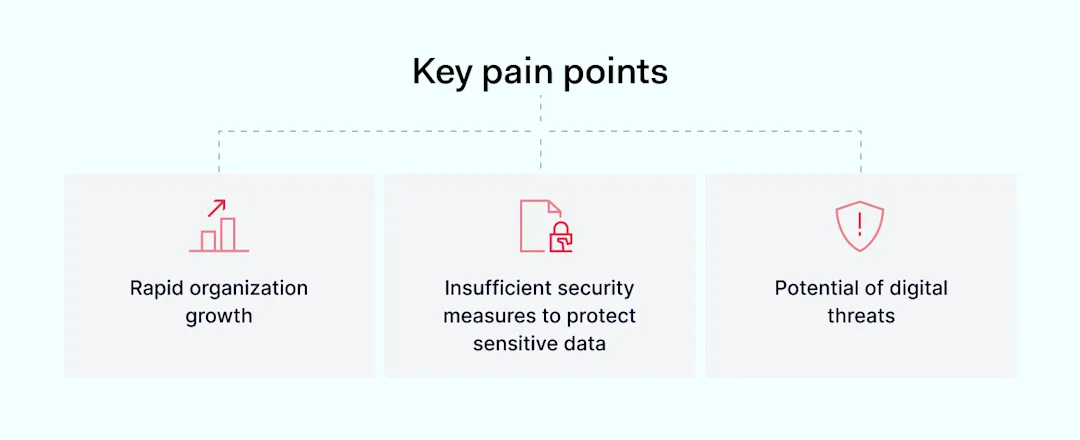
Key pain points

With business expansion plans and team growth, safeguarding ROCKEN’s expanding database became paramount as the company faced a dual challenge.

“We are working for the Swiss market at the moment, and we are extending to Germany this year, and we will have even more data that needs to be protected.”

Click to tweet

First, they had to protect vast amounts of sensitive data, including candidates’ personal information and client companies’ corporate data, against increasingly sophisticated cyber threats such as DDoS attacks.

“With DDoS attacks as a threat and users leaving loads of personal data on the platform, we wanted to provide better protection than just relying on passwords.”

Click to tweet

The team also has gated content on their website, including market overviews and research that is not for free and, thus, must be secured from unverified access.

Second, ROCKEN had to accommodate its hybrid work model with employees and developers working remotely across Switzerland, Germany, Ukraine, and Estonia. For a company with all infrastructure in the cloud, it’s essential to have secure remote access to the internal systems from any location.

Some employees are fully remote, while locals must visit the office three time a week. For this reason, the company needed a unified approach connecting to the company network that is robust against cyber threats.

The solution

Sustainable scalability and protection against threats

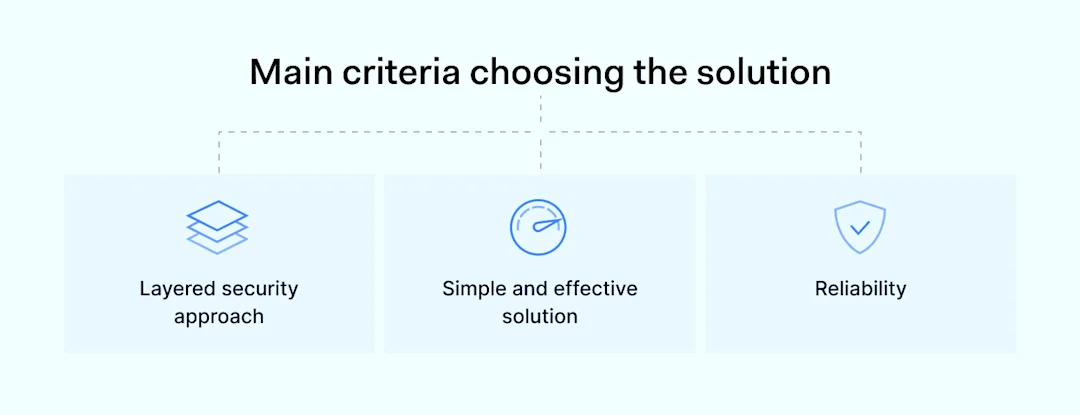
Main criteria choosing the solution

After the launch, the company was small and didn’t have much data to protect—securing IP addresses on their own CRM was sufficient initially.

As ROCKEN grew rapidly from 30 to 91 employees, they sought a reliable solution that scales together without compromising security. The solution had to seamlessly integrate for remote and office-based employees alike, ensuring data protection across all touchpoints.

Besides exponential growth, the main triggering factor for enhanced security was a reminder of constant online threats. An identified DDoS attack didn’t do any tangible damage to the company but sent a message that the risk is always there.

“Once, we have experienced a DDoS attack. Whether it was an attacker or rivals testing our protection levels, the attack didn’t result in a data breach but reminded us that we are hunted.”

Click to tweet

A more complex and robust solution than passwords and authentication apps was needed to protect the company network. After a thorough market comparison, ROCKEN chose NordLayer for its comprehensive corporate VPN solutions.

Why choose NordLayer

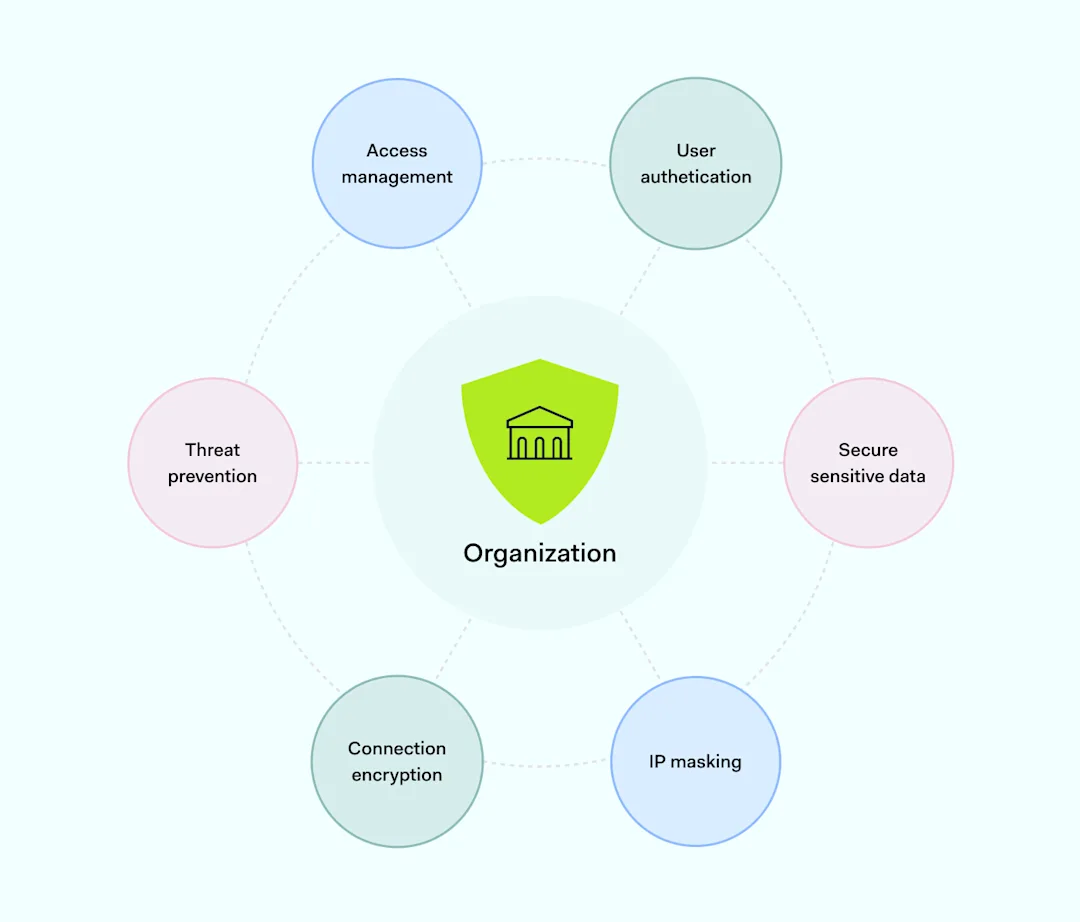
Several factors influenced ROCKEN’s decision to partner with NordLayer. Primarily, it was necessary to ensure more complex and layered security solutions in place. Then, it had to be ensured that all connections are encrypted and authenticated.

“The access is secured only for those who already have access inside our organization once on-site and through the VPN once remote. Developers use VPN to connect to the production and staging systems.”

Click to tweet

Notably, team members’ personal positive experiences with NordVPN influenced the decision. Moreover, the responsive and accommodating nature of NordLayer’s customer support and the platform’s cost-effectiveness, especially with the provided growth-supportive discount, have been significant factors in choosing the tool.

“We compared many services, but the majority lacked corporate solutions that are centralized in management and payments. NordLayer offered an all-in-one platform with bulk organization control and setup.”

Click to tweet

NordLayer’s reputation for reliability and its ability to offer a scalable, secure solution for a growing company like ROCKEN were decisive.

How NordLayer prevents threats and secures company network

How NordLayer prevents threats and secures company network

The outcome

Easy implementation of a reliable tool

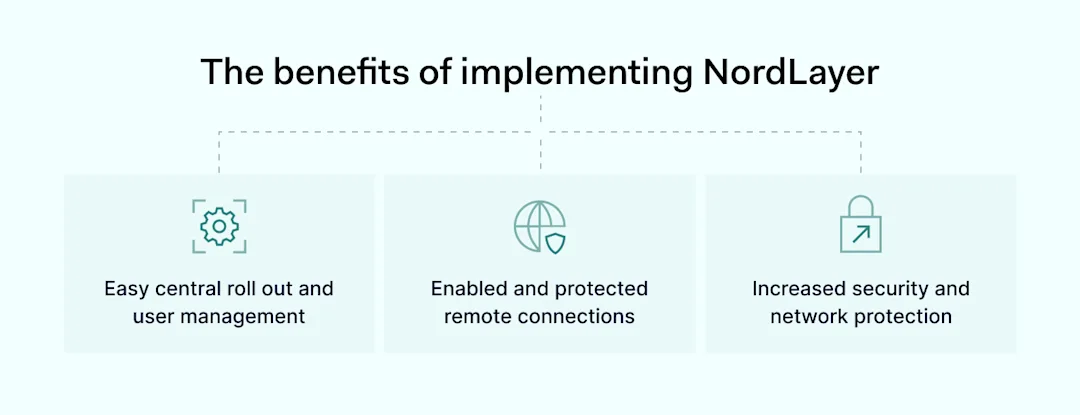
The benefits of implementing NordLayer

The implementation of NordLayer was smooth and swift, taking just a week to onboard the entire organization, thanks to the clear instructions and support provided.

Despite initial hiccups with corporate laptop setups, the transition to NordLayer was well-received across the organization.

“There were absolutely no issues with NordLayer. Because we have corporate laptops that a third-party organization manages, devices weren’t prepped in advance for all users; thus, whole organization onboarding took up to a week.”

Click to tweet

The VPN’s no-logs policy and the ability to manage teams and users through a simple portal were particularly appreciated, ensuring ROCKEN’s operations remained secure without sacrificing efficiency.

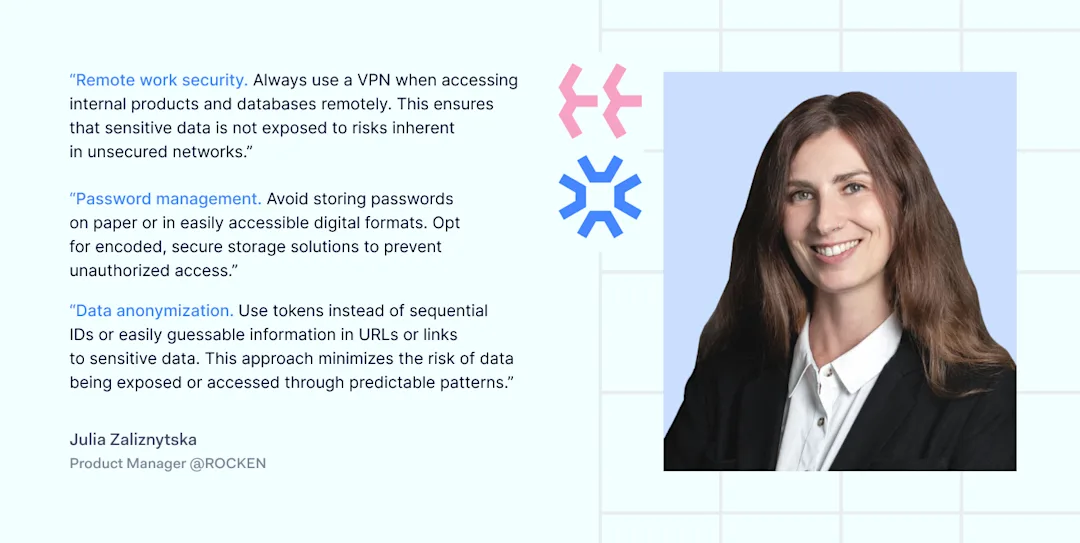
Pro cybersecurity tips

It’s a good idea to use post-it notes for everyday cybersecurity tips as a reminder, but not passwords. This and many other tips come from our case study heroes. This time, we asked Julia Zaliznytska, a Product Manager at ROCKEN, to share her favorite habits for practicing cybersecurity hygiene.

ROCKEN about NordLayer

Rocken’s partnership with NordLayer underscores the critical importance of robust cybersecurity measures in today’s digital landscape, especially for companies dealing with sensitive data.

Through strategic planning, careful vendor selection, and a focus on scalability and security, ROCKEN has successfully fortified its defenses, ensuring the confidentiality and integrity of its data as it continues to grow and expand into new markets.

About Version 2 Digital

Version 2 Digital is one of the most dynamic IT companies in Asia. The company distributes a wide range of IT products across various areas including cyber security, cloud, data protection, end points, infrastructures, system monitoring, storage, networking, business productivity and communication products.

Through an extensive network of channels, point of sales, resellers, and partnership companies, Version 2 offers quality products and services which are highly acclaimed in the market. Its customers cover a wide spectrum which include Global 1000 enterprises, regional listed companies, different vertical industries, public utilities, Government, a vast number of successful SMEs, and consumers in various Asian cities.

About NordLayer
NordLayer is an adaptive network access security solution for modern businesses – from the world’s most trusted cybersecurity brand, Nord Security.

The web has become a chaotic space where safety and trust have been compromised by cybercrime and data protection issues. Therefore, our team has a global mission to shape a more trusted and peaceful online future for people everywhere.

SC Awards Europe Names Portnox to Best Authentication Technology Shortlist

Austin, TX – May 7, 2024Portnox, a leading provider of cloud-native, zero trust access control solutions, is proud to announce its selection as a finalist in the prestigious SC Awards Europe. The company has been recognized on the Best Authentication Technology category shortlist for its commitment to innovation and excellence in cybersecurity. 

The Portnox Cloud allows organizations to control who can authenticate to their enterprise network, and provides granular detail on every user’s access layer, location, device type, and more. Portnox’s cloud RADIUS service – part of the Portnox Cloud platform and its primary authentication solution – is provided through a cloud-based cluster of fully redundant RADIUS servers and is used for authentication of users accessing the enterprise network.

The Portnox Cloud is fully cloud-native and requires no on-site hardware or maintenance whatsoever. No other network access control (NAC) product on the market delivers network authentication, access control, endpoint risk posture assessment and remediation in this manner.

As a cloud service, the Portnox Cloud eliminates the need for the capacity planning of on-premises software or appliances. It also eliminates the need to complete on-going security updates, expand capacity, or upgrade appliances to meet future growth needs. With the Portnox Cloud, you never have to worry about software or hardware end-of-life, or costly, complex upgrades requiring hours and days of work and a never-ending checklist of to-dos. The Portnox Cloud is always running the most up-to-date version with the latest features and capabilities.

“We are honored to be recognized as a finalist in the SC Awards Europe,” said Denny LeCompte, CEO at Portnox. “This acknowledgment reaffirms our relentless pursuit of excellence in delivering robust authentication and access control technology that strengthens data protection, improves endpoint and network security, streamlines user experiences, and achieves compliance with ease.”

The SC Europe Awards are a celebration of the excellence, advancement, and of the incredible minds that are shaping the future of technology and cybersecurity within the UK and Europe. Being named a finalist underscores Portnox’s unwavering dedication to providing cutting-edge solutions that empower businesses to strengthen their security posture against evolving cyber threats.

The winners of the SC Awards Europe will be announced during a ceremony on Tuesday, June 4 on the first evening of InfoSecurity Europe in London.

About Version 2 Digital

Version 2 Digital is one of the most dynamic IT companies in Asia. The company distributes a wide range of IT products across various areas including cyber security, cloud, data protection, end points, infrastructures, system monitoring, storage, networking, business productivity and communication products.

Through an extensive network of channels, point of sales, resellers, and partnership companies, Version 2 offers quality products and services which are highly acclaimed in the market. Its customers cover a wide spectrum which include Global 1000 enterprises, regional listed companies, different vertical industries, public utilities, Government, a vast number of successful SMEs, and consumers in various Asian cities.

About NordLayer
NordLayer is an adaptive network access security solution for modern businesses – from the world’s most trusted cybersecurity brand, Nord Security.

The web has become a chaotic space where safety and trust have been compromised by cybercrime and data protection issues. Therefore, our team has a global mission to shape a more trusted and peaceful online future for people everywhere.

×

Hello!

Click one of our contacts below to chat on WhatsApp

×