Skip to content

Unlocking the Power of Virtual Desktops on Google Cloud with Thinfinity Workspace

Introduction

The way we work is evolving, with remote and hybrid setups becoming the norm. As businesses adapt, the demand for secure, scalable, and efficient Virtual Desktop Infrastructure (VDI) solutions is skyrocketing. Enter Google Cloud Platform (GCP) and Thinfinity Workspace—a dynamic duo designed to revolutionize how virtual desktops and applications are deployed and managed.
This guide dives into why GCP is a prime choice for virtual desktops and how Thinfinity Workspace amplifies its potential. From automation to security and scalability, discover how this integration transforms your digital workspace.


Why Choose GCP for Virtual Desktops?

Google Cloud Platform is built for businesses looking to enhance performance, availability, and security. Here’s why it stands out:

  • Global Infrastructure: Access low-latency services through GCP’s extensive data center network.
  • Scalability on Demand: Dynamically adjust virtual resources to meet business needs.
  • Top-Tier Security: Benefit from GCP’s identity and access management (IAM), encryption, and network protection.
  • Cost Optimization: Pay-as-you-go pricing ensures cost-efficiency for any scale.

When paired with Thinfinity Workspace, GCP transforms into a robust VDI solution, delivering seamless experiences for businesses and users alike.


Thinfinity Cloud Manager: Simplified GCP VDI Management

At the heart of Thinfinity Workspace is Thinfinity Cloud Manager, an intuitive platform designed to streamline VDI operations on GCP. Its features ensure efficient management and deployment, reducing complexity and boosting productivity.

Key Features of Thinfinity Cloud Manager

 1. Automated Provisioning

Accelerate virtual desktop deployment with pre-configured templates. Thinfinity Cloud Manager enables:

  • Automated virtual machine creation on GCP.
  • Reusable templates for standardized setups.
  • Significant reductions in setup time.
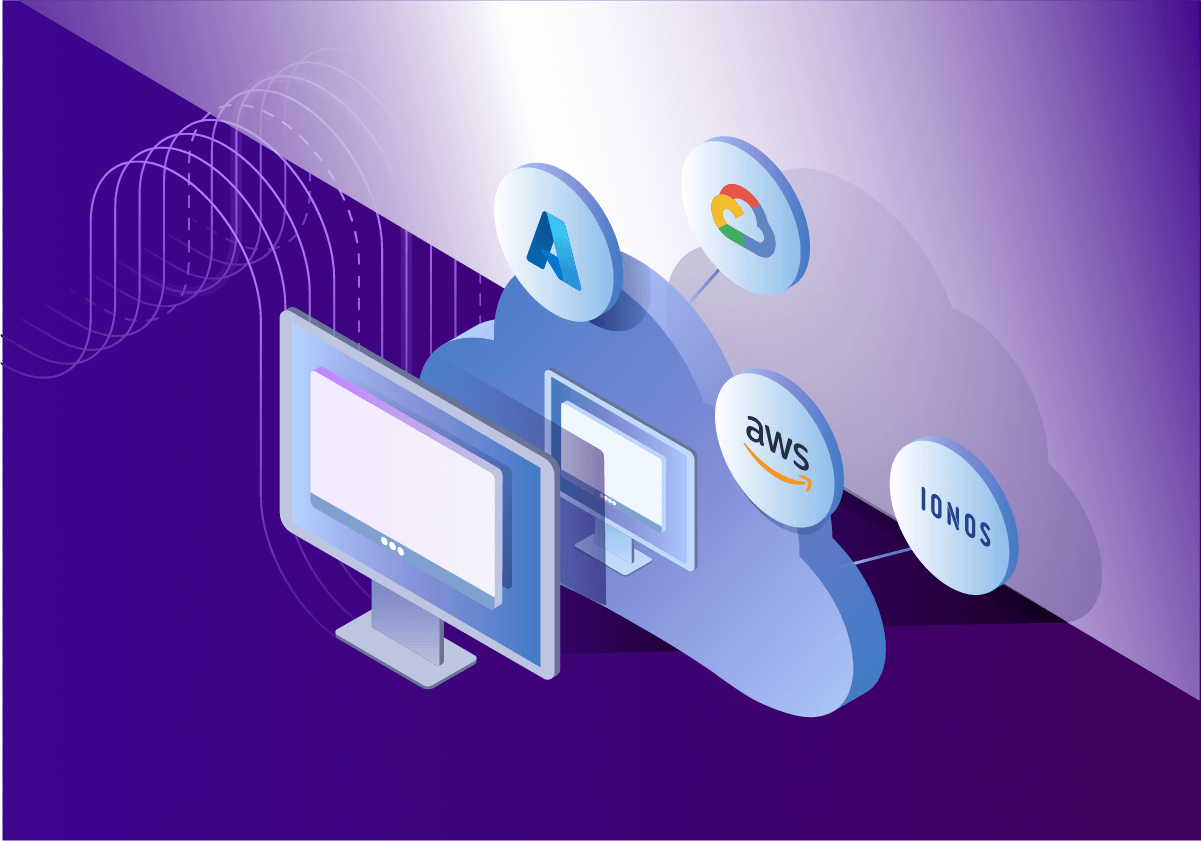
What-is-a-virtual-desktop-manager

Thinfinity Cloud Manager: Optimize Virtual Desktops Across Azure, AWS, GCP, and More

Dive deeper into this topic →

 2. Infrastructure as Code (IaC)

Take control of your infrastructure with code-based configurations:
  • Seamlessly integrate with tools like Terraform and Ansible.
  • Maintain consistency with version-controlled settings.
  • Rapidly scale resources to meet changing demands.
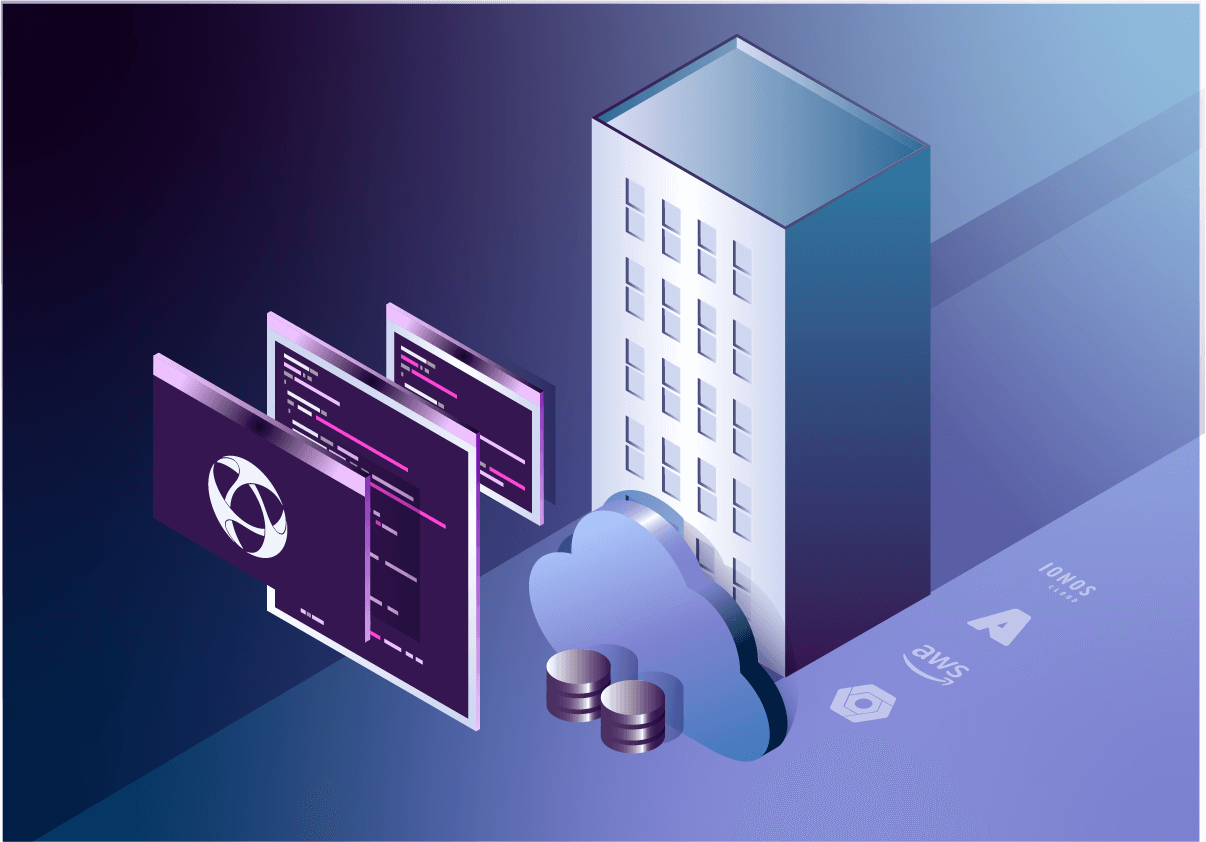
Thinfinity Cloud Manager: Automating Infrastructure as Code for Cloud Computing

Dive deeper into this topic →

3. Real-Time Monitoring and Alerts

Gain visibility into resource usage, performance, and user activity:
  • Monitor metrics in real-time.
  • Receive automated alerts to address issues proactively.

4. Self-Service Portals

Empower users with self-service functionality:
  • Allow users to manage their virtual desktops independently.
  • Minimize reliance on IT, boosting operational efficiency.
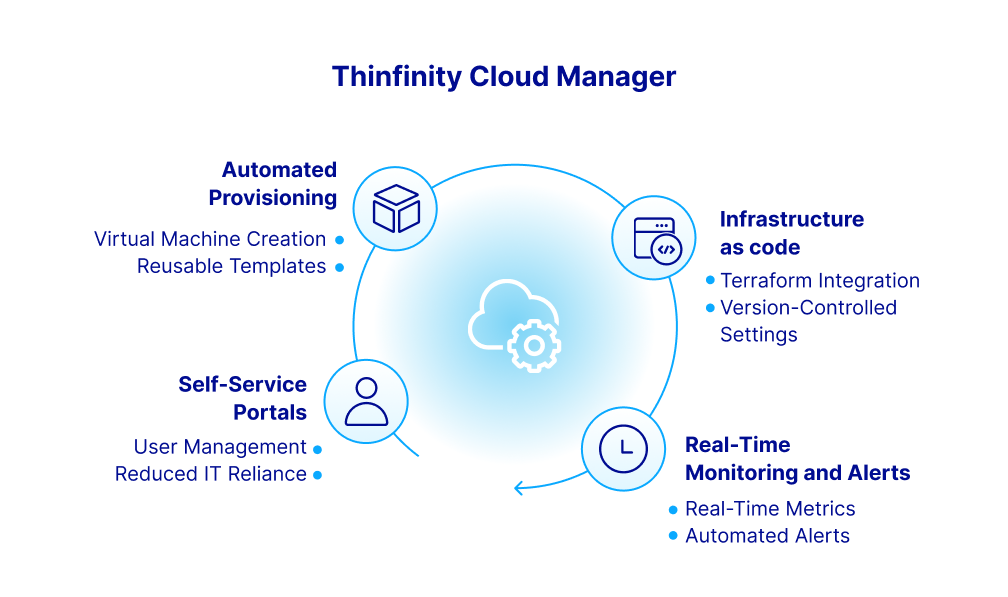
 
Automate provisioning, use Infrastructure as Code, monitor in real-time, and enable self-service portals


Security: The Zero Trust Advantage

With cyber threats on the rise, Zero Trust security is no longer optional. Thinfinity Workspace implements Zero Trust principles, ensuring each access request is rigorously authenticated and encrypted. Key security benefits include:

  • Unified Identity Management: Integrate seamlessly with Active Directory and other identity providers.
  • Granular Access Controls: Define precise roles and permissions with Role-Based Access Control (RBAC).
  • End-to-End Encryption: Safeguard communications between users and virtual desktops.
  • Regulatory Compliance: Ensure adherence to standards with Thinfinity’s audit-ready capabilities.
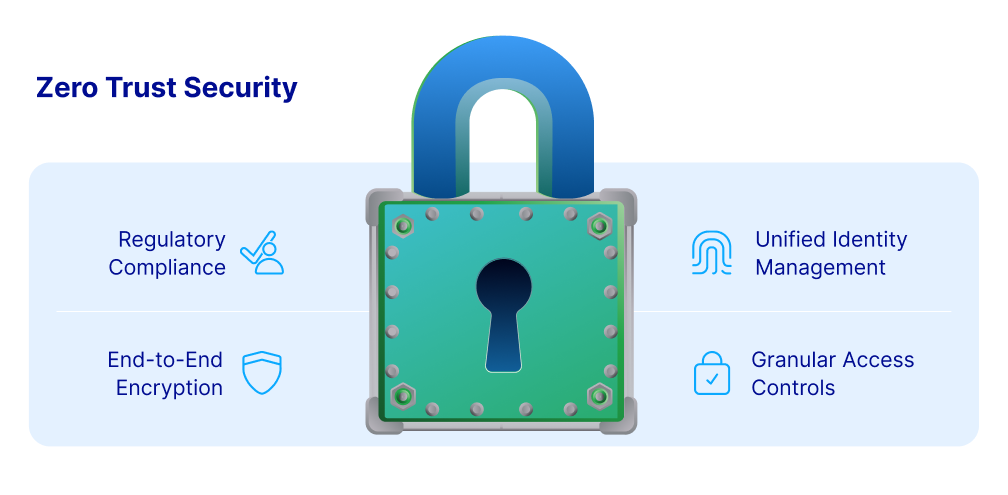
Thinfinity Workspace: Zero Trust security with unified identity management, RBAC, end-to-end encryption, and regulatory compliance
 

Scalability Meets Automation: The GCP and Thinfinity Advantage

Scalability

Thinfinity Workspace, combined with GCP, delivers unparalleled flexibility:

  • Elastic Resources: Scale up or down automatically to meet user demands.
  • Hybrid and Cloud-Native Options: Extend on-premises resources or fully embrace the cloud.
  • Global Reach: Tap into GCP’s worldwide infrastructure for seamless connectivity.
 

Automation

Automation is a game-changer for managing virtual desktops. Thinfinity Workspace offers:

  • Policy-Based Management: Dynamically assign resources based on predefined rules.
  • Streamlined Maintenance: Automate updates and patches for uninterrupted service.
  • API-Driven Integration: Enable custom workflows with third-party tools and DevOps pipelines.

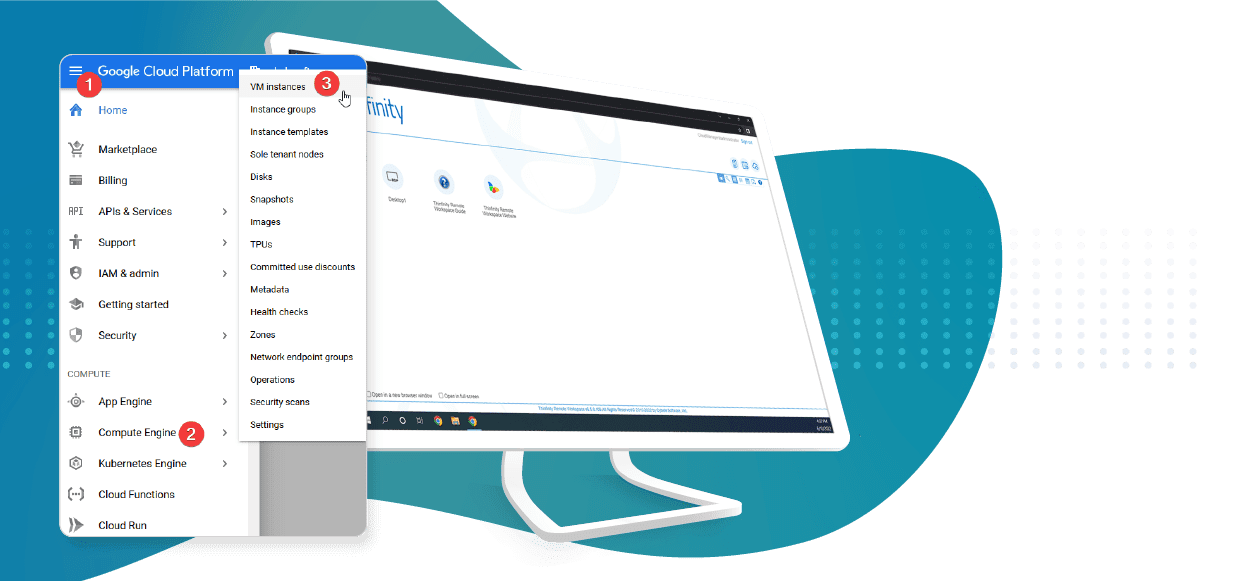
Prepare your GCP VM to Run Thinfinity Workspace

If you’re exploring Virtual Desktop Infrastructure (VDI) on Google Cloud Platform, don’t miss our detailed guide: Host Your Desktop Applications in Google Cloud Platform.

This article complements the current tutorial by providing a step-by-step overview of preparing your Google Cloud VM for hosting desktop applications. It’s an essential resource for ensuring your virtual machine is properly configured before deploying Thinfinity Workspace or other applications.

Leverage both guides to maximize your efficiency and streamline your cloud-based application deployment.
 
Thinfinity Cloud Manager: Automating Infrastructure as Code for Cloud Computing

Dive deeper into this topic →


Benefits of Adopting VDI on GCP with Thinfinity Workspace

  • Cost Efficiency: Optimize budgets with GCP’s flexible pricing and Thinfinity’s resource management.
  • Enhanced Security: Adopt enterprise-grade protection through Zero Trust architecture.
  • Seamless Accessibility: Deliver an exceptional user experience with browser-based access.
  • Operational Excellence: Simplify processes with Thinfinity’s automation and self-service features.
  • Future-Ready Solutions: Leverage Thinfinity and GCP’s innovation to stay ahead of business challenges.
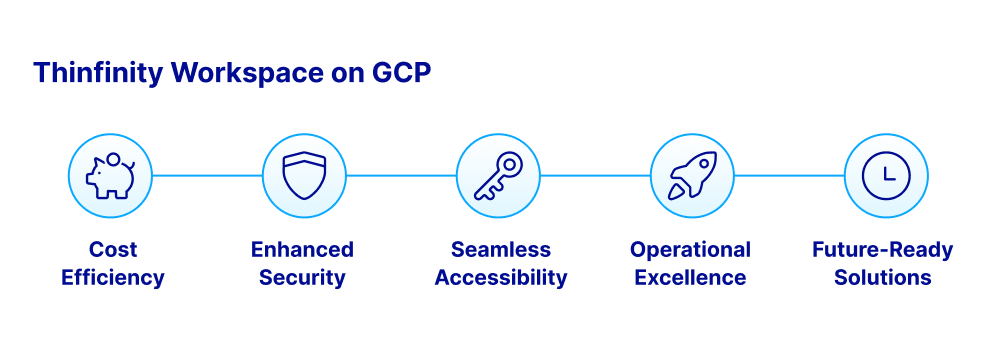
Thinfinity Workspace on GCP: Cost-efficient, secure, browser-accessible, automated, and future-ready virtual desktop solutions
 

Conclusion

GCP and Thinfinity Workspace create a powerful partnership for organizations aiming to modernize their IT infrastructure. By combining GCP’s robust cloud platform with Thinfinity’s advanced management and automation features, businesses can unlock the true potential of VDI.
Whether it’s enhanced security, seamless scalability, or unmatched flexibility, Thinfinity Workspace ensures your business is ready for the future. Start transforming your virtual desktop strategy today—because the future of work is already here.

FAQ

Thinfinity Workspace is a platform for managing virtual desktops and applications with browser-based access, focusing on scalability, security, and efficiency.

GCP’s global infrastructure, built-in security, and cost-effective pricing make it an ideal platform for deploying virtual desktops.

Thinfinity Cloud Manager streamlines provisioning, automates infrastructure management through IaC, and enhances efficiency with real-time monitoring and self-service features.

Yes, Thinfinity Workspace supports GPU-enabled instances on GCP, making it perfect for demanding applications like CAD and 3D modeling.

IaC allows infrastructure management through code, enabling consistent, automated resource provisioning and scalability.

About Cybele Software Inc.
We help organizations extend the life and value of their software. Whether they are looking to improve and empower remote work or turn their business-critical legacy apps into modern SaaS, our software enables customers to focus on what’s most important: expanding and evolving their business.

About Version 2 Digital

Version 2 Digital is one of the most dynamic IT companies in Asia. The company distributes a wide range of IT products across various areas including cyber security, cloud, data protection, end points, infrastructures, system monitoring, storage, networking, business productivity and communication products.

Through an extensive network of channels, point of sales, resellers, and partnership companies, Version 2 offers quality products and services which are highly acclaimed in the market. Its customers cover a wide spectrum which include Global 1000 enterprises, regional listed companies, different vertical industries, public utilities, Government, a vast number of successful SMEs, and consumers in various Asian cities.
Everything you need to know about Retrieval-Augmented Generation (RAG)

The role of AI in IT Service Management

Large Language Models (LLMs), Retrieval-Augmented Generation (RAG), and Knowledge Graphs (KGs) are reshaping how we manage and utilize vast amounts of data.


Understanding each of these technologies and how they interact can provide a deeper insight into their potential to transform ITSM. LLMs are advanced AI models trained on vast amounts of data to generate human-like text based on the input they receive. It is noteworthy to mention that the large language model itself does not have a memory or access to real time information. Moreover, LLMs can lose focus and hallucinate especially when given a large input.

To address some limitations of LLMs, Retrieval-Augmented Generation (RAG) can play an important role. RAG is a technique that enhances the capabilities of LLMs by dynamically retrieving external information from a knowledge base at the time of the query. This allows LLMs to access up-to-date information about the query and generate more accurate and relevant responses.

While RAG significantly enhances LLMs by providing them with access to external data, Knowledge Graphs (KGs) offer another layer of sophistication.

KGs are structured databases that store data in an interconnected network of entities and their relationships. They provide a structured way to represent knowledge in various domains, including ITSM. KGs can be used to further enhance the performance of LLMs where RAG might still fall short, especially in complex, multi-step problem-solving scenarios common in ITSM. By utilizing KGs, systems can navigate through connected data points to extract and utilize information that is contextually relevant to the user’s specific needs.

Together, LLMs, RAG, and KGs form a strong combination for IT Service Management use cases. By leveraging LLMs for their powerful language understanding and generation capabilities, augmenting them with RAG for dynamic information retrieval, and incorporating KGs to provide deep, structured contextual insights, ITSM platforms can achieve unprecedented levels of automation, accuracy, and efficiency.

This blog aims to explore the benefits these technologies bring to ITSM.


Advanced AI in ITSM: how does it all work?
 

This image provides a simplified, hypothetical example of how Large Language Models (LLMs), Retrieval-Augmented Generation (RAG), and Knowledge Graphs (KGs) can work together to enhance IT Service Management (ITSM)

The system extracts key information from a knowledge base and maps it onto a Knowledge Graph, which illustrates how various elements like the server, application, and related devices are interconnected.

This structured representation is stored in a database, and then converted into embeddings so it can be searched later on. An embedding model also helps to convert any other data from the knowledge base as well as the query into embedding format.

This format allows the system to search the Knowledge Graph and related databases for relevant context. The LLM then uses this context to generate a coherent and precise response.

This approach demonstrates how these technologies can complement each other: the Knowledge Graph provides structured context, RAG dynamically retrieves up-to-date data, and the LLM synthesizes this information into a useful, actionable insight.


Leveraging Retrieval Augmented Generation, LLMs and Knowledge Graphs in ITSM

The integration of advanced technologies such as Large Language Models (LLMs), Retrieval-Augmented Generation (RAG), and Knowledge Graphs (KGs) could potentially transform the IT landscape. These technologies can collectively enhance IT Operations Management, IT Service Management, and Artificial Intelligence for IT Operations (AIOps).

By implementing LLMs within ITSM frameworks, it is possible to provide instantaneous, context-aware responses to customer inquiries, which may help in reducing resolution times and improving customer satisfaction. For instance, LLMs can assist in automating ticket generation, categorization, and sentiment analysis, potentially prioritizing issues based on urgency to meet Service Level Agreement targets more consistently. Moreover, LLMs might serve as virtual assistants or chatbots, summarizing interactions which could enhance operational efficiency within ITSM frameworks.

Complementing these, RAG could improve the retrieval of pertinent information from expansive knowledge bases, thus enabling support teams to possibly identify and apply the most relevant solutions more effectively. Knowledge Graphs can also augment decision-making processes by providing structured visualizations of relationships among IT assets, incidents, and solutions. This clarity could help teams navigate complex scenarios and make more informed decisions, potentially simplifying the identification of recurring incidents.

Beyond customer support, LLMs, RAG, and KGs can also enhance other essential IT functions. They could refine recommender systems by delivering precise, context-sensitive suggestions based on both historical and real-time data analysis.

In the domain of AIOps, these technologies might play a role in failure management by analyzing logs, pinpointing root causes, and automating corrective actions, which could minimize downtime and improve system reliability. These potential benefits suggest a promising integration of AI technologies in ITSM.

The Future of LLMs in ITSM: Domain-Specific and Task-Specific Models

While general-purpose Large Language Models (LLMs) have proven effective in a wide range of applications, they can be limited and fall short in specialized domains like IT Service Management (ITSM). These models are typically trained on vast, diverse datasets, which may not include the deep, specific knowledge needed to navigate the unique challenges of ITSM effectively. This can result in less accurate responses, technical misinterpretations, or incomplete understanding of IT operations and protocols.

In contrast, domain-specific and task-specific LLMs can offer a significant advantage in ITSM applications. These models can be fine-tuned on datasets that are rich in ITSM-specific language and scenarios, enabling them to better understand and respond to the needs of the domain. For instance, a model trained specifically for ITSM is likely to better handle tasks like incident categorization and problem resolution.

Integrating these models with technologies like Retrieval-Augmented Generation (RAG) and Knowledge Graphs (KGs) can further enhance their effectiveness. Which can help in managing complex, multi-hop question-and- answer scenarios, where an answer requires combining information from multiple sources effectively.

Additionally, semantic search using embeddings which are used to match user queries to the most relevant information can sometimes miss the user’s true intent. As an example, if a user submits a ticket asking for help with a “server outage” but specifies “not related to network issues,” troubleshooting steps that focus on network-related problems might still be returned. A gap that perhaps domain-specific models with the help of knowledge graphs can be particularly well-suited to fill in the future.

These tailored LLMs, especially when enhanced with KGs and domain-specific embedding models, represent a promising future for AI in ITSM. At our AI lab, we are committed to pushing the boundaries of what’s possible in IT Service Management through advanced AI solutions.

We are currently focused on fine-tuning LLMs that offer robust multilingual capabilities specifically adapted to ITSM use cases. This ensures our models can handle diverse linguistic requirements while being deeply integrated into ITSM processes.

Additionally, we are developing multilingual embedding models fine-tuned for ITSM, which can be seamlessly incorporated into Retrieval-Augmented Generation (RAG), search functionalities, and the embedding of Knowledge Graphs.

By combining the strengths of LLMs with cutting-edge RAG techniques and the increasingly popular Knowledge Graphs, we are enhancing the knowledge base and response accuracy of our AI solutions. Looking ahead, we see great potential in multimodal RAG and RAG-optimized LLMs, which will further enhance AI’s ability to understand and generate meaningful responses in IT environments.

We invite you to explore our ongoing research and innovations, and to see firsthand how our tailored AI solutions can revolutionize your IT operations.

About EasyVista  
EasyVista is a leading IT software provider delivering comprehensive IT solutions, including service management, remote support, IT monitoring, and self-healing technologies. We empower companies to embrace a customer-focused, proactive, and predictive approach to IT service, support, and operations. EasyVista is dedicated to understanding and exceeding customer expectations, ensuring seamless and superior IT experiences. Today, EasyVista supports over 3,000 companies worldwide in accelerating digital transformation, enhancing employee productivity, reducing operating costs, and boosting satisfaction for both employees and customers across various industries, including financial services, healthcare, education, and manufacturing.

About Version 2 Digital

Version 2 Digital is one of the most dynamic IT companies in Asia. The company distributes a wide range of IT products across various areas including cyber security, cloud, data protection, end points, infrastructures, system monitoring, storage, networking, business productivity and communication products.

Through an extensive network of channels, point of sales, resellers, and partnership companies, Version 2 offers quality products and services which are highly acclaimed in the market. Its customers cover a wide spectrum which include Global 1000 enterprises, regional listed companies, different vertical industries, public utilities, Government, a vast number of successful SMEs, and consumers in various Asian cities.

Cybele Software and Oracle Cloud Partnership: Transforming Cloud VDI for Enterprises

Introduction

Modern businesses demand IT solutions that are secure, scalable, and flexible enough to adapt to an ever-changing landscape. Enterprises face mounting challenges, including:

  • Enabling remote workforces
  • Deploying virtual desktops
  • Hosting secure applications
  • Maintaining operational efficiency

The Cybele Software and Oracle Cloud Infrastructure (OCI) partnership offers a game-changing solution. By combining OCI’s robust cloud platform with Thinfinity Workspace’s advanced virtualization capabilities, this collaboration delivers virtual desktops, virtual applications, and a secure cloud gateway to enterprises across industries. These technologies simplify IT operations, enhance security, and enable businesses to stay ahead in a competitive market.

This article explores the partnership’s benefits, innovative technologies, and the industries poised to gain the most from this integration.


What this partnership means for enterprises

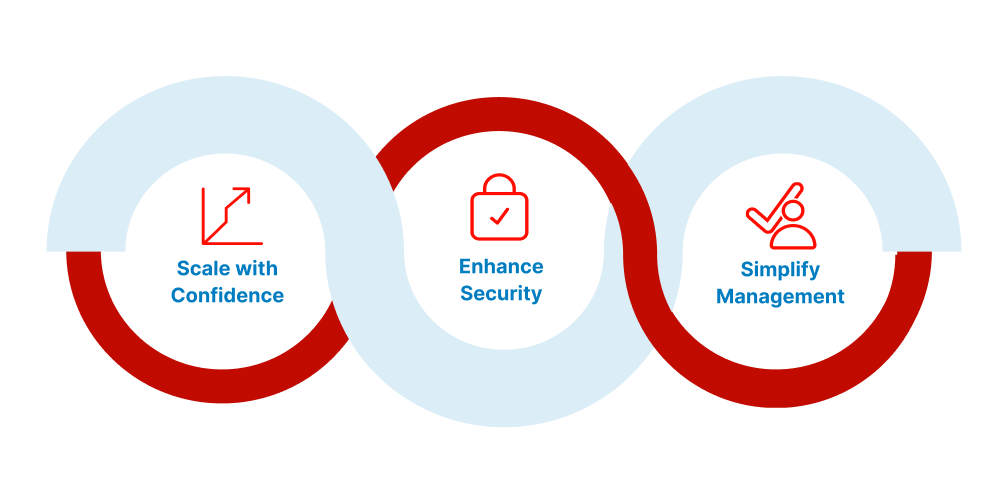
The Cybele-OCI collaboration addresses key IT challenges, empowering enterprises to:

  • Scale with Confidence: OCI’s elastic infrastructure ensures seamless resource allocation, while Thinfinity Workspace automates scaling to match workload demands.
  • Enhance Security: A zero-trust approach ensures data protection, regulatory compliance, and robust access controls.
  • Simplify Management: Thinfinity Cloud Manager centralizes resource provisioning, scaling, and monitoring, reducing administrative overhead.

This powerful combination allows businesses to deploy and manage their IT environments efficiently, freeing them to focus on growth and innovation.

Cybele-OCI partnership enables scalable, secure, and simplified IT environments with dynamic scaling, zero-trust security, and automation
 

Key benefits of the Cybele-Oracle collaboration

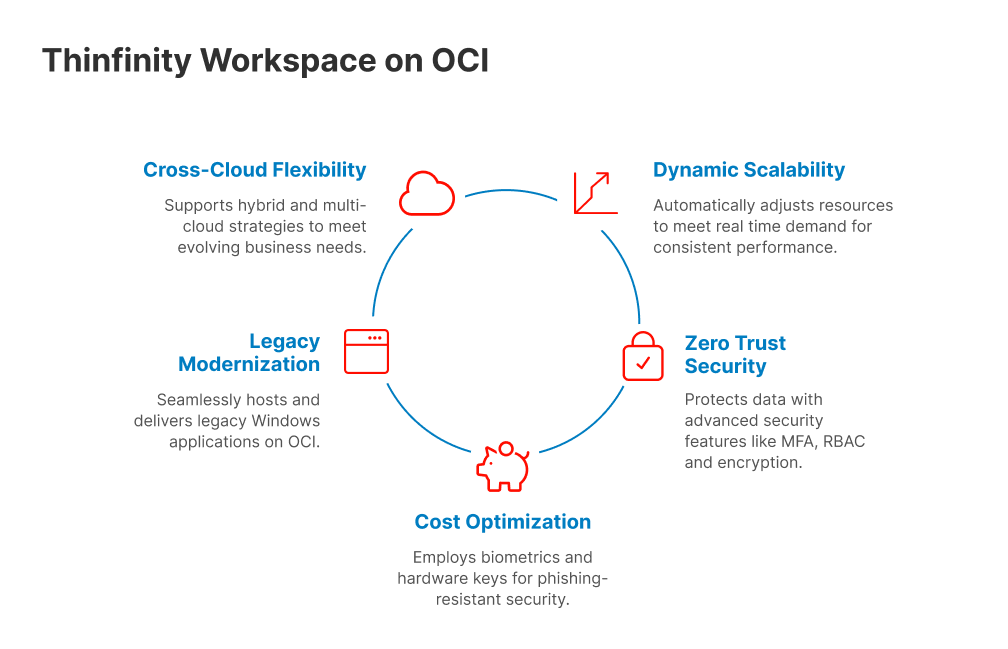
  1. Dynamic Scalability: Automatically adjust resources to meet real-time demand, ensuring consistent performance.
  2. Zero Trust Security: Protect data and systems with advanced security features like MFA, RBAC, and encryption.
  3. Cost Optimization: Minimize cloud spending by automating resource scaling and hibernating inactive workloads.
  4. Legacy Application Modernization: Host and deliver legacy Windows applications seamlessly on OCI.
  5. Cross-Cloud Flexibility: Support hybrid and multi-cloud strategies to meet evolving business needs.
Thinfinity Workspace and OCI: Dynamic scalability, zero-trust security, cost optimization, legacy app modernization, multi-cloud flexibility.
 

New solution alternatives provided by the partnership

1. Virtual Desktops

Thinfinity Workspace allows enterprises to deploy virtual desktops with OCI’s scalable infrastructure. Benefits include:

  • Browser-Based Access: No client installation required, enabling secure access from any device.
  • Dynamic Scaling: Automatically adjusts resources to ensure smooth user experiences.
  • Enterprise-Grade Security: Protect sensitive data with zero-trust principles.

2. Virtual Applications

Seamlessly host and deliver applications with:

  • Legacy Application Support: Run legacy applications without modification.
  • Unified Access: Provide users with a single platform to access all business-critical applications.
  • Scalability: Scale hosting environments effortlessly as user demands grow.

3. Secure Cloud Gateway

Enhance cloud security with:

  • Zero-Trust Connectivity: Securely connect users to enterprise systems with identity-driven policies.
  • Hybrid and Multi-Cloud Support: Enable seamless integration across cloud and on-premises resources.
  • Encrypted Communication: Protect data in transit with advanced TLS encryption.
 

Industry-specific impact and use cases

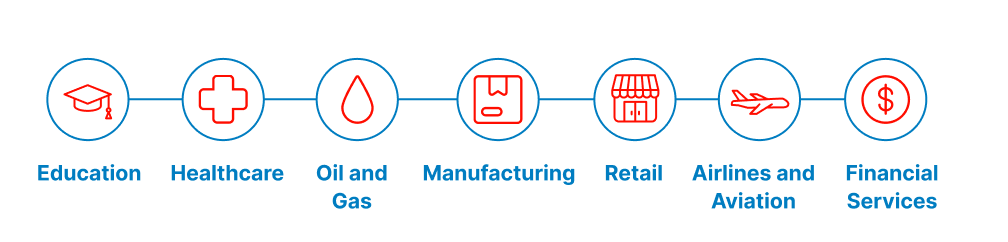
  1. Education: Universities deploy virtual desktops for students and faculty, simplifying remote learning.
  2. Healthcare: Clinics access sensitive patient data securely, complying with HIPAA and GDPR regulations.
  3. Oil and Gas: Engineers collaborate on real-time data remotely, optimizing field operations.
  4. Manufacturing: Designers run GPU-intensive CAD applications with exceptional performance.
  5. Retail: Virtual applications improve inventory management and customer service.
  6. Airlines and Aviation: Manage booking systems, operational tasks, and pilot training securely.
  7. Financial Services: Enable secure access to critical systems while ensuring compliance with regulations. 
Industry Use Cases: Thinfinity Workspace and OCI empower education, healthcare, oil & gas, manufacturing, retail, aviation, and finance with secure, scalable solutions.
 

How to migrate to the Cybele-Oracle cloud solution

  1. Assess Your IT Needs: Define your scalability, security, and performance requirements, we can assist during this process, get a free consultation from one of our Cloud VDI experts and get support from Cybele and Oracle Cloud
  2. Deploy OCI: Set up Oracle Cloud Infrastructure as the backbone of your IT environment.
  3. Integrate Thinfinity Workspace: Configure Thinfinity Workspace for virtual desktops, applications, and secure access directly from the OCI Market Place
  4. Automate and Optimize: Use Thinfinity Cloud Manager to automate scaling and resource allocation.
  5. Monitor and Improve: Continuously optimize your cloud environment for cost savings and efficiency. 

Conclusion

The Cybele Software and Oracle Cloud Infrastructure partnership marks a significant leap forward in the evolution of scalable cloud VDI and secure application delivery. By integrating advanced technology alternatives like virtual desktops, virtual applications, and a secure cloud gateway, this collaboration empowers enterprises to address modern IT challenges with agility and precision.

Whether it’s scaling operations dynamically, modernizing legacy applications, or ensuring airtight security in hybrid environments, the Cybele-OCI solution delivers a future-ready framework that adapts to diverse business needs. This partnership not only reduces costs and complexity but also enhances operational flexibility, making it a critical enabler for organizations striving to innovate and thrive in today’s competitive landscape.

The time to transform your IT infrastructure is now. Explore the unmatched potential of Thinfinity Workspace and OCI to drive efficiency, productivity, and growth for your enterprise.

About Cybele Software Inc.
We help organizations extend the life and value of their software. Whether they are looking to improve and empower remote work or turn their business-critical legacy apps into modern SaaS, our software enables customers to focus on what’s most important: expanding and evolving their business.

About Version 2 Digital

Version 2 Digital is one of the most dynamic IT companies in Asia. The company distributes a wide range of IT products across various areas including cyber security, cloud, data protection, end points, infrastructures, system monitoring, storage, networking, business productivity and communication products.

Through an extensive network of channels, point of sales, resellers, and partnership companies, Version 2 offers quality products and services which are highly acclaimed in the market. Its customers cover a wide spectrum which include Global 1000 enterprises, regional listed companies, different vertical industries, public utilities, Government, a vast number of successful SMEs, and consumers in various Asian cities.

Incident Categorization and Priority in IT Incident Management

In the ever-evolving world of IT service management (ITSM), efficient incident management is critical to ensuring smooth business operations. The ability to swiftly and accurately classify and prioritize incidents can be the difference between minimal disruption and prolonged downtime. To address the growing complexity of modern IT environments, features like Intelligent Categorization and Intelligent Priority have emerged, driven by artificial intelligence (AI). These practices enable IT teams to optimize their workflows, reduce resolution times, and ultimately deliver superior service. 

Challenges with Traditional Incident Categorization

Traditionally, incident categorization in ITSM relies heavily on human operators and predefined categories. Support teams manually classify incidents based on the information provided by users, often relying on configuration item (CI) relationships. While CIs are crucial in mapping infrastructure to services, this method has its limitations. For instance, human error can lead to misclassifications, and relying solely on CIs can overlook other factors that contribute to the root cause of incidents. 

It’s important to note that even in traditional methods, CI relationships are not the sole determinant of incident categorization. They serve as a foundational element, but these manual processes do not always capture the full context of an incident. This is where AI can significantly enhance the process by supplementing CI data with historical trends, real-time system behavior, and incident patterns. 

What is Intelligent Categorization?

Intelligent Categorization leverages AI to streamline the process of classifying incidents. Rather than depending solely on static CI relationships, AI incorporates additional contextual information, such as historical data, incident patterns, and real-time data analysis. This holistic approach ensures a more accurate categorization process. 

By learning from past incidents and applying natural language processing (NLP) to the data, AI systems can identify patterns and similarities that may not be immediately apparent to human operators. For example, an incident reported as “application downtime” might be linked to a recurring issue with a particular server, even if this connection isn’t obvious based on the symptoms alone.

AI enhances the categorization process by continuously evolving as it processes more incidents, reducing the number of misclassifications and ensuring that the right teams are assigned to the right problems. 

The Importance of Intelligent Prioritization

Once an incident is categorized, the next crucial step is assigning the appropriate priority level. In traditional ITSM processes, priority is often determined based on the perceived impact and urgency of an incident, which can be subjective and inconsistent. Human operators may unintentionally deprioritize critical issues or elevate less urgent ones. 

Intelligent Priority addresses these challenges by using AI to analyze a broader range of data points, ensuring that incidents are prioritized accurately and consistently. AI-driven prioritization considers both fixed factors, such as the number of affected users, and dynamic factors, like sentiment analysis, business calendars, and service dependencies. 

How AI Enhances Incident Prioritization

Impact and Urgency Assessment

AI calculates the impact and urgency of an incident by evaluating various factors such as the number of users affected, the criticality of the system, and the potential business impact. For instance, an issue affecting a critical application during peak business hours would receive a higher priority than the same issue occurring during non-critical periods.

Sentiment Analysis

AI can also factor in user sentiment to adjust the urgency of an incident. For example, an incident report filled with frustration or indicating severe disruption may be flagged for higher priority. This ensures that incidents causing the most user dissatisfaction are addressed swiftly.

Business Calendar Integration

By integrating with business calendars, AI systems can adjust priority levels based on upcoming business events. An issue with a financial application just before a quarterly financial report might be treated with greater urgency due to its potential business impact.

Service Dependencies

AI evaluates service dependencies to assign priority levels. If a lower-level issue could escalate and affect mission-critical services, the system can proactively assign a higher priority to ensure the incident is resolved before it impacts more critical services. 


Benefits of AI-Driven Incident Management

The combination of Intelligent Categorization and Intelligent Priority delivers several key benefits to organizations: 


AI processes incident data faster than human operators, allowing incidents to be categorized and prioritized in real-time. Research indicates that AI-enhanced incident management can reduce resolution times by as much as 30% in some cases, depending on the organization and the quality of its ITSM infrastructure . 


AI reduces the likelihood of human error in both categorization and prioritization by applying consistent logic based on data. This leads to fewer misclassifications and ensures that critical incidents are addressed promptly, improving overall efficiency. 


By automating repetitive tasks such as incident classification and priority assignment, AI frees up IT staff to focus on higher-value tasks. This allows teams to tackle more complex issues that require human intervention while leaving routine tasks to AI. 


AI systems can predict potential incidents based on historical data and patterns, helping IT teams address problems before they escalate. However, it is important to note that the effectiveness of predictive analytics depends on the quality and volume of historical data available. In well-documented environments, this approach can significantly reduce incident volumes, but results may vary based on the dataset’s comprehensiveness . 


When incidents are resolved quickly and accurately, users experience less downtime, resulting in higher satisfaction levels. AI helps IT teams deliver better service, fostering positive perceptions of IT operations. 


Addressing the Limitations of AI in Incident Management

While AI significantly improves incident categorization and prioritization, it is not without its limitations. AI systems rely heavily on the quality and diversity of the data they are trained on. Poorly structured or incomplete data can lead to incorrect classifications or prioritizations.

Additionally, AI is still evolving, and while it can greatly reduce human error, it is not entirely immune to mistakes. Continuous monitoring, training, and updates to AI systems are necessary to maintain high levels of accuracy and performance. 

Conclusion: EV Pulse AI and Intelligent Incident Management

At EasyVista, EV Pulse AI incorporates both Intelligent Categorization and Intelligent Priority to provide a smarter, more efficient approach to incident management. By combining traditional CI relationships with dynamic data sources, such as historical trends and real-time analysis, EV Pulse AI ensures accurate classification and prioritization of incidents, allowing IT teams to resolve issues faster and with greater precision. 

EV Pulse AI empowers organizations to move beyond reactive incident management, embracing a proactive, intelligent strategy that reduces downtime, increases operational efficiency, and improves user satisfaction. With EV Pulse AI, organizations can harness the full power of AI to optimize their IT operations and deliver superior business outcomes.

About EasyVista  
EasyVista is a leading IT software provider delivering comprehensive IT solutions, including service management, remote support, IT monitoring, and self-healing technologies. We empower companies to embrace a customer-focused, proactive, and predictive approach to IT service, support, and operations. EasyVista is dedicated to understanding and exceeding customer expectations, ensuring seamless and superior IT experiences. Today, EasyVista supports over 3,000 companies worldwide in accelerating digital transformation, enhancing employee productivity, reducing operating costs, and boosting satisfaction for both employees and customers across various industries, including financial services, healthcare, education, and manufacturing.

About Version 2 Digital

Version 2 Digital is one of the most dynamic IT companies in Asia. The company distributes a wide range of IT products across various areas including cyber security, cloud, data protection, end points, infrastructures, system monitoring, storage, networking, business productivity and communication products.

Through an extensive network of channels, point of sales, resellers, and partnership companies, Version 2 offers quality products and services which are highly acclaimed in the market. Its customers cover a wide spectrum which include Global 1000 enterprises, regional listed companies, different vertical industries, public utilities, Government, a vast number of successful SMEs, and consumers in various Asian cities.
Navigating New Horizons: Thinfinity® Workspace as a Strategic VMware Alternative

Introduction

The acquisition of VMware by Broadcom has significantly reverberated through the tech community, especially among VMware’s customer base. This development has introduced a wave of uncertainty regarding the future of product roadmaps, support frameworks, and licensing costs. Consequently, CIOs and IT leaders are urgently revisiting their strategies for virtualization and remote access solutions to ensure operational continuity, stability, and scalability.

The Need for a Strategic Pivot

This acquisition’s implications are profound, compelling VMware users to evaluate various migration strategies that adhere to their long-term business objectives. As organizations consider the transition to alternative platforms, they are confronted with pivotal decisions concerning cost, compatibility, and future readiness. In recent months, there have been notable price increases for several VMware products, with some clients experiencing cost escalations of 2x to 5x. This situation has led stakeholders to seek our guidance to effectively navigate these challenges. If the decision of CIOs is to continue with the VMware stack without feasible alternatives, it becomes crucial to focus on optimizing utilization, ensuring stability, and addressing any emergent issues.

Identifying Potential Alternatives for VMWare Hypervisor

Several alternatives have come to the forefront as viable options for those considering moving away from VMware hypervisor as virtualization engine:

Microsoft Hyper-v - logo

Microsoft Hyper-V

Available within Windows Server and Azure Stack HCI, Hyper-V is a well-supported solution though it sometimes faces critiques regarding its management tool complexity.

KVM - logo

Linux KVM

Integrated into all Linux distributions, KVM offers a robust solution but might pose a challenge for administrators less familiar with Linux environments.

Xen Project - logo

Xen

Known for its role in Citrix Hypervisor, Xen is tailored for large enterprises and critical applications, albeit with a complex management landscape.

Public cloud or SaaS Migration - icon

Public Cloud or SaaS Migration

Accelerating migration to the public cloud can be a strategic move, especially with recent changes in VMware licensing potentially making this a more financially sound option.

Container Platforms Kubernetes - logo

Container Platforms

Transitioning to a Kubernetes-based container management solution could significantly modernize application management.

Distributed Hybrid Infrastructure - icon

Distributed Hybrid Infrastructure (DHI)

Hybrid and Multi Cloud deployments, with focus on hyperconvergence infrastructure

Identifying Alternatives for VMWare Horizon and Vsphere

As organizations evaluate their virtualization strategy in the wake of evolving market dynamics and rising costs associated with VMware products, Thinfinity® Workspace emerges as a robust alternative capable of seamlessly integrating with a variety of virtualization platforms. Below, we explore how Thinfinity can effectively replace VMware vSphere and VMware Horizon, providing enhanced management, flexibility, and scalability across different environments. This alignment allows businesses to maintain operational efficiency and adapt to their specific technological landscapes:

VMware (ESXi and Horizon) Legacy Workflows

If your organization heavily relies on VMware virtualization, migrating within a short period may not be feasible. Adequate planning is crucial, and selecting a technology partner that can help reduce current licensing costs while providing a migration path to alternative hypervisors is essential. Thinfinity Workspace integrates seamlessly with any VMware VM or ESXi console. This integration allows you to substitute vSphere with Thinfinity for secure, remote access to these workflows. Not only does this approach maintain a disruption-free user experience, but it also enhances it, laying a foundation for future transitions to other hypervisors.

Public Cloud or SaaS Migration (Cloud VDI Orchestration)

If your workflows are ready for cloud migration, Thinfinity Workspace represents an optimal technology choice. It natively integrates with public cloud hypervisors, allowing you to provision and scale VDI workflows using an infrastructure-as-code approach. With Thinfinity, you can seamlessly migrate VMware workflows to any public cloud without disruption or loss of functionality, while enhancing both user and admin experiences. As part of this shift towards cloud solutions, Thinfinity supports migrations to public cloud platforms by facilitating a smooth transition and management of virtual desktops in these environments. This can help mitigate the cost implications associated with VMware licensing changes. Thinfinity offers native integration and a comprehensive VDI manager for platforms like Azure, Ionos, AWS, GCP, Oracle Cloud, Huawei Cloud, and more. For additional details on Thinfinity’s VDI manager capabilities, click here.

Distributed Hybrid Infrastructure (DHI)

In the realm of Distributed Hybrid Infrastructure (DHI), Thinfinity stands out with its agnostic capabilities tailored for hyperconverged environments. This includes advanced features like reverse connections and cloud tunneling, which are essential for integrating multi-cloud VDI capabilities. By enabling organizations to seamlessly connect and manage their IT resources across various cloud platforms, Thinfinity provides a significant advantage over traditional VMware alternatives. Additionally, Thinfinity enhances its offering with extra capabilities such as Zero Trust Network Access (ZTNA) and Privileged Access Management (PAM). These features ensure that security and access control are robust and adaptable, providing an added layer of protection and efficiency that surpasses typical VMware functionalities.

Cost Effectiveness

Following the exploration of Thinfinity® as a versatile alternative to VMware, it’s essential to highlight the cost advantages it offers, particularly in today’s economic climate marked by VMware’s pricing volatility.

Concurrent User Licensing Model:

  • Aligns costs with actual usage rather than potential maximum capacity, making it a more cost-effective model compared to named licenses.
  • Reduces financial burdens, which is particularly beneficial for organizations experiencing significant increases in VMware licensing fees.
  • Historically proven to offer better cost management over time, as it avoids the expense of unused licenses that often accompanies named licensing systems.

Efficient on Less Demanding Hardware:

  • Significantly lowers the total cost of ownership compared to the heavier hardware demands of VMware and Citrix systems.
  • Enables performance efficiency, reducing the need for frequent hardware upgrades.

Cloud-Agnostic Capabilities:

  • Allows deployment across any cloud service or on-premises setup without additional costs.
  • Provides the flexibility to optimize operational costs and adapt to changing business needs seamlessly.

By leveraging these features, Thinfinity® helps organizations maintain robust virtualization capabilities while effectively managing and reducing their infrastructure expenses.

Migration recommendations from VMware

For CIOs charting the course away from VMware, it is crucial to:

  • Align with Business Goals: Whether it’s cost reduction, agility, or cloud migration, ensure that the migration strategy is in step with broader business objectives.
  • Feasibility and Compatibility Analysis: Evaluate the compatibility of current applications with potential alternatives like Thinfinity, considering factors like user access patterns and application performance.
  • Comprehensive Cost Analysis: Undertake a detailed ROI/TCO analysis to gauge the financial impacts of transitioning, factoring in all variables from IT effort to potential disruptions.
  • Manage Expectations: Prepare for a migration timeline that could extend from 0.5 to 3 years, planning phased rollouts and gradual integration of new systems.

Conclusion

As the landscape evolves following VMware’s acquisition, Thinfinity emerges as a robust and adaptable solution for enterprises aiming for stability and agility in their virtualization strategies. By integrating Thinfinity, CIOs can ensure their organizations not only remain resilient but also gain enhanced flexibility and advanced features like ZTNA and RPAM, which are critical in today’s dynamic technological environment. Additionally, Thinfinity’s capability to seamlessly operate across various platforms—from hyper-converged infrastructures to mult-icloud environments—positions it as a cost-effective alternative that enhances operational efficiency. To explore how Thinfinity can specifically benefit your organization and to discuss customized solutions, we invite you to speak with one of our expert engineers.

About Cybele Software Inc.
We help organizations extend the life and value of their software. Whether they are looking to improve and empower remote work or turn their business-critical legacy apps into modern SaaS, our software enables customers to focus on what’s most important: expanding and evolving their business.

About Version 2 Digital

Version 2 Digital is one of the most dynamic IT companies in Asia. The company distributes a wide range of IT products across various areas including cyber security, cloud, data protection, end points, infrastructures, system monitoring, storage, networking, business productivity and communication products.

Through an extensive network of channels, point of sales, resellers, and partnership companies, Version 2 offers quality products and services which are highly acclaimed in the market. Its customers cover a wide spectrum which include Global 1000 enterprises, regional listed companies, different vertical industries, public utilities, Government, a vast number of successful SMEs, and consumers in various Asian cities.
×

Hello!

Click one of our contacts below to chat on WhatsApp

×