Skip to content

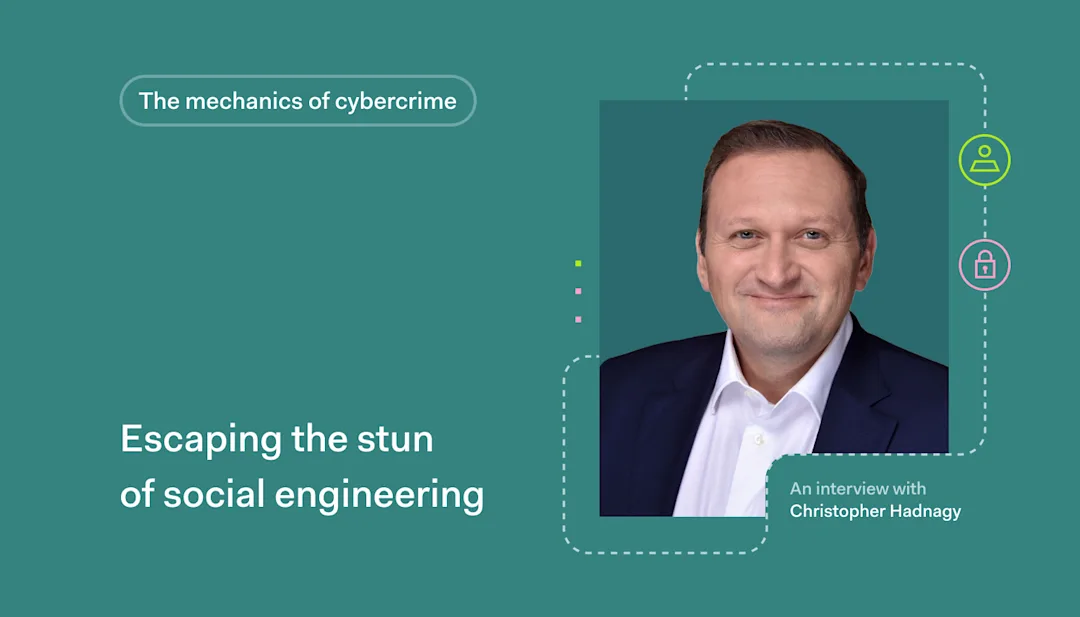
Creating a perfect storm using social engineering: a talk with Christopher Hadnagy

In the rapidly evolving landscape of cybersecurity, understanding the intricacies of social engineering is crucial.

Christopher Hadnagy, a renowned expert in the field, sheds light on the complexities and nuances of social engineering in an enlightening interview. His insights dive deep into the psychological roots of cyber-attacks, offering a unique perspective on how cybercriminals exploit emotions and trust.

This article breaks down key insights from the interview, giving valuable knowledge to professionals and the general public. It serves as a guide to comprehend the current state of cyber threats and prepares us for the emerging challenges in the digital world.

The interview’s highlights

  • Expert vulnerability to attacks. No one is immune, as Hadnagy’s personal encounter with a phishing scam proves the universal vulnerability to cyber-attacks.

  • Social engineering tactics. Primary social engineering methods evolve with the advent of new technologies and methods like QR code phishing and online chat scams.

  • Emotional exploitation in decision-making. ‘Amygdala hijacking,’ where intense emotions can overshadow logical thought, is a technique to elicit quick, emotion-driven decisions from victims.

  • Manipulating trust through oxytocin. It’s difficult to protect against the manipulation of trust, as oxytocin, a natural facilitator of human bonding, can be exploited by malicious actors.

  • Nonverbal cues and deception detection. To dispel nonverbal cues of deception, focus on the mismatch between words and body language and trust one’s intuition.

  • Industry-specific vulnerabilities. Heightened susceptibility of certain sectors like healthcare, banking, and utilities to social engineering, with specific challenges faced in effectively training staff in these areas.

  • Future trends and AI in cyber-attacks. AI in cyber-attacks will get more sophisticated, making it necessary for advanced defensive strategies.

Key insight #1: social engineering is getting at you at the right time and context, not an intelligence issue.

NordLayer: How can even experts in social engineering become victims of cyber-attacks?

Christopher Hadnagy: Despite being an expert, the story of falling victim to a phishing attack stresses the human element in cybersecurity.

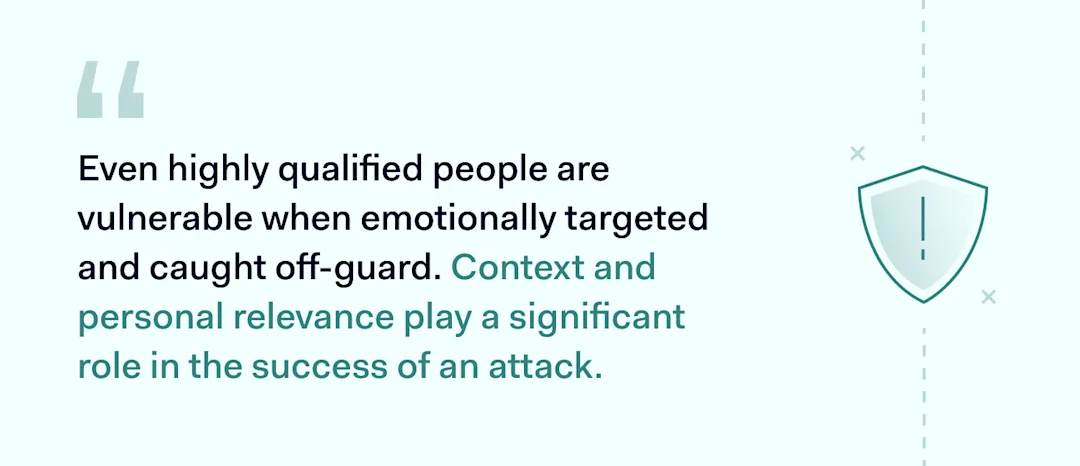
Social engineering targets our emotional responses, not our intelligence or lack of it. If an attacker aligns their approach with something personal and emotionally significant—and times it perfectly—anyone can fall victim.
Quote 1My experience with the Amazon phishing attack is a classic example. I’ve placed an order on Amazon and was about to rush through the door for the airport with luggage in my hands. This was the time when the phishing email dropped into my inbox, saying something went wrong with the payment card.

The combination of being rushed, emotionally charged, and the contextually relevant pretext made me susceptible at that moment.

Key insight #2: phishing attacks are the most common reason behind breaches, and they evolve constantly.

NordLayer: What are the most common social engineering tricks used to gain access?

Christopher Hadnagy: The landscape of social engineering is diverse and continually evolving.

The primary categories include phishing emails. Everyone’s heard about them, but they are still the number one threat when it comes to breaches.

Then there’s voice phishing (vishing) and SMS phishing (smishing). Smishing became prolific after major telecommunications providers in the U.S. were breached, and all phone numbers were out there. Hence, I receive 10-12 weird text messages every day.
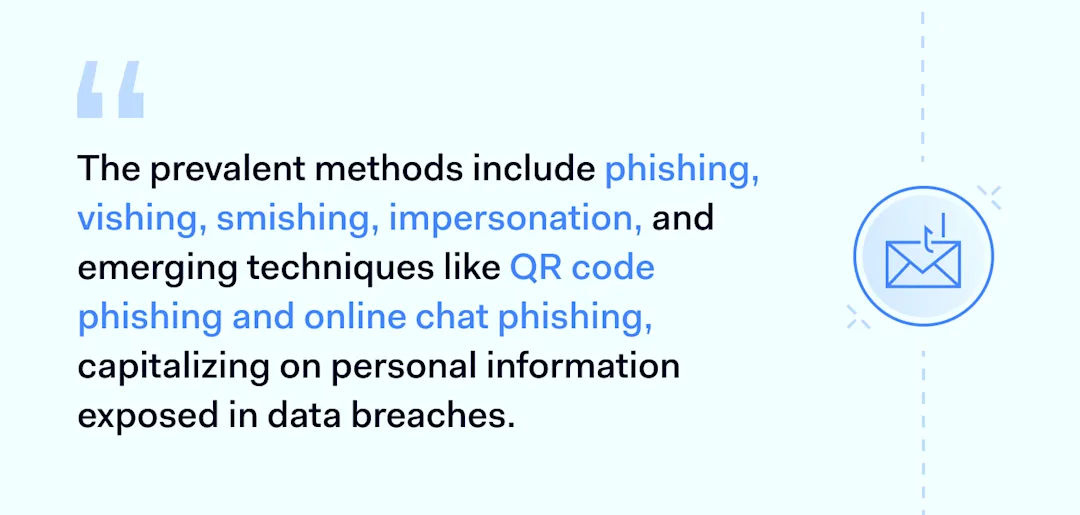
Impersonation is becoming a growing problem as there are two different attack types. One can be someone coming into your business as your employee or colleague. Another one is social media impersonation, also known as catphishing. We see many people making fake LinkedIn accounts and believing there’s someone they’re not.

Technological advancements have emerged in new methods like QR code phishing (wishing) and online chat phishing, especially prominent in the support chats category.

These attacks exploit the increasing amount of personal information available due to data breaches, creating more opportunities for targeted and convincing scams.

Key insight #3: a blackout of logical thinking for one minute can result in thousands of dollars lost.

NordLayer: Could you explain how threat actors use the science behind emotions like fear or urgency?

Christopher Hadnagy: Dr. Daniel Goldman coined the concept of ‘amygdala hijacking,’ where intense emotional responses overshadow our logical thinking, which is a critical tool in a social engineer’s arsenal.

Research subjects were shown something scary or sad and then asked to do math problems. They saw that the frontal cortex went completely dark, and the amygdala in the center of the limbic system was all lit up.
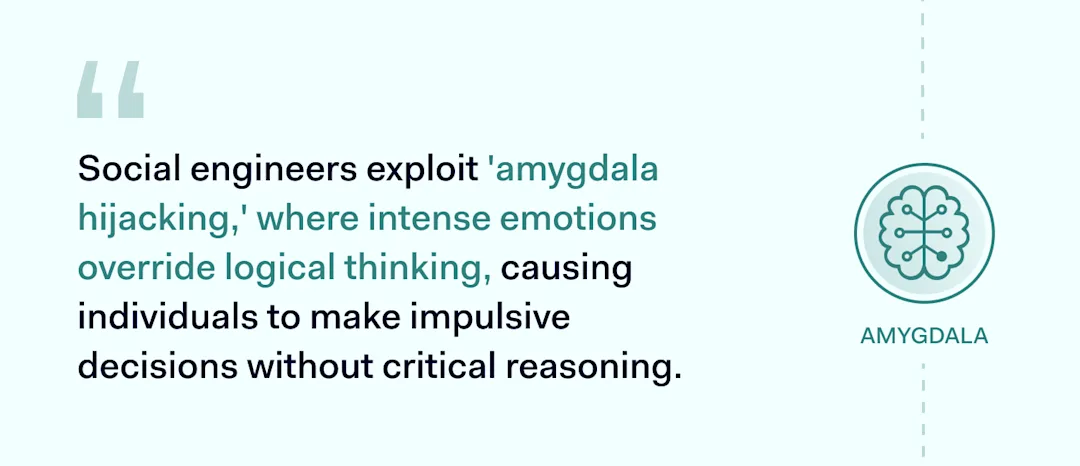
This neurological response diverts all processing power from the frontal cortex to the amygdala during high-stress situations, hindering critical thinking.

NordLayer: How do we make decisions that we normally wouldn’t make when these emotions are involved?

Christopher Hadnagy: Attackers exploit this by creating scenarios that evoke strong emotions like fear, anger, or urgency, leading to hasty decisions made without logical reasoning.

It only takes 30 to 60 seconds, and our brains return to normal once we’re done with the emotion. This is why scam emails never say, ‘click this link tomorrow’ because, between now and tomorrow, we will have time to think and be in the right state of emotion.

Instead, they create urgency. Giving you no time to think critically creates a perfect storm for a social engineering attack.

Key insight #4: as humans, we are trustful by nature, and safe words can save us from scams and paranoia.

NordLayer: Your TED talk mentioned oxytocin and its role in trust. How do social engineers exploit this aspect of human biology, and what can we do to protect against such manipulation?

Christopher Hadnagy: Oxytocin, known as the ‘moral molecule’, plays a vital role in building trust, a mechanism frequently exploited by social engineers. Without it, we would die off as a human race because this love hormone is a part of how we are as humans and not just a bunch of paranoid hermits.

It’s about striking a balance between being cautious and maintaining the natural human tendency to trust.
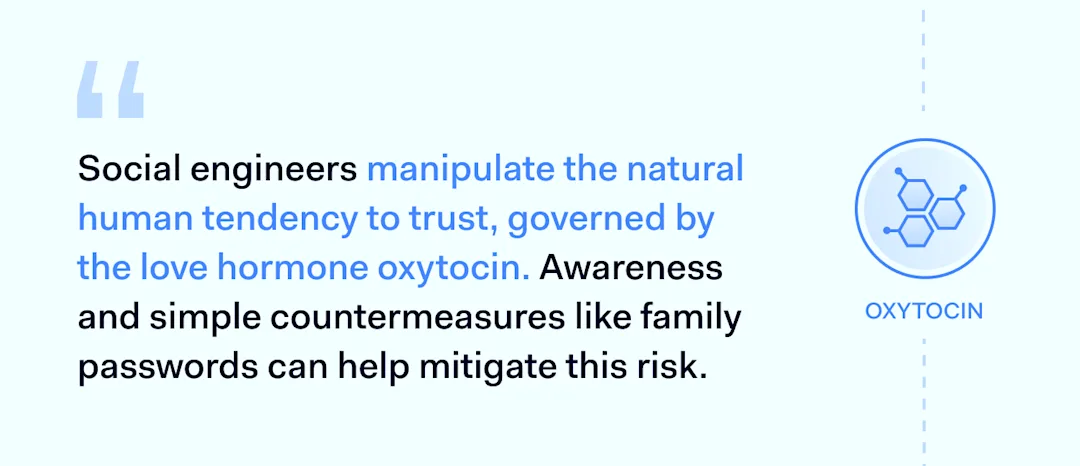
While it’s challenging to safeguard against this manipulation without becoming overly distrustful, awareness and simple protective measures like establishing a family password can be effective. Then they—your child or grandparents—don’t have to know anything about neuroscience or cybersecurity, but remember one code name and use it once necessary.

Key insight #5: a combination of nonverbal signs or simply trusting your gut can help you avoid becoming a cyber-attack victim.

NordLayer: In your book, ‘Unmasking the Social Engineer,’ you emphasize the importance of nonverbal communication in detecting social engineering attempts. What are some key indicators that someone might be attempting to manipulate or deceive us?

Christopher Hadnagy: Deception detection through nonverbal cues is complex.

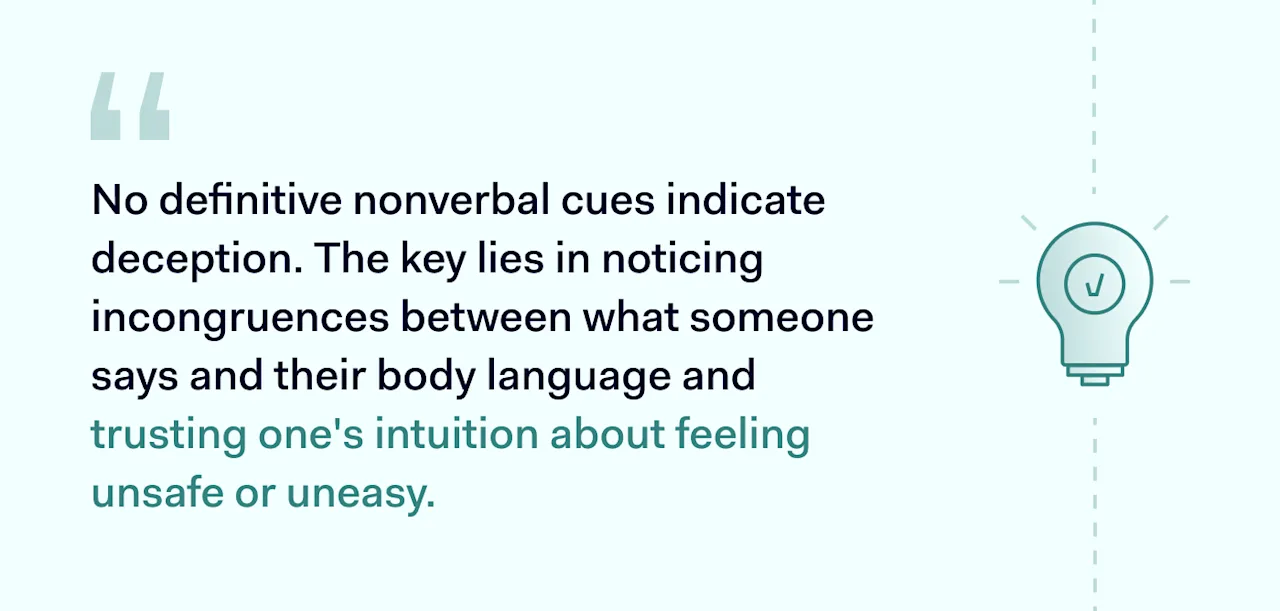
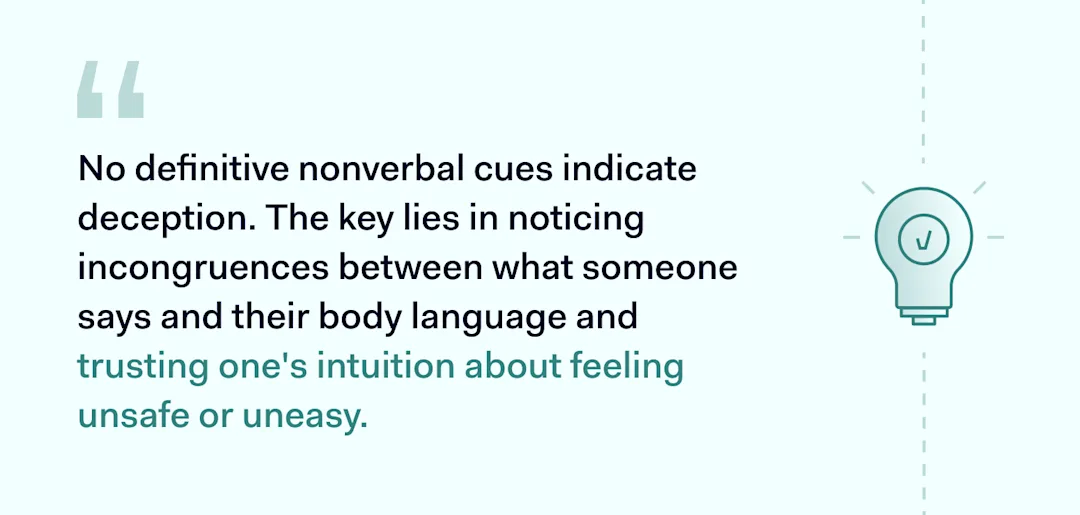
There’s no definitive set of nonverbal indicators of deception Instead, we look for inconsistency between someone’s words and body language.

Your body and your brain are constantly looking for nonverbal signs. We do it all the time, unwillingly looking for little things like a head tilt or a nod—nonverbal signs to evaluate our trust in that person. Virtually via email or a phone call, it’s much harder to put someone to a nonverbal test, so look for the smallest signs and inconsistencies in speech.
Quote 5

Understanding nonverbal communication can alert us to discrepancies in a person’s intent versus their verbal communication. Moreover, trusting our intuition or ‘gut feeling’ when something feels off can be a reliable guide, especially in situations that make us feel uneasy or unsafe.

Key insight #6: the intense nature of some industries requires a full attention span to do their jobs well instead of being concerned about breaches.

NordLayer: From your experience, which industries are currently most vulnerable to social engineering attacks, and why are they particularly targeted?

Christopher Hadnagy: The medical field, banking, and utilities are particularly susceptible to social engineering attacks. The healthcare industry, for instance, struggles with cybersecurity training, often choosing inappropriate times or methods, leaving staff unprepared for social engineering tactics.
Quote 6

The integral nature of these industries, involving high-stress environments and sensitive information, makes them prime targets.

The medical field is probably one of the biggest threats out there. Doctors and nurses are doing a hard job attending to saving our lives or dealing with sicknesses—there’s no time to do cybersecurity training while a bunch of documentation and patients take all your attention.

Key insight #7: AI is to create sophisticated attacks and to be used to prevent them.

NordLayer: Looking ahead to 2024, what major trends do you foresee in the evolution of social engineering tactics, and how should organizations prepare?

Christopher Hadnagy: The future of social engineering is increasingly intertwined with advanced technologies like AI.

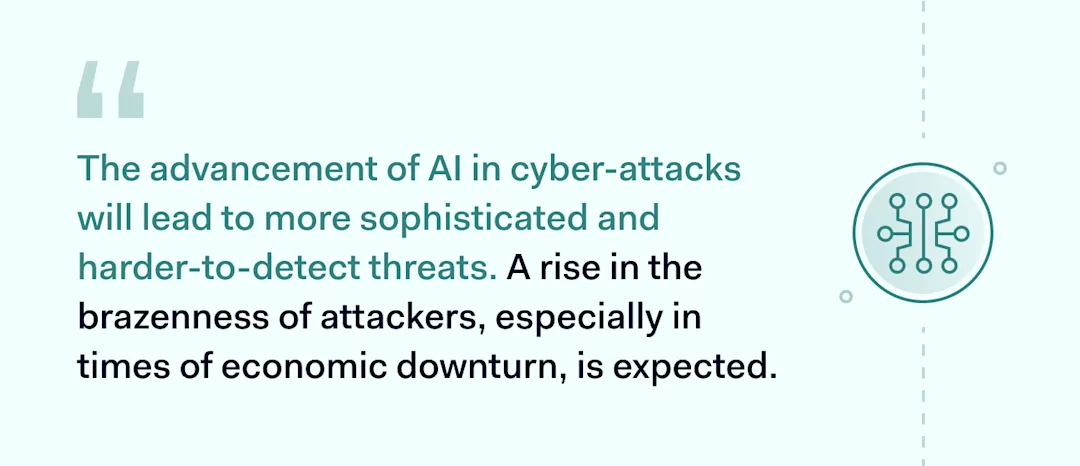
The use of AI in attacks is becoming more sophisticated, making them harder to detect and counteract. AI will likely be used in phishing emails, voice cloning for scams, and deepfakes.

The increasing brazenness and callousness of attackers, targeting even the most vulnerable, is a disturbing trend.
However, there’s hope for increased education on social engineering and the development of AI-based defensive tools. It’s crucial for organizations to invest in both technology and training to stay ahead in this evolving threat landscape.

Thank you.

Christopher Hadnagy, CEO & the founder and CEO of Social-Engineer. Chris has over 16 years of experience as a practitioner and researcher in the security field. His education and awareness efforts have helped expose social engineering as a top threat to security today. 

Chris established the world’s first social engineering penetration testing framework and the first hands-on social engineering training course and certification, Advanced Practical Social Engineering, attended by law enforcement, military, and private sector professionals.

Chris is also the best-selling author of three books: Social Engineering: The Art of Human Hacking, Unmasking the Social Engineer: The Human Element of Security, and Phishing Dark Waters: The Offensive and Defensive Sides of Malicious Emails.

How NordLayer can help

Awareness is the first step in preventing cyber-attacks. Training, education, and constant reminders significantly help organizations minimize the risks. However, being human is in our nature. Additional tools like NordLayer as a threat prevention measure can help automate some processes to save time, maintain our focus, and create additional barriers for malicious attackers to stumble upon.


About Version 2 Digital

Version 2 Digital is one of the most dynamic IT companies in Asia. The company distributes a wide range of IT products across various areas including cyber security, cloud, data protection, end points, infrastructures, system monitoring, storage, networking, business productivity and communication products.

Through an extensive network of channels, point of sales, resellers, and partnership companies, Version 2 offers quality products and services which are highly acclaimed in the market. Its customers cover a wide spectrum which include Global 1000 enterprises, regional listed companies, different vertical industries, public utilities, Government, a vast number of successful SMEs, and consumers in various Asian cities.

About NordLayer
NordLayer is an adaptive network access security solution for modern businesses – from the world’s most trusted cybersecurity brand, Nord Security.

The web has become a chaotic space where safety and trust have been compromised by cybercrime and data protection issues. Therefore, our team has a global mission to shape a more trusted and peaceful online future for people everywhere.

About NordLayer
NordLayer is an adaptive network access security solution for modern businesses – from the world’s most trusted cybersecurity brand, Nord Security.

The web has become a chaotic space where safety and trust have been compromised by cybercrime and data protection issues. Therefore, our team has a global mission to shape a more trusted and peaceful online future for people everywhere.

VMware Horizon alternative: Parallels RAS

The acquisition of VMware by Broadcom has stirred up a significant amount of uncertainty within the tech community.

This uncertainty primarily stems from Broadcom’s historical approach to acquisitions, which has often led to negative outcomes for the acquired businesses. And now they have potentially done the same with VMware.

Recently, it was announced that Broadcom plans to sell VMware’s EUC division to the highest bidder. Now the wait begins to discover who that would be and what the future holds for VMware partners and customers.

Ready to start your future now? Get a full-featured free trial of Parallels RAS and discover a simple, secure VMware alternative.

Download Your Free Trial

Moreover, VMware leadership has also sent termination notices to VMware partners that are making below $500K in annual VMware revenue. This will have significant impact on VMware customers, reducing the support received by partners and the channel alike.

In light of these concerns, it’s imperative for current VMware partners and users to consider developing migration plans and evaluating other virtualization solutions. This period of uncertainty might, in fact, serve as an opportune moment for such considerations.

Often in IT, there’s a tendency to adhere to the adage, “if it’s not broken, why fix it?”

This mindset can be limiting, as it discourages making even minor adjustments to an established environment for fear of causing significant disruptions. This approach can hinder the ability to optimize costs or improve efficiency. In many cases, costs may be increasing, but within a somewhat tolerable or expected range — for example, an 8% increase annually.

However, the situation with VMware and Broadcom provides a compelling reason for Chief Technology Officers (CTOs) and leading IT managers to start seriously evaluating alternative IT environment solutions.

For VMware users, this scenario presents a unique catalyst for change. While there is undoubtedly a substantial amount of work involved in Total Cost of Ownership (TCO) evaluation and product testing to ensure new solutions align with business needs, this could lead to significant adjustments in the costs, time, and resources associated with existing IT deployments.

Such a strategic pivot could ultimately prove beneficial, offering an avenue to reassess and possibly enhance the efficiency and cost-effectiveness of IT environments in a rapidly evolving tech landscape. We believe that Parallels offers a fantastic alternative to VMWare Horizon.

Parallels RAS —A flexible and refined app and desktop delivery solution

Parallels® RAS is an all-in-one virtual application and desktop delivery solution that enables organizations of all sizes to work securely from anywhere, on any device. Deploy on-premises, hybrid, or public cloud and integrate with existing technologies like Azure virtual desktop.

With Parallels RAS, organizations can adapt and scale to changing business needs.

Maximize flexibilityElevate user experienceSimplicity redefinedSecurity at its coreCost-efficient TCO
Deploy core components where they fit best, from hybrid to cloud environments. Adapt workloads for efficiency and performance.Parallels RAS offers remote collaboration and flexibility on any device, streamlining your team’s workflow.Easy-to-use, single-console digital workspace. Straightforward management and deployment for everyone.Built-in, comprehensive security with Parallels RAS. Trust in our secure, compliant solution for any setup.All-in-one solution with quick setup and 24/7 support. Reduces costs with simple licensing and free training.

Download Your Free Trial

How does Parallels RAS compare to VMware Horizon?

Many VMware Horizon customers will want to be sure that their new solution will fit their needs and to mitigate any impact on business continuity. The best way to do this is to try the solution and test it for yourself. But before you do all that, let’s look at how Parallels RAS compares to VMware Horizon.

Flexibility — Hybrid by design

For numerous businesses, constraints in resource deployment options often prove to be counterproductive. Having the flexibility to adapt to changing market conditions, client demands, and technological advancements is crucial for sustained growth and competitiveness. Being boxed into a specific mode of operation or a limited set of tools can hinder innovation and responsiveness.

VMware Horizon licensing options are diverse and complex, offering licenses that are specific to applications-only or limited to on-premises desktops-only. This can be a significant hurdle for organizations that need to alter their delivery methods mid-subscription or desire the flexibility to choose their resource delivery locations.

VMware’s Universal Licensing does offer customers the flexibility to navigate between on-premises and cloud environments, however, this expanded capability comes at a higher price point compared to more basic licensing options.

Alternatively, Parallels Remote Application Server (RAS) has been meticulously designed to be flexible and provide seamless integration across various IT environments.

It can support on-premises, hybrid, and full public cloud infrastructures, including cloud technologies like Azure Virtual Desktop, all from a single console. This adaptability makes Parallels RAS an ideal solution for organizations looking to maintain agility in their IT operations.

With a single subscription model, Parallels RAS encompasses the entire hybrid use case, offering comprehensive coverage without the need for multiple separate licenses.

This approach simplifies the licensing process, making it more cost-effective and manageable for businesses. Parallels RAS allows organizations to shift between on-premises, hybrid, and cloud environments as their needs evolve, without incurring additional licensing costs or facing compatibility issues.

A simplified, enhanced user experience

Parallels RAS enhances the user experience in various ways for both IT managers and users.

Parallels RAS effectively elevates the Azure Virtual Desktop experience through its native integration — something VMware Horizon lacks. VMware’s approach of replacing the AVD Control Plane with its own delays the incorporation of Microsoft’s AVD updates. Parallels RAS’s direct integration with the AVD Control Plane enables it to leverage Microsoft’s advancements swiftly and efficiently in AVD.

Parallels RAS also excels in customization. Businesses can infuse their brand identity into the Parallels Client with customizable Themes.

These Themes allow organizations to white label the user experience and use their brand colors, titles, icons, language, and other configurations to create a personalized experience in the Parallels Web Client or Windows Client. IT Administrators can even set up dedicated URLs for different departments or customers, along with specific security features like MFA and SSO and override global settings.

In contrast, VMware’s customization capabilities are limited to basic elements like logos, text, links, and client background.

Attention to detail is a hallmark of the Parallels RAS solution. For instance, the Parallels Client on Windows aids users in password changes, offering guidance and the option to redirect password change prompts to an external Identity Provider (IDP), rather than just the Active Directory domain. This user-centric feature is not present in VMware’s offerings.

Moreover, Parallels RAS enhances user experiences through its Session Pre-Launch feature. This function anticipates user needs by starting a session before the user initiates an application, based on their previous habits.

The Session Pre-Launch feature employs client policies for granular configuration, analyzing and recording (via machine learning) when a user typically launches applications on a specific day of the week. By starting a session just minutes before the usual application launch time, it significantly improves the user experience.

In contrast, VMware Horizon’s Session Prelaunch capability is more limited. It is only available for published applications and does not support remote desktops. This restriction means that VMware cannot offer the same level of proactive, user-specific session preparation that Parallels RAS provides.

Total Cost of Ownership: Parallels RAS vs. VMware Horizon

Optimizing the Total Cost of Ownership (TCO) is crucial for many organizations, and Parallels RAS excels in this aspect, offering a more advantageous TCO than VMware Horizon.

Parallels RAS simplifies its licensing with an annual concurrent user fee, contrasting with VMware’s varied and often more expensive licenses. The installation and setup of Parallels RAS are notably quicker and more straightforward than VMware Horizon, eliminating the need for specialized knowledge or additional training, thereby reducing costs.

Moreover, ongoing administration is more streamlined with Parallels RAS, which is designed to be straightforward and user-friendly, in contrast to VMware Horizon.

For IT administrators using VMware, tasks like creating and managing users or monitoring operational dashboards, health, and performance analytics require switching between the Admin Web Console and the Help Desk Tool.

Parallels RAS, on the other hand, centralizes all these functions within a single, easy-to-use console. This integration significantly reduces the time spent by IT administrators on these tasks, allowing them to allocate more time to other important duties.

Simplicity is paramount in Parallels RAS

Parallels RAS offers a user-friendly, unified digital workspace, streamlining management and deployment. It features a single admin console for comprehensive access, including one-stop management, end-to-end load balancing, support for multiple hypervisors and cloud environments, image provisioning, autoscaling, and more.

In contrast, VMware presents a more complex and time-consuming approach. VMware Horizon users must use the Horizon Console for managing virtual and published desktops and applications but switch to the Help Desk Tool for operational dashboards, health monitoring, and performance analytics.

License management in Parallels RAS is straightforward, with all licensing is handled by the Connection Brokers, with the primary broker reporting usage to the Parallels Licensing console.

VMware Horizon, on the other hand, manages licensing either through the Horizon Console or, for subscription services, via the Horizon Control Plane, adding layers of complexity. Additionally, other VMware products, like AppVolumes, require management from separate consoles. Parallels RAS also integrates Microsoft FSLogix into its management console. This integration simplifies the management of Office and Profile Containers and other settings directly in the GUI. While FSLogix is supported by VMware Horizon, it lacks console integration, adding complexity for IT administrators.

Security is built into the solution

Security and compliance features are comparably robust in both Parallels RAS and VMware Horizon, which is essential for data protection and workforce security.

Parallels RAS embraces advanced security protocols, supporting the latest TLS 1.3. This protocol offers enhanced security and performance for secure communications. Additionally, Parallels RAS is FIPS 140-2 compliant, meeting the gold standard for cryptographic hardware effectiveness and it is globally recognized for its security assurance.

Moreover, Parallels RAS enhances authentication security with built-in multi-factor authentication (MFA) and smooth integration with third-party MFA providers. This allows for more robust security measures than mere usernames and passwords, incorporating options like Microsoft Authenticator and Google Authenticator, among others.

Parallels RAS also aids IT managers in streamlining user issue troubleshooting, offering easy access to data and reports. This functionality not only simplifies problem-solving but also bolsters post-activity analysis and aids in compliance efforts.

Discover certainty and peace of mind with Parallels RAS!

If you’re contemplating a switch from your current VMware environment, this blog post aims to assure you that there are excellent alternatives available.

Parallels RAS stands out as a great option, offering a match for your business needs while also reducing costs, saving time and effort, and simplifying operations.

To explore switching to Parallels RAS from VMware Horizon further, consider speaking with the Parallels team or experience Parallels RAS first-hand today with a full-featured free trial.

Resources

  • Get your full-featured free trial of Parallels RAS: Link
  • Tech Bytes: Learn more about Parallels RAS: Link
  • Parallels Blogs: Read the latest information on Parallels RAS: Link

About Version 2 Digital

Version 2 Digital is one of the most dynamic IT companies in Asia. The company distributes a wide range of IT products across various areas including cyber security, cloud, data protection, end points, infrastructures, system monitoring, storage, networking, business productivity and communication products.

Through an extensive network of channels, point of sales, resellers, and partnership companies, Version 2 offers quality products and services which are highly acclaimed in the market. Its customers cover a wide spectrum which include Global 1000 enterprises, regional listed companies, different vertical industries, public utilities, Government, a vast number of successful SMEs, and consumers in various Asian cities.

About Parallels 
Parallels® is a global leader in cross-platform solutions, enabling businesses and individuals to access and use the applications and files they need on any device or operating system. Parallels helps customers leverage the best technology available, whether it’s Windows, Linux, macOS, iOS, Android or the cloud.

Scale Computing Launches New Business Continuity & Disaster Recovery Campaign to Help Protect Your Business

INDIANAPOLIS – January 9, 2024 — Scale Computing, a market leader in edge computing, virtualization, and hyperconverged solutions, today announced a new campaign aimed at helping IT leaders looking to build IT resilience with native, built-in data protection and disaster recovery capabilities. 

In 2023, the average cost of a data breach globally reached an all-time high of $4.45 million. This represents a 2.3% increase from 2022 and a 15.3% rise from 2020. Scale Computing Platform (SC//Platform) makes it easier to shield businesses from malicious and accidental incidents alike, ensuring maximum security and uptime. By combining SC//Platform with the company’s new Business Continuity/Disaster Recovery (BCDR) Planning Service, available on a subscription basis, organizations establish a comprehensive and regulated plan for responding to unforeseen downtime.

“No matter the size or industry of a business, downtime, data loss, and data corruption can have a serious and long-lasting impact on both the bottom line and the reputation of an organization. It is imperative in today’s complex IT and security landscapes for companies to establish IT resilience. IT leaders around the globe are defending their data with the native, built-in data protection and disaster recovery capabilities of Scale Computing Platform. Our innovative solutions ensure that critical systems are protected, validated, tested, and ready for recovery anytime,” said Jeff Ready, CEO and co-founder of Scale Computing.

SC//Platform brings simplicity, high availability, and scalability together, replacing the existing infrastructure for running virtual machines in a single, easy-to-manage platform. IT leaders from across the globe defend their data with the native, scalable, data and ransomware protection of SC// Platform, the industry-leading Hyperconvergence and Edge Computing platform.

Join the Scale Computing team for a discovery meeting to learn about SC//Platform data protection. For a limited time, the company is gifting a Garmin Dash Cam 66W — featuring an extra-wide 180-degree field of view that captures and saves important details in 1440p HD video — when you receive a generated, customized quote. Complete the form to schedule your discovery meeting with the team and begin your journey to bulletproofing your IT infrastructure.

To learn more about the award-winning SC//Platform, please visit scalecomputing.com/sc-platform.

About Version 2 Digital

Version 2 Digital is one of the most dynamic IT companies in Asia. The company distributes a wide range of IT products across various areas including cyber security, cloud, data protection, end points, infrastructures, system monitoring, storage, networking, business productivity and communication products.

Through an extensive network of channels, point of sales, resellers, and partnership companies, Version 2 offers quality products and services which are highly acclaimed in the market. Its customers cover a wide spectrum which include Global 1000 enterprises, regional listed companies, different vertical industries, public utilities, Government, a vast number of successful SMEs, and consumers in various Asian cities.

About Scale Computing 
Scale Computing is a leader in edge computing, virtualization, and hyperconverged solutions. Scale Computing HC3 software eliminates the need for traditional virtualization software, disaster recovery software, servers, and shared storage, replacing these with a fully integrated, highly available system for running applications. Using patented HyperCore™ technology, the HC3 self-healing platform automatically identifies, mitigates, and corrects infrastructure problems in real-time, enabling applications to achieve maximum uptime. When ease-of-use, high availability, and TCO matter, Scale Computing HC3 is the ideal infrastructure platform. Read what our customers have to say on Gartner Peer Insights, Spiceworks, TechValidate and TrustRadius.

Overview of Cyberthreats to SMBs

In the landscape of business, where giants and startups coexist, small and medium-sized businesses (SMBs) stand as a crucial but often overlooked sector. These enterprises, smaller than corporations but larger than microbusinesses, play a significant role in various industries. However, a looming danger threatens their existence – cyber threats. SMBs, lacking the strong defenses of larger corporations and government agencies, find themselves targeted by cybercriminals. According to a  study released in June 2023, 61% of SMBs in the UK and the US fell victim to hackers in the past year. This data sheds light on the urgent need for enhanced cybersecurity measures tailored to the specific challenges faced by these businesses.

Motivations Behind Cyber Attacks on SMBs

Cybercriminals target SMBs for several reasons, all of which relate to the vulnerabilities unique to small businesses. One of the primary factors is the inadequacy of cybersecurity budgets and resources. Unlike their larger counterparts, small and medium-sized businesses often lack the financial means to invest in advanced security technologies, dedicated IT teams, and cybersecurity professionals. This deficiency makes them a tempting target for hackers, who can exploit vulnerabilities to disrupt business operations and gain unauthorized access to sensitive data and networks swiftly.

Moreover, SMBs encounter a lack of cybersecurity awareness and IT-related training among their employees. This deficit increases the likelihood of their business operations falling victim to various cyber threats, including social engineering tactics such as phishing attacks. The fact many businesses rely on outdated software compounds the problem, resulting from limited financial resources and insufficient awareness of relevant cybersecurity measures.

According to the CNBC|SurveyMonkey Small Business Index Q4 2022, 4% of small business owners considered cybersecurity their most significant risk. The Digital Ocean report painted quite a grim picture, with 25% of SMBs suffering from a lack of time to manage cybersecurity threats, a pervasive resource deficiency among these businesses. Also, 41% of IT decision-makers at SMBs admit that their lack of knowledge regarding potential cyber security threats is one of the most challenging issues.


As regards qualified specialists, according to the mentioned Digital Ocean report, 38% of SMBs had no dedicated cybersecurity employees, and 42% of them had only a single employee working in this critical field.

Despite the frequent victimization of SMBs by hackers, only 6% of business owners increased their cybersecurity budgets in 2022, reflecting a concerning lack of prioritization in cybersecurity strategy.

Severe Impact of Successful Cyberattacks

While SMBs may lack the financial resources of larger enterprises, they still control valuable assets that attract cybercriminals seeking monetary rewards. Customer data, payment information, trade secrets, and intellectual property become prime targets for cybercriminals. Cybercriminals exploit these assets directly for financial gain or as a springboard to infiltrate larger organizations.

The aftermath of a successful cyberattack on SMBs is profound. The survey highlights that 58% of IT decision-makers at small and medium-sized businesses experienced business downtime due to cyberattacks. Additionally, 39% lost customer data and one-third reported a loss of customers. Alarmingly, 87% of participants reported experiencing two or more successful attacks in the past year, emphasizing the persistent nature of cyber threats.

Pervasive Threat of Social Engineering Attacks

Among the many cyber threats to enterprise companies, social engineering attacks, especially phishing, stand out as the most common threat to small and medium-sized businesses. Employees of SMBs face a staggering 350% more social engineering attacks than their counterparts at larger enterprises. Phishing scams, simple to organize and requiring minimal resources, have become an all-too-common threat.


ProofPoint’s 2023 State of the Phish Report revealed that 84% of organizations faced at least one successful phishing attack in 2022.

Through spear phishing and other social engineering techniques, cybercriminals trick business owners and employees into disclosing sensitive information, leading to more ransomware attacks, installations, and data breaches.

The financial repercussions of cybersecurity breaches are staggering. The Cost of a Data Breach Report 2023 by IBM disclosed that among companies with fewer than 500 employees, the average cost of a data breach is approximately $3.31 million per incident, translating to $164 per breached record.

Proactive Cyber Security Measures

What compounds the situation is the misplaced confidence of SMB owners regarding cybersecurity best practices. Despite lacking formal cybersecurity budgets and dedicated IT employees, 64% of SMB owners are sure they can quickly resolve a cybersecurity attack if one occurs. This overconfidence, coupled with a lack of preparedness, significantly impacts the organization’s ability to respond effectively to a cyberattack. Delayed or ineffective incident response can lead to extended downtime, increased damages, and prolonged exposure of sensitive data.

To avoid the dire consequences of cyberattacks, SMBs must adopt proactive measures to their security practices and bolster their cybersecurity defenses.

  1. When it comes to cybersecurity, one of the biggest threats that an organization might suffer from is human error. That is why it is crucial to conduct regular training sessions on security best practices to improve cybersecurity awareness among employees. Recognizing common tactics, such as phishing scams, is vital to fending off attacks.
  2. Investing in educating employees is worth doing but it is almost impossible to eliminate the human factor anyway. So, it is reasonable to maintain a first line of defense that will minimize the possibility of human error. The tool that can help you in ensuring this can be web filtering. A robust web filtering solution will not let your employees follow potentially malicious links and will enhance staff’s productivity by blocking timewasters.
  3. Given the high cost of data breaches mentioned above, SMBs should ensure their data is protected and duplicated. Determine critical data and have multiple backups to reduce the impact of a breach on operations.
  4. Using weak passwords is not something that businesses can afford to do. Implement and enforce a robust password policy. To enhance security, apply 2-factor authentication whenever possible.
  5. Prepare an incident response plan to ensure a swift and effective response to cyberattacks. When an attack happens, every moment counts, and having the right people and procedures in place can minimize downtime, reduce damages, and protect sensitive data.

The cybersecurity landscape for SMBs is fraught with challenges. As they grapple with limited resources, lack of awareness, and persistent cyber threats, the need for proactive measures has never been more critical. Small and medium-sized businesses must recognize the urgency, prioritize cybersecurity, and implement comprehensive strategies to fortify their defenses.=

About Version 2 Digital

Version 2 Digital is one of the most dynamic IT companies in Asia. The company distributes a wide range of IT products across various areas including cyber security, cloud, data protection, end points, infrastructures, system monitoring, storage, networking, business productivity and communication products.

Through an extensive network of channels, point of sales, resellers, and partnership companies, Version 2 offers quality products and services which are highly acclaimed in the market. Its customers cover a wide spectrum which include Global 1000 enterprises, regional listed companies, different vertical industries, public utilities, Government, a vast number of successful SMEs, and consumers in various Asian cities.

About SafeDNS
SafeDNS breathes to make the internet safer for people all over the world with solutions ranging from AI & ML-powered web filtering, cybersecurity to threat intelligence. Moreover, we strive to create the next generation of safer and more affordable web filtering products. Endlessly working to improve our users’ online protection, SafeDNS has also launched an innovative system powered by continuous machine learning and user behavior analytics to detect botnets and malicious websites.

Finding Juniper SRX and EX devices with runZero

Today, January 12th, 2024, Juniper Networks disclosed a serious vulnerability in Juniper SRX firewalls and EX switches.

The issue, identified as CVE-2024-21591, allows remote attackers to create a denial-of-service (DoS) condition or to execute arbitrary code with root privileges on vulnerable devices.

This vulnerability has a CVSS score of 9.8 out of 10, indicating that this is a critical vulnerability.
According to their disclosure, Juniper Networks is not aware of any active exploitation of this vulnerability.

What is the impact? #

Upon successful exploitation of these vulnerabilities, attackers can execute arbitrary code on the vulnerable system with root privileges. In general, this means that a successful attack would result in complete system compromise.

Are updates or workarounds available? #

Juniper has released a software update to address this vulnerability.
This update available through their support portal and other update distribution mechanisms.

How do I find potentially vulnerable Juniper devices with runZero? #

From the Asset Inventory, use the following query to locate assets that may be running the vulnerable operating system in your network:

hw:"Juniper EX" OR hw:"Juniper SRX"


About Version 2 Digital

Version 2 Digital is one of the most dynamic IT companies in Asia. The company distributes a wide range of IT products across various areas including cyber security, cloud, data protection, end points, infrastructures, system monitoring, storage, networking, business productivity and communication products.

Through an extensive network of channels, point of sales, resellers, and partnership companies, Version 2 offers quality products and services which are highly acclaimed in the market. Its customers cover a wide spectrum which include Global 1000 enterprises, regional listed companies, different vertical industries, public utilities, Government, a vast number of successful SMEs, and consumers in various Asian cities.

About runZero
runZero, a network discovery and asset inventory solution, was founded in 2018 by HD Moore, the creator of Metasploit. HD envisioned a modern active discovery solution that could find and identify everything on a network–without credentials. As a security researcher and penetration tester, he often employed benign ways to get information leaks and piece them together to build device profiles. Eventually, this work led him to leverage applied research and the discovery techniques developed for security and penetration testing to create runZero.

×

Hello!

Click one of our contacts below to chat on WhatsApp

×