Skip to content

Enterprise Guide to Decentralized Identity: Preparing for Verifiable Credentials and DIDs


Key Insights: Decentralized Identity for the Enterprise

  • Decentralized identity shifts control from vulnerable databases to user-owned DIDs and verifiable credentials (VCs), significantly reducing breach impact and compliance risk.
  • Enterprises gain faster, higher-trust verification for customers, employees, and partners—without the liability of storing sensitive personal data.
  • This model accelerates zero-trust maturity and replaces friction-heavy onboarding with instant, cryptographically proven identity.
  • Early adopters gain a security and efficiency advantage, evolving from identity providers to identity verifiers prepared for the next era of digital trust.

Introduction: The Shift to Digital Trust

Imagine tapping your phone once at a rental car counter to instantly prove driving eligibility without revealing your address or full birth date. This is the reality of decentralized identity. Current identity systems force users to juggle passwords and encourage reuse, contributing to a 71% jump in credential-based attacks. Meanwhile, every corporate breach spills millions of sensitive records.

The alternative—Self-Sovereign Identity (SSI)—is emerging, driven by governments and industry. CISOs must prepare for Decentralized Identifiers (DIDs) and Verifiable Credentials (VCs) to future-proof their security architecture.

What Are Decentralized Identifiers (DIDs)?

Today, third parties control your digital identity (HR issues your badge, banks issue account numbers). Decentralized Identifiers (DIDs) flip this model. A DID is a persistent, globally unique identifier that you own and control via cryptographic keys. Nobody can create or take away your DID.

Security Impact: Attackers favor centralized databases because one breach yields massive payouts. With DIDs, the sensitive identity information is distributed across individual digital wallets, forcing attackers to target individual endpoints—a much less scalable endeavor.

How Verifiable Credentials (VCs) Work

Like a physical driver’s license or diploma, a Verifiable Credential (VC) proves something about you. VCs are digital and highly secure because they carry a digital signature from the issuer (e.g., your university or the DMV). Anyone can check this signature instantly.

Crucially, VCs improve privacy. Unlike a physical license which reveals everything, a digital VC can use zero-knowledge cryptography to prove, for example, “This person is over 21” without exposing the address, full name, or exact birth date.

The Trust Triangle:

  • Issuers: Create and digitally sign the VCs (e.g., your employer). They publish their public key for verification.
  • Holders (You): Store VCs in a digital wallet and decide precisely when to share them.
  • Verifiers: Check the VC’s cryptographic signature when you present it (e.g., a hiring manager). They get instant proof without needing to call the Issuer.

Enterprise Benefits of Decentralized Identity Adoption

1. Faster and Stronger Identity Verification

VCs simplify slow customer and employee onboarding. Instead of manual document checks and phone calls, enterprises accept credentials that come pre-verified. This translates to faster customer onboarding (fewer abandoned processes), quicker employee verification (faster productivity), and higher accuracy (digital credentials are harder to fake than paper).

2. Lower Risk and Reduced Data Liability

Decentralized identity tackles the “honeypot” problem. Instead of hoarding sensitive data (passports, SSNs) to authenticate users, VCs allow you to verify information without storing it permanently. This dramatically reduces your attack surface and shrinks your compliance burden under privacy regulations.

3. User Experience Improvements

Users gain control and trust when they manage their own credentials. Replacing account creation and passwords with presentation of a trusted credential from a digital wallet is faster and more secure. This also facilitates passwordless authentication.

Roadmap: Implementing Decentralized Identity

Phase 1: Strategy and Education (Now – 12 months)

Action: Educate security, IT, and compliance teams on DIDs and VCs. Identify areas where decentralized identity could solve key bottlenecks, such as customer onboarding or employee credential verification. Engage with industry standards groups like the W3C.

Phase 2: Piloting VCs in Real Use Cases (12 – 24 months)

Action: Select one high-value, manageable use case (e.g., digital degree verification for a specific department). Define clear success metrics (faster verification, happier users). Partner with a vendor or use open source tools to build prototype systems for issuance or verification. Document integration challenges.

Phase 3: Integrating DIDs into IAM and Zero Trust (24+ months)

Action: Plan broader integration with existing IAM infrastructure. Build trust registries (determining which issuers to trust). Update user-facing flows to handle “Sign in with Digital ID.” Focus on handling both new and legacy authentication methods smoothly. This aligns perfectly with a Zero Trust approach by continuously verifying credentials for every access request.

Challenges and Considerations

  • User and Issuer Adoption Gap: Early adoption will be fragmented. Focus on credentials likely to be universally accepted soon (e.g., government digital IDs) and be patient during the transition period.
  • Governance and Trust: Decentralization requires a new governance framework to determine which external issuers to trust and how to handle key compromises or policy changes.
  • Interoperability: Ensure chosen vendors prioritize standards compliance to prevent creating new, incompatible silos.
  • Legacy Integration: Budget resources to build middleware that translates verifiable credential assertions into attributes compatible with existing systems (Active Directory, LDAP, etc.).

Conclusion: Turning Recognition Into Results

Digital identity is moving from centralized control toward decentralized trust. CISOs and enterprise security leaders have an opportunity to lead this transition. Organizations that prepare now will be better positioned to capitalize on security, privacy, and efficiency benefits.

Segura® delivers an identity security platform built to support verifiable credentials, DIDs, and distributed trust. By offering fast deployment and unified identity controls, Segura® provides the adaptability security teams need to make this transition safely and efficiently.


About Segura®
Segura® strive to ensure the sovereignty of companies over actions and privileged information. To this end, we work against data theft through traceability of administrator actions on networks, servers, databases and a multitude of devices. In addition, we pursue compliance with auditing requirements and the most demanding standards, including PCI DSS, Sarbanes-Oxley, ISO 27001 and HIPAA.

About Version 2 Digital

Version 2 Digital is one of the most dynamic IT companies in Asia. The company distributes a wide range of IT products across various areas including cyber security, cloud, data protection, end points, infrastructures, system monitoring, storage, networking, business productivity and communication products.

Through an extensive network of channels, point of sales, resellers, and partnership companies, Version 2 offers quality products and services which are highly acclaimed in the market. Its customers cover a wide spectrum which include Global 1000 enterprises, regional listed companies, different vertical industries, public utilities, Government, a vast number of successful SMEs, and consumers in various Asian cities.

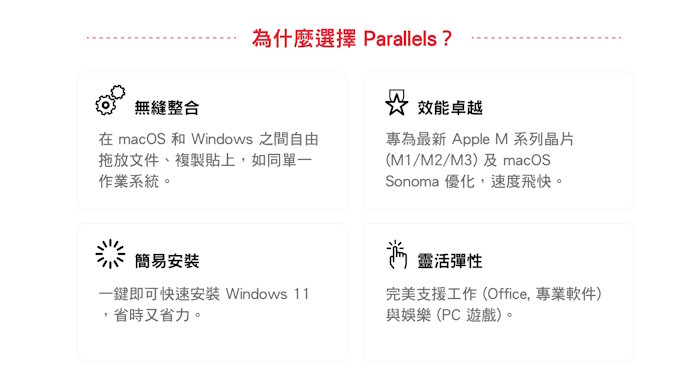
Version 2 eStore 推出限時 Parallels Desktop 55% OFF 獨家優惠

Version 2 eStore 推出限時 Parallels Desktop 55% OFF 獨家優惠

 
If you are unable to view the mailer, please click here.

Mapping DNS-Layer Threats to the MITRE ATT&CK Framework

Following our previous series on DNS security, this guide steps deeper into one of the quieter but more consequential axes attackers use: the DNS layer as a persistent communications and data channel. For SOC analysts, CISOs, and threat intelligence teams, DNS is rarely just “name resolution.” When adversaries use DNS for Domain Generation Algorithms (DGAs), tunneling, or command-and-control (C2), they exploit the protocol’s ubiquity and gaps in visibility stacks.

MITRE released major updates with ATT&CK v17 (April 2025) and v18 (October 2025), introducing refined detection strategies, enhanced analytics, and expanded coverage of stealthy persistence tactics. This article spotlights these emerging concepts, particularly where we can deliver actionable mitigations and visibility gains.

MITRE ATT&CK, DNS-layer Threats, and DET0400

MITRE ATT&CK is the lens SOCs use to translate telemetry into a common story: what adversaries tried to do. This framing converts “we saw DNS noise” into “we saw T1071.004-style behavior likely supporting C2.” The taxonomy has matured from “what adversaries do” into “how to reliably detect what they do.”

Focus on DET0400: Behavioral Detection

The evolution is directly visible in the new DET0400 detection strategy: Behavioral Detection of DNS Tunneling and Application Layer Abuse (Technique: DNS | T1071.004). DET0400 packages the detection problem behaviorally: look for DNS-specific patterns (high entropy labels, anomalous query frequency/timing, encoding) and map those behaviors to concrete analytics across Windows, Linux, macOS, and network devices.

Mapping DNS Adversary Behaviors to ATT&CK

Domain Generation Algorithms (DGAs)

DGAs produce pseudo-random domains that look statistically abnormal. They map to Reconnaissance tradecraft and are often an earlier link in a C2 chain. Detection requires temporal aggregation and enrichment with passive DNS and threat-intel feeds.

DNS Tunneling / C2 over DNS (T1071.004)

Here, the payload rides in the query or response (e.g., TXT records, Base32/Base64-encoded blobs). Behavior includes small, frequent queries with unusual label lengths, or low-volume but high-entropy replies. DET0400 targets this by flagging anomalous query shapes and timing beacons.

Data Exfiltration via DNS

This involves slicing data into small, encoded parts and ferrying it out via irregular TXT/NULL responses or steadily increasing query rates. These actions intersect with both C2 and Exfiltration tactics. Detection emphasizes chaining DNS anomalies to host process context to reduce false positives.

Disrupting the Kill Chain: Where DNS Defenses Hit Hardest

Proper DNS-layer telemetry and DET0400-style analytics let you disrupt adversaries across three critical phases:

  • Reconnaissance / Initial Rendezvous: DGAs and reconnaissance queries leave early fingerprints (surges in unknown names, suspicious WHOIS patterns). Blocking or flagging these reduces an adversary’s ability to bootstrap C2.
  • Command & Control (C2): DNS tunneling and beaconing are persistent lifelines for remote control. Behavioral detection of T1071.004-style activity can sever that lifeline.
  • Exfiltration: Small, encoded streams over DNS are detectable when you correlate content entropy, record types, and host process context; catching this early prevents data loss.

DNS Tactics Mapped to ATT&CK Matrix

TA0043 – Reconnaissance

Reconnaissance involves an operator learning your network edges (which hostnames exist, resolver behavior, etc.). Detection relies on passive DNS history to spot “first-seen” timestamps, clusters of never-before-seen subdomains, and statistical anomalies (DGAs) that test the edges of your allowlist. SafeDNS aids by exposing “newly observed” signals and pDNS history for early DGA detection.

TA0011 – Command & Control (T1071.004)

This is the home base for DNS tunneling. The wire takes on a metronome quality: machine patience, coded labels, and answers that carry just enough data to keep the conversation going. Detection requires behavioral modeling of inter-arrival timing, label-length distributions, and entropy fingerprints—not just static domain blacklists. SafeDNS applies behavioral analytics to identify C2 traffic by shape and correlates it with host process context.

TA0010 – Exfiltration

Exfiltration over DNS is patient, slicing data into encoded labels. Volume alerts miss it. Detection must track label length and variance over time, focusing on irregular TXT/NULL records used as a return path. Tying these streams back to host process context (e.g., a suspicious child process reading an archive) turns a “maybe” into a high-fidelity alert. SafeDNS monitors record types, label lengths, and query cadence per host to distinguish smuggling from legitimate traffic.

TA0005 – Defense Evasion

Evasion is pressure applied to your visibility model: moving DNS into DoH/DoT to starve inspection, using timing jitter to defeat cadence rules, or simply using a custom resolver to bypass policy. The architectural counter is to be explicit about encrypted resolvers and treat traffic shape as a first-class signal. SafeDNS enforces strict resolver policies and applies behavioral analytics that look for non-human DNS patterns, even when content is opaque.

TA0042 – Resource Development & TA0001 – Initial Access

These often leave early fingerprints: fast-rotating domains, newly observed zones that bloom and die within a week, brand-spoof models (combosquats). Watching these patterns allows preemption before the payload lands. SafeDNS brings pDNS history and infrastructure context into filtering policies, exposing “newly observed” and “suspicious lifecycle” signals to the intelligence pipeline.

Closing Perspective: From Noise to Primary Detection Surface

MITRE’s evolution with DET0400 validates a crucial lesson: the fight is won where telemetry is rich and close to the adversary’s lifeline. DNS is no longer a hygiene checkbox—it’s a primary detection surface.

The mandate is operational: a modern SOC that claims ATT&CK coverage without first-class DNS telemetry is arguing with the framework’s direction. Conversely, a SOC that aligns detections to T1071.004 via DET0400 is moving with the current.

Where SafeDNS Fits:

By correlating DNS telemetry to MITRE ATT&CK, SafeDNS helps SOCs make protection coverage visible across Reconnaissance → C2 → Exfiltration. This includes pDNS-backed history for early DGA signals, behavioral analytics that flag C2 conversations by shape, and alerts enriched with process context for decisive, auditable response.

About SafeDNS
SafeDNS breathes to make the internet safer for people all over the world with solutions ranging from AI & ML-powered web filtering, cybersecurity to threat intelligence. Moreover, we strive to create the next generation of safer and more affordable web filtering products. Endlessly working to improve our users’ online protection, SafeDNS has also launched an innovative system powered by continuous machine learning and user behavior analytics to detect botnets and malicious websites.

About Version 2 Digital

Version 2 Digital is one of the most dynamic IT companies in Asia. The company distributes a wide range of IT products across various areas including cyber security, cloud, data protection, end points, infrastructures, system monitoring, storage, networking, business productivity and communication products.

Through an extensive network of channels, point of sales, resellers, and partnership companies, Version 2 offers quality products and services which are highly acclaimed in the market. Its customers cover a wide spectrum which include Global 1000 enterprises, regional listed companies, different vertical industries, public utilities, Government, a vast number of successful SMEs, and consumers in various Asian cities.

Perforce Strengthens Enterprise Java Support Offering With Spring LTS

MINNEAPOLIS, April 8, 2025 — Perforce Software, the DevOps company for global teams seeking AI innovation at scale, today announced the availability of Long-Term Support (LTS) for Spring Boot and Spring Framework through its OpenLogic division. The new offering tackles a critical challenge for enterprise Java teams: maintaining secure, stable Spring applications amid an accelerated six-month release cadence.

Following the release of Spring Framework 6.0 and Spring Boot 3.0, the Spring ecosystem shifted to a time-based release model aligned with OpenJDK’s cadence. While this accelerates access to new features, it reduces support windows—typically to 12 to 18 months—forcing organizations to continuously test, validate, and deploy updates to maintain compliance.

“DevOps teams are caught between the need to innovate and the operational reality of managing complex Java environments. Organizations shouldn’t have to choose between rushing upgrades and accepting security risks. With Spring LTS, they can stay on stable versions longer while planning migrations strategically — with ample time to test, validate, and ensure compliance requirements are being met.”

— Matthew Weier O’Phinney, Principal Product Manager at Perforce OpenLogic

Extending Stability and Security Coverage

OpenLogic’s Spring LTS solution extends critical support for several popular versions:

  • Extends support for Spring Boot 2.7 and Spring Framework 5.3 through October 2027.
  • Coverage for Spring Boot 3.2 and Spring Framework 6.1 is scheduled to follow soon.
The offering provides guaranteed security patches for critical CVEs within 14 days and high-severity CVEs within 30 days, along with flexible options including premium support with one-hour response times and production deployment assistance.

Enabling Strategic Upgrades and Risk Reduction

OpenLogic offers a comprehensive Java solutions portfolio, including support for Spring, OpenJDK, and Tomcat, alongside professional services like migrations and consulting. This flexibility allows organizations in regulated industries or those managing hundreds of microservices to:

  • Align Spring upgrades with business priorities rather than mandatory community support timelines.
  • Reduce technical debt accumulation.
  • Enable better feature testing before adoption.

Real-World Impact: Saving 5,500 Hours of Work

“This customer faced a decision between investing two full quarters to upgrade their Spring-based infrastructure or gambling with their platform’s security and compliance posture. By adopting Spring Long-Term Support, they avoided both scenarios, saving an estimated 5,500 to 6,000 hours of unplanned work while maintaining security coverage and delivering mission-critical features on schedule.”

— Jeff Michael, Senior Director of Product Management at Perforce Software

Availability and Next Steps

Spring LTS is available immediately. To learn more about how to strategically manage your enterprise Java infrastructure and align Spring upgrades with your business goals, visit OpenLogic.

About Perforce
The best run DevOps teams in the world choose Perforce. Perforce products are purpose-built to develop, build and maintain high-stakes applications. Companies can finally manage complexity, achieve speed without compromise, improve security and compliance, and run their DevOps toolchains with full integrity. With a global footprint spanning more than 80 countries and including over 75% of the Fortune 100, Perforce is trusted by the world’s leading brands to deliver solutions to even the toughest challenges. Accelerate technology delivery, with no shortcuts.

About Version 2 Digital

Version 2 Digital is one of the most dynamic IT companies in Asia. The company distributes a wide range of IT products across various areas including cyber security, cloud, data protection, end points, infrastructures, system monitoring, storage, networking, business productivity and communication products.

Through an extensive network of channels, point of sales, resellers, and partnership companies, Version 2 offers quality products and services which are highly acclaimed in the market. Its customers cover a wide spectrum which include Global 1000 enterprises, regional listed companies, different vertical industries, public utilities, Government, a vast number of successful SMEs, and consumers in various Asian cities.

×

Hello!

Click one of our contacts below to chat on WhatsApp

×