Skip to content

Logsafe HRMS Integrates FaceMe® to Power Facial Recognition Time and Attendance

Taipei, TAIWAN – February 27, 2024 – CyberLink Corp. (5203.TW), a pioneer in AI and facial recognition technologies, today announces the integration of FaceMe SDK with Logsafe, India’s fastest growing human resources management system (HRMS). By combining CyberLink’s cross-platform facial recognition engine with Logsafe’s attendance management functionality, organizations can automate check-in and check-out processes with contactless, cloud-based, mobile facial recognition. 

Attendance being taken in an elementary school using facial recognition

Logsafe aims to revolutionize attendance management and streamline administrative processes securely, reliably, and cost-effectively with their innovative mobile app. To achieve this goal, Logsafe has partnered with CyberLink, a leading provider of facial recognition technology. With an impressive face recognition accuracy rate of 99.83%, top rated in NIST’s latest FATE test for presentation attack detection, and iBeta Level 2 compliant anti-spoofing technology, FaceMe SDK provides a precise, fast and frictionless user experience which is perfect for Logsafe’s customer base.

Logsafe required a solution partner that could provide compatibility with both Android and iOS. With its high accuracy, efficiency, and compatibility for both Android and iOS, FaceMe was the obvious choice to power Logsafe’s facial recognition features. Additionally, Logsafe needed support for offline facial recognition. In case of any internet connection disruption, Logsafe wanted their app to continue working seamlessly and not hinder daily operations of their clients. Optimized for edge devices, FaceMe SDK was able to fulfill this requirement and ensure Logsafe’s functions carry on.

Already in market with over 30K active users throughout India, Logsafe is currently being utilized across multiple business verticals, including public schools. Within schools, AI facial recognition and anti-spoofing is used for teacher and student group attendance. When a teacher holds the Android tablet to scan a group of 4-8 students’ faces, real-time video mode enables facial recognition identification and verification in less than 1 second, noting attendance in the HRMS. Similarly, teachers can use Logsafe on their mobile phones for facial recognition check-in/out of school.

“It is exciting to see our facial recognition technology being used in new ways,” said Mei Guu, President of CyberLink Business Unit 2. “Not only is facial recognition used in access control, but with our partner Logsafe we are seeing a new and improved way to take classroom attendance and focus more time in the classroom on learning. It’s quite exciting!”

About Version 2 Digital

Version 2 Digital is one of the most dynamic IT companies in Asia. The company distributes a wide range of IT products across various areas including cyber security, cloud, data protection, end points, infrastructures, system monitoring, storage, networking, business productivity and communication products.

Through an extensive network of channels, point of sales, resellers, and partnership companies, Version 2 offers quality products and services which are highly acclaimed in the market. Its customers cover a wide spectrum which include Global 1000 enterprises, regional listed companies, different vertical industries, public utilities, Government, a vast number of successful SMEs, and consumers in various Asian cities.

About CyberLink
Founded in 1996, CyberLink Corp. (5203.TW) is the world leader in multimedia software and AI facial recognition technology. CyberLink addresses the demands of consumer, commercial and education markets through a wide range of solutions, covering digital content creation, multimedia playback, video conferencing, live casting, mobile applications and AI facial recognition.  CyberLink has shipped several hundred million copies of its multimedia software and apps, including the award-winning PowerDirector, PhotoDirector, and PowerDVD.  With years of research in the fields of artificial intelligence and facial recognition, CyberLink has developed the FaceMe® Facial Recognition Engine. Powered by deep learning algorithms, FaceMe® delivers the reliable, high-precision, and real-time facial recognition that is critical to AIoT applications such as smart retail, smart security, and surveillance, smart city and smart home. For more information about CyberLink, please visit the official website at www.cyberlink.com

Finding Progress OpenEdge Authentication Gateway and AdminServer installations with runZero

Progress Software disclosed an authentication bypass vulnerability in its OpenEdge Authentication Gateway and AdminServer applications. 

This vulnerability, identified as CVE-2024-1403, allows attackers to bypass checks and access the system without authentication. Successful exploitation of this vulnerability would allow attackers to access systems with arbitrary privileges, potentially including administrative privileges.

The vendor indicates that the OpenEdge Authentication Gateway is potentially vulnerable based on configuration, but that the AdminServer product is vulnerable regardless of configuration.

What is the impact?

Successful exploitation of these vulnerabilities would allow attackers to execute arbitrary commands with full privileges on the target system, potentially leading to complete system compromise.

Are updates or workarounds available? #

The vendor has released updates that fix these issues. The vendor recommends that all users upgrade to this version immediately.

How do I find Progress OpenEdge Authentication Gateway and AdminServer installations with runZero?

From the Services Inventory, use the following query to locate potentially vulnerable systems:

html.title:="Progress Application Home"

Additional fingerprinting research is ongoing, and additional queries will be published as soon as possible.

About Version 2 Digital

Version 2 Digital is one of the most dynamic IT companies in Asia. The company distributes a wide range of IT products across various areas including cyber security, cloud, data protection, end points, infrastructures, system monitoring, storage, networking, business productivity and communication products.

Through an extensive network of channels, point of sales, resellers, and partnership companies, Version 2 offers quality products and services which are highly acclaimed in the market. Its customers cover a wide spectrum which include Global 1000 enterprises, regional listed companies, different vertical industries, public utilities, Government, a vast number of successful SMEs, and consumers in various Asian cities.

About runZero
runZero, a network discovery and asset inventory solution, was founded in 2018 by HD Moore, the creator of Metasploit. HD envisioned a modern active discovery solution that could find and identify everything on a network–without credentials. As a security researcher and penetration tester, he often employed benign ways to get information leaks and piece them together to build device profiles. Eventually, this work led him to leverage applied research and the discovery techniques developed for security and penetration testing to create runZero.

Sustainability: More than green energy, tech stacks must be efficient

Keepit’s holistic approach to sustainability pushes beyond only using green energy options: it’s about maximized efficiencies from our purpose-built architecture perfected for protecting and storing SaaS application data in the fastest, most efficient way possible. 


So, let’s look into how we consider sustainability in the data protection and backup industry, the design choices Keepit has made to be fast and efficient (like deduplication and incremental backup), as well as the challenges legacy systems face in regard to sustainability.

Introduction 


What is sustainability in a context where energy consumption must happen? And by “must happen” I mean — in our very real example — for critical services like data protection and backup that’s required by law (think compliance with NIS2, HIPAA, GDPR) and crucial for businesses ensuring operations and continuity. 


Keepit, the only vendor-independent cloud data protection specialist (think air gapping with a separate logical infrastructure, in line with the 321 backup rule), not only leads the way for greener solutions by way of substantially better efficiency, but also demonstrates that performance and profitability don’t have to take a backseat to environmental stewardship.

This article explores Keepit’s comprehensive approach to sustainability, focusing on its commitment to minimizing resource consumption while delivering industry-leading data protection of essential services and critical infrastructure. 


From efficient technology stack design to innovative data management practices, Keepit exemplifies how sustainability can be integrated into every aspect of operations, often leading to some beneficial “side effects” I’ll talk about below. 


This article sheds light on the importance of responsible resource utilization in the tech industry and offers insights into practical strategies for achieving unmatched environmental sustainability and performance capabilities.

Let’s look into how we integrate sustainability considerations into our data protection and backup services operations.

Sustainability in data protection: Maximize performance and efficiency to minimize use

Delivering any service, including this one, will consume resources and there’s just no way around that. So, what we try to do here at Keepit is to make as much positive impact with our customers as we can by not only delivering a great service (that they’re often obligated by law to have) but delivering that same high level of service with the least negative impact for the world and future generations, in regards to energy use and energy origin. 


Sustainability for us, as I see it anyway, means being responsible in our consumption of resources because there’s absolutely no way around consuming resources. So, for us at Keepit, we built our technology stack from the ground up specifically for solving these exact problems that we’re solving in the most efficient way possible. 


And with efficiency here, I mean broadly, so it’s in terms of how much physical equipment we need, how much space do we need to consume, how much power we consume, and how many people we need to run this business. In that light, you can say that a sustainable business is also going to be a more profitable business because minimizing resource consumption not only reduces environmental impact but also lowers operational costs, ultimately leading to increased profitability. 


Let’s look into the keys of consumption and sustainability.

Sustainable resource consumption

To us at Keepit, there’s an emphasis on the understanding that every action leaves an impact, and because of this, we define sustainability as being responsible for resource consumption. This includes a commitment to minimizing the footprint left by the company’s operations. 


The company acknowledges that, given the nature of its services, resource consumption is inevitable, and therefore sustainability, in the context of Keepit, means making conscious and responsible choices to mitigate the environmental impact associated with its operations. So, what do we do to make a difference and to limit our impact? 


What makes Keepit green: Technology stack and efficiency 


Beyond running data centers with 100% renewable energy, we take pride in having constructed our technology stack from the ground up, specifically designed to efficiently address data storage challenges. This approach reflects a commitment to optimizing resource utilization and delivering a service that is not only effective but also resource efficient. 


Efficiency, in Keepit’s view, extends beyond environmental considerations to include broader aspects such as the physical equipment required, space utilization, power consumption, and the personnel needed to operate the business. This holistic approach ensures a sustainable business model — and a profitable one, like mentioned above. 


Now, how do we take on the tough task of being sustainable and high performing? 


By starting from a clean slate. We built this system specifically for storage, protection, and management of cloud SaaS data. So, we built up this entire technology stack specifically for the purpose of delivering exactly the service we’re delivering — cloud backup in the cloud, for the cloud, and so it does this “one thing” extremely well and efficiently. 


And one of the things we did is that, well, we did what Amazon, Microsoft, and Google do: We built up this whole cloud infrastructure. We have full ownership of our technology stack instead of building on top of middleware that runs on top of middleware that runs on top of abstractions and virtualizations and other layers that all add overhead. 


We avoid unnecessary complexity by being purpose built, and therefore we use less storage space, need less processing power due to fewer operations, and use fewer human resources to run it all. 


Predictable costs as a wonderful “side effect” 


With full ownership of our technology stack, we have precise insights into the costs associated with running our operations. When a developer writes a piece of code that inefficiently utilizes resources, it’s something the operations team will see, and it directly impacts them. Efficiency and sustainability are integral parts of our culture, so we address these inefficiencies by writing “better” code. 


We don’t just elastically spin up some additional set of servers and try to solve the problem with a credit card. But that’s exactly how a lot of people approach this — that’s how a lot of competitors approach this. It may offer immediate relief, but that type of short-sighted solution fails to align with our company culture and long-term goals. 


It’s enormously inefficient both from a bottom-line perspective and from a sustainability perspective. And it doesn’t fix the problem. It just kind of scribes it further in the future — kicking the can down the road. So, whatever you’re paying for with your credit card now are inefficiencies that you’ll be paying for again and again into the future. 


They fix the problem with money, but in terms of efficiency, it’s not an action done for the betterment of future generations. They waste energy every single CPU cycle — and they’re also paying for that bigger bill every billing cycle thereafter. 


Not only does that power need to come from somewhere, but so does the money to pay for it, which is either passed on to their customers or covered with venture capital. 


What these companies are left with is a band-aid solution that’s going to consume more energy and cost more month after month after month — basically for as long as they exist. And on any consumption-based model, the costs will be continually growing with datasets. 


Lean, green, backup machine: 99% power saving 


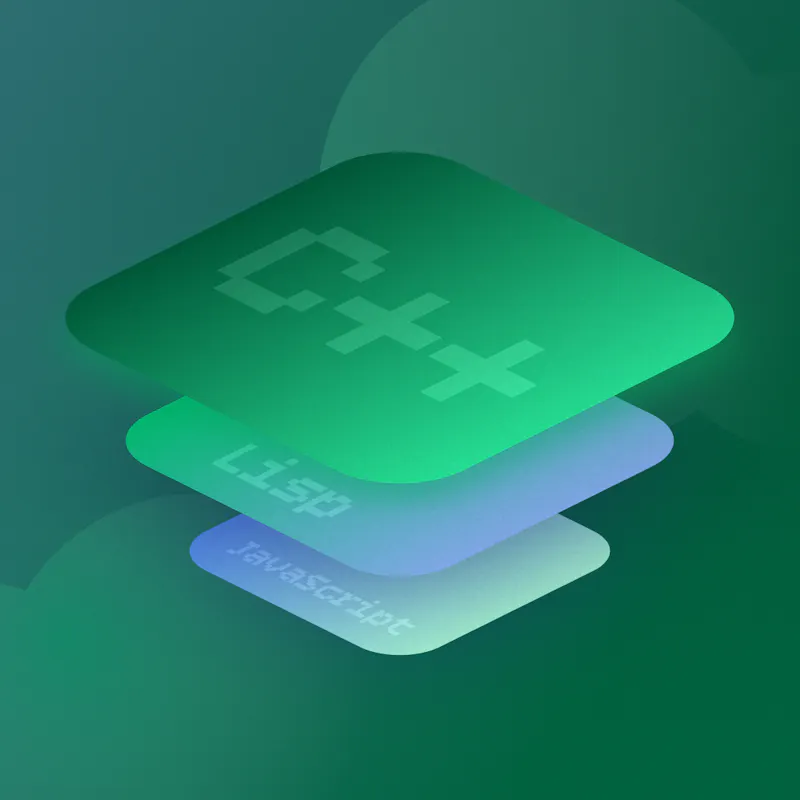
Like I mentioned, when we started, we weren’t bound to use any specific technology, so we started with a clean slate. The programming language we chose for the majority of our technology stack is a very efficiently compiled language (you can read my blog post about it.) And if you compare that to common languages, you know, if you go online and say, “hey, I’m building this upstart company on the net, what technology stack should I use,” the advice you will get there is very different from what we chose to go with. 


And because of that decision, it means that we’re something like 30 to 100 times more efficient. So, for doing one specific operation, if I program that in the technology that we’re using versus if I program that in one of these most common, most hyped technologies, we have a 30 to 100 times change in CPU resource utilization, which also translates directly to power consumption. 


So, if we had done what everyone else was doing, we would’ve consumed something like 100 times more power than we do today and that’s huge. Can you imagine achieving a 99% power saving? That’s basically what we started out doing. 


From that perspective, it’s now more difficult for us to make additional power savings since we’re already so efficient. Sure, it looks good when companies boast “15% energy savings,” but another way of looking at that — and we do from our perspective — is that their waste was high, their tech stack wasn’t lean. Of course, it’s good that they improve, but they’re still not even close from an efficiency standpoint. 


Reducing consumption with incremental backup and deduplication 


If you look at the core service that we provide, we make a copy of your data set a couple of times a day. We keep that copy for as long as you want as a customer company. Some companies need seven years of retention, some need 20 years of retention, and some even pay for 100 years of retention. Data retention really depends on the industry you’re in and and where you operate and all that. 


In theory, we keep complete copies of your entire data across two separate, mirrored locations for, let’s say, 100 years. In theory. In reality, we’re smart about this, because it wouldn’t be feasible to transport your entire data set every day. 


Not only would it not be feasible, there’s also no need to do that because of incremental backup. TechTarget defines incremental backup as “a backup type that only copies data that has been changed or created since the previous backup activity was conducted. By only backing up changed data, incremental backups save restore time and disk space. Incremental is a common method for cloud backup as it tends to use fewer resources.” 


At Keepit, we utilize incremental backups. We transport only the differences, such as edits, that have happened since the original backup was completed. And this also means that we don’t duplicate your entire data set multiple times every day, we just transfer the changes. How does this reduce consumption? Let’s consider an example: 


If you have one unchanging file and we hold that in our backup set for, let’s say, 1,000 backups, then we will have only one instance of the file. We refer to that original file in each of those 1,000 backup sets, but we will storage only one instance.

It’s stored once, but that file is pointed to in each of those 1,000 backup sets. We’re not duplicating data needlessly. Deduplication means that we need much less storage space and can reduce network load because less data is transferred from incremental backups, and less data is held in storage because of deduplication. This is all possible because every file, no matter the file type, has reliable identifiers where you can kind of say, “This is exactly the same file.” 


Let’s say I send someone a Word file and she doesn’t change it. She just saves it from my attachment, and that can be identified as being identical. Let’s expand this across an organization: If you have 1,000 employees in your company that have identical copies of this file and we have those across the 1,000 backup sets, then we will not hold what would literally be 1,000,000 copies of the file. We will again hold just the single instance of the file and there will be a million references to the file. 


Not every backup and recovery solution does it this way though, and as a result, they’re using vast amounts of energy and hardware to power these operations and then to keep all this data in storage. Even if they happen to leverage a green energy source, they’re not exactly using resources responsibly if they are using 1,000,000 times or even 1,000 times what they would with incremental backup. 


Purpose-built storage architecture 


Inherent in our storage architecture is this deduplication across both space and time. And that’s one of these initial thoughts we had and one of the earliest ideas of our storage architecture that we built for this purpose. We did sit down and build a storage foundation for this backup service from the start. We basically invented a file system or object store, if you will, for this purpose: to store these enormous data sets for decades, and we could see we needed something that we couldn’t go out and buy anywhere. We needed something that was built for purpose and so we could avoid the problems we were already seeing others have with legacy systems. 


Legacy complexities add inefficiencies 


Running this stack end to end ourselves, we avoid legacy inefficiencies as I mentioned above. If we had chosen to run on AWS (Amazon Web Services), or Azure, or Gcloud, we’d be provisioning virtual machines, and there’s a lot of complexities that get added when you’re on a virtual machine: All of those layers of middleware that we don’t have to employ. (And with the storage virtualization: If you’re on S3 or Azure blob, then you’re using very sophisticated pieces of machinery that come with great functionality and therefore great overhead. To store backups on them is like hammering in nails with a microscope — it’s perfectly doable but it’s not a very good match of tools for the job.) 


With those virtual machines, you need some automation tools and some various management software to run them reliably. So, you add that, then the virtualization middleware, and then you have some resource management middleware. You have a lot of systems, and your software doesn’t run on the computer anymore: It runs on a collection of layers that run on the computer which you may share with other customers. And ultimately, even if you don’t, Amazon or Microsoft is going to want to instrument your code enough so they can charge you for what you’re doing. So, there’s a number of inefficiencies that are introduced here. And they all translate directly to cost and power consumption.  


But, since we built and operate our own architecture, we don’t have any of those costs, complexities, or additional consumption. No one needs to instrument anything to find out what we need to pay. So, in addition to predictable costs, another happy “side effect” is that we don’t have any sub-processors, which makes vetting and compliance (with GDPR and NIS2, for example) easier for our customers, partners, and anyone else we’re in business with.  


Conclusion 

Keepit’s holistic approach to sustainability sets a commendable example for the tech industry, particularly within data protection and backup services. By prioritizing responsible resource consumption and efficiency in its technology stack design and operational practices, Keepit demonstrates how environmental sustainability can be seamlessly integrated into essential services. 


Through the utilization of deduplication and incremental backup techniques, Keepit minimizes data storage requirements and energy consumption, paving the way for a more environmentally responsible approach to data protection. Additionally, Keepit’s purpose-built storage architecture and avoidance of legacy inefficiencies further underscore its commitment to sustainability, resulting in both cost savings and reduced environmental impact. 


As we navigate an increasingly digital landscape, Keepit’s sustainability initiatives serve as a testament to the importance of balancing important factors such as regulatory compliance and business continuity with environmental responsibility. By embracing sustainable practices, Keepit not only enhances its own operational efficiency but also contributes to the broader goal of mitigating the environmental footprint of the tech industry.

In essence, Keepit’s journey towards sustainability exemplifies the potential for technology companies to lead by example, demonstrating that profitability and environmental stewardship are not mutually exclusive. As we look to the future, let us draw inspiration from Keepit’s success and strive to emulate its commitment to sustainability in all facets of our operations. 

About Version 2 Digital

Version 2 Digital is one of the most dynamic IT companies in Asia. The company distributes a wide range of IT products across various areas including cyber security, cloud, data protection, end points, infrastructures, system monitoring, storage, networking, business productivity and communication products.

Through an extensive network of channels, point of sales, resellers, and partnership companies, Version 2 offers quality products and services which are highly acclaimed in the market. Its customers cover a wide spectrum which include Global 1000 enterprises, regional listed companies, different vertical industries, public utilities, Government, a vast number of successful SMEs, and consumers in various Asian cities.

About Keepit
At Keepit, we believe in a digital future where all software is delivered as a service. Keepit’s mission is to protect data in the cloud Keepit is a software company specializing in Cloud-to-Cloud data backup and recovery. Deriving from +20 year experience in building best-in-class data protection and hosting services, Keepit is pioneering the way to secure and protect cloud data at scale.

Women’s Day: ESET’s Women in Cybersecurity Scholarship


Cybersecurity, traditionally a male-dominated industry, is gradually changing. According to a recent Women in Cybersecurity report, women accounted for 25% of the global cybersecurity workforce in 2022. The report suggests that the percentage could rise to 35% by 2031. 

ESET recognizes that women remain underrepresented in the cybersecurity industry, and the company has been making significant efforts to help close the gender gap in science, technology, engineering, and mathematics (STEM). Since 2016, ESET has been awarding scholarships to  women in the United States who are pursuing studies in cybersecurity or related fields. The program is currently running at ESET’s offices in the United States (offering two $10,000 USD scholarships), and Canada (offering two $5,000 CAD scholarships), and is launching this year in the United Kingdom and Australia.

Australia is launching their Women in Cybersecurity Scholarship on March 8,2024. The scholarship value is AUD 5,000, and is supported by the Australian Minister for Home Affairs and Cyber Security, Clare O’Neil.


Applicants are evaluated on their passion for cybersecurity, academic achievement, leadership, community involvement, and potential for future success. This scholarship offers a fantastic opportunity for women who are passionate about cybersecurity. It provides not only financial support but also a network of motivated women already working in STEM.

Remember, International Women’s Day is not only about celebrating the achievements of women but also about taking action to create a more equal future.  Diversity, Equity and Inclusion (DEI) matters to us at ESET because we believe different experiences and views enable us to drive innovation, efficiency and creativity.

Watch this video to find out more about the global program and about the employee resource groups created at ESET to support women working at the company.

About Version 2 Digital

Version 2 Digital is one of the most dynamic IT companies in Asia. The company distributes a wide range of IT products across various areas including cyber security, cloud, data protection, end points, infrastructures, system monitoring, storage, networking, business productivity and communication products.

Through an extensive network of channels, point of sales, resellers, and partnership companies, Version 2 offers quality products and services which are highly acclaimed in the market. Its customers cover a wide spectrum which include Global 1000 enterprises, regional listed companies, different vertical industries, public utilities, Government, a vast number of successful SMEs, and consumers in various Asian cities.

About ESET
For 30 years, ESET® has been developing industry-leading IT security software and services for businesses and consumers worldwide. With solutions ranging from endpoint security to encryption and two-factor authentication, ESET’s high-performing, easy-to-use products give individuals and businesses the peace of mind to enjoy the full potential of their technology. ESET unobtrusively protects and monitors 24/7, updating defenses in real time to keep users safe and businesses running without interruption. Evolving threats require an evolving IT security company. Backed by R&D facilities worldwide, ESET became the first IT security company to earn 100 Virus Bulletin VB100 awards, identifying every single “in-the-wild” malware without interruption since 2003.

How to reduce CPU usage

From the computer, we increasingly perform different tasks simultaneously (listening to music while writing a report, receiving files by email and downloading videos), which involve executing commands, and sending and receiving data. Over time, computer performance can suffer if CPU usage is not optimized.

But what is a CPU?

CPU stands for central processing unit. The CPU itself is the brain of a computer, on which most calculations and processes are performed. The two components of a CPU are:

  • The arithmetic logic unit (ALU), which performs arithmetic and logical operations.
  • The Control Unit (CU), which retrieves instructions from the memory, decodes and executes them, calling the ALU when necessary.

In this diagram you may see that the CPU also contains the memory unit, which contains the following elements:

  • The ROM (Read Only Memory): It is a read-only memory; that is, you may only read the programs and data stored in it. It is also a primary memory unit of the computer system, and contains some electronic fuses that can be programmed for specific information. The information is stored in ROM in binary format. It is also known as permanent memory.
  • The RAM (Random Access Memory): As its name suggests, it is a type of computer memory that can be accessed randomly, any byte of memory without handling the previous bytes. RAM is a high-speed component on devices that temporarily stores all the information a device needs.
  • Cache: The cache stores data and allows quick access to it. Cache speed and capacity improves device performance.

Its crucial role in the computer operation

By its components, the speed and performance of a computer are directly related to the CPU features, such as:

  • Energy consumption. It refers to the amount of power that the CPU consumes when executing actions, the higher the quality, the higher the power consumption.
  • The clock frequency. It refers to the clock speed that the CPU has and that determines the number of actions it can execute in a period of time.
  • The number of cores. The greater the number of cores, the greater the number of actions that can be performed simultaneously.
  • The number of threads. It helps the processor handle and execute actions more efficiently. It splits tasks or processes to optimize waiting times between actions.
  • Cache memory. It stores data and allows quick access to it.
  • The type of bus. It refers to the communication that the CPU establishes with the rest of the system.

Relationship between CPU speed/power and computer performance

Impact of speed and power on system effectiveness.

CPUs are classified by the number of cores:

  • De un solo núcleo, en el que el procesador sólo puede realizar una acción a la vez, es el procesador más antiguo.
  • Two-core, which allows you to perform more than one action at a time.
  • Four cores, separate from each other, which allows them to perform several actions at once and are much more efficient.

Considering this, we understand why current CPUs have two or more cores to be able to perform several operations at the same time or balance the load so that the processor does not become 100% busy, which would prevent performing some operations.

Consequences of a slow or overloaded CPU

When a CPU is overloaded, the consequences are as follows, and in the indicated order:

  • Loss of performance, encouraging task processing.
  • Overheating of the computer, a sign that the components receive more demand than the capacity they have.
  • If the temperature of a processor exceeds its limit, it slows down and can even lead to a total system shutdown.

With this, if you do not want to reach the last consequence that puts your equipment at risk, the CPU load must be optimized.

Importance of Reducing CPU Usage

Benefits of optimizing CPU load

When CPU consumption is minimized, the benefits become noticeable in:

  • Energy savings: Lower power consumption, avoiding unnecessary use of processor resources.
  • Battery life: It extends battery life by reducing power consumption.
  • Higher performance: Performance improvements at all times.
  • Lower processor overheating and exhaustion.
  • Lower environmental impact: With lower energy consumption, the carbon footprint of the organization is reduced and it is possible to contribute to ESG goals (Environment, Social, Governance).

Monitoring CPU usage in IT environments

Role of IT support service agents

To give continuity to the business, it is always necessary to supervise systems and equipment to ensure service delivery without interruptions or events that may put the company at risk. IT support agents precisely provide face-to-face or remote support at:

  • Install and configure equipment, operating systems, programs and applications.
  • Regularly maintain equipment and systems.
  • Support employees on technology use or needs.
  • Detect risks and problems in equipment and systems, and take action to prevent or correct them.
  • Perform diagnostics on hardware and software operation.
  • Replace parts or the whole equipment when necessary.
  • Make and analyze reports on the state of equipment and systems.
  • Order parts and spare parts, and, if possible, schedule inventories.
  • Provide guidance on the execution of new equipment, applications or operating systems.
  • Test and evaluate systems and equipment prior to implementation.
  • Configure profiles and access to networks and equipment.
  • Carry out security checks on all equipment and systems.

Remote monitoring and management (RMM) tools for effective monitoring.

In order to carry out the functions of the technical support service agent, there are tools for remote monitoring and management. Remote Monitoring and Management (RMM) is software that helps run and automate IT tasks such as updates and patch management, device health checks, and network monitoring. The approach of RMM, of great support for internal IT teams as well as for Managed Service Providers (MSPs), is to centralize the support management process remotely, from tracking devices, knowing their status, to performing routine maintenance and solving problems that arise in equipment and systems. This becomes valuable considering that IT services and resources are in hybrid environments, especially to support the demand of users who not only work in the office but those who are working remotely. Tracking or maintaining resources manually is literally impossible.
To learn more about RMM, visit this Pandora FMS blog: What is RMM software?

Tips for reducing CPU usage on Chromebooks and Windows

Closing tabs or unnecessary applications

This is one of the easiest methods to reduce CPU usage. Close any tabs or apps you’re not using in your web browser. This frees up resources on your computer, allowing you to perform other tasks.
To open the Task Manager on a Chromebook, press “Ctrl” + “Shift” + “T”.
Right-click on the Windows taskbar and select “Task Manager”.
In Task Manager, close any tabs or apps you’re no longer using.

Disabling non-essential animations or effects

Some animations and effects can take up large CPU resources, so it’s best to disable them. First go to system settings and look for an option called “Performance” or “Graphics”, from which you may turn off animations and effects.
On Chromebook, go to Settings > Advanced > Performance and turn off any unnecessary animation or effects.
In Windows, go to Dashboards > System & Security > Performance and turn off unnecessary animations or effects.

Driver update

Outdated drivers can degrade computer performance, leading to excessive CPU usage. To update your drivers, visit your computer manufacturer’s website and download the latest drivers for your hardware. Install and then restart your computer.

Hard drive defragmentation

Over time, the hard drive can fragment, affecting computer performance. Open the “Disk Defragmenter” tool from the Start menu to defragment it. Select “Disk Defragmenter” from the Start menu. Restart the computer after defragmenting the hard drive.

Malware scanning

Malware is malicious software that aims to cause damage to systems and computers. Sometimes malware can take up CPU resources, so it’s key to scan your computer and perform a scan on a regular basis to find malware. For that, use a trusted antivirus program. Once the scan is complete, remove any malware that may have been detected.

System restoration

If you are experiencing high CPU usage, you may try performing a system restore. It can be a drastic solution, but it will return the computer to a previous state where it worked normally. To do this, open the Start menu and search for “System Restore”.
Click the “Start” button and type “System Restore”.
Choose a restore point that was created before you started experiencing problems with high CPU usage. Restart the computer.

Software update

Outdated software also causes performance issues on your computer, including high CPU usage. To update the software, open the Control Panel and go to the “Windows Update” settings, check for updates and install those that are available.
In addition to these tips, it is recommended to use RMM tools and agents installed on the company’s computers, servers, workstations and devices, which run in the background in order to collect information on network activity, performance and system security in real time. Through its analysis, it is possible to detect patterns and anomalies to generate support tickets (and scale them if necessary according to their severity) or, ideally, act preventively.
Proactive monitoring by internal IT teams or MSP providers is also recommended to ensure a stable and safe IT environment for users. Importantly, proactivity reduces the costs associated with equipment repair and data recovery.

Advanced Optimization: Overclocking and CPU Switching

Explanation of advanced options such as overclocking

overclocking is a technique used to increase clock frequency of an electronic component, such as the CPU (processor) or the GPU (graphics card), beyond the specifications set by the equipment manufacturer. That is, overlocking tries to force the component to operate at a higher speed than it originally offers.

Considerations on installing a new CPU

While it may seem like a simple matter to install a new CPU, there are considerations for installing a new CPU to ensure your computer’s performance. It is recommended to have the following at hand:

  • A screwdriver: Depending on your PC and the content that is installed on it, you may need one or more screwdrivers to remove the screws from your CPU and even the motherboard, in case you need to remove it.
  • Thermal paste: This is a must when installing a new CPU, especially if you do not have a CPU cooler with pre-applied thermal paste.
  • Isopropyl alcohol wipes: You will need them to clean the residual thermal paste of the processor and the contact point of the CPU cooler. You may even use isopropyl alcohol along with some very absorbent paper towels.
  • Antistatic Wristband: Since fragile and expensive components such as the CPU, motherboard and cooler will be worked on, we suggest using an antistatic wristband to protect the components from static discharges.

With this at hand, we now let you know three important considerations:

  • Take static precautions:
    The CPU is sensitive to static discharges. Its pins are delicate and work at high temperatures, so you have to take precautions. It is recommended to wear an antistatic bracelet or take a metal surface to “unload” yourself. In case the CPU has been used in another machine or if the fan is being replaced, you may need to remove the old thermal compound with isopropyl alcohol (not on the CPU contacts). There is no need to remove the battery from the motherboard during CPU installation. This would cause saved BIOS configurations to be lost. A minimum force must be required to lock the CPU charging lever in place.
  • Motherboard compatibility:
    It is important to check the documentation of your motherboard to know the type of socket that is used. Remember that AMD and Intel use different sockets, so you can’t install an Intel processor on an AMD board (and vice versa). If you can’t find this information, you may use the CPU-Z program to determine the type of socket to use.
  • Correct location and alignment:
    The CPU must be properly placed in the socket. If you do not do it correctly, the CPU will not work. You should make sure to properly install the fan and heat sink to avoid temperature problems.

In a nutshell…

The demand for resources on our computers to be able to process multiple tasks simultaneously has made it clear why attention should be paid to using the CPU with speed and power. For that reason, remote supervision and management tools are a resource for IT employees (or Managed Service Provider) in order to be able to know from a central point the status of systems and equipment and undertake maintenance and prevention actions remotely, such as driver updates, malware scanning, software updates, among others. The results of these efforts will be energy savings, increased performance, and extended battery life, along with reduced processor overheating and reduced environmental impact.

About Version 2 Digital

Version 2 Digital is one of the most dynamic IT companies in Asia. The company distributes a wide range of IT products across various areas including cyber security, cloud, data protection, end points, infrastructures, system monitoring, storage, networking, business productivity and communication products.

Through an extensive network of channels, point of sales, resellers, and partnership companies, Version 2 offers quality products and services which are highly acclaimed in the market. Its customers cover a wide spectrum which include Global 1000 enterprises, regional listed companies, different vertical industries, public utilities, Government, a vast number of successful SMEs, and consumers in various Asian cities.

About PandoraFMS
Pandora FMS is a flexible monitoring system, capable of monitoring devices, infrastructures, applications, services and business processes.
Of course, one of the things that Pandora FMS can control is the hard disks of your computers.