Skip to content

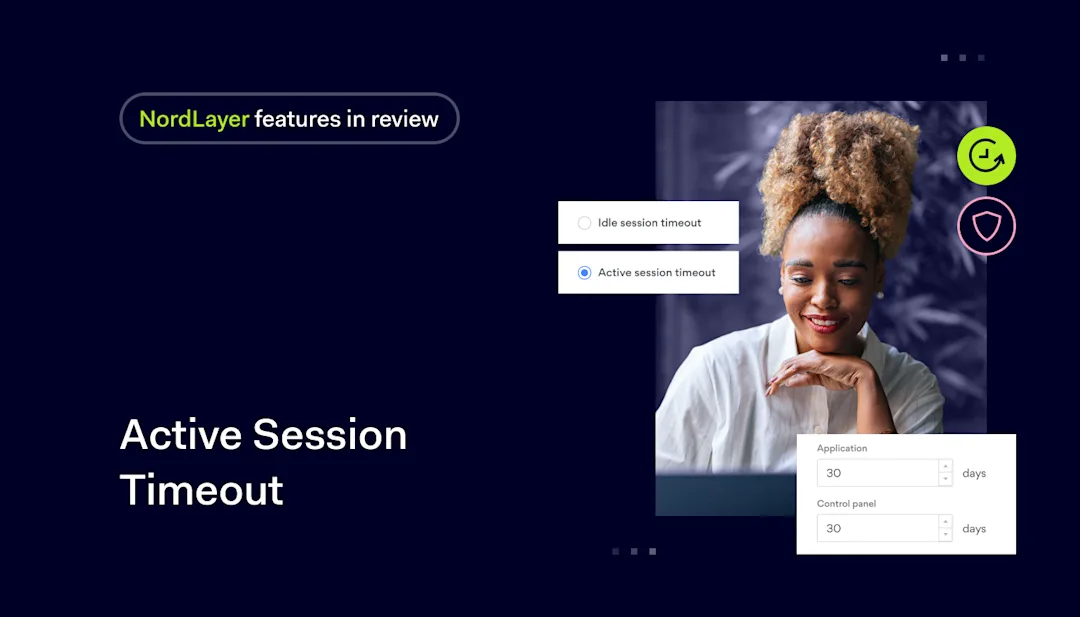
NordLayer features in review: Active Session Timeout

Logging into your organization’s network is one of the first things employees go through daily. Each successful authentication also opens up a direct route into your company’s resources, creating a session between the two systems. 

However, trust shouldn’t be without limits—indefinitely keeping the session open can be detrimental to your security. This is something that a hacker could exploit when looking for ways to hijack your employees’ connections. Therefore, NordLayer unveils a new security feature designed to prevent this risk—Active Session Timeout.

Active Session Timeout using NordLayer

The new NordLayer feature allows you to choose a user’s session duration. When the time expires, the user is logged out from the Control Panel or NordLayer application and required to re-authenticate. This makes the action window during which the hacker could decrypt the connection shorter, making it much harder to hijack. This can be very beneficial if your users are handling sensitive data.

How does NordLayer’s Active Session Timeout feature work?

This feature automatically logs users out of the NordLayer application or Control Panel after the set period. It affects all users regardless of whether they were connected to the gateway during that time.

The setting is enforced automatically, and the session length can be adjusted by the admin in the Control Panel for the entire organization. The minimum duration length in the Control Panel and application can be set up to 1 day. Meanwhile, NordLayer’s default—and maximum—session duration time is 30 days. It adds a safeguard that is sure to be appreciated by a company’s IT personnel.

How is NordLayer’s Active Session Timeout different?

Unlike typical session management, NordLayer’s feature offers more flexibility and control. It not only addresses the typical use cases but also adds an extra layer of security, which is especially useful in remote working scenarios:

  • The feature will have a setting allowing you to select a preferred session duration period.

  • Session control has a predefined optimal default time of 30 days if there’s no preference for session duration time.

  • The functionality is applicable for both Control Panel and NordLayer application, so gives more control to manage admins’ and users’ reauthentication.


Benefits of Active Session Timeout

Stricter session management is recommended by various organizations like The Open Web Application Security Project (OWASP). It can significantly contribute to your organization’s cybersecurity hygiene.

The benefits of Active Session Timeout controls include better security adherence in the organization, more efficient users and internal policy management, and increased overall network and data protection.

  • Enhanced security: shorter session durations minimize the window of opportunity for unauthorized access.

  • Compliance alignment: the feature allows organizations to align with security protocols, thus reducing vulnerabilities.

  • Risk mitigation: in scenarios like device theft, the exposure period is significantly reduced, leaving a smaller time window for bad actors to exploit.

  • Integrates with Single sign-on authentication schemes. This feature enables network administrators to control access to work resources more precisely and align them with their internal policies.

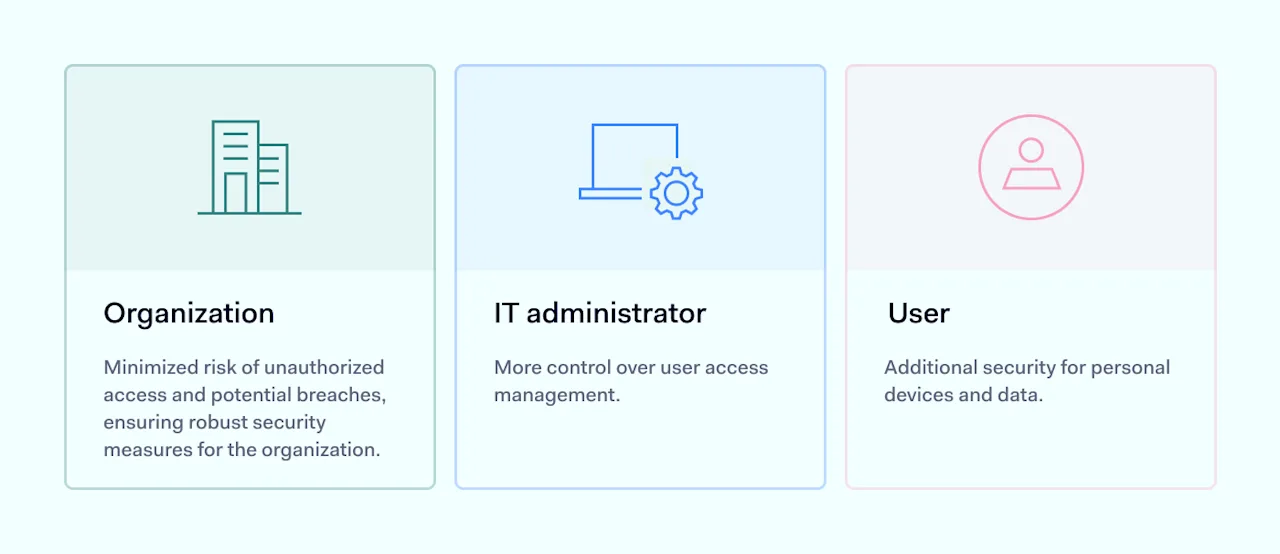
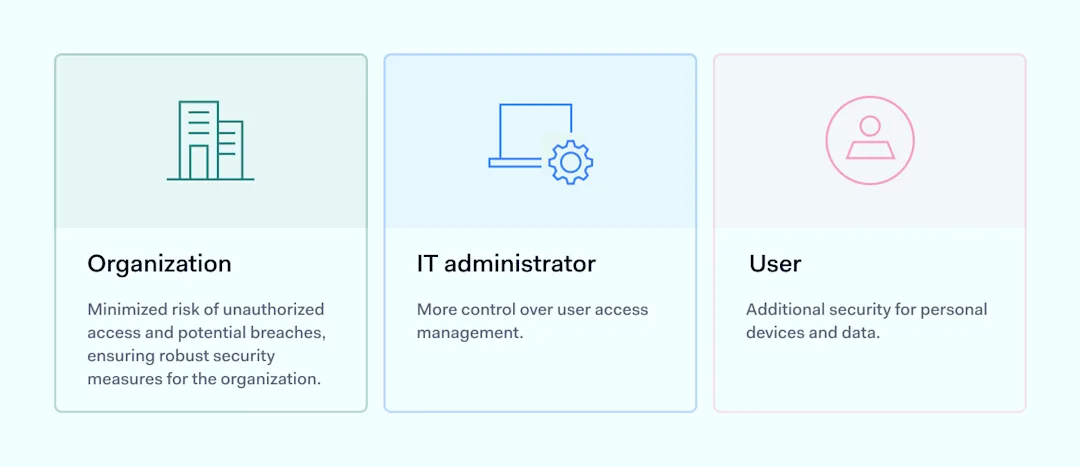
This functionality has benefits to all organization units, from the end user to the manager:

Benefits of the Active Session Timeout by NordLayer

Overall the feature automates and optimizes processes for all organization units, adding an additional functionality to network and data security.

Entering NordLayer’s Active Session Timeout

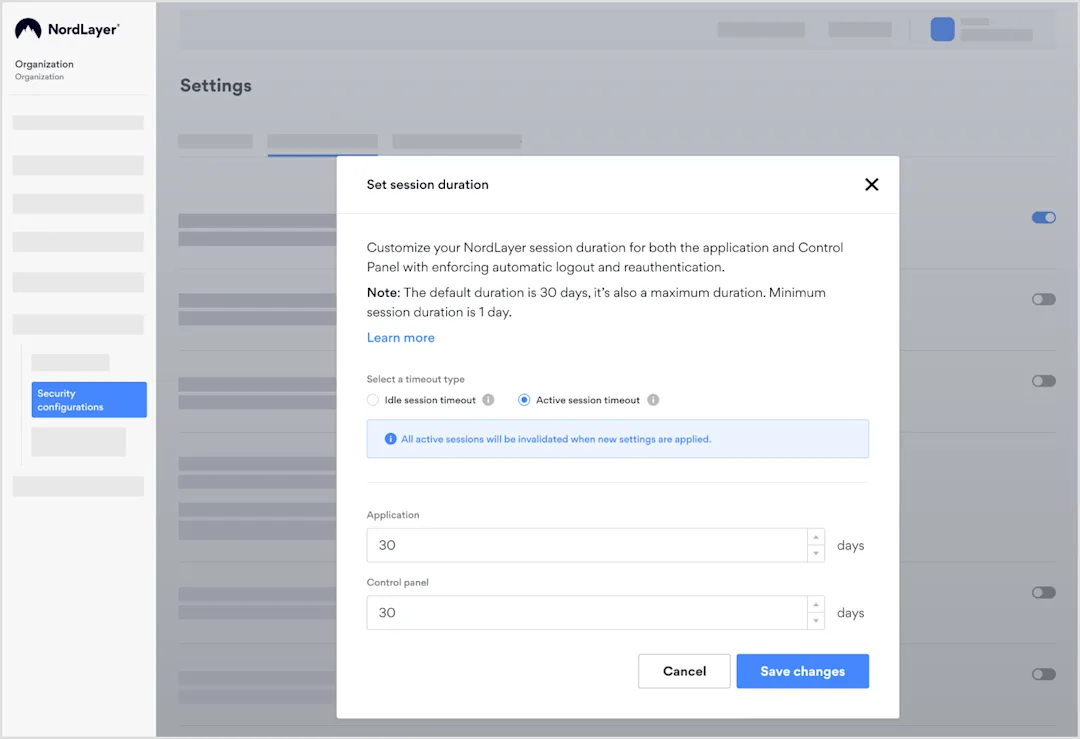
To adjust your currently used session duration:

  1. Head to the Control Panel and click Settings

  2. Select Security configurations and find the Active Session Timeout section

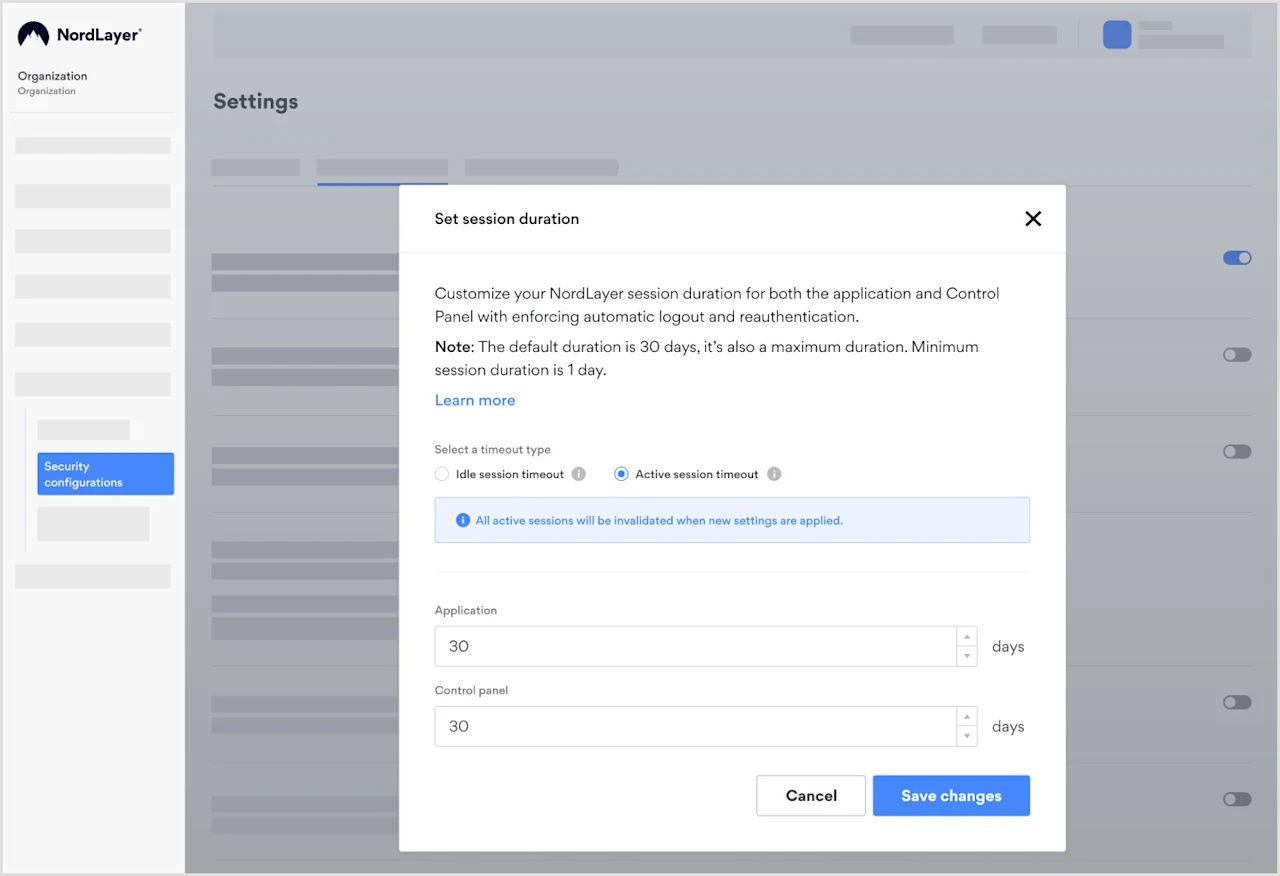
This allows you to change session duration times for your users in applications and the Control Panel. You can choose the desired time from 1 day to 30 from the dropdown menu.

The user will be shown a dialog box just before the session ends, asking to reauthenticate to start a new session running.

How to set session duration in the NordLayer Control Panel

About Version 2 Digital

Version 2 Digital is one of the most dynamic IT companies in Asia. The company distributes a wide range of IT products across various areas including cyber security, cloud, data protection, end points, infrastructures, system monitoring, storage, networking, business productivity and communication products.

Through an extensive network of channels, point of sales, resellers, and partnership companies, Version 2 offers quality products and services which are highly acclaimed in the market. Its customers cover a wide spectrum which include Global 1000 enterprises, regional listed companies, different vertical industries, public utilities, Government, a vast number of successful SMEs, and consumers in various Asian cities.

About NordLayer
NordLayer is an adaptive network access security solution for modern businesses – from the world’s most trusted cybersecurity brand, Nord Security.

The web has become a chaotic space where safety and trust have been compromised by cybercrime and data protection issues. Therefore, our team has a global mission to shape a more trusted and peaceful online future for people everywhere.

Expanding MSPs and MSSPs with cybersecurity solutions

The landscape for Managed Service Providers (MSPs) and Managed Security Service Providers (MSSPs) is on the brink of significant transformation. As businesses increasingly depend on digital technologies, the role of MSPs and MSSPs is expanding beyond traditional IT services to more complex and integrated solutions, particularly in cybersecurity. 

Key takeaways

  • Market growth and investment in security: Gartner’s projection that security service spending will reach $90 billion in 2024 highlights a growing demand for comprehensive cybersecurity services.

  • Cybersecurity as a central focus: with 42% of security and risk management spending geared towards security services, MSPs and MSSPs must prioritize enhancing their cybersecurity capabilities to grow and expand customer relationships.

  • The critical role of SSE in cybersecurity: the integration of Secure Service Edge (SSE) frameworks, including technologies like ZTNA, FWaaS, CASB, and SWG, is essential for MSPs and MSSPs to protect client data and ensure robust network security efficiently.

  • Expanding service offerings: with cloud security, data protection, and identity and access management, an MSP business can differentiate itself, attract more clients, and enter new markets.

  • Enhancing client retention and trust: effective data protection and robust IAM practices not only retain clients but also build trust, positioning MSPs and MSSPs as reliable partners in cybersecurity.

  • Scalability and compliance: offering scalable solutions and staying ahead of compliance help MSPs and MSSPs meet the evolving needs of their clients and adhere to regulatory requirements.

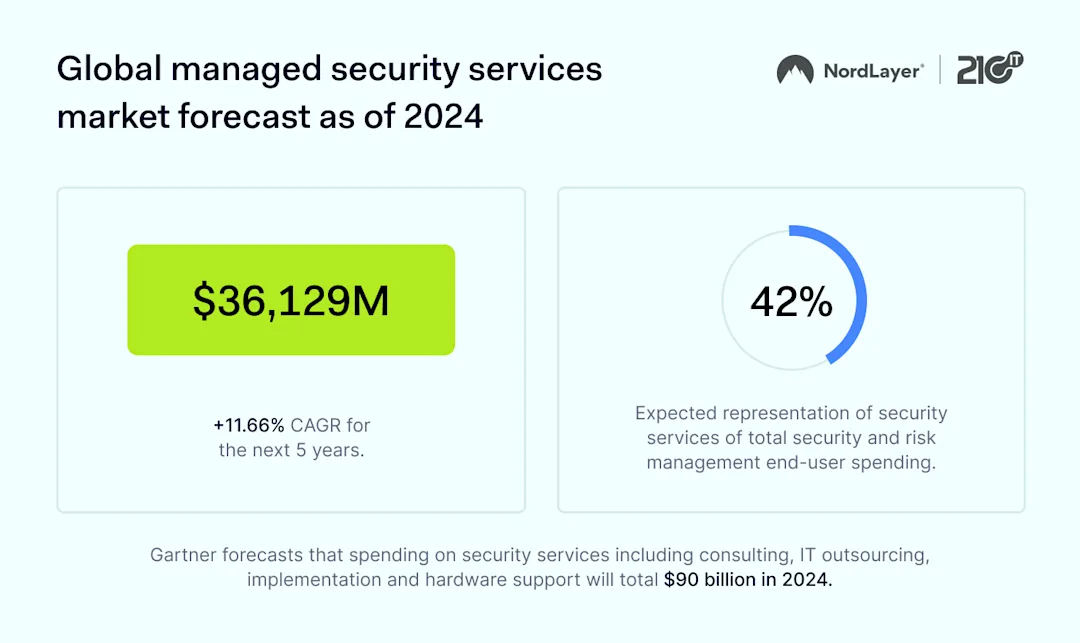
According to Gartner, spending on security services, which includes consulting, IT outsourcing, implementation, and hardware support, is anticipated to reach $90 billion in 2024. This impressive figure highlights how businesses increasingly prioritize fortifying their digital defenses.

Moreover, the global market for managed security services is expected to grow at an average annual growth rate (CAGR) of 11.66% over the next five years, with a projected market size of $36,129 million by 2024. This rapid growth underscores an expanding opportunity for MSPs and MSSPs to offer comprehensive cybersecurity services.

The emphasis on cybersecurity is more pronounced than ever, with 42% of security and risk management spending expected to be directed towards security services. This trend indicates a shift from traditional IT support to more specialized security-focused offerings.

For MSPs and MSSPs, this move means that enhancing their cybersecurity capabilities is not just an option but a necessity. As cyber threats evolve and multiply, providing robust security solutions will be a critical factor in maintaining and expanding new customer relationships.

Cybersecurity solutions for MSPs’ and MSSPs’ growth

MSPs and MSSPs are pivotal in safeguarding client data and ensuring robust network security for companies that need external security and technological support. But what solutions best aid MSPs and MSSPs in this task?

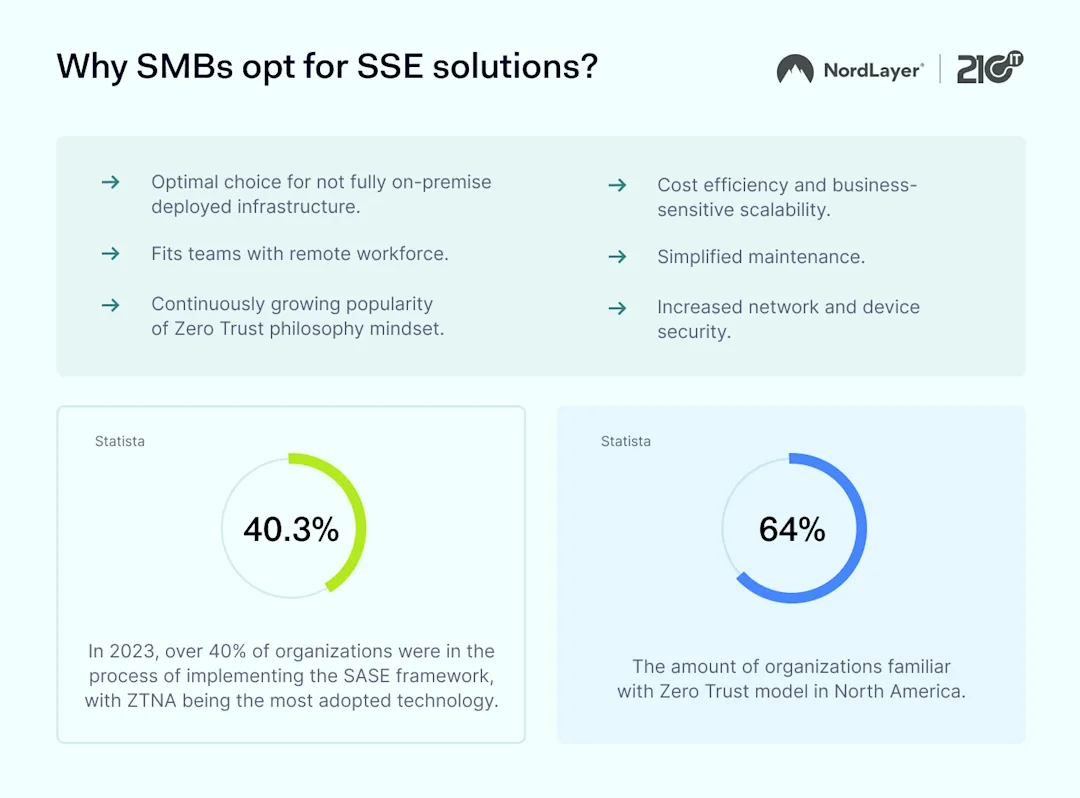
The Security Service Edge (SSE) framework is an agile and flexible solution that is easy to customize based on business needs. SSE through Zero Trust Network Access (ZTNA) combines access controls, FWaaS helps with network segmentation by managing the traffic flow, Cloud Access Security Broker (CASB) enhances cloud security, while Secure Web Gateway (SWG) prevents unsecured traffic from entering the network.

By strategically adopting SSE frameworks, MSP and MSSP providers can leverage advanced cybersecurity solutions like cloud security, data protection, and Identity and Access Management (IAM) to drive business growth and enhance client safety.

Cloud security

At the heart of SSE, cloud security is fundamental for MSPs and MSSPs aiming to protect clients’ cloud-based systems and data. This solution includes encrypting data both at rest and in transit, deploying security configurations that automatically update to counter new threats, and implementing strict access controls.

By offering comprehensive cloud services, MSPs and MSSPs can assure clients of their ability to protect sensitive information against emerging threats, thus strengthening client trust and satisfaction. It’s crucial for establishing new customers and expanding on MSP growth.

Data protection

Data is the lifeline of modern businesses, making its protection critical to expanding for sustained growth and compliance. Under SSE, data protection strategies encompass various technologies like backup solutions, encryption, and intrusion detection systems.

These tools help MSPs and MSSPs prevent data breaches and ensure quick recovery from incidents, minimizing downtime and financial loss. Effective data protection not only helps retain existing clients but also positions MSPs and MSSPs as reliable guardians of data security that are attractive to prospective clients.

Identity and access management (IAM)

IAM is crucial for controlling who can access what within a network. This includes multi-factor authentication, single sign-on services, and user access reviews., All of these are aligned with SSE principles to ensure that only authorized users gain entry to sensitive systems and data.

By implementing robust IAM practices, MSPs and MSSPs can offer tailored access solutions that bolster security while improving the user experience. This supports client operations in a secure, efficient manner.

SSE solutions benefits for MSPs and MSSPs

  • Expanding service offerings: By adding cutting-edge SSE solutions in cybersecurity offerings, MSPs and MSSPs can differentiate themselves from competitors, appeal to a broader client base, and enter new markets.

  • Enhancing client retention: by providing dependable, state-of-the-art cybersecurity measures, MSPs and MSSPs can improve client satisfaction and loyalty while increasing their revenue. Clients who feel their data is secure are more likely to renew their contracts.

  • Building trust through compliance: demonstrating compliance with data protection regulations makes MSPs and MSSPs providers partners of choice in industries where data security is paramount.

  • Offering scalable solutions: SSE enables the provision of scalable cybersecurity solutions that grow with clients’ businesses. This flexibility is attractive to clients at all growth stages, ensuring that MSPs and MSSPs can meet evolving security needs.

By focusing on primary challenges to counter modern cyber threats and offering tailored advanced security solutions, MSPs and MSSPs can position themselves as strategic partners in their clients’ digital transformation journeys. These solutions are not complex, resource-intense, and complex

Cloud services allow managed service providers to expand their scope and revenue with little costs for clients, making it a win-win situation for all parties.

Expand MSPs and MSSPs with NordLayer

To capitalize on growth opportunities, MSPs and MSSPs must focus on expanding their service offerings. Opting to collaborate with a strong partner ensures a firm background for future client relationships.

While MSPs and MSSPs operate as consulting services that help businesses understand and implement the right security strategies for their specific needs, NordLayer stands strong as a network access security tool provider that offers solutions in different setups:

Secure Remote Access

Scenario: With a dispersed workforce, companies need to ensure secure access to corporate resources from anywhere in the world.

NordLayer solution: Provides secure and scalable remote access solutions that MSPs can manage for their clients, ensuring employees can access what they need securely and efficiently.

Enhanced network security

Scenario: Businesses face increasing threats from cyber attacks but often lack the internal expertise to effectively counter these risks.

NordLayer solution: Offers advanced network security features, including threat protection and data encryption, enabling MSPs to bolster their clients’ defenses against cyber threats.

Simplified compliance

Scenario: Companies operating in regulated industries require robust compliance measures to protect sensitive data and avoid penalties.

NordLayer solution: Helps MSPs ensure their clients meet compliance standards by providing tools for data protection, secure access, and audit trails.

Streamlined IT infrastructure

Scenario: Businesses seek to minimize IT complexity while ensuring their teams have the necessary tools and access.

NordLayer solution: Enables MSPs to offer streamlined, cloud-based security solutions, reducing the need for multiple vendors and simplifying the IT landscape for their clients.

Cybersecurity without internal experts

Scenario: Many SMBs cannot afford or find the cybersecurity talent needed to protect their operations.

NordLayer solution: MSPs can step in to fill this gap, using NordLayer’s intuitive platform to provide top-notch cybersecurity services without the need for in-house experts.

Scalable security solutions

Scenario: Growing businesses need security solutions that can expand with them without requiring constant reinvestment or reconfiguration.

NordLayer solution: Offers scalable security services that MSPs can easily adjust to fit the changing needs of their clients, supporting growth without compromising security.

About Version 2 Digital

Version 2 Digital is one of the most dynamic IT companies in Asia. The company distributes a wide range of IT products across various areas including cyber security, cloud, data protection, end points, infrastructures, system monitoring, storage, networking, business productivity and communication products.

Through an extensive network of channels, point of sales, resellers, and partnership companies, Version 2 offers quality products and services which are highly acclaimed in the market. Its customers cover a wide spectrum which include Global 1000 enterprises, regional listed companies, different vertical industries, public utilities, Government, a vast number of successful SMEs, and consumers in various Asian cities.

About NordLayer
NordLayer is an adaptive network access security solution for modern businesses – from the world’s most trusted cybersecurity brand, Nord Security.

The web has become a chaotic space where safety and trust have been compromised by cybercrime and data protection issues. Therefore, our team has a global mission to shape a more trusted and peaceful online future for people everywhere.

Dealing with a loved one’s digital presence after they’re gone: What does our new study reveal?

What happens to someone’s email when they pass? Or how do you close a deceased person’s social media profiles? Do the digital pieces of our existence just fade into nothingness or maybe remain out there indefinitely?

These and other questions are no longer just morbid curiosity but rather something that most of us will have to tackle in our lifetime. Taking care of your loved ones digital legacy can be  challenging, not only because of the obvious emotional load but also because you might not know where and how to start.

Today, we’re diving into the topic of digital legacy and our latest research on the challenges related to its management.

Research findings

At NordPass, we recently conducted a market study on digital legacy — the online privacy paradox of a deceased person. It revealed that in order to close all accounts of the deceased, you have to equip yourself with loads of different documents, collect as much information about the deceased as possible, and be ready to use all kinds of communication channels.

During the research, we found that about 36% of analyzed online platforms publicly provide guidance on how to manage accounts posthumously. The information presented on their websites or other official channels allowed our team to draw some illustrative conclusions.

First, the process of managing digital legacy is not only filled with red tape but also rather varied across different platforms and services. In some cases, you might be asked to fill out an online form, while in other instances a platform might ask you to contact them via email, phone, post, or even schedule an in-person appointment.

When you request an account closure for a deceased person, the platforms usually ask for official documentation, including, but not limited, to death certificates, personal identification, and even legal confirmation of the right to manage a deceased’s estate. Researchers noticed that to close down the majority of a deceased’s accounts, you might need to provide over 20 different documents.

It means that, in theory, certain platforms might ask only for, let’s say, your passport, deceased’s death certificate, and the last will, while other sites might require completely different documents. This could be an obituary, birth or marriage certificate, last will, power of attorney, a small estate affidavit, or other documents. In certain cases, these documents might be required to be officially translated and notarized, which is yet another burden.

In addition to legal documentation, platforms ask for various information about the deceased. For instance, a full legal name, display name, username, email, phone number, social security number, account number, or full payment information used to pay for the platform’s service. This extended list of required information can be rather overwhelming, especially because we often don’t have ready access to all the details of our loved ones’ online accounts and financial activities. Not knowing these specifics can add to the stress and overall emotional burden during an already difficult time.

While there are many cases when people simply leave their deceased relatives’ or friends’ accounts hanging out there on the internet indefinitely, our researchers also looked into platforms’ policies regarding inactive accounts. They found that a quarter of companies publicly note that they remove inactive accounts. Of those, most do so after two years of inactivity, but some say they remove the accounts only after seven years.

Up to 6% of the analyzed platforms also offer internet users another way to handle online accounts — to memorialize the account of the deceased, which means it remains publicly visible but is marked for people to know the person is deceased.

Considering the sheer number of online accounts that a person accumulates over their lifetime, many of which are forgotten, the task of completely terminating a person’s digital footprint once they pass becomes a challenging, if not all-out, impossible task. Another study that we’ve recently conducted showcased that, on average, a person has around ​​168 passwords on their hands. Unfortunately, even if you have all the necessary documentation and procedural knowledge, the accounts of a deceased person might linger on the internet indefinitely just because you never knew about them, and that’s something that we might need to come to terms with.

Research methodology: The market desk research was conducted by NordPass. The company’s researchers evaluated 100 popular online platforms worldwide, chosen based on Statista and SimilarWeb information.

To conduct this study, researchers looked only at publicly available sources online—platforms’ owned websites or official accounts. They looked for information on how to close deceased accounts and investigated how many platforms provide such information, what procedures they offer, what documents and personal information items they ask for, and what are their policies regarding inactive accounts.

What is digital legacy, and why it’s important

You can think of digital legacy as a collection of data and overall presence left behind online when someone passes. The data includes social media profiles, email accounts, photos stored online, online shopping accounts, and other digital interactions. Just as physical possessions are part of someone’s life, digital content can also be an inseparable part of an individual’s legacy that needs to be managed once they’re no longer here.

Emotional importance

Today, the moments we cherish, more often than not, end up stored online. Just think about it: Photos, videos, as well as conversations are stored on social media platforms. When taking care of your loved ones digital legacy, consider whether the loved one wished to terminate their online data or was okay with allowing you to make the choice.

Quite often, digital legacies, much like traditional wills, can carry substantial financial and legal weight. It is critical to handle such digital assets to ensure that the accounts are appropriately closed or transferred to legal heirs. Failing to do so could lead to legal disputes.

Security concerns

Unsecured digital legacies are prone to breaches and data misuse. Cybercrooks are essentially free to try and access inactive accounts for as long as they like to get their hands on the data behind the account. All that data might be used for identity theft or fraud. Ensuring the security of posthumous accounts protects not only the person’s legacy but also the surviving relatives’ private and financial data.

Tips and strategies to ease digital legacy management

If you find yourself in a situation where you’re tasked with managing someone’s digital legacy, here are some tips to make the complex and emotionally overwhelming process a little bit easier and more efficient.

Start with financial accounts

When it comes to the first steps in effective digital legacy management and planning, focus on financial accounts first: These include bank accounts, investment portfolios, digital payment apps, and similar. Try to prioritize closing or transferring such accounts to prevent any financial losses or troubles. Furthermore, once you close down the financial accounts, you will also essentially cut out any subscriptions that a deceased person might have had and, by extension, those accounts as well. Taking care of accounts related to finance will likely take up a sizable chunk of time due to excessive red tape associated with finance, but once those accounts are sorted, everything else will go down quicker and easier.

Advise your loved one to use digital legacy features

Today, quite a few online services and platforms offer distinct features designed to manage accounts once someone passes away. For example, Facebook allows users to appoint a “Legacy Contact,” who can manage a user’s account in the event of their death. Apple and Google have also introduced ways to designate individuals who can access the deceased account. Consider having a talk with your loved ones about such features and their importance.

Secure account information

Using a password manager to manage logins along with other sensitive data is recommended not only for when you are alive and well but as a part of your digital legacy management. Password managers provide storage for passwords and often come equipped with a variety of security features that allow you to protect sensitive data that you might come across while dealing with a deceased’s digital legacy. For instance, NordPass comes with Emergency Access—a feature that allows you to designate an individual who would have access to your NordPass vault in the case of an emergency.

Educate and prepare

These days, it is absolutely critical to be aware of the digital legacy concept; after all, it concerns every one of us. While the topic might be morbid, discussing digital legacies with your family and friends is essential. It’s important to encourage them to take their own steps in managing their digital presence as well as to make your loved ones aware of your digital legacy plans.

About Version 2 Digital

Version 2 Digital is one of the most dynamic IT companies in Asia. The company distributes a wide range of IT products across various areas including cyber security, cloud, data protection, end points, infrastructures, system monitoring, storage, networking, business productivity and communication products.

Through an extensive network of channels, point of sales, resellers, and partnership companies, Version 2 offers quality products and services which are highly acclaimed in the market. Its customers cover a wide spectrum which include Global 1000 enterprises, regional listed companies, different vertical industries, public utilities, Government, a vast number of successful SMEs, and consumers in various Asian cities.

About NordLayer
NordLayer is an adaptive network access security solution for modern businesses – from the world’s most trusted cybersecurity brand, Nord Security.

The web has become a chaotic space where safety and trust have been compromised by cybercrime and data protection issues. Therefore, our team has a global mission to shape a more trusted and peaceful online future for people everywhere.

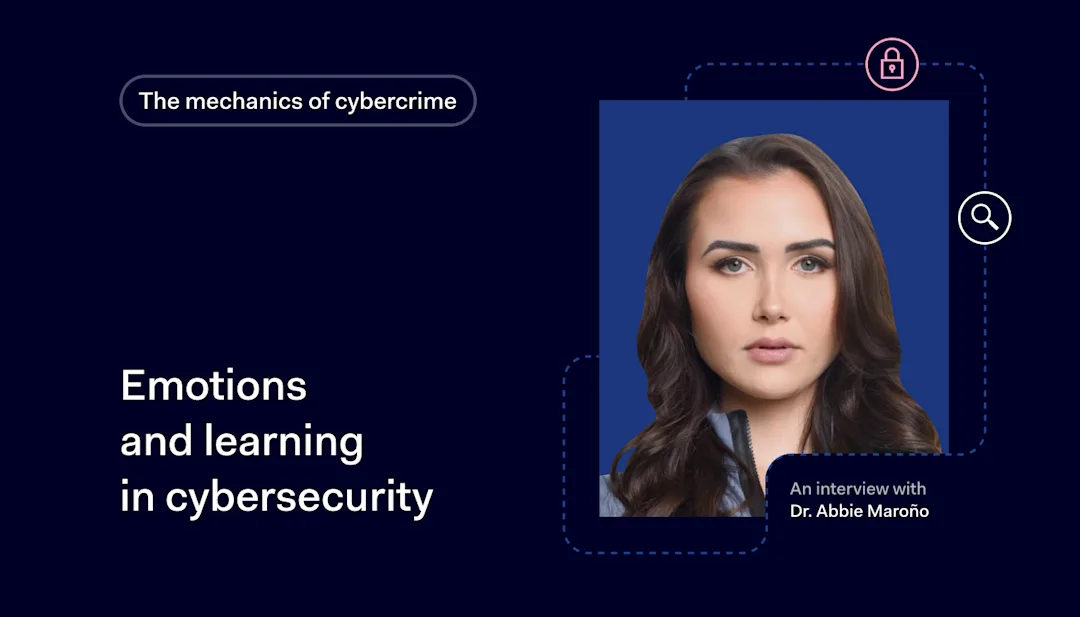
The role of emotions and learning in cybersecurity: an interview with Dr. Abbie Maroño

Humans, by nature, are complex creatures resistant to change and education. 

Dr. Abbie Maroño explains that the struggle lies not only in our cognitive limitations but also in our emotional makeup. Overcoming these barriers requires motivation, passion, and consistency—qualities that are not always easy to foster.

In a fascinating dive into the intricacies of human behavior and social engineering, Dr. Abbie Maroño shares her journey into psychology, sparked by a youthful curiosity and an early commitment to research. Her path from academia to applying her expertise in the private sector demonstrates her strong commitment to understanding human dynamics, particularly its intersection with cybersecurity.

In the context of social engineering, this article highlights the powerful influence of group dynamics and the principle of social proof.

The interview’s highlights

  • Educating humans is challenging. Success in educating humans hinges on motivation due to our natural resistance to change and limitations in memory and cognitive capacity.

  • Embracing shame for personal growth. Dr. Maroño’s work suggests that acknowledging and understanding shame can catalyze deep personal development, challenging the notion that shame should be entirely dismissed.

  • Group dynamics’s role in social engineering. Cybercriminals exploit social proof and our propensity to follow the crowd. Awareness and resistance are key to safeguarding against these tactics.

  • Real-world cybersecurity training is crucial. Dr. Maroño advocates for simulation-based training over traditional methods, particularly in sectors like healthcare, to make learning more relevant and effective.

  • The power of self-relevance in learning. Effective education requires making cybersecurity personally relevant, using real-world simulations to improve engagement and practical application.

  • “Trust but verify” enhances cybersecurity. Emotional intelligence and critical thinking are vital in defending against manipulation, emphasizing a balanced approach to trust.

Key insight #1: motivation and engagement are crucial for effective learning.

NordLayer: Abbie, you’ve been studying human behavior for a while now. What’s your conclusion? Are humans easy to train and educate by nature?

Dr. Abbie Maroño: No, human beings are not easy to educate. The memory system is very prone to errors, and we have a limited cognitive capacity. No doubt, we have the ability to be educated, but it really depends on a ton of different factors.

Educating someone against their will, especially in areas like security practices, is ineffective. For learning to be effective and for information to transition into long-term memory, the learner must be engaged and attentive.

Without motivation, information will likely enter one ear and exit the other. This is supported by research indicating that mere exposure to information is insufficient for learning—attention to the material is essential.
Quote 1

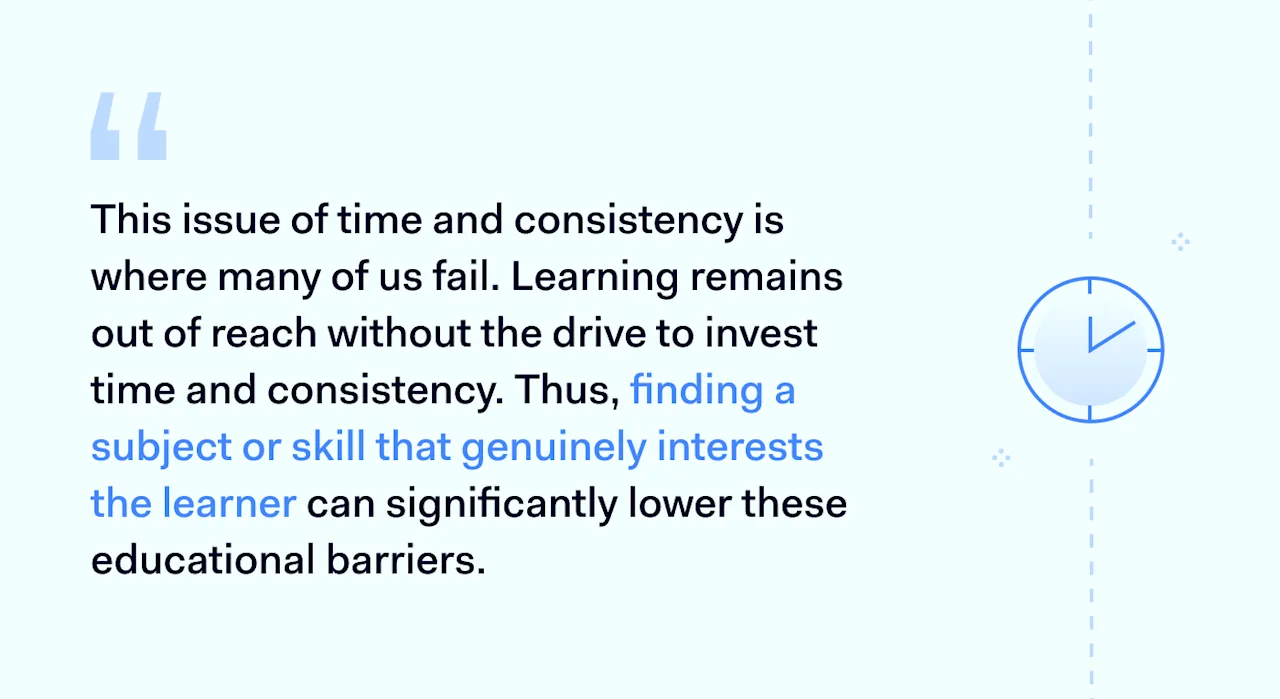
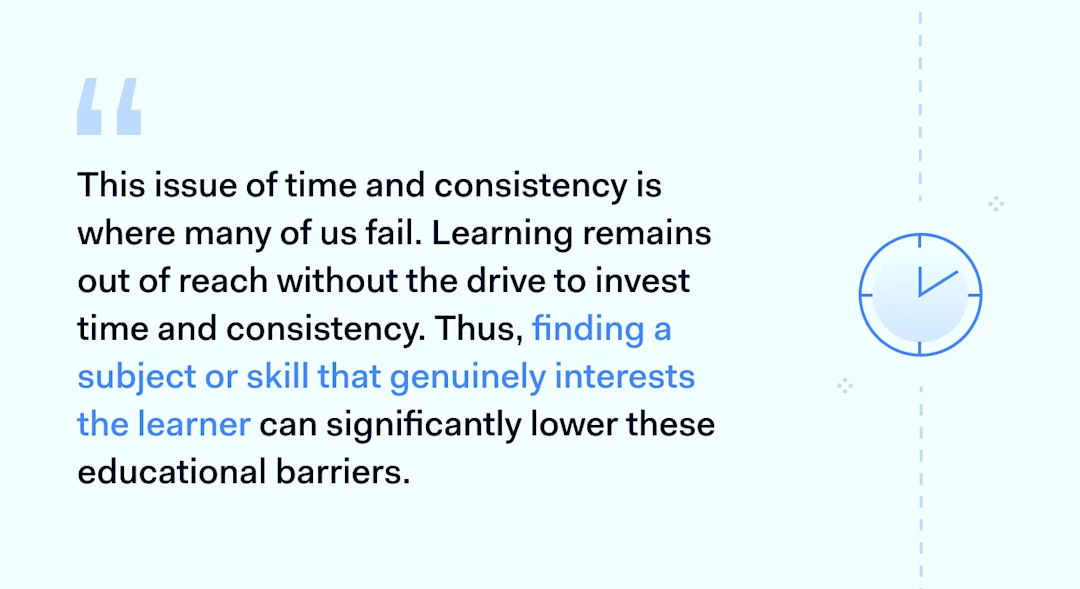
However, learning becomes much more attainable if there is motivation, passion, and dedication. The concept of ‘cramming’ before an exam illustrates this well. It’s a widespread belief that we can quickly absorb information, but the reality is that both the brain’s short-term and long-term memory functions require time and consistency to learn truly.

Key insight #2: Group motivation and social proof influence individual decision-making in social engineering contexts.

NordLayer: Speaking of motivation—personal or collective motives—can bring better learning experiences and results?

Dr. Abbie Maroño: While individual self-interest can drive motivation, the presence of group motivations can significantly amplify it.

Being part of a team with shared goals fosters a sense of responsibility and accountability, much like the dynamic observed in programs like Weight Watchers. Despite criticisms of Weight Watchers for its food quality and the psychological implications of its “sins” concept, the program’s success is attributed to the strong social support and collective mindset it promotes.

This group cohesion encourages individuals to stay committed to their goals, as the sense of being observed and held accountable by peers increases their motivation to maintain progress.

NordLayer: How do peers (a group) influence an individual’s decision-making in the event of social engineering?

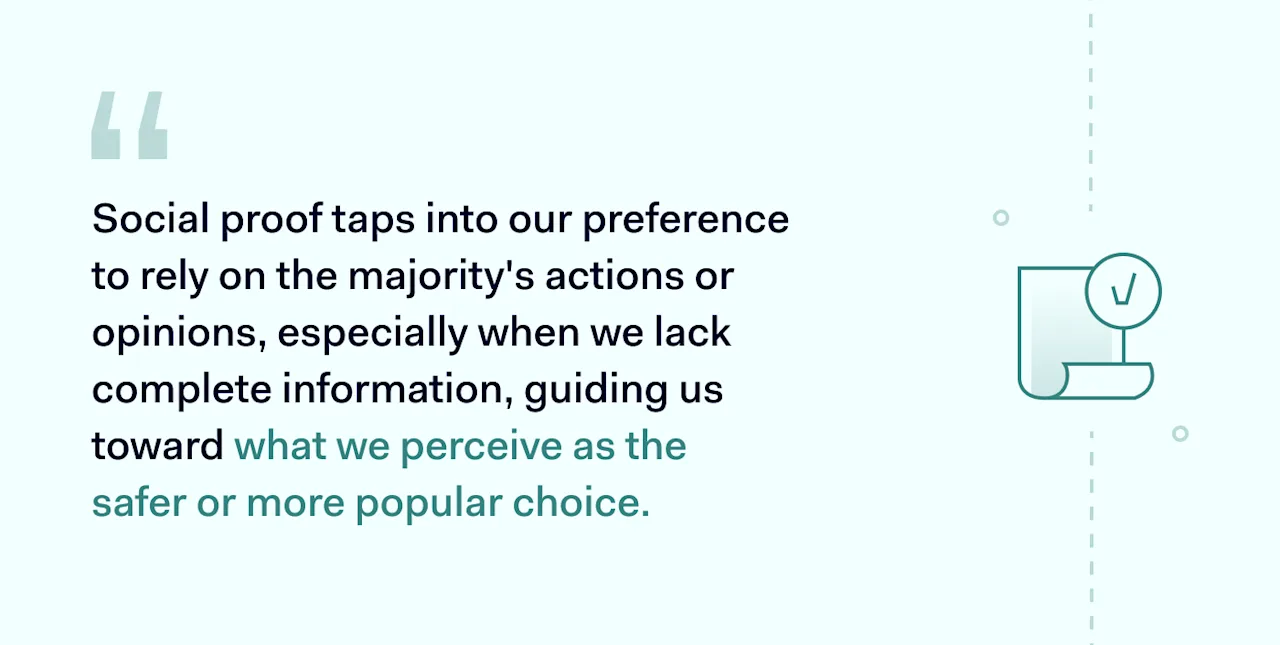
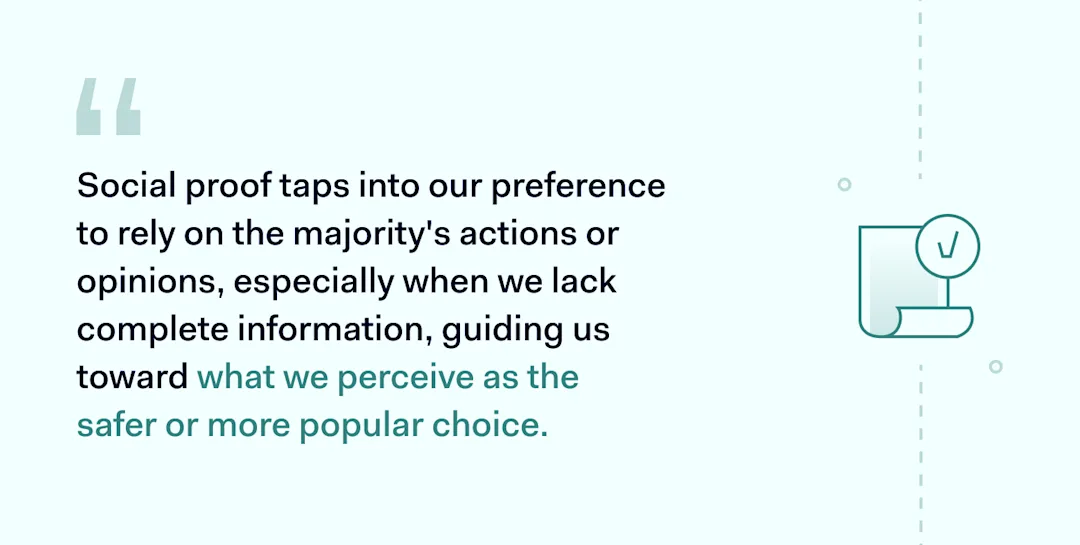
Dr. Abbie Maroño: Social proof influences our decisions by making us more likely to trust or choose something endorsed by others. This tactic is frequently utilized by social engineers, who manipulate appearances to blend in or create false endorsements, leveraging our tendency to trust familiar figures or the majority.
Quote 2

For instance, mentioning a known colleague like Sally from accounting in a story can foster trust by association. This principle is also why celebrity endorsements and the phenomenon of joining a queue at a busy restaurant work effectively.

Key insight #3: embracing and understanding shame is essential for genuine personal growth instead of eradicating it for the narrative of mental health and empowerment.

NordLayer: As a published author, your latest book explores personal improvement through shame. Can you tell us more about the premise of this approach?

Dr. Abbie Maroño: My first book will officially be released in July, though I’ve already been sharing it with select individuals and doing book signings. My second book is set to come out in December.

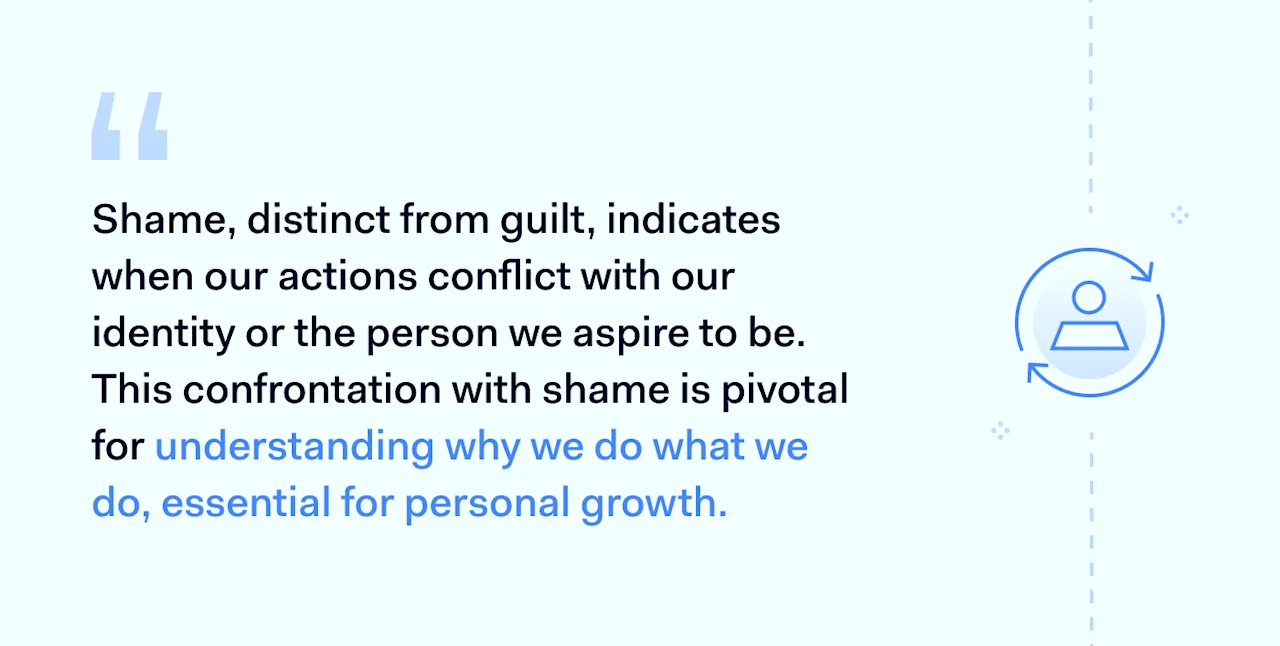
I started writing this self-help book, “Work in Progress,” because I noticed a significant need for a deeper understanding of our emotions. Many self-help books and popular media, though well-intentioned, lack a scientific approach and often suggest that we must rid ourselves of shame to achieve good mental health and empowerment.

However, this doesn’t align with the complex nature of the human brain or how we actually process emotions. Our brain, which is a significant energy consumer despite its small size, doesn’t generate emotions without reason. Emotions are signals, meant not always to be acted upon but to inform us. Dismissing shame overlooks a crucial aspect of our emotional well-being and self-awareness.
Quote 3

My aim was to create a book that’s honest, raw, and relatable, challenging the overly optimistic narrative that “everything will be fine” with a more grounded, realistic approach to personal development.

Key insight #4: cybercriminals manipulate nonverbal cues to scrutinize first impressions.

NordLayer: In your Forbes article, you said that certain social skills can help people elicit the information they want. What are these skills, and how do cybercriminals use them?

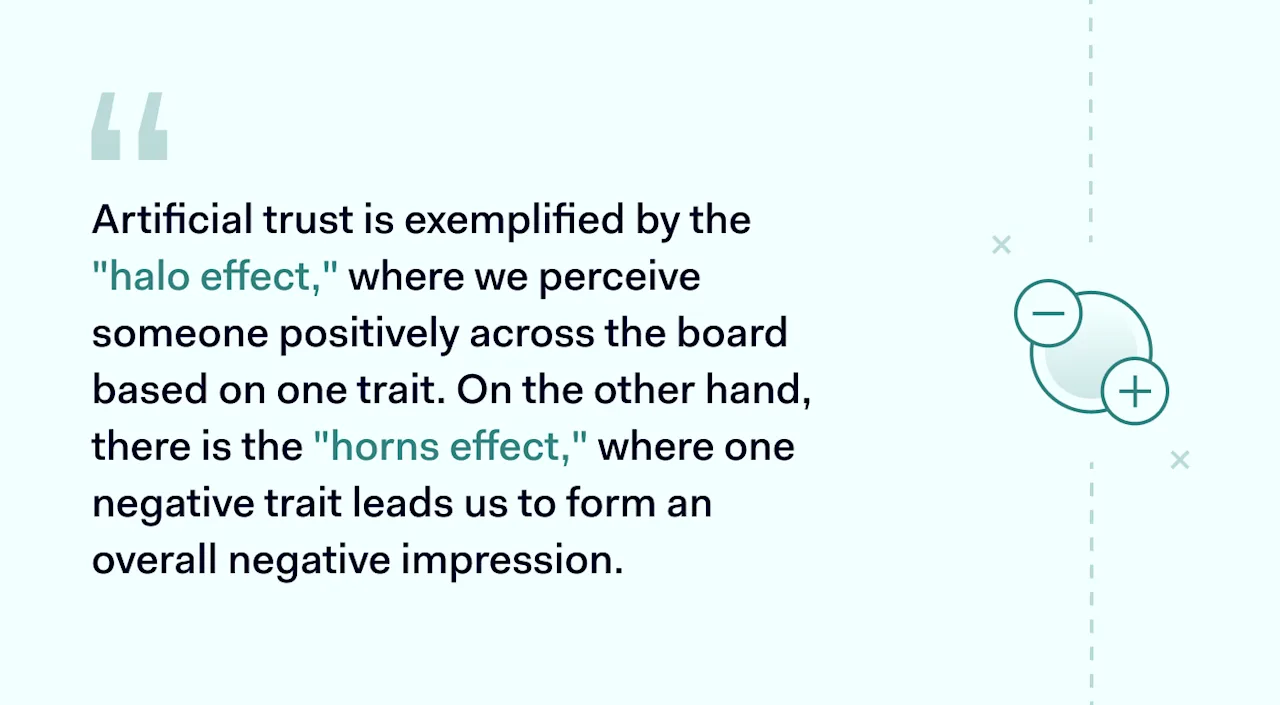
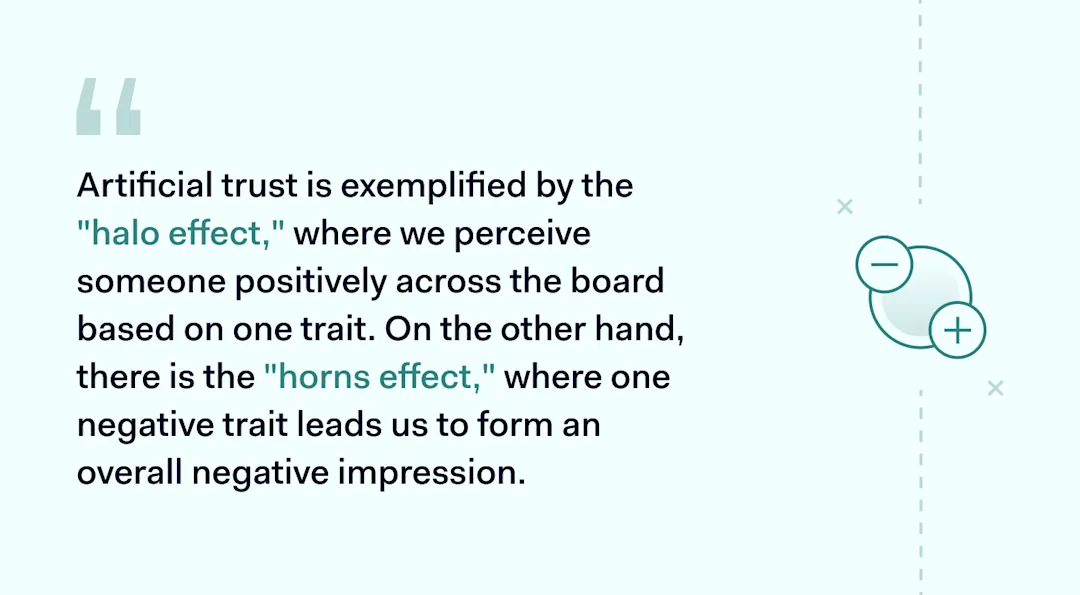
Dr. Abbie Maroño: Cybercriminals exploit nonverbal communication to manipulate perceptions, leveraging our instinctual habit of making rapid judgments about people’s personalities based on their appearance and behavior, a process known as “thin slicing.”

This evolutionary trait, which helped our ancestors quickly assess threats, today leads us to assign traits like friendliness or competence based on superficial cues like smiles or confident demeanor, often without any supporting evidence.
Quote 4

Cybercriminals use this knowledge to their advantage, presenting themselves as authoritative and trustworthy to bypass our defenses.

Our reluctance to revise first impressions makes us vulnerable to such manipulation, as we seek to validate our initial judgments rather than question them. Thus, understanding and being aware of these cognitive biases can help us better defend against the tactics of social engineers.

Key insight #5: emotional awareness is critical in resisting manipulation by social engineers and making more informed decisions.

NordLayer: Can you share what personality traits and psychological defenses should be nurtured to resist social engineering attempts?

Dr. Abbie Maroño: General emotional awareness in cybersecurity, explaining how social engineers exploit emotions to manipulate their targets, is important.

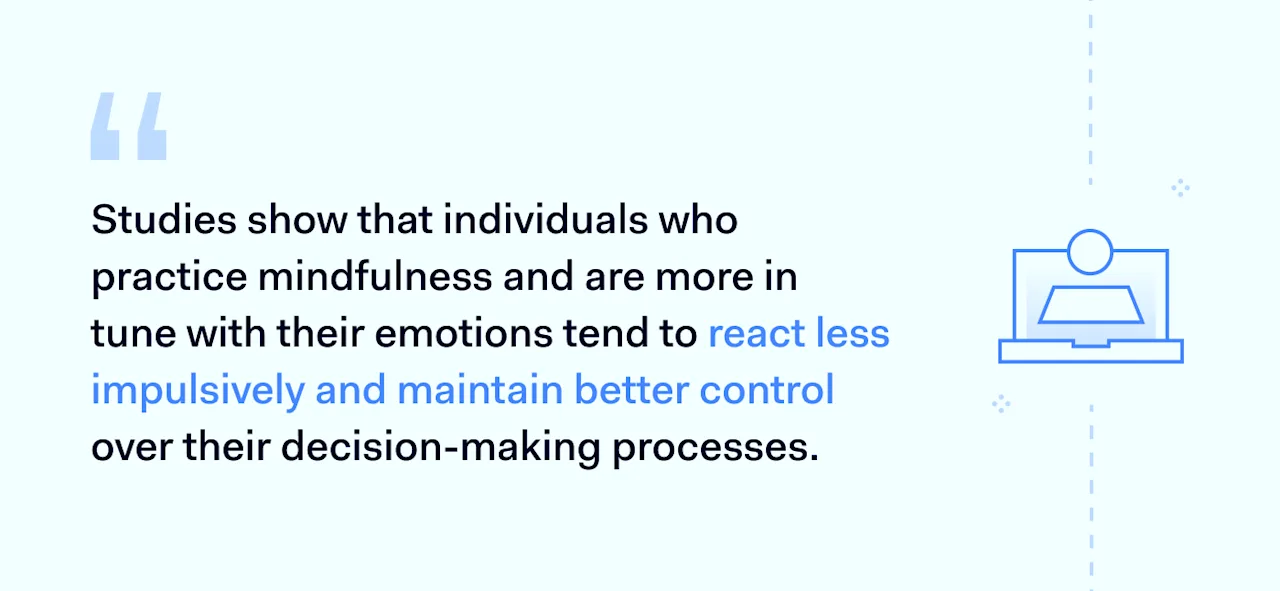
Recognizing when emotions like fear or anger influence decisions is crucial, as these emotions can cloud judgment and lead to quick, unthoughtful actions.
Quote 5

For example, taking a moment to breathe and assess one’s feelings before reacting to a potentially malicious email can allow the brain’s logical centers, like the prefrontal cortex, to engage and evaluate the situation more critically. This approach is vital because, despite the sophistication of attacks, the final decision to engage (e.g., clicking a link) rests with the human user.

Beyond technical measures, fostering a security mindset that includes emotional regulation and awareness is key. This not only helps individuals resist manipulation but also adapts to evolving threats, emphasizing the role of human judgment in cybersecurity defenses.

Key insight #6: effective cybersecurity training requires real-world simulations and engagement.

NordLayer: Let’s explore dynamic and sensitive environments like healthcare where cybersecurity awareness is crucial, but there’s no time to train and educate specialists. What human behavior traits and social engineering tactics could be exploited to achieve positive learning results?

Dr. Abbie Maroño: Learning is most effective when information directly relates to the individual.

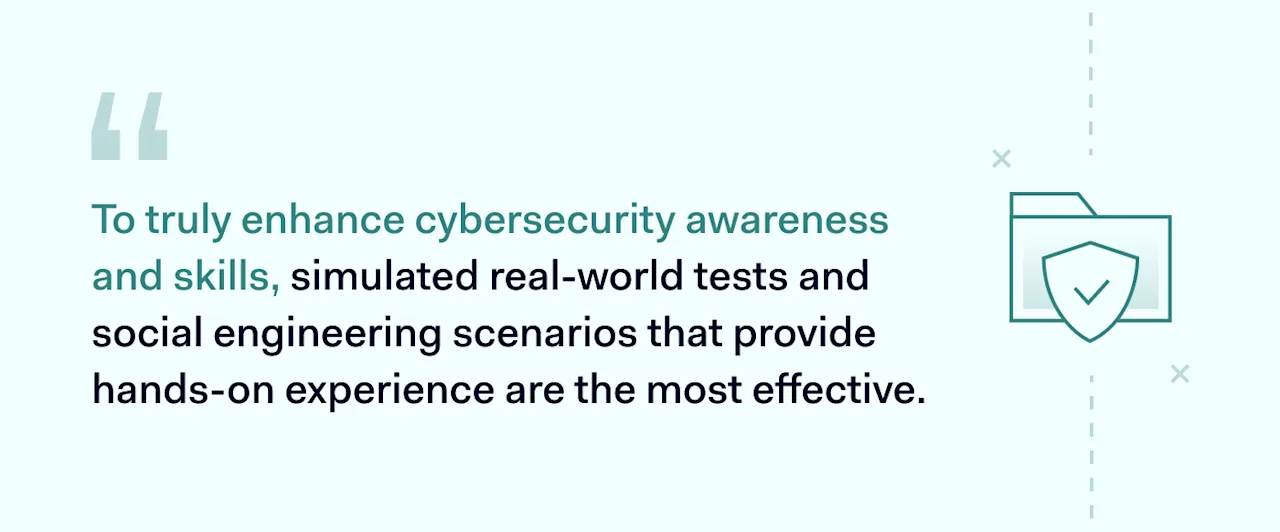
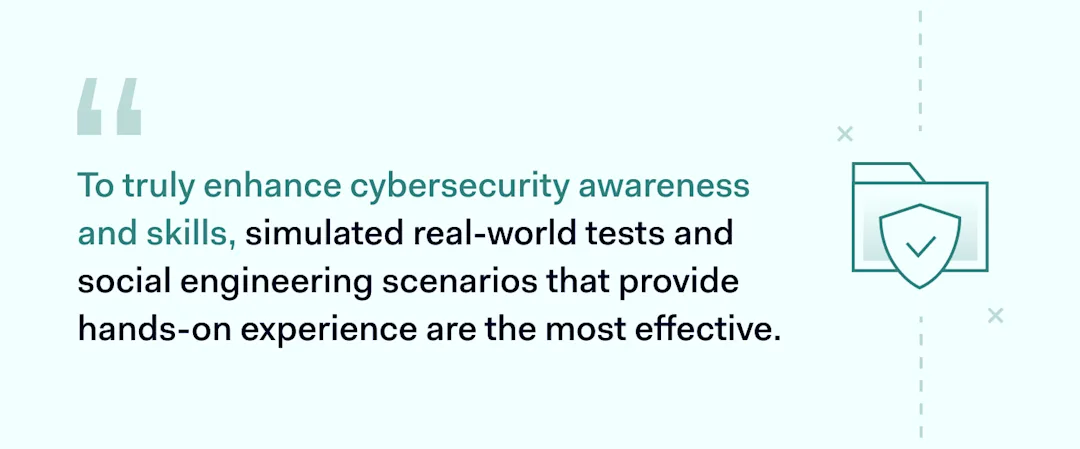
Traditional security training, like online videos, often fails to engage healthcare professionals because it lacks this personal relevance and fails to bridge the gap between theoretical knowledge and practical application.
Quote 6

This approach not only identifies vulnerabilities but also personalizes the learning process, making it more impactful. By engaging employees in scenarios like simulated phishing (vishing and smishing) attacks, they learn to recognize and react to threats more effectively.

Positive behaviors are reinforced, while areas for improvement are identified and addressed. It is important to invest in comprehensive security training to protect sensitive information proactively, warning that the costs of inadequate training far outweigh the investment in robust, interactive learning experiences.

Key insight #7: “trust but verify” ensures safety in cybersecurity by combining trust with critical verification of requests.

NordLayer: What benefits should be amplified, and what behaviorist tactics should be used to help people become more aware of cyber threats? What should be included in the cybersecurity training, in your opinion?

Dr. Abbie Maroño: Tactics like “trust but verify” emphasize the balance between maintaining trustful relationships and being cautious.
Quote 7

This method allows for cooperative relationships to flourish while safeguarding against manipulation. Verification becomes a critical step in this process, ensuring that one does not blindly fulfill requests without appropriate scrutiny.

Such an approach relies heavily on emotional responses and critical thinking to discern the legitimacy of requests, advocating for a balanced stance of trust with a readiness to verify, avoiding the pitfalls of unwarranted suspicion.

Thank you.

Dr. Abbie Maroño’s passion for understanding human behavior ignited at 17, leading her from early research endeavors in university to a fulfilling career in academia and, ultimately, into the private sector.

Dr. Maroño’s work reveals the intricate dance between human psychology and cybersecurity, highlighting the need for an empathetic, informed approach to educating and protecting against cyber threats. Her emphasis on emotional awareness, group influences, and innovative training methods offers a fresh perspective on building resilient cybersecurity defenses rooted in understanding human nature.

How NordLayer can help

NordLayer can significantly enhance an organization’s cybersecurity posture by fostering a culture of “trust but verify” within the workplace.

NordLayer empowers employees with the tools and knowledge necessary to scrutinize and validate requests, thus minimizing the risk of social engineering attacks. Its advanced security solutions, designed to address the nuanced challenges discussed, such as the need for emotional awareness and critical thinking, provide a robust framework for organizations to protect their sensitive data.

About Version 2 Digital

Version 2 Digital is one of the most dynamic IT companies in Asia. The company distributes a wide range of IT products across various areas including cyber security, cloud, data protection, end points, infrastructures, system monitoring, storage, networking, business productivity and communication products.

Through an extensive network of channels, point of sales, resellers, and partnership companies, Version 2 offers quality products and services which are highly acclaimed in the market. Its customers cover a wide spectrum which include Global 1000 enterprises, regional listed companies, different vertical industries, public utilities, Government, a vast number of successful SMEs, and consumers in various Asian cities.

About NordLayer
NordLayer is an adaptive network access security solution for modern businesses – from the world’s most trusted cybersecurity brand, Nord Security.

The web has become a chaotic space where safety and trust have been compromised by cybercrime and data protection issues. Therefore, our team has a global mission to shape a more trusted and peaceful online future for people everywhere.

Juggling security: How many passwords does the average person have in 2024?

For nearly four years, the magic number in every cybersecurity expert’s mind was 100 – the average number of passwords a person handles. During the pandemic and following a boost in hybrid work and digital communication, our usage of digital spaces has only expanded. It’s time to look at the newest numbers: How many passwords does the average person have in 2024?

A survey conducted by NordPass in 2024 revealed a rapid growth in password usage for personal purposes, with an increase of nearly 70% in just over three years. According to the latest data, the number is now 168. For the first time, the survey also recorded the average number of passwords used for business-related accounts: 87. Let’s take a closer look at the research and learn what this increased number of passwords means for our online safety.

The upward-pointing trend

NordPass has been tracking password usage statistics since 2020. The first survey was conducted in February of that year, just a month before the start of the COVID-19 pandemic. It was reported that an average user handled around 80 passwords at that time.

The follow-up survey was conducted in October of the same year. Eight months into the pandemic, the uptick in password handling was already evident. The average number of passwords handled by a person went up 25% to the number cited since – 100.

As stated by Tomas Smalakys, CTO at NordPass, COVID was perceived as the main cause at the time, as people were staying indoors and handling all processes – from shopping to medical appointments – online.

However, a lot has changed in four years, and the rapid increase in digital accounts we handle now goes beyond the life rhythm of lockdowns. According to Smalakys, “the amount of accounts that people hold gets higher every year. Multiple factors come into play – new services get launched, new shops are opened.”

As the scope of digital services increases, so does the number of accounts users handle. Naturally, the latest password statistics reflect this. It’s important to note that the numbers don’t just consider active or frequently used accounts. In fact, many accounts remain dormant as users forget about them and don’t delete them even if the accounts are no longer needed.

First insights into business password handling

For the first time, the 2024 NordPass password survey also researched work-related password usage. It was revealed that the average number of passwords per person in the workplace is 87.

While this is a new index for the NordPass survey, we can assume that the number of accounts required for work has seen a similar upward trend in recent years as remote and hybrid work opportunities have become increasingly popular.

Adding the number of personal and business passwords together brings the total to 255. Juggling that many passwords can be problematic in terms of both security and convenience.

Methodology: The new quantitative research by NordPass was conducted on March 4-15, 2024, and surveyed 1,509 NordPass users.

What happens when you have too many passwords to remember?

The problem with handling so many accounts on average is that they aren’t equally important to a person. In fact, many accounts are abandoned or forgotten after a handful of visits. This can pose a serious security risk, as users may overlook data breaches and not realize their accounts have been compromised.

Managing hundreds of accounts can be a tedious job that not all users are willing or able to do. The trend points toward people hoarding their online accounts and forgetting to review and close accounts they don’t use as frequently or no longer require. In many cases, breaches are overlooked, as the users simply forget they have accounts on breached platforms.

Another issue concerns the reuse of passwords. With nearly 200 accounts to manage, creating and then remembering a unique password for each one can seem impossible. This leads to people reusing the same or similar passwords for different accounts to simplify logging in. For example, they may reuse the same word or phrase, adding a single number, capital letter, or special symbol if required for security purposes.

This opens up multiple accounts to vulnerabilities. For example, if one account is breached, all accounts using the same password and owned by that user are at risk. Abandoned accounts on rarely visited platforms with weaker security measures can become the prime target for cybercriminals.

The threat increases if people reuse the same credentials for both personal and work accounts. A breach of a personal account could potentially affect the company’s security as well. According to the 2023 Data Breach Investigations Report, stolen credentials were among the top three main methods of accessing an organization, followed by phishing and vulnerability exploitation. Password mismanagement and vulnerabilities pose risks ranging from loss of access to financial damages or identity theft.

What can you do to handle passwords easier?

You might be thinking about how many accounts you currently have and how many may use insecure passwords. To make your credentials management less overwhelming, here are some best practices you can follow to reduce the number of passwords used in your daily life:

  • Deactivate unused accounts. Considering how many passwords the average person has, tracking down every unused account you’ve created may be difficult. However, if you know for certain that you no longer need an account, deactivate it to reduce your password load.

  • Set up a password manager. As you work to reduce the number of accounts you own, you will encounter many that remain necessary. NordPass helps individuals and businesses manage their passwords with ease and security in mind. Its built-in features support generating unique and secure passwords, simplifying logging in with autofill, and accessing all sensitive data on desktop and mobile devices as well as major browsers.

  • Regularly update your credentials. The longer you use a password, the higher the chances of it being breached. If you regularly change your passwords, you keep your accounts safer. Password Health lets you see which of your login credentials are weak, old, or reused.

  • Make sure all passwords are strong. We recommend passwords be at least 20 characters long and contain a combination of letters, numbers, and special symbols. A password generator helps quickly create passwords that meet this criteria. For more tips on creating strong passwords, visit our dedicated blog post.

  • Stay ahead of breaches. Use the Data Breach Scanner to get real-time alerts if your passwords, email addresses, or credit card details have appeared on the dark web.

  • Enable multi-factor authentication (MFA). Add an extra layer of protection to your accounts and ensure that even if your password is compromised, cybercriminals cannot access the affected account.

  • Switch to a passwordless solution where possible. Passkeys are a new, more secure way of logging in to your accounts. They use a combination of biometric verification with cryptographic keys, offering a safer and more convenient alternative to passwords. NordPass lets you easily store and manage passkeys on different devices.

Whether you have 18 or 168 passwords, NordPass makes password management simple and convenient. Your passwords, passkeys, credit card details, and other sensitive information are protected in the xChaCha20-encrypted vault, which only you can access.

NordPass offers a range of features tailored for personal and business use, including Email Masking, passkey support, secure item sharing, centralized policies for companies, and an Activity Log. You can try NordPass Free and Premium for your personal use or sign up for one of the Business plans based on your organization’s needs.

About Version 2 Digital

Version 2 Digital is one of the most dynamic IT companies in Asia. The company distributes a wide range of IT products across various areas including cyber security, cloud, data protection, end points, infrastructures, system monitoring, storage, networking, business productivity and communication products.

Through an extensive network of channels, point of sales, resellers, and partnership companies, Version 2 offers quality products and services which are highly acclaimed in the market. Its customers cover a wide spectrum which include Global 1000 enterprises, regional listed companies, different vertical industries, public utilities, Government, a vast number of successful SMEs, and consumers in various Asian cities.

About NordLayer
NordLayer is an adaptive network access security solution for modern businesses – from the world’s most trusted cybersecurity brand, Nord Security.

The web has become a chaotic space where safety and trust have been compromised by cybercrime and data protection issues. Therefore, our team has a global mission to shape a more trusted and peaceful online future for people everywhere.

×

Hello!

Click one of our contacts below to chat on WhatsApp

×