Skip to content

Can your home device be a threat to you?

Have you ever thought that your vacuum cleaner may not only sweep your floor but also listen to your conversations? Or that your home security cameras might be used by someone else to stalk you? Smart gadgets are making our lives easier, but they can also pose a serious risk to our property, privacy, and even life if they fall into the hands of hackers. If you don’t want to become their next cybercrime victim, let’s take a look at some of the potentially risky connected devices surrounding you and ways to protect your security.
 

Blog image 2022 11 09 1


Innocent-looking smart toys

AI-powered and internet-connected toys provide much more than just entertainment for children. They boost creativity and develop social, motor, problem-solving, and other skills that can significantly impact their future performance. However, buying smart toys can be a not-so-smart idea – along with bringing kids joy, they can also attract hackers and identity thieves.

Security flaws are common, even in toys from parents’ most-trusted toy brands. Mattel’s Wi-Fi-connected Barbie doll, My Friend Cayla, Fisher-Price’s Chatter Bluetooth telephone, VTech InnoTab Max, Furby Connect doll, and many other toys have been labeled by cybersecurity experts as spying devices. Because of their security gaps, hackers can turn their cameras and microphones on and use them to see and hear everything the toy sees and hears. Moreover, fraudsters can interact with your children, give them orders, extract secrets or collect data, and track their location. In addition, the data collected can be used for blackmail and ransom demands or sold on the dark web or to advertisers.

Spying webcams

The desire to protect your home space from burglars can backfire – you can find yourself being spied on by others. That’s exactly what happened to Amazon’s Ring and Google’s Nest security cameras when malicious actors hacked them to surveil, threaten, and insult people who own them.

In one case, a home’s Ring camera loudspeaker started playing a song that a girl heard, so she went to investigate. When she came into the room where the camera was located, a deep masculine voice spoke to her through the camera speaker, saying that he was Santa Claus and calling her racist slurs.

In another Ring hack case, the virtual intruder harassed a woman, calling her vulgar names and asking her to respond.

Similar situations have also occurred with Nest camera holders. A few families reported that hackers talked to them through these cameras and messed with house thermostats by cranking up the heat.

These are just a few examples of how you can unexpectedly become a victim of cybercrime, which in addition to home security cameras, can happen with baby monitors or even pet cams.

Risky home cleanliness

The truth is that robot vacuum cleaners make life much easier. You can mind your own business while a robot vacuum sweeps your house. Although it may seem that cleaning dust from the floor is its sole task, in the hands of fraudsters, it can have a wholly different purpose as a spying device that may make you a victim of cybercrime.

Researchers revealed that hackers who gained access to a robot vacuum cleaner could get a house map or its GPS as well as record people’s conversations by repurposing its LiDAR sensors to act as microphones. In addition, some robot vacuums can enable hackers to take control of the vacuum or even watch the live video feed produced by the device. All this collected data can be sold to advertisers or used by criminals to plan a robbery or other crimes.

Deadly medical devices

It is no longer surprising that we can become victims of cybercrime when our bank card details are stolen or our mobile devices or online accounts are hacked. All this is nothing compared to what can happen when malicious actors hack into medical devices such as pacemakers, implanted defibrillators, drug-infusion pumps, and other health tech gadgets, which can have fatal consequences.

In 2017, the FDA recalled 465,000 pacemakers after the security firm, MedSec, found security flaws that could allow hackers to reprogram the devices and put patients’ lives at risk. For the same reason, doctors replaced former U.S. Vice President Dick Cheney’s heart defibrillator so it couldn’t be hacked by terrorists who might try to kill him. Infusion pumps automating the delivery of medications and nutrients into patients’ bodies can also become deadly weapons if hackers increase the doses. Moreover, such hijacked healthcare devices can be used to steal personal or medical records or even urge victims to go to the hospital by sending them false messages about their medical condition, so they leave their houses unattended.

How to protect

While some of the above-mentioned connected devices have no recorded cases of anyone maliciously hacking them, various investigations by cybersecurity experts have shown that the potential for problems exists. Therefore, security measures must be put in place to avoid any possible threats.

  • Don’t recycle passwords. Create complex and unique ones for all your connected devices and accounts.

  • Where it’s possible, set up multi-factor authentication (MFA).

  • Use secure Wi-Fi and make sure its password is hard to guess.

  • If you have a problem remembering different passwords for your accounts, use a password manager.

  • Always keep the software of your devices up to date. Updates patch potential security flaws.

  • When the device is not being used, for example, a vacuum robot or kid’s toy, unplug it or turn it off, so it stops collecting data.

  • If it’s possible to use the device without the internet, disconnect it.

  • Make sure that the smartphone you have connected to your devices is malware free.

  • Stay vigilant, and don’t provide your or your kid’s personally identifiable information if it’s not necessary. For example, children’s toys can be updated without knowing your kid’s age. However, be sure to provide the correct contact details so that developers can notify you of possible updates or security flaws.
About Version 2 Digital

Version 2 Digital is one of the most dynamic IT companies in Asia. The company distributes a wide range of IT products across various areas including cyber security, cloud, data protection, end points, infrastructures, system monitoring, storage, networking, business productivity and communication products.

Through an extensive network of channels, point of sales, resellers, and partnership companies, Version 2 offers quality products and services which are highly acclaimed in the market. Its customers cover a wide spectrum which include Global 1000 enterprises, regional listed companies, different vertical industries, public utilities, Government, a vast number of successful SMEs, and consumers in various Asian cities.

About Nord Security
The web has become a chaotic space where safety and trust have been compromised by cybercrime and data protection issues. Therefore, our team has a global mission to shape a more trusted and peaceful online future for people everywhere.

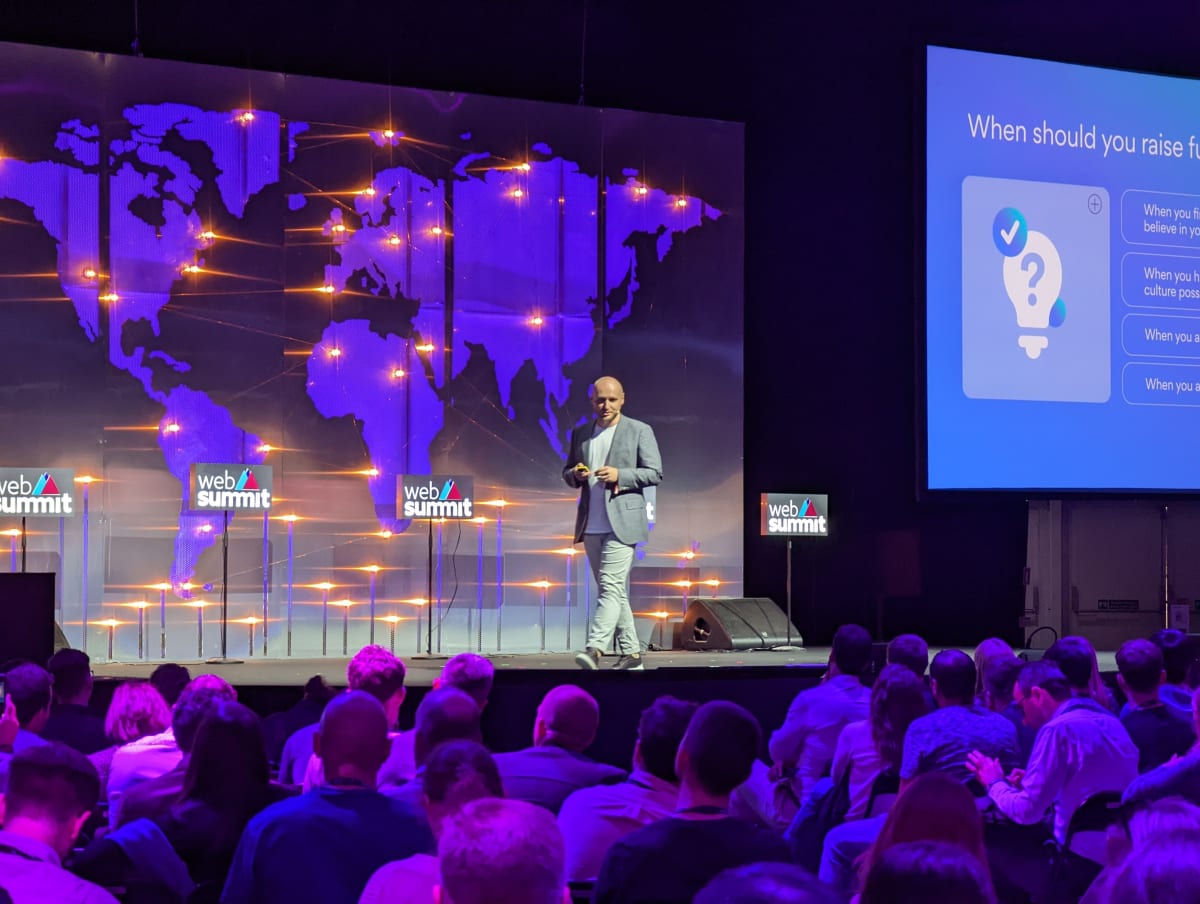
4 takeaways on bootstrapping your business from Web Summit 2022

Most startups aim to score a big round of venture capital funding and then focus on growing the company. In today’s economic climate, startups are keenly aware of how much money they have and, most importantly, how much they lack. But for some, the option of having outside financing is not the best option or may not be an option at all. In such cases, bootstrapping, or self-financing through personal funds or initial sales, comes into action.

Tom Okman, Co-founder of Nord Security Since the establishment of Nord Security and until this year, we have operated without external funding – and we have learned many lessons. Last week, I had the great honor of presenting our main takeaways from this bootstrapping journey on the stage of Web Summit. Here are the four main insights that I shared for founders focused on bootstrapping their business: #1 Perfect your company’s mission Your company’s mission is not just a catchy slogan you place on your “About” page and then forget about it. Your mission is the underlying DNA of every meeting and every creative solution, and it works in the background every time your people decline offers from other companies. When you raise funding, it’s easy to lose sight of why you started your company in the first place. But when you are bootstrapping, your mission and your customers guide your business path. So bootstrapping founders, instead of focusing on raising the next round of funding, look for innovative ways to turn their mission into a reality. They are also more receptive to what customers are saying to them. That feedback naturally helps polish and evolve your mission over time, which in turn helps improve your corporate and product strategies. And it comes with a bonus – the company develops a solid internal culture. #2 Build local, ship global Some entrepreneurs are wary of using local talent pools, especially if the business is starting outside established startup hubs like Silicon Valley or Israel. However, that was not the case in our story. In fact, we were fortunate to start our company in Lithuania. While funding was scarce when we started, the local ecosystem, partners, and infrastructure helped us immensely in getting our business off the ground. People in Lithuania are talented and keen to prove themselves to their international peers. So one of our best decisions early in the business was to tap into that talent pool and support from local associations and policymakers. Today, more than ever, talent and support for entrepreneurs are spread throughout Europe, both in traditional tech hubs and rising startup center’s. As a result, the startup world is getting flatter, so now is the best time to take advantage of building locally while shipping globally. #3 Focus on the customer Customers are royalty, especially when entrepreneurs operate without external funding. In such cases, customers become leading investors and the most sustainable source of financing, and startups must focus on them above all else. So to be successful, entrepreneurs have to build a product that their customers will love and want to pay for, meaning that creating a market fit for products becomes central to a startup’s survival. Unfortunately, you don’t have a large treasure chest on your side when you are bootstrapped, so the key is to be efficient in adapting to your customer’s feedback. #4 Take risks and be nimble The bootstrapping route empowers entrepreneurs to take charge of the big decisions when it comes to vision, hiring, operations, or finances. That gives self-funded startups an edge because they can be much more flexible, agile, and tenacious than other companies. But at the same time, not taking outside financing pushes entrepreneurs to be hungrier in finding ways to improve their business. Because knowing that customers are critical, you can’t simply spend your way out of problems. In Nord Security’s case, it usually meant taking risks and being the pioneer in educating the market and customers about a new use case, product feature, or upcoming challenges. While such a situation might sound precarious, in a way, it also means returning to what makes startup culture great – the ability and willingness to be inventive and take risks. But it is essential to be decisive when things need to be fixed and be bold in pivoting because inertia can sometimes be more dangerous than recklessness. This combination can prove extremely potent if entrepreneurs allow themselves to be guided by their leading investors – the customers – and their mission-driven culture. But only if founders are willing to lean into it fully.

About Version 2 Digital

Version 2 Digital is one of the most dynamic IT companies in Asia. The company distributes a wide range of IT products across various areas including cyber security, cloud, data protection, end points, infrastructures, system monitoring, storage, networking, business productivity and communication products.

Through an extensive network of channels, point of sales, resellers, and partnership companies, Version 2 offers quality products and services which are highly acclaimed in the market. Its customers cover a wide spectrum which include Global 1000 enterprises, regional listed companies, different vertical industries, public utilities, Government, a vast number of successful SMEs, and consumers in various Asian cities.

About Nord Security
The web has become a chaotic space where safety and trust have been compromised by cybercrime and data protection issues. Therefore, our team has a global mission to shape a more trusted and peaceful online future for people everywhere.

Why we chose Astro for our marketing websites

When you build a website, it’s essential that you’re using the right tools. With countless UI libraries, bundlers, and frameworks available, engineers have never had so many tools at their disposal. But which ones are right for large, traffic-heavy marketing websites? We chose Astro. Here’s why.
Blog image 2022 10 20

Problems with our existing stack

My team at Nord Security is responsible for building and maintaining websites for the fastest VPN in the world, NordVPN. We have multiple marketing sites built by different people at different times. Some were made with Gatsby, and others with WordPress and a home-grown React-based SSG (static-site generator).

Those websites served us well. However, rapid scaling has caused issues with website performance, which has a direct impact on sales and marketing. It’s a proven fact that a reduction in website performance (for example, slower load times) decreases sales. This has been demonstrated in studies from WPO Stats.

As the business scaled, my team had the challenging task of researching and proposing a tech stack to rebuild our websites and achieve optimal marketing potential.

A challenge

There was a lot of work to be done. We had more than 20 locales, 10 currencies, and thousands of pages. Personalization had to be considered, and A/B testing implemented. Supporting an ever-expanding list of requirements while still achieving optimal performance felt like an impossible goal.

We tried different frameworks — Next.js, Preact, SvelteKit, and Elder.js — and even tried building server-side rendering and island architecture with Svelte. We had to find the best systems to satisfy the needs of content editors, data analysts, and engineers.

Of course, it’s not every day that a team gets a chance to rebuild their websites from scratch. We knew we could create something great, so we wanted to make the most of this opportunity.

Enter: Astro

As our research continued, it became clear that Astro, an all-in-one web framework, ticked all our boxes. We had initially ruled out Astro because it didn’t offer server-side rendering, but when this feature was added in 2022, we knew that we’d found our framework.

Astro is not a mainstream framework, of course, and when we were considering it, the framework was still in beta. Going down this route was a risk, but it was one we were willing to take. Why? Because not only did it fulfill almost all of our requirements, but it already had a vibrant and active community and a responsive developer team. New features are planned, implemented, and delivered several times a week.

Along with server-side rendering, Astro’s developers had added Node.js support and edge deployment. These factors facilitate streamlined continuous deployment and enhance the power of a globally deployed content delivery network, allowing for unmatched performance. Edge deployment with Cloudflare, Vercel, and Netlify involves only a few simple steps, but the impact is huge.

With just a few lines of code, we now had server-side rendering enabled on our desired deployment server:

1
export default defineConfig({
2
output: ‘server’,
3
adapter: node(), // cloudflare(), vercel() …
4
});

Benefits of Astro

During the research phase, we noted that Svelte syntax, being a superset of HTML, was much easier to work with than React syntax. The same went for Astro. We have hundreds of different components to implement, most of which require little to no JavaScript, so being able to convert them to the HTML-style syntax of Astro made those components more readable.

The complex components that required client-side JavaScript and reactivity were another story. Our main requirement of reaching optimal website performance pushed us to try something new: SolidJS.

SolidJS is performant-reactive and simple for building user interfaces. It uses JSX syntax, works well for server-side rendering, and offers outstanding performance. It does all this with a fraction of the size of other libraries that usually come shipped with a browser.

Furthermore, both Astro and SolidJS share the concept of so-called vanishing components. Components exist to organize your code and not much else. What is shipped to the client is pure HTML and CSS.

Client-side JavaScript is an opt-in feature in Astro. Unless you specifically use one of the client directives, the component is shipped with 0kb of JavaScript. Of course, you also have the option to bundle global or local scripts straight from the component code.

SolidJS and other framework components are inserted into Astro files using the “islands architecture” pattern. The pattern was proposed by Katie Sylor-Miller in 2019 and is expanded in this post by Preact creator Jason Miller.

Here are the possible client directives for making “islands” interactive:

  • client:load — Loads JavaScript and hydrates the component on page load.

  • client:idle — Loads JavaScript and hydrates the component after page load once the main thread is idle.

  • client:visible — Embraces the power of Intersection Observer API and loads JavaScript only if the component becomes visible.

  • client:media — Useful in cases where certain components should be visible and interactive only on certain screen sizes.

  • client:only — Skips server-side rendering and runs the code on the client. Be careful with this one because it can push down your SEO scores.

Some parts of the page can be fully static, without any JavaScript needed, while other parts, or islands, may require JavaScript. The process of resolving the component state is called hydration.

Though the JavaScript community is still split over whether hydration is the right approach compared to resumability, it solves our current problems nicely. More information about the hydration topic can be found in this great article.

With Astro, islands come with another benefit: various component framework support. It offers flexibility when choosing a UI framework and has integrations to work with React, Svelte, SolidJS, and Vue. Of course, you won’t typically mix those, but it gives you flexibility and room to maneuver.

The results

To see how well it worked, check out the Lighthouse scores for one of our new websites:

Blog image today 1

The other projects integrated well with our Cloudflare Pages, and more will be built soon!

The pace of releases, weekly community calls, RFCs, the involvement of the core team, and its vibrant community all serve to confirm that we made the right choice with Astro.

About Version 2 Digital

Version 2 Digital is one of the most dynamic IT companies in Asia. The company distributes a wide range of IT products across various areas including cyber security, cloud, data protection, end points, infrastructures, system monitoring, storage, networking, business productivity and communication products.

Through an extensive network of channels, point of sales, resellers, and partnership companies, Version 2 offers quality products and services which are highly acclaimed in the market. Its customers cover a wide spectrum which include Global 1000 enterprises, regional listed companies, different vertical industries, public utilities, Government, a vast number of successful SMEs, and consumers in various Asian cities.

About Nord Security
The web has become a chaotic space where safety and trust have been compromised by cybercrime and data protection issues. Therefore, our team has a global mission to shape a more trusted and peaceful online future for people everywhere.

Launching the first-ever NordVPN 360° marketing campaign in Germany

In August, we started our first-ever 360° marketing campaign in Germany for one of our cybersecurity solutions – NordVPN. The campaign was designed to raise personal cybersecurity awareness among the German population and involved all channels in spreading the key message that nothing is more important than the privacy of your personal data.

In this interview, we speak to Joanna Rusin-Rohrig, Germany country manager, and Ieva Račienė, brand manager – the two NordVPN insiders who made this campaign happen. Read their interviews and find out the full behind-the-scenes story of this 360° NordVPN branding campaign in Germany: from idea creation, planning, and development to the final results and lessons learned.

Blog image Joanna 2

Blog image Ieva 2

From campaign idea to execution

Could you briefly introduce the campaign you just launched?

Ieva: Yes, we call it the “Safely be you” campaign. It was a huge milestone for our organization because it was the first 360° branding campaign ever done at NordVPN when all channels were aligned and focused on one message:

Switch on privacy. Switch off trackers and viruses. Go Nord. Safely be you.

(Privatsphäre ein, Trackern und Viren aus. NordVPN. Ganz sicher du selbst.)

With this key message, we wanted to stress the importance of privacy and make a connection with the usage of our product. Unlike the general approach that focuses on risks and dangers by showing hoodie-wearing hackers in dark rooms trying to steal personal data, we concentrated on more modern and positive messaging emphasizing the emotional benefit of safety. NordVPN protects you and your daily actions online: private messages, social interactions, and transactions. Nothing can be more important than that.

This “Safely be you” campaign aimed to show that everyone’s digital life has the same or even more threats than their “real” lives.

Is it any different from the usual NordVPN campaigns? If yes, how?

Joanna: In fact, it was very different from the usual marketing activities, which are strictly driven by performance indicators. This was the first time NordVPN launched an awareness campaign and the first time we implemented one in Germany.

What did the development of the whole branding campaign look like? Could you give us a sense of the development and implementation stages?

Ieva: It took us eight months to get from idea approval to campaign launch. To tailor the campaign to the German market, we first started looking for external partners.

From day one, our media team, in cooperation with our long-term partner, The Specialist Works, started analyzing media opportunities and best practices in the country and working on an appropriate media plan to promote our creative approach. Meanwhile, our other partner – the team at Influence.vision – helped us find the best influencers. For designing our video ad, we chose a local creative agency, Jung Von Matt. Together, we developed a creative concept called “Safely be you.”

To sum up, not everything was done by our external partners – a large part of the visual design and creative copywriting was done in-house.

Joanna: To give you a feeling of how big the project was: we developed nine separate media plans, from out-of-home advertising to mobile influencer activation. It was a huge team effort to create and execute them on time. More than 100 people worked together internally and in external teams on the execution of the whole campaign.

And speaking of branding campaign promotion tools, what kind of marketing channels were used to launch this campaign? How did you select them?

Ieva: As it was a 360° campaign, it covered all possible marketing channels: TVC, radio, OOH, PR coverage, dedicated celebrity campaign, influencer integrations, social media, PPC, various mobile app ads with full digital scope, and more. We also leveraged high-reach and visibility placements, and our SEO team covered various content clusters.

Joanna: Our main KPI for the campaign is the improvement of the upper funnel metrics – awareness and consideration levels in the market. Therefore, we chose channels and platforms that index highly on reach and reliability in our target group for us to achieve maximum penetration in the market with the given budget.

How are you measuring the success of each marketing channel that was used?

Joanna: Apart from the overall awareness level increase, we defined separate KPIs, like a specific CPA for TV or a level of positive sentiment for influencer integrations. These are our pillars of measurement that allow us to establish whether or not we can regard a certain action as a success or failure.

Blog image Joanna 3

Cybersecurity awareness in Germany

Your main goal is to raise awareness about personal cybersecurity among the German population. How aware are they of the threats they face online, and are they ready to embrace new technology for their cyber protection?

Joanna: According to our research data, Germans spend almost 25 years of their lives online. However, only 21% of them can say they are well aware of the different ways to secure their devices. Even though secure Wi-Fi is relevant to 69% of Germans, only 23% use a VPN to keep their connection safe at all times. This means that although people would like to browse the internet securely and privately, the burden of achieving this goal seems too big. With the campaign, we want to inform our relevant audiences how easy it is to be safe online.

Blog image for the diagram 1

Source: nordvpn.com

With the company in full swing now, how would you rate the first results in trying to achieve your main goal and increase NordVPN product usage in Germany?

Joanna: We definitely see a big interest in the topic, and search queries both for the VPN category and NordVPN are increasing significantly. With it, we see increased traffic numbers for our German website and prolonged time spent on the pages. We are waiting for comprehensive post-campaign research results to analyze more in-depth what influence the campaign had on all customer journey stages.

For you as a country manager, what was the most challenging part of running this campaign, and why?

Joanna: My role in this big project was to consult all teams to help them to achieve the best-localized approach. Another important part was to create a link between our headquarters and agencies operating for us in Germany.

Most people working on this campaign do not speak German, so my local team supported them on all language, copy, and influencer content-related tasks. With literally thousands of various marketing campaign design pieces and copy, keeping tabs on everything was challenging, but we managed to spot all mistakes on time.

Tips for a successful branding campaign

What is the most important thing to consider when launching such branding campaigns? Do you have any advice?

Ieva:

  1. Form a team you can trust. This is the most crucial part of all projects. Whether it is your colleagues or external partners, I strongly suggest gathering a team you can trust 100%. And if the team consists of professional and dedicated people ready to go the extra mile, they’re destined to succeed.

  2. Know your users or the people you are talking to. Understanding their needs and how we can help to solve their problems is the key success factor to being relevant.

  3. Have the courage to do things that were never done before. In our case, having the first branding campaign focused on an emotional message might have been seen as a challenge at first, but we took the risk because the challenge might pay off massively.

Joanna:

  1. Have your KPIs and measurement methods established before you start planning, and make sure that all the team members are on the same page.

  2. Think of having regular check-ins with all the team members involved so no information gets lost on the way.

  3. When you are done with all the project planning, go ahead and add an extra month to it. 🙂 Life happens, and this buffer will allow you to find solutions for challenges that arise on the go.

About Version 2 Digital

Version 2 Digital is one of the most dynamic IT companies in Asia. The company distributes a wide range of IT products across various areas including cyber security, cloud, data protection, end points, infrastructures, system monitoring, storage, networking, business productivity and communication products.

Through an extensive network of channels, point of sales, resellers, and partnership companies, Version 2 offers quality products and services which are highly acclaimed in the market. Its customers cover a wide spectrum which include Global 1000 enterprises, regional listed companies, different vertical industries, public utilities, Government, a vast number of successful SMEs, and consumers in various Asian cities.

About Nord Security
The web has become a chaotic space where safety and trust have been compromised by cybercrime and data protection issues. Therefore, our team has a global mission to shape a more trusted and peaceful online future for people everywhere.

NORDTECH – OUR FIRST TECH MEETUP IN BERLIN

Last week, we launched our first-ever tech meetup in Berlin – NordTech, where we invited locals to meet our experts live and get some insights into PHP, cybersecurity, and software development practices at Nord Security. As we value innovation and shaping future tech, we’re always keen on sharing our ideas and findings with others. Learn more about what our experts and the Berlin tech community discussed during the event:

 
Blog image 2022 10 06


Tests are not useless!

With Pavlo Mikhailidi

Fuelled by a recent encounter with an anti-tester, our Senior PHP Developer, Pavlo, set out to prove that testing is a necessary practice for all developers—not just QA. He explained that good testing saves time and headaches and can even double as documentation. Increasingly complex codebase requires proper care, and modifying one part can break several others. In these cases, testing is your go-to remedy.

He went on to cover the attributes of good testing, shared below, and to debate the trade-offs between bad testing and no testing. Finally, Pavlo passed along some recommended resources for upping your testing game: Unit Testing Principles, Practices, and Patterns, Test-driven Development by Example, and The Art of Unit Testing.

Here are the attributes of a good test that he shared:

  • It protects against regression

  • It’s resistant to refactoring

  • You get fast feedback

  • The test is maintainable

Watch the full recording of Pavlo’s presentation here.

Scrum sucks

With Oleksii Ustenko

Our Senior Android Developer, Oleksii, explored how Scrum is often misunderstood and misused. All-in-all, he actually likes Scrum but understands why people might grumble about the rigidness of the structure. What’s important to remember is that Scrum should be people-centric at its core: humans working together to create value for other humans. And each ceremony exists to drive that goal forward. Like many things in life, Scrum works best when motivated individuals have the trust, support, and understanding they need to get the job done. And Scrum, understandably, goes wrong when management or bureaucratic processes steal ownership away from teams.

He concludes that Scrum is not the silver bullet some of us want it to be. If something isn’t working, each person involved is responsible for speaking up and proactively suggesting improvements—respectfully. Scrum worked well for the use it was invented for, but every team is different. Take the time to understand the context behind why certain ceremonies exist, learn from past mistakes, and find the process that fits your team best.

Watch the full recording of Oleksii’s presentation here.

Securing your API using Cryptography

With Dovydas Bespalovas

In this security deep-dive, Dovydas, our Guild Tech Lead, laid out the basics with different types of cryptography algorithms and functions: Hashing, Encryption, Digital signatures, Key derivation function, and Key exchange. He then explained the evolution of Secure Sockets Layer (SSL) to Transport Layer Security (TLS) and how it’s used and certified. Going one step further, Dovydas got into the differences between ‘Authorization’ and ‘Authentication’ and shared a step-by-step example of how both information security processes can be put into practice. After that, he concluded that such necessary security measures come with extra work and extra complexity.

Watch the full recording of Dovydas’ presentation here.

PHP meetup


Future tech events in Berlin

If you’re interested in learning more, join our future NordTech events live in Berlin or watch them online. Follow us on meetup.com to stay up to date with upcoming knowledge sharing, networking, and other future events at Nord Security.

About Version 2 Digital

Version 2 Digital is one of the most dynamic IT companies in Asia. The company distributes a wide range of IT products across various areas including cyber security, cloud, data protection, end points, infrastructures, system monitoring, storage, networking, business productivity and communication products.

Through an extensive network of channels, point of sales, resellers, and partnership companies, Version 2 offers quality products and services which are highly acclaimed in the market. Its customers cover a wide spectrum which include Global 1000 enterprises, regional listed companies, different vertical industries, public utilities, Government, a vast number of successful SMEs, and consumers in various Asian cities.

About Nord Security
The web has become a chaotic space where safety and trust have been compromised by cybercrime and data protection issues. Therefore, our team has a global mission to shape a more trusted and peaceful online future for people everywhere.

×

Hello!

Click one of our contacts below to chat on WhatsApp

×