Today, we’re here to talk about the recent ransomware attack that hit Oakland, California. Now, before you start to panic, let’s break down what happened and what it means for the city.
First things first: what is ransomware? Essentially, it’s a type of malware that hackers use to gain control of a computer system or network. Once they have control, they encrypt all of the data on that system and demand a ransom in exchange for the decryption key. In other words, they hold your data hostage until you pay up.
About the Oakland Ransomware Attack
Now, let’s get back to Oakland. On April 27th, the city of Oakland announced that they had been hit with a ransomware attack. The attack affected the city’s email systems, phone lines, and some of its websites. The city’s emergency services were not affected, but the attack did cause significant disruptions to non-emergency services.
The ransom demand was not disclosed, but the city did say that they would not be paying it. Instead, they are working with law enforcement and cybersecurity experts to investigate the attack and restore their systems. The city has also urged residents to be cautious of potential scams and phishing attempts that may arise as a result of the attack.
Could NAC Have Stopped the Oakland Ransomware Attack?
While network access control (NAC) is not a silver bullet that can prevent all cyber attacks, it can be an effective tool in deterring certain types of attacks, including ransomware attacks like the one that hit Oakland.
With NAC, organizations can require that devices connecting to their network meet certain security standards, such as having up-to-date anti-virus software or not being known to be infected with malware. This can help prevent infected devices from accessing the network and spreading the ransomware to other systems.
In the case of the Oakland ransomware attack, it’s possible that NAC could have helped prevent the attack or at least minimize its impact. By enforcing security policies and requiring that all devices connecting to the network meet certain security standards, the city could have made it more difficult for the attackers to gain access to their systems.
Of course, it’s impossible to say for sure whether NAC would have prevented the attack in this specific case. Cybercriminals are constantly developing new tactics and techniques to bypass security measures, and there is always a risk that they will find a way to infiltrate even the most secure networks.
That said, NAC can still be a valuable tool in deterring cyber attacks and minimizing their impact. By implementing NAC alongside other security measures, organizations can create a layered defense that makes it much more difficult for attackers to gain access to their networks and data.
While the full impact of the attack is still being assessed, it serves as a reminder that ransomware attacks are a real threat to organizations of all sizes. In fact, the number of reported ransomware attacks has been on the rise in recent years. Cybercriminals are constantly looking for new ways to exploit vulnerabilities in computer systems and networks, and it’s up to organizations to take the necessary steps to protect themselves.
What Can You Do to Prevent these Sorts of Attacks?
Keep your software up to date: Make sure that you’re running the latest versions of all software on your computer or device. Updates often include security patches that can help protect you from known vulnerabilities.
Be cautious of suspicious emails: Phishing emails are a common way for cybercriminals to spread malware. Be wary of emails from unknown senders, and never click on links or download attachments unless you’re sure they’re legitimate.
Back up your data: Regularly back up your important files to an external hard drive or cloud storage service. This way, if you do fall victim to a ransomware attack, you’ll still have access to your data.
Overall, the Oakland ransomware attack serves as a reminder of the importance of cybersecurity. While it can be easy to think that it won’t happen to you, the reality is that anyone can fall victim to a cyber attack. By taking the necessary precautions, you can help protect yourself and your organization from the devastating effects of a ransomware attack.
About Version 2 Digital
Version 2 Digital is one of the most dynamic IT companies in Asia. The company distributes a wide range of IT products across various areas including cyber security, cloud, data protection, end points, infrastructures, system monitoring, storage, networking, business productivity and communication products.
Through an extensive network of channels, point of sales, resellers, and partnership companies, Version 2 offers quality products and services which are highly acclaimed in the market. Its customers cover a wide spectrum which include Global 1000 enterprises, regional listed companies, different vertical industries, public utilities, Government, a vast number of successful SMEs, and consumers in various Asian cities.
About Portnox Portnox provides simple-to-deploy, operate and maintain network access control, security and visibility solutions. Portnox software can be deployed on-premises, as a cloud-delivered service, or in hybrid mode. It is agentless and vendor-agnostic, allowing organizations to maximize their existing network and cybersecurity investments. Hundreds of enterprises around the world rely on Portnox for network visibility, cybersecurity policy enforcement and regulatory compliance. The company has been recognized for its innovations by Info Security Products Guide, Cyber Security Excellence Awards, IoT Innovator Awards, Computing Security Awards, Best of Interop ITX and Cyber Defense Magazine. Portnox has offices in the U.S., Europe and Asia. For information visit http://www.portnox.com, and follow us on Twitter and LinkedIn.。
In recent years, U.S. school districts have increasingly become targets for cyber attacks. These school cyber attacks have ranged from ransomware attacks to data breaches, resulting in a significant loss of data and resources for school districts. The reasons for this are varied, but a common issue is the lack of proper network access controls in place. In this article, we’ll explore why school districts are easy targets for hackers and how implementing network access control can help prevent future attacks.
Why Are U.S. School Cyber Attacks On the Rise?
First and foremost, school districts are an easy target for cybercriminals because they often lack the necessary security measures to protect their networks. Unlike larger organizations that have dedicated IT teams and resources to implement security measures, many school districts have limited budgets and staff resources that can be dedicated to cybersecurity. This makes them vulnerable to attacks that exploit weaknesses in their network security, such as unsecured Wi-Fi networks or outdated software and hardware.
One example of such a cyber attack occurred in 2019, when the Baltimore County Public Schools in Maryland suffered a ransomware attack that disrupted its operations for several days. The attack impacted the district’s communication systems, preventing staff from accessing emails and important files. Similarly, in March 2021, the Miami-Dade County Public Schools in Florida was hit with a ransomware attack that disrupted online learning for several days.
Another reason why school districts are easy targets is the large amount of sensitive data they store, including student and staff personal information, financial data, and academic records. This makes them attractive targets for hackers looking to steal data for financial gain or to sell on the dark web. In 2020, the Clark County School District in Nevada suffered a data breach that exposed the personal information of more than 350,000 students and staff members.
Stopping School Cyber Attacks with NAC
So, how can school cyber attacks be stopped? One solution is to implement network access control (NAC) measures. NAC is a security solution that ensures only authorized users and devices can access a network, while blocking unauthorized users and devices from gaining access.
With NAC, school districts can implement policies that require users and devices to meet specific security requirements before they are granted access to the network. This includes verifying the identity of users, ensuring that devices have the necessary security software and patches installed, and checking for any signs of malware or other security threats.
By implementing NAC, a significant reduction of school cyber attacks can be achieved. This was demonstrated in 2020 when the Newhall School District in California implemented NAC and was able to prevent an attempted ransomware attack. The NAC solution detected the unauthorized access attempt and prevented the malware from spreading throughout the network.
In conclusion, school districts are easy targets for cyber attacks due to their limited resources and vulnerabilities in their network security. However, by implementing network access control measures, school districts can significantly reduce their risk of cyber attacks and protect the sensitive data they store. With the rise of online learning and remote work, it’s more important than ever for school districts to prioritize cybersecurity and take proactive steps to secure their networks.
About Version 2 Digital
Version 2 Digital is one of the most dynamic IT companies in Asia. The company distributes a wide range of IT products across various areas including cyber security, cloud, data protection, end points, infrastructures, system monitoring, storage, networking, business productivity and communication products.
Through an extensive network of channels, point of sales, resellers, and partnership companies, Version 2 offers quality products and services which are highly acclaimed in the market. Its customers cover a wide spectrum which include Global 1000 enterprises, regional listed companies, different vertical industries, public utilities, Government, a vast number of successful SMEs, and consumers in various Asian cities.
About Portnox Portnox provides simple-to-deploy, operate and maintain network access control, security and visibility solutions. Portnox software can be deployed on-premises, as a cloud-delivered service, or in hybrid mode. It is agentless and vendor-agnostic, allowing organizations to maximize their existing network and cybersecurity investments. Hundreds of enterprises around the world rely on Portnox for network visibility, cybersecurity policy enforcement and regulatory compliance. The company has been recognized for its innovations by Info Security Products Guide, Cyber Security Excellence Awards, IoT Innovator Awards, Computing Security Awards, Best of Interop ITX and Cyber Defense Magazine. Portnox has offices in the U.S., Europe and Asia. For information visit http://www.portnox.com, and follow us on Twitter and LinkedIn.。
In today’s fast-paced and ever-changing digital landscape, cybersecurity has become a critical concern for businesses of all sizes. With cyber threats becoming increasingly sophisticated and frequent, companies cannot afford to take a passive approach to security. The threat landscape and attack surface of organizations has immensely increased over the past few years.
In recent years, the concept of “Zero Trust” has gained significant traction as an effective security strategy for businesses looking to protect their assets and data. But despite its benefits, many companies still delay its implementation, putting themselves at risk. We’ll explore why companies shouldn’t delay Zero Trust and the potential consequences of doing so.
The State of Cybersecurity Today
Before we dive into zero trust and its challenges, let’s have a look at the state of cybersecurity to have an idea of what are we dealing with in terms of cybersecurity threats and data breaches.
According to ESENTIRE’s official Cybercrime report the average cost of cybercrime is predicted to hit $8 trillion in 2023 and exponentially rise to $10.5 Trillion by the year 2025.
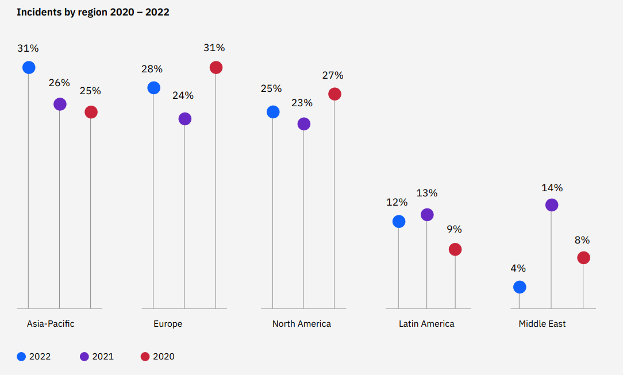
As per IBM Security X-Force Threat Intelligence Report 2022, the most attacked region is the Asia Pacific accounting for approximately 31% of the incidents recorded by Incident Response.
Figure 1. Incident By Regions 2020-2022. Source IBM X-Force
Further investigations by IBM revealed that Data extortion was the most common attack impact on organizations with phishing being the top initial access vector of compromise identified in 41% of cybersecurity incidents.
Further statistics by Verizon data breach report states that Ransomware attacks have increased by 13% as compared to the last 5 years.
It is quite evident from the above stats that cybersecurity incidents and data breaches won’t stop and will continue to rise at the same frequency as they were previously. To battle against high volume and complex cybersecurity attacks organizations must adopt a proactive approach and utilize security architectures and models like zero trust to mitigate and contain the previously mentioned attacks.
What is Zero Trust?
Zero Trust is a security framework that emphasizes the principle of “never trust, always verify.” It is designed to provide a comprehensive security approach that protects assets and data by ensuring that no user, device, or application is automatically trusted, regardless of whether they are inside or outside the corporate network. Zero Trust operates under the assumption that every access request is potentially malicious and should be thoroughly verified before granting access.
In a nutshell “The Zero Trust” model is built around three core principles:
Identify
Verify
Enforce
The first principle, identify, involves identifying all users, devices, and applications that require access to resources. This involves creating a comprehensive inventory of all assets, including data, applications, and services, and mapping out their relationships with each other.
The second principle, verify, involves thoroughly verifying the identity and security posture of all users, devices, and applications before granting access. This involves implementing strong authentication mechanisms, such as multi-factor authentication (MFA) and continuously monitoring all access requests for signs of suspicious activity.
The third principle, enforce, involves enforcing strict access control policies that limit access to resources based on the user’s role, location, and device posture. This involves implementing granular access control policies and micro-segmentation to ensure that each user only has access to the resources they need to perform their job, and nothing more.
Zero Trust is not a single product or solution, but rather a comprehensive security framework that incorporates a range of security measures, such as encryption, network segmentation, and continuous monitoring. It also involves a cultural shift towards a security-centric mindset, where security is seen as a fundamental component of business operations, rather than an afterthought. Zero Trust Architectures are well-suitable and effective for environments that come under the hood of critical infrastructures due to their IT/OT integrations.
Challenges faced by organizations to adopt Zero Trust Model
For more than a decade, the idea of a Zero Trust security architecture has been around but the pace of adopting it has not seen an exponential increase over the past few years. Many organizations lack basic cybersecurity hygiene due to which sooner or later they suffer from an inevitable loss in terms of monetary and reputation.
Let’s demystify and uncover the challenges and the reasons why organizations are still hesitant and delaying adopting the zero trust model despite increasing cybersecurity attacks.
Why do companies delay Zero Trust?
Despite the clear benefits of Zero Trust, many companies delay its implementation for various reasons. One of the primary reasons is the perception that Zero Trust is too complex and time-consuming to implement. Companies may also be hesitant to implement Zero Trust due to the potential disruption to business operations and the need for significant changes to existing security policies and procedures. Additionally, some companies may feel that their existing security measures are adequate, or they may underestimate the severity of cyber threats.
Some of the pertinent challenges faced by organizations to implement zero-trust architectures are discussed below:
Complexity: One of the primary challenges of implementing Zero Trust architecture is its complexity. Zero Trust requires an extensive and integrated system of security controls, which is time-consuming and resource intensive. The architecture must be customized to fit each organization’s unique infrastructure, which can add a layer of complexity. The complexity part is typically decreased if the organization has clearly defined trust boundaries for traffic inflows and outflows, their critical assets are identified and a holistic approach towards security is being adopted by intensive information security programs.
Cost: Another significant challenge is the cost of implementing Zero Trust architecture. The architecture requires the integration of several security solutions such as firewalls, intrusion detection systems, and multifactor authentication tools, which can be expensive. On the other hand, the cost also increases if an organization has to replace legacy systems with new ones. Organizations must also allocate sufficient resources to maintain and upgrade the architecture.
Lack of skilled personnel: Zero Trust architecture requires skilled IT personnel who are experienced in cybersecurity practices. Unfortunately, there is a shortage of cybersecurity professionals, making it challenging for organizations to find the right people to implement and maintain the architecture. Often sometimes the internal controls, processes, and policies are too vague or hard to understand and the relevant teams lose their actual objective to protect and implement the desired security controls.
Culture: Zero Trust architecture requires a significant shift in an organization’s security culture. The architecture requires all users to adopt new security practices and mindsets, which can be challenging to achieve. Organizations must provide extensive training and awareness programs to ensure that employees are equipped with the necessary skills to implement and maintain Zero Trust.
Perception of low risk: Many organizations perceive themselves as low-risk targets for cyber-attacks, leading to a lack of urgency in implementing Zero Trust architecture. This perception often results from a lack of understanding of the potential risks and impacts of a cyber-attack, leading to inadequate investments in cybersecurity solutions.
The risks of delaying Zero Trust
Delaying the implementation of Zero Trust can have severe consequences for companies. With cyber threats becoming increasingly sophisticated and frequent, companies that rely on traditional security measures are at greater risk of security breaches. Hackers can exploit vulnerabilities in the network and gain unauthorized access to sensitive data, resulting in significant financial losses, reputational damage, and legal liabilities.
The consequences of a security breach can be devastating for companies, both in the short and long term. In addition to financial losses, companies may face legal action, regulatory fines, and damage to their reputation, which can have long-lasting effects on their business operations.
Implementing Zero Trust can be a challenging process, but the benefits far outweigh the challenges. Zero Trust provides a comprehensive security approach that ensures the protection of assets and data, regardless of the location or user. By implementing Zero Trust, companies can reduce the risk of security breaches and improve their overall security posture. Zero Trust can also help companies meet compliance requirements and improve their ability to respond to security incidents.
Conclusion
Organizations must take cybersecurity seriously and adopt advanced security solutions such as Zero Trust architecture to protect their data and resources from cyber-attacks. While the implementation of Zero Trust architecture is complex and comes with its own set of challenges and problems, the benefits of implementing it far outweigh the costs. Organizations must carefully consider the risks and rewards of Zero Trust architecture and implement it in a way that ensures the protection of critical resources and data. By doing so, organizations can build a robust and secure cybersecurity posture that protects them from ever-evolving cyber threats.
About Version 2 Digital
Version 2 Digital is one of the most dynamic IT companies in Asia. The company distributes a wide range of IT products across various areas including cyber security, cloud, data protection, end points, infrastructures, system monitoring, storage, networking, business productivity and communication products.
Through an extensive network of channels, point of sales, resellers, and partnership companies, Version 2 offers quality products and services which are highly acclaimed in the market. Its customers cover a wide spectrum which include Global 1000 enterprises, regional listed companies, different vertical industries, public utilities, Government, a vast number of successful SMEs, and consumers in various Asian cities.
About Portnox Portnox provides simple-to-deploy, operate and maintain network access control, security and visibility solutions. Portnox software can be deployed on-premises, as a cloud-delivered service, or in hybrid mode. It is agentless and vendor-agnostic, allowing organizations to maximize their existing network and cybersecurity investments. Hundreds of enterprises around the world rely on Portnox for network visibility, cybersecurity policy enforcement and regulatory compliance. The company has been recognized for its innovations by Info Security Products Guide, Cyber Security Excellence Awards, IoT Innovator Awards, Computing Security Awards, Best of Interop ITX and Cyber Defense Magazine. Portnox has offices in the U.S., Europe and Asia. For information visit http://www.portnox.com, and follow us on Twitter and LinkedIn.。
Picture this. You’re at the hospital, hooked up to a medical device meant to help you. Or you’re walking around with this device planted inside you as you go about your day. But little do you know that hackers could potentially access your personal health information stored in that device or maybe even take control of that device altogether. Scary, right?
Sadly, it’s not just a hypothetical situation. Major MedTech companies like BD, Insulet, and Zoll Medical have already reported cybersecurity vulnerabilities in their devices that could compromise sensitive data or patient outcomes.
This is primarily a case of security needing to catch up with technology. Internet-connected medical devices, often called Internet of Medical Things (IoMT), have become a common feature of the healthcare landscape over recent years and provided many benefits. For example, these devices enable proactive healthcare, leading to better patient outcomes and cost savings while empowering patients to receive care at home.
Still, while the capabilities of these devices are rapidly advancing, their security continues to lag. The situation presents new challenges for MedTech companies and Internet of Things (IoT) security professionals.
Now, the Food and Drug Administration (FDA) is stepping in to ensure that medical devices meet specific cybersecurity guidelines. But what exactly are these new rules? And just how dangerous of a situation is medical device hacking? Let’s get into it.
Strengthening Medical Device Cybersecurity: FDA’s New Guidelines
The FDA has issued new cybersecurity guidelines for medical devices in response to growing concerns about cyber threats to internet-connected products used in healthcare settings. These guidelines are part of the $1.7 trillion federal omnibus spending bill signed by President Joe Biden in December.
Under the new requirements, all new medical device applicants must submit a plan on how they will monitor, identify, and address cybersecurity issues and provide “reasonable assurance” that their devices are protected. They must also make security updates and patches available on a regular schedule, including for critical situations. Additionally, applicants need to provide a “software bill of materials” that lists all the software components used in their devices, including open-source software.
These requirements are aimed at preventing breaches by ensuring that medical device makers have plans in place to address cybersecurity vulnerabilities and quickly roll out updates to mitigate risks. The FDA will begin enforcing these requirements on October 1, 2023, to allow device makers sufficient time to comply.
The new law also mandates that the FDA work with the US Cybersecurity and Infrastructure Security Agency (CISA) to update its existing guidance on cybersecurity in medical devices within two years and periodically update it after that. The FDA must also update its online resources within six months of the bill’s enactment to provide up-to-date information on how healthcare providers and device makers can identify and address vulnerabilities and work with federal agencies to strengthen device security.
Additionally, the US Comptroller General has one year to develop a report identifying challenges in cybersecurity for devices and providing suggestions for how government agencies can help minimize these challenges for manufacturers, healthcare providers, and patients.
What IoMT Devices Are Vulnerable to Cyber-Attacks?
One example that highlights the vulnerability of medical devices to cyber attacks is the case of former Vice President Dick Cheney’s heart defibrillator. In 2007, cautious doctors replaced Cheney’s defibrillator and modified it to disable the wireless feature to prevent potential terrorists from sending a signal to the device and causing harm. This incident highlighted the serious risks associated with internet-connected medical devices, as hackers could potentially gain unauthorized access and manipulate the device’s settings, leading to life-threatening consequences.
Other IoMT devices, such as insulin pumps and infusion pumps, are also vulnerable to cyber-attacks. These devices often have wireless connectivity to allow for remote monitoring and adjustments, but this can also create potential entry points for hackers to exploit. For example, a cyber attacker could potentially hack into an insulin pump and administer an incorrect dosage, leading to dangerous fluctuations in blood sugar levels.
The reasons why IoMT devices are vulnerable to cyber-attacks are multifaceted. Many medical devices use outdated or legacy software systems that may not have the latest security patches or updates, making them susceptible to known vulnerabilities. Additionally, manufacturers may prioritize functionality and ease of use over security measures, resulting in inadequate protection against cyber threats.
Moreover, the rapid pace of technological advancements in the healthcare industry can outpace the development of robust cybersecurity measures, leaving IoMT devices vulnerable to emerging threats.
Embracing a Security Mindset
These new FDA rules will give MedTech companies the push to adopt a security-centric mindset. However, that’s not to say that MedTech companies have been burying their head in the sand when it comes to IoT security. In a Deloitte study into the top priorities of medical technology companies, cyber readiness ranked joint-top, beating research and development and global markets.
MedTech companies will likely start implementing robust authentication protocols and stringent access controls across all IoMT devices to ensure patient data can’t fall into the wrong hands. Similarly, strong data encryption is crucial for protecting patient information and preventing unauthorized access. All data transmitted between IoMT devices, as well as data stored on the devices or in the cloud, should be encrypted using robust encryption algorithms.
Regular security audits to identify and address any potential vulnerabilities in IoMT devices will also become far more common. This can include penetration testing, vulnerability scanning, and code reviews to identify and fix potential security flaws.
Lastly, regular updates and patches (as outlined by the FDA) will become the new norm. Essentially, MedTech companies will regularly update medical devices with the latest security patches and firmware updates. This helps to address known vulnerabilities and protect against known exploits.
About Version 2 Digital
Version 2 Digital is one of the most dynamic IT companies in Asia. The company distributes a wide range of IT products across various areas including cyber security, cloud, data protection, end points, infrastructures, system monitoring, storage, networking, business productivity and communication products.
Through an extensive network of channels, point of sales, resellers, and partnership companies, Version 2 offers quality products and services which are highly acclaimed in the market. Its customers cover a wide spectrum which include Global 1000 enterprises, regional listed companies, different vertical industries, public utilities, Government, a vast number of successful SMEs, and consumers in various Asian cities.
About Portnox Portnox provides simple-to-deploy, operate and maintain network access control, security and visibility solutions. Portnox software can be deployed on-premises, as a cloud-delivered service, or in hybrid mode. It is agentless and vendor-agnostic, allowing organizations to maximize their existing network and cybersecurity investments. Hundreds of enterprises around the world rely on Portnox for network visibility, cybersecurity policy enforcement and regulatory compliance. The company has been recognized for its innovations by Info Security Products Guide, Cyber Security Excellence Awards, IoT Innovator Awards, Computing Security Awards, Best of Interop ITX and Cyber Defense Magazine. Portnox has offices in the U.S., Europe and Asia. For information visit http://www.portnox.com, and follow us on Twitter and LinkedIn.。
While some cyber-attacks announce their presence like a blaring siren, others fly quietly under the radar. This presents a significant challenge for network security teams, who are already battling increasingly frequent, sophisticated, and severe attacks.
One cunning technique that has gained considerable traction in recent years is Living-Off-The-Land (LOTL) attacks. Here, threat actors use an organization’s own tools and infrastructure to launch an attack, stealthily moving through the kill chain without the need for bespoke malware.
Alarmingly, these attacks are not only difficult to detect but also highly effective. For example, the Ponemon Institute found that fileless malware attacks (another term for a LOTL attack) are approximately ten times more likely to succeed than file-based attacks.
As LOTL attacks continue to skyrocket in popularity, organizations need to understand how they work and take proactive measures to prevent them. That’s what we’re going to be diving into today.
What Exactly is a Living off the Land (LOTL) Attack?
In a Living off the Land (LOTL) attack, attackers use pre-installed or legitimate tools on the victim’s system, which enables them to blend in with regular user activity and bypass security software.
Despite the term being coined in 2013, recent cybersecurity reports have noted a marked rise in LOTL attacks. But why have cybercriminals suddenly added LOTL attacks to their arsenal? The answer lies in how effectively these attacks bypass traditional security measures.
Instead of using new and sophisticated methods to attack a system, hackers can use tools already installed on a target system, such as PowerShell, Command Prompt, and other admin tools. Since these tools are legitimate and necessary for many everyday computer tasks, it can be difficult for security software to detect malicious activity when these tools are used in a LOTL attack. In other words, LOTL attacks don’t set off warning signals like many other attacks.
One thing that makes LOTL attacks unique is that they don’t leave any files behind. This is why they’re often called fileless malware. With no executable files or malware to detect, many cybersecurity tools simply won’t realize anything suspicious has occurred.
How Do LOTL Attacks Happen?
So, what does a LOTL attack actually look like? LOTL attacks share many of the same hallmarks as other cyberattacks; only they’re far more challenging to detect. Here is an overview of the process:
Initial Access: A hacker gains access to a network through another technique, such as phishing or social engineering. This gives the hacker an initial foothold in the target network.
Reconnaissance: Once inside the network, the hacker begins to gather information about the target systems and network architecture. The goal is to identify vulnerabilities that can be exploited to gain further access and control.
Lateral Movement: The hacker uses the information gathered in the reconnaissance phase to move laterally within the network. The goal is to find and compromise additional systems to establish persistence and gain greater control over the network.
Privilege Escalation: The hacker leverages the compromised systems to escalate privileges and gain access to sensitive data and critical systems.
Malicious Activities: Once the hacker has established a strong foothold in the network, they can carry out a range of malicious activities, including data exfiltration, installing backdoors, creating new tasks on remote machines, identifying configuration settings, and more.
Obfuscation: Throughout the attack, the hacker takes steps to obscure their activity and avoid detection. This can involve using tools like PowerShell or Command Prompt to run malicious code that is obfuscated to evade detection.
The Anatomy of LOTL Attacks
Hackers have a wide range of tools at their disposal to execute a LOTL attack. For example, attackers may use tools such as PowerShell, Windows Management Instrumentation (WMI), and Command Prompt to carry out malicious activities such as reconnaissance, data exfiltration, and lateral movement.
For example, an attacker might use the built-in Windows utility Netsh to create a reverse shell and gain access to a victim’s system. And many other techniques exist. For example, LOTL attacks can also use the Registry Console Tool (reg.exe) to maintain persistence, store settings for malware, and store executables in subkeys. Other commonly used tools in LOTL attacks include Windows Management Instrumentation (WMI), Service Control Manager Configuration Tool (sc.exe), Scheduled Tasks (AT.EXE Process), and Sysinternals such as PSExec.
Notably, LOTL attacks that leverage Remote Desktop Protocol (RDP) connections can be especially tricky for security teams to spot and stop because RDP is a critical service for system administrators.
Identifying which RDP connections are legitimate and which are not is like trying to find a needle in a haystack, especially when administrative credentials are involved. That’s why “known bads” and historical attack data just don’t cut it when it comes to stopping these types of attacks. Instead, a smarter, more comprehensive approach is needed that focuses on detecting anomalous activity in real-time.
LOTL Attacks In Action
Many high-profile cyber attacks in recent years have leveraged LOTL techniques and other tactics to devastating success. Here are some real-world examples:
NotPetya:One of the most destructive cyberattacks in history. It spread rapidly across networks in Ukraine and worldwide, causing billions of dollars in damages. The attackers used legitimate tools like PowerShell and PsExec to execute their malicious code, making it difficult to detect.
Olympic Destroyer: The attackers behind the 2018 Olympic Destroyer attack used a combination of spear-phishing and LOTL techniques to gain access to the Pyeongchang Winter Olympics’ network. They used legitimate administrative tools like PowerShell to carry out their attack, which disrupted the opening ceremony and caused widespread disruption.
TrickBot: This banking Trojan is known for its LOTL capabilities. It uses legitimate Windows tools like PowerShell and Windows Management Instrumentation (WMI) to evade detection and remain persistent on infected machines. TrickBot has been used to steal sensitive information and initiate fraudulent transactions.
Emotet: This malware has been used in various attacks targeting government organizations and private companies. It leverages LOTL techniques like using PowerShell to download and execute additional modules. Once installed, Emotet can steal credentials and spread to other machines on the network.
These are just a few examples of LOTL attacks seen in the wild. As these attacks become more sophisticated, organizations need to be aware of the risks and take steps to bolster their network security. That brings us to the next section – how to safeguard your network from LOTL attacks.
How to Protect Against LOTL Attacks
LOTL attacks may be difficult to detect, but that doesn’t mean network security teams are powerless to act. Companies can adopt several techniques and best practices to protect against Living-Off-The-Land attacks. Let’s look at some of the most effective methods.
Zero Trust and Least Privilege Access
Zero trust is a security model that assumes that every user, device, and application on a network is potentially malicious, and therefore, no one should be trusted by default. It does away with traditional perimeter-based security controls like firewalls and instead focuses on securing every asset on the network.
Zero trust can help prevent LOTL attacks in several ways. For example, imagine an attacker gains access to a user’s credentials through a phishing email. With those credentials, the attacker could log in to the victim’s account and move laterally through the network, looking for valuable data to exfiltrate. However, in a zero-trust environment, the attacker would not automatically be granted access to the network’s sensitive resources. Instead, they would need to pass multiple levels of authentication and authorization before being granted access.
In this scenario, the zero trust approach would require the attacker to authenticate themselves every time they attempt to access a resource, even if they had already authenticated once before. This multi-step authentication process makes it more challenging for attackers to gain access to the network and limits their ability to move laterally.
Furthermore, in a zero-trust environment, organizations can enforce granular access controls based on the principle of least privilege. This means that users and devices are only granted the minimum level of access necessary to complete their tasks. A least-privilege approach helps limit the attack surface, making it more difficult for attackers to access sensitive data or resources.
Some other effective ways of limiting LOTL attacks include:
Self-learning AI technology: Using self-learning AI technology, like machine learning algorithms, can help companies detect and prevent LOTL attacks by continuously analyzing network traffic, identifying abnormal behavior, and automatically taking action to stop potential attacks.
Network segmentation: Breaking down a network into smaller, more manageable segments can limit the spread of malware and prevent attackers from moving laterally within the network.
Multi-factor authentication: Multi-factor authentication (MFA) adds an extra layer of security to user login credentials by requiring users to provide multiple forms of identification, such as a password and a fingerprint scan or facial recognition.
Regular security assessments and testing: Regular security assessments and penetration testing can help identify vulnerabilities in a company’s network and applications, enabling proactive mitigation and prevention.
Final Thoughts
With LOTL attacks rising, organizations must proactively strengthen their network security and lock cyber criminals out. This is especially important because while LOTL attacks share many similarities with other cyberattacks, they are far more challenging to detect. As such, a smarter and more comprehensive approach is needed to detect anomalous activity in real-time to prevent these attacks.
About Version 2 Digital
Version 2 Digital is one of the most dynamic IT companies in Asia. The company distributes a wide range of IT products across various areas including cyber security, cloud, data protection, end points, infrastructures, system monitoring, storage, networking, business productivity and communication products.
Through an extensive network of channels, point of sales, resellers, and partnership companies, Version 2 offers quality products and services which are highly acclaimed in the market. Its customers cover a wide spectrum which include Global 1000 enterprises, regional listed companies, different vertical industries, public utilities, Government, a vast number of successful SMEs, and consumers in various Asian cities.
About Portnox Portnox provides simple-to-deploy, operate and maintain network access control, security and visibility solutions. Portnox software can be deployed on-premises, as a cloud-delivered service, or in hybrid mode. It is agentless and vendor-agnostic, allowing organizations to maximize their existing network and cybersecurity investments. Hundreds of enterprises around the world rely on Portnox for network visibility, cybersecurity policy enforcement and regulatory compliance. The company has been recognized for its innovations by Info Security Products Guide, Cyber Security Excellence Awards, IoT Innovator Awards, Computing Security Awards, Best of Interop ITX and Cyber Defense Magazine. Portnox has offices in the U.S., Europe and Asia. For information visit http://www.portnox.com, and follow us on Twitter and LinkedIn.。