Skip to content

Clickbait: Why You Need to Conduct Routine Phishing Simulations

Key Takeaways

  • Phishing is a Threat to SMBs: Small and medium businesses (SMBs) are common targets for phishing attacks, making employee training essential.
  • Routine Simulations Build Resilience: Regular phishing simulations help employees recognize and respond to phishing attempts, reducing the risk of successful attacks.
  • Effective Training is Key: Engaging, challenging, and regular phishing simulations significantly improve employees’ ability to spot and report phishing attempts.

Can you spot a phishing email?

Hopefully, the answer is “yes,” but things become more complex for enterprises with thousands of employees.

Data taken from the 2023 Gone Phishing Tournament found that 10.3% of organizations with 10,000 or more employees are likely to click on a phishing email link.

That’s about 1,000 employees on average who are clicking on malicious links, unknowingly leaking sensitive data into the hands of attackers. The frustrating part is that it could have been easily prevented by conducting routine phishing simulations.

In this blog, we’ll explore the main benefits of performing routine phishing simulations and how you can avoid becoming the target of a sophisticated phishing attack.

Why Are Phishing Simulations So Important

A phishing simulation is a cybersecurity exercise that involves sending realistic phishing emails and scenarios to test employees’ ability to recognize and respond to potential phishing attacks.

Without phishing training and awareness, a potentially harmful email can easily bypass all spam filters and wind up in an employee’s inbox. Even worse is that it won’t get reported to the IT team either. A study found that only 18.3% of emails sent as part of phishing simulations were properly reported by users.

Not exactly reassuring.

Phishing simulations help educate employees on how to identify and report suspicious emails effectively. That means not hesitating to notify IT the instant a suspicious-looking email hits their inbox. And that happens quite often, despite having spam filters and advanced security tools. Even the most well-trained employees can miss all the warning signs. It takes only a matter of seconds to get distracted and click on a malicious file attachment that looks like it came from a legitimate source, especially if the email text language mimics someone familiar within the organization. Malicious LLMs give attackers an advantage.

AI-generated phishing attacks have added a new level of complexity to the game. Research showed that 60% of participants fell victim to AI-automated phishing, further noting that the entire phishing process can be automated using LLMs, which reduces the costs of phishing attacks by more than 95% while achieving equal or greater success rates.

Conducting routine phishing simulations can help minimize the risks of those attacks.

How Does a Phishing Simulation Work?


Phishing simulations typically provide a wide range of pre-built templates that mimic real-world phishing attacks. The simulations then quiz the employees on how well they can identify suspicious emails based on the actions taken. Audiences can be segmented by departments or by specific users and scheduled by time or date.

Key metrics to pay close attention to include:

  • Open rates
  • CTR
  • Failure rates
  • Attachment opening rate
  • Click-to-report ratio
  • Improvement rate

Invest the time to train the employees who miss these critical red flags:

  • Anyone who forwards the phishing email to colleagues
  • Anyone who opens a file attachment
  • Not reporting the phishing attempt

Retest employees after several months and note any improvements. If the overall collective team score is low, consider improving your security awareness programs. Take a step back and reevaluate existing security policies and protocols. Are policies outdated? Do they properly address phishing tactics and other forms of social engineering?

Now would be a good time to update your policies and guidelines.

4 Effective Ways to Implement Phishing Simulations

Frequency: How often do you plan on testing your employees? Hopefully, not every three days or so. Phishing simulations should be run on a monthly or quarterly basis. Alternate the phishing templates to keep tests fresh and challenging. This ensures that employees are continually exposed to different types of phishing attempts.

Avoid predictability. Don’t send the emails out at the same each day. It’s important to randomize the timing intervals of the simulations to keep employees on their guard. It also encourages them to remain alert to phishing attempts at all times.

Introduce gamification: Phishing simulations should not feel like mandatory company obligations or forced security tests that employees dread completing. One way to make phishing simulations more engaging and exciting is via gamification.

Gamification keeps things fun and challenging. Create leaderboards with points and badges and award prizes to those who complete the simulations fastest with minimal to no errors. Gamification also helps boost productivity in the workforce as it keeps everyone motivated and incentivized. A lot of winning all around, literally.

Increase the level of difficulty: Go beyond the basics. Shift the challenge into second gear by creating targeted emails that appear to come from C-level executives or specific departments, also known as spear phishing. Why is this important? Spear phishing campaigns have an average click rate of 53.2%, significantly increasing the data breach risk.

Do you need to step the difficulty up another level? Simulate multi-stage phishing attacks, which involve a series of deceptive emails that gradually build trust with the recipient before delivering a malicious payload. If your employees can spot those types of phishing attempts, they have achieved Jedi-level phishing awareness.

Post-simulation training: What have your employees learned from the simulations? Can they recall how to spot a fake login page, or will they enter their credentials without hesitation? Post-simulation training is important for following up with employees long after they’ve completed the required test. This gives you the ability to monitor and track performance over time.

Create helpful materials and guidelines on phishing and social engineering that everyone can follow in simplistic language. Infographics work well. They are more digestible than a 50-page PDF as they visually summarize the technical details and highlight the key points.

And there you have it.

4 simple ways to implement phishing simulations into your organization. Whether you manage a team of 30 or run multiple enterprise accounts of over 10,000 employees, everyone should be well-educated on the topic of phishing.

Prevent Phishing Attacks in Advance with Guardz

Don’t wait until someone clicks on a real phishing URL. Take proactive security measures with Guardz Phishing Simulation.

Guardz leverages AI and LLMs to generate realistic phishing scenarios and personalized email templates within a few seconds.


Here’s how the simulation works. Simply choose a template and click “Assign” once you’re satisfied. You can also set the filters by a specific audience or set preferences based on industries for even more precise campaign targeting. Guardz will then send you a detailed summary once the simulation is completed.

Safeguard your employees and critical assets from phishing attacks with Guardz.
About Version 2 Digital

Version 2 Digital is one of the most dynamic IT companies in Asia. The company distributes a wide range of IT products across various areas including cyber security, cloud, data protection, end points, infrastructures, system monitoring, storage, networking, business productivity and communication products.

Through an extensive network of channels, point of sales, resellers, and partnership companies, Version 2 offers quality products and services which are highly acclaimed in the market. Its customers cover a wide spectrum which include Global 1000 enterprises, regional listed companies, different vertical industries, public utilities, Government, a vast number of successful SMEs, and consumers in various Asian cities.

About Guardz
Guardz is on a mission to create a safer digital world by empowering Managed Service Providers (MSPs). Their goal is to proactively secure and insure Small and Medium Enterprises (SMEs) against ever-evolving threats while simultaneously creating new revenue streams, all on one unified platform.

Threat Undetected: 5 Ways Cybercriminals Gain Unauthorized Access to Your Clients Network

Your MSP clients’ cybersecurity posture is only as strong as your weakest link. The question is, do you know where your weakest link is?

Is it an unsecured endpoint that a third-party vendor has access to?

How about those unfamiliar SaaS apps your remote team is using without IT approval? 

Or maybe it’s that unpatched software quietly running on a server you haven’t checked in months?

A single high-risk vulnerability can give an attacker everything they need to infiltrate your network. What you have on your hands is a potential breach in the making. In this blog, we’ll break down 5 common ways cybercriminals gain unauthorized access to your network and how you can prevent them. Ready? Let’s go.

5 Common Ways Cybercriminals Gain Unauthorized Access to Your Network

  1. Phishing attacks: Do your employees know how to properly spot a fake email? Not according to data taken from Fortra’s 2023 Gone Phishing Tournament. The study revealed that 33.2% of untrained end users will fail a phishing test. Things get even uglier for remote workers. Research found that 47% of employees cited distraction as the reason for falling for a phishing scam while working from home. Phishing attacks are becoming tougher to detect every day. Without advanced email security and training, your employees could accidentally open a malicious URL or give away sensitive PII data by replying to the scammer’s email. Not ideal.

How to prevent it: Conduct routine phishing simulations and invest in employee training. Ensure that all employees are well-trained in spotting suspicious-looking emails, URLs, and file attachments. Encourage them to raise a red flag if they suspect something “phishy” because it can help spare your organization from a costly phishing attack.

Have I Been Pwned is a great resource that lets you check if your email has been compromised for free.

  1. Compromised passwords: Are your employees still writing down their passwords on sticky notes? Do they use weak passwords such as “123456” or their birthdays which can be cracked with a brute force attack in a matter of seconds?

There’s also a very good chance your employees might be reusing the same password to access multiple accounts, both for work and personal use. Kaspersky analyzed over 32 million emails and found that only 23% of passwords are strong enough to resist hackers. Compromised passwords can lead to unauthorized access to sensitive systems and applications. Attackers can also leverage reused passwords to escalate privileges and move laterally within your network, causing further damage.

How to prevent it: Implement multi-factor authentication (MFA) and enforce strong password policies across the organization. Go over security protocols and ensure that all employees understand best practices, such as increasing the level of difficulty of their passwords and using a mix of both letters and numbers that exceed 16 characters. Require password changes every 60-90 days. And if you see any sticky notes or pieces of paper with passwords on someone’s desk, shred them!

  1. Excessive permissions: When was the last time you checked user permissions? A month ago? 3 months? Longer? Excessive permissions pose a serious security risk. Privilege creep refers to the gradual accumulation of network access levels beyond what an individual needs to perform their job.

For instance, it wouldn’t make much sense for someone in HR to have access to cloud databases or be set up as an AWS cloud user. Employees and third parties who are no longer with the company must have their permission sets revoked immediately. Don’t let those stale accounts linger. Excessive permissions can lead to account hijacking and unauthorized network access. You know what usually comes next, right? A headline-worthy data breach. No one needs that.

How to prevent it: Conduct a regular access permission inventory across all of your accounts to minimize the threat surface. Revoke access for inactive accounts the second an employee leaves the company or when your contract ends with a third-party vendor or supplier. If an employee changes roles, they should be granted temporary access and permissions during the transition period to ensure that they have access only to what is needed and nothing more.

  1. Unsecured endpoints: Data taken from Verizon showed that 90% of successful cyberattacks and as many as 70% of successful data breaches originate at endpoint devices. The question your IT team needs to answer is which devices are connected to the company network from a personal laptop or iPhone?

A single compromised endpoint can serve as a point of entry and give an attacker carte blanche to wreak havoc over your network. But this is where the real security concern begins. Do you know which devices are being managed and which are flying under the radar waiting to be compromised? Something as small as a USB drive that is either lost or stolen can cause a massive breach.

How to prevent it: Perform device posture checks to verify that all devices accessing the network meet security policies. This is especially important for enforcing BYOD policies for remote workers accessing the company network from personal devices. You should also conduct a thorough cyber risk assessment to identify potential vulnerabilities related to endpoint devices and ensure that security measures are in place to address them.

  1. Shadow IT: Did you authorize that new cloud app, or better yet, do you even know about it? Shadow IT presents a real security threat for organizations. Without visibility into these unapproved apps, sensitive information might get leaked, resulting in data loss and other security risks.

A study by Capterra found that 57% of SMBs have had high-impact shadow IT efforts occur outside the purview of their official IT department. Let’s face it, IT professionals certainly have their work cut out for them, but if they don’t have a clear understanding of all the tools and applications in use, their ability to enforce security policies and protect sensitive data is severely compromised. The introduction of more unknown apps to the network translates into more security gaps that could be exploited by malicious actors.

How to prevent it: Implement DLP tools to monitor, detect, and block the unauthorized transfer of sensitive data through unsanctioned apps. This will help ensure that even if shadow IT applications are being used, the risk of data leakage is greatly minimized.

Prevent Unauthorized Network Access with Guardz Cloud Data Protection

Keep malicious actors and critical assets out of your network with Guardz Cloud Data Protection. Guardz helps prevent data exposure by scanning cloud accounts for excessive permissions, inactive users, risky cloud misconfigurations, and any suspicious user behavior through advanced machine learning capabilities.

Guardz helps prevent data exfiltration and alerts your IT team once an incident has been identified so you can apply the necessary security policies immediately. Streamline cloud data protection and permission visibility with Guardz.

About Version 2 Digital

Version 2 Digital is one of the most dynamic IT companies in Asia. The company distributes a wide range of IT products across various areas including cyber security, cloud, data protection, end points, infrastructures, system monitoring, storage, networking, business productivity and communication products.

Through an extensive network of channels, point of sales, resellers, and partnership companies, Version 2 offers quality products and services which are highly acclaimed in the market. Its customers cover a wide spectrum which include Global 1000 enterprises, regional listed companies, different vertical industries, public utilities, Government, a vast number of successful SMEs, and consumers in various Asian cities.

About Guardz
Guardz is on a mission to create a safer digital world by empowering Managed Service Providers (MSPs). Their goal is to proactively secure and insure Small and Medium Enterprises (SMEs) against ever-evolving threats while simultaneously creating new revenue streams, all on one unified platform.

為何您需要定期進行模擬釣魚郵件測試?透過 Guardz 工具,提前部署主動的安全防護措施

主要重點:

釣魚攻擊對中小企業的威脅:中小型企業(SMBs)經常成為釣魚攻擊的目標,因此員工培訓非
常重要。
定期模擬提升防禦能力:定期進行釣魚模擬有助於員工識別並應對釣魚攻擊,降低攻擊成功的風
險。
有效的培訓是關鍵:有挑戰性且持續進行的釣魚模擬,可以顯著提高員工辨別釣魚攻擊並正確應
對的能力。


您能辨認釣魚郵件嗎?

希望答案是「可以」,但對於大型企業來說,這個問題更具挑戰性。根據 2023 年的「Gone
Phishing Tournament」調查,擁有 1 萬名以上員工的公司中,有 10.3% 的員工可能會點擊釣魚
郵件中的惡意鏈結。換句話說,這代表著平均約有 1,000 名員工可能會無意中洩露敏感數據給黑
客,而這本來可以通過定期的釣魚模擬輕鬆避免。

為什麼釣魚模擬如此重要?

釣魚模擬是網絡安全中的一項測試,旨在通過發送模擬的釣魚郵件來測試員工能否識別並應對這
些潛在的攻擊。即使配備了垃圾郵件過濾器和先進的安全工具,若員工未受過培訓,有害郵件仍
然可能到達員工的收件箱。更糟糕的是,這些郵件可能不會被舉報給 IT 部門。

研究顯示,僅有18.3% 的釣魚模擬郵件會被正確舉報,這並不讓人放心。釣魚模擬能夠教育員工
如何及時舉報可疑郵件,並加強他們的警覺性。即使是訓練有素的員工,在分心時也可能無意中
點擊看似來自可信來源的惡意附件,特別是當郵件語氣模仿公司內熟悉的同事時。

此外,AI 生成的釣魚攻擊增加了新的難度。研究發現,60% 的參與者會成為 AI 自動化釣魚攻擊
的受害者,並且整個釣魚過程可以通過大語言模型(LLMs)自動化,使攻擊成本降低 95% 以上
,同時保持較高的成功率。

定期進行釣魚模擬有助於減少這類攻擊的風險。

釣魚模擬是如何運作的?

釣魚模擬通常提供多種模板,模仿真實的釣魚攻擊。這些模擬可以測試員工識別可疑郵件的能力
,並根據具體操作進行評估。可以根據部門或用戶群進行區分,並設置測試的時間和頻率。

關鍵指標包括:

  • 開信率
  • 點擊率(CTR)
  • 失敗率
  • 附件開啟率
  • 點擊舉報比率
  • 改善情況

應該重點培訓那些未能識別出關鍵釣魚信號的員工,如:

  • 轉發釣魚郵件給同事的人
  • 開啟附件的人
  • 沒有舉報釣魚企圖的人

幾個月後再次測試這些員工,觀察他們是否有所改善。如果整體團隊的表現依然不佳,應考慮強
化安全意識計劃,並重新審視現有的安全政策和流程,確保它們與最新的釣魚手法和社交工程攻
擊保持一致。

4 種有效實施釣魚模擬的方法

測試頻率:您應該每月或每季進行一次釣魚模擬。經常更換釣魚範本,確保員工不斷接觸到不同
的攻擊手法。

避免可預測性:不要每天在相同時間發送模擬郵件,隨機化測試的時間和間隔,保持員工的警覺
性。

引入遊戲化機制:通過創建排行榜、徽章和獎勵制度來增強模擬的趣味性,讓釣魚模擬不再是一
項令人頭痛的任務,而是變得具有挑戰性和吸引力。

逐步提高難度:除了基本釣魚攻擊,還可以模擬目標性釣魚攻擊,甚至進行多階段的釣魚模擬,
這些攻擊會逐步建立信任,最終發動攻擊。能識別這類複雜攻擊的員工已具備高水平的釣魚防範
意識。

後續培訓:模擬結束後,對員工進行跟進培訓至關重要。您可以製作簡潔明瞭的指南或圖解,幫
助員工記住如何識別釣魚攻擊並提高他們的防範意識。

無論是管理一個 30 人的團隊,還是運營擁有數萬名員工的大型企業,每個人都應該接受有關釣
魚攻擊的培訓,防患於未然。

使用 Guardz 預防釣魚攻擊

別等到有人點擊了真正的釣魚連結才採取行動。現在就透過 Guardz 釣魚模擬工具,提前部署主
動的安全防護措施。

Guardz 利用 AI 和大型語言模型(LLM)快速生成逼真的釣魚場景和個性化的電子郵件範本,操
作只需幾秒鐘。

操作方式非常簡單:選擇一個範本,滿意後點擊「指派」。你還可以根據特定受眾或行業需求設
置篩選條件,精準地進行針對性測試。模擬完成後,Guardz 將提供詳細的結果報告。

使用 Guardz 來保護你的員工和關鍵數據,免受釣魚攻擊威脅。

立即預約演示,了解更多詳情。
v2catalog.com/guardz


關於 Guardz

Guardz 為管理服務提供商 (MSP) 和 IT 專業人士提供一個人工智能驅動的網絡安全平台,專門設計來保護小型企業免受網絡攻擊。我們的統一檢測與響應平台能夠全面保護用戶、電子郵件、設備、雲端目錄和數據。透過簡化網絡安全管理,我們讓企業能夠專注於發展業務,同時減少安全管理的複雜性。Guardz 結合強大的網絡安全技術和豐富的專業知識,確保安全措施持續受到監控、管理和改進,預防未來的攻擊並降低風險。

About Version 2

Version 2 Digital is one of the most dynamic IT companies in Asia. The company distributes a wide range of IT products across various areas including cyber security, cloud, data protection, end points, infrastructures, system monitoring, storage, networking, business productivity and communication products. Through an extensive network of channels, point of sales, resellers, and partnership companies, Version 2 offers quality products and services which are highly acclaimed in the market. Its customers cover a wide spectrum which include Global 1000 enterprises, regional listed companies, different vertical industries, public utilities, Government, a vast number of successful SMEs, and consumers in various Asian cities.

探索 Guardz 專為 MSP 設計的最新功能

為了不斷提升產品的功能和安全性, Guardz 宣布一系列重要的產品更新,這些更新專為管理服務供應商(MSP)設計,旨在提供更細緻的控制和更大的靈活性,幫助他們更好地管理客戶的網絡安全需求。

電郵文件類型過濾功能 

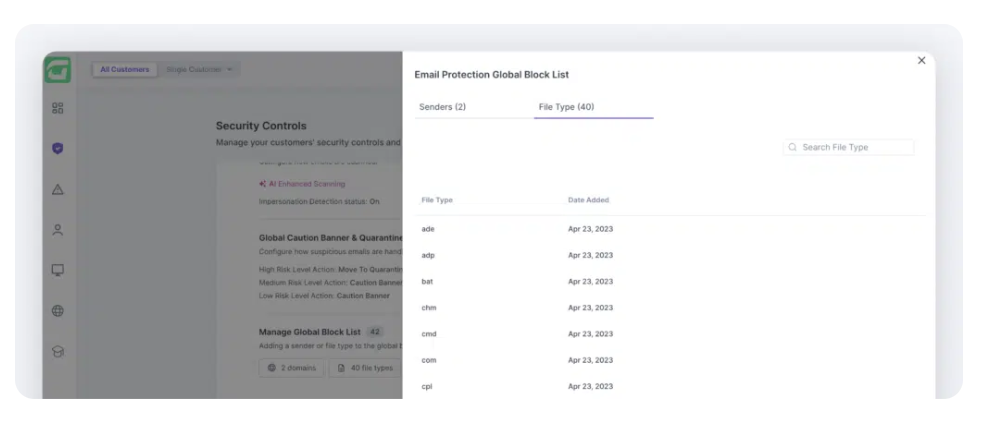
針對日益增長的客戶需求,Guardz 在電郵安全中推出了更靈活的文件過濾功能。此功能允許針對每位客戶自定義攔截或允許特定文件類型(如 WAV)。這項管理功能位於安全控制 > 電郵保護 > 阻擋列表中。

主要特色:

文件類型自定義過濾:用戶現在可以攔截或允許指定的文件類型,例如 WAV 文件,幫助企業根據客戶需求靈活制定電郵安全策略。
進階管理選項:在安全控制 -> 電郵保護中,管理員可以找到進一步配置選項,簡化設置電郵掃描規則的過程。
全局與客戶級別管理:此功能支援全局 MSP 設置,為所有客戶設置默認規則,但也允許管理員針對每個客戶進行個性化設置,提供更大的靈活性。

功能優勢:

提高安全性:通過阻擋潛在危險的文件類型,有效降低電郵攻擊風險。
靈活控制:根據企業需求調整電郵掃描規則,提升整體電郵安全管理效率。
簡易管理:集中的管理界面讓政策實施和調整變得更加輕鬆。

功能改進:

偵測警報更新
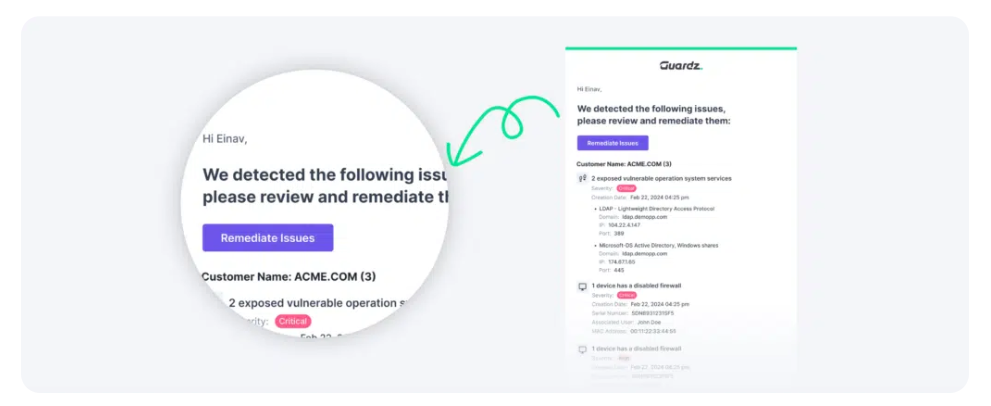
我們對偵測電郵警報進行了全面改進,以提升通知的清晰度、相關性和用戶體驗。
重點強調偵測嚴重性:警報將突出顯示偵測事件的嚴重性,幫助用戶迅速確定優先處理的問題。
詳細的用戶與設備信息:警報中提供了關於涉及用戶和設備的詳細信息,方便管理員快速了解問題範圍並採取行動。
即將推出:更多電郵通知功能即將迎來類似的改進,敬請期待。

隱藏演示數據功能
我們在客戶頁面新增了一個「演示數據」切換按鈕,方便管理員快速隱藏或顯示演示數據。MSP 現在可以使用演示數據來展示平台功能,而不必洩露實際客戶的敏感數據,這成為一種既安全又有效的銷售工具。當演示數據隱藏時,這些數據將不會計入匯總報告中,以確保數據報告的準確性。

這些更新進一步體現了我們致力於為 MSP 提供領先工具和功能的承諾,幫助提升安全性、控制力和用戶體驗。更多更新和功能改進即將推出,敬請期待!

關於 Guardz

Guardz 為管理服務提供商 (MSP) IT 專業人士提供一個人工智能驅動的網絡安全平台,專門設計來保護小型企業免受網絡攻擊。我們的統一檢測與響應平台能夠全面保護用戶、電子郵件、設備、雲端目錄和數據。透過簡化網絡安全管理,我們讓企業能夠專注於發展業務,同時減少安全管理的複雜性。Guardz 結合強大的網絡安全技術和豐富的專業知識,確保安全措施持續受到監控、管理和改進,預防未來的攻擊並降低風險。

關於 Version 2 Digital

Version 2 Digital 是亞洲最有活力的 IT 公司之一,公司發展及代理各種不同的互聯網、資訊科技、多媒體產品,其中包括資安、網絡、雲端、基礎設施、通訊系統、軟體開發運營、商業應用、多媒體、生產力及消費市場產品。透過公司龐大的網絡、銷售點、分銷商及合作夥伴,Version 2 Digital 提供廣被市場讚賞的產品及服務。Version 2 Digital 的銷售網絡包括台灣、香港、澳門、中國大陸、新加坡、馬來西亞等各亞太地區,客戶來自各行各業,包括全球 1000 大跨國企業、上市公司、公用事業、醫療、金融、教育機構、政府部門、無數成功的中小企及來自亞洲各城市的消費市場客戶。

New Microsoft macOS Flaws: What MSPs Are Doing to Keep You Safe

Key Takeaways:

  • Critical Vulnerabilities Discovered: New security flaws in Microsoft macOS apps could potentially grant hackers unrestricted access to sensitive systems, posing a significant threat to businesses using these platforms.
  • Increased Risk to Organizational Data: If exploited, these vulnerabilities could allow cybercriminals to bypass security protocols, leading to unauthorized access, data breaches, and severe financial and reputational damage.
  • The Vital Role of MSPs: Managed Service Providers (MSPs) are essential in keeping businesses secure by regularly updating systems, implementing robust cybersecurity measures, and responding swiftly to new threats.

Intro

With digital threats ever-present, the recent identification of significant flaws in Microsoft macOS applications highlights the urgent demand for strong cybersecurity protocols. Managed Service Providers (MSPs) are actively protecting businesses against potential exploitation, ensuring organizational safety from cyber threats. Grasping these vulnerabilities, their consequences, and the essential role of MSPs aids businesses in managing the intricate cybersecurity environment of today.

The Emergence of Critical Vulnerabilities in Microsoft macOS Apps

The cybersecurity landscape has been jolted by the revelation of critical vulnerabilities in Microsoft’s macOS applications. These flaws have the potential to open a backdoor for cybercriminals, granting them unrestricted access to sensitive systems and data. Microsoft has continually strived to fortify its security measures, but this latest discovery underscores a critical reality: no platform is immune to sophisticated cyber threats. As businesses increasingly rely on Microsoft’s macOS apps for their daily operations, the urgency to address these vulnerabilities becomes paramount. This situation highlights the rapid pace at which cyber threats evolve, outpacing even the most robust security measures. Organizations must recognize the inherent risks associated with these vulnerabilities, which could lead to unauthorized data access, theft, and a slew of malicious activities. The impact on businesses could be far-reaching, with potential financial repercussions and long-term damage to reputation. The emergence of these vulnerabilities serves as a stark reminder of the dynamic nature of cyber threats, emphasizing the need for businesses to remain vigilant and proactive in their cybersecurity efforts.

Understanding the Impact of These Vulnerabilities on Businesses

The ramifications of these vulnerabilities for businesses reliant on Microsoft’s macOS applications are profound. When cybercriminals exploit these flaws, they can bypass existing security measures and gain unauthorized access to sensitive data. This kind of breach can trigger a cascade of negative outcomes, including significant financial losses and irreparable harm to a company’s reputation. Regulatory penalties could further compound the financial strain, while the erosion of customer trust can lead to a long-term decline in business. Operational disruptions might also ensue, potentially halting key business functions for extended periods. In a landscape where data integrity is paramount, the exploitation of such vulnerabilities could undermine competitive advantage, impede strategic goals, and necessitate costly and time-consuming remediation efforts. Consequently, robust cybersecurity protocols are essential not just for protecting data but for preserving the very fabric of an organization’s operational stability and market standing.

The Role of MSPs in Cybersecurity Management

Managed Service Providers (MSPs) play a pivotal role in the cybersecurity ecosystem, offering an indispensable layer of protection for businesses, especially those without dedicated in-house IT security teams. By leveraging MSPs, organizations can tap into a pool of specialized knowledge and cutting-edge technologies designed to safeguard against cyber threats. MSPs provide continuous monitoring and management of IT systems, ensuring they are fortified with the latest security patches and protocols. This proactive stance allows them to detect and address vulnerabilities before they can be exploited, maintaining a secure digital environment for their clients.

MSPs excel in their ability to offer tailored solutions that meet the unique security needs of different organizations. Their expertise extends to implementing advanced cybersecurity frameworks, such as intrusion detection systems and firewalls, that form the backbone of a robust defense strategy. Additionally, MSPs perform regular security audits to identify potential weaknesses and ensure compliance with industry standards and regulations.

Beyond technological safeguards, MSPs also focus on the human element of cybersecurity. They provide comprehensive training programs to educate employees on best practices and the latest threat vectors, minimizing the risk of human error leading to breaches. This holistic approach ensures that every facet of an organization’s digital ecosystem is protected.

By staying abreast of the latest developments in the cybersecurity landscape, MSPs can swiftly adapt their strategies to counter new and emerging threats. This agility, combined with their deep expertise and proactive measures, makes MSPs an invaluable ally in the ongoing battle to secure organizational data and maintain operational integrity.

Strategies MSPs Use to Identify and Mitigate Cyber Threats

MSPs deploy a multifaceted approach to shield organizations from cyber threats. One key strategy is continuous monitoring of network activity, which enables real-time detection of anomalies that could indicate potential breaches. This vigilance allows for swift action, mitigating risks before they escalate. Regular system audits are another cornerstone, helping to identify and rectify vulnerabilities ahead of any exploitation. Advanced cybersecurity frameworks, including robust firewalls and sophisticated intrusion detection systems, form the bedrock of their defense tactics. These tools are complemented by the implementation of stringent security protocols that are consistently updated to counter new threats. Additionally, MSPs recognize the crucial role of human factors in cybersecurity. They offer comprehensive training programs designed to educate employees on the latest threat vectors and best practices, significantly reducing the risk of human error leading to breaches. By integrating these diverse strategies, MSPs create a fortified digital environment that proactively defends against a wide array of cyber threats.

Staying Ahead of Emerging Cyber Threats

The digital threat landscape is in a constant state of flux, making it imperative for businesses to stay ahead of emerging cyber threats. MSPs play a critical role in this ongoing battle by leveraging advanced technologies and methodologies to predict and counteract potential risks. One of the key strategies employed by MSPs is the use of artificial intelligence and machine learning to identify patterns and anomalies that could signal new types of cyberattacks. These advanced analytics tools provide real-time insights, allowing for preemptive measures that neutralize threats before they can cause harm.

Moreover, MSPs maintain a rigorous schedule of threat intelligence updates. By subscribing to global threat intelligence feeds, they stay informed about the latest vulnerabilities, attack vectors, and cybercriminal tactics. This information is then used to adjust and fortify security protocols dynamically, ensuring that defenses are always one step ahead. Additionally, MSPs collaborate with cybersecurity communities and forums to share knowledge and gain insights from other experts in the field, fostering a collective defense against sophisticated attacks.

Another crucial aspect of staying ahead involves continuous employee education. MSPs conduct regular training sessions that focus on the latest threat vectors and security best practices. This not only equips employees with the knowledge to identify and avoid potential threats but also fosters a culture of cybersecurity awareness throughout the organization. By combining technological innovation with human vigilance, MSPs create a comprehensive defense strategy that is both adaptive and resilient.

Ultimately, the proactive measures taken by MSPs serve as a critical buffer, ensuring that businesses are not just reacting to threats but are actively prepared to counteract them.

The Essential Partnership Between Businesses and MSPs

The relationship between businesses and MSPs extends beyond a mere service agreement; it is a strategic alliance rooted in mutual trust and a shared commitment to cybersecurity. MSPs bring specialized knowledge, state-of-the-art technologies, and proactive monitoring to the table, offering a level of protection that most organizations would struggle to achieve on their own. For businesses, engaging with an MSP means gaining access to a dedicated team of experts who are constantly vigilant, ensuring that systems are secure and compliant with the latest industry standards.

A key aspect of this partnership is the seamless integration of MSPs into a business’s existing operations. This includes not just the deployment of technical solutions, but also continuous education and training for employees, fostering a culture of cybersecurity awareness throughout the organization. MSPs work closely with businesses to tailor security strategies that align with specific needs and risk profiles, providing a customized defense against cyber threats.

Open communication is another cornerstone of this relationship. Regular updates and transparent reporting from MSPs keep businesses informed about their security posture, potential vulnerabilities, and ongoing efforts to mitigate risks. This collaborative approach ensures that both parties are aligned in their objectives, creating a resilient framework capable of adapting to the ever-changing cyber threat landscape.

At Guardz, we understand the critical role MSPs play in the cybersecurity ecosystem. That’s why we have forged strong partnerships with MSPs to provide comprehensive security solutions tailored to their clients’ unique needs. By leveraging our advanced cybersecurity platform, MSPs can offer their clients robust protection against emerging threats, such as the recently discovered vulnerabilities in Microsoft macOS apps. Guardz equips MSPs with the tools and insights they need to monitor, manage, and mitigate risks effectively, ensuring that their clients’ digital assets remain secure in an increasingly hostile cyber environment. With Guardz, MSPs can confidently protect their clients while enhancing their service offerings, ultimately delivering peace of mind and security at every level.

Conclusion: Ensuring Resilience in the Face of Cyber Adversity

The recent vulnerabilities in Microsoft’s macOS applications serve as a crucial reminder of the ever-present cyber threats that businesses face. Managed Service Providers (MSPs) stand at the forefront of cybersecurity, offering the expertise and proactive measures necessary to counteract these risks. By partnering with MSPs, businesses can leverage advanced technologies and continuous monitoring to stay ahead of emerging threats. This collaboration fosters a resilient digital environment, allowing organizations to focus on their core operations without compromising on security. In this dynamic threat landscape, maintaining robust cybersecurity protocols and engaging with knowledgeable MSPs are essential steps in safeguarding your business’s future.

About Version 2 Digital

Version 2 Digital is one of the most dynamic IT companies in Asia. The company distributes a wide range of IT products across various areas including cyber security, cloud, data protection, end points, infrastructures, system monitoring, storage, networking, business productivity and communication products.

Through an extensive network of channels, point of sales, resellers, and partnership companies, Version 2 offers quality products and services which are highly acclaimed in the market. Its customers cover a wide spectrum which include Global 1000 enterprises, regional listed companies, different vertical industries, public utilities, Government, a vast number of successful SMEs, and consumers in various Asian cities.

About Guardz
Guardz is on a mission to create a safer digital world by empowering Managed Service Providers (MSPs). Their goal is to proactively secure and insure Small and Medium Enterprises (SMEs) against ever-evolving threats while simultaneously creating new revenue streams, all on one unified platform.

×

Hello!

Click one of our contacts below to chat on WhatsApp

×