Since the start of the Russian invasion of Ukraine, ransomware has increased its destructive capabilities; in T3, several ransomware-mimicking wipers appeared in connection with the war, targeting Ukrainian entities.
RDP password-guessing attacks remained down in T3 2022, with daily averages oscillating around 100 million attack attempts (compared to 1 billion in T1 2022).
Despite patches having been available since December 2021, exploitation attempts of Log4j grew by 9% in T3 2022.
Cryptocurrency threats declined by 25% in T3 2022, with detections almost cut in half in a year-on-year comparison; while crimeware is decreasing, cryptocurrency-related scams are rising.
Banking malware detections more than doubled in a year-on-year comparison.
Android detections grew by 57% in T3 2022, with Adware, HiddenApps, and Spyware driving the increase.
Since the start of the Russian invasion of Ukraine, ransomware has increased its destructive capabilities; in T3, several ransomware-mimicking wipers appeared in connection with the war, targeting Ukrainian entities.
RDP password-guessing attacks remained down in T3 2022, with daily averages oscillating around 100 million attack attempts (compared to 1 billion in T1 2022).
Despite patches having been available since December 2021, exploitation attempts of Log4j grew by 9% in T3 2022.
Cryptocurrency threats declined by 25% in T3 2022, with detections almost cut in half in a year-on-year comparison; while crimeware is decreasing, cryptocurrency-related scams are rising.
Banking malware detections more than doubled in a year-on-year comparison.
Android detections grew by 57% in T3 2022, with Adware, HiddenApps, and Spyware driving the increase.
BRATISLAVA — February 8, 2023 — ESET released today its T3 2022 Threat Report, summarizing key statistics from ESET detection systems and highlighting notable examples of ESET’s cybersecurity research. The latest issue of the ESET Threat Report (covering October to December 2022) highlights the impact of the ongoing war on Ukraine and its effects on the world, including cyberspace. The invasion continues to have a major impact on energy prices, inflation, and cyberthreats, with the ransomware scene experiencing some of the biggest shifts.
“The ongoing war in Ukraine has created a divide among ransomware operators, with some supporting and others opposing the aggression. Attackers have also been using increasingly destructive tactics, such as deploying wipers that mimic ransomware and encrypt the victim’s data with no intention of providing a decryption key,” explains Roman Kováč, Chief Research Officer at ESET.
The war also affected brute-force attacks against exposed RDP services, but despite the decline of these attacks in 2022, password guessing remains the most favored network attack vector. The Log4j vulnerability, patches for which have been available since December 2021, still placed second in the external intrusion vector ranking.
The report also explains the impact of cryptocurrency exchange rates and soaring energy prices on various crypto-threats, with cryptocurrency-related scams experiencing a renaissance. ESET products blocked an increase of 62% in cryptocurrency-themed phishing websites in T3, and the FBI recently issued a warning about a surge in new crypto-investment schemes. Overall infostealer detections trended down in both T3 and the whole of 2022; however, banking malware was an exception, with detections doubling in a year-on-year comparison.
Other trends in T3 include increased phishing activity impersonating online shops during the holiday season and the rise in Android adware detections due to malicious versions of mobile games being placed on third-party app stores before Christmas. “The Android platform also saw an increase in spyware throughout the year, due to easy-to-access spyware kits available on various online forums and used by amateur attackers,” added Kováč.
The ESET T3 2022 Threat Report also reviews the most important findings and achievements by ESET researchers. They discovered a MirrorFace spearphishing campaign against high-profile Japanese political entities, and new ransomware named RansomBoggs that targets multiple organizations in Ukraine and has Sandworm’s fingerprints all over it. ESET researchers also discovered a campaign conducted by the infamous Lazarus group that targets its victims with spearphishing emails containing documents with fake job offers; one of the lures was sent to an aerospace company employee. As for supply-chain attacks, ESET experts found a new wiper and its execution tool, which they have both attributed to the Agrius APT group, aiming at users of an Israeli software suite used in the diamond industry.
Besides these findings, the report also summarizes the many talks given by ESET researchers in recent months and introduces talks planned for both the RSA Conference and Botconf.
Version 2 Digital is one of the most dynamic IT companies in Asia. The company distributes a wide range of IT products across various areas including cyber security, cloud, data protection, end points, infrastructures, system monitoring, storage, networking, business productivity and communication products.
Through an extensive network of channels, point of sales, resellers, and partnership companies, Version 2 offers quality products and services which are highly acclaimed in the market. Its customers cover a wide spectrum which include Global 1000 enterprises, regional listed companies, different vertical industries, public utilities, Government, a vast number of successful SMEs, and consumers in various Asian cities.
About ESET For 30 years, ESET® has been developing industry-leading IT security software and services for businesses and consumers worldwide. With solutions ranging from endpoint security to encryption and two-factor authentication, ESET’s high-performing, easy-to-use products give individuals and businesses the peace of mind to enjoy the full potential of their technology. ESET unobtrusively protects and monitors 24/7, updating defenses in real time to keep users safe and businesses running without interruption. Evolving threats require an evolving IT security company. Backed by R&D facilities worldwide, ESET became the first IT security company to earn 100 Virus Bulletin VB100 awards, identifying every single “in-the-wild” malware without interruption since 2003.
In today’s digital world, cyber risk is high and growing. The best way to control this risk is with a proactive cyber security strategy that quantifies and measures your company’s vulnerability to theft, fraud, or data breach.
The cyber threat landscape is diverse, and there is a wide range of potential threats in this sector, such as intellectual property theft, ransomware, data breaches, DDoS attacks, and insider threats. As cyber criminals improve on new methods for making threats, it is therefore important for cyber security professionals to be on top of where the latest threats are to hide from evolving threats. But for a company to achieve this, it must first understand the risks of cybersecurity, be vigilant in its security stance, and be aware of its accompanying risks.
Cyber risk quantification (CRQ) is the primary route to understanding the cyber threat landscape and mitigating risks within a cyber security environment. Cyber risk quantification is also part of Cyber Security Risk Management and is a crucial part of an organization’s overall security posture. It involves assessing risks relating to various cybersecurity topics, such as vulnerabilities, threats and impacts. Quantification addresses measurement, tracking and reporting on the risks relating to specific topics to prepare for cyberattacks effectively.
Risk quantification is determining how likely a threat or attack is to be successful against your organization and then assessing the severity of such an event. Cyber risk quantification is a part of this process, and it pertains specifically to threats that target information on computer networks or in physical systems, like computer networks or smartphones. These include both internal threats (such as employees) and those from external sources (hackers).
Risk quantification is an enterprise tool to help them understand their existing cyber risk environment. It also enables them to devise effective strategies for reducing those risks by implementing appropriate controls.
What is Cyber Risk Quantification?
This process of cyber risk quantification has been described as a three-step process: identifying the “pen-testing assets”, counting vulnerabilities, and measuring the potential threats. These steps represent a holistic approach, allowing a comprehensive view of one’s cyber risk posture and its vulnerabilities, threats, and risks.
At its core, cyber risk quantification is not a specific set of rules or methodologies but rather a method for conducting a rigorous, in-depth analysis of subjecting any IT infrastructure. The intent is to obtain objective evidence to develop strategies for reducing risks and ultimately strengthening an organization’s cyber resilience.
Benefits of Cyber Risk Quantification
Cyber risk quantification is important in ensuring that cyber threats are understood and can help cyber security teams analyse vulnerabilities and risks and create cyber risk mitigation strategies. The following are the benefits of cyber risk quantification.
Provides Insights into Vulnerabilities
An analysis of the information technology assets allows companies to understand their cyber risk posture and quantify their security vulnerabilities. The process makes companies feel more secure in knowing they are not as vulnerable as they originally assumed.
Helps Identify & Mitigate Threats
Cyber risk quantification is a process that helps identify the number of potential threats within an organization. It helps determine what the company needs to do to prevent a cyber attack.
Provides Information for Basing Decisions
The cyber risk quantification process allows the creation of an actionable and detailed plan for organizations to make informed decisions about protecting themselves from cyberattacks.
Helps Identify the Need for Resources
Companies can use the cyber risk quantification process results to determine what resources are required to reduce or eliminate current organizational threats and vulnerabilities.
Risk Management Decision
After a cyber risk quantification process, one can better understand their current security posture and related cyber risks to well-informed decisions about reducing this risk.
Automating the Process
Can automate cyber risk quantification to save time and labour. It means that technicians will not have to spend time performing cyber risk quantification on each piece of information technology equipment.
Cost-Effective
The overall cost of implementing cyber risk quantification will not be much more than processing a security vulnerability assessment.
Determining the Company’s Cyber Tolerance
Can use the information obtained for identifying and developing cybersecurity strategies for the foreseeable future. It means that the consequences of an attack during this planning period are less severe than those that would experience after a cyber attack once an organization has planned out their cyber security strategy.
Determining the Potential Cost of a Cyber Attack
Companies can use cyber risk quantification to estimate the cost of a successful attack and use this to determine how much money should be allocated towards mitigating the impact of an attack.
Planning Effective Training Programs
The results of a cyber risk quantification process can be used to create more effective training programs and plan for an organization’s IT infrastructure training needs.
How to Leverage on Cyber Risk Quantification
Cyber risk quantification can be leveraged on the following levels:
Organizational Levels
The senior management of an organization needs to determine the organizational level of cyber risk quantification. The level at which this model is used will depends on how large and how organized an organization is.
For example, an enterprise with thousands of employees or many systems will benefit from applying this model at a higher level (e.g., enterprise-wide) than a smaller company that runs just one corporate system.
Site Level
Organizationally focused cyber risk quantification methods can be applied to each site. It is the level at which most companies are structured; they have one or a few locations and may have dozens of sites. The IT personnel at each site may also not have direct access to all the data needed for an effective cyber risk quantification model.
Process Level
Many organizations are involved in processing large amounts of data (e.g. processing credit card information or handling employee information). These organizations can apply the same data processing methodologies to cyber risk quantification and perform a different amount of manual data analysis.
Asset Level
Cyber risk quantification can be applied to a specific asset (e.g., a server, router, switch). It is an effective method for performing cyber risk quantification on small network environments or those with limited access to the underlying devices on a network.
Information System Level
This level is useful for the entire IT infrastructure. Most organizations would benefit from a more holistic enterprise approach to cyber risk quantification.
Individual Asset Level
Some organizations may have large network environments that do not need a holistic enterprise-level approach to quantifying cyber risk. Some systems are relatively small and easy to manage individually with minimal use of IT resources.
Application Component Level
An individual application component (e.g. a web server) is typically not a significant resource on its own, and it has unique vulnerabilities that need to be fixed. In most instances, cyber risk quantification of an application component will include looking at its counterpart components. It would be a rare occurrence for those performing cyber risk quantification on an individual asset level.
Challenges of Cyber Risk Quantification
Cyber risk quantification is a challenging task because of the numerous variables can have an impact on how risks are quantified. Some of the most common factors that have to be considered when performing cyber risk quantification include:
Data Visibility
The amount of data for analysis is often limited in the cyber risk quantification process. It means that the available data has to be collected from a relatively small number of sources and then analyzed using an automated method.
Can’t Calculate Risk
Cyber risk quantification could be a better science. Often, organizations will need a higher level of understanding concerning the vulnerabilities they are trying to quantify and the impact a successful cyber attack would have on their company.
Partial Remediation
Sometimes, a company can perform some level of remediation, but not all of its IT infrastructure components. It is often the case in smaller companies where policy and security costs can be very high.
Time Frame of Analysis
Cyber threat intelligence is always changing, and so is the level of risk for an organization, even for an asset within that organization. Cyber risk quantification models must be set up to keep pace with these changes.
Data Manipulation
The information is also analyzed against other data that has been manipulated and stored for analysis. While this does not mean that all data is manipulated, it does mean that some data may have been tampered with or changed to alter the analysis’s findings (e.g., personal information).
No Consistent Methodology
Cyber risk quantification is not an exact science; therefore, it cannot be performed consistently.
No Standardization
The model used for cyber risk quantification may depend on the organization and the structure of its IT infrastructure. It is challenging to translate results from one organization to another or even use it across various industries.
No Known Method
Studies have shown that industry and IT experts do not widely accept any known cyber threat quantification methodology.
Conclusion
Cyber risk quantification stands as an emerging field in cybersecurity, that will undoubtedly play an increasingly crucial role in the future of cybersecurity for assessing organizational risk before potential attacks occur.
About Version 2 Digital
Version 2 Digital is one of the most dynamic IT companies in Asia. The company distributes a wide range of IT products across various areas including cyber security, cloud, data protection, end points, infrastructures, system monitoring, storage, networking, business productivity and communication products.
Through an extensive network of channels, point of sales, resellers, and partnership companies, Version 2 offers quality products and services which are highly acclaimed in the market. Its customers cover a wide spectrum which include Global 1000 enterprises, regional listed companies, different vertical industries, public utilities, Government, a vast number of successful SMEs, and consumers in various Asian cities.
About Portnox Portnox provides simple-to-deploy, operate and maintain network access control, security and visibility solutions. Portnox software can be deployed on-premises, as a cloud-delivered service, or in hybrid mode. It is agentless and vendor-agnostic, allowing organizations to maximize their existing network and cybersecurity investments. Hundreds of enterprises around the world rely on Portnox for network visibility, cybersecurity policy enforcement and regulatory compliance. The company has been recognized for its innovations by Info Security Products Guide, Cyber Security Excellence Awards, IoT Innovator Awards, Computing Security Awards, Best of Interop ITX and Cyber Defense Magazine. Portnox has offices in the U.S., Europe and Asia. For information visit http://www.portnox.com, and follow us on Twitter and LinkedIn.。
On December 22, 2022, LastPass announced that a data breach first disclosed in August 2022 was far more extensive than initially thought. The news sent shockwaves through the industry, leaving many password manager users — especially LastPass users — concerned about the security of their sensitive information.
The breach serves as a stark reminder that no online service provider may be completely bulletproof breach-wise. So today, let’s get into the LastPass data breach and what it means for NordPass users.
The LastPass data breach breakdown
Cybercriminal activity has been on a steady rise for the last decade, and it looks that the trend is not about to change. In fact, today, cybercrime is the most lucrative criminal activity and is estimated to cost the world $10.5 trillion annually by 2025.
So as our personal and financial information is increasingly getting stored online, it is critical that companies take all necessary steps to protect their customers’ data. Unfortunately, the recent LastPass data breach shows that even well-known companies can fall short security-wise.
The company’s latest statement explains that an unauthorized party was able to access LastPass’ cloud-based storage environment and copy customer vault data along with information from a backup of customer account information.
The extent of the breach is not yet clear, but it is likely that it included some personally identifiable data such as email addresses, phone numbers, and billing information for some users.
The response from LastPass to the breach has been met with criticism from both industry experts and customers. In fact, it has already led to a class-action lawsuit, with one plaintiff alleging that the data breach resulted in the theft of around $53,000 worth of Bitcoin.
Did the LastPass data breach affect all password manager users?
Let’s be clear — the LastPass data breach does not have any direct effect on NordPass, its users, or users data.
After all, we’re two different companies and products with completely different security approaches and mindsets. However, we admit that seeing a competitor affected by a breach of this magnitude is an acute reminder to stay vigilant and prepared at all times.
Is NordPass a secure place for your digital valuables?
Given the severity of the LastPass data breach, it’s only natural that people are questioning the security of their password manager, including NordPass.
First, one of the key elements of NordPass is that it is a zero-knowledge password manager equipped with an advanced encryption algorithm known as XChaCha20 to ensure protection of everything you store in NordPass.
This means that all data stored in the NordPass vault is first encrypted on your device and only then sent to the cloud-based server. Because of the way NordPass is set up, it is only you — the user — who holds the decryption key and has access to everything stored in their vault.
The NordPass team can’t see or access anything. The same principle applies in situations of breaches. Even if a bad actor were able to get their hands on your vault data, they would still need your device, which holds the decryption key, to access the actual contents of the vault data.
NordPass CTO Tomas Smalakys offers a more detailed explanation:
Each NordPass user has a unique public-key cryptography key pair. The Public Key is always stored in plaintext form. The Private Key, on the other hand, exists in plaintext form only on the user’s end device for a limited period of time and never leaves it.
When we need to store a user’s Private Key, it’s encrypted with secret-key cryptography (XChaCha20-Poly1305-IETF) on the user’s device and only then passed to us. While the app is unlocked, the unencrypted Private Key is stored in the secure memory accessible only to the NordPass application. When the application is locked, either by the user or automatically after a set period of inactivity, the Private Key is deleted from the secure memory.
For the user’s Private Key encryption, the Master Key is used. The Master Key is derived from the Master Password and a 16-byte unique-per-user cryptographic salt using the key derivation function (Argon2id). We ask the user for the Master Password every time we need to decrypt the user’s Private Key.
– Tomas Smalakys
NordPass CTO
Tomas further explains that in addition to the encryption principles above, every item (folder, password, credit card, etc.) has two types of data:
For secret-key (symmetric) cryptography, we use an authenticated encryption algorithm:
XChaCha20 stream cipher encryption.
Poly1305 MAC authentication.
For public-key (asymmetric) cryptography, we use an authenticated encryption algorithm:
X25519 key exchange.
XSalsa20 stream cipher encryption.
Poly1305 MAC authentication.
User data is encrypted on their devices and never leaves the device in plain text. This means that when the data is in transit or at rest, it is fully encrypted. In the database, both metadata and secret data is encrypted. This means that if bad actors are able to get access to the database or any of its backups, no user data can be accessed.
Furthermore, at NordPass, we feel that due to the nature of our product, our security practices should be transparent. Both NordPass and NordPass Business have had their security posture thoroughly audited by Cure53, a renowned German auditing firm.
NordPass Business has also successfully passed the SOC 2 Type 1 Audit, which ensures that NordPass Business provides proper security controls to manage customer data and protect their interests with regard to privacy.
All these measures help to ensure that the sensitive data stored in NordPass vaults is protected at all times. However, these days bad actors are creative and no longer function as a one-person operation. So it’s always important to be vigilant with your own security and use strong, unique passwords for each account as well as enable two-factor authentication whenever possible.
Bottom line
It remains to be seen how the LastPass breach will impact the company and the password management industry as a whole, but one thing is clear: it has shaken user trust and serves as a cautionary tale for the importance of data security.
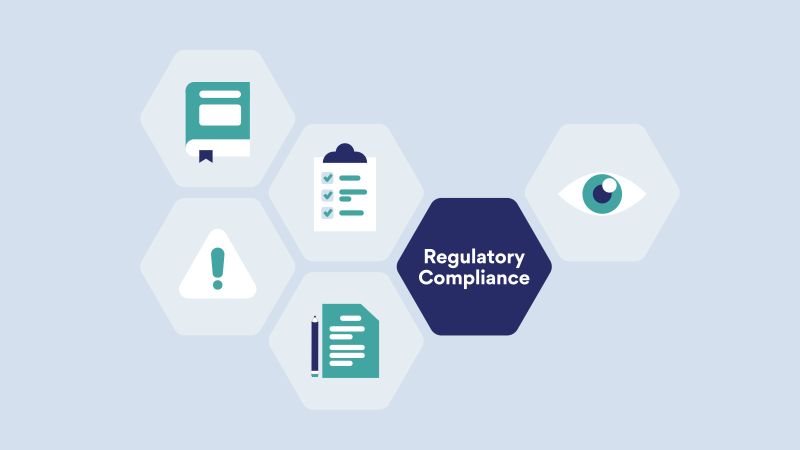
Designed to ensure the safety and security of an organization’s operations and protection of its customers, regulatory compliance standards are a fact of life in today’s business world. Fail to comply and be ready to face serious financial, legal, and reputational harm to your organization.
Today, we’re taking an in depth look at regulatory compliance, exploring different standards, and looking into how NordPass Business can help your organization meet the requirements in an easier and more efficient way.
What is regulatory compliance?
Regulatory compliance refers to various processes and procedures of adhering to the laws, regulations, and standards set by various governing bodies. The regulations can come from numerous sources such as local, state, federal, or even international agencies, industry groups, and professional associations. The intention behind various regulatory compliance is to protect consumers and other stakeholders.
Importance of regulatory compliance
The aim of regulatory compliance is to make sure that businesses and organizations operate in a secure, responsible, and ethical manner. Regulatory compliance can also provide businesses and organizations with a competitive advantage by helping to create a culture of transparency and credibility with customers, employees, and other involved parties. Furthermore, adhering to regulatory compliance can improve internal processes, risk management procedures, and mitigate potential legal issues, which in turn lays a great foundation for a sustainable organization.
However, it’s critical to remember that most regulatory compliance is mandatory. Failing to comply with any of the mandatory regulations can result in hefty fines. For instance, Google has been fined nearly $57 million by French regulators for violation of the General Data Protection Regulation (GDPR). Meta — the company formerly known as Facebook — recently has been fined over $400 million by top EU regulators for forcing users to accept targeted ads.
Besides financial losses, non-compliance can cause major damage to the organization’s reputation as clients may lose trust in the organization. This can even lead to serious legal issues.
Below are some of the most common regulatory compliance standards.
National Institute of Standards and Technology (NIST)
The National Institute of Standards and Technology (NIST) is a US federal agency that develops technology, metrics, and standards to drive innovation and ensure operational security within a business environment. NIST compliance is mandatory for all US-based federal information systems except those related to national security. However, the standard can be adopted by any organization.
To be NIST-compliant, a company needs to implement access controls to limit the risk of unauthorized access, develop a comprehensive incident response plan, and devise audit procedures and schedules.
General Data Protection Regulation (GDPR)
The General Data Protection Regulation (GDPR) is a data protection law that applies to businesses and organizations operating within the European Union (EU) and the European Economic Area (EEA). It sets out rules for how organizations can collect, use, and store personal data, and provides individuals the right to access and control their personal data.
To adhere to the GDPR, organizations and businesses need to implement measures such as obtaining consent from individuals before collecting their data, providing clear and concise information about their data collection practices, and implementing appropriate security measures to protect personal data.
Health Insurance Portability and Accountability Act (HIPAA)
The Health Insurance Portability and Accountability Act (HIPAA) is a US law that sets out standards for the protection of personal health information. The law applies to healthcare providers and all other entities that handle personal health information in the US.
To meet the requirements set out by the HIPAA, organizations need to implement secure systems for storing and transmitting personal health information, providing training to employees on HIPAA requirements, and implementing access controls to prevent unauthorized access to personal health information.
Payment Card Industry Data Security Standard (PCI DSS)
The Payment Card Industry Data Security Standard (PCI DSS) is a set of security standards that apply internationally to organizations that handle credit card transactions. The regulatory standard sets out requirements for protecting cardholder data and preventing unauthorized access to such data.
The PCI DSS regulations require businesses and organizations that process payment card information to implement secure systems for storing and transmitting cardholder data, conduct regular security assessments, and implement further security controls to prevent unauthorized access to cardholder data.
ISO/IEC 27001
The ISO/IEC 27001 is an international standard that outlines best practices for an information security management system (ISMS). The standard has been developed to help organizations protect their information assets and manage risks related to information security. The ISO/IEC 27001 is not a mandatory requirement.
To meet the ISO/IEC 27001 compliance, organizations need to conduct regular risk assessments, implement controls to protect against unauthorized access, and regularly review and update their information security management systems.
California Consumer Privacy Act (CCPA)
The California Consumer Privacy Act (CCPA) is a privacy law that in many ways mimics its European counterpart — the GDPR. However, the CCPA applies to businesses operating in California and it provides California residents with the right to access and control their personal data, and imposes certain requirements on businesses that collect and handle personal data.
For an organization to be CCPA compliant, it needs to implement security measures to protect customer data. Furthermore, companies are also required to provide clear and concise information about data collection practices, allowing California residents to request access to and deletion of their personal data.
Gramm-Leach-Bliley Act (GLBA)
The Gramm-Leach-Bliley Act (GLBA) is a US law that applies to financial institutions within the US. Like many of the regulatory compliance standards we already discussed, GLBA requires financial institutions to implement safeguards that would protect personal information as well as to disclose their data collection and sharing practices to customers.
To comply with the GLBA regulatory standards, financial institutions may need to implement secure systems for storing and transmitting personal financial information, providing customers with information about their data collection and sharing practices, and implementing access controls to prevent unauthorized access to personal financial information.
Center for Internet Security (CIS)
The Center for Internet Security (CIS) is a nonprofit organization that provides cybersecurity guidance and best practices to help organizations protect their systems and data. The CIS comprises 18 Critical Security Controls for identifying and protecting against the most common cyber threats.
To be CIS compliant, companies and organizations need to establish a comprehensive cybersecurity perimeter to ensure protection of their data and information management systems.
Opinion 498
The Formal Opinion 498 outlined by the American Bar Association (ABA) provides guidance for US-based lawyers and law firms with regard to virtual practice. While the ABA Model Rules of Professional Conduct permit virtual practice, the Formal Opinion 498 provides an additional set of guidelines for virtual practice.
To follow the guidelines set out by the Opinion 498, organizations or individuals are urged to establish secure information management systems and protect them with complex passwords to ensure secure storage and access to client data.
Agence nationale de la sécurité des systèmes d’information (ANSSI)
ANSSI compliance combines a set of security standards set by the French National Cybersecurity Agency. The ANSSI has been developed as a regulatory standard in France to protect sensitive information and systems from cyber threats such as hacking, malware, and data breaches. Companies that store and handle sensitive information may be required to comply with the ANSSI standards in order to ensure the security of that information.
Compliance with the ANSSI standards may involve regular audits, penetration testing, and other security measures to identify and address vulnerabilities in a company’s systems.
How can NordPass help with regulatory compliance?
Meeting regulations and staying compliant can be a complex and time-consuming process, as businesses and organizations must stay up-to-date with the latest regulatory requirements and implement appropriate policies, procedures, and tools.
However, with the right tools at your disposal compliance can be less of a hassle than you might think. One such tool is NordPass Business — a secure and easy-to-use password manager designed for business use and it can help your organization comply with the security guidelines and requirements outlined in the regulatory compliance standards listed above. But how exactly can it help?
Strong passwords and secure password storage
Most regulatory compliance standards require organizations to implement some sort of security measures to limit the possibility of unauthorized access.
For instance, PCI DSS, GLBA, GDPR, and CIS Controls all have outlined guidelines for ensuring the security of personal data processing and storage.
This is where NordPass comes in as a tool that can help. Designed by the principles of zero-knowledge architecture and equipped with an advanced XChaCha20 encryption algorithm, NordPass offers a secure way to store and access business passwords and other sensitive information in line with regulatory requirements.
Password Policy — a NordPass Business feature — can also play a critical role in compliance. Using Password Policy, companies can set certain specifications for password complexity for the entire organization, which can significantly fortify the overall security of the organization.
To easily follow Password Policy rules and specifications, users can use our very own Password Generator — a tool that can generate a password adhering to all the specifications outlined in the Password Policy in just a few clicks.
On top of that, NordPass Business can ensure that all of your organization’s passwords are stored securely and in line with the regulatory requirements.
Secure access management
Some compliance standards require organizations to implement secure access management solutions. For example, this is the case with ANSSI compliance as well as with HIPAA and NIST.
Here NordPass Business and its Admin Panel can play a major role because it is designed to provide organizations a way to effectively and easily manage access privileges across the entire organization.
Via the Admin Panel, solution owners and admins can grant or revoke access to systems as well as monitor member activity within the organization. The Admin Panel is also the place where you can set the Password Policy for the organization, ensuring that passwords throughout the company adhere to certain specifications.
Breach Monitoring
Regulatory compliance standards also tend to outline best practices for responding to a security incident such as a data breach. This is explicitly outlined in the GDPR’s Article 33, which states that data breach including personal data breach should be reported within 72 hours to the supervisory authority. Failing to do so may result in a fine of 10 million or 2% of annual revenue.
NordPass Business is equipped with a Data Breach Scanner — a tool that can scan the entire company’s domain list for potential breaches. Because the Data Breach Scanner issues a notification to all members of the organization, the company potentially affected by a breach can act quickly and efficiently to contain it.
The NordPass Password Health tool can help you detect potentially weak, old, or reused passwords throughout the organization and significantly reduce the risk of unauthorized access.
Bottom line
These days, regulatory compliance is an inseparable part of running a business. Fail to comply and be ready to face hefty fines and serious reputational damage. However, compliance is never easy. But with the right tools at your disposal, the whole process can be a lot smoother.
NordPass Business can be a tool to assist organizations in meeting various requirements in an easier and more efficient way. By staying compliant, organizations can not only avoid costly fines and legal issues, but also gain a competitive advantage by building a culture of transparency and credibility with their customer base or investors.
About Version 2 Digital
Version 2 Digital is one of the most dynamic IT companies in Asia. The company distributes a wide range of IT products across various areas including cyber security, cloud, data protection, end points, infrastructures, system monitoring, storage, networking, business productivity and communication products.
Through an extensive network of channels, point of sales, resellers, and partnership companies, Version 2 offers quality products and services which are highly acclaimed in the market. Its customers cover a wide spectrum which include Global 1000 enterprises, regional listed companies, different vertical industries, public utilities, Government, a vast number of successful SMEs, and consumers in various Asian cities.
These days, cybercrime is rampant. It’s no longer a matter of “if” you’re going to suffer an attack but “when” it will happen. All companies want to be ready for any crisis. And this is where a business continuity plan comes into play.
But what is a business continuity plan exactly? Why is it important? What should one include? Today, we’re exploring all these questions in-depth.
What is a business continuity plan?
A business continuity plan (BCP) is a document that sets guidelines for how an organization will continue its operations in the event of a disruption, whether it’s a fire, flood, other natural disaster or a cybersecurity incident. A BCP aims to help organizations resume operations without significant downtime.
Unfortunately, according to a 2020 Mercer survey, 51% of businesses across the globe don’t have a business continuity plan in place.
What’s the difference between business continuity and disaster recovery plans?
We often confuse the terms business continuity plan and disaster recovery plan. The two overlap and often work together, but the disaster recovery plan focuses on containing, examining, and restoring operations after a cyber incident. On the other hand, BCP is a broader concept that considers the whole organization. A business continuity plan helps organizations stay prepared for dealing with a potential crisis and usually encompasses a disaster recovery plan.
Importance of business continuity planning
The number of news headlines announcing data breaches has numbed us to the fact that cybercrime is very real and frequent and poses an existential risk to companies of all sizes and industries.
Consider that in 2021, approximately 37% of global organizations fell victim to a ransomware attack. Then consider that business interruption and restoration costs account for 50% of cyberattack-related losses. Finally, take into account that most cyberattacks are financially motivated and the global cost of cybercrime topped $6 trillion last year. The picture is quite clear — cybercrime is a lucrative venture for bad actors and potentially disastrous for those on the receiving end.
To thrive in these unpredictable times, organizations go beyond conventional security measures. Many companies develop a business continuity plan parallel to secure infrastructure and consider the plan a critical part of the security ecosystem. The Purpose of a business continuity plan is to significantly reduce the downtime in an emergency and, in turn, reduce the potential reputational damage and — of course — revenue losses.
The initial stage of developing a business continuity plan starts with a statement of the plan’s purpose, which explains the main objective of the plan, such as ensuring the organization’s ability to continue its operations during and after a disruptive event.
The Scope of the Plan outlines the areas or functions that the plan will cover, including business processes, personnel, equipment, and technology.
The Budget specifies the estimated financial resources required to implement and maintain the BCP. It includes costs related to technology, personnel, equipment, training, and other necessary expenses.
The Timeline provides a detailed schedule for developing, implementing, testing, and updating the BCP.
II. Risk Assessment
Identification of Risks
Prioritization of Risks
Mitigation Strategies
The Risk Assessment section of a Business Continuity Plan (BCP) is an essential part of the plan that identifies potential risks that could disrupt an organization’s critical functions.
The Identification of Risks involves identifying potential threats to the organization, such cybersecurity breaches, supply chain disruptions, power outages, and other potential risks. This step is critical to understand the risks and their potential impact on the organization.
Once the risks have been identified, the Prioritization of Risks follows, which helps determine which risks require the most attention and resources.
The final step in the Risk Assessment section is developing Mitigation Strategies to minimize the impact of identified risks. Mitigation strategies may include preventative measures, such as system redundancies, data backups, cybersecurity measures, as well as response and recovery measures, such as emergency protocols and employee training.
III. Emergency Response
Emergency Response Team
Communication Plan
Emergency Procedures
This section of the plan focuses on immediate actions that should be taken to ensure the safety and well-being of employees and minimize the impact of the event on the organization’s operations.
The Emergency Response Team is responsible for managing the response to an emergency or disaster situation. This team should be composed of individuals who are trained in emergency response procedures and can act quickly and decisively during an emergency. The team should also include a designated leader who is responsible for coordinating the emergency response efforts.
The Communication Plan outlines how information will be disseminated during an emergency situation. It includes contact information for employees, stakeholders, and emergency response personnel, as well as protocols for communicating with these individuals.
The Emergency Procedures detail the steps that should be taken during an emergency or disaster situation. The emergency procedures should be developed based on the potential risks identified in the Risk Assessment section and should be tested regularly to ensure that they are effective.
IV. Business Impact Analysis
The Business Impact Analysis (BIA) section of a Business Continuity Plan (BCP) is a critical step in identifying the potential impact of a disruption to an organization’s critical operations.
The Business Impact Analysis is typically conducted by a team of individuals who understand the organization’s critical functions and can assess the potential impact of a disruption to those functions. The team may include representatives from various departments, including finance, operations, IT, and human resources.
V. Recovery and Restoration
Procedures for recovery and restoration of critical processes
Prioritization of recovery efforts
Establishment of recovery time objectives
The Recovery and Restoration section of a Business Continuity Plan (BCP) outlines the procedures for recovering and restoring critical processes and functions following a disruption.
The Procedures for recovery and restoration of critical processes describe the steps required to restore critical processes and functions following a disruption. This may include steps such as relocating to alternate facilities, restoring data and systems, and re-establishing key business relationships.
The Prioritization section of the plan identifies the order in which critical processes will be restored, based on their importance to the organization’s operations and overall mission.
Recovery time objectives (RTOs) define the maximum amount of time that critical processes and functions can be unavailable following a disruption. Establishing RTOs ensures that recovery efforts are focused on restoring critical functions within a specific timeframe.
VI. Plan Activation
Plan Activation Procedures
The Plan Activation section is critical in ensuring that an organization can quickly and effectively activate the plan and respond to a potential emergency.
The Plan Activation Procedures describe the steps required to activate the BCP in response to a disruption. The procedures should be clear and concise, with specific instructions for each step to ensure a prompt and effective response.
VII. Testing and Maintenance
Testing Procedures
Maintenance Procedures
Review and Update Procedures
This section of the plan is critical to ensure that an organization can effectively respond to disruptions and quickly resume its essential functions.
Testing procedures may include scenarios such as natural disasters, cyber-attacks, and other potential risks. The testing procedures should include clear objectives, testing scenarios, roles and responsibilities, and evaluation criteria to assess the effectiveness of the plan.
The Maintenance Procedures detail the steps necessary to keep the BCP up-to-date and relevant.
The Review and Update Procedures describe how the BCP will be reviewed and updated regularly to ensure its continued effectiveness. This may involve conducting a review of the plan on a regular basis or after significant changes to the organization’s operations or threats.
What should a business continuity plan checklist include?
Organizations looking to develop a BCP have more than a few things to think through and consider. Variables such as the size of the organization, its IT infrastructure, personnel, and resources all play a significant role in developing a continuity plan. Remember, each crisis is different, and each organization will have a view on handling it according to all the variables in play. However, all business continuity plans will include a few elements in one way or another.
Clearly defined areas of responsibility
A BCP should define specific roles and responsibilities for cases of emergency. Detail who is responsible for what tasks and clarify what course of action a person in a specific position should take. Clearly defined roles and responsibilities in an emergency event allow you to act quickly and decisively and minimize potential damage.
Crisis communication plan
In an emergency, communication is vital. It is the determining factor when it comes to crisis handling. For communication to be effective, it is critical to establish clear communication pipelines. Furthermore, it is crucial to understand that alternative communication channels should not be overlooked and outlined in a business continuity plan.
Recovery teams
A recovery team is a collective of different professionals who ensure that business operations are restored as soon as possible after the organization confronts a crisis.
Alternative site of operations
Today, when we think of an incident in a business environment, we usually think of something related to cybersecurity. However, as discussed earlier, a BCP covers many possible disasters. In a natural disaster, determine potential alternate sites where the company could continue to operate.
Backup power and data backups
Whether a cyber event or a real-life physical event, ensuring that you have access to power is crucial if you wish to continue operations. In a BCP, you can often come across lists of alternative power sources such as generators, where such tools are located, and who should oversee them. The same applies to data. Regularly scheduled data backups can significantly reduce potential losses incurred by a crisis event.
Recovery guidelines
If a crisis is significant, a comprehensive business continuity plan usually includes detailed guidelines on how the recovery process will be carried out.
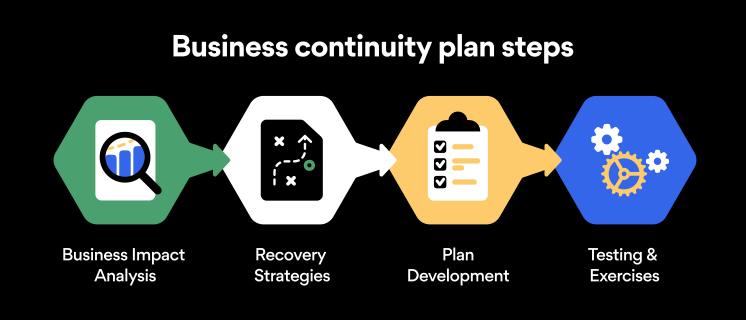
Business continuity planning steps
Here are some general guidelines that an organization looking to develop a BCP should consider:
Analysis
A business continuity plan should include an in-depth analysis of everything that could negatively affect the overall organizational infrastructure and operations. Assessing different levels of risk should also be a part of the analysis phase.
Design and development
Once you have a clear overview of potential risks your company could face, start developing a plan. Create a draft and reassess it to see if it takes into account even the smallest of details.
Implementation
Implement BCP within the organization by providing training sessions for the staff to get familiar with the plan. Getting everyone on the same page regarding crisis management is critical.
Testing
Rigorously test the plan. Play out a variety of scenarios in training sessions to learn the overall effectiveness of the continuity plan. By doing so, everyone on the team will be closely familiar with the business continuity plan’s guidelines.
Maintenance and updating
Because the threat landscape constantly changes and evolves, you should regularly reassess your BCP and take steps to update it. By making your continuity plan in tune with the times, you will be able to stay a step ahead of a crisis.
Level up your company’s security with NordPass Business
A comprehensive business continuity plan is vital for the entire organization’s security posture. However, in a perfect world, you wouldn’t have to use it. This is where NordPass Business can help.
Remember, weak, reused, or compromised passwords are often cited as one of the top contributing factors in data breaches. It’s not surprising, considering that an average user has around 100 passwords. Password fatigue is real and significantly affects how people treat their credentials. NordPass Business counters these issues.
With NordPass Business, your team will have a single secure place to store all work-related passwords, credit cards, and other sensitive information. Accessing all the data stored in NordPass is quick and easy, which allows your employees not to be distracted by the task of finding the correct passwords for the correct account.
In cyber incidents, NordPass Business ensures that company credentials remain secure at all times. Everything stored in the NordPass vault is secured with advanced encryption algorithms, which would take hundreds of years to brute force.
If you are interested in learning more about NordPass Business and how it can fortify corporate security, do not hesitate to book a demo with our representative.
About Version 2 Digital
Version 2 Digital is one of the most dynamic IT companies in Asia. The company distributes a wide range of IT products across various areas including cyber security, cloud, data protection, end points, infrastructures, system monitoring, storage, networking, business productivity and communication products.
Through an extensive network of channels, point of sales, resellers, and partnership companies, Version 2 offers quality products and services which are highly acclaimed in the market. Its customers cover a wide spectrum which include Global 1000 enterprises, regional listed companies, different vertical industries, public utilities, Government, a vast number of successful SMEs, and consumers in various Asian cities.
About NordPass NordPass is developed by Nord Security, a company leading the global market of cybersecurity products.
The web has become a chaotic space where safety and trust have been compromised by cybercrime and data protection issues. Therefore, our team has a global mission to shape a more trusted and peaceful online future for people everywhere.
You’d be hard-pressed to find someone who doesn’t care about their privacy. It’s human nature. You want control over what private information you share and who you share it with. Unfortunately, you can lose this control with a careless click.
What is private data?
Private data is anything that reveals information about you. It can be your name, your photos, your posts on social media, your email addresses, or your IP.
Some of these details are highly sensitive, including your banking information, genetic data, health records, social security number, and home address. As a rule of thumb, any information that could cause you financial or reputational damage can be considered sensitive.
What is data privacy and why is it important?
Data privacy, also known as information privacy, generally refers to a person’s right to choose for themselves when, how, with whom, and to what extent they want to share their private data with others.
As internet usage has become ubiquitous over the years, so has the importance of data privacy and protection. Various websites and applications often collect your private data in exchange for its services.
Some platforms and applications may exceed their reach when it comes to data collection, storage, and usage. Others may have a lax attitude toward private data protection.
The key questions to ask when talking about data privacy are:
Who has access to information about you?
Who controls this access?
Is it secure?
When private data falls into the wrong hands, consequences can be dire. A data breach on an online platform could put your sensitive information into the hands of cyber crooks. Users whose data is leaked are put at risk of identity theft, bank fraud, and other online-related scams and crimes. These days, data is king and there’s no way around it. Thus, it’s not surprising that protection is paramount.
Your privacy in the hands of the government
Various entities handle your private data. First – the government and its institutions. Let’s take the justice system as an example. You cannot go to court or file a claim without revealing your identity. And that’s fine — it wouldn’t be fair to the other side if you were suing them anonymously.
Similarly, you can’t get public services (for example, electricity, a high school education, or healthcare) without identifying yourself.
In a perfect world, the government does not infringe upon your privacy more than necessary. In the real world, some governments store every bit of data they can get their hands on. Even worse, others engage in mass surveillance of their citizens.
Your privacy in the hands of businesses
You can buy apples at a fruit stand and remain a stranger to the vendor. But buy apples online, and you’ll give away private information about yourself. It may be a fact as simple as you liking apples. This information will be sold to an advertiser, and the next time you go online, an ad for apples will pop up on your screen.
Almost everything you do online leaves a data footprint. You have little control over how your digital footprint is collected.
Usually, it works like this. Before you start using a new online service, you have to read a wall of fine print. But you don’t, because who has time to wade through paragraphs of legal jargon? You click “Agree,” and that’s how you begin to give away your private data. The agreement can’t be changed, and you cannot bargain — take it or leave it. This service will collect your data and use it for marketing purposes or sell it to the highest bidder. And there’s nothing you can do.
It’s easy to say “Don’t use these services.” The problem is that most online services collect information. If you want none of your private data on the internet, you have to quit using the internet. And that’s a price most people find too high to pay.
Data protection laws
Over the years, as technology and the internet came to be an inseparable part of our lives, governments around the globe took part in creating and passing laws regulating private data. Most countries today have various laws governing data collection, storage, and usage. Here are some of the most important and impactful ones:
The General Data Protection Regulation (GDPR)
The GDPR regulates data privacy laws across all EU member countries. It was designed to replace previous data regulation laws and provide greater protection and rights to individuals, essentially giving subjects the right to control their personal data and ensuring the right to be forgotten. The GDPR also outlines how individuals’ private data should be collected, stored, and used as well as outlining the limitations. The GDPR is one of the most impactful and comprehensive regulations developed in the past decade.
Data privacy laws in the US
At the moment, the United States has no federal law or legislation that comprehensively addresses data privacy. However, individual states have enacted their own laws and regulations to address issues of data privacy in different industries such as healthcare, finance, and marketing. But, even with all these different laws and regulations, there’s still one important agency that helps to make sure everyone is following the rules.
The Federal Trade Commission (FTC) is the agency that oversees data privacy regulations and ensures consumer protection. The FTC Act grants the organization the authority to prevent unfair or deceptive trade practices and enforce privacy laws.
The FTC can take action against organizations that fail to implement reasonable data security measures, violate consumer data privacy rights, or engage in misleading advertising practices.
There are also other federal laws that govern the collection of information online, such as the Children’s Online Privacy Protection Act (COPPA), the Health Insurance Portability and Accounting Act (HIPAA), the Gramm Leach Bliley Act (GLBA), the Fair Credit Reporting Act (FCRA), and the Family Educational Rights and Privacy Act (FERPA). These laws focus on ensuring the protection of specific types of information, such as data related to children, health, and finances.
National data protection laws
Many countries around the world, including Australia, Canada, and Japan have comprehensive data protection laws in place that outline the ways personal data should be handled, much like the GDPR.
Important data privacy and protection trends for 2023
Increasing use of AI and ML in data protection
As we move into 2023, the use of artificial intelligence (AI) and machine learning (ML) in data security and privacy is becoming increasingly prevalent. AI can be a powerful tool for protecting consumer privacy.
In 2023 we’ll start seeing an increase in the use of both AI and ML to proactively identify and prevent cyber threats and detect patterns that may indicate a potential data breach.
However, data protection through automation has not yet advanced as much as we would like. Nevertheless, in 2023 and beyond, we can expect to see significant improvements in this area as the technology matures and becomes more suited for ensuring the privacy and security of sensitive data.
Data security and privacy will be a priority for consumers
Because data breaches are more common and sophisticated than ever, consumers are unsurprisingly becoming more vigilant about the security of their personal information. Increasingly more people these days are being selective about who they trust with their data. A company’s data-sharing practices and policies now are a crucial factor for many consumers.
In 2023, businesses should be ready for increased scrutiny around their data security and privacy practices. If you are a company that looks to succeed this year, it is vital for you to earn and maintain the trust of your clientele by being transparent about your data protection approach. Trust is a two-way street, and in today’s digital age, it’s more important than ever.
Increasing collaboration between government entities and private companies
Because a decrease in cyber criminal activity is nothing we can bet on in 2023, expect to see heightened levels of collaboration between private companies and government entities aiming to improve data security and privacy.
The collaboration between private and government entities may take many forms, from joint research and development of new security technologies and processes, to more information-sharing in an effort to craft well-rounded regulatory mechanisms.
The rise of passwordless authentication and regulation of biometric data
Passwordless authentication methods are already gaining popularity due to their convenience and security benefits. In 2023, we can expect to see more online service providers adopting various forms of passwordless authentication.
The major advantage of passwordless authentication is that it eliminates the need for users to remember and manage multiple passwords. Additionally, passwordless authentication greatly reduces the risk of password-related security breaches. However, most passwordless technology leverages biometric data for authentication purposes and 2023 might be the year when we will see more regulatory entities coming up with standards and requirements to ensure the secure storage and handling of biometric data. We might see laws and regulations establishing best practices as well as penalties for entities that fail to comply with such standards.
What can you do to protect your data privacy?
Information privacy will become an even hotter topic once technologies create more invasive tools. You’ll be surrounded by facial-recognition cameras, smart speakers that listen to your conversations, e-textiles, wearable health monitors, and other data-gathering gadgets.
That means you must take action now:
Foster healthy online habits. Refrain from publicly sharing your personal information on social media. Leverage privacy settings and make your social media profiles private to limit exposure. Be weary of attachments or links in emails that come your way from unknown senders. Make use of multi-factor authentication (MFA) and enable it on your online accounts whenever possible. Use strong, unique passwords for all your accounts and employ a password manager to securely store your passwords and other sensitive information.
Use tools and services that enhance your privacy. Choose private search engines, private email providers, and privacy-focused browsers. And use encryption tools — they’re much more user friendly than they sound. NordPass itself uses state-of-the-art encryption to protect your passwords. In addition, NordVPN makes sure your traffic is invisible to your internet service provider.
Don’t need it? Then don’t use it. Don’t sign up if you don’t really need the service. And if you do need it, read the fine print before clicking “Agree.” If the fine print is too complicated, look for comments and reviews regarding the service’s privacy policies.
Fight for information privacy and make the internet better for all.
About Version 2 Digital
Version 2 Digital is one of the most dynamic IT companies in Asia. The company distributes a wide range of IT products across various areas including cyber security, cloud, data protection, end points, infrastructures, system monitoring, storage, networking, business productivity and communication products.
Through an extensive network of channels, point of sales, resellers, and partnership companies, Version 2 offers quality products and services which are highly acclaimed in the market. Its customers cover a wide spectrum which include Global 1000 enterprises, regional listed companies, different vertical industries, public utilities, Government, a vast number of successful SMEs, and consumers in various Asian cities.
These days, cybercrime is rampant. It’s no longer a matter of “if” you’re going to suffer an attack but “when” it will happen. All companies want to be ready for any crisis. And this is where a business continuity plan comes into play.
But what is a business continuity plan exactly? Why is it important? What should one include? Today, we’re exploring all these questions in-depth.
What is a business continuity plan?
A business continuity plan (BCP) is a document that sets guidelines for how an organization will continue its operations in the event of a disruption, whether it’s a fire, flood, other natural disaster or a cybersecurity incident. A BCP aims to help organizations resume operations without significant downtime.
Unfortunately, according to a 2020 Mercer survey, 51% of businesses across the globe don’t have a business continuity plan in place.
What’s the difference between business continuity and disaster recovery plans?
We often confuse the terms business continuity plan and disaster recovery plan. The two overlap and often work together, but the disaster recovery plan focuses on containing, examining, and restoring operations after a cyber incident. On the other hand, BCP is a broader concept that considers the whole organization. A business continuity plan helps organizations stay prepared for dealing with a potential crisis and usually encompasses a disaster recovery plan.
Importance of business continuity planning
The number of news headlines announcing data breaches has numbed us to the fact that cybercrime is very real and frequent and poses an existential risk to companies of all sizes and industries.
Consider that in 2021, approximately 37% of global organizations fell victim to a ransomware attack. Then consider that business interruption and restoration costs account for 50% of cyberattack-related losses. Finally, take into account that most cyberattacks are financially motivated and the global cost of cybercrime topped $6 trillion last year. The picture is quite clear — cybercrime is a lucrative venture for bad actors and potentially disastrous for those on the receiving end.
To thrive in these unpredictable times, organizations go beyond conventional security measures. Many companies develop a business continuity plan parallel to secure infrastructure and consider the plan a critical part of the security ecosystem. The Purpose of a business continuity plan is to significantly reduce the downtime in an emergency and, in turn, reduce the potential reputational damage and — of course — revenue losses.
The initial stage of developing a business continuity plan starts with a statement of the plan’s purpose, which explains the main objective of the plan, such as ensuring the organization’s ability to continue its operations during and after a disruptive event.
The Scope of the Plan outlines the areas or functions that the plan will cover, including business processes, personnel, equipment, and technology.
The Budget specifies the estimated financial resources required to implement and maintain the BCP. It includes costs related to technology, personnel, equipment, training, and other necessary expenses.
The Timeline provides a detailed schedule for developing, implementing, testing, and updating the BCP.
II. Risk Assessment
Identification of Risks
Prioritization of Risks
Mitigation Strategies
The Risk Assessment section of a Business Continuity Plan (BCP) is an essential part of the plan that identifies potential risks that could disrupt an organization’s critical functions.
The Identification of Risks involves identifying potential threats to the organization, such cybersecurity breaches, supply chain disruptions, power outages, and other potential risks. This step is critical to understand the risks and their potential impact on the organization.
Once the risks have been identified, the Prioritization of Risks follows, which helps determine which risks require the most attention and resources.
The final step in the Risk Assessment section is developing Mitigation Strategies to minimize the impact of identified risks. Mitigation strategies may include preventative measures, such as system redundancies, data backups, cybersecurity measures, as well as response and recovery measures, such as emergency protocols and employee training.
III. Emergency Response
Emergency Response Team
Communication Plan
Emergency Procedures
This section of the plan focuses on immediate actions that should be taken to ensure the safety and well-being of employees and minimize the impact of the event on the organization’s operations.
The Emergency Response Team is responsible for managing the response to an emergency or disaster situation. This team should be composed of individuals who are trained in emergency response procedures and can act quickly and decisively during an emergency. The team should also include a designated leader who is responsible for coordinating the emergency response efforts.
The Communication Plan outlines how information will be disseminated during an emergency situation. It includes contact information for employees, stakeholders, and emergency response personnel, as well as protocols for communicating with these individuals.
The Emergency Procedures detail the steps that should be taken during an emergency or disaster situation. The emergency procedures should be developed based on the potential risks identified in the Risk Assessment section and should be tested regularly to ensure that they are effective.
IV. Business Impact Analysis
The Business Impact Analysis (BIA) section of a Business Continuity Plan (BCP) is a critical step in identifying the potential impact of a disruption to an organization’s critical operations.
The Business Impact Analysis is typically conducted by a team of individuals who understand the organization’s critical functions and can assess the potential impact of a disruption to those functions. The team may include representatives from various departments, including finance, operations, IT, and human resources.
V. Recovery and Restoration
Procedures for recovery and restoration of critical processes
Prioritization of recovery efforts
Establishment of recovery time objectives
The Recovery and Restoration section of a Business Continuity Plan (BCP) outlines the procedures for recovering and restoring critical processes and functions following a disruption.
The Procedures for recovery and restoration of critical processes describe the steps required to restore critical processes and functions following a disruption. This may include steps such as relocating to alternate facilities, restoring data and systems, and re-establishing key business relationships.
The Prioritization section of the plan identifies the order in which critical processes will be restored, based on their importance to the organization’s operations and overall mission.
Recovery time objectives (RTOs) define the maximum amount of time that critical processes and functions can be unavailable following a disruption. Establishing RTOs ensures that recovery efforts are focused on restoring critical functions within a specific timeframe.
VI. Plan Activation
Plan Activation Procedures
The Plan Activation section is critical in ensuring that an organization can quickly and effectively activate the plan and respond to a potential emergency.
The Plan Activation Procedures describe the steps required to activate the BCP in response to a disruption. The procedures should be clear and concise, with specific instructions for each step to ensure a prompt and effective response.
VII. Testing and Maintenance
Testing Procedures
Maintenance Procedures
Review and Update Procedures
This section of the plan is critical to ensure that an organization can effectively respond to disruptions and quickly resume its essential functions.
Testing procedures may include scenarios such as natural disasters, cyber-attacks, and other potential risks. The testing procedures should include clear objectives, testing scenarios, roles and responsibilities, and evaluation criteria to assess the effectiveness of the plan.
The Maintenance Procedures detail the steps necessary to keep the BCP up-to-date and relevant.
The Review and Update Procedures describe how the BCP will be reviewed and updated regularly to ensure its continued effectiveness. This may involve conducting a review of the plan on a regular basis or after significant changes to the organization’s operations or threats.
What should a business continuity plan checklist include?
Organizations looking to develop a BCP have more than a few things to think through and consider. Variables such as the size of the organization, its IT infrastructure, personnel, and resources all play a significant role in developing a continuity plan. Remember, each crisis is different, and each organization will have a view on handling it according to all the variables in play. However, all business continuity plans will include a few elements in one way or another.
Clearly defined areas of responsibility
A BCP should define specific roles and responsibilities for cases of emergency. Detail who is responsible for what tasks and clarify what course of action a person in a specific position should take. Clearly defined roles and responsibilities in an emergency event allow you to act quickly and decisively and minimize potential damage.
Crisis communication plan
In an emergency, communication is vital. It is the determining factor when it comes to crisis handling. For communication to be effective, it is critical to establish clear communication pipelines. Furthermore, it is crucial to understand that alternative communication channels should not be overlooked and outlined in a business continuity plan.
Recovery teams
A recovery team is a collective of different professionals who ensure that business operations are restored as soon as possible after the organization confronts a crisis.
Alternative site of operations
Today, when we think of an incident in a business environment, we usually think of something related to cybersecurity. However, as discussed earlier, a BCP covers many possible disasters. In a natural disaster, determine potential alternate sites where the company could continue to operate.
Backup power and data backups
Whether a cyber event or a real-life physical event, ensuring that you have access to power is crucial if you wish to continue operations. In a BCP, you can often come across lists of alternative power sources such as generators, where such tools are located, and who should oversee them. The same applies to data. Regularly scheduled data backups can significantly reduce potential losses incurred by a crisis event.
Recovery guidelines
If a crisis is significant, a comprehensive business continuity plan usually includes detailed guidelines on how the recovery process will be carried out.
Business continuity planning steps
Here are some general guidelines that an organization looking to develop a BCP should consider:
Analysis
A business continuity plan should include an in-depth analysis of everything that could negatively affect the overall organizational infrastructure and operations. Assessing different levels of risk should also be a part of the analysis phase.
Design and development
Once you have a clear overview of potential risks your company could face, start developing a plan. Create a draft and reassess it to see if it takes into account even the smallest of details.
Implementation
Implement BCP within the organization by providing training sessions for the staff to get familiar with the plan. Getting everyone on the same page regarding crisis management is critical.
Testing
Rigorously test the plan. Play out a variety of scenarios in training sessions to learn the overall effectiveness of the continuity plan. By doing so, everyone on the team will be closely familiar with the business continuity plan’s guidelines.
Maintenance and updating
Because the threat landscape constantly changes and evolves, you should regularly reassess your BCP and take steps to update it. By making your continuity plan in tune with the times, you will be able to stay a step ahead of a crisis.
Level up your company’s security with NordPass Business
A comprehensive business continuity plan is vital for the entire organization’s security posture. However, in a perfect world, you wouldn’t have to use it. This is where NordPass Business can help.
Remember, weak, reused, or compromised passwords are often cited as one of the top contributing factors in data breaches. It’s not surprising, considering that an average user has around 100 passwords. Password fatigue is real and significantly affects how people treat their credentials. NordPass Business counters these issues.
With NordPass Business, your team will have a single secure place to store all work-related passwords, credit cards, and other sensitive information. Accessing all the data stored in NordPass is quick and easy, which allows your employees not to be distracted by the task of finding the correct passwords for the correct account.
In cyber incidents, NordPass Business ensures that company credentials remain secure at all times. Everything stored in the NordPass vault is secured with advanced encryption algorithms, which would take hundreds of years to brute force.
If you are interested in learning more about NordPass Business and how it can fortify corporate security, do not hesitate to book a demo with our representative.
About Version 2 Digital
Version 2 Digital is one of the most dynamic IT companies in Asia. The company distributes a wide range of IT products across various areas including cyber security, cloud, data protection, end points, infrastructures, system monitoring, storage, networking, business productivity and communication products.
Through an extensive network of channels, point of sales, resellers, and partnership companies, Version 2 offers quality products and services which are highly acclaimed in the market. Its customers cover a wide spectrum which include Global 1000 enterprises, regional listed companies, different vertical industries, public utilities, Government, a vast number of successful SMEs, and consumers in various Asian cities.
About NordPass NordPass is developed by Nord Security, a company leading the global market of cybersecurity products.
The web has become a chaotic space where safety and trust have been compromised by cybercrime and data protection issues. Therefore, our team has a global mission to shape a more trusted and peaceful online future for people everywhere.