Skip to content

3CX VoIP Call Detail Records In Graylog

Even with the rise of high-speed networks and sophisticated monitoring tools, VoIP Call Data Records (CDR) remain an essential resource for troubleshooting and optimizing bandwidth usage. These records provide a granular view of call quality, latency, jitter, and packet loss—critical factors that directly impact voice performance. While real-time monitoring solutions can detect immediate issues, CDRs offer historical insights that help IT teams pinpoint recurring problems, track trends, and ensure networks are properly provisioned. Whether diagnosing call degradation, planning capacity upgrades, or investigating security anomalies, CDR are still one of the most reliable tools for keeping VoIP systems running smoothly.

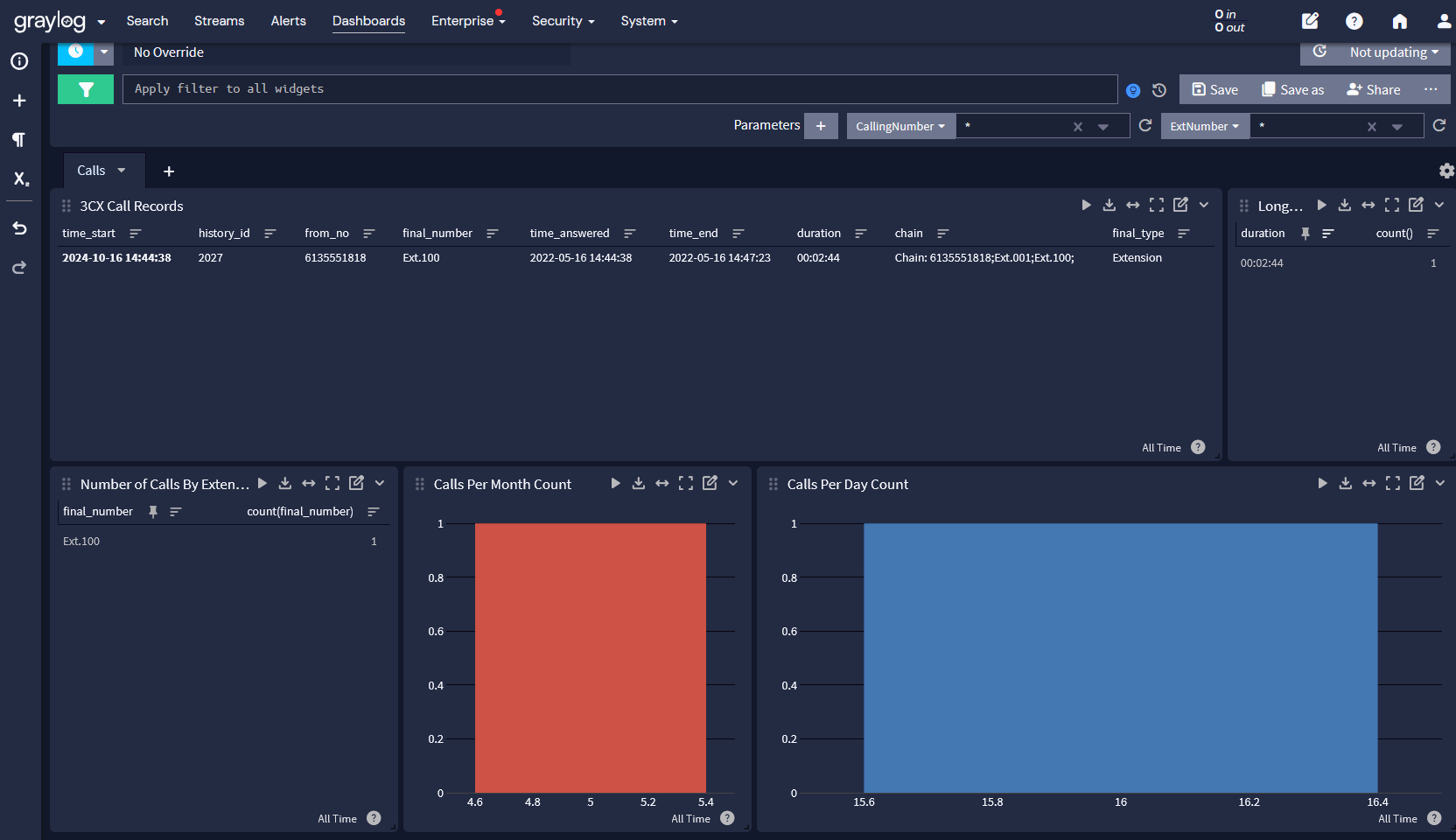
In this blog, we cover the 3CX VoIP PBX and the call data records that are sent to Graylog.

Configuring 3CX for CDR Logging

To do this in the 3CX call server, you configure a 3CX CDR service as a client, as an active socket, to an IP address on a specific port. What happens inside there is that the logs will be shipped in a comma-delimited format, with the fields you see in their field list.

3CX Logging Configuration

The field list contains a lot of records. You can choose to eliminate or add the ones you want, but make sure you keep the order the same, because when you start parsing the data, the order is crucial.

Field Definitions

If you go to the 3CX website under the CDR records section, you’ll find the definition of all the different types of fields, which will help you understand what the data contains.

Creating a 3CX CDR Input in Graylog

In Graylog, create a 3CX CDR input, which is simply a plain text TCP connection to port 3000.

Grok Pattern for Parsing

Here is a grok pattern called: 3CX_CDR. This pattern follows the order of the fields that appear inside the PBX system. Note, this pattern is tied to the image below for the order of the fields. Modifying the fields in 3CX will require changes to this pattern.

%{NUMBER:history_id},(?<call_id>[^,]*),%{TIME:duration},%{TIMESTAMP_ISO8601:time_start},%{TIMESTAMP_ISO8601:time_answered},%{TIMESTAMP_ISO8601:time_end},%{WORD:reason_terminated},(?<from_no>[^,]*),(?<to_no>[^,]*),(?<from_dn>[^,]*),(?<to_dn>[^,]*),(?<dial_no>[^,]*),(?<reason_changed>[^,]*),(?<final_number>[^,]*),(?<final_dn>[^,]*),(?<bill_code>[^,]*),(?<bill_rate>[^,]*),(?<bill_cost>[^,]*),(?<bill_name>[^,]*),(?<chain>[^,]*),(?<from_type>[^,]*),(?<to_type>[^,]*),(?<final_type>[^,]*),(?<from_dispname>[^,]*),(?<to_dispname>[^,]*),(?<final_dispname>[^,]*),(?<missed_queue_calls>[^,]*)

Fields available in order within the PBX System based on this grok pattern: 3CX Call Data Fields

The Parsing Rule:

rule "Parse 3CX CDR GROK"
When
   true
       //Route 3CX CDR to Stream old:
then
    let grokp = grok(
        pattern:"%{3CX_CDR}",
        value:to_string($message.message),
        only_named_captures: true
        );
        
    set_fields(grokp);
    set_field("grok_parse",true);
end

It’s important that you don’t reorder these fields unless you also go into Graylog and reorder your grok pattern accordingly. Inside the rule, I’ve referenced the pattern so that when the data comes in, it automatically parses out the records.

Additional Parsing of the Timestamp.

rule "Parse - 3cx - End Call TimeStamp Breakout"
When
    $message.grok_parse == true
then
    let grokp = grok(
        pattern:"%{TIMESTAMP_ISO8601}",
        value:to_string($message.time_end),
        only_named_captures: false
        );
        
    set_fields(fields:grokp,prefix:"TimeEnd_");
    set_field("grok_parse_timeend_timestamp",true);
    remove_field("TimeEnd_TIMESTAMP_ISO8601");
    remove_field("TimeEnd_MINUTE");
    remove_field("TimeEnd_SECOND");
end

Graylog for Telecom

VoIP Call Data Records (CDRs) may not be the flashiest tool in a network administrator’s arsenal, but they remain one of the most reliable. From diagnosing call quality issues to optimizing bandwidth on your network and uncovering security threats, CDR provide the historical insights needed to keep VoIP systems running smoothly. While real-time monitoring has its place, a solid understanding of CDR data ensures that recurring problems don’t go unnoticed and that networks are properly scaled for future demand. In short, if you’re not leveraging CDR in your VoIP troubleshooting process, you’re missing a critical piece of the puzzle. Try Graylog and and get those VoIP logs and watch this Video!

See the next blog on the 3CX attack detected by Graylog here called “Detecting the 3CX Supply Chain Attack with Graylog and Sigma Rules

About Graylog  
At Graylog, our vision is a secure digital world where organizations of all sizes can effectively guard against cyber threats. We’re committed to turning this vision into reality by providing Threat Detection & Response that sets the standard for excellence. Our cloud-native architecture delivers SIEM, API Security, and Enterprise Log Management solutions that are not just efficient and effective—whether hosted by us, on-premises, or in your cloud—but also deliver a fantastic Analyst Experience at the lowest total cost of ownership. We aim to equip security analysts with the best tools for the job, empowering every organization to stand resilient in the ever-evolving cybersecurity landscape.

About Version 2 Digital

Version 2 Digital is one of the most dynamic IT companies in Asia. The company distributes a wide range of IT products across various areas including cyber security, cloud, data protection, end points, infrastructures, system monitoring, storage, networking, business productivity and communication products.

Through an extensive network of channels, point of sales, resellers, and partnership companies, Version 2 offers quality products and services which are highly acclaimed in the market. Its customers cover a wide spectrum which include Global 1000 enterprises, regional listed companies, different vertical industries, public utilities, Government, a vast number of successful SMEs, and consumers in various Asian cities.

Can a PDF have a virus? Practical solutions for cyber-safe businesses

Summary: PDFs can carry malware through scripts, embedded files, and exploits. Learn how to identify threats and protect your business.

Imagine getting an urgent email from a supplier with an attached invoice in PDF format. Without hesitation, you open it—only to realize later that your system has been compromised. This scenario is more common than you might think. According to cybersecurity reports, PDFs are becoming increasingly popular for distributing malware. Attackers exploit the trust users have in these documents to deliver malware, steal sensitive information, and gain unauthorized access to systems.

But how do PDF viruses work, and how can you protect your business from them? In this guide, we’ll explore how malicious PDF files operate, how they infect devices, and what cybersecurity measures can keep your business safe.

Key takeaways

  • PDF files can contain malicious code that exploits vulnerabilities to spread malware.
  • Cybercriminals use PDF documents to deliver malware, execute code, and steal sensitive information.
  • Some malicious PDF files contain JavaScript exploits, embedded executables, or phishing links.
  • Email attachments and downloading PDFs from untrusted sources are significant security risks.
  • Businesses should implement robust cybersecurity measures, including antivirus software and real-time malware protection.

What types of malware can PDFs have?

While PDFs are commonly used for business documents, reports, and invoices, they can also carry harmful software. Below are some ways an infected PDF file can pose a risk to your system

JavaScript code exploits

Some PDF viruses use JavaScript code. This programming language allows interactive features like forms or digital signatures. However, cybercriminals can exploit this functionality to run hidden scripts when the document is opened. These scripts can:

  • Download and install malware on the system
  • Steal sensitive information, such as login credentials
  • Redirect users to phishing websites designed to capture personal data

Embedded executable files and malicious software

PDF documents can contain embedded files, including executable programs (.exe), scripts, or other payloads. If a user clicks on an embedded file, it can install harmful software on the device. Common examples include:

  • Ransomware that encrypts files and demands payment
  • Keyloggers that capture keystrokes to steal passwords
  • Trojans that provide remote access to the system

PDF viruses that execute code

Certain malicious PDF files exploit vulnerabilities in PDF readers to run code without the user’s knowledge. This method allows attackers to:

  • Distribute malware across networks
  • Modify system files
  • Gain unauthorized access to company resources

Common PDF attack scenarios

Since PDF files are widely trusted and frequently shared in business settings, bad actors take advantage of that to trick users into opening infected files. Below are some of the most common attack scenarios businesses should be aware of:

  • Email attachments: Cybercriminals often distribute compromised PDF files through phishing emails, impersonating trusted senders
  • Fake invoices and reports: Fraudsters send malicious PDFs disguised as legitimate business documents
  • Downloadable PDFs on websites: Attackers upload infected files to compromised websites, luring victims into downloading PDF files

These methods allow malicious actors to distribute malware quickly without raising suspicion. Once a harmful PDF is opened, it can exploit vulnerabilities, run code, and steal sensitive data. Understanding how these attacks work is the first step in preventing them.

Now, let’s examine how an infected PDF file infiltrates your system.

How PDF viruses infect your device

A compromised PDF file can spread malware in various ways:

  1. Exploiting software vulnerabilities: If a PDF reader isn’t updated, attackers can use known security flaws to execute malicious code.
  2. Encouraging users to enable permissions: Some PDFs request additional permissions that, when granted, allow malicious actions.
  3. Triggering automatic scripts: JavaScript-based attacks can initiate downloads or connect to malicious servers.
  4. Embedding infected links: Clicking on a link inside a PDF may redirect users to phishing pages designed to steal credentials.

Other hidden threats in PDF attachments

While malicious PDFs are often associated with direct malware infections, they can also serve as gateways for other cybersecurity threats. Bad actors are always improving their tactics. They embed hidden dangers within seemingly harmless documents to compromise devices and steal sensitive data.


Understanding these risks is essential for businesses looking to protect their cyberspace.

Malicious links and phishing attempts

Many malicious PDFs contain links that appear legitimate but direct users to harmful websites. These sites may:

  • Trick users into entering login credentials.
  • Install malware upon page load.
  • Request fake security updates to compromise devices.

Hidden form fields and data harvesting

Attackers can embed hidden form fields within PDF documents to collect sensitive data. Unsuspecting users might unknowingly submit information such as:

  • Banking details
  • Company login credentials
  • Personal identification numbers

Additional threats to watch for

Beyond traditional malware and phishing tactics, additional threats that can compromise your security are:

  • Obfuscated code: Malicious PDFs can use encrypted or hidden code to bypass security detection
  • Redirect chains: Clicking a link in a PDF might trigger multiple redirects (a bunch of hidden websites) before landing on the final malicious page

These hidden threats illustrate how PDFs can be manipulated for cyber-attacks beyond traditional malware infections. By recognizing these dangers, businesses can take proactive steps to secure their systems. Next, let’s explore how to identify the signs of a malicious PDF before it compromises your security.

Signs of a malicious PDF

Be cautious if you notice any of the following:

  • Unexpected prompts requesting permissions
  • PDF attachments from unknown senders
  • Unusual file sizes or strange formatting
  • Warning messages from your PDF reader or antivirus software
  • Links that don’t match their displayed URLs

PDF security best practices

Protecting your business from malicious PDFs means taking a proactive approach. Implementing best practices can significantly reduce the risk of malware infections and data breaches.

To protect your business from PDF malware, follow these security measures:

  1. Use real-time malware protection. Deploy security solutions that scan PDF attachments before opening. Many modern antivirus software solutions include real-time scanning features that help block suspicious PDFs immediately.
  2. Keep software up to date. Regularly update your PDF reader, operating system, and antivirus software to patch vulnerabilities. Cybercriminals exploit outdated software with known security flaws, so keeping all applications current is essential. Enabling automatic updates for your antivirus software ensures you have the latest threat definitions and security patches.
  3. Disable JavaScript in your PDF reader. This reduces the risk of script-based attacks. Disabling JavaScript in your PDF viewer limits the chances of unauthorized code running on your system and strengthens overall security.
  4. Avoid opening suspicious email attachments. Verify senders before downloading PDFs. Attackers frequently disguise malicious PDFs as legitimate business documents, such as invoices or contracts. If you happen to receive an unexpected attachment, please confirm its legitimacy through a separate communication channel before opening it.
  5. Enable email security filters. Use advanced email protection to detect and block malicious PDFs. Many email security solutions offer automated scanning and filtering of incoming messages, preventing phishing emails and malware-laden attachments from reaching your inbox. Configuring these filters to work alongside your antivirus software strengthens your business’s defense against cyber threats.
  6. Train employees on cybersecurity awareness. Educate your team about recognizing phishing emails and malicious PDF files. Regular cybersecurity training sessions help employees identify suspicious attachments, avoid clicking on malicious links, and follow best practices for handling digital documents. Encouraging a security-conscious workplace culture is one of the most effective ways to prevent cyberattacks.

By following these best practices, businesses can create a safer digital environment and minimize the risk of falling victim to PDF-based cyber threats. However, staying vigilant and employing additional security solutions is just as critical.

How NordLayer can help

Cybercriminals constantly evolve their tactics, making it crucial to implement proactive security measures. NordLayer’s toggle-ready network security platform offers real-time malware protection to scan and block malicious downloads before they reach your systems.

With NordLayer’s advanced security features, businesses can:

  • Detect and prevent malicious software in PDF attachments
  • Block suspicious links and phishing attempts
  • Secure sensitive information against cyber threats

Protect your company from PDF malware and ensure a safer digital workspace today.

About NordLayer
NordLayer is an adaptive network access security solution for modern businesses – from the world’s most trusted cybersecurity brand, Nord Security.

The web has become a chaotic space where safety and trust have been compromised by cybercrime and data protection issues. Therefore, our team has a global mission to shape a more trusted and peaceful online future for people everywhere.

About Version 2 Digital

Version 2 Digital is one of the most dynamic IT companies in Asia. The company distributes a wide range of IT products across various areas including cyber security, cloud, data protection, end points, infrastructures, system monitoring, storage, networking, business productivity and communication products.

Through an extensive network of channels, point of sales, resellers, and partnership companies, Version 2 offers quality products and services which are highly acclaimed in the market. Its customers cover a wide spectrum which include Global 1000 enterprises, regional listed companies, different vertical industries, public utilities, Government, a vast number of successful SMEs, and consumers in various Asian cities.

Patching Made Easy: Streamlining Updates for Mixed OS Environments

Managing patches with updates for a mix of Windows, Macs, and Linux computers can be a real hassle. It’s like playing a frustrating game of whack-a-mole, where a new problem pops up every time you fix one.

JumpCloud’s recent SME IT Trends report reveals that businesses struggle with different update schedules, compatibility problems, and the constant worry about security holes. It’s a major headache for IT staff and a risk for everyone in the company.

But there’s a better way! Imagine being able to easily manage all those updates and bring some order to the chaos; that’s where centralized patch management comes in.

This blog will show you how to simplify and streamline updates for your mix of Windows, Mac, and Linux devices, improve your security, and free up your time. Keep reading!

Why Managing Updates for Different Systems Is Tough

While centralized patch management is the answer, handling different operating systems creates some unique challenges, such as:

  • Different update methods: Each operating system (Windows, Mac, Linux) has its own way of installing updates.
  • Irregular updates: Updates for each system come out at different times.
  • Compatibility issues: Some updates might not work well with certain versions of an operating system or specific software.
  • Keeping things consistent: It’s hard to make sure all systems are updated in the same way.

If ignored, these challenges can lead to even bigger problems for organizations, leaving them vulnerable to:

  • Higher risk of attacks: Unpatched systems are easy targets for hackers. Just one vulnerable computer can give them access to your entire network.
  • Compliance issues: Many industries have rules about keeping software up to date. Not following these rules can lead to big fines and damage your reputation.
  • System crashes: Outdated software can cause computers to crash and create downtime.

The Power of Centralized Patch Management: One System to Rule Them All

Centralized patch management solves these problems by giving you a single platform to manage updates for all your devices. Instead of using separate processes, you control everything from a single dashboard. This has several advantages, such as:

  • Easier patch updates: Schedule, install, and track updates all from one place.
  • Better security: Make sure all devices have the latest updates, reducing security risks.
  • More efficiency: Free up IT time and reduce mistakes.
  • Consistent policies: Apply the same update rules (uniform patching) to all systems.
  • Improved control and visibility: See which devices are updated and which ones need attention.
  • Less downtime: Proactively fix potential problems.
  • Cost savings: Reduce IT labor and the risk of security breaches.

How to Set Up Centralized Patch Management Across Multiple OS?

Since the patch management process is iterative, here are six practical steps to integrate a patch management tool into your mixed-OS IT setup:

1. Assess your IT environment

First, take a complete inventory of all your devices and operating systems. This will give you a clear picture of what you need to manage.

2. Choose a tool

Next, pick a centralized patch management tool. There are many options, so think about things like compatibility, features, scalability, and cost.

3. Create update policies

Once you’ve chosen a tool, you’ll need to create clear update policies for each operating system. This includes how often to update, the approval process, and any special requirements for different types of updates.

4. Deploy the tool

After setting up the tool and your policies, start installing it on your devices. Thorough testing is important at this stage to make sure everything works as expected and doesn’t cause any problems.

5. Monitor and report

Set up ways to constantly monitor and report on updates. This will let you track the status of patches, find any problems, and generate reports.

6. Review and update policies

Regularly review and update your policies and procedures to stay ahead of new threats and changes in your environment.

Best Practices for Centralized Patch Management

To get the most out of your centralized patch management system, keep these best practices in mind:

  • Prioritize important updates: Focus on the most critical updates first. Automate the update process as much as possible, and use tools with good reporting features.
  • Stay informed: Keeping up with the latest security advisories and patches is essential for staying protected.
  • Regular audits: Regularly check your update process to make sure it’s working well and can be improved.

Centralized patch management is no longer optional—it’s a must-have, especially with today’s mix of different operating systems. By using a unified approach to updates, you can simplify IT operations, strengthen your security, and have peace of mind knowing your systems are protected.

Ready to take control of your updates? Try JumpCloud’s patch management solution and transform your fleet from a source of stress into a powerful tool for security and efficiency.

About JumpCloud
At JumpCloud, our mission is to build a world-class cloud directory. Not just the evolution of Active Directory to the cloud, but a reinvention of how modern IT teams get work done. The JumpCloud Directory Platform is a directory for your users, their IT resources, your fleet of devices, and the secure connections between them with full control, security, and visibility.

About Version 2 Digital

Version 2 Digital is one of the most dynamic IT companies in Asia. The company distributes a wide range of IT products across various areas including cyber security, cloud, data protection, end points, infrastructures, system monitoring, storage, networking, business productivity and communication products.

Through an extensive network of channels, point of sales, resellers, and partnership companies, Version 2 offers quality products and services which are highly acclaimed in the market. Its customers cover a wide spectrum which include Global 1000 enterprises, regional listed companies, different vertical industries, public utilities, Government, a vast number of successful SMEs, and consumers in various Asian cities.

What to do if your iPhone warns you of a compromised password

Getting a security notification is always unexpected and stressful. So when a compromised password warning pops up on your iPhone, it’s completely normal to feel a little unsettled. Let’s go over what this notification means and what steps you should take if you see it.


What is a compromised password notification on an iPhone?

Basically, an iPhone notification about a compromised password appears when Apple detects that a password you’ve used on a website or app has been exposed. This notification is sent so that you can change your password immediately to prevent data leaks and protect the account associated with that compromised password.


How was your password compromised?

It’s difficult to tell exactly how one of your passwords got compromised, as there are so many ways. Cybercriminals use all sorts of methods—like phishing, credential stuffing, social engineering, and brute-force attacks—to try to steal your passwords. So, if one of your passwords has been compromised, it may have been due to one of these tactics. It could also be that your password wasn’t strong enough to begin with, or that it was leaked in a data breach of a company whose services you use.


How does Apple know your password is compromised?

Apple detects compromised passwords through an iCloud Keychain feature that checks your saved passwords against a database of known data breaches. When a breach occurs, Apple compares your passwords to this database to determine if any have been exposed. If a match is found, Apple notifies you that your password has been compromised.


How to find compromised passwords on your iPhone

To find compromised passwords on your iPhone, just go to “Settings” and then “Passwords.” Once you’re there, look for any alerts with a red triangle or under “Security Recommendations.” If any of your saved passwords are compromised, you’ll get a notification, and Apple will suggest updating them for better security.

How to fix a compromised password

If you’ve received a compromised password notification on your iPhone, you must act immediately. Here’s what you should do:

  • Change your password to a stronger one—aim for at least 18 characters, with a mix of letters, numbers, and special characters.

  • Enable two-factor authentication (2FA) for extra protection on your account.

  • Check other accounts where you’ve used the same password for any suspicious activity, and update those passwords too.

  • Start using a password manager to securely store and manage your passwords.


How to stop your iPhone from sending compromised password notifications

To stop your iPhone from sending compromised password notifications, just follow these steps:

  1. Open the “Settings” app.

  2. Scroll down and tap on “Passwords.”

  3. Click on “Security Recommendations” at the top.

  4. Turn off “Detect Compromised Passwords.”


How to enhance the security of your passwords and accounts

Online threats can strike at any time, so it’s crucial to stay vigilant and use the right tools to protect your data. One of the most effective ways to do that is with a password manager. You might be thinking, “But iPhones come with a built-in password manager, right?” And while using it is definitely better than nothing, it doesn’t offer the same level of security as some third-party options like NordPass.

NordPass is a top-tier password manager that’s not only easy to use but also available across all major platforms and browsers, including iOS. Unlike Apple’s built-in password manager, NordPass uses a more advanced encryption algorithm (XChaCha20) to keep your data safe. It can also generate strong passwords on the spot and sync your passwords across all your devices. Plus, it offers much more than just password management. With features like Data Breach Scanner, Password Health, and Email Masking, NordPass goes the extra mile to enhance your online security.

So, if you’re serious about protecting your passwords, give NordPass a try and see how it can improve your online experience.

About NordPass
NordPass is developed by Nord Security, a company leading the global market of cybersecurity products.

The web has become a chaotic space where safety and trust have been compromised by cybercrime and data protection issues. Therefore, our team has a global mission to shape a more trusted and peaceful online future for people everywhere.

About Version 2 Digital

Version 2 Digital is one of the most dynamic IT companies in Asia. The company distributes a wide range of IT products across various areas including cyber security, cloud, data protection, end points, infrastructures, system monitoring, storage, networking, business productivity and communication products.

Through an extensive network of channels, point of sales, resellers, and partnership companies, Version 2 offers quality products and services which are highly acclaimed in the market. Its customers cover a wide spectrum which include Global 1000 enterprises, regional listed companies, different vertical industries, public utilities, Government, a vast number of successful SMEs, and consumers in various Asian cities.

How to Market My MSP Business Effectively

Marketing is critical for any managed service provider (MSP) looking to attract new clients and drive long-term success. However, knowing which strategies will generate the best results can be overwhelming.

With so many options, including SEO, paid ads, content marketing, social media, and email campaigns, it can be difficult to determine where to focus your efforts.

The MSP industry is expected to grow at a compound annual growth rate (CAGR) of 2.33% from 2025 to 2029, reaching a market volume of $28.15 billion by 2029.

This growth presents significant profit opportunities, but only for MSPs that can effectively position themselves in a competitive marketplace. Without a solid marketing plan, businesses risk falling behind and missing out on high-value clients.

So, where should you begin? This guide breaks down the most effective marketing strategies for MSPs, helping you attract leads, build trust, and grow your business successfully. Keep reading to learn how to market your MSP business with confidence.

Key Takeaways

  • Defining your target audience ensures your marketing efforts focus on businesses that need your MSP services the most.
  • A strong brand identity helps differentiate your MSP from competitors and builds trust with potential clients.
  • Optimizing your website for lead generation increases conversions by improving speed, SEO, and user experience.
  • Social media marketing, especially LinkedIn, is essential for networking and establishing authority in the MSP space.
  • Content marketing, including blogs, videos, and webinars, attracts potential clients and positions your MSP as an industry expert.
  • Comprehensive cybersecurity is a critical selling point, demonstrating strong security measures reassures clients and builds credibility.

Why Is MSP Marketing Important?

Marketing is essential for managed service providers (MSPs) looking to attract new clients, retain existing ones, and grow their business. With the MSP industry projected to reach $1,026 trillion by 2035, competition is increasing, making it more important than ever to stand out.

Effective marketing builds brand awareness, establishes credibility, and positions your MSP as a trusted expert in IT services. Without a strong marketing strategy, even the best MSPs may struggle to generate leads or differentiate themselves from competitors.

Moreover, MSP marketing ensures you reach the right audience: businesses needing reliable IT solutions. MSPs can drive sustainable growth and long-term profitability by using targeted digital strategies such as SEO, content marketing, and paid advertising.

Let’s discuss how to create an effective MSP marketing strategy.

How to Create an Effective MSP Marketing Strategy

To develop a successful MSP marketing strategy, focus on these key areas:

  • Define Your Target Audience
  • Develop a Strong Brand Identity
  • Optimize Your Website for Lead Generation
  • Leverage Social Media
  • Use Content Marketing
  • Implement Email Marketing
  • Attend Industry Events
  • Monitor and Adjust Your Strategy

Each of these steps plays a crucial role in growing your MSP business. In the following sections, we’ll provide a detailed guide on effectively implementing these strategies.

1. Define Your Target Audience

Identifying your ideal clients is the foundation of an effective MSP marketing strategy. To do this, determine the industries and company sizes that align best with your services. Consider factors such as their IT infrastructure, budget, compliance requirements, and growth potential.

Understanding your target audience’s pain points is equally important. Businesses often struggle with outdated technology, cybersecurity vulnerabilities, lack of in-house IT expertise, or remote workforce management challenges. Research these issues thoroughly to position your MSP as a problem solver.

Develop detailed buyer personas that represent your ideal clients. Include specifics such as:

  • Job titles of decision-makers (e.g., CEOs, IT directors, operations managers)
  • Key challenges they face in IT management
  • Preferred communication channels (email, LinkedIn, industry events)
  • Budget considerations and expected ROI from MSP services

Once you define your audience, tailor your marketing efforts accordingly. Your content, messaging, and outreach should speak directly to their needs, highlighting how your MSP services provide solutions that drive efficiency, security, and business continuity.

Focusing on a well-defined audience ensures better resource allocation, higher engagement, and stronger lead conversion rates. Instead of trying to appeal to everyone, refine your approach to attract businesses that are the best fit for your services.

2. Develop a Strong Brand Identity

A compelling brand identity differentiates your MSP from competitors and builds trust with potential clients. Your brand should communicate your expertise, reliability, and unique value proposition.

Visual Branding

Start by creating a recognizable logo and visual identity. Choose a color palette and typography that align with your brand’s personality and industry professionalism. A clean, modern, and professional design helps establish credibility.

Brand Voice and Messaging

Your brand voice and messaging should also be consistent across all channels. Clearly define your MSP’s value proposition; what makes your services different from and better than the competition? Are you a cybersecurity-focused MSP? Do you specialize in compliance-heavy industries like healthcare or finance?

Craft messaging that reinforces your strengths. Consider developing a brand style guide that includes guidelines for logo usage, color codes, typography, and messaging tone. This ensures that all marketing materials, whether created internally or by third-party agencies, remain visually and thematically cohesive.

3. Optimize Your Website for Lead Generation

Your website serves as the digital storefront for your MSP business, making it one of the most critical tools for attracting and converting potential clients. A well-optimized site should not only provide valuable information but also drive visitors toward taking action.

Improve Website Performance

Ensure that your website loads quickly and is fully mobile-responsive. Almost 64% of internet traffic comes from mobile devices, so a mobile-friendly design is essential. Slow-loading pages and poor mobile usability can drive potential leads away.

Use Clear Messaging and Calls to Action

Your website should immediately communicate what your MSP does and why potential clients should choose you. Use clear, compelling headlines and subheadings that guide visitors through your content. Highlight your unique selling points and the benefits of your services.

Include strong calls-to-action (CTAs) throughout your site.

Implement Lead Capture Forms

A well-placed lead capture form allows you to collect visitor information and turn them into potential clients. To encourage sign-ups, offer valuable resources in exchange, such as a free eBook, a security checklist, or access to a webinar.

Optimize for SEO

Improving your website’s search engine rankings is crucial for attracting organic traffic. Seeing as up to 90% of users never go past the first page of search results, having a comprehensive SEO strategy is essential. Moreover, 50% of marketers say that SEO produces more positive results than any other kind of marketing.

Therefore, research relevant keywords that potential clients are searching for and integrate them naturally into your content. Focus on:

  • Optimizing title tags, meta descriptions, and URLs
  • Creating high-quality, in-depth content that addresses industry pain points
  • Earning backlinks from reputable IT and business websites
  • Using structured data to help search engines understand your site

Track and Improve Performance

Use website analytics tools to track visitor behavior and identify areas for improvement. Key metrics to monitor include bounce rate, time on site, and conversion rate. Running A/B tests on different headlines, CTAs, and landing pages can help refine your approach and maximize lead generation.

4. Take Advantage of Social Media

Social media platforms provide MSPs with a powerful way to engage with their audience, demonstrate expertise, and generate leads, especially seeing as up to 93% of internet users are on social media. Choosing the right platforms and maintaining a consistent presence is key to building an effective social media marketing strategy.

Select the Right Platforms

Not every social media platform will be effective for MSP marketing. Focus on those where your target audience is most active:

  • LinkedIn: Best for B2B networking, authority-building, and direct outreach.
  • Twitter/X: Ideal for sharing industry news and quick IT insights.
  • Facebook: Useful for community engagement and local business outreach.
  • YouTube: Great for educational videos, tutorials, and showcasing expertise.

Optimize LinkedIn for Lead Generation

LinkedIn is one of the most valuable platforms for MSP marketing, particularly for B2B outreach. Your profile should function as a sales page, not just an online resume. Ensure that both you and your employees optimize your profiles with:

  • A branded cover photo that includes a call to action
  • A featured offer link (e.g., “Get a Free IT Assessment”)
  • A complete Featured section with a lead magnet (e.g., white paper, eBook, or free consultation)

Your MSP can attract high-quality leads and build credibility by maintaining active LinkedIn profiles and engaging with potential clients.

Use Video Marketing

Video content is highly engaging and ranks well on search engines, with 87% of marketers saying that video marketing has increased overall website traffic when used properly. Platforms like YouTube, LinkedIn, and Facebook Live offer opportunities to showcase your expertise through:

  • Explainer videos on MSP services
  • Cybersecurity tips and IT best practices
  • Client success stories
  • Live Q&A sessions to answer common IT challenges

Engage with Your Audience

Social media is about building relationships. Respond to comments, participate in industry discussions, and join LinkedIn groups relevant to your target market. Running polls, hosting webinars, and sharing industry insights can help foster engagement and position your MSP as a trusted IT partner.

5. Use Content Marketing

High-quality content plays a crucial role in MSP marketing, positioning your business as an industry expert while attracting and engaging potential clients. A well-executed content strategy can generate leads, build trust, and nurture prospects through the sales funnel.

Develop a Content Strategy

To maximize the impact of your content marketing efforts, create a structured content calendar that aligns with your target audience’s interests and pain points.

Cover topics such as cybersecurity best practices, IT compliance, cloud migration, and managed security solutions. By offering practical solutions to common challenges, you can highlight the value of your MSP services.

Create Engaging and Informative Content

Content should be diverse, catering to different preferences and learning styles. Consider incorporating:

  • Blog Posts: In-depth articles offering actionable insights and industry trends. Optimize with relevant keywords and meta descriptions to improve search engine visibility.
  • Whitepapers and eBooks: Comprehensive resources that explore specific IT challenges in detail. Use gated content to collect leads in exchange for valuable insights.
  • Webinars: Live or recorded educational sessions covering relevant topics. Promote these through social media and email campaigns to attract a wider audience.
  • Case Studies: Showcase successful client engagements with measurable results. Use storytelling techniques to highlight how your MSP solved specific IT challenges.
  • Infographics: Visual representations of complex concepts, making technical information more digestible and shareable.
  • Videos: Create explainer videos, IT security tips, product demos, and interviews with industry experts. Videos are highly engaging and help improve search rankings.

Maximize Content Reach and Engagement

Repurposing content allows you to extend its lifespan and reach new audiences. For example, you can transform webinars into blog post series, whitepapers into infographics, or social media snippets from case studies.

Guest blogging and content syndication can further amplify your reach. Submit articles to reputable IT and business publications to position your MSP as a thought leader. Platforms like LinkedIn and Medium provide additional distribution channels.

Track and Optimize Content Performance

Use analytics tools to measure the success of your content marketing efforts. Track key performance indicators (KPIs) such as page views, time on page, engagement rates, and lead conversions. Analyzing these insights allows you to refine your strategy, focusing on the content formats and topics that generate the most value.

6. Implement Email Marketing

Email marketing remains one of the most effective ways to nurture leads, strengthen client relationships, and drive conversions. A well-crafted email strategy ensures that your MSP stays top-of-mind with potential and existing customers.

According to a recent survey, 14% of marketers indicate that email marketing produces the highest returns on investment out of all forms of marketing, therefore illustrating its importance.

Build a High-Quality Email List

Start by collecting email addresses from multiple sources, including:

  • Industry events and conferences
  • Website lead capture forms
  • Webinars and downloadable content offers
  • Sales prospects and existing clients

Ensure compliance with email marketing regulations and security standards, such as GDPR and CAN-SPAM, by obtaining explicit consent from subscribers.

Craft Engaging Email Campaigns

Your emails should be personalized and relevant to different audience segments. Examples of effective email campaigns include:

  • Welcome Sequences: Introduce new subscribers to your MSP, highlight key services, and provide valuable resources.
  • Educational Content: Share IT security tips, best practices, and industry insights to keep subscribers engaged.
  • Promotional Offers: Notify prospects about special promotions, free assessments, or limited-time service discounts.
  • Client Retention Emails: Check in with existing clients, offer security updates, and highlight additional services.

Use Automation for Efficient Campaigns

Marketing automation tools can help streamline your email campaigns, ensuring that the right messages reach the right people at the right time. Automated workflows can:

  • Send follow-up emails based on user interactions
  • Deliver content drip campaigns that educate prospects over time
  • Reactivate inactive subscribers with re-engagement emails

Monitor and Optimize Email Performance

Track open rates, click-through rates, and conversion metrics to assess campaign effectiveness. A/B testing subject lines, email copy, and CTA placement can help improve engagement and drive better results.

7. Attend Industry Events

Industry conferences and networking events provide valuable opportunities to connect with potential clients and partners. These gatherings bring MSP professionals together, offering a platform to showcase your expertise, learn about emerging trends, and build strategic relationships.

Choosing the Right Events

Research relevant events that align with your target audience. Prioritize conferences where your ideal clients are likely to be present. Consider speaking opportunities, sponsorships, or exhibitor spots to increase brand visibility and position yourself as a trusted industry expert.

Preparing for Maximum Impact

Before attending, create engaging marketing materials such as brochures, case studies, and branded promotional items that highlight your MSP’s strengths. A visually appealing booth with clear messaging can attract more attendees and spark valuable conversations.

Networking and Lead Generation

Engage with key decision-makers by discussing their IT challenges and offering insights on how your MSP can help. Participate in educational sessions to stay informed about industry developments, allowing you to refine your service offerings based on current trends.

Following Up After Events

After making new connections, follow up with personalized emails or LinkedIn messages. Reinforce your value proposition, provide additional resources, and invite prospects to schedule a consultation or demo.

Leveraging Social Media

Extend your reach by sharing live updates, photos, and key takeaways from the event on social media. Use relevant hashtags, engage with other attendees, and participate in discussions to increase your MSP’s visibility.

Measuring Event ROI

Track leads generated, meetings scheduled, and deals closed as a direct result of your event participation. Use this data to determine which events provide the highest return on investment and refine your approach for future conferences.

8. Monitor and Adjust Your Strategy

A data-driven approach is essential for optimizing your MSP marketing efforts. Regularly tracking key performance metrics allows you to identify what’s working and make informed adjustments.

Website Performance Tracking

Use Google Analytics to monitor traffic, bounce rates, session duration, and conversion rates. Identify high-performing pages and optimize content to improve user engagement and lead generation.

Evaluating Email Marketing Effectiveness

Measure the success of your email campaigns by tracking open rates, click-through rates, and unsubscribe rates. A/B test subject lines, content, and calls-to-action to improve engagement and conversion rates.

Analyzing Social Media Engagement

Monitor key social metrics such as follower growth, likes, comments, and shares. Identify content formats and topics that generate the most interaction and adjust your social media strategy accordingly.

Lead Tracking with a CRM

A customer relationship management (CRM) system can help track where leads are coming from and how they progress through your sales funnel. Analyzing conversion rates from different marketing channels will reveal which tactics are most effective.

Budget Optimization

Review marketing expenses regularly and allocate resources to high-performing channels. Test new strategies when necessary, but ensure you have a clear method for measuring their impact.

Staying Up to Date on Trends

Marketing tactics and MSP industry trends evolve constantly. Attend relevant webinars, engage in online communities, and follow industry leaders to stay ahead of changes and refine your strategy.

Collecting Client Feedback

Client insights provide valuable direction for marketing efforts. Use surveys, interviews, and online engagement to understand their needs, concerns, and overall perception of your brand.

Reporting and Strategy Refinement

Present marketing performance reports to key stakeholders using clear data visualization and insights. Regularly adjust your strategy based on performance metrics to maintain agility and effectiveness in a competitive industry.

The Importance of Highlighting Cybersecurity in MSP Marketing

Showcasing robust cybersecurity measures is essential for any MSP to attract and retain clients. Businesses rely on MSPs for IT support and safeguarding their critical data and infrastructure against cyber threats.

Given the rising number of cyberattacks, potential clients want assurance that their MSP has strong security protocols.

Clearly communicating your cybersecurity expertise builds trust and sets your services apart. Prospective clients want to know that your MSP prioritizes data protection, compliance, and proactive threat management.

Highlighting features such as 24/7 monitoring, endpoint protection, secure backups, and compliance support reassure potential customers that they are in safe hands.

Positioning cybersecurity as a core part of your service offering strengthens your MSP’s credibility and appeals to businesses looking for a reliable, security-focused IT partner.

Conclusion: The Importance of a Strategic Approach to MSP Marketing

Marketing your MSP effectively requires a well-planned strategy that combines targeted outreach, engaging content, and a strong online presence. With the MSP industry projected to grow significantly, standing out in a competitive market is more important than ever.

A strategic approach that includes SEO, social media, content marketing, and cybersecurity messaging ensures that your MSP attracts the right clients and builds long-term trust.

By continuously refining your strategy based on data and industry trends, you can maximize your marketing efforts and position your business for sustainable growth. Implementing these proven tactics will help you generate leads, strengthen your brand, and drive revenue for years to come.

Show your clients that your MSP features comprehensive cybersecurity with Guardz UDR.


About Guardz
Guardz is on a mission to create a safer digital world by empowering Managed Service Providers (MSPs). Their goal is to proactively secure and insure Small and Medium Enterprises (SMEs) against ever-evolving threats while simultaneously creating new revenue streams, all on one unified platform.

About Version 2 Digital

Version 2 Digital is one of the most dynamic IT companies in Asia. The company distributes a wide range of IT products across various areas including cyber security, cloud, data protection, end points, infrastructures, system monitoring, storage, networking, business productivity and communication products.

Through an extensive network of channels, point of sales, resellers, and partnership companies, Version 2 offers quality products and services which are highly acclaimed in the market. Its customers cover a wide spectrum which include Global 1000 enterprises, regional listed companies, different vertical industries, public utilities, Government, a vast number of successful SMEs, and consumers in various Asian cities.

×

Hello!

Click one of our contacts below to chat on WhatsApp

×