Skip to content

Enhancing your network security: the role of access control lists (ACLs)


Does your business rely on access control lists (ACLs) to manage user access? If not, you’re not alone. Many organizations shy away from using them due to the challenges of maintaining numerous lists across different network areas. However, an access control list can provide an extra layer of security for your network in specific scenarios and can be effectively integrated with role-based groups when needed.

This article will explore how an access control list can streamline your access management processes. We’ll also dive into the benefits of ACLs, including improved security measures and their adaptivity to various environments. Finally, we’ll offer practical insights into how access control lists are used to manage access and protect sensitive information.

Read on if you want to untangle the complexities of ACLs and enhance your network’s security.

What is an access control list (ACL)?

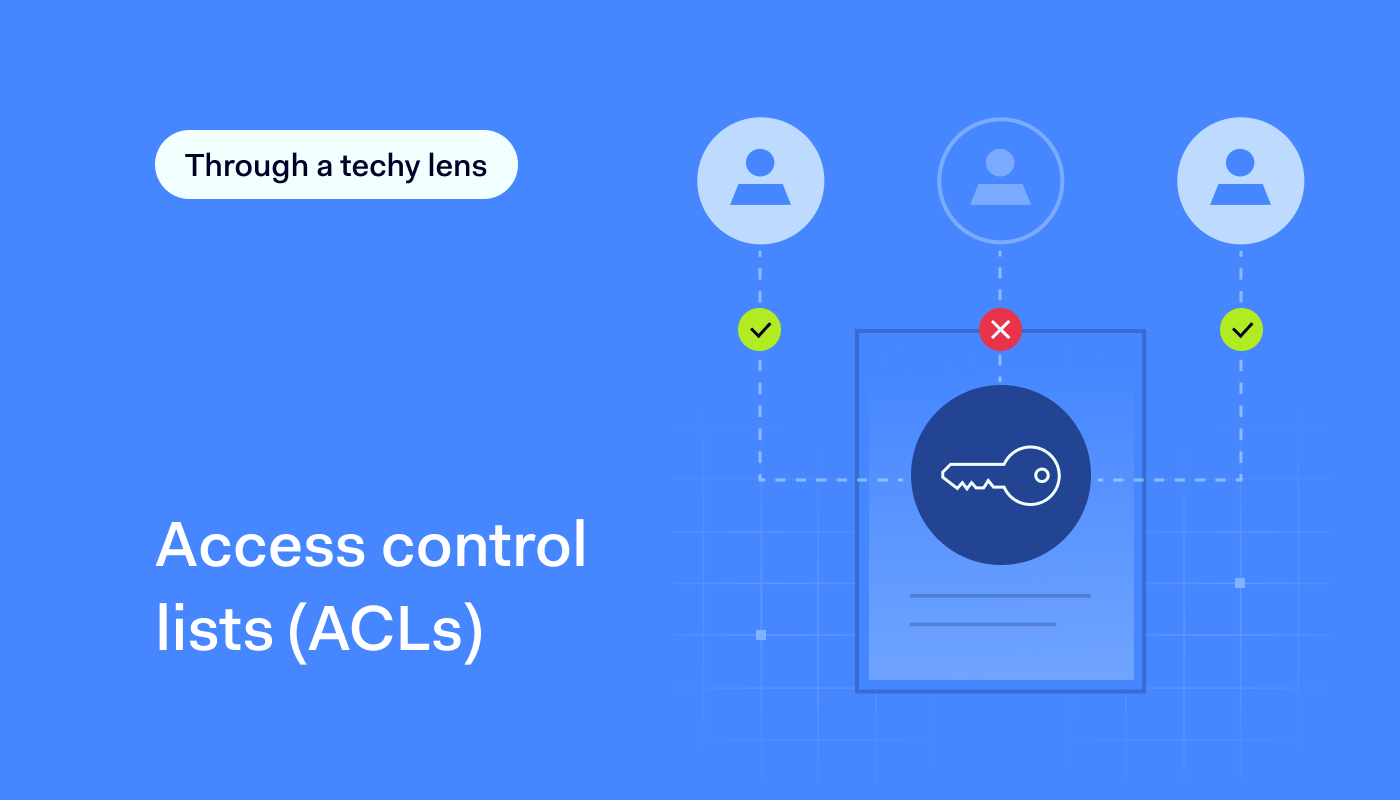
An access control list (ACL), sometimes called just an access list, filters network traffic based on source and destination. It’s a set of rules that determines which users can access particular network objects or devices. Users not included on the list are denied access to these resources.

Moreover, an access list can enhance role-based access control (RBAC). For example, they can be configured to allow only members of a development team to access a specific codebase while blocking access to all other users with DevOps roles who aren’t involved in the project.

Additionally, implementing network access control best practices involves using ACLs to manage user access and enhance security across the network.

What are ACLs used for?

An access control list (ACL) is a vital tool for managing permissions in computer systems and networks. It is mainly used for essential network security tasks, like controlling user access, protecting data, and preventing intrusions.

ACLs are also key for meeting cybersecurity standards and certifications, such as those related to network access control and network segmentation. Implementing ACLs is often a necessary step on the path to compliance, ensuring an organization fulfills required regulations.

ACLs help regulate the flow of data in and out of network components that users directly access, such as gateways and endpoints. For instance, a network administrator might have the permissions to read, write, and edit sensitive files, while a guest user may only view these files. An access control list ensures such selective control access based on specific criteria like IP addresses, protocols, or ports. This enhances network security by allowing precise control of who can access what.

Additionally, ACLs can be set up on various network devices, including routers, switches, VPNs, or databases. This provides a clear and effective way to manage access, improving traffic flow for better efficiency and security. By blocking malicious traffic and giving IT admins granular control, ACLs play a key role in keeping network systems safe and running smoothly.

How ACLs work

Access control lists manage access and monitor traffic within networks and systems, ensuring that only authorized interactions are permitted. Primarily installed in routers and switches, ACLs play a critical role in traffic control by guiding the flow of data throughout the network.

Each ACL contains access control entries (ACEs), which list user or group names along with their granted access rights. These rights are organized in a string of bits known as an access mask. Whether used for packet filtering or file access, ACLs provide a structured, rule-based security approach that helps administrators maintain control over network and system resources.

Rule creation and ordering

ACLs function by using predefined rules to allow or deny packets, with the order of these rules being critical in determining how traffic is managed. The process starts with rule creation and ordering, where admins set up ACL rules in a specific sequence that prioritizes certain traffic over others based on security policies.

Packet evaluation

This is another key function of ACLs, where the data within each packet is checked against the ACL rules to decide if it should be allowed through or blocked. This evaluation is based on criteria like IP addresses, port numbers, and packet content, aligning with established security measures.

Default actions

For file systems, ACLs detail specific user access privileges to system objects such as files and directories, dictating actions like reading, writing, or executing based on the user’s role (e.g., administrator or guest).

This granularity extends to default actions, where ACLs enforce predetermined responses when a packet or access request does not meet any of the specified rules. Typically, this results in a denial of access to protect the network’s integrity.

An access control list: various types

Access control lists come in various types, each serving a unique purpose based on functionality and scope.. There are two basic ones:

  • File system ACLs manage access to files and directories within an operating system. They dictate user access permissions and privileges once the system is accessed.

  • Networking ACLs regulate network access by providing instructions to network switches and routers. They specify the types of traffic allowed to interface with the network and define user permissions within the network. Networking ACLs function similarly to firewalls in controlling network traffic.

Additionally, ACLs can be categorized according to their traffic filtering capabilities:

  • A standard ACL does not differentiate between IP traffic. Instead, it allows or blocks traffic based on the source IP address.

  • An extended ACL offers a more granular level of control. It uses both the source and the destination IP addresses, such as a source IP address, destination IP addresses, port numbers, and protocol types (ICMP, TCP, IP, UDP). It can differentiate IP traffic to dictate what is allowed or denied access.

The advantages of using an access control list

An access control list isn’t a one-size-fits-all solution for network security. However, using roles for access management offers several benefits:

  • Enhanced security. Users access only resources aligned with their roles, minimizing the risk of credential theft or phishing attacks. ACL implements separation of duties, reducing the threat posed by privileged users.

  • Improved efficiency. ACLs streamline access control maintenance. Admins can assign new hires to role groups, granting them associated permissions without creating individual profiles.

  • Optimized network performance. With ACLs, admins can define criteria such as source and destination IP addresses, ports, and protocols to regulate traffic flow. By restricting access to certain resources based on these criteria, ACLs help prevent unnecessary network congestion and improve overall network performance.

  • Scalability & flexibility. ACLs allow for flexible role adjustments as organizations evolve. Changes can be applied globally, reducing the chance of security vulnerabilities.

  • Compliance & auditing. ACLs help meet regulatory requirements like HIPAA. Healthcare entities, for example, can limit access to patient records through role-based restrictions. Additionally, ACLs simplify auditing access, making it easier to track access requests and user activity.

Enhancing device security with ACLs

While ACLs offer significant advantages in network security, it’s essential to extend this protection to device-level security. By adopting Device Posture Security (DPS), your organization can evaluate the security of devices connecting to the network.

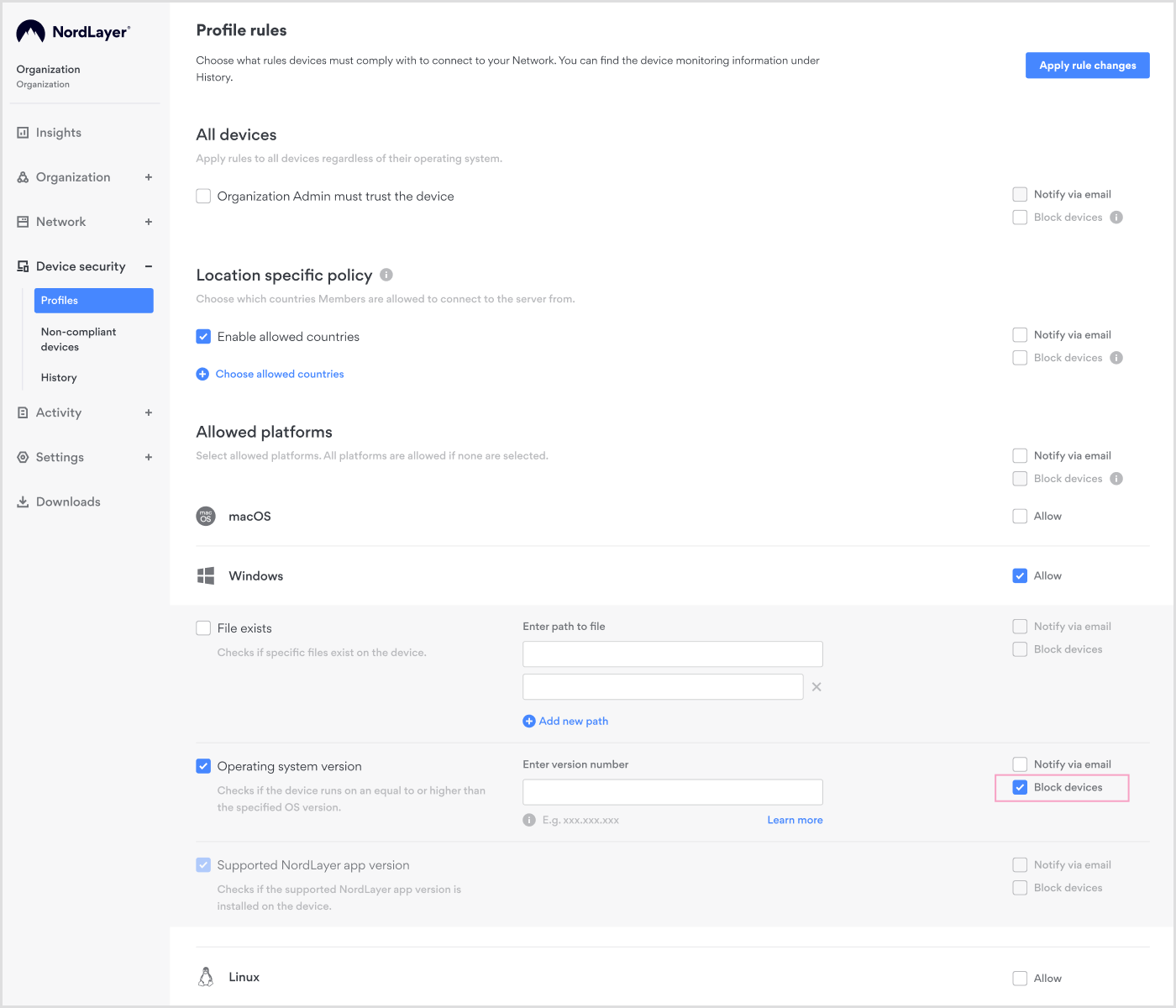
Through DPS, you can evaluate and monitor devices according to your predefined rules. But that’s not all. You can also automatically restrict network access for accounts using non-compliant devices. This integrated approach enhances overall network security by addressing vulnerabilities at both the network and device levels.

IT administrators can easily implement ACLs for Device Posture Security using our web-based Control Panel. To enable DPS checks, create various rules such as existing file check, OS version, jailbreaking or rooting status, and device location. Setting up ACLs in the panel is simple. Just create a profile and specify the desired rules. Once configured, it’s important to test the ACL to ensure that it is functioning as expected. Finally, activate the ACL to start enforcing the specified access control rules on your network.

ACLs for internal network segmentation

Protecting your data from leaks and insider threats is more crucial now than ever. It’s not just about safeguarding information; it’s about maintaining the credibility of your business. That’s where access control lists (ACLs) come in. They act as gatekeepers, deciding who gets access to what within your network. By setting up ACLs, you can stop unauthorized users from moving laterally through your network, helping to prevent data breaches.
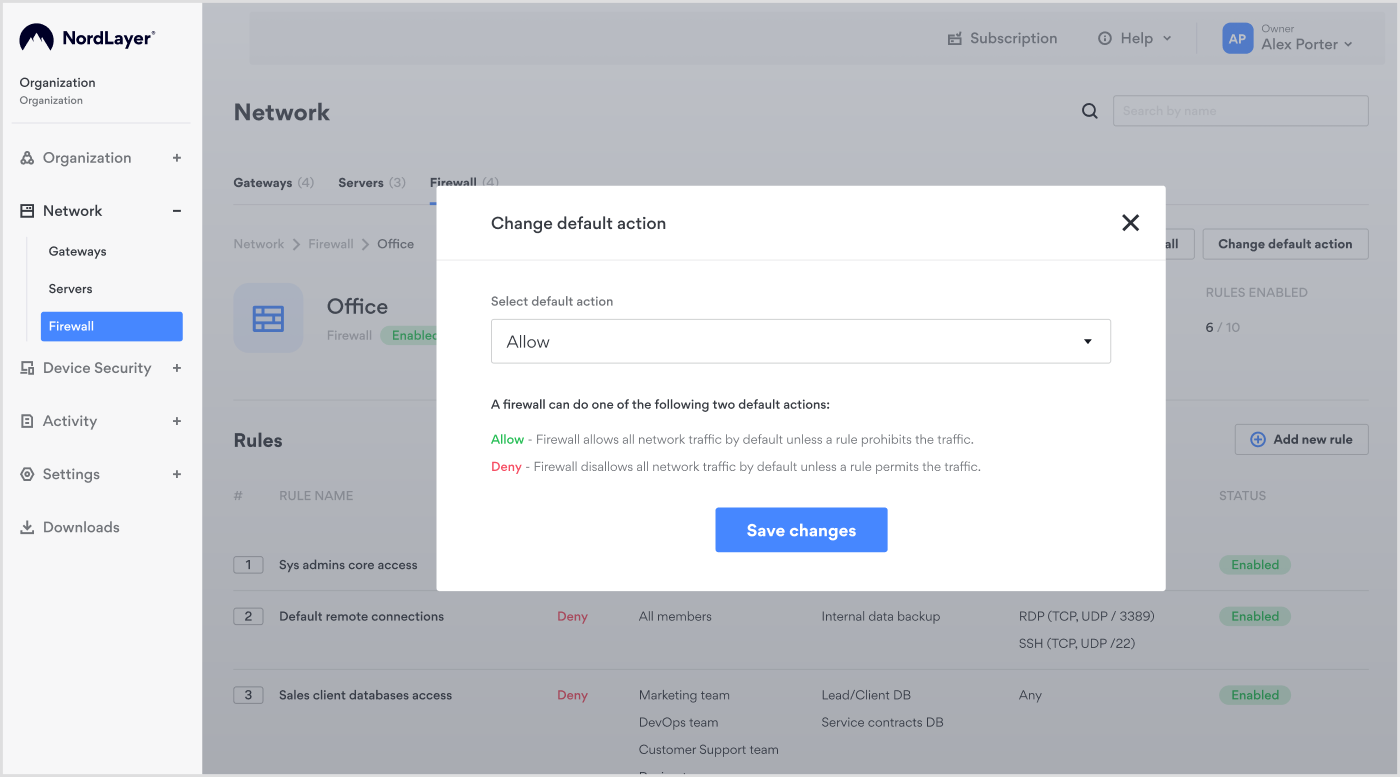
Additionally, when you combine ACLs with role-based access control (RBAC), you gain even more control over who can access different parts of your network. With our Cloud Firewall feature, you can optimize your network by implementing granular segmentation using ACLs. These lists act as virtual bouncers, controlling who can access which parts of your network.

Our intuitive Control Panel facilitates the creation and management of ACLs, providing a streamlined and centralized approach to network security management.
ACLs in external access control

Managing network access isn’t just about your team. You also have to consider third-party vendors, contractors, and other external partners who might need access to your systems. With access control lists, you can ensure that these third parties only have access to the specific resources they need, minimizing the risk of unauthorized access and potential security breaches.

By setting up granular segmentation and ACL rules, you can protect your network against potential threats while enabling collaboration with external partners. Our Cloud Firewall feature makes managing external access easy, ensuring your network is protected from all angles.

Boost your network security with NordLayer’s ACLs

Access control lists (ACLs) make role-based access control more precise, ensuring only the right people have access to your data and resources, and improving network performance. They’re the frontline defense against unauthorized access and potential breaches.

But the benefits of ACLs don’t stop there. By combining ACLs with our Cloud Firewall feature, you’re not just building walls—you’re creating an impenetrable fortress around your devices and network. With NordLayer, setting up and managing ACLs is a breeze, giving you peace of mind knowing your network is fortified against any threats that come its way.
About Version 2 Digital

Version 2 Digital is one of the most dynamic IT companies in Asia. The company distributes a wide range of IT products across various areas including cyber security, cloud, data protection, end points, infrastructures, system monitoring, storage, networking, business productivity and communication products.

Through an extensive network of channels, point of sales, resellers, and partnership companies, Version 2 offers quality products and services which are highly acclaimed in the market. Its customers cover a wide spectrum which include Global 1000 enterprises, regional listed companies, different vertical industries, public utilities, Government, a vast number of successful SMEs, and consumers in various Asian cities.

About NordLayer
NordLayer is an adaptive network access security solution for modern businesses – from the world’s most trusted cybersecurity brand, Nord Security.

The web has become a chaotic space where safety and trust have been compromised by cybercrime and data protection issues. Therefore, our team has a global mission to shape a more trusted and peaceful online future for people everywhere.

How to find Citrix NetScaler ADCs and Gateways

What are Citrix NetScaler ADCs and Gateways? #

NetScaler Application Delivery Controller (ADC), formerly known as Citrix ADC, acts in a number of capacities to ensure reliable application delivery to users. This can include load balancing across application servers, off-loading of certain operations, security protections, and policy enforcement.

NetScaler Gateway, formerly known as Citrix Gateway, provides single sign-on (SSO) from any device to multiple applications through a single URL.

Latest Citrix vulnerability #

A new vulnerability was disclosed in NetScaler ADC and Gateway products for version 13.1-50.23

There is currently no associated CVE with this particular vulnerability because Citrix had already disclosed and issue with a previously assigned CVE-2023-4996.

What is the impact? #

The vulnerability would enable an attacker to remotely obtain sensitive information from a NetScaler appliance configured as a Gateway or AAA virtual server via a very commonly connected Web interface, and without requiring authentication. This bug is nearly identical to the Citrix Bleed vulnerability (CVE-2023-4966), except it is less likely to return highly sensitive information to an attacker.

Are updates or workarounds available? #

Citrix recommends customers update to version 13.1-51.15 or later.

How do I find potentially vulnerable systems with runZero? #

From the Asset Inventory, use the following query to locate systems running potentially vulnerable software:

product:netscaler

CVE-2023-3519 (July 2023) #

In July, 2023, Citrix alerted customers to three vulnerabilities in its NetScaler ADC and NetScaler Gateway products. Surfaced by researchers at Resillion, these vulnerabilities included a critical flaw currently being exploited in the wild to give attackers unauthenticated remote code execution on vulnerable NetScaler targets (CVE-2023-3519). Compromised organizations included a critical infrastructure entity in the U.S., where attackers gained access the previous month and successfully exfiltrated Active Directory data. And at the time of publication, there appear to be over 5,000 public-facing vulnerable NetScaler targets.

What was the impact? #

The three reported vulnerabilities affecting NetScaler ADC and Gateway products were of various types, and each include different preconditions required for exploitation:

  • Unauthenticated remote code execution (CVE-2023-3519; CVSS score 9.8 – “critical”)
    • Successful exploitation required the NetScaler target be configured as a Gateway (VPN virtual server, ICA Proxy, CVPN, or RDP Proxy) or “authentication, authorization, and auditing” (AAA) virtual server.
  • Reflected cross-site scripting (XSS) (CVE-2023-3466; CVSS score 8.3 – “high”)
    • Successful exploitation required the victim to be on the same network as the vulnerable NetScaler target when the victim loaded a malicious link (planted by the attacker) in their web browser.
  • Privilege escalation to root administrator (nsroot) (CVE-2023-3467; CVSS score 8.0 – “high”)
    • Successful exploitation required an attacker having achieved command-line access on a vulnerable NetScaler target.

U.S.-based CISA reported attackers exploiting CVE-2023-3519 to install webshells used in further network exploration and data exfiltration, causing CVE-2023-3519 to be added to CISA’s Known Exploited Vulnerabilities Catalog. Other common attacker goals, like establishing persistence, lateral movement, and malware deployment, were all potential outcomes following successful exploitation.

Citrix made patched firmware updates available. Admins were advised to update older firmware on vulnerable NetScaler devices as soon as possible.

CISA also made additional information available around indicators of compromise and mitigations.

How did runZero customers find potentially vulnerable NetScaler instances with runZero? #

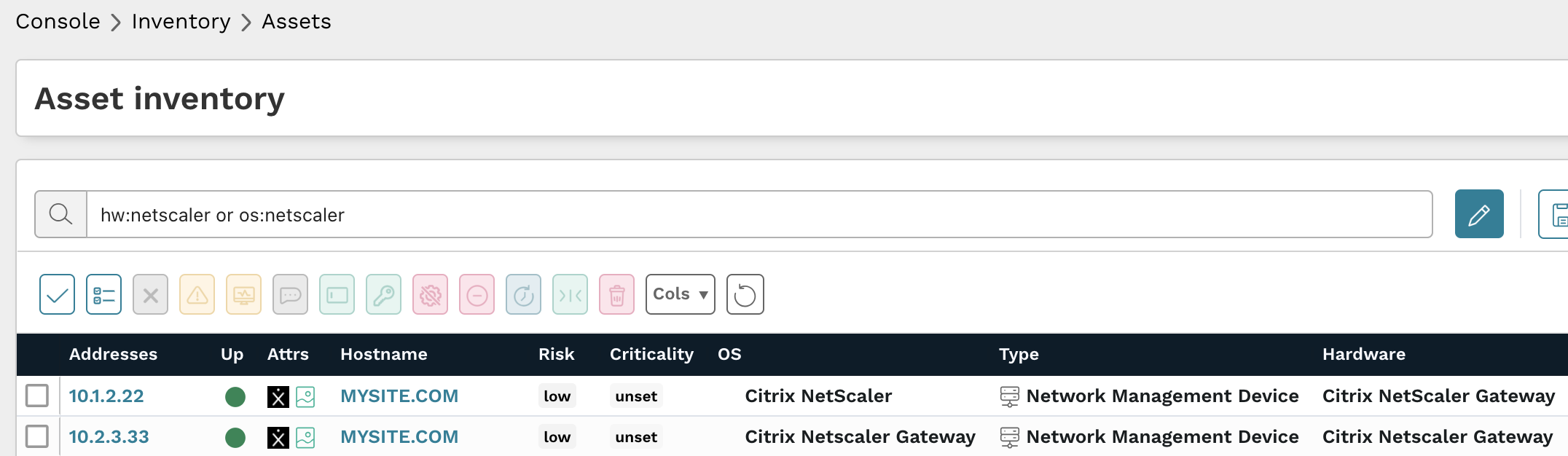
From the Asset inventory, they used the following prebuilt query to locate NetScaler instances on their network:

hw:netscaler or os:netscaler
NetScaler asset query

Results from the above query should be triaged to verify they are affected ADC or Gateway products and if they are running updated firmware versions.

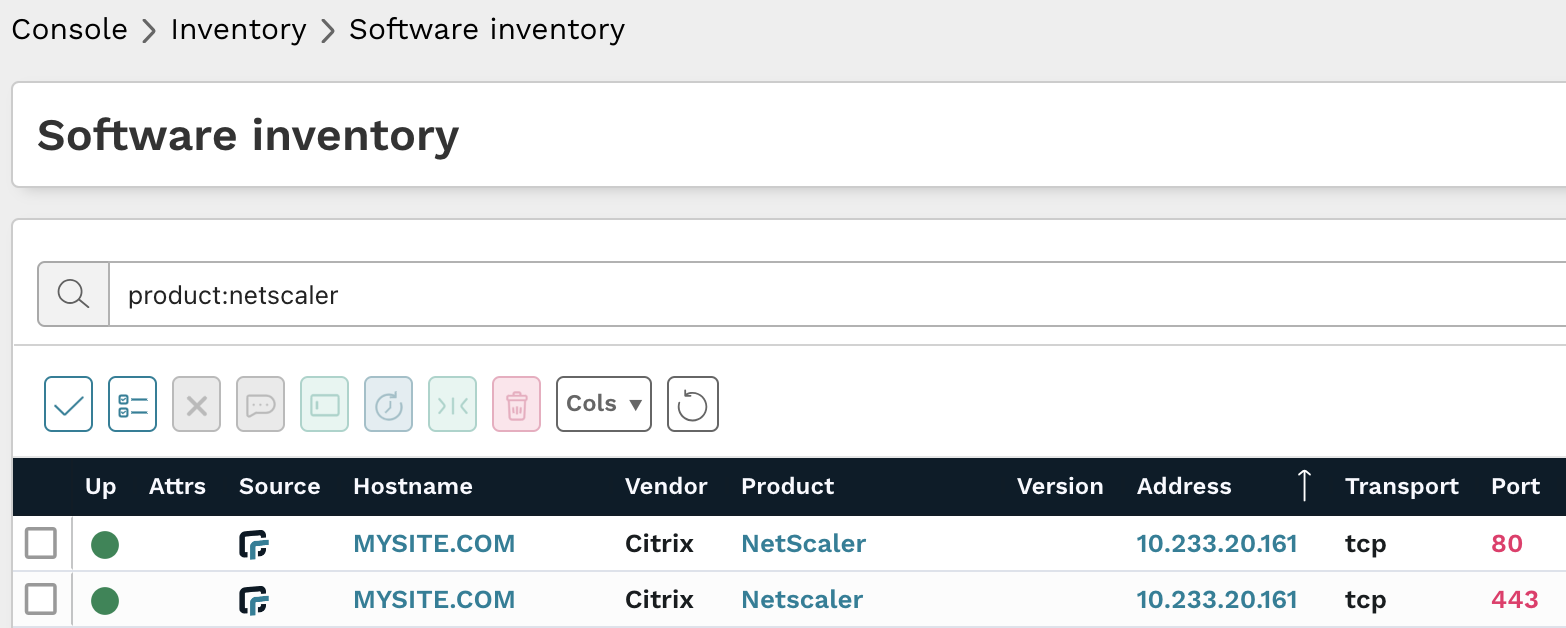
The following query could also be used in on the Software and Services inventory pages to locate NetScaler software:

product:netscaler
NetScaler software query

Results from the above query should be triaged to verify they are affected ADC or Gateway products and if they are updated versions.

As always, any prebuilt queries are available from your runZero console. Check out the documentation for other useful inventory queries.

About Version 2 Digital

Version 2 Digital is one of the most dynamic IT companies in Asia. The company distributes a wide range of IT products across various areas including cyber security, cloud, data protection, end points, infrastructures, system monitoring, storage, networking, business productivity and communication products.

Through an extensive network of channels, point of sales, resellers, and partnership companies, Version 2 offers quality products and services which are highly acclaimed in the market. Its customers cover a wide spectrum which include Global 1000 enterprises, regional listed companies, different vertical industries, public utilities, Government, a vast number of successful SMEs, and consumers in various Asian cities.

About runZero
runZero, a network discovery and asset inventory solution, was founded in 2018 by HD Moore, the creator of Metasploit. HD envisioned a modern active discovery solution that could find and identify everything on a network–without credentials. As a security researcher and penetration tester, he often employed benign ways to get information leaks and piece them together to build device profiles. Eventually, this work led him to leverage applied research and the discovery techniques developed for security and penetration testing to create runZero.

CRN Recognizes Scale Computing’s Marlena Fernandez, Rachael Galey on the 2024 Women of the Channel List

INDIANAPOLIS – May 13, 2024 — Scale Computing, a market leader in edge computing, virtualization, and hyperconverged solutions, today announced that CRN®, a brand of The Channel Company, has named Marlena Fernandez, vice president, marketing, to the 2024 Women of the Channel Power 100, an elite subset of prominent leaders selected from the CRN® 2024 Women of the Channel list. CRN also named Rachael Galey, regional channel manager, to its coveted Women of the Channel list.

Every year, CRN highlights women from vendor, distributor, and solution provider organizations whose vision and leadership have a beneficial influence on the technology industry. The CRN 2024 Women of the Channel honorees are creative, strategic leaders who show ongoing commitment to using their skills to innovate and drive success for their partners and customers.

From within this impressive group, the annual Power 100 recognizes some of the most influential women leaders from technology vendors and distributors who consistently contribute their advocacy and expertise to advancing the channel. Every woman on the Power 100 is an inspiration to industry peers and shows deep dedication to improving outcomes and opportunities for their own organizations and the full IT channel ecosystem.

Fernandez has been named to the Women of the Channel list for five consecutive years and to the Women of the Channel Power 100 for the past three years for her leadership within the Scale Computing Partner Community. She joined Scale Computing in 2019 and was the first executive to be named to both lists. This past year, Fernandez significantly contributed to Scale Computing achieving record revenue growth and expanding the company’s partner community. She was instrumental in the success of last month’s Platform//2024, Scale Computing’s annual partner and customer event.

“We are tremendously proud of what Marlena and Rachael have accomplished this past year, not just for Scale Computing, but for the overall channel partner ecosystem. Marlena is a pivotal member of our executive team, bringing expertise from her 20+ years of results-oriented global marketing, and Rachael is extremely dedicated to partner success, making Scale Computing the consistent choice for channel partners,” said Dave Hallmen, chief revenue officer, Scale Computing. “They’re continued commitment to growing our business through our award-winning Scale Computing Partner Community and strong leadership make both very deserving of this recognition. As more and more partners seek VMware alternative solutions, we look forward to growing our partner program through the rest of 2024 and beyond.”

Galey joined Scale Computing in 2023 as a regional channel manager and focuses on Scale Computing solution sales and account management. She has played a crucial role in expanding the Scale Computing partner community, as the increased demand for new virtualization and edge computing solutions drove the company’s record growth this year. Passionate about mentorship, collaboration, and customer satisfaction, Galey’s drive to develop and support colleagues while exceeding client expectations has made her an asset to both Scale Computing and its partners.

“It is a great privilege to honor the remarkable achievements of these women leaders in the IT channel,” said Jennifer Follett, VP, U.S. Content and Executive Editor, CRN at The Channel Company. “Each woman on the list has demonstrated a deep commitment to innovation and leadership that advances their organizations and drives transformation and success across the IT channel.”

Earlier this year, Scale Computing launched an exclusive promotion for VMware partners looking for new virtualization solutions. Current and new partners looking to switch customers to Scale Computing can participate in the VMware Rip & Replace promotion and receive a 25% discount on Scale Computing software and services for each new customer implementation. Additionally, Scale Computing launched Scale Computing Showcase, offering partners and their customers open access to trial the Scale Computing Platform solutions suite.

The 2024 Women of the Channel list will be featured in the June issue of CRN Magazine, with online coverage starting May 13 at CRN.com/WOTC

About Version 2 Digital

Version 2 Digital is one of the most dynamic IT companies in Asia. The company distributes a wide range of IT products across various areas including cyber security, cloud, data protection, end points, infrastructures, system monitoring, storage, networking, business productivity and communication products.

Through an extensive network of channels, point of sales, resellers, and partnership companies, Version 2 offers quality products and services which are highly acclaimed in the market. Its customers cover a wide spectrum which include Global 1000 enterprises, regional listed companies, different vertical industries, public utilities, Government, a vast number of successful SMEs, and consumers in various Asian cities.

About Scale Computing 
Scale Computing is a leader in edge computing, virtualization, and hyperconverged solutions. Scale Computing HC3 software eliminates the need for traditional virtualization software, disaster recovery software, servers, and shared storage, replacing these with a fully integrated, highly available system for running applications. Using patented HyperCore™ technology, the HC3 self-healing platform automatically identifies, mitigates, and corrects infrastructure problems in real-time, enabling applications to achieve maximum uptime. When ease-of-use, high availability, and TCO matter, Scale Computing HC3 is the ideal infrastructure platform. Read what our customers have to say on Gartner Peer Insights, Spiceworks, TechValidate and TrustRadius.

DNS Threats: Vulnerabilities, Attacks, and Prevention Strategies

The Domain Name System (DNS) is crucial for internet functionality, acting as an address book that maps web addresses to their numerical IP addresses. However, DNS is also a vector for various cyber threats due to its foundational role in network communications. Malware, ransomware, phishing, and more sophisticated forms of cyberattacks like Domain Generation Algorithms (DGA) and DNS tunneling exploit DNS to infiltrate and damage systems.

142.250.189.206 – google.com 

DNS security is an underrated risk. The technology is structured in a way that allows DNS packets to flow through the network without prior scrutiny. Moreover, DNS activity within networks is rarely monitored, creating a blind spot in cybersecurity. This oversight is significant, as 88% of companies suffer from DNS attacks every year, according to a 2023 report by EfficientIP. Despite the high risk, one-third of these attacks could be prevented at the DNS level, as highlighted by a 2023 study by Cisco.

What is inside DNS traffic

DNS traffic can carry a variety of parameters that play an important role in the exchange of information between clients and DNS servers. These parameters may include the type of request, the server’s response code, TTL (time to live of the record in the cache), transaction identifier, query options, etc. DNS queries are essential components of DNS traffic, involving requests made by clients to DNS servers to resolve domain names into IP addresses.

Moreover, DNS traffic can carry data about the IP addresses of DNS servers, information about network traffic, the location and configuration of domains, as well as much more that helps ensure the efficient operation of the Internet and its security. The DNS resolver plays a crucial role in processing these DNS queries, facilitating the exchange of information between clients and DNS servers. Here is a list of the main parameters:

Threats at the DNS level

Malware

Malicious software, or malware, includes various cyber threats such as viruses, trojans, spyware, adware, and techniques like DNS cache poisoning, where malware redirects users to malicious sites by exploiting DNS vulnerabilities. It can cause significant issues, from minor annoyances to major financial losses, by altering browser settings, using up computing resources, and collecting sensitive user data like passwords and credit card numbers.

DNS protection is crucial in combating malware by:

  • Blocking access to malicious domains to prevent malware communication and data breaches.
  • Monitoring for abnormal behavior to detect malware presence.
  • Providing network activity logs to enhance incident response and mitigate security breaches quickly.

Ransomware

Ransomware is malicious software that encrypts a computer’s files, rendering them inaccessible, and may lead to data breaches. The malware demands ransom for decryption, impacting both individuals and business operations.

DNS protection aids against ransomware by:

  • Blocking access to ransomware’s command and control servers to disrupt its communication.
  • Preventing devices from connecting to malicious websites and email attachments that could initiate an attack.
  • Enabling rapid, automated threat detection and alerts, facilitating a swift response to potential ransomware activity.

Phishing and Typosquatting

Phishing and Typosquatting are forms of cyber deception aimed at stealing sensitive information through fake websites and misspelled domain names. DNS spoofing is another method where attackers manipulate DNS records to redirect users to fraudulent sites, often for malicious purposes such as phishing, malware distribution, or denial-of-service attacks. These practices can compromise personal and corporate security, leading to financial losses and reputational damage.

DNS protection helps combat these threats by:

  • Preventing access to fake websites designed to mimic legitimate ones, safeguarding user credentials.
  • Utilizing algorithms to identify and block deceitful domains that resemble legitimate sites, protecting users from fraud.

Botnet, Cryptojacking, and C2C

Botnets, composed of internet-connected devices infected with malware, can perform various malicious activities, including DDoS attacks, data theft, and illegal cryptocurrency mining, leading to energy and productivity loss and potential financial and reputational damages. Botnets and C&C servers often utilize DNS requests to communicate and control compromised devices, highlighting the need for robust DNS protection strategies.

DNS protection helps by:

  • Blocking access to known command and control (C&C) servers to disrupt botnet communications.
  • Detecting and preventing connections to suspicious domains associated with botnets or C&C servers.
  • Identifying unusual patterns that may indicate botnet presence to prevent system infections.

Parked Domains

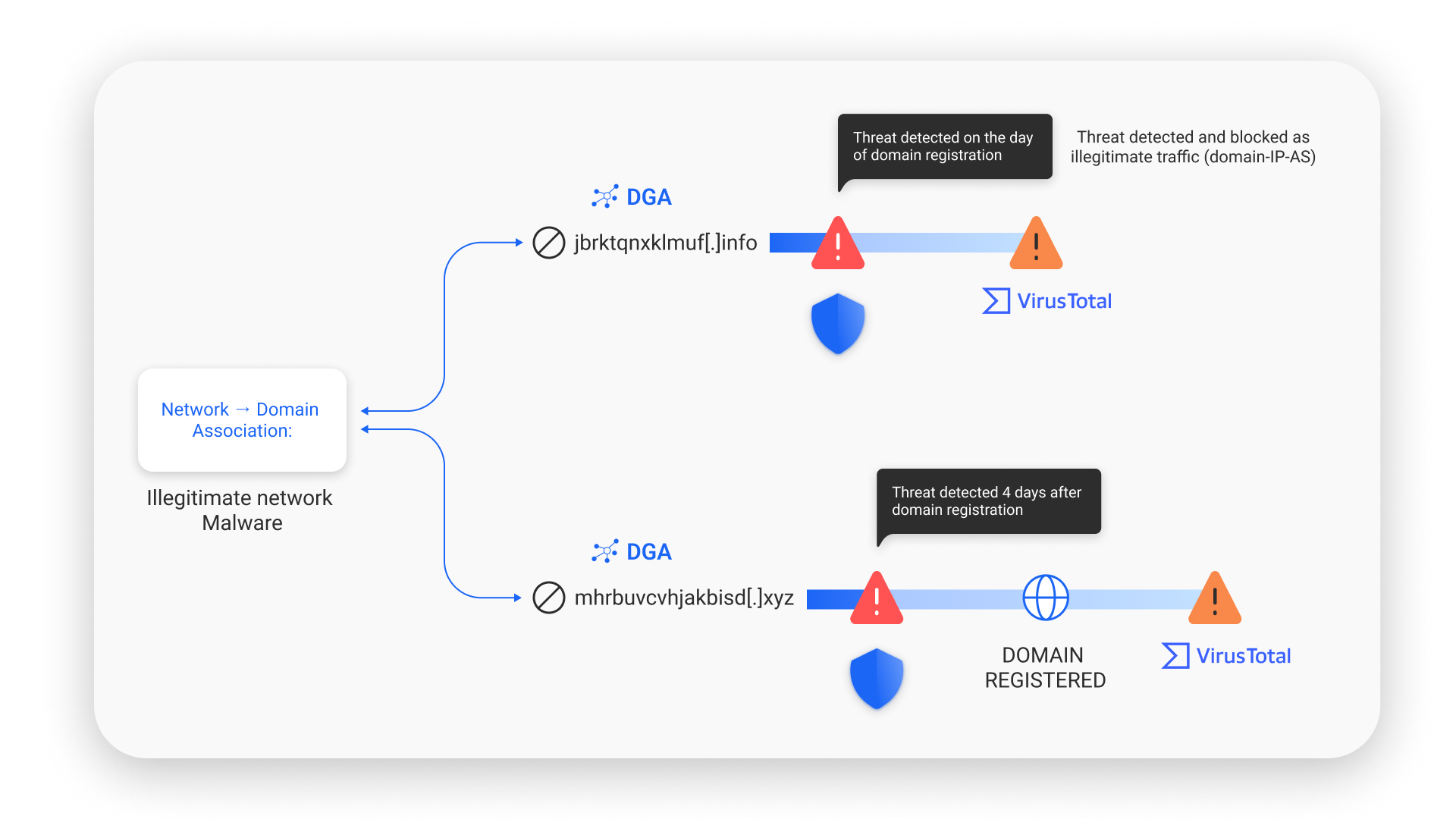
These are domain registrations on DNS servers offering parking services, not actively used but may host illegitimate content at a remote server at any time. SafeDNS implements a verification pipeline using real-time data from various sources to monitor new domains and their content, identifying and filtering out illegitimate resources at an early stage. The system establishes domain-IP-autonomous system (AS) relationships, which helps in the early detection of malicious domains.

DGA and DNS Tunneling Attacks

DGAs create numerous domain lists to maintain botnet communication and evade security measures. They don’t directly harm networks but enable the infiltration of malicious software and impede its removal, potentially resulting in corporate network damage.

DNS protection contributes by:

  • Detecting and blocking DGA-generated domains using machine learning and traffic analysis, ensuring queries are directed to the correct IP address by verifying information with the authoritative DNS server.
  • Monitoring and obstructing abnormal DNS activity that could signify DNS tunneling.
  • Maintaining a database of known DNS tunnels to block unauthorized connections and data transmission.

An authoritative DNS server plays a crucial role in this process by holding the official and up-to-date information about a domain name’s IP address, ensuring that DNS queries are resolved with the correct IP address, which is essential for preventing DNS tunneling and DGA threats.

Threats at the DNS level are a major concern because they can disrupt operations, compromise sensitive data, and damage reputations. However, with the right solutions in place, many of these threats are preventable. SafeDNS is at the forefront of this defense, leveraging the latest advances in AI and machine learning to effectively detect and mitigate threats.

By processing billions of queries every day, SafeDNS provides real-time monitoring and proactive measures to secure networks. The power of SafeDNS lies in its extensive categorization database of over 2 billion URL records, providing unparalleled protection. This comprehensive approach ensures that SafeDNS not only identifies existing threats, but also anticipates emerging ones, providing a robust shield against DNS-level threats. With SafeDNS, organizations can secure their online presence and ensure the continuity and integrity of their digital assets.


About Version 2 Digital

Version 2 Digital is one of the most dynamic IT companies in Asia. The company distributes a wide range of IT products across various areas including cyber security, cloud, data protection, end points, infrastructures, system monitoring, storage, networking, business productivity and communication products.

Through an extensive network of channels, point of sales, resellers, and partnership companies, Version 2 offers quality products and services which are highly acclaimed in the market. Its customers cover a wide spectrum which include Global 1000 enterprises, regional listed companies, different vertical industries, public utilities, Government, a vast number of successful SMEs, and consumers in various Asian cities.

About SafeDNS
SafeDNS breathes to make the internet safer for people all over the world with solutions ranging from AI & ML-powered web filtering, cybersecurity to threat intelligence. Moreover, we strive to create the next generation of safer and more affordable web filtering products. Endlessly working to improve our users’ online protection, SafeDNS has also launched an innovative system powered by continuous machine learning and user behavior analytics to detect botnets and malicious websites.

How to find Rockwell Automation devices

Latest Rockwell Automation vulnerabilities #

Rockwell Automation has disclosed a vulnerability in their ControlLogix 5580, Guard Logix 5580, CompactLogix 5380, and 1756-EN4TR products.

CVE-2024-3493 is rated high with CVSS score of 8.6 involves a specific malformed fragmented packet type which can cause a major nonrecoverable fault (MNRF) in Rockwell Automation’s ControlLogix 5580, Guard Logix 5580, CompactLogix 5380, and 1756-EN4TR. If exploited, the affected product will become unavailable and require a manual restart to recover it.

What is the impact? #

Successful exploitation of these vulnerabilities result in devices becoming inaccessible remotely and crashing and then require manual intervention to restart them.

Are updates or workarounds available? #

Rockwell Automation has provided software updates for the impacted versions.

Affected ProductFirst Known in Firmware RevisionCorrected in Firmware Revision
ControlLogix® 5580V35.011V35.013, V36.011
GuardLogix 5580V35.011V35.013, V36.011
CompactLogix 5380V35.011V35.013, V36.011
1756-EN4TRV5.001V6.001

How do I find potentially vulnerable systems with runZero? #

From the Asset Inventory, use the following query to locate systems running potentially vulnerable software:

hw:"1756-EN4TR"

Rockwell Automation PowerFlex 527 vulnerabilities (March 2024) #

In March 2024, Rockwell Automation disclosed multiple vulnerabilities in their PowerFlex 527 product.

CVE-2024-2425 and CVE-2024-2426 are both rated high with CVSS score of 7.5 and both involve improper input validation which could cause a web server to crash and CIP communication disruption, respectively, which leads to requiring manual restarts.

CVE-2024-2427 is rated high with CVSS score of 7.5 and indicates a denial-of-service scenario due to improper network packet throttling which causes a device to crash and require a manual restart.

What was the impact? #

Successful exploitation of these vulnerabilities result in devices becoming inaccessible remotely and crashing and then require manual intervention to restart them.

Are updates or workarounds available? #

Rockwell Automation does not currently have a fix for these vulnerabilities. Users of the affected software are encouraged to apply risk mitigations and security best practices, where possible.

Users should disable the web server if it is not needed, which should be disabled by default. Additionally, users should ensure these devices are isolated in their own networks to prevent unwanted packets flooding the device.

How do I find potentially vulnerable systems with runZero? #

From the Asset Inventory, use the following query to locate systems running potentially vulnerable software:

hw.product:"powerflex"

About Version 2 Digital

Version 2 Digital is one of the most dynamic IT companies in Asia. The company distributes a wide range of IT products across various areas including cyber security, cloud, data protection, end points, infrastructures, system monitoring, storage, networking, business productivity and communication products.

Through an extensive network of channels, point of sales, resellers, and partnership companies, Version 2 offers quality products and services which are highly acclaimed in the market. Its customers cover a wide spectrum which include Global 1000 enterprises, regional listed companies, different vertical industries, public utilities, Government, a vast number of successful SMEs, and consumers in various Asian cities.

About runZero
runZero, a network discovery and asset inventory solution, was founded in 2018 by HD Moore, the creator of Metasploit. HD envisioned a modern active discovery solution that could find and identify everything on a network–without credentials. As a security researcher and penetration tester, he often employed benign ways to get information leaks and piece them together to build device profiles. Eventually, this work led him to leverage applied research and the discovery techniques developed for security and penetration testing to create runZero.

×

Hello!

Click one of our contacts below to chat on WhatsApp

×