Skip to content

Day in the life of a front-end developer

Meet Samantha Ponce, a front-end developer at NordPass, and take an insider’s view on what it’s like to build leading cybersecurity solutions from our office in Berlin. She’ll lead you through her typical workday and tell you more about her team and work challenges.


sam ponce


Frame 1


Wake up time

WFH: 7.30 AM

Office: 7.00 AM

My usual routine is to wake up, shower, get dressed, and maybe fix my hair or do my makeup. However, that depends on my time and or my mood. Since I’m located in Berlin, and most of my team works in Lithuania, I’ve chosen to work different hours from 8.00 AM to 5.00 PM from the rest of the company (9.00 AM to 6.00 PM). It allows me to be more in sync and have more free time in the afternoon.

Breakfast o’clock

WFH: 8.00 AM

Office: 7.30 AM

I usually have German bread with cheese and ham for breakfast during the week since it’s fast and easy to prepare. And, of course, a nice liter of tea. I would say a cup, but I like to drink lots of tea. Not a fan of coffee, unlike most of the developers that I know.

Frame 2


Head to work

7.40 AM

When I go to the office, I usually take public transport because it’s better for the environment, and we have a monthly ticket compensation as a benefit.

It usually takes 20 minutes to reach the office with the U-Bahn.

Frame 10


Welcome to the office

8.00 AM

Two things that I do when I get to the office – wash my hands (crucial after the public transport) and get another cup of tea (also crucial for a productive day ahead).

Frame 3


First work portion

WFH: 8.00 AM – 2.00 PM

Office: 8.00 AM – 12.00 PM

Daily standup: 9.30 AM (5-10 minutes)

NordPass Update/Meeting: 10.00 AM – 11.00 AM

Normally I don’t have a lot of meetings. I know – the dream of every developer. I usually have my daily standup, and on Mondays, we have an update about what’s going on in the company or any other relevant theme.

Guild meetings happen once a month, where all the front-end developers from NordPass get together and talk about things: from cool tech we just read about to important information about upcoming changes.

Frame 9


So I usually check my emails and some merge requests before my first meeting. And afterward, I just work completely on any task or bug I choose from our sprint board.

Frame 4


WFH: 2.00 PM

Office: 12.00 PM

My lunchtime normally changes a lot when I work from home because I like to cook and eat with my husband. Therefore, we must agree on a time that suits both of us. We take turns preparing the food, but it normally happens after 1.00 PM.

We like to eat Mexican food because we’re from Mexico, so we try to include tacos and other foods with lime and chili on our menus.

Frame 5


WFH: 3.00 PM – 5.00 PM

Office: 1.00 PM – 5.00 PM

After lunchtime, I prefer to finish up my tasks and start testing and fixing anything that’s not working properly. If I haven’t finished my tasks, then I continue working on them, maybe pausing for a couple of minutes to stretch out and eat a snack. Especially if I’m at the office, where I get the chance to talk with people from other teams.

Frame 6


Getting my sweat on

My ideal schedule would include going to the gym after work every day. However, currently, I go only once a week or less. But it’s good to have a goal for improvement.

Sprechen sie deutsch?

I’m learning German because I want to be able to communicate better in Berlin. Even though almost everyone here speaks English or even Spanish, I still think it’s important to know the local language.

The classes are held online on Tuesday, Wednesday, and Thursday from 6.30 PM until 8.00 PM. At the moment, I’m learning B1 level – so not a complete beginner.

Frame 8


Family bonding

Both my and my husband’s family live in Mexico. Therefore, we have to wait until they have some free time to talk with us. We aim to have long video calls with everyone at least once a week.

Light dinner (mostly)

I usually have dinner around 8.00 or 9.00 PM while talking with our families. It makes me feel as if we’re sitting down together for a meal. I prefer something light for dinner, like cereal, but sometimes we spice it up with pizza or some Korean chicken.

Night night

I mostly go to bed around 11.00 PM after washing the dinner dishes and making all the preparations for the next day ahead.

Frame 7


Which one do you prefer, working from the office or home? Why?

I prefer working from home because I like cooking my own lunch. However, sometimes taking a break and going for lunch with people from the office is also nice.

At what time of the day do you feel most productive, and what tasks do you do then?

I think the time after my daily stand-up and before lunch is my most productive time – I do most of my work then. After lunch is more for testing, fixing, and other pending things.

Things that you like most about being a front-end developer at Nord Security?

My teammates, hands down. They are supporting me at all times and encourage me to learn more and be better.

Things you wouldn’t miss being a front-end developer?

The fun issues with CSS.

What are the front-end stereotypes that you’d like to break?

That we don’t know anything about the back-end. In fact, I worked as a full-stack developer before. And, of course, we need to know how the back-end works to do our jobs better.

What challenges are you currently working on, and what have been the most interesting ones you had to deal with at Nord Security?

Developing new features is always challenging, but it’s the most interesting part of the job. So figuring out how to implement new stuff while ensuring everything else still works fine is the most stimulating thing about being a developer.

Also, migrating to newer versions of libraries and other tools is always a way to keep learning while suffering a bit. However, when everything works in the end – it’s truly awesome.

Please, briefly describe your team? What kind of people work there, and how do you collaborate?

My team is the best. Everyone is always eager to help. We always have the best team buildings. And even if we’re located in different countries, we still keep in touch and are close to each other.

About Version 2 Digital

Version 2 Digital is one of the most dynamic IT companies in Asia. The company distributes a wide range of IT products across various areas including cyber security, cloud, data protection, end points, infrastructures, system monitoring, storage, networking, business productivity and communication products.

Through an extensive network of channels, point of sales, resellers, and partnership companies, Version 2 offers quality products and services which are highly acclaimed in the market. Its customers cover a wide spectrum which include Global 1000 enterprises, regional listed companies, different vertical industries, public utilities, Government, a vast number of successful SMEs, and consumers in various Asian cities.

About Nord Security
The web has become a chaotic space where safety and trust have been compromised by cybercrime and data protection issues. Therefore, our team has a global mission to shape a more trusted and peaceful online future for people everywhere.

UNDERSTANDING OBSERVABILITY VS. MONITORING. PART 1

The development of clouds, the DevOps movement, and distributed microservice-based architecture have come together to make observability vital for modern architecture. We’re going to dive into what observability is and how to approach the metrics we need to track.

Observability is a way of spotting and troubleshooting the root causes of problems involving software systems whose internals we might not understand. It extends the concept of monitoring, applying it to complex systems with unpredictable and/or complex failure scenarios.

I’ll start with some of the basic principles of observability that I’ve been helping to implement across a growing number of products and teams at Nord Security.


observability


Monitoring vs. Observability

“Monitoring” and “observability” are often used interchangeably, but these concepts have a few fundamental differences.

Monitoring is the process of using telemetry data to understand the health and performance of your application. Monitoring telemetry data is preconfigured, implying that the user has detailed information on their system’s possible failure scenarios and wants to detect them as soon as they happen.

In the classical approach to monitoring, we define a set of metrics, collect them from our software system, and react to any changes in the values of these metrics that are of interest to us.

For example:

Excessive CPU usage can indicate that we need to scale it up to compensate for increasing system loads;

A drop in successfully served requests after a fresh release can indicate that the newly released version of the API is malfunctioning;

Health checks process binary metrics that represent whether the system is alive at all or not.

Observability extends this approach. Observability is the ability to understand the state of the system by performing continuous real time analysis of the data it outputs.

Instead of just collecting and watching predefined metrics, we continuously collect different output signals. The most common types of signals – the three pillars of observability – are:

  • Metrics: Numeric data aggregates representing software system performance;

  • Logs: Time-stamped messages gathered by the software system and its components while working;

  • Traces: Maps of the paths taken by requests as they move through the software system.

The development of complex distributed microservice architectures has led to complex failure scenarios that can be hard or even impossible to predict. Simple monitoring is not enough to catch them. Observability helps by improving our understanding of the internal state of the system.

Metrics

Choosing the right metrics to collect is key to establishing an observability layer for our software system. Here are a few different popular approaches that define a unified framework of must-have metrics in any software system.

USE

Originally described by Brendan Gregg, this approach focuses more on white-box monitoring – monitoring of the infrastructure itself. Here’s the framework:

  • Utilization – resource utilization.

    • % of CPU / RAM / Network I/O being utilized.

  • Saturation – how much remaining work hasn’t been processed yet.

    • CPU run queue length;

    • Storage wait queue length;

  • Errors – errors per second

    • CPU cache miss;

    • Storage system fail events;

Note: Defining “saturation” in this approach can be a tricky task and may not be possible in specific cases.

Four Golden signals

Originally described in the Google SRE Handbook, the Four Golden signals framework is defined as follows:

  • Latency – time to process requests;

  • Traffic – requests per second;

  • Errors – errors per second;

  • Saturation – resource utilization.

RED

Originally described by Tom Wilkie, this approach focuses on black-box monitoring – monitoring the microservices themselves. This simplified subset of the Four Golden Signals uses the following framework:

  • Rate – requests per second;

  • Errors – errors per second;

  • Duration – time to process requests.

Choosing and following one of these approaches allows you to unify your monitoring concept throughout the whole system and make it easier to understand what is happening. They complement one another, and your choice may depend on which part of a system we want to monitor. These approaches also don´t exclude additional business-related metrics that vary from one component of the software system to another.

Logs

System logs are a useful source of additional context when investigating what is going on inside a system. They are immutable, time-stamped text records that provide context to your metrics.

Logs should be kept in a unified structured format like JSON. Use additional log storage/visualization tools to simplify interaction with the massive amount of text data the software system provides. One very well-known and popular solution for log storage is ElasticSearch.

Traces

Traces help us better understand the request flow in our system by representing the full path any given request takes through a distributed software system. This is very helpful in identifying failing nodes and bottlenecks.

Traces themselves are hierarchical structures of spans, where each span is a structure representing the request and its context in every node in its path. Most common tracing visualization tools like Jaeger or Grafana display traces as waterfall diagrams showing the parent and child spans caused by the request.

Conclusion

Building an observable software system lets you identify failure scenarios and possible risks during the whole system life cycle. A combination of metrics, extensive log collection, and traces helps us understand what’s happening inside our system at any moment and speeds up investigations of abnormal behavior.

This article was just the first step. We’ve covered the standard approaches to metrics and briefly discussed traces and logs. But to implement an observable software system, we need to set up its components correctly to supply us with the signals we need. In part 2, we’ll discuss instrumentation approaches and modern standards in this field.

About Version 2 Digital

Version 2 Digital is one of the most dynamic IT companies in Asia. The company distributes a wide range of IT products across various areas including cyber security, cloud, data protection, end points, infrastructures, system monitoring, storage, networking, business productivity and communication products.

Through an extensive network of channels, point of sales, resellers, and partnership companies, Version 2 offers quality products and services which are highly acclaimed in the market. Its customers cover a wide spectrum which include Global 1000 enterprises, regional listed companies, different vertical industries, public utilities, Government, a vast number of successful SMEs, and consumers in various Asian cities.

About Nord Security
The web has become a chaotic space where safety and trust have been compromised by cybercrime and data protection issues. Therefore, our team has a global mission to shape a more trusted and peaceful online future for people everywhere.

CYBERSECURITY IN THE FACE OF MASS LAYOFFS: WHAT MAKES IT RESILIENT?


karina


In the face of inflation and interest rate hikes, companies started tightening their belts by reducing staff to survive the uncertain times ahead. As of July, all this resulted in more than 400 companies laying off over 80 000 workers worldwide.

In this interview, we speak to Karina Dajoraitė-Dirvonskienė, Chief People Officer at Nord Security, who shares her insights into the mass layoff trend, its impact on the cybersec industry, and the situation at Nord Security. She also gives tips on how to bounce back after experiencing a layoff.

The current job market

What, in your opinion, are the main reasons behind current layoffs in the tech sector?

There are several factors. Some of them come from the global perspective, like the looming threat of recession with the inflation and interest rates shooting up as well as the changing behavior of consumers. Of course, no one can account for a global crisis. Still, once it happens, some action scenarios should be put in place to secure your organization and ensure it stays afloat without making drastic sacrifices.

Also, there could be other factors at play here, too – like overplanning your hiring quotas, too much reliance on outside funding, as well as, changing evaluation of companies with the focus of investors from growth to profit, and failure to raise additional capital as a result.

The situation at Nord Security

What is our current situation in Lithuania, Berlin, and Nord Security in general?

Nothing is changing at Nord Security. We continue growing and expanding our global team with new locations and hires. After more than a decade of being a profitable bootstrapped business, last quarter, we officially became a tech unicorn by raising $100 million from investors at a valuation of $1.6 billion. And for the future, that means more growth and more talent joining our community worldwide.

Do you believe that the current trend will affect hiring goals at Nord Security? If so, how?

I believe it will. We will use this global trend of layoffs as an opportunity to fill our vacant positions more quickly. As I’ve mentioned, the growth of our organization continues. Therefore we’re looking for new talent to join our team.

Why do you think the situation at Nord Security is different from that of tech companies, that are currently laying off large numbers of staff?

Actually, our co-founder, Tom Okman, has recently commented on the situation that Lithuanian businesses are mainly profitable or bootstrapped. That was the case with us, too. Therefore, there’s no need to rely on outside funding too much. Also, I think the cybersecurity market that we work in also has an impact here. It is constantly growing and is expected to reach $376.32 billion in 2029. Moreover, the pandemic, geopolitical unrest, and an increase in cyberattacks have highlighted the need for our products.

Cybersecurity threats will continue to exist as long as we have our online lives. As a result, not only the demand for cyber products and services is growing, but also the need for cybersecurity professionals. Currently, there are more than 36,000 open positions for cybersec experts in the public sector and more than 700,000 available jobs in the private sector globally. These factors are the main reasons why the cybersecurity industry hasn’t seen hiring freezes or layoffs on a broad scale.

What should be considered when planning recruiting volumes, and how does this help us maintain sustainable growth?

We plan our recruiting volumes meticulously with every team in the organization, evaluating the needs, pain points, and plans for growth. I think it’s important to have this alignment throughout the whole organization and with the key stakeholders if you want your recruitment volumes to be on track and ensure sustainability. So for our team, communication and alignment are key in this accord.

Bouncing back after a painful layoff

Can you give some advice to people who have experienced layoff? How can they cope with the stress of losing their job?

Well, first of all – not to panic. Of course, it’s never pleasant to lose your job. However, while some companies are overhired, others are experiencing shortages. Therefore, there’re still plenty of job opportunities available, especially for those with tech skills. This demand will continue to grow in the future, notwithstanding the current hardships. So here are some tips on what you can do to find your next employment easier:

  • If your local market doesn’t have a suitable offer, check global companies – remote work is still very much a possibility.

  • Be active on LinkedIn – if you have recruiters in your connections, don’t hesitate to drop them a line.

  • Reach out to friends to refer you to their employer. Many companies have internal referral programs available. At Nord Security, we even launched an external referral program – you can check it HERE.

  • Network – there are plenty of events and meetups to attend online or offline for techies. Who knows, maybe there’s another job opportunity waiting for you.

About Version 2 Digital

Version 2 Digital is one of the most dynamic IT companies in Asia. The company distributes a wide range of IT products across various areas including cyber security, cloud, data protection, end points, infrastructures, system monitoring, storage, networking, business productivity and communication products.

Through an extensive network of channels, point of sales, resellers, and partnership companies, Version 2 offers quality products and services which are highly acclaimed in the market. Its customers cover a wide spectrum which include Global 1000 enterprises, regional listed companies, different vertical industries, public utilities, Government, a vast number of successful SMEs, and consumers in various Asian cities.

About Nord Security
The web has become a chaotic space where safety and trust have been compromised by cybercrime and data protection issues. Therefore, our team has a global mission to shape a more trusted and peaceful online future for people everywhere.

Claude Morings Jr, Global Product Support Manager

It’s been an exciting month for us here at CloudM as we get set to officially launch our US subsidiary, CloudM Inc. With over 10 years of experience in the US market already, this natural evolution promises to deliver an even better customer experience for our amazing North American customers.

What better time to celebrate the staff that have supported our US market and made this next step possible. And, who better to speak to than US employee no.1 – Claude Morings Jr.

Hi Claude – Tell us a little bit about yourself?

Hey! I’m the Global Product Support Manager here at CloudM. I joined 4 years ago (this month to be exact) as CloudM’s very first US employee.


Wow! And now we have 13 US based employees and growing, with a US subsidiary being established. You must’ve seen some changes in the past 4 years

Absolutely. Personally, I’ve been able to grow the Support Team out from a solely UK based operation to a truly global department, with dedicated, knowledgeable staff located around the globe (including APAC), delivering true 24 / 7 support.

None of this was in place, and to have that set on my shoulders as a deliverable when accepting the role was a lot of pressure. But, it has created the amazing support team we have now, which I’m extremely proud of.

In the US, helping the business get the right people in place and seeing the business grow to generate the revenue to get here, establishing CloudM Inc., has been so rewarding. In the last year alone, the number of US based employees has skyrocketed and it’s only set to continue. That can only be good for our customers.

So, what do you enjoy about working at CloudM?

Firstly, my team. My favorite parts of the week are when someone within the team achieves a goal, receives good feedback, or puts a process in place that benefits them and their colleagues. I was given the opportunity to build the team and put people in those positions to showcase their talents so it feels like validation.

I really like how we make remote working work, even across multiple time zones and regions. It’s great to feel like one team with colleagues across APAC, Europe and North America (from sea to shining sea).

Saying that, getting the opportunity to meet up in person is amazing. I’m from a small town in North Carolina, and while I have traveled across the world during my 12 years in the Army, my family is amazed when I tell them I’m visiting the head office based in the UK or that I get to go to Spain for a company kickoff meeting.

What is your favorite CloudM value?

My favorite value is to appreciate others. I can crack on, try new things, and get involved, but showing others that they’re appreciated (and feeling appreciated) makes the other values easier to achieve.

Any advice for someone looking to join the CloudM team?

It will be challenging, but we will have fun and you will feel supported. At CloudM, you will only fail if you choose to. The team here is pretty good at circling the wagons around someone who needs extra assistance, sharing their own experiences and knowledge.

It’s a great time to get involved. The CloudM team, globally and in the US, is growing and there are so many opportunities for personal and career growth. If you are hard working, eager to learn and challenge yourself, CloudM is a great place to work.

About Version 2 Digital

Version 2 Digital is one of the most dynamic IT companies in Asia. The company distributes a wide range of IT products across various areas including cyber security, cloud, data protection, end points, infrastructures, system monitoring, storage, networking, business productivity and communication products.

Through an extensive network of channels, point of sales, resellers, and partnership companies, Version 2 offers quality products and services which are highly acclaimed in the market. Its customers cover a wide spectrum which include Global 1000 enterprises, regional listed companies, different vertical industries, public utilities, Government, a vast number of successful SMEs, and consumers in various Asian cities.

About CloudM
CloudM is an award-winning SaaS company whose humble beginnings in Manchester have grown into a global business in just a few short years.

Our team of tech-driven innovators have designed a SaaS data management platform for you to get the most from your digital workspace. Whether it’s Microsoft 365, Google Workspace or other SaaS applications, CloudM drives your business through a simple, easy-to-use interface, helping you to work smarter, not harder.

By automating time-consuming tasks like IT admin, onboarding & offboarding, archiving and migrations, the CloudM platform takes care of the day-to-day, allowing you to focus on the big picture.

With over 35,000 customers including the likes of Spotify, Netflix and Uber, our all-in-one platform is putting office life on auto-pilot, saving you time, stress and money.

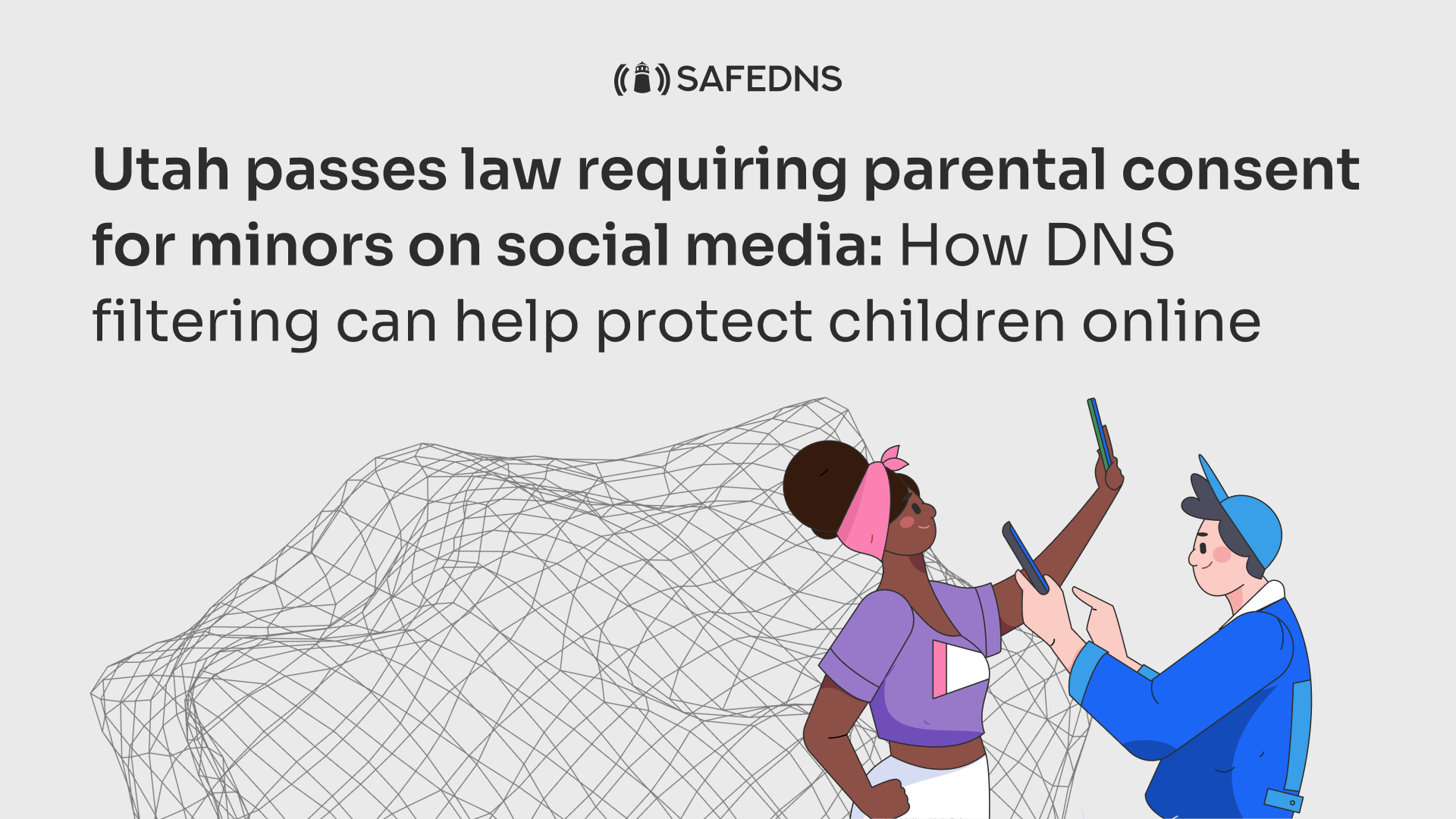
Utah Passes Law Requiring Parental Consent for Minors on Social Media: How DNS Filtering Can Help Protect Children Online

Utah has passed a new law that requires parental consent for minors to use social media. The law aims to protect children from potential harm and social media addiction, but critics argue it could be difficult to enforce and limit free speech. The law will take effect in March 2024 and could set a precedent for other states.

Under the new law, social media companies must obtain consent from parents or legal guardians of minors before collecting, storing, or using their personal information. The law also requires social media platforms to provide an option for parents to access and delete any information their children have shared on the platform.

Parental controls with DNS filtering are a type of internet filter that parents can use to limit their children’s access to certain websites and online content. This type of filter works by using a DNS (Domain Name System) server to redirect requests for specific websites or types of content to a block page or a filtered version of the website.

DNS filtering can be a useful tool for parents who want to protect their children from online threats such as inappropriate content, cyberbullying, and phishing attacks. It can also be helpful in managing screen time and limiting access to specific websites or online activities during certain times of the day.

Some parental control solutions that use DNS filtering also offer additional features such as content categorization, which can automatically block access to websites in certain categories such as gambling, drugs, or adult content. These solutions can also allow parents to create individual profiles for each child and set customized filtering rules based on their age and maturity level.

Overall, parental controls with DNS filtering can be an effective way for parents to protect their children from online dangers and promote safe and responsible internet use.

To ensure compliance with the new law and provide the first layer of protection for children online, start your free trial here.

About Version 2 Digital

Version 2 Digital is one of the most dynamic IT companies in Asia. The company distributes a wide range of IT products across various areas including cyber security, cloud, data protection, end points, infrastructures, system monitoring, storage, networking, business productivity and communication products.

Through an extensive network of channels, point of sales, resellers, and partnership companies, Version 2 offers quality products and services which are highly acclaimed in the market. Its customers cover a wide spectrum which include Global 1000 enterprises, regional listed companies, different vertical industries, public utilities, Government, a vast number of successful SMEs, and consumers in various Asian cities.

About SafeDNS
SafeDNS breathes to make the internet safer for people all over the world with solutions ranging from AI & ML-powered web filtering, cybersecurity to threat intelligence. Moreover, we strive to create the next generation of safer and more affordable web filtering products. Endlessly working to improve our users’ online protection, SafeDNS has also launched an innovative system powered by continuous machine learning and user behavior analytics to detect botnets and malicious websites.

×

Hello!

Click one of our contacts below to chat on WhatsApp

×