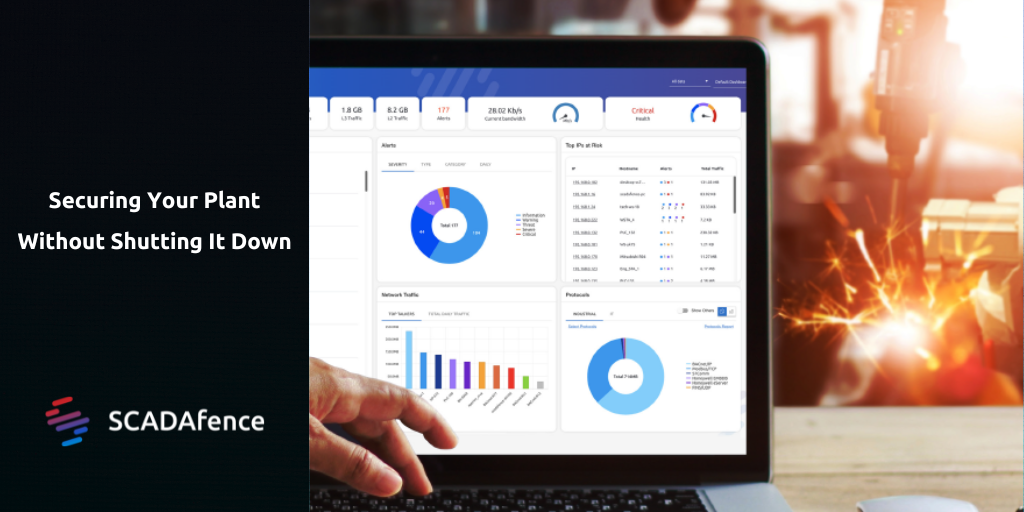
If one of your organization’s goals for 2023 is to implement a robust OT/ICS cyber security solution (and here’s why it absolutely should be, even if budgets are a little tight!) you may need a little help wading through the plethora of options, making a plan, and selling it to your CISO and board. There are many solutions being marketed out there, and many organizations willing to offer advice.
SCADAfence recently published a vendor-agnostic guide to choosing an OT Cyber Security solution that details why OT cyber security differs from IT cyber security and what you need to know to choose the solution that’s best for your organization. In this post, we’ll delve deeper and explore why a complete integration is so important.
The U.S. National Institute of Standards and Technology (NIST) also released a draft version of a detailed technical guide to implementing OT security, with the final edition expected later this year. We suggest you download and read that as well.
One important thing to remember is that even if you don’t have a complete OT security solution at the moment, you still are probably not starting from scratch.
Enter the so-called expert from IT.
As we discovered recently on reddit, every control system engineer has a horror story to share about an IT guy who showed up on the floor of the manufacturing facility with a poorly thought out plan to install or upgrade or a cyber security solution. They proceed to scan every device on the OT network with a tool not-quite designed for the job and leave a disaster in their wake. Machines shut down. Production lines halted. Productivity out the window. Fingers pointed directly at the OT engineers.
We understand why most OT engineers would prefer to keep IT experts out of the factory, and back in the office, where they belong. But the fact is, OT networks require cyber security protection too. (And because a cyber attack in the OT world risks harming physical safety, not just data, the need is actually higher.)
However, as the integration of IT and OT systems becomes increasingly connected in functionality, it’s important to ensure that their cyber security solutions are well-integrated as well.
IT systems are usually more mature, based on common operating systems such as Windows OS or Linux, and have more options available. OT systems on the other hand, are often more fragile and built on custom software, but are more critical to an organization’s mission.
Therefore, as much as the OT teams might prefer to keep the IT teams out of their workspace, it is important for them to work together. Make sure roles and responsibilities are well-defined and it’s clear who holds final accountability for making sure your facility is secure.
Before selecting an OT cyber security vendor, it’s essential to prepare and validate a clear list of IT integration use cases, and ensure that your chosen vendor is able to meet those needs
A sound and complete integration between OT and IT security solutions should accomplish several things. First, it should allow for the flow of information between the two systems. This means that the OT team can receive alerts and notifications from the IT system, and vice versa. Second, a seamless integration should allow for forensic analysis to be conducted across both systems if needed. Third, remote users that are authenticated by the IT systems, may need access to OT systems as well. Therefore, a proper solution will allow a way for users logging on remotely to get the access they need at the correct level of authorization.
This means that the solution should integrate seamlessly with other tools that are already in place. For example, SCADAfence integrates with a number of different security vendors, such as Rapid7, Keysight, and Secureworks. An open API that allows for maximum flexibility is ideal, as it allows you to tailor the integration to your specific use case rather than being limited to pre-set integrations that may not meet your needs.
In addition to the OT/IT integration, there are many other things to look for in an OT solution. Including, yes, the ability to passively scan the network to create a detailed inventory of every device without causing damage and shutting down the network. Other must-haves include quick installation time, low false positive rates, and tailored risk alerts. These are all covered in detail in the guide as well.
So, when the CISO, IT person or other member of senior management tells you they want to bring in a cyber security expert, instead of tossing them out on their head and bolting the door, invite them in, be prepared, and talk about how best to work together.
To get more advice and information about choosing an OT cyber security solution, download our complementary guide.








Network Access Control (NAC) is an essential component of any modern corporate network security plan. In fact, access control is one of the most important measures for protecting information and system resources. With the growing sophistication of cyber threats, network administrators face several challenges in implementing and managing NAC.
Ensuring a high level of visibility into network access remains a key requirement for efficient NAC management. When network administrators are in the dark about who is accessing the network or what devices are in use, enforcing robust security controls becomes a monumental challenge. To overcome this, the adoption of a sophisticated NAC solution is advisable. These systems provide the much-needed advantage of real-time monitoring and comprehensive reporting, thereby offering invaluable insights into users and devices on the network. Armed with this information, administrators can proactively identify and neutralize potential threats to network security, creating a stronger, more resilient infrastructure.
Further enhancement to visibility can be achieved through the integration of machine learning and artificial intelligence technologies. These advanced tools can automate the process of monitoring network traffic, identifying patterns, and flagging unusual behavior that may indicate a potential security risk.
Not to be overlooked is the importance of having clear, well-defined security policies. Such guidelines help ensure all network users and devices are appropriately accounted for and have the necessary permissions for network access. Regular reviews and updates of these policies are crucial to maintaining a robust and relevant network access control framework.
In addition, conducting regular network access audits is a highly effective strategy. These audits not only identify potential vulnerabilities but also provide an opportunity for administrators to evaluate and improve their current NAC strategies.
In summary, tackling visibility concerns in network access requires a multifaceted approach that involves the use of advanced NAC solutions, integration of AI and machine learning technologies, effective security policies, and regular network audits. With these measures in place, network administrators can rest assured that they have a clear and comprehensive understanding of their network access landscape, significantly enhancing their ability to safeguard against potential security threats.
Controlling unauthorized network access is paramount in maintaining a secure environment. Unwanted external intruders or even internal personnel can become significant threats if they gain access without appropriate permissions. One effective method of counteracting this challenge is the execution of stringent access control policies. These policies can dictate what level of access each user has, limiting their ability to interact with sensitive areas of the network.
Technologies such as two-factor authentication (2FA) and biometric identification can be powerful tools in this context. Implementing 2FA adds an extra layer of security by requiring users to provide two distinct forms of identification before granting access. Biometric identification, on the other hand, leverages unique physical or behavioral characteristics of individuals to authenticate their identity. This could range from fingerprint scanning to facial recognition, making it significantly harder for unauthorized users to gain network access.
In addition to the above, smart cards can offer a physical token-based approach to authenticate and verify users. The advantage of smart cards lies in their capability to store and process data securely, thus providing an added layer of protection.
To further fortify network security, regular network access audits should be performed. Such audits serve the dual purpose of identifying weak spots where unauthorized access may occur and confirming that all current access control measures are functioning effectively. By routinely scrutinizing the network access landscape, potential vulnerabilities can be spotted and rectified promptly, thus preventing them from being exploited by unauthorized users.
The progressive migration of businesses towards cloud platforms calls for a comprehensive strategy to incorporate cloud-native security products. This endeavor, while promising in terms of enhanced flexibility and scalability, can present its own set of network access control challenges.
To successfully integrate cloud-native security products, the initial focus should be on the compatibility of these tools with your cloud platform. Network administrators need to select security solutions that align seamlessly with the specific cloud services in use, thereby ensuring a smoother transition and optimal performance.
One critical aspect is the support for similar protocols and standards between your cloud service provider and the security product. A failure in this synchronization can lead to unnecessary complexities and vulnerabilities in your security posture. Thus, it’s crucial to validate this compatibility ahead of time to prevent such issues.
Also noteworthy is the ability of these security tools to provide a unified and cohesive security stance. An ideal security product should not operate in isolation but should provide an integrated view of security across all the deployed cloud services. This integration reduces the burden of managing disparate systems, saving time, and reducing the complexity for network administrators.
In addition, organizations need to ensure that these security tools are capable of addressing their unique needs and specific threat landscapes. This could include features like data encryption, intrusion detection, compliance monitoring, or vulnerability scanning, among others. The suitability of these features should be evaluated based on the organization’s risk profile and regulatory requirements.
Lastly, consider the scalability and adaptability of the chosen cloud-native security product. As your organization grows and your cloud environment expands, your security solution should be able to scale accordingly. This adaptability prevents future investments in new tools to meet increased security needs.
Financial limitations can often impede the procurement of advanced security technologies, posing unique budget-related network access control challenges for network administrators. The issue becomes more profound when the rising cybersecurity threats necessitate continuous updates to the security arsenal. However, there are strategic ways to overcome this obstacle.
To begin, organizations should prioritize their investments by analyzing their specific risk profiles and business needs. Deploying a risk-based approach to security investments ensures resources are allocated to areas that carry the highest risk or impact. Therefore, instead of spreading a limited budget thinly across numerous tools, this approach allows organizations to invest effectively in a few, essential security measures.
Leveraging open-source security solutions can provide a cost-efficient route to improved network security. While it may not offer the exact features of premium tools, these solutions can provide a basic level of protection against common network threats. Additionally, the open-source community often provides ongoing updates, ensuring the software remains effective against evolving threats. However, it’s crucial to assess the quality and reliability of open-source solutions before integrating them into your network.
A Security-as-a-Service (SECaaS) model can be a viable alternative for organizations with limited budgets. Rather than investing in individual security products, SECaaS provides an array of comprehensive security services on a subscription basis. This model not only enables organizations to access top-tier security solutions but also reduces the cost and complexity associated with their management and maintenance.
Furthermore, organizations can consider cooperative purchasing arrangements, where multiple organizations join to negotiate better pricing with vendors, or leasing arrangements, which can spread the cost over time and improve cash flow management.
The final consideration is investing in employee training. An educated workforce can act as a powerful line of defense, reducing the likelihood of expensive security breaches caused by human error. Though often overlooked, this is a cost-effective approach to improving network security without the need for significant investment in technology.
As organizations increasingly adopt distributed and remote work models, new network access control challenges involving managing diverse geographical locations has arisen. Maintaining the integrity and security of the network while providing adequate access to remote employees requires a nuanced and robust approach.
To tackle this challenge effectively, the implementation of centralized network management systems is crucial. These systems empower network administrators to control and monitor network access from any location, ensuring seamless operations despite geographical boundaries. With such systems, administrators can enforce uniform security policies, detect potential threats, and respond swiftly to security incidents across all network access points.
Furthermore, deploying Virtual Private Networks (VPNs) is an effective strategy for remote network access control. VPNs offer secure encrypted tunnels for data transmission between the user and the network, thereby protecting the data from interception. For added security, administrators can combine VPN usage with Multi-factor Authentication (MFA), which requires users to verify their identities through multiple methods before granting network access.
The advent of Software Defined Perimeter (SDP) technology can also prove beneficial in managing NAC from multiple locations. SDP solutions, also known as Zero Trust Network Access (ZTNA), create individualized perimeters for each user, granting them access only to the specific resources they need. This approach minimizes the attack surface and reduces the risk of internal threats.
However, as the network extends beyond the traditional boundaries, the need for advanced security tools becomes paramount. Solutions such as Intrusion Detection Systems (IDS) and Intrusion Prevention Systems (IPS) can help monitor and protect the network from potential threats, regardless of the user’s location.
Finally, regularly conducting network access audits can aid in identifying potential weak spots and inconsistencies in access control. These audits can reveal any discrepancies in the application of security policies across locations, providing valuable insights for enhancing the overall NAC strategy.
By embracing these solutions and strategies, organizations can successfully manage network access control from multiple locations, thereby ensuring business continuity and robust security in a distributed work environment.
In the ever-evolving landscape of network security, managing insider threats and rogue network access points can pose a significant challenge. Both these elements can stealthily create vulnerabilities within the system, making detection and mitigation a demanding task. However, effective strategies can help network administrators navigate this complex issue.
In this regard, Behavior Analysis Tools (BATs) can be instrumental. These solutions scrutinize network activity to identify anomalies that deviate from established user behavior patterns. This continuous monitoring can flag unexpected or suspicious actions, providing early warning signs of potential insider threats. However, the key to leveraging BATs is defining what constitutes “normal” behavior, which requires an in-depth understanding of user roles and activities within the network.
Likewise, the implementation of Intrusion Detection Systems (IDS) can help identify unauthorized access points within the network. These systems work by monitoring network traffic for suspicious activities or violations of network policies. When an intrusion is detected, the IDS alerts the network administrator, who can then take necessary actions to neutralize the threat. To enhance the effectiveness of IDS, it should be paired with an Intrusion Prevention System (IPS), which not only detects but also prevents network intrusions.
Enforcing strict access control policies is another crucial strategy. These policies should clearly outline who has access to what data and when, creating boundaries that can prevent unauthorized access and data leakage. For these policies to be effective, they need to be comprehensive, updated regularly, and communicated effectively to all network users.
Providing regular security training for employees is also essential. Many insider threats are unintentional, often resulting from a lack of understanding of security best practices. By educating employees about the importance of network security and the potential consequences of their actions, organizations can significantly reduce the likelihood of insider threats.
Finally, a comprehensive audit of network access can reveal potential weak spots, such as rogue access points, and provide insights into the effectiveness of current security measures. Regular audits, coupled with the continuous monitoring provided by BATs and IDS, create a robust defense against insider threats and rogue network access points.
By adopting these strategies, network administrators can significantly enhance their ability to manage and mitigate potential insider threats and rogue access points, fortifying their network against these often overlooked but critical security challenges.
Click one of our contacts below to chat on WhatsApp