Skip to content

Keepit celebrates dual wins at the 2024/25 Cloud Awards for intelligent backup and recovery solutions

Keepit was named winner in the “Best Cloud-Native Project/Solution” and “Best Cloud DR/Business Continuity Solution” categories.

Copenhagen, Denmark – January 15 – Keepit, a global provider of a comprehensive cloud backup and recovery platform, announced today its success in the 2024/25 Cloud Awards program by being named winner in the “Best Cloud-Native Project / Solution” and “Best Cloud DR / Business Continuity Solution” categories.

The Cloud Awards is one of the longest-running awards platforms of its kind, recognizing the latest achievements and innovations in cloud computing. Organizations that reached the finalist stage have had their nominations reviewed by the judging panel, resulting in the winners named today. The program received entries from organizations of all sizes from across the globe, including the USA and Canada, the UK and Europe, the Middle East, and APAC.

The program itself covers multiple aspects of cloud computing across 36 categories, including overall excellence (e.g.: innovation and disruption), systems and processes (e.g.: Payroll and Automation), certain technologies (e.g. SaaS and IoT), pieces of work (e.g.: projects, migrations or integrations), and workplace excellence (e.g.: consultancy, most promising startup, and ‘green’ credentials).

“More than 15,000 companies worldwide already include the Keepit platform as a part of their disaster recovery plans. By providing companies with instant and continuous access to their data, we’re helping to ensure business continuity and peace of mind. We’re honored to have received these accolades from the Cloud Awards,” says Michele Hayes, CMO at Keepit.

“Keepit has proven itself a leader in disaster recovery and business continuity with its purpose-built SaaS data protection platform, earning the title of ‘Best Cloud DR / Business Continuity Solution.’ By leveraging immutable, tamper-proof storage in an independent cloud, Keepit provides organizations with peace of mind, even in the face of cyberattacks or unexpected data loss. Its adherence to the highest security standards and cost-effective, predictable pricing model ensures companies remain operational, compliant, and secure. The Cloud Awards is proud to honor Keepit for its pivotal role in protecting business-critical data and ensuring uninterrupted continuity in an increasingly unpredictable digital landscape,” says Cloud Awards Technical Director, Annabelle Whittall.

Secure by design, the Keepit cloud is owned and run by Keepit. Customer data is kept in a separate, dedicated infrastructure, with the backed-up data stored fully isolated from the SaaS vendor’s cloud. With a user-friendly interface, robust data security, and the ability to adapt to your cloud environment, Keepit ensures your data is always accessible and protected.

About the Cloud Awards

The Cloud Awards is an international program which has been recognizing and honoring industry leaders, innovators and organizational transformation in cloud computing since 2011. The Cloud Awards comprises five awards programs, each uniquely celebrating success across cloud computing, software-as-a-service (SaaS), cloud security, artificial intelligence (AI), and financial technologies (FinTech).

Winners are selected by a judging panel of international industry experts. For more information about the Cloud Awards, please visit https://www.cloud-awards.com/.

About The Cloud Awards Program
The Cloud Awards identifies and celebrates the most innovative organizations, technologies, individuals and teams in the world of cloud computing. The program spans 36 categories, including ‘Best Cloud Infrastructure’ and ‘Best Cloud Automation Solution’.

About The Cloud Security Awards
The Cloud Security Awards celebrates innovation in the cybersecurity industry. The program includes a wide range of categories, including ‘Best Web Security Solution,’ ‘Cloud Security Innovator of the Year,’ and ‘Best Security Solution for Finance or Banking.’

About The FinTech Awards
The FinTech Awards focuses on the major innovations in the world of financial technology, including personal and corporate banking, insurance, and wealth management, business finance processes, and FinTech use within a selection of sectors, across 23 categories.

About Keepit
At Keepit, we believe in a digital future where all software is delivered as a service. Keepit’s mission is to protect data in the cloud Keepit is a software company specializing in Cloud-to-Cloud data backup and recovery. Deriving from +20 year experience in building best-in-class data protection and hosting services, Keepit is pioneering the way to secure and protect cloud data at scale.

About Version 2 Digital

Version 2 Digital is one of the most dynamic IT companies in Asia. The company distributes a wide range of IT products across various areas including cyber security, cloud, data protection, end points, infrastructures, system monitoring, storage, networking, business productivity and communication products.

Through an extensive network of channels, point of sales, resellers, and partnership companies, Version 2 offers quality products and services which are highly acclaimed in the market. Its customers cover a wide spectrum which include Global 1000 enterprises, regional listed companies, different vertical industries, public utilities, Government, a vast number of successful SMEs, and consumers in various Asian cities.

5 predictions for 2025: Data, APIs, and AI, oh my!

As we welcome a new year, let’s take a look ahead and anticipate the trends that will shape SaaS ecosystems in 2025. What challenges will businesses need to overcome? What opportunities will they seize to secure and manage their data?

To help shed some light on questions like these, Keepit’s Jakob Østergaard (CTO), Michael Amsinck (CPTO), and Kim Larsen (CISO) have shared five predictions for 2025 ranging from data protection and compliance to cloud infrastructure, AI innovation, and scalability challenges. 


Prediction 1: Data protection — finally a non-negotiable priority 

By Michael Amsinck, CPTO at Keepit

Data protection goes mainstream

In 2025, businesses will move beyond seeing SaaS data protection as optional and embrace it as a non-negotiable priority. The increasing frequency of cyberattacks and the devastating consequences of data breaches will make organizations take proactive steps to safeguard their digital assets, such as SaaS data, filling a critical need in shared responsibility models.

This means not just adopting backup solutions but ensuring they’re vendor-independent and truly resilient. Companies will demand solutions that not only secure their data but also guarantee accessibility under any circumstances. The market is ready for exponential growth, fueled by this heightened awareness and demand. 


Prediction 2: Data sovereignty — know where your data lives 

By Kim Larsen, CISO at Keepit 

Data sovereignty takes center stage
As global regulatory landscapes evolve, businesses will prioritize knowing precisely where their data resides and under whose jurisdiction it falls. Customers, too, are becoming savvier, demanding transparency about how and where their data is managed.

By 2025, data sovereignty won’t just be a legal obligation — it will be a strategic advantage. Smart businesses will give their data a clear “address,” ensuring compliance while boosting customer trust. This isn’t about borders — it’s about accountability and control. 


Prediction 3: Cloud services — supply chain under the microscope 

By Jakob Østergaard, CTO at Keepit 

Trust, but verify.
The geopolitical turbulence of recent years has exposed vulnerabilities in supply chains, including digital services. By 2025, organizations will scrutinize their cloud service providers with the same rigor they apply to physical supply chains.

Compliance, vendor relationships, and security protocols will come under the microscope. While integration and collaboration are essential, the days of blind trust are over. Businesses will learn to balance innovation with caution — understanding that while partnerships are key, not all vendors are allies.  


Prediction 4: AI — the year of truth 

By Jakob Østergaard, CTO at Keepit  

AI hits reality check
2025 will mark the end of AI hype cycles. Unsustainable projects will collapse, and only truly functional, value-adding solutions will remain. Businesses will embrace AI for practical purposes: analyzing large datasets, identifying patterns, and enhancing decision-making.

The market will mature, with clear winners emerging as the dust settles. Much like past technological fads, the glamour will fade, leaving behind only what works. Companies that harness AI wisely — focusing on utility rather than novelty — will reap the rewards. 


Prediction 5: Scalability — APIs as the breaking point 

By Jakob Østergaard, CTO at Keepit 

APIs must grow up.
APIs are the backbone of modern SaaS ecosystems, but by 2025, their limitations will become a critical bottleneck. Throttling, slow responses, and intermittent failures are stalling progress, undermining the promise of seamless integrations. For the digital economy to thrive, APIs must evolve to handle higher volumes and deliver consistently.

Engineering robust, scalable solutions isn’t glamorous, but it’s essential. The message is clear: slow down to build better. In the long run, well-designed APIs will separate market leaders from the also-rans. 

Conclusion 

The predictions for 2025 reflect a shared focus on SaaS resilience, accountability, recovery, and adaptability. Businesses must prioritize intelligent and robust systems that address data protection, transparency, and technological evolution to navigate the challenges ahead.

By embracing these shifts proactively, organizations can transform uncertainty into opportunity, ensuring they remain competitive and secure. After all, recovery can only happen if you have a backup proactively in place. 

About Keepit
At Keepit, we believe in a digital future where all software is delivered as a service. Keepit’s mission is to protect data in the cloud Keepit is a software company specializing in Cloud-to-Cloud data backup and recovery. Deriving from +20 year experience in building best-in-class data protection and hosting services, Keepit is pioneering the way to secure and protect cloud data at scale.

About Version 2 Digital

Version 2 Digital is one of the most dynamic IT companies in Asia. The company distributes a wide range of IT products across various areas including cyber security, cloud, data protection, end points, infrastructures, system monitoring, storage, networking, business productivity and communication products.

Through an extensive network of channels, point of sales, resellers, and partnership companies, Version 2 offers quality products and services which are highly acclaimed in the market. Its customers cover a wide spectrum which include Global 1000 enterprises, regional listed companies, different vertical industries, public utilities, Government, a vast number of successful SMEs, and consumers in various Asian cities.

NordStellar’s attack surface management: Spot vulnerabilities before attackers do

Attack surface management reduces cyber risks

Summary: NordStellar’s attack surface management (ASM) feature provides continuous visibility and assessment of your organization’s external attack surface.

We’re excited to introduce NordStellar’s latest feature – attack surface management (ASM) – designed to provide continuous visibility and assessment of your organization’s external attack surface.

“By introducing ASM, we aim to help improve our clients’ overall security posture, ensuring that their security teams are equipped with insights needed to effectively manage their attack surface, minimize exposure to external threats, and meet regulatory requirements for vulnerability assessments,” says Vakaris Noreika, head of product at NordStellar.

ASM helps security teams monitor internet-facing assets, such as websites, servers, applications, and cloud resources, while identifying and mitigating vulnerabilities before they can be exploited. By automating the discovery of security gaps, NordStellar’s ASM empowers organizations to proactively reduce cyber risks and strengthen their security posture.

Attack surface management feature

Why companies have trouble managing their attack surface

Many companies lack full visibility into their external-facing assets, making it difficult to detect potential vulnerabilities that could be easily found by attackers on the dark web and exploited.

“Any security gaps in a company’s websites, servers, applications, cloud resources, or internet of things devices are a ticking time bomb, and it’s vital to identify and mitigate these vulnerabilities before attackers have a chance to act,” says Noreika.

However, many organizations still struggle with understanding and managing their attack surface due to several key challenges:

  • Unidentified and unmanaged assets. Many organizations struggle to maintain a complete and accurate inventory of their internet-facing assets. Without visibility, securing unknown or forgotten systems becomes impossible, leaving critical blind spots for attackers to exploit.
  • Inefficient manual processes. Traditional methods of asset discovery and vulnerability assessment often involve manual processes, spreadsheets, and disparate tools. This is time-consuming and labor-intensive.
  • Difficulty prioritizing remediation efforts. With limited resources, knowing which vulnerabilities pose the greatest risk and require immediate attention can be a challenge.
  • Lack of real-time threat detection. The attack surface is constantly changing, with new vulnerabilities being discovered and exploited daily.
  • Shadow IT and unknown risks. Unauthorized devices, applications, or services connected to the network without IT’s knowledge (shadow IT) significantly expand the attack surface and introduce uncontrolled risks.


How NordStellar’s ASM works

NordStellar’s ASM consists of two main modules – automatic asset discovery and external vulnerability management. Automatic asset discovery maps your infrastructure by running various domain enumeration processes. This way, ASM automatically identifies and catalogs all internet-exposed assets related to your organization, such as web servers, applications, and other network-connected devices. NordStellar can also discover domains, SSL certificates, and IPs.

In the meantime, external vulnerability management continuously monitors and scans the discovered assets for known weaknesses, delivering actionable intelligence to streamline recovery efforts.

How NordStellar’s ASM works

How security teams can put ASM into practice

Continuously monitoring and assessing the attack surfaces is by no means an easy task, requiring a great deal of time and human resources. NordStellar’s ASM provides value for different members of your security team:

  • Security analysts. Imagine starting your day by opening the ASM dashboard, where critical internet-facing vulnerabilities – whether it’s a misconfigured server or an exposed cloud resource – are already detected. You can dive straight into investigating the highest risks, collaborating with IT teams, and implementing fixes before attackers can exploit them.
  • Security engineers. Picture integrating ASM into your workflow. The platform continuously scans your external assets, uncovering weak points that could be exploited. With ASM’s automated discovery, you streamline your vulnerability patching process and address gaps while freeing up time to focus on strategic infrastructure security questions.
  • Security managers. See yourself walking into a stakeholder meeting with NordStellar’s ASM reports. You can clearly demonstrate how the team has reduced the organization’s attack surface, track remediation progress in real time, and provide data-backed proof of compliance. You’re ready to show the tangible value of proactive risk reduction to the entire business.

With ASM, every member of your security team gains the tools they need to strengthen your organization’s security. From real-time monitoring to automated insights and clear reporting, ASM helps you stay ahead of threats and focus on what matters most – keeping your business protected.

Key benefits of NordStellar’s ASM

Security teams are under constant pressure to manage the attack surface: unknown assets, evolving vulnerabilities, and manual processes hamper them down and create unnecessary risk. That’s where NordStellar’s ASM comes in, providing:

  • Minimized attack surface. By identifying and mitigating vulnerabilities, NordStellar’s ASM helps you reduce the chance of a successful attack.
  • Enhanced shadow IT visibility. With ASM, you’ll be able to maintain an accurate list of internet-exposed assets, protecting them from unknown threats.
  • Automation-driven operational efficiency. This lets you avoid manual vulnerability scanning, which is time-consuming and prone to errors.
  • Real-time threat detection. Unlike traditional periodic scans that leave gaps between assessments, ASM ensures continuous monitoring and alerting.
  • Mitigating vulnerabilities before attackers do. NordStellar’s ASM lets you protect your assets before threat actors can do damage.
  • Meeting compliance requirements. You can use ASM to demonstrate compliance with industry regulations that require regular vulnerability assessments.
  • Cost saving. With this feature, you can minimize the financial impact of security incidents.

About NordStellar

NordStellar is a threat exposure management platform that enables enterprises to detect and respond to network threats before they escalate. As a platform and API provider, NordStellar can provide insight into threat actors’ activities and their handling of compromised data. Designed by Nord Security, the company renowned for its globally acclaimed digital privacy tool NordVPN.

About Version 2 Digital

Version 2 Digital is one of the most dynamic IT companies in Asia. The company distributes a wide range of IT products across various areas including cyber security, cloud, data protection, end points, infrastructures, system monitoring, storage, networking, business productivity and communication products.

Through an extensive network of channels, point of sales, resellers, and partnership companies, Version 2 offers quality products and services which are highly acclaimed in the market. Its customers cover a wide spectrum which include Global 1000 enterprises, regional listed companies, different vertical industries, public utilities, Government, a vast number of successful SMEs, and consumers in various Asian cities.

DNS Security Best Practices for Logging

Your Domain Name System (DNS) infrastructure enables users to connect to web-based resources by translating everyday language into IP addresses. Imagine going into a restaurant, in the age before the internet, only to find that the staff speaks and the menu is written in a different language from yours. Without some shared communication form, you can’t order dinner, and they can’t give you what you want. Finally, someone comes into the restaurant who speaks both languages, acting as the translator so you can get the service you need.


A DNS infrastructure is the translator for cloud-based operations for continued services. However, when malicious actors target your DNS, a successful attack can lead to downtime or a data breach.


To mitigate risk, you should implement some DNS security best practices, including knowing what logs help you monitor for and detect a potential incident.


What is DNS security?

DNS security refers to the measures taken to protect the Domain Name System (DNS) infrastructure from cyber attacks. DNS translates a human-readable URL (Uniform Resource Locator) into a machine-readable IP address, routing user requests to the appropriate digital resources.


Cyber attacks against the DNS infrastructure can lead to:

  • Website defacement
  • Traffic hijacking sending users to malicious websites or intercepting communications
  • Unauthorized access to sensitive information
  • Distributed Denial of Service (DDoS) attacks causing service outages and business interruption


DNS security controls typically include:

  • Redundancy: Using multiple DNS servers spread across different locations to prevent a single point of failure
  • DNS Security Extensions (DNSSEC): Protocols providing authentication and data integrity
  • DNS logging: Monitoring for and detecting malicious activities


Why is DNS security important?

The history of DNS gives insight into why it is not a secure technology. Originally created in 1983 so people could more easily navigate the nascent internet, no one predicted this new connectivity would change and become critical to daily operations.

Your DNS infrastructure acts as the foundation for your digital business operations meaning the service disruptions lead to downtime and lost revenue.


A successful attack against your DNS infrastructure can lead to:

  • Business disruption: Without the ability to translate URLs into IP addresses, users and customers cannot connect to digital services.
  • Lost revenue: Without the ability to connect to services, customers cannot engage in transactions, like being able to purchase items in an e-commerce store.
  • Data breach: Compromising DNS services can lead to unauthorized data transfers, modification, or access that impact sensitive data’s integrity and privacy.
  • Compliance risk: DNS is included in various compliance frameworks and mandates, including the Payment Card Industry Data Security Standard (PCI DSS) and International Organization for Standardization (ISO) 27002-2022


6 DNS Attack Types and How to Prevent Them

As attackers increasingly target the DNS infrastructure, knowing these four common attack types can help you implement security controls and the appropriate monitoring to mitigate risk.


DoS and DDoS

Many attacks against the DNS infrastructure fall into these categories, even if they use different methodologies for achieving the objective. Although similar, you should understand the following differences:

  • Denial of Service (DoS): one computer using one internet connection sends high volumes of traffic to a remote server
  • Distributed Denial of Service (DDoS): multiple devices across multiple internet connections target a resource, often using a botnet consisting of devices infected with malware


These attacks flood a DNS server with requests and traffic. As the server attempts to manage the responses, it becomes overloaded and shuts down.


DNS amplification attacks

One DDoS attack type is DNS amplification, in which malicious actors send high volumes of DNS name lookup requests to publicly accessible, open DNS servers. Instead of using their own IP in the source address, the attackers spoof the target’s address so that the DNS server responds to the target.


DNS hijacking

In a DNS hijacking attack, malicious actors make unauthorized changes to the DNS settings which redirect users to deceptive or malicious websites. Some varieties of DNS hijacking attack include:

  • Cache poisoning: inserting false data into the DNS server’s cache to redirect users when they try to access the website
  • Server hijacking: gaining unauthorized access to a domain’s DNS records and changing A or AAAA records that redirect users to a malicious IP address or attacker-controlled server


DNS Spoofing

DNS spoofing, also called DNS poisoning, exploits security gaps in the DNS protocol. The attacker gets in between the browser and the DNS server to supply the wrong response, diverting traffic to the malicious website.


DNS tunneling

DNS tunneling is a sophisticated attack where malicious actors insert data into the communication path between the browser and server. This enables them to bypass several defensive technologies, including:

  • Filters
  • Firewalls
  • Packet capture


This process routes queries to a command and control (C2) server, enabling them to steal information.


DNS Logging Best Practices for Improved Security

Whether you build your own DNS infrastructure or use a managed service, you should be integrating your DNS logs into your overarching security monitoring. While the logs should provide similar information, the field used changes based on your DNS server’s manufacturer. However, you should look for log fields supporting the following categories and event types.

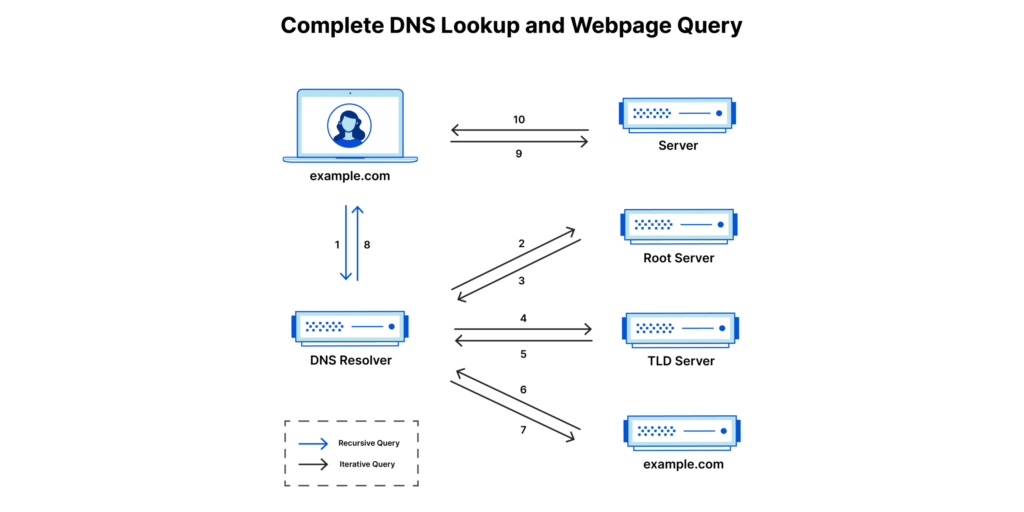
Cloudflare Graphic Reference

Zone operations

In DNS-speak, the zone refers to the domain. Some data you should consider collecting include log fields related to the creation, deletion, or modification to:

  • Zones
  • Records
  • Nodes


DNS Security Extensions (DNSSEC)

DNSSEC are configurations that use digital signatures to authenticate DNS queries and responses. Some data you should consider collecting include log fields related to:

  • Addition of new keys or trust points
  • Removal of keys or trust points
  • Exports of metadata


Policies

DNS policies allow you to

  • Balance traffic loads
  • Assign DNS clients based on geographic location
  • Create zones
  • Manage query filters
  • Redirect malicious DNS requests to a non-existent IP address


Some data you should consider collecting include log fields related to the creation, deletion, or modification of:

  • Client subnet records
  • Server level policies
  • Forwarding policies
  • Zone policies


Graylog Security: Correlating DNS Log Events

DNS logs are often difficult to parse, sometimes creating a blind spot when monitoring DNS security. Graylog Security offers out-of-the-box content that streamlines this process with pre-built content to rapidly set up and start monitoring your DNS security.

Our prebuilt content to map security events to MITRE ATT&CK. By combining Sigma rules and MITRE ATT&CK, you can create high-fidelity alerting rules that enable robust threat detection, lightning-fast investigations, and streamlined threat hunting. For example, with Graylog’s security analytics, you can monitor user activity for anomalous behavior indicating a potential security incident. By mapping this activity to the MITRE ATT&CK Framework, you can detect and investigate adversary attempts at using Valid Accounts to gain Initial Access, mitigating risk by isolating compromised accounts earlier in the attack path and reducing impact.

Graylog’s risk scoring capabilities enable you to streamline your threat detection and incident response (TDIR) by aggregating and correlating the severity of the log message and event definitions with the associated asset, reducing alert fatigue and allowing security teams to focus on high-value, high-risk issues.

About Graylog  
At Graylog, our vision is a secure digital world where organizations of all sizes can effectively guard against cyber threats. We’re committed to turning this vision into reality by providing Threat Detection & Response that sets the standard for excellence. Our cloud-native architecture delivers SIEM, API Security, and Enterprise Log Management solutions that are not just efficient and effective—whether hosted by us, on-premises, or in your cloud—but also deliver a fantastic Analyst Experience at the lowest total cost of ownership. We aim to equip security analysts with the best tools for the job, empowering every organization to stand resilient in the ever-evolving cybersecurity landscape.

About Version 2 Digital

Version 2 Digital is one of the most dynamic IT companies in Asia. The company distributes a wide range of IT products across various areas including cyber security, cloud, data protection, end points, infrastructures, system monitoring, storage, networking, business productivity and communication products.

Through an extensive network of channels, point of sales, resellers, and partnership companies, Version 2 offers quality products and services which are highly acclaimed in the market. Its customers cover a wide spectrum which include Global 1000 enterprises, regional listed companies, different vertical industries, public utilities, Government, a vast number of successful SMEs, and consumers in various Asian cities.

Optimizing Your Cybersecurity Budget with Enterprise Zero Trust

The Opportunities and Obstacles of Zero Trust

The rapid evolution of digital threats demands a robust response, for enterprise zero trust efforts to fortify cybersecurity defenses. At its core, Zero Trust challenges traditional notions by assuming that threats can emerge both outside and inside an organization. This paradigm shift empowers businesses to enhance security by verifying every access request, thereby mitigating the risk of unauthorized access. However, this promising approach is not without its challenges. As of 2024, the majority of organizations have begun their journey towards a Zero Trust strategy, often collaborating with multiple security providers to lay the groundwork for implementation. This trend underscores the complexity and ambition involved in adopting Zero Trust.

Major Challenges in Implementing Zero Trust

Implementing Zero Trust at an enterprise level demands a meticulous approach due to the intricate nature of large-scale deployments. This endeavor can span several years, requiring significant resources and planning. Among the primary challenges is the constant need to update Zero Trust policies to keep pace with evolving business needs. This continuous adaptation can become a formidable task, necessitating sustained commitment and expertise.

Another critical issue is the impact on user experience. Strict security measures often introduce latency and perceived inconvenience, which can disrupt workflows and lead to resistance from employees. This resistance can undermine the overall effectiveness of the security strategy, making it crucial to strike a balance between robust protection and a seamless user experience.

Integration with existing infrastructure is another significant hurdle. Many organizations have complex, legacy systems that may not easily align with Zero Trust principles. Ensuring seamless interoperability between new Zero Trust solutions and established systems requires careful planning and execution. The necessity to maintain comprehensive visibility and control over network activity adds another layer of complexity, demanding advanced monitoring and management capabilities.

Moreover, the financial investment associated with Zero Trust implementation can be substantial. This includes not only the cost of new technologies but also the expenses related to training, change management, and ongoing maintenance. Organizations must be prepared to allocate sufficient budget and resources to support this transformative initiative.

Lastly, the rapidly changing threat landscape presents an ongoing challenge. As cyber threats become increasingly sophisticated, Zero Trust architectures must continually evolve to counter new tactics and vulnerabilities. This dynamic environment requires organizations to stay ahead of the curve, leveraging innovative solutions and strategies to maintain a robust security posture.

Navigating these challenges requires a strategic, well-coordinated effort. By addressing these complexities head-on, organizations can lay the groundwork for a resilient and effective Zero Trust architecture that meets both current and future security demands.

Selecting Products for Enterprise Zero Trust

Selecting products for an Enterprise Zero Trust strategy demands a discerning approach rooted in both technical requirements and strategic foresight. The first step is to evaluate the interoperability of potential solutions with existing infrastructure. Seamless integration is paramount, ensuring that new Zero Trust tools enhance rather than disrupt current operations. Solutions must offer robust capabilities for continuous authentication and micro-segmentation, providing granular control over user access.

It’s essential to prioritize products that deliver comprehensive visibility across the network. This visibility is crucial for monitoring and managing user activities, detecting anomalies, and responding swiftly to potential threats. Look for solutions that offer advanced analytics and real-time insights, enabling proactive security measures and informed decision-making.

Equally important is the consideration of scalability. As organizations grow and their needs evolve, the chosen Zero Trust products should be capable of adapting without requiring a complete overhaul. Scalable solutions allow enterprises to expand their security measures incrementally, aligning with both budgetary constraints and long-term objectives.

Adaptability is another critical factor. The cybersecurity landscape is ever-changing, and Zero Trust solutions must evolve to address new vulnerabilities and attack vectors. Products that offer regular updates, backed by a strong support ecosystem, will ensure the organization remains protected against emerging threats.

Another key aspect is ease of management. Solutions that simplify policy enforcement and reduce administrative overhead can significantly enhance operational efficiency. Automated features that facilitate continuous compliance and streamline incident response processes are highly beneficial, allowing security teams to focus on strategic initiatives rather than routine tasks.

Vendor reputation and support services should not be overlooked. Collaborating with reputable vendors who have a proven track record in Zero Trust can provide additional assurance of product reliability and effectiveness. Furthermore, strong vendor support can aid in overcoming implementation challenges, ensuring a smoother transition to a Zero Trust architecture.

By carefully considering these factors, organizations can select Zero Trust products that align with their security goals, operational needs, and future growth trajectories.

Mapping a Realistic Path Forward

Mapping a realistic path forward with Zero Trust begins with strategic planning and measured execution. A phased rollout strategy is essential, allowing organizations to gradually introduce Zero Trust principles without overwhelming existing systems and workflows. Initial efforts should concentrate on critical areas that provide significant security benefits and minimal disruption. This targeted approach helps in building momentum and demonstrating early successes.

Engaging all relevant stakeholders early in the process is crucial. Clear communication about the objectives, benefits, and operational changes can foster buy-in and mitigate resistance. Tailored training sessions and educational programs will empower employees, turning them into active participants in the security transformation.

A flexible technology stack is fundamental. Choose solutions that can adapt to evolving business needs and integrate seamlessly with current infrastructure. This adaptability ensures the Zero Trust model can scale and evolve as the organization grows and as new threats emerge.

Continuous monitoring and real-time analytics are key components. Implement tools that provide comprehensive visibility and facilitate proactive threat detection. By maintaining rigorous oversight, organizations can swiftly address vulnerabilities and adjust policies as necessary.

Another critical element is fostering a culture of continuous improvement. Regularly review and refine Zero Trust policies to align with the latest cybersecurity developments and organizational changes. This iterative process helps in maintaining a robust security posture while accommodating the dynamic nature of cyber threats.

Invest in strong vendor partnerships to leverage expert insights and support throughout the implementation journey. Reputable vendors with proven expertise in Zero Trust can provide invaluable guidance, ensuring smoother transitions and more effective solutions.

By embracing a structured, adaptable, and collaborative approach, organizations can successfully implement Zero Trust, achieving enhanced security and resilience against an increasingly sophisticated threat landscape.

Building a Resilient Cybersecurity Future with Zero Trust

Successfully optimizing your cybersecurity budget with an enterprise Zero Trust strategy requires more than just adopting new technologies—it demands a paradigm shift in how organizations approach security. By addressing challenges such as integration, user experience, and continuous adaptation, businesses can unlock the full potential of Zero Trust to protect critical assets and reduce vulnerabilities.

Through careful planning, strategic product selection, and fostering a culture of continuous improvement, organizations can establish a robust and scalable Zero Trust architecture. The result? A resilient cybersecurity framework that not only withstands current threats but also evolves to meet the demands of an ever-changing digital landscape.

About Portnox
Portnox provides simple-to-deploy, operate and maintain network access control, security and visibility solutions. Portnox software can be deployed on-premises, as a cloud-delivered service, or in hybrid mode. It is agentless and vendor-agnostic, allowing organizations to maximize their existing network and cybersecurity investments. Hundreds of enterprises around the world rely on Portnox for network visibility, cybersecurity policy enforcement and regulatory compliance. The company has been recognized for its innovations by Info Security Products Guide, Cyber Security Excellence Awards, IoT Innovator Awards, Computing Security Awards, Best of Interop ITX and Cyber Defense Magazine. Portnox has offices in the U.S., Europe and Asia. For information visit http://www.portnox.com, and follow us on Twitter and LinkedIn.。

About Version 2 Digital

Version 2 Digital is one of the most dynamic IT companies in Asia. The company distributes a wide range of IT products across various areas including cyber security, cloud, data protection, end points, infrastructures, system monitoring, storage, networking, business productivity and communication products.

Through an extensive network of channels, point of sales, resellers, and partnership companies, Version 2 offers quality products and services which are highly acclaimed in the market. Its customers cover a wide spectrum which include Global 1000 enterprises, regional listed companies, different vertical industries, public utilities, Government, a vast number of successful SMEs, and consumers in various Asian cities.

×

Hello!

Click one of our contacts below to chat on WhatsApp

×