Skip to content

Fake installers for popular apps targeting Southeast and East Asia with dangerous Trojan, ESET Research discovers

  • ESET researchers discovered a malware campaign that targets Chinese-speaking people in Southeast and East Asia.
  • The attackers purchased advertisements to position their malicious websites in the “sponsored” section of Google search results. ESET reported these ads to Google and they were promptly removed.
  • The websites and installers downloaded from them are mostly in Chinese and, in some cases, falsely offer Chinese-language versions of software that is not available in China.
  • We observed victims mostly in Southeast and East Asia, suggesting that the advertisements were targeting that region.
  • The malware delivered by this campaign is FatalRAT, a remote access Trojan that provides a set of functionalities to perform various malicious activities on a victim’s computer.

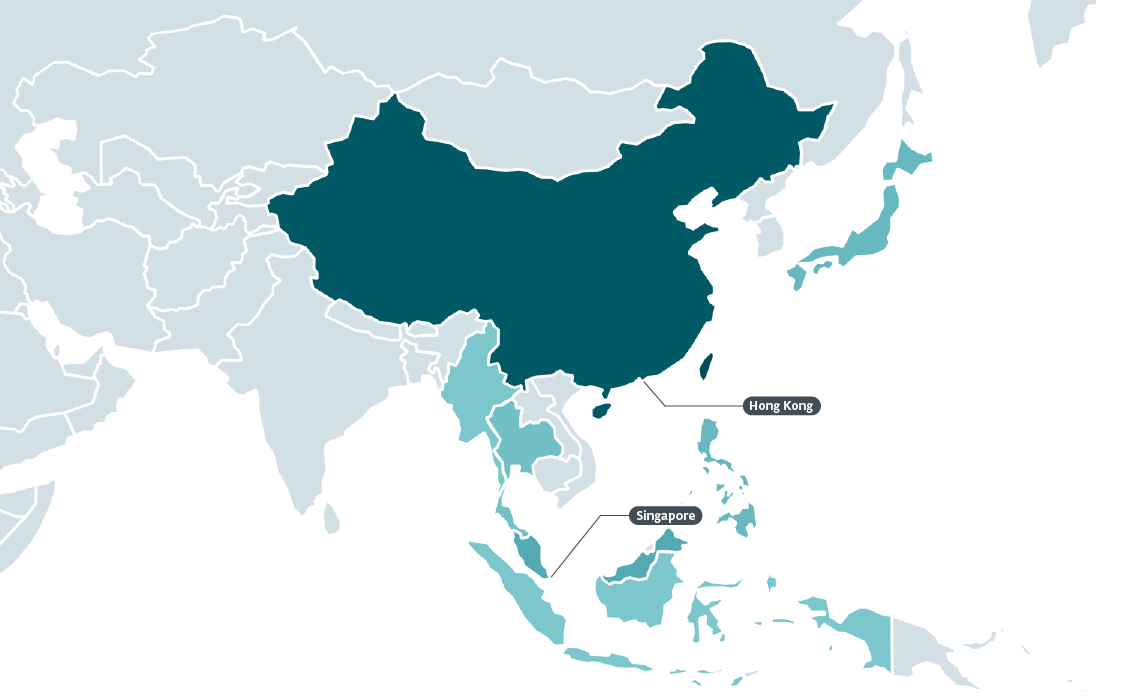
BRATISLAVA, MONTREAL — February 16, 2023 — ESET researchers discovered a malware campaign that targets Chinese-speaking people in Southeast and East Asia by buying misleading advertisements to appear in Google search results that lead to downloading Trojanized installers. The unknown attackers created fake websites that look identical to those of popular applications such as Firefox, WhatsApp, Signal, Skype, and Telegram, but in addition to providing the legitimate software, also deliver FatalRAT, a remote access Trojan that grants the attacker control of the victimized computer. The attacks affected users mostly in mainland China, Hong Kong, and Taiwan, but also in Southeast Asia and Japan.

FatalRAT provides a set of functionalities to perform various malicious activities on a victim’s computer. Among other capabilities, the malware can capture keystrokes, steal or delete data stored by some browsers, and download and execute files. ESET Research observed these attacks between August 2022 and January 2023, but according to our telemetry, previous versions of the installers have been used since at least May 2022.

The attackers registered various domain names that all pointed to the same IP address: a server hosting multiple websites that download Trojanized software. Most of these websites look identical to their legitimate counterparts but deliver malicious installers instead. The other websites, possibly translated by the attackers, offer Chinese-language versions of software that is not available in China, such as Telegram. While, in theory, there are many possible ways that potential victims can be directed to these fake websites, a Chinese-language news site reported that they were being shown an advertisement that led to one of these malicious websites when searching for the Firefox browser in Google. The attackers purchased advertisements to position their malicious websites in the “sponsored” section of Google search results; we reported these ads to Google and they were promptly removed.

“Although we couldn’t reproduce such search results, we believe that the ads were only served to users in the targeted region,” explains Matías Porolli, the ESET researcher who discovered the campaign. “Since many of the domain names that the attackers registered for their websites are very similar to the legitimate domains, it is also possible that the attackers rely on URL hijacking to attract potential victims to their websites,” he adds.

“It is possible that the attackers are solely interested in the theft of information like web credentials to sell them on underground forums, or to use them for another type of crimeware campaign, but for now, specific attribution of this campaign to a known or new threat actor is not possible,” elaborates Porolli. “Finally, it is important to check the URL that we are visiting before we download software. Even better, type it into your browser’s address bar after checking that it is the actual vendor site,” advises Porolli.

For more technical information about this malware campaign, check out the blogpost “These aren’t the apps you’re looking for: Fake installers targeting Southeast and East Asia” on WeLiveSecurity. Make sure to follow ESET Research on Twitter for the latest news from ESET Research.

Countries where ESET detected the attacks between August 2022 and January 2023

About Version 2 Digital

Version 2 Digital is one of the most dynamic IT companies in Asia. The company distributes a wide range of IT products across various areas including cyber security, cloud, data protection, end points, infrastructures, system monitoring, storage, networking, business productivity and communication products.

Through an extensive network of channels, point of sales, resellers, and partnership companies, Version 2 offers quality products and services which are highly acclaimed in the market. Its customers cover a wide spectrum which include Global 1000 enterprises, regional listed companies, different vertical industries, public utilities, Government, a vast number of successful SMEs, and consumers in various Asian cities.

About ESET
For 30 years, ESET® has been developing industry-leading IT security software and services for businesses and consumers worldwide. With solutions ranging from endpoint security to encryption and two-factor authentication, ESET’s high-performing, easy-to-use products give individuals and businesses the peace of mind to enjoy the full potential of their technology. ESET unobtrusively protects and monitors 24/7, updating defenses in real time to keep users safe and businesses running without interruption. Evolving threats require an evolving IT security company. Backed by R&D facilities worldwide, ESET became the first IT security company to earn 100 Virus Bulletin VB100 awards, identifying every single “in-the-wild” malware without interruption since 2003.

How Do You Choose the Best Cybersecurity Project For Your Company?

The IBM Cost of a Data Breach 2022 report brought a lot of information that shows the importance of choosing a good cybersecurity project for your organization.

According to information extracted from this document which included interviews with more than 3,600 people working in companies that had their data violated, it was possible to find alarming conclusions.

First, 83% of the organizations surveyed suffered some kind of breach between March 2021 and March 2022. Also, 60% of these attacks increased prices for customers.

It has also been identified that 79% of critical infrastructure organizations have not implemented a zero-trust plan to prevent cyber threats, and 19% of violations occur due to a compromised business partner.

Faced with so many digital security gaps, it can be difficult to know where to start deploying a cybersecurity project. Therefore, we address this issue here. To facilitate your reading, we divided our text into topics. These are:

  • About Cybersecurity
  • Importance of Cybersecurity
  • Cybersecurity Project: What Is It, and What Is Its Importance?
  • What Are the Five Types of Cybersecurity?
  • People, Processes, and Technologies: Crucial Elements for the Success of Every Cybersecurity Project
  • Guidelines for Prioritizing Cybersecurity Projects within a Company
  • Key Cyber Threats Faced by Companies
  • About senhasegura
  • Conclusion

Enjoy the read!

About Cybersecurity

When we talk about cybersecurity, we refer to a set of technologies, procedures, and methods used to prevent attacks on devices, programs, data, and networks, avoiding the activity of hackers and ensuring the privacy of a company’s data, which must be protected from insider and external threats and natural disasters.

However, accelerated by the Covid-19 pandemic, digital transformation has brought several vulnerabilities, such as those related to remote work. As a result, there was a significant increase in data leaks, phishing emails, and account invasions.

Importance of Cybersecurity

Currently, processes in companies are migrating to the online world due to digital transformation, which can “facilitate” the loss of information of great importance to a business.

Thus, organizations need to invest in cybersecurity in order to ensure their operations and prevent threats, such as malware, viruses, and phishing.

One should also be aware that malicious attackers have been improving their techniques over time, so it is increasingly challenging to maintain data security and avoid compromised business.

Another novelty is data protection laws, which have been holding organizations accountable for the exposure of sensitive information from their customers, employees, and business partners, generating million-dollar sanctions.

In practice, these legislations have several requirements to be respected in order to avoid accidental or intentional data loss.

That is, investing in a good cybersecurity project is the recommended measure to avoid inconvenience, financial losses, loss of credibility, and closure of companies.

Cybersecurity Project: What Is It, and What Is Its Importance?

Cybersecurity projects are aimed at promoting digital security within any company. Its importance lies in the possibility of avoiding cyber threats, such as hacker invasions. It also contributes to the fact that errors -whether deliberate or not, of employees or third parties – have fewer impacts on the organization and reduce the possibility of losses, such as: loss of data, credibility, millionaire sanctions imposed by data protection laws, which can even cause the end of a business. And in small companies, this is even more crucial: according to a Cisco study, 60% of organizations affected by a cyberattack shut down operations within 6 months of the incident.

What Are the Five Types of Cybersecurity?

There are five types of cybersecurity. These are:

  • Critical Infrastructure Security;
  • Application Security;
  • Network Security;
  • Cloud Security; and
  • Internet of Things (IoT) Security.

Check out each of them in detail below:

Critical Infrastructure Security

What Is It?
When talking about critical infrastructure security, we refer to the area that contemplates the security of systems, networks, and assets in industries that are essential to ensure the security of a country’s economy, health, and public services. These sectors include the chemical, communications, utilities, energy, and financial industries.

What Are the Challenges?
A major challenge for critical infrastructure is the security issues its systems present versus the limited protection features.

Application Security

What Is It?
Application security is essential as these programs have increasingly become targets for hackers. It consists of practices adopted to make them more secure, which occurs during their development and then after their implementation.

What Are the Challenges?
Ensuring application security requires tracking all the tools developed for these applications. It is also important to be aware of the future needs of a company, which may require software aimed at a more complex infrastructure.

Network Security

What Is It?
Network security is a term that refers to hardware and software solutions, as well as procedures aimed at protecting the network and data against cyberattacks. In practice, this concept includes network analysis, application security, access control, and antivirus software, among other factors.

What Are the Challenges?
The main challenge of network security is to maintain protection in increasingly complex structures, with a large volume of cyber threats and several functionalities used in corporations, which also represent new problems.

Cloud Security

What Is It?
As companies suffer the impact of digital transformation, they become more dependent on cloud solutions and need to adopt measures that ensure digital security in this context.

This is because outsourced providers may even be responsible for infrastructure management, but the accountability for any exposed data remains with the organization as well.

What Are the Challenges?
The challenges of companies adopting cloud solutions are related to the ability to meet security criteria in a dynamic environment, which can generate a lack of visibility in accessing and using data.

Internet of Things (IoT) Security

What Is It?
Internet of things security is associated with protecting devices connected directly to the cloud in gadgets, such as surveillance cameras. Its function is to protect designed devices, without taking into account aspects of cybersecurity and data protection.

What Are the Challenges?
The greatest challenge associated with the internet of things security refers to human activity. In practice, with the increased connectivity of these devices, it is necessary to instruct users on the change of default passwords and the need for updates, for example.

On the other hand, many users do not see these devices as targets of attacks and end up ignoring best security practices during their development and use.

People, Processes, and Technologies: Crucial Elements for the Success of Every Cybersecurity Project

An efficient cybersecurity project does not only involve the five types of digital security covered in the previous topic. It is also important to take other essential elements into account. They are: people, processes, and technology.

Here’s what you need to know about these aspects:

People

When it comes to cybersecurity projects, investing in cutting-edge technology is not enough. It is essential to train users to respect security protocols and ensure the protection of company data.

In practice, your employees increase security risks in a variety of ways.
Among them, we can highlight:

Clicking on URLs and Opening Suspicious Emails

It is necessary to make your employees aware of the risks involved in this practice and encourage the exclusion of emails from fake addresses to protect sensitive data.

Keeping the Same Password for a Long Period

To ensure the security of your company, employees’ passwords must be changed regularly. In addition, strong combinations should be used, and it is not recommended to reuse the same password in different services.

Due to the difficulty in memorizing so many passwords, we also recommend the use of a password vault, which will only require the memorization of a single code.

Personal Browsing

Many people use the devices of their companies for personal purposes, such as accessing social media, shopping, or paying bills. The big problem is that this behavior facilitates the work of malicious agents who want to collect information. Therefore, ask your employees to use their own devices, not corporate ones, for personal browsing.

Lack of Backups

Many people still fail to perform backups when finishing their tasks. Nevertheless, it is of paramount importance to back up the system files. So, employees should understand they need the help of the IT team with these functions.

Unattended Devices

Leaving devices on desks unattended and without blocking them is a fairly common practice, which can also cause damage to the security of a company. For this reason, it is essential to make employees aware of the importance of preserving data contained in these devices and maintaining their control.

Processes

Information security professionals use numerous processes to protect sensitive data. In practice, they need to identify and combat cyber threats, protecting information and responding to incidents.
Besides being implemented, these processes must be documented to save time and financial resources, and preserve customer confidence in cases of cyberattacks.

To counter cybersecurity-related risks, we recommend using the Cybersecurity Framework, developed by the National Institute of Standards and Technology (NIST) of the U.S. Department of Commerce, after former U.S. President Barack Obama signed an executive order in 2014.

Technology

After the deployment of security processes, it is indispensable to assess the tools available to avoid cyber threats.

For this, you must consider two types of technology: those that will help you prevent and combat attacks, such as antivirus, DNS filtering, and malware protection; and those that need protection, including computers, routers, and the cloud.

Previously, we could rely on security perimeters. Now, migration to cloud environments, remote work, and policies like Bring Your Own Device (BYOD) have made it easier for hackers to work.

Guidelines for Prioritizing Cybersecurity Projects within a Company

A cybersecurity project is essential to not overwhelm IT staff with unnecessary work and to ensure the company’s ability to deal with a cyberattack.

However, to create and run your cybersecurity project, you must take some action. They are as follows:

Understanding Your Company’s Goals

Each organization has its strategic goals, which should guide the creation of the cybersecurity project. Therefore, it is important to evaluate the company’s vision and its business and cybersecurity strategies.

This information will provide a basis for the development of the project and will be a guide to gradually know if it is, in fact, efficient.

To understand the strategic goals of the company, read documents related to the subject and talk to top management to know their priorities.

Discovering the Reason Behind the Project

Cybersecurity projects can be motivated by several reasons, although all of them need to prevent and combat cyber incidents in common.

In practice, the project can be an awareness and training campaign on cybersecurity, the implementation or updating of a security system, compliance with new laws and regulations, etc.

Understanding what the project’s motivation is will certainly contribute to establishing priorities, directly impacting the company’s operations.

Determining the Value of the Project

Here, when we talk about value, we are referring to the importance of a cybersecurity project for an organization. That is, it is convenient to analyze how it will impact stakeholders and what its real importance is to the business. A project that adds great value must necessarily be prioritized.

Analyzing the Urgency

It is important to assess the urgency of the cybersecurity project to determine whether it should be prioritized or can wait. But remember that priorities can and should be modified as changes occur.

Detailing the Aspects that Affect the Project’s Success

A successful cybersecurity project depends on a number of factors, including budgets, deadlines, and return on investment (ROI), among other things.

On the other hand, it is often impossible to execute a project due to unfavorable circumstances. Therefore, it is advisable to know what can affect the project’s success in advance.

Ranking the Cybersecurity Project According to the Priority

With the information on goals, objectives, and possibilities of success in hand, it is time to establish an order of priorities through an overall classification, which can be score-based.

Defining How Many Projects Can Be Executed at a Time

Probably, the organization will not be able to assume all priority projects at once. Thus, the solution is to work on them in a phased manner, creating a queue of plans to execute.

Another recommendation is to run the fastest ones first and then the ones that require more time and effort.

Sharing Findings with Top Management

Before starting the cybersecurity project, it is essential to meet with leaders and share the information gathered. This is because the findings can serve as insights to change the order of priorities of the projects, requiring top management to be on board.

Working Flexibly

Working with cybersecurity projects requires flexibility, after all, priorities can be modified according to context. By the way, this occurred in most companies after the beginning of Covid-19, which accelerated the mass adoption of remote work and brought new demands to security teams.

Key Cyber Threats Faced by Companies

The following are the main cyber threats that should be considered by a cybersecurity project:

  • Ransomware;
  • Phishing;
  • Attacks on Mobile Devices;
  • Attacks Using QR Codes;
  • Denial-of-Service (DDoS) Attacks; and
  • LotL and AVT Attacks.

See the detailed explanation of each of them below:

Ransomware

This type of cybercrime works like this: the attacker blocks a network or system and asks for millionaire amounts in exchange for the release of information, which may not be returned, but sold to other criminals. Due to the lack of efficient cybersecurity mechanisms in companies, this tactic is very common.

Phishing

Another common crime in the virtual environment is phishing, which consists of sending counterfeit emails, and pretending to be a legitimate organization. With this, malicious agents convince their victims to share personal information or take action to their benefit.

There are also some types of very sophisticated phishing attacks, such as very realistic audio recordings produced through artificial intelligence.

Attacks on Mobile Devices

With many people working remotely, the use of personal devices for corporate purposes and the use of corporate devices for personal purposes tend to occur more frequently.
This increases security vulnerabilities, especially in the face of malware attacks on devices.

Attacks Using QR Codes

Currently, cybercriminals use QR Codes to deploy malware applications, infecting their victims’ phones and stealing their bank details.
For this reason, it is advisable to check the code provided by the company before accessing it.

Denial-of-Service (DDoS) Attacks

This type of attack occurs when the hacker overloads a machine with traffic, disrupting its normal operation and making a service unavailable to users. In practice, the attack is performed through a single computer.

LotL and AVT Attacks

Less known, Living off the Land (LotL) attacks do not need to create malicious files to access a company’s systems because they use gateways that already exist.
Advanced Volatile Threat (AVT) attacks allow access to an organization’s data as quickly as possible.

About senhasegura

We, from senhasegura, are part of MT4 Tecnologia, a group of companies specializing in digital security, founded in 2001 and operating in more than 50 countries.

Our main objective is to ensure digital sovereignty and security for our clients, granting control over privileged actions and data and avoiding theft and leaks of information.

For this, we follow the lifecycle of privileged access management through machine automation, before, during, and after accesses.

These are also our commitments:

  • Avoid interruptions in the activities of companies, which may impair their performance;
  • Automatically audit the use of privileges;
  • Automatically audit privileged changes to identify privilege abuses;
  • Provide advanced PAM solutions;
  • Reduce cyber risks;
  • Bring organizations into compliance with audit criteria and standards such as HIPAA, PCI DSS,
  • ISO 27001, and Sarbanes-Oxley.

Conclusion

In this article, you saw that:

  • Cybersecurity is a set of technologies, procedures, and methods used to prevent cyberattacks;
  • Digital transformation has brought new vulnerabilities to IT structures;
  • Companies should invest in cybersecurity to prevent threats, such as malware, viruses, and phishing;
  • Data protection laws hold organizations accountable for the exposure of sensitive information of their customers, employees, and business partners;
  • Cybersecurity projects are aimed at promoting digital security within any company;
  • There are five types of cybersecurity: critical infrastructure security, application security, network security, cloud security, and Internet of Things (IoT) security;
  • People, processes, and technology stand out among the crucial elements for the success of a cybersecurity project;
  • To define the priorities of cybersecurity projects within a company, one needs to understand the organization’s objectives, find out the reason for each project, determine its value, assess its urgency, detail aspects that interfere with its success, rank projects in order of priority, define how many projects it is possible to execute at a time, share the findings with top management, and work flexibly;
  • The main threats faced by companies are ransomware, phishing, mobile device attacks, attacks using QR Codes, denial-of-service (DDoS) attacks, and LotL and AVT attacks.

About Version 2 Digital

Version 2 Digital is one of the most dynamic IT companies in Asia. The company distributes a wide range of IT products across various areas including cyber security, cloud, data protection, end points, infrastructures, system monitoring, storage, networking, business productivity and communication products.

Through an extensive network of channels, point of sales, resellers, and partnership companies, Version 2 offers quality products and services which are highly acclaimed in the market. Its customers cover a wide spectrum which include Global 1000 enterprises, regional listed companies, different vertical industries, public utilities, Government, a vast number of successful SMEs, and consumers in various Asian cities.

About Segura®
Segura® strive to ensure the sovereignty of companies over actions and privileged information. To this end, we work against data theft through traceability of administrator actions on networks, servers, databases and a multitude of devices. In addition, we pursue compliance with auditing requirements and the most demanding standards, including PCI DSS, Sarbanes-Oxley, ISO 27001 and HIPAA.

Finding OpenSSH servers

The OpenSSH team surfaced a security issue earlier this month that specifically affects OpenSSH server version 9.1p1 (a.k.a. version 9.1). This version contains a memory double-free vulnerability (tracked as CVE-2023-25136) that can be reached pre-authentication by a remote attacker. Researchers, including JFrog and Qualys, have been investigating and providing proof-of-concepts of a denial-of-service scenario and remote code execution for the attacker.

What is the impact?

OpenSSH is a popular open source implementation of the SSH protocol and is available on many operating systems. While the installation base for OpenSSH is quite large (Shodan currently reports ~48k public-facing instances of OpenSSH servers running version 9.1), the potential impacts of this vulnerability are not yet fully understood and are still being investigated.

The denial-of-service attack vector may be successful against a number of operating systems running OpenSSH 9.1. However, it yields limited results because it only crashes the forked daemon instance that was spun up to handle the attacker’s SSH connection (leaving the parent ssh daemon still running to handle other incoming connections).

Exploitation of this vulnerability for remote code execution (RCE) is more complex, with a current proof-of-concept that only targets OpenBSD 7.2 without memory protections in place (such as ASLR, NX, or ROP defenses) and with code execution still contained within the ssh daemon’s sandbox. As researchers continue investigating RCE exploitation, other operating systems with attacker-bypassable memory malloc and double-free protections may be discovered. So, the ability to fully execute attacker-controlled code outside of the ssh daemon sandbox -even with memory protections in place– may be achieved.

Are updates available?

OpenSSH version 9.2p1 (a.k.a version 9.2) was released earlier this month and patches this vulnerability (CVE-2023-25136). For systems currently running OpenSSH 9.1, admins are encouraged to update to OpenSSH 9.2 or later.

How do I find vulnerable OpenSSH services with runZero?

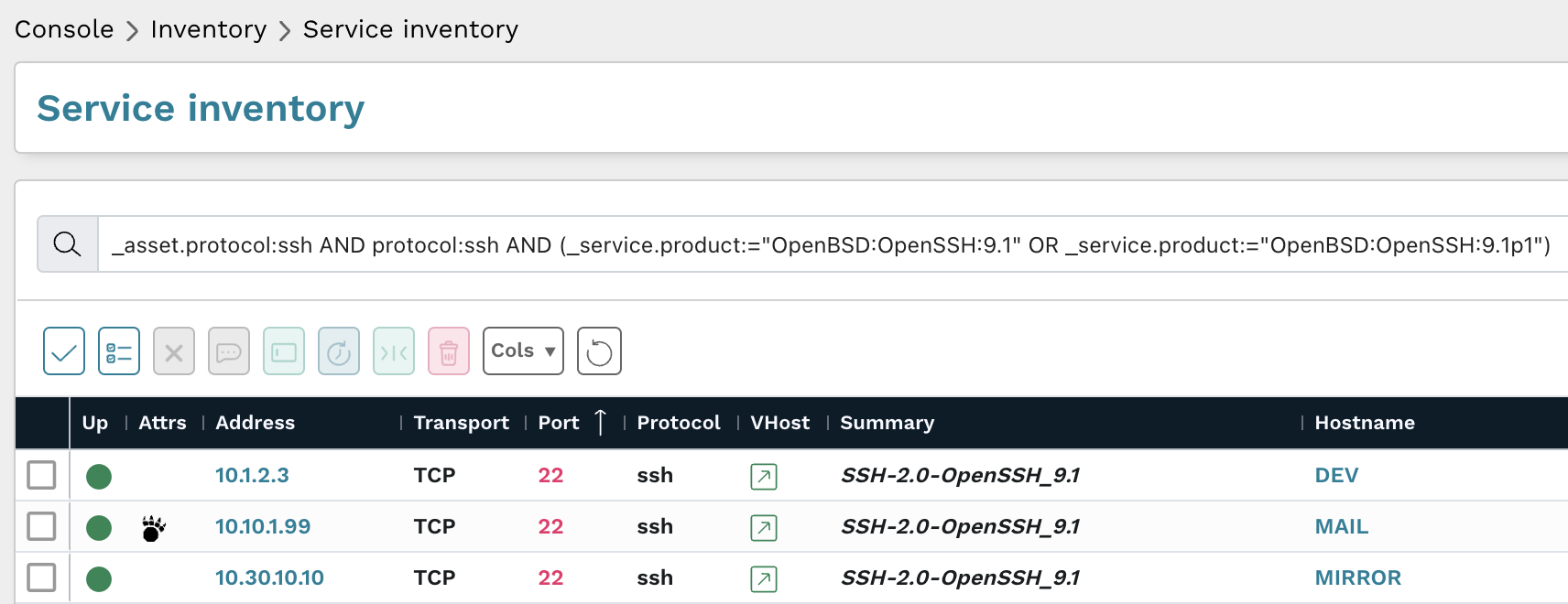
To locate OpenSSH servers running the vulnerable 9.1/9.1p1 version in your network, use the following prebuilt query in your Service Inventory:

_asset.protocol:ssh AND protocol:ssh AND (_service.product:="OpenBSD:OpenSSH:9.1" OR _service.product:="OpenBSD:OpenSSH:9.1p1")
OpenSSH query

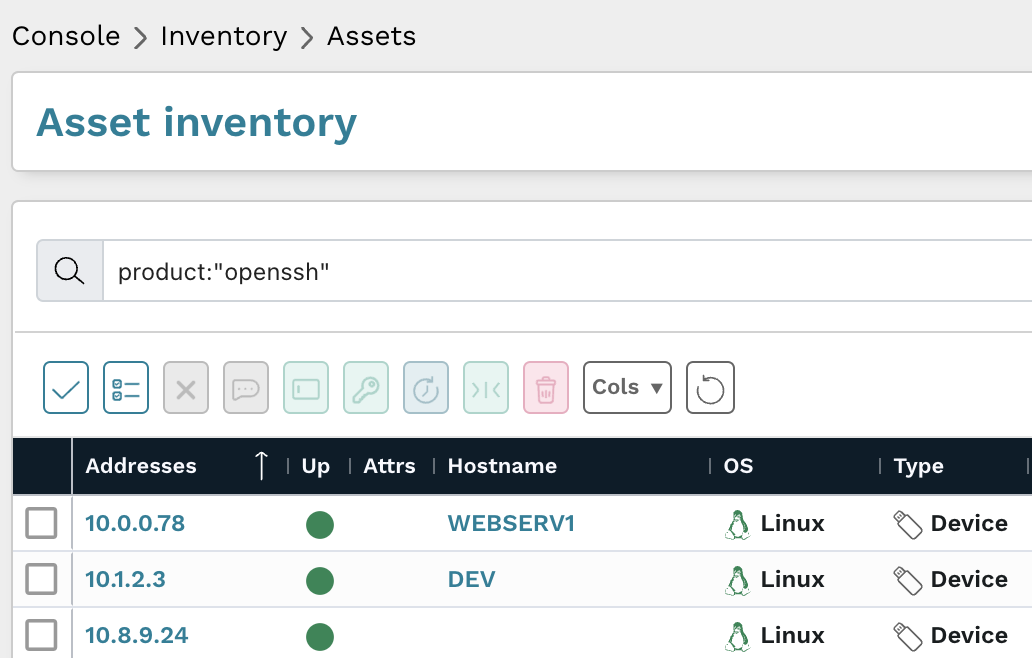
To local all OpenSSH servers in your network, use the folloing prebuilt query in your Asset Inventory:

product:”OpenSSH”
OpenSSH query

As always, any prebuilt queries are available from our Queries Library. Check out the library for other useful inventory queries.

About Version 2 Digital

Version 2 Digital is one of the most dynamic IT companies in Asia. The company distributes a wide range of IT products across various areas including cyber security, cloud, data protection, end points, infrastructures, system monitoring, storage, networking, business productivity and communication products.

Through an extensive network of channels, point of sales, resellers, and partnership companies, Version 2 offers quality products and services which are highly acclaimed in the market. Its customers cover a wide spectrum which include Global 1000 enterprises, regional listed companies, different vertical industries, public utilities, Government, a vast number of successful SMEs, and consumers in various Asian cities.

About runZero
runZero, a network discovery and asset inventory solution, was founded in 2018 by HD Moore, the creator of Metasploit. HD envisioned a modern active discovery solution that could find and identify everything on a network–without credentials. As a security researcher and penetration tester, he often employed benign ways to get information leaks and piece them together to build device profiles. Eventually, this work led him to leverage applied research and the discovery techniques developed for security and penetration testing to create runZero.

ESET launches ESET Cyber Security for macOS v7.3 with native ARM support

BRATISLAVA, February 14, 2023 ESET, a global leader in cybersecurity, today announces several enhancements to its popular ESET Cyber Security for macOS product line, designed to provide essential protection for Apple users from a variety of modern-day cyber threats. ESET Cyber Security for macOS v7.3 now features native support for ARM and automatic updates to ensure optimal protection at all times.

ARM has become increasingly popular as a chipset in recent years due to its ability to boost performance whilst keeping energy waste to a minimum, so much so that the ARM-based mobile computing market now outperforms the legacy x86-based mobile computing market in both revenue and units1.

“We’ve been working on native support for ARM for some time, to enhance the protection we can provide customers that rely upon Apple devices,” comments Mária Trnková, vice president of ESET’s Consumer and IoT segment. “The changes we have made to the underlying architecture of ESET Cyber Security for macOS bring greater stability and higher performance, making scanning quicker and more efficient than ever before.”

The new underlying ESET Cyber Security for macOS architecture is based on micro-services, meaning components run in a more secure and performance-optimal manner. This provides higher stability and resiliency, and the solution is also more lightweight than ever before. Micro-services are lighter on resources, helping to save battery life. In other words, each component of ESET Cyber Security for macOS starts only when needed and runs for its allotted time, after which it is automatically deactivated, helping to save on device resources.

The new automatic updates component of ESET Cyber Security for macOS ensures that users are provided with optimal protection, allowing the solution to find and download updates as soon as they are released.

The latest version of ESET Cyber Security for macOS also boasts an improved multilanguage installer that contains 24 different support languages. Language is set according to the system language upon installation, and the user can subsequently change it by using the macOS language and region settings. This streamlines installation and provides peace of mind for the user.

There is also a redesigned graphical user interface (GUI) for ESET Cyber Security for macOS v7.3 that fully supports dark mode in HiDPI, thus saving on device resources. Further advanced configuration will become available later in 2023.

ESET Cyber Security for macOS v7.3 includes several other components of ESET’s award-winning functionality that users have come to expect, including:

  • Anti-Phishing – protecting users against malicious HTTP websites attempting to acquire their sensitive information, whether that be usernames, passwords, banking information or credit card details
  • Antivirus and Antispyware – eliminating all types of modern-day threats, including viruses, worms and spyware
  • Cross-platform Protection – stopping malware from spreading from macOS to Windows endpoints and vice versa. This prevents a user‘s macOS from being turned into an attack platform for Windows-targeted threats
  • ESET LiveGrid® technology – whitelisting safe files based on a file reputation database in the cloud
  • Web and Email Scanning – scanning websites during browsing and checking all incoming emails for viruses and other threats

“ESET Cyber Security for macOS v7.3 includes multiple layers of real-time protection, anti-phishing and web and email protection that ensure peace of mind for Apple users when browsing online,” comments Mária Trnková. “Powered by the advanced ESET LiveGrid® technology, the solution combines speed, accuracy and minimal system impact, leaving more system resources for consumer needs.”

Further information can be found here.

About Version 2 Digital

Version 2 Digital is one of the most dynamic IT companies in Asia. The company distributes a wide range of IT products across various areas including cyber security, cloud, data protection, end points, infrastructures, system monitoring, storage, networking, business productivity and communication products.

Through an extensive network of channels, point of sales, resellers, and partnership companies, Version 2 offers quality products and services which are highly acclaimed in the market. Its customers cover a wide spectrum which include Global 1000 enterprises, regional listed companies, different vertical industries, public utilities, Government, a vast number of successful SMEs, and consumers in various Asian cities.

About ESET
For 30 years, ESET® has been developing industry-leading IT security software and services for businesses and consumers worldwide. With solutions ranging from endpoint security to encryption and two-factor authentication, ESET’s high-performing, easy-to-use products give individuals and businesses the peace of mind to enjoy the full potential of their technology. ESET unobtrusively protects and monitors 24/7, updating defenses in real time to keep users safe and businesses running without interruption. Evolving threats require an evolving IT security company. Backed by R&D facilities worldwide, ESET became the first IT security company to earn 100 Virus Bulletin VB100 awards, identifying every single “in-the-wild” malware without interruption since 2003.

AI-Powered Identity Authentication Is Here: What You Need To Know

It should come as no surprise that identity authentication is one of the most critical aspects of doing business in the digital age. Without verifying your users are who they say they are, you leave the doors open for fraud, data breaches, and harmful cyber attacks. But with the advent of AI, identity authentication is going through a transformation. To understand how, let’s dive into everything you need to know about AI authentication.

How Is AI Helping With Identity Verification?

Traditional authentication methods are becoming less effective today due to high levels of password reuse and the increasing number of stolen credentials available on dark web databases from previous data breaches. Luckily, AI can provide better, more secure authentication by going beyond traditional boundaries and incorporating data context, biometrics, and patterns in user behavior.

What Are the Different Types of AI Authentication?

Biometric authentication is especially popular with cyber-defense-minded companies today, and AI plays a huge role here. Some examples include keystroke dynamics (typing pattern), behavioral biometrics (analyzing user behavioral patterns to create cyber fingerprints), facial recognition, and voice recognition.

Behavioral biometrics, in particular, is quickly becoming the favored type of AI verification today. Why? Because behavioral biometrics can provide continuous authentication by tracking and verifying user behavior like typing rhythm, mouse movement, and device usage patterns. In addition, it also provides a more seamless and frictionless authentication experience, as it doesn’t require users to remember or enter passwords.

And critically, these identity authentication tools are only possible with artificial intelligence and machine learning. These technologies rely on highly precise authentication driven by large data sets and advanced algorithms. And as a result, they’re almost impossible for fraudsters to bypass.

How do AI Authentication Systems Mitigate AI Bias?

AI bias” refers to the tendency of artificial intelligence algorithms and systems to perpetuate and amplify existing biases and discrimination in the data they are trained on and in the decisions they make.

There are several ways in which AI authentication systems can mitigate bias:

  1. Diverse training data: Using a diverse and representative dataset for training the AI system can help reduce bias and improve accuracy for underrepresented groups.
  2. Fairness algorithms: These algorithms can help identify and address bias in AI systems by balancing accuracy across different demographic groups.
  3. Human oversight: Having human oversight and review in the development and deployment of AI systems can help ensure that potential biases are identified and addressed.
  4. Regular monitoring and evaluation: Regular monitoring of the AI system’s performance and outcomes can help identify any potential biases that may emerge over time and allow for appropriate corrective actions to be taken.
  5. Transparency and accountability: Making AI systems transparent and accountable can help increase trust in the technology and promote responsible use.

These measures can help mitigate AI bias in authentication systems and ensure that they are fair, unbiased, and effective in protecting the privacy and security of users.

Final Thoughts

The use of AI in cybersecurity is nothing new, but it is becoming increasingly powerful and more widespread. Today, more and more companies are looking to AI authentication to help safeguard their systems from nefarious actors.

About Version 2 Digital

Version 2 Digital is one of the most dynamic IT companies in Asia. The company distributes a wide range of IT products across various areas including cyber security, cloud, data protection, end points, infrastructures, system monitoring, storage, networking, business productivity and communication products.

Through an extensive network of channels, point of sales, resellers, and partnership companies, Version 2 offers quality products and services which are highly acclaimed in the market. Its customers cover a wide spectrum which include Global 1000 enterprises, regional listed companies, different vertical industries, public utilities, Government, a vast number of successful SMEs, and consumers in various Asian cities.

About Portnox
Portnox provides simple-to-deploy, operate and maintain network access control, security and visibility solutions. Portnox software can be deployed on-premises, as a cloud-delivered service, or in hybrid mode. It is agentless and vendor-agnostic, allowing organizations to maximize their existing network and cybersecurity investments. Hundreds of enterprises around the world rely on Portnox for network visibility, cybersecurity policy enforcement and regulatory compliance. The company has been recognized for its innovations by Info Security Products Guide, Cyber Security Excellence Awards, IoT Innovator Awards, Computing Security Awards, Best of Interop ITX and Cyber Defense Magazine. Portnox has offices in the U.S., Europe and Asia. For information visit http://www.portnox.com, and follow us on Twitter and LinkedIn.。

×

Hello!

Click one of our contacts below to chat on WhatsApp

×