Skip to content

Futurespective 2033: cyber threats in 10 years, according to AI

Knowing what will happen in the future is rather a balance between a guessing game and precise algorithmic estimations.

Driven by curiosity about technology advancements, Ray Bradbury’s “Fahrenheit 451” predicted earbuds, Douglas Adams’ “The Hitchhiker’s Guide to the Galaxy” hinted at audio translating apps, and William Gibson’s “Neuromancer” foresaw cyberspace and computer hackers. Then science fiction, now a reality – it’s human nature to speculate on what will happen next.

Let’s embrace a paradox, and just like in a sci-fi setup, ask Artificial Intelligence (AI), a technological evolution staple defining our era, how cyber threats will look in the future.

The cyber threat landscape in 10 years
The cyber threat landscape in 10 years
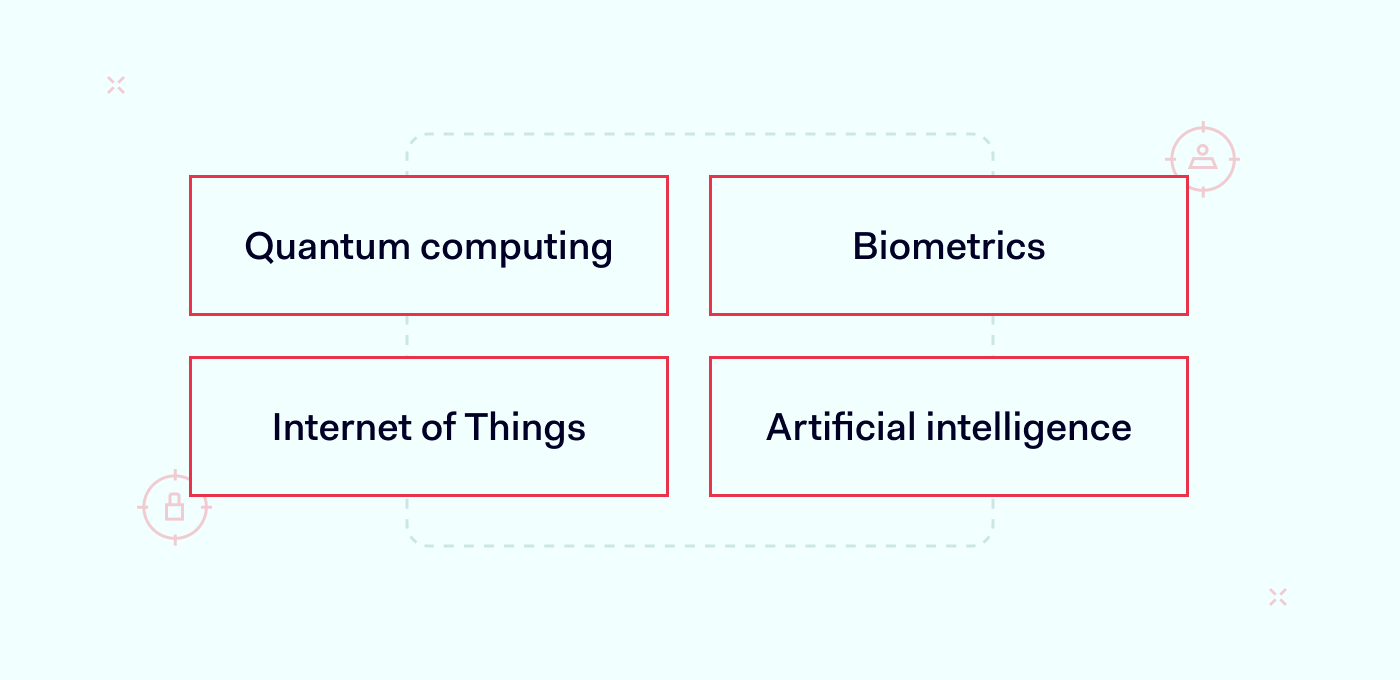
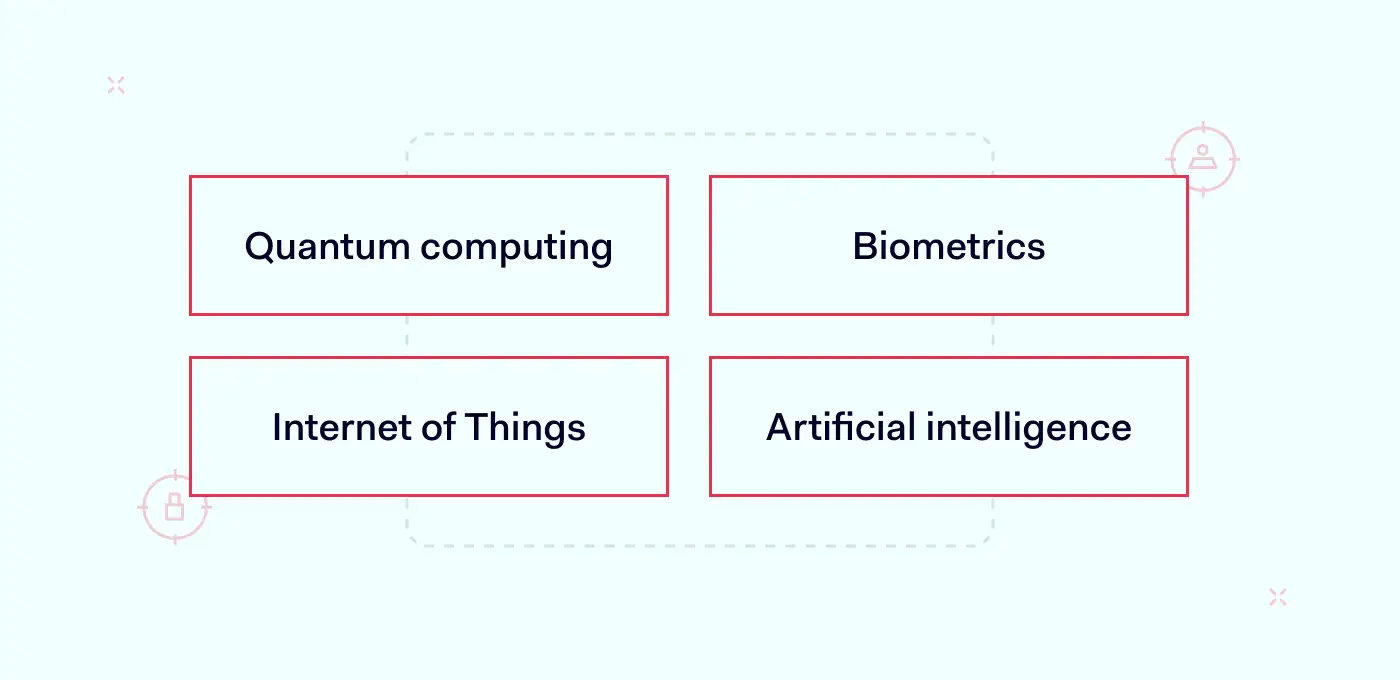
The types of cyber threats will likely evolve with the advancement of technology. As new technologies such as quantum computing, artificial intelligence, the Internet of Things (IoT), and advanced biometrics become more widespread, they will likely become targets for cyber threats.

Quantum computing

With quantum computers potentially on the horizon, we might see the advent of quantum-based cyber-attacks that could render current encryption methods obsolete.

Quantum computers use principles of quantum mechanics to process information. If they become practical and widespread, they could potentially break the cryptographic algorithms that secure online communication today.

Just last November, IBM revealed its 433 qubits quantum computer Osprey news to the public. This hyper-powerful machine is a successor to the last 2021’s attempt to develop a quantum computer, which was 3 times less effective than the latest device.

Today science reached only the brink of quantum computing due to technological limitations. But cybersecurity would necessitate new encryption methods once the quantum computing revolution potential is released.

A quick check on definitions 

💡 Quantum computing is a new type of computation that uses the principles of quantum mechanics.

💡 Quantum mechanics is the theory that explains how the smallest particles in the Universe behave.

💡 Quantum computers use quantum bits (qubits), which, unlike classical bits (that can be either 0 or 1), can be in a state of superposition, where they can be both 0 and 1 simultaneously.

💡 Because of superposition, quantum computers perform many calculations in parallel and solve certain types of problems faster than classical computers.

Click to tweet

Artificial intelligence

The growth in AI could lead to AI-generated attacks. AI-backed threats could involve machine learning algorithms to navigate to security measures, making them harder to prevent or detect.

Automated attacks and methods to create malware that can learn and adapt to its environment pose huge risks to the cybersecurity landscape. As AI technology advances, these threats will likely become more sophisticated and harder to mitigate.

Among these AI-projected risks are AI-enhanced phishing attacks. By using natural language processing, deep-fake technology, and machine learning algorithms, attackers can craft personalized and context-aware phishing emails that are difficult to identify as malicious. This can increase the success rate of phishing attacks and social engineering, leading to potential compromise of sensitive information.

Artificial intelligence can also enable the creation of botnets. AI algorithms can help botnets evade detection, automate attack techniques, and dynamically adapt to defenses. This can lead to larger and more resilient botnets that can carry out coordinated and sophisticated attacks.

Internet of Things (IoT)

As more devices connect to the internet, each becomes a potential vulnerability. Sophisticated large-scale attacks on infrastructure could become more common.

IoT devices are notoriously lacking in security, often being designed for convenience over safety. The IoT ecosystem lacks universal standards and regulations, leading to inconsistent security practices across devices and platforms, making them easy targets for malicious actors to exploit.

Data privacy concerns fall under the scope of IoT devices that collect vast amounts of personal and sensitive data. Location information, health data, and behavioral patterns under improper handling or unauthorized access to this data can lead to privacy breaches and potentially enable identity theft or targeted attacks.

IoT devices integrated into critical infrastructure, such as smart grids, healthcare systems, or autonomous vehicles, introduce the risk of physical harm if compromised. An attacker gaining control over such systems could cause disruptions, accidents, or even loss of life.

Biometrics

The increased use of biometric data, which involves using unique biological or behavioral characteristics for identification and authentication purposes, could lead to new types of identity theft, where hackers target biometric databases to impersonate individuals.

Potential biometric data tampering is another high-risk threat if biometric data is not securely stored or transmitted. An attacker gaining unauthorized access to the stored biometric data could modify it, leading to authentication failures or unauthorized access to secured systems.

Ultimately, gained biometric data can lead to cross-matching attacks that involve combining stolen biometric data from different sources to impersonate individuals across multimodal systems. If one modality is compromised, an attacker could use another modality to gain unauthorized access.

Distinctive changes in cybersecurity threats
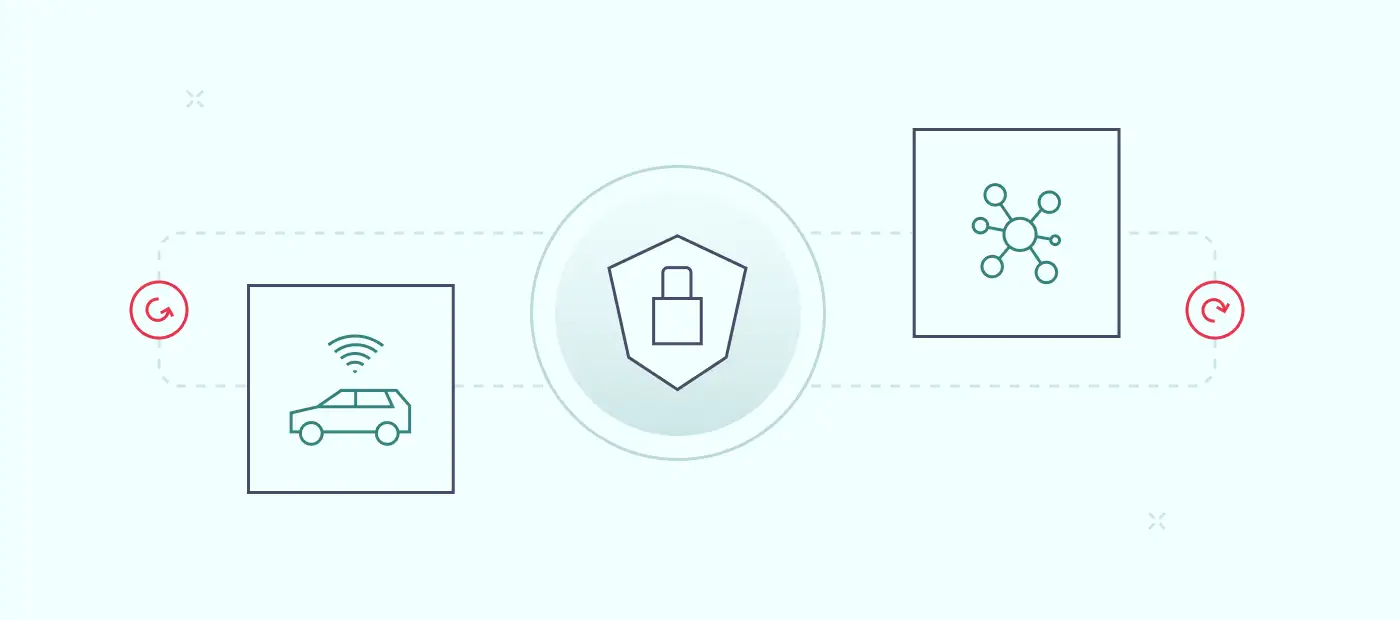
The integration of cyber-physical systems and increasing digitization of everyday life will likely lead to a broader scope for unseen cyber threats. Cybersecurity could become a more significant concern in sectors that previously didn’t prioritize it as much, like manufacturing, agriculture, and healthcare.

Cyber-physical systems

Cyber-physical systems blend physical infrastructure with digital controls. Cyber threats could thus directly affect physical reality, for example, tampering with self-driving vehicles or smart city infrastructure. Integrating physical and digital systems is becoming increasingly common in the manufacturing, energy, and transportation sectors. This is creating new opportunities for cyber threats.

An attacker compromising a cyber-physical system could cause real-world harm. For instance, if an attacker could take control of a self-driving car’s system, they could cause an accident. Similarly, threats to smart grids could disrupt power supplies, and threats to smart manufacturing systems could disrupt production or cause physical damage.

As cyber-physical systems increase, we can expect cybersecurity threats to become more physical and potentially more dangerous. This trend will necessitate a greater focus on securing our data and the digital systems interacting with the physical world.

Greater interconnectedness

The continued growth of global connectivity means an attack in one place can quickly spread elsewhere. This may lead to more coordinated global responses to cyber threats.

The digital world is becoming more interconnected, making it easier for cyber threats to spread. This interconnectedness can also amplify the impact of attacks. For instance, a single successful attack on a cloud service provider could impact thousands of businesses that use that service.

In an increasingly interconnected world, it’s also more likely that threats will cross national borders. This could lead to greater international cooperation on cybersecurity, with countries working together to defend against threats and to track down and prosecute cybercriminals. We may also see the development of international norms and regulations related to cybersecurity.

The trends suggest that the cybersecurity landscape will become more complex and potentially more dangerous over the next decade. Protecting against future threats will require technological advances, better cybersecurity practices, and possibly increased international cooperation.

Unchanged aspects of cyber threats
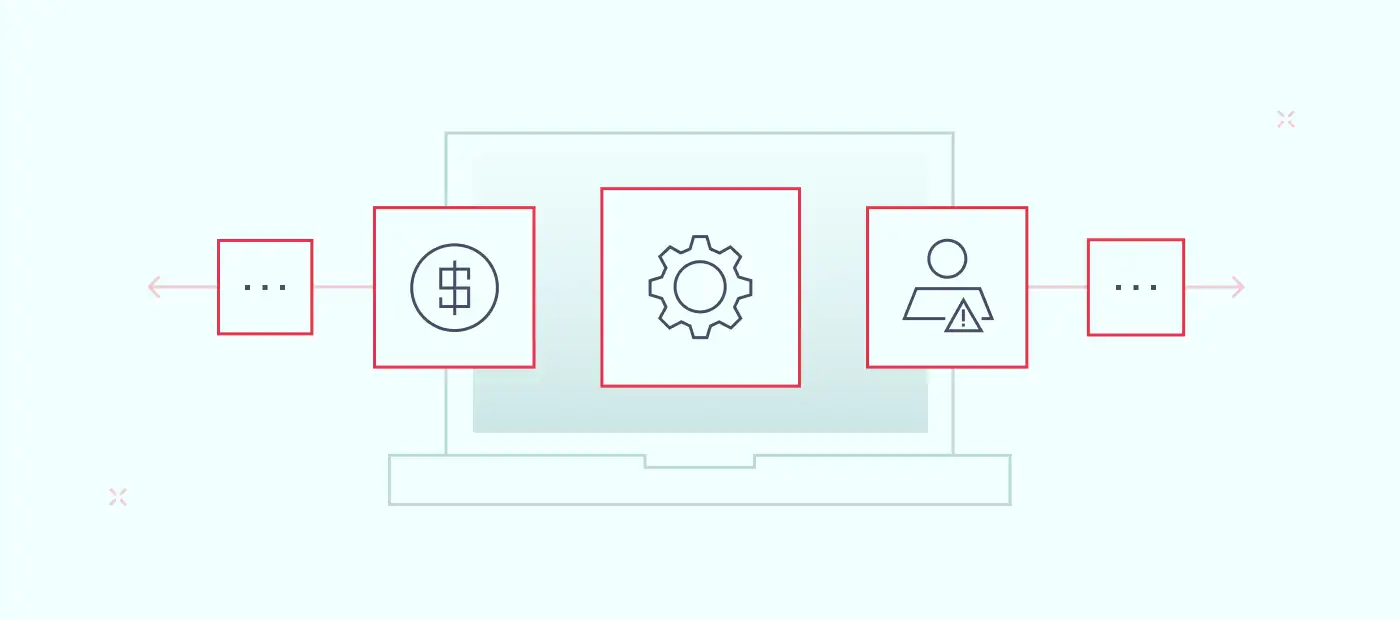
While the specifics of cyber threats will change, several underlying principles will likely remain constant. The shared tendency is not purely technological fundaments of the threats but more on personal motivation and individual mindset.

Human error

Many cyber threats, even sophisticated ones, rely on exploiting human error or human psychology. For example, phishing attacks trick people into revealing sensitive information, such as passwords.

Similarly, ransomware often infiltrates systems because someone clicks on a malicious link or attachment.

Despite technological advances, the human element is often the weakest link in cybersecurity. This is unlikely to change in the foreseeable future. Human nature is a constant, and cybercriminals will likely continue to exploit this to their advantage.

Basic principles

Some basic principles of cybersecurity are timeless. For example, the principle of least privilege, which says that users should be given the minimum levels of access necessary to perform their tasks, is a fundamental principle of cybersecurity that helps to limit the potential damage if a system is breached.

Similarly, keeping software up-to-date is crucial for cybersecurity, as updates often include patches for known security vulnerabilities. These principles will likely remain important regardless of how the specifics of cyber threats evolve.

Economic motivations

Cybercrime will continue to be driven by financial gain. Where there’s value (like in personal data or corporate secrets), individuals or groups will seek illicit ways to acquire it.

Cybercriminals often seek to steal data they can sell, such as credit card numbers, or extort money directly from their victims, such as through ransomware. As long as money is to be made from cybercrime, and the perceived risk of getting caught is low, people will likely continue to engage in it. Therefore, the economic drivers of cybercrime are unlikely to disappear.

These factors underline the ongoing need for cybersecurity awareness, education, and robust security policies. While technology and specific threats will evolve, the human element, basic cybersecurity practices, and the motivations behind cybercrime will likely remain constants in the cybersecurity landscape.

Technology to mitigate and handle cyber threats
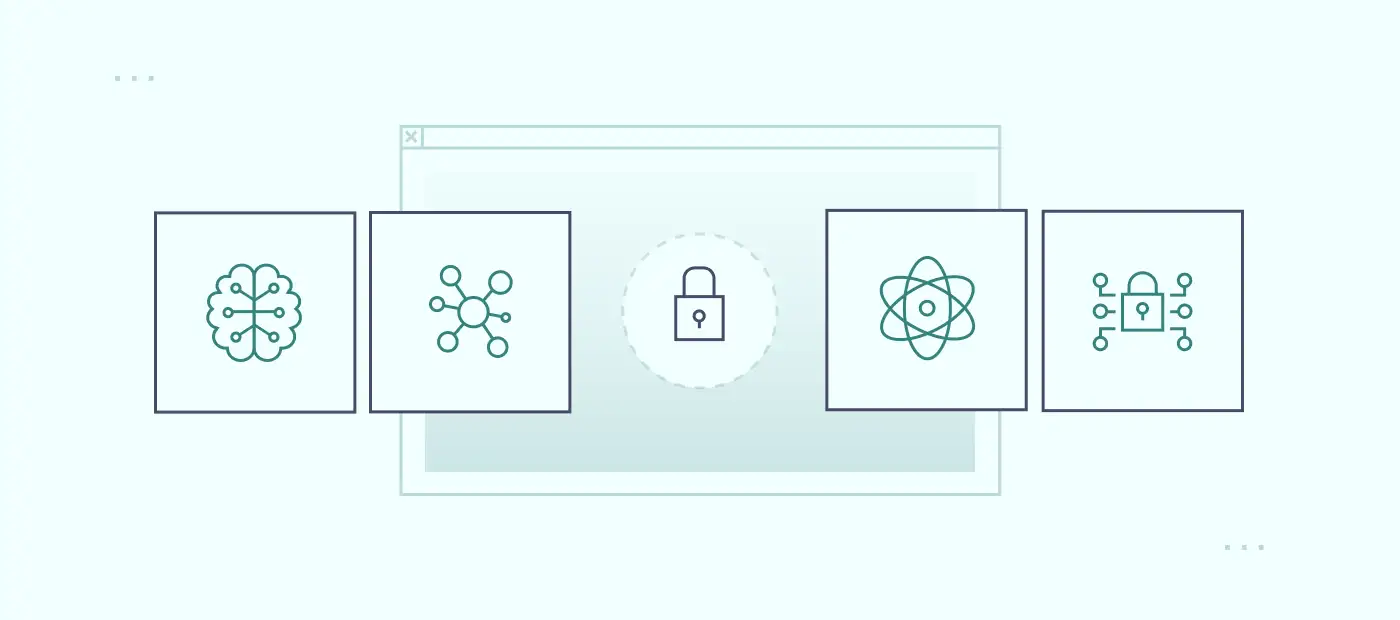
Advancements in technology will also shape cybersecurity measures. Or, as people say, fight fire with fire.

AI and machine learning

These technologies will become crucial in identifying and responding to threats, potentially in real-time. They can also help predict and mitigate future threats based on pattern recognition.

The role of AI and Machine Learning in enhancing cybersecurity defenses is key. AI is a powerful tool to detect abnormal behavior and identify threats in real-time based on patterns and irregularities that might be too subtle for a human to notice. Machine learning, a subset of AI, continuously learns from each attack and improves detection algorithms, enabling defenses to evolve along with the threats.

Moreover, AI could potentially be used for predictive threat intelligence, foreseeing cyber threats before they happen using historical data to predict future attack patterns.

Quantum cryptography

In response to potential quantum threats, quantum cryptography and post-quantum cryptography methods may become common to secure data.

With the potential arrival of quantum computers, current cryptographic algorithms could become obsolete. Quantum cryptography, particularly Quantum Key Distribution (QKD), offers a possible solution.

QKD allows two parties to generate a shared secret key that can be used to encrypt and decrypt messages. According to quantum mechanics principles, if an eavesdropper tries to measure the quantum particles used to form the key, their state will be changed, alerting the parties involved to the breach

Decentralized systems

Blockchain and other decentralized systems could provide more secure data storage and transmission alternatives.

A blockchain is essentially a distributed ledger that records transactions across multiple computers so that the record cannot be altered retroactively. This makes it resistant to tampering, which is why it could significantly improve cybersecurity.

Blockchain can provide improved security for IoT devices, supply chain security, secure private messaging, identity verification, and more.

Cybersecurity skill development

While not a technology in itself, the importance of human expertise in cybersecurity is paramount. Therefore, educational and training programs that equip people with the necessary skills to handle evolving cyber threats will be crucial. This might involve traditional educational programs, online courses, simulation tools, and AI-driven personalized learning platforms.

Remember that while these technologies will certainly help enhance cybersecurity defenses, there is no magic solution that can solve all challenges. The cyber threat landscape continuously evolves, and defending against these threats requires technological solutions, sound cybersecurity practices, robust policies, and a well-educated user base.

Summary

After exploring potential future scenarios in the evolving cybersecurity landscape, one thing is clear – staying ahead of the game is important.

To be completely sure, we asked if the future ahead was bright. The AI being an AI, couldn’t provide a Yes or No answer, yet it referred that the future ahead is in a grey area.

“The future will likely be a mix of remarkable advancements and challenging issues. It will be shaped by our ability to manage these opportunities and challenges, policy decisions, cultural shifts, and many other variables. The key lies in harnessing the benefits of technological progress while minimizing its potential negative impacts.”

Thinking strategically about business cybersecurity is crucial to prepare for upcoming challenges. NordLayer is designed to grow with your organization’s network security needs. Ensure authorized-only connections, enable threat-blocking features, and make cybersecurity user-friendly by implementing integral and easy-to-assess network access for all ways of working.

About Version 2 Digital

Version 2 Digital is one of the most dynamic IT companies in Asia. The company distributes a wide range of IT products across various areas including cyber security, cloud, data protection, end points, infrastructures, system monitoring, storage, networking, business productivity and communication products.

Through an extensive network of channels, point of sales, resellers, and partnership companies, Version 2 offers quality products and services which are highly acclaimed in the market. Its customers cover a wide spectrum which include Global 1000 enterprises, regional listed companies, different vertical industries, public utilities, Government, a vast number of successful SMEs, and consumers in various Asian cities.

About NordLayer
NordLayer is an adaptive network access security solution for modern businesses – from the world’s most trusted cybersecurity brand, Nord Security.

The web has become a chaotic space where safety and trust have been compromised by cybercrime and data protection issues. Therefore, our team has a global mission to shape a more trusted and peaceful online future for people everywhere.

Cybersecurity tips for small businesses

When a massive data breach happens, large companies usually grab the headlines. However, it’s often the case that small businesses are attacked more often and are more vulnerable to cyberattacks. Their limited security measures due to their smaller size create better odds for an attacker.

For this reason, prioritizing security against these threats should be crucial for business owners. Effective security measures can help safeguard vital data, maintain customer trust, and prevent costly cyber incidents. This article discusses essential cybersecurity tips for small businesses to enhance their security posture.

Best practices for small businesses

A successful cyberattack puts business revenue, data, and equipment at risk, but it doesn’t stop there. Cybercriminals may also use their access as a launchpad into the networks of other companies connected to your business.

Small businesses lack the resources of corporations, but cybersecurity must still protect data, internet connection and network resources. With a lot at stake, here are some industry best practices to help you navigate the world of cyber threats.

Conduct a thorough risk assessment

Your cybersecurity plan should start with assessing the risks your business faces. Timely identification of potential vulnerabilities helps put the risk in perspective and assess the impact of cyber threats on critical data. This is the foundation for all further actions.

A comprehensive risk assessment helps prioritize security efforts and effectively allocate resources. That way, the key areas will be taken care of sooner rather than later, which enables businesses to patch up the weakest points first and then move on to less critical areas. It lays the groundwork for a solid cybersecurity strategy.

Create an Incident Response Plan

Preparing for a cybersecurity incident can help reduce the impact when a business falls under a cyberattack. While neutralizing active threats is a priority, so is restoring normal working conditions. This allows it to continue business operations as if the cyberattack was merely a setback.

To prepare, there are two main areas to focus on:

  • Calculate risk probability for threats. Include an assessment of where critical data resides. Assign an individual responsible for protecting important data and connecting every resource with risk-reduction strategies.

  • Create a recovery plan for all critical assets. This should include security scans to identify malware or virus infections. Document access requests during security alerts and determine whether data loss has occurred.

An Incident Response Plan (IRP) is vital for prompt and effective handling of cyber incidents. It should also include contact information for key stakeholders, guidelines for containing and investigating the incident, and a plan for communicating with customers and authorities.

Keep software and systems up to date

Regularly updating operating systems, applications, and software is necessary to avoid cyber threats. Cybercriminals often exploit gaps in outdated software, so staying current with patches is a sure way to stop some attacks right in their tracks.

Software updates also address bugs and glitches that may affect the software’s performance, stability, or functionality. So, in addition to increased security, updates typically include bug fixes that improve the overall user experience and resolve known issues.

Implement a strong password policy

Weak passwords are common entry points for cyberattacks as they’re easy to guess or brute force. That’s why it’s important to make sure that your employees use strong passwords: a combination of uppercase and lowercase letters, numbers, and special characters.

Passwords should also be unique for each account. Enterprise-wide password management tools can help. They make storing and changing passwords easier, eliminating the risk of human error. This allows to avoid password reuse, which could compromise a user account if other accounts sharing the same password are breached.

As an additional precaution, passwords should be periodically updated to limit the time when criminals could exploit them.

Limit access to sensitive data and systems

Access to sensitive information and critical systems should be provided only on a need-to-know basis. This means that users should have minimum access rights. Elevated privileges should be assigned under special conditions and for separate user account types. Such a setup minimizes insider threats and contains damage in case of a data breach.

User permissions should also be regularly reviewed, ensuring only authorized personnel can access sensitive data over an internet connection. Quickly disposing of inactive and zombie accounts helps clean up your user base and establish that only authorized users can access sensitive data.

Implement two-factor authentication or multi-factor authentication

Small companies need to secure the network edge with robust authentication procedures. Two-factor authentication or multi-factor authentication are the best options here. These methods require multiple identification factors whenever users connect to network assets. This makes it far harder to obtain access illegitimately.

If MFA is too burdensome for employees, consider using it solely for administrator accounts. Alternatively, try user-friendly 2FA options such as fingerprint scanning. Balance user experience and security. But always go beyond simple password protection, as even strong ones can benefit from additional layers of protection.

Use network security measures

Technological solutions can help to secure business networks, making it harder for external penetration. A robust firewall, antivirus software, intrusion detection systems, and virtual private networks (VPNs) are a good starting point to tighten security around your network perimeter.

The network is the main channel for data exchanges and communication, so its security is key for business continuity. Firewalls provide a barrier between your internal network and the internet, while intrusion detection systems can alert you to potential cyber threats. VPNs encrypt internet connections, ensuring data privacy and protecting against unauthorized access. Meanwhile, antivirus software is a good all-rounder that helps to deflect simple network threats.

Implement protection for sensitive information

No matter where sensitive information is kept or transferred, appropriate security measures should be in place.

  • Encrypt high-value data such as personnel records and customer financial information. If you rely on SaaS or PaaS tools, use any cloud data protection tools provided by your Cloud Service Provider.

  • Use privileges management to limit freedom within network boundaries. Confidential data should only be available to users who need it for their tasks. That way, attackers struggle to access and extract data when a data breach occurs.

  • Minimize the number of users with administrative privileges. Avoid giving single users the authority to make fundamental network changes.

  • Consider using Data Loss Prevention tools as well. These tools track the location and state of important data. They block data transfers to unauthorized devices and log potentially dangerous access requests. DLP could be a sound investment if you handle high-risk and high-value data.

These measures add an extra layer of security and prevent sensitive data from falling into the wrong hands.

Train employees on cybersecurity best practices

Digital cybersecurity controls rely on human knowledge and behavior. How employees act when encountering cyber threats is crucial to a small business security setup. That’s why it’s vital to focus on what is known as the human firewall.

Strengthen the human firewall by instructing employees how to spot phishing emails and malicious links. Invest in employee cybersecurity training to create a security-conscious culture within your organization. Educate them about common cyber threats, phishing attacks, and social engineering techniques (don’t forget the importance of strong passwords).

Remote workers should also understand secure connection practices and the risks of using an insecure public Wi-Fi network. Regular training sessions and reminders will help foster a security culture within and outside the organization.

Stay compliant

Stay informed about relevant data protection and privacy regulations for your industry and location. Ensure your business complies with laws such as the General Data Protection Regulation (GDPR) or the California Consumer Privacy Act (CCPA). Compliance helps protect your business from legal consequences and demonstrates your commitment to data privacy.

Regulatory requirements are subject to change, so monitoring their developments should be ongoing. This allows to be prepared for any relevant changes in advance and align with applicable data protection and privacy regulations.

Schedule regular backups

Cyber attacks can lead to the deletion of data or system failures that compromise workflows. This makes it vital to back up high-priority data regularly. Use secure cloud services or external locations outside your core network for automated data backup.

The data recovery process should be periodically tested to ensure the integrity and availability of your backups. If this system is effective, it will quickly bounce back from all internal and external threats with minimal downtime.

Manage third parties securely

Small businesses rely on third-party vendors, but these partnerships can be vectors for cyber attackers. For example, CRM providers may not encrypt data securely, putting client data at risk. Virus checkers or low-quality VPNs may transmit spyware.

Check all third parties and ensure they have rock-solid security policies. Trust nobody and always ask for security assurances when in doubt. Evaluate their security practices, including data handling, access controls, and incident response procedures. Establish clear cybersecurity expectations in vendor contracts and regularly monitor their compliance.

Regularly review and update the cybersecurity plan

As cyber threats rapidly evolve, your cybersecurity plan should be periodically reviewed to address various changes. Small businesses, in particular, should stay informed about emerging threats and security best practices.

Conduct periodic audits and risk assessments to identify any gaps or weaknesses in your security strategy and take prompt action to address them. If done consistently, this helps to keep threats at bay and your business operations uninterrupted.

Key takeaways

Let’s recap some of the key insights on cybersecurity for small businesses.

  • Small businesses are often more vulnerable to cyberattacks than large corporations due to limited security measures. Small businesses must prioritize cybersecurity to protect their vital data, maintain customer trust, and prevent costly cyber incidents.

  • A thorough risk assessment should be step one of your cybersecurity plan. It helps to identify potential vulnerabilities and assess the impact of cyber threats on critical data.

  • Incident Response Plan (IRP) helps to prepare for cybersecurity incidents. It should include risk calculations, data protection responsibilities, recovery plans for critical assets, and guidelines for containing and investigating incidents.

  • The majority of cybersecurity risk management deals with ongoing maintenance. Keep software and systems updated, use network security measures, and conduct regular employee training sessions.

  • Implement industry-wide best practices such as the principle of least privilege, multiple-factor authentication, and rules for strong passwords to navigate the dangerous cyber landscape.

By following these cybersecurity tips, small businesses can enhance their security posture, mitigate risks, and protect their data and assets from cyber-attacks.

How can NordLayer help?

Nordlayer is the ideal partner for small businesses seeking to secure their data. We offer a variety of solutions to strengthen network defenses and manage employee identities.

Device Posture Checks make working from home safer. NordLayer’s systems assess every device connection. If devices fail to meet security rules, posture checks deny access. Users will instantly know about access requests from unknown or compromised devices.

IP allowlisting lets you exclude unauthorized addresses at the network edge. IAM solutions use multi-factor authentication and Single Sign-On to admit verified identities. Virtual Private Gateways anonymize and encrypt data, adding more remote access protection. And our Cloud VPN services lock down hard-to-secure cloud assets that small businesses rely on.

NordLayer makes achieving compliance goals easier and provides a safer customer experience. To find out more, get in touch with our sales team today.

About Version 2 Digital

Version 2 Digital is one of the most dynamic IT companies in Asia. The company distributes a wide range of IT products across various areas including cyber security, cloud, data protection, end points, infrastructures, system monitoring, storage, networking, business productivity and communication products.

Through an extensive network of channels, point of sales, resellers, and partnership companies, Version 2 offers quality products and services which are highly acclaimed in the market. Its customers cover a wide spectrum which include Global 1000 enterprises, regional listed companies, different vertical industries, public utilities, Government, a vast number of successful SMEs, and consumers in various Asian cities.

About NordLayer
NordLayer is an adaptive network access security solution for modern businesses – from the world’s most trusted cybersecurity brand, Nord Security.

The web has become a chaotic space where safety and trust have been compromised by cybercrime and data protection issues. Therefore, our team has a global mission to shape a more trusted and peaceful online future for people everywhere.

Building a winning enterprise cloud strategy: a comprehensive guide

Summary: Cloud computing delivers huge benefits for modern organizations. However, companies need to think strategically to realize the key benefits of the cloud. An effective enterprise cloud strategy provides a route from planning to deployment. With a strategy in place, companies can move assets and applications smoothly. And they can secure data in the cloud without leaving security gaps. In this article, you will find all the essential information required for crafting a successful plan to embrace cloud technology.

Key takeaways

  • Cloud services can be categorized into three types: IaaS, PaaS, and SaaS, each catering to different user needs and skill requirements

  • Cloud adoption should align with core business needs, considering factors such as workload suitability, team readiness, and the need for customization

  • Compliance with regulations like PCI-DSS or HIPAA is crucial when planning a cloud strategy to avoid potential violations

  • A well-designed enterprise cloud strategy ensures functional and secure cloud deployment.

  • Careful planning and monitoring are essential to counter risks and prevent critical problems during cloud migration.

This article will provide everything you need to know to create an effective cloud adoption plan. Let’s start at the beginning with a definition of what we mean by “enterprise cloud strategy” and why strategic thinking is so important.

Core concepts of enterprise cloud strategy

Definition of enterprise cloud

An enterprise cloud is a virtualized environment that contains flexible and scalable computing infrastructure. Cloud infrastructure provides on-demand access to shared resources. This includes the servers, apps, and data required to host workloads and virtualize key enterprise operations.

A well-designed enterprise cloud has many benefits.

  • Virtualized infrastructure reduces the need for on-premises network infrastructure. This reduces the burden on IT teams to maintain physical hardware and lowers overall operating costs.

  • Enterprise clouds are easy to customize and reshape. As businesses change, their cloud environment can follow.

Enterprise cloud architecture also has cybersecurity benefits.

  • Companies can protect sensitive data with robust security measures located inside the cloud. Organizations can encrypt data, apply access controls, and leverage cloud-native threat detection tools.

  • Centralized administrative tools provide full visibility of user activity and data integrity. And cloud-based logging systems assist with both auditing and incident responses.

Different types of cloud services

The nature of your enterprise cloud strategy depends on the type of cloud services you use. Cloud technologies can be divided into three overall categories:

IaaS

Infrastructure-as-a-Service provides access to cloud infrastructure. This is usually provisioned on a pay-as-you-go model. IaaS users purchase access to servers, storage containers, and cloud networking capacity. They can use this infrastructure to create custom-built cloud solutions. IT teams can retain control over every aspect of their cloud deployment. IaaS is flexible, but users will need cloud architect skills. Additional training may be needed to realize the benefits of this cloud solution.

PaaS

Platform-as-a-Service provides access to off-the-shelf cloud development platforms. Development platforms include basic cloud infrastructure and the tools needed to build cloud apps. This reduces the time required to launch new cloud services. Cloud tenants can focus on building streamlined solutions. They do not need to manage the underlying infrastructure. Microsoft Azure and Google Cloud are examples of this kind of cloud product.

SaaS

Software-as-a-Service provides access to individual cloud apps or services. Apps are provided in ready-to-use format and are generally accessible via web browsers. SaaS tools include eCommerce platforms, collaboration apps, and CRM systems. These services require no on-site installation. And they scale automatically as businesses grow.

Understanding cloud strategy in an enterprise context

The adoption of cloud services should align with core business needs.

Companies must assess workloads and decide which cloud system suits their operations. They must ask whether teams can operate in the cloud and whether existing SaaS solutions suit their needs. If not, custom PaaS solutions may be necessary.

Capacity also influences cloud strategy. Businesses should only commission cloud services that they can afford to build, maintain, and secure. Securing IaaS and PaaS environments is complex and resource-intensive. Some enterprises may find that lightweight SaaS alternatives are preferable.

Compliance is another critical consideration. A successful cloud migration delivers efficiency gains and enhances flexibility. But cloud adoption can lead to violations of regulations such as PCI-DSS or HIPAA. Organizations must plan their strategy with compliance goals in mind.

Why do you need a cloud strategy?

The importance of an enterprise cloud strategy

An enterprise cloud strategy maps a clear route to a functional and secure cloud deployment. And a well-designed strategy offers many benefits.

  • The strategy assesses existing systems, understanding what to retain and what to discard.

  • Planners determine what applications and data will migrate to the cloud.

  • They decide which cloud technologies to use, and include any necessary security measures.

  • Planning teams set timescales for the cloud strategy. This avoids delays and ensures that deployments are not rushed.

Enterprise cloud strategies deliver the benefits of cloud computing while avoiding problems associated with chaotic deployments.

Around 90% of companies use multi-cloud solutions that divide data and apps between various hosting providers. About a third of companies using the cloud do not encrypt their data. And figures from 2022 show that 27% of cloud-using enterprises experienced a data breach on the public cloud.

Chaotically organized cloud deployments compromise security. They make it harder to locate and protect sensitive data. And they reduce efficiency. Silos can limit the flow of information. App configurations may vary across the cloud environment. But an enterprise cloud strategy solves these problems.

Benefits of cloud adoption for businesses

The cloud has revolutionized digital business. Every month, companies gain a competitive advantage by migrating functions to the cloud. Cloud storage providers offer cheaper, faster, and more secure solutions. And development tools make it easier to build customized cloud environments.

Despite these benefits, many companies have not yet embraced the cloud or have staged partial migrations. Benefits of full cloud adoption for businesses include:

Operational efficiency

A cloud-first strategy eliminates the need to maintain extensive hardware infrastructure. Cloud deployments scale rapidly and easily. Companies can automate resource provisioning and deliver workloads wherever they are needed. Administrators can also manage network assets centrally. The result is streamlined operations and greater productivity.

Enhanced security

The cloud benefits cybersecurity in many ways. Enterprises can encrypt data hosted on cloud assets. They can implement granular access controls and regulate access according to job roles. Cloud platforms enable real-time activity monitoring and alerts, resulting in rapid incident responses. Moreover, trusted cloud providers focus on securing their products against malware and exploits. Not all enterprises have the capacity to do so.

Cost-effectiveness

Cloud adoption allows cost optimization by shifting computing into a virtualized environment. Enterprises do not need to make large up-front infrastructure investments. There is less need for on-site servers or routers. Scalable systems optimize resource use and allow companies to expand smoothly. And the payment models of PaaS or IaaS providers cater to different enterprise needs.

Exploring cloud strategy options: finding the perfect fit

Single public cloud strategy: unlocking provider offerings

A single public cloud strategy uses a single public cloud provider to host assets in the public cloud. This strategy has numerous benefits. Single public cloud systems are simpler than multi-cloud alternatives. This enables companies to focus on their core competencies.

Administrators can easily integrate application communities and standardize operations in the cloud. A single cloud is easy to monitor and secure and will carry a much lower compliance burden. Pay-as-you-go models also make single public cloud deployments the most cost-effective cloud solutions.

The single public cloud strategy suffers from loss of control and potential insecurity. Users must apply tight access controls to guard the network edge. They also have little control over the infrastructure that supports cloud assets.

Single private cloud strategy: balancing control and security

A single private cloud strategy involves the creation of a dedicated cloud environment to host corporate assets. The private cloud is separate from the public internet. Users can customize security controls and network protocols. This allows companies to prioritize data security and minimize the risk of external attacks.

Companies using a single private cloud strategy have complete ownership of their deployment. Consistent ownership can deliver performance improvements. And users can tailor their cloud environment to enable flexible scaling.

The downside of this strategy is complexity. Organizations must dedicate resources to create and maintain cloud environments. They also have complete responsibility for security and must rely on internal expertise.

Hybrid cloud strategy: integrating the best of both worlds

Hybrid cloud strategies feature a combination of public and private cloud infrastructure. When designed correctly, a hybrid cloud environment delivers the benefits of both strategies.

Hybrid deployments can leverage the flexibility and scalability of public clouds. Organizations can experiment with different cloud components and allocate resources to workloads as required. They can mobilize AI tools to analyze large data sets. And they can create failover systems in the public cloud. This supports incident response strategies.

At the same time, security teams can use private cloud environments to protect critical data. Administrators can create strict access controls for secure private clouds. These controls grant access based on employee roles. They can also combine with multi-factor authentication for added security.

Multiple-public cloud strategy: orchestrating a dynamic cloud ecosystem

Multi-cloud strategies involve the use of multiple public cloud providers. For instance, companies may use Google Cloud Platform for collaboration and AWS for cloud storage. This model has various potential benefits.

Multiple cloud service models balance agility and cost. Companies can use leading cloud providers for specialist tasks. They can also compare different providers to find the most cost-effective solution.

Multi-cloud solutions suit globally-distributed workforces. Companies can locate cloud resources close to users by leveraging cloud computing services around the world. They also make cloud deployments more resilient. Multiple clouds avoid single points of failure. Organizations can shift workloads between CSPs when outages occur.

Building an effective enterprise cloud strategy

1. Create a cloud strategy team

Your cloud strategy team will see the project through to completion and must include input from outside the IT department. Bring in key stakeholders from finance, operations, HR, marketing, and security. Every department will use the cloud environment. Buy-in from managers is essential when changing IT infrastructure.

Establish communication channels and collaboration tools. And set out a timescale to meet project goals. Every team member should have clear responsibilities and know exactly what role they will play as cloud adoption takes place.

  • Form a cloud strategy team with representatives from various departments

  • Establish effective communication channels and collaboration tools to facilitate coordination

  • Define specific milestones to track progress and meet project goals

  • Assign clear responsibilities to each team member

  • Provide necessary training and support to team members

2. Carry out application analysis

Application analysis assesses the apps that employees currently use to carry out core workloads. Assess whether applications are compatible with cloud platforms, and any dependencies they have. Some apps may be suitable for cloud migration. Others may require complete replacement. Identify necessary actions and add them to the cloud strategy document.

Security is a key concern here. If apps handle sensitive data, assess whether this data will be adequately secured in the cloud. If not, define additional security controls to ensure data security after cloud adoption.

  • Determine compatibility of applications with cloud platforms and identify any dependencies

  • Classify apps as suitable for cloud migration or requiring complete replacement

  • Document necessary actions in the cloud strategy document based on the analysis

  • Assess if sensitive data handled by the apps will be securely stored in the cloud

  • Define additional security controls if needed to ensure data security post-cloud adoption

3. Build a hybrid cloud strategy roadmap

Use the results of application analysis to create a cloud adoption roadmap. Describe how every workload will be moved to the cloud. Include a clear explanation of how access controls will apply and any other security controls linked to the workload.

At the cloud migration planning stage, decide which assets will remain in the public cloud, and which assets to store in private cloud environments. Categorize assets according to data sensitivity and risk. High-risk, high-value data should always be stored in the private cloud.

The cloud roadmap should explain how to migrate data and apps to the cloud. This may include information about data integration and transfer methods. For instance, data may require encryption during the transfer process.

  • Develop a detailed plan for migrating every workload to the cloud

  • Clearly define access controls and security measures associated with each workload

  • Evaluate assets and categorize them based on data sensitivity and risk levels

  • Determine which assets will be kept in the public cloud and which ones will be stored in private cloud

  • Document information on data integration and transfer methods

4. Upskill your workforce for cloud computing

Comprehensive staff training should be a key part of cloud adoption strategies. This should include basic security training. Introduce and explain cloud security policies. Ensure workers know how to access cloud assets securely and reinforce the penalties for policy breaches.

Training goes beyond security. Enterprises should upskill their workforce to capitalize on cloud technology. Invest in specialized courses in cloud architect skills. This could include DevOps courses or training related to specific cloud platforms. For example, it may be advisable to invest in AWS certification courses.

  • Prioritize basic security training for all employees involved in cloud operations

  • Introduce and explain cloud security policies clearly to the workforce

  • Reinforce the consequences and penalties associated with policy breaches

  • Invest in specialized courses for cloud architect skills to enhance proficiency

  • Consider offering DevOps courses or training specific to the chosen cloud platforms

5. Implement the enterprise cloud strategy

Strategies are useless if they are only paper exercises. Implementation is all-important. Assign a skilled employee to implement the organizational cloud strategy. This officer should be responsible for meeting project milestones. They should also manage communication with relevant stakeholders.

During implementation, enterprises should make their cloud deployment secure and resilient. Put in place monitoring technology to track user activity. Make sure auditing and scanning policies meet regulatory guidelines. And constantly test cloud assets to protect data against external intrusion.

  • Assign a skilled employee as the officer responsible for implementing the organizational cloud strategy

  • Oversee that cloud deployment is secure and resilient

  • Implement monitoring technology to track user activity

  • Regularly audit and scan cloud assets to ensure compliance with regulatory guidelines

  • Continuously test cloud assets to protect data against external intrusion

Overcoming challenges in enterprise cloud strategy

Tackling cloud migration challenges

Cloud migrations can encounter many obstacles. For instance:

  • Companies may lack the bandwidth to transfer files.

  • Applications may be incompatible with cloud platforms.

  • Dependency mapping can fail, compromising operational efficiency.

  • Risk management issues can arise, putting data at risk.

  • Cloud migration requires a deep understanding of cloud technologies, architecture, and best practices, so a shortage of specialists can be considered a challenge.

Carefully plan a strategy that counters these risks. Monitor the process to detect problems before they become critical.

Managing cloud security risks

Securing data in the cloud is a critical challenge. Organizations must:

  • Guard systems against unauthorized access

  • Encrypt sensitive data without compromising availability

  • Maintain visibility of user activity

  • Managing hybrid private and public clouds

  • Manage app profiles and prevent unauthorized app installations

Security planning ensures that organizations put in place effective controls. Ongoing monitoring and regular security audits will detect threats. Security teams will be well-placed to make necessary changes.

Addressing compliance and legal issues

Cloud investments must comply with data security regulations. Enterprise architects must research the regulatory landscape and understand their obligations. Compliance should feed into the cloud strategy at all times. For instance, security controls should be tailored to fit PCI-DSS rules.

Companies also need to understand the shared responsibility model. Your IT department should assess each service provider. Create clear policies for mission-critical applications that define how to use them securely. And seek external help if you require extra assurance.

How can NordLayer help?

Security is one of the key elements of any digital transformation. And it is particularly important when adopting cloud technology. Cloud strategies must include access controls, encryption, firewall systems, and security auditing. But building cloud security systems is not always easy.

NordLayer can help you secure your cloud deployment strategy. Our Virtual Private Gateways enable secure access to cloud apps. IP allowlisting and Site-to-Site tunnels ensure that only authorized personnel can access your cloud environments  and police the network edge. Users can also mobilize 2FA and SSO to ensure secure authentication. Combining our solutions makes movement to the cloud safer and easier to manage.

Robust cloud security lets you meet your business goals. Contact the NordLayer team to learn more.

About Version 2 Digital

Version 2 Digital is one of the most dynamic IT companies in Asia. The company distributes a wide range of IT products across various areas including cyber security, cloud, data protection, end points, infrastructures, system monitoring, storage, networking, business productivity and communication products.

Through an extensive network of channels, point of sales, resellers, and partnership companies, Version 2 offers quality products and services which are highly acclaimed in the market. Its customers cover a wide spectrum which include Global 1000 enterprises, regional listed companies, different vertical industries, public utilities, Government, a vast number of successful SMEs, and consumers in various Asian cities.

About NordLayer
NordLayer is an adaptive network access security solution for modern businesses – from the world’s most trusted cybersecurity brand, Nord Security.

The web has become a chaotic space where safety and trust have been compromised by cybercrime and data protection issues. Therefore, our team has a global mission to shape a more trusted and peaceful online future for people everywhere.

Rendering Storyblok Rich Text in Astro

Rendering Rich Text elements in headless content management systems (CMS) like Storyblok can be challenging. We decided to carry out this process with Astro. Here is what we learned in the process.


Using an official integration

The Storyblok CMS has many integrations for various frontend frameworks, including React, Vue, and Svelte. Luckily for us, they also integrated it for Astro. Astro is the new kid on the block, with a vibrant and active community and a responsive developer team. These are just a few of the reasons that we chose Astro for website development.

Headless CMS platforms are designed to provide content through APIs, allowing developers to use that content in various applications and front-end frameworks. The most straightforward way of using Storyblok in the Astro framework is through its official storyblok-astro integration.

Rich Text elements often contain HTML tags, inline styles, and other formatting options that need to be properly rendered on the front end. Besides common WYSIWYG (“what you see is what you get”) editor capabilities, Storyblok is capable of allowing content editors to embed such elements as inline blocks (components), custom styling, emojis, quotes, and code snippets.

The official integration provides an easy way to render Rich Text by using the renderRichText function that comes with @storyblok/astro:

import { RichTextSchema, renderRichText } from “@storyblok/astro”;
import cloneDeep from “clone-deep”;
const mySchema = cloneDeep(RichTextSchema);
const { blok } = Astro.props;
const renderedRichText = renderRichText(blok.text, {
schema: mySchema,
resolver: (component, blok) => {
switch (component) {
case “my-custom-component”:
return `<div class="”my-component-class”">${blok.text}</div>`;
break;
default:
return `Component ${component} not found`;
}
},
});
 

A challenge

Although the renderRichText from @storyblok/astro works fine and covered our most basic needs, it quickly turned out to be limiting and problematic for the following reasons:

  1. The renderRichText utility cannot map Rich Text elements to actual Astro components and so cannot render embedded Storyblok components inside the Rich Text field in CMS.

  2. Links that you might want to pass through your app’s router cannot be reused because they require the actual function to be mapped with data.

    It is hard to maintain the string values, especially when complex needs arise — for example, when setting classes and other HTML properties dynamically. It may be possible to minimize the complexity by using some HTML parsers like ultrahtml, but that does not eliminate the problem entirely.

The solution

Instead of dealing with HTML markup, storyblok-rich-text-astro-renderer provides a capability to convert any Storyblok CMS Rich Text data structure into the nested component nodes structure — { component, props, content } — and render it with Astro. The configuration is easily extended to meet all project needs.

The package delivers:

  • The RichTextRenderer.astro helper component, which provides options to map any Storyblok Rich Text element to any custom component (for example, Astro, SolidJS, Svelte, or Vue).

  • The resolveRichTextToNodes resolver utility can potentially reuse the transform utility before rendering the structure manually.

Using the package

The usage of storyblok-rich-text-astro-renderer is simple, yet flexible:

import RichTextRenderer, { type RichTextType } from “storyblok-rich-text-astro-renderer/RichTextRenderer.astro”;
import { storyblokEditable } from “@storyblok/astro”;
export interface Props {
blok: {
text: RichTextType;
};
}
const { blok } = Astro.props;
const { text } = blok;
 
<RichTextRenderer content={text} {storyblokEditable(blok)} />
 

Sensible default resolvers for marks and nodes are provided out of the box. You only have to provide resolvers if you want to override the default behavior.

Use resolver to enable and control the rendering of embedded components, and schema to control how you want the nodes and marks to be rendered:

<RichTextRenderer
content={text}
schema={{
nodes: {
heading: ({ attrs: { level } }) => ({
component: Text,
props: { variant: `h${level}` },
}),
paragraph: () => ({
component: Text,
props: {
class: “this-is-paragraph”,
},
}),
},
marks: {
link: ({ attrs }) => {
const { custom, restAttrs } = attrs;
return {
component: Link,
props: {
link: { custom, restAttrs },
class: “i-am-link”,
},
};
},
}
}}
resolver={(blok) => {
return {
component: StoryblokComponent,
props: { blok },
};
}}
{storyblokEditable(blok)}
/>

Conclusion

That’s all there is to it! We just made rendering Storyblok Rich Text in Astro much easier.

The storyblok-rich-text-astro-renderer package offers customization options and improves frontend development workflow, enabling you to tailor the rendering behavior to your project’s specific requirements.

Even though Astro supports numerous integrations of React, Svelte, and Vue, when you want to go with bare Astro, the storyblok-rich-text-astro-renderer package is the right choice.

About Version 2 Digital

Version 2 Digital is one of the most dynamic IT companies in Asia. The company distributes a wide range of IT products across various areas including cyber security, cloud, data protection, end points, infrastructures, system monitoring, storage, networking, business productivity and communication products.

Through an extensive network of channels, point of sales, resellers, and partnership companies, Version 2 offers quality products and services which are highly acclaimed in the market. Its customers cover a wide spectrum which include Global 1000 enterprises, regional listed companies, different vertical industries, public utilities, Government, a vast number of successful SMEs, and consumers in various Asian cities.

About NordLayer
NordLayer is an adaptive network access security solution for modern businesses – from the world’s most trusted cybersecurity brand, Nord Security.

The web has become a chaotic space where safety and trust have been compromised by cybercrime and data protection issues. Therefore, our team has a global mission to shape a more trusted and peaceful online future for people everywhere.

Jira security best practices: keeping your data safe

Jira’s cloud-hosting solutions serve major corporate giants like the Coca-Cola Company, Delta Airlines, and CostCo. Every day, millions of people rely on Jira to access development apps and collaborate with colleagues. But Jira deployments require watertight security. Companies can easily fall victim to cloud data theft. This can inflict reputational damage or – in worst-case scenarios – lead to bankruptcy.

This article will explore how to secure your Jira assets. We will look at best practices for Jira security and learn how shared responsibility works. We will also explain some of the most urgent cloud security threats. The result will be a solid foundation in Jira cloud security.

Understanding the significance of Jira security

Cloud platforms are critical to the modern economy. The cloud hosts websites, customer databases, development environments, and collaboration tools. Lightweight cloud tools also dramatically lower networking costs. This makes it easier to create customized business architecture.

Operated by Atlassian, Jira is a cloud-hosting service known for supporting agile network deployments. Its development tools suit rapidly changing companies and scale smoothly. But as with all major cloud platforms, Jira is a tempting target for cyber attackers.

Jira security is shared between the cloud provider and customers. As we will see, Jira has many native security features that guard customer data. But customers retain responsibility for:

  • Access management

  • Endpoint security

  • Application installation and management

  • Protecting customer data

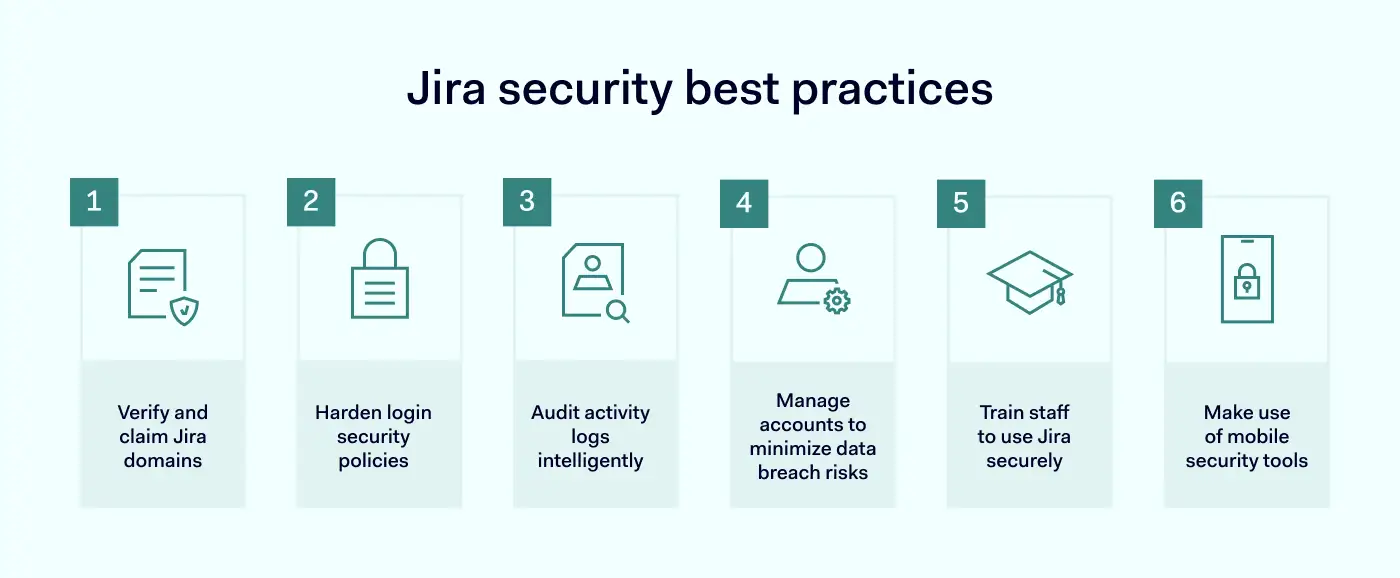
Jira security best practices

Jira security aims to protect sensitive data stored on the cloud platform. Users (or “tenants”) must minimize data breach risks while understanding security areas covered by Jira’s systems. This checklist covers actions required to secure Jira environments.

jira security best practices listSecurity best practices include:

  • Verifying your domains

  • Hardening your login security policies

  • Auditing activity logs intelligently

  • Managing accounts to minimize data breach risks

  • Training staff to use Jira securely

  • Making use of mobile security tools

1. Verify and claim Jira domains

The first step in improving your security setup is verifying the Jira domains you own. Domain verification allows administrators to take control of access management policies for Jira assets. Admins can claim domains via the Atlassian admin panel.

Domain verification also enables admins to use Atlassian Access. After verifying their domains, admins need to subscribe to Access. When that’s done, you can start applying security controls across your Jira-hosted assets.

2. Harden login security policies

Login portals are a critical security vulnerability. Jira tenants must exclude malicious actors while allowing legitimate requests. This is not always an easy balance to strike. Users should:

  • Implement two-factor authentication

2FA requires more than one authentication factor when logging on. Atlassian supports popular authentication providers like Google Authenticator and Authy. These tools integrate with Jira and deliver secure passcodes to smartphones. SMS verification is also possible, although it’s seen as a less secure option.

  • Enforce two-step verification

This tool supplements 2FA for Jira. Enforced verification makes it impossible to access Jira assets without supplying two authentication factors. Admins configure enforced verification via the centralized access management panel.

  • Create SSO portals 

Single Sign On combines all Jira cloud assets via a single set of credentials. SSO integrates smoothly with identity providers. You can transfer existing directories and groups to Jira while adding authentication tools.

  • Prevent third-party access

Access requests from third-party cloud platforms presents a security risk. Restricting access requests from Slack, Google Cloud, or Apple platforms is a good idea. Enforce additional authentication procedures to prove user identities before granting access.

  • Use strong passwords

Admins must require solid passwords for all accounts. Strong passwords feature a mix of characters and numbers and are usually between 12 and 15 characters long. This makes them very difficult to guess or brute force. Admins should also set password expiry deadlines that force users to change passwords regularly.

  • Exclude non-human users from authentication policies

Bots and API service accounts may require access to Jira assets. But they do not require the same authentication processes. Admins should configure these users to remove SSO and two-step verification tools.

3. Audit activity logs intelligently

Product audit logs record activity across the Jira environment. This makes it possible to detect patterns of suspicious behavior and remediate network security vulnerabilities before threats emerge.

Atlassian operates separate audit processes for Confluence and Jira. In both cases, companies can track any changes made to their cloud setup. Tenants can determine which events to monitor. This includes group creation, data imports and exports, deletions, and changes to global settings.

By default, logs are kept for one year. Tenants can change this setting, reducing the audit period to as little as one month. However, retaining audit data for the maximum period is a security best practice. This will deliver more actionable insights to improve security settings.

4. Manage accounts to minimize data breach risks

Jira tenants should audit both activity and user accounts. Account audits look at the entire range of active user accounts. And they perform a couple of important security tasks:

  • De-escalation of administrative privileges when they are no longer needed.

  • Deletion of obsolete accounts. Without timely audits, user accounts may remain active after employees leave the organization. This creates a security risk and should be avoided if possible.

Carry out account audits regularly. Integrate external identity providers covered by Jira, such as SCIM or G Suite. This makes it easier to automate user provisioning and deletion tools. But do not assume that orphaned accounts have been deleted. Check thoroughly and make deletions as necessary.

5. Train staff to use Jira securely

Security teams are responsible for educating all Jira users. Solid training teaches employees to follow security best practices and should be critical to your cloud security policy. Training issues to focus on include:

  • The importance of strong, regularly-changed passwords.

  • Eliminating confidential data from Jira tickets or pages. This could include cardholder data or personal health information.

  • Creating access controls for any pages that contain sensitive information.

  • Using two step-verification to access Atlassian products.

  • Using API tokens to access Confluence Cloud or Jira resources.

  • Avoiding phishing attacks related to the Atlassian cloud environment.

Schedule regular training events and log the participation of all cloud users. Include additional security training for administrative-level account holders. Admins have extensive powers to change global settings that regular users lack. Enforce prohibitions against shared admin accounts and reinforce the need for strong password security.

6. Make use of mobile security tools

Employees may require access from home workstations, industry events, or during global travel. But mobile access carries security risks. In these situations, companies should leverage the mobile security features supplied with Jira software.

Atlassian Access allows tenants to create Mobile Application Management (MAM) policies. This is a good option if your organization relies on either work-from-home or bring-your-own-device (BYOD). MAM policies should:

  • Enforce multi-factor authentication for remote access to the Atlassian cloud.

  • Check that devices have anti-malware protection and that the operating system is up to date.

  • Allow only authorized BYOD devices and require registration for new devices.

  • Mandate encryption for all remote connections. This could include Virtual Private Network connectivity or the use of other forms of secure gateway.

If you are not an Atlassian Access member, you can integrate external MDM solutions with Jira deployments. Jira software supports Microsoft Intune, JAMF, and MobileIron. It should be possible to transfer existing MDM settings directly to the Atlassian cloud.

Understanding Jira security basics

It is important to apply the security best practices outlined above. But Jira tenants must also understand what their cloud provider secures before taking action. There is no need to duplicate security measures. Tenants should be aware of tools available within the Jira platform before sourcing external solutions.

jira security best practices glossary

Atlassian is vocal about its commitment to security, and the company builds both internal and client-side security features into its products. Let’s start with client-side features that tenants can control.

Client-side features:


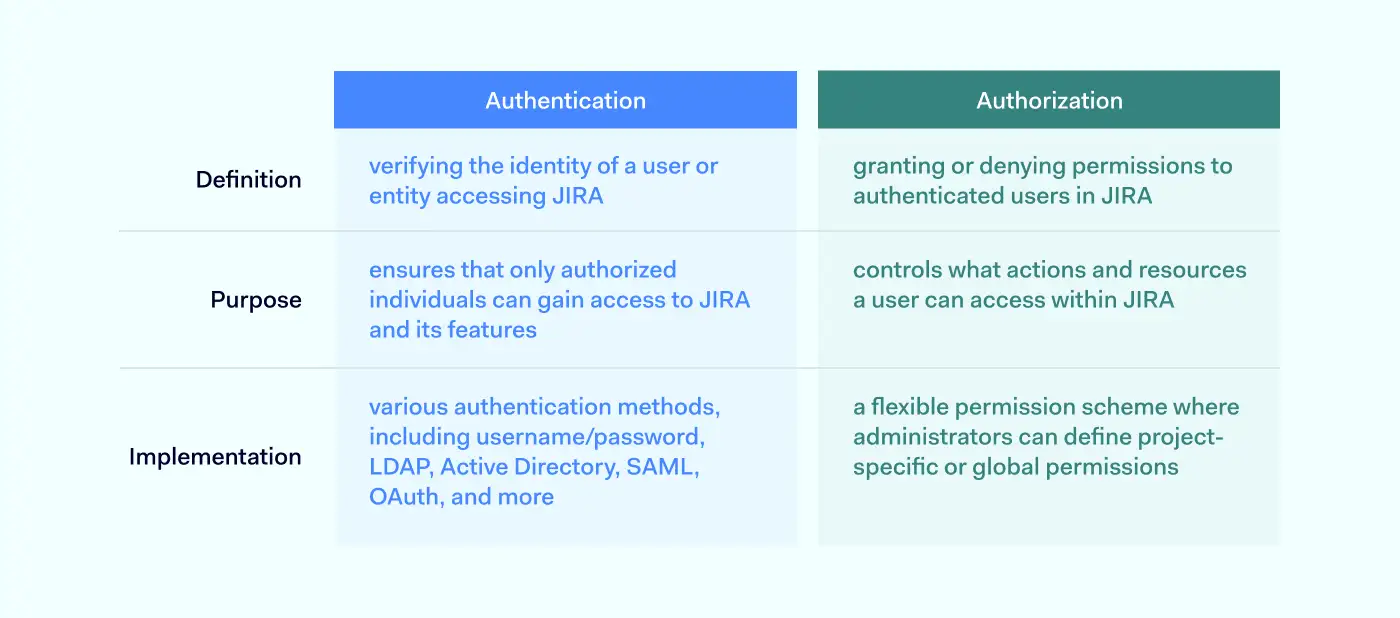
  • Authentication

Authentication verifies the identity of every user accessing the cloud environment. These mechanisms compare user credentials to secure directories. If supplied credentials match the database, the network grants access. Jira authentication options include Basic Authentication via Atlassian Account. However, Jira also supports OAuth tokens, which offer more security. These secure tokens add an extra layer of protection against illegitimate access.

  • Authorization

Authorization determines what users can do within the Jira environment. Each user receives a set of permissions. These permissions grant access to resources according to the user’s role and work requirements. Admins can create temporary groups or assign precise powers to users. For instance, the user could possess create, view, and edit privileges. But they may not be able to delete records on Jira apps.

  • Logging

Jira logs key activities and presents the data via the central administration console. The audit log captures project changes, user permissions, workflow changes, custom fields, data deletion, and suspicious access requests. Admins can export audit data via CSV files and amalgamate the information with other cloud platforms. Retention periods vary from one month to a year.

  • Incident management

Jira’s incident response systems include collaboration tools, automated alerts, incident timelines, and incident response templates. Tenants can plan to neutralize threats and restore systems as quickly as possible.

Internal security features:

Atlassian products secure hosting infrastructure with internal security controls. In keeping with the shared responsibility model, the company undertakes to ensure the “security, availability, and performance of the applications we provide, the systems they run on, and the environments within which those systems are hosted.”

  • Encryption

Jira encrypts data at rest and in transit. Data on the Rest API is encrypted using 256-bit AES ciphers. Data in transit is secured by TLS 1.2+ with perfect forward secrecy. Passwords are also encrypted, along with API keys. Tenants don’t need to apply encryption to data hosted on the Jira platform. But it is necessary to encrypt data passing across the network edge, for example, via remote work connections.

  • Zero Trust architecture

Jira’s network is constructed in line with the Zero Trust principle “never trust, always verify”. Private cloud routing, firewalls, and software-defined networking create secure zones. A three-tier access policy ensures that only authorized employees can access network resources.

  • Data center security

Atlassian uses Amazon Web Services (AWS) to store data. Redundancy and failover are built into a global AWS architecture. Multiple physical security controls also guard Jira’s data centers against malicious intruders.

Common security threats to Jira

Jira’s cloud hosting services face many threats. Security controls should always be designed with threats in mind. Any of these threats could result in loss of data, system downtime, and regulatory penalties:

  • Insider threats

Malicious individuals exploit legitimate access rights to carry out illegal actions. But insiders can also be unaware of the risks they pose. For example, employees might accidentally introduce malware via flash drives. Insiders can sabotage assets or steal data for sale. But identifying them isn’t easy. Jira tenants can leverage activity monitoring logs to detect unusual access patterns, off-board orphaned accounts, and apply MFA to make access difficult.

  • Social engineering

Also known as phishing. Social engineering involves persuading legitimate users to carry out risky actions. This could include opening attachments, clicking links, or even providing payment data directly. Training is the best remedy for social engineering attacks. Data Loss Prevention tools and tight access policies also help to prevent illicit data removal.

  • External threats

 Malware can spread throughout insecure cloud deployments. Worms and Trojans leak information to outsiders. Other agents damage performance by leaching network resources for other purposes. Robust threat detection systems, network segmentation, and regular software updates are essential.

  • Data breaches 

Data breaches require a specific strategy because the risks of suffering data loss are critical. Tenants should secure confidential data with encryption at rest and in transit. Limit access with MFA and RBAC. And track critical data via audits and threat alerts.

FAQ

How to keep my organization secure?

Follow these basic steps to secure your organization on Atlassian’s Jira platform:

  • Understand your Jira landscape. Inventory all apps and classify data held on Jira according to risk categories.

  • Ensure all assets are visible via the Atlassian admin panel.

  • Integrate your identity provider with Atlassian’s SSO solution.

  • Test configurations to balance access and security.

  • Create role-based access controls. Limit access to high-risk data.

  • Schedule regular audits and monitor activity logs.

  • Manage user accounts and remove users when they leave the organization.

  • Train your staff on security best practices.

  • Create a mobile device management solution for secure remote work.

What are the security features of Jira?

Jira is equipped with many security features. Use relevant features to secure cloud assets under the shared responsibility model. Tenants can configure Jira to include:

  • 256-bit at rest encryption of sensitive data and TLS encryption for data in transit.

  • Flexible access controls. SSO and MFA options that integrate with identity providers.

  • Regular network scanning and audits of Jira infrastructure. Constant monitoring for cloud security threats.

  • Compliance with major standards such as GDPR and ISO 27001.

  • The Bug Bounty program rewards developers who find security weaknesses.

  • Secure development under the Peer Review/Green Build system. Testing of all new app deployments before they go live.

Atlassian has covered the most crucial security themes. But this still leaves customers with the responsibility to extend access controls to users, encrypt data outside the Jira environment, and train staff to use the cloud safely.

Key takeaways

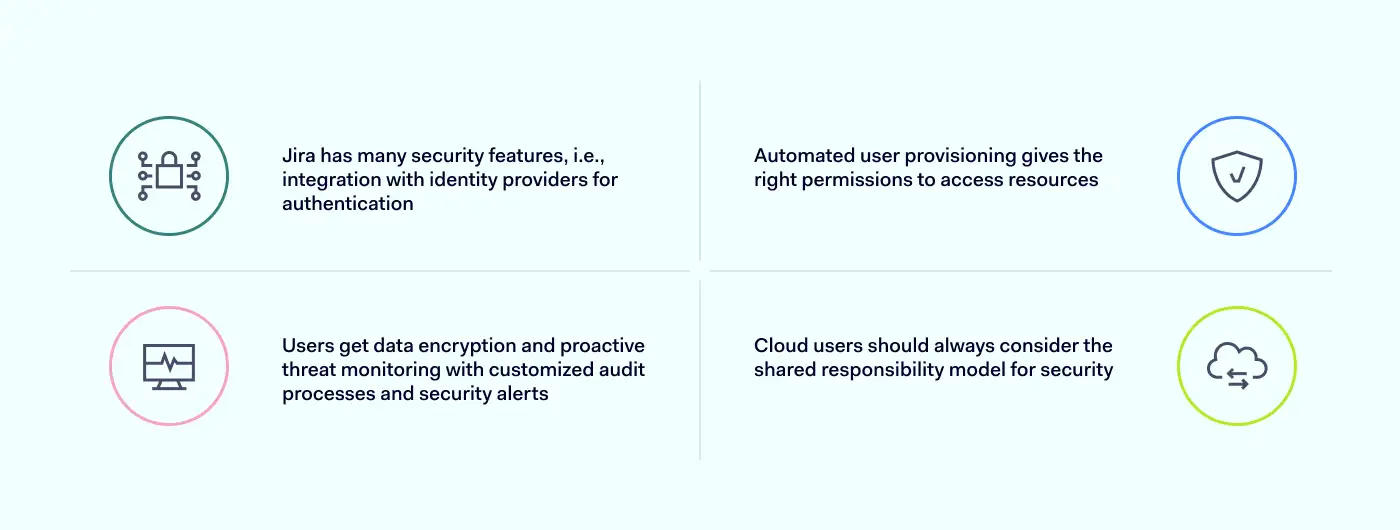
  • Jira provides a wide range of security features to assist cloud tenants. This includes authentication systems that integrate easily with identity providers.

  • Automated user provisioning offers users the right permissions to access essential resources.

  • Tenants benefit from data encryption and proactive threat monitoring. Jira tools include customized audit processes and security alerts.

  • Cloud users must always be aware of the shared responsibility model when designing security solutions.

How can NordLayer help?

The Atlassian suite enables businesses to manage projects of varying scope and complexity effectively, but its security leaves much room for improvement. This is where NordLayer can reach out a helping hand to companies that are struggling to find the right balance between ease of use and security.

Using Virtual Private Gateways, network administrators have much better control over user access. Only gateway-connected users are allowed to reach the Jira portal. The login to NordLayer itself can be further secured by enabling Single-sign on and multi-factor authentication, ensuring that the connecting user’s identity is genuine.

With IP allow-listing (whitelisting), companies can permit access to Atlassian suite only from trusted IPs, which also shrinks the attack surface. The connections from unrecognized IP addresses are immediately blocked.

NordLayer’s suite of ZTNA and SSE-focused features allows additional layers of security and combines built-in Jira security tools with NordLayer’s solutions. This combination is a sure way to improve SaaS access control.

Get in touch with us, and discover how to reap the benefits of Atlassian suite without putting your sensitive data at risk.

About Version 2 Digital

Version 2 Digital is one of the most dynamic IT companies in Asia. The company distributes a wide range of IT products across various areas including cyber security, cloud, data protection, end points, infrastructures, system monitoring, storage, networking, business productivity and communication products.

Through an extensive network of channels, point of sales, resellers, and partnership companies, Version 2 offers quality products and services which are highly acclaimed in the market. Its customers cover a wide spectrum which include Global 1000 enterprises, regional listed companies, different vertical industries, public utilities, Government, a vast number of successful SMEs, and consumers in various Asian cities.

About NordLayer
NordLayer is an adaptive network access security solution for modern businesses – from the world’s most trusted cybersecurity brand, Nord Security.

The web has become a chaotic space where safety and trust have been compromised by cybercrime and data protection issues. Therefore, our team has a global mission to shape a more trusted and peaceful online future for people everywhere.

×

Hello!

Click one of our contacts below to chat on WhatsApp

×