Skip to content

Are Hackers Above the Law?

A woman writhes on a gurney in the back of an ambulance racing to get treatment for her aortic aneurysm. The paramedics radio to the closest hospital to announce their impending arrival. But they’re told the hospital is in the grips of a ransomware attack, critical systems are offline, and they can’t accept new patients. The heart patient would have to go elsewhere. That meant an hour-long drive to the next comparable facility. And by the time she was able to receive treatment, the woman died.


This isn’t hypothetical. This exact scenario happened in Germany in September 2020. And when it did, numerous voices in the cybersecurity community (mine included) called it the first death to be directly caused by a cyber attack. Ransomware disabled the hospital. And if the woman had been able to receive treatment sooner, she likely would have survived her cardiac episode. Responsibility for her death seemed to fall squarely on the shoulders of the hackers behind the ransomware attack.


German prosecutors agreed. They saw in the attack an open and shut case of negligent homicide. But, under German law, in order for someone to be convicted of that crime, prosecutors needed to establish legal causation between the actions of the defendant and the resulting death. And that’s where things got tricky.


Cyber Attacks as Criminal Acts


The Computer Fraud and Abuse Act was enacted in the US in 1986 and represented the first major effort to prevent hacks through criminal law. Many other countries adopted similar laws – some later than others – but all realized early on that cybercrime needed (but lacked) an appropriate legal apparatus.


Cybercrime laws around the world have evolved and matured significantly since then. GDPR in Europe drastically raised the bar for data protection and privacy while leveling severe penalties for any infraction. California adopted a similar law, as have other US states, and the recent Strengthening American Cybersecurity Act of 2022 established sweeping cybersecurity requirements for all federal offices and many of the vendors they work with. Never has “cyber” legislation been as expansive as now, and all signs suggest this regulatory framework will only expand further.


One area where it remains immature, however, is in regard to prosecuting offenders for the damage caused by cyber attacks. Most laws measures damage (and thus assign penalties), based on the number of records stolen or the amount of downtime caused. But the law stops there. Most downstream effects of the attack are considered irrelevant.


Which makes sense. For most of history, cyber attacks have been seen as IT issues first and foremost. And while they could certainly cause plenty of damage and disruption, it was seen as confined to the digital realm. Rarely did attacks spill over into the physical world, so there was no reason to contextualize those attacks within existing criminal law.


But that’s changing fast. One example is the attack on the Colonial Pipeline in May 2021. A ransomware attack disabled one of the largest oil pipelines on the Eastern Seaboard, resulting in fuel shortages, panic buying at the pump, and changes to flight schedules due to lack of fuel. President Biden declared a State of Emergency as a result. And while the attack thankfully left no one dead or injured, it nonetheless highlights how cyber attacks can directly affect people’s health and safety. Ransomware directed at hospitals, schools, and police departments has a similar effect. And as we see hackers become increasingly emboldened and unscrupulous, future attacks won’t just disrupt data or apps – they will ruin lives.


Learning From the German Example

It’s telling what ultimately happened in Germany. After a two-month investigation, prosecutors concluded that they couldn’t meet the standard of proof necessary to link the woman’s death with the ransomware attack definitively. Prosecutors needed to show that had the ransomware attack never occurred, the woman would have lived. But after consulting with medical professionals, it was believed the woman would have died no matter where or when she received treatment. So while the ransomware attack made a bad situation worse, the heart condition, not the attack, caused the death.


Lacking any expertise in German criminal law, it seems to me that prosecutors got it right in this case. Nonetheless, it’s impossible to hear this anecdote and not think about a slightly different variation: where medical devices get disabled by ransomware, and patients dependent on those devices die. Unfortunately, it’s only a matter of time before this scenario (or countless similar alternatives) happens. And when it does, will the law be able to prosecute those behind the attack for those deaths? Or will hackers skate by on a lesser charge, signaling to others that devastating attacks don’t come with devastating consequences for the perpetrators?


Time will tell. Until then, however, I hope we draw a lesson from what happened in Germany and start thinking more about cyber attacks as attacks on people, not just IT.

#cybersecurity #ransomware #law #cybercrime #Germany #hospital



About Version 2 Digital

Version 2 Digital is one of the most dynamic IT companies in Asia. The company distributes a wide range of IT products across various areas including cyber security, cloud, data protection, end points, infrastructures, system monitoring, storage, networking, business productivity and communication products.

Through an extensive network of channels, point of sales, resellers, and partnership companies, Version 2 offers quality products and services which are highly acclaimed in the market. Its customers cover a wide spectrum which include Global 1000 enterprises, regional listed companies, different vertical industries, public utilities, Government, a vast number of successful SMEs, and consumers in various Asian cities.

About VRX
VRX is a consolidated vulnerability management platform that protects assets in real time. Its rich, integrated features efficiently pinpoint and remediate the largest risks to your cyber infrastructure. Resolve the most pressing threats with efficient automation features and precise contextual analysis.

Where is data center architecture headed to?

You know what data centers* are, we’ve told you a lot about the on this blog. Today, however, it is time to check out a particular aspect such as the singleness of their architecture**. In addition to what role they play in the present and which one they will play in the future.

* Physical facility that organizations use to host their information, applications, critical data…

**There’s a good example of alliteration, great rhetorical figure.

So let’s go!

Data center architecture, present and future

Lately with so much cataclysm and recession, it seems that the world is going backwards. However, there are things that improve. The Succession TV show is cooler every season and last summer they released a new variety of Magnum ice cream that is superior to the previous ones. For instance.

Technology is also evolving. In fact, you can see right now how all sorts of innovations take us to the next level.

Data centers are not left behind

About moving forward, I mean.

Why?

Well, because in recent years, IoT technology, the overwhelming need to accumulate data and our beloved Cloud have lovingly promoted the modernization of traditional data centers.

Otherwise these would be obsolete.

As many of you know, the design of a data center is based on a network of computing and storage resources that allows delivering shared data. 

Its key components include:

  • Routers. 
  • Switchgear. 
  • Firewalls. 
  • Storage systems.
  • Servers.
  • Etc.

This is when a number of companies are shifting to modern forms of data centers*.

*Which pose as many advantages as challenges. 

More than twenty years ago, when data center architecture became a hot topic, there was debate between the CISC (Complex Instruction Set Computer) and RISC (Reduced Instruction Set Computer) architectures, and between SMPs, mainframes, and small systems. 

All this happened before the surprising emergence of coprocessors, AISCs and other accelerators, to boost data access and optimize complex operations. 

Currently, data centers are mostly aligned on x86 CPUs, small two-socket servers, and a general standardization of the components that make up the modern data center. 

Even so, corporations continue to look for ways* to increase their efficiency and productivity by helping themselves with technological advances.

*Always at a lower cost.

Where do data centers come from and where are they headed to?

Like all technologies, from the pulley system to home ice-cream maker, data centers have also gone through a long way of transformation.

  • Before the 1990s, data centers were made up of large computer rooms. There, any computer error made them stand out within the system.
  • In the 1990s, as the Internet began to take shape and take center stage, data centers became popular among businesses. 
  • As the new century began, folks began to become more aware of the data centers and brought to light incredible improvements.  Such as data center services, outsourcing demands, shared hosting, application hosting, managed services, ISPs, ASPs, MSPs, etc. 

During later years, data centers became stabilized as a concept in society. The focus, then, was on energy efficiency, refrigeration technologies and management facilities.

Is this the end of ordinary data centers?

Today, a good Intel CPU is considered the most powerful on the market. 112 cores, an incredible number of features to handle all kinds of workloads or technical machine learning activities. 

Even so, companies seek, as police hounds, a new solution.

They are aware that big data analytics, machine learning, artificial intelligence, the so-called “Internet of Things” and other high-spectrum technologies are changing the approach to data centers. 

Modern technologies, as they have been doing from the pulley system to home ice-cream makers, try to minimize costs.

That’s why, if we take into account the money, efficiency, power and optimization in a modern data center, you’ll find old architectures no longer work. 

They consume more energy and take up more space. 

Furthermore, there are already better services, more attractive ones

GPUs are being used, for example, for specialized tasks that suppress single-core CPU performance. 

In fact, GPU-enabled platforms have caused a readjustment of system designs, addressing the data-avid nature of processors.

Despite what it may seem, in recent times, cloud providers are switching to independent data centers, and, of course, large corporations are following suit. 

In the immediate future, the evolution of data centers is expected to approach a new paradigm, probably because the Covid 19 pandemic has pushed the world to work in the cloud like no one imagined.

About Version 2 Digital

Version 2 Digital is one of the most dynamic IT companies in Asia. The company distributes a wide range of IT products across various areas including cyber security, cloud, data protection, end points, infrastructures, system monitoring, storage, networking, business productivity and communication products.

Through an extensive network of channels, point of sales, resellers, and partnership companies, Version 2 offers quality products and services which are highly acclaimed in the market. Its customers cover a wide spectrum which include Global 1000 enterprises, regional listed companies, different vertical industries, public utilities, Government, a vast number of successful SMEs, and consumers in various Asian cities.

About PandoraFMS
Pandora FMS is a flexible monitoring system, capable of monitoring devices, infrastructures, applications, services and business processes.
Of course, one of the things that Pandora FMS can control is the hard disks of your computers.

How Cloud IAM Security Vulnerabilities Are Being Exploited

What is IAM Security?

IAM is an abbreviation for identity access management. Identity access management systems allow your organization to manage employee applications without checking in to each app as an administrator. IAM security solutions allow organizations to manage a variety of identities, including people, software, and hardware.

IAM Infrastructure

Over the past few years, businesses have been making the move from on-prem to cloud-based operations for their business. This has been majorly contributed by the rise of SaaS applications that have allowed businesses to increase operational efficiency through the cloud.

While this brings numerous business advantages, it has further complexified the array of required appliances and services needed to keep the business running smoothly. Many organizations often use multiple different cloud service providers across numerous different services.

This has increased infrastructure complexity, while making security management more difficult. Added to this is the fact that cloud environments constantly operate and run whenever they are. This availability allows the business to run smoothly without fail, but also leaves them vulnerable to exploitation whenever a malicious actor wants to access them.

IAM security layers have become an increasingly popular attack vector as things have moved to the cloud. Such attacks utilize phishing-acquired security tokens to a devastating degree, allowing a cybercriminal to assume any role within the network.

Cloud providers such as Amazon Web Services (AWS), Microsoft Azure and Google Cloud all have various IAM security measures when managing their platforms. Using Amazon Web Service’s IAM policies as an example, we will look at how a malicious attacker could exploit a vulnerability and assume roles.

IAM Security Roles

First, we need to understand how IAM roles come into play. Authentication tokens are assigned to each user identity in AWS. But suppose you wanted to offer network access to a third-party application, tool, or web server. Creating and maintaining users account for each service could prove quite difficult.

AWS considered this issue and created a solution known as the IAM role. A role lacks a username/password or access key, as it doesn’t pertain to a specific user. IAM roles serve as a distinct identity with assigned permissions that determine what the identity can and can’t do within AWS. When users can take on different responsibilities, other roles can be assigned to them.

IAM Security Vulnerabilities

The complexities of enterprise cloud infrastructure have increased the exploitation of IAM security vulnerabilities. Exploitation can occur in various scenarios, such as when debugging in a DevOps environment, where an administrator is provided permissions for testing. This may be forgotten after testing is completed, allowing an attacker to potentially reuse the administrator credentials to access other parts of the cloud environment.

IAM security threats might also stem from other vulnerabilities such as:

Server-Side Request Forgery (SSRF)

Assume a cyber attacker discovered a website running an unpatched application with a common server-side request forgery (SSRF) vulnerability. An SSRF vulnerability allows an attacker to force a server-side application to send HTTP queries to a random domain of the attacker’s choice.

In most cases, the webpage will display the English version via eng.php. Nevertheless, if an attacker modifies the eng.php file to refer to a another URL, the web server will comply. Since the request originated from an internal source, it will then answer if the destination of the request is from an inside resource (such as the instance metadata server).

Misconfigurations

Misconfigurations are another major cause of breaches in IAM and cloud environments, often leading to data loss or unauthorized access to cloud systems. They often arise due to a poor understanding of their complex cloud environment. Fortunately, there are various tools and methods that organizations can use to address this.

Companies should implement a solution that can identify both malicious and unintentional misconfigurations in cloud setups from all entry-points, while enabling a multi-cloud environment. Along with detecting misconfigurations, this solution should offer a means to correct them.

Cloud-Native Application Protection Platform (CNAPP)

Cloud-native application protection platforms offer a solution to common IAM vulnerabilities such as these. A CNAPP analyzes both the cloud infrastructure plane and workloads to give you a complete picture of both. Logging offers one such effective measure for mitigating IAM vulnerabilities by providing insight into who and what is active within a given network.

It is important for enterprises to gain complete visibility of their complex cloud environments to mitigate IAM security threats. Since entry to a network can be granted either directly or indirectly, graph models can be easily used to clearly illustrate the specific relationships between identities and their respective rights. Since each organization’s structure and demands are unique, the ability to leverage granular insight of this data is critical.

Cloud IAM Security: Final Thoughts

Implementing the above steps to increase and manage your network visibility, data logging, and misconfiguration detection will help mitigate cloud IAM security vulnerabilities while preventing major security breaches before they happen.

About Version 2 Digital

Version 2 Digital is one of the most dynamic IT companies in Asia. The company distributes a wide range of IT products across various areas including cyber security, cloud, data protection, end points, infrastructures, system monitoring, storage, networking, business productivity and communication products.

Through an extensive network of channels, point of sales, resellers, and partnership companies, Version 2 offers quality products and services which are highly acclaimed in the market. Its customers cover a wide spectrum which include Global 1000 enterprises, regional listed companies, different vertical industries, public utilities, Government, a vast number of successful SMEs, and consumers in various Asian cities.

About Portnox
Portnox provides simple-to-deploy, operate and maintain network access control, security and visibility solutions. Portnox software can be deployed on-premises, as a cloud-delivered service, or in hybrid mode. It is agentless and vendor-agnostic, allowing organizations to maximize their existing network and cybersecurity investments. Hundreds of enterprises around the world rely on Portnox for network visibility, cybersecurity policy enforcement and regulatory compliance. The company has been recognized for its innovations by Info Security Products Guide, Cyber Security Excellence Awards, IoT Innovator Awards, Computing Security Awards, Best of Interop ITX and Cyber Defense Magazine. Portnox has offices in the U.S., Europe and Asia. For information visit http://www.portnox.com, and follow us on Twitter and LinkedIn.。

Is Iran the World’s First Cyber Supervillain?

It was only a few weeks ago that I was writing about a CISA alert warning about the dangers of Iranian-government-sponsored hackers exploiting Log4J vulnerabilities to strike at varied targets across the globe. I argued that Iran’s actions illustrate what the future of cyber warfare will look like as countries increasingly strike at digital rather than physical targets to exert their influence. Hammering home that point, CISA has already issued another alert cautioning against an entirely different kind of attack perpetrated by Iranian hackers.

With this latest action, Iran has shown both a willingness to use cyber attacks to achieve their geopolitical ambitions, along with ingenuity in their methods. Of course, most countries are jockeying with each other in cyberspace, and labeling any of their motivations as “good” or “bad” probably misunderstands the pugilistic nature of international relations. Other countries are doing what Iran does – and putting even more resources behind the effort. But even with those caveats, it’s hard not to see Iran as a country both willing and able to play the role of cyber supervillain – someone who makes digital space more dangerous for everyone.

To help put that claim in a greater context, let’s take a look at the latest attack.

Attack Autopsy

Starting around May 2021, Iranian state cyber actors calling themselves “Homeland Justice” (with nationalistic flair) infiltrated the network of the Albanian government. They hid inside for the next year, maintaining continuous network access while quietly accessing and exfiltrating email content. The attackers conducted lateral movements, ran network reconnaissance, and began credential harvesting beginning in May 2022. And by the middle of that summer, they had everything they needed to launch a devastating ransomware attack. The Albanian government never stood a chance.

Ransomware was launched on their networks in July 2022, accompanied by a threatening message directed at a group critical of Iran’s Revolutionary Guard with several thousand members living in Albania. While simultaneously stealing and encrypting the data with one attack, the offenders were also wiping raw disk drives using a separate attack in a strategy orchestrated to inflict maximum damage almost immediately. Numerous government digital services and websites were temporarily knocked offline. Unfortunately, that was just the start.

Homeland Justice then created a website and social media profiles taking credit for the attacks and publishing proof. Their goal was not just to gloat. They also release the data, first posting a poll to ask what data people wanted, then releasing videos and zip files with the leading responses. So not only was the Iranian government stealing another country’s data – they were offering it up for anyone else to exploit for whatever purposes they wanted. Twisting the knife even more, Homeland Justice struck the Albanian government again in September 2022 with a similar barrage of ransomware attacks.

Understandably enraged, the Albanian government formally cut diplomatic ties with Iran – the first such response to a cyber attack. The Albanian Foreign Minister Olta Xhacka commented, “The aggressiveness of the attack, the level of attack, and moreover the fact that it was a fully unprovoked attack left no space for any other decision.”

Implications of the Attack

The technical details of the attack – plus the prevention CISA suggests – are worth a closer look, especially since Iran has been willing to attack almost any target anywhere. But in this instance, the mechanics of the attack are less interesting than the motivations behind it and the implications for future attacks.

Iran sponsored this attack ostensibly in response to the anti-government sentiment gaining traction in parts of the population. Cracking down on dissent is nothing new for governments. But doing so by launching a multi-month cyber attack on a small, distant country, bragging about it online, then offering to share the spoils has no historical precedent that I can think of. What effect this will have on the ongoing protest movement in Iran remains to be seen. No matter the outcome, though, Iran has pioneered a new way for states to undermine activist movements, and many will not hesitate to deploy similar tactics to maintain their hold on power.

I’m also struck by how this attack weaves together different tactics and techniques, combining a lengthy infiltration effort with a shock-and-awe ransomware attack followed by online data leaks and a surprise second punch. It’s devious. It’s also a little bizarre in its determination. I’m sure an Iran expert could give some important context into why Iran hit Albania so hard. But when they felt compelled to do so, they had both the means and the certainty of success – how many attacks between nation-states can say the same thing?

What will Iran do next? Even if you don’t agree with my “cyber supervillain” characterization, it’s a question everyone’s wondering. And given recent events, they should probably be worrying about it too.

#iran #cyberattack

About Version 2 Digital

Version 2 Digital is one of the most dynamic IT companies in Asia. The company distributes a wide range of IT products across various areas including cyber security, cloud, data protection, end points, infrastructures, system monitoring, storage, networking, business productivity and communication products.

Through an extensive network of channels, point of sales, resellers, and partnership companies, Version 2 offers quality products and services which are highly acclaimed in the market. Its customers cover a wide spectrum which include Global 1000 enterprises, regional listed companies, different vertical industries, public utilities, Government, a vast number of successful SMEs, and consumers in various Asian cities.

About VRX
VRX is a consolidated vulnerability management platform that protects assets in real time. Its rich, integrated features efficiently pinpoint and remediate the largest risks to your cyber infrastructure. Resolve the most pressing threats with efficient automation features and precise contextual analysis.

4 takeaways on bootstrapping your business from Web Summit 2022

Most startups aim to score a big round of venture capital funding and then focus on growing the company. In today’s economic climate, startups are keenly aware of how much money they have and, most importantly, how much they lack. But for some, the option of having outside financing is not the best option or may not be an option at all. In such cases, bootstrapping, or self-financing through personal funds or initial sales, comes into action.

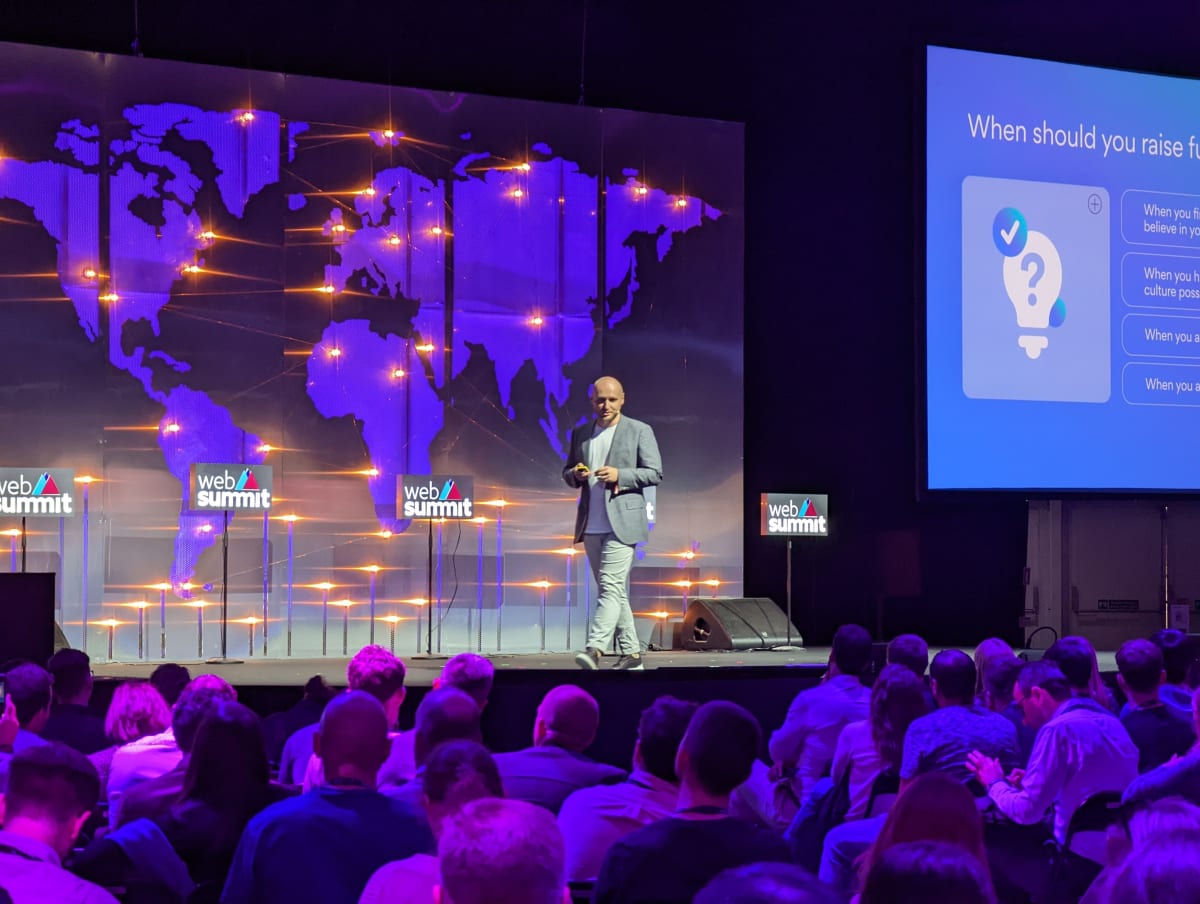
Tom Okman, Co-founder of Nord Security Since the establishment of Nord Security and until this year, we have operated without external funding – and we have learned many lessons. Last week, I had the great honor of presenting our main takeaways from this bootstrapping journey on the stage of Web Summit. Here are the four main insights that I shared for founders focused on bootstrapping their business: #1 Perfect your company’s mission Your company’s mission is not just a catchy slogan you place on your “About” page and then forget about it. Your mission is the underlying DNA of every meeting and every creative solution, and it works in the background every time your people decline offers from other companies. When you raise funding, it’s easy to lose sight of why you started your company in the first place. But when you are bootstrapping, your mission and your customers guide your business path. So bootstrapping founders, instead of focusing on raising the next round of funding, look for innovative ways to turn their mission into a reality. They are also more receptive to what customers are saying to them. That feedback naturally helps polish and evolve your mission over time, which in turn helps improve your corporate and product strategies. And it comes with a bonus – the company develops a solid internal culture. #2 Build local, ship global Some entrepreneurs are wary of using local talent pools, especially if the business is starting outside established startup hubs like Silicon Valley or Israel. However, that was not the case in our story. In fact, we were fortunate to start our company in Lithuania. While funding was scarce when we started, the local ecosystem, partners, and infrastructure helped us immensely in getting our business off the ground. People in Lithuania are talented and keen to prove themselves to their international peers. So one of our best decisions early in the business was to tap into that talent pool and support from local associations and policymakers. Today, more than ever, talent and support for entrepreneurs are spread throughout Europe, both in traditional tech hubs and rising startup center’s. As a result, the startup world is getting flatter, so now is the best time to take advantage of building locally while shipping globally. #3 Focus on the customer Customers are royalty, especially when entrepreneurs operate without external funding. In such cases, customers become leading investors and the most sustainable source of financing, and startups must focus on them above all else. So to be successful, entrepreneurs have to build a product that their customers will love and want to pay for, meaning that creating a market fit for products becomes central to a startup’s survival. Unfortunately, you don’t have a large treasure chest on your side when you are bootstrapped, so the key is to be efficient in adapting to your customer’s feedback. #4 Take risks and be nimble The bootstrapping route empowers entrepreneurs to take charge of the big decisions when it comes to vision, hiring, operations, or finances. That gives self-funded startups an edge because they can be much more flexible, agile, and tenacious than other companies. But at the same time, not taking outside financing pushes entrepreneurs to be hungrier in finding ways to improve their business. Because knowing that customers are critical, you can’t simply spend your way out of problems. In Nord Security’s case, it usually meant taking risks and being the pioneer in educating the market and customers about a new use case, product feature, or upcoming challenges. While such a situation might sound precarious, in a way, it also means returning to what makes startup culture great – the ability and willingness to be inventive and take risks. But it is essential to be decisive when things need to be fixed and be bold in pivoting because inertia can sometimes be more dangerous than recklessness. This combination can prove extremely potent if entrepreneurs allow themselves to be guided by their leading investors – the customers – and their mission-driven culture. But only if founders are willing to lean into it fully.

About Version 2 Digital

Version 2 Digital is one of the most dynamic IT companies in Asia. The company distributes a wide range of IT products across various areas including cyber security, cloud, data protection, end points, infrastructures, system monitoring, storage, networking, business productivity and communication products.

Through an extensive network of channels, point of sales, resellers, and partnership companies, Version 2 offers quality products and services which are highly acclaimed in the market. Its customers cover a wide spectrum which include Global 1000 enterprises, regional listed companies, different vertical industries, public utilities, Government, a vast number of successful SMEs, and consumers in various Asian cities.

About Nord Security
The web has become a chaotic space where safety and trust have been compromised by cybercrime and data protection issues. Therefore, our team has a global mission to shape a more trusted and peaceful online future for people everywhere.

×

Hello!

Click one of our contacts below to chat on WhatsApp

×