Skip to content

ESET participates in operation to disrupt the infrastructure of Danabot infostealer

  • ESET Research has been tracking Danabot’s activity since 2018 as part of a global effort that resulted in a major disruption of the malware’s infrastructure.
  • While primarily developed as an infostealer, Danabot also has been used to distribute additional malware, including ransomware.
  • Danabot’s authors promote their toolset through underground forums and offer various rental options to potential affiliates.
  • This ESET Research analysis covers the features used in the latest versions of the malware, the authors’ business model, and an overview of the toolset offered to affiliates.
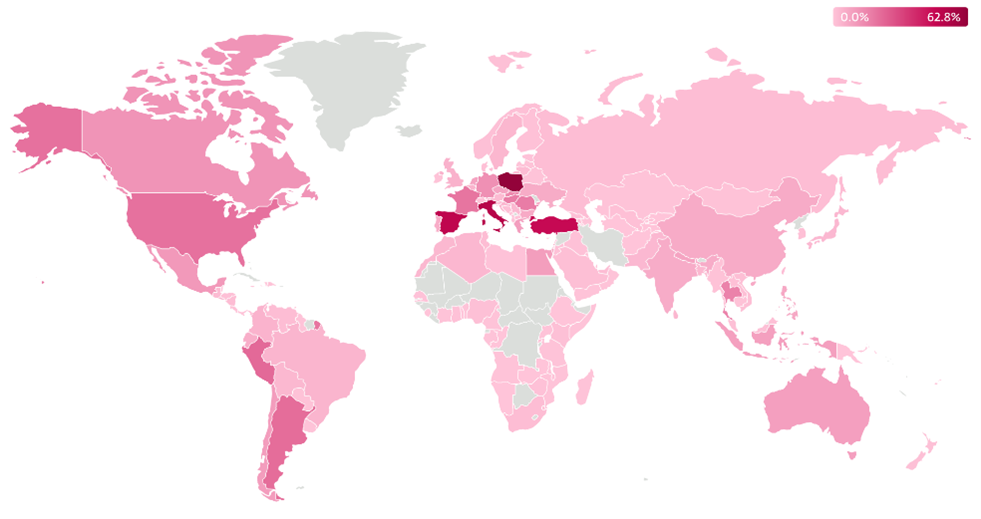
  • Poland, Italy, Spain and Turkey are historically one of the most targeted countries by Danabot.

BRATISLAVA, PRAGUEMay 22, 2025 — ESET has participated in a major infrastructure disruption of the notorious infostealer, Danabot, by the US Department of Justice, the FBI, and US Department of Defense’s Defense Criminal Investigative Service. U.S. agencies were working closely with Germany’s Bundeskriminalamt, the Netherlands’ National Police, and the Australian Federal Police . ESET took part in the effort alongside Amazon, CrowdStrike, Flashpoint, Google, Intel471, PayPal, Proofpoint, Team Cymru and Zscaler. ESET Research, which has been tracking Danabot since 2018, contributed assistance that included providing technical analysis of the malware and its backend infrastructure, as well as identifying Danabot’s C&C servers. During that period, ESET analyzed various Danabot campaigns all over the world, with Poland, Italy, Spain and Turkey historically being one of the most targeted countries. The joint takedown effort also led to the identification of individuals responsible for Danabot development, sales, administration, and more.

These law enforcement operations were conducted under Operation Endgame — an ongoing global initiative aimed at identifying, dismantling, and prosecuting cybercriminal networks. Coordinated by Europol and Eurojust, the operation successfully took down critical infrastructure used to deploy ransomware through malicious software.

“Since Danabot has been largely disrupted, we are using this opportunity to share our insights into the workings of this malware-as-a-service operation, covering the features used in the latest versions of the malware, the authors’ business model, and an overview of the toolset offered to affiliates. Apart from exfiltrating sensitive data, we have observed that Danabot is also used to deliver further malware, which can include ransomware, to an already compromised system,” says ESET researcher Tomáš Procházka, who investigated Danabot.

The authors of Danabot operate as a single group, offering their tool for rental to potential affiliates, who subsequently employ it for their malicious purposes by establishing and managing their own botnets. Danabot’s authors have developed a vast variety of features to assist customers with their malevolent motives. The most prominent features offered by Danabot include: the ability to steal various data from browsers, mail clients, FTP clients, and other popular software; keylogging and screen recording; real-time remote control of the victims’ systems; file grabbing (commonly used for stealing cryptocurrency wallets); support for Zeus-like webinjects and form grabbing; and arbitrary payload upload and execution. Besides utilizing its stealing capabilities, ESET Research has observed a variety of payloads being distributed via Danabot over the years.  Furthermore, ESET has encountered instances of Danabot being used to download ransomware onto already compromised systems.

In addition to typical cybercrime, Danabot has also been used in less conventional activities such as utilizing compromised machines for launching DDoS attacks… for example, a DDoS attack against Ukraine’s Ministry of Defense soon after the Russian invasion of Ukraine.

Throughout its existence, according to ESET monitoring, Danabot has been a tool of choice for many cybercriminals and each of them has used different means of distribution. Danabot’s developers even partnered with the authors of several malware cryptors and loaders, and offered special pricing for a distribution bundle to their customers, helping them with the process.  Recently, out of all distribution mechanisms ESET observed, the misuse of Google Ads to display seemingly relevant, but actually malicious, websites among the sponsored links in Google search results stands out as one of the most prominent methods to lure victims into downloading Danabot. The most popular ploy is packing the malware with legitimate software and offering such a package through bogus software sites or websites falsely promising users to help them find unclaimed funds. The latest addition to these social engineering techniques are deceptive websites offering solutions for fabricated computer issues, whose only purpose is to lure victims into execution of a malicious command secretly inserted into the user’s clipboard.

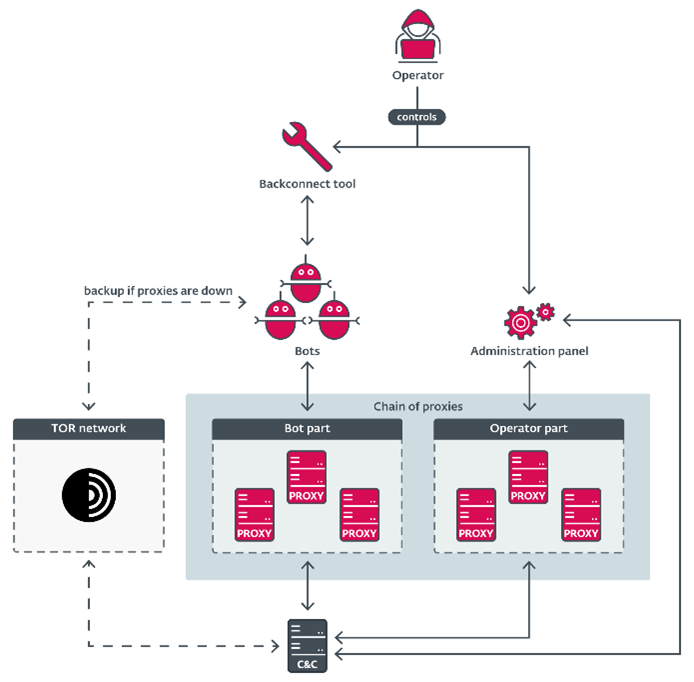
The typical toolset provided by Danabot’s authors to their affiliates includes an administration panel application, a backconnect tool for real-time control of bots, and a proxy server application that relays the communications between the bots and the actual C&C server. Affiliates can choose from various options to generate new Danabot builds, and it’s their responsibility to distribute these builds through their own campaigns.

“It remains to be seen whether Danabot can recover from the takedown. The blow will, however, surely be felt, since law enforcement managed to unmask several individuals involved in the malware’s operations,” concludes Procházka.

For technical overview of Danabot and insight into its operation, check out ESET Research blogpost: “Danabot: Analyzing a fallen empire” on WeLiveSecurity.com. Make sure to follow ESET Research on Twitter (today known as X), BlueSky, and Mastodon for the latest news from ESET Research.

Worldwide Danabot detections as seen in ESET telemetry since 2018

Example of typical Danabot infrastructure

About ESET
For 30 years, ESET® has been developing industry-leading IT security software and services for businesses and consumers worldwide. With solutions ranging from endpoint security to encryption and two-factor authentication, ESET’s high-performing, easy-to-use products give individuals and businesses the peace of mind to enjoy the full potential of their technology. ESET unobtrusively protects and monitors 24/7, updating defenses in real time to keep users safe and businesses running without interruption. Evolving threats require an evolving IT security company. Backed by R&D facilities worldwide, ESET became the first IT security company to earn 100 Virus Bulletin VB100 awards, identifying every single “in-the-wild” malware without interruption since 2003.

About Version 2 Digital

Version 2 Digital is one of the most dynamic IT companies in Asia. The company distributes a wide range of IT products across various areas including cyber security, cloud, data protection, end points, infrastructures, system monitoring, storage, networking, business productivity and communication products.

Through an extensive network of channels, point of sales, resellers, and partnership companies, Version 2 offers quality products and services which are highly acclaimed in the market. Its customers cover a wide spectrum which include Global 1000 enterprises, regional listed companies, different vertical industries, public utilities, Government, a vast number of successful SMEs, and consumers in various Asian cities.

ESET Cyber Security Pro and ESET Cyber Security merge

Being a cybersecurity leader and a protector of your digital progress, ESET understands that to stay on top of this game requires endless innovation and improvement. This also applies to macOS, which many incorrectly perceive as a broadly secure operating system that doesn’t require additional protection.

To achieve the best possible protection for macOS users, ESET made a strategic decision to revamp its ESET Cyber Security solution protecting macOS devices and merge ESET Cyber Security Pro with the latest version of ESET Cyber Security. 

The importance of macOS security

It’s well known that macOS has held a reputation for having a more secure operating system due to several key factors. First, Apple keeps tight control over both hardware and software as macOS is designed to run exclusively on Apple’s own devices. This closed ecosystem allows Apple to implement stringent security measures.

Additionally, macOS is built on a Unix-based foundation benefiting from its permission-based architecture that restricts unauthorized access to system files. On top of that, Apple provides multiple built-in security features that collectively create a robust security environment.

However, the perception of macOS as a highly secure operating system does not mean that it is immune to malware. Cybercriminals are continually evolving their tactics, and macOS is not exempt from their efforts. Simply, the ever-increasing popularity of Apple devices has made them a more attractive target for attackers.

For example, ESET telemetry coming from macOS devices shows that password-stealing ware (PSW), which often targets credentials related to cryptocurrency wallets, increased by 127% in H2 2024. In a similar manner, ESET telemetry also detected a skyrocketing 320% increase in cryptomining malware targeting macOS users to abuse the computing power of their devices to make money.

What is happening to ESET Cyber Security for macOS?

To face current and upcoming threats to macOS users, ESET has been building an entirely new version of ESET Cyber Security with a completely overhauled architecture for enhanced functionality, stability, and future-proof performance.

Starting from scratch, ESET created a new code base allowing developers to focus on performance improvements and adding new features instead of increasingly demanding maintenance.

The latest version of ESET Cyber Security is included in ESET’s all-in-one protection for households — ESET HOME Security. It offers both higher performance and stability, network profiles, firewall, license-based features, and more.

All these changes mean that users can expect all the capabilities of the legacy ESET Cyber Security Pro and even more features in the near future.

Important dates and information

The end of sales for ESET Cyber Security Pro already took place November 15, 2024. Since then, users have not been able to purchase a new ESET Cyber Security Pro subscription. 

The End-of-Life date for ESET Cyber Security Pro is November 18, 2025. After this date, users can no longer renew, install, activate, or use our ESET Cyber Security Pro product. The application won’t be able to download new modules and will become inactive with a red error status (indicating modules are not up to date).

Users can already see a notification about the new version in the Update section of the application containing a download link to the latest ESET Cyber Security application.

For more information, please visit the ESET EOL website and the Support change for version 6 of ESET endpoint products for macOS.

Enjoy full protection

With improved macOS protection included in ESET HOME Security, you can rest assured that your smart home devices are fully protected from various kinds of attacks thanks to Antivirus & Antispyware, Firewall, Web and Email Scanning, Anti-phishing, and more. Users of the highest tier – ESET HOME Security Ultimate – get additional services, including ESET Identity Protection and ESET VPN.

As ESET developers have breathed new life into ESET Cyber Security, more exciting news is coming soon, so stay tuned for updates.

About ESET
For 30 years, ESET® has been developing industry-leading IT security software and services for businesses and consumers worldwide. With solutions ranging from endpoint security to encryption and two-factor authentication, ESET’s high-performing, easy-to-use products give individuals and businesses the peace of mind to enjoy the full potential of their technology. ESET unobtrusively protects and monitors 24/7, updating defenses in real time to keep users safe and businesses running without interruption. Evolving threats require an evolving IT security company. Backed by R&D facilities worldwide, ESET became the first IT security company to earn 100 Virus Bulletin VB100 awards, identifying every single “in-the-wild” malware without interruption since 2003.

About Version 2 Digital

Version 2 Digital is one of the most dynamic IT companies in Asia. The company distributes a wide range of IT products across various areas including cyber security, cloud, data protection, end points, infrastructures, system monitoring, storage, networking, business productivity and communication products.

Through an extensive network of channels, point of sales, resellers, and partnership companies, Version 2 offers quality products and services which are highly acclaimed in the market. Its customers cover a wide spectrum which include Global 1000 enterprises, regional listed companies, different vertical industries, public utilities, Government, a vast number of successful SMEs, and consumers in various Asian cities.

File System, Object Storage, Tapes: Where to Store Backups?

In 2025, the International Data Corporation (IDC) projects that unstructured data will account for 80% of all data globally. Therefore, managing data load has become a big part of business-critical issues as organizations welcome petabytes of data daily.

With data volumes skyrocketing, cyber dangers growing, and regulatory pressure mounting, your backup storage option may influence how quickly (or not) you recover after a disaster. However, with so many options—file systems, object storage, and even legacy tape—how do you choose the correct one? The answer is determined by your specific backup use case rather than the technology itself.

In this article, we will review the most common backup requirements and help you determine which storage option is ideal for each. Whether you’re managing cloud-native apps or protecting archive documents, you’ll have a clear sense of what belongs where and why.

Key Backup Requirements That Shape Storage Choices

Before diving into the storage types themselves, let’s look at the real-world needs that should guide your decision:

Storing Large Volumes of Unstructured Data: This includes images, videos, IoT sensor data, logs, and social content. These data are not just large—they’re often static, accessed infrequently, and rapidly growing. You’ll want a storage option that scales effortlessly and doesn’t blow your budget.

Retaining Archived Data for Years: Sometimes, compliance or industry standards require long-term data retention. Consider financial records, legal files, or patient information. These data are rarely accessed but must be preserved securely and affordably.

Recovering from Disasters with Speed:When systems fail or ransomware strikes, time is everything. You’ll need backup storage that supports rapid restore operations and low-latency access, preferably on-site or within fast-reach infrastructure.

Operating in Hybrid and Cloud-Heavy Environments: Remote teams, distributed workloads, and cloud-native apps need accessible, API-driven, and cloud-compatible backup solutions. Scalability and flexibility matter more than physical media here.

With these use cases in mind, let’s now explore the three major backup storage types: file system, object storage, and tape.

File System: How It Works

Data in file system storage is arranged hierarchically using folders and directories. Most people use this model—files are kept on local drives or network-attached storage (NAS) devices; they have paths, names, and extensions.

Why Use a File System for Backup?

File systems are ideal for routinely accessed user-generated material or backed-up structured data. They permit rapid file- or folder-level restores and offer basic backup tools.

Best Use Cases:

  • Endpoint backups (laptops, desktops)
  • Departmental shares
  • File servers
  • Daily or weekly incremental backups
  • Situations requiring fast and granular recovery

Pros:

  • Easy to set up and manage
  • Fast access and recovery for smaller datasets
  • Familiar structure for users and admins
  • Low barrier to entry

Limitations:

  • Poor scalability for massive data volumes
  • Not optimized for unstructured or infrequently accessed data
  • Vulnerable to ransomware if not isolated or air-gapped

File systems are the go-to for daily backup requirements in smaller to mid-sized environments or as part of a multi-tiered backup plan where performance and simplicity of access are paramount.

Object Storage: How It Works

Treated as separate “objects,” object storage bundles metadata and a unique ID for each data. Unlike file systems, it is not dependent on folders or directories. Instead, items are accessed via RESTful APIs from a flat address space.

Why Use Object Storage for Backup?

Objective storage is meant for unstructured data and cloud-scale operations. It’s ideal for backup instances when remote access, long-term retention, and adaptability are critical.

Best Use Cases:

  • Backing up cloud-native applications
  • Storing logs, images, and sensor data
  • Long-term archiving of static files
  • Disaster recovery across multiple geographic regions
  • Environments using automation or containerization (e.g., Kubernetes)

Pros:

  • Virtually unlimited scalability
  • Excellent for unstructured and infrequently accessed data
  • Easy integration with cloud-based workloads
  • Supports metadata-rich backups (great for indexing and search)
  • Enables geo-replication and distributed redundancy

Limitations:

  • Higher latency for small file access
  • Requires API knowledge or management platform
  • Not optimal for structured, frequently accessed transactional data

Object storage is an excellent, future-proof choice whether you are managing terabytes or petabytes of backup data—especially if it is headed for cloud or long-term storage.

Tape Backup: How It Works

Tape backup entails writing data to magnetic tape cartridges, typically using dedicated hardware like tape drives or libraries. Once written, these tapes offer physical separation from active systems by being kept offline or delivered elsewhere.

Why Use Tape for Backup?

Tape’s low cost-per-gigabyte, durability, and immutability make it useful for archive and disaster recovery even now. It’s extremely important in air-gapped settings, where ransomware danger is a concern.

Best Use Cases:

  • Archiving large volumes of data for 5+ years
  • Meeting compliance retention requirements
  • Adding an offline layer to your disaster recovery plan
  • Cold storage for infrequently accessed backups

Pros:

  • High durability and longevity (often 30+ years)
  • Highly cost-effective for long-term storage
  • Immune to online threats (air-gapped)
  • Low energy consumption compared to disk-based storage

Limitations:

  • Slower restore times
  • Requires physical management and logistics
  • Not suitable for fast access or frequent backups
  • Limited scalability without manual intervention

Tape is an excellent “last line of defense” and remains a wise choice for deep archiving, especially when combined with faster-access solutions like disk or object storage.

File System vs. Object Storage vs. Tapes: Match Your Storage to Business Strategy

Where to store backups is a question without a one-size-fits-all solution. The correct decision will depend on your company’s data types, access needs, compliance criteria, and financial situation. Many times, a hybrid strategy provides the best of both worlds. Here’s a quick bullet-point guide to help you decide:

Choose File System backup if:

  • You need fast and simple access to files.
  • You’re backing up structured, active data.
  • Your recovery time objective (RTO) is tight.

Choose Object Storage if:

  • You handle unstructured or cloud-native data.
  • You require scalability and metadata-rich management.
  • You need to store backups across regions or integrate with cloud tools

Choose Tape if:

  • You need long-term, low-cost archival storage.
  • You want offline, ransomware-resistant backups.
  • You’re working under strict retention or compliance policies.

In the end, strategic backup storage is about creating resilience rather than only averting disasters. Understanding your backup goals and matching them to the strengths of every storage type helps ensure your data is ready rather than merely secure when the worst strikes.

About Version 2 Digital

Version 2 Digital is one of the most dynamic IT companies in Asia. The company distributes a wide range of IT products across various areas including cyber security, cloud, data protection, end points, infrastructures, system monitoring, storage, networking, business productivity and communication products.

Through an extensive network of channels, point of sales, resellers, and partnership companies, Version 2 offers quality products and services which are highly acclaimed in the market. Its customers cover a wide spectrum which include Global 1000 enterprises, regional listed companies, different vertical industries, public utilities, Government, a vast number of successful SMEs, and consumers in various Asian cities.

About Storware
Storware is a backup software producer with over 10 years of experience in the backup world. Storware Backup and Recovery is an enterprise-grade, agent-less solution that caters to various data environments. It supports virtual machines, containers, storage providers, Microsoft 365, and applications running on-premises or in the cloud. Thanks to its small footprint, seamless integration into your existing IT infrastructure, storage, or enterprise backup providers is effortless.

Portnox Shortlisted in the 2025 Cloud Security Awards

AUSTIN, TX – May 20, 2025 – Portnox announced today that it has been shortlisted in the Security Solution in Risk Identification/Risk Management category of the 2025 Cloud Security Awards. Now in its third year and operated by The Cloud Awards, the Security Awards’ program received entries from across the globe, including the USA and Canada, the UK and Europe, the Middle East, and APAC.

“At Portnox, we believe that truly effective security starts with unified access control — not as an afterthought, but as a foundational layer,” said Denny LeCompte, CEO of Portnox. “Portnox Cloud was purpose-built to simplify and centralize how organizations control and monitor access across their IT environments. By prioritizing preventative, risk-aware decision-making, we’re helping IT and security teams stay ahead of threats, reduce complexity, and eliminate blind spots created by fragmented, legacy systems.”

The Security Awards recognizes those at the forefront of cybersecurity – rewarding overall excellence in keeping digital assets secure. The program also celebrates highly-specialized solutions that focus on a certain aspect of cloud security – such as Identity Access Management, firewalls, or email security – and outstanding use of certain technologies, including AI.

“We’re very pleased to reveal the shortlist of this year’s Security Awards,” said James Williams, CEO of The Cloud Awards. As the frequency and damage caused by cyber attacks increase, so too does the need for robust and innovative cloud security solutions to protect vital digital assets. Portnox has certainly stepped up to the plate – impressing our panel with their commitment to protecting individuals and organizations from a whole host of cyber threats.”

To view the full shortlist, please visit: https://www.cloud-awards.com/2025-cloud-security-awards-shortlist.


About Portnox
Portnox provides simple-to-deploy, operate and maintain network access control, security and visibility solutions. Portnox software can be deployed on-premises, as a cloud-delivered service, or in hybrid mode. It is agentless and vendor-agnostic, allowing organizations to maximize their existing network and cybersecurity investments. Hundreds of enterprises around the world rely on Portnox for network visibility, cybersecurity policy enforcement and regulatory compliance. The company has been recognized for its innovations by Info Security Products Guide, Cyber Security Excellence Awards, IoT Innovator Awards, Computing Security Awards, Best of Interop ITX and Cyber Defense Magazine. Portnox has offices in the U.S., Europe and Asia. For information visit http://www.portnox.com, and follow us on Twitter and LinkedIn.。

About Version 2 Digital

Version 2 Digital is one of the most dynamic IT companies in Asia. The company distributes a wide range of IT products across various areas including cyber security, cloud, data protection, end points, infrastructures, system monitoring, storage, networking, business productivity and communication products.

Through an extensive network of channels, point of sales, resellers, and partnership companies, Version 2 offers quality products and services which are highly acclaimed in the market. Its customers cover a wide spectrum which include Global 1000 enterprises, regional listed companies, different vertical industries, public utilities, Government, a vast number of successful SMEs, and consumers in various Asian cities.

AI is now being used to guess your business passwords

When you think of a password manager, you probably think about its ability to generate unique and secure passwords for every account. While that’s true, password managers also protect against a range of technical threats you might not expect—threats that can devastate businesses, from phishing attacks using Punycode domains that trick employees into revealing corporate credentials to keyloggers and brute-force attacks on admin panels that expose sensitive systems. 

In 2025, with 74% of all data breaches involving some kind of human element or error and costing companies millions in downtime and fines, password managers like NordPass are far more powerful than just a password generator—they’re a business’s shield against financial and reputational ruin. In this article, we’ll break down 5 cyber threats and explain exactly how password managers defend against them.

1. Phishing

Phishing is a cyberattack in which attackers trick users into revealing sensitive information, like usernames and passwords, by creating fraudulent websites that mimic legitimate ones. This type of attack is a huge problem, especially for businesses losing data to fake login pages. In 2025 so far, phishing has accounted for over 36% of all data breaches, and about 3.4 billion phishing emails are sent every day. These numbers show how widespread and persistent phishing has become.

These attacks often rely on techniques like Punycode domains, hijacked subdomains, and typosquatting to deceive users. Phishing links are commonly distributed via email, SMS, or malicious ads, directing victims to fake login pages where their credentials are captured. 

For example, an attacker might create a domain like http://www.goоgle.com (using the Cyrillic “о” instead of the Latin “o”), which looks nearly identical to http://www.google.com but directs users to a malicious site. Alternatively, attackers might exploit a misconfigured DNS setting to hijack a subdomain, like secure.login.example.com, making the phishing site appear as if it belongs to the legitimate example.com. In typosquatting, domains like http://www.faceboook.com or http://www.pay-pal.com are registered to exploit common user typing errors.

asset2

Image: An example of an open-source phishing kit

Password managers protect against phishing by using exact domain matching when autofilling credentials. When a user visits a phishing site, even if the domain visually resembles the legitimate one, the password manager recognizes the mismatch and refuses to autofill credentials. 

For instance, if credentials are saved for http://www.paypal.com, they will not be provided on a phishing domain like http://www.paypa1.com. This prevents users from unknowingly submitting their passwords to fraudulent sites.

Another layer of protection comes from eliminating the need for manual password entry. Password managers use secure browser APIs or system-level frameworks like Android’s Autofill API or iOS’s AutoFill to inject credentials directly into login fields. This bypasses keyboard input entirely, preventing phishing websites from capturing credentials through keylogging or fake form fields.

2. Credential stuffing

Credential stuffing is a type of cyberattack in which attackers use large sets of stolen username and password combinations, often obtained from previous data breaches, to gain unauthorized access to user accounts on different platforms. 

For businesses, this is a huge threat—employees reusing personal passwords for work accounts can open the door to attackers who might use a breach of a random website to access corporate emails, CRM systems, or financial tools, costing companies millions in stolen data or ransomware payouts. The attack relies on the assumption that many people will reuse the same credentials across multiple websites and services. 

Automated tools are used to test these credential pairs across numerous sites at scale, often with the help of bots, enabling attackers to exploit any reused credentials efficiently.

asset5


Image: Cybercrime forum discussions focusing on credential-stuffing tools

For example, if an attacker acquires a leaked database from a breached e-commerce platform, they might use the stolen email-password pairs to attempt logins to banking, social media, or other sensitive services. Automated credential stuffing tools, like Sentry MBA or OpenBullet (as seen above), can test thousands of combinations per minute, often evading basic security measures like rate limiting or CAPTCHA using proxies.

Password managers provide a strong defense against credential stuffing by generating and storing unique, complex passwords for every account. Since credential stuffing depends on the reuse of credentials across multiple platforms, having a distinct password for each account renders the attack ineffective. Password managers make this feasible by securely storing and autofilling these unique passwords, so users don’t need to remember them.

NordPass offers a valuable feature called Password Health. This feature scans all passwords stored in your vault and checks how vulnerable they are, giving you a clear view of your password security. It alerts you about weak, reused, or compromised passwords, helping you take necessary actions to strengthen your online security. This is an effective way to ensure your passwords aren’t putting your accounts at risk.

3. Brute-force attacks

Brute-force attacks involve systematically guessing passwords by trying all possible combinations, often with the help of automated tools. While most modern consumer platforms include protection mechanisms like two-factor authentication (2FA), CAPTCHA, or account lockouts to prevent these attacks, there are edge cases where brute-force attacks remain viable. This is particularly true for public-facing admin portals or legacy systems that lack built-in protections by default.

For instance, if your business runs a WordPress site without security plugins, it may be leaving its admin panel (/wp-admin) exposed to brute-force attacks. Attackers might use tools like Hydra or WPScan to test thousands of password combinations, starting with weak or default credentials like admin with password123. Without additional configurations, some versions of these platforms remain vulnerable, as they typically don’t include features like rate limiting or CAPTCHA out of the box. Users must proactively install plugins to secure these areas.

asset4

Image: An example of WPScan brute-force functionality

Password managers provide an important layer of protection against brute-force attacks by encouraging the use of strong, complex passwords that are resistant to guessing. A password manager can generate a password like Tx8&@K1p!Rv2#, which is more difficult to crack, even with the most advanced brute-force tools. Furthermore, password managers ensure that users don’t rely on weak or default credentials and prevent the reuse of passwords across different systems, which attackers could exploit.

NordPass, in particular, not only generates strong, complex passwords but also stores them securely. Users have the flexibility to determine the complexity of their passwords, allowing them to create passwords that are both highly secure and tailored to their needs. Importantly, NordPass encourages the use of unique passwords for each account, ensuring that even if one set of credentials is exposed, it cannot be used to access other systems.

In addition to generating and securely storing strong passwords, NordPass also includes its built-in Authenticator feature, which can be used as an authenticator app. This adds an extra layer of security by enabling 2FA for your accounts, making it a lot harder for attackers to gain access, even if they manage to crack a password. The NordPass Authenticator is a convenient and secure option to further bolster your defenses against brute-force and other types of attacks.

With a password manager, the only password users need to remember is their master password—the key to unlocking their vault of securely stored credentials. Once this master password is entered, the manager handles the rest, automatically filling in passwords for all other accounts. This removes the burden of remembering each password individually, while still keeping your accounts protected with strong, unique passwords.

Although brute-force attacks are not a genuine risk for most consumers due to modern protections, they still pose a threat in specific scenarios, like unsecured admin portals or systems without rate limiting. By using a password manager to create and store strong, unique passwords, users add an extra layer of defense against this type of attack. In these edge cases, password managers provide protection, ensuring that even if other security layers are missing, accounts are protected with passwords that are resilient to brute-force attempts.

4. Keyloggers

Keyloggers are malicious tools designed to record every keystroke a user types, allowing attackers to steal sensitive information like usernames, passwords, and other private data. Companies can leak important information if keyloggers hit employee devices. They are often deployed as malware through phishing emails, malicious websites, or software downloads, but they can also exist as physical hardware devices installed between a keyboard and a computer.

Software-based keyloggers function by intercepting keyboard inputs at different stages within the operating system. They often utilize API hooks to monitor and record keystrokes as they are being processed. 

For example, a keylogger on a Windows system might use the SetWindowsHookEx function to intercept keystrokes in real time. This allows it to capture credentials and other private information as they are typed. Clipboard loggers, another variation, monitor copy-paste actions to steal sensitive data like passwords copied for use.

asset3

Image: Guides being shared on a cybercrime forum on how to write keyloggers

Password managers effectively counter these risks by eliminating the need for manual password entry. Instead of requiring users to type their passwords, password managers use secure autofill mechanisms to directly input credentials into login fields. On web browsers, they inject credentials through direct interaction with the DOM, while on mobile devices, they use system-level frameworks like Android’s Autofill API or iOS’s AutoFill. These methods bypass the keyboard entirely, rendering keyloggers unable to capture any useful data during the login process.

Although a keylogger could potentially capture the master password during the initial login to the password manager, modern password managers mitigate part of this risk by minimizing the need for repeated master password entry. Many password managers support biometric authentication, like fingerprint or facial recognition, allowing users to unlock the manager without typing anything after the initial login. Biometric data is securely stored on the device and cannot be intercepted by keyloggers, making it a highly secure and convenient method of authentication.

5. Database leaks

Database leaks occur when attackers gain unauthorized access to databases storing sensitive user information, such as usernames, passwords, and personal details. Businesses face huge losses when customer data spills out. These leaks often happen due to issues like web-application vulnerabilities, misconfigured servers, or outdated software. 

Once a database is leaked, attackers can use the stolen credentials in further attacks, like credential stuffing (as mentioned above) or direct account takeovers, particularly if the passwords are weak or reused across multiple accounts.

For example, in a typical breach, a compromised database may store passwords in plain text or use weak hashing algorithms like MD5 or SHA-1, which are vulnerable to tools like Hashcat. 

Hashcat, a high-performance password-cracking tool, allows attackers or researchers to brute-force or perform dictionary attacks on leaked password hashes to recover plaintext passwords. Even strong passwords can become vulnerable if the hashing algorithm is outdated or poorly implemented (e.g., missing salting).

asset6

Image: A researcher or cybercriminal trying to use Hashcat to crack passwords

Password managers protect users from the consequences of database leaks in several key ways. First, they encourage the use of unique, strong passwords for every account. This ensures that even if one set of credentials is exposed in a breach, it cannot be used to access other accounts. For example, a leaked password from an e-commerce site would not provide access to a user’s banking or email accounts if unique credentials were used.

In addition to promoting password uniqueness, password managers generate and store randomized passwords that are resistant to brute-force attacks. A password like T&$9jf@3#1Px2! is much harder to crack using tools like Hashcat compared to common or weak passwords. Password managers also make it easy to update compromised passwords quickly by identifying affected accounts and help in generating secure replacements.

Many password managers further enhance protection by integrating breach monitoring tools. For example, NordPass offers an integrated Data Breach Scanner that provides real-time alerts when your email or credit card details appear in a data breach or leak. This feature allows you to respond proactively by updating your credentials before attackers can exploit the compromised data.

NordPass follows a zero-knowledge architecture, meaning it never has access to user passwords. Additionally, NordPass provides businesses with a free tool to check for potential leaks through its dark web monitoring service. This service helps companies detect any exposed employee or customer data across the dark web, adding an essential layer of defense for businesses concerned about database breaches.

Get protection with NordPass

Credential theft can cause serious problems for businesses of all sizes. When someone’s login details are stolen, it can lead to unauthorized access to accounts, financial scams, identity theft, or even corporate spying. Hackers often sell stolen login details on dark web marketplaces, making them available to criminals around the world.

If a hacker gets into someone’s email, they can reset passwords for other accounts, giving them access to even more services. To protect against credential theft and its harmful effects, it’s important to use strong passwords and a password manager.

Start taking control of your security today. As a business owner, you have the power to strengthen your company’s defenses by mandating the use of a password manager. NordPass Business makes it easy to implement best practices across your team, protecting against the very threats we’ve discussed. 

asset1

NordPass also constantly passes security audits, ensuring it meets the highest levels of protection. This helps your business achieve information security standard compliance (like ISO and NIS2), which protects against high penalties for non-compliance and potential data leaks.

Get started with a complimentary 3-month trial by clicking here and using the code “danielk”—no credit card required. Don’t wait until it’s too late; secure your business now.

Disclaimer: Examples are provided for informational and educational purposes only. NordPass does not endorse, promote, or support their use and has no affiliation with them. Readers are strongly advised to comply with all applicable laws and regulations. All trademarks mentioned are the property of their respective owners.

About NordPass
NordPass is developed by Nord Security, a company leading the global market of cybersecurity products.

The web has become a chaotic space where safety and trust have been compromised by cybercrime and data protection issues. Therefore, our team has a global mission to shape a more trusted and peaceful online future for people everywhere.

About Version 2 Digital

Version 2 Digital is one of the most dynamic IT companies in Asia. The company distributes a wide range of IT products across various areas including cyber security, cloud, data protection, end points, infrastructures, system monitoring, storage, networking, business productivity and communication products.

Through an extensive network of channels, point of sales, resellers, and partnership companies, Version 2 offers quality products and services which are highly acclaimed in the market. Its customers cover a wide spectrum which include Global 1000 enterprises, regional listed companies, different vertical industries, public utilities, Government, a vast number of successful SMEs, and consumers in various Asian cities.

×

Hello!

Click one of our contacts below to chat on WhatsApp

×