Skip to content

雲端安全七宗罪!中小企業常見錯誤及改善方法

雲端運算在當今商業環境中扮演著不可或缺的角色。現今,IT 基礎架構、平台和軟件通常以服務形式提供(例如 IaaS、PaaS 和 SaaS)而非傳統的場地配置,這對於中小企業尤其具有吸引力。雲端提供了一個能夠與更大競爭對手平起平坐的機會,讓企業在不消耗大量資金的情況下,實現更高的業務靈活性和迅速擴張。正因如此,最近的一份報告指出,53% 的全球中小企業受訪者表示,他們每年在雲端上的支出超過 120 萬美元,而去年這個數字僅為 38%。

然而,隨著數位轉型的進展,各種風險也隨之而來。安全性(72%)和合規性(71%)是這些受訪者普遍提到的第二和第三個最常見的問題。應對這些挑戰的第一步,是了解中小企業在其雲端部署中犯下的主要錯誤。

一、缺乏多重要素驗證(MFA)
靜態密碼本質上並不安全,而且並非每家企業都遵守嚴格的密碼建立政策。密碼可能以多種方式被竊取,例如透過釣魚、暴力破解或猜測。因此,您需要在 MFA 之上增加一層額外的身份驗證,使攻擊者更難存取您的用戶的 SaaS、IaaS 或 PaaS 帳戶,以減輕勒索軟件、資料竊取和其他潛在風險。另一個選擇是在可能的情況下使用其他身份驗證方法,例如無密碼身份驗證。

二、過度信任雲端服務供商應(CSP)
許多 IT 主管誤以為投資於雲端,實際上就是將所有事務外判給一個可信賴的第三方,這並非完全正確。事實上,保護雲端的責任是由雲端服務供應商(CSP)和客戶共同承擔的,您需要關注的事情,將取決於雲端服務的類型(SaaS、IaaS 或 PaaS)和 CSP。即使大部分責任由 CSP 承擔,您仍然需要確保您的機構採取必要的安全措施,例如加密數據、設置適當的存取控制和監控活動。

三、忽略數據加密
數據加密是保護敏感信息免受未經授權存取的重要手段。即使數據在雲端中儲存和傳輸,也應該進行加密,這將使攻擊者即使獲得數據,也無法解讀其內容。請確保您的雲端服務供應商支援數據加密,並按照最佳實踐進行配置。

四、忽視強大的存取控制
存取控制是確保只有授權用戶能夠存取數據和系統的關鍵元素。適當的存取控制應該包括分配唯一的用戶帳戶、限制特權存取、實施角色基礎的存取控制和定期審查用戶權限。這有助於減少內部和外部威脅對您的雲端環境造成的風險。

五、不定期更新軟件和系統
雲端服務供應商通常會定期更新其軟件和系統,以修補安全漏洞和弱點。然而,這並不意味著您可以忽略更新。作為客戶,您負責確保您的應用程式和系統保持最新狀態。定期檢查並更新軟件、應用程式和操作系統,以確保您的環境免受已知漏洞的影響。

六、不進行適當的監控和日誌記錄
監控和日誌記錄是實時檢測和回應安全事件的關鍵。通過監控您的雲端環境,您可以檢測到異常活動、未授權的存取和其他潛在的安全問題。同樣重要的是,確保您的日誌記錄包含足夠的細節,以便在需要調查和回溯時使用。

七、忽略員工培訓和意識培育
員工是您機構的第一道防線,也是最脆弱的環節之一。進行定期的安全培訓和意識培育活動,教育員工有關雲端安全最佳實踐、釣魚攻擊、強密碼和其他安全相關主題。這將幫助減少人為錯誤和社交工程攻擊所帶來的風險。

以上是中小企業在雲端安全方面常見的錯誤。通過避免這些錯誤,您可以提高您的雲端環境的安全性,減少數據洩露和其他安全威脅的風險。同時,請記住,雲端安全是一個動態的領域,您需要與技術發展和威脅演變保持同步。最重要的是,將雲端安全納入您的整體業務戰略中,這包括確定安全負責人,建立安全政策和程序,並持續執行監控和修正措施。


About Version 2

Version 2 Digital is one of the most dynamic IT companies in Asia. The company distributes a wide range of IT products across various areas including cyber security, cloud, data protection, end points, infrastructures, system monitoring, storage, networking, business productivity and communication products. Through an extensive network of channels, point of sales, resellers, and partnership companies, Version 2 offers quality products and services which are highly acclaimed in the market. Its customers cover a wide spectrum which include Global 1000 enterprises, regional listed companies, different vertical industries, public utilities, Government, a vast number of successful SMEs, and consumers in various Asian cities.

關於ESET
ESET成立於1992年,是一家面向企業與個人用戶的全球性的電腦安全軟件提供商,其獲獎產品 — NOD32防病毒軟件系統,能夠針對各種已知或未知病毒、間諜軟件 (spyware)、rootkits和其他惡意軟件為電腦系統提供實時保護。ESET NOD32佔用 系統資源最少,偵測速度最快,可以提供最有效的保護,並且比其他任何防病毒產品獲得了更多的Virus Bulletin 100獎項。ESET連續五年被評為“德勤高科技快速成長500 強”(Deloitte’s Technology Fast 500)公司,擁有廣泛的合作夥伴網絡,包括佳能、戴爾、微軟等國際知名公司,在布拉迪斯拉發(斯洛伐克)、布裏斯托爾(英國 )、布宜諾斯艾利斯(阿根廷)、布拉格(捷克)、聖地亞哥(美國)等地均設有辦事處,代理機構覆蓋全球超過100個國家。

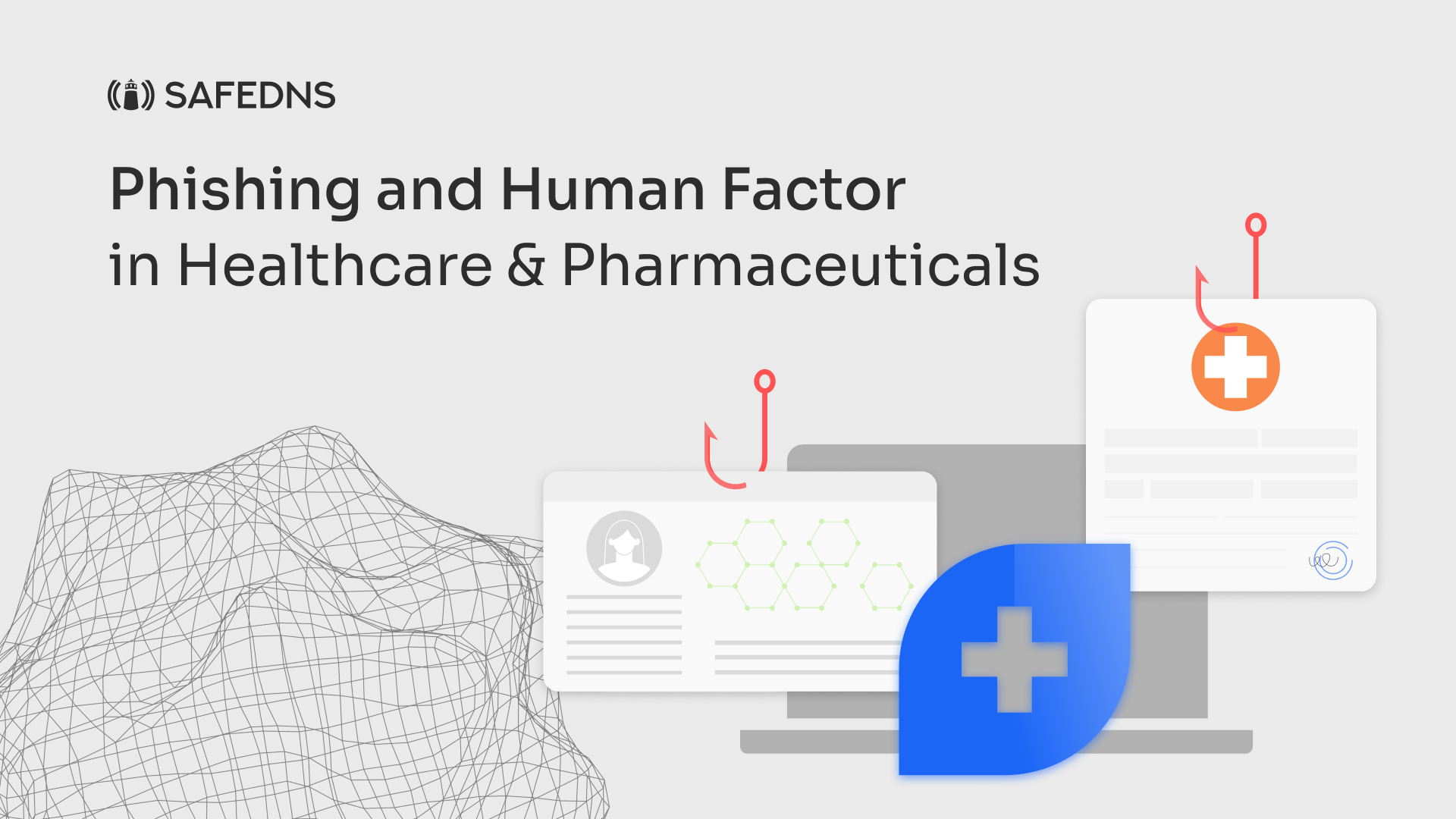
Preserving Patient Trust: Exploring the Menace of Human Factor and Phishing in Healthcare & Pharmaceuticals

Nowadays the healthcare and pharma industry finds itself at the forefront of a battle against cyber threats. Hospitals, healthcare centers, insurance companies, research institutions, and pharmaceutical companies worldwide have fallen victim to cyberattacks.

The situation remains quite serious: at the beginning of this year, the LockBit ransomware operation claimed responsibility for a November 2023 cyberattack on Capital Health, a healthcare service provider in New Jersey and parts of Pennsylvania, US. The hackers not only infiltrated the hospital network but also threatened to leak sensitive medical data and negotiation chats.

Although the nature of this very cyberattack remains undisclosed, statistics show that over 50% of ransomware and malware attacks start with phishing. Verizon’s 2023 Data Breach Investigations Repor adds another layer to the narrative, saying that “74% of all breaches include the human element, with people being involved either via error, privilege misuse, use of stolen credentials or social engineering”. The case of Capital Health provides an opportunity to talk about the level of staff preparedness for such social engineering attacks as phishing in a highly vulnerable sector such as healthcare & pharmaceuticals.

The High Stakes of Phishing Attacks in Healthcare

Phishing attacks pose an exceptional threat to healthcare organizations due to the value of patient data they store.


Protected health information (PHI)
has become a highly attractive commodity in the black market, for cybercriminals, bringing a staggering $1,000 for every patient record stolen on the dark web. That is a lot more than the cost of credit card numbers ($5 each), hacked Instagram accounts ($7), and even social security numbers ($1).


In addition to financial gain, cybercriminals with experience in drug trafficking and money laundering eagerly purchase medical records from malicious websites. These records enable them to obtain prescription medications, file false medical claims, or engage in identity theft by opening credit cards and taking out fraudulent loans. Unlike accounts and credit cards that can be quickly canceled, medical records provide a rich resource of valuable and permanent data points.

Although many cybercriminal groups have recently been talking about ethics when it comes to targeting highly vulnerable organizations such as hospitals, they are not going to leave the sector alone, even if the consequences of their attacks could be disastrous for health systems and the well-being of patients, who rely on the healthcare system.

Alarming Phishing Statistics in the Sector: A Wake-Up Call

Despite the fact that healthcare providers and pharmaceutical organizations are that vulnerable to cyberattacks, the Phish-Prone Percentage (PPP) for the sector, as revealed in the Phishing by Industry Benchmarking Report for 2022 and 2023, is concerning. Let’s take a detailed look and first glance at the data.

In 2022 across small organizations (1-249 employees) the healthcare & pharmaceuticals industry ranked 2nd at risk with a PPP of 32.5%. Among mid-sized organizations (250-999 employees), with a PPP of 36.6%, the healthcare & pharmaceuticals is in the 2nd position as well.


In 2023
among small organizations, the healthcare & pharmaceuticals sector (though slightly better than in 2022) claimed the top spot with a PPP of 32.3%. As regards mid-sized organizations, healthcare & pharma moved to the 1st position with a PPP of 35.8%.


These figures highlight the healthcare and pharmaceutical industry’s vulnerability, ranking highest at risk for both small- and medium-sized organizations.

Addressing the Human Factor: Cybersecurity Training is Key

The results of initial baseline phishing security tests held by KnowBe4 emphasize the likelihood of users falling victim to phishing scams without proper cybersecurity awareness. Every organization, regardless of size and vertical, is susceptible to both phishing attempts and social engineering without training and frequent reinforcement. The workforce, in every industry, represents a potential doorway to attackers, irrespective of investments in top-notch security technology.

Apart from utilizing high-quality hardware, regularly updating software, using multi-factor authentication whenever possible, and initiating backups cooperating with trusted vendors, healthcare and pharmaceutical organizations must prioritize staff education to prevent catastrophic damages resulting from a single employee clicking on a malicious link promising them free tickets to a Taylor Swift show. Assessing existing levels of awareness through surveys and planning training opportunities for staff at all levels is paramount. Frontline employees must receive additional information about potential security issues and prevention methods as the security landscape evolves.

Several pieces of research also indicate that messages regarding data breaches, risk management, and cybersecurity values are more thoroughly followed when they come from top management. Establishing direct communication between management and employees regarding security issues fosters a culture of cybersecurity within the organization.

Technical Means: Web Filtering as a Shield

While various technical means exist, finding a high-quality solution that minimizes the probability of human error is critical.


An employee may be well aware that
there is no such thing as a free lunch or a free ticket to the VIP area at their idol’s concert.
However, it is impossible to take into account all factors, such as a person’s emotional state at a particular period of time, which may contribute to them taking a rash step, etc. Therefore, having a tool that prevents employees from making mistakes, even if they click on malicious links, is crucial. In this context,
web filtering emerges as a powerful solution.


With SafeDNS web filtering, malicious links, even the most newly generated ones, will not harm the organization. This additional layer of network protection is able to shield healthcare providers and pharmaceutical organizations from the potentially disastrous consequences of human error.

The rising tide of cyber threats against healthcare organizations demands immediate and comprehensive action. Beyond the implementation of technical solutions, cybersecurity education and awareness must take center stage. Protecting patient data and ensuring the resilience of healthcare systems require a multi-faceted approach, including continuous training of healthcare staff, communication from top management, and even practices leveraging advanced up-to-date technologies like web filtering.

Today when the stakes are higher than ever, the healthcare sector must be well-equipped with all the available tools and strategies against cyber threats. As the saying goes, an ounce of prevention is worth a pound of cure. Let’s prioritize cybersecurity to both protect patients and safeguard the backbone of our communities – the healthcare system.

About Version 2 Digital

Version 2 Digital is one of the most dynamic IT companies in Asia. The company distributes a wide range of IT products across various areas including cyber security, cloud, data protection, end points, infrastructures, system monitoring, storage, networking, business productivity and communication products.

Through an extensive network of channels, point of sales, resellers, and partnership companies, Version 2 offers quality products and services which are highly acclaimed in the market. Its customers cover a wide spectrum which include Global 1000 enterprises, regional listed companies, different vertical industries, public utilities, Government, a vast number of successful SMEs, and consumers in various Asian cities.

About SafeDNS
SafeDNS breathes to make the internet safer for people all over the world with solutions ranging from AI & ML-powered web filtering, cybersecurity to threat intelligence. Moreover, we strive to create the next generation of safer and more affordable web filtering products. Endlessly working to improve our users’ online protection, SafeDNS has also launched an innovative system powered by continuous machine learning and user behavior analytics to detect botnets and malicious websites.

A Comprehensive Guide to PKI Client Certificate Authentication

Network administrators face a myriad of challenges daily, including concerns about unauthorized users or devices, managing network security, and limited budgets. One of the robust methods to address these issues is the implementation of Public Key Infrastructure (PKI) client certificate authentication.

Understanding PKI Client Certificate Authentication

PKI client certificate authentication is a protocol that utilizes the power of public key cryptography to secure and authenticate data exchanges between systems. The operation of this protocol hinges on a pair of keys – a public key that is open to all and a private key that is kept confidential by the user. Paired with a digital certificate issued by a reputable Certificate Authority (CA), this duo forms a formidable security measure that enables communication that is not only secure, but also authenticated. It is this rigorous verification process that forms the cornerstone of PKI client certificate authentication, allowing it to adeptly deny access to unauthorized users or devices attempting to infiltrate the network.

The Importance of PKI in Network Security

PKI’s significance in network security cannot be overstated, due to its capability to deliver several essential security functions. Firstly, PKI ensures the authenticity of users and devices by granting network access only to those with validated certificates. This strong authentication mechanism effectively denies entry to unauthorized users and devices, bolstering the network’s defense against potential intruders.

Secondly, PKI introduces an additional layer of security through encryption. As data travels across the network, it is transformed into a format that is unreadable without the corresponding decryption key. This process protects the data from being intercepted and understood by malicious entities, thereby preserving its confidentiality and integrity.

Finally, PKI provides a key benefit in the form of non-repudiation. By confirming the identity of the sender, non-repudiation prevents them from denying their actions at a later stage. This attribute proves particularly useful in preventing disputes over transactions or exchanges, adding another layer of accountability to the network’s operations.

In the wake of increasing threats such as ransomware, malware, and phishing attacks, the use of PKI client certificate authentication becomes ever more vital. Its ability to strengthen network security through stringent authentication, robust encryption, and irrefutable non-repudiation makes PKI an indispensable tool for any network administrator serious about safeguarding their network.

Implementing PKI Client Certificate Authentication

Initiating PKI client certificate authentication is a procedure that begins with procuring a digital certificate from a reliable Certificate Authority (CA). This certificate encompasses not only the public key but also the identity of the certificate owner. Following the acquisition, the certificate must be installed on the client device. Whenever this device attempts a connection to the network, it will present this certificate for validation. In return, the server cross-verify the certificate details with the original Certificate Authority. Upon successful validation, the server leverages the public key to code its response, which can then only be deciphered using the device’s private key, thus instituting a secure channel for communication. This approach ensures stringent access control, preventing unauthorized devices from connecting to the network.

Challenges in Managing PKI Client Certificate Authentication

Despite the undeniable advantages of PKI client certificate authentication, it’s not a silver bullet for network security concerns. There exist several challenges that network administrators should be aware of. One significant issue is the potential high cost and complexity involved in initiating, managing, and maintaining PKI. It is a robust system that requires a good understanding of its functionality to be implemented effectively, which can be a daunting task for many organizations.

Moreover, PKI certificate lifecycle management could be another area of concern. With potentially hundreds or thousands of networked devices, keeping track of each issued certificate, its expiration date, and renewal process can prove to be a cumbersome task. This can be particularly daunting when considering the variety of devices within the network environment, each with different requirements for certificate installation and management.

Aside from these, one cannot overlook the threat from within. Insider threats, an often overlooked aspect of network security, are also a reality with PKI client certificate authentication. There may be scenarios where an internal entity creates rogue network access points, leading to potential security vulnerabilities.

It’s also important to mention the need for a backup or disaster recovery plan. Certificates, once lost, can be challenging to retrieve, and the loss of a private key can lead to serious security breaches. Therefore, appropriate measures must be in place to secure and backup these keys.

Lastly, the dynamic nature of today’s cyber threats requires the continuous update of PKI protocols and algorithms to counter emerging threats. This constant evolution demands ongoing vigilance and investment from network administrators to ensure the security infrastructure remains robust against the ever-evolving landscape of cybersecurity threats.

In the end, while the task may seem challenging, it’s important to remember that the benefits of PKI client certificate authentication far outweigh the challenges. It offers a reliable, secure solution to a number of pressing security concerns and should, therefore, be a critical component of any organization’s network security strategy.

Overcoming the Challenges: Adopting Cloud-Native PKI Solutions

Leveraging cloud-native PKI solutions presents a strategic approach to navigating the complexities of PKI client certificate authentication. These solutions simplify implementation, removing the requirement for specialized technical knowledge and significantly reducing the investment of time and finances.

One of the standout features of cloud-based PKI is the automation of certificate lifecycle management. This reduces the administrative burden of manually tracking certificate issuance, renewal, and expiration. It also alleviates the difficulty of managing certificates across a diverse range of networked devices, each with its own unique requirements.

Cloud-native PKI solutions also offer unparalleled scalability, which is crucial for networks that continue to expand. As new devices are added to the network, these solutions can easily adapt to accommodate the increased demand for certificates. This ensures that even as the network grows, each device is adequately secured.

High availability is another critical feature offered by cloud-based PKI. By storing keys and certificates across multiple cloud servers, these solutions significantly reduce the risk of network downtime due to lost or compromised keys. This feature also facilitates an effective backup strategy, ensuring that keys can be swiftly retrieved in the event of a disaster.

Although the challenges of PKI client certificate authentication are substantial, cloud-native PKI solutions present a comprehensive approach to overcoming these hurdles. They provide not only robust security features but also ease of implementation and management, making them an optimal choice for network administrators looking to bolster their network security infrastructure.

The Future of PKI Client Certificate Authentication

As we propel forward into an era of evolving cyber threats, our security strategies must maintain pace. The horizon of PKI client certificate authentication paints a promising picture, studded with advancements aimed at creating a more secure and resilient network environment. Imagine harnessing the power of machine learning, where artificial intelligence algorithms are applied to identify recurring patterns or aberrations in network behavior, bolstering the preemptive abilities of PKI systems. Think about the potential of predictive analytics, providing the ability to anticipate threats based on past events and trends, enabling proactive measures to mitigate risks.

Further, consider the integration of PKI client certificate authentication with other security apparatus. This unified defense strategy can offer a holistic security framework, amplifying the capabilities of individual measures, and providing an all-encompassing safety net for your network. The future might also witness further simplification and automation of certificate lifecycle management, leveraging technology to eliminate human errors and efficiently manage large volumes of certificates.

Additionally, we might see the enhancement of cloud-native PKI solutions. With their inherent scalability and availability, these platforms are expected to incorporate more robust features and greater automation, further simplifying the implementation and management of PKI systems.

Beyond these, as Internet of Things (IoT) devices become increasingly prevalent, we can expect enhanced mechanisms for their authentication using PKI, making our networks safer from potentially vulnerable endpoints.

It’s also reasonable to anticipate that the continuous evolution of encryption algorithms and protocols will be mirrored in PKI client certificate authentication, ensuring that this method remains a steadfast and reliable approach to securing our networks.

In conclusion, the future of PKI client certificate authentication is poised to be as dynamic and transformative as the challenges it seeks to address, standing as an unwavering bulwark in our pursuit of a secure network. As network administrators, it is our responsibility to embrace these advancements and utilize them to create a network environment that is not just secure, but also efficient and resilient.

About Version 2 Digital

Version 2 Digital is one of the most dynamic IT companies in Asia. The company distributes a wide range of IT products across various areas including cyber security, cloud, data protection, end points, infrastructures, system monitoring, storage, networking, business productivity and communication products.

Through an extensive network of channels, point of sales, resellers, and partnership companies, Version 2 offers quality products and services which are highly acclaimed in the market. Its customers cover a wide spectrum which include Global 1000 enterprises, regional listed companies, different vertical industries, public utilities, Government, a vast number of successful SMEs, and consumers in various Asian cities.

About Portnox
Portnox provides simple-to-deploy, operate and maintain network access control, security and visibility solutions. Portnox software can be deployed on-premises, as a cloud-delivered service, or in hybrid mode. It is agentless and vendor-agnostic, allowing organizations to maximize their existing network and cybersecurity investments. Hundreds of enterprises around the world rely on Portnox for network visibility, cybersecurity policy enforcement and regulatory compliance. The company has been recognized for its innovations by Info Security Products Guide, Cyber Security Excellence Awards, IoT Innovator Awards, Computing Security Awards, Best of Interop ITX and Cyber Defense Magazine. Portnox has offices in the U.S., Europe and Asia. For information visit http://www.portnox.com, and follow us on Twitter and LinkedIn.。

ESET Launches a New Managed Detection and Response (MDR) Service to Elevate Cybersecurity for Small and Medium-Sized Businesses (SMBs)

  • ESET launches new 24/7 SMB-focused MDR service.
  • The new ESET MDR service provides threat monitoring, detection and hunting, incident response, and robust detection and response capabilities.
  • Available in select countries as an add-on to ESET PROTECT Enterprise and ESET PROTECT Elite.

BRATISLAVA — January 17, 2024 —  ESET, a global leader in cybersecurity, has announced the launch of ESET MDR, an innovative solution aimed at addressing the evolving cybersecurity challenges faced by SMBs. This launch marks a significant stride in expanding ESET’s security services portfolio with another MDR solution.

In a rapidly changing threat landscape, organizations seek MDR service providers to enhance their security postures, reduce false positives and fortify their threat detection, investigation, and response capabilities. The ESET MDR service for SMBs is designed specifically to meet these needs and bring immediate benefits, including immediate response to incidents.

ESET’s MDR service offers a range of key features and benefits to enhance organizations’ cybersecurity postures. It combines AI-powered automation with human expertise and comprehensive threat intelligence knowledge for unmatched threat detection and incident response. The access to 24/7/365 security service ensures a bridge for expertise gaps and relieves pressure on internal security teams, allowing them to focus on strategic initiatives — all while facilitating regulatory compliance, helping businesses achieve key cyber controls necessary for insurability.

Delivered through the renowned ESET PROTECT Platform and the ESET XDR offering, the ESET MDR service is crafted to promptly investigate and disrupt malicious activities and thwart adversaries. The service is tailored to meet the challenges of hybrid work environments by conducting threat hunting, monitoring, and response, enforcing robust cybersecurity measures that address SMB customers’ needs.

ESET MDR can quickly detect and respond to threats within a 20-minute time frame. To do so, ESET uses its own innovative cybersecurity technologies to collect unique data, particularly from regions under attack from sophisticated cyber-criminal groups. To ensure effective threat defense, customers also have access to a library of predefined patterns and the ability to create custom rules patterns, which trigger appropriate actions in response to both specific detections and suspicious behaviors, executables, and processes.

“Dynamic — that is what the threat landscape is. It’s one where adversaries increasingly target SMBs, who are in many cases defenseless due to their lack of expertise, capacity, or both — often they are simply busy doing “their day jobs.” ESET, a long-standing expert in cybersecurity with an exceptionally strong position among SMBs and more than 500 000 SMB customers, sees tremendous potential in offering an affordable, scalable service. Our approach significantly reduces the risk of SMBs falling victim to ransomware attacks and other forms of security incidents and can help them meet various compliance regulations. Launching ESET MDR for SMBs represents a simple upgrade path for existing customers of our ESET PROTECT Platform, integrating all of our security modules with a 24/7 MDR service, one powered by our long-lasting threat intelligence expertise,” said Michal Jankech, vice president of the SMB and MSP segment at ESET.

The ESET MDR service will be available in selected countries as an add-on or stand-alone offering, packaged with ESET PROTECT Enterprise and ESET PROTECT Elite.

For more detailed information about ESET and its MDR solutions for SMBs, please read here.

About Version 2 Digital

Version 2 Digital is one of the most dynamic IT companies in Asia. The company distributes a wide range of IT products across various areas including cyber security, cloud, data protection, end points, infrastructures, system monitoring, storage, networking, business productivity and communication products.

Through an extensive network of channels, point of sales, resellers, and partnership companies, Version 2 offers quality products and services which are highly acclaimed in the market. Its customers cover a wide spectrum which include Global 1000 enterprises, regional listed companies, different vertical industries, public utilities, Government, a vast number of successful SMEs, and consumers in various Asian cities.

About ESET
For 30 years, ESET® has been developing industry-leading IT security software and services for businesses and consumers worldwide. With solutions ranging from endpoint security to encryption and two-factor authentication, ESET’s high-performing, easy-to-use products give individuals and businesses the peace of mind to enjoy the full potential of their technology. ESET unobtrusively protects and monitors 24/7, updating defenses in real time to keep users safe and businesses running without interruption. Evolving threats require an evolving IT security company. Backed by R&D facilities worldwide, ESET became the first IT security company to earn 100 Virus Bulletin VB100 awards, identifying every single “in-the-wild” malware without interruption since 2003.

Understanding the Power of Managed Detection and Response (MDR) for Small and Medium-Sized Businesses (SMBs)

How an MDR service can enhance the cybersecurity of SMBs

The 2022 SMB Digital Security Sentiment Report shows that the majority of small and medium-sized businesses (SMBs) perceive themselves as more susceptible to cyberattacks compared to larger enterprises. These SMBs express concerns regarding the potential consequences of such attacks, particularly emphasizing data loss, financial ramifications, and a drop in customer confidence and trust. Interestingly, despite these concerns, their investments in cybersecurity have not yet aligned with the evolving dynamics of their operational models.

The continued adoption of cloud computing, still-emerging hybrid workplace practices, and increased digital supply chain complexities all have led to a rise in data breaches and, thus, a more pressing need for enhanced cybersecurity measures. However, a purely reactive approach isn’t enough; critically, preventive measures are required  as cybercriminals have become more sophisticated in finding ways into corporate networks. Here, traditional security measures may fall short, highlighting the critical need for advanced solutions tailored to the specific requirements of businesses. One such solution gaining prominence is Managed Detection and Response (MDR).

MDR: A Trusted Partner for SMBs

As mentioned in Gartner® latest report, Gartner [Emerging Tech: Security — Adoption Growth Insights for Managed Detection and Response, Matt Milone, Travis Lee, Mark Wah, Published 30 June 2023]:
“MDR growth will continue as customers of all sizes embrace providers’ ability to effectively deliver managed threat disruption and containment. An increasing number of MDR customers of all sizes demand that providers are able to remotely initiate measures for active containment or disruption of a threat. Provider-delivered response actions and not just simple alert communications assist clients with their lack of security personnel and expertise. Factors including trust, geography and the security maturity of the consuming organization affect adoption of provider-led or guided response activities.”
MDR presents a favorable solution for SMBs by outsourcing the management of Extended Detection and Response (XDR) to cybersecurity providers.

Let’s delve into the core needs of SMBs related to threat detection and response and how MDR services answer them:

1. Access to additional security expertise

MDR serves as a bridge, helping you overcome expertise gaps in your security capacity by providing access to industry-leading cybersecurity professionals. Make sure your MDR partner offers local language support with a global presence. Attain top-tier protection without requiring internal security experts, or remove bottlenecks in your security operations team that may impede efficient detection and response. MDR services can be tailored to fit the specific needs and size of your business, ensuring you get the right level of protection without unnecessary complexities.

2. Enhanced detection and response capabilities

MDR goes beyond traditional cybersecurity measures, actively seeking and identifying potential threats before they can cause harm. They are tailored to detect cybersecurity breaches in the complex realm of hybrid work and enhance your capabilities to respond effectively to evolving cyber threats, such as ransomware as a service (RaaS). Opt for providers with immediate AI-powered threat detection and response, known for high detection rates, low false positives, and a light overall footprint, as validated by independent analyst appraisals and customer reviews.

3. Always-on approach

Cyber threats are constant. MDR services operate around the clock, providing continuous monitoring and rapid response to security incidents, always ensuring incidents are addressed promptly. The 24/7/365 security capabilities of experts eliminate the need for an in-house security team and monitor the threat environment around the clock.

4. Regulatory compliance

If you are looking for regulatory compliance, MDR can help you achieve key cyber controls necessary for insurability, meeting critical components of cybersecurity insurance programs and regulatory compliance and, with that, reducing the risk of penalties and legal issues.

MDR is not just for enterprises

Despite lacking the extensive resources of their larger counterparts, smaller businesses possess confidential and valuable information that requires protection. And doing nothing costs more than protecting your business. MDR tailored for smaller businesses serves as a valuable addition to existing security and IT measures, enhancing overall protection and defense. This enables organizations to proactively identify, thwart, and respond to online threats before potential damage occurs. By leveraging an MDR service, small businesses can not only fortify their security but also gain the freedom to focus on essential aspects, such as expanding their businesses.

According to a report from Gartner [Emerging Tech: Security — Adoption Growth Insights for Managed Detection and Response, Matt Milone, Travis Lee, Mark Wah, 30 June 2023]:

  • “Overall MDR mind share increased 29.14% year over year with MDR adoption growth increasing 67% from 2021 to 2022.
  • Growth is highest in education and steady across most industries, with a marked decline in energy and utilities.
  • Mind share increases with the largest companies, while adoption interest increases across private- and public-sector companies of most sizes.
  • Executive buyers have shown a significant increase in commitment through adoption interest, but the technical job role remains the dominant persona.
  • The largest market remains North America with a notable decrease in adoption interest in the Latin American market.”

This data suggests that there continues to be strong MDR demand regardless of company size and industry vertical. This is then highlighted and confirmed by the above-mentioned report, which says, “This is a trend we should expect to see continue over the next two to five years as the demand for MDR services continues to grow.”

Having an MDR service that offers capabilities beyond what a business can independently manage and has considerations for all business configurations and verticals, is, therefore, particularly important for SMBs. This is due to their varying size and focus, as they need a service that can go a step beyond conventional protection.

About ESET MDR

Our MDR service for SMBs is specifically designed to meet the above outlined needs and bring immediate benefits, especially to SMBs.

Delivered via our renowned ESET PROTECT Platform and ESET Inspect, the XDR-enabling component, we designed our ESET MDR service to swiftly examine and disrupt malicious activities and counteract adversaries. Specifically adapted for the intricacies of hybrid work settings, the service conducts threat hunting, monitoring, and response, ensuring the implementation of strong cybersecurity measures suitable for customers across varying sizes and security maturity levels.

Leveraging the knowledge of security professionals, ESET MDR can rapidly identify and counter threats within a 20-minute window. We utilize our proprietary antivirus software to gather exclusive data, especially from regions targeted by advanced hacker groups. As a customer, you can also leverage the signal hunting library, which contains pre-built behavior patterns for robust threat defense.

The ESET MDR service is available as an add-on or stand-alone offering, packaged with ESET PROTECT Enterprise and ESET PROTECT Elite.

Conclusion

Numerous cyberattacks continue to target many small organizations, posing a persistent threat regardless of business size. Unidentified threats always loom, ready to compromise systems. In the quest for security, every organization, regardless of size and industry, can benefit from the assistance and mitigation apabilities offered by MDR.

MDR emerges as a trusted ally for you, empowering you with powerful cybersecurity solutions that overcome traditional limitations. The combination of advanced technology, expert support, and a focus on compliance positions MDR as a beacon of security in the complex digital landscape. As cyber threats continue to evolve, embracing MDR services becomes not just a choice but a strategic imperative for your business.

About Version 2 Digital

Version 2 Digital is one of the most dynamic IT companies in Asia. The company distributes a wide range of IT products across various areas including cyber security, cloud, data protection, end points, infrastructures, system monitoring, storage, networking, business productivity and communication products.

Through an extensive network of channels, point of sales, resellers, and partnership companies, Version 2 offers quality products and services which are highly acclaimed in the market. Its customers cover a wide spectrum which include Global 1000 enterprises, regional listed companies, different vertical industries, public utilities, Government, a vast number of successful SMEs, and consumers in various Asian cities.

About ESET
For 30 years, ESET® has been developing industry-leading IT security software and services for businesses and consumers worldwide. With solutions ranging from endpoint security to encryption and two-factor authentication, ESET’s high-performing, easy-to-use products give individuals and businesses the peace of mind to enjoy the full potential of their technology. ESET unobtrusively protects and monitors 24/7, updating defenses in real time to keep users safe and businesses running without interruption. Evolving threats require an evolving IT security company. Backed by R&D facilities worldwide, ESET became the first IT security company to earn 100 Virus Bulletin VB100 awards, identifying every single “in-the-wild” malware without interruption since 2003.

×

Hello!

Click one of our contacts below to chat on WhatsApp

×