Skip to content

How to find Palo Alto Network firewalls running PAN-OS

Latest Palo Alto Networks vulnerabilities 

Palo Alto Networks (PAN) released a security advisory with multiple vulnerabilities on PAN-OS firewalls that could lead to admin account takeover.

  • CVE-2024-9463 is rated critical with CVSS score of 9.9, is an OS command injection vulnerability and potentially allows for  and execution of OS commands as root.
  • CVE-2024-9464 is rated critical with CVSS score of 9.3, is an OS command injection vulnerability and potentially allows for the execution of OS commands as root.
  • CVE-2024-9465 is rated critical with CVSS score of 9.2, is a SQL injection vulnerability and potentially allows a remote unauthenticated attacker to read the contents of the Expedition database.
  • CVE-2024-9466 is rated high with CVSS score of 8.2, and potentially allows for an authenticated user to read sensitive information including passwords and API keys.
  • CVE-2024-9467 is rated high with CVSS score of 7.0, is an XSS vulnerability and potentially allows for execution of malicious JavaScript code that could result in session hijacking.

What is the impact?

If chained together through an exploit, a firewall running the vulnerable software could be completely taken over by an unauthenticated remote attacker. For more information, the team that disclosed the vulnerabilities to Palo Alto Networks, published a detailed analysis.

According to the vendor, there is no known malicious exploitation of vulnerable systems at this time.

Are updates or workarounds available?

According to Palo Alto Networks, “The fixes for all listed issues are available in Expedition 1.2.96, and all later Expedition versions.” They also recommended rotating all passwords and API keys after applying the latest patch to prevent future unauthorized access. Refer to the Workarounds and Mitigations section of the security advisory for information about potential workarounds and additional advice.

How to find potentially vulnerable PAN-OS systems with runZero

From the Asset Inventory you can use the following query to locate potentially vulnerable systems:

os:"PAN-OS"

CVE-2024-3400

Palo Alto Networks (PAN) disclosed that certain versions of their PAN-OS software has a vulnerability that allows for remote command injection.

CVE-2024-3400 is rated critical with CVSS score of 9.8 and indicates an unauthenticated attacker can execute arbitrary code with root privileges on the firewall. The vendor indicates that there is evidence of limited exploitation in the wild.

watchTowr has posted a detailed analysis including the details needed for exploitation. This analysis covers two separate vulnerabilities; an arbitrary file creation vulnerability in the session handler, and a shell metacharacter injection issue that leads to remote execution through the telemetry script. PAN has updated their guidance to state that “Disabling device telemetry is no longer an effective mitigation“.

What is the impact?

The following PAN-OS versions are affected by this vulnerability.

Version

Affected

Unaffected

PAN-OS 11.1

< 11.1.2-h3

>= 11.1.2-h3 (hotfix ETA: By 4/14)

PAN-OS 11.0

< 11.0.4-h1

>= 11.0.4-h1 (hotfix ETA: By 4/14)

PAN-OS 10.2

< 10.2.9-h1

>= 10.2.9-h1 (hotfix ETA: By 4/14)

Palo Alto Networks indicates that PAN-OS 11.1, 11.0, and 10.2 versions with the configurations for both GlobalProtect gateway and device telemetry enabled.

Customers may verify this by checking for entries in the firewall web interface (Network > GlobalProtect > Gateways) and verify whether device telemetry enabled by checking your firewall web interface (Device > Setup > Telemetry).

Are updates or workarounds available?

Palo Alto Networks recommends that customers with a Threat Prevention subscription can block attacks for this vulnerability by enabling Threat ID 95187 (introduced in Applications and Threats content version 8833-8682) and applying vulnerability protection to GlobalProtect interfaces.

It is also recommended that telemetry be disabled until devices can be upgraded to an unaffected version of PAN-OS.

How runZero users found potentially vulnerable PAN-OS systems

From the Asset Inventory, use the following query to locate systems running potentially vulnerable software:

os:"PAN-OS"

About Version 2 Digital

Version 2 Digital is one of the most dynamic IT companies in Asia. The company distributes a wide range of IT products across various areas including cyber security, cloud, data protection, end points, infrastructures, system monitoring, storage, networking, business productivity and communication products.

Through an extensive network of channels, point of sales, resellers, and partnership companies, Version 2 offers quality products and services which are highly acclaimed in the market. Its customers cover a wide spectrum which include Global 1000 enterprises, regional listed companies, different vertical industries, public utilities, Government, a vast number of successful SMEs, and consumers in various Asian cities.

About runZero
runZero, a network discovery and asset inventory solution, was founded in 2018 by HD Moore, the creator of Metasploit. HD envisioned a modern active discovery solution that could find and identify everything on a network–without credentials. As a security researcher and penetration tester, he often employed benign ways to get information leaks and piece them together to build device profiles. Eventually, this work led him to leverage applied research and the discovery techniques developed for security and penetration testing to create runZero.

Storware Partners with Version 2

Storware Boosts APAC Presence with Version 2 Partnership

Storware has announced partnership with Version 2 Digital, one of the paramount IT distributors in APAC region. Cooperation between Storware and Version 2 is a sign of the right set of circumstances for scaling data protection direction to the diverse markets of the western Pacific Ocean.

With a local presence in Singapore, Hong Kong, Taiwan, and Mainland China, Version 2 has a portfolio of compatible and trusted solutions and distributes IT products, including communication systems, Internet software, security, network, and media products. Building strong relationships through a comprehensive network of channels, Version 2 deals with a variety of enterprise domains and government organizations.

 Partnership highlights:

  • Market awareness and local presence through major regional business centers of finance, trade and technology parks enhances capabilities to distribute data protection and recovery strategy to new customers.
  • Professional team with deep technical background increasingly helps APAC companies’ IT departments by delivering turnkey solutions among a large number of the world’s brands.
  • Assistance in building partners engagement and product essential knowledge of data safety.

Storware sees the growing interest and tremendous involvement in building digital environment in APAC region. We are excited to enlist the support of Version 2, our strategic partner, in establishing new opportunities for Storware Backup and Recovery on this market. Their robust expertise and confidence in product advocacy ensure comprehensive custody to deal with end-user challenges. Collaboration with Version 2 strengthens position into delivering confidence of data security and accessibility at all times to a wide range of businesses – comments Jan Sobieszczanski, CEO of Storware.

Cooperation between Storware and Version 2 reinforces assured leadership in the Asian Pacific’s technology landscape, creating new opportunities to reseller partners and confidence in delivering advanced data protection and recovery solution.

Storware’s innovative data protection solutions align perfectly with our mission to provide our clients with the most advanced and reliable technology solutions available. We look forward to working with Storware to help businesses in the APAC region safeguard their data and ensure business continuity – comments Carlos Cheng, Managing Director of Version 2 Digital. This distribution partnership combines Storware’s industry-leading data protection technology with Version 2 Digital’s regional expertise and customer-centric approach, creating a powerful synergy that will drive the adoption of best-in-class data protection solutions in the APAC market.

About Version 2 Digital

Version 2 Digital is one of the most dynamic IT companies in Asia. The company distributes a wide range of IT products across various areas including cyber security, cloud, data protection, end points, infrastructures, system monitoring, storage, networking, business productivity and communication products.

Through an extensive network of channels, point of sales, resellers, and partnership companies, Version 2 offers quality products and services which are highly acclaimed in the market. Its customers cover a wide spectrum which include Global 1000 enterprises, regional listed companies, different vertical industries, public utilities, Government, a vast number of successful SMEs, and consumers in various Asian cities.

About Storware
Storware is a backup software producer with over 10 years of experience in the backup world. Storware Backup and Recovery is an enterprise-grade, agent-less solution that caters to various data environments. It supports virtual machines, containers, storage providers, Microsoft 365, and applications running on-premises or in the cloud. Thanks to its small footprint, seamless integration into your existing IT infrastructure, storage, or enterprise backup providers is effortless.

Activity Log API, Authopia, Editor’s Choice, and more: catch up with NordPass in Q3 of 2024

In the press 

In recent months, NordPass has made some appearances in the media. In some cases, we shared our knowledge and insights into cybersecurity developments. In others, NordPass was the one under the microscope.

PCMag Editor’s Choice

The team at NordPass always strives to grow and improve, bringing you the best password management experience. That’s why it’s been an honor to be selected as PCMag’s Editor’s Choice and take the top spot as the Best Premium Password Manager for 2024. NordPass’ ease of use, slick design, and additional cybersecurity features like Password Health and Data Breach Scanner were highlighted as some of the standouts of our product.

We’re not resting on our laurels, though. This recognition has only made us more determined to stay on top of the game and bring even more robust security features to our user base.

Discussing passkeys with Andrew Shikiar

Earlier this year, NordPass CEO Jonas Karklys sat down with Andrew Shikiar, Executive Director and CEO of the FIDO Alliance, to discuss all things passwordless. During the talk, they went over the early adoption of passkeys and their growth within the past couple of years, the public perception of this technology, and how it aligns with recent and upcoming compliance regulations.

NordPass has been a proud member of the FIDO Alliance since 2022, so the opportunity to discuss the developments in passwordless technology with the organization’s CEO has only strengthened our team’s understanding of what passkeys have to offer. Karklys went on to share his own insights about passkeys in his article on TechRadar.

Joining forces with Factory Berlin

Partnerships help keep our global community strong. That’s why we’re excited to start our partnership with Factory Berlin. Thanks to this new opportunity, we will be able to connect with up-and-coming startups, innovators, and creators.

Factory Berlin creates a space that helps support startups and grants access to resources and networking opportunities. We look forward to sharing our experiences, trading knowledge, and unlocking brand-new opportunities with this community.

Recent product news

It’s not just about talking the talk — we’re ready to walk the walk, too. These past few months have been very productive for us, with several new NordPass features and releases that we’re very excited about.

Detailed Shared Folders actions for Business

We want to bring efficiency and transparency to your organization’s data security by making our features easy to track and effortless to navigate. That’s why you may have noticed some changes and refinements to the NordPass Activity Log feature.

The Activity Log now displays all actions related to Shared Folders, such as when shared access was granted or revoked, what access level was set, which credentials were moved to or from the folder, and if the folder was renamed at any point. It provides more visibility into password management within your organization and offers insights similar to those of the NordPass Activity Log for your individual credentials.

Authenticator with autofill for Business

NordPass Authenticator allows users to add and store two-factor codes directly in their vaults alongside login credentials using NordPass, making it quick and easy to log in with multi-factor authentication when you are on a tight schedule. From now on, whenever you generate time-based one-time passwords (TOTPs) using NordPass Authenticator, you’ll have them autofilled in the login screen. 

By introducing this new mechanism to our Authenticator, we help you optimize multi-factor logins, bringing a higher security standard to your company account security. It resolves the long-standing problem of multi-factor authentication fatigue caused by using multiple apps and manually inputting security information to log in to an account. With the Authenticator, you don’t need to spend precious time switching apps or ensuring you’ve copied or memorized the right sequence before it refreshes and resets — NordPass handles it for you.

Splunk integration and Activity Log API for Enterprise

Clear and transparent documentation is crucial when a company works toward gaining compliance approvals. To make these management processes smoother, we’re excited to be joining forces with Splunk. This new partnership will allow NordPass customers who use Splunk to get automated activity analysis and generate reports for simpler data visualization.

As part of the optimization of data reports, NordPass now allows Admins to extract the full activity log information with the Activity Logs API. Using the API, organizations can monitor their employees’ actions and investigate company-wide activities for potential risks.

User and Group Provisioning via Okta for Enterprise

NordPass aims to make user and group management simpler without compromising security. If your organization’s provisioning system of choice is Okta, we have great news. You can now easily set up User and Group Provisioning in NordPass using your organization’s Okta account.

By combining Okta with NordPass, you can effectively handle onboarding and offboarding, manage access to resources as well as internal and third-party systems, and adhere to your organization’s cybersecurity policies.

Tweaks and improvements

While bringing new features to our users helps expand our cybersecurity capabilities, we haven’t forgotten what we’ve been working on so far. Consistency is key, and our goal is to continue improving and perfecting every feature that NordPass has to offer. We’re always eager to receive your feedback and work hard to improve your experience with NordPass, whether you’re with us for personal or business needs.

Adding dates to Custom Fields

With Custom Fields, we aim to give you more control and flexibility over how you store your sensitive information. We’re always thinking of new ways to expand Custom Fields to suit our customers’ needs — the most recent being the introduction of Date Fields.

From now on, you can select “Add date” and use the calendar to set it. Add a custom name to your date to know its function, for example, when a credential was created, when an ID document expires, or when an account needs updating. This addition will let you flexibly manage your sensitive data and offer a more convenient way to track time-sensitive information.

Authopia is here

Last but not least, we want to spotlight Authopia — a new tool developed by the team behind NordPass. Authopia lets you easily add a passkey widget to a login form on any website or service, making passwordless logins effortless and more accessible than ever before.

Authopia aims to offer companies a simpler passkey implementation method that requires minimal coding and is completely free, suiting organizations of all sizes and budgets. You can learn more about Authopia’s journey from development to launch from Sorin Manole, Head of Product, R&D at NordPass.

Bottom line

Overall, this has been an eventful quarter for NordPass, and we couldn’t be more proud of everything we’ve achieved. Our work for the year is far from over, though — we’ve still got a lot up our sleeves, and we’re not slowing down. We’re happy to have you with us on this journey so far, and we hope you’ll stay tuned and stay safe with NordPass.

About Version 2 Digital

Version 2 Digital is one of the most dynamic IT companies in Asia. The company distributes a wide range of IT products across various areas including cyber security, cloud, data protection, end points, infrastructures, system monitoring, storage, networking, business productivity and communication products.

Through an extensive network of channels, point of sales, resellers, and partnership companies, Version 2 offers quality products and services which are highly acclaimed in the market. Its customers cover a wide spectrum which include Global 1000 enterprises, regional listed companies, different vertical industries, public utilities, Government, a vast number of successful SMEs, and consumers in various Asian cities.

About NordPass
NordPass is developed by Nord Security, a company leading the global market of cybersecurity products.

The web has become a chaotic space where safety and trust have been compromised by cybercrime and data protection issues. Therefore, our team has a global mission to shape a more trusted and peaceful online future for people everywhere.

Exploring the Differences Between Community FOSS, Open Core, and Commercial OSS

Understanding the differences between community open source, open core, and commercial open source software is important when making choices that lay the foundation for systems and applications, as these decisions can have cascading effects on costs and flexibility for internal users and/or downstream customers.

In this blog, we break down the key differences between these three categories of open source software, and we’ll share some important considerations for teams deploying OSS both internal and external to the enterprise.

Editor’s Note: This blog was originally published in 2019 and was substantially updated and revised in 2024.

What Is Community Open Source Software?

Community open source software, also known as Free and Open Source Software (FOSS), is source code owned by a group of volunteers that have organized around a shared problem. Community open source projects are free and open to the public, and they’re bound by a permissive or restrictive license.

Related resource:How Does Open Source Licensing Work?

Open source communities bring people with shared interests together to collaboratively build something. Some of the most popular and widely used community open source projects are backed by nonprofit foundations such as the Apache FoundationLinux Foundation, or Cloud Native Computing Foundation. Foundations add an air of legitimacy and garner inherent trust among users who might otherwise worry about adopting software built by a disparate cohort of individual contributors.

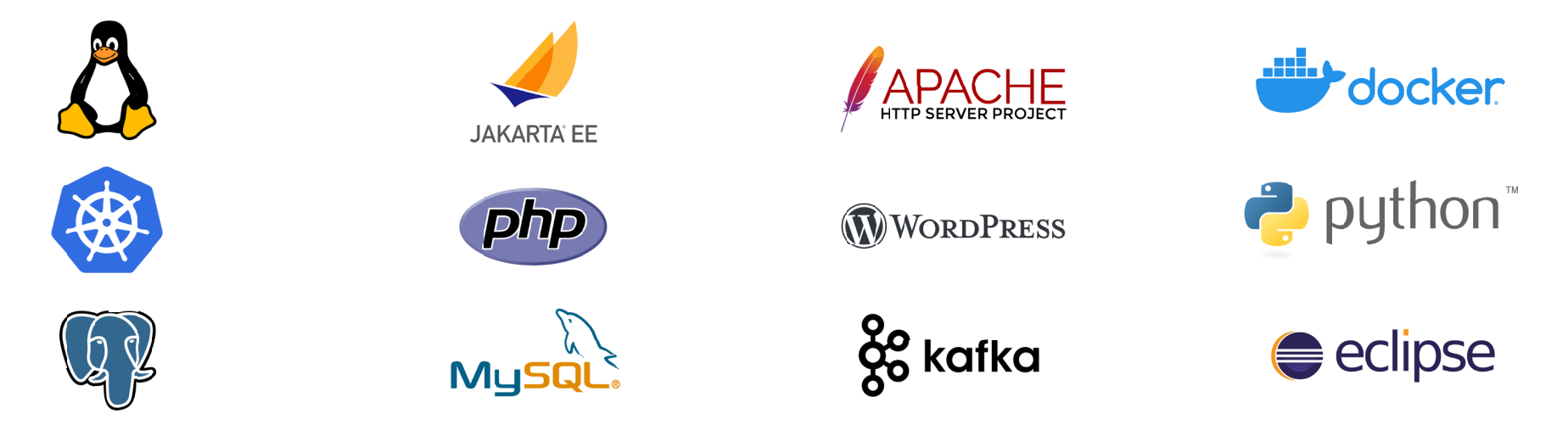
There are millions of FOSS projects but in the 2024 State of Open Source Report, respondents mentioned Linux, Jakarta EE, Apache Server, Docker, Kubernetes, PHP, WordPress, Python, PostgreSQL, MySQL, Kafka, and Eclipse IDE as among the most business-critical for enterprise. 

FOSS logos

Back to top

What Is Open Core Software?

Open core is a commercial model of software delivery where a company creates (or contributes heavily) to a “core” version of open source software, allowing users to freely adopt, adapt, and distribute it under an open source license, and then wraps that core version with advanced features, extensions, or enterprise-level scaling and availability under a proprietary license.  

This approach allows a company to leverage the collaborative nature of open source to build a community around the free version, which benefits from diverse contributions and widespread adoption. At the same time, they generate revenue by monetizing premium features aimed at larger organizations. This sometimes quickens time-to-market for a more commercially sustainable product.

Examples of open core software include Cloudera Data Platform, Oracle Linux, SUSE Linux, Redis, Grafana, Confluent Kafka, MongoDB, and GitLab.

Back to top

What Is Commercial Open Source Software?

Commercial open source vendors provide professional services for fully open source software. All features and functionality of that software remain open and freely available, and the company generates revenue through consulting, hosting, and support. 

Like open core, the commercial open source software approach benefits from the community-built software as a foundation. Although COSS companies likely contribute to the software, they don’t license their contributions separately. Instead, they provide value to their customers by professionalizing the implementation and adoption phases. 

RHEL and Rancher by SUSE are examples of COSS.

Get the Latest State of Open Source Report

The State of Open Source Report includes insights, analysis, and trends from a global survey of OSS users working in industries like finance, technology, retail, manufacturing, government, and more.

Download

Back to top

A Note About Open Source Definitions

The above definitions draw clean lines for the purposes of comparing and contrasting open source models; however, some companies employ multiple models across their portfolio. As companies grow and add products, this gets more prolific. In some cases, the lines drawn between these models (particularly COSS and open core) become progressively more gray.

A good example would be Red Hat Enterprise Linux, which is sold under a proprietary license; however, it is made up of code from two upstream open source products (Fedora and CentOS Stream). In this case, it borrows from the open core model, but there isn’t a true single free version that it extends.

Back to top

How to Choose Between Community Open Source, Open Core, and COSS 

All these options are based on the open source model, so they all have the potential to benefit from the power of a collaborative and transparent development process. When compared to proprietary internal development or purchased vendor software, all these OSS models can fundamentally reduce cost and time-to-market, while increasing security, stability, and innovation.

With each of these open models, there are costs. The cost of commercial options, either open core or COSS, are more obvious, and come in the form of license fees, maintenance contracts, hosting costs, support subscriptions, and consulting services. However, Free and Open Source Software (FOSS) also has associated costs that are more hidden. Adopting FOSS requires organizations to dedicate internal staff and infrastructure to hiring, acquiring, and maintaining the skills necessary to install, configure, upgrade, and contribute to sustainable development of the free-to-use software. It’s important to not forget about these shadow costs when considering FOSS for enterprise use cases.

The “F” in FOSS stands for free as in freedom, not absence of cost.

Knowing there are costs associated with all options may help organizations focus on the value and predictability of each of those costs. 

Here are some questions that can help steer an organization toward a defensible return on the investment:

  • What features are included in the commercial edition? Do I need those features? Are there alternatives that can achieve the same result?
  • What license(s) are associated with the software? Are they permissive, restrictive, or proprietary?
  • Does my organization have the skill and bandwidth to implement, maintain, and support the product?
  • How mature is the product and the backing community or commercial support vendor?
  • Is there a single commercial vendor that can serve all my open source software needs?

The table below illustrates, at a high level, some of the benefits and drawbacks worth considering: 

Type of Software

Benefits

Drawbacks

FOSS

  • Ability to try various solutions without vendor lock-in, thus a low-stakes entry
  • Information is shared readily within the community
  • Responsiveness of the community for patches and potential vulnerabilities
  • OSS can lack funding to maintain the software and fix security vulnerabilities
  • It may only provide a partial solution for your requirements
  • Integrating multiple OSS products can be challenging

Open Core

  • Often more regular updates and patches
  • SLA-backed support options, up to 24/7 for mission-critical services
  • Legal indemnification and liability during crises
  • Vendor lock-in can happen based on reliance on enterprise features
  • License changes could restrict your use
  • Restricted contribution models can diminish the value of the community
  • Could encounter a liability risk if the product is not upgraded
  • Enterprise features, hosting, and monitoring can be costly

COSS

  • SLA-backed support options, up to 24/7 for mission-critical services
  • Legal indemnification and liability during crises
  • Maintain full value of the community model
  • Value of expert knowledge when you need it, without the associated cost when you don’t
  • Adoption of additional complimentary FOSS packages may be required to achieve Open Core equivalent feature sets

Back to top

Final Thoughts

The decision to choose community open source software vs. open core or commercial open source software comes down to the depth and breadth of the projects, budgets, and use cases, as well as the scale of the environment(s).  There are situations where it makes sense to invest in commercial backing for open source development and other times when it might be better to implement a community-based solution. The three models outlined in this article layout a spectrum options that cover most needs.

Perhaps the most fundamental consideration is whether to:

  1. Spend valuable internal staff time on the installation, configuration, troubleshooting, training, maintenance, and support of the OSS that lays the foundation for the applications needed to deliver value to the business or downstream customers
    or
  2. Engage a vendor to ensure the organization has a secure, stable, and performant platform that enables internal staff to focus their time and energy on developing and maintaining domain expertise in delivering top quality applications needed to drive value for the business or downstream customers.

About Version 2 Digital

Version 2 Digital is one of the most dynamic IT companies in Asia. The company distributes a wide range of IT products across various areas including cyber security, cloud, data protection, end points, infrastructures, system monitoring, storage, networking, business productivity and communication products.

Through an extensive network of channels, point of sales, resellers, and partnership companies, Version 2 offers quality products and services which are highly acclaimed in the market. Its customers cover a wide spectrum which include Global 1000 enterprises, regional listed companies, different vertical industries, public utilities, Government, a vast number of successful SMEs, and consumers in various Asian cities.

About Perforce
The best run DevOps teams in the world choose Perforce. Perforce products are purpose-built to develop, build and maintain high-stakes applications. Companies can finally manage complexity, achieve speed without compromise, improve security and compliance, and run their DevOps toolchains with full integrity. With a global footprint spanning more than 80 countries and including over 75% of the Fortune 100, Perforce is trusted by the world’s leading brands to deliver solutions to even the toughest challenges. Accelerate technology delivery, with no shortcuts.

Scalefusion Expands Device Management Platform with ChromeOS Management Support

ProMobi Technologies today announced that Scalefusion- its leading unified endpoint management solution (UEM), has now launched support for ChromeOS device management. This addition reinforces Scalefusion’s commitment to offering a versatile multi-OS management platform that caters to the diverse needs of modern businesses.

With the integration of ChromeOS, Scalefusion enables IT administrators to streamline the management of ChromeOS devices alongside Windows, macOS, Android, and Linux, simplifying the complexities of multi-OS environments.

ChromeOS has seen significant adoption across industries, from education to enterprise, thanks to its balance of affordability, speed, and security. Recognizing this growing trend, Scalefusion’s new ChromeOS device management provides organizations with the ability to provision, secure, and monitor ChromeOS devices seamlessly through the same intuitive platform used for their existing device ecosystems.

Scalefusion’s ChromeOS management empowers businesses to streamline device management by integrating ChromeOS into their existing device strategy. With Scalefusion’s unified platform, IT administrators can boost productivity by providing a consistent, unified experience for users across all platforms. Whether organizations are deploying Chromebooks in educational settings or managing ChromeOS devices for remote workforces, Scalefusion makes it simple to provision, secure, and monitor these devices—all from a single dashboard. With the addition of ChromeFlex, businesses can repurpose existing PCs and Macs by converting them to ChromeOS devices, further extending the life of their hardware while maintaining seamless management through Scalefusion’s unified platform.

Sriram Kakarala, Chief Product Officer at Scalefusion, highlighted the importance of this new addition: “With the rise of ChromeOS in diverse sectors, we saw a clear opportunity to enhance the Scalefusion platform. By adding ChromeOS support, we are delivering on our promise to simplify device management for our customers, regardless of which operating systems they choose to deploy.”

Scalefusion’s integration aims to provide organizations with a straightforward approach to managing their multi-OS device ecosystems. Request a free trial of this release by setting up a demo of Scalefusion for ChromeOS here.

About Scalefusion

ProMobi Technologies provides a leading Unified Endpoint Management solution under the brand Scalefusion. Scalefusion UEM allows organizations to secure and manage endpoints, including smartphones, tablets, laptops, rugged devices, POS and digital signage, and apps and content. It supports the management of Android, iOS, macOS, Windows, Linux, and ChromeOS devices and ensures streamlined device management operations with Scalefusion Remote Troubleshooting.

More than 8000 companies worldwide are unlocking their true potential using Scalefusion, which is used across various industries, such as Transportation & Logistics, Retail, Education, Healthcare, Manufacturing, Construction & Real Estate, Hospitality, Software & Telecom, Financial Services, and others.

About Version 2 Digital

Version 2 Digital is one of the most dynamic IT companies in Asia. The company distributes a wide range of IT products across various areas including cyber security, cloud, data protection, end points, infrastructures, system monitoring, storage, networking, business productivity and communication products.

Through an extensive network of channels, point of sales, resellers, and partnership companies, Version 2 offers quality products and services which are highly acclaimed in the market. Its customers cover a wide spectrum which include Global 1000 enterprises, regional listed companies, different vertical industries, public utilities, Government, a vast number of successful SMEs, and consumers in various Asian cities.

About Scalefusion
Scalefusion’s company DNA is built on the foundation of providing world-class customer service and making endpoint management simple and effortless for businesses globally. We prioritize the needs and feedback of our customers, making sure that they are at the forefront of all decision-making processes. We are dedicated to providing comprehensive customer support services, and place emphasis on customer-centric thinking throughout the organization.

×

Hello!

Click one of our contacts below to chat on WhatsApp

×