Skip to content

ESET Research discovers scheme to steal cryptocurrency from Android and iPhone users

  • This sophisticated malicious cryptocurrency scheme targets mobile devices using Android or iOS operating systems (iPhones).
  • The malicious apps were distributed through fake websites, mimicking legitimate wallet services and promoted with ads placed on legitimate sites using misleading articles, and via Telegram and Facebook groups.  
  • The main goal of this scheme is to steal cryptocurrency funds, especially those of Chinese users.  
  • ESET Research discovered over 40 copycat websites of popular cryptocurrency wallets and believes that it is likely the work of a criminal group.
  • The malicious app behaves differently depending on the operating system it is installed on.
  • With cryptocurrencies gaining popularity and the apparent leak of the source code of this threat, ESET expects these techniques to spread to other markets.

BRATISLAVA, KOŠICE — March 24, 2022 —  ESET Research discovered and backtracked a sophisticated malicious cryptocurrency scheme that targets mobile devices using Android or iOS operating systems (iPhones). Malicious apps are distributed through fake websites, mimicking legitimate wallet services such as Metamask, Coinbase, Trust Wallet, TokenPocket, Bitpie, imToken, and OneKey. These fake websites are promoted with ads placed on legitimate sites using misleading articles. Furthermore, the threat actors are recruiting intermediaries through Telegram and Facebook groups to further distribute this malicious scheme. The main goal of the malicious apps is to steal users’ funds and until now ESET Research has seen this scheme mainly targeting Chinese users. As cryptocurrencies are gaining popularity, ESET expects these techniques to spread to other markets.

Starting in May 2021, our research uncovered dozens of trojanized cryptocurrency wallet apps. This is a sophisticated attack vector since the malware’s author carried out an in-depth analysis of the legitimate applications misused in this scheme, enabling the insertion of their own malicious code into places where it would be hard to detect while also making sure that such crafted apps had the same functionality as the originals. At this point, ESET Research believes that this is likely the work of one criminal group.

“These malicious apps also represent another threat to victims, as some of them send secret victim seed phrases to the attackers’ server using an unsecured HTTP connection. This means that victims’ funds could be stolen not only by the operator of this scheme, but also by a different attacker eavesdropping on the same network,” says Lukáš Štefanko, ESET researcher who discovered the scheme. “We also discovered 13 malicious apps impersonating the Jaxx Liberty wallet. These apps were available on the Google Play store,” he adds.

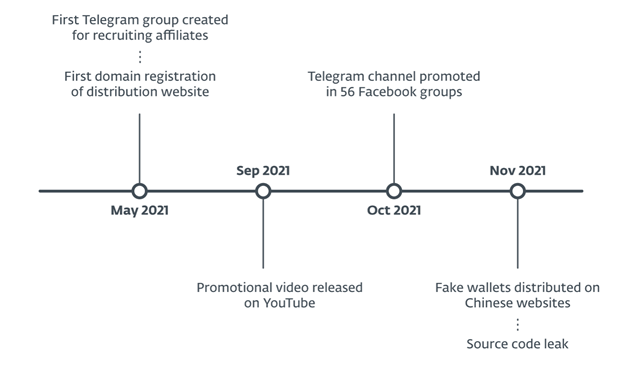
On Telegram, a free and popular multiplatform messaging app with enhanced privacy and encryption features, ESET found dozens of groups promoting malicious copies of cryptocurrency mobile wallets. We assume these groups were created by the threat actor behind this scheme looking for further distribution partners and this activity is ongoing since May 2021. Starting in October 2021, we found that these Telegram groups were shared and promoted in at least 56 Facebook groups with the same goal – to search for more distribution partners.  In November 2021, we spotted the distribution of malicious wallets, using two legitimate Chinese websites.

Besides these distribution vectors, we discovered dozens of other counterfeit wallet websites that are targeting mobile users exclusively. Visiting one of the websites might lead a potential victim to download a trojanized wallet app for Android or the iOS platform.

The malicious app behaves differently depending on the operating system it was installed on. On Android, it appears to target new cryptocurrency users who do not yet have a legitimate wallet application installed on their devices. On iOS, the victim can have both versions installed – the legitimate one from the App Store and the malicious one from a website.

Regarding iOS, these malicious apps are not available on the App Store; they must be downloaded and installed using configuration profiles, which add an arbitrary trusted code-signing certificate.  With regard to Google Play, based on our request as a Google App Defense Alliance partner, in January 2022, Google removed 13 malicious applications found on the official store.

Moreover, it seems that the source code of this threat has been leaked and shared on a few Chinese websites, which might attract various threat actors and spread this threat even further.

“At the time of publication, the price of bitcoin has decreased almost by half from its all-time high about four months ago. For cryptocurrency investors, this might be a time either to panic and withdraw their funds, or for newcomers to jump at this chance and buy cryptocurrency for a lower price. If you belong to one of these groups, you should pick carefully which mobile app to use for managing your funds,” advises Štefanko.

For more technical information, check out the blogpost “Crypto malware in patched wallets targeting Android and iOS devices” on WeLiveSecurity. Make sure to follow ESET Research on Twitter for the latest news from ESET Research.

Timeline of the scheme

About Version 2 Digital

Version 2 Digital is one of the most dynamic IT companies in Asia. The company distributes a wide range of IT products across various areas including cyber security, cloud, data protection, end points, infrastructures, system monitoring, storage, networking, business productivity and communication products.

Through an extensive network of channels, point of sales, resellers, and partnership companies, Version 2 offers quality products and services which are highly acclaimed in the market. Its customers cover a wide spectrum which include Global 1000 enterprises, regional listed companies, different vertical industries, public utilities, Government, a vast number of successful SMEs, and consumers in various Asian cities.

About ESET
For 30 years, ESET® has been developing industry-leading IT security software and services for businesses and consumers worldwide. With solutions ranging from endpoint security to encryption and two-factor authentication, ESET’s high-performing, easy-to-use products give individuals and businesses the peace of mind to enjoy the full potential of their technology. ESET unobtrusively protects and monitors 24/7, updating defenses in real time to keep users safe and businesses running without interruption. Evolving threats require an evolving IT security company. Backed by R&D facilities worldwide, ESET became the first IT security company to earn 100 Virus Bulletin VB100 awards, identifying every single “in-the-wild” malware without interruption since 2003.

Steps towards protecting children online

Biden turns to Congress to limit targeted social media ads for kids.

As the New York Times reports, President Biden is eager to shield children from obscene internet content presented in ads. Moreover, he is planning a broader campaign for the mental health of the younger generation, as he reveals in his first State of the Union speech.

“It’s time to strengthen privacy protections, ban targeted advertising to children, demand tech companies stop collecting personal data on our children,” he declares.

The interaction of kids with social media can be extremely harmful and damaging. Frances Haugen, a former Facebook employee, leaked some of the documents that state Meta was aware they made teenagers feel bad about themselves. Extreme and obscene content is shown to young people, which causes mental illnesses by diminishing kids’ self-worth.

One of the solutions Biden suggests is to ban targeted ads aimed at children, Bloomberg states. The process will take some time to obtain funding and become a full legal act, and meanwhile, you could protect your kids or yourself from the harmful side of the internet in a couple of clicks with a web filtering solution.

SafeDNS offers different kinds of plans tailored to your needs.

Get your 15-day Free Trial and see for yourself!

About Version 2 Digital

Version 2 Digital is one of the most dynamic IT companies in Asia. The company distributes a wide range of IT products across various areas including cyber security, cloud, data protection, end points, infrastructures, system monitoring, storage, networking, business productivity and communication products.

Through an extensive network of channels, point of sales, resellers, and partnership companies, Version 2 offers quality products and services which are highly acclaimed in the market. Its customers cover a wide spectrum which include Global 1000 enterprises, regional listed companies, different vertical industries, public utilities, Government, a vast number of successful SMEs, and consumers in various Asian cities.

About SafeDNS
SafeDNS breathes to make the internet safer for people all over the world with solutions ranging from AI & ML-powered web filtering, cybersecurity to threat intelligence. Moreover, we strive to create the next generation of safer and more affordable web filtering products. Endlessly working to improve our users’ online protection, SafeDNS has also launched an innovative system powered by continuous machine learning and user behavior analytics to detect botnets and malicious websites.

Cyber Security Essential #2: 802.1x Network Access Control

Why is 802.1x Network Access Control Essential?

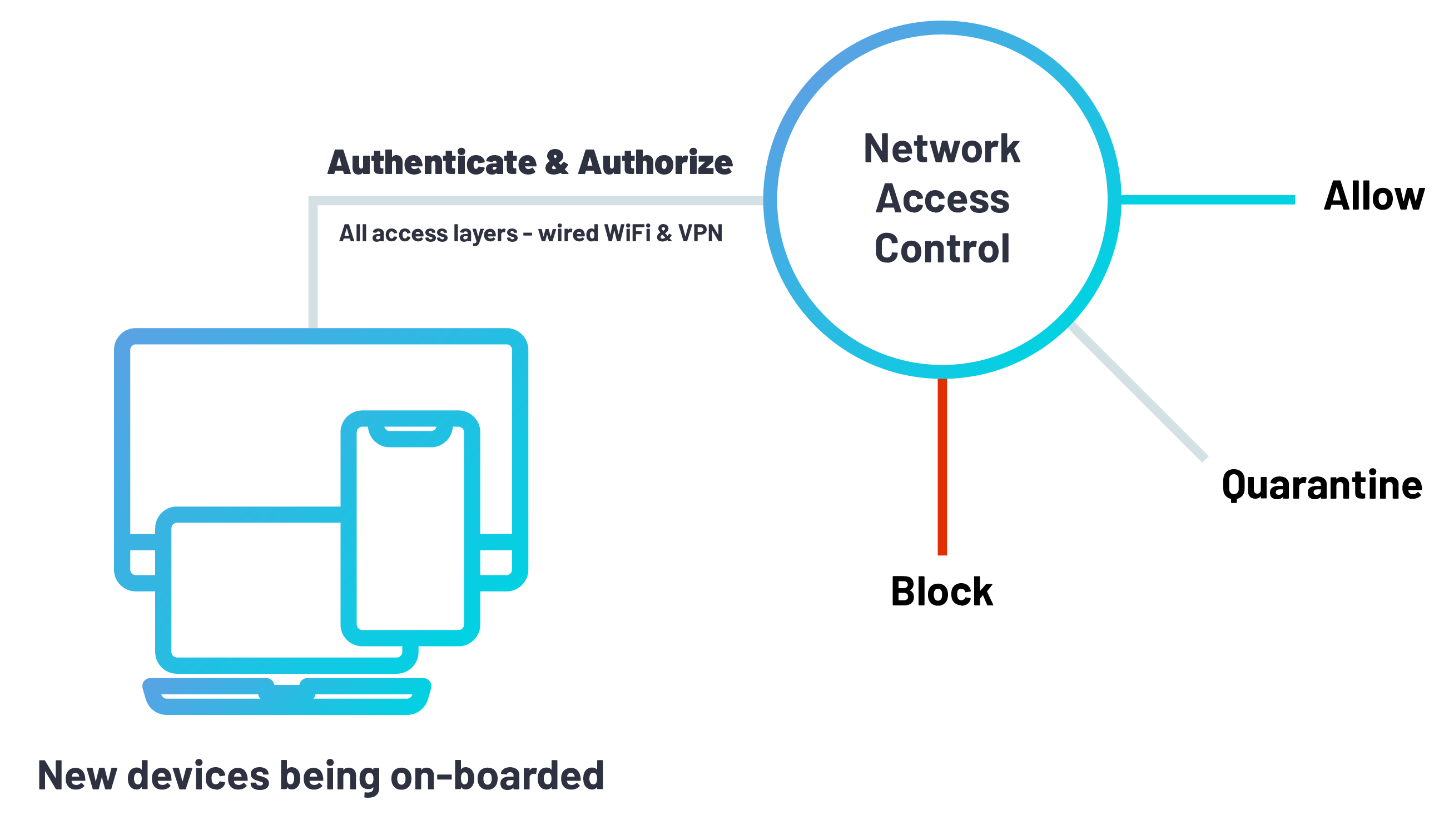
802.1x network access control is a technology that enables organizations to enact its own unique policy for how and when endpoints (desktops, laptops, smartphones, etc.) can connect to their corporate networks. NAC solutions are typically designed to allow IT security teams to gain visibility of each device trying to access its network, and specifically the type of device and access layer being used (i.e. wifi, wired ports, or VPN).

Today, 802.1x network access control provides a number of powerful features on top of what it was originally designed for years ago. These include security posture assessments for endpoints, which pinpoints any associated endpoint risks, allowing network security administrators to control network access based on their organization’s risk tolerance threshold.

With the rise of cloud computing, remote workforces, bring-your-own-device (BYOD) policies, and the internet of things (IoT), network access control has become a much more critical part of the larger cybersecurity technology stack at most companies. The technology itself has also evolved quite drastically in response to these emerging trends and their impact on networking and ensuring network security.

Key Functionality to Consider When Deploying a NAC Solution

Network Visibility & Device Discovery

A NAC solution discovers and identifies all devices/users in the network before they are granted network access, requiring continuous monitoring of the network and devices connected to it. The system enables the discovery, classification and assessment of every device connected to the network. Configuration and security state of every device is monitored, ensuring that the network and devices are compliant to the organizational security policy.

Full Access Layer Coverage

As today’s networks explode in size and scope, particularly with remote workforces on the rise, it’s imperative that your 802.1x network access control solution can manage access control across all existing access layers. This includes the obvious – wired ports and WiFi. It also must be able to manage the various remote access methods used within your organization. These may include VPN, Teleworker Gateways, and beyond.

Authentication Services

Traditionally, enterprises have enabled network authentication via usernames and passwords. As we now know today, this method of authentication can be easily compromised by bad actors, making it no longer sufficiently secure for enforcing network access control. Any NAC worth its salt should offer several methods for authentication, including: role-based, MAC authentication bypass (MAB), and certificate authority.

Device On-Boarding

Business units and even departments (think Finance & Accounting, for example) often have their own VLANs since they’re dealing with very sensitive, confidential data. The task of setting up such VLANs and onboarding new devices is just one of dozens of tasks overseen by frequently overburdened IT teams. So, if not done correctly at first, it can open the door to potential network vulnerabilities, such as a person gaining access to a part of the network he/she should not have the privileges for. At a small scale, managing access manually is often sufficient. For larger organizations, however, this just isn’t sustainable. As a result, many large organizations that don’t have a secure onboarding process will often compromise on network security hygiene.

Policy Configuration

Network security teams define and activate access control policies to control device access to the corporate network, which is ultimately based on the device authorization state. Once a device is authorized for network access, a network access policy determines which specific virtual LAN (VLAN) that device or user is directed to. On top of that, the policy also defines, for each type of authorization violation, whether to deny entry or whether to quarantine the device by assigning it to a specific VLAN or apply an access control list (ACL).

Endpoint Risk Monitoring

Your corporate network is only as strong as its weakest security link. This means continuous risk posture assessment is paramount. By continually monitoring the network, your network and security teams can stay ahead of cyberattacks with the ability to identify new risks in real-time, react to these risks, and take action. In a world with ever-expanding boundaries and an exponential increase in types of endpoints, continuous risk posture assessment must function no matter location, device type, or the type of data being transferred.

Device Remediation

Having a rapid remediation plan in place will not only help prevent further damage or the lateral spread of attacks but also allow for business continuity. Effective endpoint remediation consists of:

  • Automated Patch Updates Across the Network – Enforce necessary patch, anti-virus, operating system, and application updates across managed and unmanaged endpoints.
  • Immediate Incident Response – Contain ransomware events by remotely disconnecting endpoints from the network without the need for manual intervention.
  • Armed Incident Response Teams – Arm IT professionals and network admins with the ability to remotely take actions on employees’ devices. The proliferation of IoT devices over the last decade has prompted a growing number of network security concerns. With all of these devices – printers, CCTV cameras, ATMs, MRI machines, etc. – now connected to their respective networks, it’s exponentially expanding corporate threat surfaces.

Compliance Enforcement

NAC is used to enforce regulatory policies and maintain compliance across the organization. In practice, this typically means:

  • Understanding how mobile, BYOD, and IoT devices will affect and transform not only the organization but the industry and implementing the right processes and tools control them.
  • Tracking any network related device or program in real-time via a centrally secured platform providing full and actionable visibility.
  • Controlling access to the network and to cloud applications, even based on the geographical locations of users.
  • Ensuring that the business is in compliance with governmental regulations like SOX, PCI DSS, HIPPA, FINRA, FISMA, GLBA among others. Strict compliance will provide legitimacy with clients and partners.

About Version 2 Digital

Version 2 Digital is one of the most dynamic IT companies in Asia. The company distributes a wide range of IT products across various areas including cyber security, cloud, data protection, end points, infrastructures, system monitoring, storage, networking, business productivity and communication products.

Through an extensive network of channels, point of sales, resellers, and partnership companies, Version 2 offers quality products and services which are highly acclaimed in the market. Its customers cover a wide spectrum which include Global 1000 enterprises, regional listed companies, different vertical industries, public utilities, Government, a vast number of successful SMEs, and consumers in various Asian cities.

About Portnox
Portnox provides simple-to-deploy, operate and maintain network access control, security and visibility solutions. Portnox software can be deployed on-premises, as a cloud-delivered service, or in hybrid mode. It is agentless and vendor-agnostic, allowing organizations to maximize their existing network and cybersecurity investments. Hundreds of enterprises around the world rely on Portnox for network visibility, cybersecurity policy enforcement and regulatory compliance. The company has been recognized for its innovations by Info Security Products Guide, Cyber Security Excellence Awards, IoT Innovator Awards, Computing Security Awards, Best of Interop ITX and Cyber Defense Magazine. Portnox has offices in the U.S., Europe and Asia. For information visit http://www.portnox.com, and follow us on Twitter and LinkedIn.。

IT Service Management (ITSM): A Complete Guide

Currently, most companies rely on their Information Technology department and IT service management (ITSM) to meet the demands of users and become increasingly competitive.

But what is this strategy about after all? In practice, the term IT Service Management (ITSM) refers to the processes and resources used by IT teams to deliver IT services in an agile and effective manner, positively impacting a company’s performance. 

Beyond the delivery of services and support, this set of practices prioritizes the needs of users and the services provided, seeking continuous improvement rather than taking only IT systems into account.

In this post, we bring you a complete guide, with everything you need to know about IT Service Management (ITSM) through the following information:

  • What Is IT Service Management (ITSM)?
  • Benefits and Importance of IT Service Management (ITSM)
  • Key IT Service Management (ITSM) Processes
  • ITSM, ITIL, DevOps: Understand These Abbreviations
  • What Is the Difference Between ITSM And ITIL?
    1. Services Related to ITSM
  • Agile Service Management
  1. Workforce Training: Understand this Approach
  2. ITSM Resources 

Read it until the end!

  • What Is IT Service Management (ITSM)?

IT Service Management (ITSM) needs a strategic approach focused on the end-user. ITSM strategies contribute to creating an IT organization that matches the needs of users and their businesses.

In practice, IT service management (ITMS) consists of the strategies used by companies that offer IT services to their users. Therefore, technologies, processes, and people are essential in ITSM.

This mechanism seeks to understand the needs of the end-user in order to meet them. This involves the design of IT systems with efficient demand management, implementation of processes, hardware, and software that improve services. 

That is, ITSM functions provide the development of IT systems capable of meeting expectations and accommodating evolving technologies.

An institution that uses IT Service Management (ITSM) can effectively offer responsive services with more availability, at an affordable price. This solution also contributes to improving employee productivity and consumer experience, as well as optimizing the assessment and improvement of services.

  • Benefits and Importance of IT Service Management (ITSM)

All companies depend on IT service management (ISTM) to some extent. This is what enables simplified management of problems, service requests, incidents, changes, and IT assets, among other actions.

ITSM helps IT professionals, and the principles of service management favor a company as a whole, ensuring more efficiency and better performance. 

Moreover, structured approaches in IT service management (ISTM) have the purpose of aligning information technology with business goals and standardizing services, considering resources, budgets, and results. It also allows you to reduce risks and expenses and improve the consumer experience. Its benefits include:

  • The possibility of aligning IT teams with the company’s priorities, using metrics that calculate their success; 
  • It enables different departments to collaborate;
  • It unites information technology professionals to development teams through facilitated project management approaches;
  • It also makes it possible to qualify IT professionals to share information that guarantees constant improvements; 
  • It optimizes the coordination of requests, ensuring a more efficient service;
  • It directs the focus of customer services through self-service and optimized processes;
  • It allows one to respond to incidents quickly and prevent future inconvenience.

  • Key IT Service Management (ITSM) Processes

Recently, ITIL’s version 4 has stopped recommending ITSM “processes”, replacing them with ITSM “practices”. This term change explains that certain elements must be considered to achieve a holistic view of the work. Culture, technology, and information and data management are among them.

However, for us, what matters is not the change of terminology, but the use of the best resources by information technology teams to ensure the efficiency of services. The following recommended actions stand out: 

  • Service Request Management

Service request management must be repeated, after all, this is what makes it possible to deal with different requests, such as access to an application, hardware update, and software improvement. This workflow is capable of automating tasks and qualifying customers to accomplish them.

  • Knowledge Management

Knowledge management is the possibility of generating, using, sharing, and managing the knowledge and data of a given institution. It consists of a multidisciplinary approach that allows achieving the company’s goals through good use of knowledge.

  • IT Asset Management

This process aims to allow the assets of a company to be deployed, maintained, accounted for, updated, and discarded at the right time. In short, its function is to ensure the tracking and use of valuable items by a company, whether they are tangible or intangible.

  • Incident Management

Here, we refer to a process that has the function of responding to incidents, such as service interruption. Taking all software services used by companies today into account, there are many chances of failure. For this reason, this process is used in order to solve problems quickly.

When an incident occurs, IT teams need a solution that enables them to respond effectively so that recovery is agile. In this sense, it is necessary to communicate with all stakeholders, remove obstacles to solve the incident and improve the service to avoid further downtime in the future. 

Nevertheless, incident management aims to resume services quickly, without harming the core business. Therefore, it may depend on a temporary solution, trying to identify the source of the problem later on. 

  • Problem Management

In this case, the issue is to detect and manage the reasons for incidents in an IT service. That is, problem management is not limited to identifying and correcting incidents, but to understanding their reasons and eliminating them.

  • Change Management

Change management aims to review the IT system before the requested change takes place in the network of an institution, reducing downtime in the operation. In other words, this process has the function of ensuring these changes do not affect its performance. Additionally, network changes are intended to eliminate vulnerabilities, upgrade a component to optimize performance or replace an obsolete or defective component.

There are three types of changes in the IT system or service:

  • Standard changes, which consist of routine changes and obey a predefined process of risk assessment and pre-approval; 
  • Normal changes, which do not have predefined processes and must involve a risk assessment and an approved implementation plan before making the changes to the network and;
  • Emergency changes, which are necessary when unforeseen interruptions occur, which threaten the network.
  • Configuration Management

Configuration management aims to ensure consistency of performance, functional and physical attributes of a product with its requirements, aesthetics, and operational information.

Also known as IT automation, it allows the configuration of computer system resources, servers, and other assets to be efficient and reliable, most of the time, through a high level of automation. 

This is because automation makes it possible to rely on redundancies that contribute to avoiding problems caused by human failures and keeping assets in good condition. 

Configuration management applies to systems such as: 

  • Servers;
  • Databases and other storage systems;
  • Operating system;
  • Network;
  • Forms;
  • Programs.

The configuration of these systems is extremely important for the good performance of your company, since it is the configuration that guarantees its operation. Other advantages of management include:

  • Decreased number of security interruptions and breaches through the visibility and tracking of changes in your systems;
  • Cost reduction, as duplication of technology equipment is avoided;
  • Improved experience for IT teams and users, immediately identifying and correcting inappropriate configurations that may impair the performance of the equipment;
  • Control of processes through the enforcement of policies and procedures related to asset identification, auditing, and status monitoring;
  • Faster troubleshooting, better service quality, and lower software engineering costs;
  • Effective change management, which allows avoiding problems;
  • Agile recovery of service when there is downtime; and
  • Better release management and transparent status accounting. 
  • ITSM, ITIL, DevOps: Understand These Abbreviations

There are several structures used to guide the work of IT teams. For this reason, there are several abbreviations you need to know about the structures that most influence the work of these professionals. Here they are:

  • ITSM

IT Service Management (ITSM) refers to the delivery of IT services to consumers. This approach can be influenced by DevOps concepts and planned in order to align with ITIL practices.

  • ITIL

This is the most frequently accepted approach to ITSM. It focuses on practices adopted to align IT services with the demands of a business. It can contribute to companies adapting to changes and continuous scales. 

ITIL 4, its latest update, guides IT professionals to a holistic, commercial, and audience-valued benchmark, stimulating a more flexible approach based on teamwork. Its guiding principles recommend simplicity, collaboration, and feedback.

Often, this approach is misunderstood as a set of “rules” rather than guidelines that can be interpreted. 

  • DevOps

DevOps ensures IT services are delivered in a practical and agile manner, as well as improving collaboration between development professionals and IT operations so that software is created and tested securely. Its benefits include: trust, the ability to solve critical problems quickly, faster software releases, and better management of unplanned work. 

The DevOps concept is based on collaboration between teams that previously worked in isolation from each other. It is about working collaboratively. 

Generally, ITSM and DevOps are launched as opposing options. That is, it is not usually very clear what these tools offer and how they can work together.

However, if your team intends to work smarter and faster, without giving up the process and control, they need to use ITSM and DevOps resources. 

This is because ITSM can be used to promote agility and meet the different demands of companies. DevOps benefits the execution of tasks, promoting collaboration. 

  • What Is the Difference Between ITSM And ITIL?

Information Technology Infrastructure Library (ITIL) refers to best practices for IT service management (ITSM). Its latest version is ITIL 4, launched in 2019, which promotes collaboration as a way to provide agility and flexibility for organizations. ITIL 4 is based on six processes, namely:

  • Plan: strategic planning should consider three aspects: user demands, organization limitations, and future directions;
  • Engage: All stakeholders should have their demands understood. For this, user experience needs must be interpreted in order to meet their expectations with IT services;
  • Design and Transition: the design must also be prepared and take into account the needs of the user, in addition to the company’s strategies;
  • Obtain and Build: it is possible to create a new service internally or obtain it, this will depend on the technologies available to meet the user needs;
  • Delivery and Support: after creating the service and making it available to users, IT support must be offered to enable the effective use of the solution;
  • Improve: an efficient IT service management (ITSM) enables the continuous monitoring and improvement of the services offered.
  1. Services Related to ITSM

An example of an IT Service Management (ITSM) related service is when you access an online help center and have your questions answered by a chatbot. These virtual agents are programmed to respond to frequent user inquiries, such as:

  • How do I reset my password?
  • Why is my Internet signal fluctuating?

In addition to answering questions like these, IT Service Management (ITSM) allows one to:

  • Respond to requests based on machine learning;
  • Visualize data in order to prioritize resources and optimize performance;
  • Manage incidents and any problems;
  • Restore services in an agile manner, if necessary;
  • Manage assets.
  1. Agile Service Management

Agile Service Management is a set of values that contribute to making organizations more flexible. Therefore, Agile acts as a solution for the time-consuming development processes, which can delay the release of new features. 

The Agile Manifesto for Software Development, launched in 2001, presents the following values:

  • Individuals and interactions about processes and tools;
  • Software that works on complete documentation;
  • Customer collaboration on contract negotiation; and
  • Response to change rather than following a plan.

The concept of Agile has gained relevance in other areas, such as sales. This is because people started to apply its main values in all types of businesses, resulting in numerous versions of the Agile manifesto, such as Modern Agile.

In addition to the four values, an Agile Service Management has 12 principles. These are:

  • Meet the expectations of the public through the early and continuous delivery of valuable work;
  • Split complex operations into simpler tasks that can be completed quickly;
  • Understand that the best services are performed by self-organized teams;
  • Provide employees with the environment and resources they need and trust in their ability to execute the project;
  • Carry out processes that enable sustainable efforts;
  • Maintain a constant pace for the completion of a job;
  • Contemplate the change of requirements, even at the end of a job;
  • Daily meetings of the teams throughout the project;
  • Reflect on how to make the operation more effective by the team, followed by adjustments to achieve this goal;
  • Measure the evolution by the amount of work completed;
  • Constantly seek excellence; and
  • Leverage changes to gain competitive advantages.

The goal of the Agile Manifesto is to ensure quality by creating products that meet the demands of the public and meet their expectations. Its 12 principles have the function of ensuring a work focused on the user and able to adapt to the changes in their needs and demands of the market. 

Now that you know what Agile is, you may be wondering how it is translated into IT service management. In practice, for the IT department to act in an agile manner, it must follow the following guidelines:

  • Involve consumers in the design of services and processes;
  • When launching a new solution, launch a version for a small audience and the final version according to its feedback;
  • Search the processes for the user, removing unnecessary steps;
  • Authorize its IT team to go beyond standardized processes to achieve more efficient solutions.

Also, you need to keep in mind the Agile approach to software development is committed to designing a program with regular increments, offering new versions to users after brief periods of work, which are called sprints.

  1. Workforce Training: Understand this Approach

One can have more satisfied users by using innovative technology through workforce training. This concept assumes customers want to actively resolve their demands through their own devices and applications.

In this context, the role of the IT department is to provide everything the user needs to solve their problems and be satisfied.

In addition, the training of the workforce aims to engage employees, after all, this is what guarantees productivity, customer satisfaction, and good performance for the company.

However, in order to ensure the motivation of employees through workforce training, one needs to invest in technology, processes, and IT staff.

  1. ITSM Resources 

Some features cannot be overlooked when it comes to ITSM software and tools. Here is what you should consider:

  • User-friendliness

For all departments of a company to take advantage of ITSM features, the tools must be intuitive and easy to use. For this, it is recommended to adopt a self-service portal that provides the necessary information to users.

  • Collaboration

To achieve the desired effect, IT Service Management (ITSM) must stimulate collaboration between different sectors. Thus, services will gain efficiency and agility.

  • Flexibility

Over time, a company grows, develops, and changes. Therefore, changes should also occur with your IT Service Management (ITSM). For that reason, its tools and software must be planned to adapt to future realities.

  • Easy Setup and Activation

The first obstacle faced by those who need to adhere to software or tool is often a complex setup and activation mode. So, we also recommend the use of self-service portals, as well as efficient support.

This content has explained everything about IT Service Management (ITSM), its importance, functionality, and benefits. If you know someone also interested in the topic, please share our article.

About Version 2 Digital

Version 2 Digital is one of the most dynamic IT companies in Asia. The company distributes a wide range of IT products across various areas including cyber security, cloud, data protection, end points, infrastructures, system monitoring, storage, networking, business productivity and communication products.

Through an extensive network of channels, point of sales, resellers, and partnership companies, Version 2 offers quality products and services which are highly acclaimed in the market. Its customers cover a wide spectrum which include Global 1000 enterprises, regional listed companies, different vertical industries, public utilities, Government, a vast number of successful SMEs, and consumers in various Asian cities.

About Segura®
Segura® strive to ensure the sovereignty of companies over actions and privileged information. To this end, we work against data theft through traceability of administrator actions on networks, servers, databases and a multitude of devices. In addition, we pursue compliance with auditing requirements and the most demanding standards, including PCI DSS, Sarbanes-Oxley, ISO 27001 and HIPAA.

×

Hello!

Click one of our contacts below to chat on WhatsApp

×