Skip to content

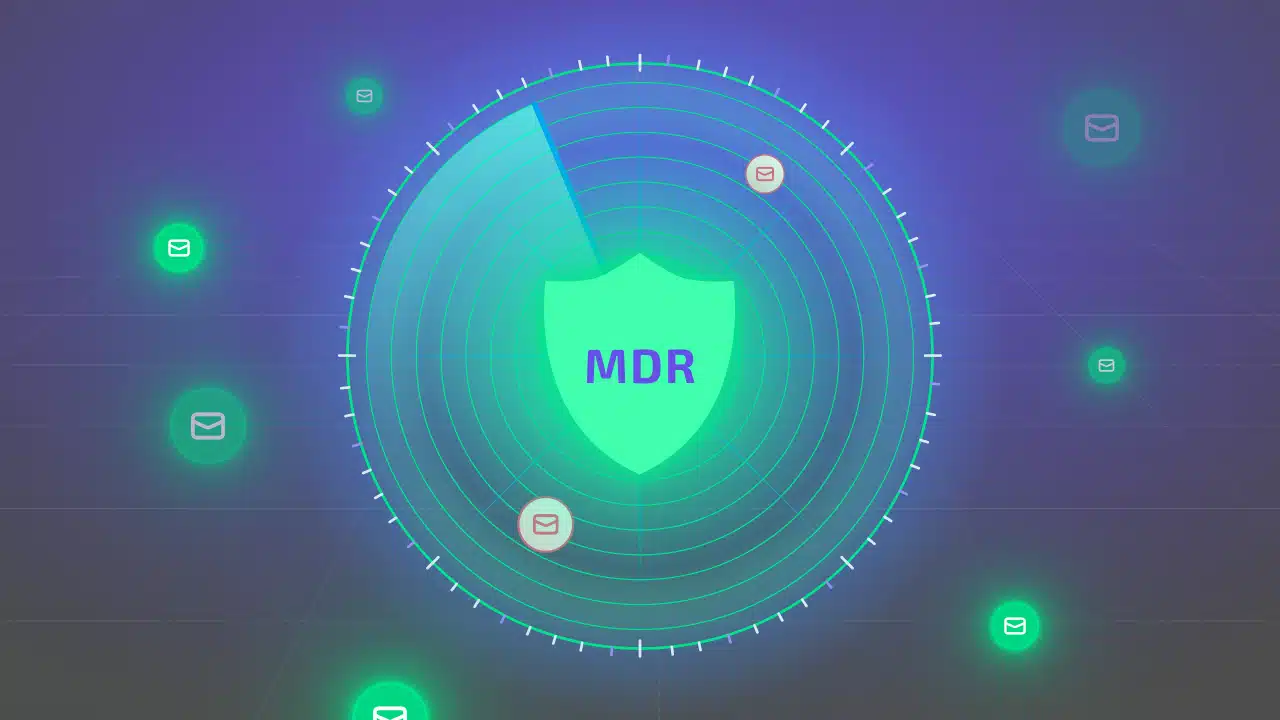
What Is MDR in Cybersecurity?

As new technologies emerge and cyber criminals become more capable, businesses face increasingly sophisticated threats that can bypass traditional security measures.

However, managed detection and response (MDR) has emerged as a comprehensive solution to address these challenges, from early threat detection to the immediate remediation of breaches.

MDR combines advanced technology with human expertise to provide round-the-clock monitoring, threat hunting, and incident response capabilities that help organizations stay one step ahead of cybercriminals.

In this article, we’ll discuss MDR, how it works, and why it’s becoming an essential component of modern cybersecurity strategies for businesses of all sizes.

So, what is MDR in cybersecurity, and how can it help keep your organization safe from cyber criminals and their attacks on your finances and vital information?

Key Takeaways

  • MDR combines advanced tools, human expertise, and proactive measures to defend against sophisticated threats.
  • Unlike EDR and XDR, MDR offers comprehensive coverage, including endpoint monitoring, network security, and threat intelligence.
  • MDR’s proactive threat hunting and real-time responses minimize the impact of incidents like ransomware and data breaches.
  • Customized reporting ensures actionable insights, aiding in compliance and improving overall security posture.
  • For MSPs, MDR is a cost-effective way to offer premium cybersecurity solutions without significant upfront investments.
  • A successful MDR strategy requires clear objectives, strong provider partnerships, and continuous performance optimization.

What Is MDR in Cyber Security?

Managed detection and response (MDR) is a cybersecurity service that delivers continuous monitoring, threat detection, and incident response through cutting-edge technology and expert human analysis.

MDR providers use advanced tools, such as endpoint detection and response (EDR), security information and event management (SIEM), and threat intelligence, to identify potential security incidents in real time.

When a threat is detected, MDR analysts investigate the issue and take swift action to contain and remediate the problem, minimizing the impact on the organization.

This proactive approach to cybersecurity helps businesses detect and respond to threats that might otherwise go unnoticed, reducing the risk of data breaches, financial losses, and reputational damage.

Let’s move on and discuss how MDR works and its main components.

How Does MDR Work?

MDR providers employ a multifaceted approach to protecting your organization from cyberthreats. They combine advanced technologies, expert human analysis, and proven processes, such as 24/7 threat monitoring, proactive threat hunting, and incident remediation, to deliver comprehensive security coverage.

Here are the main components of a robust MDR system.

24/7 Threat Monitoring and Response

MDR services provide constant monitoring of endpoints, networks, and cloud environments to detect and address security incidents in real time, minimizing risks of disruption.

When alerts are triggered, analysts validate threats, assess their scope, and swiftly contain them using predefined protocols, ensuring minimal operational impact. This allows your business to remain focused on its goals while maintaining robust security.

Proactive Threat Hunting

MDR services go beyond reactive security by actively searching for hidden threats. Combining automation with expert analysis, they identify advanced persistent threats, insider risks, and zero-day attacks. By analyzing anomalies and patterns, MDR uncovers sophisticated attacks early, preventing breaches and costly disruptions.

Incident Response and Remediation

In the event of a security incident, MDR services execute predefined response protocols to rapidly contain threats, eliminate malicious elements, and restore systems.

They also perform root cause analysis, document findings, and implement measures to prevent future incidents, helping your organization recover quickly with a stronger security framework.

Utilizing Advanced Technologies

MDR providers use advanced tools like EDR, SIEM, UEBA, and threat intelligence platforms to enhance threat detection and response capabilities.

Endpoint Detection and Response (EDR)

EDR tools monitor endpoint activity in real time, detecting suspicious actions like unauthorized access or abnormal file executions. They enable quick root cause analysis and immediate actions, such as isolating compromised devices or reversing malicious changes.

Security Information and Event Management (SIEM)

SIEM systems collect and correlate log data from firewalls, servers, and applications to identify patterns and anomalies that may indicate security events. This helps analysts prioritize alerts and investigate threats efficiently.

User and Entity Behavior Analytics (UEBA)

UEBA tools use machine learning to analyze user and entity behavior. By establishing a baseline of normal activity, they flag unusual actions, such as privilege abuse or unexpected access to sensitive files, indicating potential threats.

Threat Intelligence Platforms

These platforms compile global data on emerging attack tactics and techniques. MDR teams use this intelligence to anticipate threats, refine defenses, and deliver insights tailored to your organization’s specific risks.

Customized Reports: Clear Insights and Recommendations

MDR services deliver customized reports offering detailed analyses, performance metrics, actionable recommendations, and compliance support.

Incident Analysis

Reports detail the timeline and resolution of incidents, explaining how threats were detected, tactics used, and mitigation steps taken.

Performance Metrics

Key metrics, like detection and response times, highlight trends and vulnerabilities, helping strengthen defenses.

Actionable Recommendations

Reports provide tailored advice, such as enhancing endpoint security or improving employee training, for focused improvements.

Compliance Support

Compliance-focused insights align your security measures with standards like GDPR, HIPAA, or PCI DSS, identifying gaps and remediation steps.

Example of MDR in Action

To better understand the value of MDR, let’s look at a real-world scenarios where an MDR service can make a significant difference, where an employee falls victim to a phishing scam.

Stopping a Ransomware Attack via a Phishing Email

An employee receives a phishing email disguised as an urgent message from a trusted vendor. The email includes a link that, when clicked, downloads ransomware onto the employee’s device. Within moments, the ransomware begins encrypting critical files on the system.

How can MDR help counteract this threat?

MDR in Action

  1. Detection: The MDR solution’s Endpoint Detection and Response (EDR) system identifies unusual file encryption activity, such as multiple file extensions being modified in rapid succession. This triggers an immediate alert.
  2. Isolation: The MDR team remotely isolates the infected device from the network to prevent the ransomware from spreading to other systems.
  3. Investigation: Analysts review the source of the attack, identifying the phishing email as the entry point. Threat intelligence data is cross-referenced to confirm the ransomware variant.
  4. Remediation: The MDR team works with the company to restore encrypted files using backups. They also verify that no additional payloads were deployed.
  5. Prevention: The MDR provider helps implement safeguards to prevent future attacks, including improved email filtering, user training, and multi-factor authentication (MFA).

Now that we know exactly how MDR works, let’s discuss its numerous benefits in greater detail.

Benefits of MDR for Businesses

MDR services offer a range of benefits for businesses looking to strengthen their cybersecurity posture and protect their valuable assets from increasingly sophisticated threats. These included greater protection against sophisticated threats, reduced burdens on IT teams, improved compliance, and greater cost-effectiveness.

Here are the many reasons why small and large businesses alike should consider a comprehensive MDR provider:

Enhanced Protection Against Sophisticated Threats

Modern threats often bypass traditional security measures, but MDR providers use advanced technologies, real-time intelligence, and skilled analysis to combat these evolving risks. They adapt to tactics like zero-day exploits and fileless malware, spotting anomalies and addressing threats proactively.

Combating Evolving Threats

MDR identifies complex attacks, such as phishing and advanced malware, using tools like user behavior analytics and machine learning to detect unusual activity. This dynamic approach ensures even hidden threats are neutralized before causing damage.

Minimizing Risks

This proactive approach significantly reduces the risk of data breaches, financial losses, and reputational damage.

With MDR, your organization is equipped to address threats before they escalate, providing peace of mind that your security measures are both effective and future-proof.

Reduced Burden on Internal IT Teams

Managing cybersecurity internally can overwhelm IT teams. MDR offloads this responsibility, letting teams focus on strategic projects and core functions.

However, a robust MDR provider can help reduce burdens on IT teams in the following ways:

Focus on Strategic Initiatives

By handling day-to-day security operations, MDR allows internal teams to prioritize productivity and innovation without being bogged down by routine cybersecurity demands.

Around-the-Clock Coverage

With 24/7 monitoring, MDR ensures threats are identified and addressed immediately, even during off-hours, reducing the chance of unnoticed incidents.

Cost-Effective Cybersecurity Solution

Building an in-house security operations center (SOC) is a significant investment, requiring advanced technology, skilled personnel, and ongoing maintenance. For many organizations, this approach is neither feasible nor cost-effective.

Accessible Advanced Security

MDR provides a more affordable alternative by giving you access to enterprise-grade security tools and expertise without the need for substantial upfront costs.

Instead of hiring and training a full-time security team, you gain access to seasoned analysts and advanced threat detection capabilities.

Flexible Pricing Models

MDR providers offer scalable pricing options tailored to your organization’s size, industry, and risk profile. This flexibility allows you to allocate resources more efficiently while maintaining robust security, making MDR a cost-effective choice for businesses of all sizes.

Improved Compliance and Reporting

Meeting regulatory requirements such as GDPR, HIPAA, and PCI DSS is a critical aspect of modern cybersecurity. Non-compliance can lead to severe financial penalties and legal repercussions.

Here’s how MDR can help avoid those repercussions:

Ensuring Regulatory Compliance

MDR services help you stay compliant by providing comprehensive monitoring, incident response, and reporting solutions that align with industry standards.

They ensure your organization is prepared for audits, supplying the necessary documentation and evidence to demonstrate adherence to regulations.

Visibility Through Reporting

Regular reports and analytics provided by MDR providers offer clear insights into your organization’s security posture.

These reports highlight key metrics, incident trends, and areas for improvement, empowering you to make informed decisions about future cybersecurity investments.

Real-World Example

Consider a healthcare organization subject to HIPAA regulations. An MDR provider would monitor protected health information (PHI) for unauthorized access, respond to potential breaches, and generate detailed audit logs required for compliance, all while ensuring minimal disruption to daily operations.

Start learning how Guardz can help MSPs take advantage of these benefits and achieve success.

Now that we’ve covered the basics, avoiding confusion and distinguishing between MDR, EDR, and XDR is important.

MDR vs EDR vs XDR: What’s the Difference?

While MDR, EDR, and XDR all aim to protect organizations from cyber threats, each takes a different approach. Here’s a breakdown of their features and distinctions:

Endpoint Detection and Response (EDR)

EDR focuses on securing endpoints like laptops, desktops, and servers, which are common entry points for cyberattacks.

It continuously collects and analyzes endpoint data, such as file changes and user activity, to detect malware, unauthorized access, and unusual behavior.

When threats are detected, EDR can automatically isolate affected devices to prevent spread and minimize damage. It also includes investigation tools for tracing attack origins and identifying vulnerabilities.

However, EDR’s scope is limited to endpoints, leaving other IT areas like networks and cloud services unmonitored.

Managing EDR requires in-house teams to interpret and act on alerts, which can be resource-intensive for smaller organizations.

Extended Detection and Response (XDR)

XDR builds on EDR by integrating security data from endpoints, networks, cloud applications, and email systems. This holistic approach provides a unified view of security events, enabling organizations to detect and respond to threats spanning multiple IT layers.

Advanced analytics and machine learning identify patterns of multi-stage attacks, such as phishing campaigns that compromise credentials and exploit cloud services.

XDR’s ability to correlate data and automate responses ensures coordinated actions, such as isolating endpoints, blocking malicious traffic, and flagging suspicious cloud activity.

While XDR offers a more comprehensive solution than EDR, it requires a strong security infrastructure and skilled personnel to manage, which can be a challenge for smaller organizations.

Managed Detection and Response (MDR)

MDR combines the capabilities of EDR and XDR with human expertise to provide a fully managed solution. It offers 24/7 monitoring, threat hunting, and incident response across all IT systems.

By using advanced tools and skilled analysts, MDR addresses sophisticated threats while reducing the burden on internal teams. MDR providers handle the complexities of security management, making it accessible to organizations of all sizes.

Unlike EDR and XDR, which rely on in-house resources, MDR delivers a complete solution, ensuring both robust protection and ease of use.

Main Differences Between EDR, XDR, and MDR

Based on the above, we can assume that while both EDR and XDR have their advantages, MDR is the most comprehensive solution. Let’s compare the three based on several key factors, such as scope of coverage, automation, detection capabilities, and response mechanisms.

Here’s why MDR stands out.

Scope of Coverage

EDR focuses on securing individual endpoints like laptops and servers by monitoring activity and detecting endpoint-specific threats. However, it does not address the broader IT infrastructure.

XDR expands coverage by integrating data from various layers of the IT environment, such as networks, cloud systems, and email platforms, providing a unified view for detection and response.

MDR combines EDR and XDR capabilities with human expertise, offering 24/7 monitoring, threat hunting, and incident response across the entire IT ecosystem.

Role of Automation vs. Human Expertise

EDR relies on automated tools for threat detection and response, requiring in-house teams to interpret alerts and take action.

XDR enhances this with advanced analytics and machine learning, reducing false positives but still depending on internal staff for management.

MDR adds skilled analysts who monitor, investigate, and respond to threats, reducing the burden on internal teams while delivering a proactive, hands-on approach to security.

Detection Capabilities

EDR is effective at identifying threats targeting individual endpoints but lacks broader IT visibility.

XDR correlates data across endpoints, networks, and cloud systems, enabling detection of multi-stage attacks.

MDR combines the strengths of EDR and XDR with real-time intelligence and threat hunting, identifying advanced threats that may evade automated systems.

Response Mechanisms

EDR focuses on endpoint-specific responses, such as isolating infected devices. XDR coordinates responses across IT layers, blocking malicious activity at multiple points.

MDR goes further, managing incidents from detection to remediation and providing post-incident guidance for improved security.

Management Requirements

EDR demands dedicated internal teams, which can strain resources, while XDR centralizes

data for easier management but still requires in-house expertise.

MDR outsources monitoring and response to an expert team, making it ideal for organizations seeking robust security without extensive internal resources.

Key Considerations When Choosing an MDR Provider

Selecting the right Managed Detection and Response (MDR) provider is critical in enhancing your organization’s cybersecurity. Your chosen provider should align with your needs, goals, and operational requirements.

Below are the key factors to evaluate when assessing potential MDR partners.

Expertise and Industry Experience

An MDR provider should have a proven record of mitigating advanced threats and understanding the latest tactics used by attackers.

Industry-specific experience is vital, as providers familiar with your sector can address unique challenges and compliance needs. For example, a healthcare organization should seek providers with expertise in HIPAA compliance and securing patient data.

Comprehensive and Proactive Service Offerings

Choose a provider offering more than basic threat detection. Look for services like monitoring, investigation, response, and remediation.

Proactive measures, such as threat hunting and vulnerability assessments, are essential for identifying risks early. Value-added services like employee training and incident response exercises enhance your overall security posture, ensuring your organization is prepared for future threats.

Customization and Scalability

An effective MDR provider tailors solutions to fit your risk profile and business goals. As your organization grows or threats evolve, their services should scale accordingly.

Flexibility in customizing communication protocols, escalation processes, and workflows ensures seamless integration with your internal teams.

Integration with Your Existing Security Stack

Your MDR provider should integrate smoothly with tools like EDR, SIEM, firewalls, and cloud platforms. Effective integration aggregates data for a unified view, improving detection and response times while preserving your existing security investments.

Providers experienced with your tools can ensure a seamless transition without disrupting your current systems.

Implementing an Effective MDR Strategy

A managed detection and response (MDR) strategy requires careful planning, ongoing collaboration, and adaptability. When executed effectively, it can enhance your organization’s cybersecurity posture, improve threat detection, and reduce risks. Here are the essential steps to building a successful MDR strategy:

Defining Clear Objectives

Set measurable goals aligned with your cybersecurity priorities, such as improving threat detection, reducing response times, or meeting compliance standards like GDPR or HIPAA. Involve key stakeholders across IT, security, legal, and executive teams to ensure alignment, and use these objectives as benchmarks for tracking success.

Establishing a Strong Partnership With Your MDR Provider

Treat your MDR provider as an extension of your security team by fostering open communication and collaboration. Define roles, establish escalation protocols, and develop tailored playbooks. Regularly review service level agreements (SLAs) and refine processes based on feedback and emerging risks, such as phishing or other recurring threats.

Continuously Measuring and Optimizing Performance

Track key performance indicators (KPIs) like mean time to detect (MTTD) and mean time to respond (MTTR) to evaluate the strategy’s effectiveness. Use data to identify trends, address gaps, and refine protocols. For example, high false-positive rates may require better tuning of detection tools.

Adapting to Evolving Threats

Stay ahead of emerging threats by collaborating with your MDR provider to update detection and response mechanisms. For example, new ransomware tactics may require revised playbooks, while integrating new technologies like IoT or cloud platforms demands expanded security measures.

Is Managed Detection and Response Ideal for MSPs? 

As a Managed Service Provider (MSP), improving your cybersecurity offerings is essential to staying competitive and delivering value to your clients.

Managed detection and response (MDR) services can be a game-changer, enabling you to differentiate your business, attract new customers, and better protect your clients.

However, determining whether MDR is worthwhile requires thoroughly assessing its alignment with your business goals, target market, and return on investment (ROI).

Here’s how to decide if MDR is right for you as an MSP:

Evaluating Client Needs

Understanding your clients’ cybersecurity needs is crucial. Small to medium-sized businesses (SMBs) often lack the in-house resources or expertise to handle advanced cybersecurity threats.

MDR offers an outsourced, comprehensive solution for these clients that can bridge critical security gaps.

In contrast, larger enterprises with established security teams may not find the same value in MDR, as they often prefer to maintain control over their operations and have the resources to build and manage their own detection and response capabilities.

Before investing, analyze whether your typical client base would benefit significantly from MDR services.

Weighing Costs and Investments

Delivering MDR services requires significant investments in advanced security technologies, skilled analysts, and robust processes for threat monitoring, investigation, and response.

These costs can be substantial, so evaluating whether the potential revenue and margins justify the expense is essential.

To reduce upfront costs and accelerate your time to market, consider partnering with an established MDR provider rather than building the service in-house.

With 77% of MSPs reporting challenges in managing multiple cybersecurity solutions, leveraging an external provider’s infrastructure and expertise can help streamline operations and ensure effective service delivery.

Aligning MDR With Your Business Goals

For MDR to be a successful addition to your portfolio, it must align with your overall service offerings and value proposition.

Consider how MDR complements your existing cybersecurity services and whether it addresses specific pain points for your target customers.

Assess your area’s market demand for MDR services and your clients’ willingness to pay a premium for advanced cybersecurity capabilities.

Moreover, consider how to differentiate your MDR offering from competitors to provide unique value.

Key Questions to Consider

Before committing to MDR, ask yourself the following questions:

  • What are the primary cybersecurity challenges faced by your clients?
  • How does MDR fit within your current service portfolio?
  • Is there sufficient demand for MDR services, and will clients pay for it?
  • What are the costs of implementing and maintaining MDR, and how can you manage them effectively?
  • How will you position and differentiate your MDR offering in a competitive market?

Final Thoughts on the Role of MDR in Cybersecurity

Managed detection and response (MDR) represents an essential evolution in cybersecurity. By combining advanced technologies, expert human analysis, and proactive strategies, MDR allows businesses to detect and respond to sophisticated threats with precision and speed.

Its value extends beyond traditional tools like EDR and XDR, delivering robust security coverage and tailored solutions that align with organizational goals and unique security needs.

For MSPs, MDR presents an opportunity to enhance service portfolios, address client pain points, and differentiate in a competitive market. However, its implementation must be guided by a clear understanding of client needs, cost considerations, and alignment with business objectives.

Whether it’s stopping ransomware in its tracks, mitigating zero-day vulnerabilities, or helping small businesses navigate compliance complexities, MDR is more than a service—it’s a partnership that strengthens security posture and builds resilience against an ever-evolving threat landscape.

By carefully evaluating providers, aligning MDR with operational goals, and continually adapting strategies, businesses and MSPs can leverage MDR to face modern cybersecurity challenges confidently.

Book a demo with Guardz to see how MDR can benefit you as an MSP.

Frequently Asked Questions

How Does MDR Differ From EDR and XDR?

MDR integrates the capabilities of EDR and XDR while adding human expertise and proactive threat hunting. Unlike EDR or XDR, which rely on internal teams for management, MDR includes 24/7 monitoring and expert-led incident response, making it a more comprehensive solution.

Is MDR Suitable for Small Businesses With Limited IT Resources?

Yes, MDR is particularly beneficial for small businesses that lack in-house cybersecurity expertise. It provides cost-effective, enterprise-grade security services, including continuous monitoring, rapid incident response, and compliance support, without the need for a dedicated security team.

Can MDR Help With Regulatory Compliance?

Absolutely. MDR services often include compliance-focused reporting and monitoring, ensuring alignment with regulations such as GDPR, HIPAA, or PCI DSS. Providers can help prepare audit-ready documentation and address vulnerabilities that could lead to non-compliance.

What Is the ROI of Investing in MDR for MSPs?

For MSPs, MDR offers significant ROI by enhancing service offerings and addressing a growing demand for advanced cybersecurity solutions. It reduces the need for costly in-house investments while enabling MSPs to attract new clients and retain existing ones with comprehensive security services.

About Guardz
Guardz is on a mission to create a safer digital world by empowering Managed Service Providers (MSPs). Their goal is to proactively secure and insure Small and Medium Enterprises (SMEs) against ever-evolving threats while simultaneously creating new revenue streams, all on one unified platform.

About Version 2 Digital

Version 2 Digital is one of the most dynamic IT companies in Asia. The company distributes a wide range of IT products across various areas including cyber security, cloud, data protection, end points, infrastructures, system monitoring, storage, networking, business productivity and communication products.

Through an extensive network of channels, point of sales, resellers, and partnership companies, Version 2 offers quality products and services which are highly acclaimed in the market. Its customers cover a wide spectrum which include Global 1000 enterprises, regional listed companies, different vertical industries, public utilities, Government, a vast number of successful SMEs, and consumers in various Asian cities.
How to find Rockwell Automation devices

Latest Rockwell Automation vulnerability

Rockwell Automation has disclosed a vulnerability in their GuardLogix and Compact GuardLogix products.

CVE-2025-24478 is rated high, with a CVSS score of 7.1. Successful exploitation of this vulnerability would allow attackers to create an unrecoverable denial-of-service condition, requiring power cycling of the device to restore function. This vulnerability is exploitable over the network and without authentication.

The following devices are affected by this vulnerability:

  • GuardLogix 5580 (SIL 3 with the safety partner 3): Versions prior to V33.017, V34.014, V35.013, V36.011
  • Compact GuardLogix 5380 SIL 3: Versions prior to V33.017, V34.014, V35.013, V36.011


Are updates or workarounds available?

Rockwell Automation has released patches for the affected product. Users are advised to update their systems as quickly as possible.


How to find potentially vulnerable systems with runZero

From the Asset Inventory, use the following query to locate potentially vulnerable systems:

hw:"Rockwell Automation%Logix%5_80"


October 2024: FactoryTalk ThinManager

Rockwell Automation has disclosed multiple vulnerabilities in their FactoryTalk ThinManager product.

CVE-2024-10386 is rated critical, with a CVSS v4 score of 9.3 and allows attackers with network access to send specially crafted packets that result in database manipulation.

CVE-2024-10387 is rated high, with CVSS v4 score of 8.7 and allows attackers with network access to send specially crafted packets to the device potentially triggering a denial-of-service.

The following versions are currently affected by these vulnerabilities:

  • ThinManager: Versions 11.2.0 to 11.2.9
  • ThinManager: Versions 12.0.0 to 12.0.7
  • ThinManager: Versions 12.1.0 to 12.1.8
  • ThinManager: Versions 13.0.0 to 13.0.5
  • ThinManager: Versions 13.1.0 to 13.1.3
  • ThinManager: Versions 13.2.0 to 13.2.2
  • ThinManager: Version 14.0.0


Are updates or workarounds available?

Rockwell Automation has released patches for the affected product. Users are advised to update their systems as quickly as possible. In addition, users are advised to limit communications to TCP 2031 to only the devices that need connection to the ThinManager.

How to find potentially vulnerable systems with runZero

From the Asset Inventory, use the following query to locate systems running potentially vulnerable software:

vendor:"Rockwell Automation" AND tcp:2031


September 2024: ControlLogix, GuardLogix, CompactLogix, and Compact GuardLogix

Rockwell Automation has disclosed multiple vulnerabilities in their ControlLogix, GuardLogix, CompactLogix, and Compact GuardLogix products.

Successful exploitation of these vulnerabilities result in devices becoming inaccessible remotely and crashing and then require manual intervention to restart them.

CVE-2024-6077 is rated high, with a CVSS v4 score of 8.7.

Are updates or workarounds available?

Rockwell Automation has released patches and guidance for affected systems. Users are advised to upgrade as quickly as possible. Users may also disable CIP security on these devices to mitigate the issue.

How to find potentially vulnerable systems with runZero

From the Asset Inventory, use the following query to locate systems running potentially vulnerable software:

vendor:"Rockwell Automation" AND (hw:"1756-EN2" OR hw:"1756-EN2" OR hw:"1756-ENBT" OR hw:"1756-CN2/B" OR hw:"1756-CN2/A" OR hw:"1756-CNB/D," OR hw:"1756-CNB/E")


August 2024: ControlLogix, GuardLogix, CompactLogix, and Compact GuardLogix

Rockwell Automation has disclosed multiple vulnerabilities in their ControlLogix, GuardLogix, CompactLogix, and Compact GuardLogix products.

Successful exploitation of these vulnerabilities result in devices becoming inaccessible remotely and crashing and then require manual intervention to restart them.

CVE-2024-40619 is rated medium with CVSS score of 7.5 and indicates a denial-of-service scenario due to a malformed CIP packet which causes a device to crash and require a manual restart.

Affected ProductFirst Known in Firmware RevisionCorrected in Firmware Revision
ControlLogix 5580v34.011v34.014+
GuardLogix 5580v34.011v34.014+


Are updates or workarounds available?

Rockwell Automation suggests updating devices to the corrected firmware revision.

  • CVE-2024-7515 is rated high with CVSS score of 8.6 and indicates a denial-of-service scenario due to a malformed PTP management packet which causes a device to crash and require a manual restart.
  • CVE-2024-7507 is rated medium with CVSS score of 7.5 and indicates a denial-of-service scenario due to a malformed PCCC packet which causes a device to crash and require a manual restart.

Rockwell Automation suggests updating devices to the corrected firmware revision. Additionally, they recommend restricting communication to CIP object 103 (0x67).

Affected ProductFirmware Revision Prior ToCorrected in Firmware Revision
CompactLogix 5380 (5069 – L3z)v36.011, v35.013, v34.014v36.011, v35.013, v34.014
CompactLogix 5480 (5069 – L4)v36.011, v35.013, v34.014v36.011, v35.013, v34.014
ControlLogix 5580 (1756 – L8z)v36.011, v35.013, v34.014v36.011, v35.013, v34.014
GuardLogix 5580 (1756 – L8z)v36.011, v35.013, v34.014v36.011, v35.013, v34.014
Compact GuardLogix 5380 (5069 – L3zS2)v36.011, v35.013, v34.014v36.011, v35.013, v34.014

In all of the cases above users should ensure these devices are isolated in their own networks to prevent unwanted packets flooding the device.


How to find potentially vulnerable systems with runZero

From the Asset Inventory, use the following query to locate systems running potentially vulnerable software:

vendor:"Rockwell Automation" AND (hw:"1756-EN2" OR hw:"1756-EN2" OR hw:"1756-ENBT" OR hw:"1756-CN2/B" OR hw:"1756-CN2/A" OR hw:"1756-CNB/D," OR hw:"1756-CNB/E")


August 2024: ControlLogix, GuardLogix, and 1756 ControlLogix I/O Modules

On August 1st, 2024, Rockwell Automation disclosed a vulnerability in their ControlLogix, GuardLogix, and 1756 ControlLogix I/O Modules products.

CVE-2024-6242 is rated high with CVSS score of 7.3 and allows a threat actor to bypass the Trusted® Slot feature in a ControlLogix® controller.

Successful exploitation of these vulnerabilities on any affected module in a 1756 chassis, a threat actor could potentially execute CIP commands that modify user projects and/or device configuration on a Logix controller in the chassis.


Are updates or workarounds available?

Rockwell Automation recommends upgrade devices to apply fixes for the affected devices.

Affected ProductFirst Known in Firmware RevisionCorrected in Firmware Revision
ControlLogix® 5580 (1756-L8z)V28V32.016, V33.015, V34.014,
V35.011 and later
GuardLogix® 5580 (1756-L8zS)V31V32.016, V33.015, V34.014,
V35.011 and later
1756-EN4TRV2V5.001 and later

1756-EN2T , Series A/B/C

1756-EN2F, Series A/B

1756-EN2TR, Series A/B

1756-EN3TR, Series B

v5.007(unsigned) / v5.027(signed)No fix is available for Series A/B/C. Users can upgrade to Series D to remediate this vulnerability

1756-EN2T, Series D

1756-EN2F, Series C

1756-EN2TR, Series C

1756-EN3TR, Series B

1756-EN2TP, Series A

1756-EN2T/D: V10.006

1756-EN2F/C: V10.009

1756-EN2TR/C: V10.007

1756-EN3TR/B: V10.007

1756-EN2TP/A: V10.020

V12.001 and later

Additionally, limit the allowed CIP commands on controllers by setting the mode switch to the RUN position.


How runZero users found potentially vulnerable systems

From the Asset Inventory, runZero users applied the following query to locate systems running potentially vulnerable software:

hw:"1756-EN2" OR hw:"1756-EN3" OR hw:"1756-EN4"


April 2024: ControlLogix 5580, Guard Logix 5580, CompactLogix 5380, and 1756-EN4TR

In April 2024, Rockwell Automation disclosed a vulnerability in their ControlLogix 5580, Guard Logix 5580, CompactLogix 5380, and 1756-EN4TR products.

CVE-2024-3493 was rated high with CVSS score of 8.6 and involved a specific malformed fragmented packet type which could cause a major nonrecoverable fault (MNRF) in Rockwell Automation’s ControlLogix 5580, Guard Logix 5580, CompactLogix 5380, and 1756-EN4TR. If exploited, the affected product would become unavailable and require a manual restart to recover it.

What was the impact?

Successful exploitation of these vulnerabilities resulted in devices becoming inaccessible remotely and crashing and then require manual intervention to restart them.

Rockwell Automation provided software updates for the impacted versions.

Affected ProductFirst Known in Firmware RevisionCorrected in Firmware Revision
ControlLogix® 5580V35.011V35.013, V36.011
GuardLogix 5580V35.011V35.013, V36.011
CompactLogix 5380V35.011V35.013, V36.011
1756-EN4TRV5.001V6.001


How runZero users found potentially vulnerable systems

From the Asset Inventory, runZero users could use the following query to locate systems running potentially vulnerable software:

hw:"1756-EN4TR"


March 2024: Rockwell Automation PowerFlex 527

In March 2024, Rockwell Automation disclosed multiple vulnerabilities in their PowerFlex 527 product.

CVE-2024-2425 and CVE-2024-2426 are both rated high with CVSS score of 7.5 and both involve improper input validation which could cause a web server to crash and CIP communication disruption, respectively, which leads to requiring manual restarts.

CVE-2024-2427 is rated high with CVSS score of 7.5 and indicates a denial-of-service scenario due to improper network packet throttling which causes a device to crash and require a manual restart.


What was the impact?

Successful exploitation of these vulnerabilities result in devices becoming inaccessible remotely and crashing and then require manual intervention to restart them.


Are updates or workarounds available?

Rockwell Automation does not currently have a fix for these vulnerabilities. Users of the affected software are encouraged to apply risk mitigations and security best practices, where possible.

Users should disable the web server if it is not needed, which should be disabled by default. Additionally, users should ensure these devices are isolated in their own networks to prevent unwanted packets flooding the device.


How to find potentially vulnerable PowerFlex products

From the Asset Inventory, runZero users used the following query to locate systems running potentially vulnerable software:

hw.product:"powerflex"

About runZero
runZero, a network discovery and asset inventory solution, was founded in 2018 by HD Moore, the creator of Metasploit. HD envisioned a modern active discovery solution that could find and identify everything on a network–without credentials. As a security researcher and penetration tester, he often employed benign ways to get information leaks and piece them together to build device profiles. Eventually, this work led him to leverage applied research and the discovery techniques developed for security and penetration testing to create runZero.

About Version 2 Digital

Version 2 Digital is one of the most dynamic IT companies in Asia. The company distributes a wide range of IT products across various areas including cyber security, cloud, data protection, end points, infrastructures, system monitoring, storage, networking, business productivity and communication products.

Through an extensive network of channels, point of sales, resellers, and partnership companies, Version 2 offers quality products and services which are highly acclaimed in the market. Its customers cover a wide spectrum which include Global 1000 enterprises, regional listed companies, different vertical industries, public utilities, Government, a vast number of successful SMEs, and consumers in various Asian cities.

NordLayer is bringing next-level security to organizations: introducing a new-gen Enterprise Browser

Summary: The future of secure browsing is here. NordLayer’s new-gen Enterprise Browser with NordVPN standards is coming. Join the waiting list today.

Today, web-based apps are at the heart of business operations, with 80% of work done in a web browser. As companies move core tools online for flexibility, collaboration, and real-time updates, the browser has become both the new workspace and the frontline of cyber risks.

The growing adoption of bring-your-own-device (BYOD) policies adds another layer of threats. Two-thirds of organizations say at least 50% of their network devices are unmanaged, with growing risks from phishing and malware to unauthorized data sharing. That’s why CISOs and security teams are shifting their focus to this expanded attack surface.

If your business relies on web-based applications, like Google Docs, Hubspot, Salesforce, Asana, Figma, Microsoft 365, and many others, an enterprise browser is no longer optional. It’s a critical part of your cybersecurity strategy. It helps protect business data while reducing the risks and costs of handling unmanaged devices.

For NordLayer, introducing an enterprise browser is a natural next step. Backed by Nord Security and built on the NordVPN standard, we’ve strengthened business network defense. Now, we’re bringing that protection to the browser.

In this article, we’ll explore the rise of web-based apps, the security challenges they bring, why traditional browsers aren’t enough for business security, and what to expect from the NordLayer Enterprise Browser.

Key takeaways

  • Browsers are becoming the main workspace, making collaboration easy and supporting growth. But they also bring web-based risks.
  • Unlike traditional browsers, the NordLayer Enterprise Browser will focus on providing more control and security for organizations of all sizes.
  • With the NordLayer Browser, users can safely access web-based applications, reducing risks, such as phishing attacks, malware infiltration, unauthorized data sharing, and unsafe file transfers.
  • CISOs and security teams will have greater control, from monitoring activity to managing resource and network access, all without disrupting workflows.


Why the future of work is browser-based

Web-based apps are replacing traditional desktop software, and browsers are becoming the main workspace. According to Forbes, half of workers can do their entire job in a web browser.

But while browsers have become essential in modern workflows, they are also vulnerable to attacks. Every session is a roll of the dice, with risks lurking at every click.

Unmanaged devices add to the problem. As the 2024 Browser Security Report states, 62% of employees access corporate data on unmanaged devices, and 45% use personal browser profiles on work devices. This exposes businesses to data leaks and phishing.

And it’s not just users. Many organizations report that at least half of their network devices are unmanaged, creating a massive blind spot for security teams. But unmanaged doesn’t mean it should be ignored—CISOs and security teams still need solutions to protect it. Without proper security, the browser can be a ticking bomb.

According to Gartner, enterprise browsers will be the go-to tool for productivity and security by 2030. They’ll work across both managed and unmanaged devices, making hybrid work smoother than ever.

The future of work is clearly browser-based. But while it has many benefits, it also raises new risks for business data exposure. Let’s take a closer look at the dangers of traditional browsers.

The hidden risks of traditional browsers

Traditional web browsers like Chrome or Firefox have basic built-in security features, but they aren’t designed for business needs. They’re tailored more for personal use, not for protecting corporate sensitive data.

In contrast, enterprise browsers give security teams the power to centrally control settings, enforce security policies, and gain detailed visibility—something that traditional browsers just can’t match.

Now, let’s take a closer look at the risks that come with using regular browsers in the workplace:

  • Limited control: IT teams have little visibility or ability to enforce security policies.
  • Weak data protection: Consumer browsers lack enhanced security features and management controls tailored for business environments.
  • Unmanaged updates: Users may delay updates, leaving browsers vulnerable to known exploits.
  • Lack of security enforcement: Employees can bypass security settings, leaving the company exposed to attacks.
  • Risky third-party integrations: Syncing personal accounts or using unvetted browser add-ons can compromise sensitive business data.
  • Lack of centralized observability. Admins can’t observe and mitigate insider threats or user behavior risks.

That’s why your organization needs an enterprise browser—a tool for securing sensitive data at every level.


Why businesses should use enterprise browsers

With remote work, web-based tools, and BYOD policies becoming the norm, businesses need a browser that works for them—not against them. Traditional browsers lack the security, observability, and management features organizations require, leaving security teams without the tools to detect threats, respond effectively, and control access. With greater visibility, they can shift from reactive fixes to proactive threat prevention and informed decision-making.

Enterprise browsers offer a smarter way to secure work without disrupting employees. They provide:

  • Centralized security control: Admins can enforce policies, restrict risky behaviors, and help ensure compliance.
  • Stronger threat prevention: Built-in security features and data collection help detect and mitigate threats.
  • Simplified network security: Ideal for organizations with unmanaged devices, helping ensure security without requiring additional endpoint software.
  • Better BYOD support: Employees can securely access company resources through the enterprise browser.
  • A user-friendly approach: Employees don’t need to install intrusive security apps—admins manage only the dedicated work browser, keeping personal browsing separate.

The way businesses work has changed, and their browsers should, too. Enterprise browsers combine security, control, and ease of use, helping organizations stay ahead of cyber threats without adding complexity.


Why NordLayer’s upcoming Enterprise Browser stands out

NordLayer, a part of Nord Security and built on the NordVPN standard, goes beyond traditional security. Our multi-layered complete security solution keeps businesses a step ahead. Now, we’re building an enterprise browser designed to put security and functionality first.

NordLayer Browser is designed for the way companies work today. Security teams will be able to manage security settings and network access, as well as monitor activity, all while ensuring that users can work without disruptions.

“Introducing an enterprise browser is a natural progression for us. We’ve established a strong foundation in securing business networks, empowering organizations to protect and manage their traffic at the network level. And over the past two years, we’ve already made strides in the browser security space with the launch of our Browser Extension. As enterprises increasingly depend on web applications, it’s clear that the browser has become a critical gateway essential not just for productivity but also as a frontline for security,” says Donatas Tamelis, managing director at NordLayer. “With the introduction of a full-fledged enterprise browser, CISOs and security teams will be able to control security settings in the browser, manage network access and segmentation, and observe users’ activity—without interrupting them.”


What you can expect from the NordLayer Enterprise Browser

  • Enhanced security measures and more control: The browser will offer high-level observability and full-scale response features—all in one package.
  • A combination of ZTNA and SWG for a unified solution. The browser will merge years of NordLayer experience and the capability to combine Zero Trust Network Access (ZTNA) and Secure Web Gateway (SWG) features into one solution.
  • Data loss prevention (DLP). Controls for copy-paste functionality, as well as camera and microphone use and prevention of unauthorized downloads and uploads, will help protect sensitive company information.
  • Centralized control. The enterprise browser will allow CISOs and security teams to establish and enforce advanced security policies for all users effortlessly.
  • Support for business growth. Designed to scale with businesses, it will ensure security without disrupting workflows or compromising employee productivity.

Let’s now discuss how our browser will address web-based threats.

Challenges NordLayer Enterprise Browser will solve

As more work moves online, businesses are facing three major security challenges. The need for robust protection has never been greater. That’s why our upcoming browser is designed to tackle them head-on:

  • Securing the shift to web-based apps: As more businesses rely more on web-based applications, a secure browser is essential for protection and smooth operations.
  • Refined device oversight: Our browser will allow businesses to transition from fully managed to partially unmanaged hardware, reducing device management costs.
  • Enhancing web security: Since browsers are prime targets for threats, we’re building a browser that will defend against malicious websites, phishing, and more.

Key benefits in development

Our browser will simplify security so you can focus on what matters—your work. Here are its benefits for IT admins.

  • Observability: Full visibility into browser activity.
  • Access management: Precise control over access permissions.
  • Threat mitigation: Protection from internal and external risks.
  • Cost reduction: Streamlined device management lowers costs.

But that’s not all. It will also ensure a seamless experience with added security for end-users working remotely with BYOD setups.

Join the future of safe browsing with NordLayer

The future of secure browsing is here, and NordLayer is ready to lead the way. Our browser is designed to address modern workplace challenges. From protecting company resources to defending your business against web-based threats, we’ve got your back.

Don’t miss out. Join the waiting list now and stay tuned for all the latest updates. Your secure browsing journey starts with NordLayer. Today.


About NordLayer
NordLayer is an adaptive network access security solution for modern businesses – from the world’s most trusted cybersecurity brand, Nord Security.

The web has become a chaotic space where safety and trust have been compromised by cybercrime and data protection issues. Therefore, our team has a global mission to shape a more trusted and peaceful online future for people everywhere.

About Version 2 Digital

Version 2 Digital is one of the most dynamic IT companies in Asia. The company distributes a wide range of IT products across various areas including cyber security, cloud, data protection, end points, infrastructures, system monitoring, storage, networking, business productivity and communication products.

Through an extensive network of channels, point of sales, resellers, and partnership companies, Version 2 offers quality products and services which are highly acclaimed in the market. Its customers cover a wide spectrum which include Global 1000 enterprises, regional listed companies, different vertical industries, public utilities, Government, a vast number of successful SMEs, and consumers in various Asian cities.

From Endpoints to Identities: Why MSPs Need a User-Centric Approach

How many devices are you managing in your network?

That’s not a rhetorical question. A study found that 47% of companies allow employees to access their resources on unmanaged devices.

But how can you protect those unmanaged devices if you don’t even know who has access to them? Another important thought to consider is who accepts blame in the event of a breach. Hopefully, it’s not you or your team.

We’re going to discuss a strategy that makes each individual fully accountable for their actions. This is known as a user-centric approach. We’ll explore how this method works and how you can successfully implement it to strengthen your overall cybersecurity posture.

The Need for a User-Centric Approach

The rules have changed since COVID-19 introduced the WFH model. Literally, access was once granted freely without strict verification processes.

BYOD became the norm, with employees using personal devices to access confidential documents and communicate via private company Slack channels, often from a cafe or other public hotspot, without approval from IT. Yes, indeed, the cringe was quite real.

Employees and third parties enjoyed open access to the corporate network from any location and any device. This led to many security incidents and breaches, which forced organizations and IT departments to rethink how access should be granted.

This meant that any threat actor within proximity could potentially intercept all traffic and use it to launch a man-in-the-middle attack, exfiltrate data, or compromise user credentials.

Today, every device, user, and identity must be verified before accessing the corporate network. No exceptions. A user-centric approach connects the security dots back to a specific user in the organization and ensures accountability for every action taken.

A user-centric approach enables MSPs to deploy more effective BYOD policies and tighten access controls by focusing on the specific roles and needs of each user within the organization.

This involves isolating devices and implementing least privilege access, ensuring that users are granted only the minimum permissions necessary to perform their day-to-day tasks. For example, a third party providing outsourced services should not have access to financial transactions or payroll systems.

A user-centric approach greatly reduces the risk of unauthorized access or accidental data exposure that can lead to a breach. And why take that risk? Seriously.

4 Ways a User-Centric Approach Works for MSPs

Proactive threat monitoring: Suspicious user behavior, such as unusual login times or login attempts, might signal a threat actor in your network. A Managed Detection and Response (MDR) helps by continuously monitoring user activity and network traffic to detect and mitigate potential threats in real-time. An unknown user who tried to access your network from an unfamiliar location or unusual hour would be flagged by the MDR service, triggering automated alerts for further investigation.

Accountability: This refers to the ability to trace actions back to specific users. If a user attempts to access a system or application they’re not authorized to, an automated alert is sent out, notifying the security team that suspicious activity has been recorded and traced back to the individual user. Details such as the user’s identity, time of access attempt, geolocation, device type, and the resource in question all help security teams assess the situation and enforce internal policies before anything escalates.

Improved access controls: Does the junior analyst have access to financial slide decks or sensitive data unrelated to their role? A user-centric approach ensures they don’t. Instead, access is tightly controlled based on the principle of least privilege.

Multi-factor authentication (MFA) also helps improve access controls by requiring users to verify their identity through a second factor, linking all actions to verified identities and ultimately to the root cause or culprit of the potential threat.

Increased endpoint security: It’s one thing to keep track of how many endpoints are in your organization, and even that’s difficult, but imagine trying to do so for an enterprise with over 5,000 employees and a ton of unvetted third parties. If that’s not challenging enough, how about the number of identities continuously being created, updated, or removed across the organization? Is your head spinning yet?

Endpoint security is a constant battle without the right tools and strategies.

A user-centric approach focuses on securing devices by connecting them directly to the identities of the users who operate them. Whether it’s on a personal laptop, iPhone, or a corporate-issued desktop, every device is treated as an extension of the user’s identity.

Every last digital step can be traced back to an individual user, providing a clear audit trail of actions taken on that device. Did that user login from a secured gateway? Did they enable MFA? Was the device running the latest Windows OS updates before they shared a sensitive file?

A user-centric approach takes the guesswork out and helps address these critical questions from the endpoint, where most security breaches begin.

Guardz ensures that company-managed devices are fully protected and monitored from malicious threats. Guardz detects outdated operating systems and vulnerable software so you can take immediate action.

Amplify Threat Detection and Response with The Ultimate Cybersecurity Plan

Introducing a new user-centric approach to unified detection and response. The Ultimate Cybersecurity Plan for MSPs.

The Ultimate Cybersecurity Plan builds on the Guardz platform’s holistic, user-centric approach to security by incorporating managed SentinelOne EDR capabilities with Guardz MDR. Guardz empowers MSPs to monitor and resolve incidents from a single interface.

Guardz MDR aggregates signals from multiple layers of security identities, endpoints, email, cloud, and data into a user-centric analysis that detects complex indicators of compromise (IOCs) and automatically responds to them.

Enhance incident response times and go beyond endpoint protection with The Ultimate Cybersecurity Plan. Get automated detection and response today.

Speak with one of our experts

About Guardz
Guardz is on a mission to create a safer digital world by empowering Managed Service Providers (MSPs). Their goal is to proactively secure and insure Small and Medium Enterprises (SMEs) against ever-evolving threats while simultaneously creating new revenue streams, all on one unified platform.

About Version 2 Digital

Version 2 Digital is one of the most dynamic IT companies in Asia. The company distributes a wide range of IT products across various areas including cyber security, cloud, data protection, end points, infrastructures, system monitoring, storage, networking, business productivity and communication products.

Through an extensive network of channels, point of sales, resellers, and partnership companies, Version 2 offers quality products and services which are highly acclaimed in the market. Its customers cover a wide spectrum which include Global 1000 enterprises, regional listed companies, different vertical industries, public utilities, Government, a vast number of successful SMEs, and consumers in various Asian cities.

The Ultimate Guide to Sigma Rules

In cybersecurity as in sports, teamwork makes the dream work. In a world where security analysts can feel constantly bombarded by threat actors, banding together to share information and strategies is increasingly important. Over the last few years, security operations center (SOC) analysts started sharing open source Sigma rules to create and share detections that help them level the playing field.

By understanding what Sigma rules are and how to use them, you can leverage their capabilities, optimizing your centralized log management solution for security detection and response.

What are Sigma Rules?

Introduced in 2017 by detection engineer Florian Roth and open-source security tool developer Thomas Patzke, Sigma is a text-based, generic, open signature format that analysts can use to describe log events, making detections easier to write.  Since Sigma uses YAML, it has a human-readable syntax that means people can easily read and understand the detection rules.

As a generic detection rule format, Sigma creates a common shared language for defenders, overcoming the challenges that they face trying to write rules in proprietary Security Information and Event Management (SIEM) platforms. Security analysts can share rules using the Sigma format, then convert them into the SIEM-specific language.

Similar to how YARA rules use Indicators of Compromise (IoC) to help identify and classify malware files, Sigma rules match criteria to log events to help detect incidents. Sigma rules can contain any or all of the following fields:

  • Title
  • Status, like experimental or tested
  • Description of what it detects
  • Author name
  • Date
  • ID
  • License, assuming the author shares the rule
  • Level
  • Data or log source
  • Set of conditions
  • Tag, including MITRE ATT&CK mapping


Why use Sigma Rules?

With Sigma rules, security analysts can collaborate more effectively and efficiently.

Standardization

Sigma standardizes detection rule formats across all SIEM and log management platforms. Since each rule contains the same fields in the same order, security analysts can use a converter that translates the open-source detection into the format that their security system uses.

Collaboration

For defenders, collaboration is a fundamental benefit. Until Sigma rules, security analysts could only share detections with other people who use the same SIEM or log management system. With open-source Sigma rules, defenders can share tested and untested rules within GitHub to build stronger detections.

Further, by collaborating, defenders can share knowledge. With people across all experience levels sharing detections, security analysts can bridge the cybersecurity skills gap, enhancing everyone’s security.

Flexibility

From a business perspective, Sigma rules give companies a way to evolve their cybersecurity technology stack in a way that makes sense for them. The ability to convert the rules to a vendor’s format means that security teams can shift from one technology to another more easily, avoiding costly vendor lock-in or enabling them to mature their operations as necessary.

Sigma Rule Use Cases

With Sigma, you can uplevel your security in proactive and reactive ways.

Suspicious Activity Alerts

To improve your reactive security, you can build Sigma rules to detect suspicious activity. Using the activity that your log data captures, you can build rules that detect almost anything, including:

  • Unauthorized actions
  • Web/resource access
  • File modification
  • Process creation


As you get more comfortable building detection rules, you can correlate more log data for meaningful, high-fidelity alerts.

Threat Hunting

Once you have a set of robust alerts, you can start using Sigma rules to mature your proactive security monitoring, too. With a centralized log management solution aggregating old log data, you can build Sigma detections based on threat intelligence and proactively search for activity indicating attackers hiding in your systems.

The Anatomy of a Sigma Rule

Writing Sigma rules doesn’t need to be hard, but the more correlations you build into the rule, the more difficult writing it becomes.

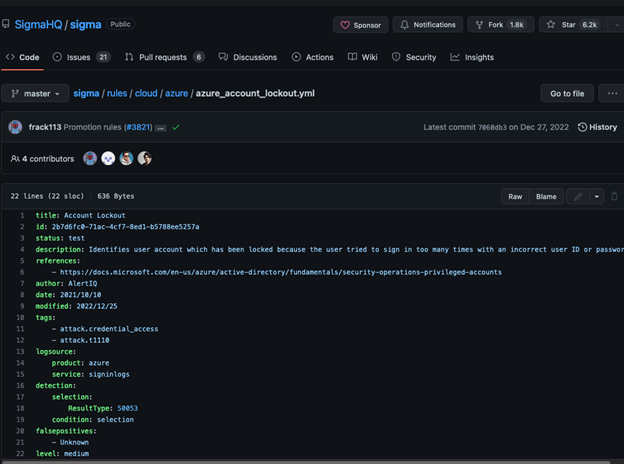
An example of a short Sigma rule is the one that identifies potential brute force or credential theft attacks.


a sigma rule
Azure Account Lockout Sigma Rule

Identify Use Case

The first step to building a Sigma rule is deciding what activity you need to find.

In the example detection, the authors define the use case in the tags as an attack at the credential and access level.

They also map this activity to the MITRE ATT&CK Technique T1110 which covers:

  • Password guessing (T1110.001)
  • Password cracking (T1110.002)
  • Password spraying (T1110.003)
  • Credential stuffing (T1110.004)

Determine Log Source/Data Source

Since your Sigma rule relies on log data, you need to identify what sources apply. When writing the rule, you may want to include both the product and the service.

Breaking down the example detection, you can see that the logsource in this case is the Azure sign-in logs:


Define the Detection

As you continue to build your rule, you also dig deeper into the logsource data. When you define the detection, you look at the log fields that alert you to specific activity.

In this example, the sign-in logs for “Azure AD authentication error 50053”:

Set the Condition

When you set the condition, you define what the rule “looks for” in the defined log.

In this case, since the log needs to have the required error, you set it as follows:

Additional Fields and Complexity

Although valuable, this example is a fairly simple rule. As you try to reduce noise across your monitoring environment, you may incorporate additional information, like:

  • More than one log source
  • More than one detection
  • Filters
  • Multiple conditions
  • Indicators of false positives


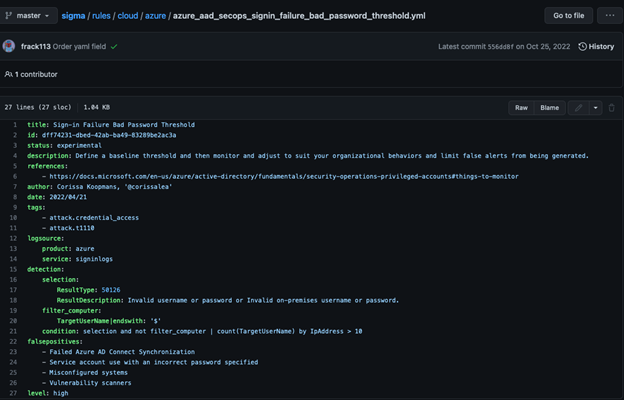
A good example of a more complex Sigma rule is the Sign-In Failure for Bad Password Threshold:


A Sigma Rule
Azure Sign-In Failure Bad Password Threshold

Graylog Security: Sigma Rule Event Processor for Advanced Detection Capabilities

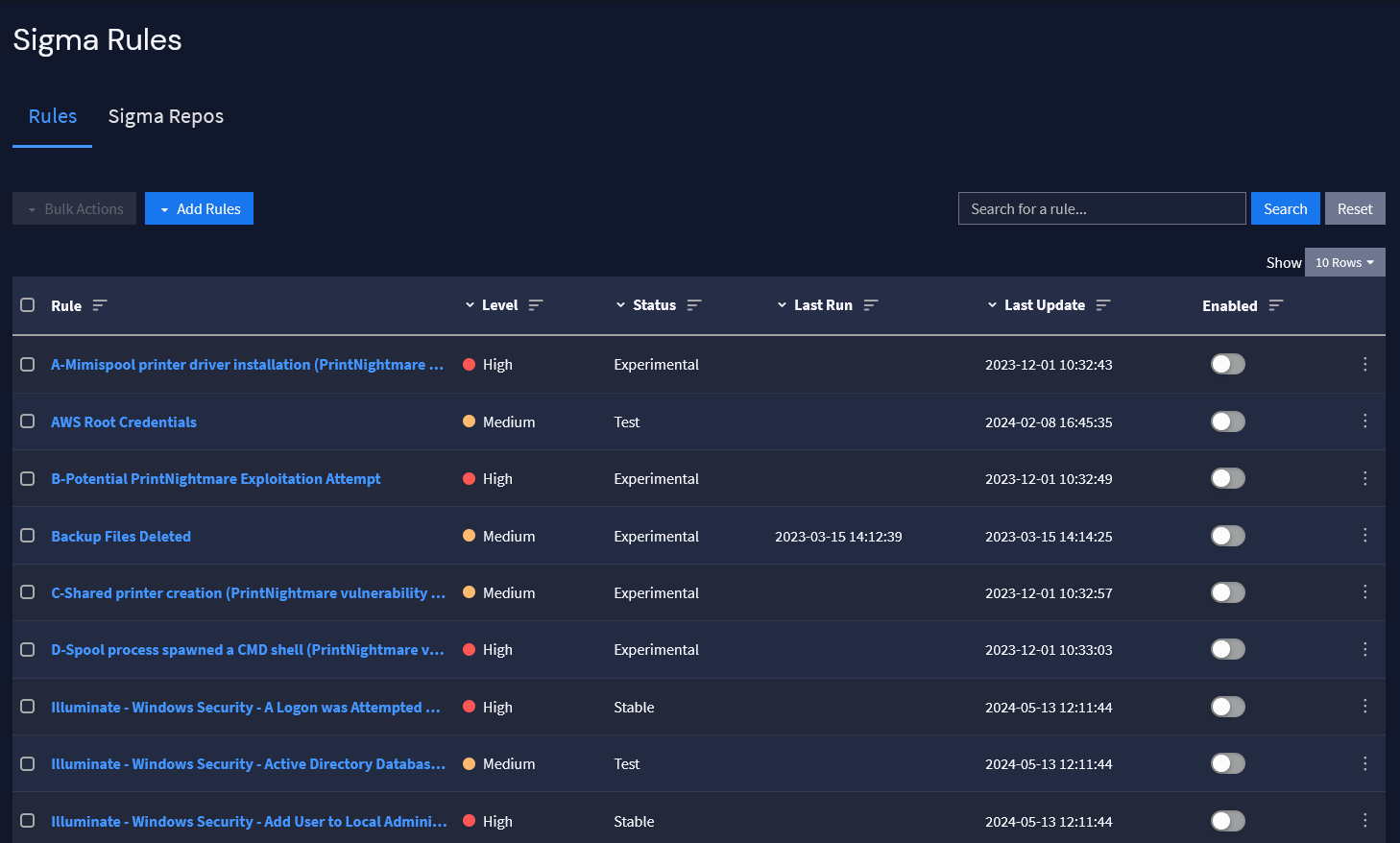
With Graylog Security, you get the security functionality of SIEM and the intuitive user interface that makes managing security faster. With our Sigma Rule Event Processor, you can import rules you want to use directly from GitHub, and we automatically associate it with an event definition or customize the definition, giving you a way to rapidly mature your detection capabilities.


By combining Sigma rules with Graylog’s lightning-fast speed, you can create the high-fidelity alerts you need and investigate them rapidly, improving key metrics like Mean Time To Detect (MTTD) and Mean Time To Resolve (MTTR).

About Graylog  
At Graylog, our vision is a secure digital world where organizations of all sizes can effectively guard against cyber threats. We’re committed to turning this vision into reality by providing Threat Detection & Response that sets the standard for excellence. Our cloud-native architecture delivers SIEM, API Security, and Enterprise Log Management solutions that are not just efficient and effective—whether hosted by us, on-premises, or in your cloud—but also deliver a fantastic Analyst Experience at the lowest total cost of ownership. We aim to equip security analysts with the best tools for the job, empowering every organization to stand resilient in the ever-evolving cybersecurity landscape.

About Version 2 Digital

Version 2 Digital is one of the most dynamic IT companies in Asia. The company distributes a wide range of IT products across various areas including cyber security, cloud, data protection, end points, infrastructures, system monitoring, storage, networking, business productivity and communication products.

Through an extensive network of channels, point of sales, resellers, and partnership companies, Version 2 offers quality products and services which are highly acclaimed in the market. Its customers cover a wide spectrum which include Global 1000 enterprises, regional listed companies, different vertical industries, public utilities, Government, a vast number of successful SMEs, and consumers in various Asian cities.

×

Hello!

Click one of our contacts below to chat on WhatsApp

×