Skip to content

The role of machine learning in cybersecurity

So, does that mean IT teams will become redundant soon, as AI-based security tools can do it all? Simply put, no. But for a more in-depth answer, we’ll need to first understand what machine learning in cybersecurity is and what this technology holds for businesses in the future.

What is machine learning?

Machine learning refers to the ability of algorithms to learn patterns from existing data and use this knowledge to predict outcomes on new, previously unknown data without explicitly being programmed. The more information you feed to the machine learning engine, the more data it can analyze and, consequently, become more accurate.

But what does it mean to say that a machine is learning from the existing data? While traditional programming performs simple and predictable tasks by strictly following detailed instructions, machine learning allows the computer to teach itself through experience. In other words, it mimics human behavior in how to solve problems.

However, the fact that machine learning can improve itself isn’t the only reason why it’s so easy to find its models in the online wilderness. The sheer amount of information that businesses in different industries currently have to manage has become too vast for humans to tackle alone. As a result, companies rely on machine learning to process that data and quickly generate actionable insights.

For instance, an ML technique called a decision tree solves classification dilemmas and uses certain conditions or rules in the decision-making process. This particular technique is widely used in fintech (for loan approval and credit scoring) and marketing.

Machine learning solutions are also helpful for businesses in harvesting, organizing, and analyzing large volumes of customer data. This can include purchasing history or individual customer’s typical behavior, such as online browsing habits. With such analyzed data, companies can then recommend relevant products tailored to their customers’ preferences. Think Netflix: With an ML-driven model, it examines its users’ histories on the platform to compile appropriate content recommendations for them to choose from. This increases the time users spend watching Netflix content and their overall satisfaction. Similarly, ML models pick up information relevant to the unique user on the Facebook feed and even moderate content on Instagram.

Machine learning can also boost a company’s cybersecurity by detecting and responding to threats faster than human analysts. This has led to the term “machine learning security,” which, while still a bit niche, describes how ML is used for security tasks like spotting malware or unusual network activity. With its ability to handle massive amounts of data, machine learning has become a key tool for keeping systems safe.

In addition, in most customer support self-service tools, users usually interact with a machine rather than a fellow human being. Such chatbots can answer basic questions and guide a person to relevant content on the website.

Lastly, even in the medical field, machine learning plays a huge role. These models can be trained to examine medical images or other information and then search for illness characteristics.

The importance of data quality in machine learning security

To get the most out of machine learning, you need to give it high-quality data. Think of it this way: ML can only analyze and learn from what you put into it, so if the data’s flawed, the insights will be too. This is especially critical for companies using ML to support decision making. Without quality data, ML models may lead to misguided decisions.

Alongside accuracy, machine learning security is also a vital part of data quality. Sensitive information should be prepared and protected before feeding it into ML models. Some ML platforms, while powerful, have vulnerabilities that could expose data if not managed carefully. In short, quality data should be both precise and secure.

Four types of machine learning

Machine learning traditionally has four broad subcategories that are defined by how the machine learns:

  • Supervised machine learning models rely heavily on “teachers”, meaning models that are trained with labeled data sets, which allow them to learn and become more accurate over time. For instance, if you want to teach the algorithm to identify cats, you’ll have to feed it with pictures of cats and other things, all labeled by humans.

  • Unsupervised machine learning looks for patterns and common elements in data. In turn, such machine learning can find similarities and trends that humans aren’t explicitly looking for.

  • Semi-supervised machine learning falls somewhere between supervised and unsupervised learning. In this case, the model is trained on a small amount of labeled data and lots of unlabeled data. Such a way of learning is beneficial when there’s a lot of unlabeled data, and it’s too difficult (or expensive) to label it all.

  • Reinforcement machine learning is where an algorithm learns new tasks by interacting with a dynamic environment. Here, it is rewarded for correct actions, which it strives to maximize, and punished for incorrect ones. Such machine learning is widely used in cybersecurity, as it enables a broader range of cyber attack detection.


Machine learning use cases in cybersecurity

As cybersecurity is a truly fast-paced environment where threats, technologies, and regulations constantly evolve, it’s the agility of machine learning that comes in handy.

ML-powered models can process massive amounts of data and, therefore, rapidly detect critical incidents. This means that machine learning enables organizations to detect various types of threats like malware, policy violations, or insider threats by constantly monitoring the network for anomalies. It is so because ML-driven algorithms learn to identify, for instance, new malicious files or activity based on the attributes and behaviors of previously detected malware.

In addition, using machine learning proves to be a good method for filtering your company’s inbox from unsolicited, unwanted, and virus-infected spam emails, which may contain pernicious attachments such as malware or ransomware. For instance, the machine learning model used by Gmail not only sifts through spam but also generates new rules based on what it has learned in the past. ML methods, coupled with natural language processing techniques, can also detect phishing domains by picking on phishing domain characteristics and features that distinguish legitimate domains.

Last but not least, machine learning can significantly support online fraud detection and prevention. By using ML algorithms, companies can identify suspicious activities in transactional data. These algorithms are trained to recognize normal payment processes and flag suspicious ones. Also, ML-driven engines can be trained to spot when cybercriminals change their tactics as they automatically will retrain themselves to recognize a new fraud pattern.

These examples illustrate just a few use cases of machine learning in cybersecurity. But there are many others, such as vulnerability management, that can greatly impact business cybersecurity.

So, is it AI, machine learning, or deep learning?

Frequently, these terms – artificial intelligence, machine learning, and deep learning (DP) – are used interchangeably. We already defined machine learning, so now, let’s see how it relates to artificial intelligence and deep learning.

Artificial intelligence, in the broadest sense, is a set of technologies that enable computers to perform various advanced tasks in a way similar to how humans solve problems. This makes machine learning a subfield of artificial intelligence.

In turn, deep learning is a subset of machine learning. It mimics the structure and functions of the human brain. Such systems use artificial neural networks that function like neurons in the brain. These neurons, also referred to as nodes, are used in chatbots or autonomous vehicles.

Difference between machine learning, artificial intelligence, deep learning, and cybersecurity

Even though machine learning brings some challenges when applied to cybersecurity (for instance, the difficulty in collecting large amounts of certain malware samples for the ML machine to learn from), it remains the most common approach and term used to describe AI applications in this industry.

In cases where shallow (or traditional machine learning) falls short, deep learning should be used. For example, when dealing with highly complex data such as images and unstructured text or when temporal dependencies have to be taken into account.


The future of machine learning in cybersecurity

In the current AI tool-filled climate, it’s easy to see how this technology can become better at specific tasks than we humans are. Luckily (or not), machine learning is not a panacea to all things cybersecurity. However, it provides and will continue to provide a great deal of support to cybersecurity or IT teams by reducing the load off of their shoulders.

Since many devices (like phones and laptops) connect to the company’s networks daily, it is almost impossible for IT teams to monitor every single gadget. With AI-powered device profiling, you can improve the fingerprinting of endpoint devices and better understand the type and quantity of endpoints connecting to your network. This will help you create effective segmentation rules and stop unwanted devices (potentially including bad actors) from connecting.

Also, employing machine learning can improve your cybersecurity game by helping your IT team develop policy recommendations for security devices such as firewalls. In this case, machine learning learns what devices are connected to the network and what constitutes normal device behavior. In turn, ML-powered systems can make specific suggestions automatically — instead of your team manually navigating different conflicting access control lists for each device and network segment.

And so, integrating artificial intelligence in security, particularly through machine learning, can significantly enhance how your cybersecurity framework adapts to the evolving IT landscape. With more devices and threats coming online daily, the human resources available to tackle them are becoming scarce. In such an environment, machine learning can step in by helping sort out various complicated cybersecurity situations and scenarios at scale while maintaining constant surveillance 24/7.

Challenges of Machine Learning in Cybersecurity

Just like in life, the things that bring us the most value come with their own set of challenges. After all, you can’t expect great results without putting in some effort. The same goes for using machine learning in cybersecurity. It can be incredibly powerful, but getting the most out of it requires navigating a few obstacles along the way. So, here are a few challenges you might face when applying ML to data security:

  • Adaptation to threats: Cyber threats are becoming increasingly intricate and complex, requiring ML models to undergo continuous retraining to identify new vulnerabilities effectively. This ongoing adaptation is essential to ensure that ML security systems remain capable of countering the latest tactics employed by hackers.

  • Adversarial attacks (ML poisoning): By manipulating input data or introducing deceptive data, attackers can compromise an ML model’s effectiveness, reducing system reliability and jeopardizing operations by making it more difficult to accurately identify malicious activity.

  • Operational issues: Integrating machine learning into an established cybersecurity framework isn’t always straightforward. There are a few challenges to consider, like the complexity of the implementation process, the risk of false positives that can add to analysts’ workloads, regulatory compliance requirements, and the limited availability of professionals skilled in both ML and cybersecurity.

How does NordPass use machine learning?

Machine learning offers a wide range of applications for businesses, from applying it to cybersecurity to simply enhancing customer satisfaction. With artificial intelligence still making headlines, we’re likely to see even more use cases in the future. However, machine learning in IT security will be one of the key areas that will continue to evolve.

NordPass is one of the companies that use machine learning. We do so to offer more accuracy and convenience for our customers. Our autofill engine relies heavily on machine learning to accurately categorize the field that it needs to fill in on a website or app – no matter if it is a sign-up, credit card, or personal information form. Remember those artificial neural networks? It has been trained using exactly those!

If you’re interested in improving your IT team‘s online experience and enhancing overall company security, explore what enterprise password management can offer for your company.


About NordPass
NordPass is developed by Nord Security, a company leading the global market of cybersecurity products.

The web has become a chaotic space where safety and trust have been compromised by cybercrime and data protection issues. Therefore, our team has a global mission to shape a more trusted and peaceful online future for people everywhere.

About Version 2 Digital

Version 2 Digital is one of the most dynamic IT companies in Asia. The company distributes a wide range of IT products across various areas including cyber security, cloud, data protection, end points, infrastructures, system monitoring, storage, networking, business productivity and communication products.

Through an extensive network of channels, point of sales, resellers, and partnership companies, Version 2 offers quality products and services which are highly acclaimed in the market. Its customers cover a wide spectrum which include Global 1000 enterprises, regional listed companies, different vertical industries, public utilities, Government, a vast number of successful SMEs, and consumers in various Asian cities.

Thinfinity Workspace: The Ultimate White-Label DaaS Solution for MSPs

Content

  1. Stand Out in a Crowded Market
  2. Overcoming DaaS Commoditization
  3. Fully Customizable for Your Brand, Workflows, and Applications
  4. Flexible Infrastructure Options
  5. Industry-Specific Solutions
  6. Cost-Effective Licensing
  7. Built-In Zero Trust Security
  8. Delivering Exceptional User and Admin Experiences
  9. Avoiding the DaaS Commodity Trap
  10. FAQs About Thinfinity Workspace

1.Stand Out in a Crowded Market

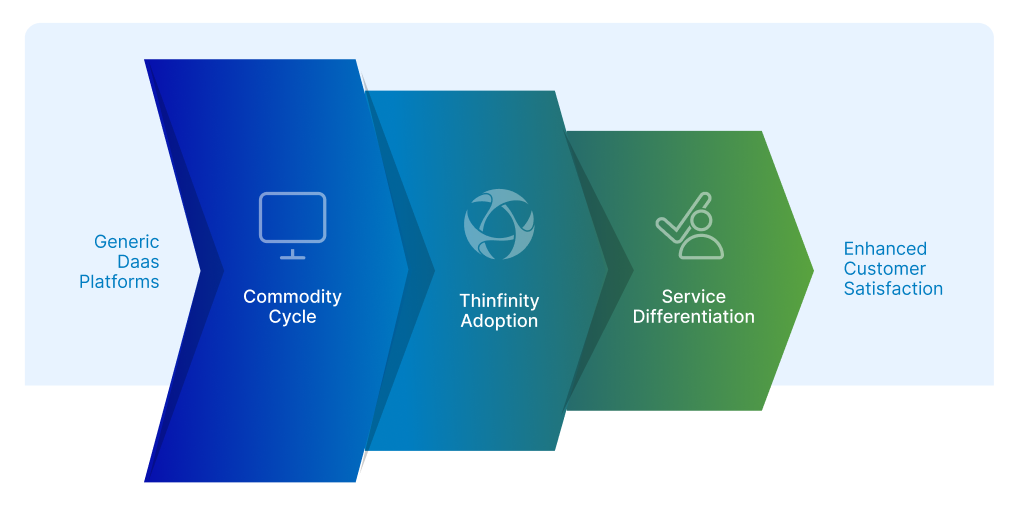
Managed Service Providers (MSPs) face an increasingly competitive market where differentiation is critical. While Desktop as a Service (DaaS) offers substantial opportunities for recurring revenue and providing added value solutions to their customers, many MSPs find themselves trapped in the commodity cycle by relying on generic platforms like Azure Virtual Desktop (AVD) and Amazon WorkSpaces. These platforms often limit MSPs’ ability to stand out, reducing them to resellers of standardized services with little room for customization or branding.

Thinfinity Workspace empowers MSPs to break free from this cycle, offering a fully customizable, white-label DaaS solution that puts their brand at the forefront. With Thinfinity, MSPs can deliver tailored solutions that meet the unique needs of their clients, enhancing customer satisfaction while differentiating their services in a crowded marketplace.

 
Thinfinity Workspace helps MSPs transition from the DaaS commodity cycle to service differentiation, enhancing customer satisfaction.


2.Overcoming DaaS Commoditization

The commoditization of Desktop as a Service (DaaS) and cloud Virtual Desktop Infrastructure (VDI) solutions by dominant platforms like Azure Virtual Desktop (AVD), Amazon WorkSpaces, Citrix, and VMware has standardized offerings, driving price competition and diminishing profit margins for MSPs. This commoditization stifles innovation and hampers MSPs’ ability to deliver unique value propositions, often relegating them to the role of resellers offering identical services.
The rise of DaaS has significant implications, with a survey by Enterprise Strategy Group (ESG) and Workspot indicating that 58% of respondents expect DaaS to become the primary means of desktop consumption. Furthermore, the global Device as a Service market is projected to grow from USD 34.65 billion in 2024 to USD 226.73 billion by 2032, at a CAGR of 26.5%, intensifying competition. Fortune Business Insights.
To remain relevant, MSPs must pivot to high-value offerings by leveraging platforms like Thinfinity Workspace. With its fully branded, tailored DaaS solutions, Thinfinity empowers MSPs to escape the commoditization trap, delivering customized services that meet specific client needs while enhancing profitability.

What Makes Thinfinity Workspace the Best White-Label DaaS Solution for MSPs?

3. Fully Customizable for Your Brand, Workflows, and Applications

Thinfinity Workspace empowers Managed Service Providers (MSPs) to craft a fully branded and deeply integrated experience, making your business—not the platform provider—the star of the solution. Beyond simple white-labeling, Thinfinity Workspace offers advanced customization options that extend to workflows, application integration, and automation, enabling MSPs to design unique DaaS or Virtual Application solutions tailored to their clients’ exact needs.

White-Labeling for a Seamless Brand Experience

Thinfinity Workspace allows MSPs to incorporate their logo, color schemes, and messaging throughout the platform interface. This ensures that every touchpoint—from the login screen to the virtual desktop environment—reflects your brand identity. By eliminating third-party branding, you reinforce brand recognition and enhance customer loyalty, positioning your business as the trusted provider.

Thinfinity Workspace enables MSPs to customize logos, colors, and messaging, creating a fully branded client experience.


Integration with Your Workflows and Applications

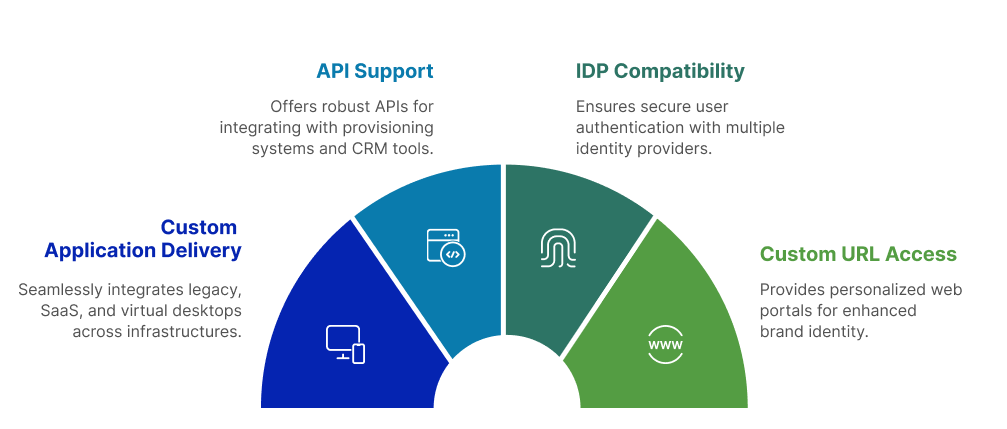
Thinfinity Workspace goes beyond branding by enabling deep integration with your existing workflows and applications. Key features include:

  • Custom Application Delivery: Deliver a mix of legacy applications, modern SaaS solutions, and virtual desktops seamlessly, regardless of the client’s infrastructure.
  • API Support: Thinfinity Workspace offers robust APIs, allowing MSPs to integrate with custom provisioning systems, CRM tools, or ticketing platforms, streamlining service delivery and management.
  • IDP Compatibility: Integrate with multiple Identity Providers (IDPs), such as Azure Active Directory, Okta, Google Workspace, or custom SAML-based solutions, ensuring secure, seamless user authentication across workflows.
  • Custom URL Access: Provide customers with a personalized web portal (e.g., yourcompanyworkspace.com) to access their resources, further reinforcing brand identity and simplifying access.

These integrations enable MSPs to create a unified experience that meets the specific operational needs of each client.

Integration features of Thinfinity Workspace, including custom app delivery, API support, IDP compatibility, and custom URL portals.

Automation for Scalability and Efficiency

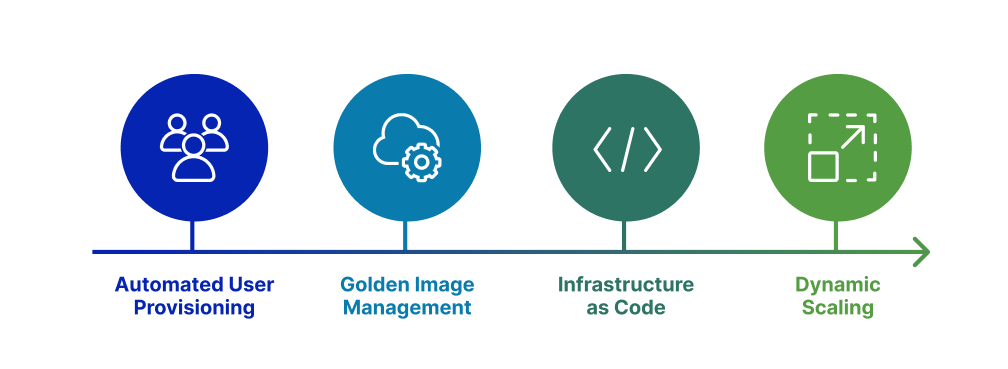
Thinfinity Workspace includes advanced automation features that help MSPs scale their operations efficiently while reducing manual workloads:

  • Automated User Provisioning: Create and manage user accounts and permissions in bulk with integrations to Active Directory or other directory services, ensuring consistent and secure access control.
  • Golden Image Management: Automate the creation and deployment of pre-configured virtual desktop or application environments, ensuring consistency across multiple client deployments.
  • Infrastructure as Code (IaC): Thinfinity Workspace supports IaC tools like Terraform and Ansible, allowing MSPs to automate the provisioning of infrastructure and services across cloud or hybrid environments.
  • Dynamic Scaling: Automatically adjust resource allocation based on real-time usage metrics, ensuring optimal performance while controlling costs.

These automation capabilities enable MSPs to serve more clients without increasing operational complexity.

Thinfinity Workspace automation features: automated user provisioning, golden image management, infrastructure as code, and dynamic scaling.

Building Unique DaaS and Virtual Application Solutions

With Thinfinity Workspace, MSPs can go beyond generic virtual desktop solutions and create highly specialized DaaS offerings tailored to industries or specific client requirements:

  • Virtual Applications on Demand: Deliver single applications virtually to end-users without the need for full desktop environments, improving usability and reducing resource requirements.
  • Workflow Customization: Tailor the user experience with shortcuts, preloaded applications, or custom scripting that aligns with specific client processes.
  • Hybrid Deployments: Combine on-premises and cloud resources in a seamless environment, allowing clients to benefit from low-latency performance and scalable cloud resources.

By integrating branding, workflows, and automation, Thinfinity Workspace gives MSPs the tools to develop solutions that are as unique as their clients. The result is enhanced customer satisfaction, reduced operational costs, and a significant competitive edge in the DaaS and Virtual Application market.


4. Flexible Infrastructure Options

No two clients have the same requirements. Whether driven by compliance, performance, or scalability needs, MSPs must offer infrastructure options tailored to their customers’ unique challenges. Thinfinity Workspace enables MSPs to deploy Desktop as a Service (DaaS) solutions with ease, regardless of their IT or cloud expertise, leveraging the best features of each platform.

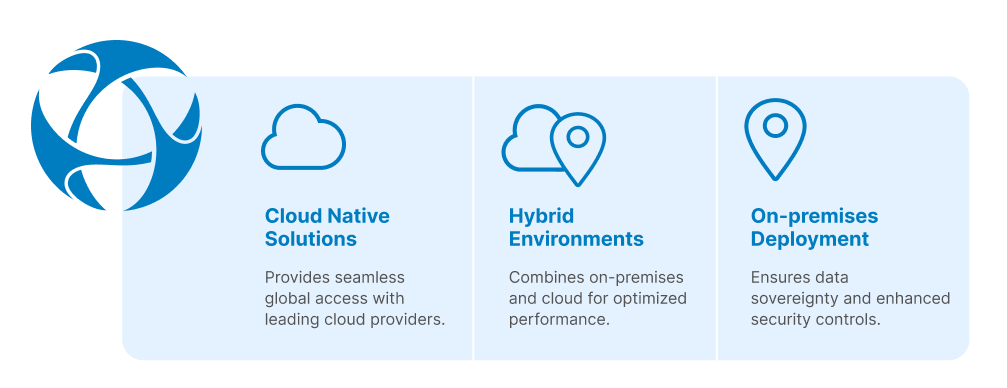
a. On-Premises Datacenters for Strict Compliance and Data Sovereignty

For industries with sensitive data and strict compliance requirements, Thinfinity Workspace supports deployment within on-premises datacenters. Key advantages include:

  • Data sovereignty: Ensures all data remains within the physical boundaries of the customer’s jurisdiction, meeting regulations like GDPR, CCPA, or regional mandates.
  • Enhanced security controls: MSPs retain complete control over firewalls, encryption, and access policies, reducing reliance on third-party infrastructure.
  • Low-latency performance: On-premises deployments minimize latency for local users, ensuring seamless desktop performance for applications like EHR systems in healthcare or financial trading platforms.

Thinfinity Workspace’s ease of integration with existing on-premises systems allows MSPs to meet the demands of highly regulated industries without overhauling infrastructure.

b. Hybrid Environments for the Best of Both Worlds

For clients who need a balance of cost efficiency and performance, Thinfinity Workspace supports hybrid deployments that combine on-premises and cloud infrastructure. Benefits of hybrid environments include:

  • Performance optimization: Host resource-heavy applications like CAD or GIS workloads on-premises while leveraging the cloud for scalable storage or remote user access.
  • Disaster recovery: Cloud integration ensures critical desktop environments remain accessible during on-premises outages or maintenance periods.
  • Gradual cloud migration: Thinfinity Workspace enables seamless transitions from legacy systems to cloud-native infrastructures, reducing disruption for industries like manufacturing or education.

Hybrid environments are ideal for clients with seasonal or fluctuating workloads, as MSPs can dynamically scale resources to meet changing demands.

c. Cloud-Native Solutions for Seamless Global Access

Thinfinity Workspace thrives in cloud-native setups, making it possible for MSPs to deliver globally accessible, high-performance DaaS solutions using leading providers like Ionos, Oracle Cloud, Azure, AWS, and Google Cloud Platform (GCP). Each platform offers unique advantages:

  • Ionos Cloud: Cost-effective and ideal for MSPs catering to SMBs, with automated provisioning and scalable resources.
  • Oracle Cloud: Exceptional performance for data-intensive workloads, coupled with built-in compliance features for regulated industries like finance and healthcare.
  • Microsoft Azure: Multi-cloud capabilities and geographic redundancy ensure low latency for global clients.
  • AWS: Unmatched scalability and access to advanced tools like GPU-accelerated instances for resource-intensive applications.
  • Google Cloud: Advanced AI and analytics tools enable real-time insights and predictive resource allocation.

These cloud-native options give MSPs the flexibility to cater to global clients, ensuring seamless access and optimal performance across multiple geographies.

Thinfinity Workspace deployment options: on-premises for compliance, hybrid environments for performance, and cloud-native solutions for global access.


5. Industry-Specific Solutions

In an era where differentiation is key, niche-specific DaaS solutions are a powerful way for Managed Service Providers (MSPs) to stand out from competitors and add significant value to their offerings. Thinfinity Workspace allows MSPs to meet the unique demands of diverse industries, tailoring virtual desktop infrastructure to specific needs while leveraging advanced security, scalability, and performance features. Here’s how Thinfinity Workspace transforms DaaS for key verticals:


Healthcare: Secure Virtual Desktops for Telehealth and Records Management

The healthcare industry requires solutions that prioritize data security and regulatory compliance (e.g., HIPAA, GDPR). Thinfinity Workspace empowers MSPs to deliver secure virtual desktops that enable:

  • Telehealth solutions: Healthcare providers can consult with patients remotely using high-performance virtual desktops, improving accessibility and reducing costs.
  • Data access security: With built-in Zero Trust Network Access (ZTNA) and multi-factor authentication (MFA), MSPs can ensure secure access to sensitive Electronic Health Records (EHR).
  • Flexible deployment: Options for on-premises, hybrid, or fully cloud-based deployments meet compliance and data sovereignty requirements.

By addressing these critical pain points, MSPs can position themselves as trusted partners for healthcare organizations seeking to modernize operations securely.


Education: Scalable Virtual Learning Environments

Thinfinity Workspace allows MSPs to provide schools and universities with robust remote learning environments tailored for scalability and ease of access. Key benefits include:

  • Scalable infrastructure: Educational institutions can easily scale virtual desktop resources during high-demand periods, such as enrollment seasons or during hybrid learning initiatives.
  • Cost-efficient remote labs: Thinfinity’s centralized golden image management allows educators to deploy preconfigured virtual desktops for specific courses, labs, or research projects.
  • Device-agnostic access: Students and faculty can access virtual desktops from any device with an HTML5 browser, reducing barriers to remote learning.

With budgets often limited in education, Thinfinity Workspace helps MSPs deliver affordable yet powerful solutions that align with institutional goals.


Manufacturing: High-Performance Access to CAD and Design Applications

Manufacturers rely on resource-heavy applications like CAD, CAM, and PLM software that demand low latency and GPU acceleration. Thinfinity Workspace enables MSPs to offer manufacturing clients:

  • GPU-optimized performance: Support for cloud or on-premises GPU-accelerated workloads ensures smooth performance for 3D modeling and design applications.
  • Remote collaboration: Engineers and designers can collaborate in real-time on complex projects without being tethered to specific locations or devices.
  • Hybrid cloud flexibility: MSPs can deploy solutions that balance cost and performance by combining on-premises and cloud resources tailored to the client’s needs.

Thinfinity Workspace equips MSPs to empower manufacturers with the tools needed to innovate while optimizing their IT spend.


Finance: Uncompromising Security and Compliance

The finance industry operates under stringent compliance standards, such as SOC 2, PCI DSS, and GDPR, making security and performance non-negotiable. Thinfinity Workspace provides MSPs with the ability to:

  • Meet compliance needs: Thinfinity’s Zero Trust model ensures secure access, and its advanced logging features support auditing and compliance reporting.
  • Streamline workflows: Brokers and advisors can securely access virtual desktops that integrate with key financial platforms and analytics tools from anywhere.
  • Reduce infrastructure costs: MSPs can leverage Thinfinity’s cost-effective licensing model to reduce operational expenses for finance clients while maintaining high levels of service.

MSPs that tailor Thinfinity Workspace for financial institutions can differentiate themselves by delivering secure, high-performing, and scalable solutions.


Oil and Gas: Seamless Access to Critical Applications in Remote Environments

The oil and gas industry operates in remote and often harsh environments, requiring reliable access to resource-intensive applications and data. Thinfinity Workspace offers MSPs the tools to:

  • Enable remote field operations: Workers can access GIS software, 3D seismic modeling tools, and real-time monitoring applications through low-latency, GPU-enabled virtual desktops.
  • Improve collaboration: Thinfinity Workspace supports real-time collaboration between field teams and central offices, enabling faster decision-making and reducing downtime.
  • Ensure compliance and security: With robust security features and compliance support for industry regulations, Thinfinity provides peace of mind for sensitive operations.

By addressing the specific needs of oil and gas companies, MSPs can deliver DaaS solutions that improve operational efficiency and safety in even the most challenging conditions.


6. Cost-Effective Licensing

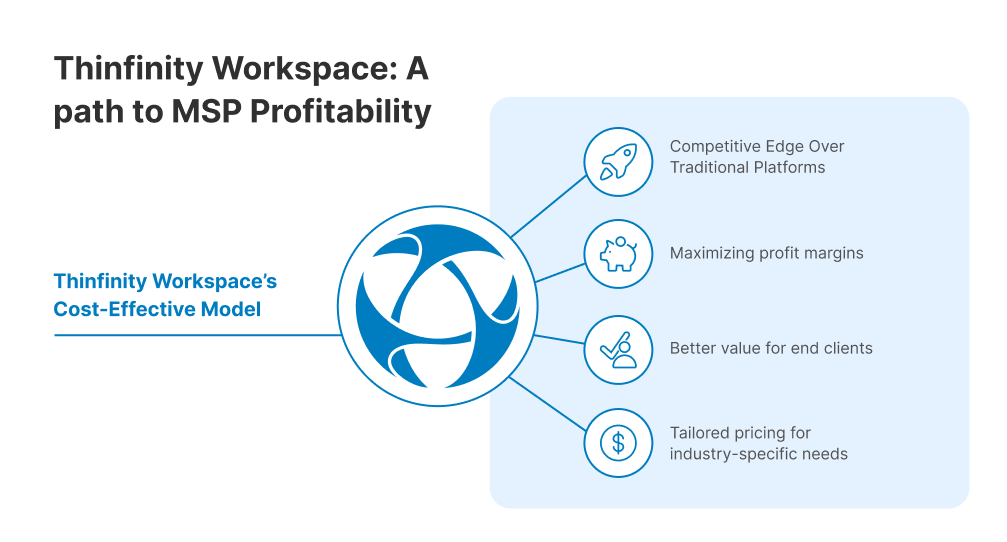
For Managed Service Providers (MSPs), profitability is a constant balancing act between offering premium services and managing costs. Thinfinity Workspace’s cost-effective licensing model allows MSPs to deliver high-quality DaaS solutions without breaking the bank. By offering competitive pricing that is significantly more budget-friendly than platforms like Citrix and VMware, Thinfinity Workspace helps MSPs maximize their profit margins while maintaining pricing that appeals to their clients. Here’s how:


a. Competitive Edge Over Traditional Platforms

Enterprise solutions like Citrix and VMware often come with hefty licensing fees, making it difficult for MSPs to offer affordable services to small-to-medium businesses (SMBs). Thinfinity Workspace breaks this cycle by:

  • Lowering upfront costs: Thinfinity Workspace’s transparent, flexible pricing ensures MSPs avoid the high initial investments required by competitors.
  • Pay-as-you-grow model: MSPs can scale licenses based on actual usage, reducing financial strain and allowing cost alignment with customer growth.
  • No unnecessary add-ons: Unlike other platforms, Thinfinity Workspace’s licensing is streamlined, so MSPs pay only for the features they need.

This cost-efficiency enables MSPs to remain competitive in the market while offering premium services at accessible rates.


b. Maximizing Profit Margins

Thinfinity Workspace helps MSPs boost profitability in several ways:

  • Lower operational costs: By combining secure access, high performance, and centralized management in one platform, Thinfinity Workspace reduces the need for multiple third-party tools, saving MSPs on licensing and integration costs.
  • Simplified IT management: With Thinfinity’s centralized Cloud Manager, MSPs can streamline administration and reduce time spent on tasks like scaling, deployment, or troubleshooting, lowering labor costs.
  • Affordable GPU instances: For clients requiring GPU-accelerated workloads, Thinfinity Workspace integrates with cost-effective cloud providers like IONOS Cloud or Google Cloud, further reducing costs compared to traditional GPU hosting options.

By reducing both direct and indirect costs, Thinfinity Workspace allows MSPs to increase their profit margins while maintaining exceptional service quality.


c. Better Value for End Clients

Thinfinity Workspace’s pricing model also allows MSPs to pass cost savings on to their customers, making it easier to win contracts and retain clients. Benefits for clients include:

  • Affordable DaaS options: Thinfinity Workspace enables MSPs to offer competitive pricing to SMBs that might otherwise be priced out of premium DaaS solutions.
  • Predictable pricing: Thinfinity’s transparent licensing ensures clients avoid unexpected cost spikes, building trust and long-term relationships.
  • Flexibility for scaling: Clients can start small and expand as their needs grow, making Thinfinity Workspace a practical option for businesses of all sizes.

With better value for clients, MSPs can position themselves as trusted partners who deliver premium services without overcharging.


d. Tailored Pricing for Industry-Specific Needs

Thinfinity Workspace’s cost-effective licensing model is particularly beneficial for MSPs serving industries with tight budgets or unique scalability requirements:

  • Healthcare: Budget-conscious hospitals and clinics can adopt secure DaaS solutions without overspending, freeing up funds for other operational needs.
  • Education: Schools and universities can deploy Thinfinity’s affordable virtual desktops for students and faculty, even during peak demand periods like new semesters.
  • Manufacturing: SMBs in manufacturing can access GPU-enabled design environments without investing in costly on-premises infrastructure.
  • Startups and SMBs: Smaller businesses with fluctuating workloads can leverage Thinfinity Workspace’s pay-as-you-grow licensing to access premium services without committing to large upfront investments.

This tailored approach ensures MSPs can cater to a diverse range of industries without compromising profitability.

Thinfinity Workspace’s cost-effective licensing model supports MSP profitability with competitive pricing, profit maximization, and tailored solutions.


Why Cost-Effective Licensing Matters

In a market dominated by enterprise players like Citrix and VMware, Thinfinity Workspace gives MSPs a much-needed edge. By lowering operational costs and offering scalable, flexible licensing, MSPs can:

  • Offer competitive pricing that appeals to both SMBs and enterprise clients.
  • Maximize profitability by eliminating unnecessary expenses and streamlining IT management.
  • Retain more clients by delivering exceptional value at an affordable price point.

With Thinfinity Workspace’s cost-effective licensing model, MSPs can focus on growing their business, expanding their client base, and differentiating their offerings in an increasingly competitive DaaS market.


7. Built-In Zero Trust Security

In an age where cyber threats are escalating, security is a top priority for Managed Service Providers (MSPs). Thinfinity Workspace stands out by integrating a Zero Trust Network Access (ZTNA) model, offering robust security measures that continuously verify users, devices, and access requests. This built-in security framework ensures that MSPs can deliver safe and reliable DaaS solutions, providing their clients with peace of mind while protecting sensitive data from increasingly sophisticated cyber threats.
Here’s how Thinfinity Workspace’s Zero Trust approach empowers MSPs to deliver secure, cutting-edge services:


a. Continuous Verification for Uncompromised Security

Traditional security models often rely on static perimeter defenses, which are vulnerable to modern attack methods. Thinfinity Workspace’s Zero Trust Network Access redefines security by:

  • Continuous user and device verification: Every access request is authenticated and authorized in real time, ensuring that only legitimate users gain entry.
  • Granular access controls: Role-based access control (RBAC) ensures that users can only access the resources they are authorized for, reducing the risk of insider threats or unauthorized data exposure.
  • Dynamic session monitoring: Thinfinity monitors all sessions for suspicious activity, providing real-time alerts and automated responses to potential threats.

This continuous verification ensures that MSPs can offer a secure platform that adapts to the ever-changing cybersecurity landscape.


b. Multi-Factor Authentication (MFA) for Enhanced Protection

Thinfinity Workspace includes multi-factor authentication (MFA) as a core feature, adding an essential layer of security. MSPs can leverage MFA to:

  • Protect against stolen credentials by requiring users to authenticate via multiple methods, such as a password and a mobile app token.
  • Adapt to client needs with integrations for leading MFA providers, including Google Authenticator, Okta, and Microsoft Authenticator.
  • Simplify deployment by offering clientless MFA options that enhance security without introducing complexity.

For industries like finance, healthcare, and government, where regulatory compliance mandates robust identity verification, Thinfinity Workspace ensures MSPs can meet or exceed security standards.


c. Advanced Encryption Safeguards Sensitive Data

Thinfinity Workspace secures data both in transit and at rest with advanced encryption protocols such as TLS 1.3 and AES-256. Benefits include:

  • Secure remote access: Virtual desktops and applications are accessed via encrypted HTML5 sessions, ensuring no data is exposed during transmission.
  • Compliance readiness: Thinfinity’s encryption meets or exceeds requirements for standards like HIPAA, GDPR, and SOC 2, helping MSPs serve highly regulated industries.
  • Ransomware prevention: Encrypted environments reduce the risk of unauthorized access to sensitive client data, mitigating ransomware threats.

By integrating encryption directly into its platform, Thinfinity Workspace enables MSPs to deliver solutions that clients can trust, even in the face of rising cyber threats.


d. Proactive Threat Detection and Response

Thinfinity Workspace incorporates advanced threat detection and response mechanisms, ensuring proactive security for MSPs and their clients:

  • Real-time monitoring: Automated tools continuously monitor activity across virtual desktops and applications, identifying suspicious behavior before it escalates into a full-blown attack.
  • Integrated security tools: Thinfinity Workspace integrates with leading SIEM (Security Information and Event Management) platforms, providing MSPs with centralized visibility into security events.
  • Audit and compliance support: Detailed logging and reporting features ensure that all security activities are documented, enabling MSPs to meet audit requirements effortlessly.

For industries with stringent compliance demands, Thinfinity Workspace provides a comprehensive solution that enhances both security and operational transparency.


8.Delivering Exceptional User and Admin Experiences


1. Hassle-Free Clientless Access

Access virtual desktops and applications from any device via an HTML5 browser—no complex software installations needed. This ensures fast, frictionless onboarding and user satisfaction.

2. High-Performance, Low-Latency Connections

Thinfinity Workspace ensures smooth, responsive performance even for demanding applications like graphic design software and GPU-accelerated workloads. Whether clients operate in multi-cloud environments or across the globe, Thinfinity delivers.

3. Simplified Management with Thinfinity Cloud Manager

Manage all customer deployments from a centralized portal. Thinfinity Cloud Manager provides:

  • Intuitive monitoring.
  • Easy scaling to meet growing client needs.
  • Streamlined administration to reduce time spent on troubleshooting and setup.


9.Avoiding the DaaS Commodity Trap

In the competitive landscape of Desktop as a Service (DaaS), Managed Service Providers (MSPs) often grapple with the challenges of commoditization. Relying on generic platforms like Azure Virtual Desktop (AVD) or Amazon WorkSpaces can lead to undifferentiated service offerings, making it difficult to stand out in the market. This lack of distinction not only erodes profit margins but also increases customer attrition, as clients may easily switch to competitors offering similar services at lower prices.
Thinfinity Workspace addresses these challenges by enabling MSPs to:

  • Differentiate Offerings: Customize services to align with specific client industries, providing tailored solutions that generic platforms cannot match.
  • Strengthen Customer Loyalty: Deliver a fully branded platform that reinforces your identity, fostering deeper client relationships and reducing the likelihood of clients migrating to competitors.
  • Gain Operational Control: Utilize flexible infrastructure options and centralized management to optimize service delivery, ensuring that solutions are both efficient and adaptable to client needs.
  • Maximize Profitability: Lower licensing costs and administrative overhead, allowing for competitive pricing without sacrificing margins.

By leveraging Thinfinity Workspace, MSPs can escape the commodity trap, offering unique, value-driven services that enhance client retention and drive business growth.


10.FAQs: Common Questions About Thinfinity Workspace

What industries can benefit from Thinfinity Workspace?

Thinfinity Workspace is ideal for industries like healthcare, finance, manufacturing, education, government, oil and gas, retail and any business requiring secure, scalable virtual desktops.

How does Thinfinity Workspace compare to Citrix?

Thinfinity Workspace offers comparable functionality at a significantly lower cost. Additionally, it prioritizes MSP branding and flexibility, features often missing in Citrix solutions.

What are the security features of Thinfinity Workspace?

Thinfinity Workspace incorporates Zero Trust Network Access (ZTNA), multi-factor authentication (MFA), advanced encryption, and continuous monitoring to ensure client data is always protected.

Can I deploy Thinfinity Workspace in hybrid or multi-cloud environments?

Yes. Thinfinity Workspace supports on-premises, hybrid, and multi-cloud deployments, offering unmatched flexibility to meet your clients’ needs.

Conclusion: Empower Your MSP with Thinfinity Workspace

In an increasingly commoditized DaaS market, Managed Service Providers (MSPs) face mounting pressure to differentiate their offerings, retain customers, and maximize profitability. Thinfinity Workspace offers a transformative solution, empowering MSPs to escape the limitations of generic platforms like Azure Virtual Desktop (AVD) and Amazon WorkSpaces. By delivering fully branded, customizable solutions tailored to specific client needs, Thinfinity Workspace helps MSPs build unique value propositions that resonate across industries.
With flexible infrastructure options, cost-effective licensing, and built-in Zero Trust security, Thinfinity Workspace equips MSPs with the tools to address complex compliance requirements, reduce operational overhead, and deliver exceptional user experiences. Its advanced automation capabilities and deep integration options further enable MSPs to scale their offerings efficiently, staying ahead in a competitive landscape.
As the global DaaS market continues to grow, the opportunity for MSPs to lead with innovative, tailored solutions has never been greater. Thinfinity Workspace is not just a platform—it’s the key to unlocking your MSP’s full potential. Stand out, drive profitability, and deliver unparalleled value with Thinfinity Workspace. 

About Cybele Software Inc.
We help organizations extend the life and value of their software. Whether they are looking to improve and empower remote work or turn their business-critical legacy apps into modern SaaS, our software enables customers to focus on what’s most important: expanding and evolving their business.

About Version 2 Digital

Version 2 Digital is one of the most dynamic IT companies in Asia. The company distributes a wide range of IT products across various areas including cyber security, cloud, data protection, end points, infrastructures, system monitoring, storage, networking, business productivity and communication products.

Through an extensive network of channels, point of sales, resellers, and partnership companies, Version 2 offers quality products and services which are highly acclaimed in the market. Its customers cover a wide spectrum which include Global 1000 enterprises, regional listed companies, different vertical industries, public utilities, Government, a vast number of successful SMEs, and consumers in various Asian cities.

Rockstar 2FA: Compromising Microsoft 365 Accounts-What MSPs and Small Businesses Need to Know

Key Takeaways

  1. Sophisticated Phishing-as-a-Service Model: Rockstar 2FA uses advanced adversary-in-the-middle (AiTM) techniques to bypass multi-factor authentication (MFA) protections in Microsoft 365.
  2. Small Businesses Are Prime Targets: Limited resources and cybersecurity awareness make small and medium-sized businesses especially vulnerable to such attacks.
  3. MSPs Must Evolve Defense Strategies: The role of Managed Service Providers (MSPs) in combating advanced threats is more critical than ever, requiring proactive tools, training, and incident response.


The Threat Landscape: What Is Rockstar 2FA?

A recent discovery has exposed a new iteration of Phishing-as-a-Service (PhaaS) platforms called Rockstar 2FA. This campaign focuses on stealing credentials from Microsoft 365 (M365) by bypassing MFA protections through adversary-in-the-middle (AiTM) techniques. The platform is a subscription-based service marketed to cybercriminals across forums like Telegram and Mail.ru, offering advanced features such as:

  • Session cookie harvesting to hijack active user sessions
  • Customizable phishing templates mimicking trusted services
  • Antibot features to avoid automated detection systems
  • Randomized source code and links to evade detection and FUD attachments 

Rockstar 2FA capitalizes on user trust in services like Microsoft 365, posing a significant risk for organizations that rely on this platform for communication and collaboration. Its accessibility to attackers, regardless of technical expertise, makes it a widespread and pressing concern.

For more technical details, see the analysis by Trustwave: Rockstar 2FA PhaaS Campaign.


How the Attack Works

At the heart of the Rockstar 2FA campaign is its adversary-in-the-middle (AiTM) technique. Here’s how the attack unfolds:

  1. Phishing Email: The Attacker is sending an email using the templates of the Rockstar platform, such as: Document and file-sharing notifications, MFA lures, E-signature platform-themed messages and more. The campaign executed through several email delivery mechanisms, like compromised accounts, to conceal oneself behind a credible source and contain FUD links and attachments to bypass antispam detections.
  2. Antibot: Upon being redirected to the landing page, the user will encounter a Cloudflare Turnstile challenge – a free service that protects websites from bots. Threat actors now exploit to avoid automated analysis of their phishing pages.
  3. The AiTM Server: The server functions as both the phishing landing page, the credentials housing server and the proxy server. The phishing page mimics the brand’s sign-in page despite obfuscated HTML, forwarding those credentials to the legitimate service to complete the authentication process and then sending user data directly to the AiTM server to extract credentials and retrieve the target account’s session cookie.
  4. Credential and Cookie Theft: When the victim enters their login credentials and MFA code, the proxy server captures both, along with session cookies.
  5. Session Hijacking: Using these session cookies, attackers can access the victim’s account without needing to allow MFA repeatedly.

This approach is particularly effective because it nullifies MFA protections, which are traditionally seen as a critical safeguard against unauthorized access.


The Impact on Small Businesses Using Microsoft 365

Small businesses are a favorite target for phishing campaigns due to limited cybersecurity resources and expertise. For organizations heavily reliant on M365 for day-to-day operations, the risks include:

  • Data Breaches: Unauthorized access to sensitive files, emails, and client information stored in M365.
  • Business Disruption: Compromised accounts can lead to halted operations, delayed projects, or worse, ransomware incidents.
  • Business Email Compromise (BEC) is a sophisticated type of phishing attack where cybercriminals impersonate trusted executives, employees, or business partners to deceive victims into transferring funds or sharing sensitive information. BEC often involves carefully crafted emails that exploit human trust, bypassing technical defenses and resulting in significant financial and reputational damage for organizations.
  • Financial Loss: Whether through direct theft, fraudulent transactions, or fines related to non-compliance with data protection regulations.

The Rockstar 2FA campaign also leverages trusted platforms like Atlassian Confluence, Google Docs, Microsoft OneDrive and OneNote- to host malicious links, making phishing emails harder to identify.


The Critical Role of MSPs in Defending Against Rockstar 2FA and Similar Threats

Managed Service Providers (MSPs) have become indispensable for small and medium-sized enterprises (SMEs) navigating today’s complex cybersecurity landscape. As Rockstar 2FA highlights, phishing campaigns are becoming more advanced, leveraging tools and tactics that were once the domain of highly skilled hackers. In this context, MSPs play a multifaceted role, acting not just as service providers but as strategic partners in securing their clients’ operations.


1. Proactive Threat Prevention

MSPs must focus on preventing threats before they reach their clients’ environments. This requires a blend of technical expertise, advanced tools, and constant vigilance.

  • Deploying Phishing Simulations:
    MSPs can implement solutions like Guardz’s AI-powered phishing simulations to proactively test their clients’ susceptibility to phishing attempts. These simulations mirror real-world scenarios, helping organizations identify gaps in employee training and response.
    • Example: Regular phishing drills can reveal if employees are consistently clicking on malicious links, allowing MSPs to intervene with targeted education.
  • Security Configuration Management:
    Ensuring that Microsoft 365 environments are configured with best-practice security settings (e.g., disabling legacy authentication, enabling conditional access policies) reduces the attack surface significantly.


2. Real-Time Detection and Response

Phishing campaigns like Rockstar 2FA are designed to bypass traditional security mechanisms, making real-time detection critical.

  • Anomaly Monitoring:
    MSPs should deploy tools that track login anomalies, such as sign-ins from unexpected locations or devices. Suspicious behavior can trigger alerts and automatic account lockdowns.
  • Continuous Security Operations:
    Many MSPs now operate Security Operations Centers (SOCs) or leverage third-party providers to monitor client environments around the clock. For example, unusual activity within Microsoft 365—like mass file downloads—can indicate a compromised account and prompt immediate action.
  • Incident Response Planning:
    When phishing attacks succeed, MSPs must act quickly to mitigate damage. An effective incident response plan includes:
    • Revoking compromised session cookies and resetting credentials.
    • Performing forensic analysis to understand how the breach occurred.
    • Communicating transparently with the client about the incident and steps for recovery.


3. Employee Education and Cyber Hygiene

Phishing remains one of the most successful attack vectors because it targets human behavior. MSPs can turn this vulnerability into a strength by fostering a culture of cybersecurity awareness.

  • Tailored Cybersecurity Training:
    MSPs should regularly provide training sessions for employees, focusing on real-world examples of phishing attempts. These sessions should cover:
    • Identifying phishing red flags, such as mismatched URLs, urgent language, and unusual requests.
    • Steps to verify sender legitimacy, such as calling the organization directly.
    • The importance of not sharing credentials or MFA codes under any circumstances.
  • Phishing Resilience Programs:
    A resilience program combines simulated phishing attacks, immediate feedback, and ongoing education. The goal is to transform employees from potential vulnerabilities into a critical line of defense.


4. Security Integration Across Platforms

Small businesses often rely on multiple cloud-based platforms beyond Microsoft 365, such as Google Workspace, Dropbox, and CRM systems. MSPs must ensure that security measures extend seamlessly across these platforms.

  • Unified Threat Management:
    By integrating security tools across platforms, MSPs can create a centralized system for threat detection and response. This approach prevents attackers from exploiting gaps in security coverage.
  • Identity and Access Management (IAM):
    Implementing IAM solutions ensures that access to sensitive data is restricted to authorized personnel. MSPs should use tools that enforce principles like least privilege and role-based access controls.


5. Guiding Clients Through a Changing Threat Landscape

Cyber threats evolve rapidly, and businesses often struggle to keep up. MSPs act as trusted advisors, helping their clients navigate these changes.

  • Regular Security Reviews:
    Periodic reviews allow MSPs to assess their clients’ current security posture and recommend updates to address new threats, such as those posed by Rockstar 2FA.
  • Advising on Cybersecurity Investments:
    MSPs can guide businesses on the most effective use of limited budgets, prioritizing solutions that deliver the highest return on investment. For instance:
    • Encouraging investment in tools like phishing simulations to prevent human errors.
    • Recommending endpoint detection and response (EDR) solutions to protect against ransomware.
  • Cyber Insurance Advisory:
    With threats like Rockstar 2FA on the rise, MSPs can assist clients in obtaining cyber insurance policies that cover phishing-related damages, complementing their technical defenses.


6. Building Trust Through Transparency

For many small businesses, trust is a key factor in selecting an MSP. Clients need to feel confident that their MSP is not only capable of defending against threats but also committed to their success.

  • Regular Reporting:
    Providing clients with detailed reports on security incidents, training outcomes, and system health builds confidence and highlights the value of the MSP’s services.
  • Collaborative Incident Management:
    When a breach occurs, clear and honest communication ensures clients understand the steps being taken to resolve the issue and prevent future occurrences.


Guardz’s Comprehensive Approach to Phishing Prevention

Guardz offers a robust suite of tools designed to combat phishing threats and enhance organizational resilience, making it an invaluable ally for MSPs and small businesses. By combining email security protection and AI-powered phishing simulations, Guardz provides both proactive and reactive defenses against campaigns like Rockstar 2FA.


1. Email Security Protection

Guardz’s email security solution is a critical first line of defense against phishing attacks. It actively scans and monitors incoming emails, detecting and blocking suspicious messages before they reach employees’ inboxes.

Key capabilities include:

  • Phishing Detection: Identifies malicious links, attachments, and spoofed sender addresses commonly used in phishing campaigns.
  • Real-Time Threat Analysis: Uses advanced algorithms to analyze email metadata and content for indicators of compromise (IoCs).
  • Automated Remediation: Flags and quarantines phishing emails, preventing users from interacting with potentially harmful content.

This layer of protection significantly reduces the likelihood of a phishing attack reaching employees, especially in environments with high email traffic like Microsoft 365.


2. Phishing Simulation Tool

Even with robust email protection, phishing attempts may occasionally bypass filters, relying on human error to succeed. Guardz addresses this vulnerability with its AI-powered phishing simulation tool, designed to enhance employee awareness and resilience.

How it Works:

  • Realistic Simulations: Guardz leverages AI to craft realistic phishing campaigns that mimic current threats, including tactics like AiTM attacks.
  • Customizable Scenarios: MSPs can tailor simulations to align with the specific challenges faced by their clients, making the training highly relevant.
  • Immediate Feedback: Employees receive instant feedback on their actions during simulations, turning mistakes into valuable learning opportunities.
  • Actionable Reporting: Detailed reports help organizations identify patterns in employee behavior and target areas for improvement.

By regularly running simulations, businesses can build a culture of vigilance, ensuring employees are prepared to recognize and report phishing attempts in real-world scenarios.


Lessons Learned: Protecting Against Sophisticated Phishing Attacks

For MSPs:

  1. Stay Ahead of Threats: Regularly update clients about evolving phishing tactics like AiTM attacks to ensure they understand the risks.
  2. Adopt Layered Security: Combine phishing simulations, endpoint protection, and continuous monitoring for a robust defense.
  3. Empower Through Education: Provide ongoing training and resources to help employees identify and report phishing attempts effectively.

For Small Businesses:

  1. Trust but Verify: Always verify suspicious emails, especially those requesting credentials or sensitive information.
  2. Invest in Training: Regular phishing simulations can help employees stay alert and minimize errors.
  3. Rely on Experts: Partnering with a knowledgeable MSP ensures access to advanced tools and expertise that may not be available in-house.


The Rockstar 2FA campaign highlights the growing sophistication of phishing attacks and the urgent need for advanced defenses. For MSPs and small businesses, proactive strategies, continuous education, and robust tools like Guardz’s phishing simulations are critical in staying secure.

About Guardz
Guardz is on a mission to create a safer digital world by empowering Managed Service Providers (MSPs). Their goal is to proactively secure and insure Small and Medium Enterprises (SMEs) against ever-evolving threats while simultaneously creating new revenue streams, all on one unified platform.

About Version 2 Digital

Version 2 Digital is one of the most dynamic IT companies in Asia. The company distributes a wide range of IT products across various areas including cyber security, cloud, data protection, end points, infrastructures, system monitoring, storage, networking, business productivity and communication products.

Through an extensive network of channels, point of sales, resellers, and partnership companies, Version 2 offers quality products and services which are highly acclaimed in the market. Its customers cover a wide spectrum which include Global 1000 enterprises, regional listed companies, different vertical industries, public utilities, Government, a vast number of successful SMEs, and consumers in various Asian cities.

Taming the Typhoons: How runZero Keeps You Ahead of State-Sponsored Cyber Threats

China’s state-sponsored cyber operations—aptly nicknamed with “Typhoon” monikers—have been brewing trouble for over a decade. From Violet to Salt Typhoon, these advanced persistent threat (APT) groups have been wreaking havoc on government entities, critical infrastructure, and other high-value targets. Their evolution highlights one thing loud and clear: attackers are always one step ahead, looking for the weakest link.

But fear not—there’s a way to outpace these storms. Let’s break down what these Typhoons have been up to and how runZero brings calm to the chaos with unparalleled visibility and proactive defense.


The Typhoon Timeline: An Evolution of Threats

The Typhoon story began with Violet Typhoon, which stuck to the basics: phishing, exploiting known vulnerabilities, and going after traditional IT systems. They were your typical “steal the sensitive data and run” kind of crew.

Then came Volt Typhoon, which shifted focus to U.S. critical infrastructure. They embraced “living off the land” techniques, cleverly blending into hybrid IT and OT environments while avoiding detection. Think of them as the first innovators of the Typhoons.

Not to be outdone, Flax Typhoon targeted IoT devices like cameras and DVRs, transforming these “unimportant” devices into powerful botnets. It was a wake-up call for organizations ignoring their IoT inventory.

And now, Salt Typhoon has arrived, skillfully exploiting IT, OT, and IoT systems with alarming precision. Their primary focus? Telecommunications providers and ISPs, where they leverage trusted devices and connections to steal customer call records, compromise private communications—particularly those of individuals involved in government or political activities—and access sensitive information tied to U.S. law enforcement requests under court orders.


Why Visibility is the Game-Changer

The Typhoon saga reveals one critical truth: attackers will find the blind spots in your network. Whether it’s a forgotten IoT device, an outdated VPN concentrator, or a misconfigured firewall, these gaps become open doors for adversaries.

That’s why visibility—complete visibility—is key to staying ahead. Enter runZero.


How runZero Helps You Outmaneuver Salt Typhoon

Salt Typhoon thrives on exploiting edge devices and blending into your network. But runZero makes their job infinitely harder. Here’s how we give you the upper hand:

  • Proactive Edge Discovery: With real-time scanning and unmatched fingerprinting capabilities, runZero identifies every device—routers, firewalls, switches—before attackers can. Firmware versions? Check. Misconfigurations? Double-check.
  • Mapping Internal Pathways: Once inside, attackers aim to move laterally. runZero lights up internal pathways, exposing high-risk devices and connections that could serve as stepping stones for adversaries.
  • Correlating Internal and External Risks: Unlike siloed tools, runZero connects the dots between internal and external assets, revealing shared vulnerabilities and dependencies. That’s insight no other platform offers.
  • Risk-Based Prioritization: runZero doesn’t just throw vulnerabilities at you. It ranks them by exploitability, exposure pathways, and criticality, so you can tackle the most pressing issues first.
  • Continuous Monitoring: Networks change constantly, and so do risks. With runZero’s continuous discovery, you’ll always have an up-to-date picture of your attack surface.


Actionable Insights for Real-World Defense

Need proof of what runZero can do? Let’s take CISA’s latest guidance tailored to counter Salt Typhoon’s tactics and the queries you can use in the runZero platform to identify assets at risk.

Strengthening Visibility: Monitoring: Network Engineers

If feasible, limit exposure of management traffic to the Internet. Only allow management via a limited and enforced network path, ideally only directly from dedicated administrative workstations. Do not manage devices from the internet. Only allow device management from trusted devices on trusted networks.

# Service Query
(type:router OR type:switch OR type:firewall) AND (port:80 OR port:443) AND has_public:true

Monitor user and service account logins for anomalies that could indicate potential malicious activity. Validate all accounts and disable inactive accounts to reduce the attack surface. Monitor logins occurring internally and externally from the management environment.

# Users Query
alive:t AND (
  isDisabled:true
OR
  (source:googleworkspace suspended:t)
OR
  (source:googleworkspace isEnforcedIn2Sv:f)
OR
  (has:accountExpiresTS)
OR
  (isDisabled:true)
OR
  (passwordExpired:true OR msDS-UserPasswordExpiryTimeComputedTS:<now))

Ensure the inventory of devices and firmware in the environment are up to date to enable effective visibility and monitoring. runZero can track and incorporate end-of-life data from a variety of sources.

# Asset Query
os_eol_expired:t

Monitoring: Network Engineers

Closely monitor all devices that accept external connections from outside the corporate network

# Asset Query
has_public:t

IPsec tunnel usage

# Service Query
protocol:ike

Hardening Systems & Devices: Protocols and Management Processes: Network Engineers

Additionally, as a general strategy, put devices with similar purposes in the same VLAN. For example, place all user workstations from a certain team in one VLAN, while putting another team with different functions in a separate VLAN. runZero’s innovative outlier score can help locate devices that don’t look like others in the same site.

# Asset Query
outlier:>=2

if using Simple Network Management Protocol (SNMP), ensure only SNMP v3 with encryption and authentication is used

# Service Query
protocol:snmp1 or protocol:snmp2 or protocol:snmp2c

Disable all unnecessary discovery protocols, such as Cisco Discovery Protocol (CDP).

# Service Query
protocol:cdp

Ensure Transport Layer Security (TLS) v1.3 is used on any TLS-capable protocols to secure data in transit over a network.

# Service Query
tls.supportedVersionNames:"SSL" OR tls.supportedVersionNames:"TLSv1.0" OR tls.supportedVersionNames:"TLSv1.1" OR tls.supportedVersionNames:"TLSv1.2"

Disable Secure Shell (SSH) version 1.

# Service Query
banner:"SSH-1"

Hardening Systems & Devices: Protocols and Management Processes: Network Defenders

Disable any unnecessary, unused, exploitable, or plaintext services and protocols, such as Telnet, File Transfer Protocol (FTP), Trivial FTP (TFTP), SSH v1, Hypertext Transfer Protocol (HTTP) servers, and SNMP v1/v2c

# Service Query
protocol:telnet OR protocol:ftp OR protocol:tftp OR banner:"SSH-1" OR (protocol:http AND NOT protocol:tls) OR protocol:snmp1 OR protocol:snmp2 OR protocol:snmp2c

Conduct port-scanning and scanning of known internet-facing infrastructure

# Service Query
has_public:t


The Final Word

The Typhoon threat is real, but with runZero, you don’t have to weather the storm alone. Whether you’re facing state-sponsored attackers like Salt Typhoon or just trying to get a handle on your sprawling network, runZero does more than uncover what’s hiding in your network—we redefine what’s possible in exposure management. Our agentless, credential-free approach means you get instant insights without the hassle. And our advanced fingerprinting technology? It’s second to none, giving you detailed device profiles that competitors can only dream of.

But it’s not just about tech; it’s about speed and adaptability. As networks grow more complex and threats more advanced, runZero ensures you’re always one step ahead of these Typhoons no matter how their tactics evolve. From shadow IT to unmanaged IoT, we uncover everything—because the very things you didn’t know existed are exactly what these attackers are looking for.

About runZero
runZero, a network discovery and asset inventory solution, was founded in 2018 by HD Moore, the creator of Metasploit. HD envisioned a modern active discovery solution that could find and identify everything on a network–without credentials. As a security researcher and penetration tester, he often employed benign ways to get information leaks and piece them together to build device profiles. Eventually, this work led him to leverage applied research and the discovery techniques developed for security and penetration testing to create runZero.

About Version 2 Digital

Version 2 Digital is one of the most dynamic IT companies in Asia. The company distributes a wide range of IT products across various areas including cyber security, cloud, data protection, end points, infrastructures, system monitoring, storage, networking, business productivity and communication products.

Through an extensive network of channels, point of sales, resellers, and partnership companies, Version 2 offers quality products and services which are highly acclaimed in the market. Its customers cover a wide spectrum which include Global 1000 enterprises, regional listed companies, different vertical industries, public utilities, Government, a vast number of successful SMEs, and consumers in various Asian cities.

Gone Phishing: Understanding Different Phishing Types and How to Protect Yourself

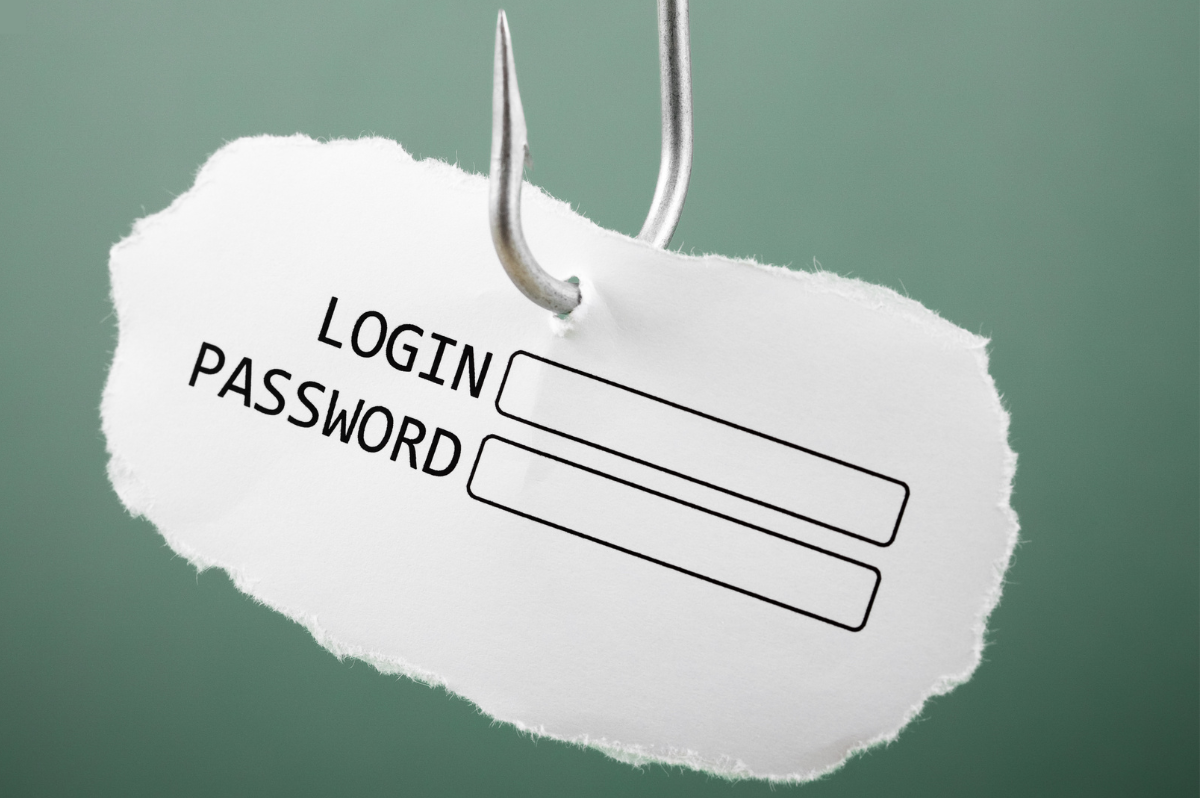
Phishing attacks have become an epidemic. Approximately 3.4 billion phishing emails are sent worldwide each day, making it the leading attack vector in 41% of all data breaches. And it’s not just e-mail—phishing has expanded to voice, text, social media, and even fake websites, targeting users across multiple platforms to steal sensitive information and compromise accounts.

The aim of a phishing scam is to steal your credentials, and it’s no wonder why—according to Verizon, 86% of data breaches in 2023 involved compromised credentials.  And AI is making the various phishing schemes easier than ever – from improving the quality of the e-mails themselves and removing the tell-tale grammatical errors to using fake voices in vishing scams, the effectiveness of these scams is only increasing.  

Below, we explore the different types of phishing and how they work, and then discuss how you can protect yourself from this ever-growing threat.

Classic Phishing Attacks

Classic phishing attacks typically involve deceitful emails designed to trick recipients into revealing personal information or clicking malicious links. These emails often mimic legitimate companies or organizations to gain the victim’s trust. Google intercepts around 100 million phishing emails daily, but that leaves quite a few still making it through. Telltale signs of a phishing e-mail are links that do not look right (perhaps a misspelled domain name like amazone.com or extra words like amazon.customersupport.com), some odd grammar choices, and a sense of urgency that seems out of place (“update info now or your account will be disabled!”)

SMShing (or Smishing)

“You won a $1,000 gift card!” “USPS cannot deliver your package, click here to update your address!” “Unusual activity detected on your bank account!”  Chances are, you’ve gotten a text message like that, which is an attempt at SMShing, or phishing via SMS.  Like e-mails, they often contain an unusual sense of urgency and some misplaced links, but the link shorteners commonly used in legitimate text messages make these harder to spot.  Always go directly to the company’s website to confirm any messages asking you to do anything (and any US government entity like the USPS or IRS) is not going to communicate with you solely via text.

If you’re in the US, did you know you can forward SMShing messages to the FTC?  Send to 7726 (AKA SPAM on your phone’s keypad) and it will help your wireless provider identify and block these messages in the future.  

Vishing

Vishing (short for “voice phishing”) is a type of phishing attack that uses voice communication, typically phone calls, to deceive victims into revealing sensitive information, such as login credentials, financial details, or personal data.   A very common one in the US purports to be from the IRS, threatening penalties and jail time due to back taxes.  This one has been around for a while – a viral video from 2018 shows a police officer in Midland, Texas talking to a scammer who tells him to clear his back taxes by buying Apple gift cards or the police would be en route to arrest him within 45 minutes.    

Spear Phishing

Spear phishing is a refined and highly targeted form of phishing that requires more effort and research from the attacker. Unlike general phishing, which casts a wide net hoping to snare any unsuspecting victim, spear phishing focuses on specific individuals or organizations. Attackers gather detailed information about their targets to create highly convincing messages that appear legitimate and relevant.

These attackers often utilize information from social media profiles, company websites, and other publicly available sources to customize their approach. The crafted messages may reference recent activities, personal interests, or professional responsibilities, making them difficult to distinguish from genuine communications. This personalization increases the chances of the victim being deceived.

For instance, an attacker targeting an executive might send an email that appears to be from a trusted colleague or business partner. The message might discuss a recent meeting or project, encouraging the recipient to click on a link or download an attachment. Once the victim takes the bait, they could unknowingly download malware or reveal sensitive information, potentially compromising the entire organization.

Spear phishing is not limited to email. Attackers may also use phone calls, social media messages, or even physical mail to carry out their schemes. Given the targeted nature of these attacks, they can have severe consequences, including data breaches, financial loss, and reputational damage.

Recognizing and defending against spear phishing requires a keen eye and a proactive approach. Employees should be trained to scrutinize unexpected communications, even if they seem to come from known contacts. Encourage staff to verify the legitimacy of suspicious messages by contacting the sender through a different, trusted method.

In addition to awareness training, employing technical defenses can help mitigate the risk of spear phishing. Advanced email filters, multi-factor authentication, and robust cybersecurity protocols add layers of protection. By combining vigilance with technological safeguards, individuals and organizations can better protect themselves against the sophisticated tactics of spear phishers.

Whaling

A whaling attack is a highly targeted phishing attack aimed at high-level executives, such as CEOs, CFOs, or other senior leaders within an organization. The goal is to deceive these individuals into sharing sensitive information, transferring funds, or granting access to confidential systems.  Unlike the first two methods, these attacks are often carefully crafted to appear legit, banking on busy executives who may get careless with doing their due diligence.  In addition to the usual compromised credentials, they might also target intellectual property or strategic competitive intelligence (but they’re not above wire fraud, either!)

Clone Phishing

Clone phishing is a type of phishing attack in which a legitimate email or message that the victim has previously received is copied (“cloned”) and slightly altered by an attacker. The goal is to trick the recipient into believing the new, fraudulent message is a genuine follow-up or update.  

This might not seem different than regular phishing, but the key is that it’s coming from a trusted source.  For instance, during the Okta breach, the targets were customers who had actually used Okta support recently.  Since they might be expecting a message from Okta, the recipients might have understandably not been as vigilant as normal in spotting any irregularities.  

Angler Phishing

Angler phishing is a type of social media phishing attack in which cybercriminals impersonate customer service accounts to deceive users into revealing sensitive information or downloading malware. The term “angler” comes from the way attackers “fish” for victims on social platforms.  When you consider that messaging company accounts on Facebook and/or Twitter has become an established way to get better support than going through traditional channels like phone or e-mail, this type of attack targets users who are already frustrated (and thus perhaps more likely to be careless.) 

Reducing Phishing Risks with Passwordless Login

Transitioning to passwordless certificate-based authentication is a promising strategy to counter phishing attacks. This method uses certificates for authentication, eliminating the need for passwords altogether. This means attackers cannot steal passwords through phishing, significantly reducing the risks of compromise.

In addition to a higher level of security, passwordless authentication simplifies the login process for users. Instead of remembering complex passwords, authentication is handled through the secure exchange of cryptographic keys, where a digital certificate issued by a trusted authority verifies the user’s identity. This enhances security and improves the user experience, making it more convenient and efficient.

Organizations adopting passwordless authentication can benefit from reduced helpdesk calls related to password resets and improved compliance with security policies. This transition also aligns with modern security standards and best practices, positioning organizations ahead of evolving cyber threats.

Embracing passwordless authentication can fortify your defenses against phishing and other cyberattacks, paving the way for a more secure and user-friendly digital environment.

About Portnox
Portnox provides simple-to-deploy, operate and maintain network access control, security and visibility solutions. Portnox software can be deployed on-premises, as a cloud-delivered service, or in hybrid mode. It is agentless and vendor-agnostic, allowing organizations to maximize their existing network and cybersecurity investments. Hundreds of enterprises around the world rely on Portnox for network visibility, cybersecurity policy enforcement and regulatory compliance. The company has been recognized for its innovations by Info Security Products Guide, Cyber Security Excellence Awards, IoT Innovator Awards, Computing Security Awards, Best of Interop ITX and Cyber Defense Magazine. Portnox has offices in the U.S., Europe and Asia. For information visit http://www.portnox.com, and follow us on Twitter and LinkedIn.。

About Version 2 Digital

Version 2 Digital is one of the most dynamic IT companies in Asia. The company distributes a wide range of IT products across various areas including cyber security, cloud, data protection, end points, infrastructures, system monitoring, storage, networking, business productivity and communication products.

Through an extensive network of channels, point of sales, resellers, and partnership companies, Version 2 offers quality products and services which are highly acclaimed in the market. Its customers cover a wide spectrum which include Global 1000 enterprises, regional listed companies, different vertical industries, public utilities, Government, a vast number of successful SMEs, and consumers in various Asian cities.

×

Hello!

Click one of our contacts below to chat on WhatsApp

×