Skip to content

ChatGPT security risks: Is it safe for enterprises?

Summary: ChatGPT security risks include data leaks, AI-powered phishing, and compliance issues. Learn how enterprises can mitigate threats and use AI safely.

ChatGPT is transforming enterprise workflows, but its rapid adoption raises serious security concerns. While artificial intelligence (AI)-powered chatbots streamline tasks and boost efficiency, they also introduce new risks—such as handling sensitive data, generating misleading content, and unknowingly enabling cyber threats. With 74% of breaches involving social engineering, attackers increasingly exploit AI-generated interactions to deceive users.

As artificial intelligence tools like ChatGPT become more advanced, enterprises must be proactive in securing their use of AI. This article will answer the question: “Is ChatGPT safe?”, explore real-world incidents, and outline best practices to keep you away from risks.

The advancing role of AI in business security

As businesses integrate AI chatbots into customer support, internal operations, and even cybersecurity processes, the technology becomes both an asset and a target. AI-based technologies can strengthen security by detecting threats, automating compliance, and improving fraud detection. But, they can also introduce risks if misconfigured or maliciously exploited.

For example, AI-driven security tools can analyze vast amounts of data to detect anomalies, helping prevent breaches before they occur. However, bad actors also use AI to automate cyber-attacks, generate convincing phishing emails, and bypass traditional security measures. The challenge for enterprises is to ensure that AI strengthens security rather than becomes an entry point for attackers.

By understanding both the advantages and vulnerabilities of ChatGPT adoption, organizations can implement the right strategies to harness its power safely.

Key ChatGPT security risks

As AI adoption accelerates in the enterprise space, so do the security risks associated with tools like ChatGPT. Understanding these risks is crucial for businesses to implement effective safeguards.

ChatGPT security risks


1. Exposure of sensitive data

One of the greatest risks of using AI chatbots is the accidental exposure of sensitive data. Employees may input confidential information, customer records, or proprietary strategies into the chatbot without realizing that OpenAI or third-party providers might store or analyze this data. This can lead to compliance violations and unintended data leaks.

2. Social engineering attacks

Threat actors can use ChatGPT to craft highly convincing phishing emails or impersonate legitimate users in real-time conversations. Cybercriminals may use AI-generated content to trick company employees into revealing login credentials, financial details, or other sensitive data.

3. Data breaches and unauthorized access

Since ChatGPT interacts with users and processes large amounts of information. If APIs and integrations aren’t properly secured, organizations can be exposed to data breaches. If an attacker gains access to stored chatbot interactions, they could retrieve valuable internal data.

4. Data poisoning and AI manipulation

Attackers can attempt data poisoning—feeding malicious or misleading information into AI models to alter their behavior. If enterprises rely on AI-generated insights, manipulated data could lead to false business decisions or even reputational damage.

5. Malicious code generation

Cybercriminals can exploit ChatGPT’s ability to generate code by using it to create malware, ransomware, or exploits. While OpenAI has implemented safeguards, threat actors may still find ways to bypass these restrictions. In fact, purpose-built malicious AI tools have already emerged, designed specifically for generating harmful code without ethical limitations.

6. Regulatory and compliance risks

Industries such as healthcare, finance, and legal services are subject to strict data privacy laws like GDPR, HIPAA, and CCPA. Enterprises using AI tools must ensure that chatbot interactions do not violate these regulations, particularly when handling personal or financial data.

7. Risks of Large Language Models (LLMs)

ChatGPT runs on a Large Language Model (LLM), an advanced AI system trained on vast amounts of text data to generate human-like responses. It can unintentionally produce misleading information or fabricate sources due to their open-ended nature. They are also vulnerable to prompt injections, where malicious inputs are used to manipulate the model’s responses.

By recognizing these security threats, organizations can take a proactive approach to lowering AI-related risks. Whether securing sensitive data, preventing unauthorized access, or addressing compliance challenges, businesses must remain aware of security threats.

ChatGPT’s security features: Safeguards and limitations

While ChatGPT security risks are a growing concern for enterprises, OpenAI has implemented several safeguards to mitigate potential threats. These include content filtering, prompt moderation, and ethical use policies designed to prevent malicious applications such as generating harmful content, phishing emails, or malware. Additionally, OpenAI continuously refines its model to reduce bias, misinformation, and unintended data leakage.

However, these safeguards have limitations. Threat actors test ways to bypass restrictions, using indirect prompts or fragmented queries to elicit restricted information. ChatGPT also lacks full context awareness. It cannot verify the accuracy of its outputs or detect when users manipulate its responses. While OpenAI does not retain chat history for training, enterprises must still assume that any data entered could be processed externally. This makes strict data governance policies a must.

Despite these measures, organizations can’t solely rely on ChatGPT’s security features to safeguard sensitive information. Implementing enterprise-grade security controls, such as access restrictions, API security, and AI monitoring solutions, remains essential in preventing unauthorized data exposure or AI-driven cyber threats.


Real-world examples of ChatGPT-related threats

AI-powered tools like ChatGPT are already shaping business operations, but their rapid adoption has led to security incidents that highlight potential risks. From accidental data leaks to AI-enhanced cybercrime, enterprises have faced real-world consequences when using these tools without proper safeguards.

The following cases highlight how weak ChatGPT security can expose sensitive information or even allow malicious actors to exploit it.

Samsung’s data leak

In 2023, Samsung Electronics faced a significant security incident when employees inadvertently leaked confidential company information through ChatGPT. Engineers from Samsung’s semiconductor division used ChatGPT to help debug and optimize source code. Unknowingly, they entered sensitive data, including proprietary source code and internal meeting notes, into the AI tool.

Since ChatGPT retains user inputs to refine its responses, this action risked exposing Samsung’s trade secrets to external parties. This event shows why companies need stringent data-handling policies and employee training on how to use AI tools in corporate environments.

AI-powered phishing campaigns

Cybersecurity researchers have observed that AI-generated phishing emails are not only more grammatically accurate but also more convincing, making them harder to detect. Moreover, AI is now used to craft deepfake voice scams. For instance, 2025 predictions warn of AI-driven phishing kits bypassing multi-factor authentication (MFA) and mimicking trusted voices via voice cloning.

A study highlighted by Harvard Business Review revealed that 60 % of participants were deceived by AI-crafted phishing messages, a success rate comparable to those created by people. This trend highlights the escalating challenge enterprises face in protecting employees from such deceptive tactics. ​

Fake customer support bots

Scammers have begun deploying AI-driven chatbots that impersonate real customer service representatives. These fraudulent bots engage users in real-time conversations, persuading them to hand over sensitive information such as passwords or payment details.

For instance, reports indicate that these AI chatbots can convincingly mimic the communication styles of reputable companies, leading unsuspecting customers to trust and interact with them.

This exploitation of AI technology shows why businesses must authenticate their customer communication channels and educate consumers recognize legitimate support interactions.

Best practices for safely using ChatGPT in enterprises

As real-world incidents show, organizations must recognize that while AI improves efficiency, it also requires thoughtful management to prevent misuse. To minimize risks, enterprises should adopt proactive security measures that ensure AI-powered tools are used safely.

How to use ChatGPT safely

The following best practices can help businesses leverage AI’s benefits while protecting sensitive information from unauthorized access, cyber threats, and compliance violations.

1. Implement strict data policies

Based on the recent mimecast cybersecurity report, human error remains the main cause of data breaches and cyber incidents. Employees may unknowingly expose sensitive information or interact with AI-generated responses containing malicious code, increasing the risk of security compromises.

To mitigate this, organizations should integrate automated Data Loss Prevention (DLP) tools to detect and block unauthorized data inputs into AI systems. Regular training, policy reinforcement, and security audits will help ensure compliance and minimize accidental data leaks.

2. Enable access controls and monitoring

Limit ChatGPT usage to authorized personnel by integrating it with Role-Based Access Controls (RBAC) and enterprise authentication systems. Implement logging mechanisms to track AI interactions, helping detect anomalies or potential data leaks. Regularly review access logs to ensure compliance with security policies and swiftly address unauthorized activities.

In addition, consider enablin gmulti-factor authentication (MFA) for high-privilege users to further restrict access to AI tools. By combining access controls with real-time monitoring, enterprises can mitigate insider threats and ensure AI usage aligns with security best practices.

3. Use AI detection tools

Deploy AI-driven security solutions to detect and mitigate threats like AI-generated phishing emails, cyber-attacks, or malicious chatbot activities. Advanced threat detection tools can flag suspicious patterns, such as unusual chatbot queries or high-risk prompts, to prevent potential cyber risks before they escalate.

These tools can be integrated with Security Information and Event Management (SIEM) platforms to provide real-time alerts on suspicious AI interactions. Additionally, setting up behavioral analytics can help identify unauthorized attempts to manipulate ChatGPT for malicious purposes, adding an extra layer of protection against AI-enabled threats.

4. Regularly update AI security settings

Ensure that all chatbot integrations comply with industry security standards, including ISO 27001, SOC 2, or GDPR, where applicable. Apply security patches and updates to address vulnerabilities and protect against threats. Conduct routine security assessments to identify weaknesses in chatbot configurations and AI-driven workflows.

Organizations should also perform penetration testing on AI integrations to uncover potential security gaps before they can be exploited. Establishing a structured incident response plan specific to AI security will further enhance the organization’s ability to mitigate risks and react swiftly to potential breaches.

5. Restrict external API access

If integrating ChatGPT into enterprise applications, secure API endpoints using authentication tokens, IP allowlisting, and encryption to prevent unauthorized access and data exfiltration. Implement rate limiting and anomaly detection to identify potential abuse or credential stuffing attacks targeting AI-powered APIs.

Additionally, establish a least privilege access model, ensuring that APIs only provide the minimum necessary data to function. Regularly rotate API keys and monitor unauthorized access attempts. This can further strengthen defenses against API-related threats.

6. Train employees on social engineering risks

People are the first line of defense. Conduct cybersecurity awareness programs to help employees recognize AI-generated phishing emails, deepfake scams, and impersonation tactics. Use simulated phishing exercises and real-world case studies to build awareness.

Employees should also be trained to identify signs of malicious code embedded in chatbot responses or AI-generated links. Encourage a Zero Trust mindset, where verification is prioritized over assumption in all AI-assisted communications.

By adopting these best practices, enterprises can strike a balance between AI-driven efficiency and robust security. Proactive governance, continuous monitoring, and employee awareness are key to using AI safely without compromising sensitive information.

Boost your security posture against malware & phishing with NordLayer’s DNS filtering by categories
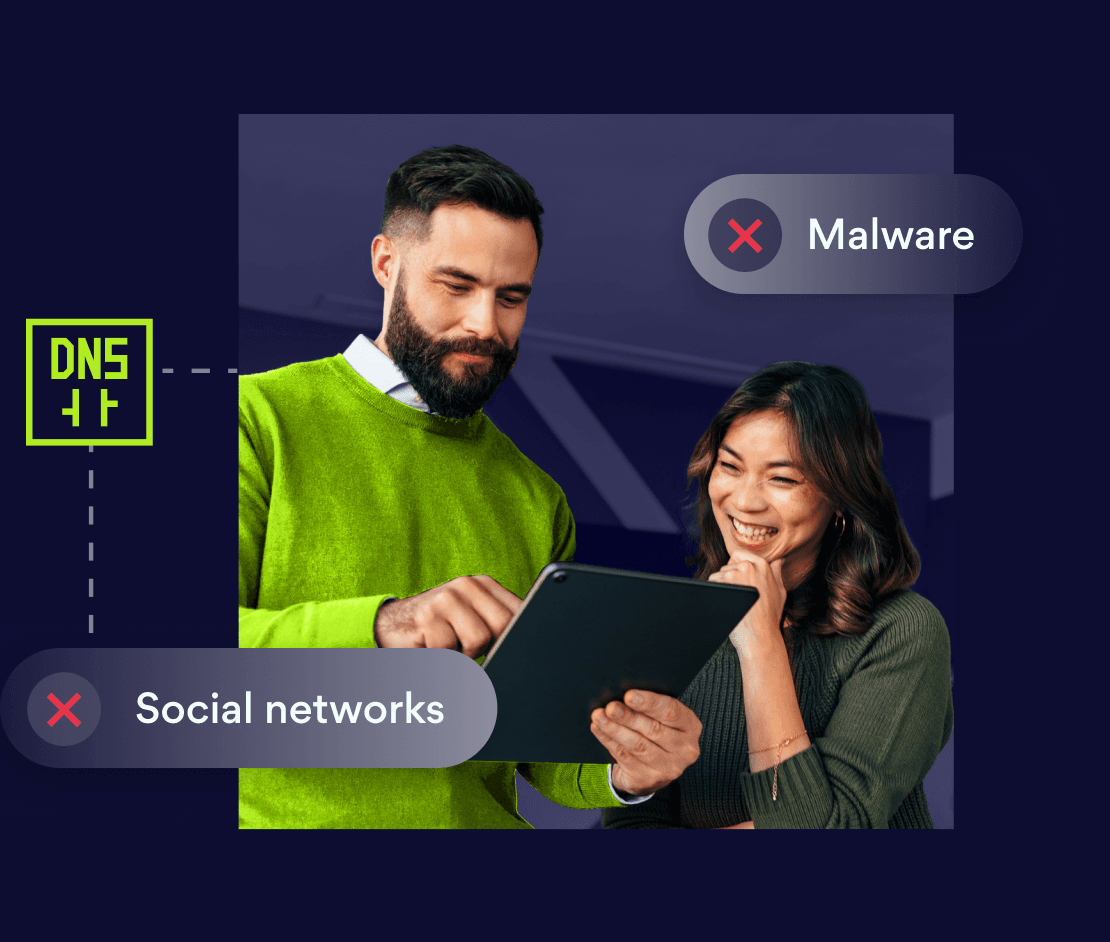
Try our DNS filtering now
desktop


How NordLayer supports secure enterprise environments

While NordLayer doesn’t directly address AI-specific risks, but it plays a crucial role in protecting the broader network environment where AI tools like ChatGPT are used.

Solutions like Secure Web Gateway, Cloud Firewall, and Zero Trust Network Access (ZTNA) help safeguard against phishing, malicious code delivery, and unauthorized access—common threats that can be amplified by AI-driven tools.

By enforcing strong access policies and maintaining network visibility, NordLayer helps organizations stay secure and compliant while exploring AI technologies.


Why choose NordLayer?

  • Secure network infrastructure: Keeps your data safe when accessing or integrating AI tools
  • Zero Trust security: Ensures only authorized users access critical resources
  • Threat intelligence: Detects and mitigates phishing, malware, and AI-driven social engineering attacks
  • Compliance-ready solutions: Helps organizations meet NIS2, CIS Controls, HIPAA, and other key industry frameworks


Conclusion

AI-powered tools like ChatGPT offer numerous advantages for enterprises but also introduce significant security risks. From data leaks and cyber-attacks to regulatory concerns, organizations must take proactive measures to safeguard their operations.

By following best practices and using network security solutions like NordLayer, businesses can securely integrate AI chatbots while minimizing potential threats.

 

About NordLayer
NordLayer is an adaptive network access security solution for modern businesses – from the world’s most trusted cybersecurity brand, Nord Security.

The web has become a chaotic space where safety and trust have been compromised by cybercrime and data protection issues. Therefore, our team has a global mission to shape a more trusted and peaceful online future for people everywhere.

About Version 2 Digital

Version 2 Digital is one of the most dynamic IT companies in Asia. The company distributes a wide range of IT products across various areas including cyber security, cloud, data protection, end points, infrastructures, system monitoring, storage, networking, business productivity and communication products.

Through an extensive network of channels, point of sales, resellers, and partnership companies, Version 2 offers quality products and services which are highly acclaimed in the market. Its customers cover a wide spectrum which include Global 1000 enterprises, regional listed companies, different vertical industries, public utilities, Government, a vast number of successful SMEs, and consumers in various Asian cities.

Perforce Offers Enterprises a Supported, Cost-Effective Alternative to Proprietary Kafka Platforms


About Perforce
The best run DevOps teams in the world choose Perforce. Perforce products are purpose-built to develop, build and maintain high-stakes applications. Companies can finally manage complexity, achieve speed without compromise, improve security and compliance, and run their DevOps toolchains with full integrity. With a global footprint spanning more than 80 countries and including over 75% of the Fortune 100, Perforce is trusted by the world’s leading brands to deliver solutions to even the toughest challenges. Accelerate technology delivery, with no shortcuts.

About Version 2 Digital

Version 2 Digital is one of the most dynamic IT companies in Asia. The company distributes a wide range of IT products across various areas including cyber security, cloud, data protection, end points, infrastructures, system monitoring, storage, networking, business productivity and communication products.

Through an extensive network of channels, point of sales, resellers, and partnership companies, Version 2 offers quality products and services which are highly acclaimed in the market. Its customers cover a wide spectrum which include Global 1000 enterprises, regional listed companies, different vertical industries, public utilities, Government, a vast number of successful SMEs, and consumers in various Asian cities.

ESET helps MSPs by integrating with the Kaseya VSA X RMM solution

  • ESET launches a new integration of its ESET Endpoint product with the Kaseya VSA X remote monitoring and management (RMM) solution.
  • MSP admins will find their workloads simpler, due to less time spent managing multiple solutions, giving them more space for their daily tasks.

BRATISLAVAApril 16, 2025 — ESET, a global leader in cybersecurity solutions, today announced the launch of another major integration, this time, with the Kaseya VSA X remote monitoring and management (RMM) software.

ESET has worked with MSPs for a long time, creating successful programs such as the ESET MSP Program, with subscription flexibility (pay only for what’s in use, no flat rates, no long-term commitment), co-management (independent seat count adjustment and subscription management), or  tier-based volume pricing (the more licenses sold, the better the unit price), among others.

Thus, we understand the needs of our partners as well as their clients. Among these is an interest in running efficient workloads, cutting down on time spent in “swivel chair” operations, and simplifying their use of multiple products, while not sacrificing on their security postures.

Such results are only achievable through integrations, which ESET identifies as a key contemporary trend. As a partner- and channel-focused cybersecurity vendor, we understand this, and we develop and maintain support for all the most prevalent RMM and PSA tools out there, now joined by Kaseya VSA X, a leading RMM product.

Thanks to this new integration, users of Kaseya VSA X can now also serve organizations that use ESET. In essence, it enables MSPs to deploy and manage ESET Endpoint products directly from within the Kaseya VSA X interface, so they can perform their necessary management actions without having to log in to a separate console.

With support for additional workflows, MSPs can set up automatic actions for common scenarios. For instance, a workflow can be used to automatically deploy ESET to a freshly provisioned machine, or a workflow could be configured to provide a notification in case a threat is detected on an endpoint.

Some other key features are:

  • “One Click” or automated deployment of ESET Endpoint products
  • Monitoring of endpoint health (product, version, protection status)
  • On-demand tasks such as scanning and activation

“We’ve been working with MSPs for a very long time, and ESET is a favorite vendor among thousands of MSPs across the world,” said Rob Jones, Global Channel Business Developer at ESET. “With the features provided through our new integration with Kaseya VSA X software, MSP administrators will unlock extensive benefits, such as simpler workflows, easier monitoring, as well as enhanced time savings. We know what MSPs need, and with this integration, we are directly addressing multiple pain points to make their businesses more efficient.”

Version 1.0 of this integration will support Windows endpoints that are running ESET Endpoint Antivirus, Endpoint Security, or Server Security.

ESET will be continuing its integration journey, so stay tuned for more updates in the future. In the meantime, feel free to check out our ESET integrations webpage to see the list of our existing partners and connections.

About ESET
For 30 years, ESET® has been developing industry-leading IT security software and services for businesses and consumers worldwide. With solutions ranging from endpoint security to encryption and two-factor authentication, ESET’s high-performing, easy-to-use products give individuals and businesses the peace of mind to enjoy the full potential of their technology. ESET unobtrusively protects and monitors 24/7, updating defenses in real time to keep users safe and businesses running without interruption. Evolving threats require an evolving IT security company. Backed by R&D facilities worldwide, ESET became the first IT security company to earn 100 Virus Bulletin VB100 awards, identifying every single “in-the-wild” malware without interruption since 2003.

About Version 2 Digital

Version 2 Digital is one of the most dynamic IT companies in Asia. The company distributes a wide range of IT products across various areas including cyber security, cloud, data protection, end points, infrastructures, system monitoring, storage, networking, business productivity and communication products.

Through an extensive network of channels, point of sales, resellers, and partnership companies, Version 2 offers quality products and services which are highly acclaimed in the market. Its customers cover a wide spectrum which include Global 1000 enterprises, regional listed companies, different vertical industries, public utilities, Government, a vast number of successful SMEs, and consumers in various Asian cities.

Storware Recognized in 2025-26 DCIG TOP 5 VMware Backup – MSP Edition Report

We’re thrilled to announce that Storware has been recognized in the recently released 2025-26 DCIG TOP 5 VMware Backup – MSP Edition Report. This report provides critical insights for Managed Service Providers (MSPs) seeking robust and reliable VMware backup solutions, and we’re proud to be included.

The DCIG report highlights the evolving landscape of VMware backup, emphasizing key trends such as the increasing importance of AI-driven anomaly detection, cross-hypervisor capabilities, and advanced cybersecurity features. Storware’s commitment to delivering comprehensive data protection solutions aligns perfectly with these trends.

At Storware, we understand the unique challenges MSPs face in protecting their clients’ virtualized environments. Our solutions are designed to provide:

  • Robust VMware Backup: Ensuring reliable protection for critical VMware workloads.
  • Advanced Data Protection: Incorporating key modern backup features.
  • Flexibility and Scalability: Adapting to the dynamic needs of MSP operations.

This recognition from DCIG reinforces our dedication to providing MSPs with the tools they need to ensure data integrity and business continuity.

We invite you to learn more about how Storware can empower your MSP business. Contact our sales team for more information.

To gain more information about the report, you can visit the DCIG website.

We are proud to be a part of the solutions that are helping MSP’s to protect their clients data.

About Version 2 Digital

Version 2 Digital is one of the most dynamic IT companies in Asia. The company distributes a wide range of IT products across various areas including cyber security, cloud, data protection, end points, infrastructures, system monitoring, storage, networking, business productivity and communication products.

Through an extensive network of channels, point of sales, resellers, and partnership companies, Version 2 offers quality products and services which are highly acclaimed in the market. Its customers cover a wide spectrum which include Global 1000 enterprises, regional listed companies, different vertical industries, public utilities, Government, a vast number of successful SMEs, and consumers in various Asian cities.

About Storware
Storware is a backup software producer with over 10 years of experience in the backup world. Storware Backup and Recovery is an enterprise-grade, agent-less solution that caters to various data environments. It supports virtual machines, containers, storage providers, Microsoft 365, and applications running on-premises or in the cloud. Thanks to its small footprint, seamless integration into your existing IT infrastructure, storage, or enterprise backup providers is effortless.

Scale Computing and Veeam Partner to Bring Enterprise-Class Data Protection to Scale Computing Platform

Collaboration brings Veeam data resilience solutions to Scale Computing’s edge and core infrastructure, with live demonstrations of SC//Platform at VeeamON 2025

Indianapolis — April 16, 2025 — Scale Computing, a leader in edge computing, virtualization, and hyperconverged solutions, today announced a new strategic collaboration with Veeam® Software, the #1 leader by market share in Data Resilience. As part of the Veeam Integrated program, Veeam and Scale Computing have joined forces to bring customers full support for the Scale Computing Platform (SC//Platform) within the Veeam Data Platform, expanding backup and recovery capabilities across Scale Computing’s rapidly growing installed base of edge and core infrastructure deployments.

With more businesses deploying distributed applications at the edge and modernizing their IT infrastructure at the core, SC//Platform offers the industry’s most efficient, scalable, and cost-effective virtualization platform for IT leaders looking to move away from VMware. With native integration into the Veeam Data Platform, organizations can take full advantage of Veeam’s powerful data protection, ransomware recovery, and workload mobility, ensuring business continuity across any environment, from retail branches and factory floors to centralized data centers, showcasing this collaboration for Veeam users who are looking to transition away from VMware.

“The partnership between Scale Computing and Veeam delivers the best of both worlds: streamlined, autonomous IT infrastructure from Scale Computing and the industry’s most trusted data resilience platform from Veeam,” said Jeff Ready, CEO and co-founder of Scale Computing. “Our customers and partners have long asked for deeper integration with Veeam, and we’re proud to meet that need while strengthening cyber resiliency for both core and edge deployments.”

Live demonstrations of the Scale Computing solution will be featured at VeeamON 2025, taking place April 21-23, 2025 at booth #G5 in San Diego, CA.

Key Benefits Expected with SC//Platform and Veeam Integration Include:

  • Immutable Backups at the Edge and Core: Prevent data loss from ransomware or human error with hardened, tamper-proof backup repositories and optional air-gapped media support—available across all SC//Platform deployments.
  • High-Performance VM Protection: Advanced changed block tracking (CBT) and SC//HyperCore’s unique snapshot architecture enable fast, low-impact VM backups and rapid recovery across the full infrastructure lifecycle.
  • Simplified Data Management: Unified, browser-based management through Scale Computing Fleet Manager, along with seamless integration with Veeam Backup & Replication within the Veeam Data Platform, streamlines operations at scale—from 1 to 50,000 clusters.
  • Flexible Storage & Recovery: Choose from a variety of Veeam-compatible backup targets, including object storage, tape, and cloud, and leverage full VM and granular file recovery from SC//Platform to any supported environment.
  • Workload Mobility with Confidence: Migrate and restore workloads between SC//Platform, VMware vSphere, Microsoft Hyper-V, and major public cloud environments without compromising performance or security.

“As our customers expand their edge and core environments, ensuring data resilience becomes increasingly complex,” said Shiva Pillay, Senior Vice President and General Manager, Americas at Veeam. “This collaboration with Scale Computing further strengthens Veeam’s mission to empower organizations to protect and ensure the availability of their data at all times and from anywhere, delivering cyber recovery and data portability across a purpose-built platform tailored for the unique needs of edge IT.”

The announcement follows growing demand from Scale Computing’s enterprise and midmarket customers for integrated, cost-effective backup and recovery across increasingly distributed environments. Whether modernizing legacy infrastructure, replacing expensive virtualization solutions, or extending capabilities to the edge, SC//Platform with Veeam provides a compelling solution with unmatched simplicity, scalability, and protection.

About Scale Computing 
Scale Computing is a leader in edge computing, virtualization, and hyperconverged solutions. Scale Computing HC3 software eliminates the need for traditional virtualization software, disaster recovery software, servers, and shared storage, replacing these with a fully integrated, highly available system for running applications. Using patented HyperCore™ technology, the HC3 self-healing platform automatically identifies, mitigates, and corrects infrastructure problems in real-time, enabling applications to achieve maximum uptime. When ease-of-use, high availability, and TCO matter, Scale Computing HC3 is the ideal infrastructure platform. Read what our customers have to say on Gartner Peer Insights, Spiceworks, TechValidate and TrustRadius.

About Version 2 Digital

Version 2 Digital is one of the most dynamic IT companies in Asia. The company distributes a wide range of IT products across various areas including cyber security, cloud, data protection, end points, infrastructures, system monitoring, storage, networking, business productivity and communication products.

Through an extensive network of channels, point of sales, resellers, and partnership companies, Version 2 offers quality products and services which are highly acclaimed in the market. Its customers cover a wide spectrum which include Global 1000 enterprises, regional listed companies, different vertical industries, public utilities, Government, a vast number of successful SMEs, and consumers in various Asian cities.

×

Hello!

Click one of our contacts below to chat on WhatsApp

×