Skip to content

Storware 與 VergeIO 攜手合作 為超融合基礎設施提供完整的備份與還原解決方案

Storware 宣布與超融合基礎設施的領導者 Verge.io 展開合作。此次策略性合作是為了回應市場對即買即用方案(Turnkey Solution)的需求,提供一個整合的數據中心操作環境,包含全面的備份與災難還原功能,並加強防範勒索軟件攻擊的保護能力。Verge.IO 作為 VMware 替代方案的先驅,提供了便捷的方式來利用現有硬件部署強大平台,增強數據的彈性與處理效率。VergeOS 軟件不僅靈活,且能夠在簡單的技術設置下啟動項目,同時保持高可用性與工作負載的擴展性。此次Storware 與 Verge.IO 的合作,將進一步強化數據的機密性,確保業務持續運營。這一合作將適用於各種環境中的工作負載基礎設施,如安全研究、高效能運算 (HPC)、超融合數據中心,以及多租戶私有雲等。

合作重點:

  • 提供全球化解決方案,簡化數據中心的虛擬化過程
  • 公司企業可以利用封裝的端點到端點軟件,靈活地構建或擴展 IT 環境,無需耗費大量時間和資金
  • Storware 的備份與還原方案,透過簡單的整合控制台管理備份工作,而 VergeOS 提供了構建封裝虛擬數據中心的功能
  • 硬件無關的基礎設施軟件,幫助企業應對快速變化的需求與業務增長
  • 隨著環境的擴展,顯著降低總擁有成本 (TCO)

Storware 行政總裁 Jan Sobieszczanski 表示:「Storware 與 Verge.IO 的合作不僅僅是夥伴關係,更是創新與專業技術的結合,推動技術轉型的加速。我們相信,結合了 VergeOS 超融合基礎設施與 Storware 強大的備份與還原技術的解決方案,將能有效應對市場上的新挑戰。」

Storware 的備份與還原與 VergeOS 的整合,將為客戶提供強大的數據保護能力,抵禦網絡攻擊,並具備增量和差異備份、精細度還原選項以及自動化備份排程等功能。隨著市場對數據中心虛擬化需求的增長,Storware 與 Verge.IO 將提供即買即用解決方案,滿足這些需求。

「Storware 備份與還原與 VergeOS 的結合,讓客戶在轉向 VMware 替代方案時更加放心。這套解決方案不僅具備快速備份的能力,還能通過增量和差異備份、精細度還原以及自動備份排程,強化數據的保護。」VergeIO 行政總裁 Yan Ness 補充道。

關於 VergeIO

VergeIO 是虛擬化技術的未來,也是 VMware 替代方案的領導者。不同於傳統的超融合基礎設施(HCI),VergeIO 的超融合基礎設施 (UCI) 將計算、儲存和網絡整合為一個集成的數據中心操作環境 VergeOS。其高效能不僅提高了工作負載密度,還能在使用現有硬件的同時提升數據的彈性。這不僅能顯著降低成本,還提高了可用性並簡化 IT 管理。

關於 Storware

Storware 是一家專注於備份軟件的企業,擁有超過十年的行業經驗。Storware 的備份與還原解決方案適用於各種數據環境,無論是虛擬機、容器、儲存提供商、Microsoft 365 還是運行在本地或雲端的應用程式,均能提供支援。其小巧的設計使其能夠無縫整合進現有的 IT 基礎設施或企業級備份方案中,提供極為便捷的備份保護。

About Version 2

Version 2 Digital is one of the most dynamic IT companies in Asia. The company distributes a wide range of IT products across various areas including cyber security, cloud, data protection, end points, infrastructures, system monitoring, storage, networking, business productivity and communication products. Through an extensive network of channels, point of sales, resellers, and partnership companies, Version 2 offers quality products and services which are highly acclaimed in the market. Its customers cover a wide spectrum which include Global 1000 enterprises, regional listed companies, different vertical industries, public utilities, Government, a vast number of successful SMEs, and consumers in various Asian cities.

Perforce Announces Hadoop Service Bundle – a New Open Source Big Data Management Offering

MINNEAPOLIS, OCTOBER 1, 2024 – Perforce Software, the DevOps company for global teams requiring speed, quality, security and compliance at scale along the development lifecycle, today announced the Hadoop Service Bundle, a new professional services and support offering from OpenLogic by Perforce

This new solution offers enterprises a way to reduce Big Data management costs up to 60% by deploying an open source software-based Big Data stack and storing their data on-premises, in a public cloud, or a hybrid environment instead of in Cloudera’s Hadoop-based, public cloud platform.

“The Hadoop Service Bundle unlocks more options for enterprise organizations that want to own their Big Data infrastructure,” said Matthew Weier O’Phinney, Senior Product Manager at Perforce Software. “The Hadoop ecosystem has matured to the point where we can build a completely open source stack that is equivalent to the platform that Cloudera sells.”

In light of the fact that many Hadoop teams have invested in commercial, private cloud options to keep their most sensitive data secure, the Hadoop Service Bundle offers flexibility around where data is hosted. “No one should be forced to migrate to the public cloud if they don’t want to,” said Weier O’Phinney.

As part of the Hadoop Service Bundle, OpenLogic will oversee the base installation, data migration, and reference installation of customers’ Hadoop instances. For those organizations without the internal expertise required to fully manage a Hadoop implementation, technical support and administration is also included in the Hadoop Service Bundle.

Whereas the Cloudera Data Platform comes with a preset suite of software, the Hadoop Service Bundle allows teams to decide which tools and technologies to include in their Big Data stack based on their use case, potentially reducing deployment overhead.

“The Big Data landscape has evolved dramatically in recent years and the demand for more customizable, cost-effective solutions is what led us to develop the Hadoop Service Bundle,” said Rod Cope, Chief Technology Officer at Perforce Software. “For organizations that want to avoid vendor lock-in and keep costs low by storing their data in-house, in an open source stack built to accommodate their business needs, the Hadoop Service Bundle will be an appealing alternative.”

About Version 2 Digital

Version 2 Digital is one of the most dynamic IT companies in Asia. The company distributes a wide range of IT products across various areas including cyber security, cloud, data protection, end points, infrastructures, system monitoring, storage, networking, business productivity and communication products.

Through an extensive network of channels, point of sales, resellers, and partnership companies, Version 2 offers quality products and services which are highly acclaimed in the market. Its customers cover a wide spectrum which include Global 1000 enterprises, regional listed companies, different vertical industries, public utilities, Government, a vast number of successful SMEs, and consumers in various Asian cities.

About Perforce
The best run DevOps teams in the world choose Perforce. Perforce products are purpose-built to develop, build and maintain high-stakes applications. Companies can finally manage complexity, achieve speed without compromise, improve security and compliance, and run their DevOps toolchains with full integrity. With a global footprint spanning more than 80 countries and including over 75% of the Fortune 100, Perforce is trusted by the world’s leading brands to deliver solutions to even the toughest challenges. Accelerate technology delivery, with no shortcuts.

What is a bastion host and does your business need it?

Summary: Bastion hosts differ from firewalls and VPNs, offering more control over assets. Read our article and see if your business needs one.

In a world of data breaches and cyber threats, data protection and business health are two sides of the same coin.

Bastion hosts are one of the most common security solutions, protecting data at the network edge. But these digital fortifications are widely seen as outdated by security experts. Are they still viable options for modern companies?

This blog will dive into the issue and come up with some answers. We will learn how bastion hosts work and why some companies use them, but we will also assess their security pros and cons.

You may prefer cutting-edge alternatives instead of traditional bastion hosts. Let’s find out more to help you decide.

Bastion host definition

A bastion host is a highly-secured server. Bastions reside on the network perimeter to control or manage traffic between trusted and untrusted network zones.

What is a bastion host?

A bastion host is a highly secured server placed at the network edge to protect against cyber attacks. It creates a bridge-like structure between the public internet and local devices. Traffic entering the network must cross this bridge, where tools can allow or deny entry.

Bastion hosts are hardened to withstand cyber attacks. They enhance network security by controlling what enters or leaves the network. In remote work contexts, bastion hosts act as SSH proxies, enabling secure SSH connections.

How does a bastion host work?

Historically, bastions were parts of fortresses or castles that projected away from the main building. Bastions were forward defenses designed to repel attacks before enemies could breach the perimeter.

The same principles apply to network bastions. Bastion hosts act like gatekeepers at the network edge or on the edge of secure zones. This gatekeeper decides who enters the “castle” and who remains outside.

Businesses position bastions strategically to withstand cyber attacks. They protect data or devices from harm through a range of features:

Security centralization

Bastions provide a way to centralize network security via SSH connections. The bastion host checks the device and user credentials. If users are on approved access lists, the bastion approves the connection and allows entry.

This solution is efficient but generally insecure. Most companies prefer to strengthen their defenses via VPNs, firewalls, and access management systems.

Jump servers

Jump servers are secure gateways that allow administrators to manage software or devices within protected network zones. The bastion acts as a jump server by requesting authentication credentials and controlling access, keeping attack surfaces as small as possible.

For instance, bastions may allow a firewall administrator to change filtering settings while denying requests from all other users.

Companies often use bastions as jump servers to maintain distributed network assets. Networks may extend across the world. Bastion hosts allow a centrally-located IT department to access distant office networks securely.

Access control

As the outer fortification, bastions enforce access control policies. They request multiple authentication factors and check user credentials against secure directories.

Bastions also provide a secure proxy gateway for SSH (Secure Shell) connections. SSH creates secure connections between remote devices and internal services. The SSH protocol encrypts data passing through the bastion. SSH agent forwarding allows users to access multiple servers via the bastion gateway.

Network logging

Finally, bastion hosts log user access and session activity. All users and data entering a private network must pass through the server. Logging tools track general information about user sessions. However, they do not track user activity in-depth, but these logs can be integrated with external security systems to create alerts about suspicious behavior.

Types of bastion hosts

In terms of network security, there are three main bastion host configurations: single, dual, and internal. Each version uses similar technologies. However, they operate differently, and security services differ as well.

Additionally, organizations can combine more than one configuration type. For example, you might use a single-bastion inline server for perimeter protection, alongside internal bastions to guard sensitive network zones.

Single-bastion inline

Single-Bastion inline hosts place a single fortified server between the untrusted networks (like the public internet) and internal network assets.

This bastion server type acts like a gateway for network traffic, filtering traffic before it reaches network devices. This filtering function may complement firewalls, intrusion detection systems (IDS), or additional proxy servers.

A single-bastion host can enhance network security. However, the use of one server creates a single point of failure. Concentrated attacks can overwhelm security tools on a single server, raising security risks for critical assets.

Dual-bastion inline

Dual-bastion host setups place two fortified servers between an untrusted external network and internal network assets. The two servers exist in series, creating a chain of network defenses.

In a dual-bastion inline arrangement, the first host directly faces the public internet. This host executes basic security tasks, including packet inspection and firewall filtering.

The second bastion faces internal network devices. This host adds extra layered security together with intrusion detection, deep packet inspection, or proxy server functions.

Layered bastion host setups are usually more secure than single host configurations. Attackers struggle to take down dual servers, and layered security neutralizes threats efficiently. This setup suits load balancing, where one bastion manages incoming traffic, and the other handles outbound connections. It also provides a backup if one server fails, ensuring continuous operations for critical data or sensitive applications.

On the negative side, dual-bastion host setups are more complex to configure. Dual bastions may increase network latency. Maintenance is also more complicated and resource-intensive.

Internal bastion host

Internal bastion hosts are fortified servers located within internal networks. These bastion servers operate behind network firewalls. They are not directly exposed to an external network.

Internal bastions are a preferred option when defending critically important servers or devices and sensitive internal resources. The internal bastion provides an extra line of defense and limits east-west traffic within the network. Security teams can use internal bastions to create secure zones and guard against insider threats.

Bastions create a perimeter around critical assets. Servers use authentication and IAM tools to allow secure access. They log activity and filter internal traffic while enabling legitimate access for network users.

Internal bastion hosts enhance security but may increase network complexity. Bastions can become traffic bottlenecks and can be compromised by some network attacks.

What are the security risks of using a bastion host?

When they function correctly, bastion hosts enhance network security. However, compromised bastions can expose networks to security risks. Compromised hosts become secure gateways for attackers — defeating the initial purpose.

Attackers gaining control of a bastion host can use their position to access other network resources. They may extract sensitive data from traffic flowing across the host, and use this data to gain further access.

Compromised hosts aren’t the only security issue to worry about. Other bastion host risks include:

  • Misconfiguration. Attackers can exploit improperly configured access control rules. A poorly configured bastion host can also obscure visibility into network activities. This makes it harder for security teams to ensure timely threat detection and response to attacks.
  • Maintenance. Bastion hosts are complex to deploy and manage. The IT department must deliver up-to-date patches and retire a deprecated operating system or security tools. Regular audits consume time and resources technicians can spend on other security tasks.
  • Single points of failure. Relying on a single bastion host creates a single target for attackers. Host failure can expose the private network to external threats. Bastion downtime can also take systems offline until technicians restore security features.
  • SSH key vulnerabilities. Extra security problems arise if you use your bastion host as an SSH proxy. Attackers obtaining SSH keys gain root-level network access. SSH is not designed for secure key management, creating a constant cybersecurity risk.

Bastion hosts are labor-intensive and carry significant risks. Consider alternative measures to counter external threats. If not, take care when adding bastion protection to your private network.

Best practices for securing bastion hosts

If you opt for bastion host protection, it’s important to do so safely. With that in mind, here are some best practices to follow when securing bastion hosts:

  • Minimize the attack surface. Large attack surfaces put bastion hosts at risk. Remove all unnecessary software or processes. Only retain protocols or tools that promote security. Use port scanning regularly to check for vulnerabilities.
  • Implement access control measures. Only authorized users should be able to access the bastion host. Use network-level controls to admit approved IP addresses and manage SSH connections. Update firewall settings to cover all relevant users.
  • Use SSH safely. As noted earlier, SSH creates security risks. Protect remote connections with multi-factor authentication. SSH does not reset keys automatically, so schedule regular SSH key updates.
  • Automate patch management processes. Take human error out of the equation. Automate patch deliveries to keep bastion host firmware up-to-date.

What is the difference between a firewall and a bastion host?

Now we know more about defending a bastion host, let’s clear up some misconceptions about what they are (and what they do).

For instance, people often confuse bastions and firewalls. This is understandable as bastion hosts often include firewall capabilities. Firewall appliances inspect and filter traffic passing across the entire network perimeter. Sometimes, firewalls provide sufficient protection. However, firewalls on their own have limited access management capabilities.

Bastions also operate at the network edge. Unlike firewalls, bastions protect and manage access to specific locations or assets. Onboard firewalls and security tools create a demilitarized zone outside the network perimeter.

This DMZ adds an extra layer of protection beyond firewall filters. Fortified bastion hosts offer greater control over internal network access. They are also hardened to cope with cyber threats, while firewalls are not.

VPN vs. bastion host

Another common point of confusion is between VPNs and bastion hosts. Again, this is understandable. Both technologies allow secure remote access and SSH connections. But they are very different.

VPNs create encrypted tunnels to transfer data. Users generally install a VPN client on their device. The client encrypts data and routes it via a VPN server, which assigns a new IP address and passes data to its destination.

Using a VPN solves some of the security problems we noted earlier. VPNs protect SSH keys beneath a layer of encryption. They shrink the attack surface by creating private connections without direct exposure to the public internet.

Bastion hosts are exposed to external networks, leaving security risks unaddressed. They also represent a single point of failure, which is less of a problem with VPNs.

On the other hand, administrators can harden bastions to minimize threats. Bastions also make it easier to prevent data extraction. VPN users can download data onto remote devices, and switching off the VPN can put this data at risk.

Hybrid VPN and bastion host setups are also possible. VPNs protect remote access connections in a user-friendly way, while bastions protect sensitive endpoints and create secure zones for high-value data.

Does your business need a bastion host?

Possibly, but probably not. Companies mainly use bastion hosts to lock down sensitive data. For instance, you may handle protected health information (PHI) or customer financial records. The bastion creates a DMZ around critical data only approved users can enter.

Bastion hosts are also useful for connecting different offices. Admins can safely manipulate software remotely, while the bastion excludes unauthorized users.

Some businesses use bastions in remote access systems. If you rely on SSH connections and are happy to risk a single point of failure, bastions provide robust protection for on-premises assets.

However, bastion server architecture is outdated and risky. Bastions are poorly suited to safeguarding cloud computing assets. Cloud-based firewall-as-a-service (FWaaS), remote access VPNs, Zero Trust Network Access (ZTNA) and access management tools provide a scalable and more secure alternative.

Maintaining bastion hosts is costly and complex, a problem for small and medium-sized enterprises that need to cut overheads. Larger businesses may find uses for bastion technology, but for many companies, the risks and costs are not worthwhile.

Find the right security solution with NordLayer

Bastion hosts are outdated and risky, but what is the best way to secure on-premises, remote, and cloud-hosted assets? NordLayer’s Zero Trust solutions provide a streamlined alternative.

NordLayer’s remote access VPN enables secure access to your private network and sensitive resources. Companies can create private gateways to replace bastion hosts, while site-to-site VPNs safely establish secure connections to hybrid networks.

Our Multiple Network Access Control (NAC) solutions let you control access to hybrid services at a granular leve. Threat prevention tools prevent access to malicious websites and unauthorized intrusion, and scan downloads for malware. Users do not need to configure bastion hosts. Flexible solutions plug every potential vulnerability.

Assess your network security needs and create a data protection strategy. When you do, go beyond bastions and outdated technology. Contact the NordLayer team to discuss next-generation remote access security.

About Version 2 Digital

Version 2 Digital is one of the most dynamic IT companies in Asia. The company distributes a wide range of IT products across various areas including cyber security, cloud, data protection, end points, infrastructures, system monitoring, storage, networking, business productivity and communication products.

Through an extensive network of channels, point of sales, resellers, and partnership companies, Version 2 offers quality products and services which are highly acclaimed in the market. Its customers cover a wide spectrum which include Global 1000 enterprises, regional listed companies, different vertical industries, public utilities, Government, a vast number of successful SMEs, and consumers in various Asian cities.

About NordLayer
NordLayer is an adaptive network access security solution for modern businesses – from the world’s most trusted cybersecurity brand, Nord Security.

The web has become a chaotic space where safety and trust have been compromised by cybercrime and data protection issues. Therefore, our team has a global mission to shape a more trusted and peaceful online future for people everywhere.

About NordLayer
NordLayer is an adaptive network access security solution for modern businesses – from the world’s most trusted cybersecurity brand, Nord Security.

The web has become a chaotic space where safety and trust have been compromised by cybercrime and data protection issues. Therefore, our team has a global mission to shape a more trusted and peaceful online future for people everywhere.

Be more productive and save time with CloudM Migrate 4.0


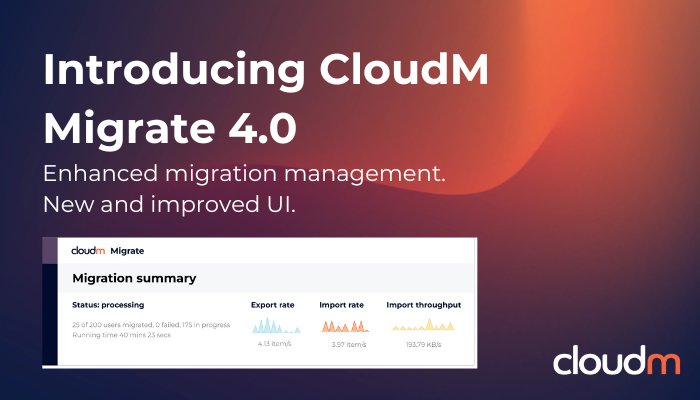
Introducing CloudM Migrate 4  

Migrate 4 builds on the longstanding success of its predecessors, but makes bold strides to advance its feature set and user experience. 

Revamped UI

Migrate 4 features a new and improved UI that is easier and more intuitive to navigate, enabling users to complete their work more quickly and efficiently. 

play_circle
Video: Migrate 4 sports a much cleaner UI.

Efficiency at the heart

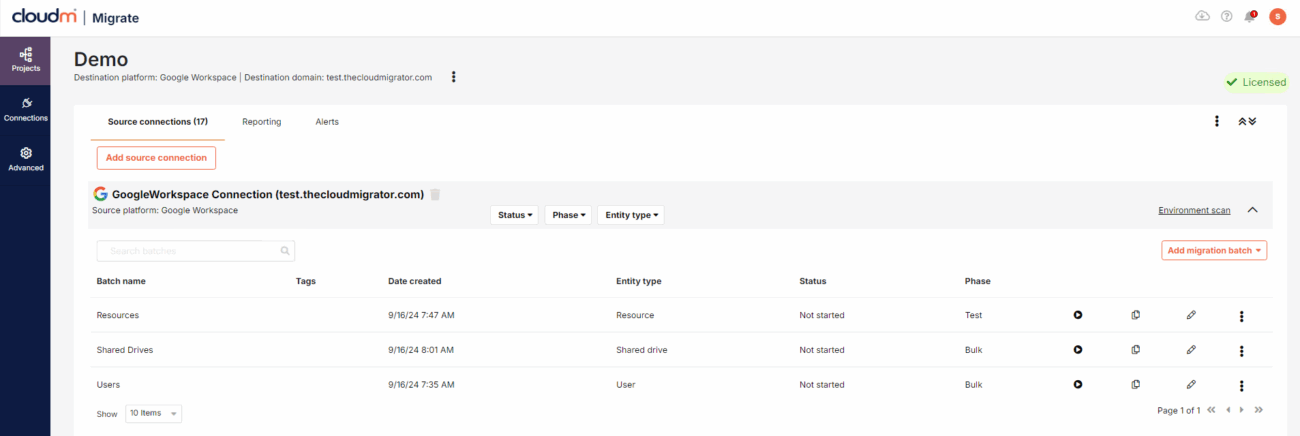
The theme of boosting efficiency runs through this major release: with Migrate 4, we move away from the concept of having configurations and child configuration. Instead, migrations are now managed as projects with batches. This saves time and removes complexity as connections to source and destination platforms can be managed centrally, enabling you to use them across multiple projects, reducing the need for manual intervention and duplication.

Image: With Migrate 4, migrations are managed in batches to save time and remove complexity.

Incorporate multiple source platforms in one project

With Migrate 4, it is possible to add multiple source platforms to a project. This is a more holistic approach to migrations, making it easier and quicker to consolidate several source platforms into one productivity suite such as Google Workspace or Microsoft 365.

In addition, each source platform can have multiple batches. Batches can be created to only contain certain item types, making it easy to prioritize your data and organize the migration. 

Pick up incomplete projects

Focussing on ease of use, a new tab for incomplete projects allows users to create projects in stages. The project draft is saved, ready to be accessed and completed at a later date. 

Image: Migrate 4 enables you to create your projects in stages, allowing you to pick them back up via the incomplete projects tab.

Know your sources

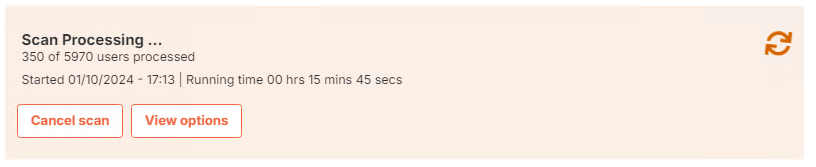
Migrate’s environment scan has always been a key feature thanks to actionable insights it gives. With the new release, the scan can now be run at source platform level as well as batch level. The former enables users to scan the entire source at the very beginning of a migration project, while the latter gives better insight into how much data is in a batch and how long it will take to migrate. Both equip users with more visibility and insight into the project. 

Image: In Migrate 4, the environment scan can run at badge as well as source platform level.

There’s more!

There are a host of other improvements to CloudM Migrate that make it that much easier to manage migrations, such as added filters for migration batches and relocation of tabs to improve navigation. 

A full list of enhancements and improvements can be found in the release notes for Migrate 4.0. Check them out here.

About Version 2 Digital

Version 2 Digital is one of the most dynamic IT companies in Asia. The company distributes a wide range of IT products across various areas including cyber security, cloud, data protection, end points, infrastructures, system monitoring, storage, networking, business productivity and communication products.

Through an extensive network of channels, point of sales, resellers, and partnership companies, Version 2 offers quality products and services which are highly acclaimed in the market. Its customers cover a wide spectrum which include Global 1000 enterprises, regional listed companies, different vertical industries, public utilities, Government, a vast number of successful SMEs, and consumers in various Asian cities.

About CloudM
CloudM is an award-winning SaaS company whose humble beginnings in Manchester have grown into a global business in just a few short years.

Our team of tech-driven innovators have designed a SaaS data management platform for you to get the most from your digital workspace. Whether it’s Microsoft 365, Google Workspace or other SaaS applications, CloudM drives your business through a simple, easy-to-use interface, helping you to work smarter, not harder.

By automating time-consuming tasks like IT admin, onboarding & offboarding, archiving and migrations, the CloudM platform takes care of the day-to-day, allowing you to focus on the big picture.

With over 35,000 customers including the likes of Spotify, Netflix and Uber, our all-in-one platform is putting office life on auto-pilot, saving you time, stress and money.

×

Hello!

Click one of our contacts below to chat on WhatsApp

×